Reclamation: Coming Back To The Girl Who Got Shut Down
A retired engineer reclaims her voice, her breath, and her story decades after childhood shame, and finds healing at her mother's deathbed.


Key Takeaways
- Lena Fein's journey illustrates how childhood trauma, such as having a personal diary read aloud, can cause someone to emotionally shut down and live life only halfway present for decades.
- A successful life on paper—including an engineering career from UC Berkeley and a family—does not exempt someone from carrying a buried, quiet persona underneath.
- The dying process of Lena's mother became a catalyst, cracking open decades of emotional numbness when Lena finally saw something in her mother's eyes she had been waiting a lifetime to witness.
- Healing is possible at any age, as demonstrated by Lena reclaiming her voice, breath, rhythm, and passion for the arts in her late sixties.
- Writing and publishing her memoir, 'Shattering the Mirror,' allowed Lena to confront her traumatic childhood and step into a life of greater freedom, clarity, and love.
Have you ever lived a life that worked, on paper, and still felt like you were only halfway in the room? That is where Lena Fein spent most of her life. Not broken. Not miserable. Just partially there, ever since a moment at seven years old when the safest place she had, her own diary, got read out loud and used against her.
Lena did everything right after that. School, a career in engineering, a family, a persona that held. And underneath it, a part of her stayed folded up and quiet for over forty years, until her mother was dying of cancer and Lena looked into her eyes one last time and saw something she had been waiting her whole life to see. That moment did not fix anything overnight. But it cracked something open, and Lena spent the years after slowly, gently claiming back the pieces of herself she had given up on. Her voice. Her rhythm. Her breath. Her story, eventually written down and shared with the world in her memoir, Shattering the Mirror.
This episode is for anyone who has ever wondered if the parts of themselves they buried a long time ago are still in there somewhere, waiting. They usually are.
What You'll Hear
- The diary moment that taught a seven-year-old to hide her heart
- A childhood accident that left Lena unable to fully breathe for decades
- What she saw in her mother's eyes in the final days of her life
- How she slowly reclaimed dancing, singing, and writing as an adult
- Why she finally found the courage to publish her memoir
- What it means to find compassion for a parent who never had the tools
Guest Bio
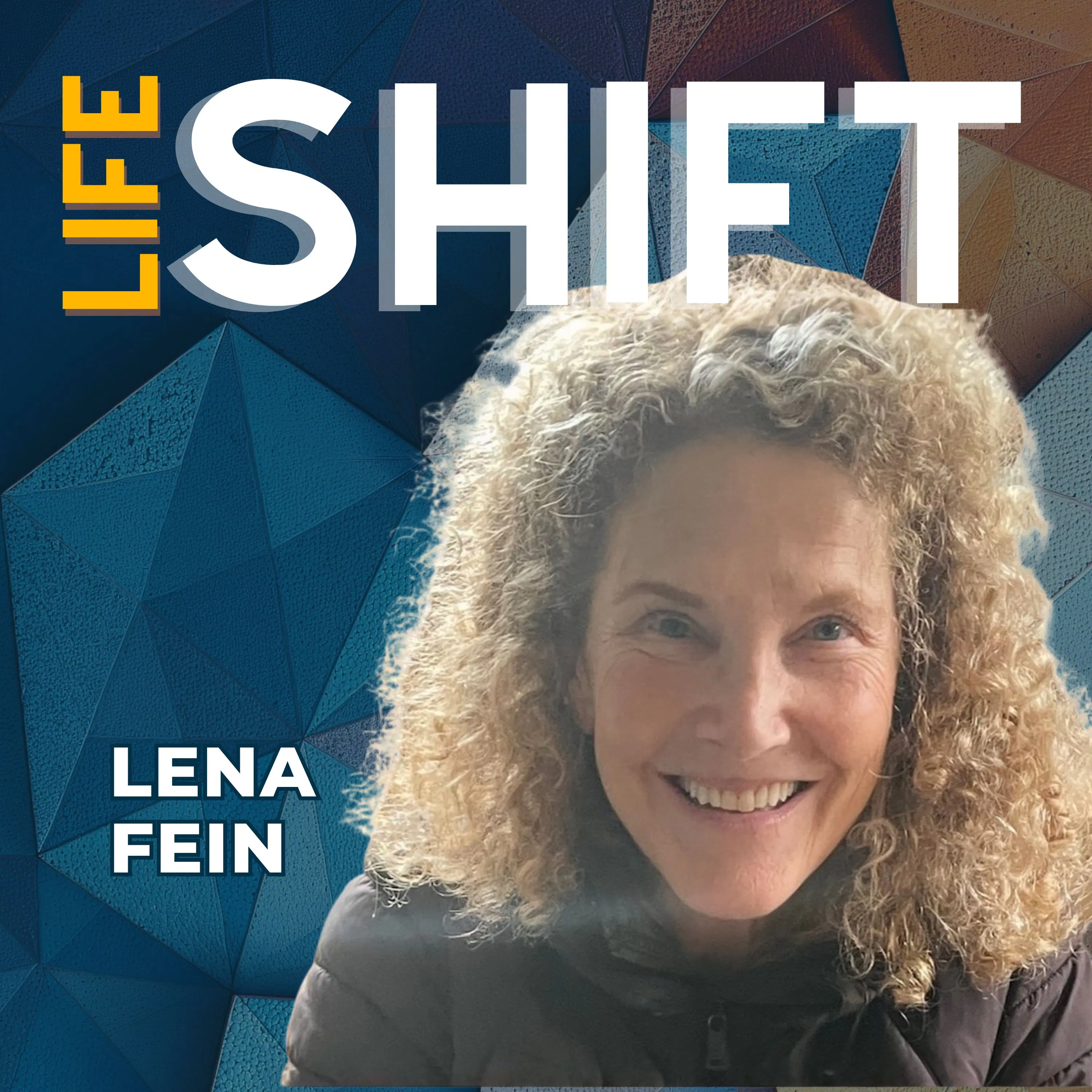
Lena Fein lives in San Francisco, the city of her birth. After receiving a master’s degree in engineering from UC Berkeley, she enjoyed a successful career in high tech and founded a non-profit that funded health and education projects in at-risk communities around the globe. Now retired, Lena enjoys the arts in all their forms, including painting, singing, dancing, and writing. Currently, Lena is often seen taking long walks by the bay and hugging her grandchildren. Her memoir, "Shattering the Mirror," is about her quest to confront her life and see through the distortions of her traumatic childhood. Now in her late sixties, Lena lives with more freedom, clarity, and love than she ever imagined. The book is really about the truth that healing is possible at any age — and that wholeness is priceless.
Lena's book and links: shatteringthemirror.com
Listen and follow: www.thelifeshiftpodcast.com/s5e270
Follow the show: www.thelifeshiftpodcast.com/follow
Subscribe to the newsletter: https://thelifeshiftpodcast.beehiiv.com/
---
mother wound, childhood shame, deathbed forgiveness, reclaiming your voice, emotional numbness, generational trauma, finding wholeness, late life awakening, memoir writing, healing after loss
You Might Also Like:
- What Survives: A Story About Loss, Resilience, and Inner Friendship
- Grief and Fatherhood: The Song That Changed Everything
Learn more about your ad choices. Visit megaphone.fm/adchoices
Frequently Asked Questions
Who is Lena Fein and what is her memoir about?
Lena Fein is an author, retired high-tech engineer, and non-profit founder from San Francisco who joins The Life Shift Podcast to discuss her memoir, 'Shattering the Mirror.' The book explores her quest to confront childhood trauma, overcome emotional numbness, and reclaim her authentic self.
What pivotal moment caused Lena Fein to shut down emotionally as a child?
At seven years old, Lena's personal diary—which was her safest outlet—was read out loud and used against her, teaching her to hide her heart and retreat inward for over forty years.
How did Lena Fein begin her healing journey later in life?
Lena's healing began to crack open during her mother's final days battling cancer. This profound experience allowed her to slowly reclaim lost parts of herself, including dancing, singing, writing, and finding compassion for a parent lacking the tools for emotional support.
Matt Gilhooly (00:00)
When Lena was seven, she wrote about a boy in her diary. Her mother found it, read it out loud, and when Lena cried on the floor, her father stepped over her and went to his room. That night, she left part of herself behind. For the next four decades, she did everything right, but she was only ever partially there, not broken, just not fully charged. Then, at fifty-one, her mother was dying, and in a quiet hospital room, Lena looked into her mother's eyes and saw something she had spent a lifetime searching for.
That crack changed everything. This is a conversation about reclaiming the parts of yourself you buried so deep you forgot that they existed.
Lena Fein (00:38)
And when I came home from school the next day, my mother had my diary in her hand standing at the door. And she read it out. She just shamed me for what I had written. It was just about a little boy with really cute corduroys, you I was devastated. I ran to my room crying
Matt Gilhooly (01:32)
Hello everyone. Welcome to the Life Shift Podcast. I am here with Lena. Hello, Lena.
Lena Fein (01:37)
Hello, Matt.
Matt Gilhooly (01:39)
Thank you for wanting to be a part of the Life Shift podcast. It is a it is a journey that I never could have imagined for myself and I am so glad to be able to do it and have these conversations with people like yourself.
Lena Fein (01:52)
Thank you, I appreciate it.
Matt Gilhooly (01:54)
So before we get into your story, which I know that, you know, you probably have many life shift moments in your life, but we're gonna kind of center today's conversation around one. But before we get into that, could you tell us who Lena is in twenty twenty six? Like how do you show up in the world? How do you identify these days?
Lena Fein (02:11)
I'm Lena, a mature, retired woman, and I'm showing up as a real whole person who has had a whole lot of healing going on. And I feel for the first time in my life, really this past year since I published my memoir, and I was so terrified of doing that, for the first time I feel like I don't have this layer of film around me.
being in the moment, being present, being a lot more honest and not so afraid to speak up. So that's who I am right now. Yeah, shedding the masses. 68 years old. I'm like, I arrived. So yeah, exactly.
Matt Gilhooly (02:47)
shedding the mask.
Yeah, at least you got there, right? I think there's a lot of people that
hope they will get there someday. And I think by leading by example and putting it in your book and putting it out in the world and healing and showing up on podcasts, I think you're probably making an example whether you know it or not with people.
Lena Fein (03:09)
Yeah, it feels really good.
Matt Gilhooly (03:11)
And I can
imagine the journey you must have had wearing masks, one or two or maybe a lot of them throughout your life. I can totally relate to wearing masks growing up as a kid with a dead mom. I kind of associated myself as such and felt that, you know, I had to show up a certain way so other people wouldn't leave in an abandonment type way, because it, you know, as eight years old, someone dies, it feels like the rug's getting pulled out from under you. So, you know, I think
a lot of people will understand that mask wearing in so many ways. So to get an a good idea of your story, maybe you can paint the picture of who Lena was leading up to this life shift moment, which I believe is closer to your your time period now than it was to when you were born.
Lena Fein (03:58)
yeah. Actually, the life shift that started the whole breaking, shattering of the mirror was really when my mom was on her deathbed. I was 51 and she was 76 and I can go more into that. that moment yeah. So the before is, first of all, I have,
Matt Gilhooly (04:14)
Can you go can you paint the before? Before we even tell us about that moment?
Lena Fein (04:24)
had a photographic memory that wasn't just visuals, it was auditory and feelings. I could remember down to when I was, when my sister was born, she's 18 months older than me, so I remember down to 18 months, and I remember that day. It wasn't my mom that picked me out of the crib, it was my grandmother, and I was scared that a stranger, who's this? I remember that.
So my memories as kind of in the toddler phase, I'd say two, three or four was everything's so fun and exciting. That's my memory of it. And my mom had four girls in five years. When I look back on it now as an adult, see it actually wasn't even though the little girl in me thought it was fun. When I look back at it as an adult,
My mother was relentlessly vacuuming and dusting her house and keeping everything in order. I don't remember my mother ever sitting down and reading us a book or playing a game with us. As she was relentlessly dusting and vacuuming, were, we all had accidents playing. And so,
That's my memory of when I was little, it was this kind of enthusiasm for living as a little girl. And I would say I kind of claimed that little girl back in my sixties, like, you know, it's good to be here.
Matt Gilhooly (05:53)
Mm-hmm.
well.
Lena Fein (06:05)
But somewhere around, I would say when I was five, six, started school, my mother, like, you know, I had a diary in second grade and I wrote all about my first crush. And I think I watched Leave It to Beaver and somebody hid their diary under their mattress. I, you know,
got my little diary and wrote my first entry and put it under my mattress. And when I came home from school the next day, my mother had my diary in her hand standing at the door. And she read it out. She just shamed me for what I had written. It was just about a little boy with really cute corduroys, you know? Anyways, I was devastated. I ran to my room crying and thinking,
Matt Gilhooly (06:46)
Right.
Lena Fein (06:57)
I can't wait till my father comes home, because he'll tell my mom she shouldn't have done that, that it's private, my diary. My dad walked in the door and my mom proceeded to read the diary out loud again, this time in front of my three sisters. And I was, I just remember sobbing on the floor. My dad stepped over me and went into his room, you know, hard day at the office. So he didn't want to, that, I remember going to bed and having a distinct feeling that I still remember of giving up.
Matt Gilhooly (07:01)
Mm.
Lena Fein (07:25)
that there's something wrong with me, there's something wrong with my story, there's something wrong with my heart, my heart was broken. And that was, I think, when the first shield started of protecting myself from being shamed or hurt.
Matt Gilhooly (07:40)
Yeah. 'Cause you felt safe to write in your
diary and and feel all these feelings and then you get stunted by someone that you probably were trained to love and to respect and which makes it really hard, right? 'Cause then you're like it's double it's double as bad, I I think, in my opinion.
Lena Fein (07:59)
Yeah.
So it was, what I did is I, with this photographic memory, I did very well in school and I actually did very well in writing and studying and all that stuff. And I got, you know, at the time, very good. And then later on A's and I began to develop a persona around that. at least I could work really hard and I can get A's in school.
I left my heart behind and I didn't really realize I had done that. So that's kind of the setup at a very young age was this sensitive little girl who felt her hair was too curly and she was uncoordinated and constantly getting reprimand, no, you can't have dance lessons. You're too klutzy for that. You need to straighten your hair. Whatever it was, it kind of had to do with my looks.
As I got older and I was wearing this in the day, the 60s and 70s, we were wearing like jeans and hiking boots to school. You look like a lesbian truck driver. know, like It was my mom. Yeah, not from my dad, but my dad was a traveling salesman. So that was that that's kind of the frame is that I left.
Matt Gilhooly (09:06)
So it was all from your mom?
Lena Fein (09:18)
That little girl who a two-year-old was so excited to live, she got shut down. I survived by doing well in school, getting into a good college, getting a really good job until all of a sudden I got a glimmer. Not all of a sudden, but when I was 51, my mom was diagnosed with lung cancer and died within a week and a half of that diagnosis.
Matt Gilhooly (09:25)
Yeah, and then you had to survive.
Lena Fein (09:49)
as she was on her deathbed and she was vitriolic, just kind of yelling and screaming whole life that I knew her. But when I was 51 and my mom was 76, her last couple of days she was intubated, but she can still communicate with her eyes. And when I went to her side, she couldn't speak.
which in a way maybe was a blessing, but with her eyes, it was like, I always thought her eyes were like really dark brown, almost black, and her eyes were more glowing to me. And I felt what I felt, what my heart felt, which wasn't used to feeling that was, my mother loves me. Maybe she loves me. I was seeing that from her eyes, and I really to this day believe she was making an amends as she was having her awakening on her deathbed.
She died a couple of days later. That started me on the path of, ooh, there's something living there in my heart. What is a crack? And it didn't happen overnight, but was slowly I started claiming these pieces back. Well, maybe I can dance. Maybe I actually can have curly hair and have a loving relationship. It wasn't overnight, but it was a gradual claiming of the.
Matt Gilhooly (10:48)
It's like a crack.
Lena Fein (11:09)
places I had shut down and I'm very thankful for that. And kind of the last act for me really was reclaiming that diary and having the courage. I was just going to do it for myself to write my story. And then I started reading it out loud and someone encouraged me to publish and oh my gosh, that was even scarier.
the actual act of writing my story, facing my story, and then, oh my gosh, publishing it, I'm gonna get shamed, oh my gosh, get sent to my room for what I wrote. That didn't happen. It was a lot of women saying, oh, me too, I relate to that. And so here I am my story and like I've reclaimed, it was a journey to reclaim my presence.
My breath, my wholeness, being who I truly am, even if it makes somebody mad or even if I make a mess, that part of me, I feel like is whole when it wasn't before it was shut down, but I didn't really know it was shut down. But I know now.
Matt Gilhooly (12:14)
Which makes it sometimes
better and sometimes worse because we look back on those moments and and wish. Yeah, I'm curious though, do do you feel that like from, you know, teens to fifty before your mom was sick, do you feel like you you lived a life, a partial life that you wanted to? Like was there ha were 'cause I I think we could listen to this and hear, wow, it was miserable until I was fifty one, but I don't think that's
Lena Fein (12:16)
Yeah, yeah.
Matt Gilhooly (12:41)
Necessarily true either. It was just different.
Lena Fein (12:42)
I'm so glad you
brought that up because really I, there was parts, really deep parts that I had shut down, but I, you know, had a group of girlfriends that I had since seventh grade and it's college. And I always have kept these relationships. And I can say I was really, that gave me a lot of joy to have friends or be really close to my mom's mom, my grandmother's, you know? So I feel like
I was available, just not all the way. So it really impacted my male relationships, how I chose men, because parts of me were shut down. It impacted my singing voice, being afraid to use my full voice. All these things, I feel, became more whole. It wasn't like, you know, I was completely, you know, checked out. But being able to sing, being able to dance, being able to...
really be present with somebody, get even closer to my friends, to my sisters, to learn how to be with men in a different way. So I wasn't always going to was a klutz or not pretty enough. All those things, the mirror started to shatter because the reflection was distorted.
Matt Gilhooly (13:59)
Yeah. Yeah, I mean it just sounds like so many people can probably relate to living a a good life, but one that is not like fully charged, I guess. Like if I think of like a battery, like it still works and everything, you know, we're still moving down the the conveyor belt of life and doing the things that we're taught that we're supposed to do, but at the same time, there was this unlocking, like this piece you didn't even know you could charge or you didn't remember that you could charge.
Lena Fein (14:28)
Exactly, because I had hit it so deeply.
Matt Gilhooly (14:30)
Yeah. Did you know, like, did you feel that
way though before you get into that? Do you do you did you feel that you were missing something? Was it or was it more of a subconscious
Lena Fein (14:41)
I think it was subconscious at the time because I was so, so strong in school and so, you know, get being an achiever, doing really well at work, being able to coordinate things. So I got accolades, like a host of events in my home and things like that. I worked really hard at pleading other people. And I was mostly there, but really not all the way.
Matt Gilhooly (15:04)
Yeah. It's an approval thing
Yeah. Yeah, I mean, if you can't get the approval that you want from your mom as a kid, it kind of snowballs sometimes into this where you're performing maybe maybe somewhat for yourself because it feels good to get that approval. But also, like I did the same thing. I just became a perfectionist because I thought people were gonna leave. And so on your side it was you you needed people to see that you were good. You were worthy of the applause, you were worthy of the the joy and all the things and
get it. We're we're such strange beings as humans. I think we just you know, like we make so much of these things we make so much out of these things that if we had the wherewithal and the knowledge like you have now, like you would have just shed that with like, why you know, why am I doing these things?
Lena Fein (15:42)
What?
Yeah,
yeah, exactly. And I will say one more thing that impacted me greatly as well is when I was two and a half, so was pretty young and that photographic memory was still working. And my mother was in the kitchen, which you couldn't see from the family room, but I heard she was on the phone and my older sister who was 14 months older than me. on this particular day, I remember it well.
we were playing blocks. on this day, whatever she wanted, she always used to just take it and I'd give it to her. On this day, I didn't give her my block. I just kept holding, I was two and a half, and I just kept holding it really tight and she was pulling and pulling and pulling and she was so mad that the next thing I was flying. I literally was flying and I still remember the feeling of terror.
lying, she had basically, I held on so tight that she hurled me and my block towards the window. And at the very last minute, I sensed the drapes and grabbed onto those drapes. And my next memory is sitting on the floor with my mom putting a towel on my face and telling me, don't let go of the towel.
I remember that and I just remember holding on the towel and had a little song in my head going, don't let go of the towel, don't let go of the towel. As my mother put me in the car, had my older sister get in the car, starts to drive off, I remember that she slammed on the brakes and I was still singing that little song and she ran back in the house to get the baby, my younger sister.
And the next, I think I fell asleep and she dropped the two other sisters off at a neighbor's house. I, the next memory was a man with a funny blue hat standing over me and said, you know, he told me his name. He says, my name is Dr. So-and-so. I still remember his name and said that you're going to be okay. And then I guess he put me to sleep. And basically when I woke up,
My mom was standing over me and said I was a really good girl that I held so still when the doctor sewed my nose back onto my face. So I had an event where my nose was severed, I was bleeding. I have a photographic memory. I do not remember blood. I don't remember seeing blood. I don't remember seeing a broken window. I don't remember pain at all.
So all these things were blocked, but what stayed in my body, which I never really figured out until I started writing my memoir, was, my gosh, the world is moving too fast. I don't like it when things go too fast. I need to make sure there's drapes there that I could grab onto. So I had this sense of kind of really being afraid to fully fall into life, if you will. Like I had this protection mechanism, something bad's gonna happen here.
let's slow it down, safety net. And I actually didn't really realize that. And I also, you know, had bloody noses a lot, you know, someone just tapped my nose, I'd get a bloody nose. had a surgery at 30 and another one just a couple of years ago. So I can breathe. actually, everything kind of collapsed and I now have a, I could have a rib, but for the first time in my life, I could breathe fully. It's, you know, different.
Matt Gilhooly (19:10)
Safety net.
Lena Fein (19:38)
But I actually feel that getting my breath fully back so I could talk and breathe at the same time was a, I don't wanna say the last piece, but a real new piece of wholeness that I didn't have access to, because it allowed me to kind of how they always say, in yoga or whatever, breathe deeply, center your breath. I always was, I think panting and kind of panicking breathing at the same time, because I didn't have full access to that.
That was another huge healing in itself to get my nose repaired enough so that I can have full breath and stay more grounded in my body. So that's another piece that really helped me be more present with people.
Matt Gilhooly (20:23)
Yeah. I wonder if if
this is a silly question, but I wonder if the fact that you weren't able to breathe fully, you internalize that as you weren't good enough, like you weren't, you know, that perfectionist piece. You couldn't be good at this one because of those elements. Which again
Lena Fein (20:41)
Yeah. I
mean, I was, I couldn't swim because, oh my gosh, like putting my face in water was terrifying. The, you know, they didn't talk about it then, but the accident, in addition to severing my nose, it was probably a head injury. And one time I did get in a car accident when I was older and found out from a scan that, hey, that accident you had when you hit the window was a head injury and it...
Matt Gilhooly (20:56)
Yeah.
Lena Fein (21:05)
your eye-hand coordination is only in the ninth percentile. So that was another thing I would get teased when I was little for sports. My mom would say, you're too unclutchy. Getting dance lessons would be a waste on you. So I was like barraged with, my gosh, there's something really wrong with me. My sisters are all, what about me? And that's another piece of this actual kind of shattering of the mirror where,
facing things that I couldn't really see or feel. I just kind of accepted this is what normal breathing is when it wasn't normal breathing. was kind of, I tried to do scuba diving. my gosh, I was the only one that would use in college all my air. Why she using so much air? was just completely panicking the whole time. So that was a pretty huge accident that I have memory of some of it, but I didn't really realize that was also part of the
Matt Gilhooly (21:52)
Yeah, yeah. No, that's scary.
Lena Fein (22:03)
film that's over, was over me was not being able to really ground and center like most people can if they have full breath.
Matt Gilhooly (22:09)
Yeah.
Did you I mean you mentioned what your mother said to you, which seemingly sounds like a compliment and a a kind thing. Did you attach or hold on to any of that? Like this used to be the way that she was and then things changed after that accident?
Lena Fein (22:26)
My
mother, so what I remember of my mother was that she, even though our father was a traveling salesman and sometimes stayed away at night, when he was home, he would play games with his four daughters. Like when we were little kids, he would, on weekends, he would take us to see the grandparents. My mom wouldn't go. He did, took us to miniature golfing. So my dad,
I just adored my father. He read us the fairy tales at night. My mom was constantly cleaning. And when my dad came home, she went in and rested in the room. But she, I don't remember her reading us a story or taking us to miniature golf. So my mom was not, I would say, available in the ways a traditional mom would be available, especially somebody having four kids. I mean, we didn't have a nanny or anything like that. And she was...
relentlessly cleaning that house.
Matt Gilhooly (23:28)
Yeah. But you clearly remember her saying that like you were a good girl and he you know, you stayed so sill when he was attaching your nose. So I was just curious if if that kindness and love. Yeah. No.
Lena Fein (23:26)
I didn't go to her with problems. Yeah.
Yeah, she said that. Not
really there. In front of the doctor, yes, but really when you get home, it was chaos. It was being punished. It wasn't just me, my sisters too. If she, was relentless criticism of the way I looked. Being.
Matt Gilhooly (23:52)
Yeah.
Lena Fein (24:02)
uncoordinated, being teased for that, not being able to have those dance lessons, saying things that, what was coming out of her mouth was, I wasn't good enough. I wasn't good enough. In fact, if anything, there was something wrong with me. My sisters, I thought it was just me, but only after our mom died did we start to compare notes. I thought I was the only one getting criticized, but it turned out she,
did that behavior when no one else was home except you and her. Like I said, it just this relentless criticism that was abusive and hitting and pulling hair and all the things that went with it. And we all kind of, know, I went to college, I had a sister that ran away and we didn't see her for 30 years. You know, it's all healed. We're all.
or girls are still here. My mother passed away and my father passed away 10 years later. I never really had a chance to completely heal with my mom until she was on her deathbed. And it was a momentary look of her eyes where I saw there was a good soul in there.
Matt Gilhooly (25:13)
Did you maintain a relationship with her like in your twenties, thirties, forties? Okay, that's healthy.
Lena Fein (25:18)
I had to set boundaries because I
had two kids and she started what she did to me, she started doing with my daughter. Like starting at two years old, don't know where, know, comparing, you know, she favored my son and didn't, you know, just this abuse of, she was an only child. I don't know where it came from. Maybe she had an abusive.
parent somewhere in there, I don't know. I just know that she had four daughters, didn't have any sons, but boy, I saw her doing the same behavior to my daughter when my daughter was really young that she did to me.
Matt Gilhooly (25:59)
Yeah, I mean that's intense too, and and I'm sure doing and writing your memoir opened up a lot of things and as it does for a lot of people. But what was like the I know you said you saw that in her eyes and it cracked something open open. Do you recall like the first time where you started to really feel different because you started moving through life differently?
Lena Fein (26:26)
Yeah, was that moment was the start of an awareness that I had been hiding. And I started, I was in high tech, know, did well in college, master's degree in engineering, did well in high tech. And within a couple of years of my mom dying, it was like, went, ooh, I am going to dance. I'm going to do like freeform dance, follow the rhythm. Wow, look at me. I have rhythm.
Matt Gilhooly (26:30)
Mm-hmm.
Lena Fein (26:55)
I am gonna start singing even though I was completely off key. I learned instead of just to hide my voice. And then I started experiencing, you know, what it felt like to be in a relationship with a man and have a truly loving relationship like from my heart. And I could blame it maybe on maybe some of the choices of men I made wasn't that great. I don't know, but I really wasn't fully available, but I didn't realize it.
So I think after my mom died started me on a path of reclaiming not only myself, but the feminine inside of me instead of hiding it, embracing my hair. This is my curly hair instead of trying to straighten it or cut it off. All the things that I got shamed for, I claimed back one at a time. It wasn't overnight and I became a lot more brave and also a lot more kind.
Matt Gilhooly (27:46)
Yeah. No.
Lena Fein (27:52)
Like, know, instead, somebody's not serving my coffee fast enough. You know, now it's like real eye contact, having a real kind exchange with somebody that's not fake, but because I'm really present and thanking them for the coffee with. Yeah, yeah, exactly. Kind of rushing through things.
Matt Gilhooly (28:06)
Right. Before it was more like checking the box.
Yeah. I kind of felt yeah.
I kinda felt the same way, like I mean different, but also the feeling of that you're describing feels very similar. Like I did well in school. I d did, you know, did all the things that I was supposed to do and I wasn't really listening to people. So like listening came to me in my thirties and forties.
Because I realized growing up I was just listening for the next silence so that I could say something profound or, you know, like the smartest, next smartest thing of whatever it was. And then I started listening and going, and then giving myself the freedom to ask something that I didn't already know the answer to, that I was just curious about, that I was okay if someone says, No, we're not gonna talk about that. And it was such an awakening for me to go.
this is what conversations are supposed to be like. This is the connection that we can build together by like listening to each other, not even talking, just listening. So it's such an it's such an it's it sounds so silly to say that out loud that like I didn't know how listen. But at the same time, it's it's profound when you when you actually realize that there is so much power and
Lena Fein (29:26)
It's not. It's not silly.
Matt Gilhooly (29:36)
You can learn so much about yourself by listening to other people and how you listen to other people.
Lena Fein (29:42)
It's like a form of wholeness. And I really feel that all those protections we made, like you said, like when somebody dies, we have grief and they're so scary when we're young that as an adult, you have these opportunities to claim those things back. And now I feel like, oh, I'm seeing, you know, I'm just talking about the Starbucks coffee worker, but it's not like...
passe, it's like I'm really stand in this moment. I'm standing at the counter looking at somebody's eyes, smiling back, noting this if somebody is grumpy. But most of the time when I am fully present and ask with kindness, I get I'm getting kindness back because I'm able to receive it now. Whereas before I was kind of I didn't couldn't I don't like to admit this. I was kind of rushing. was rushing by even though I was standing right in front of him. I'm like, you know, not breathing. I'm just like, where's my coffee, you know?
Even if I
wasn't saying anything, it was a protection that stopped me from relating. I mean, you could relate anywhere you go with a good heart. And I know.
Matt Gilhooly (30:44)
Right. But it's scary. It's scary if you're not
fully embodied, I guess, or fully like feeling grounded, like you said, or centered, or whatever that whatever the term we want to use. It's scary to see other people because you're worried that they're gonna see the real you, which we've created. The real us is the scary thing to see when it's probably the the better thing for people to see is that real thing.
Lena Fein (30:52)
Yeah.
Yeah, I mean, this conversation is opening up so much in me because there's so many things that kind of run together into it's hard to describe. It's like my mother saying dance and music lessons would be a waste on me were because I was shut down from the accident and just the way I was parented. I didn't have a full voice.
I used my words, I got A's in school, but it really wasn't full of, and it wasn't until recently, because I started singing about 10 years ago and I was always off key and I kept trying to use my head to memorize the words. And I finally only got in the last couple of years, oh my gosh, singing is also kind of an attunement. And actually singing on tune, you don't really even have to work on it. You just kind of really have the ears open.
and you feel a vibration and you just kind of, it's a vibration, not like really from my head. And if you kind of listen to the guitar, I don't have to worry about knowing my words. Even if I forget them, it doesn't matter. Cause I actually could be on tune if my whole body is attuned with that vibration. Now that's just with singing and I learned that in dance. Okay. Maybe I do have some eye hand coordination issues, but once I got my ears open, I was like, I can also feel beat.
And like, I don't need to be a ballet dancer. could actually, I do really well with music and the beat because I'm really absorbing the music in my body instead of kind of shutting it off and trying to do some kind of performance dance. I mean, it sounds minor, but when I think about it now, it's like huge because it's coming towards wholeness, full breathing, full voice. Are my ears being, am I really listening to somebody and not just faking, hi, hi, you know, just taking.
that in and thinking about it and having a response back that's real, not just made up in my head thinking. And so, I mean, I think as compensating, my protection was being in my head. And then, you know, I had a few car accidents and got, sorry, my earbud pops out. I had a few car accidents and head injuries and a way they were kind of a blessing.
because it slowed my brain down a little bit so I can do the other stuff. And even as I'm getting older, I notice I can't do the same things I could do 10 years ago. But I feel like I'm more here than I ever was, even though I may forget what I had for breakfast, you know? And I'd go with that any day, just like stay in the moment, stay in the moment.
Matt Gilhooly (33:46)
Hmm. Yeah.
I do too.
Yeah. I mean I I don't know what I had for breakfast. Unless I have the same thing
every day I'm not gonna remember it. And that's okay. You know, but curious what your relationship is with
Lena Fein (34:01)
Yeah, yeah.
Matt Gilhooly (34:07)
Trying things that you might not be good at now versus thirty year old Lena.
Lena Fein (34:14)
yeah, I'm so much more brave. Singing, huge, like was in a concert, you know, like huge. Dancing, like just being so brave here, I was so scared. I never got the dance lesson, I was too klutzy according to my, so being to actually perform and dance, doing all these things I never imagined doing. Right, my gosh, well, I never wrote in that diary again.
but I was sure good at writing at school. Like I could tell you all about the country and whatever it is I had to write about. But when I started writing my memoir, I realized I still have that. In second grade or first grade, I came home and wrote all about the guy I had a crush on, not a guy, a little boy that I had a crush on. It was free flow and I can do that now. I don't even, I like, I don't have to have the words perfect. could just.
put out the story and then fix them up later if I made a mistake. Those kind of things where I told myself, I'm never gonna write again. I don't want somebody to read what I Courage.
Matt Gilhooly (35:16)
Yeah. Yeah. Was there
yeah, courage do you think and you can say no, but do you think that some of the journey that you're on now is related to the fact that your mom actually passed and is no longer living on Earth? That there's like that freedom.
Lena Fein (35:37)
carrying
a lot of bitterness because it's hard to be around my mom because usually something would come out. And she started kind of doing the same thing to my children, especially my daughter. So there was something with her about she was an only child about women are competitive and she didn't have a, she had four I'm not really sure where that was.
about with my mother. don't think she ever really got the help that she needed. now we have counselors. Yeah, it's generational. Yeah, grew up in the, she was born in 1932, grew up in the depression and World War II and I, they didn't have counseling.
Matt Gilhooly (36:05)
Right. Generational too.
right.
No, I mean, even I look at the differences between my father and myself. I look at the differences between my dad and his parents and how they like approached even for example, my mom dying, like how each generation and the things that I unknowingly absorbed because of their upbringing and the way that they approach that.
Whereas now when I think about all that, I'm like, man, I just needed someone like this grown-up version of me to be like, this is how you you can do this younger than 30 something. To like it took me 20 years of what I call failing grief to find who I was outside of the crutch of having a dead mom. Cause I just used it. Like I learned to use that either as a crutch to get, you know, to explain something away, or a crutch to
diminish who I was by saying, I only got that because my mom is dead, or that happened to me because my mom is dead. So it was very much like it took 20 years. And I'm like, if I could have had the wherewithal or at least at least met someone that was living in, you know, in a later time period, I would have approached it differently.
Lena Fein (37:32)
Yeah.
or different,
like, yeah, different parent, you know,
Matt Gilhooly (37:39)
Yeah. And I don't fault them. I don't fault how my dad approached
it. He didn't have the tools. My grandmother didn't have the tools. And so we were all doing the best we knew how. And and as sad as it might be to say this out loud, your mom might have been doing the best she knew how to, to your detriment. But also who like you said, who knows what what people have gone through.
Lena Fein (38:03)
I have a lot more,
based on your question, like, did I forgive her? I don't sit there and, oh, my mom, she drove me crazy. I used to always say, oh, my mom, you know. I just, after she died, really, allow myself to have those memories maybe that I pushed away. I allow myself to have some compassion.
For
what she, somewhere, there was some abuse somewhere, who knows from where, that wasn't talked about. She never went to college and never really worked. She was the stay at home mom. But my dad, as hard as he was working, he would come home and play the games with us and do all that. So my mom was an only child and didn't have the tools. So I don't sit there and think about my mom and like, woe is me anymore, or was awful. It's just like.
let it go and embrace, have some compassion for my mother who was suffering in her own way, even though, you know, it was, she's very cruel and very abusive, but she was really angry at something and didn't have the tools.
Matt Gilhooly (38:58)
Yeah.
Yeah. Do you
do you have any good memories of your mom?
Lena Fein (39:19)
I guess I do. The memories are when we used to go swimming lessons when we were little. And I remember, because I always had this problem breathing, I never talked about it. just remembered in my head that I faked like I'd hold my breath down the whole pool because I just hated.
I couldn't really breathe through my nose and water would get in my mouth. So I just like faked that I was breathing and I really wasn't. I think that accident definitely impacted my coordination. And what I remember after swimming, cause there was three, my three, you know, four girls going swimming and after the lessons, my mother would take us out for ice cream. And that was the act of kindness that I remember is like,
You know, we each got a scoop of ice cream, were licking our cones, and we were just so happy to have ice cream. And I think my mom had an eating disorder, I'm sure, and she got that ice cream too. And I think she was in her happiness by having ice cream. So I have that memory, and I have some good memories, but there's definitely a lot more where pulling hair and...
being rounded unfairly.
And I don't think about that. I mean, feel like, okay, I've written about them. I've talked about them. I've had plenty of counseling. I don't need to really go there. So I don't feel like I'm blocking anything. I'm just like, bless you, mom. She did the best she could with having more girls and five years and a traveling salesman husband in the time period.
Matt Gilhooly (40:57)
Yeah.
In the time period, yeah. What made you
what made you want to actually start writing about it?
Lena Fein (41:12)
Well, I never thought I wanted to. What happened actually is after my mother passed, completely like kind of started this path of changing. That was shocking. Like I went from being this perfunctory engineer to all of a sudden I'm taking dancing and all of a sudden I'm kind of singing and I'm, I formed a nonprofit to help feed, you know, starving children. And I was doing things other than being an engineer to the point where I
I was able to retire in my 50s. I started being an enthusiast for things I never had been in. I go hear music and it was like my heart and ears were starting to open. I go up to the musician and say, my gosh, that's the best cello I've ever heard. goes, saw you in the audience smiling. Then next thing you know, I invited her over to my house to play. I started sharing the arts because I found this new.
Matt Gilhooly (42:08)
Mm-hmm.
Lena Fein (42:10)
dancing workshops, I was hosting them in my home, like who knew? didn't sign, you know, I did that for joy, again, not making any money, everything went to the artist. I loved it. And so pretty soon, like the singing person, I started taking singing lessons from her, the dancing person going to the dance class, I think. And the piece was, I had a writer that did a writing circle.
Matt Gilhooly (42:14)
Yeah.
Lena Fein (42:37)
in my home and said, this was the first time that I didn't even know what that was. She goes, okay, you can write about anything you want. And if you're stuck, here's some things out of a hat you can pick and free write 20 minutes. Don't pick up your pen. If you want to, you could read it out loud. And when you read it out loud, she told all the rest of the people you listen, you listen with big ears and there's no shaming allowed. And if you want to give feedback, you can say how something made you feel like, when you read that, I felt really sad.
but there's no shaming allowed. my gosh, balm to my, so I free wrote, you know, and it was really easy. I wrote all about working at McDonald's in high school and it was a riff. It's a great, it made it to my memoir. And what I got was, the feedback I got was, the way you wrote that and read it, it sounds like we were right there because that memory,
my photographic memory just like remembered the smell of the onions on those Big Macs, you know. That started me and then that led to taking a class with that woman and slowly but surely I never thought I'd publish but it was slowly getting my story out and that's how it happened. And then I, you that was a 10 year journey of, I'm sick of this, sick of the story. where I just, that's how I faced my trauma.
And then reading about it, got braver and braver. So it wasn't so scary anymore. then, okay, well, now that I read it out loud, I might as well see what happens when I publish it. So here, there I am.
Matt Gilhooly (44:12)
Yeah. What did it
what did it feel like when it was out in the world for you and like you were no longer the only carrier of these stories?
Lena Fein (44:22)
What it felt like, because I was scared at first, but when it started to get some traction and I got, would start to get some feedback, mostly from older women in my age group, because they had the same type of parents, was like, me too. Not me too, like in the sexual sense that that word is used, it's like, yeah, my mom did that too, or some kind of trauma, which was healing for like, thank you for writing, being so brave, writing that down.
Matt Gilhooly (44:36)
Mm-hmm.
Lena Fein (44:51)
And so I thought I'm doing pretty good. I'm getting really brave until some of the older women who can't see very well like me, will you make an audio book? Because I like to listen into my audio. So I decided to just go for it and do an audio version. And I go to a recording studio in San Francisco and the sound engineer was a male sound engineer my son's age, like in his 30s.
I'm like, my gosh, I'm reading a very personal woman's story and he's listening and I was terrified. And I make all these little mistakes. And he was always like, take three, no problem, take four. He was so amazing. I got through the whole book, not in one day, it a month to read. It's tiring, exhausting. And when I was done, he said, you're so brave. You're amazing, good job.
And then he said, by the way, I haven't told anybody yet. My wife and I, she's 10 weeks pregnant with our first child. And he was like, so, and I gave him big hug. It was like mom hugging the, it was amazing. And that process of me reading my trauma out loud for the first time was also healing with somebody who did not shame me, did the other way. It was amazing.
Matt Gilhooly (46:13)
And your vulnerability gave him the permission to be vulnerable with you about his excitement and things that, you know, maybe he hasn't told many people. So I
Lena Fein (46:22)
Exactly.
So it was kind of one of those full circle moments. And I really think I thought writing my book was enough and publishing it. But actually the scariest thing is reading out loud because my son's like, no, mom, not reading your memoir. And I go, I totally understand. don't have to read it. Yeah, yeah. I don't think he wants to listen either, you know.
Matt Gilhooly (46:37)
Yeah. Well you can listen to it now, son. Exact. I
you know, and and maybe he will someday and it's maybe it's not the time right now for him. And I think that there's so much power in story and sometimes the stories have to hit us at the right point in our life as well. You know, and and some things won't resonate until it's time for them to resonate with us. And I think, you know
Lena Fein (46:46)
Yeah.
Matt Gilhooly (47:04)
having this podcast and being able to talk to people that sometimes share a story for the first time, like something that they've never shared with anyone, and here they are doing it, you can see the power that saying things out loud has on s on the person holding the story. But then you hear from other people on how that story impacted them in different ways. And then me, the lucky person here, gets to hear these stories and see myself, even though this
the experiences are wildly different, still see myself and all of these other people. And it really just shows the more we can share our story, I think the more we get connected, even if our lives are wildly different.
Lena Fein (47:41)
I totally,
and I think it's so important, it's the human relationship of giving and receiving, talking and listening, and how our stories, it's kind of that me too, each healing upon healing upon healing, light upon light upon light, and I feel like it's especially important right now because we've got all this AI and technology and presidents and things are.
Matt Gilhooly (48:04)
Yeah.
Lena Fein (48:09)
really going fast and there's a lot of untruths, wacky and untruths and cruel and dishonesty and all that is happening. It's always there, but it's like the pace and the magnitude is huge. So I feel like my whole thing now is, and maybe it's part of aging is breathe fully in the moment and stay in the moment and whatever's in front of you.
Matt Gilhooly (48:12)
Wacky?
Lena Fein (48:36)
Be what's needed here and have hopefully that's a blessing to the moment, not a curse. It doesn't mean like everything's all fairies and la la land. It means that if something, there's even tragedy happening, how can I be available to this moment and bless it and whatever. Maybe somebody does need to go to the hospital. Maybe it's a scary moment, but I really feel that's the antidote. It's like one moment at a time, practice presence and kindness and listening.
Matt Gilhooly (49:02)
Like you said.
Yeah, being present. I mean, and present in in body but also in moment, I think is is super important. If someone is listening to your story, wants to hear more of it, wants to listen to your audiobook or read your book, like what's the best way to find you? Are you on socials? Like how do we get there?
Lena Fein (49:07)
Yeah.
thank you.
The name of my book is Shattering the Mirror. So you can go to shatteringthemirror.com and there'll be places to buy, which is on Amazon, Book Baby, Barnes and Noble, but it is on Kindle format, paperback format, and audible format. And so the book can be purchased. And I have all the podcasts I've done and articles I've written.
plus availability for the book is on the shatteringthemeer.com website.
Matt Gilhooly (49:51)
Nice. So that's a great to have it all in one place because that's easy for people. So we'll put the link to that in the show notes. So if you're listening now, just look in the description on your podcast player and click the link and check out all the things that Lena is offering the world through podcast appearances and your book and and all the things that you're doing with it. I love hearing a story of someone finding themselves again, really, and and really living in it with like I don't want to say abundance, but kind of in that in that way of like.
Lena Fein (49:54)
Yeah.
Great.
Yeah.
Matt Gilhooly (50:21)
Just like fully living life, you know?
Lena Fein (50:21)
I'm so thankful. Totally.
It's never too late at 68. That's my motto. you know, it's just, yeah, it doesn't rhyme any minute. It'll be another one. We don't know where we're going to be when we're 69. It's just everything's fine at 69. I don't know. Anyways, yeah. I, the lightness in my being, in my heart, even though my bones feel stiff with aging, I think is priceless. And I was just like,
Matt Gilhooly (50:27)
Yeah. Till it doesn't rhyme anymore.
Ha ha ha.
There you go.
Lena Fein (50:48)
anybody like face your story no matter how you do it just face your story it doesn't have to necessarily be in a book and I feel this human authentic human connection is really really important it always was but especially right now
Matt Gilhooly (51:05)
Yeah, no, I I I one hundred percent agree and and it doesn't have to be in a big way when you share your story. It doesn't have to be in a book, doesn't have to be on a podcast, it can be with a friend, it can be in a journal that you hide under your mattress, you know, like whatever helps getting it out of your head and onto paper or out loud weirdly puts things into perspective. At least it does for me.
Lena Fein (51:24)
Yeah. Yeah.
And it's,
whatever healing you can get, whatever progress to become whole is totally worth the journey.
Matt Gilhooly (51:36)
Yep.
And your own timeline. We're not pushing any kind of progress that you have to make. I think it's so important. So thank you for sharing your story in this way and not knowing what we were gonna do today. I mean, we had a basic idea, right? But we had a a beautiful conversation. I appreciate you showing up and being willing to do so.
Lena Fein (51:39)
Yeah, exactly.
Yeah, thank you so much for doing this. appreciate it and many blessings. Thank you.
Matt Gilhooly (51:59)
Well,
thank you and thank you all for listening. Make sure you check out Lena's book. And with that I'm gonna say goodbye and I'll be back next week or in a couple of days with a brand new episode. Thanks again, Lena.
Lena Fein (52:10)
Thank you.
Lena Fein lives in San Francisco, the city of her birth. After receiving a master's degree in engineering from UC Berkeley, she enjoyed a successful career in high tech and founded a non-profit that funded health and education projects in at-risk communities around the globe. Now retired, Lena enjoys the arts in all their forms, including painting, singing, dancing, and writing. Her memoir, "Shattering the Mirror," is about her quest to confront her life and see through the distortions of her traumatic childhood. Now in her late sixties, Lena lives with more freedom, clarity, and love than she ever imagined.


