What Survives: A Story About Loss, Resilience, and Inner Friendship
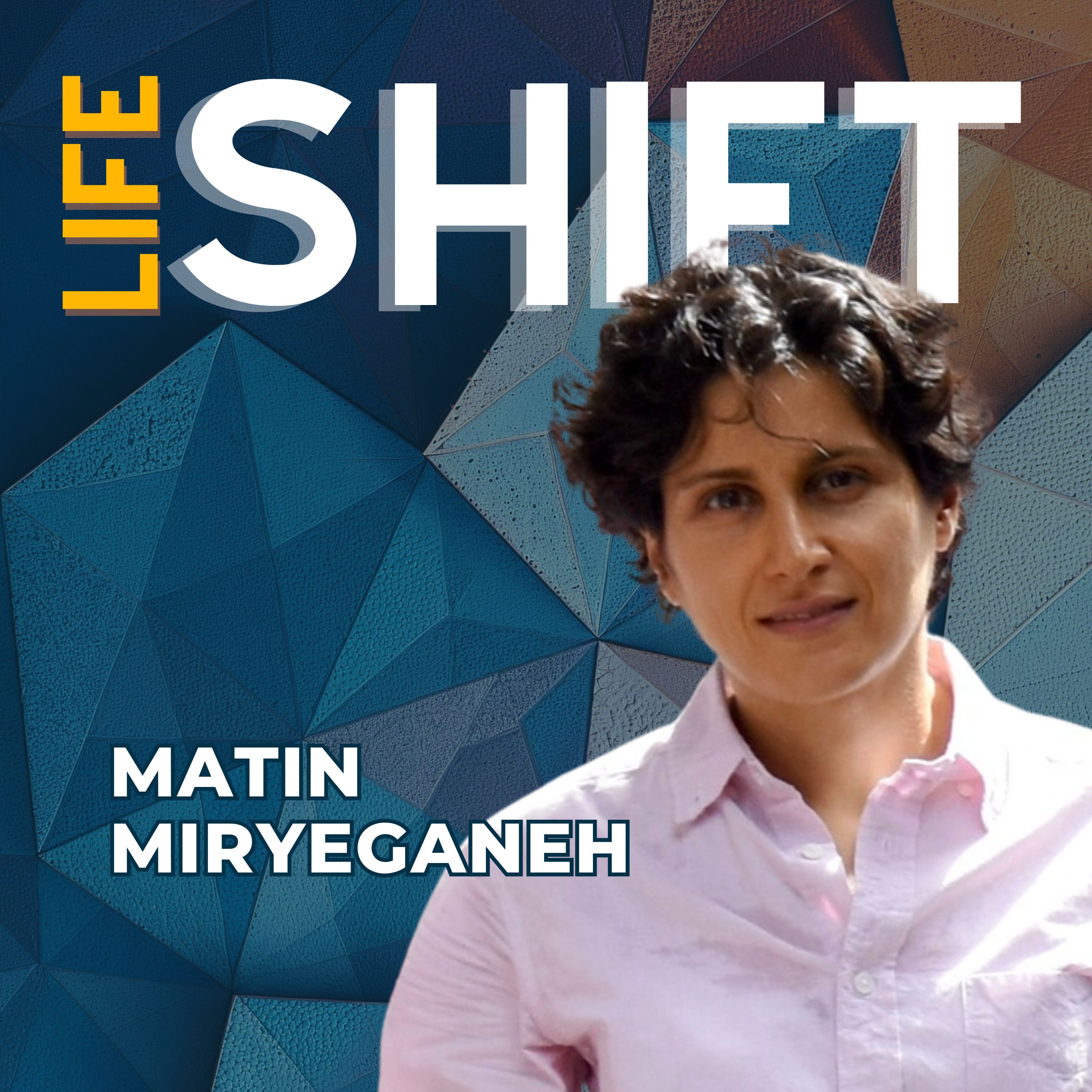
Matin Miryeganeh lost her mother at 13, her family's support, and the permission to grieve. This episode is about what happens when you survive alone and slowly find your way back to yourself.


 Goodpods
  Podchaser
  PocketCasts
  RSS Feed
 There is a kind of grief that never gets to happen out loud. It stays pressed down inside you, shaped by the people around you who couldn't hold it. Matin knows that grief. She found out her mother had died by reaching for a hand that didn't reach back. She was thirteen. And then the world she had counted on, her mother's family, her father's warmth, the permission to even cry, quietly fell away.
What followed was years of building a life on her own terms. Studying in secret. Sleeping on hard surfaces just to avoid going home. Moving from Iran to Japan to finally have room to breathe. She did it without anyone telling her she could. She did it by becoming her own closest companion, the kind of friend who says, I remember when that happened, and we got through it together.
Matin is a plant molecular biologist who studies mangrove trees, organisms that live between land and sea, in conditions most things can't survive. She sees herself in them. In this conversation, she shares what it took to finally reach peace, and why she believes all of us should talk about our stories, not as something brave or rare, but as something ordinary and necessary.
What You'll Hear:
- Growing up with a father who was both deeply loving and unpredictable, and what that did to a child's sense of safety
- The moment Matin discovered her mother had died, and being told not to cry
- Losing her entire maternal family in the grief that followed, and the deep loneliness that set in
- How she secretly studied through high school, skipped dinner for four years, and fought her way to college just to survive
- Building an academic career across continents, including surviving a violent assault in Japan, and still choosing not to become defined by her pain
- What turning forty felt like, and the inner bond she credits with getting her here
Guest Bio:
Matin Miryeganeh grew up in Rasht, Iran, and is now a plant molecular biologist based in Japan, where she has lived for sixteen years. She studies mangrove trees, and the connection she feels to these resilient organisms runs deeper than science. Matin is also the author of All Is Well, a memoir in which she shares her journey through loss, isolation, and the long, quiet road to peace. You can find her book on Amazon and Goodreads: https://www.amazon.com/All-Well-memoir-survival-strength/dp/B0FHH898H6
Listen and follow: www.thelifeshiftpodcast.com/follow
Subscribe to the newsletter: https://thelifeshiftpodcast.beehiiv.com/
childhood grief, mother loss, growing up without support, finding inner peace, resilience, trauma healing, isolation, self-connection, immigrant journey, life transformation
You Might Also Like:
Matt Gilhooly (00:00)
Some stories don't just change a moment. They change the way that you learn to exist in the world. Mateen grew up in a home where love and fear live side by side. And when she lost her mom at 13, everything that felt steady disappeared all at once. Not just her mom, but the space to grieve, the family around her, and eventually even the sense that she had a place to land. But what stayed was something quieter. It was this kind of relationship with herself
that had to form because there was no one else there to hold it. This is a story about loss, but it's also about what happens when you survive it alone and somehow still find your way to peace.
Matin Miryeganeh (00:40)
I found out my mom is dead by squeezing her hand and noticing that she doesn't squeeze back. remember my tears were started pour on my face and my dad, even at that moment telling me, no, don't cry because if you cry, it's going to make me I couldn't even cry. couldn't do anything.
Matt Gilhooly (01:04)
You're listening to the LifeShift Podcast. I'm your host, Matt Gilhoolie. This show is built around one simple idea, that sometimes a single moment can change how we see everything. Each week, I talk with someone about the moment that shifted their life and how they learned to live differently after it. These are not stories about having it all figured out. They are stories about what it looks like to keep going once the story changes. Thank you for being here. Here's today's story.
Matt Gilhooly (01:35)
Hello everyone, welcome to the LifeShift Podcast. I am here with my teen. Hello there.
Matin Miryeganeh (01:40)
Hello, thank you for having me.
Matt Gilhooly (01:42)
Well, thank you for wanting to be a part of the LifeShift podcast and for ⁓ signing in from the other side of the world.
Matin Miryeganeh (01:51)
Thank you. I'm honored to be here and share my story.
Matt Gilhooly (01:55)
It has been a journey that I never really could have imagined for myself to be able to talk to so many people around the world that, you know, I would probably never bump into, never get to hear their stories. And I say it and it sounds really silly, but every single conversation that I've had on this show has healed a little bit of the younger version of myself that I kind of see as walking beside me now because he had
I mean, I had this life shift moment at eight years old that really made me wonder, do other people have these line in the sand moments in which from one second to the next or one minute to the next, everything about their life changed? And it turns out we have lots of them. know, I maybe was a little naive thinking we just have one. Of course, we have multiple life shift moments. But I found that if we're lucky enough, and I say lucky enough, if we're lucky enough to find the space where we can
have more self-awareness and reflection and be able to get to the point where we look back on these moments and see how they've changed us and how we can move through the world differently. I realize not everyone is lucky enough to find that space. But if we are lucky enough, we find how much we have in common through these conversations and normalizing the things that maybe we were ashamed to talk about when we were younger. So super glad that you want to tell your story, even though it's a very hard story.
I think there are some parts of your story that I will resonate deeply with. But before we get into the deep parts of your story, maybe you can tell us who you are in 2026. Like how do you show up in the world? How do you identify these days?
Matin Miryeganeh (03:38)
I identify as a scientist. am a plant molecular biologist and I work on mangrove trees, which I don't know if you know them, but mangroves are very resilient. They grow between land and sea and in this high salinity condition. in many ways, I with them I like studying them and see how I feel connection.
connected to them. also see myself, just turned a couple years ago, I turned 40. And just at that time, I now see myself to be finally at peace and happy. And I that's why I want to share my story because despite so many that happened to me, I was able to find peace and happiness and I want people
who are going through difficult times now to know that it's possible and you don't need to be special to find peace. You can just find it in a normal life.
Matt Gilhooly (04:42)
Yeah. And
to your point, though, I mean, some some of us have been in these moments where it just feels like we will never find that piece. Like, like, how is it possible? And what I love about talking to people about these stories is that it's clear for a majority of us that it's not a quick fix. It's not an easy thing for a lot of us myself. I can speak for myself.
Matin Miryeganeh (04:52)
yeah i've been there
Thanks, guys.
Matt Gilhooly (05:11)
took me about 20 plus years to find a space in which I felt like I was actually moving forward in my grieving journey. That's a long time. And so people go even longer, but there's no timeline is basically what I'm trying to say. And it's usually not a quick fix. And so I'm so happy that you found this space in your 40s now in which you can reflect back on these moments and see how they shaped you to this version of you, but also
have the pride in yourself of what you've accomplished and move through the world in this way.
Matin Miryeganeh (05:46)
Yeah, and I also, but to your point, what I have gone through throughout my life, especially since I had nobody to help me with, even as a child, I it you know how they say adversity bonds people together, trauma bonds people together. But in my case, I feel like it created that bond between me and my inner self. And I feel this deep love and respect towards my own like
which I like think back that I tell to myself, remember when that happened and how lonely and sad we were and how we got through that together. And I now appreciate everything that happened to me because it just created this strong bond between me and myself. And it's just amazing. I love it.
Matt Gilhooly (06:23)
Yeah.
I love that. That's like you're
your own best friend in a way, or your own like mentor or guide or all the things that's, that's really beautiful. And it's hard. I know we'll get into your story in just a second. It's so hard for a lot of people to see these really hard moments that we went through and see them with this respect, I guess, for how we moved through it and what it created.
Matin Miryeganeh (06:37)
Yes, I am.
Mm.
Matt Gilhooly (07:01)
and knowing full well if we hadn't gone through it, we wouldn't be these versions of ourselves. So it's it but it's a weird thing to look, you know, have that and say it out loud sometimes, but let's normalize it.
Matin Miryeganeh (07:01)
Yeah.
yet.
Yes, I'm intending to normalize that.
Matt Gilhooly (07:17)
Yes, I
love that. So why don't you paint the picture of your life leading up to this main pivotal moment that we're going to center today around. And you can go back as far as you need to, to kind of show us what the before version of you and your life was like.
Matin Miryeganeh (07:33)
I am from Iran and I was born in the 80s in Iran, which was during Iran and Iraq war. I was in a, my parents were both educators. My mom was a teacher. My dad was a school principal, but same difference. And then from the it was just a normal middle-class family,
from the inside, even though my parents were both very loving and both my parents, I never doubted that my dad also loved us. But at the same time, as a child, I always found my dad to be very unpredictable in a way that he could be physically very caring and loving. And he was the one who took care of us when we were sick. Like he stayed up all night, he took us to doctor and he really cared. But at the same time, he's
he could get angry with the smallest trigger and just yell at you and just make a very happy day, very sad. as a child, I found that very stressful. And I always felt so safe around my mom. And I was so attached to my mom and I always wanted her around. And luckily, in Iran, are two a school. they either start from 8 a.m. until
Matt Gilhooly (08:35)
Mm-hmm.
Matin Miryeganeh (08:51)
1 PM or from 1 PM to 6 PM. So my mom and dad, because they wanted to, I also had an older brother who was two years older than me. So me and my mom went to school together and my dad and my brother went together to the opposite shift. they could, whoever was at home and they alternated every week. So whoever was at home that.
in the morning that week, they would make lunch and everything. So that was arranged that way, but it made me even more attached to my mom. And another thing that was important in my life was that my mom's side of family were very affectionate and loving and caring and warm, friendly in a way that, and I had that loving experience of grandparents and extended family in a way that
Matt Gilhooly (09:26)
Mm-hmm.
Mm-hmm.
Matin Miryeganeh (09:44)
the kids are meant to experience. But my dad's side of family, even though they were good people, they were very disciplined and formal and very not really affectionate. even though I respected them, I never was comfortable around them. And we didn't visit them as often as we went to my mom's parents like every week, every weekend. But to them, my dad's side was just every once in a while, just for a couple hour visit.
Matt Gilhooly (10:11)
Mm-hmm.
Matin Miryeganeh (10:13)
This is the background that I want people to know that, yeah, before I get to them.
Matt Gilhooly (10:14)
Yeah.
Yeah.
Yeah. So it's your life, I guess. Well, like you said, on the outside, look like you had a quote unquote normal life. You had two parents, you had a sibling, you were going to school doing you the normal thing that I guess we would paint as normal. But there were cracks inside there were there, and which I would imagine that a lot of people experience, I think there's, it's probably more common to have cracks that nobody knows about in your family, versus like,
Matin Miryeganeh (10:25)
Mm.
Yes. Yes, yes, yes.
Yeah, of course.
Mm.
Matt Gilhooly (10:46)
the really perfect fairy tale family, I would imagine, at least through all the conversations I've had on this show. yeah, so you had, would you say you said you were, you say that you kind of were tiptoeing? Would there be a sense of like you were afraid to trigger your father on anything? Was it like a tip? Okay, so this wasn't like, he would randomly do it, but you were super conscious that like anything you did could potentially set him off.
Matin Miryeganeh (10:50)
Yes, yeah.
Exactly. Yes.
even
things that I didn't do, he could get angry and yell at me for that. Like my brother did something and why, like he would blame me. Like, for example, saying he's an idiot. Why didn't you say something? Even though he was the older one. And it wasn't only about what we did or what happened sometimes. I now thinking back, I'm thinking he probably had some undiagnosed mental disease or something, but he used to like, if he was in a bad mood,
Matt Gilhooly (11:19)
Mm.
Yeah.
Matin Miryeganeh (11:43)
then he would get mad at us like for anything. Why aren't you talking? Why is your hair messy? Why are you like, it was just so stressed. Yeah, it was so stressful. At the same time, it was confusing because the stereotype of bad father is the one that they're not around. They abandoned their family. They are drunk or they're just, but he was really caring. Like to the point that he monitored, for example, did you brush your teeth? Is everything okay?
Matt Gilhooly (11:50)
Why are you breathing?
Matin Miryeganeh (12:12)
So much as if we sneezed in the morning, he was like, don't go to school because you might be sick and you need to rest. It was just overly protective. Yeah. But at the same time, he could just ruin a happy moment for no reason. So it was very confusing and unstable for a kid.
Matt Gilhooly (12:20)
Yeah, that's very jarring. It's very confusing.
Would you say, before we get closer to your moment, would you say that there were more instances of the happy part of your father or more of the angry, mad part in that time period?
Matin Miryeganeh (12:47)
think about that a lot actually passed away five years ago and I try to classify like, was he a good dad? Was he a bad dad? And because I think as human beings, remember, our brain remember the trauma more. like, I was always, sure he was equally loving as well, but my brain remembers the hard part, the difficult part, because I had to, I mean, I cut all my
Matt Gilhooly (13:01)
Mm-hmm.
and
Matin Miryeganeh (13:15)
fun and everything because my priority, even when I was a kid, my one and only priority was not to make dad angry. I, no, my friends, like my neighbors will ask me, will you come to play? Because my dad used to get super angry if I was even one minute late because he would get worried.
Matt Gilhooly (13:25)
so you weren't able to be a kid.
Matin Miryeganeh (13:37)
I wouldn't even want to risk that. I was like, no, I have other things to do. just, my only goal was keep that happy. And even that never worked because as I said, it wasn't about what I did or not did. It was just how he felt.
Matt Gilhooly (13:53)
Yeah. What what did you like? Where was your fun in that time period? Like what did you what was your solace? What was your something that's comforted you? Was it reading? Was it? Was there anything that you had that you could go into? I guess your mom? But was there anything else you did?
Matin Miryeganeh (14:08)
My mom
and when we were visiting her parents, which we went every weekend and we stayed for a whole day, like from morning until evening. And that was the only place I could be a kid and just be loved.
Matt Gilhooly (14:24)
was like charging your batteries at your grandparents and then all week at home, it kind of drains it. Although your mom is like, yeah, well, take us further into your story. I just really wanted to see that before. I mean, I'm so sorry as a kid that you had to take on that quote unquote responsibility, because that's, it really cuts out what what you could have done.
Matin Miryeganeh (14:26)
Yes, yes, Yeah.
Thank you. Yeah.
Yes, exactly. And my dad, I believe he didn't have the ability to understand age. Like even from a five year old, he expected like when one time when I was four year old, he kicked me out of the car. He was there. He took me to his workplace and he told me, you have to say hi. Hello to my colleagues. And I remember I did, but I was such a So I didn't say loud enough. So on the way back, he stopped the car. He said, get out.
as my punishment and he drove a little like a few meter ahead and he was watching me from mirror but I didn't know that. I thought he just left me and as a kid I thought okay this is my life now and I have to live and my only concern believe it or not was not that I don't have a family anymore my concern was that I hope the person who is gonna kidnap me and take me home will be nicer to me.
Matt Gilhooly (15:23)
Mmm. That's scary.
That's
really hard. Yeah. It's hard to get settled and grow.
Matin Miryeganeh (15:42)
So yeah.
Yeah.
Matt Gilhooly (15:49)
So take us further, take us to the hard moment.
Matin Miryeganeh (15:53)
So yeah, and then when I was about eight year old, my mom got diagnosed with cancer, breast cancer. And back then, at least in Iran, cancer was not such a known disease. And as a kid, my mindset was that you get sick, you go to the doctor, you get treatment, and you get better. It wasn't like a life threatening. I mean, I was sad that I had to be away for the first time. Like my mom and dad had to go to Tehran. I am from north of Iran.
province of Gila next to Caspian Sea. I'm from Rasht. And they had to go to Tehran because my dad wanted to take my mom to the best doctor possible. And he was such a caring husband. he really, I have never seen any husband to take. I mean, I have never seen, I'm not saying it doesn't exist, but the way he cared about my mom and took care of her during her it was amazing to me, which
again made it more more confusing to me because he was such a caring husband in like all the physical part. But at the same time, he could trigger him. He could become triggered and get angry and just yell over nothing. So it was just still. But when when she got sick, because I was only and then I watched her go through treatment and get better, then the cancer came back two more times. But in my mind,
Matt Gilhooly (17:03)
Yay.
Matin Miryeganeh (17:16)
Whenever she got sick, okay, she goes, gets the chemo or radiation and then she gets better and all is gonna be okay. The last time that the cancer came back right after my grandpa, my mom's father passed away suddenly from a stroke when I was about, when I was just 13, I think I had just turned 13 years old. And then my mom took it pretty hard and
She, are now reaching to that pivotal moment that I'm going to talk about, but build up to that, my mom took her dad's death very, very hard and her grief was very difficult. And that made my dad very angry because he kept telling her, hey, I took care of you for this like six years and I made sure that you survive this and.
Matt Gilhooly (17:46)
Mm-hmm.
Matin Miryeganeh (18:07)
you are by grieving this hard and crying and being sad, you are ruining your own life. He couldn't understand that she needs that grief. So that made that that made our household very stressful. And all I remember from the last eight months of my mom being alive is that my mom and dad fighting like him being not understanding, but at the same time caring that, hey, I want you to stay healthy. Don't ruin your health.
Matt Gilhooly (18:15)
Right.
Right.
Matin Miryeganeh (18:35)
And he kept saying, your dad lived to be 70 something years old and you have your kids to think about. And it was just, and my mom crying over, no, you don't understand. I love my dad. It was, and I never even got the chance to grieve my grandpa's death because I had to take care of my mom. Like my dad, even from the time that I was eight year old and my mom got sick, I became in charge of doing a lot of chores at home.
even though my dad was helping too, but he was more in charge of taking care of my mom. So my brother being the boy in our house, boy was like not responsible for anything. I wasn't the girl and I was in charge of everything and I was to blame for everything. then because I was so used to like my mom, the last time she went to the hospital, she came back home and I just assumed like the
Matt Gilhooly (19:14)
great.
Matin Miryeganeh (19:28)
previous two times, she's gonna recover. She just got the treatment. I remember she got radiation and the last time the cancer was in her brain and she was getting this bad headache and nobody told me that this time doctor said she's not gonna get better and this is it and she's gonna die soon. I didn't know that. just, knew that, yeah, they kept it from me.
Matt Gilhooly (19:31)
Mm-hmm.
They kept it from you.
Matin Miryeganeh (19:51)
I don't believe they kept it to protect me. I think it was mostly to protect themselves because it was an uncomfortable conversation. so in Iran schools, every spring for one day, all the schools is like a tradition. They take all the students to picnic, to somewhere in the nature and
they rent a bus and a few buses and then they take them to some beautiful nature place. I have never gone to any of those with my own school because I've always gone with my mom's school. Because when I was in elementary school, I went to her school. So that was like for six years, our routine. And after that, for a few years that she was still alive, I went with her.
And this was the first time that our school, I didn't even want to go, but my principal at my school and everybody was insisting. Now, now I know because they were taking pity on me because they knew my mom was sick, but they were really insisting you have to come, you have to come this year, you have to go. kept saying, no, no, no. And my dad told me, Hey, when an older person just keep asking you, is disrespectful. If you keep saying, no, just accept.
Matt Gilhooly (20:51)
Right.
Matin Miryeganeh (21:06)
And I said, okay, I'll go. my mom, day, the day morning after I had to go to trip, the picnic, she told me, no, I don't want you to go. ⁓ I even want you to stay with me at night, like next to me. my dad, during that last few months of my sickness,
I said he was such a caring husband is that he, my mom couldn't lie down and sleep for some reason. I think her lung was was having difficulty. She couldn't breathe well. And he, she sat on her bed like all night. And my dad sat with her all night. And it was just, she, he really was taking care of her. And at that night,
My mom said, I want you to also stay with me, which was so out of character. My mom was not, she never asked me for anything. She was not demanding. She was always putting us at first. And, but because I had promised to school that I want to go, I I want to go to a trip. She told me, I don't want you to go. And I couldn't, I wish she had told me because I have a feeling I'm going to die in the morning, but she didn't.
Matt Gilhooly (22:18)
Yeah.
Matin Miryeganeh (22:20)
And I went and the last thing I remember is just saying goodbye. And she was so mad at me that she didn't even look at me. She just said, yeah, bye. Like in a way that she was mad. I went to school and we were getting ready to take the bus. And I noticed my uncle parking, off the car and he was there to pick me up. And I asked what's wrong. And he said, my
Matt Gilhooly (22:31)
Yeah.
Matin Miryeganeh (22:47)
He said, mom is not feeling well. Even though my mom had just probably, probably not definitely. My mom had died and they had called the school that we need to come pick up Matin. But he didn't tell me. said, she's not feeling well. And in my mind, I was like, so I know she hasn't been feeling well for some time now. And picked me up. He took me.
Matt Gilhooly (23:05)
Right.
Matin Miryeganeh (23:10)
He said, let's go pick up dad as well. My dad was also at the school. So he picked up dad and we went home. And even then they didn't bother to tell me that, mom, you're not, you're going to walk into the room and mom is not going to like be alive. They, they let me find out by like, went, I thought she's sleeping. I, and it was strange to me that she was lying down because she was not, as I said, she was just sitting.
Matt Gilhooly (23:25)
Yeah.
All
Matin Miryeganeh (23:40)
And then I found out my mom is dead by squeezing her hand and noticing that she doesn't squeeze back. And I remember my tears were started to just pour on my face and my dad, even at that moment telling me, no, don't cry because if you cry, it's going to make me sad. So I couldn't even cry. couldn't do anything.
just to make the matter worse is that my mom's side of family started fighting with my dad because, you know, because of his temper, they started blaming him not being kind enough, not taking care of her, which is not true. It wasn't fair to my dad. I was really, I mean, he really took care of my mom. And, but because of that conflict,
I wasn't then allowed to see my grandma, to see my aunts. Like all of the sudden, my whole world changed. And to make the matter worse, my grandma died a year after from sudden pneumonia and heart condition. And then my other aunt, my mom's sister died.
Matt Gilhooly (24:38)
Yeah. Yeah.
Matin Miryeganeh (24:53)
The pivotal moment for me is this cluster of losses that I suddenly lost all my mom's side of family. And I found myself extremely isolated and lonely at home because there was no, my dad started developing this strong bond with my brother. And he kept saying, a young boy for a young boy is so difficult to lose a mom for a young boy. It's just, and he just forgot that he has a daughter too. So I lost my
Matt Gilhooly (24:54)
Yeah.
Yeah.
Matin Miryeganeh (25:20)
mom and dad together. And everything that came after that was just so, I mean, even now thinking back about how lonely and sad I was, now maybe you understand what I mean about that strong bond that was developed between me and myself because I didn't have anybody else. I wasn't even allowed to go out with my friends, like as a girl. was just always at home, isolated with nobody. So it was such a hard time.
Matt Gilhooly (25:21)
Yeah.
Yeah.
Yeah, and being so young and losing essentially the heart of your family, one losing your mom is hard enough, right? That's a you were close to her finding out in that way, and then being told to stuff it down. And like, you know, don't outwardly grieve because it's gonna make me uncomfortable. It's really hard because that stunts you that is like, ⁓ well,
Matin Miryeganeh (26:06)
Yeah.
Yeah.
Matt Gilhooly (26:14)
guess I'm not supposed to do this. And then did it give you this, this feeling of like, shame that came when you were sad? It happened to me. Did it like so you would get sad and you're like, I shouldn't be
Matin Miryeganeh (26:23)
Exactly. It was, it was
Because they treated me in a way like if I, I remember one time I mentioned to my cousin that I miss my mom and he told her, his mom and my, from my dad's side and my dad got so angry at me. He had this feeling that if you say you miss your mom, it means I'm doing inadequate. I'm not taking care of you.
And the way he mourned my mom's death is that I think it was the way of his griefing. He never explained it to me, now thinking back, I think maybe it was his way of griefing that he started, like in the beginning, sure, was a little bit, he was sad that mom died, but he then immediately started remembering all the conflicts and bad memories about mom and mentioning them out loud and wanting us, wanting me.
to participate, like talking trash about my mom. And I remember if I didn't listen, he would get angry at me. Hey, why don't you say it was just, and I remember I wanted to go to her grave remember one time he said, you act like as if your mom was like such a great person, which she was. So it was just shameful. We never talked about her. never,
Matt Gilhooly (27:45)
really hard.
Matin Miryeganeh (27:50)
We never like my dad's sisters came like just if I think one week, maybe 10 days after mom died, they came over. I mean, they were caught on God helping us to cope. But in a way, they took away everything that belonged to my mom and gave it to charity. They took all the pictures. They took everything. And they thought because we are helping that so
It doesn't remind them of like remind the kids, but it wasn't like that. I was reminded of my mom every morning waking up. Actually, believe it or not, I used to dream about her being alive and not being sick anymore. And then waking up and for a few seconds forgetting that she's dead. And then all of the sudden my word crash that yeah, she's dead. was just, yeah. And I couldn't talk about, yeah.
Matt Gilhooly (28:21)
Right.
Yeah, it's really challenging. But did you
have anyone to like, could you talk about it with anyone at school? Could you talk? Did you have any good teachers that would talk to you about it? Nothing.
Matin Miryeganeh (28:53)
No, no,
no, I didn't even tell my friends at the school, even when my mom was sick. No, no, none of my friends knew because we grew up like in our household. It was shameful to talk about like you don't want to attract people's pity. was like if you talk, you don't want to make them uncomfortable. If you talk about being sad, if you cry, if you you are making them uncomfortable.
to the point that I remember at my mom's funeral, people like strangers, don't even know who they were, maybe friends of friends, but I heard them saying her daughter didn't even shed a tear. And like they thought because I'm keeping my face straight and I'm not, it means I'm okay. I'm like, I don't care. Like it was just so, and I didn't have, I...
Matt Gilhooly (29:43)
Yeah.
Matin Miryeganeh (29:48)
My mom, my dad had sisters that they weren't close to me. I mean, as I said, they were practical. They helped us with other things, but they were all nurses. For example, if we got sick, they took us to the doctor or something, but they emotionally, didn't, I suddenly went from that huge support from my mom's side to zero and also losing my dad emotionally.
Matt Gilhooly (30:10)
Yeah.
Right. Yeah. And you also took on the responsibility of showing everyone that you were okay, which is a burden. I understand that as well. My mom died when I was eight suddenly. the people left though, fortunately, my father took on the role. My parents were divorced, so I didn't even live with my father, but he took it on and we did the best we could. he was emotionally... My grandmother, definitely, she came into...
Matin Miryeganeh (30:20)
Yes, yes.
Mm.
Yeah, and your grandma. Yeah.
Matt Gilhooly (30:42)
into the picture in a big way. And I was lucky in that in that case. But, you know, I still had that because it was around the same time, you know, like this was late 80s. So again, in the United States, people weren't talking about grief or how to help a kid. They just wanted to know that the kid was going to be okay. And they assumed, kids will bounce back kind of thing. So I took on a very similar role that you did. But in my case, it was self imposed.
Matin Miryeganeh (30:55)
Mm.
Yes.
Hmm.
Matt Gilhooly (31:11)
Because I would hear other people like is he okay? Versus my dad never would have told me like don't do that I just assumed he didn't want to see that so I took it on like on my own where you were forced into it, which is so much worse but I mean, that's a that's especially to it's in your formative years as a female like you're Starting to grow as a woman and you like want? Motherly figure you want
Matin Miryeganeh (31:20)
Yeah, it's
Yeah.
Matt Gilhooly (31:39)
aunts, want grandmothers, you want these people around you to help you through that. As you like how, how do you get from there to like the next step where you can start finding life?
Matin Miryeganeh (31:53)
So my dad became, like his mood became worse and worse after that. every, I could like visibly say, see that he's like getting like, he used to get, he was getting more angry at me. Like to the point that I could feel that he doesn't, he doesn't even like me anymore. I mean, I always made sure I knew that he loved me because you know, instinctively he is a dad, but I, I,
Matt Gilhooly (31:59)
Mm-hmm.
Matin Miryeganeh (32:21)
got to the point that I thought he doesn't enjoy my company. He just doesn't want me around. And he was so close to my brother. And I was such a kid on paper in a way that I was so good in school. I always made sure that I studied. And after that, my dad, even though when my mom was alive, he was still helping at kitchen and everything, cooking. gradually, because he became more depressed,
and he was also taking medication. So in Iran, can just get, you can go to the doctor once and be prescribed. And then after that, you can just get refill if you know the pharmacy. Like he was just self-medicating and he was always, he looked like a drug addict because he was always napping in front of the TV. He was just so, and he, even though he had a job still for a few years after that, in Iran, you can request retirement early.
So he retired himself, I think even before he was 50. And when my mom died, he was in her early 40s. And then I was all, and despite all that, I was still helping at home, but I wasn't allowed to study much because he found the picture of me sitting and studying and reading a book depressing.
He kept getting angry at me that is so depressing. You're always studying as if you have his line was as if you have exam tomorrow. And he called me crazy for it. I remember that he told me that the only explanation is that you're insane. And my brother was the opposite. He didn't want to like be good at the school. He really embraced. So my dad really favored him in that way. And then
Matt Gilhooly (33:58)
Mm.
Matin Miryeganeh (34:08)
I was making lunch every day. So that was already taking a few hours, like three hours of my day, because it wasn't only making lunch, cleaning like before and after and everything. My dad was such an OCD that if anything in the kitchen was, even if there was like a small drop of water in the sink, he would get angry. So everything had to be neat and I didn't want to risk making him angry. So I was making lunch.
But then I realized if I also start making dinner, that's going to be my responsibility as well. And then I will have no time for studying. So I lied and I said, my stomach gets upset if I eat dinner. And they believed me because I always had very sensitive stomach as a kid. And what I did that I just went to bed hungry for four years of high school. I could smell food my dad used to.
Matt Gilhooly (34:40)
Mm-hmm.
Matin Miryeganeh (34:59)
My brother used to order take out and just have this, but I just didn't because it was so important to me to go into college at least because I knew that nobody cares. Like my dad mentioned a few times, it's not a big deal. Not everybody goes to college. And if you don't, I don't know if he was joking or not, but he said, if you don't, what's a big deal because you stay here and cook for us, which was very hurtful for me because it was like.
Matt Gilhooly (35:25)
Mm.
Matin Miryeganeh (35:28)
I remember I was very sad about it I realized that if I don't help myself, nobody is going to help me. But even then, even then I always said, I'm going to go to college to my hometown. My hometown had a good decent university so I could still go there. All my cousins went there. It wasn't a bad school, but it wasn't as good as if you go to Tehran, to capital.
Matt Gilhooly (35:46)
Mm-hmm.
Matin Miryeganeh (35:52)
But at that time I was saying, I want to go to school to my hometown because I don't want my dad to be alone. And I still felt that responsibility that yeah. But then there was another moment that maybe I decided I'm going to leave. are two types of pivotal moments in life. One that you don't have any say in it. For example, my cluster of losses like my mom's and it, but this one, the pivotal moment made me decide that I have to leave.
Matt Gilhooly (36:15)
Yeah.
Matin Miryeganeh (36:21)
I remember even though I wasn't making dinner, I was still in charge of the kitchen before going to bed. So, and every night before I go to bed, I remember at 11 PM, I used to go out of my and clean the kitchen and make sure everything is ready and then go to bed. And I was very good at scheduling everything, but there was only one night that I...
was running 30 minutes late and I was behind my schedule, whatever I wanted to finish for studying that day. And my dad, during that 30 minutes that I was late, he woke up, he was, as I said, napping in front of the TV. He got up, he went to the kitchen and he found the kitchen messy. And he got so angry, he started yelling and he said, you think I'm your maid, I'm your servant. And during that time, he said something, he said,
I hope, like he was talking about me, he said, I hope this girl, like me, goes far away to college somewhere that I'll just be free. And at that moment, I actually heard my heart shatter because I was like, hey, I'm doing everything I can to make you happy. And I'm even saying I'm gonna stay here. And at that moment, I'm...
Matt Gilhooly (37:27)
Mm.
Right. Right.
Matin Miryeganeh (37:36)
I decided I'm going to go and I don't care. I didn't even pick my hometown school. picked, I mean, he was still not investing a lot on my education. And at the time I knew that if I go to a college that it requires money, he's not going to pay. So I had to really start this study so hard to get a scholarship and like academic scholarship and then not have to having to pay because if it like my
Matt Gilhooly (37:59)
Yeah.
Matin Miryeganeh (38:03)
brother went to a college that he had to pay for him and it was okay because he wanted his son to be educated. But in my case, it wasn't the priority. So I really made sure that I study as much as I can and find time that I was waking up. I was sleeping like three to four hours a night and waking up early so that he wouldn't see me studying. because back then in Iran, the only way you can get out of house is either you get married or you go to college.
Matt Gilhooly (38:11)
Yeah.
Yeah.
Matin Miryeganeh (38:32)
And I always knew I don't want to get married because I've had enough drama in my life with my dad. I was like, I need peace. I need to be alone and be at peace. Yeah.
Matt Gilhooly (38:40)
Yeah.
Yeah. So you escaped, essentially, you went to college and I mean, you said you're a scientist. So clearly things went well. But did you did you start to find yourself like as you got out of the home? Did you were you able to find a new version of yourself?
Matin Miryeganeh (38:57)
I after that, still, I mean, I was still in contact with my dad. And in a way, I think I saved our relationship because he didn't enjoy my company, as I said, it also made him when I was around. So I left so that we still, we still talked on the phone every week. I still went home for holidays. And when I went home for a couple of days, he was happy. And then he started being mad at me for some reason, but then
I'm not gonna list everything that I went through because even my, it's not that my happiness started then because my of education was very stressful. And then after that, had to, I didn't want to go back home after I graduated. I had to enter a master degree. So I remember I had to just also study just as hard to,
Matt Gilhooly (39:40)
Great.
Matin Miryeganeh (39:47)
My dad didn't like, as I said, didn't like me studying. And I went home the summer that I had to take the entrance exam for master degree. I went home to study and he started yelling at me and getting angry and calling me crazy for studying in summer. And I remember I called my dorm and I said, can I come early? So like two weeks before schools open and they told me you can come, but your stuff is not going to be in the room because we had to put everything in the storage.
And I remember I went my dorm and I was sleeping on a hard piece of wood. And I still preferred that in an empty room. At the time that all the other kids were at home enjoying the rest of summer and trying to embrace as much as they can get like the summer with their family. But I still preferred that over not being at home on my perfect bed.
And then to make the matter worse, when I went for my master degree, I'm not going to list everything that happened to me, but when I was a master's student, when I got in finally to a national university with a scholarship for a master degree, my professor me. and I couldn't speak up because at that time, I think still in Iran,
they always blame the woman. probably, I would have been expelled and I wanted to get the degree. So, and after that to come to Japan for the scholarship that I had to apply, I still couldn't go home because there was like, there was a one year of preparation, everything like finishing my paper and publishing it and all the documents for application for Japan. wanted to, I applied for a PhD scholarship in Japan.
Matt Gilhooly (41:06)
Mm-hmm.
Bye.
Matin Miryeganeh (41:32)
And to do that, I knew if I go home, I can never do it. And my dorm, because I had just graduated from my master's degree, they didn't allow me to stay in the dorm. And in Iran, they don't allow single women to rent a house on their own or go in a hotel on their own. So not that I could afford staying in the hotel, but still.
Matt Gilhooly (41:58)
Yeah.
Matin Miryeganeh (41:59)
So I had to, this security guard in our university felt sad for me and he allowed me to sneak in, not in the dorm, but in the university. were in universities in Iran, you are not allowed to stay in overnight. In Japan, I know you can, but in there, they kick you out at 7 p.m. So he allowed me to go and sneak in, he stopped me in and then I was sleeping again on a table in a storage room.
And I remember there were cockroaches in the room that they used to come out if it was dark during the night. So I had to leave the light on and I still prefer that because I knew the result is worth it. I wanted to give myself something that I believed I deserved and I knew nobody else was gonna give it to me.
Matt Gilhooly (42:31)
No.
Right.
Yeah.
Yeah. During any of that, there's a lot and I know you haven't even told everything. During that, were there moments of pride or happiness or any of those emotions bubble up or were you still like fight or flight kind of need to stay safe, need to get out? Like did you do you remember any periods of like happy or joy or proud of yourself?
Matin Miryeganeh (43:13)
I mean, despite everything with my dad, I always loved him. And to the point that my friends mocked me, they told me that you treat your dad as if he's your boyfriend, that you always care about what he's gonna think, how can I make him happy? And because he had a very he was both.
loving and also not loving at times. It was confusing to put him in a box of if he's a good dad or bad dad. But I always assumed he has some mental issue and it's not on his control. Like it's not his fault. He's gone through a lot. His wife died when I mean, I made excuses for him. And for as long as I remember, I was never happy because I was always nervous. Like every time I was calling home, is he going to be in a good mood? he?
Matt Gilhooly (43:55)
Yeah.
Mm-hmm.
Yeah, like
you were as a kid. You were nervous.
Matin Miryeganeh (44:05)
How? Yes, yes,
yes, yes. Even when I came to Japan, I remember I was calling him on the phone every Saturday and every Saturday I was nervous because I could never predict how he's going to react. At the same time, because I loved him, I mean, I'm not just saying it because he's gone now. I really love him and I didn't know. It was just so comfy. I was going through a lot of like.
building my academic career wasn't an easy thing for me, especially I came from a background in Iran and it wasn't strong enough to succeed in Japan. So it was so stressful, like I didn't have a permanent job and every year I was worried that was going to happen next year. I mean, as I said, not until I turned 40 that everything just now I feel at peace.
Matt Gilhooly (45:00)
Something feels different. How long have you been in Japan?
Matin Miryeganeh (45:04)
16 years.
Matt Gilhooly (45:06)
Did you ever leave? You stayed there?
Matin Miryeganeh (45:09)
No, I never left, I visited the last time I went to Iran was 2014. And in that visit, my dad was just so, so, so was, he had gone so much worse. And I remember saying, I'm never going back. And I never went back. I mean, I kept my relationship with him, but then, I never, for 10 years, I didn't go back until.
Matt Gilhooly (45:27)
Mm-hmm.
Matin Miryeganeh (45:36)
He died and I still couldn't go back because he died during COVID.
Matt Gilhooly (45:41)
Do you, you said, you know, in your early 40s, you started to feel different, you started to feel at peace. Do you is do you attribute that to anything particular? Or is it because you're like, do you feel like something happened and it made you feel at peace? Or maybe because you were a similar age to your mom that you started to feel this way? Like, was there anything that you think maybe?
Matin Miryeganeh (45:48)
Yes.
What
What happened is ago, I was gang raped. And it never ends. And when I was gang raped, was gang raped, I was picked up in the street was blindfolded. And I mean, with the thing on my head, it wasn't like a blindfold, but it was like a sack or something. And in a van, in a big van. I...
that was happening, I was sure that they're going to kill me afterwards. I mean, as you see in as you hear or like I and I I knew that they're going to kill me. My only concern was are they going to kill me in a painless way or like or they're just going to just going to cut off my limbs and like it's going to be super painful. My only concern was that. And then they didn't kill me. And I don't know how, but I woke up in the
Matt Gilhooly (46:38)
Right.
Matin Miryeganeh (47:01)
side of the street in the alley. And it was supposed to be a typhoon night, so everybody was at home and nobody. And at the time, I used to get this nervous episode that I had to pace my room just to calm myself down. And because Japan is so safe, I used to go out at night to pace because my apartment wasn't big enough for me to pace it. But then...
jokes on me, the safety was blown and I was gang raped and for some time after that gang rape when I woke up in the street I was shocked and I was a little bit relieved that they didn't kill me and but then later all the flashbacks and all the drama came back but I started appreciate my life more and
Matt Gilhooly (47:45)
Right.
Matin Miryeganeh (47:49)
I, at the time my dad was alive, but I didn't tell him. died a few months after that. I'm glad I, I mean, I would have never told him. I mean, he would, he would mad at me for going out at night. Yeah, but.
Matt Gilhooly (48:03)
Yeah, that's not what you need. Yeah, I mean, that makes sense
though. I mean, to survive something so traumatic and to know in your heart that they probably were going to kill you and then now you have this. I mean, talk about trauma and grief and everything.
Matin Miryeganeh (48:14)
Yes, yeah. But you know what?
Because as a kid, I was so trained to mask my sadness and everything, even after the gang rape, there were a couple of people in my... I didn't tell so many people, like only a few people at university knew. And there was this woman who accused me of lying. She was like, your presentation...
doesn't like if like they expected if I had if I was really raped then I would have never been able to to walk the next day or like the to go to the police station to go to the hospital and to announce like to report it and and that actually hurt me I still say to this day that that hurt me more than the actual rape because the rapists are just some I
Matt Gilhooly (48:53)
Right.
Matin Miryeganeh (49:10)
assume they're just some white animals that attacked me. I don't expect them to have mercy for me. just, I see that as some unfortunate incident that happened to me. But this woman in our school, an academic, an older woman, she accused me and she talked about it to other people who didn't even know about the rape.
Matt Gilhooly (49:13)
Mm-hmm.
Right.
Matin Miryeganeh (49:34)
just to sabotage my career. She said, you know what, she's such a crazy person that she made up this story. And I know that it's because from such a young age, I was trained to mask it and to the point that people didn't believe even something that huge happened to me.
Matt Gilhooly (49:48)
push it all down? Yeah.
Yeah. Well, it's kind of the same way of someone saying even your mother's daughter didn't shed a tear at the funeral. Like it's very similar to what this older lady did to you. Adult, I am so sorry that you faced people that have treated you as less than because
Matin Miryeganeh (50:01)
Yeah.
Thank you.
Matt Gilhooly (50:16)
I don't know that I could have survived the things that you went through, even half of them. I don't know. Like I understand the sentiment, but that's a lot. There are a lot of opportunities for you to go down a bad road because of all those experiences. And you didn't. I mean, you probably had bumps in the road and things that probably were dark days and whatnot, and that's totally expected. But here you are now.
Matin Miryeganeh (50:22)
You would. You...
Hmm.
Matt Gilhooly (50:47)
telling your story in a way that is not, woe is me. It's not, you know, this, look how hard my life was, but rather here's just what my life was. And here's this version of me now because I went through all of that. So I commend you for the resilience and the strength that you have now to look back on those moments and be able to share them in the way that you do. Cause there's something really powerful about that.
Matin Miryeganeh (51:03)
Yes.
Thank you. what you just said, it resonated to me when I came to Japan, I couldn't really speak or understand English very well because my dad never sent me to any English class. So I could read write well enough because I self-studied. But the way I learned to speak English and understand English was by watching American
shows, mostly family TV shows. And I learned a lot of culture from, like that's how I knew like how wrong it was the way I was behaved because I saw how the parents are supposed to be. But at the same time, I noticed something, especially in Western media and I thought it's wrong is that I feel like the media is encouraging victim mentality. Like they show that someone
Matt Gilhooly (51:51)
Hmm.
Mm-hmm.
Matin Miryeganeh (52:06)
For example, someone's mom died and they get to not do well in a school. They get to become, they have a bad dad, like drunk dad, and they get to become drug addicts. And everybody's like, yeah, they had a, and I want to say you don't, you shouldn't go through life allowing your pain to dictate you how to behave. shouldn't allow what happened to you become your identity.
Matt Gilhooly (52:34)
I'm laughing because
that was me. Like I, and you're right, because I think I saw it in society in the United States that this was something I was a victim of and I could use it. And so I learned to push everything down, become perfect. I did perfect like you, but mine was so that my dad wouldn't leave. Cause I thought, you know, my mom died so that she left. So would my dad leave if I wasn't perfect, but
Then I got into this period of time in which I would use my mom's death as a crutch. So if something good happened to me, I would say, well, it was because my mom died. If something bad happened to me, it was, because my mom died. That's why I acted out or that's why whatever happened. So it's funny that you say that because it is something about this culture here that, that we're almost like taught to us without us really knowing. And then
Matin Miryeganeh (53:18)
Mmm.
Yeah.
Yeah,
it's okay to behave. Yeah. It's okay to treat others even badly and get a yell at them. So because you're going to do something. I mean, I don't think it's only in West, it's everywhere. And I'm lucky not to think that way. I think like naturally I wasn't built that way. And I feel, I feel lucky not to be that way.
Matt Gilhooly (53:31)
Myself, I assumed it.
Yeah.
Or you just
learned from a very young age that you had to keep doing the things for yourself to survive, to just make it through. I mean, your story, yeah, you were on your own, you made best friends with yourself, which I think you needed. I'm so glad after hearing your story to hear that you feel more at peace now because I mean, I hope you're finding the joy that can be in your life now after all you've been through.
Matin Miryeganeh (54:00)
Yes, maybe. Yeah, I was on my own.
Yes.
Yeah.
Matt Gilhooly (54:21)
It's just, it's, I don't know, I feel really honored that you wanted to share all that with me, a stranger on the other side of the world.
Matin Miryeganeh (54:23)
It's
Thank you so much. This is why I actually feel honored that you allow me to share because I think this is not now my story can help others who are going through tough time and they see like people ask me. So I wrote my story and I called I named the book All is Well and people ask me like reading the book they ask me how can all is all be well despite all this. I'm like
Matt Gilhooly (54:39)
Mm-hmm.
Matin Miryeganeh (54:55)
I tell them keep reading because at the end you see that despite everything all can be well and at the end you have your own as I said I really cherish the bond that I built with myself and that inner inner self like my I I keep like I sometimes hear my like 14 year old telling me hey I've got you we have got this they remember how it's it's so
Matt Gilhooly (55:17)
Hmm. Yeah.
Matin Miryeganeh (55:20)
I don't see it as bad things that happen to me. I see them as something that empower me. And I love that. So, I mean, I probably sound a little bit arrogant saying that I love myself.
Matt Gilhooly (55:28)
What would?
No, nope, you don't. You sound
⁓ more connected with yourself than a lot of people do. And I think that's really admirable. If this more peaceful version of you could talk to the four-year-old version of you that had just been let out of your dad's car on that side of the road, is there anything you would want to tell her? Or you probably already have told her something in your bond. But what would you tell her?
Matin Miryeganeh (55:51)
Mm.
I tell her that we've got this. I've got you, you've got me. We get through this together. when I was in my 30s in Japan, I was diagnosed with autism and I'm on the spectrum. So now I understand some of my behavior, like how, like for example, when my dad kicked me out from the car, I wasn't thinking about, my God, I don't have a family. I just accepted that. And I was thinking, I hope
Matt Gilhooly (56:13)
Understood.
Matin Miryeganeh (56:23)
not someone doesn't treat me badly when they kidnap me or
Matt Gilhooly (56:24)
Yes. Right. Yeah.
Matin Miryeganeh (56:28)
when I promised my school that I go to the school trip despite my mom asking me not to, my mind just couldn't say because it was planned to go, I couldn't change it. So now a lot makes sense. I love that as we get older, we learn a lot of these, we get to analyze our past and we understand ourself.
Matt Gilhooly (56:37)
Right. Yeah.
Matin Miryeganeh (56:50)
better and it just it helps us to be more understanding to other people.
Matt Gilhooly (56:54)
Mm That's why I said early on, if we're lucky, we get to this place in which we're able to have enough self awareness to reflect on these moments and how they've changed us or how things, you know, exist and why they exist. So I truly am honored that you wanted to share your story in this way. And I think that people listening will resonate with a lot of it. if, if they're listening and they want to reach out to you and tell you how
Matin Miryeganeh (56:57)
Yeah.
Thank
Matt Gilhooly (57:23)
your story connected with them or they feel more empowered or less alone. Like what's the best way to find you, find your book, like tell us how to get to you.
Matin Miryeganeh (57:33)
Thank If they want to reach out, I'll be honored if they want to, if I could help someone just to talk or anything, they can email me. Please feel free to share my email on your website or under this.
Matt Gilhooly (57:46)
will do.
Matin Miryeganeh (57:47)
if they are interested to read my book, it's called All Is Well. They can find it on Amazon Goodreads, all the websites that they can buy books. All Is Well, and if they just search All Is Well member or All Is Well Matin, they don't have to memorize my last name, just Matin will bring it up. Yeah. And I'm hoping. Thank you. I'm hoping, as I think I said before we start the recording, but can I quickly say that
Matt Gilhooly (58:06)
Perfect. Yeah, we'll put those links in the show notes for you.
Matin Miryeganeh (58:15)
I'm hoping when I shared my story, people me, people who read it asked me, how can you share? How can you find the strength to share such a vulnerable story? How can you just freely talk about it? And I know they mean well, but I actually find it backward because it means that it gives me the impression that I should have been ashamed and I should have been not talking about. And I understand what the.
they mean, but I want to normalize that talking about your story should be ordinary, not something extraordinary. I don't want people to think that only some special people with some special level of courage and bravery can talk about their story. I want all of us to talk. then us feel less alone because we are all in this life together. We are all going through something. And just sharing makes us feel connected. And I want that.
Matt Gilhooly (59:10)
Yeah, normalizing just the everyday conversations. think growing up for me, was very much we only talked about the good things that were happening in our lives or the promotions or the grade point average or, know, like whatever it might've been, those were the only things we talked about. And it wasn't like, ⁓ Matt's in a depressive state right now because he's still grieving his mom. And like, we couldn't talk about that part. We just had to pretend everything was fine, which...
Matin Miryeganeh (59:20)
Yeah.
Yeah.
Matt Gilhooly (59:36)
I think
you did well and I did well, you know, like we move through when we figure out that other people need us to be a certain way, we just do it because we're trying to protect ourselves. And I think that's fair. But the more we talk about it, the less people will have to hide these things or feel shame about things that they shouldn't feel shame about. So again, super honored that you shared this part of your story. I encourage people to check out your book because I'm sure there's a lot more that you didn't have the time to talk about today.
Matin Miryeganeh (59:53)
Yeah.
Yeah.
So much more.
Matt Gilhooly (1:00:05)
and tell us how you got to this version. So please everyone check out the links in the show notes. And thank you for just listening. This is year five now and I'm just still such a cool journey to be able to hear these stories. Not because the stories are cool, because the people that I get to meet, it heals this part of me that I never realized that I needed healing, but I just am so honored. So thank you everyone for listening. Thank you Matin for being a part of this.
Matin Miryeganeh (1:00:34)
Thank you. Thank you for having me. I'm honored as well.
Matt Gilhooly (1:00:38)
And with that, I'll be back next week with a brand new episode.
Matt Gilhooly (1:00:40)
Thank you for listening to the Life Shift Podcast. If you wanna learn more, go to www.thelifeshiftpodcast.com.
There you can check out all the different episodes. You can check out the blog, some of the reviews for the podcast and the Life Shift journal. Links are there so you can purchase your own copy, whether in digital or print format. Thanks again.
Matin Miryeganeh is an independent senior research scientist and molecular ecologist whose work explores how mangrove trees sense and respond to environmental challenges such as salinity and climate stress. Originally from Iran, she built her academic career in Japan, where she has lived for over 16 years. Her debut memoir, All Is Well, chronicles her journey through childhood loss and trauma, and how she rebuilt a life grounded in meaning, resilience, and joy.


