Adoption: The Chapter You Thought Was Finished
Adoption, Identity, and Finding Home


Key Takeaways
- Discovering adoption later in life can provide clarity to lifelong feelings of being different.
- Family secrets, even those kept for decades, can be revealed through modern DNA testing.
- Reconnecting with a biological parent after years apart involves navigating forgiveness and building a new relationship.
- The impact of adoption on one's sense of self is complex and does not necessarily define one's entire identity.
- It is possible to build a warm and careful relationship with a biological family, even years after the initial discovery.
Adoption: The Chapter You Thought Was Finished
For many, the feeling of being a little out of sync with the world around them can be a subtle, persistent hum. Rob Lynch experienced this from childhood, a quiet sense of difference he couldn't quite articulate. This feeling eventually made a profound kind of sense when, at eleven years old, a simple episode of The Brady Bunch and a casual question to his mother revealed a lifelong secret: he was adopted.
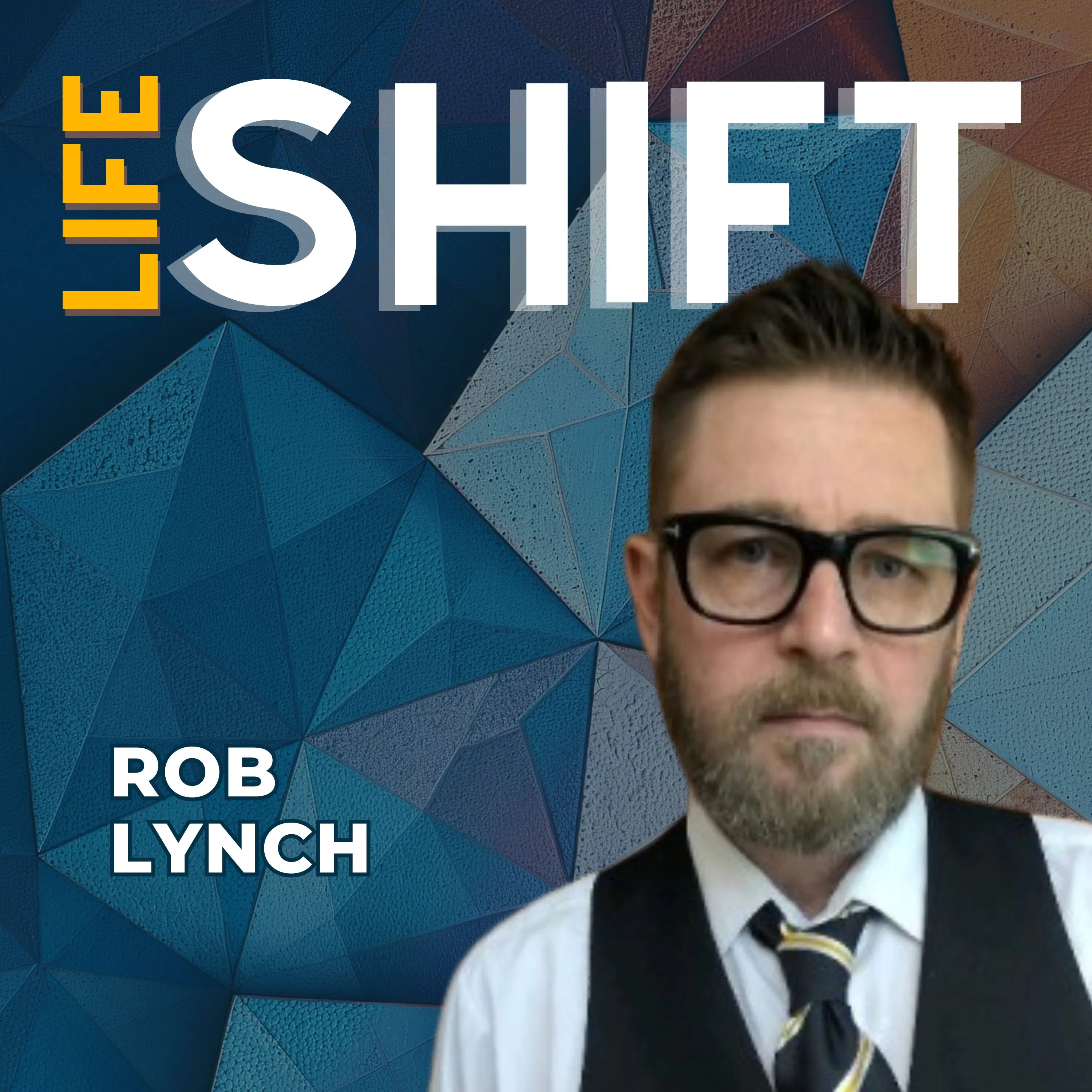
In this episode of The Life Shift Podcast, Rob shares his journey of coming to terms with this revelation. For decades, the knowledge of his adoption became a background detail in a life rich with experience—building a career, raising a family, and pursuing his passion for writing. Yet, the quiet hum of difference remained. It wasn't until the unexpected circumstances of the COVID-19 lockdown, a genealogy DNA test taken by his daughter, and a surprising message from a stranger—"I think I'm your first cousin"—that the buried chapter of his life began to be rewritten.
The subsequent search and the eventual call to his biological mother, initiated after weeks of contemplation, brought forth powerful emotions and questions. "I looked for you for so long. Can you ever forgive me? Have you had a good life?" These were the first words spoken, marking the beginning of a delicate and evolving relationship with a newly discovered part of his family. This conversation delves into the profound experience of finding a missing piece of oneself and exploring whether the discovery fundamentally alters the shape of a life already lived.
What You'll Hear in This Episode:
- The pivotal moment at age eleven when Rob learned he was adopted and the reasons his mother chose to tell him then.
- How the experience of late discovery adoption shaped, and in some ways didn't shape, Rob's developing sense of self.
- The critical role of a pandemic-era DNA test and a daughter's curiosity in connecting Rob with his biological family.
- The emotional journey of hesitation and eventual connection through a phone call with his biological mother after decades apart.
- The initial conversation with his biological mother and the unexpected warmth that began to define their reunion.
- Insights into cultivating a meaningful relationship with a biological family discovered years later.
About Our Guest:
Rob Lynch is an accomplished author, a dedicated mental health advocate, and a supporter of animal rights, based near Toronto, Canada. His debut novel, Vudon Caliber, is available on Amazon. Rob is a fervent music and film enthusiast who resonates with the philosophy that, like Ted Lasso suggests, "we are never finished versions of ourselves." Connect with Rob on Instagram at https://www.instagram.com/official_voudoncaliber/.
Listen and follow The Life Shift Podcast on your favorite app: www.thelifeshiftpodcast.com/follow
Subscribe to our newsletter for updates and more: https://thelifeshiftpodcast.beehiiv.com/
---
Topics explored in this episode include adoption identity, biological mother reunion, late discovery adoptee experiences, DNA ancestry tests, finding birth parents, adoptee mental health, genealogy during lockdown, the search for belonging and identity, understanding family secrets, and the journey of recovery and healing.
You Might Also Like:
- Resilience After Amputation: Rebuilding Life From the Ground Up
- Turning Legal Chaos into Personal Growth
Learn more about your ad choices. Visit megaphone.fm/adchoices
Frequently Asked Questions
What is late discovery adoption?
Late discovery adoption refers to individuals who find out they were adopted later in life, often well into adulthood.
How does late discovery adoption affect identity?
For some, late discovery adoption can explain long-held feelings of being different and provide a missing piece to their personal narrative.
Can DNA tests reveal adoption?
Yes, DNA ancestry tests can unexpectedly connect individuals with biological relatives, sometimes leading to the discovery of adoption.
What are the first words exchanged in a biological parent reunion?
In Rob's case, his biological mother's first words were an inquiry about forgiveness and his life, marking a tender beginning.
Matt Gilhooly (0:30): Rob Lynch spent most of his life knowing he was adopted and not really thinking about it. He had parents who loved him, a full life, and somewhere in the back of his mind, a question he'd made peace with never answering. Then his daughter did a DNA test during lockdown, and a stranger reached out to her, and then came a phone number. It took Rob three Sundays to work up the nerve to dial it. What happened when he did is kind of the thing that makes you rethink what it means to belong and what you owe yourself when a story you thought was finished turns out to have one more chapter.
Rob (1:03): My mom said, so do you remember what you said to me on Saturday about the movie and the reason why I didn't wanna take you? She said, well, it's true. You were adopted. Floor just bought Floor just bottomed out for me.
Matt Gilhooly (1:17): You're listening to the LifeShift podcast. I'm your host, Matt Gilhooly. This show is built around one simple idea that sometimes a single moment can change how we see everything. Each week, I talk with someone about the moment that shifted their life and how they learn to live differently after it. These are not stories about having it all figured out.
Matt Gilhooly (1:37): They are stories about what it looks like to keep going once the story changes. Thank you for being here. Here's today's story. Welcome to the show, Rob.
Rob (1:50): Thank you very much for having me. It is great to be here. It's great to meet you. And before we get going, I also wanted to say to you that I offer my congratulations on the release of your book.
Unknown Speaker (2:00): Well, thank you.
Rob (2:00): I also, you know, understand myself, the new car smell of, when that comes out, and it's, you know, really rewarding and it's really thrilling. So kudos. Good for you.
Matt Gilhooly (2:11): Well, I appreciate that. I am someone, and it's really it's something I'm working on, but I'm someone that enjoys the the process and bringing it to the finish line. And then it becomes a checkmark for me. And so it's always that after stuff. That's the hard stuff, like telling people about it.
Matt Gilhooly (2:29): And so I'm trying to pause and like do that and and be proud of it. So thank you for that.
Unknown Speaker (2:36): And You're very welcome.
Matt Gilhooly (2:37): It it is a it is all comes from the life shift podcast and really centering short stories and my reflections on people's life shift moments and just really staying in that moment and seeing how something either huge or really quiet can change a life and on what maybe we could take away from that. And so, yeah, I'm just really honored after 250 plus episodes to be able to sit with these stories and learn from these stories and, dare I say, heal from a lot of these stories in ways that I never could have expected. So super honored that you wanna be a part of this show and tell your story in your way because there's definitely someone out there that needs to hear your story in the way that you're about to tell it to kind of feel validated or less alone in their experience.
Rob (3:26): Well, you know, like I was saying to you just before we, turned the mics on that, through a different facet of my life, I am very much part of a recovery program right now. And one of the things that you learn very quickly, if you're going to have any level of measure of success, that you you really have to embrace the concept of service. And, you have to learn to be there for other people. You know? This is why I was put in touch with you, and that is why I'm here.
Matt Gilhooly (3:55): Well, and I bet too you feel there's a benefit to you as well. I think there's a learning and something that we get from helping others in whatever way that we can. It's just like a nice
Unknown Speaker (4:07): Agreed.
Matt Gilhooly (4:08): It's not just for the other people that we're helping or we're trying to help. I think it serves us, and it creates a better connection between humans that we all need these tie these times that we're It
Rob (4:19): does. It's yeah. It's in in some ways, I think it's kind of like it's kind of like a mental chalkboard that you have up on the wall. And the process of speaking about it, maybe journaling, writing it down, thinking it through, that's almost like your calculations that you're doing. And every once in a while, you'll maybe wipe a part of that off and then you'll put in a new calculation there until you get to the quote unquote perfect formula.
Rob (4:44): Although, maybe that will never happen for some people too. You never know. But Yeah. Yeah.
Matt Gilhooly (4:50): Well, I think there's there's something to be said about not finding that perfect calculation because it just means that we're always trying to to get better and and learn new things and learn from each other. So I'm I'm I look forward to to the your story and the way that it unfolds. But before we get to it, maybe you can tell us who Rob is in 2026. Like, how do you show up in the world? How do you identify these days?
Rob (5:13): You'll probably find, and I don't know if it will be to your annoyance or to your amusement, that I I'm a big music fan, and I I constantly quote lyrics from songs that have come to mean a lot to me over the course of the years in my life. And I guess as I was thinking about this, the first answer that comes to my mind is that line from the song, one of my the favorite songs of my life, Bittersweet Symphony by the Verve. When he says, I'm a million different people from one day to the next, then I change my mode. Right? So I would say if we were looking for a baseline to your answer, I would say, I'm an author, I'm a father, I am, I would say, an advocate for mental health, an advocate for animal rights, an environmentalist, sports fan, music fan, film fan.
Rob (6:07): And I have a great partner in my life as well too that I'm very lucky to have.
Matt Gilhooly (6:13): Sounds pretty well rounded and and feels is it a good 2026?
Rob (6:17): It is so far. You know, there's always ups and downs. Right? It's, just the world that we live in with, you know, everything that is going on. You know, I think a lot of it, I still think that there is a lot of emotional residue from lockdown that people are dealing with.
Rob (6:33): You navigate the economy as as best you can on a day to day basis. But I am thankful for the small things because they're the things that matter the most.
Matt Gilhooly (6:44): Fair. Yeah. And that was a loaded question. I think I was thinking, you know, do you feel aligned with who you are and what you're doing in the world these days? I think I often get to talk to people who have kinda found the space where it feels comfortable, and it feels, right.
Matt Gilhooly (6:59): So I was do you feel aligned with who you are?
Unknown Speaker (7:03): More so every day.
Unknown Speaker (7:04): Cool.
Rob (7:05): More so every day. You're going back to what you said a couple of minutes ago about we may never find the answer to that life equation. And I would say that I'm probably nowhere near having that answer, but I feel that things seem a little less hazy to me every day that I wake up.
Matt Gilhooly (7:23): Well, that's all we can hope for. Right? We wanna we wanna move in the right direction, and it and it sounds like you are. So to get into your story, I think it's important to understand kind of the life before or the version of you before this pivotal moment. And and, you know, you can go back as far as you need to to paint that Rob before what we're talking about today, but, why don't you tell us who you were?
Unknown Speaker (7:47): So I
Unknown Speaker (7:49): Or slash
Rob (7:50): don't know that yeah. I don't I don't I don't know that I need to go right back to my moment of birth, although you will understand as time goes on, you know, why that is important to my story. I think a good place to begin would be to say that on some level, and it's very hard for me to quantify this, although I'm gonna do my absolute best, I've always felt different. And that's something that I felt very profoundly and very sharply, even from a very young age, even from the time when I was like single digits, like seven, eight, nine years old, that I would be at a family function, I would be at school, I would be anywhere in the world, and I would be thinking to myself, there is something universally, there is something within the ether that all of these people around me are tapping into that I just don't feel that I am as well too. And I think that it's very fair to assume and say that there are probably a lot of people in the world that to a certain degree feel like this.
Rob (9:00): We all have our own little thing that we get hung up on, that we get stuck on, and we have trouble navigating. But as life goes on, you start to figure it out or hopefully you do. And sort of the, the prologue to my life shift moment would be, I was 11. And we were talking about our ages just as we're getting to know one another earlier. And surely you must remember the TV show, The Brady Bunch, Yeah.
Unknown Speaker (9:30): I mean, in reruns
Rob (9:31): to be fair. In reruns, of course. Me too. Me too. I'm not that old.
Rob (9:35): But I remember watching an episode where the youngest son I can't even remember their names at Bobby. This Bobby. Okay. Thank you. Bobby was feeling very maligned about, you know, just the the the general family politics that were going on in the house.
Rob (9:52): And he how he somehow got it into his head that, you know, I feel like I'm a, like, a I'm a lesser person than what I was within this family dynamic, like, week ago, two weeks ago. And I don't know if he came to this conclusion on his own or if one of his friends has suggested it to him. But he came to it that I've got I I must be adopted. Right? That somehow that that equated to, you know, less importance or, you know, being loved less or something like that.
Rob (10:23): And he got into his head and he was just like hounding, hounding his parents saying, you know, this is just the only thing that makes sense. Why nobody's listening to me, nobody cares about me. And a few days after I saw that episode, there was a cousin that I had who I was very close with when I was growing up. And he was staying with us for the weekend at my family's home. We had a very normal, whatever normal means, very normal suburban, North Of Toronto life.
Rob (10:55): He came out and stayed with us for the weekend. And there was a movie that I really wanted to go see. And I wanted my mom to take us to go see it because we were very young at the time. Right? And I asked mom, come on.
Rob (11:06): Come on. I wanna go see the we wanna go see this. We wanna go see. She's like, I worked all week. I'm tired.
Rob (11:10): You guys can watch something on TV. You can play video games, do something else. Okay. Then that Brady Bunch episode clicks into my head. And I said, oh, well, you know, what's this all about?
Rob (11:23): Am I adopted or something? You know? And I walked and I was about to walk away like all forlorn and, you know, fake angry. And my mom just said, I'll take you to the movie. And was very quiet for the rest of the weekend.
Rob (11:39): She took us. I didn't think anything of it. I just thought, hey. I got my way, you know, manipulating adolescent. Right?
Rob (11:48): I got my way. And then at the end of the weekend, my cousin ended up going home as he normally does. Sunday night came and went. Monday, school, came home. Dinner, normal.
Rob (12:01): Right? My my father did shift work, so he was always home a little bit earlier. We didn't always have dinner together. But my he would always, like, you know, fix a plate for my mom. And, you know, one of us, you know, at least as I remember it, would always sit with her and hear about her day.
Rob (12:17): But at afterwards, I was in the TV room, and I was watching television. And my mom stuck her head in, and she said, hey. Your dad and I, we wanna talk to you. Can you come downstairs? Right?
Rob (12:32): So we went I went downstairs, and I said, yeah. What's up? And then my mom said, so do you remember what you said to me on Saturday about the movie and the reason why I didn't wanna take you? And, you know, the child brain moves a million miles an hour. I I didn't even remember.
Rob (12:49): I had to think about it for a moment. And I said, Oh yeah, the Brady Munch thing. Right? And she said, Well, it's true. You were adopted.
Rob (13:02): You know, floor just bottomed out for me. And I found out after the fact that And I found out very late. I was 11, as I say, right? I found out very late. And, you know, now with the benefit of child psychiatry and, you know, parental help and therapists and all of that sort of wonderful stuff.
Rob (13:27): We have all of this data and all of this knowledge about how you do these things quote unquote properly. And most experts will say, this is something that you really need to do for a child at an early age. Because if the later that they find out, the harder it's going to be for them to assimilate this into their daily thinking. And it's going to make them question everything up to this point. Now, you know, you remember a few moments ago, had said that there was something in me that I always felt different.
Unknown Speaker (13:56): Right.
Rob (13:57): And suddenly, that made a heck of a lot of sense. And that was a very spiky time in our house for a little while. I also found out after the fact that I had a lot of relatives, aunts, uncles, my grandparents, who had been kind of hounding my folks and saying, you got to tell him the longer that you leave this, the harder it is going to be for him to accept that. You know, I asked my mom about it later on and she had said it just she, she always had to, to, it was a two part answer. Right.
Rob (14:37): And she said there never seemed to be a right time. Right. I had, unlike a lot of people who grew up in the seventies and eighties, both of my folks worked right in my neighborhood. There weren't a lot of moms who worked. It was mainly just, just the dads.
Rob (14:52): Right. So we had a busy, busy house and, you know, I have a sister as well too. So there was always something going on. That was the first part of the answer that, you know, it never seemed like a right time. And then she said, and to be honest, a lot of times I just forgot.
Rob (15:09): You know, I've always just, from the beginning, just accepted you as our own that I just I put it out of my mind. I never thought about it. Right? So that was, you know, sort of the beginning of all of this.
Unknown Speaker (15:22): Yeah.
Unknown Speaker (15:22): Right?
Matt Gilhooly (15:23): You said it was spiky. Was it because was there I I could see how 11 year old could go whatever direction because you're 11. But also, there's, like, the path of, like, oh, I don't belong. Or you could go the other side where you're, like, almost, like, I guess, grateful that other people wanted to take you on, which brings on more questions of, like, why am I not in my, quote, unquote, original family or what it may be? Like, what you said it was spiky.
Matt Gilhooly (15:51): So what did what did that look like for you?
Rob (15:53): So it was one of those things that my parents who, make no mistake, were part of the wartime generation, and they weren't really in touch with their feelings or any of the you know, terminology or buzzwords or schools of thought that we embrace very easily now. My father, as a matter of fact, grew up in a coastal town in Scotland during World War II that had a lot of strategic importance. So it was bombed regularly. So I just and, you know, and then, you know, when he turned 18, he ended up becoming a professional soldier. And then early into his twenties, he became a professional athlete.
Rob (16:34): So you wanna talk about a guy who had mental fortitude and really wasn't in touch with his inner child or anything else like that. I think he was very happy to and please don't misunderstand me. I, you know, I love my dad. You know, both my parents are gone now, but, you know, I think about them and him, you know, every day. It was it was one of those things that my parents kind of left the unfolding of the story to my curiosities.
Rob (17:08): Meaning to say, we're not gonna press any information on him, but whenever he comes to us with a question, we're gonna answer it to the best of our ability. Right?
Unknown Speaker (17:17): That's good.
Rob (17:18): Pretty progressive for that time. Right? And then this was actually something that I had forgotten about. And as I had been putting some thought towards our meeting today, I was reliving some things in my head as they happened over the years and the decades. And I remember that an initial reaction for me out of all of this was I became like the neighborhood liar.
Rob (17:44): Right? I don't I don't know. I don't I don't like, I I still can't explain it to this day. Maybe it was some remote nebulous way of me trying to find some level of acceptance. So I was telling, you know, these crazy stories to all of my friends.
Rob (18:03): And, you know, it got to the point where it was just like, you know, I don't believe an effing word that you're saying anymore. Right? And then when I worked up the nerve to tell two of my closest friends on the street that I just found out that I was adopted, they said, well, now we know that you're lying. Okay? There's no way that you're adopted, right?
Rob (18:23): There's no way. Because both my folks, blue eyed, like me, fair hair, right? My sister, fair hair, blue eyes, right? And there was actually some physical similarity, which, you know, which existed there. And there were some people that I I don't think ever accepted it.
Rob (18:44): They never believed me. Right? I don't know how I ended up dealing with that, but, you know, I obviously did. I'm here. Then as time went on into, you know, my teenage years and then young adulthood, it wasn't something it it was it was something that I think I maybe needed to see some proof in the way that my life moved on so that now that this big cat is out of the bag, that this is no longer a secret, is anything gonna change?
Rob (19:11): Right? And I think maybe there was a little bit of a collective holding of breath within the family that everyone was like, okay, is he gonna be okay? Right. This gonna be all right? Right.
Rob (19:23): And I think.
Matt Gilhooly (19:26): Because it really could go either way, it could have gone where you just rebelled because you're not my parent kind of attitude. And, you know, it could be bad. So
Rob (19:37): There may have been times in my life that I thought that.
Unknown Speaker (19:41): Yeah. I mean, teenager.
Rob (19:42): But I never said it out loud.
Unknown Speaker (19:44): Well, that's good.
Rob (19:45): At least I don't ever remember saying it out loud. And, you know, despite a couple of hiccups when I was a teenager, you know, stupid stuff, things that I think a lot of teenagers are guilty of. I never got brought home in a police car, though. I never spent a night in jail. So, you know, that's gotta count for something.
Rob (20:04): Right? Yeah. Everything ended up kinda turning out okay as far as that went.
Matt Gilhooly (20:08): Yeah. Did you did you still feel different, or now that you knew the reason why you felt different, it was it was different?
Rob (20:18): I think that maybe and I don't even know that this was a conscious thing. I think that maybe what happened with me was this explains that. Therefore, this doesn't need to occupy as much real estate in the forefront of my brain any longer. I can move on to other things.
Unknown Speaker (20:37): It's like you were validated.
Rob (20:39): I think so. Yeah. Yeah. I, you know, I never really thought about it that way. But, Matt, I think you're right.
Rob (20:44): I think you're right. I think that there was at least on a subconscious subliminal level, I think maybe there was a punch ticket of validation there that it was like, I I don't need to worry about this anymore. And it very much got to a point that with coworkers, friends, girlfriends, stuff like that, that it became more of a topic of conversation and curiosity with them than it was for me. I just eventually kind of absorbed it into me. And
Matt Gilhooly (21:15): So it didn't become your identity. You didn't No. Okay.
Unknown Speaker (21:18): No. No. No. And I asked that, and,
Matt Gilhooly (21:21): like, totally different for me. Like, growing up with a dead parent, that became my identity, which I think was a my version of grief and and all the things that come with that and not being able to do it properly. So it's curious that I mean, it's good that you didn't make that your identity because I think that could be something that would make people make someone that accepts or takes that identity on of being the adopted person kind of gives an excuse to push others away in certain ways. So I'm glad that you didn't fully take on that identity of of some kind of you're different because you were adopted, but you're not.
Rob (22:04): I see exactly where you're coming from. I completely understand. And, you know, and I understand the direction that you went in as well too, for sure. That being said, that it didn't become my identity, I would be disingenuous if I did say to you that there wasn't always something back here that was like, but aren't you even just a little bit curious about you know? And I would ask some questions and every once in a while and there were some there were some paperwork that was around the house that eventually my mom found that she shared with me that explained some things.
Rob (22:49): And, you know, I was never really someone who held on to that notion of why didn't they love me? You know? Why
Unknown Speaker (23:01): That's good.
Rob (23:01): You know? Why this? Why that? And I think a lot of that, Matt, also became from the fact that, like, my parents were great. Mhmm.
Unknown Speaker (23:09): You know, we didn't always see eye to eye. Gave them a Yeah. Lot of
Matt Gilhooly (23:14): your kids always see eye to eye with you? Perfect every day?
Rob (23:19): You mean up to this moment right now?
Unknown Speaker (23:21): No. Yeah. To this day.
Unknown Speaker (23:23): No. Of course not.
Unknown Speaker (23:25): Yeah.
Rob (23:25): Of course not. And I you know, that's just that's just one of the things that within that contract of becoming a parent that you just have to accept that not everything is going to be smooth. And there's always going to be problems. You know, in a couple of minutes, we're going to touch on some of that as well, too. So, you know, there were things that I, you know, began to understand as time went on.
Rob (23:47): I had a teenage mother who was, I think, 15. And you're talking 1969 in conservative rural Canada. It just it never would have flown. Right? It never would have flown.
Rob (24:04): And, you know, she did she did the right thing. What was what I think was ultimately the right thing. Like, it may not have felt right to her and was, you know, probably just beyond any level of pain that most people can imagine. But she did the right thing as dictated by the circumstances at hand. You know, then life went on, went into my twenties, you know, college, workforce, married, divorced, parenthood.
Rob (24:39): And A
Matt Gilhooly (24:41): question. As a as an adopted person, did that do you think that changed or that I don't think change is the right word. That dictated how you parented? Did you parent do you think you parented differently than other people because you were adopted?
Unknown Speaker (24:59): It's a good question.
Unknown Speaker (25:00): I don't know why
Unknown Speaker (25:01): I asked it. I don't well, it's, you know, it's a it's a fair question. You're the barber. Right? I don't think so.
Rob (25:07): Okay. I I I don't think so.
Matt Gilhooly (25:09): Think truly your identity as you said. You didn't like No.
Unknown Speaker (25:12): You weren't the No.
Matt Gilhooly (25:14): Adopted person. You were just you just happened to be adopted when you were a child, and you had good parents and all that.
Rob (25:19): And it was something that I was always very, very open about with my kids as well too. Right? That they, you know, that they understood that, you know, they may not have they may not have physically created me, but grandma and grandpa, you know, make no mistake. They're my parents. And then, oh god gosh.
Rob (25:37): It was funny. I think maybe around the time that they were seven or eight, they went through their phase where everything was about Annie. You know, little or little. Right? And they said, dad, yeah, did you, like, grow up in a house like Annie did?
Rob (25:55): And, did you have to mop the floors? And, you know, I'm like, no. No. Nothing like that happened. Believe me.
Rob (26:00): Believe me. I always thought that was very funny. But, so, you know, we move forward in life. We go into my forties. And, you know, life starts to get real.
Rob (26:14): Not that it wasn't before, but it starts to the the ebb and flow starts to become more ebb than flow. And, you know, the very complicated, challenging presence of addiction became very real in my house with my kids, you know, to the point where one of my kids was, you know, legally dead a couple of times. And, you know, that was, you know, that was a whole life shift moment unto itself. Right. And, you know, one of the reasons why I am in a recovery program, like we had mentioned earlier, learning how to navigate that and, because there's a lot of trauma.
Rob (26:50): Mhmm. You know, in dealing with such a thing. And I also watched there were also a lot of deaths that happened during that particular time in my life. You know, a brother-in-law who died far too soon. And both of my parents succumbed to, you know, dementia related deaths.
Rob (27:10): That's know, timing was really awful on that because my mom, it was a long, painful, drawn out process. And right after she succumbed and she died, then we started noticing symptoms with my father. Right? Then we had another six years of that ahead of us. Right?
Rob (27:31): So there was always a lot to deal with. Right. And then, you know, right in the middle of all this, the pandemic hits. Right? And so my youngest daughter, who is a very, very curious soul, she had said that she wanted to do some research into genealogy and, you know, heritage and DNA and, you know, and that kind of thing.
Rob (28:01): There's a lot of advertising on television and online about those sites were especially popular maybe about five, ten years ago. And I think that they probably had a spike in business over lockdown because, hey. What else are you doing? Right? So I said, oh, you know, that's cool.
Rob (28:20): If that's something that you wanna do. Traditionally, it was always just accepted that my side of the family, had a Scottish father, an Irish mother, and my ex wife, their mom, Italian. So I have to admit that there always a little was a little bit of curiosity because it was like, oh, you know, what what am I made up of? Like, what what what are my actual nuts and bolts? Right?
Rob (28:45): So she does this. Couple weeks later, she gives me a phone call. They end up getting the results in. There weren't a whole lot of surprises in there to be perfectly honest. Right?
Rob (28:55): I think that, you know, I am like, I don't know what it was, like 89% British Isles in Ireland. And then there was sort of a a mishmash in there as well too of some I think it was Dutch, maybe a little bit of German, Belgian perhaps, but no great surprises. So, you know, we had a, you know, a little conversation about this. Cool. Awesome.
Rob (29:19): That's neat. Okay. We'll talk soon. Love you. And then a couple weeks later, my partner and I were sitting Sunday morning having a very quiet, leisurely breakfast.
Rob (29:32): And, you know, beautiful spring morning, not unlike what it is here today. And the phone rings, and it's my daughter. So, you know, I put it on speaker, and I said, hey, sweetheart. How's it going? How are you today?
Rob (29:46): You know? And she said, I got something I need to tell you, dad. And I said, okay. You know, go for it. And she said, well, you know how I did this thing where I was looking into, you know, our genealogy, and I ended up getting the results.
Rob (30:00): And and I said, yeah. Yeah. Of course. Of course. And she said, well and, you know, and this is one of the promises that that can't speak for American television, but I can at least here in Canada.
Rob (30:10): That one of the promises of these sites, or one of the potential promises is we can help you trace your ancestry, right? Can find, there's a whole bunch of people that you didn't even know that you were related to. There's people on the other side of the world that are waiting to hear from you, etcetera, etcetera, that sort of thing. Well, it's not a lie because my daughter had said, I got a message through the website of this service that there's a girl who only lives about an hour away from us as a matter of fact, that she says that she's my first cousin and wants to know how this is possible. So they ended up going back and forth in conversation, doing their little detective work thing, asking questions.
Rob (30:58): So who you know what? The the the the yeah. Who are your parents? Who are the so they end up working this out, and it turns out that this girl's aunt is my biological mother. And when Sofia told me this, my daughter, Sofia, when Sofia had told me this on the phone, even right now as I'm relating the story to you, Matt, I can feel the pins and needles coming in my palms.
Rob (31:20): You know? And I can just feel sort of like the air whooshing around my head that there was something almost transdimensional about that, that it was like like I'd just been kicked in the head by a mule or something. Like, what? You know? Like but I I I didn't I didn't say anything.
Rob (31:39): I didn't say anything. And then Soph was like, dad, are you there? Are you there? You know? And then my partner, Laura, was like, your dad's just absorbing, sweetheart.
Rob (31:48): Like, I don't think he knows what to say right now. You know? I mean, just, you know, getting a little emotional just relating it. And
Matt Gilhooly (31:55): Was it a good feeling or was it I mean, a kick in the face doesn't sound very good, but was overwhelming?
Rob (32:02): It was it was overwhelming. It was overwhelming because, you know, for I think I was 49 or 50 when that came to be. And it was, so we're not gonna include like the first three or four years of my life because, you know, I'm not going to profess that I have any like, you know, real cognizance of, you know, what, being in touch with my inner self and anything else. But for decades leading up to that point, I had always lived and labored under a certain thought process, right? That this is the way that it is.
Rob (32:37): This is a remote, almost what's the word that I'm looking for? There's nothing tangible about that particular idea. This is something that I'm probably never gonna know the answer to, and I I I'm I'm okay with that, and I'm okay with that. You know, I've had I've had a good life. Putting aside, you know, all of the, sad stuff that I mentioned a few moments ago.
Rob (33:07): But my life has been good. It's been both remarkable and unremarkable. And I really needed to think about that. And I said, you know you know, I I as I recall, she felt kinda bad that, you know, she maybe she brought something to the table for me that upset me. You know?
Rob (33:28): And I had said, no. I just you know, this is a lot. You know? I I I think I just need to walk away with this for a little while, and I need to absorb, and I need to think about it. But you haven't done anything wrong.
Rob (33:42): You know? I'm I'm I'm not upset. I'm not upset. I just I need to think. So we were in touch a little bit later, and we talked a little bit about it, and we worked it through.
Rob (33:54): And then when we when we were talking about it a little bit more, she said, well, I have another piece of information for you. And I said, okay. What what what else could possibly you know, what what else could you hit Yeah. Me with at this Yeah. Who knows?
Rob (34:08): She said, I have your biological mother's phone number.
Matt Gilhooly (34:13): Yeah. Yeah. Was that a challenging one? Does it feel is a question, a curiosity question. Is there a betrayal feeling that comes with that at all from you and your mom?
Unknown Speaker (34:27): Your adopted mom, your mom?
Rob (34:30): I know that, and I don't remember who it was. I think it was one of my aunts. Maybe it was my sister. I can't remember. But I remember somebody saying to me, and being very gentle about this, not being territorial or not being confrontational or anything like that.
Rob (34:49): They said, it really hurts mom when you talk about it too much. Right? Yeah. And my mom was she was a lovely, lovely, gentle soul. And I would never ever have wanted to do anything that upset her.
Rob (35:06): And my mom had already left this world by the time that all of this stuff came up. And I don't know. Had my parents been in good health and if they were still around? My father was still alive at the time when this happened, but he had also been kind of ravaged by the disease, was living in a care facility, wasn't really at a point where there was a whole lot that he could do for himself. But, you know, he recognized me and my sister and all of the closest people right up to the very end.
Rob (35:46): Right? Which is a small, gentle mercy. But in answer to your question, I don't know. If my mom had still been around, I don't know what my answer would have been. It may be different.
Rob (35:58): But I don't feel as though it was a betrayal. I don't feel it was a betrayal because I remember my mom saying to me, I can understand your curiosity. And there even was a period, I can't remember if it was in my late 30s or my early 40s, but there was a period that for whatever reason, some curiosity had popped up in my head. And I did some very light surface layer preliminary research. And then I just let it go because you know?
Matt Gilhooly (36:28): Yeah. And to be fair, I don't want to put that betrayal feeling on you. I just know that sometimes humans, we absorb things that are not necessarily true.
Unknown Speaker (36:37): It's a fair question.
Unknown Speaker (36:37): Yeah.
Rob (36:38): It's an absolutely fair question. And and and you're you're not the first person to put that to me either, man. There there there have been other people that have asked me the same thing. Right? So like yeah.
Matt Gilhooly (36:49): Yeah. So your daughter has the phone number, which is scary in itself.
Rob (36:55): Yeah. So if this is any indication of how I processed, it took me three weeks to make that phone call.
Unknown Speaker (37:04): I mean, some could say that's a short amount of time.
Unknown Speaker (37:07): Yeah. Yeah.
Unknown Speaker (37:09): And what was that like? First of all, did she know she was gonna you were gonna call? Did she know that this connection had
Rob (37:16): happened? She had I I know that there was so there was there were messages that were being sent to about four people. Okay. That it went to somebody in her family and then it went to this girl that was my daughter's cousin and then it went to my daughter and then it went to me and then it would go back again, right? This whole, almost like a constellation, right?
Rob (37:34): Like, it was just, you know, and it was, you know, every every Sunday because this was, you know, this, as I said, this was during lockdown and I generally spent, I I wrote a novel during lockdown and I spent my weeks, my Monday to Friday, maintaining an office hours type schedule. So, you know, during during the days, I was I was writing. Right? That was it. That was it.
Rob (38:01): And then Saturdays are usually errand and chore day, and then Sunday is sort of like free day. And for two Sundays in a row, I would just come up here into the loft where I am right now, and I would pace around twenty minutes, half an hour, forty five minutes. And then I would just come downstairs and I would say, I just don't have it in me today. I can't do it. And in retrospect, I know what I was afraid of, but I don't know what I was afraid of at the same time.
Unknown Speaker (38:46): Opening a door to another galaxy.
Unknown Speaker (38:48): Right.
Rob (38:48): Right? You're you're this is this is this is like a a moment of faith. This is a a a step of faith that I think probably a lot of people within our general population don't get to experience. Right.
Matt Gilhooly (39:04): Yeah. Because it could go all sorts of ways and a lot of them not good.
Rob (39:10): Yeah. Well, it's funny that you mentioned that because I do know someone. I have always kept a special tabulation in my brain of people that I have met over the years who were also adopted as well too. And I have known people that it has gone either way. I know people who it went fabulously and they ended up having a very deep, profound reconnection.
Rob (39:39): And I know people that have experienced thank you for reaching out. That was then. This is now. And I hope that and I hope that you have a good life. So, you know, there was a real element of mystery that surrounded that.
Rob (39:57): But on that third Sunday, I did make the phone call. And she she recognized, you know, caller ID. She saw my name come up. And the funny thing is, and I don't know if this was by accident or by design, but she had given me the same birth name that my parents did as well, too. Right?
Rob (40:22): To my understanding, I don't It's a little hazy now, but I don't know if they actually tell the adopting parents what the child was born as.
Unknown Speaker (40:32): Right.
Rob (40:33): Right? I don't even know in the end if it matters, but I was given the same name that my parents chose for me. Originally, I thought that I was named Rob because my father was also a Robert. That seemed like the easy answer. But you know, going back to classic sitcoms, I found out later on in life that my mom had a crush on the oldest boy on My Three Sons.
Rob (40:59): Do you remember that show?
Unknown Speaker (41:01): Not. Just Nick at Night.
Rob (41:04): Nick at Night. Yeah, fair enough. Yeah. So, the oldest boy was Robbie. So that's actually where I got the name from.
Rob (41:11): I don't think my dad cared for that very much, but, you know, whatever. It is what it is. And so she answered the phone and immediately began sobbing. And, you know, I will never forget it that the first things that she said were, I looked for you for so long. And can you ever forgive me and have you had a good life?
Rob (41:39): Yeah.
Unknown Speaker (41:42): And you said?
Rob (41:44): I said, there is nothing for you to forgive. And I have had a fabulous life up to this point. So it just went from there.
Matt Gilhooly (42:00): Yeah. You probably took years of weight off of her shoulder by saying something like that because, you know, I can't imagine what that's like to go through this many years after, you know, you put your child up for adoption in a appropriate time and space for a 15 year old to do and then just be wondering for that many years. Whereas on your side, it's more of, like a figment of an idea. You know, like, there there's this other person out there that gave birth to me, but here are my parents right here.
Rob (42:35): Yeah. It's it's a it's an unfinished concept on my side of the fence, right? Like, it's it's a there's something very remote and almost kind of fantasy like about it.
Matt Gilhooly (42:45): And there's something very odd too in the sense that, like, she probably feels like she knows you more than you would feel like you know her in a in a because you're her child. Right? But in on the other way, she's kind of a stranger to you. Right? Does this feel this way, or do you have an immediate connection?
Matt Gilhooly (43:03): Like, what how does that change you as you now have met another mother of yours?
Rob (43:10): Yeah. It's, there are still things through all of this. And this this was, I want to say five years ago that all of this happened. I remember it was towards the end of lockdown. Yes, so about five years ago.
Rob (43:24): And there are still parts of this that I am putting together. And I would never want to give the impression that I am like, you know, holding my hands up to the sky and gnashing my teeth and saying, Why? Why don't I understand this? Why? It's a little more philosophical and a little more remote of a concept than that.
Rob (43:42): I do think I want to choose my words carefully here. I do think that there was more in the way of satisfaction and questions being answered for her than there was for me. I know that she mind me saying this and that I think there was there was there was a lot of guilt there for a long time. And then, you know, as we got to know each other, I found out that she did end up having another child who died, very young. And in her words, she did say to me at one time that she was convinced that God it wasn't in God's plan for her to have kids.
Rob (44:41): And I could I could hear in her voice how painful that was for her. But then she did end up having another child who is alive and well and is my half sister.
Matt Gilhooly (44:53): And do you do you have, quote, unquote, a relationship now with with these individuals? Do they feel like family? Are they still kind of arms distance? Like, what is what does that look like? Because, like, I would imagine that it could be all sorts of ways.
Rob (45:08): Yeah. It's it's So we have a So first, yep, there is a relationship. There is a relationship. It is perhaps not as physical as any of us would like it to be. My biological mom, her name is Judy.
Rob (45:22): She has a lot of health challenges and there is a lot of work that has to go into, you know, even stepping out for things that you and I would take for granted, that most people would take for granted, a lot of days of preparation and, getting ready and stuff like that. But we have, you know, sat across the table from each other and had a meal. And that was something that was really quite something. It was funny. So it turns out that she lives about an hour away in one of the boroughs outside of Toronto.
Rob (46:01): And met sort of halfway. And there's a popular steakhouse franchise that we have here, even though I'm a vegetarian. We met there because it was easy and, you know, there are other options that I can get on the menu. But I walked in, you know, Judy had made the reservations and I walked in and I was early and, you know, I was with my partner and they had said to me, you know, Oh, welcome. You know, come on in.
Rob (46:27): We got your table ready for you. Now, are we celebrating anything today? And then, you know, my partner and I kind of looked at each other like, how do I answer this question? Right? And I said, well, this is what's going to happen today.
Rob (46:41): And I don't think that the server knew what to say to that. Right? Then when Judy and her husband walked into the restaurant and approached the table, out of the corner of my eye, I saw the, you know, the swingy door, you know, that is in every restaurant. I saw the entire serving staff looking around the corner watching this, you know, it was it was it was quite something. But we, you know, we we do we do stay in touch.
Rob (47:10): We are actually planning something again very soon, you know, to get together. But quoting a song lyric again, John Lennon once said that life is what happens to you while you're busy making other plans. Right? We just things happen. Things happen.
Rob (47:29): Right? And there's there's no maliciousness and or or or or confusion or anything like that. We we have a very, very nice, kind, understanding, warm relationship.
Matt Gilhooly (47:41): That's great. Yeah. Yeah. It could go all sorts of ways, and you found the way that works for you. And rightfully so, I think that is you know, we have to create our own relationships in the way that we want them.
Matt Gilhooly (47:56): We don't have to have relationships just because we think we should. So I think there is an important piece there that, oh, I think there's a lot of people out there that would assume, Okay, well, you found your biological mother. You must create x y z type of relationship with this woman, but that's for you to determine. That's for you and and Judy to determine what that looks like and how you move forward with it and what feels best for you. Do you feel different now?
Matt Gilhooly (48:24): Do you feel like you have, like, a bonus, like, puzzle piece that you didn't know was missing? What like, how do you how do you feel now that you know her?
Rob (48:33): Well, I got a pretty cool story. I'll tell you that. But beyond that, I do. I do feel I didn't think that I would. I didn't I didn't think that I would feel as though there was something that perhaps needed to have an epilogue.
Rob (48:54): But it turns out that it has really fit into things quite nicely. Yeah, it was quite interesting how things I'm stumbling a little bit on my words here. I think that everything that we do in our lives is about attaining the best state of mental health for yourself that you can and creating purpose for yourself and navigating the world in a kind way, in a kind understanding way. And I remember a little while ago, I was trying to sell a friend of mine on the concept of the TV show Ted Lasso, right? And I don't know.
Rob (49:44): Did you watch it? Mhmm. Yeah. So it it really fit in beautifully with my life because, you know, soccer slash football has always you know, my dad was a professional footballer. And, yeah, there's just a I that that show just has a huge human beating heart.
Rob (49:59): And I I was I I looked it up online, and and I didn't find that the description that they they did that they gave of the show was enough for me to sell it properly. So I said to my friend that the ultimate message on what I think, what I grabbed from this show is we are never ever finished versions of ourselves. And I think that that's something that you always need to keep in the back of your brain. And I think that that plugs in really well with the way that my story has unfolded up to this point.
Matt Gilhooly (50:38): Well, I mean, it goes back to what we started the conversation with with that whiteboard or that chalkboard or whatever board it was. And, you know, we're just continually updating the equation or the formula to get to the next version of ourselves or the more evolved version of ourselves or whatever that whatever that might look like. I'm sure we're gonna put the wrong formula in there a few times and stumble back a little bit. But I think the beauty of our life is to continually learn more about ourselves and create new versions of our our relationships and the and the people around us and and what that looks like. And so it sounds like you've you've lived a an interesting life.
Matt Gilhooly (51:18): Right? A one that has some great highs and some that some pretty low moments. And I think those all kind of inform who we are at this point in time. I would say the same for myself. You know?
Matt Gilhooly (51:30): Like, losing my mom never wouldn't have never would have wanted that for anyone nor do I want that for myself. But because that happened, all these other things happened. I was able to create this version of my life because of that moment. And so I think if we look at it like that, it doesn't feel as the lows don't feel as sad, if you will.
Rob (51:52): Yeah. That and that is the million dollar question. Right? It really is is if I am who I am right now in this moment because of everything that has happened to me up to this point, would I trade in on those things to not have to go through them to be a less elevated version of myself?
Unknown Speaker (52:15): Yep. It's the unanswerable.
Rob (52:18): It is the unanswerable question. Yeah. You wanna you wanna stump somebody? Just hit them with that question.
Matt Gilhooly (52:25): If this version of you, though, could go back to so the Rob sitting at the table when your daughter called with the news. Is there anything you'd wanna tell that Rob that was kind of kicked in the face, if you will, in that in that moment of shock?
Rob (52:40): I would say I would probably say you have always prided yourself on being a person that is equally as comfortable being alone in a room for a day or two days as being an extrovert that is holding court in a room full of 30 people. And whatever that audacity or that audaciousness is that drives you to do the latter, embrace that. Don't be afraid Yeah. Because it's gonna be okay.
Matt Gilhooly (53:15): That's what a lot of my guests would say to a version of themselves is it's gonna be okay. Because somehow in those moments, it feels like there's no way that this is gonna go the way that I need it to or the way I want it to or even any bit further. You know? Like, I some it those moments just shock us and put us into a spot. And then somehow, if we're lucky, we find our way through, and we find whatever that whatever that means, and we are okay on that other side.
Matt Gilhooly (53:47): So very common. You know, I think there's something about the human spirit and the resilience that that we have if we are lucky and have the tools and the people around us to help us through particular moments that might be challenging. So I appreciate you telling your story in this way and and going the mat route of random weird questions that come up, but it it has been a pleasure to learn about you in this way. If there are people listening and they feel connected to you or wanna hear more of your story or read the book that you wrote or whatever it may be, how what's the best way to find you or get in your orbit?
Rob (54:25): So I, so you could, you know, go by traditional email. It is vc-thenovel@Rogers.com. I also have, an Instagram, at official underscore Vudon Caliber. Vudon Caliber is the name of my novel, which is available on Amazon. And, yeah, those I I think those would be the two, easiest ways to get in touch with me.
Matt Gilhooly (54:50): Great. Yeah. Well, I encourage people that have heard someone's story and maybe see themselves in the story or something that the guest has said, like, really resonated or validated their own experiences to reach out. So I encourage you to go to the links in the show notes, everyone, and either send an email or send a message on Instagram because there is some power in telling someone else about our stories and and someone else bearing witness to that that can kind of drive us forward and and bring us to new slate spaces.
Unknown Speaker (55:22): I couldn't agree more.
Matt Gilhooly (55:23): Yeah. I I so whether you want it or not, I encourage people to reach out to you.
Rob (55:29): I I I am fine with that. I am very good with that.
Unknown Speaker (55:31): Excellent. Well, thank you for wanting
Unknown Speaker (55:33): to be
Matt Gilhooly (55:33): a part of the LifeShift podcast.
Rob (55:36): Well, thank you very much for having me, and I'm glad to know you, Matt.
Matt Gilhooly (55:39): Likewise. I I love learning about people in this way, and and the vulnerability that people share is just so refreshing compared to growing up in the eighties and nineties when people weren't as open about, you know, actual feelings. So I appreciate it.
Unknown Speaker (55:54): I appreciate you. Thank you.
Matt Gilhooly (55:56): And thank you to everyone listening. I will be back next week with a brand new episode. Thanks again, Rob. Thank you for listening to the Life Shift Podcast. If you wanna learn more, go to www.thelifeshiftpodcast.com.
Matt Gilhooly (56:09): There, you can check out all the different episodes. You can check out the blog, some of the reviews for the podcast, and the life shift journal. Links are there so you can purchase your own copy whether in digital or print format. Thanks again. Spring just slid into your DMs.
Unknown Speaker (56:25): Grab that boho look for that rooftop dinner, those sandals that can keep up with you, and hang some string lights to give your patio a glow up. Spring's calling. Ross, work your magic.


