Grief: The Year I Edited My Best Friend Back to Life
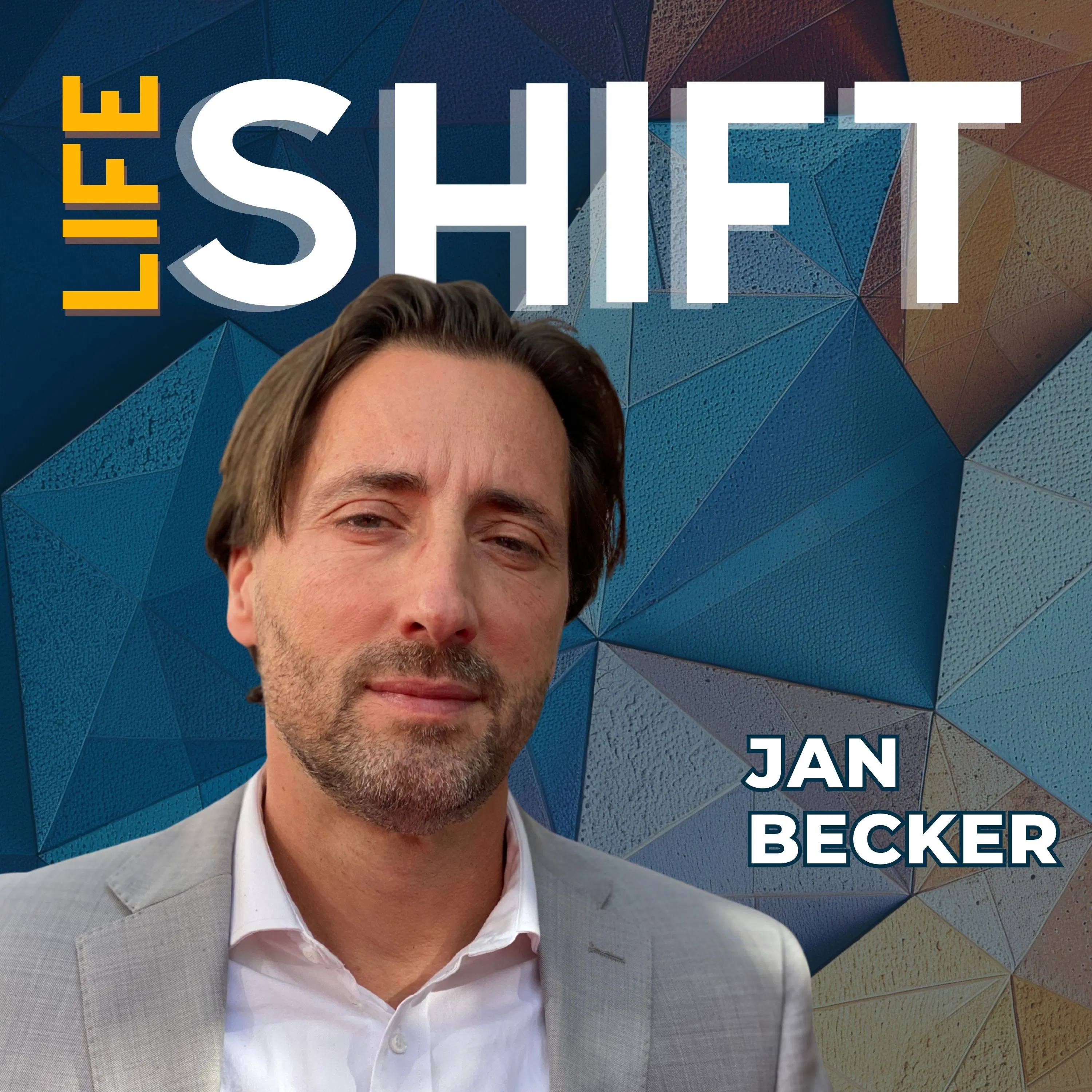
A filmmaker loses his best friend in a plane crash weeks after they finish shooting, and spends a year in the edit learning how to grieve.


 Goodpods
  Podchaser
  PocketCasts
  RSS Feed
 Key Takeaways
- Filmmaker Jan Becker shares his profound journey of grief after losing his close friend and producing partner, Christian Oliver, in a tragic plane crash.
- Spending a year alone in the editing room with Christian's footage became Becker's unique way of processing his loss and learning how to mourn.
- The conversation highlights how creative work and the projects we leave unfinished can help us navigate the parts of grief that words simply cannot reach.
- Becker reflects on the intersection of grief, art, and healing, connecting the sudden loss of his best friend with the prior passing of his father.
- Through the lens of storytelling, this episode illustrates how we can choose meaning and connection over recognition in the wake of unimaginable tragedy.
Maybe you know what it is to lose someone in the middle of building something together. To be left holding a piece of unfinished work and a hole where a person used to be, with no idea how to carry either one.
Jan Becker is a filmmaker who set out with his close friend Christian to make a documentary about a vision quest in the high desert. They finished shooting, went their separate ways for the holidays, and then, on the fourth of January, Jan got a text. Christian had died in a plane crash, along with his two young daughters. What follows is the story of the year Jan spent alone in an editing room with his friend's face on the screen, turning grief into something he could hold. He talks about the strange sense that the desert had been preparing him, about losing his father two years earlier, and about how finishing the film became the way he learned to mourn.
This is a conversation about what we do with the things left unfinished, and about how the work of our hands can carry us through the parts of grief that words cannot reach.
What You'll Hear
- The phone call on the fourth of January that changed everything
- Why finishing the film became Jan's way through grief
- What it feels like to edit footage of someone you have lost
- The vision quest, and the sense that it had been preparing him
- Grieving a best friend and a father as one long process
- Choosing meaning and connection over recognition
Guest Bio
Jan Becker is a German-born, Los Angeles-based filmmaker, director, producer, and editor. He has worked in media production for more than 15 years, with credits across documentary, television, and commercial storytelling. His work often explores transformation, healing, trauma, spirituality, and the deeper psychological forces that shape human lives. Jan is the director, producer, and editor of Vision Quest, a feature documentary about a 10-day wilderness retreat in the California high desert and the healing power of nature. The film became deeply personal after the tragic death of his friend, co-director, and producing partner Christian Oliver, who appears in the film. Through his production company, Exalted, Jan is developing documentary and narrative projects that make inner transformation visible through cinematic storytelling.
exalted.la | visionquestfilm.com | Vision Quest Trailer | Instagram
Listen and follow: www.thelifeshiftpodcast.com/follow
Subscribe to the newsletter: https://thelifeshiftpodcast.beehiiv.com/
sudden loss, losing a best friend, grief and creativity, finishing what someone started, film as healing, plane crash grief, processing a father's death, vision quest, meaning after loss, storytelling as healing
You Might Also Like:
- Grief: Making Something Beautiful From What Broke
- Part of Me Died That Day: Learning to Live After the Worst Day of Your Life
- 147 Days: Raising and Losing My Sister
Jan's Energy Portrait
Episode Playlist
Learn more about your ad choices. Visit megaphone.fm/adchoices
Frequently Asked Questions
Who is Jan Becker on The Life Shift Podcast?
Jan Becker is a German-born, Los Angeles-based filmmaker, director, producer, and editor who joined the podcast to discuss his grieving process after losing his best friend and co-creator, Christian Oliver.
How did Jan Becker use filmmaking to cope with grief?
Jan spent a year alone in an editing room working on their unfinished documentary, Vision Quest, using the footage of his late friend as a way to process his sorrow and complete the project they started together.
What is the documentary Vision Quest about?
Vision Quest is a feature documentary directed, produced, and edited by Jan Becker that explores a 10-day wilderness retreat in the California high desert and the healing power of nature.
Matt Gilhooly (00:00)
Imagine sitting in an editing room for a full year staring at your best friend's face on the screen, right there in front of you, so present you could almost reach him, except he's gone. He died in a plane crash just weeks after the two of you finished filming, along with his two young daughters. Jan set out to make a documentary about other people's transformation in the high desert. It became the way he learned to grieve. The strangest part?
Something out there may have been preparing him for all of it.
Jan Becker (00:28)
fourth of January, I get text message really early in the morning. And then it was just a journalist that I know and he said, is it true? I didn't know what's going on. Yeah, I didn't know. I was like
Wha what's not true? And then then he told me he the the Christian b died in a plane crash.
Matt Gilhooly (00:47)
You're listening to the LifeShift Podcast. I'm your host, Matt Gilhoolie. This show is built around one simple idea, that sometimes a single moment can change how we see everything. Each week, I talk with someone about the moment that shifted their life and how they learned to live differently after it. These are not stories about having it all figured out. They are stories about what it looks like to keep going once the story changes. Thank you for being here. Here's today's story.
Matt Gilhooly (01:18)
Hello everyone, welcome to the Life Shift Podcast. I am here with Jan. Hello Jan.
Jan Becker (01:23)
Hi, hi, Matt, how are you?
Matt Gilhooly (01:25)
Doing pretty well. I'm surviving the Orlando summer and it sounds like you're surviving the Los Angeles summer.
Jan Becker (01:32)
That's correct.
Matt Gilhooly (01:34)
Thank you for wanting to be a part of the Life Shift podcast and share your story in this way. I'm sure you've shared this story in many other ways, but I'm appreciative that you wanted to come on and hang with me and show this human story in the way that I know how to navigate a conversation.
Jan Becker (01:51)
it's great to be here. my it's my pleasure.
Matt Gilhooly (01:53)
All right, so before we get into your your story, I think it's helpful or interesting to hear how you would describe Jan in 2026. Like how do you show up in the world? How do you identify these days?
Jan Becker (02:05)
That's a really deep question.
Matt Gilhooly (02:05)
Hard question.
And you can answer it however you want to, whatever's coming to your mind.
Jan Becker (02:11)
But it's something I do think about. And I see myself mainly as a storyteller, and I'm doing this on on different levels. and it's it's just part of me, has always been a part of me. I need to express myself in form of a story, but it's not only about myself. I'm I'm like to be of service as well. you know, I finished a documentary recently that we're gonna talk about this later.
I'm planning a feature film now and but I'm also helping clients to tell their stories. So
That's my calling, my profession, and I'm very passionate about. So this takes a big part of my life because it also it also bleeds into everything else, my personal life. I connect it all because because I do it on different levels, like in a more, you know, professional level for other organizations, that's then more of in a service direction, but then also telling my own story, my own feelings as well through store visual story.
Telling. So it's it's it touches all parts of my life, and that's how I see myself at the moment. But you know, on a much higher level, in a spiritual level, I would say I'm just a being that is just expressing human evolution and hopefully with in sync with a higher power, with God, or whatever you want to call it.
and I'm of turning it over in a way that I don't insist on the outcomes. I just they're just goals for me, but in the end I'm accepting the flow of life and try to do my best every day, you know, putting one foot in front of the other.
Matt Gilhooly (03:46)
Sounds like a noble life. Yes, there you go.
Jan Becker (03:47)
Well it sounds good. I'm a storyteller.
But you know, it's a story I tell myself. I don't you know, and I'm trying to to to live
Matt Gilhooly (03:56)
Yeah. To live it.
Jan Becker (03:57)
that life because I noticed otherwise it's a very a very uncomfortable life if you always think about you know, the outer things.
Matt Gilhooly (04:06)
Have you always felt this way? Have you always kind of been a a storyteller in different ways growing up, or is this like a twenty twenty six is a little bit different version of you?
Jan Becker (04:17)
No, I've been I I've been a compulsive storyteller since
Matt Gilhooly (04:21)
Compulsive. I like it.
Jan Becker (04:22)
since I was probably like twenty or twenty one when I realized that this is my medium. And
Matt Gilhooly (04:27)
Mm.
Jan Becker (04:28)
not necessarily I mean the medium of stories. So I I wanted
Matt Gilhooly (04:30)
Okay.
Jan Becker (04:31)
to become a novelist and I was writing prose for a very long time and I was living in Berlin. I was you know, writing short stories and
poems and all these things. But it was became a part of my life that I always need to be active 'cause I felt if I didn't do it, I felt miserable. So
Matt Gilhooly (04:47)
Mm.
Jan Becker (04:48)
I guess that's just part of who I am.
Matt Gilhooly (04:50)
Yeah. Curious too, because as a right I guess the question is storytelling, is it are you more fulfilled telling your own story or helping others tell theirs?
Jan Becker (05:05)
It's a different kind of fulfillment. So
Matt Gilhooly (05:06)
Okay.
Jan Becker (05:07)
if I'm helping others to tell their story and they're happy and it's working.
It's a like a professional fulfillment, right? You you think you're being a service, you're doing a good job. It's you're you're feeling very useful. It's
Matt Gilhooly (05:18)
Damn.
Jan Becker (05:19)
it's a good feeling. But I do have, you know, I know that my stories, when I look at especially all the more artistic stories that I'm telling, that is just an expression of who I am at the moment. It's almost like an a painter painting a picture and he can see himself in the in the painting. And for example, I I studied screenwriting at UCLA Extension.
And been writing screenplays ever since. Many of them. And when I read the screenplays now I can see myself who I was at that moment. And it's it's it's very interesting because while I'm writing it I'm not very it's not very clear to me, you know.
Matt Gilhooly (05:53)
Right.
Yeah. It's so interesting to to see how the power of story like affects our lives too and like how it changes. Like for me, I've been sharing, you know, my personal journey, obviously through this podcast, but also just I don't know, in pieces. And the more I do it, the more it unlocks parts of the story that I didn't have all the answers or all the the filler, I guess, or all the
the details before, so the more I tell it, it's almost like it it evolves to a more rich story, even though the story itself hasn't changed. So it's really interesting.
Jan Becker (06:30)
Yeah, I can imagine in your case
how important it is that you probably heard the story first from your father when he was telling you about your mother's passing. And then maybe you heard the story from other people and then you develop your own story about it. And as a kid you you build a certain story about yourself and your life almost to protect yourself.
And that can be good at the moment, but then if you keep telling yourself that story still twenty years later, it can be detrimental. So it's
it's very storytelling is something very, very human. That's how we evolved.
Matt Gilhooly (07:00)
Hm. Yeah.
Jan Becker (07:02)
I mean we were able to let's say we're in a tribe 300,000 years ago.
And we tell each other the story about these animals that come once a year and how we you know, how our ancestors c caught them and how we can catch them. So that's basically a story. It's not and then of course we always like to embellish them with myths and strange beings and strange powers to explain why things are happening.
And it's it's just you know, all the how we see the world is just the stor the story we tell us. I mean there's
Matt Gilhooly (07:35)
Touchet.
Jan Becker (07:36)
there's a lot of people that trying to find out what reality really is and they they're basically running against the wall and can't really find
Matt Gilhooly (07:44)
Yeah.
Jan Becker (07:44)
out what it really is, you know.
Matt Gilhooly (07:46)
Well, and it's interesting too that you're so we'll get into your story obviously in a second, but how interesting it is that you are a storyteller, yet also part of what you said about yourself is you're kind of like handing over your story a little bit to the higher power or like letting things happen in that way. So it's it's interesting how on one side we can as storytellers force
A story in a way,
Jan Becker (08:12)
Hmm.
Matt Gilhooly (08:12)
go in the direction that we want, but also allow the story to unfold as it's supposed to in the in the human part.
Jan Becker (08:19)
Yeah, that's actually that was my experience
a lot. And and it's yeah, if you if you do only the forcing and you just invent everything, it suddenly uses loses its authentic auth authenticity. And if if you just go with what comes to you through intuition and through what you suddenly think needs to be done, that's kind of
coming from somewhere else and that these are the stories are really interesting.
Matt Gilhooly (08:49)
Yeah, give you a lot of power too. So can you paint the picture of Jan leading up to this life shift moment and just giving us a before version of you, like who you were, how you were showing up in the world, and then lead us up to that life shift moment. And you can go back as far as you need to if some context from your childhood helps. But I'd love to love to hear about the before version of Jan.
Jan Becker (09:12)
Yeah, I think I was more focused on on outer things. I was focusing more on outer success and material things, and specific things I wanna I wanted to own. and this a certain kind of success I wanted to s achieve. and that, you know, comes a little from my my childhood, if you want to talk about my childhood briefly.
I mean my my father was an actor, pretty successful actor in Germany. And and I had some not the e easiest relationship with my my parents, but they had this value system who they admired, right? And the people they admired the most were directors, you know.
or producers. And I said, huh. One this is like the inner child. Like, hmm, if I
become this fi maybe finally I get the recognition that I always wanted as a kid. Of course it's very, you know, it's it's you know, it's psychology, how it works. This is crazy.
And yeah, and that was you know, I mean, it was almost everyone who moves to LA kind of moves here not purely because they wanna be artists, they move here because they wanna be loved or they wanna have some kind of recognition that they think they can only get here through Hollywood. And and
Matt Gilhooly (10:24)
Yeah. How old were you when you moved to LA?
Jan Becker (10:27)
I was thirty three.
Matt Gilhooly (10:28)
Okay. So
you were you've you lived a life before
Jan Becker (10:32)
Yeah. But I
be before that I wanted to be a famous novelist, so but I
Matt Gilhooly (10:35)
Right. Yeah. But I mean you've
but you had established yourself as a a adult, I guess I should say, and you had
Jan Becker (10:43)
Yeah.
Matt Gilhooly (10:44)
a life that was meaningful in Germany before you moved here?
Jan Becker (10:48)
I was a student and a writer and I wasn't honestly the reason why we moved, my ex-wife and I, or the reason why we moved here, we we weren't really finding our way in Germany. And we thought if you move here, maybe that'll change everything. Eventually it did, but not the way we expected.
Matt Gilhooly (11:07)
Yeah. Does it ever?
Jan Becker (11:09)
yeah, but I'm honestly I'm I'm pretty close to where I wanted to be now. so
that did happen, but it happened differently and took much more time to be established.
Matt Gilhooly (11:19)
Yeah. So you so you were
one, you wanted to be something where where your parents looked up to someone so maybe they would love you in a sense of or love you differently in a sense of of being successful or quote unquote successful. And then LA was like, Okay, you try to do that here?
Jan Becker (11:38)
Yeah, so that's
so that's I mean, it fascinates me how much we are driven by our childhood programming and how
Matt Gilhooly (11:47)
Mm-hmm.
Jan Becker (11:47)
very hard it is to get rid of it.
Matt Gilhooly (11:50)
I'm still trying.
Jan Becker (11:50)
Do you think
so b for example, you you b you probably noticed that too. You become
Matt Gilhooly (11:54)
Yeah.
Jan Becker (11:55)
very conscious of these mechanisms. Then you say, I just have to become conscious of that and I can decide not to do it to do it anymore. It's like, no, it doesn't work. It's still it is it shows up in a different guy guys? Guys, no. What's it called? disguised. And it it
Matt Gilhooly (12:10)
A disguise? Yeah.
Jan Becker (12:12)
just shows up shows up in a different disguise.
Matt Gilhooly (12:15)
Yeah, totally agree.
Jan Becker (12:15)
And it then they realize it's the same story all over again.
Matt Gilhooly (12:19)
Yeah, they're really deep-seated. I mean, for me, losing my mom, you know, it felt like I was abandoned. I mean, she didn't do it on purpose, but it felt like that. So I immediately thought and then made it true that everyone needed to see me successful and fine and okay
and perfect so that they wouldn't leave. And I did it for so long that it now it's like
slapping myself on the hand to like, why did you just do that? now figure it out. You're you're in your mid forties, you can you can let go of some of that stuff. But
like you said, it's
Jan Becker (12:52)
Mm. Yeah.
Matt Gilhooly (12:53)
very deep seated and it's not as easy as we'd like it to be.
Jan Becker (12:55)
And then you have to also you
have to kind of build a new identity or it ha let it be built. I don't know how that really works, but over time it does happen. And if
Matt Gilhooly (13:02)
Yeah. Yeah.
Jan Becker (13:04)
you have a life shift moment that actually enables you to to to find new ways of of seeing things.
Matt Gilhooly (13:12)
Yeah. So so keep going on your story of like who you were and lead us up to this life shift moment.
Jan Becker (13:19)
Yeah, so so I moved to LA in and when I was thirty three and then I you know did all kinds of different things. I I I studied screenwriting. and then I at the same time was working in a restaurant business. but it was it was tough because it was not, you know
the way I was hoping it would be. And you have this d delusion that people here just waiting for you, but it's not the case. Nobody's waiting for you. And you just have another one of those people who have come here with dreams. so that was a tough realization. And then also at the same time my my marriage broke
And that didn't make it easier and then I I had a girlfriend and it was pretty chaotic, but it's a lovely girl. but you know it didn't work out because I didn't work through my my pain of losing my marriage. So when that broke off, I really hit rock bottom here. That
Matt Gilhooly (14:09)
Mm.
Jan Becker (14:10)
I think for a year I was just on the edge. Literally was not a good time. And then until in two thousand ten, basically I turned it around. Cause there was another there was another
Matt Gilhooly (14:19)
Okay. So h w a year of like a
Jan Becker (14:23)
there was one life shift that I had to do.
And that's when I said, Okay, this is I was super self destructive. And I was working in the restaurant business still and I hated it. And I and then when I this when I said, Okay, this is it, I'm done. I started a production company and said, Okay, this is how I'm gonna make my money. And I just quit the restaurant job and just jumped into the cold water.
and that's when I started, you know, producing little videos for you know law firms or whatever it was and and then I got, you know, my foot a foothold in television and I started working for this one company which led to working on TV shows for the you know cooking channel and and did travel shows traveling all over the world and did some really good fun TV stuff.
but I I kind of lost my my my goal
why I came here. I wanted to make movies and tell stories and then I I was actually helping other people to tell their stories. That that became really evident when I was working on on two documentaries that also actually the topic interested me a lot.
one was about the Armenian genocide and the other one was about the resurgence of Nazism all over the world. So very I mean heavy but very interesting topics. I th then I realized I mean I was didn't agree how they made the movie, but obviously
Matt Gilhooly (15:48)
Okay.
Jan Becker (15:49)
I I didn't have much to say. and and I said, Okay, I need to just make films myself. I know how to do everything. I can film, I can edit, I can I know how to write stuff.
stories.
I know everything. I mean I'm why you know and then I started decided that I want to do my own documentary. It seemed to me like a good first step in into my film my own filmmaking. And I started producing this movie Healing Trauma. It was you know how about how people heal from all kinds of trauma.
the different methods and the different mythologies. I wanted to have it like a it was actually a huge project and it was not really taken off. I did I filmed a lot of things for it and I but I was so green behind the ears about fundraising and and all
these things. But then this leads directly to
To this story is that a a friend of mine that I started meeting more and more over the years, and we got into into touch more and more, and we befriended each other more and more. we always talked about filmmaking and how we should make a film together. And then he just at one point he told me he wanted to, he told me, I'm gonna produce your film. But then he he said, you know what? I have another idea. I wanna, you know, I went to this Vision Quest retreat a couple of years back.
back, it really changed my life and and I would love to make a movie just about that. And I said yes immediately because first of all I wanted to work with him. Finally we had a good project and and
it was so close to my heart. You know, I I'm a very spiritual guy. I love retreats and stuff like that. And and I thought it was great also because it was you we could actually film it in a pretty short time.
and then get something done, you know, without working on something for years and years and years. So that's when I said yes. and that happened all pretty quickly. So a vision quest is a tribal ritual. It's you go out in a in a in nature in the high desert in this case, you sit in a in a spot for four days and four nights with just water, no food.
nothing to write, nothing to read. you just have a tarp and a sleeping bag and you just sit there. And it's very, very intense and it's prepared
by a three day immersion in nature you go do sweat lodge you do all kinds of rituals you talk about what your what concerns you in a circle with your other the other members but it's already in nature you're already out there with the group and then you c after the four days you come back and then you have the integration part you do more sweat lodge and you talk about it
And you know, you celebrate together. Then the whole thing is ten days. And and it's it's no plant medicine, it's just just the power of nature. And it and it I and it turned out, I mean, I've we we were just a very small crew. My friend was also a participant because we didn't know how much the other participants really would participate in the movie, although they they already agreed, but we you never know. So he was doing the whole thing.
This we brought a sound sound guy also and but the sound person, me we also participated but to not to a little less extreme extent, so we can do some more work for the film. But yeah, we got it.
Matt Gilhooly (19:08)
That must have been fascinating
behind the scenes, like just in a 'cause you said you were kind of immersed but not I mean, just seeing all these people go through these things, plus someone you know so dearly going through the process. What was that just personally? What was that like to witness or to be a part of?
Jan Becker (19:25)
It was beautiful because
Matt Gilhooly (19:27)
Okay.
Jan Becker (19:27)
we I we did already like a month before we did a w a very short vision quest over
Matt Gilhooly (19:33)
Okay.
Jan Becker (19:33)
a weekend. So I already knew what to expect a little bit and I know I already knew the location. It was absolutely beautiful, sacred land and also the intensity. Even if you d I did the twenty four hour quest
The intensity of sitting there all night by yourself in a in a in a valley in the high desert is more extreme than you think. It's
Matt Gilhooly (19:55)
Mm.
Jan Becker (19:56)
a lot of demons show up basically. and then but I was ready for it and
and the experience was amazing because it was I'm I'm doing my thing, my s storytelling, filming what I love, but at the same time I participate in the Sweat Lodge. I I even share my story, my trauma. at the same time I'm filming the others doing it. And then and it I think it turned out in the end that was also all for a reason.
And I had actually very deep spiritual experiences while while participating and it gave me direction also while filming. Yeah, it's it's something
Matt Gilhooly (20:31)
Like for the film itself or for like okay.
Jan Becker (20:34)
yeah, it's it's something more subtle. It's nothing you can really put into words, but
Matt Gilhooly (20:38)
Mm-hmm.
Jan Becker (20:39)
you the the shaman, the the facilitator, he called it the spirit of the land. That's you know, that's the energy source of what we were doing there. And I felt like I I let it like
come into the film in a way. It sounds pretty abstract and but it's just, you know, with an open heart, open mind, you just do it and then you turn it over. And and I think it did help, you know, with many things.
Matt Gilhooly (21:03)
Was this what as you were crafting this you weren't really crafting the story. It sounds like you were really kind of allowing the story to unfold. Is that true more so than like a storyboarded kind
Jan Becker (21:14)
Yeah, we knew this
Matt Gilhooly (21:16)
of thing?
Jan Becker (21:17)
Yeah, exactly. So I wanted yeah, I wanted to do a little bit more of this, but my my my partner Christian. He said, no, let's not do it. You know, let's bring more cameras so we have more stuff. I said, Okay, fine. So
Matt Gilhooly (21:28)
Yeah.
Jan Becker (21:28)
we brought more cameras so we could collect more. I mean, I had to organize them all, but
basically capturing what was there as much as possible without interfering. And also that was the great part that we both participated, was that they trusted us more and more. So I mean I was talking about about my past, about my pain.
Matt Gilhooly (21:48)
Mm-hmm.
Jan Becker (21:49)
Then yeah, I was just one of them. So they were okay with pushing the camera in their face almost sometimes, you know. And
Matt Gilhooly (21:54)
Right. Yeah. I think vulnerability
opens the door. I mean, if we're truly showing up as ourselves with authenticity, I mean it's what I try to do on this podcast too. It's like, you know, like this I'm a human, like certain things really sucked and that's okay. And certain things are really cool and that's cool too. And you know, we're all just kind of showing up and sharing this space and I could see how you participating and not just being like an outsider. probably really.
knocked down some walls, although they probably went in with a little a little bravery.
Jan Becker (22:29)
Yeah, I mean the other they at the beginning I could see the resistance.
Matt Gilhooly (22:32)
Mm-hmm.
Jan Becker (22:33)
and that's why I'm in the beginning I didn't wanna you know, I didn't pull out my camera at every moment. I was using a longer lenses and, you know, was hiding them, asking them. But in the end I could do whatever I wanted. It was really nice, yeah.
Matt Gilhooly (22:45)
Yeah. Yeah,
I would imagine at first they see the cameras and that natural instinct to become performative happens and we think we have to curate a response
Jan Becker (22:56)
Mm.
Matt Gilhooly (22:57)
that sounds like everyone expects it to. So
Jan Becker (22:59)
Mm.
Matt Gilhooly (23:00)
I'm sure by breaking down those walls the by the end you were getting some really raw content.
Jan Becker (23:06)
Yeah, you you can really see it too, because we had there these longer sessions where they talk about their story. And I I don't cut it with anything else. So I you know, I I give them the space to express themselves.
I mean I do little cuts, make it shorter, but it is just I don't cut B roll to the mountain or some flowers or whatever. I just stay with them the whole time. And you can see that it's all real. Because it
Matt Gilhooly (23:31)
Yeah.
Jan Becker (23:32)
means I saw it on the on a big theater screen and you can see their face like really big on the screen and there's no, you know, fakeness at all.
Matt Gilhooly (23:40)
Yeah. So you so you go through this experience with would you would you classify this this person what was his name? Christian.
Jan Becker (23:47)
A Christian. Christian. Mm-hmm.
Matt Gilhooly (23:49)
Would was he like a best friend? Was he a close fr like how would you describe that relationship? 'Cause I mean Yeah.
Jan Becker (23:54)
Well, he was a close friend and
we had a special relationship because we are I mean, when you work in a creative field, you just find certain people you want to work with. And that's actually for a creative person, these these people are very valuable.
Matt Gilhooly (24:09)
Mm-hmm.
Jan Becker (24:09)
And that's where what we were for each other. And that's you know, you you only work with people you really trust, especially on a project like this. So we knew each other for a few years and I always
I mean, when I saw him the first time, I think, or the second time, I was so fascinated by him because he was so positive. He was a very energetic person and he was get he would you know, he would get things done. You know, he he says he always said yes and he always said, Okay, let's do it. Let's do it now, basically. And
no hesitation, you know, there's not and he just when he liked something, he just did it, you know. And it was a very
beautiful characteristic of him because I'm the opposite. I I overthink things. I'm I wanna make it thoroughly I do things. I I you know I I don't just say things, I finish them too, but I'm I'm moving maybe a little slower because I'm just more, you know, o try to be super organized and do everything right and stuff. So
Matt Gilhooly (25:04)
I get it.
Jan Becker (25:05)
we were actually a good team together, you know.
Matt Gilhooly (25:07)
Yeah.
It sounds like I I don't know why I think about this, but I had a dog for fourteen years or so, fourteen and a half years, and I always just thought he was like crazy because he would just like jump into things, do everything, love everyone, all it was just like intensity.
Jan Becker (25:23)
Ha ha ha.
Matt Gilhooly (25:24)
And when he when he passed away, I I go, my god, he was just trying to live the most life of every moment. And so
Jan Becker (25:32)
Yeah.
Matt Gilhooly (25:33)
when you describe Christian, it made me think of
of you know, my relationship piece, you know, that relates to me of like someone
Jan Becker (25:40)
Yeah. Hmm.
Matt Gilhooly (25:42)
that let's do it now because why not? Like we're living life.
Jan Becker (25:45)
Yeah, he and he was la
he was loved by this b by his friends and yeah, everybody really loved him because he was so energetic and positive and
Matt Gilhooly (25:55)
Yeah.
Jan Becker (25:55)
you know, always was everywhere, talked to everyone, you know, talked to people on the street, made new friends here and there. He was a very, very good guy. Hmm.
Matt Gilhooly (26:03)
Doing things, trying things, I'm guessing
ex
Jan Becker (26:06)
Yeah, and he
was I mean he was an established actor here in Hollywood.
Matt Gilhooly (26:09)
Okay.
Jan Becker (26:10)
So he, for example, he moved to Hollywood from Germany at a really young age in his teens. and he made it. He was on Safe by the Bell. It's then he just put it in his mind and he did it, you know.
Matt Gilhooly (26:20)
Nice. Yeah.
Jan Becker (26:23)
And then he wasn't Safe by the Bell, he had a recurring role there. and then he he was in Steven Soderbergh's The Good German. played The Good German as a pretty big part.
Matt Gilhooly (26:33)
Nice.
Jan Becker (26:34)
it's a big movie and with Kay Blanchett and and
What's his name? But yeah, big movie. And then he had you know, he had a good career and then he decided at one point, okay, I I wanna do my own films and then he s
Matt Gilhooly (26:46)
Yeah.
Jan Becker (26:47)
he he got he did I think two or three films and then one got into Sundance, which is wonderful. And yeah, and he was this go getter guy for sure.
Matt Gilhooly (26:57)
And then you
got to do this together while like filming, but also experiencing something as profound as this together. So, you know, what what comes of of that for you? I think that brings us closer to the life shift moment.
Jan Becker (27:11)
Yeah.
So yeah, we were I mean yeah, we can just get into it. So, you know, we were filming it, and it was great we I mean I I also got closer to him because you know, if you sit next next to someone in the sweat lodge for hours and it's just a totally different experience and you share all your your life, your trauma, your pain. It's made it really beautiful relationship and then
we were done the shoot and then he had to just film another little project, so he had to take off. We were discussing how we, you know, handle the edit. But we we hadn't really decided anything. We was had some meetings with other with with editors and try to find people who could, you know, make our vision come true. So our vision was that the audience should experience the vision quest like they were there.
So we wanted to have it really authentic and we wanted to use almost only the footage that we showed on location to get that authentic feeling. So that was our vision. So we talked to a bunch of people and then it was n Christmas, New Year's, I w I went to Germany. he went to the in the to the Caribbeans.
Still I don't know, it's still hard. It's still
hard to talk about it. and so at at the the fourth fourth of January, I get you know a a text message really early in the morning. And then it was just a journalist that I know and he said, is it true? And I didn't know what's going on. Yeah, I didn't know. I was like
Wha what's not true? And then then he told me he the the Christian b died in a plane crash. I said and not only him, he was with his two beautiful daughters, like nine and eleven year old beautiful angelic daughters. And I couldn't believe it. So what happened was he wanted to go back to LA because his his daughters had to go back to school.
And then the plane got cancelled, then he found out he could fly from a different island. He just had to get there. And then he met this guy because he's an open guy, he talks to everyone. He met this guy who had his own plane, said, Yeah, I can fly you to the to the airport, no problem. And this plane, you know, went up, started.
There was some kind of engine failure and not only the engine fail failed, the plane just crashed down like a rock. And it was that's not that's not even normal, right? Normally you can still land a plane even with the engine's not working. There was some kind of wind situation going on. So it was it landed hard on the water and not you know, there was no chance of survival for anyone. And
Yeah, I was I was in Berlin, I was with my my mother, because I always, you know, I'll go see her for the Christmas and New Year's. And yeah, it was I mean I couldn't really grasp what happened. It was it
took me it took me a moment.
Matt Gilhooly (30:10)
Right. Like a shock.
Jan Becker (30:12)
Yeah, it it really took me a moment. It it was very confusing because, you know, he was
he almost f I felt like a mentor sometimes because of his energy and his p his attitude and I I really loved the guy. And it was completely unreal first. But then I mean you can you know, the news had it everywh it was on the news, in the German news. I was because he also had played, you know, was an actor in Germany for a while. It was on the the news in the States and
and then there was a lot of video footage and yeah, there was even footage I don't wanna I mean I didn't look at it, but it was very graphic.
Matt Gilhooly (30:48)
Mm.
Jan Becker (30:48)
I I I look I saw it for a s fraction of a second and I had to I turned it off. That was also taken down later, thank God. But the plane crash, you can still see it, it's still online.
Matt Gilhooly (30:59)
Right.
Jan Becker (31:00)
And so yeah, that was a really profound thing that
it normally you don't really understand it at the mo at the moment it happens. It's just I mean you probably
Matt Gilhooly (31:10)
Mm-hmm. It's a shock.
Jan Becker (31:12)
know it's a shock and then you know and I thought what what am I gonna do now? You know, and then
Matt Gilhooly (31:20)
Mm-hmm.
Jan Becker (31:21)
and then but then my first thing that came to mind I have to finish the movie now. This is it. This is my my goal. This is what I need to do. There's no other way.
Matt Gilhooly (31:31)
That came to you pretty quickly? Okay. It's a dedication.
Jan Becker (31:32)
yeah. So it's like this and I I probably should
because I didn't like any of the editors we talked to and I said, I I just gonna do it myself. I know how to edit, I'm just gonna do it. And then you know there was also some technical problems. So we s we had money for post production, we raised some money for that, but it was frozen on the account, because he his passing. And then you know there was actually n no way to keep the movie alive.
without me editing it. And then and that was the that process of of editing the film was my way to deal with it.
As
I I I edited it for a year. Took me a year, which is normal for a documentary kind of. I mean it could have been done quicker, but I was very thorough and
I really wanted to get it right and also I wanted to get close to our vision. I wanted it to feel like you you're there.
Matt Gilhooly (32:27)
Yeah, 'cause I I mean the grief journey is hard in itself, but I can imagine what editing footage that included so much of him could be hard, but maybe also helpful in a way to I don't know, that seems like a really tricky situation.
Jan Becker (32:43)
Well, in the beginning it was not
in the beginning it was not easy. So I I have you know, I have him on my screen right in front of me and he it feels like he was is with me because, you know,
Matt Gilhooly (32:54)
Mm-hmm.
Jan Becker (32:54)
first of all the ex experience was like a couple of months ago from the retreat itself, and it and then he's sitting right there in front of me and I filmed it, you know. So
Matt Gilhooly (33:03)
Right.
Jan Becker (33:03)
it's I feel really he's still alive, but then he isn't.
So it it took me a few months to be honest to really get up to speed and really get things really going without being like little foggy in the head from the emotions. But then
Matt Gilhooly (33:18)
Mm-hmm.
Jan Becker (33:21)
it really helped me just go over and over again and and think about the message of the film as well. then, you know, the financial stuff also got resolved. I had one of his best friends, d you know, decided to come on board and and help with post production.
And financially that was very that was amazing, very beautiful. then the money got unfrozen, so so I actually could take that year and and and really take care of the film. and then
Matt Gilhooly (33:47)
Were you taking care of yourself
at the same time? Do you feel like you were? Or do you feel like you were pushing it down or pushing it away? Or what was that grief journey for yourself?
Jan Becker (33:54)
Mm, yeah, I think that was
my that was my only way of dealing with it. I I I
Matt Gilhooly (33:58)
Okay.
Jan Becker (33:59)
didn't really my mother was not, you know, helpful because I w you know, I left Berlin pretty soon after anyway. And then I didn't have really a lot of people who talk about it in depth.
And I think that editing was very it was very healing, you know, doing
Matt Gilhooly (34:15)
Okay.
Jan Becker (34:15)
it right. And then sometimes I, you know, I did ask him, like, what do you think? But I should w how should I edit this? You know, I just I just put it out there, you know. And then I had an intuition. I thought, maybe that intuition is coming from him. Who knows? You know, I I don't know how this works. And nobody knows what happens after that, really. So
Yeah, it was very healing and so and there's a very strange thing that's kind of hard to describe. because the retreat itself and those experiences I had at the retreat kind of prepared me for this, and almost like it that like it was on purpose. And it's also my father died a few two years before, and
I was able to deal with both passings at the same time in a way. 'Cause I I haven't really at that time I didn't have haven't really worked through the, you know, losing my father properly and it and it did help me with both. And
It's it's hard because I had very like in almost instructive dreams when I was there. Not dreams that you have every day. And I
Matt Gilhooly (35:27)
Interesting.
Jan Becker (35:27)
had some visions, I had a appearance of some spiritual figure. I mean that stuff just happens, you know. It's like you can't you know, it's just when you do this things show up, you know, and
Matt Gilhooly (35:39)
Mm-hmm.
Jan Becker (35:40)
and and that felt like almost
it was all meant to be the way it happened, you know.
Matt Gilhooly (35:48)
Which is hard to say.
Jan Becker (35:49)
Yeah, it's hard it's hard to explain it. There's no logic in it, you know, in a way. Like
Matt Gilhooly (35:53)
Yeah. But it's also I
I I think of it like it's hard to hold those two things together. Like you were preparing before he you even knew he was dying, you know, like or was going
Jan Becker (36:05)
Yeah.
Matt Gilhooly (36:05)
to die and and hold that and know it to be true. But it's also like just like why would I prepare for something you know, did I make my brain would go nuts and be like, Did did I manifest this? Like what's happening? But you know, there are things that
I find hard to say as it relates to loss as well. Like, I would not be this version of myself had I not had
that experience when I was eight and then failed for twenty plus years trying to process it. Like and so at this like if I could go back and change things, I like who I am now, but I also don't want my mom to die. How do I
make a choice? You know, and so that's a really hard decision. So it's
I don't know why I related to that statement in that way, but it's interesting to have like not a premonition but instructions on how to move forward if this happens.
Jan Becker (36:56)
Yeah, I mean I
have I don't want to talk about it too much in detail, but I had some kind of images that looked like a premonition.
Matt Gilhooly (37:03)
Mm.
Jan Becker (37:04)
And I it's even on camera. I didn't use it because I d I cut myself out of the film. But I'm also on camera talking about it, not knowing what it meant. But if I if you interpret it from now, it's a head scratcher, for sure.
Matt Gilhooly (37:15)
Yeah. Interesting.
Jan Becker (37:18)
And it's it's very so that's what happens in this retreat too.
That's something I tell people often from that was my experience. So when I so I didn't I I didn't do the four-day, you know, vision quest, I just did twenty-four hours. I just had to go before sunrise, on an empty stomach, and I was there for 24 hours. And when I walked into this valley to my assigned spot.
I I thought I was walking back in time up to two thousand years. It it felt like I'm walking into the ancient past.
So there's it's a timelessness to this. So it doesn't matter if this retreat is before or after his passing, it doesn't even matter.
It's it's it's a very strange experience. When you really so what you do there, you turn yourself over to nature. And and we I think we built we have a inbuilt connection with nature that we living in cities are not aware of at all.
But since you know humans have lived within nature for millions of years, basically, and just became you know started living in cities maybe 7,000 years ago. So that connection with nature is still built in. We still have that, we're just not aware of it. But then when you really are working on merging yourself with nature in a retreat like this, suddenly something shows up that
we would have never noticed otherwise.
Matt Gilhooly (38:48)
Mm-hmm.
Jan Becker (38:49)
And that has to do with a lot of who we are spiritually and and you know, and and all the forces around us that we normally don't see. It's very fascinating. And that you know you can't really intellectualize it, you have to experience it.
Matt Gilhooly (39:04)
Yeah, I I would I would agree with that. I think there's a lot of there's a lot of people that have the interest but they're not fully ready to
go in open-minded, I guess, or blank or whatever, whatever that word is to like surrender themselves to the experience because we are so so taught to control the experience or, you know, mine the experience for the for the things that you need from it or whatever it is. And that that performative nature shows up. So I mean, for those that are lucky enough to find that surrender and then go through that, I can imagine that
That everyone understands what you're saying without you explaining it. Like it's just
Jan Becker (39:45)
Hmm. Yeah.
Matt Gilhooly (39:48)
because they experience it as well. But those that want to make sense of something, they're not there yet, right? They're gonna they're gonna
Jan Becker (39:54)
Yeah, yeah.
Matt Gilhooly (39:55)
struggle to understand what you mean. But I get it. I mean, it's just it's a matter of letting your mind be open to all the things and experiences, I think. But so when you
Jan Becker (40:06)
Yeah.
Matt Gilhooly (40:08)
are editing this, this is me projecting right now.
Jan Becker (40:11)
Mm-hmm.
Matt Gilhooly (40:12)
Did you feel a giant responsibility to like do this right or
Jan Becker (40:17)
Yes, I did. Yeah.
Matt Gilhooly (40:19)
for him or for you or for the two of you? What was that like?
Jan Becker (40:23)
Yes, I felt a huge responsibility and it was really on my mind. So I was very thorough. So I I built
fifty timelines basically. because I had a lot of material and I didn't want to miss anything. So I really went through every single I know every single shot of of this film, although we had all these different cameras. It was a lot of footage. And but I wanted to be very, very thorough. But then also I had to of course I had to make a lot of decisions. You know, editing is decision making, right? So I just what I did is I I also turned it over to my intuition. I
I couldn't intellectually build this story. There was no way. I would have just overthought everything. So I just had to give my intuition the space to just, you know, make the make the decisions for me. and then some that's why it also, you know, took a while. because I wanted to make everything right. I put it in the right order. I wanted to
You know, when does who speaks when? And for example, there are four people going through this, right? This vision quest. And I always I wanted to make them the hero of the films. It's their story, it's their hero's journey, right? So which part of all these hours of footage I have with them talking, what is which sentence do I use, you know,
Matt Gilhooly (41:43)
Mm-hmm.
Jan Becker (41:43)
of all these thousands of sentences?
Matt Gilhooly (41:45)
Right.
Jan Becker (41:46)
And you know, how do to make them to tell their story correctly, you know?
correctly but still, you know, you have to stylize a little bit to make make it cinematic and s but be still very authentic and honest. So that's why it was yeah, it was I felt a huge responsibility. but you know, I'm very grateful I got the funds to finance the time I needed.
Matt Gilhooly (42:11)
Mm-hmm. Yeah.
Jan Becker (42:13)
to do this correctly. And then maybe some people don't agree with me, but honestly I don't care because I have I have finally cut and I think I did it the r the correct way. And I I wouldn't know to do it any other way.
Matt Gilhooly (42:26)
How did you know you were done?
Jan Becker (42:28)
it was f fascinating. So it was a year later, I was back in Berlin, you know, Christmas. It was
It was around Christmas again and and I brought the film with me and I thought, man, yeah, I can I can I can work from there, right? And then I you know, did the Christmas stuff, didn't do it. It's like, okay, now I'm gonna look at the film.
see what I have and then I looked at it like shit sorry it's done I didn't notice it's already
Matt Gilhooly (42:52)
No, you're fine. Nice.
Jan Becker (42:55)
done so there was just some little polish there was only polishing left but I had I figured it out without really noticing but I needed that little break and then I watched it again I was like this is good I I think that's maybe that put this part over there or just make this shorter whatever just tiny little things.
And then I was lucky, I mean I have a a friend who is a composer, I was able to hire him, for music and then I hired a really good colorist, that made it look the way I wanted to look and
And then also I had a sound mixer on it. And so I was able to show it here in the in the cinema. I had two screenings here. But it was very emotional also because a lot of
Matt Gilhooly (43:35)
Yeah.
Jan Becker (43:36)
Christian's friends came. There was a screening in in in in Frankfurt, his hometown. I wasn't present there, but the f his parents were still alive. They they could see it. And his siblings. And he
Matt Gilhooly (43:49)
Yeah, what was the reception for you?
Like what what did you feel from people?
Jan Becker (43:54)
I mean all the people I met here the only I got tears and hugs. So yeah, there was no thank God there was no anger or something. Every
Matt Gilhooly (43:57)
Hm, yeah, yeah.
Jan Becker (44:02)
yeah, it could have been, you know, you never know.
Matt Gilhooly (44:03)
Yeah, you never know.
Jan Becker (44:05)
And no, it was really so his best friend he was just he s he saw it for the first time and he was just crying and hugging me and it's very very emotional
And then also this, you know, his his ex wife, the mother of his children, she also appreciated it. I wanted to make f I was thinking about should I make their children a part of it, but then I said, No, I can't. They show up. So I I do talk about him a little about his passing a little bit in the film, but it's very minimal.
Matt Gilhooly (44:35)
Mm-hmm.
Jan Becker (44:35)
So I wanted to just make the movie we wanted to make. So as so this is so it's basically his legacy, although I made all the creative decisions in the end, it was still
Matt Gilhooly (44:44)
Mm-hmm.
Jan Becker (44:44)
his legacy.
Matt Gilhooly (44:45)
Yeah.
Jan Becker (44:46)
And his
name is on it, you know, and and everything.
Matt Gilhooly (44:49)
And yours as well, and a testament to your friendship and being humans
Jan Becker (44:51)
Yeah, no b yeah, we share like yeah. Yeah.
Matt Gilhooly (44:55)
together.
Jan Becker (44:56)
Yeah. Yeah. So yeah, we share. I show up in the film sometimes, but just from the back or something.
Matt Gilhooly (45:01)
Yeah.
Did did it when you when it was done and you put it out into the world and it you know, showings and whatnot, and then you come home and rest. What does that feel like? This big project? Does it feel like no, I don't have that attachment anymore? you like what does that grief look like? 'Cause I'm sure there's parts of it still there.
Jan Becker (45:22)
so it is still there because every time I have to talk about the the fourth of January I tear up.
Matt Gilhooly (45:27)
Yeah.
Jan Becker (45:27)
So there's still something there and but it for me it's all my I'm not a crier, unfortunately, because it would be probably healthy, but you know, the
Matt Gilhooly (45:35)
Yeah, I love a cry.
Jan Becker (45:37)
and the you know, the loss of my father, I mean his death was very profound for me as well because he'd he died of pancreatic cancer and it was a very painful journey. I spent the last month of his life on his bedside.
And it was incredibly painful. and I never really cried. I I'm not I'm just not like that. and every time but then something gives me the opportunity to just have some feelings. I yeah. So I I don't know if it's only if I'm only crying for him or is it still crying for my father as well. Because for
Matt Gilhooly (46:10)
Or for yourself.
Jan Becker (46:11)
s yeah, for these you know, these the two thing these two things, the death of Christian and the death of my father, they kind of
seem to me part of the same process that it has to be like the you know the life shift that occurred here has to do with both of the deaths. It's
Matt Gilhooly (46:29)
Mm-hmm.
Jan Becker (46:29)
just they have somehow they go together for me. The grieving and the recovery, this is all in one
Matt Gilhooly (46:36)
This is totally off the wall, but was there any do you think any of the draw towards Christian was a fulfillment of things your father didn't offer you? Okay. I w I always wonder why we like why I gravitate to certain people and sometimes I'm like, that makes sense and then sometimes there's no reason.
Jan Becker (46:55)
No, it was really a frustration on my side that I always wanted to work with somebody as a partner who's, you know, a go-getter. Somebody gets things done. I'm I also get things done. I do in a different way than him, but when you're here in LA, you always meet people, they all have some kind of project, but then they're just complaining about it and you can feel the energy is all stalled.
Matt Gilhooly (47:19)
Yeah. It's an idea.
Jan Becker (47:22)
and there's a few people who are the people who make things happen and I feel drawn to these people, you know, and and it's because I I feel I'm close to them and it we it's a similar mindset and also now, I mean I always go to these events where I, you know,
I'm still I'm still not a hundred percent American. Sometimes I forget the words. Yeah.
Matt Gilhooly (47:42)
Hey, neither are Americans, so it's fine.
Jan Becker (47:46)
I I search for these specific people and if you're drawn to them, I wanna talk to them.
Matt Gilhooly (47:49)
Yeah. Yeah.
Jan Becker (47:50)
And it's it's g it's and I'm still actually I still don't have a production partner that I mean for my next movie I'm developing, I would love to have a production partner who can share the work because it is a lot of work.
You know, th it takes years of work to get something done and it's good if you're not alone, you know.
Matt Gilhooly (48:11)
What would you say is different about you now, than maybe before Christian died? Is there anything notable for you?
Jan Becker (48:21)
Absolutely. and it's it's kind of hard to put into words, but my approach to action, what I'm doing, is different because that one film was a very purposeful action, had really meaning. Everything meant something. So now I'm you know, I have an alert allergy against BS.
You know? I I really wanna do things. Yeah. And
Matt Gilhooly (48:50)
You must be sneezing a lot.
Jan Becker (48:53)
I yes. and I wanna think do things that that mean something. They're authentic, they're real, and it touches people's heart. And there's a lot of things that I wouldn't do anymore that I would have done before. And I mean it's right now it's it's crazy. And also in the creative field with AI it's just
It's it's it's madness.
Matt Gilhooly (49:15)
Yeah, that's wild. Yeah.
Jan Becker (49:17)
It's wild and I mean we have to deal with it
And we have we probably have to use it to a certain extent but as a tool, but honestly I I now that I'm you know, all this AI stuff's going on, I would prefer to shoot and and film with real actors and no nothing. So we like Christopher Nolan in and s
Matt Gilhooly (49:30)
Hmm. Yeah. Yeah.
Jan Becker (49:35)
like a small version of him. 'Cause I really admire that his resistance to
Matt Gilhooly (49:38)
Yeah, that's a big budget.
Jan Becker (49:39)
to use CGI and all these things. Yeah. Yeah.
Matt Gilhooly (49:41)
Maybe you can get a budget like the Odyssey had. What was that, like 300 million or something like that? That'd be nice. Well,
although that's a lot of responsibility.
Jan Becker (49:48)
No my next film was more like smaller, yeah.
Matt Gilhooly (49:51)
Yeah, I would, you know, I can imagine it's probably fun to be Christopher Nolan, but I think there's also a lot of pressure to be Christopher Nolan and show up
Jan Becker (49:57)
Hmm. yeah.
Matt Gilhooly (49:59)
every time now after what he's done. Same thing happened to Steven Spielberg, you know, like it's just then you got that extra pressure that the love that you have for what you're doing.
kind of gets muted sometimes because you
know you have to show up in a different way. So it sounds like maybe now you're less like seeking that clout that maybe you wanted when you were in your thirties when you moved to LA and you were like, I need the attention, I want the attention kind of thing. And now it's more doing the things that that bring you fulfillment or joy or whatever. Is that accurate-ish?
Jan Becker (50:34)
Well is ful
fulfillment and joy, yes. But it also it has to be connected to other people. So
you know, for example, okay, it sounds like that's not a it's a very strange move after a spiritual movie like this. I'm making a horror film now.
Matt Gilhooly (50:51)
Some people could say that's pretty similar.
Jan Becker (50:54)
But it is, you know, it is actually it is somehow related. I don't wanna talk about the story at all here on the podcast, but
Matt Gilhooly (50:58)
Hm. Yeah. Yeah.
Jan Becker (51:01)
the way I started this, I imagined a poster at a movie theater that was full. So
I imagine that movie being like appreciated because I love how people these days appreciate these kind of movies, how much
engagement is from the audience and that's only because you speak to them, you speak about something they care about, even if it's
like a certain genre that has not a good reputation, but it is actually a very classic thing to
Tell each other horror stories by the by the fire. You know, that's a this
Matt Gilhooly (51:35)
Mm-hmm. Yeah.
Jan Becker (51:37)
we have been doing this for hundreds of thousands of years. And that's this a communal thing. It's you know, and if it's about a topic that everybody cares about, it's actually something beautiful. So that's my approach. It's actually the first time I had this approach when I was developing my this next movie, which I also wrote. it's like, yeah, I want to entertain people, I want to have a clear message also,
And it's I mean it's not a message up, you know, that I'm gonna tell this is how it is, it's still different. It's inter it's still very entertaining. you know, this I think my approach in general changed because I don't wanna do things for me, me, me, me.
I just wanna just be connected do it for the connection and for you know, I wanna do something meaningful and something that enriches us, you know. Yeah.
Matt Gilhooly (52:21)
Mm-hmm. As a collective. Yeah.
What would twenty twenty six Yawn say to thirty five year old? So
Jan Becker (52:30)
Ha ha ha.
Matt Gilhooly (52:31)
not thirty three, but two years into LA.
Jan Becker (52:33)
Ha ha.
Matt Gilhooly (52:35)
About this journey you were about to go on. Hmm.
Jan Becker (52:40)
It's yeah, I never really thought about this, what I would tell because I had to go through this. So
Matt Gilhooly (52:47)
I know.
Jan Becker (52:48)
I can't really just tell them like don't do what you're doing because
Matt Gilhooly (52:50)
Yeah.
Jan Becker (52:51)
I just needed to do this. And it was yeah, yeah.
Matt Gilhooly (52:53)
Yep. Mistakes and all. Yeah. Working
in a restaurant, you know, that's a challenge in itself. No, I I I think everyone
Jan Becker (53:00)
Yeah. I did learn I did learn in a restaurant, you know.
Matt Gilhooly (53:04)
should have to work retail and restaurant, like in their life. Like I just feel like it teaches you so much about how to interact with other people that need things and how to work through problems. And I think there's a lot and it also teaches you to just be a better human when you go to these places. Cause you know
Jan Becker (53:21)
That's true.
Matt Gilhooly (53:22)
How you want, how you did how you wanted to be treated, but you weren't.
Jan Becker (53:23)
Hmm. Yeah.
Matt Gilhooly (53:26)
So, well, thank you for sharing your story in this way. I think it's it's so human, you know, it's it's
Jan Becker (53:32)
It's good to talk about it. Thank you.
Matt Gilhooly (53:34)
good to talk about it. It's also unfortunately not like super unique, right? Like we're all gonna face these situations where we're building something with someone and then suddenly they're not a physical part of it anymore. And what do we do?
How you could have folded, you could have just said no, like I can't do it without him, you know, and you chose the harder route to kind of move through it. And I think that's definitely inspiring for like a creator like myself of, you know, like these things can be healing. This podcast is healing for me, whether I knew it when I started it or not. You know, I started as
Jan Becker (54:09)
Yeah.
Matt Gilhooly (54:10)
a class assignment, so I definitely didn't know it was going to be, you
Jan Becker (54:12)
that's interesting. Yeah.
Matt Gilhooly (54:14)
know, soon to be over three hundred episodes of
connecting with another human and understanding someone's experience, even though our experiences couldn't be more different. But I know I know the feelings, I know the things that you're talking about. And so super honored that you wanted to share it in this way.
Jan Becker (54:33)
Yeah, I I'm was I'm very happy that I was able to to be here and you know you did you know, it was a great conversation. I it really got me something as well. So it's it's good to talk about it and and also maybe share the story and other people can listen to it and maybe it helps someone out there.
Matt Gilhooly (54:50)
Exactly. We never know. And they're around forever. So like maybe even five years from now, someone's listening and feels very alone in what they're going through and they hear your story and maybe they want to take the next step forward. So
Jan Becker (55:02)
Yeah.
Matt Gilhooly (55:02)
if they're listening now or in the future, like what's the best way to find your documentary, learn more about you, connect with you? Like what's if they want to tell you their story, what's the best way to find you?
Jan Becker (55:15)
Yeah, so the film is now on Amazon Prime. You can get it on YouTube and Google Play. And it's actually gonna come on onto Gaia, which is great because Gaia is a platform that really fits the movie.
and the trailer, you just watch the trailer on YouTube, probably to get a good sense of it. There's a website called Vision let me just get see if I can get it right.
Matt Gilhooly (55:38)
I can put these links in the show notes.
Jan Becker (55:40)
Yeah, visionquestfilm
dot com. There's updates and also there's there's I have an Instagram that I'm not really active on right now, but
Matt Gilhooly (55:50)
They'll find you.
Jan Becker (55:52)
I can maybe I can send you some links if you just you
Matt Gilhooly (55:54)
Yeah.
Jan Becker (55:54)
ask me and I'll send whate whatever you need. But I would love to you know, people would see the movie.
Matt Gilhooly (56:00)
Yeah.
Jan Becker (56:00)
And I I just got a picture from Gaia. They actually had a there was a festival in in London and they had you know the topic was all spiritual, tribal things. And they had a tent there and they were showing the movie in the tent and they just sent me the the the picture
Matt Gilhooly (56:15)
Awesome.
Jan Becker (56:16)
of people watching it and it touches my heart and
Matt Gilhooly (56:19)
Yeah.
Jan Becker (56:19)
I got another picture too.
from like a group of people in their fifties and sixties in Texas somewhere in some living room that I've don't know where it is. Some
Matt Gilhooly (56:28)
Yeah.
Jan Becker (56:29)
people made a group watch. They watched that movie together. And it
Matt Gilhooly (56:31)
Nice. Yeah.
Jan Becker (56:33)
that really makes me very happy that people look at it and talk about it. And I get some some people really like the movie.
Not all everyone. Some people are just very quiet when I ask them if they like them. But there's some people really, you know, they're really touched by it. And that's beautiful. That makes me very happy.
Matt Gilhooly (56:56)
No, I love it. We'll we'll include all the links. I always encourage listeners too, if like something about your story resonated with them that maybe they reach out to you and just let you know because you know this. There's sudden so much power in sharing your story, maybe for the first time, or letting someone else know, like, here's how I connected to your story. There's a lot of power when that comes out of your mouth. Because I mean, people that have hard stories, I've found
When I think about it in my head, it's much scarier and messier than when I put it on paper or I tell it to someone else. It seems like, okay, I can move through the world with that. That makes more sense than whatever's happening up in my head. So I encourage people to reach out to you. Whether you're on Instagram, you'll see it, you know, three months from now when you log in. But at least they'll have that opportunity.
Jan Becker (57:43)
Yeah, no, no, I do. I
am I'm actually I'm starting a new campaign, so I have two Instagrams, one my personal one and one the Vision Quest. I know I do see messages. I I I check them.
Matt Gilhooly (57:50)
Sure.
Jan Becker (57:52)
Yeah. Because a a lot of people contact me on Instagram and more than I want to even people that could text me personally, they go text me on Instagram. It's like, why why are you doing this? Yeah. Yeah.
Matt Gilhooly (58:02)
Cause it's twenty twenty six. We have lots of ways to contact the people that
we we want to reach out in that moment. So any case, we'll share all those things. I encourage people to reach out to you and just really honored that you chose the Life Shift to share your story and have this conversation, not really knowing like where we would go in certain parts of it. So I appreciate you, Jan.
Jan Becker (58:21)
Yeah.
Well thank you very much, Matt.
Matt Gilhooly (58:24)
And with that, I'm going to say goodbye. I'll be back in a couple days with a brand new episode. And thanks everyone for listening for nearly five years now. So talk to you soon.
Jan Becker is a German-born, Los Angeles-based filmmaker, director, producer, and editor. He has worked in media production for more than 15 years, with credits across documentary, television, and commercial storytelling. His work often explores transformation, healing, trauma, spirituality, and the deeper psychological forces that shape human lives. Jan is the director, producer, and editor of Vision Quest, a feature documentary about a 10-day wilderness retreat in the California high desert and the healing power of nature. The film became deeply personal after the tragic death of his friend, co-director, and producing partner Christian Oliver, who appears in the film. Through his production company, Exalted, Jan is developing documentary and narrative projects that make inner transformation visible through cinematic storytelling.


