Grief and Fatherhood: The Song That Changed Everything
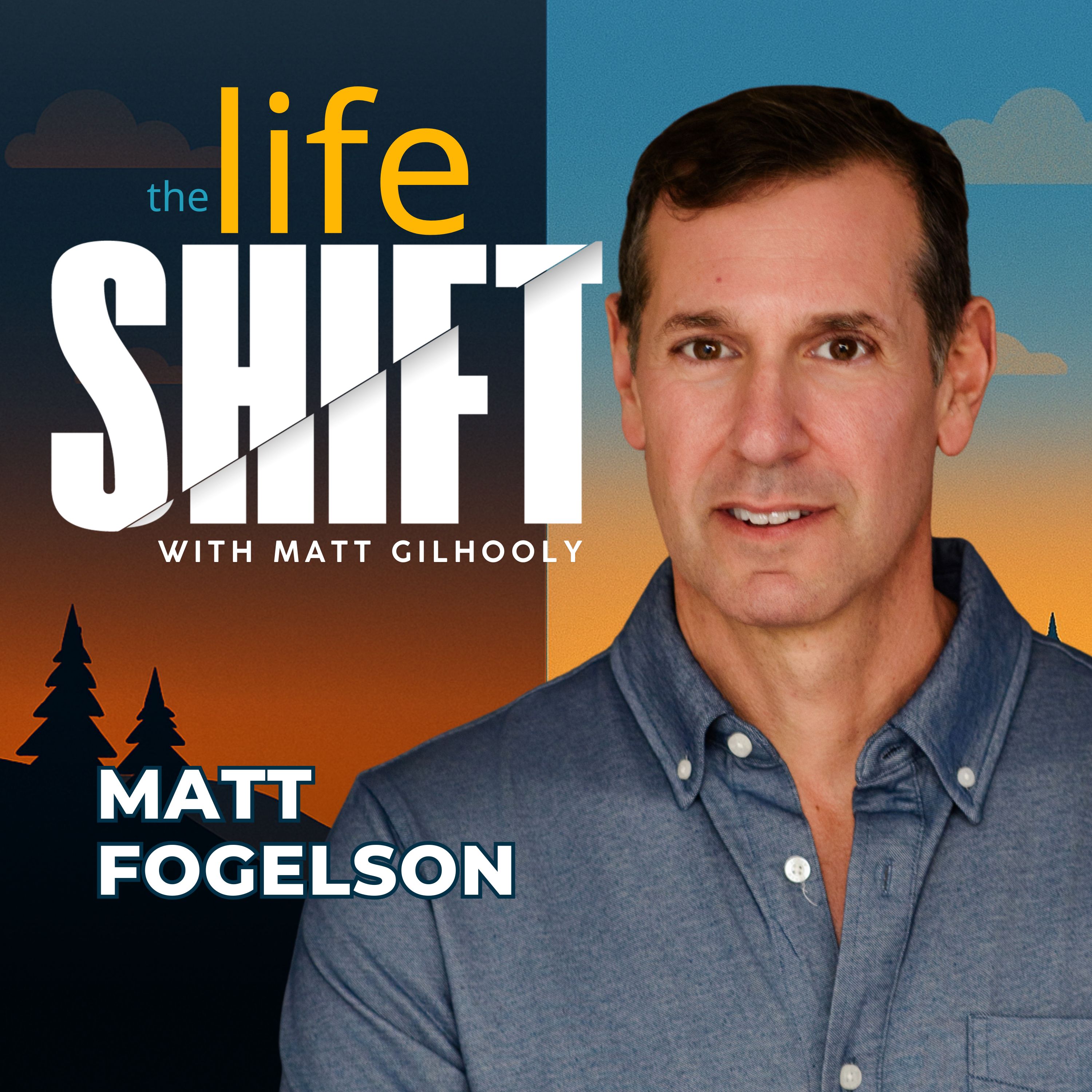
Matt Fogelson lost his father before they ever really knew each other, and when he became a dad himself, a single unplanned song in the middle of the night started him on a years-long journey back to himself.


 Goodpods
  Podchaser
  PocketCasts
  RSS Feed
 Maybe you grew up loving someone who was always somewhere else. Always present in the house but somehow out of reach. If that landed in a part of you that still carries it, this episode might feel like a long exhale.
Matt Fogelson grew up wanting more of his father than his father knew how to give. When his dad died unexpectedly during Matt's college years, the grief that followed wasn't just about loss. It was about all the conversations they never had, the closeness that always felt one step away. Matt went to law school, followed the family blueprint, wore his father's suits to work, and spent years trying to fill a hole that kept its shape.
Then he brought his own son home for the first time. The baby wouldn't stop crying. The dog was barking. Nothing was working. And without thinking about it at all, Matt started singing. What came out was a Grateful Dead song. It wasn't logical. It was just true. And that small, strange, middle-of-the-night moment quietly became the beginning of something he'd been waiting his whole life to start.
What You'll Hear:
- The specific moment of grief that intensified when Matt became a father himself
- Why music became a bridge to a part of himself he'd put away
- How singing the same song to his son for 14 years shaped their connection
- The bar mitzvah moment that made him realize he was repeating his father's patterns
- What writing a memoir taught him about understanding and forgiving a man he never fully knew
- The advice his aunt gave him after his father died, the advice he rolled his eyes at, and why he wishes he'd heard it sooner
Matt Fogelson is an author, former attorney, and lifelong music obsessive who spent decades navigating the emotional distance passed down through generations of his family. His memoir, Restrung: Fatherhood in a Different Key, traces the journey from grief to presence through the language of music. He lives with his family and can be found at mattfogelson.com.
Listen and follow: www.thelifeshiftpodcast.com/follow
Subscribe to the newsletter: https://thelifeshiftpodcast.beehiiv.com/
father son relationship, grief after losing a parent, emotional distance in families, fatherhood and identity, music as healing, inherited trauma, becoming a present parent, memoir writing as grief, breaking family patterns, unresolved loss
You Might Also Like:
Matt Gilhooly (00:00)
This episode centers on a really small moment that quietly changed everything. The night Matt brought his son home, nothing was working, so he started singing Grateful Dead to him, and somewhere in that moment, he realized he was gonna do this differently. He had lost his own father while he was in college, and with that loss came the weight of a relationship that never quite became what he had hoped it would be. As a new dad, that unresolved grief came rushing back, but instead of shutting it down, Matt leaned into it.
Music became a bridge, a way to be present, a way to build the kind of bond he never had growing up. This conversation is about grief, fatherhood, and the moment you decide not to pass the distance along.
Matt Fogelson (00:40)
so I didn't know what to do. So I just started singing to him, which was very strange because I don't sing.
And Stranger Still was my song choice. It wasn't Rockabye Baby or Twinkle Twinkle Little Star. It was a song by the Grateful Dead. Broke Down Palace.
Matt Gilhooly (00:55)
Not the first one you would
Matt Gilhooly (00:58)
You're listening to the LifeShift Podcast. I'm your host, Matt Gilhoolie. This show is built around one simple idea, that sometimes a single moment can change how we see everything. Each week, I talk with someone about the moment that shifted their life and how they learned to live differently after it. These are not stories about having it all figured out. They are stories about what it looks like to keep going once the story changes. Thank you for being here. Here's today's story.
Matt Gilhooly (01:30)
Hello everyone, welcome to the LifeShift Podcast. I am here with Matt. Hello, Matt.
Matt Fogelson (01:34)
Hi Matt, good to be here.
Matt Gilhooly (01:36)
thank you for wanting to be a part of the LifeShift
Matt Fogelson (01:38)
Yeah, well,
thank you so much for having me. It's an honor to be on.
Matt Gilhooly (01:41)
Yeah, well, it's an
honor to get to meet you in this way because we probably never would have bumped into each other in the world, you know, and it's an honor to be able to hear these stories. So before we get into your life shift moment, the before and after, maybe you can tell us who Matt is in 2026. Like, how do you show up in the world? How do you identify these days?
Matt Fogelson (02:04)
Yeah, so as of a week ago, I now show up as a published author, which is a new thing for me. I had been lawyer, sort of an unhappy lawyer for decades. And as of last week, published my memoir, Restrung Fatherhood in a Different Key, it's called. ⁓ Thank you.
Matt Gilhooly (02:10)
Congrats.
Congratulations on that. I know that's a big feat.
Matt Fogelson (02:27)
Yeah, yeah, was a couple of years in a windowless basement writing that thing. it's out in the world. yeah, that's, guess, the main thing going on with me right now.
Matt Gilhooly (02:32)
Yeah.
Yeah, and I'm assuming from the title that you are a father as well.
Matt Fogelson (02:42)
Yes, yes,
yes. the book, I mean, the 30 seconds pitch, it's about coming to grips with the death of my father. When I was in college, he died of lung cancer when he was 48. And the recognition that I didn't really know him, you know, in part because he was a largely absentee father, workaholic lawyer type.
Matt Gilhooly (02:46)
Yeah.
Matt Fogelson (03:04)
And my struggle to not pass down that emotional distance, which I feel is almost somewhat endemic to the father-son relationship in some way, not pass that down to my own son. And solving for that, hopefully, in part by sharing with him my passion for music that he kind of knows what makes his dad tick, which is something I didn't know about my own dad.
Matt Gilhooly (03:24)
Yeah, well, I love that. I'm sure it was a very cathartic and at times very hard experience to put that book together, but you felt good after you submitted it and it came out into the world. Were you a little afraid when it came out into the world? Okay.
Matt Fogelson (03:33)
Yes. Yep.
was and still am.
But yeah, think cathartic is a good word about finishing the book. I feel.
Matt Gilhooly (03:45)
Yeah. There's something about
putting your feelings to words, either out loud through song or just writing them down where things become a little bit different. They have a different power to them, in my opinion. So let's get into your story. Why don't we have you kind of paint the picture of your life leading up to this main pivotal moment that we're going to.
Matt Fogelson (03:58)
Mm-hmm. Yep. Yep. Totally agree. Yeah.
Matt Gilhooly (04:09)
center today's conversation around knowing full well that we have lots of life shift moments. You mentioned a couple just now and how your life is changed in different ways, but give us that before version of that.
Matt Fogelson (04:20)
Yeah, well, as I alluded to, I was a lawyer, an unhappy lawyer for a long time. in thinking about why I became a lawyer and why I stayed a lawyer and why I quit being a lawyer, are some of the questions I grapple with in this book, I think
One of the reasons why I became lawyer was in part sort of inertia. My dad, as I mentioned, was a lawyer. His dad, my grandfather, was a lawyer. My uncle, lawyer. Oldest cousin, lawyer. My brother. So it was like the family business. So that was part of it. Part of it was, I think, wanting to form some sort of connection with my dad, because that's sort of where he showed up, was work.
Matt Gilhooly (04:54)
Mm-hmm.
Matt Fogelson (05:05)
And he wasn't really around otherwise. So I think that was part of it. And part of it was, I think, an experience that I had at a record store when I was 12 years old. You know, when I grew up in New York City and was very into music, like a lot of kids, right? I spent all my free time and allowance money shopping for records in Greenwich Village. It's just sort of what we all did.
And there was this one time, actually I was I think 12 years old, it was before I started going to Greenwich Village. I was still on the Upper East Side shopping for records before I was allowed to get on the subway to go to Greenwich Village. was meeting my friends at a movie and it was freezing out. So was like in the middle of winter or something and I was early. And so I ducked into this crazy Eddie it was called, which was like this weird electronic store with had a great record section. I'm thumbing through the S section.
And I get to Sex Pistols album and I'm looking at it and I don't know that much about them. I know they're punk or whatever that they're they curse a lot and stuff. But with the remember, the clerk comes over to me and he sees me looking at him. He says, that album will change your life. And I remember thinking, you know, what does that mean? Like, that be is that a good thing? I don't know. I kind of like my life, I'm curious about it. And so I'm.
Rifling around in my pockets to see if I have enough money for the movie and the album and I don't and I don't want to stand up my friend so I tell him you know I'll come back and get the album another time and he looks at me and he says you'll never remember the name of that movie and Then off he goes, know leaving me there you know, he was totally right like I have no idea what the name of that movie was I did go back and buy that record and
Matt Gilhooly (06:38)
Hmm.
Matt Fogelson (06:45)
wore it out for decades. it was kind an important moment for me because I think it was my first inkling of the power of music to sort of shape identity and to shape lives. But it was also this moment that I kind of resisted in a way. kind of didn't think, you know, I could, my passion for music wasn't as authentic as the clerk, you know, I couldn't be that guy.
Matt Gilhooly (07:08)
Mm.
Matt Fogelson (07:10)
Like I kind of knew from a young age, or at least had convinced myself that I was, you know, I was over on this side of the ledger and like music wasn't what serious people did, you know, and somewhere along the line. I yeah, like it's good for a hobby or whatever. And so I think I had just sort of placed myself in this category.
Matt Gilhooly (07:22)
Right? It's not a real job. Yeah, I get that. ⁓
Society probably did as well.
Matt Fogelson (07:34)
Yeah, yeah, I mean, think there was just some expectations and so And so I become a lawyer, and I don't really enjoy it, right? And then in the interim, my dad dies. So he died my senior year of college, and I still went immediately to law school.
Matt Gilhooly (07:37)
Mm-hmm.
and said you didn't have a did you have a relationship with him but it was just you didn't see him very often or was it a strained relationship or
Matt Fogelson (08:00)
Yeah.
Yeah, it was not strained. It certainly, it was way better than a lot of, and most, sons have with their dads. It's just I always wanted to be with him. That's what I wanted as a kid, just to be with him. And he was so unavailable, physically, he just was never around.
And then when he was around, he was like somewhere else. He was like thinking about work, doing work on the phone, whatever. so I didn't feel like a real tight connection with him. I I knew he loved me and all that. It wasn't like that. But I just feel like it could have been so much more connected.
Matt Gilhooly (08:43)
Right. Yeah.
And part of that element probably of resigning to the fact that you were gonna be a lawyer was to have him see you. Like, I'm like you, and that brings that connection. I can understand that as well from a different angle, when I, you know, after my mom died, I realized that I had to be perfect.
Matt Fogelson (08:58)
Mm-hmm.
Matt Gilhooly (09:11)
because, and mine was out of fear of abandonment, so it was a little different, but it was like, as long as I am great, my dad is going to be so happy with me and he won't leave. So it was like, I had to be seen by putting this unnecessary at this point, pressure on myself to be perfect. And I can see how there's some parallels and how someone maybe in your case would want to do that so that your dad would see you in a more connected way of some sort.
Matt Fogelson (09:18)
Hmm. I see.
Yeah, yeah, and I the fact that we weren't that close before he died may have, I think, kind of supercharged my reaction after he died. Like, I craved that sense of, you know, closeness that much more after he died. And I mean, I literally would wear his suits to work, you know, and so he...
Matt Gilhooly (09:54)
Yeah.
Was it a sense of like
you just didn't have any, you didn't have the time that you thought you might have? I don't want to put these feelings on you. But like, I think we all assume that our parents are going to be around until we're old, right? We just think of that. And now him dying eliminates your opportunity to create a closer relationship.
Matt Fogelson (10:05)
With,
Yeah. Yeah. mean, one of the things I, I guess, questioned in the book is, you know, is there some point along the father-son continuum where you sort of these you can have deeper conversations, you know? And did we just run out of time? mean, I kind of feel like we would have gotten there at some point. But it was interesting to me because even after he was diagnosed, so I was a sophomore in college.
Matt Gilhooly (10:33)
Mm.
Matt Fogelson (10:45)
and he then lived for a year and a half. Even after he was diagnosed, we never talked about the fact that he might die. I mean, I think he thought he was doing me a solid by projecting, know, invincibility or whatever, and didn't want to try, didn't want to spoil my college experience or whatever. So I think it was coming from a place of love, but it's sort of odd, you know, even when it was obvious that he was dying.
Matt Gilhooly (11:06)
Yeah.
Matt Fogelson (11:15)
No, no talk about, know, if the worst happens, you're going to be okay. I love you. I have the most, most confidence in you. Don't, you know, you got to live your life. I mean, God forbid that I should be in that situation. So my son right now is 20 and my dad died when I was 21. I just, can't imagine if I were in that situation now, not having a conversation with my son about it.
Matt Gilhooly (11:40)
Yeah, think it's a different generation
too. I would assume that your father assumed a lot of those, that mentality of men in the time period that he grew up. Did he talk to other people about it? Do you know?
Matt Fogelson (11:50)
Mm-hmm. Yeah.
⁓ I don't think so. I mean, obviously to my mom. But yeah, I don't think so. But you know, that's one of the things like I don't I couldn't even tell you who his best friend was. You know, I have no idea. And I think he to your point, I think he sort of inherited that emotional stoicism from his dad. You know, I came across a memoir of sorts that my his father, my grandfather wrote.
Matt Gilhooly (11:58)
Okay.
Yeah.
Matt Fogelson (12:21)
when he was 87 years old. And it's like 43 single-spaced pages, and there are six sentences about my dad. And it's like date of birth, where he went to school, who he married, just the facts. And it's like 40 pages about his career in excruciating detail. So I think that's what my dad knew. That's how he felt love was to.
Matt Gilhooly (12:35)
Yeah.
Yeah.
Matt Fogelson (12:45)
to how he felt his father's love, I think, was to work himself to the bone.
Matt Gilhooly (12:50)
Also in an industry that isn't really emotion driven, right? It's as a lawyer, ⁓ am I making a wrong assumption? But like living that day in and day out as a lot of your time must not allow for much reflection and those kinds of things that come along with it.
Matt Fogelson (12:57)
Yeah.
Yeah, yeah, I mean, I think he particularly was in a very high pressure situation and dealing with who he perceived to be very important people. And so, yeah, I don't think he didn't seem like there was a lot of time for reflection or any downtime, really.
Matt Gilhooly (13:26)
Yeah. And so you know that he's sick, you know that he is, I mean, you can see that he's actually declining of some sort. How are you feeling on that side? Are you ignoring it? Are you feeling it deeply? Are you pushing it to the side because your dad is?
Matt Fogelson (13:45)
Yeah, I think I knew. Well, I'll put it this way. So when he told us, he told my brother, I have an older brother, year and a half older. And he told us while we were on a vacation, Christmas vacation, we're walking on a beach. And he tells us this thing. And brother's reaction was, at least to me, was, you know, I'm not that worried about it because my dad presented it as
They caught it early. I'm 46 years old. I have no symptoms. I'm going to be an outlier. And I think my brother, you know, that was his reaction, at least to me. My reaction is my mom asked me how I felt. And I said, I feel like I've been hit in the stomach. You know, that was, I really never bought into that, you know, that he was going to be an outlier. just, and yet,
I kind of played along with him. And part of it could be because I was 19, I was following his lead. If he's not going to bring it up, wanted to be strong for him and for my mom too. I guess I took cues from him, like this is how I should show up for my mom. And I remember her coming to me once and.
Matt Gilhooly (14:54)
Right.
Matt Fogelson (15:04)
She's like, you know, she did say, think we need to start preparing ourselves. And my reaction to that was, you know, I think he's doing great. You know, as I say in the book, it was like she was falling and I couldn't hold out my arms to catch her. You know, I just kept acting in this play that she wasn't watching anymore.
Matt Gilhooly (15:24)
Yeah, because you were I mean, you probably I, I apologize, I often do this just put these assumptions in here. But it feels like if you grew up not having those deep conversations with with your father, it would feel uncomfortable and scary to even approach it. So why, why put yourself in that vulnerable position? Because what if he responds unkindly? And there goes
Matt Fogelson (15:43)
Mm-hmm.
Matt Gilhooly (15:52)
that relationship you had always hoped for. So that's where my brain goes is like, plus you were 19 or 20, you know. What do we know at 19 and 20 about the human condition?
Matt Fogelson (15:59)
Yeah, yeah, I think so. It's,
yeah, I mean, there was, there's one time I, my mom asked me to take him to his chemotherapy session, which was like, eight hours long, you know, just sitting in this windowless space. And for like eight hours, and he brought his work papers, and I brought a book. And we just sat there. And we didn't
say anything, like this was normal to be sitting there watching this drip. Yeah. ⁓
Matt Gilhooly (16:31)
Yeah, like you were anywhere else. Yeah,
that's a challenge, but I mean, we can't change it. So we kind of like move forward with it. you said when your father died, it triggered you to try to hold that relationship even closer. Is that kind of what you said?
Matt Fogelson (16:50)
Yeah,
well, yeah, I I felt a need to sort of feel close to him, you know, because I say, even more so, I think, than if we'd had a if we'd had a relationship beforehand, maybe I wouldn't have tried to cling to it so much afterwards. That's just a pet theory I have. but I think no, no. So I was at school.
Matt Gilhooly (16:56)
Hmm.
Yeah. Were you there for the end?
Matt Fogelson (17:17)
I got a call the day of I guess it was and my mom just said, know, he's had a turn for the worst, you need to come up, we've got you a flight this afternoon and bring a dark suit. That's what she said. And so by the time I got so I was in North Carolina, I flew up to New York. And by the time I got there, you know, he had died.
And my mom, of course, I felt bad about that. She did her best to try and make me feel better about it. He wasn't conscious. You couldn't have talked to him. There was really nothing for you to But still, it didn't feel great.
Matt Gilhooly (18:01)
No. And it also leaves an even bigger hole, I would imagine. And probably the reason, another portion of why you tried to cling on to so much. Because you don't get the goodbye. think it's really hard. And you didn't even get the lead up to the goodbye. You had to do it on your own, if you did it all. Like for me, I feel, this is going to sound terrible, but like having experienced sudden loss as a child, losing my mom and then failing at grief for 20 plus years,
Matt Fogelson (18:11)
Yeah.
Mm-hmm.
Matt Gilhooly (18:30)
what the gift it gave me was when my grandmother got sick, I did everything right for both of us. And we had the conversations and we left nothing on like, and so it was like a blessing that I screwed up so much of that decades before that I knew what to do. And it was like a totally different grief experience, but you didn't have any of that preparation and no one was modeling it for you either. So I can imagine how heavy that would be for you.
Matt Fogelson (18:55)
Mm-hmm.
Yeah, yeah. I think that's yeah, well put.
Matt Gilhooly (19:04)
So
take us a little past your father dying or what that changed about you, because I know that is a life shift moment in itself, but the one you want to talk about is a little bit farther down the line.
Matt Fogelson (19:07)
Yeah. Yeah.
Yeah.
Yeah, so really, I think becoming a father and just started me on this journey of reconnecting with that kid who was really passionate about music. It's interesting. It literally started immediately. Like the night we brought our son home, he was like a lot of newborns, very unhappy, screaming, couldn't get him to stop, know, tried everything.
Matt Gilhooly (19:36)
Yes.
Matt Fogelson (19:41)
feeding him, swaddle, driving him in the car, nothing. And so remember too, like our dog was barking at him because he was crying. And then the crying caused the dog to bark. It was like this downward spiral. so I didn't know what to do. So I just started singing to him, which was very strange because I don't sing.
And Stranger Still was my song choice. It wasn't Rockabye Baby or Twinkle Twinkle Little Star. It was a song by the Grateful Dead. Broke Down Palace. Yeah. Yeah. Well, yeah. And as I say in the book, I gave no thought to it. It came out of me like a breath. Like.
Matt Gilhooly (20:12)
Not the first one you would think of well the first one you thought of apparently but not the the traditional
Matt Fogelson (20:25)
And it turns out it's a great lullaby. There's images of flowing rivers, and the piece comes with being home. And he actually fell so it's funny. thought, well, I'm going to stick with that. I'll do this for a few weeks, a few months. I ended up singing to him every night for 14 years, basically, until he stayed up later than me. And so that's.
I calculate that I sang broke down palace like two to three times a week for 14 years. I worked other songs into the repertoire. And so I think I sang it more than Jerry Garcia ever did. But looking back at that moment, I think it was, I think a desire to share my passion for music with him. But I think more than that, it was a way to kind of stake a claim to this part of myself that I had just, that had kind of lain dormant.
Matt Gilhooly (20:56)
Yes.
Mm-hmm.
Matt Fogelson (21:17)
as I tried to fill this hole left by my father's death. And I think I started to realize that that hole, it's not ever getting filled. It just needs to be recognized, acknowledged, and transcended somehow. And the way to do that is not by suppressing your passions. yeah, yeah. So that night kind of started me
Matt Gilhooly (21:36)
or your feelings.
Matt Fogelson (21:44)
on this path to embracing that part of myself. And, you know, like a couple of weeks later, my wife asked me to burn some CDs for her for her late night feeding session. So this was after the end of vinyl, which thankfully is coming back. But, you know, was sort of the first end of vinyl and before streaming. And so I was literally burning discs in the attic. And she said, you know, a disc or two, I'd burn 15 of them.
Matt Gilhooly (22:08)
Yeah. Yep.
Matt Fogelson (22:13)
I mean, it's like 20 hours of music. ⁓ I didn't use it. I'm a lawyer. didn't use Napster. Yeah. you know, as I say in the book, like I, I kind of just poured over the decisions over what songs to put on those discs. Like it was an NCAA pool with a 10 million dollar, you know, prize or something. And
Matt Gilhooly (22:15)
from your Napster.
We won't talk about those. That's true. Fair. I didn't either. None of us did.
Hmm.
Matt Fogelson (22:42)
It was clearly more than just fulfilling this task I'd been given. Something was breaking loose there.
Matt Gilhooly (22:49)
Were you apprehensive at all about the breaking loose?
Matt Fogelson (22:53)
not in the, not in that moment, you know, it was sort of like seeing an old friend or something, you know, like, ⁓ I remember you. We used to have a lot of fun together. Yeah. I, yeah.
Matt Gilhooly (22:58)
Mm-hmm.
Plus you're in the safety of your own home. Yeah. And you're safe at home too, right? Like, so you can,
you can fully embrace whatever you need to at home.
Matt Fogelson (23:09)
Yeah, it became very scary years later. And so this shift, it wasn't, I mean, I think that moment, bringing him home and singing to him like that was a profound moment for me. And it led to this kind of years long evolution. And one of the key moments on that timeline was started a music blog. This was when he was about nine.
Nine years old. I was at a party. One of his friends' parents were throwing a party. And the kids were out back playing, and the adults are having margaritas. And the hostess comes up to me, just asks me what I've been up to. And I mentioned that I had just visited my brother-in-law in San Antonio, that I'd seen a great band there called Heartless Bastards.
then made the mistake of asking me what they sounded like. And so I went on like this 10 minute exegesis on like all the different sounds. And, you know, she wasn't a rock music fan. So I think, you know, my references to Neil Young's live rust didn't land with her really. But so after this breathless discourse, she says, wow. And I said, yeah, they were awesome. She's like, no, no, no. You talk so passionately about music. You should start a music blog.
Matt Gilhooly (24:07)
you
Matt Fogelson (24:32)
And I was like, yeah, whatever. mean, all of this comes back. I'm a lawyer. I'm a serious person. Serious people don't write music blogs. There's also the imposter syndrome. I have friends who know way more about music than me. well, who am I to do this? So I kind of dismissed it. But then over the next few weeks, I just kept coming back to it. And then I, one afternoon, had the house to myself. And I just blasted.
Matt Gilhooly (24:38)
Right. Yep.
Matt Fogelson (25:00)
heartless bastards all through the house, got out my laptop and wrote a blog post. And it was like the most fun I'd had in ages. I'm like, let's do it. So, you know, I started this music blog and it was terrifying. I remember I sent an email to like pretty much everyone I knew, but there were some people I didn't send it to who I was sort of because they were kind of work adjacent and I didn't want to like.
be identified as a music blogger professional circles. So there was a lot of that. But it ended up being, I mean, it's led to where I am now. mean, it's basically, it started as a way to nudge classic rock fans out of the 1970s and by introducing them to new music. But it quickly expanded into.
narrative essays around the confluence of music and parenting. And I wrote a little bit about my dad and some of those essays got published. I got one in the New York Times, the Washington Post. So there was like some momentum building to it. And this book that I just wrote is direct, can trace its lineage directly to this experience of starting the music blog. so
Matt Gilhooly (26:03)
Yeah.
What did it, what did, I mean, I think of you when you're writing these things and how much that must've opened for you. And like, was it a gradual thing where you would dip your toe into like a, cause you mentioned like the parenting angle and sharing about your father. Was it like doing a little at a time or were you just like, I'm jumping into the deep end and it, and it was just always open that way. Cause I could imagine how much that changes you as an individual when you start to.
Matt Fogelson (26:16)
Yeah.
Matt Gilhooly (26:45)
share your feelings out loud.
Matt Fogelson (26:47)
Mm Yeah.
Yeah. I think it was gradual. I remember I well, one of the pieces I wrote was just a very personal one about about my dad and and this one song and and I don't know, it was a pretty emotionally charged one. And I remember her saying, like, you know, why why would you put that on the Internet? You know, my wife.
Matt Gilhooly (27:09)
Who said that?
Okay.
Matt Fogelson (27:12)
She just found it very odd. I couldn't really explain why. Well, mean, partly, I think at that time, my blog following was like 20 people. So it's like that takes some pressure off. ⁓ But I couldn't really articulate why I wanted to do it. It just it was something I felt really deeply.
Matt Gilhooly (27:26)
Yeah. Safety. A little bit.
Matt Fogelson (27:38)
I guess I had some intuition that other people had had similar experiences that it might be nice to find some kindred souls. But yeah, was kind of gradual. I didn't come out of the gate with that essay. It was.
Matt Gilhooly (27:53)
Yeah.
When you found more safety, seems like when you find one, nothing blew up. The world didn't explode because I put a little bit of feeling out there. I understand it from the perspective of a podcast too. mean, it's just like, it's out there. And like we started out this conversation, getting the words out are so cathartic. And I can imagine how this evolution of your blog could create really a new version of you that's like more
Matt Fogelson (28:01)
Yeah.
Matt Gilhooly (28:22)
confident sharing the parts that aren't the lawyer parts, you know, like all the feelings and the things that maybe you didn't have as much permission to do. I mean, you probably had permission, but wasn't as natural, I guess, growing up. Do you see any of that as like all that writing help you with?
Matt Fogelson (28:27)
Mm-hmm.
Yeah, yeah, yes, definitely.
Matt Gilhooly (28:46)
the grieving the loss of your father or recreating some kind of relationship or finding a different connection. Like how did that affect that grief part of you that probably will always be there in some way?
Matt Fogelson (29:00)
Yeah, I think it was very helpful to the grieving process because it allowed me an outlet to write. I mean, I had kept a journal for about a, well, I guess I started it right after he died and intermittently would go back to it. you know, I put like condolence notes in there and my ULG and, and then I would start writing myself little entries. And that went on for a few years, but,
I think the longer form stuff.
I think, yeah, it definitely helped me understand my grief better, like where it was coming from, and again, recognizing that he was sort of absent before, which is partly why I think I was so in so much grief, because now that opportunity is gone, we're never going to be close.
That was very helpful, just to kind of have this way to off-gas it or something.
Matt Gilhooly (30:03)
Do you feel resolved in that at all?
Matt Fogelson (30:07)
I think it, yeah. ⁓
Matt Gilhooly (30:08)
not to push you into therapy or anything, but do you feel resolved
by, because I mean, I think we find our own ways through grief sometimes, and this could be, that's why I was wondering if this was your solve.
Matt Fogelson (30:21)
I think it's certainly writing the book, I feel like I came to understand him a lot better and the forces that were acting on him and why he was the way that he was. And so that was helpful, I think, to kind of help me move past some of the feelings that I had. don't.
Matt Gilhooly (30:34)
Yeah.
Matt Fogelson (30:42)
I mean, as you know, grief, it's not something you'd ever totally get over, But the question is, how front and center is it? How all-consuming is it? Are you curled up in the fetal position on the couch all day? Or is it just sort of this gentle reminder periodically that you can deal with? And I think over the course of,
writing the book, it's become way more of the latter.
Matt Gilhooly (31:12)
Yeah.
Does that energy and grieving your father and understanding it more, the relationship that you had more, how does that affect your parenting?
Matt Fogelson (31:24)
Quite quite a as you'd expect. mean, I remember. Sort of committing, I don't know if I did this out loud to my son or just in my head, probably in my head that, you know, I was going to be there for him for as long as he wanted me to be and for as long as I was around. that's ultimately why I ended up quitting my job as a lawyer and to write this book.
was because I felt like I was sort of, I was becoming my father. I, terms of just working all the time, there was this poignant moment, for this was my son was 13. It was his bar mitzvah weekend. And so we had all, all our family and friends in for the weekend. And I had to excuse myself for like two hours to work on a brief that was due on Monday. And I'm sitting there like, what am I doing?
You know, in this case, it had been just beaten me down for like a year. You know, I had stopped taking my son to school. I hadn't done it in months. And that that was I mean, that's that's gold that time, you know, we're like, rocking out to East Street radio, we're talking fantasy football, you know, that's the good stuff. And I used to cut out of work early and try and play golf with him. He's really into golf.
I hadn't done that in a long time. so yeah, so I kind of made the decision. I think I want to focus on this writing thing. That's my happy place. And this is starting to turn a little dark, the lawyer thing. And fortunately, I have a wife who's
also a lawyer, a law professor. So if you're able support us I indulged in this project.
Matt Gilhooly (33:10)
a big decision though. mean, that's a, that's, the conversation takes me in two ways, you know, big decision, yes, to essentially lean into your passion so hard that you're, you're letting go of what you thought you had to do for some reason, because it was just your lineage or something that, that felt like since you were a kid, this is the path I have to go on. But also there's, there's the part of it that
when you said like, you were not doing the things that you were doing before with your son, like how easy we can fall into these patterns that make us become like your father got where it's like incremental until you're like, wait a second, where am I? Like, how did I get here? And so like, did any of that like you approaching feeling like what your dad was? Did any of that give you any like, I don't know.
Matt Fogelson (33:58)
Yeah.
Matt Gilhooly (34:10)
kind feelings towards the decisions that he made, because maybe he just ended up in that cycle. Or am I projecting things? Okay, fair. Yeah, I just wonder because like sometimes people just get so far down the road, like especially older generations. And then they just they can't admit it. Right? Like they just keep going like, this is it.
Matt Fogelson (34:17)
⁓ I wish I could say yes to that.
Yeah, I think for him, yeah,
I think for him, it was all about his dad. That's another thing I kind of felt by writing this book. I read a lot of memoirs by mostly like music idols of mine the need to have a relationship with your father as a son. mean, it's just I mean, this is nothing profound, right? Like it's a very powerful thing, right? And
Matt Gilhooly (34:42)
Okay.
Matt Fogelson (35:02)
it's like primal or something, right? This need for that closeness. And, you know, that's how he felt it with his dad who was still alive. You know, I remember family dinners, they would talk about work. You know, my grandfather was enthralled with all these deals that my dad was a mergers and acquisitions attorney, like, you know,
CBS is taking over. it's like, and my dad, I'm sure that made him feel great. you know, like, and his, his dad was there. His dad buried him, you know, he was there the whole time. So I he kind of did what he needed to do to. And if we ended up taking a second, second seat or whatever backseat, so be it. be
Matt Gilhooly (35:50)
Yeah,
Did your brother have a similar relationship with your father?
Matt Fogelson (35:54)
I think so. mean, what's interesting to me about him, he became a lawyer also and practiced in the same sort of field as my dad. he got, I think he's still, he's since moved out of the law, but he, for a long time, I think got a lot of comfort out of people, you know,
coming up to him and saying, hey, I worked with your dad. I knew your dad. Your dad was amazing. And he was constantly running into people who would say stuff like that to him. I don't know. I didn't feed off of that in the same way. If anything, it just made me feel even more distant from him in some way, because who are these people? I don't have anything in common with them.
Matt Gilhooly (36:37)
Right. Right.
and why do they
know him better than I did? I mean, it happens. Yeah, it's really, it's challenging. And I think it's interesting to me, I had a really, well, I didn't have a choice, but I was really close with my mom and my dad, we were close, but I don't think we would have had the relationship that we have now unless we were forced into it, right? And we grew up and learned together on how to become...
Matt Fogelson (36:43)
Yeah, right. Yeah, right. Right.
Yeah.
Matt Gilhooly (37:09)
what we are now. And so I'm really blessed that. at the same time, I don't know that had I not lost my mom, I don't know what my relationship with my father would have been beyond, you know, a loving relationship, but not like we are now. I mean, we went through some stuff together. So we had a different bond after. But before, think I just remember going to his house every Wednesday and every other weekend because my parents were divorced, you know, and I was just kind of the custody thing. So I can imagine how
Matt Fogelson (37:23)
Mm-hmm.
Yeah.
Matt Gilhooly (37:39)
having your father around, like at least living at home, but not feeling like you had that relationship is really challenging. But I can also see how it makes you a good dad now because you don't want that for your son.
Matt Fogelson (37:52)
Yeah, yeah. Well, and just picking up on what you just said, I've kind of had the same experience with my mom. Like, we are super And I'm not sure it would have evolved in that way. I kind of doubt it. But
Matt Gilhooly (37:59)
Mm.
Matt Fogelson (38:09)
So, I, you know, I, hard to imagine her not being around, you know? I treasure it. And I've also, I've just come to really appreciate efforts, you know, that she made when my dad was alive. Like I think she viewed her role to try and bring him into the fold of the family.
Matt Gilhooly (38:29)
Mm-hmm.
Matt Fogelson (38:29)
And
her strategy was to yell at him. She was always yelling at him to get home for dinner or whatever, which didn't work. And I was always, as a kid, I always confronted her. It's like, you've got to stop yelling. You think he wants to work all night? You think he wants to cancel vacations on the way to the airport? Cut him some slack. she was the one screaming, and I wanted it to stop. So I didn't.
Matt Gilhooly (38:47)
Hmm.
Right.
Matt Fogelson (38:57)
blame my dad for anything, right? He was on the pedestal. And it's only much later that I realized what she was, she was trying to do that for me. She was trying to get him home for me and for my brother. And she was screaming for me basically. But I didn't as a kid see it that way.
Matt Gilhooly (39:14)
Yeah.
Yeah. And she let you keep him on that pedestal, it sounds like, by doing that. And because she probably saw how important it was for you to feel that way. Moms are something else. And I love that it developed that relationship for you. can say my grandmother, she was the mom figure for me after my mom died. And wouldn't trade that for the world either, because you can develop that relationship, even if they're not your biological mother.
You know, I think that's really beautiful. Since your son was born, what would you say is like the most different about you as a human being now versus before your son was born?
Matt Fogelson (39:52)
Yeah.
Wow, that's a good question.
I think in some ways to open up more, I just, I don't know. I'm not quite sure how to describe that.
Matt Gilhooly (40:16)
Mm-hmm.
Matt Fogelson (40:25)
I don't know, I just feel like more open as a person emotionally. And I mean, that just that relationship.
I mean, it's so powerful. It's so emotional. It's I don't know, it just it changes. It changed me. mean, obviously, I love my wife. I love my brother, whatever, you my parents. think it's just forced me to be present to, I think.
Matt Gilhooly (40:43)
Mm-hmm.
Right.
Matt Fogelson (40:58)
which is still a little bit of a struggle for me at times. It's not like, even though I recognize the issue and I'm trying to address it, I do still sometimes find myself not fully present emotionally, but.
Matt Gilhooly (41:14)
the awareness
is so important though. And if you have the awareness, then you know you force yourself into those. I mean, you force yourself to start the blog and it was uncomfortable. You shared. I think that the awareness is so important. Whereas previous versions of us maybe didn't have quite that awareness that we weren't fully open. We thought we were, but we weren't in those ways. I think it's beautiful. think you're just maybe allowing yourself to be more fully human.
Matt Fogelson (41:28)
Mm-hmm.
Mm-hmm. Yeah.
Matt Gilhooly (41:43)
Like all the parts. Like for me, was very much until I cracked the door or cracked the grief bubble that it was stuck in. was there were only certain emotions I was allowed to express. Right. Like I couldn't like I had I could only be happy or mad. Really were like the only things if I got sad, then it was seen as weakness. And this is all in my head, of course. But once I cracked that, I was like, you know what? I am a full human. Like I'm allowed to.
Matt Fogelson (41:45)
Mm Yeah.
Mm-hmm.
Matt Gilhooly (42:12)
feel all these things and to react in the way that I need to that feels the most connected. And it sounds like being a parent maybe pushes you more to just be fully you instead of buttoned up like a lawyer.
Matt Fogelson (42:25)
Mm Yeah. Yeah.
Right. Right. Well, and also just wanting my son to know who I am. You know, like I didn't know who my dad was. Really?
Matt Gilhooly (42:33)
Yeah.
Do you have
hard conversations with your son?
Matt Fogelson (42:39)
Yeah, yeah, I interesting, it's usually around music. Like we kind of did this thing where we came up with categories and what songs we play for the category or whatever. And one of them was, you know, internal retreat, like where do you what song do you put on? And that started me talking about the album, the Soundgarden album that I would I put on in the deepest, darkest.
Matt Gilhooly (42:45)
Mm-hmm.
Matt Fogelson (43:04)
moments of grief when I was in law school You know just told him what a gift that album was and what it did for me and how I was locked in this cycle of self-loathing couldn't get out of it and this album helped me feel less alone and Create a space where like you said I could feel those feelings. didn't have to say I'm okay when people asked me. How are you doing? You know, I could just
Matt Gilhooly (43:28)
Right. The worst.
Matt Fogelson (43:30)
And it was like a drug. mean, I would listen to this music and just I could finish my listening session on the headphones and engage with people. yeah, does. He does, as it turns out. Yeah. Yeah. Yeah. Yeah. He does.
Matt Gilhooly (43:39)
Hmm. Yeah. I love that. Does your son like music as much as you do? Okay, good.
Cause that first night at home, does he like the Grateful Dead? Or is he over
that song now?
Matt Fogelson (44:00)
Yeah, I don't know. That's not I should ask him what his reaction is gut reaction is the first you know when he hears that first note now. God. I'm glad it's not my dad singing it.
Matt Gilhooly (44:04)
You
Yeah, I would imagine. Well,
you know, I think there's these beautiful memories that you're intentionally creating now so that years from now when we've moved on to different parts of whatever this earth brings us, he'll have those memories and he can then bring them to if he has children. you know, I think that's, I love the intention behind it because so many of us,
move through the world just one, you we just, we're just on that path and we, like we said before, and somehow you get to the end of the street and you're like, how'd get here? But it sounds like you're intentionally creating these bonds with your son and your family. I'm not gonna just isolate him, but do you, are you, you feel like you're intentionally doing that?
Matt Fogelson (44:53)
Yeah,
well, what comes to mind when you say that is, I mean, for his bar mitzvah, I got him a turntable, speakers and some vinyl, some of which I knew he liked, some of which is stuff I liked. And I did that. He wasn't that into music at that time. And so I knew it wasn't something that he'd be that psyched about. But as I wrote in a note to him,
which hopefully he still has. I did that intentionally so that he would have a piece of me if he ever wanted it at college or wherever, in a way that I don't have that from my dad. And at 13.
Matt Gilhooly (45:38)
Well, the, right? And it's the parallels
with your music story. I mean, you were 12, but it's around that age of becoming a man in your culture. like, so he has that version of you. Like, did you give him the Sex Pistols vinyl?
Matt Fogelson (45:54)
I gave him, I don't think so. I gave him the Rolling Stone, like my original idea was every Rolling Stones album Beggar's Banquet to Some Girls or something. But I settled on, think, what did I give him? I think I just gave him Sticky Fingers in Exile on Main Street. Because he wasn't that into the Stones. He was more into U2. I got him all the U2 records. ⁓
Matt Gilhooly (46:17)
Okay. I love the idea though, like
create, but giving him the opportunity to connect with you in that way, if he chooses to, and if he wants to. I think that's important. Whereas, you know, maybe you felt the pressure to be a lawyer because your family, all your family members were lawyers. And, and now you're like, if you choose to lean into this, here I am in this, in this format. I think that's really beautiful.
Matt Fogelson (46:26)
Yeah. Right.
Matt Gilhooly (46:45)
Was that did you do that on purpose like that? That's. That's great.
Matt Fogelson (46:49)
Yeah, I mean, I definitely want him to feel like,
you know, that freedom to pursue.
Matt Gilhooly (46:53)
Yeah. Do you think
if someone, a stranger asked him, do you think that he would feel this connection that you feel from your side? What a loaded question.
Matt Fogelson (47:04)
⁓
I mean, I hope so. think like he does who my best friends are. He's friends with their kids. You know, there's we're more integrated in each other's lives. I'll put it that way.
Matt Gilhooly (47:08)
Yeah.
Yeah,
I love it. Well, I love to hear that and I'm sure it'll evolve in so many other ways as he gets older and you get older and life changes and I think that's gonna be a beautiful experience, especially because you're so dedicated to maintaining that and creating that, which I think all dads should do. And they don't all, so I think it's a super admirable quality that
Matt Fogelson (47:39)
Yeah, yeah.
Matt Gilhooly (47:46)
Unfortunately, you had to go through what you went through. You didn't have to, but you went through that and the silver lining, if we find one, can be this, that you're able to create this with your son and the people that you love. Keep opening up and keep sharing that stuff. Curious though, if you could go back, trying to think of who I'd want you to talk to. If you could go back to Matt who was getting on that plane.
from North Carolina to New York, sitting in the seat? Is there anything that you would want to whisper in his ear or tell him about this journey he was about to go on?
Matt Fogelson (48:27)
I think I would tell him to take seriously a note my aunt Wendy wrote to me shortly after my dad died, which was you've been through a traumatic experience. You're going to end up going to some dark places, feel those feelings, but know that you've had a traumatic experience and your perspective isn't right. And if you could see yourself, how I see you, you know, you'd see this wonderful person, et cetera, et cetera.
And I remember reading that and rolling my eyes because it sounded like Psycho Babble, you know. ⁓ So true. And she was absolutely right. I did descend into those dark spaces. I wallowed in it. Yeah, yeah. And I it took me some time, though, to kind of allow myself to get out of that self loathing, you know.
Matt Gilhooly (49:04)
but it's so true.
and all of that was okay.
Yeah.
Matt Fogelson (49:25)
And to know that, you know what? You're not a terrible person.
Matt Gilhooly (49:30)
No, no,
no, all of that is so valid. I mean, I love that she gave that to you and you were a kid, like, who's gonna buy into that? But it's kind of similar to people seem to think they'll come to me because I've experienced grief in multiple ways. Like, what should I do when they're experiencing something, a loss or something at the first time? And I'm like, I can't tell you this is this is your journey. But what I can tell you, and it's very similar to what your aunt wrote to you, is that
Matt Fogelson (49:37)
Yeah.
Matt Gilhooly (49:58)
all of your feelings are valid. at any point, allow yourself to feel however you're feeling because you can. I remember like the first time I laughed after my mom died and I was like so ashamed that I was happy about something, which immediately just doesn't do good things for you when you start to feel shame about emotions that are normal and allowed. So I love that she wrote that and you have now to reflect on that and see how.
Matt Fogelson (50:10)
Yeah.
Yep.
Yep.
Matt Gilhooly (50:28)
you can help other people through your stories and stuff. I think that's, that's really a really nice response.
If people are listening to your story today, they're really interested in your book, or they just want to reach out to you and tell you their story because something that you said resonated with them, what's the best way to find you, get in your orbit, find your book? Tell us all the details.
Matt Fogelson (50:50)
Yeah.
well, Matt Fogelson.com has it's like a one-stop shop for everything. The blog, the book contact information, socials, you know, I'm on all your favorites, Instagram, Facebook or non favorites. Yeah. but yeah, I think Matt Fogelson.com is a good place to start.
Matt Gilhooly (51:03)
or non-favorites.
All right, yeah.
So we'll put that link in the show notes, so anyone listening, I highly encourage you to go to the website. I also, if something that Matt said today hit you in a different way or made you think about your own story or made you feel validated in how you felt about a certain moment in your life, I encourage you to bug Matt and tell you about that and share your story because I've learned there's so much power in telling our own story for the first time.
sharing it with someone else, hearing someone else's story. There's the power of words, whether that's in music or a podcast or a book or whatever it may be, there's so much power in it. And sometimes people are afraid to share their story. So I encourage you to reach out to Matt and bug him and tell him because I think it might be good for you too, Matt.
Matt Fogelson (51:55)
Yeah.
Yeah, yeah, no, it's not bugging me. Yeah, please do. Yeah.
Matt Gilhooly (52:01)
Yeah, it's really important. It's really
important and I am so grateful that you wanted to share your story in this way and let me ask you crazy questions and see where this conversation went.
Matt Fogelson (52:14)
Yeah, thank you Matt, I enjoyed it. Thank you for having me on.
Matt Gilhooly (52:17)
And I will say thank you to all the listeners after four plus years going into year five now. I'm just so honored that people come and hear these wildly different stories, but hear the commonalities that we all have as humans and the way we feel about certain moments and the things we attach shame to, which logically we know we shouldn't, but we still do it. And it's just been such a pleasure to be in this space with everyone.
I want to say thank you and I will be back next week with a brand new episode. Thanks again, Matt.
Matt Fogelson (52:49)
Thank you.
Matt Gilhooly (52:50)
Thank you for listening to the Life Shift Podcast. If you wanna learn more, go to www.thelifeshiftpodcast.com.
There you can check out all the different episodes. You can check out the blog, some of the reviews for the podcast and the Life Shift journal. Links are there so you can purchase your own copy, whether in digital or print format. Thanks again.
Matt Fogelson is a writer and former lawyer whose true passion is music, primarily of the classic rock variety. His debut memoir, Restrung: Fatherhood in a Different Key (SparkPress, 2026), examines father-son relationships, the pain of early parent loss, and the importance of embracing your passions. His Substack, Fine Tuning, blends personal storytelling with a love for the music that makes sense of life. His work has appeared in The New York Times, The Washington Post, Scary Mommy, and NPR.


