
147 Days: Raising and Losing My Sister
A woman who became a parent at twenty two learns that loving someone completely, and losing them, means grieving out loud and finding your center again.


 Goodpods
  Podchaser
  PocketCasts
  RSS Feed
 Key Takeaways
- At just twenty-two years old, Andrea Wilson Woods made the life-altering decision to become a parent to her eight-year-old sister, Adrienne, after their mother relinquished custody.
- Just three weeks shy of finishing her first year of high school, Adrienne was tragically diagnosed with stage four cancer, turning their world upside down.
- The 147 days following Adrienne's diagnosis tested their resilience, highlighting the importance of finding humor in hospital rooms as a form of survival.
- Andrea's journey sheds light on the often-painful reality of friendships that quietly fade away when life gets hard, emphasizing the need to ask for genuine help.
- Suppressing grief took a heavy toll on Andrea, teaching her the vital lesson that grieving out loud is necessary for true healing.
- Through founding the nonprofit Blue Faery: The Adrienne Wilson Liver Cancer Association and writing her award-winning memoir, Andrea found a new North Star after immense loss.
If you have ever loved someone so much that you quietly rearranged your whole life around them, this conversation will feel familiar.
At twenty-two, Andrea Wilson Woods got the phone call that split her life into a before and an after. Her mother no longer wanted to be a mother, and her eight-year-old sister, Adrienne, needed someone. Andrea said yes without knowing what she was saying yes to. She worked multiple jobs so she could be there for school pickups, dinners, and school events. She built a life around one person. And then, three weeks shy of finishing her first year of high school, Adrienne was diagnosed with stage four cancer. What followed was 147 days, and a grief that Andrea would spend years learning how to actually feel.
This is a story about caregiving, about the friends who show up and the ones who quietly disappear, about laughing in hospital rooms because laughter is its own kind of survival. It is about the mistake of pretending you are okay, and the slow work of finding yourself again when the person who was your center is gone.
What You'll Hear:
- What it means to become a parent to your sibling before you are ready
- Why some people vanish when things get hard, and how to ask for the help you actually need
- The humor that lived inside the hardest days
- The cost of pushing grief down, and why grieving out loud matters
- Advocating for someone you love, all the way to the end
- What it looks like to find a new North Star, more than once
Guest Bio
Andrea Wilson Woods is a keynote speaker, a writer who loves to tell stories, and a patient advocate who founded the nonprofit Blue Faery: The Adrienne Wilson Liver Cancer Association. For over ten years, Andrea worked in the education field as a teacher and professor for public and private schools as well as universities. Andrea obtained her master's degree in professional writing from the University of Southern California; her nonfiction writing has won national awards. Her best-selling and award-winning book, Better Off Bald: A Life in 147 Days, is a medical memoir about raising and losing her sister to liver cancer.
https://www.amazon.com/stores/Andrea-Wilson-Woods/author/B07X51HH8W
https://www.linkedin.com/in/andreawilsonwoods/
https://www.facebook.com/bluefaerylivercancer/
https://www.instagram.com/bluefaeryliver/
https://www.linkedin.com/company/blue-faery
https://www.youtube.com/c/BlueFaery/
--
Listen and follow: www.thelifeshiftpodcast.com/follow
Subscribe to the newsletter: https://thelifeshiftpodcast.beehiiv.com/
--
sibling loss, becoming a parent young, caregiving and grief, losing a sister, delayed grief, finding purpose after loss, childhood parentification, hospice and dying at home, friendships that fade after loss, finding a new north star
Andrea's Energy Portrait
Episode Playlist
You Might Also Like:
- The Complexity of Grief After Losing a Brother in Childhood
- Part of Me Died That Day: Learning to Live After the Worst Day of Your Life
Learn more about your ad choices. Visit megaphone.fm/adchoices
Frequently Asked Questions
Who is Andrea Wilson Woods?
Andrea Wilson Woods is a keynote speaker, award-winning writer, patient advocate, and the founder of the nonprofit Blue Faery: The Adrienne Wilson Liver Cancer Association. She is also the author of the best-selling medical memoir Better Off Bald: A Life in 147 Days.
What is the book Better Off Bald: A Life in 147 Days about?
Better Off Bald is a memoir by Andrea Wilson Woods that chronicles her experience raising her younger sister, Adrienne, and navigating Adrienne's 147-day battle with stage four liver cancer before her passing.
What nonprofit did Andrea Wilson Woods found?
Andrea founded Blue Faery: The Adrienne Wilson Liver Cancer Association, a nonprofit dedicated to supporting liver cancer patients and advocacy.
Matt Gilhooly (00:00)
Andrea was 22 when her mother called and said she didn't want to be a mother anymore. In that one phone call, Andrea became a parent to her eight-year-old sister, Adrian. She raised her through her 20s, working two or three jobs at a time just to be on her sister's schedule. And just when life started to feel steady, Adrien diagnosed with a rare aggressive cancer at 15 years old. This is Andrea's story of loving someone so completely that it reshaped her, and finding a new North Star after losing her.
Andrea Wilson Woods (00:29)
she's being wheeled in for the CAT scan. And she says, Hey, sissy, which is what she called me. Hey, sissy, watch it be cancer. And I was like, bite your tongue. And we like, she's laughing, I'm laughing. Everyone's laughing except for the nurse, but we're laughing.
And it was the ER doctor who came out and told us that she had tumors in her liver and lungs.
Matt Gilhooly (01:25)
Hello everyone. Welcome to the Life Shift Podcast. I am here with Andrea. Hello, Andrea.
Andrea Wilson Woods (01:30)
Hi Matt, how are you?
Matt Gilhooly (01:32)
Doing well, trying to survive the summer heat here in Florida. I know you're trying to survive the summer heat where you are as well.
Andrea Wilson Woods (01:40)
Yes, yes, in Alabama. Very similar heat.
Matt Gilhooly (01:44)
Yes, and you know, every year I talk about it and every year I don't do anything about it. So some some day I'll add to my thirty five moves in my life and and do another one and move to a colder climate.
Anyway, thank you for wanting to be a part of the Life Shift podcast and just coming on to share, you know, one of your probably many Life Shift moments that have kind of created lines in the sand for you in your life, a before and after version. And all of it really comes from my own experience of losing my mom when I was eight. She was killed in a motorcycle accident. And it was literally my dad sat me down. I was visiting him.
He lived in a different state. I live with my mom full time. So I was visiting my dad. He sat me down and he had to tell me probably the hardest thing he's ever had to tell anyone out loud. And it was like at that moment, you know, like when you had like I stopped dreaming about the future because all the dreams that I had about the future were no longer possible in my small eight year old mind. And it's really t I took me to like like forty years old where I realized like I've I've never
actually had like a dream. Like not a dream sleeping, but like a dream of something big or hopeful. It was just like next step, next next step. And so it I left that day. So I say all that to say that now I get to kind of heal through hearing other people's stories with the goal of other people listening and and maybe feeling less alone in their circumstance. So really appreciative of you wanting to just be part of this ride.
Andrea Wilson Woods (02:57)
Right.
well I'm happy to be here. Thank you.
Matt Gilhooly (03:19)
Before we get started, can you tell us who you are in 2026? Like how do you show up in the world? How do you identify these days?
Andrea Wilson Woods (03:27)
Well, I I mean, I'm I'm a a sister, I'm a wife, I'm a friend, I'm a lover. I am a storyteller. I I think in my heart I'm really more than anything, I'm a storyteller because I'm I'm a writer and a speaker, patient advocate, but all that revolves around storytelling and it's one of my favorite things to do.
Matt Gilhooly (03:49)
Yeah, I mean, the power of storytelling, like we know like I knew it on the surface. Like I knew, like, okay, yes, power that makes sense. Power of storytelling. But when I get to have these conversations, sometimes with people sharing that part of their story for the first time, like you can you can see what happens when you say it out loud for the first time. Like the power that it kind of gives you. For me, everything felt really scary in my head. And then when I started telling it, it was like, okay, things are starting to make a little bit more sense.
Andrea Wilson Woods (03:57)
Right.
Matt Gilhooly (04:19)
now and kind of, you know, put things into perspective for me and allowed me to unpack other things. So kudos to you for sharing story with the world. do you find it as fulfilling on your side
Andrea Wilson Woods (04:32)
do
I do. I mean I I share different stories. It's not the the same one, but my dad was an incredible storyteller and my mom had a just a wicked sense of humor and a sharp wit, so I grew up around that, even even though they didn't stay together very long, but I I grew up around two parents that really valued humor and storytelling. And so I think that's where it comes from.
Matt Gilhooly (04:55)
Yeah. Is have you always been this way, like professionally, or is it something that you've kind of gone into because of your story?
Andrea Wilson Woods (05:04)
great question. I think I was going to go this direction and then I just had all of these bizarre detours because I actually went to college for journalism and and did and didn't know at the time like it was a big deal that I got into the school of journalism at USC, Go Trojans, and then my roommate, my freshman year of college, said something and she said, Why are you a journalism major?
If you hate the news so much. And I was like, good point. And you know, an 18-year-old me was like, I think I'll change my major. And so I did. And so I changed my major to humanities with an emphasis in theaters. I ended up being a theater kid. probably should have stayed on the journalism path, but because I but I later discovered through theater, like I ended up writing a play, and this is when I still lived in LA directing, producing it, and that's when I realized
Wow, I like the process of creation. I don't like the process of interpreting someone else's words. I I like the process of actually writing the story myself. And and so, you know, like I said, lots of detours along the way.
Matt Gilhooly (06:11)
Yeah, well, that's what life does sometimes. Sometimes it's not so good, but I guess I I look back at my story, I'm like, well, I wouldn't wish parts of my story on anyone. I'm sure there are certain parts of your story that you wouldn't wish on other people. And the hard part for me is like liking where I am now and knowing that I wouldn't be where I am now had I not had those certain detours in my life. So that's a really hard thing to put out loud and be like,
Andrea Wilson Woods (06:13)
Yes.
Matt Gilhooly (06:39)
You know, people are like, Would you change the past if you could? And you're like, I wanna say yes, but I also don't know who I would be. Like I wouldn't be this me.
Andrea Wilson Woods (06:47)
I agree.
I I agree a hundred percent. My husband and I talked about this a lot. If I had not decided to move back to Birmingham, this is where I live now, not for much longer, but where I live now, but I went to high school here and my mother's from Alabama. And so I moved back here over ten years ago. Had I not moved here, I never would have met him. and and even he didn't live here, he moved here to be with me. But say so yeah, you don't know because
You know, you see all those shows and when you change the past, it changes the future.
Matt Gilhooly (07:17)
Yeah. Well, there's some things I would like to change, but I don't know where we're gonna be. So perhaps you can paint the picture of who you were leading up to the main pivotal moment that we're gonna center today's conversation around, fully understanding that as humans, we have lots of them, some bigger than others, but whatever you want to kind of center today's conversation around, I'd love to hear that before version of you.
Andrea Wilson Woods (07:20)
Yeah.
Yeah, so I was twenty-two. I had graduated from USC early, actually, and I was living in LA, had a great apartment, didn't have a lot of money, had no job stability, was living with a raging alcoholic and didn't really know what that meant. And my eight-year-old sister Adrian came to visit me for what was supposed to be a two-week Christmas vacation. And our our mother had a drug problem. I did not
really understand that. I started to get it in high school, like this is not normal. But she was so high functioning and she was a nurse and so she had easy access to drugs. And then but that before that Christmas, she had actually lost her nursing license for shooting up morphine at work. And up until that point, she had managed, and like I said, she was high functioning. She'd been able to hold a job. But then when she lost her nursing license, sh just
Like life went downhill. Like it was just a d a disaster. And and I could see things unraveling, but I never ever expected my sister to come live with me. So my sister comes out the day after Christmas, our mother calls, says she doesn't want to be a mother anymore. And I should preface this by saying that we have the same mother but different fathers. My sister's father died in a car accident before she was born. And so unfortunately, she didn't know him in this lifetime. And so
When my mom said that, I was like, wait, what? And but I also could see what was happening with my sister and it was it was not going well. And I was really concerned. And so I just said to our mother, I said, Well, if I take her now, I'm not going to give her back. And she said, Okay. And so I got temporary physical custody right then. and that was December of ninety four.
And then eventually I went to court and sued her for full legal custody and won. So I raised my sister all through my twenties. And so that was that was like probably the first big shift, if you will. Yeah.
Matt Gilhooly (09:42)
Wow.
Yeah, especially as a twenty year old, I think the
things that you're focused on at twenty don't feel like they would be raising an eight year old or helping to raise a a teenager eventually, you know, and well, hey, that's probably a good thing. Exactly.
Andrea Wilson Woods (10:00)
Yes. I I was blissfully naive. Do you know what I mean? Like I didn't I didn't it was a great thing. I didn't know. I didn't know.
And all and also like I I was in a relationship that you know if if he personally wasn't going to hurt me, he he I would have gotten hurt in a drunk driving accident because he had multiple ones. And so he was a dangerous person to be around and I didn't think much of my own safety, but I thought a lot about her safety. And so I got out of that relationship.
Matt Gilhooly (10:27)
Mm.
Andrea Wilson Woods (10:28)
not
not long after I got custody of my sister. And so she really helped me make better choices.
Matt Gilhooly (10:34)
Yeah.
Well that responsibility does kind of help us grow up in in other ways as well. I I wanna I I'm thinking about that call that is probably hopefully a rare call that people get from their mother telling them that they no longer want to be a mother. Was this like, did you have a good relationship with her moving through your childhood and and whatnot? Was or was this like a wild
Andrea Wilson Woods (10:50)
Yeah.
Matt Gilhooly (11:03)
shocker because she was a great mom and now this
Andrea Wilson Woods (11:07)
We had a a a a good relationship. I was very close to her, but it was very codependent. Again, a word I didn't know growing up. I I'm the oldest and so I was very much parenthesized. So my parents divorced when I was ten and my mom made me her best friend. She made me in charge of the house. you know, by the time I was in my teens, I was paying all the bills, balancing the checkbook. I mean I I did everything for her. And I actually
used to say that to her. I used I I always talked back 'cause I had so much responsibility. And I would just say, you know, when I go off to college, you're gonna miss me because I'm essentially your housewife. Except I'm also going to a really intense performing arts high school with long hours. And I also have a part time job. And you don't realize everything I do for you. And my mom to her credit, like a year after I'd left for college, I mean I always visited, but after I'd gone away, she
She said, You were right. She goes, I I really did not fully understand because by the time I got a driver's license, I took my sister to school. I picked her up. I was the one that the preschool called when my sister got in trouble at preschool. They didn't call my mom, they called me at high school to come pick her up. So it when you don't know anything else, that's your norm. Do you know what I mean? Like I I had never even heard the word parenticize. I had never heard
Matt Gilhooly (12:24)
Yeah. Mm-hmm.
Andrea Wilson Woods (12:30)
I hope I'm saying it right. I had never even heard that word until ten years ago. And perhaps because it wasn't invented until then, but I'm not sure. But she made me like the adult and the relationship and her equal in the relationship. And that was really hard. And there were lots of things in high school that I didn't get to do because I had to stay home and take care of my baby sister. And and you know
Matt Gilhooly (12:33)
Mm-hmm.
Right.
Andrea Wilson Woods (12:56)
It was interesting, I think, at my ten or twenty year high school reunion, I was seeing all these photos and I was like with people I know and I went to a very small high school and I was like, Where was I? And someone said, you were taking care of your sister, you couldn't come. And so everyone knew. so we had a really good relationship, but it was very dysfunctional.
Matt Gilhooly (13:15)
Yeah.
Did you do you did you harbor like any kind of resentment? I feel like there would be some teenage angst that would come out or did you fully embrace like this is just this is just what I have to do.
Andrea Wilson Woods (13:29)
I I didn't at the time, but when I got to college I was I felt freedom. Like I was like, I'm free. and it was it was I had an amazing college experience and I went against my mother's wishes, my father's wishes, my counselor's wishes. Like everyone said, Don't go to LA, don't go to this school, you'll never succeed. You're coming from a small high school in Birmingham, Alabama, da da da da da. And I had the time in my life. I had a great time.
Matt Gilhooly (13:56)
Yeah.
Yeah. Well, maybe because of the situation in your teens that you were just like, screw it. I'm doing whatever I want. Yeah. Do do you think this is gonna be a really rude question, I think, but hopefully. But do you think that you gravitated towards dysfunction? Like that relationship that you were mentioning, that was because of the situation that you were in growing up?
Andrea Wilson Woods (14:01)
Yeah.
Yeah. Yeah. Had a great time.
Yeah, go for it.
Yeah. yes. Yeah.
Yes. And when I was in that relationship and when I when I started to kind of piece together, like, gosh, like he's an alcoholic. This is a problem. I went to a therapist. I remember first therapist I'd ever gone to. It only went two times. The first time was just your regular intake. The second time he likes looks me in the eyes and he says, and I I had had a relationship in college, my one serious college boyfriend
And he was abusive and I had to get a restraining order against him. And he was a drinker as well. And and so this this therapist said to me, He goes, Do you realize the connection between your mother, your college boyfriend, and the man you're living with now? And I said, What do you mean? You know, like I could not see it. And he just drew the map for me so beautifully. And I thanked him. I also told him he was gonna have a very short career as a therapist because now I didn't need to come back.
But I was so grateful because I up until that moment, no one explained it to me. No one helped me understand what codependency was. No one helped me understand that I saw my college boyfriend differently as than I saw the guy I was with. And especially I saw both of them differently than my mother, who was not a drinker at all. She just popped pills all the time. And so I'm so grateful. I don't know his name. He was at the West Side Clinic in LA.
He was incredible. And I was like, wow. And then I started attending Al Anon meetings and and started to kind of put all the pieces together.
Matt Gilhooly (15:53)
Wow, yeah. I mean, again, the power of story, someone else seeing your story and helping you tell yours or understand yours better. It's I I I only ask that. I think of my own experience and how I unknowingly gravitated to like legit every mother of my friends. Like I was I wanted to be like best friends with the mother of all of my friends. And it and then I got older and I was like, that
Andrea Wilson Woods (16:00)
Yeah.
Matt Gilhooly (16:23)
Makes total sense. But at the time it was just like, yeah, every mother loves me kind of thing. And it's it was really my subconscious, like trying to find that feeling that all my teenage friends had at the time. I didn't have I didn't know what that was like. So kind of feeling this is very similar. Our stories are totally different, but very similar, kind of like what we gravitate towards is is a product of like what we subconsciously understand as as we're growing up. And it's very
Andrea Wilson Woods (16:50)
Yeah. I mean that's
that that's what made me a good caregiver. It's what made me a good parent, you know. and when you're a parent parenting a child, that's great. But when you're when you're the parent and in a relationship with another adult and it's codependent, that's that's not healthy.
Matt Gilhooly (16:54)
Mm, fair.
Yeah. So here you are in your twenties, you said you're now officially, I guess, a parent, right? Of your sister, where you had practice, you were in practice before, and now here you are. This is your full responsibility to do. What what is what is life like as you navigate that? Cause it I mean, it's gotta change you, right?
Andrea Wilson Woods (17:15)
Yeah. yeah.
Yeah, it was it was really difficult. I didn't build a career in my twenties because I I couldn't find a job that would allow me to be on her schedule. And so for a long period of time, for a few years, I took multiple part-time jobs. I think the most I had was four part-time jobs at one time. but it allowed me to take her to school, allowed me to pick her up from school, allowed me to be there if she had a school event, it allowed me to cook dinner for her. and then eventually I
started teaching and started as a substitute teacher so I could be more on her schedule and have a more consistent schedule myself. But I still always had like two or three jobs at any given time. and then if I could, I would take her to work with me, depending on what the job was. but it was it was hard. It was it was very, very difficult. we did not have any extra money to do anything. Money was always tight.
You know, and so that that part of it was hard, but being her parents, that was incredibly reward reward rewarding. It was it was.
Matt Gilhooly (18:26)
Yeah.
I could I could see how that is but also at the same time on the flip side, as rewarding and beautiful as that relationship can be, you're also dare I say, sacrificing your
what your life was gonna be on the trajectory that you were on before, did you I mean, was that it was it like a no brainer that you were gonna do this and take care of your sister? No one.
Andrea Wilson Woods (18:42)
Yeah. Yeah.
there was no one else. Yeah, there
were yeah, there was no one else. Yeah. And I found I found out later my mom had tested this out with other people. Like she had actually tried other people before me and I didn't know that. And everybody else said no. And I think the reason she waited to ask me was because she knew that I wouldn't give her back. And and I told her that. I I said I am not gonna give her back. and yeah.
Matt Gilhooly (18:54)
So it was
Did she try?
Andrea Wilson Woods (19:19)
She did. She came back about ten months later and she said, I've got my life together now. And I said, Okay, well, did you go to rehab? No. Is your nursing license reinstated? No. How are you earning a living? She was she was doing private nursing without a license. And her clients did no, she didn't have a license. And that's how she was making a living. And I said, And and where are you living? I'm living
Matt Gilhooly (19:20)
Okay.
Andrea Wilson Woods (19:45)
I'm living at the house with you know the man who's the patient. I'm like, that's not a place to raise a child. I said, and you haven't gotten help and you won't admit you have a problem. And and that's when we ended up eventually going to court.
Matt Gilhooly (19:58)
Mm. Well, I mean, kudos to you for being the adult in the situation and really you know, it's hard to stand up to your parent. I mean, it's someone that you're you're taught to love. Like you're taught to take care of and and not that you have to, but you're taught that way and you stood up to her and you took care you did what was best for your f for your sister. Yeah, but you
Andrea Wilson Woods (20:03)
Yeah.
Matt Gilhooly (20:23)
You know, I think that's I think it's very noble of you. I don't know, that sounds cheesy, but like to offer up your life to take care of someone else that you love. It's it's a it's a really big thing in your twenties. So kudos to you for stepping up to do that. How how did how did it go ahead.
Andrea Wilson Woods (20:36)
Thank you.
I was gonna say I found out later. my sister said she didn't want to grow up to be like me. And that god, that really hurt, you know? It's like what? And then I realized why. I I realized why I was like, because I always put myself last and that's why she didn't wanna have to sacrifice the way that I did. And so then I understood.
Matt Gilhooly (21:02)
Yeah.
Yeah. It's that's a tough one on the surface to hear something like that. But to understand that she saw you for what you were doing and sacrificing for her, I mean, that's that's pretty, but I'm pretty. That's it's it's very nice to hear that part of it, but at the same time I would imagine that there are some parts where you're like, Damn, I miss that but you also had that damn I miss that during your teen years, so
Andrea Wilson Woods (21:07)
Mm-hmm.
Matt Gilhooly (21:31)
You know, how does your story progress as you're, you know, putting your life somewhat on hold as you're as you're raising another child, which is your sister?
Andrea Wilson Woods (21:40)
Yeah, so she had a rough time in middle school and w became suicidal and I got her into got her into therapy and we got so fortunate, so, so fortunate that we just it feels like the universe just found the perfect therapist at the perfect time. still in touch with her to this day and and really saved her life and and and she you know, I f she had a whole suicide plan. I found it
Matt Gilhooly (21:45)
Mm.
Andrea Wilson Woods (22:05)
you know, it was rough. It was rough. Middle school was really rough. And then she got over that. She started high school and that was it was a beautiful thing to see her start high school where she just finally embraced who she was and stopped caring about what other people thought and found and found that she was kind of popular among sort of everyone. Everyone, you know, she didn't fit into one particular category and she was finally okay with that.
she was a four point student. She was taking, you know, AP courses. I mean, she was so so smart. And and then a month after her 15th birthday, just three weeks shy of finishing her first year of high school, she was diagnosed with stage four cancer. And it was quick. It was like I came home from work. I w at at that time I I had taken a semi-permanent teaching job and
I came home and we had a rule in our house that she always had to do her homework first. So I was used to walking in the door and seeing her at the kitchen table doing her homework. And on that day she was on the living room floor, curled up in pain, saying she couldn't breathe and clutching her right side and and crying. And this was a kid who did not cry. I mean, she was tough and and volunteering to go to see her doctor. And it was like, whoa, okay. And so we went to our pediatrician.
He didn't like what he saw. He sent us to the only hospital in Burbank, California, to the local ER. They did a CAT scan. And to give you an idea of her very, very dry, funny sense of humor, she's being wheeled in for the CAT scan. And she says, Hey, sissy, which is what she called me. Hey, sissy, watch it be cancer. And I was like, bite your tongue. And we like, she's laughing, I'm laughing. Everyone's laughing except for the nurse, but we're laughing.
And it was the ER doctor who came out and told us that she had tumors in her liver and lungs. He said he wouldn't look at her, wouldn't say her name. and then he told us that they were not equipped to handle the situation because they didn't see pediatric patients. So they had already arranged for a transfer by ambulance to children's hospital Los Angeles. And that all happened in the span of under six hours. And so we were in an ambulance by nine o'clock.
going to children's hospital. And that was day one of her very short one hundred and forty seven day cancer journey.
Matt Gilhooly (24:25)
I mean, I'm sorry that you had to to go through that. The the swiftness of finding out. It's like you almost didn't like it. It's like whiplash, but also like you don't even have time to process it. Like it like it probably took a while to start to process like this is really happening or or what was that lying? Okay.
Andrea Wilson Woods (24:33)
Yeah. It was like whiplash. Yeah. Mm.
It happened really fast in
terms of getting an actual diagnosis. So for for that I'm grateful and I think they moved very really fast because she was young because none of her nothing made sense. all of her initial blood work was normal and so they she had a biopsy within two days, which is kind of unheard of. and once they saw the tissue under a microscope, they knew it was stage four hepatocellular carcinoma or primary liver cancer and it had already spread to her lungs.
Matt Gilhooly (24:56)
Yeah.
Andrea Wilson Woods (25:12)
And it it was it was fast. She she never went back to school in person. She did finish school finish the school year and she even started her sophomore year, but she didn't go back to school in person.
Matt Gilhooly (25:22)
And for you, what was that like for you? Cause I I I mean, I can't imagine what it's like for a fifteen year old to kind of have to face this, especially with what she had gone through in middle school. I think there's a whole other layer that comes with it. But for you that someone you've you've put all of your love into this this child who you know, and I can't imagine how it wrecks you, but you also probably want to feel a certain way around her. Like what was that like for you?
Andrea Wilson Woods (25:33)
Yeah.
Yeah.
I you know, I lived in what I call a healthy state of denial because if I if it wasn't I was not in denial about her illness. you know, the the the proof was there. There there was no question. and and we did get a second opinion. But I was in denial that this would actually kill her. 'Cause I there's there was no way I would have been able to function every single day if I thought that I was gonna lose her. and I would say I was pretty much like that up until like like
Matt Gilhooly (25:51)
Okay.
Andrea Wilson Woods (26:12)
a day before she died. I mean, I really was. I couldn't ha I couldn't I couldn't even wrap my whole mind around it. but I also had this idea initially that I would somehow go back to work and and so like I'm faxing in lesson plans. It was a Wednesday and I like, we'll get through this week and then I'll be back on Monday and we'll figure something out and and I don't know what I thought, but that did not happen. So I ended up
leaving my job to take care of her full time.
Matt Gilhooly (26:41)
Well, I mean, again, a beautiful part of a horrif horrible story, right? I think that I think a lot of us would have been like, I'm gonna go back to work and normalcy 'cause that's what we were craving. Everything feels chaotic and uncontrollable and you're like, that's the thing I know. I can lean into the work part and that will distract me for a little bit. But well, I guess money is part of it. Well, ha yeah, that's
Andrea Wilson Woods (27:03)
Well, and you you need the money. I mean it was like yeah yeah yeah, that's that's what it was
for me. It was like I have to earn a living. So
Matt Gilhooly (27:12)
Right. And that's that's even more challenging.
How were you I don't wanna ask about your finances, how were you able to put yourself in that spot where you could be her full time caretaker and see her through this journey? 'Cause I'm sure that meant a lot to her.
Andrea Wilson Woods (27:28)
I was able to do it because my dad, who had no biological relationship to her, but treated her like the only granddaughter he ever had, my dad offered to help take care of us. And and I was in a healthy relationship at that point, with the only father figure she ever had. And he can he continued working full time and kept his job, but they gave him loads of flexibility. Like if he had to drop everything and go to the hospital, he did. And so they were very, very
understanding during that time. But but if my father had not offered, I I don't know what we would have done. We were also just so lucky that the school did a fundraiser. I had done a lot of theater, theater that I had acted at a show, I directed and they did a fundraiser. we we're just really, really fortunate that all these people sort of showed up for us. And it it's funny
when stuff like that happens, because it's not funny ha ha, but you really find out who your friends are and you and you're going to be surprised every time because the people you think that are going to be there may not be. And then these people that you never would have expected come out of the woodwork and just show up in incredible ways. and then we were also fortunate that
There was a loophole in the California law. So I didn't have health insurance for myself. I was twenty eight when she was diagnosed. But I had health insurance for her because of a loophole in the California law. Read the fine print, people. And that's why I never adopted her. If I had adopted her, I would have lost she would have lost her health insurance. And and so that's why I never adopted my sister.
Matt Gilhooly (29:05)
Okay. Well, I mean I it sounds like people really showed up for you. Is it hard for you to accept that help and those people showing up for you?
Andrea Wilson Woods (29:14)
no, but the first the first two she was in the hospital for two weeks and and then we came home and then started this new normal life. And at first everybody showed up. Everybody. Like every people who barely knew her showed up. And she even said, like, I'm popular because I'm sick now. Like like she and she she called it. I mean, she she was a straight shooter. And what was really hard for me was
Matt Gilhooly (29:33)
Mm.
Andrea Wilson Woods (29:40)
Like I said, our mom was a nurse, and I saw and our mom worked in hospitals and nursing homes, and I saw what happened when people started to get worse. And my mom would talk about it a lot too, how families would stop showing up and disappear and and patients would be asking for them. And that was the hardest part for me was from the very beginning, I knew all these people were not going to be around at the end. And I was right. And I didn't want to be right about that, but I mean
It was it sucked. And in September, this started in middle of May. In September when she was going back to school but being homeschooled and working with the school district, you know, she said, What happened to what happened to all these people? 'Cause I had this sort of close-knit group of friends. None of them had kids yet, but they were kind of like her. They like to say they were her aunts and uncles and that, you know, one day she was gonna babysit for them.
Matt Gilhooly (30:34)
Mm-hmm.
Andrea Wilson Woods (30:37)
And they were all in their twenties as well. And and they weren't friends with each other necessarily, but they were all sort of friends with with me, my my partner in the time, and he and he had a young son from a previous relationship. So, and she said, send them an email. Like tell them I'm s I I may not be in the hospital as often, but I'm still here. And, you know, and I did. I sent that email and and had her read it first before I sent it. But it but it sucked to have to send that email to say, hey.
Matt Gilhooly (31:05)
Mm-hmm.
Andrea Wilson Woods (31:06)
You know, guys, she misses you and show up, you know, stop by, say hello, you know, pick up the phone and call her. and you know, but but that's what happens, you know.
Matt Gilhooly (31:10)
Yeah.
It's so hard because you can I can see both sides of the person that doesn't know what to do and they can't fix it, so they don't know what to do. They just freeze and they pretend it's not happening, kind of like the l little bit of that denial piece that comes into it. But at the same time, you're totally right. They're still here. Like your sis your sister was still here and she was doing what she needed to do to make it through the day. And seeing the people that she loved or enjoyed company from would be
Andrea Wilson Woods (31:36)
Yeah.
Matt Gilhooly (31:49)
Would be beautiful. So anyone listening now, if you know anyone that's going through anything of it, just show up or reach out and say, Hey, just thinking about you. Anything you need? Like it's as simple as that.
Andrea Wilson Woods (31:55)
Yes.
Yeah.
It really it really is that simple. And one I know I nobody can fix it. Yeah. And you know, and the other thing that I learned was that a lot of times people want to help, but they don't know how to help. And right, they can't fix the problem, right? And you know, they but they they they wanna help. And so I I really quickly learned, wait, wait a minute. you know
Matt Gilhooly (32:04)
'Cause you weren't looking for a solve. You weren't looking f Exactly.
Andrea Wilson Woods (32:29)
I I asked someone, I said, Hey, you know, if I give you lists, could you go grocery shopping? Yes. Great. Would you mind putting gas in my car? Great. You know, so there were little things like that that were super helpful that people were willing to do. and then there were other people who were like, like I had a a friend of mine, he he he he didn't live in the area, but like he ke he kept wanting to like have dinners delivered to our house, but he was doing it from another country. And so between the time difference and
And also the fact that like at any given moment we could be in the ER, it never worked out. And I finally had to say to him, like, I really appreciate what you're doing. And I said, But but this is not helping us. And I'm getting stressed thinking about some dinner delivery. I I said, I really appreciate it, but that's just not what we need right now, you know. But I appreciate you you trying to help. and and so yeah, I think that that's
Unfortunately the onus is on the the patient or the the patient's loved one to say, This is what I need. And putting gas in my car may not seem like a big deal. Guess what? It's a big deal. It's a big deal.
Matt Gilhooly (33:32)
Yeah.
And we're just not like we're just not trained for this on either side to be the caretaker. We're not trained to be the sick one. We're not trained to be the friend or the family of people going through something. And so instead of leaning in, we turn away because we just don't and we don't know how to ask for things and you know, some someone has to step up. It sounds like you are able to step up in some ways.
Andrea Wilson Woods (33:39)
No.
Matt Gilhooly (34:00)
Had you lost anyone before going through this experience with your sister? Like anyone close to you?
Andrea Wilson Woods (34:06)
no, no. I mean my grandfather died from lung cancer when I was seven, but no.
Matt Gilhooly (34:06)
Okay. So this was
Yeah, and in my mind, it was always like when you were young, old people just die, you know, like right. So not only was this your first experience like caretaking for someone in this way, I guess you were you were doing that as a teenager, but hopefully in more healthy of ways, I guess people are healthy living. But here you are, your sister's getting sicker, I'm imagining, through this period of time.
Andrea Wilson Woods (34:16)
Your grandparents are supposed to are supposed to l die before you. Yes. That's that's the natural order of things. Yes.
Matt Gilhooly (34:40)
So you're this is your first time kind of witnessing someone's
Journey through it, I guess.
Andrea Wilson Woods (34:45)
Mm. Yeah, no, I mean I
I'd seen it w with, you know, my mother where the places she worked, I'd seen it, but again, they were much older people. I had not seen it with a young person. And yeah, it was very it was it was it was really hard.
Matt Gilhooly (34:52)
Right. See.
Were there light moments in that period of time between you and and your sister? Okay.
Andrea Wilson Woods (35:08)
yeah. yeah.
Absolutely. She was so funny. Like she it was really strange. She never fully lost her hair. And and I I don't know if it's because so the night before chemo, sh you know, she she was very conscious about looking for ways where she could take back some power and control. So the night before chemotherapy, she shaved her head into four mohawks and called it her quad hog. And it looked
phenomenal. Like it looked amazing. And it was like, wow, you have a perfectly round head. We didn't know. and when her hair started to fall out, she like, she she actually pulled out a huge chunk and there was this bald spot. She's like, I'm not gonna do that anymore. And so she, except for that one little spot, she never lost her hair follicles fully. So we had this incident where this was a couple months in and
And she had purposely like shaved off the mohaws as some of the hair started coming out. But even her eyelashes she didn't fully lose. As soon as she would lose an eyelash, another one would come back. Her eyebrows she didn't fully lose. they were just thinning out a little bit. So so she looked like someone who shaved her head. didn't always look sick. And and we were at a restaurant, her favorite restaurant, but she wasn't that hungry and she was trying hard to eat. And we were with two of my friends and
This waiter came over and I I could tell, or best boy, he had been eyeing her, like, and he was in 1920. She's 15. And and he comes over and he's like, you know, it's like something out of a cartoon, and he had a stack of dishes, a stack of plates. And he comes over and he's like, my God, like, I don't know what made you do it, but you know, I can't believe you shaved your head. It's you're so beautiful. And he was so genuine and so earnest. And I could see
this look in her face, like, I just can't deal with this today. And so like without missing a beat, and she was about to take like a sip of her soup, she just said, I have cancer. And just continue and we all laughed. I mean, we laughed so hard. And I know it may sound mean, but you had to be there. And I thought he was gonna drop every dish. And then she puts the spoon down and she's like, he won't be back. And and he didn't come back at all. He was gone. So
Matt Gilhooly (37:24)
Yeah.
Andrea Wilson Woods (37:27)
it you know, and then there were lots of moments like that.
Matt Gilhooly (37:29)
Yeah, yeah. I
mean, as hard as it is, there has to be levity in in I mean, 'cause you're all still there, right? And you still you want to make the most of these things. And you come to this this probably the worst experience you've ever gone through of of losing her. And we don't have to go into the details there, but I would imagine it changes you as a person. Not only, you know, raising her and and
Andrea Wilson Woods (37:35)
It has to be.
Yes.
Matt Gilhooly (37:57)
this life that you probably didn't imagine for yourself in your twenties and having this relationship even closer relationship with your sister. But like how does this experience of having her and then losing her, how's that change you as a as a human?
Andrea Wilson Woods (38:13)
gosh.
Well, my my partner at the time, and he was there the whole time. we we did end up splitting up two years after she died, but he said he had never and and mind you, he's a parent, he had never seen anyone love someone the way I loved her. And and and and that and and a lot of people said that about the two of us. Like you would meet us and we would seem so different, you know, initially, and then you would get to know us and
We had so many similar qualities and but it but we would go to the ends of the earth for the for each other. And I don't have that person anymore. You know, it's just not the same. And and I'll never have that person again. And and talk about the most unique relationship of my life is like not only my sister, but my child. And
And it's one of the reasons I chose not to have children of my own, although I found out later I probably couldn't have couldn't have. That's for another podcast. But but it's it's one of the reasons that I I didn't have any biological children because I was like, if I have it I never had a burning desire, but I was like, if I do, I will always compare internally. I will never say anything externally, and that's not fair. That's really not fair. I feel so fortunate though.
Because most people don't get that, you know? Most people don't don't love someone like that and most people don't get that love back from that person.
Matt Gilhooly (39:33)
Mm mm. Yeah, and
Yeah, and and the ability to see her through so many of those moments, those pivotal moments, in you know, in her growing up, but also in in one of the hardest times that she would ever experience, right? And for you to be there and I don't know, celebrate is not the right word because it's obviously you're not, but like I I had the beautiful opportunity
To spend the last 96 hours with my grandmother, who basically became my mother, who we were best friend. We I if if I dare to compare a relationship, like you and your sister child of that that sounded really weird, but you know what mean. but my grandmother and I were were probably that close. And having lost my mom the way I did, when my grandmother got sick, I was like, We're doing this right. And that's why I asked you that original question, had if you had lost anyone, because
Andrea Wilson Woods (40:23)
No, I know what you meant. Yeah, yeah.
Matt Gilhooly (40:38)
I knew exactly for me, selfishly, I knew exactly what I didn't want to do this time. And so I leaned into it and, you know, it was hard, of course, hardest experience, but I knew I was gonna have that last conversation. I was gonna force it, whether she wanted to or not. We were gonna clear we were gonna clear the air if there was any air to clear, and I and she was gonna go and I was gonna go with nothing left unsaid. And then I sat by her bedside for the last couple days of her life and I think it was
devastatingly beautiful. Like it was something where she was around when I took my first breath. And I how lucky was I to be there when she moved on to whatever comes next for her. And so, you know, there's there's something it's weird to say that there's something beautiful about it, but in the darkest part of what you could experience, there is something so special about being there for for them and for yourself.
Andrea Wilson Woods (41:18)
it's an honor. It's a it's a I was holding my sister. Yeah, when she died. Yeah.
Matt Gilhooly (41:36)
And you would y would you say that you had a similar experience to that feeling, although probably heart wrenching?
Andrea Wilson Woods (41:45)
I mean I I I couldn't say it at the time. Do you know what I mean? Like at the time, but but I can say now like it was it it was it was an honor, you know, it was a gift. if I had listened to the doctors, she would have died in the hospital hooked up to a respirator because she took this really dramatic turn for the worst, like really suddenly. And there was a thirty-six hour period where where she was essentially unconscious and and they didn't know how to pull her out of it.
And and they were insisting that I hook her up to respirator. And I said, Nope, I'll sign a DNR. I'm not doing it. That's not what she would want. I know that without you know, and and I said, I'm gonna take her home. And they and they were they were doing everything to talk me out of it. They were like, She could die in the ambulance. I'm like, I accept that risk. And they said, Well, then you have to go on hospice. I said, Fine. And now at this point I had been up thirty six hours too, just surviving on Diet Coke at the time.
And it was like five o'clock in the morning. And this hospice nurse walks in and introduces herself. And and my sister at this point is like sleeping beauty has not woken up and said a word. And I just draped my whole body over my sister. And I I said, I don't care who the hell you are. I said, I'm taking my baby home. Make it happen. Like, you know. And she later told me, and I I wish I wish I could find where she is today. I don't know. I'm not still in touch with her, but
She later told me her nickname for me was Andrea. Don't fuck with my family, Wilson, which is like the best nickname ever. And and I own it. I love it. It's so true. but what was crazy was I knew she was still there. Like I knew she was still there. And so we signed the hospice papers, we're gonna take her home. The doctors are like, she's gonna die in the ambulance. I'm like, okay, got it. And they decide they're gonna put a catheter on her. So everyone leaves the room.
Matt Gilhooly (43:16)
Yep.
Mm-hmm.
Andrea Wilson Woods (43:37)
the doctors, everybody leaves. It's just me with two nurses. And they start to put a catheter in her. And by golly, this kid wakes right up and she's like, Sissy, make them stop. What are they doing? And the nurses look like they've seen a ghost. And she grabs her IV pole. She's like, Man, I gotta go to the bathroom. And I offer to help her. She's like, I don't want your help, you know. She's like, and she like goes to the bathroom, she shuts the door, she comes back out, we put the covers back on, and the nurses are like, We need to let people in.
And because my partner was outside, my friend and her husband, the doctors, and we let everybody in and everybody's crying. And the doctor that pushed the hardest for me to put on a respirator, I have never seen a doctor before or since silently weep. And he was weeping, weeping. And he just happened to be on call. He was not her regular doctor. And and she looked around and she's like, What's all the fuss about? I was just dreaming.
You know, it was so funny and and I just looked at that doctor, I said, I told ya, I told you she was still there and she's gonna be at home and she died two days later at home.
Matt Gilhooly (44:34)
Yeah.
Hmm. I mean as as hard as that is, what a beautiful moment. You know, like it just it it puts you I mean it it it warms my heart like that you were able to have those moments and you advocated for her and and she was still herself in those moments, you know? Like and it and it doesn't always go that way, you know, and sometimes people just sit around forever and we don't know what to do, but
Andrea Wilson Woods (45:01)
Yes, she was a hundred percent herself. Yeah.
Matt Gilhooly (45:12)
Sometimes you're able to have those last moments so close to the end. I don't know why I'm justifying any of this. I think it's such a interesting experience to watch someone die and to be a part of that journey. But I know what it's like on the other side of it. Did you lose yourself for a while? Did you what was your grief journey like? Like how tell me a little bit about that grief journey because I know it's different for everyone.
Andrea Wilson Woods (45:34)
Yeah. Yeah. I I
I heard you saying something on one of your podcasts, to a guest, or maybe it was the guest, about just trying to make everybody else happy. And so for the first year after she died, that's what I did. I just pretended I was okay. And because I I don't know, I was sort of my role and
in that friend group with like I said, they weren't really friends with each other, but they were friends with me and my partner. And and also his son was very young. His son was only nine. And so I I just that whole first year I didn't grieve. and that was a mistake. And I tell people that now it was a huge mistake
It it just if I had grieved sooner, people would have really understood, I think, the f the full impact. And but everyone bought my act. They did. And and I'll and they but people asked ridiculous things of me. My best friend's husband asked me to plan her surprise thirtieth birthday party less than two months after my sister died. That's ridiculous. You know, I mean it it is absolutely ludicrous.
Matt Gilhooly (46:43)
Mm-hmm.
Andrea Wilson Woods (46:45)
I think he did it to distract me. I don't think he had any, you know, malicious intent. But why didn't I say no? I mean, God, I wasn't Yeah, I did. I didn't want to lose, that's exactly it. I didn't want to lose anyone else. And yeah. And when I finally that first year, that one year anniversary, when it finally hit me that that this
Matt Gilhooly (46:50)
Yeah, probably.
Because you wanted to please other people. You didn't want to lose anyone else.
That's what I did.
Andrea Wilson Woods (47:12)
that whole last year and a half wasn't a dream and that I was never going to, you know, have her back in this lifetime. would became extremely suicidal and I just fell apart. Really, really just fell apart. I was still sort of functioning and working, but I was really going through the motions. And it was it was my partner who actually, who I didn't think paid attention most of the time, but he I was really sad and he was really mad. So he he became like a falling down drunk. Like he
Matt Gilhooly (47:21)
Mm.
Mm.
Andrea Wilson Woods (47:41)
He like that was hi hi
Matt Gilhooly (47:42)
That was his way of doing it.
Andrea Wilson Woods (47:44)
that was his way of grieving and and I just became like sadder and sadder and sadder every single day. And and I ended up losing all my friends. So I I was right about, you know, not wanting to lose. That was a very astute observation that you made that I was afraid of losing other people because I was afraid they didn't like sad Andrea. And I was a hundred percent right because they all fell away and there was only one friendship that I purposely
ended and had and had the con and had the courage to have the conversation with the person to say this is why I can't be friends with you anymore but all those other people they just fell away they just disappeared and and some went and some of them overnight and yeah yeah as soon as I let the grief show and it it was it was devastating.
Matt Gilhooly (48:25)
As soon as you started getting sad. Yep.
Andrea Wilson Woods (48:33)
It was it was not like losing my sister all over again, but it was it was a whole nother loss because like my whole friend group was gone. yeah.
Matt Gilhooly (48:37)
It's like who am I?
Yeah. Did you have to find
yourself again? Like did you feel like a different person? I know you had these suicidal feelings and didn't want to, I guess, ex exist anymore in you know, in the in the way that you're moving through life, but did you did you feel like you had to reinvent yourself? Did you feel like you could you wanted to find that version of you again? Like
Andrea Wilson Woods (48:53)
Mm-hmm.
I yeah, I didn't know who I was if I wasn't her parent because that mattered to me more than anything else. And and yes, I had I had a job and and I I was a working actress and I was doing theater and I had all these other things I was doing, but none of that mattered after she died. None of it. So yeah, I had to really start over.
Matt Gilhooly (49:06)
Yeah.
Yeah, before we go forward, I I'm curious if you think about this. Do you think if you had actively grieved like right after your you lost your sister, do you think those friends would have quote unquote accepted that version of you, that sad Andrea version of you? But maybe they didn't because it was a year later and they're like, What the hell? What's wrong? Why didn't why didn't you do this at first? I always think that because it took me twenty years to like stop.
Andrea Wilson Woods (49:45)
Yeah.
Matt Gilhooly (49:52)
that stupid pushing down the grief and trying to make sure no one else would leave situation. And then I was sad, like and people like, What's your problem that you're like thirty something years old and your mom died when you were eight. Why are you sad about it now? And they just don't realize that like it stuffed this shit down for so long. So do you ever think about like if you had actively grieved, if those people would still be around?
Andrea Wilson Woods (49:59)
Yeah.
Yeah.
I don't think most of them would because because yeah, because Adrian was a great connector of people. Like she was like the core. It wasn't me that was the core. It wasn't my partner who was the core. And the friends all kind of knew us from different you know, some of them were more my friends, some of them were more his friends, but they all came together around our kids because none of them had their own kids yet.
Matt Gilhooly (50:18)
Okay, just uncomfortable for them.
Andrea Wilson Woods (50:39)
And and so that was sort of the central thing. Like they came to the kids' birthday parties, the holidays if they were in town. And and Adrienne was just and she was like that with with people too. she was just this great sort of connector that everybody wanted to be in her orbit. And without her there, I I think everybody felt really unmoored in many ways. so I don't think it was just not wanting to be around me.
But I did have, it was interesting, my my best friend from college. This was just a few years after Adrian died, and she was one that lasted a little bit longer. She said, I don't know who you are anymore. Like you're going back to school and you're getting your master's degree. And I said, That's something I've always wanted to do. I was just gonna do it after Adrian graduated from college. She goes, Well, I didn't know that. And she's like, You're becoming this like totally different person. I'm like, No, I'm still me. I'm just going to grad school now. That's all. And
yeah, it was just a really bad time. I wish I I wish I'd grieved up front because then then you would have real then I would have really found out who my friends were, you know. So Yeah.
Matt Gilhooly (51:43)
Yeah. It's all a mess. It's like we can't we can't
tell our own I mean, we can't create our own grief timeline. You can't force it. You needed to do what you needed to do.
Andrea Wilson Woods (51:53)
Yeah.
and they all moved on with their lives and that was really hard too. You know, they were all starting to go into their thirties and two of them had kids four weeks apart, you know, less than a year after my sister died. And I was happy for them. I mean, I was genuinely happy. I I was so happy for them. but it was still really hard.
Matt Gilhooly (52:15)
Yeah. At the beginning of our conversation you kind of mentioned, you know, that you're a lover and you're a a wife and you know, all these all these things and you said it with pride and happiness. So there in my mind, there's a space in between where you were lost and maybe you feel found now. Was do you recall like what was there a moment in which you were like, All right, we're moving into a different a new version?
Andrea Wilson Woods (52:35)
Yeah.
Matt Gilhooly (52:45)
an up leveled version or a different version after that grief period for you or during that grief period.
Andrea Wilson Woods (52:52)
Well, I think a and I talk about this a lot when I when I speak, I think it's really important to have a North Star in your life. And when Adrian came into my life, she became my North Star and that got me all through my twenties. It got me through all the hard times. It got me through the times where I had twenty dollars in my checking account, you know, when my car was towed, like you name it, it didn't matter because I had her and and she was my guiding light and
And I'm not even sure she knew that in until she was older. And then after she died, yeah, I was just so lost. And then when I started my nonprofit, which I only started because there wasn't a single other organization in the US doing anything in primary liver cancer, and I could see how the trajectory, how bad it was going to get. And and that became my new North Star. And now I'm in a different place in my life where that's shifting, and I can't really
say much more than that because I don't know when this podcast is going to air, but but now I'm shifting and and my North Star has changed again. And so I tell people that a lot. They like, you know, you you have to find a new North Star if you lose a relationship. or, you know, you maybe your your children were the center of your world and now you're empty nesters. You know, you you have to find it. You have to have this purpose and and and it and it will change, you know, if you're if you're growing as a human being
Matt Gilhooly (54:08)
Yeah.
Andrea Wilson Woods (54:17)
and expanding, then that will change throughout your life and that's perfectly okay.
Matt Gilhooly (54:22)
Yeah. Does it feel unsafe to find a new North Star after something like that? For you?
Andrea Wilson Woods (54:29)
no, something I've realized about myself is that because of my childhood, I really thrive in chaos. Like I really, really thrive in chaos. My my mom used to tease me when I was a kid, I was super, super neat. My brother was a complete slob. I don't think anything's changed in that respect. I just saw him recently. And we're full brother and sister. We're only three years apart, and so we have the same parents.
But my mom used to say that like she stopped coming in my room because I would know if she moved something one inch. And she was right. And it was of course it was my way of controlling my environment, right? The only place I could control was my room. but but I do kind of thrive in chaos and and I'm going into this this time in my life where lots of things are changing, right before we, you know, went on went live. I told you I'm getting ready to move. and I'm excited.
Matt Gilhooly (55:22)
Yeah. That's good.
Andrea Wilson Woods (55:22)
I'm excited because 'cause I
know what to do with chaos. Like it's it's when things are like super calm and normal that I'm like, wait a second, I'm not sure. and it it was interesting. Years later, my sister's therapist, who I guess I'm still in touch with, who was there when my sister died, was right there with us the whole time. years later she told me, God, Andrea, your childhood was a shit show.
like is that an official term like from the DSM five yeah it's in the back I was like how come you never just told me that she goes I was a therapist at the time I couldn't tell you I'm retired now I could tell you
Matt Gilhooly (55:53)
It's in the book. Yep.
Yeah. Yeah, I mean, those hard
moments though set us up somehow to survive things that other people feel like they couldn't. But you know what? I've had so many conversations on this podcast about moments that like myself I couldn't imagine living through the next day after, you know, what hearing their particular story. Yet somehow all of us as humans, there's this resilience in us if we're lucky.
Andrea Wilson Woods (56:10)
They do.
They do.
Matt Gilhooly (56:35)
Because not everyone is lucky to have that resilience inside and people supporting them around them. But if we're lucky, like the things that we can go through as humans and come out possibly a newer version of ourselves that maybe some might say is even more evolved or, you know, better in certain ways is it's really remarkable considering the things that people go through. I mean, that that could take you out. What you went through could take you out.
You know, losing when you see a parent lose a child in any age bracket, the parent always knows they shouldn't go first. Like that's just not how it should go. And so it sometimes it takes out certain generations, you know, like and they just can't move, you know, move through the life move through their life differently. And you've found a space where it sounds like you can honor Adrian in what you're doing and
Andrea Wilson Woods (57:12)
That's right. It's no, it's not the natural order of things at all.
Matt Gilhooly (57:31)
and celebrate her and who she was and what she brought to your life, but also find these new things to engage with in your life. Would you say that's fairly accurate?
Andrea Wilson Woods (57:42)
Yeah. Yeah. And I and if I I mean if I had not had the childhood I did, when my parents were still married and then after the divorce and and how they treated each other and and even they actually ended up separating me and my brother. So in our our teenage years, our my brother and I did not see each other. We they split they split us I like to say they split us like property, like my mom took me, my dad took my brother. which was wildly like terrible, like horrible and but
if that if that had not happened, I I there's no way I would have been equipped to raise an eight year old in my twenties. And there's no way I would have been able to manage her her cancer diagnosis and go through that and fight for her at every turn. I I wouldn't be that person, you know. I wouldn't be who I am today if I had not gone through all those things. I don't wish them on anybody. I don't. but do I know like
I'm one the toughest people that I know. Yeah. Yeah. Yeah.
Matt Gilhooly (58:40)
Yeah. Makes obstacles seem
a little less overwhelming in the future, you know, like I I can do hard things, I guess, is kind of how I'm thinking of it.
Andrea Wilson Woods (58:44)
Yeah. Yeah.
Yeah. And there's
and it's it's not always obvious at the time. I would never say this to someone who just lost their child or anything, but there's an opportunity in almost every obstacle. just sometimes doesn't present itself for a very long time.
Matt Gilhooly (58:59)
Yeah.
Yeah. That would not land right after loss, I don't think. So anyone listening, don't say that for a while.
Andrea Wilson Woods (59:06)
No. And I would never say that to anybody. Ever. Yeah, don't say that. Don't they I
actually my so my my husband and his brother, my mother in law died died a few weeks ago. And his brother said, if one more person says, I'm sorry for your loss, and I said, Well, there are a lot worse things they could say. I said, But I I feel you, I understand, I really do. we're we're not, we are not
Matt Gilhooly (59:30)
Again, we're not taught. We're not it's uncomfortable.
Andrea Wilson Woods (59:35)
Yeah. And I and I feel like we should be having these conversations really early, you know, because I saw it just how unprepared my sister's friends were. and and her parents, you know, and their and their parents. I mean, it was just I mean, one of her friends almost passed out at, you know, at her funeral and and I'm like, where is her mom?
And her mom had like disappeared 'cause she just didn't want to deal. Yeah.
Matt Gilhooly (1:00:01)
comfortable. Yeah.
Yeah. We're not talking. I I mean we're not talking about it. Maybe we are more now. I think maybe in the last couple of years people are talking about it more. And you know, I'm so appreciative of you sharing this story and letting me ask my weird questions about, you know, my own experience of of grief and what a hot mess it was. But I've learned so much about like what I don't want to do again when it comes to grief. You know, and it's so much different to
Andrea Wilson Woods (1:00:15)
I loved it.
Yeah.
W what
do you not want to do again?
Matt Gilhooly (1:00:30)
all the things I did from age eight to twenty eight, just pushing it down, using it as an excuse, using it as a crutch. anything that I won or did well was because my mom died and people felt bad for me. Everything that I did poorly on was because my mom was dead and I was just broken. So it was just a very big excuse for a lot of things, whether it was good or bad. And everything I did was out of fear that my dad was gonna leave if I wasn't perfect. And so
Andrea Wilson Woods (1:01:00)
bad.
Matt Gilhooly (1:01:00)
Had
I had someone that knew anything about grief in, you know, the late 80s when she died, maybe things would be different. But again, I wouldn't have learned so much. I wouldn't have had that experience with my grandmother when she got sick because I wouldn't have known better had my mom not died. So there's a lot of things that I'm grateful for from the journey, but things I don't want to do again, you know? And it's just just how it goes. So I like to ask this silly, stupid question, but wondering if like
Andrea Wilson Woods (1:01:07)
Yeah.
Right, right. Yeah.
Matt Gilhooly (1:01:29)
Who you are now, twenty twenty six, you bump into Andrea who is navigating, going back and forth through the hospital and living through that time period. Is there anything that you might want to whisper in her ear or tell her or be with her?
Andrea Wilson Woods (1:01:43)
ha have the death conversation because I didn't have that conversation with Adrian. And she she could have had it with me. She she she would she would have been able to do it. she kept a she was a prolific writer and she kept a journal and I wasn't never allowed to read it. And I didn't and I read it about a year after she died. I started going through and she'd she had been journaling since she was ten, but she was really serious about it about a year before she got diagnosed. And sh so she actually journaled her entire story.
up and and she was still journaling days before like sorry, three weeks before she died was her last entry. and reading through that, there was this very pivotal, pivotal pivotal, I can't talk today, Matt. thank you. I'm like, I'm throwing in an extra syllable. there was this moment where after her fourth round of chemotherapy, I thought she was getting better because we were in and out of the hospital. She wasn't in any pain.
Matt Gilhooly (1:02:23)
Pivotal. it's fine.
Andrea Wilson Woods (1:02:35)
N everything had gone smoothly. There were no hiccups. It was like like three nights, less than four days. I mean, everything had gone perfectly. And I was like, this is a freaking miracle. And most importantly, she wasn't in pain and she felt good. And she knew in that moment, she wrote in her journal that she knew she was getting worse and that she was dying. And so she protected me. She knew and she didn't tell me.
And then sure enough, like two weeks later, we got the news. We got after a scan, we got the news that things were much, much worse. and and so I w I if I could go back, it would be like have the conversation with her because I because I think she wanted to have it with me and she just didn't know how to she knew I couldn't handle it, let's put it that way. Yeah. Yeah.
Matt Gilhooly (1:03:20)
Yeah, she didn't wanna hurt you more than you were already hurting. And
it's it's a hard conversation to have. It's a very hard conversation to have, but we need to have it because we're all gonna die. And some of us way too soon. But it's a it's a commonality between all of us. We're all gonna be born and we're all gonna die. So we always talk about birthdays. I mean we shouldn't celebrate the end conversation, but we should also talk about it. It's a reality. It's something that I've
Andrea Wilson Woods (1:03:34)
Yes, I say that.
Yeah.
Matt Gilhooly (1:03:51)
always thought about basically since I can remember because I was young and that was my first experience with it. So but other people are so afraid of it and and so yeah if you're in a situation like Andrea's describing right now and you're listening like have the conversation. It's not gonna be easy but just just have it because you won't regret having it. You know you may Yeah that's great.
Andrea Wilson Woods (1:04:08)
Yeah.
Yeah, I'm really proud of my husband 'cause 'cause he had a conversation with his mom. Yeah.
Matt Gilhooly (1:04:18)
Well, thank you for having this conversation and kind of leaning into whatever question comes out of my mind. And I appreciate that because it's real and these are real conversations that we should be having. So if someone's listening and they some part of your story resonate with them or they're going through something similar or they just want to share a little bit of their story. Like what's the best way to find you, get in your orbit, like reach out to you? What tell us more?
Andrea Wilson Woods (1:04:42)
the best way to reach me is through my website, Andrea Wilsonwoods.com. you can also read my book, Better Off Bald, A Life in 147 Days. So it's a medical memoir and it's about raising and losing my sister. And it covers that seven-year period in my life, but through the lens of her 147-day cancer journey. And then to find out more about my nonprofit, go to blue fairy.org. That's B-L-U-E-F-A-E-R-Y.
dot org and I I hope you don't need us. I like to say that, but if you or a loved one has been diagnosed with primary liver cancer, we have lots of free resources, education, even a community just for you.
Matt Gilhooly (1:05:23)
Yeah, that's fantastic. Well, thank you for what you're doing for the world in that way. I think it's really important and people don't know where to go when they hit moments like this and to have resources like that is so important. I hope you have a contact form on your website because I really do encourage people to share their story. So hopefully there's one there that people can reach out to you and be like, Hey, when you said this, this is what I want. Because as we said at the beginning, power and story. When we can share our story.
Andrea Wilson Woods (1:05:43)
There is.
Matt Gilhooly (1:05:51)
something changes within us and when we get to witness other people's stories or reflect on other people's stories, there's there's a lot of change that can happen. So I really appreciate you. Thank you for being a part of this.
Andrea Wilson Woods (1:06:02)
Thank you for having me, Matt. It's been great.
Matt Gilhooly (1:06:05)
And thank you everyone for listening. I will be back in a few days with a brand new episode of the Life Shift Podcast. Thanks again.
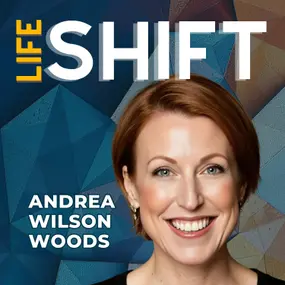
Andrea Wilson Woods is a keynote speaker, a writer who loves to tell stories, and a patient advocate who founded the nonprofit Blue Faery: The Adrienne Wilson Liver Cancer Association. For over ten years, Andrea worked in the education field as a teacher and professor for public and private schools as well as universities. Andrea obtained her master's degree in professional writing from the University of Southern California; her nonfiction writing has won national awards. Her best-selling and award-winning book, Better Off Bald: A Life in 147 Days, is a medical memoir about raising and losing her sister to liver cancer.


