
Grief: The Last Kiss on an Ordinary Tuesday
Ryan finally felt settled at 24, until a phone call at lunch changed everything. A story of sudden loss, addiction, and the long road back.


Key Takeaways
- Ryan Roberts shares his powerful story of experiencing the sudden loss of his wife on an ordinary Tuesday when she was killed by their next-door neighbor.
- The conversation explores how complicated grief and alcoholism can quietly braid together as a way to outrun unspeakable trauma.
- Ryan opens up about spending nearly twenty years hiding memory loss and carrying his grief in isolation before finally seeking help.
- Achieving sobriety on February 16, 2018, marked a crucial turning point in Ryan's journey toward healing and reclaiming his life.
- As the author of 'Fragmented: The Crossroads of Trauma, Addiction and Recovery', Ryan's mission is to help others find recovery and realize they do not have to carry their burdens alone.
Maybe you know what it is to finally exhale. To reach a season where the noise quiets down, the plan starts to work, and for the first time you let yourself believe things might actually be okay.
Ryan was 24 and living in Denver when he reached that place. He had married young, moved more times than he could count, and spent his whole life feeling unsettled. And then, quietly, life started to come together. One ordinary Tuesday he went to work, and at lunch he got a call that his wife had not shown up for hers. She had been killed that morning by their next door neighbor. What followed was almost twenty years Ryan spent trying to outrun that day, through grief he could not name and an addiction that nearly took his life. This is the story of how he finally stopped running, and found his way back.
Ryan does not tell this story to shock anyone. He tells it because he spent two decades believing he had to carry it alone, and he wants you to know that you do not.
What You'll Hear
- What it feels like to finally feel settled after a lifetime of moving
- The ordinary morning that split his life into before and after
- How grief and addiction can quietly braid together
- Losing years of memory, and hiding it from everyone
- The lowest night that finally turned him toward help
- Why telling the story out loud began to set him free
Guest Bio
Ryan Roberts is a father of four between 3 and 16 years old and a full-time network engineer. He is the author of the memoir Fragmented: The Crossroads of Trauma, Addiction and Recovery. He has been sober since February 16, 2018, and his mission is to help people find recovery, hopefully sooner than he did, and to meet them wherever they are on their journey.
Listen and follow: www.thelifeshiftpodcast.com/follow
Subscribe to the newsletter: https://thelifeshiftpodcast.beehiiv.com/
sudden loss, losing a spouse young, grief and addiction, recovery from alcoholism, feeling settled, complicated grief, finding purpose again, sobriety, memory loss and grief, telling your story
You Might Also Like:
- Part of Me Died That Day: Learning to Live After the Worst Day of Your Life
- Anger: The Drink I Never Stopped Drinking
- Grief: Making Something Beautiful From What Broke
Ryan's Energy Portrait
Episode Playlist
Learn more about your ad choices. Visit megaphone.fm/adchoices
Frequently Asked Questions
Who is Ryan Roberts on The Life Shift podcast?
Ryan Roberts is a father of four, a full-time network engineer, and the author of the memoir 'Fragmented: The Crossroads of Trauma, Addiction and Recovery'. He joined the podcast to share his survival journey through sudden loss, grief, and addiction.
What is Ryan Roberts' memoir about?
Ryan's memoir, 'Fragmented: The Crossroads of Trauma, Addiction and Recovery', details his experience navigating trauma, decades of alcoholism, and his eventual path to sobriety and healing after losing his wife.
How did Ryan Roberts overcome his addiction?
After hitting a lowest night that forced him to confront his pain instead of running from it, Ryan got sober on February 16, 2018, and began telling his story out loud to set himself free.
Matt Gilhooly (00:00)
What would it feel like to finally feel settled for the first time in your life? No longer running, no searching, just quiet. That's exactly where Ryan was at 24 years old, living in Denver with his wife, finally planting roots, finally breathing. And then one ordinary Tuesday morning, he kissed her goodbye, went to work, and he got a phone call that changed everything. His wife had been murdered by their next door neighbor. What followed was two decades of grief he couldn't outrun, an addiction that nearly took his life, and a long hard road back to himself.
Ryan (00:30)
And he said, well, I've just.
I'm not really able to tell you that right now. And I yelled at him at the point. I'm like, why can't you tell me where my wife is?
Is she alive? And he said, no, sir. I'm sorry to tell you your wife's not alive. And I blacked out and fell into the parking
lot.
Matt Gilhooly (01:21)
Hello, everyone. Welcome to the Life Shift Podcast. I am here with Ryan. Hello, Ryan.
Ryan (01:25)
Hello.
Matt Gilhooly (01:26)
Thank you for being a part of the Life Shift Podcast. You don't know what you're getting yourself into.
Ryan (01:30)
Well, I appreciate the opportunity to talk with you a little bit and we'll see where it goes.
Matt Gilhooly (01:35)
Yeah, you know what? I I I love coming into it. I just a secret to everyone, it's not a secret anymore after two hundred and eighty-five episodes. But I I try not to know too much about the guest ahead of time because I really want the conversation to unfold in the most natural of ways possible. And I know myself. And if I knew everyone's story, I would just like, here's the my next question for you. And I just love how these sometimes go places where neither of us expect it. So hope you're hope you're ready for it.
Ryan (02:05)
All right.
Matt Gilhooly (02:06)
All right.
So before we get into your story, can you tell us who you are in twenty twenty six? Like who is Ryan? How do you show up in the world? How do you identify these days?
Ryan (02:15)
So
I'm a father of four. That keeps me pretty busy.
Matt Gilhooly (02:19)
Imagine.
Ryan (02:19)
I'm a writer. I like to say author, but you know, I write a lot. I'm a full-time network engineer. I have a full-time job. I stay pretty busy with that, but I try to stay pretty active in the recovery community. I'm a recovering alcoholic, recovering drug addict. I've been sober about eight and a half years now.
Matt Gilhooly (02:39)
Congratulations.
Ryan (02:40)
So I've got...
My hands are pretty full. There's not a lot of downtime for me from about 5 a.m. till about 11 p.m. seven days a week.
Matt Gilhooly (02:49)
Is it fulfilling for you being that busy? Okay.
Ryan (02:52)
It is. The
downtime's nice, but I'm actually at a point in my life where I'm busy doing things I enjoy, not busy trying to get away from something. And that's a huge difference.
Matt Gilhooly (03:01)
Hmm. Yeah,
I would imagine leaning into things that like the writing and your kids, obviously. What age age range are your kids? There's four of
Ryan (03:08)
Right. I have
a three year old, a five year old, a 14 year old and a 16 year old. So they're they're all over the place.
Matt Gilhooly (03:15)
Okay. You're well, and you're busy. Those all
require different things at at those particular ages. Well well,
Ryan (03:21)
Absolutely.
Matt Gilhooly (03:22)
good for you and and keep writing. I think that's important and congratulations on the length of your sobriety. I hope that I mean no it's a always a lifelong journey after that, but I
Ryan (03:31)
it is.
Matt Gilhooly (03:31)
I hope you're leaning into finding out more about yourself too these days.
Ryan (03:36)
Absolutely.
Matt Gilhooly (03:38)
Great. Well,
I love for the guests to kind of paint the picture of their life leading up to this main life shift moment. And I I understand that you probably have many. I mean, just in that conver in in our opening conversation of you defining that there's a lot of life shifts there, but I love to center this conversation around maybe the one that you feel is the most pivotal of a before and after version of you. So could you paint the picture of the before version of Ryan? And if however far back you need to go, childhood or whatever, go for it.
Ryan (04:07)
So
for the moment we're talking about specifically, we probably need to go back to my early 20s, which was a little, that was quite a while ago at this point in my life. I'm from Texas, I'm from Dallas. I got married when I was 19. Yeah, very young. I mean, it didn't seem young at the time, but in retrospect, I was like, man, I was a kid. What
was I thinking?
I met a girl and she was my world. We got married and we didn't have any idea what we were doing, but we were having a good time. We were just enjoying life. We moved all over the place. We moved from Dallas to Montana for a while, then we went to Houston, then we went to East Texas, and we opened up a few businesses. had a
small businesses we were running in early 2000. And we kind of, we ran into the same problem a lot of people ran into right after 9-11. The economy kind of tanked
Matt Gilhooly (05:08)
Mm-hmm.
Ryan (05:09)
and we closed the businesses and didn't know what to do, right? So
Matt Gilhooly (05:14)
Yeah.
Ryan (05:15)
ended up in Colorado. We ended up in the Denver area. That was the first place I could find a job at. Got a job in Denver, moved there and that looked
pretty promising and got laid off almost immediately after moving to Denver. And
Matt Gilhooly (05:27)
It's expensive place to be without a job.
Ryan (05:30)
it's a horribly expensive place to be without a job. And I ended up in another job that actually kind of up being my career. Kind of same thing I've been doing for the past 25 years at this point. So, like,
Matt Gilhooly (05:39)
Was this marriage
like was it the idyllic marriage or were you I know you were young, so
Ryan (05:46)
You know, it's, you look back on things and, know, probably through a different set of classes and then what was reality, but marriage was good though. I mean, we
Matt Gilhooly (05:56)
Okay.
Ryan (05:57)
were happy, honestly. It's we, neither one of us really ever had a lot of friends. It was just kind of her and I really, I worked a lot. I I've always worked a lot. I've my job is fairly demanding and always has been. And, and at that point in my life, I was working probably 75, 80 hours a week. Yeah. Yeah. And it was a
That was just normal. so when I got off work, was, it was pretty much just me and her and we didn't have kids and, and we didn't do a lot, but we enjoyed each other's company. Right. You know, we really did. And I was kind of struggling at that point in my life, really with the sense of identity, I, our purpose, really, I didn't know what I should be doing with my life. And we'd been heavily involved in our church when we were in Texas and
I taught a youth group and she taught a youth group and we both wanted to have kids really badly. we just, we never did have kids, but we liked working in the youth group at the church. And when we left Texas, we just never really found another church that we liked. There were a variety of reasons we didn't go back to church, but ultimately we just never found another place that we fit in ultimately. so we were, I don't want to say floundering, but floundering a little bit, right? It just, it's like.
What do I do with my life now? Early 20s, and there's 24 at this point.
Matt Gilhooly (07:05)
Early twenties is okay. I would imagine
that most twenty year olds even now have that same feeling.
Ryan (07:13)
I don't know a 24
year old that has any idea what they want to do with their life.
Matt Gilhooly (07:17)
Exactly.
Ryan (07:17)
My 14 year old daughter is always worried about that. And I tell her, know, I'm 48. I don't know what I want to do with my life. So don't worry about it. You're going to be fine. So.
Matt Gilhooly (07:23)
Yeah. Yeah. Exactly. Yeah.
But it does feel like like you are floundering at that time though. Like when you're in it, you
Ryan (07:32)
yeah.
Matt Gilhooly (07:32)
just feel like, I should have it figured out by now. I'm like twenty four. I'm twenty five, you know, like life should be figured out.
Ryan (07:38)
Right.
Yeah, no, absolutely. mean, there's this weird pressure and I don't know where it comes from. Nobody was telling me that I needed to have all these things together, but I really thought I did, right?
Matt Gilhooly (07:49)
Mm-hmm.
Ryan (07:50)
I thought I needed a house and have these cars and have all these things together and I didn't have any of those. We lived in an apartment. We had one car we could barely afford. We were living in a city that was way out of our price range. And that's probably what you should be doing at that age, right?
Matt Gilhooly (08:05)
I
think it's a
Ryan (08:06)
I just.
Matt Gilhooly (08:06)
s I I also had that same feeling. I think it was society. It was like the time. I think we were conditioned that like we should graduate high school and then the next thing we should do is this and then we should get a good job and then we should buy a house and then we should have cars and you know, like all the and get a promotion and everything the next thing was gonna bring us that happiness that we were sold. So I I relate to that that feeling of like trying to find okay, I'm supposed to be doing this, but I'm not. Am I a failure?
Ryan (08:35)
And that's really what it felt like. It felt like I was doing something wrong really
Matt Gilhooly (08:38)
Mm-hmm.
Ryan (08:39)
at the end of the day. I had kind of going back a few years before that, my wife and I, we met in recovery.
I've been in and out of recovery since I was a teenager never managed to stay sober for very until about almost nine years ago. But
Matt Gilhooly (08:54)
Yeah.
Ryan (08:55)
that's an entirely different conversation. So we'd met in recovery and
And I was drinking again and was never affecting my job really. But if I was off work, I was drinking, right? it wasn't really causing a lot of marital problems, but.
She definitely has some concerns.
Matt Gilhooly (09:12)
Was she staying sober? Okay.
Ryan (09:14)
She was, well,
she didn't really have a problem. She was in, we met in recovery because she had some court related issues when she was 19 and she got sent there and
Matt Gilhooly (09:22)
Got it. Okay.
Ryan (09:24)
she really didn't have a problem. I did. And I really did. I didn't realize it and I don't think anybody realized it at that point in time because I've always got up and gone to work, you know, and I've always paid the bills and always been fairly high functioning.
Matt Gilhooly (09:39)
Mm-hmm.
Ryan (09:40)
in
that regard. but at one point she finally, she came in and said, we had a conversation one Saturday morning. I remember it pretty clearly. She came in and said, you know, I don't know what's going on with you, but if you're off work, you're, you're in bed and you're drinking I can't, you know, I can't watch you treat yourself like this. I can't watch you go on like this. So I don't know what you need to do, but you need to, you need to get some help if you need help.
but something needs to change. And she got my attention, right? So I didn't know what to do either. I didn't really honestly think I had a problem, but I knew something needed to change. So started looking around for a counselor's therapist. I thought maybe that was the answer. Maybe there was some childhood problems that I hadn't resolved. And I found a therapist and I really liked the guy.
first time I'd really voluntarily ever gone to therapy and I For the life, maybe don't remember what we talked about But one thing I do know for certain is I kind of got this sense of purpose there, right? was the probably the main thing we talked about was that I didn't have a sense of purpose I wanted
Matt Gilhooly (10:39)
Yeah.
Ryan (10:39)
to be a dad but we couldn't have kids right I used to teach and didn't teach anymore. I didn't go to church anymore. I kind of lost my sense of purpose and
And he said something to me one day, basically, well, what if your purpose is just to be a good husband because you seem to treat your wife pretty well and she seems to be happy and in love with you. And I thought, well, that's that's reasonable, right? OK, maybe maybe
Matt Gilhooly (11:00)
Yeah. I could feel like I can do that.
Ryan (11:02)
that's my sense of purpose. Right. And and that really appealed to me. I like that idea because I could do that. That was a job I knew how to do. Right. I knew how to take care of her. That was easy. I enjoyed that.
not that she necessarily needs somebody to take care of her, you know, it's love her, right? And we just, we had a good relationship. so I kind of got on board with that idea that this is, this is really going to be, it's just going to be what I do. I'm going to do good at this job. We're going to save up some money and we're going to buy a house and going to make a life for herself here in Colorado. And at that point we really didn't know I had a niece.
And nephew living in Colorado at that point, but really for the most part, we didn't have any family or friends within a thousand miles. All right. there's this real sense of like life is kind of finally starting to come together. Like we were saving up some money. were not a lot of money,
Matt Gilhooly (11:51)
Setting roots.
Ryan (11:52)
right? But we we had a plan.
Matt Gilhooly (11:55)
Yeah, yeah.
Ryan (11:56)
And, you know, so we, we just kind of started working towards that plan. The, this is what we were going to do. We were going to save up some money. We were going to move out within a year. We were planning on buying a house.
are certainly trying and that's kind of direction we were moving in.
So life was just kind of quiet at that point, right? There's really nothing going on. I'd go to work and come home and I'd go.
Matt Gilhooly (12:16)
Were you taking
care of your drinking and and those things to show up as a better husband or something? Okay.
Ryan (12:22)
I was probably drinking less.
That's for certain. I was definitely still drinking, but it was nothing out of control. We weren't having conversations about it. It wasn't really impeding anything in my life. And pretty much.
Matt Gilhooly (12:32)
So overall a
pretty good like life was decent, you would say.
Ryan (12:37)
Yeah, it was
just, there really wasn't a whole lot to complain about. was just a,
Matt Gilhooly (12:40)
Yeah, good.
Ryan (12:41)
it was a pretty quiet life at that point, honestly. And kind I really started to feel like things were starting to work out honestly. It's, and I, never really had that sense growing up. Never really had a whole lot of sense of comfort or ease or there was never a real feeling that anything was going to work out. and for the first time in my life, I kind of had that feeling like things, things are going to work out.
And
I was starting to get OK, just kind of truly peaceful for the first time in my life.
And that was it really, it was quiet. It was quiet and it had never been quiet in my life. And it was finally quiet.
Matt Gilhooly (13:14)
So you start to let your guard down, I would imagine, and just in life in general, yeah.
Ryan (13:17)
Absolutely. Yeah,
I wasn't really, I wasn't looking for anything really. It was really kind of been on edge as long as I could remember.
Matt Gilhooly (13:27)
Yeah. All those moves
were you looking for something, or do you think like subconsciously you were looking for something?
Ryan (13:33)
Probably. I mean, we moved a lot when I was a kid.
Matt Gilhooly (13:35)
Mm-hmm.
Ryan (13:36)
by the time I moved to where I'm at now, I had moved probably 115 times in my life, I believe. I had never finished from third grade on. I never finished school in the same school in one year. We went to,
Matt Gilhooly (13:48)
So that's why you didn't feel settled.
Ryan (13:50)
right, I was just always in a different school, two or three schools a year, two or three different cities a year. And it was just, that was the norm in my life. We
Matt Gilhooly (13:57)
Mm.
Ryan (13:58)
just, we were always.
We were always gone. We were always on the road didn't seem like a bad thing at the time, right? I, know, you just,
Matt Gilhooly (14:04)
Yeah.
Ryan (14:05)
you don't realize that something's abnormal while you're in it, especially when you're a kid, it just never occurs to you that things are different here,
Matt Gilhooly (14:12)
Yeah.
Ryan (14:13)
mean, I kind of realized it was different when hard not to notice when you're going to a different school all the time. I mean, you're very aware of that, that you're always the new kid,
It doesn't occur to you that nobody else is doing that, right? just
Matt Gilhooly (14:25)
Right.
Ryan (14:26)
certainly didn't occur to me.
Matt Gilhooly (14:27)
And it kind of makes sense too of hearing you like that you and your wife were just each other's friends in a way. You didn't ha 'cause like when you move school so many times it's like, I don't wanna make new friends 'cause I'm gonna have to leave my friends and then find new friends and it's probably there's probably a wall that comes up.
Ryan (14:45)
You stop trying after a while.
Matt Gilhooly (14:46)
Yeah.
Ryan (14:46)
You do. And I have a good friend of mine that we've been friends since we were four years old. And I have a couple of friends that I've had since I was about 16. And for the most part, that's about it, right? know,
Matt Gilhooly (14:58)
Yeah.
Ryan (14:59)
just at some point it just kind of becomes a very unconscious decision. Just why bother, right?
Matt Gilhooly (15:04)
Yeah. Well I mean as a kid too, you're
that's a subconscious kind of protection in a way as well, where you're just like,
Ryan (15:10)
Right.
Matt Gilhooly (15:11)
I can't I don't wanna lose another friend, so why even make them? Yeah.
Ryan (15:14)
Right.
that's absolutely kind of where I'd been at in my life, right? Just I wasn't looking for friends. I wasn't looking for... I wanted to settle down. I knew that. I knew for certain I wanted to settle down, but I didn't know what that meant or what that looked like. And it seemed like the logical thing would be get a good job, buy a house, settle down, right? That's what people do.
Matt Gilhooly (15:34)
Yeah, yeah. Yeah.
Ryan (15:37)
And look around and like her family, they all had homes and...
her siblings, and it just seemed like a reasonable thing to do, right? So that's kind what we were working towards. And said, really not a cloud on the horizon, just kind of quiet.
We had some, we lived in an apartment in Inglewood, and we'd had some problems with our next door neighbor off and on for about six months. He was the property manager on site.
He had some anger issues. We'll just go with that. he would just see the guy yelled a lot and he always seemed angry would come over and when I was at work and knocking the door until my wife answered the door he would yell at her because we had two cars and, were, we were allowed to have two cars. There was really no issue, but he had a problem with us having two cars for some reason.
And after two or three times of doing that, she filed a police report one day for the harassment. And the police came and took a statement. And that was really kind of the end of it, right? They took
Matt Gilhooly (16:35)
Right. No.
Ryan (16:37)
a statement and said, well, he hasn't done anything. There's really nothing we can do to call us if it escalates.
Matt Gilhooly (16:43)
Right. That's documented, I guess.
Ryan (16:45)
And was just kind the end of that story, right? And I talked to him a couple of times.
quiet for a while. We didn't hear anything from him for a few months.
Matt Gilhooly (16:55)
Was he doing it to other people, did you know? Or w were you talking to neighbors and stuff?
Ryan (16:59)
Everybody in the building was a little nervous of the guy. Everybody
Matt Gilhooly (17:01)
Okay.
Ryan (17:03)
just kind of had a general sense of just give
Matt Gilhooly (17:05)
Like he's sketchy.
Ryan (17:06)
him some space, leave him alone. He's kind of a jerk, but he's harmless.
Matt Gilhooly (17:11)
Mm.
Ryan (17:12)
That was kind of the general sense was he's kind of a jerk, but he's harmless. everybody was aware of it. But I don't think anybody thought too much about it other than that. I didn't really, honestly. He came over to the house a few times and would
knock on the door and if I had answered the door, he'd get real quiet and just kind of head down and wouldn't make eye contact. I didn't think too much about that at the time, honestly, just, it just,
Matt Gilhooly (17:33)
Right. Well you're in your twenties too, right?
Ryan (17:36)
right. was 24, 25, you know, just, you really don't think about this, right.
Matt Gilhooly (17:41)
He's a weird. Right.
Ryan (17:43)
Just, just something that happened, right. so it was at work one day and this was a, this was in January of 2004 at this point.
Well, we'll back up a little bit. I was getting ready to leave for work. had taken the company I worked for gave us the month of December for the holidays from Thanksgiving until January 6th, 2004. I was off work. Gave us a nice bonus. And it really the first time in my life I ever had a vacation. Yeah.
Matt Gilhooly (18:11)
Mm. Yeah. You're used to working eighty hours a week.
Ryan (18:14)
Right. And I had never been off work. I never had any money.
you know, taking off work was not an option. so I had the money to take off work. I had some time. I was getting paid for that whole time. Had a very nice bonus for me at the time. And so we took off and we went to Texas for about three weeks, not quite a month, somewhere between three and four weeks. And we went to Houston and we saw our family and spent Christmas there. We went to North Texas and saw my family and we went and saw some friends and we just took this real long road trip.
and just had a great time. Honestly, first vacation I'd ever taken in my life. Real vacation, I'd taken off for day or two here or there, right? But for some, I'd really done anything substantial.
So we got back in the...
Well, we got back into Colorado before New Year's Eve because New Year's Eve I went out to dinner with my niece and her husband and we went out to dinner with them. So we were in Colorado sometime shortly before New Year's Eve. But on January 6th, that was on a Tuesday, I had to go back to work that day. I don't know why we didn't go to work on Monday, but we started on the 6th for whatever reason. I woke up that morning and I just didn't want to go to work. My knees were hurting and
I'd been off work for a month and I was like, I don't want to go do this. It's just, this seems like a lot. right. absolutely. I mean, if I take two
Matt Gilhooly (19:28)
Like we all do after a big vacation, right.
Ryan (19:32)
days off now, I'm ruined. was just like, I should have never done that.
Matt Gilhooly (19:36)
Exactly.
Ryan (19:38)
so I, you know, I was sitting on the side of the bed, just really thinking, I, I'm just not going to do this today. Just there's no way I'm going into working. It's cold. My knees hurt. I'm tired. I just need one more day.
That
just seems reasonable. And I've never really missed work. I'm not a guy that misses work. never have been.
sitting there on the side of the bed debating this. And my wife came in. She was just getting out of the shower. And she walks in the bedroom, and she's crying. that was fairly abnormal, right? She was normally in a pretty good mood, had been for very long time at least, let's put it that way. And I asked her what was going on. And she said the next door neighbor, which was the maintenance guy that I was talking about earlier, was pounding on the wall of their apartment.
Well, she was taking a shower, yelling something at her. She couldn't understand what he was saying, but he was yelling and it was making her uncomfortable. And she didn't know what to do with the situation. And, and I asked her if she wanted me to go talk to him and she said, no, don't worry about it. You know, no reason to make a scene. And, I agreed. and we, we just sit there and we talked for about half an hour or so. And we, mainly we talked about how, Hey, we've got some money saved up. We'll be out of here in a few months.
Really not a whole lot to worry about. Just leave that guy alone and you know, everything's going to be fine.
Matt Gilhooly (20:51)
Mm-hmm.
Ryan (20:52)
And she had a part-time job and she had decided to go into work that day. She was going to go into work to make a little extra money, to put a little more money aside. And that was it. We talked for about half an hour and gave her a kiss and said, love you and went to work and just, just a normal thing, right? Just, just a normal, completely.
Matt Gilhooly (21:10)
So you decided to
go to work that day?
Ryan (21:12)
I decided to go to work and she went to work that was completely normal, Just
Matt Gilhooly (21:17)
Mm-hmm.
Ryan (21:18)
there, nothing stood out about it at all. And I got to work and it was very cold that day. not, I don't know if you spend a lot of time in Colorado. It doesn't, I mean, it gets cold in Colorado, but it doesn't get Chicago cold and
Matt Gilhooly (21:32)
Mm-hmm.
Ryan (21:32)
it doesn't stay cold, right? But it was very cold that day. I think it was about 10 below zero outside.
And
I work outside or I used to at least, and I'm standing up on this rooftop knee deep in snow, staring out over this valley. it was honestly the most peaceful I've ever been in my life. I was just completely at peace. It's always so silent after it snows, right? And just standing there and it's just silent. And I'm just enjoying the silence, right?
And it just struck me at how comfortable I was that I was just.
Matt Gilhooly (22:06)
Settled. Yeah.
Ryan (22:06)
it just settled, right?
just, everything felt okay, right? I mean, just as okay as anything I'd ever felt in my life before. And for a very long time after that, got off the roof and I wrapped up that job and I went to lunch and I was sitting in my truck and my phone rings and it's my wife's job. And that was not abnormal at all. She called me at lunch every day I answered the phone and I was like, Hey, how's it going?
And it wasn't her on the other end of the line.
was her coworker. And she's like, hey, I was just calling to see how Stacy's doing. And so what do you mean? What do you mean how Stacy's doing? And she's like, well, she hasn't come into work today. And I was expecting to see her. And I was just calling to make sure she's doing all right. I'm like, well, if you're calling me and it's lunch,
Obviously something's not okay Why are you calling me? What do you know and I kind of served?
I kind of started panicking at that point, just, you
Matt Gilhooly (23:06)
yeah, right.
Ryan (23:07)
know, just this sense of panic set in and...
And so I started driving towards the house. I didn't know what else to do because that was the last place I saw her. And I started calling her frantically and just calling over and over. And as I started calling her, my phone starts ringing. a number I don't know. It's a Denver number, but I'm not about to answer this. I figured it was a customer or something. trying to call my wife, right?
I'm calling her over and over and it just keeps going to voicemail. It keeps going to voicemail. It keeps going to voicemail. And the whole time I keep getting these
phone calls from the same number over and over again.
Matt Gilhooly (23:39)
Panic is probably increasing, I'm guessing. Yeah.
Ryan (23:42)
The panic was horrible at this
point, right? And so I finally answered the phone. I yelled, what? I'm trying to get a of my wife. This better be important. And this guy on the other line, just calm, super calm. He's like, is this Ryan? And I said, yeah. Who are you? Why do you know my name? And he said, where are you? I need to talk to you. So I'm driving. I'm going home. He's like, no.
I don't think it's a good idea that you go home right now. Where are
you? I'd like to talk to you. And I said, I'm going home. I'm going to find my wife. Leave me alone. And hung up the phone.
Matt Gilhooly (24:20)
'Cause he didn't say who he was or anything.
Ryan (24:22)
Right. And phone rings again. I answer the phone and like, let's start over. He's like, I'm with the Inglewood Police Department and I need to know where you're at right now. And I looked up and I said, I'm on 25.
heading south on my way home. He's like, is there someplace you can pull over? I was like, I'm not pulling over. I'm going home. He's like, I need you to pull over. I said, okay, fine out. There's a Starbucks up here. I'll pull over in the parking lot. He's like, okay, I'll have somebody meet you there.
And I pulled over in the parking lot and I, I parked and I, I don't know if I was there 10 seconds or 10 minutes. I, I really don't know, but the police car pulled up beside me, an unmarked police car. and two officers stepped out and I got out of my van and I heavy smoker at that point in time and I was going to light up a cigarette and,
One of the officers looked at me and, and asked me again, he said, are you Ryan? said, yeah, where's my wife? He's like, well, we can't, we can't tell you that right now. I was like, why can't you tell me where my wife is?
Matt Gilhooly (25:25)
Yeah. Right.
Ryan (25:26)
was like, was she in a car accident? What happened? And he's like, no, she wasn't in a car accident. And I'm like, well, the hospital is literally across the street from our apartment. Is she in the hospital? Where is she?
Matt Gilhooly (25:37)
Right.
Ryan (25:39)
And he said, well, I've just.
I'm not really able to tell you that right now. And I yelled at him at the point. I'm like, why can't you tell me where my wife is?
Matt Gilhooly (25:45)
Right.
Ryan (25:45)
Is she alive? And he said, no, sir. I'm sorry to tell you your wife's not alive. And I blacked out and fell into the parking
lot.
Matt Gilhooly (25:54)
yeah. 'Cause when you said it
you probably weren't like really meaning it.
Ryan (25:59)
No, I wasn't expecting that for an answer
Matt Gilhooly (26:00)
Right.
Ryan (26:01)
back. I mean,
And once again, I don't know how long I was laying on the parking lot, right? I don't think it was very long.
But when I got up, I...
I just wasn't the same person after that.
Matt Gilhooly (26:10)
Yeah, no. Yeah. I mean, it it's not even
something that anyone can prepare of like how you would respond or what happens. And here you are telling us the story of like finally feeling like you're planting roots and you're feeling settled and and here comes life smacking you in the face, pulling out whatever helped you feel comfortable. But you have no idea though, right? Like you just know that.
That she's no longer alive. Do they give you information?
Ryan (26:41)
All right.
Matt Gilhooly (26:42)
Do they I mean, I can imagine I don't even want to imagine. Yeah. Does
Ryan (26:45)
They didn't at that point. mean, I, you know, it's...
Matt Gilhooly (26:49)
that make it better or worse?
Ryan (26:50)
It didn't help.
Matt Gilhooly (26:51)
Yeah. 'Cause
your mind goes all sorts of places, I would imagine.
Ryan (26:56)
You know, probably the next hour is well, I don't have a memory of the next hour, to be honest with you. I don't know what happened. mean, I know I went to the police station.
That's the thing you, if you ever watch like a Dateline murder mystery or anything like that, know, the spouse is always the suspect, right? I mean, the spouse is all
Matt Gilhooly (27:14)
Right. Yeah, that's what I was thinking.
Ryan (27:16)
right. I didn't know that at the time, right? It was not something I was thinking about,
Matt Gilhooly (27:19)
Well you were also in shock.
Ryan (27:21)
right? It's not something that occurred to me at all.
And so we went to the police station and, and I was there for about nine hours. I don't think they really thought I was a suspect. really? Cause they, they caught the guy in the act really is our next door neighbor. When, when she went to leave the house for work that morning, as she walked out the front door, it was locking the front door. He walked up behind her and hit her in the head and.
drug her into his apartment and beat her to death.
And they caught him right there on the scene. So I wasn't overly a suspect.
Matt Gilhooly (27:58)
Right.
Ryan (27:59)
There were some questions. They needed to make sure that I guess that I didn't hire the guy or something.
Matt Gilhooly (28:06)
so they
I mean they're doing their due diligence, but it's not helpful to you.
Ryan (28:08)
Sure,
right. And I had no idea any of that at the time, I just didn't know. I just didn't know. I didn't know why I was there.
Matt Gilhooly (28:16)
Were you would you did you have your wherewithal
at all or were you totally like in some kind of shock zone? 'Cause I could've
Ryan (28:23)
A little bit of both. mean, I, I was functional. wasn't, I wasn't sitting in a corner, you know, rocking back and
Matt Gilhooly (28:28)
Right. Like compartmentalizing.
Ryan (28:31)
forth, but I just.
2004 you could still smoke inside a lot of places and I was a heavy smoker at the time and so I just I paced back and forth between the Room they had me staying in and a little courtyard just chain smoking and drinking coffee niece showed up I called her she lived in town. She showed up right away.
And I just, that's what I did for the next nine hours. I just
paced back and forth. I finally, at some point started making some phone calls. called her dad and told her what had happened and started calling people. And, everybody was excited, at least they were in Texas and in California and all over the country. Nobody was anywhere close. Right. So it was pretty much just my niece and I for the next couple of days. I spent most of that time at the police station back and forth because they had a lot of questions.
but I'm not real clear on that, that there's a couple.
Probably a week there that I'm just, very unclear on.
Matt Gilhooly (29:26)
Yeah.
Ryan (29:28)
I know when my family showed up, I was staying in a hotel. I never went back home. I never stepped foot back in that apartment
Matt Gilhooly (29:31)
I was gonna ask that, yeah.
Ryan (29:33)
again. When I left for work that morning, that was the last time I was ever there.
Matt Gilhooly (29:37)
I mean ta I mean everything was ripped from you because you were building this life with her and someone took that away from you. I can imagine as someone with a previous I don't know if if you identified it as an addiction to alcohol. I mean seems like it could go very wrong. It it went very wrong. Because and just
Ryan (29:56)
It did. It did. Pretty.
Matt Gilhooly (30:00)
before you do that, I just feel like
A lot of people when they hear something like this happen in their life, they have more of an opportunity to sit with it and process it. But here you are having to deal with the police aspect of it feels like so much heavier that it it just prolongs your ability to even exist with with that actual fact because now maybe they maybe it didn't feel like this, but now they're looking at you and determining whether or not you were part of it.
Ryan (30:31)
Right.
Matt Gilhooly (30:31)
Does that factor into how you faced grief, or did you face grief, or how long did that take?
Ryan (30:38)
it was definitely a factor. mean, it was a... So I spent probably the next week, roughly the next week in Colorado. I'm from Texas.
Matt Gilhooly (30:47)
Right.
Ryan (30:48)
And so we started making funeral plans in Texas.
Matt Gilhooly (30:51)
And they cleared you pretty
quickly and stuff like that, or okay, good.
Ryan (30:54)
Yeah, I mean, I
wasn't really, I said it wasn't really a suspect, but you know, they have to do what they have to do. And that's fair. I don't fault them for that. I mean,
Matt Gilhooly (31:01)
I understand. Right.
Ryan (31:03)
that's, that's, that was important later on for the trial. Right. You
Matt Gilhooly (31:07)
Yeah.
Ryan (31:07)
know, so, which was an entirely different conversation, but so we spent probably the next week in Colorado, getting funeral plans, ready, getting transport ready to have her taken back to Texas. trying to.
get ahold of everybody, right? and didn't have a lot to do with that. You know, everybody just kind of showed up and took care of those things. I didn't really even think about that honestly, until this past year, but I am grateful for that because really everybody, everybody I know just showed My mom and dad showed up and they had been divorced since I was four and were
not on speaking terms and really not really. And they showed they rode together, right? You know, like everybody showed up, right. they just took care of me, which somebody needed to because that wasn't really an option for me at that point. we,
Matt Gilhooly (31:52)
Right. Yeah. You n no one's prepared
for that. I don't I it and especially at twenty something. It see your kid.
Ryan (32:01)
Right. mean, you can't, there's nothing in life that could possibly prepare you for that, I don't think at any age, but definitely not at that age, right? You just,
Matt Gilhooly (32:09)
No. Yeah.
Ryan (32:11)
you just can't see that coming, right? And there's no preparing for random crazy, which is what I always tell people, right? That you just can't prepare for random crazy. just, there's...
Matt Gilhooly (32:20)
No. It is good though that
you had people around you to to at least be there. And
Ryan (32:25)
Right.
Matt Gilhooly (32:26)
and keep you from maybe sinking even deeper. Or did they did that not prevent
that?
Ryan (32:32)
well, yeah, without a question alive here today to talk to you because somebody kept me alive.
Matt Gilhooly (32:38)
Yeah.
Ryan (32:39)
It didn't go well though for a long time. And there's only so much you can do, right? After the funeral, I moved in with some family. I stayed with them for about six months, but for the first three months I...
I said my room and I drank. mean, that's all I did. I'm about 180 pounds right now. I have been whole all my life. and, and three months I came out of that room. I was 113 pounds and I was too weak to pick up a bottle to drink anymore. Yeah. Right.
Matt Gilhooly (33:09)
You're just numbing out, right?
Ryan (33:11)
And I didn't.
Matt Gilhooly (33:13)
Was it an escape? Is that what drinking was for you? So like
Ryan (33:16)
Yeah, yeah, I mean, it just it wasn't really it wasn't a thought honestly,
Matt Gilhooly (33:19)
Yeah.
Ryan (33:20)
it was just it was the only time I could breathe. Right.
Matt Gilhooly (33:22)
'Cause you didn't want a thought. 'Cause that's that's
too hard at that time.
Ryan (33:27)
I ended up in the hospital probably about three months later. cause I was about 113 pounds. I,
Matt Gilhooly (33:32)
Yeah, not healthy.
Ryan (33:34)
no, I, my liver was failing. I was, I was, I was dying,
Matt Gilhooly (33:38)
Mm.
Ryan (33:39)
of alcoholism really. I had seen some people die like that. And I didn't want to die like that really. cause I knew it was going to take a while really. It wasn't that I cared that I died. Cause I really didn't at that point in time, I just didn't want to die like that.
And so I stopped drinking. I just stopped. It
Matt Gilhooly (33:56)
Which is probably also bad, isn't it?
Ryan (33:58)
had its own problems.
Matt Gilhooly (34:00)
Yeah, yeah.
Ryan (34:01)
There were certain some complications there, but it didn't kill me.
Matt Gilhooly (34:04)
That's good.
Ryan (34:05)
I got, and I stayed sober for the next year. And I thought, okay, I've been sober for a year. I'll be all right. Right. You
Matt Gilhooly (34:11)
Mm. Yeah.
Ryan (34:13)
know, I can do this. I made it a year. And I hear people talk.
Matt Gilhooly (34:15)
During that year yeah,
during that year though, did you were you trying to find a new normal? Were you just existing? Like what what was that that year of sober like?
Ryan (34:27)
I
went back to I had some money put aside. I probably could have taken the year off. But I went back to work about four or five months later just because I needed something to do. I couldn't sit around all day and stay sober. That wasn't going to happen. So I needed something to do. So I went back to work and I...
I don't want to say threw myself into work, but kind of threw myself into work a little bit really. Not so much with a plan, but I got a plan pretty early on. I started back when I was living in Colorado. had the company I worked for. We'd we're starting a new department and was a fairly large fortune 300 company. And were starting a new department there and
And I got involved in the beginning of that a little bit. And when I moved back to Dallas, I called some people there and they put me back to work and said, you can do whatever you want to do. We'll put you anywhere you want to do. Go basically. and I, there was a regional director opportunity in Chicago pop up and I thought, I want to do that. That's what I want to do. I want to.
I want to be somebody important.
Matt Gilhooly (35:32)
Yeah.
Ryan (35:33)
And that seemed like somebody important. And so I just started focusing on that. I didn't really get any help. wasn't actively going to therapy or anything like that. But
Matt Gilhooly (35:45)
Yeah.
Ryan (35:45)
I got really involved in a chat group called WidowNet. In 2004, the internet was really just message boards.
Matt Gilhooly (35:53)
Yeah.
Ryan (35:54)
And so I got really involved in that.
I met a lady that lives where I live now and we became really good friends and, and she lives not too far from Chicago. so I started focusing on that job and I got that job and started dating her and, and moved to Chicago. Right. That was, that was all just a little bit over a year after, I moved up here about a year and a half after where it's so.
early 2005, I moved up here.
And I just stayed busy. I mean, I I stayed very busy. I did a lot of stuff that I don't have a lot of memory of. And I don't, I didn't know I didn't have memory of it for a long time. I hear people talking about doing things wrong. And I, think you do things the way you're ready to do things. Right.
Matt Gilhooly (36:37)
Yeah,
I say I failed grief, but that's my word. I I own I'll own it, you know, but it's
Ryan (36:43)
Right.
Matt Gilhooly (36:43)
were you just do you think you were just like staying busy to outrun the feelings or did you have times to process those feelings?
Ryan (36:52)
I was trying very hard to outrun the feelings. mean, not, not consciously. It wasn't a plan, but I, I really wanted to move up here because I didn't know anything here. And the idea of coming here sounded fantastic because I didn't know anybody.
Matt Gilhooly (37:04)
Blank slate. Yeah.
Ryan (37:05)
I didn't have any memories here. And right. And nobody knew me. Right. Yeah.
Matt Gilhooly (37:08)
And no one knew you. And your story. Yeah.
Ryan (37:12)
And so I get up here and.
Everything reminded me ever still, right? I
Matt Gilhooly (37:16)
Mm-hmm. Yeah.
Ryan (37:18)
every street I drove down, I kept seeing her in crowds.
Matt Gilhooly (37:21)
Yeah.
Ryan (37:22)
I, I could not get away from that idea. I didn't want to get away from it. I didn't at all, but I didn't, I couldn't live like that either at the same time. Right. And, and I traveled a lot for work at that point in time and which worked out pretty good because you know,
Nobody judges you at 6 AM in an airport bar for drinking and it's
Matt Gilhooly (37:41)
Fair. There's no rules at the airport.
Ryan (37:43)
right. The airport bars are judgment free zone,
Matt Gilhooly (37:45)
Yeah.
Ryan (37:45)
right? Nobody pays attention there, right? So I traveled for work a lot and I, that's just what I did. Right. I just, I worked, I drank, I, I got remarried and had two kids and kind of the first time that I realized that something was really wrong, honestly.
was in 2010 when my oldest son was born. I walked out of the hospital right after he was born I realized it was 2010. it
Matt Gilhooly (38:09)
And you had lost those years.
Ryan (38:11)
was 2004 still, very much so in my head. I just kind had a little bit of a breakdown in the parking lot trying
Matt Gilhooly (38:16)
Yeah.
Ryan (38:17)
to figure out what happened with those six years. And couldn't process that.
I couldn't get home to drink fast enough to get, get that out of my head. because it, it felt like my head was going to explode. There's just this huge disconnect of time there that I couldn't account for.
Matt Gilhooly (38:33)
Right.
Is there a shame that comes with that? Or is there a like, I well, how did I forget all that? How did I lose all that? Or is it a good thing?
I'm not trying to put shame on you.
Ryan (38:43)
No, no,
but it's fair enough. There is, I've kind of started working through it a little bit. I didn't realize it was a thing for a
Matt Gilhooly (38:50)
Mm-hmm. Yeah.
Ryan (38:52)
while. I actually didn't realize it was a thing until fairly recently. Well, I started noticing a few years ago, honestly. So I four kids. And like I my oldest are 14 and 16. And I've been sober about eight and a half years.
What I started noticing a few years ago was they would talk about things that happened when they were little. And I just didn't remember it at all. And I was there. mean, it's not like I was an absentee father. I was always there
Matt Gilhooly (39:20)
Yeah.
Ryan (39:21)
at all the functions. And if I wasn't at work, I was home. I wasn't a bar drinker. And I don't think all of the memory loss was drinking related either. It just wasn't, right?
my early sobriety, thought it was.
Matt Gilhooly (39:33)
Yeah.
Ryan (39:34)
But it wasn't really necessarily drinking related, but there were these just huge gaps of time that I just didn't know anybody was talking about. so I would try to memorize these stories, right? half the stuff I know about my oldest kids first couple of years of their life is stuff that I've learned, right? They're stories I've
Matt Gilhooly (39:52)
Studied.
Ryan (39:53)
learned, right? They're not memories that I have.
They're things I learned and, and I would just, I would dread when it would come up and like, I just, I, I don't want to, I don't want you to, right.
Matt Gilhooly (40:02)
Yeah. Well and you weren't telling them that you didn't remember these.
Ryan (40:06)
I don't want you to know that I don't remember this. And cause I don't know why I don't remember this.
Matt Gilhooly (40:08)
Hmm. Yeah.
Ryan (40:10)
And I just didn't know. I mean, I really didn't. I,
Matt Gilhooly (40:13)
Did you tell your wife?
Ryan (40:14)
No, I didn't tell anybody.
Matt Gilhooly (40:16)
Okay.
Ryan (40:17)
I didn't tell anybody. I knew something was wrong because I would have these moments where I would realize that it wasn't the year I thought it was by like a decade. Sometimes would be in a conversation and I would realize that I was in Illinois and not in Colorado. And my head would spin and I was like, you don't tell anybody that buddy. They'll think you're crazy.
Matt Gilhooly (40:39)
Right. Yeah.
Ryan (40:40)
Yeah.
So no, I didn't tell anybody anything because I, well, I didn't.
Matt Gilhooly (40:45)
Because that's how we grew up. People didn't share their feelings. And you're a guy, so you're not allowed, right? Like you're you're not allowed to admit you did something that is
abnormal, right? Like it's not abnormal, but it feels like it. I mean, I
Ryan (40:59)
absolutely.
Matt Gilhooly (41:00)
I did the same thing, lost my mom when I was eight, and I just thought everyone needed to see that I was okay. So it took me like 20 plus years to like finally grieve, and you're just and I look back, and that's why I asked you that question, because I'm like, it's
kind of shameful for me to think back of like, I could have done this so much earlier, but I couldn't have because we were you were using whatever you were using to kind of keep you safe or keep your mind safe enough. And, you know, we learn from it. But you know, what what made you choose to stop drinking? Was it those
Ryan (41:33)
well,
Matt Gilhooly (41:33)
This last time.
Ryan (41:34)
I got divorced in
Matt Gilhooly (41:35)
Okay.
Ryan (41:36)
2016. that wasn't.
I had been sober. got sober before I got divorced a couple of years before I got divorced. And because the marriage was rocky at best and it was mainly because of my drinking for the most part. And there were probably some other things there, but it was largely that, right? And my ex-wife and I are great friends, honestly. She's been a huge support in my life.
So the bulk of that was probably on me, honestly. And that's fine. I'm good with that at this point.
Matt Gilhooly (42:07)
But also, it wasn't,
I mean, it was you, but in a different form of you, a protected shell that you were trying to save. Yeah.
Ryan (42:14)
absolutely.
and I didn't know that at the time.
I,
Matt Gilhooly (42:17)
And she probably didn't either for a little bit.
Ryan (42:20)
no, I don't think anybody really knew
Matt Gilhooly (42:21)
B.
Ryan (42:22)
really. mean, I think some people wanted to know, like, but there's only so much you can do, right? You, you can only, you can only sit around and watch somebody destroy themselves for so long. Really is what it comes down to. Right. And, so we got divorced and I said, I'd been sober for awhile, but
Once the marriage was over, I thought, what's the point?
Matt Gilhooly (42:41)
Hmm. Give up.
Ryan (42:44)
Didn't save the marriage. Getting sober didn't help that at all. And I kind of went on a very unintentional 18-month-long binge, just a very, very long. I don't think I was sober at all for the next 18 months.
Matt Gilhooly (42:58)
Still functioning in like work and stuff? Okay.
Ryan (43:01)
Still very high functioning in
work. worked from home at that point. And the company I worked for was restructuring constantly. mean, constantly. In that 18 months, I had 15 different bosses. We
got bought and sold.
Matt Gilhooly (43:15)
Not very stable.
Ryan (43:17)
No, we got bought and sold like six times in that time
Matt Gilhooly (43:19)
Yeah.
Ryan (43:20)
period or something like that. so that helped greatly because nobody knew what I did for work, including me, honestly, because we're
Matt Gilhooly (43:26)
Well it helped you stay drinking and and binging.
Ryan (43:29)
Right, right. It kept me employed, right? It kept a rope over my head. It kept a rope over my kid's head.
Matt Gilhooly (43:35)
That's good.
Ryan (43:36)
The bills got paid. did not help me physically or mentally or emotionally in any way, shape or form.
Matt Gilhooly (43:41)
No.
Ryan (43:41)
It was probably the perfect storm of bad. Right.
Matt Gilhooly (43:43)
Yeah. Instability meets instability. I mean it's
Ryan (43:47)
Absolutely. And so it really was the perfect storm of if it could have gone wrong, it did. Right. And,
without going into too much detail about what happened specifically, in February of 2018, I woke up in a gel cell. I knew.
Matt Gilhooly (43:59)
Didn't know why you were there? Or did you know? Okay.
Ryan (44:03)
Yeah, I was aware of why I was there. that was kind of the lowest I'd ever been at that point for every imaginable reason.
Matt Gilhooly (44:12)
Hmm.
Do you think it 'cause because
you brought yourself there, your choices and whatnot brought yours brought you there? 'Cause I could argue that
Ryan (44:20)
Absolutely.
Matt Gilhooly (44:20)
the other point was also a very low point for you. But you could
Ryan (44:24)
The other point was,
Matt Gilhooly (44:25)
not control that one though.
Ryan (44:27)
right, this was, this was different, right? This was.
something felt broken in me
Matt Gilhooly (44:31)
Mm-hmm. Yeah.
Ryan (44:33)
and I didn't know what or I just, was, I was hopeless at that point. I, I remember going to jail. I don't necessarily remember too much of the leading up to it, but
Matt Gilhooly (44:41)
Mm-hmm.
Ryan (44:41)
I remember sitting on my couch in my living room, waiting for the police to show up and thinking there was something fundamentally broken with me and I don't think there's any help. and I didn't get any medical treatment in jail, which was
I
think completely normal, but I just abruptly detoxed, right? I came off of 18 month opioid binge and drinking for 18 months and coming off some depression medication that I'd been on since I was a teenager. And I came off all that at the same time and
just detoxing a gel cell. And
I'm still not, you know, I still wouldn't consider myself religious, but I hadn't been anything remotely close to religious in any way, or form really since my wife had died. said I taught in church when I was younger, but I hadn't prayed. hadn't thought of the idea of God. hadn't said a foxhole prayer. hadn't considered any of it at all. And 14 years at that point. And and I fell off of my bunk and in the jail cell on a
hit my knees and said, God help me. can't keep going on like this. And that was, that was it. There was no shining light or no grand epiphany. didn't feel better.
Matt Gilhooly (45:46)
The gym the doors opened no.
Ryan (45:48)
Just, you know, nothing, nothing changed that I was aware of. But when I got out of that gel a couple of days later, and I wasn't there that long. It was just a couple of days, but,
I came home and I just didn't drink. It wasn't because there wasn't anything in my house. My house was full. My bar was fully stocked. And I started going to meetings the next day. And I've been sober since then, right? But I'd like to say that I got better at that point. I ended up in treatment. I put myself in treatment voluntarily.
Matt Gilhooly (46:18)
Good. That's
a big decision though. I mean that's something that's a hard decision.
Ryan (46:23)
It
was the best thing that ever happened to me. Honestly, the worst thing, the thing I feel most ashamed about ended up being the best thing that ever happened to me. I remember when I was sitting in the police car thinking, I don't have to lie to anybody anymore.
Matt Gilhooly (46:36)
Hm.
Yeah. It's all out. Everyone knows. Yep. It's
Ryan (46:39)
because everybody knows, everybody knows, right? And so
I put myself in treatment a couple days later and I met a counselor in there.
And that was the first time I ever really talked to anybody. I hadn't
Matt Gilhooly (46:50)
Since your wife died.
Ryan (46:52)
talked to anybody in 14 years. And he was the first person I ever told my story to. And I thought telling him was going to kill me.
Matt Gilhooly (47:00)
Yeah, I bet. But afterward
did it feel like how did you feel after telling that story for the first time? 'Cause I know there's probably some kind of weight that comes out of it.
Ryan (47:10)
absolutely. I mean, I, I didn't feel amazingly better,
Matt Gilhooly (47:14)
Didn't heal you?
Ryan (47:16)
right. But I didn't feel as heavy as I did going into that room.
Matt Gilhooly (47:19)
Yeah.
Ryan (47:20)
Right. and I started kind of as a process of my recovery, start speaking at a lot of places
Matt Gilhooly (47:26)
About your sobriety
or about the experience with your wife or all of it? All of it, yeah.
Ryan (47:30)
Both.
Everything in between, right? And
Matt Gilhooly (47:33)
Mm-hmm.
Ryan (47:34)
every time I told the story, it got a little easier. Got little easier.
Matt Gilhooly (47:36)
Yeah. Did it get a little different too?
Ryan (47:38)
A little bit, right? Yeah. I mean,
Matt Gilhooly (47:39)
Yeah. Happens to me.
Ryan (47:41)
it, right. It, it changes a little bit over the years, right? How I see it,
Matt Gilhooly (47:44)
Mm-hmm. Right.
Ryan (47:45)
how I feel about it, what I remember, the things I remember, right?
Matt Gilhooly (47:48)
That's the power I
think of telling a story is that like you get to reflect
on it more and you get to piece it together and go, wait, that's not actually the way that's the way I saw it then. It's not how I see it now. It's so fascinating.
Ryan (48:02)
Yeah,
it really is. still never went home. I hadn't been back to Texas in a long time. Earlier year, yeah, this year actually, it's kind of flown by. One of my cousins passed away I really fond of her. She
I have lot of good memories of her as a kid, right? And so I went home for the funeral for the memorial service really. when I did that, I visited the cemetery where my wife was buried out. And it was the first time I'd been 17 years, this first time I'd gone home. And when I left there, I came home just kind of possessed of this idea that I need to tell more people my story.
Matt Gilhooly (48:42)
Yeah.
Ryan (48:43)
And I came home and I wrote a book and I
Matt Gilhooly (48:44)
It's helpful. Just like that.
Ryan (48:47)
did. Honestly, I wrote the entire book in about a week and a half. spent a lot of time editing after that and doing a lot of work. I
Matt Gilhooly (48:56)
You needed to get that story out.
Ryan (48:58)
yeah, I had this mission that like, I've got to do this, right?
Matt Gilhooly (49:00)
Mm-hmm.
Was a lot of it or was a big part of it for you?
Ryan (49:04)
It was. Well, I didn't know what it was for at the time, honestly.
Matt Gilhooly (49:07)
Okay.
Ryan (49:07)
I truly had no idea. I just knew I needed to do this thing. I didn't have a clue. I just, I needed to do it.
Matt Gilhooly (49:14)
Mm-hmm.
Ryan (49:14)
I was suddenly very aware of the fact that I need to do this and I don't know why. And it's been a very interesting six, seven months, right? I found this whole world of people that are
doing this thing, right? They're telling their story. They're getting out there and they're helping people and they have shows like yours,
right?
Matt Gilhooly (49:35)
Yeah.
Ryan (49:36)
And they're writing and letting everybody know that, hey, there's help available if you want it, right? You don't have to suffer for 20 years, right? You don't...
That's it, you don't have to suffer for 20 years.
Matt Gilhooly (49:49)
Did you think about the
younger version of yourself and and wondering like, what if you had encountered your book or hear someone speak a very similar story? Do you think it would have helped you? Or do you think you would still would have
Ryan (50:01)
I've thought about that a lot, honestly.
Matt Gilhooly (50:02)
Yeah.
Ryan (50:03)
I probably wouldn't have done anything different. I'm kind of stubborn, honestly. I mean, that is just the truth of matter.
Matt Gilhooly (50:10)
At least you got here. I mean, at least you got to this point.
Ryan (50:14)
I think all roads probably lead here, but I don't think the path is ever going to be much different on any other roads for me. I think I had to do it the hard way, honestly. And that's OK.
Matt Gilhooly (50:24)
It's one
hundred percent okay. You went through something very traumatic, and it probably stunted you for in a certain way, you know, like not in a I didn't that sounded negative, but I mean it it it can keep you from doing the things that maybe you were gonna do had that not happened. Right. And then we just try to protect ourselves.
Ryan (50:45)
Yeah, no, absolutely, I agree with that. And I have wondered about that a little bit. It's hard not to wonder, Right. You you're bound to think about.
Matt Gilhooly (50:51)
that's natural. Right. Yeah. Yeah. What if someone forced you into
a therapist and they made you talk like three months
Ryan (50:58)
Right.
Matt Gilhooly (50:58)
after your wife died? You know, like who knows?
Ryan (51:02)
People
tried, right? You know, and a few people tried. mean, it's not like I didn't talk to a few people
Matt Gilhooly (51:05)
Okay, fair.
Ryan (51:06)
or well, it's not like I didn't see a few people. didn't talk to anybody.
Matt Gilhooly (51:10)
Fair. Yeah.
Ryan (51:11)
You know, there were definitely opportunities along the way, but you're not ready until you're ready. Right.
Matt Gilhooly (51:15)
I agree.
Ryan (51:16)
You're just not. It was a lot of the criminal trial lasted four years, you know, and
that
Matt Gilhooly (51:21)
So that just drags on.
Ryan (51:23)
there's a lot of back and forth going to Denver every.
Matt Gilhooly (51:25)
Yeah.
Ryan (51:26)
30, 60, 90 days for four years for a trial. And by the time that was over, honestly, I just, didn't want to talk to anybody about anything. just, we're not going to talk about any of this ever again.
Matt Gilhooly (51:36)
Right.
Ryan (51:37)
And I was pretty set on that until I, until it wasn't an option anymore.
Matt Gilhooly (51:41)
Yeah.
What would you say is the the biggest difference of like you now compared to even ten years ago version of you and the way you show up in the world?
Ryan (51:52)
I'm pretty peaceful being the biggest difference, right?
Matt Gilhooly (51:54)
Yeah.
Ryan (51:54)
I'm, generally speaking, pretty, pretty peaceful. I try to be present today and not because I'm struggling not to be, I just want to actually be here, right?
Matt Gilhooly (52:06)
Yeah.
Ryan (52:08)
And for a very long time, I'm...
I heard somebody say one time, I'm not suicidal, but I think about killing myself a lot. And
Matt Gilhooly (52:13)
Hm, interesting.
Ryan (52:15)
that described me pretty well for a long time. don't know that I was necessarily suicidal, but I thought about killing myself a lot. And I don't do that today. Right?
Matt Gilhooly (52:20)
Yeah. That's good.
Do you sh think you show
up differently as a as a father? Yeah.
Ryan (52:27)
I definitely do.
Matt Gilhooly (52:28)
I bet that feels good.
Ryan (52:30)
It does, right? I mean, it's, but I show up differently as a father. It's kind of a two sided thing, right? I show up differently as a father because I know how I've shown up as a father in the past. Right. Right. I mean, I, and I don't think I was ever a bad dad, but I definitely wasn't present. Whether I could help it or not is irrelevant. The reality is I wasn't right. You know, and that's been one thing that's changed a lot is I've become aware of that, right?
I
don't think anybody wants anything. I think everybody wants the best for people as a general rule, right? But at the end of day, I get judged by my actions, not my intentions, right?
Matt Gilhooly (53:01)
Mm-hmm. Just cause what people can see.
Ryan (53:04)
Right. And so I've become a little more aware of my actions, right? And I've tried to, become aware of the idea that I'm always an example, right? And so I'm just trying to be a better example
Matt Gilhooly (53:15)
Yeah.
Ryan (53:16)
today, right? Just.
To be a little more present to be a better example when I'm talking to you, I'm talking to you, right? I'm not looking on my phone or do I always get that right? Absolutely not. But I don't think anybody does. Right. Right.
Matt Gilhooly (53:25)
you're human.
Ryan (53:28)
But I've become aware of that. You know, I've become.
Matt Gilhooly (53:30)
Do you give the younger version
of yourself grace?
Ryan (53:33)
Yeah, I do now, absolutely. I I did the best I could with what I had to work with.
Matt Gilhooly (53:39)
hundred percent. Yeah. Th I mean you can't fault to you for what you went through. know, like we you don't know until it happens to you. And you don't want that to happen to you. You wouldn't wish what you went
Ryan (53:44)
No. No. You don't know what you don't know.
Matt Gilhooly (53:50)
through on anyone.
Ryan (53:52)
No, absolutely not.
Matt Gilhooly (53:54)
But now you can use your
story though to help other people by speaking, by writing, by all these things that maybe someone in the middle of their journey hears your story and is like, there is a different way or maybe there is hope or whatever it may be. You know, here you are sharing your story.
Ryan (54:11)
And that's, that started to happen a lot recently where people have read my book or my blog or found out, you know, something about me somewhere, right. And they've contacted me and, it makes me think I'm doing the right thing, right. That there's actually some purpose there, right. That maybe, maybe I'm helping somebody. I don't know how that actually makes no sense to me, but nonetheless
it. Right.
Matt Gilhooly (54:30)
It's the ripple effect though, you know, like s you
never know how like it could be some little part of your story and the way you shared it and you said like some little sentence that you would probably think is just nothing, and they hear it and it clicks. It's like that, you know, you hear it so many times from your parent and then someone else's parent says it and you're like, my gosh, that makes so much sense now. You know,
so it's like one of those things. Maybe they've heard it a thousand times from the people they love, but now they hear it from a stranger and it makes their
it validates something they're feeling. And then that helps them help someone else. So look at what you're doing.
Ryan (55:06)
Absolutely. Well, I have a friend that always says that probably help more people accidentally, right? Than on purpose. And, and I think really the goal is that I just show up and try, right?
Matt Gilhooly (55:15)
Yeah,
and show up and be yourself and allow yourself to be all of you this time and not just
Ryan (55:19)
Right.
Matt Gilhooly (55:20)
the pieces that you thought you had to show up as, which is a challenge.
Ryan (55:23)
Right. And that's probably become more, that is
the biggest challenge. But that's probably the biggest difference, right? At this point in my life, I'm good or bad, relatively unapologetically me at this point, right?
Matt Gilhooly (55:37)
That's good. Yeah.
Ryan (55:39)
And I don't, I could say for certain that that wasn't the case for a long time. was the, I'm okay, don't look too closely at me.
And that was it for a very long time. now it's just, well, I'm not always okay and that's all right.
Matt Gilhooly (55:54)
Yeah.
That's the biggest win. I mean, I think that's the biggest unlock is that awareness that like that's okay. And we don't have to apologize for that or do anything differently because of that. So if someone is interested in like connecting with you or telling you their story or reading your book, like what's the best way for people to find you?
Ryan (56:11)
You can find me on, well, I'm probably most active on Substack or you can find me on my blog either way. Anything you look up related to the words digital diatribe is probably related to me. You can find me just about anywhere.
Matt Gilhooly (56:28)
Perfect. Yeah, we'll we'll put the links
in. Easy. Is that how they can find your book and and whatnot as well?
Ryan (56:33)
You can find information in my book on there. There's links to my book on my blog.
Matt Gilhooly (56:35)
Okay. Perfect.
Ryan (56:39)
Or you can buy it pretty much anywhere books are available.
Matt Gilhooly (56:42)
How do you feel if someone resonated with a part of your story and wants to reach out and tell you how it impacted them?
Ryan (56:47)
I would love to hear from them. That's the thing that I, that's why I do this, right? That's, that's right.
Matt Gilhooly (56:51)
Yeah. You know the power of story, so I always encourage people to share.
Ryan (56:56)
Yeah, absolutely. Feel free to reach out. I do my best to get back in contact with everybody that contacts me.
Matt Gilhooly (57:01)
I love that. Well, thank you for going on this journey with me on the life shift and sharing your story in this way and being open about it and and the struggles that you had and also the wins that you're having now. So thank you for being a part of this.
Ryan (57:14)
Thank you. I appreciate the opportunity to talk.
Matt Gilhooly (57:18)
Well, I don't know what else to say besides thank you, and I will be back in a couple of days with a brand new episode. You'd think after close to three hundred episodes I would know how to close these out, but it's fine. Yep. Thanks
Ryan (57:27)
That's the hardest
Matt Gilhooly (57:28)
again, Ryan.
Ryan (57:29)
part. Thank you.
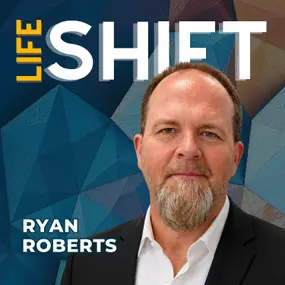
Ryan Roberts is a writer, network engineer, and father of four living near Chicago. After losing his wife in 2004, he spent nearly two decades navigating grief and addiction before finding sobriety, which he has now held since February 16, 2018. He writes about grief, recovery, and hope under the name Digital Diatribe, and is the author of the memoir Fragmented: The Crossroads of Trauma, Addiction and Recovery. His mission is to help people find recovery, hopefully sooner than he did, and to meet them wherever they are on their journey.


