
Showing Up: The Day I Stopped Trying to Fix It
Brad Wolfe grew up terrified of death. When someone he loved got sick, he showed up with his guitar. A story about grief, presence, and learning to stay.


Key Takeaways
- Brad Wolfe learned to confront his lifelong, inherited fear of death rather than looking away from it.
- When his childhood friend Sara was diagnosed with rare cancer at eighteen, Brad chose to show up by bringing his guitar to her hospital room.
- Music can provide comfort and ease pain in hospital rooms where ordinary words fall completely short.
- Being truly present for someone in pain is far more powerful and meaningful than trying to fix their problems.
- Brad transformed his personal loss and fear into a life's work, founding Reimagine to help others channel grief into beauty and connection.
Have you ever loved someone and felt the fear of losing them arrive in the very same breath? Most of us learn early to look away from that fear. Brad learned to look right at it.
Brad grew up the grandson of Auschwitz survivors, carrying a fear of death that felt older than he was. As a boy, he needed proof that the people he loved were still breathing. Then, at eighteen, he told a childhood friend he loved her, and two weeks later she was diagnosed with a rare cancer. Everyone expected the frightened boy to retreat. Instead, he brought his guitar to her hospital room, and something shifted. The music eased her pain. It eased his. And it showed him that the thing he feared most could also be the place where he was most needed.
This is a conversation about what it means to stay. To sit beside someone without the right words. To let grief become something you tend, instead of something that tends you. Brad turned his fear into a life of helping other people channel their pain into beauty. By the end, you might find yourself thinking about the moments you almost walked away from, and the ones you are so glad you didn't.
What You'll Hear
- Why the fear we inherit can feel like our own, long before we understand where it came from
- The two weeks that changed everything, and the choice to show up anyway
- What music can do in a room where words fall short
- The quiet difference between fixing someone's pain and being present for it
- How grief can be channeled toward destruction or toward beauty, and why the direction matters
- Turning loss into a life's work, one song and one person at a time
Guest Bio
Brad Wolfe is a singer-songwriter, community activist, and founder of Reimagine, a national movement helping people transform loss into meaning and action. His music and mission are deeply intertwined, both shaped by a lifelong exploration of mortality, love, and healing through creativity. Wolfe's forthcoming three-part EP collection, Loss, Life & Love Mixtapes, has been more than a decade in the making, with the first chapter, Loss, arriving this summer.
His musical journey began after his childhood friend Sara was diagnosed with a rare pediatric cancer. Wolfe spent two years writing and playing songs for her in the hospital, an experience that inspired both the Sunbeam Foundation, which has raised over $1 million for cancer research, and his musical project, Brad Wolfe & The Moon. Through Reimagine, Wolfe has since helped create over 4,500 events for more than 250,000 people, using music, storytelling, and art to explore grief, healing, and human connection.
www.bradwolfe.com | letsreimagine.org
Listen and follow: www.thelifeshiftpodcast.com/follow
Subscribe to the newsletter: https://thelifeshiftpodcast.beehiiv.com/
fear of death, intergenerational grief, showing up for someone who is sick, the power of music in grief, losing a first love, turning pain into meaning, presence over fixing, anticipatory grief, finding purpose after loss, learning to stay
Brad's Energy Portrait
Episode Playlist
You Might Also Like:
- Grief and Fatherhood: The Song That Changed Everything
- Grief: Making Something Beautiful From What Broke
- 147 Days: Raising and Losing My Sister
Learn more about your ad choices. Visit megaphone.fm/adchoices
Frequently Asked Questions
Who is Brad Wolfe on The Life Shift Podcast?
Brad Wolfe is a singer-songwriter, community activist, and the founder of Reimagine, a national movement that helps people transform loss and grief into meaning and action.
What inspired Brad Wolfe's musical journey and activism?
His musical journey began when his childhood friend Sara was diagnosed with a rare pediatric cancer, inspiring him to play music for her in the hospital and eventually co-found the Sunbeam Foundation.
What is the organization Reimagine founded by Brad Wolfe?
Reimagine is a national movement that has created thousands of events using music, storytelling, and art to help people explore grief, healing, and human connection.
Matt Gilhooly (00:00)
Brad grew up so afraid of death that as a little boy he'd ask his parents to bang pots and pans down the hall after bedtime, just so he'd know that they were still alive. He was the grandson of Auschwitz survivors, and that fear ran deep. So when he finally told a woman he loved her and two weeks later she was diagnosed with cancer, everyone expected him to retreat. Instead, he picked up his guitar and walked straight toward the thing that scared him the most.
Brad Wolfe (00:25)
But then when you see somebody who's in kind of an active dying process be able to.
you know, smile and and and f you know, feel physically better. It was just like such a a a gift that music provided.
Matt Gilhooly (00:40)
You're listening to the LifeShift Podcast. I'm your host, Matt Gilhoolie. This show is built around one simple idea, that sometimes a single moment can change how we see everything. Each week, I talk with someone about the moment that shifted their life and how they learned to live differently after it. These are not stories about having it all figured out. They are stories about what it looks like to keep going once the story changes. Thank you for being here. Here's today's story.
Matt Gilhooly (01:11)
Hello everyone. Welcome to the Life Shift Podcast. I am here with Brad. Hello, Brad. Thank you for joining me.
Brad Wolfe (01:16)
Hi Matt, great to be here.
Matt Gilhooly (01:18)
Well, it is it is great to be here. I I find this to be a blessing to be able to speak with people that otherwise I might not have ever run into or had the I guess pleasure's not the right word, but the honor of holding the story and and listening to the story and most importantly for me, like healing from everyone else's stories, 'cause I I just never expected that listening and
Being in conversation with other people about their life shift moments would be a healing journey for myself. So thank you for being part of it.
Brad Wolfe (01:49)
I'm modern.
Matt Gilhooly (01:52)
so we were talking for a little bit and we got everything figured out. So everyone, those were what I call awkward hellos. And so now we're gonna get into your story. So I love to find out or have you tell us who Brad is in 2026. Like how do you show up in the world? How do you identify these days?
Brad Wolfe (02:09)
2026, it's it's been a year of of birth. I
Matt Gilhooly (02:14)
Mm.
Brad Wolfe (02:14)
guess I guess that makes me a father in this case, of in in many directions. I I do have a a 10 month old daughter this year that's been a big life change for myself, but that was already ushering in lot of creative activity in my in my life, making music.
Which I haven't released for about 20 years until again this this year. And through my personal passion, which connects with my work, trying to help other people channel their pain in in in healthy, expansive, generative, caring ways, have been really working for the last number of years to release a new
part of of of that work this year. So just so many things are are coming together. And I feel like, you know, as as I'm trying to help others do, trying not to go numb to all of all of what surrounds us.
Matt Gilhooly (03:06)
Mm. It's very easy to. So good for you. It's very easy to fall into the traps of society and sometimes the things that I don't know you're I'm forty five, so I don't know how how you relate in age to that. But growing up, so much of what I did was what I thought society wanted me to do, including not grieving the loss of my mom out loud and not, you know, doing certain things because I was a boy. I wasn't allowed to cry or I wasn't allowed to do certain
thing. So it must feel really good to be older and leaning into that. I know it does for me.
Brad Wolfe (03:42)
Yeah, I th you and I were basically born at the same time, so so it's good to good to connect with a true peer.
Matt Gilhooly (03:50)
Did did you have those societal things growing up for you?
Brad Wolfe (03:54)
well I mean I I definitely had the cognition
Just the how narrow the band of acceptance is.
Matt Gilhooly (04:01)
Mm.
Brad Wolfe (04:01)
And and w when we say, we're different, it's like the the things that make people different are actually so sm small often relative to the the scope of what's possible. I mean, just just for myself, you know, I mean, it was just something I I I really wanted to drop out of college, and play music, which I did not do.
But that decision was so stressful at the at
Matt Gilhooly (04:23)
Mm-hmm.
Brad Wolfe (04:23)
the time. And it's so it's so s it's so silly, even you you you know, it's like, I'd be behind by a year or two years or or whatever. It's just like you get on these like ladders and trains and of of the way life moves. And I I just you know, it's like, yeah, are you a skater? Are you a are you a preppy? Are you preppy? It's like the things that make us different are just like a couple of different shirts in the class.
in in the closet,
all of a sudden we're classified totally differently. So it's just that the bands with wit within which kind of typical society says is like is acceptable
is so is so narrow. And I I do think
Getting older and
think what my life shift moment has taught
me, of is providing further fodder to try to not look at what others are doing and to listen to what's inside and take my own path.
Matt Gilhooly (05:15)
Yeah. No, I totally agree with that. I think I guess probably starting in my forties, it was kind of this like, I'm gonna live now for me. When I should have been doing it all along, but it was so much easier to now like not the it's not that I don't care what other people think, but I don't let it rule how I make my decisions now, like I did growing up. And to your point about like how slightly different we are just 'cause different shirts or, you know, just different tags that people would
assigned to us. I hear all of these stories. This is episode two hundred and eighty something of the Life Shift podcast, and no one's lived the same life, and there are so many
insane stories that we all have because we're all living this thing called life. And some of them are really hard, some of them are fantastic, all the things in between. And what I found, which is so logical, but also like now I know it's true, that we may have wildly different stories, but the way we feel about these stories in certain parts of the story, like the emotions that we have, the way we approach the way we think about it, are so very similar. So like we're all just having this human experience.
But the experience happens to be a little different, but the feelings inside are all the same.
Brad Wolfe (06:28)
And I think that's why, you know, I think in some senses you and I do similar work and it is amazing to see how people connect around sharing those stories when they have the opportunity or the provocation. and I think part of it is because we feel like we're we think are we're so different.
Which again, we to your point, we are. We each live this life, but yet the the the the tenor of it, the qualities, the the the the wildness, you know, the fact that basically we've most of us have gone through, you know, something or some things
Matt Gilhooly (07:02)
Something. Mm-hmm.
Brad Wolfe (07:05)
and and there's a lot beneath the surface that we hold on to when we start verbalizing it, we realize, my gosh, that you felt that way, or I you had that experience,
Matt Gilhooly (07:15)
Yeah.
Brad Wolfe (07:16)
or I thought I was the only one.
And there's something about that discovery and that intimacy of discovery, that normalization of of the human experience makes us all feel a little less crazy.
Matt Gilhooly (07:29)
Yeah. It's nice to have the permission, not in the literal sense, but the permission to just share your story, flaws and all. Because when you hear someone else share theirs, it's like an invitation to like, see, you know, we can share it and and we'll help other people feel that permission to to also share their story. So speaking of story, I'd love to get into yours specifically. So what I like to do is have the guests kind of paint the picture of
The before version of them, before this life shift moment. And you can go back as far as you need to to kind of give us context of who you were leading up to this life shift moment.
Brad Wolfe (08:05)
Yeah, so
I guess the pre-me relative to this life shift was somebody that was very
I'm still scared of it, but it was somebody that was very afraid of death. Let's say that. I my my my grandparents were were prisoners in Auschwitz. And I heard growing up some really
awful stories from his like my first memories were just I don't know, you know, my grandfather had it had a tattoo on on his arm, his prisoner ID on his arm and
And I d and he was dying when I was maybe three and my grandmother lived to a hundred and one, grandma Sally, and she passed away more recently. but just hearing their stories of survival and atrocity,
I would say made me feel made me feel different.
Matt Gilhooly (08:54)
Yeah.
Brad Wolfe (08:55)
and and made me so very, very afraid of of illness or death or anything gory or
Matt Gilhooly (09:05)
Mm.
Brad Wolfe (09:06)
like very sensitive, I think,
Matt Gilhooly (09:07)
Yeah.
Brad Wolfe (09:07)
to to to the world. And that was something that really marked my mild childhood.
Matt Gilhooly (09:12)
Yeah. Did your parents also have this this or yeah, did your parents have this fear of death or instill any of that in you? Just curious.
Only 'cause I'm thinking of like epigenetics and the whole idea of like DNA and how some of those experiences that your grandparents had maybe trickled.
Brad Wolfe (09:30)
I mean, I'm sh I know they've trickled. I mean, now my life now is you is is is we'll discuss, you know. I
Matt Gilhooly (09:36)
Yeah.
Brad Wolfe (09:36)
mean, my my grandfather's I mean, this is awful, but his his job is really one of the worst things I could imagine in Auschwitz. His job was to take prisoners to the gas chamber,
Matt Gilhooly (09:48)
Mm.
Brad Wolfe (09:49)
and then he had to carry the bodies out from the gas chamber. That's what he was forced to do when he survived by eating the food he found in the clothing of of the exterminated prison.
fellow prisoners.
Matt Gilhooly (09:59)
Yeah.
Brad Wolfe (09:59)
so that's, you know, in terms of like a lack of agency and
demeaning experience, dehumanizing experience. I can't really think of anything
you know, worse.
and and you know, s
So I think, you know, thinking about how many souls he saw transition, how many deaths and and and how much grief he had to face in his life, I mean, definitely
There epigenetically, there's no way that that doesn't have a massive impact
Matt Gilhooly (10:26)
Right.
Brad Wolfe (10:26)
on on my own experience. I mean, I think my parents and I st I me my my dad, he was he he was the child of these two Auschwitz survivors, and his whole family, my grand they all all all all my my grandma, my grandfather, all their siblings were and husbands and wives, they were all prisoners.
They all married each other. so we have a big extended family of folks that are descendants from this lineage. I would say
it is interesting that we are we are I think about my, you know, we're I guess we're the third generation. We're all we all are very connected, but we have all processed things very differently. And I think our parents have processed things differently. My grandmother, for example, of all her sisters, she was the eldest and protected them during the the war in these remarkable ways, but she was the only one that spoke about her experience in in she would speak about it
literally every time I ever saw her my entire life. And every time I saw her, she would weep. w of of I I guess joy f or or meaning or something to see me alive, I think just meant so much to her.
Matt Gilhooly (11:29)
Right.
Brad Wolfe (11:30)
after all she'd she'd had to experience. But it is interesting how, you know, how I've
I feel like I've processed it in my own unique way and it has been a really defining feature of my my life. But then again, for my grandmother, I I I she was the eldest and she ex you know, she she was shielding her younger sisters and maybe they process it differently and maybe how they passed that down
was different and my grandfather's experience was different and you know, we're all we're all different. But it's definitely a f I mean, I'm telling you, yeah, from a young age, maybe it's how I would be anyway, but it's hard it's hard to imagine that.
When you're having dreams about the you know, or nightmares about the Holocaust when you're a young boy, not just coming, you know, it's not just something that arose in my brain from nothing. It's being passed from
Matt Gilhooly (12:11)
Fair. Yeah.
Brad Wolfe (12:12)
some place.
Matt Gilhooly (12:13)
Right. Well, you're also hearing those stories all the time, which, you know, can bleed into our lives. Yeah. So is it correct to say that you were thinking about death more than your peers, more than people around you, besides your family?
Brad Wolfe (12:30)
I it's it's hard again, I guess what's interesting, it's hard to know what's normal, but but I don't I think
Matt Gilhooly (12:34)
Fair, that's a good point.
Brad Wolfe (12:35)
but that being said, you know, I was I was really afraid of ch of death and change to to an extreme level. It's like when I was a little child, I would have to have my parents remember like bang pots and pans down at the other end w after I went to bed so I would know that they were still alive. I remember that request.
Matt Gilhooly (12:52)
Mm.
Brad Wolfe (12:53)
I when my parents changed the toilets in the house.
I had grown so fond of the toilets or so accustomed to the this particular toilet that I that it like a deeply affected me in a negative way that they that the the and and then you know and any time a a class above me gradu graduated and they would sing the song, you know, at the end of the year, the the third graders, you know, they'd sing a song and the fourth graders they'd go up to the next level. And I I like I was emotionally like it like I like felt a lot of emotion a around that and the and the and this
that the transitions of growing up and aging and loss and I don't know, something about it just has always really
Matt Gilhooly (13:30)
Yeah.
Brad Wolfe (13:30)
initially overwhelmed overwhelmed me.
Matt Gilhooly (13:32)
Yeah. Even as an adult, like going into like teen and and twenties, thirties, like were you do you still did you still carry those pieces with you or 'cause I you know, I think from my perspective not from my perspective, from my own experience, losing my mom suddenly at eight, I was not afraid of death. for me, I just expected I was gonna die at thirty two like she did. Like that was just the
the number I was reaching up to so much so that when I turned 33, I was like, Well, I didn't plan for this. Like how how do I how do I navigate the world now that I lived past this number? So I I brought it to 33. So did you bring that along with you as you were as an adult?
Brad Wolfe (14:15)
Well I think I think that I think my life shift experience i is created a a change in in my relationship
Matt Gilhooly (14:22)
Okay, yeah.
Brad Wolfe (14:24)
to to mortality.
Matt Gilhooly (14:25)
Okay.
Brad Wolfe (14:26)
And I would say that a lot of my life has been
has now been about turning towards that in a really deep way and helping other people turn towards that same experience, that same fear that comes that same loss that c that that we all experience in our own ways. I mean, obviously not necessarily at the level or you know, the same exact plane, I guess, as the Holocaust, but we all have our own ways of facing hard experiences.
We all have things we're trying to run away from and
Matt Gilhooly (14:55)
Right.
Brad Wolfe (14:56)
that that that scare us. And how do we, you know, it makes sense. It's like with our world, there's so much stuff to not want to look at.
Matt Gilhooly (15:02)
Mm-hmm. Right.
Brad Wolfe (15:04)
that if we really let it in, if we really let it in and really held the depths of of what other people are experiencing, it would be overwhelming. So how do we, you know, I I how how do we do that? I spoke to a a physician more recently and
I was doing some work with with with yeah, some doctors and had this realization that like any one of their patients' stories could literally take up all of their care. I mean,
I mean, if you you could be immersed in somebody else's life to that extent, but so how wide you keep the aperture when there's, you know, you have multiple patients and then then you turn on the news and there's this. It's like how how much do we want to let in?
And I think that's that's it's like a big question f for for for really all of us.
Matt Gilhooly (15:49)
Mm-hmm. Yeah. Well, I mean you alluded to and I'd love to hear this. I mean, I get a picture of of of who you were before. What what what triggered a what you would say, well, I don't know, a pivotal moment for you? Like what was this was it seismic? Was it a big thing? Was it what was this moment for you?
Brad Wolfe (16:08)
I mean it was a it was a it was a it was a journey through loss, through my through more personal loss. I had just I had just
confided to I guess a girl I was maybe eighteen, a girl, woman, young, young adult named Sarah that I had grown up with, who I I had dated her friend for a number of years, but found myself in love with Sarah, who I hadn who I played soccer with and was very close with and was became one of my best friends of sorts.
And I just confided in her that was in love with her. then two weeks later, she was diagnosed with this rare form of pediatric cancer and was then placed
I was fortunate enough to be at I was a student at at Stanford University and she was had grown up near there. We both did, and so she flew home and was then put at Stanford Children's Hospital, kind of between the hospital and and home for the next couple years. while I was processing my feelings for her.
And as someone who was very afraid of death and hospitals and you know how I would show up or not for for the situation. but in fact I you know I ended up I mean thank thank God for me that I I didn't share is that you know I love music. I'm a I'm a musician.
by background and Sarah loved my music. that was my real, my real passion. And I'm so grateful that I had my guitar as an as an instrument to process my own emotions. But I think what really shifted for me was starting to bring my guitar to the hospital on a very regular basis to play music for for for Sarah and to
Come to see that as really my only lifeline and and but as also something that allowed me to face what was hard,
Matt Gilhooly (17:57)
Mm-hmm.
Brad Wolfe (17:58)
as that also ameliorated some of her physical symptoms, which was mind-blowing to me. People talk about the power of art, and it's like, art's so powerful, right? But then when you see somebody who's in kind of an active dying process be able to.
you know, smile and and and and f you know, feel physically better. It was just like such a a a gift that music provided. And so there's something about that experience over the preceding or the following two years of playing music for Sarah that I think was my was really my bi my big life shift.
Matt Gilhooly (18:33)
Yeah. Do you I mean, that's hard. One, you just confessed this this love for this person, right? Getting the I'm sure that was not like an easy thing to do, but then shortly after finding out someone l similar in age to you was now facing s your deepest fear of of dying and you still showed up.
Brad Wolfe (18:58)
I mean it it was surprising.
I think what it taught me about myself.
It's like I don't want to bring any more suffering into the world that than is necessary.
It's true. Like I don't I still don't want to watch certain kinds of shows on TV. It's like I don't wanna s it's like there's enough suffering to to go around. I I I I that's just, you know, I mean, that's my that's that's why I maybe my veil is really thin and those things do affect me. It's like I do get affected by the things that I see and witness. but I do feel like I was
I was surprised at how I was surprised at myself how I showed up. I mean, I mean, that the fear the deep fear that I'd had all those years.
I don't know that I f I was so able, I feel like, to be really present with Sarah and to like
Matt Gilhooly (19:39)
Mm-hmm.
Brad Wolfe (19:40)
stay connected to her and to love her and to talk with her about some of the scariest, biggest fears that exist. And I and maybe it's because I was our maybe it's because I mean probably it was in part because I had been thinking about those scary things. You know, I I I was I was I was attuned to
the the some of the worst. And so even though I wasn't speaking about it to anyone else really and was in my mind haunted by it, when someone else was suffering through those those some you know, the hardest part of life, it I was
grateful for how I you know, for how I was able to show up. and it made me know, it's really surpr it was just really surprising to me, given my given my all all the things I I shared about my my childhood.
Matt Gilhooly (20:29)
Yeah. What mate what do you think made you like face that? 'Cause it you could have just as easily gone into a shell and done your own thing. Do you think there was something pulling
you?
Brad Wolfe (20:41)
yeah, and I think that's what I learned, you know, to your point. It's like I everyone has there's no ra there's no people have very different ways of responding to things when they and there's not necessarily a right way. I do think there's ways that are healthier than other ways.
and it's interesting how many people, you know, drop out.
and and and and and you know, so many of Sarah's friends that you know, certain peop certain friends just never there. Certain people maybe were there more. it's just interesting who who and why people show up and what their capacities are and what's going on in their life, and you know, to have self-compassion for for whatever's happening. but for me, I do think that.
I do feel like having a vehicle.
to place my
emotions. Yeah, the out having an outlet for it, where I I had I could have the experience of turning pain into something beautiful.
you know, I I wrote this song for Sarah called Sarah's Got a Sunbeam, which I surprised her with. I was going away for for a couple weeks and I didn't I was didn't want to leave. so wanted her to have something to
Give her some hope. And I wrote this song called Sarah's Got a Sunbeam, which talked about all of her hopes and dreams and all the hope and light that she was bestowing on me through through her journey. and think, you know, that song and a lot of the other music that I was writing for her.
When there's something painful happening and then you can metabolize it and see it manifest in a new form, but there was some agency around it.
And it brought healing to Sarah and to others and to me. It was like that that just felt really
profound and and you know i it's true I don't know because I I think it's very hard to sit by somebody without words or knowing what to say. You know, it is I mean tell you more, but I mean I I just we just ran the organization I run reimagined a national survey about showing up for other people and know eighty percent of people say that there was something that
gets in the way of them showing up for somebody else. And the number one reason is that they don't we don't know what to say. And
Matt Gilhooly (22:53)
Mm-hmm.
Brad Wolfe (22:53)
and we don't know and we're afraid we're gonna say the wrong thing. And I think you know, I think I'm also lucky to have had a guitar because you you don't have to you don't have to sit in that uncomfortable space. It's also a way of I don't say distracting from the space, but it's bringing something else beautiful into the space. You know what you're doing.
And and s I'm able to, you know, and I've had the experience elsewhere of sitting by the bedside of other people now who are who are dying playing music, and it gives me something to do.
Matt Gilhooly (23:25)
Yeah. Yeah, I think there's a little bit of a there can be a little bit of safety for someone that had a fear of of facing this, that having something familiar to you and knowing you can create brings a little bit of that safety. I also to your to your point about the survey, I think people growing up were just not nobody talked about it. You know, at least in our generation, your our parents' generations or grandparents' generation, like that was not a thing. People just, you know, you
you you button up, maybe in your family was a little different because of the experience of your grandparents, but for me, like I wouldn't know what to say, because I didn't like no one talked about it. Like, and so I wasn't even talking about my mom's death. Took me 20 years to like go through the grief journey of losing my mom. But what it what that long, messy journey taught me was when my grandmother was diagnosed with cancer, who had become like my best friend, super close to her.
And I I flew up and I spent the last five days of her life sitting with her, not saying the right things, saying the right things, do you know, like because all it matters is you're there, right? And you don't necessarily need to say anything.
Brad Wolfe (24:37)
Exactly.
Matt Gilhooly (24:38)
And you're probably not gonna say the right thing, and that's okay because none of us know what to say. It's being there.
Brad Wolfe (24:43)
I know and the education around
that, the education that you just provided us all in in the in just the last three sentences, doesn't take much time to to, you know, be something that we could teach one another or at least pr at least promote as a concept. I
Matt Gilhooly (24:58)
Yeah.
Brad Wolfe (24:58)
mean it you know, there is what is the right thing? I mean it's the fear of saying it's a culture we live in, of course, and I I'm the victim of it myself in so many respects, of wanting to do and do the right thing, be at the right place, you know, make
the right thing happened, but you know, there is what the maybe the just showing up is the most important thing and and and being okay with not saying the right the wrong or saying being okay with saying the wrong thing. And that's
Matt Gilhooly (25:24)
Yeah.
Brad Wolfe (25:25)
part of it. But just being there is really so much of it. And and if we
Matt Gilhooly (25:29)
Yeah. We want to fix things and
that's that's not something we can fix, right? If someone is I think we're just our tendency is to like someone is having something something is wrong in someone's life. Let me give a way to fix that. Let me come up with a solution. And sometimes there are are no solutions. But what you did, you chose to go in and bring joy through through what you could do. So I I mean I think there's things like that.
Brad Wolfe (25:57)
Yeah, presence. I mean, it's so interesting, right? It's like I'm married now with a baby and when my wife cries or when my baby cries, all I wanna do is fix it. You know? I mean, that is it's like I wanna make that and then it's like, okay, for who? I mean, it's for them, but it's but it's also it's like, man, I'm they're th those tears, that pain makes me
I'm activated. It's like how I want to feel better. I don't want to, I don't want that anxiety. I want them to feel good so I can feel good. I mean, I've had to learn as my wife is a is a more emotive person, you know, how to just be with her tears.
and that's a practice that I think is is is hard because of course you want to help the people you love. Of course you wanna.
Take away their pain. but sometimes the best way to help somebody is is, you know, A just showing up and then B acknowledging what they're doing and C not necessarily trying to fix it, because sometimes what people just need, even if there is a solution, is to just communicate what they're feeling without feeling like they have to be somewhere different.
Matt Gilhooly (27:06)
Right. And allowing them to share how they're feeling without them worrying about how you're gonna feel about it. I think we're sometimes
Brad Wolfe (27:14)
Yeah.
Matt Gilhooly (27:15)
we we create the words that come out of our mouth when someone is near us, but we say things differently than we would if we had the full ability to just not worry about how they were gonna think about it. And I think if we start creating more of those spaces just in our everyday life, not necessarily when someone is sad or
someone is dying or any of the really hard parts of life, but just in every time, just listen to each other, be present, be the version of you that that shows up in the world fully you, because I think that's the best way that we can all connect is if we're all being ourselves
at any time.
Brad Wolfe (27:56)
Yeah. It's so it's I mean it's
such a it's it's it's such a interesting
idea, you know, it's because it's like we you know you want to be you want to do the best right by you. Who are we? It's like we don't even know who we are. It's hard enough to know who somebody else is, let alone who we are. It's like, I can't understand you. Well I don't can't even understand myself. So it's like, man, it's
Matt Gilhooly (28:18)
Yeah.
Brad Wolfe (28:18)
I but you and and and also we're we're not taught. We're also animals and we have these different it's like there's there's a lot, there's a lot, there's just so much to us.
And so I that's why I really like your pr your your advice. I mean, it just like just get in there.
Matt Gilhooly (28:37)
Yeah. Just
just show up. I mean, at the end of the day, we're all unfortunately we're all gonna die. Right. And
Brad Wolfe (28:43)
Exactly.
Matt Gilhooly (28:44)
so I just think about like I'm not afraid of are you still afraid of dying? Yes.
Brad Wolfe (28:50)
I am.
Matt Gilhooly (28:50)
And now with a child I'm sure it it's elevated.
Brad Wolfe (28:53)
I mean, I'm I don't like the idea that we die.
and the suffering that surrounds it. But I accept it.
Matt Gilhooly (29:03)
Okay.
Brad Wolfe (29:04)
And and given my acceptance of it, it's like I wanna figure out
what to do
Matt Gilhooly (29:10)
Mm.
Brad Wolfe (29:11)
with with with my time.
Matt Gilhooly (29:14)
Mm. Yeah. Okay, that's fair. That's fair. I don't I don't fear it. I for me it's like when it happens, it does. I'm not inviting it. It's not like it's not something I'm looking forward to, but I know it's gonna happen and I'm not worried about it. And so how I show up in in the world now is like I'm just there. Like, and so if you need me, I'm there. If you don't need me, I'm still there. But I'm I'm you know, like I'm I'm here to
to allow you, not you partic well, you two, but anyone in particular to just be themselves around me and and however you need me to show up, I'm gonna do that. I think. That's my goal. Right.
Brad Wolfe (29:55)
Hmm. That's a good that's a good goal. But you're also gonna be
who you are authentically. Maybe that is what's authentic to you, is exactly what you just said.
Matt Gilhooly (30:00)
Now it is.
Brad Wolfe (30:02)
So that's that's pretty that's a pretty powerful idea. I mean, I I would still be, know, I still have a lot of attachments that would make that that I mean, I'm not saying you don't have attachments, but it's like attachments that I mean, yeah, I I like I like love. And I'm not saying you don't love this either. I I I like love life and I'd be sad. I've I'm sad I'd be sad for it to to
to not be with these people that I care about and continue caring and yeah, th th those things terrify me to not have those things. But I accept that they're not
Matt Gilhooly (30:31)
Yeah. Do you feel like do you feel like
there you have to this is such a random question, but do you feel like you have to do or accomplish something like sp specific or very vague before you die?
Brad Wolfe (30:47)
In the vague sense, mi maybe so.
Matt Gilhooly (30:51)
And like the fear of not finishing it makes it like, I don't wanna die yet.
Brad Wolfe (30:56)
Mm. No, no, no, no. It's a it's a beautiful it's
Matt Gilhooly (30:58)
I'm just totally made that up so you can tell me I'm wild and crazy.
Brad Wolfe (31:01)
a beautiful question. I mean it I'm definitely very driven.
Matt Gilhooly (31:05)
Mm.
Brad Wolfe (31:06)
I'm very, very driven to
Bring more healing into the world. And I feel like I'm really
Feel like there's lot to do. I feel like there's a lot to do and I feel like I'm really committed.
to doing it. And I, you know, I'm frustrated at the the speed at which I'm able to affect the the things that I want to affect, but I also see that it's part of a bigger arc. And that it's not it's not a one, it's not a one lifetime, you know, mission. And so it
Matt Gilhooly (31:46)
And
it can't be just you.
Brad Wolfe (31:47)
It's and it's not just me. And that's and that's there's something so beautiful about about I mean, there's something so beautiful about that. And it's like,
I mean, I basically wanna make as much music and help other people make as much metaphorical music as possible while I'm here and and and it just feels so good to do it and it's just like it's yeah, I'll be sad when I can't do that anymore. But but there's so much there's so much music to be made.
Matt Gilhooly (32:12)
Mm. Yeah. Would you say that experien well, I guess you would, that experience with Sarah and losing Sarah
Or I guess the question is, what is the most different about you from before, say, Sarah's diagnosis to who you became after?
Brad Wolfe (32:29)
Well, at the time, you know, I I was in a very kind of academic setting, thinking I might be a
Matt Gilhooly (32:34)
Yes.
Brad Wolfe (32:34)
professor, though I loved I love the music. And I was doing a master's inquiry thesis. the the title of my work was called Aspirational Discordance in the selection of a college major, Emersonian Passion versus the American Dream.
And I was literally studying why certain people pursue things that they're their their Emersonian passion. This is kind of one of the myths of America or one of the tenets is that we can beat to our own drum, we can pursue what what what matters most to us. And it and you know, irrespective of what society says we should be doing, that's
Matt Gilhooly (33:12)
Right.
Brad Wolfe (33:13)
that's one kind of American ideal. Then there's this other American ideal, the American dream, which which has a more prescriptive
Path where it's like the American dream was depicted as a white picket fence and and upward mobility and a certain kind of of of life that that was like you know you're keeping up with the Joneses and that's kind of the American dream. It's where we all and so I was really curious why people I met.
In college, why so many people were in college and not pursuing
What they were most intellectually curious about.
It's like you're at one of the best schools in the world and and and you could study anything, but yet you, you know, I was cute, it's like my f all these people I knew were pursuing things that I knew they didn't really love. But
Matt Gilhooly (34:04)
Mm-hmm.
Brad Wolfe (34:05)
it was like, well, why? Whoa, that's scary, that's scary for me. It's like, well, should I be because I really love music, I have to say. so I was writing about that and I was studying.
that and trying to understand and I found, you know, one third of people in fact were not pursuing their what at least their stated
they they had a discordance over over what
they were pursuing versus what they cared about. often for perceptions of like financial concern was the was the major driver of what
Matt Gilhooly (34:32)
Mm-hmm. Yeah.
Brad Wolfe (34:34)
created that discordance for people.
Matt Gilhooly (34:36)
Mine was fear.
Brad Wolfe (34:37)
And I think and I think there is there is and I think that there is a lot of f and I don't know if the fear Yeah, I guess Yeah, fear of failure.
Matt Gilhooly (34:42)
Mine was fear of failure. So if I
only chose the degree that that I did because I knew I could do well in it, not because I liked it.
Brad Wolfe (34:51)
Yeah, I think that's another that's another common that's another common one. And and a lot of it's about, yeah, some kind of perception of of failure and happiness and something like that. And we're not taught we're definitely not taught at a young age like what makes life meaningful and worthwhile and definitely no education in America really on those long term outcomes of of what what does make a life.
and so we all have these own these stories that we tell ourselves and we're told and and we come in innocently enough with learning all of those those those things and they start affecting our decisions in pretty big ways. So anyway, after Sarah died.
you know, I think I think seeing
Seeing in your face and realizing, you know, yeah, how impermanent things are and how little time we may have just gives you that extra to say, you know, man, there isn't I I could be studying this or I could be like living it.
I could be thinking about it or could be doing it. And and it gave me more permission in her honor. I
To just say, I'm just gonna do
just gonna live with the conviction that sort of in my heart and stop questioning this.
Matt Gilhooly (36:03)
So did you?
Brad Wolfe (36:05)
Yeah.
Matt Gilhooly (36:06)
Absolutely. What was a big what was a big jump for you?
Brad Wolfe (36:09)
I mean I mean it's been and it's not not without a lot of challenge along the way, but in instead of you know, all the education that I had, I I just you know, just started playing music and figuring out how can I make a living playing music. which which was proved really, really hard to to to to to do. But I
I recorded an album of songs that were written by Sarah. I started a Pediatric Cancer Foundation in her honor to see if I made any money playing music. I would want some of it to go back to to find a cure for other young people like her and and you know, with her, and I went to her family and said, I want to do this, and we did it together and with her friends. We've raised over a million dollars now and
Matt Gilhooly (36:49)
Wow.
Brad Wolfe (36:50)
in in and provided small grants to researchers for
who are who are making who have made a lot of strides in this rare form of pediatric cancer that Sarah had and shared all these songs w with the world that she inspired and over time
You know, I'm just not willing to to to g to give up what's at the root of of that. I mean, I have not made music my full career ultimately, but my career is now helping other people channel their pain into beauty. I mean I
Matt Gilhooly (37:21)
Yeah.
Brad Wolfe (37:22)
mean, which is really what I f you know, it's it's and i and and now I'm making music. I mean I I've never stopped making music. So it's it's it is my life. It's just like I yeah, I I'm
That is my full life. My full life is making music for myself and trying to get other people to make music for themselves and to doing it together and and
figuring out how to make that possible and how to make that sustainable. And it's been, you know, I run an organization now called Reimagine, which is we've helped 250,000 people process.
painful life experiences and now we're building tools to help, like online tools to help people not just show up and be with each other, but to literally turn their pain into beautiful things in the world, actions, expressions, and have it all documented and people support each other on those journeys. And it's been
Matt Gilhooly (38:16)
Yeah. It's quite a community you got there.
Brad Wolfe (38:20)
it's been it's been so hard. I mean, I mean to try to
have a family and and and balance not even, you know, all the different priorities of life with with with this kind of deep passion that I have that I think really started with my grandparents, but Sarah really
Matt Gilhooly (38:40)
Catapulted you.
Brad Wolfe (38:41)
yeah, catapulted me to just realizing man, it's like you know, because I remember I had this interview with this there was this I can't remember what it was what it was for, but
There was something where I was applying for this thing, and I was so frustrated by career paths of people who wanted to make a lot of money so they could do good. And it was just so sc that idea is just so scary to me.
It's like, it's like, and I know that does actually happen. You know, people have.
made a lot of money pursuing things that maybe they're not passionate about, and then ended up making huge contributions to the world a once they get to a certain place. But it just it's just like that idea is so was so triggering for me of just like, can't wait to to
Matt Gilhooly (39:27)
Right.
Brad Wolfe (39:28)
to to just start living that way. But it's but it's been such a hard, you know, it's such a hard challenge. I I
But also rewarding. But I don't know. That that but that's
Matt Gilhooly (39:37)
Yeah. How long have you
been doing reimagine?
Brad Wolfe (39:41)
for ten years, ten years now.
Matt Gilhooly (39:44)
Yeah, I mean, I just think of, you know, I had the pleasure of being part of just a small, you know, a small part of of what your organization does. And just to see the effect of other people sharing their stories or their journey and how other people are receiving that and moving through the world differently, I can imagine when you sit down and you think about how
You know, one person doing this in in within your organization has created this ripple effect in the world in which it trickles down to all these other people that they're interacting with now because now they have a tool or a story or they feel less alone or whatever it may be. I I could does that get overwhelming for you to think about like the impact you are making through what you're doing over the last ten years? 'Cause I know you are in touch with emotions, so
Brad Wolfe (40:39)
I appreciate that.
I I I need to do a better job of of what of of what you just said, honestly.
Matt Gilhooly (40:44)
Taking the time.
Brad Wolfe (40:45)
Because I I I honestly feel like there's so much left on the table that it that is just that that we're I you know
Matt Gilhooly (40:53)
It's never enough.
Brad Wolfe (40:54)
it's not it's y and I and I I don't want to fall victim to that, but I just see it I see it so clearly what's possible
Matt Gilhooly (41:01)
Yeah.
Brad Wolfe (41:02)
and and it's and I feel f frustrated.
I mean, I'm on the journey to try to close that gap, I guess. And maybe that that but it's hard for me to
I mean, I feel grateful every day for the people that I meet and for the for just being part of life together and helping people do that. But I I see the what I I'm seeing what's possible, honestly. And it's like
Matt Gilhooly (41:22)
Yeah.
Brad Wolfe (41:23)
we're running this these programs now where we're literally helping people in these like ten week journeys create something beautiful, like I'm saying, out of their pain. It's like a woman whose husband died
And she loved cooking, but she gave up cooking because she cooked for him and that was a sacred part of the relationship. And she could no longer be in the kitchen. And now through the program, she's not only cooking, but she's like turned all of the recipes she made for him into a cookbook and she's sharing it with all of her friends. Or like the
woman who know, she she had a dear someone really close to me, in fact, had she she's battling stage four.
maybe battling is the wrong word, but navigating stage four cancer and you know, came to this program and started painting these bookmarks. she'd wanted to make a in her project, she wanted to create a book, but everyone's like, you know, you should make a book. And she wanted to write a book, but she's like, my gosh, this is just like too overwhelming. She didn't have the bandwidth to, you know, to do that. So she started with the group support,
Just drawing these little bookmarks for herself with an expression about the phrase of how she was feeling that day. And that made gave her some solace. Then she started bringing those bookmarks to the cancer treatments. And and then other can patients started like reading those things and they opened up conversation. Now the whole hospital is adopting these bookmarks. And it's like, man, it's and and these I'm I'm seeing how grief and our pain can be channeled both toward
Some of the worst outcomes. It can be channeled toward something like the Holocaust. Literally, it's
Matt Gilhooly (42:56)
Mm-hmm.
Brad Wolfe (42:56)
like unprocessed grief. you know, Germany lost
Matt Gilhooly (43:00)
Right.
Brad Wolfe (43:01)
World War One. The country was just there was so much grief. And it's easy in a period of grief to harness that grief, to, to, to, to inflame that grief, to not tend that grief in a peaceful, loving, caring way and have it lead to the suffering that my grandparents went through.
And I think that our grief, and this is the book that I want to write. I mean, I don't know. I was like, grief can save the world. And
Matt Gilhooly (43:24)
Yeah, it can. It can also destroy it.
Brad Wolfe (43:26)
and it can destroy it. And I mean, I have, you know, it's the most dangerous I think it's the most dangerous force. And we we I've just been working on a model that we presented at American Psychological Association two weeks ago that has a model for basically the destructive side of grief and the con and the
Matt Gilhooly (43:39)
Mm-hmm.
Brad Wolfe (43:40)
constructive side and how those poles actually interact. And I'm I'm really curious and wanting to learn more about channeling.
our pain because in our culture there's all this conversation, like there's no wrong way to grieve, there's no wrong emotions. You know, that's nice to give ourselves comfort to, you know, that's that wasn't in pushback to culture that tries to silence us and not let us feel. So it's important to be able to have space to do that. But yet I actually think that where we channel our pain is like the most important thing.
Matt Gilhooly (44:09)
Yeah.
Brad Wolfe (44:10)
So seeing and so trying to create the scaffolding and be part of a group of people that want to create the scaffolding to help other people channel their pain in healthy ways so we don't turn away from the suffering that does exist and we can turn towards it and do something with it. I feel like that's literally going to be what's gonna save my daughter's life.
Matt Gilhooly (44:30)
Mm-hmm.
Brad Wolfe (44:31)
Because this world is super, I do think it's really scary.
Matt Gilhooly (44:34)
Yeah. But you are
creating these spaces. I mean, the way you described that the bookmark piece, that is like a pure example of like a ripple effect. Because and you like
you have the space that people are sh so like I know that you're you're discounting some of the things that you have created, but it other people have to show up too. So it's not it's not all on reimagine to
Change the world, other people have to meet you where you are as well. And I think you guys are doing amazing things just from what I've seen. The communities
Brad Wolfe (45:08)
Yeah.
Matt Gilhooly (45:09)
that you create, the things. I mean, I was on that one thing and I had a bunch of people reach out to me separately, just asking me more about my story or telling me about theirs. And I know just by them hearing or being able to share their story and someone hearing it helps. And so
Brad Wolfe (45:26)
you're doing that's why I mean we're doing it together. I mean that's what this podcast is
Matt Gilhooly (45:28)
Yeah.
Brad Wolfe (45:29)
about. That I mean it's like, you know, stories are gifts and being authentic about it is this is the beginning of you know can be the beginning of someone else's journey. I just want to keep
Matt Gilhooly (45:38)
Yeah.
Brad Wolfe (45:39)
harnessing that that emotion to have it have those ripples, you
Matt Gilhooly (45:41)
Yeah. Yep.
Brad Wolfe (45:43)
know, amplify and speed up those ripples for people. It
Matt Gilhooly (45:46)
Well, I
I will challenge you to like every once in a while, like put on your calendar to just think about the impact you've already made on all these
Brad Wolfe (45:53)
That's really sweet.
Matt Gilhooly (45:54)
people because it's big and I I'm guilty of it as well. You know, I know my my small goal with this show is that every episode finds the set of ears that needed to hear that story at that particular moment. But I know it's bigger than that. I know that that people are hearing these stories all over the world. So, you know.
We just gotta take time to remind ourselves.
Brad Wolfe (46:17)
No, I know. And it's just one step and it's just like you gotta put the intent I know, I mean you're saying all the right things and that's that's that's you self compassion, as I mentioned, is is one of is is the inner stance that I believe is is vital to how we
you know, channel our grief in healthy ways. And so and so trying to practice again, I mean all these things, trying to practice what you preach is
Is the
Matt Gilhooly (46:40)
It's hard
when you're running an organization too. I mean, you're busy.
Brad Wolfe (46:43)
That is the practice.
That is the but that is the practice. I mean, that is the that is trying to remember that that we are mortal and that that trying to remember that we all died, trying to you you know, it's a practice to to to all these things are are are that is the work. That is the practice. It's not the destination. It's just like doing that over and over again and and then finding both the the
keep you if the motivation to keep going if you want, but also the joy in what in where you are and and and enjoying the the the journey because that's ultimately that is literally I guess all we all we seem to have. Yeah. And so I guess yeah,
Matt Gilhooly (47:17)
life, right? Yeah. I curious curious
Brad Wolfe (47:22)
go on.
Matt Gilhooly (47:23)
curious what this version of you like would you say anything to that younger Brad that had just found out about Sarah's diagnosis? Like would you want to say anything to him?
Brad Wolfe (47:35)
I don't think so. I I the reason I s the reason I say that is I'm I'm the kind of person I like surprises. I mean I I I
Matt Gilhooly (47:43)
Okay. That's interesting.
'Cause you said you didn't like change at fur when you
Brad Wolfe (47:48)
I
Matt Gilhooly (47:48)
were younger.
Brad Wolfe (47:49)
I know.
It's it's that's the irony of of life. I mean, I mean it's it's it's it's like
Matt Gilhooly (47:53)
I get it.
Brad Wolfe (47:54)
yeah, it's it's like I went all that change, I I like wherever I am. I mean that's that's what
Matt Gilhooly (48:01)
Okay.
Brad Wolfe (48:01)
I've learned. It's like wherever I hate change, but I but wherever I am, I really don't I don't want to leave that place.
Matt Gilhooly (48:08)
Yeah.
Brad Wolfe (48:09)
So I mean it it's such a funny thing. And and
Matt Gilhooly (48:10)
It's it's a quick hate change, you know, like once you're there, you're there in the new space.
Brad Wolfe (48:15)
and it's a great space. It's like I don't want to leave this.
I'll be late to this call, which I was, but I don't want to leave it because I'm having
Matt Gilhooly (48:21)
Right.
Brad Wolfe (48:22)
such a good time in this space with you. And it's like the life keeps pushing us to keep moving on. And
Matt Gilhooly (48:27)
Yeah.
Brad Wolfe (48:27)
it's it's hard to l leave something that you love.
Matt Gilhooly (48:30)
But you're just recreating it every day, which is beautiful.
Like you've created this life in which you can do that, which is really cool.
Brad Wolfe (48:36)
Yeah. And then I guess that's what the journey is all about. Because every time you have to build that up from scratch again in that next moment. But yet you keep having enough experiences where you see that happening. But it takes energy and it takes work to build that up, to build a life when you know what after something ends, you have to start anew and it takes a lot of energy, but there's beautiful possibility in that. And you
Matt Gilhooly (48:55)
I agree.
Brad Wolfe (48:56)
you know, to be resilient and in in and open to the possibility of newness.
I mean th think that's why I'm doing this work. That's why, you know, I think it's it is my been my challenge for myself.
Matt Gilhooly (49:09)
Yeah.
Brad Wolfe (49:10)
Somehow I think those fears are deep seated in in my maybe for epigenetic reasons or for just how I was born or for some way that I came out. I have a lot of
fears about
how to be happy.
Matt Gilhooly (49:23)
Mm.
Brad Wolfe (49:24)
And I've and I feel like I've had to really learn how to work with my brain to
Matt Gilhooly (49:28)
Mm-hmm.
Brad Wolfe (49:29)
keep myself
in good spirits and I f and I think this pursuit of having a pursuit and having dreams and trying to enjoy the journey on the path and trying not to look at others and making it a practice, that's all been the things that have I've learned have has made me find more of the good stuff.
Matt Gilhooly (49:47)
Yeah. No, I love it. I I I appreciate you going through your story in this, you know, the life shift podcast way, because I think this was just a conversation between two humans that didn't necessarily know each other before this. And now I feel like I know so much about you as a person. Not
your job, not your whatever it is, but you and how you move through the world. So thank you for allowing me to ask the questions that I did.
Brad Wolfe (50:13)
I have to say
mean, I've because I I'm releasing all this new music now and I've and and through that music I've been had the opportunity to be on a number of podcasts and and share part of my story. But I feel like there is something special about this podcast and the way you're phrasing these questions. There I don't know, it's like makes me want to just be more vulnerable.
Matt Gilhooly (50:34)
Mm.
Brad Wolfe (50:34)
and the way you've set it up and
Matt Gilhooly (50:37)
I appreciate that.
Brad Wolfe (50:38)
And it and it makes me feel know, it makes me feel a more emotional.
Matt Gilhooly (50:44)
Thank you for that.
Brad Wolfe (50:44)
Yeah.
Matt Gilhooly (50:44)
I think I I think there's so much power and vulnerability and I want more of it from more people because back to what I said before, I think when we show up in that way, I'm not saying like come out and like, you know, like start crying in front of everyone right away, but I'm saying like just be us, you know, and we don't have perfect lives and I don't think anyone does. And there are certain things about us that we move through the world differently because of.
And so I appreciate you going down this road with me in that way. And I'm glad that you feel that way. means a lot. I do want to find a way to get people to find more of you. So, like, what's I know you have music, you you have all the things going on. Like, what's the best way to find Brad? And what's the best way to find reimagine and like tell us more, and I'll put all these links in the show notes.
Brad Wolfe (51:39)
Thank you so much. So to find to find Reimagine, you can go to let's reimagine.org. and we've just I don't know when this will air, but if it's before October fifteenth, or after, you can find recordings of this. But on October fifteenth, we're hosting a free virtual summit called Grief in Our Times that we just announced. that that is kind of part retreat, part
exploration of how we handle the individual and collective pain and how do we do it with creativity and and optimism and not go numb to it. And and so want to invite everyone to attend that. We also at let's reimagine.org, you know, as we've discussed, we've produced 5,000 events in with other folks that are often leading them to open up spaces and there's always they're all almost all of them are free.
that's what our nonprofit does. And so we want to just make sure that everyone has a space, a community space to be with other people to connect over what's hard. And so definitely if you're if there's something anyone's either there's a space there for you, or if you want to create a space for others to explore that topic, we we really want to make sure that there's places for us to to to to go. and then you can also find
more information about this app that we've been building that helps people and these programs that help people transform their pain into creativity and and meaning and purpose and and stillness and and nothingness, but just ways of transmuting and channeling our pa our pain in ways that align with your values. So you can do that there. And then if you want to find me, because I'm releasing all this new music, I I have a daughter now as I mentioned, I've been writing her so much music and
I'm releasing the Lost Life and Love mixtapes. These are three EPs. I haven't released music in like 20 years.
Matt Gilhooly (53:28)
Nice.
Brad Wolfe (53:29)
but I've been writing it the entire time and have been honestly scared of putting out in the world because but I've just started putting music out around a song about my grandma that I just put out, songs about other people that I've on this first EP Lost that I've met through reimagine or that I've had the personal experience of navigating.
in my own life, some and and turn and you know channeling it into my own form of expression. So that's the loss EP, and that'll be followed by the life and love EPs. And
Matt Gilhooly (53:59)
Awesome.
Brad Wolfe (54:00)
really excited for you to check that out. yeah can go to
Matt Gilhooly (54:01)
Spotify or where we looking for that?
Brad Wolfe (54:03)
Spotify. My band's name is Brad Wolf and the Moon. Brad
Matt Gilhooly (54:06)
Okay.
Brad Wolfe (54:07)
Wolf and the Moon Wolf with an E at the end and you'll find that music on Spotify. the I actually recorded some music videos
with my some of my grandma's story and and some of my other friends' stories on on
Matt Gilhooly (54:18)
Nice.
Brad Wolfe (54:19)
you'll find on YouTube and then at Bradwolf.com. Brad Wolf with an E you'll find this stuff there too. So yeah, I'm trying
Matt Gilhooly (54:25)
Perfect.
Brad Wolfe (54:26)
to bring it all together and just keep living this this life. And I'm so honored honestly to to I I have a lot of questions for you, but we can talk about that later. I'm just really interested in how you how you you know what you're up to and and how you're finding things. And I hope
I gotta just listen to more of this podcast 'cause your story you're yeah,
Matt Gilhooly (54:45)
There you go.
Brad Wolfe (54:46)
that's the way to do it.
Matt Gilhooly (54:47)
Yeah. Well, I appreciate it and thank you for taking the time today. And and I again I just feel like I leave all these conversations healing parts of me that I didn't realize still needed to be healed. So thank you for that. And thank you for being a part of this story of the life shift. And who knows how long it'll go, but it's not stopping. So I appreciate you and hope we get to talk again soon.
Brad Wolfe (55:11)
Our lives just keep shifting.
Matt Gilhooly (55:12)
There you go. Yep. If we're lucky, if we are lucky, our lives will keep shifting.
Brad Wolfe (55:17)
Well they'll they'll definitely shift one way or another, but there's ways that we can it's it's kinda like how we in retrospect, there's a lot of ways we can think about our shift and see where it's led, which which which I think is a real power in in in seeing what's transpired and what's manifested through the shifts. But I and I think we can find ways of kind of those intentional shifts or how
Matt Gilhooly (55:39)
Right.
Brad Wolfe (55:39)
do we navigate when those shifts when we're confronted with the shift.
How do we make how do we ensure that that shift leads to leads to more episodes of this podcast? Amen. Thank you, Matt.
Matt Gilhooly (55:48)
Yeah. Well, for sure. Amen. Well, well thank you.
Thanks again and thanks for everyone listening. I really appreciate just being on this five year journey so far and no stopping. So I'll be back in a couple of days with a brand new episode. Thanks again, Brett.
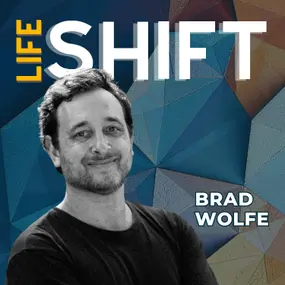
Singer-Songwriter & Founder of Reimagine
Brad Wolfe is a singer-songwriter, community activist, and founder of Reimagine, a national movement helping people transform loss into meaning and action. His music and mission are deeply intertwined, both shaped by a lifelong exploration of mortality, love, and healing through creativity. Wolfe's forthcoming three-part EP collection, Loss, Life & Love Mixtapes, has been more than a decade in the making, with the first chapter, Loss, arriving this summer.
His musical journey began after his childhood friend Sara was diagnosed with a rare pediatric cancer. Wolfe spent two years writing and playing songs for her in the hospital, an experience that inspired both the Sunbeam Foundation, which has raised over $1 million for cancer research, and his musical project, Brad Wolfe & The Moon. Through Reimagine, Wolfe has since helped create over 4,500 events for more than 250,000 people, using music, storytelling, and art to explore grief, healing, and human connection.


