My Husband Made an Eight-Minute Recording for Our Daughter Just in Time
Rosemary lost her husband Eric to a rare brain disease within weeks of his diagnosis, and she wrote her way through it one poem a night until the poems became a book.


 Goodpods
 Podchaser
 PocketCasts
 RSS Feed
Key Takeaways
- Rosemary Vaswani shares her deeply moving journey of losing her husband, Eric, to the rare and fatal Creutzfeldt-Jakob disease while raising their teenage daughter.
- Listeners hear how Rosemary navigated the immediate shock of diagnosis, choosing to temporarily delay looking up the medical prognosis to finish one last day on a movie set.
- The episode highlights the power of community as Rosemary recounts the essential support provided by neighbors, friends, and family who stepped in with food, diapers, and caregiving help.
- Rosemary discusses how writing a poem every single night helped her process her grief, eventually culminating in her debut poetry memoir, When I Press Stop: A Memoir of Loss.
- Four years after her profound loss, Rosemary reflects on how grief never truly ends, but how she has learned to say yes to new experiences and embrace resilience.
Content note: this episode includes discussion of the death of a spouse, a rare fatal brain disease (Creutzfeldt-Jakob disease), caregiving and hospice, and grief.
Maybe you have stood in a room where someone said a word you did not want to hear, and you decided, just for a day, not to look it up.
Rosemary Vaswani had one day left on a movie set when a doctor said three letters about her husband, Eric. She went back to work. Within weeks, Eric was gone. He was the playful dad who was a kid himself, and in the middle of it all he made an eight minute recording for their daughter, just in time. Rosemary tells us about a silent scream in a hotel bathroom, a shimmy shimmy dance to get him down the hall, and the people who showed up with food, diapers and a caregiver.
Four years later, Rosemary says yes to things she never would have. She wrote her way there, one poem a night, and those poems became her book, When I Press Stop: A Memoir of Loss. We talk about grief that never really ends, the guilt that comes with it, and what she would tell the woman standing in that hospital room. Rosemary is warm, funny and generous, and she leaves room for the rest of us to ask for help.
What You'll Hear
- Choosing not to look up the word the doctor said, and going back to work
- Caring for Eric at home, a shimmy dance, and an eight minute message for their daughter
- A silent scream in a hotel bathroom, and the guilt that came after
- The neighbors, family and friends who showed up in the smallest ways
- Joining a spousal loss group a month in, and why she is glad she did
- Writing a poem a night until the poems became a book
Guest Bio
Born and raised in New York and Puerto Rico before making Los Angeles home, Rosemary Vaswani is an actress, author, and storyteller whose work explores love, loss, resilience, and reinvention.
Currently recurring on Paramount+'s hit series Landman under her stage name Rosemary Dominguez, she portrays Isabel, a woman whose husband, son, and grandson are tragically killed in the series' opening episode.
Rosemary has been writing and performing stories since her teenage years, from stage competitions to Los Angeles' The Write Club, where she shared new work at Improv Olympic in Hollywood, as well as True Story at the Ensemble Studio Theater in Atwater Village.
Her debut poetry memoir, When I Press Stop: A Memoir of Loss (Finishing Line Press, October 23rd, 2026), chronicles the heartbreaking loss of her husband to Creutzfeldt-Jakob disease while raising their teenage daughter. Told through lyrical poetry that unfolds like a novel, the collection offers a deeply personal yet ultimately hopeful exploration of grief, healing, and choosing life after profound loss. The manuscript was named a semifinalist for the Donna Wolf Palacio First Book Poetry Competition.
Website: https://www.rosemaryvaswani.com/
Instagram: https://www.instagram.com/rosemarydominguez1/
Poetry on Instagram: https://www.instagram.com/rosepoemsthebitterandthesweet/
Listen and follow: www.thelifeshiftpodcast.com/follow
Subscribe to the newsletter: https://thelifeshiftpodcast.beehiiv.com/
grief, losing a spouse, widowhood, Creutzfeldt-Jakob disease, caregiving, hospice, grieving teenager, writing through grief, poetry memoir, When I Press Stop, saying yes after loss
You Might Also Like:
- Widowed After 45 Years: How Writing Gave Me a Reason to Get Up
- Letting Go: The Afternoon My Mother Said It Was Time
Rosemary's Energy Portrait
Episode Playlist
Learn more about your ad choices. Visit megaphone.fm/adchoices
Frequently Asked Questions
Who is the guest on this episode of Life Shift?
The guest is Rosemary Vaswani, an actress, author, and storyteller who discusses losing her husband to a rare brain disease and her healing journey.
What book did Rosemary Vaswani write about her loss?
Rosemary wrote the debut poetry memoir titled When I Press Stop: A Memoir of Loss, which chronicles her husband's illness and her path forward.
What disease did Rosemary's husband, Eric, pass away from?
Eric passed away from Creutzfeldt-Jakob disease, a rare and fatal degenerative brain disorder, shortly after his diagnosis.
Matt Gilhooly (00:00)
Rosemary chose not to look up the word. The doctor said it, three letters, and she had one day left on a movie set, so she went back to work and told herself it was something else. Within weeks, her husband, Eric, was gone. He had been the playful dad who was a kid himself. In between, there was a silent scream in a hotel bathroom, a shimmy shimmy dance to get him down the hall, and an eight-minute recording he made for their daughter just in time. Four years later, Rosemary says yes to things she never would have.
She wrote her way there one poem a night. This is Rosemary's life shift.
Rosemary Vaswani (00:32)
what was causing these random symptoms or he would go for a walk and come back and he'd have like this rash on
his
neck. And it just felt like we couldn't pinpoint is like, do you need to see an allergist, a neurologist, a cardiologist? What is what's happening? And so he did go to a doctor and they put him on lexapro because they thought it was anxiety.
Matt Gilhooly (01:27)
Hello everyone. Welcome to the Life Shift Podcast. I am here with Rosemary. Hello.
Rosemary Vaswani (01:31)
Hello. Hi, thank you for having me.
Matt Gilhooly (01:33)
Well, thank you for rescheduling a few times because I was sick. I appreciate it
Rosemary Vaswani (01:36)
Yeah.
Matt Gilhooly (01:38)
and you know, I I know these conversations, in my opinion, happen at the time that they were supposed to happen. So I hope you feel the same when this is all over.
Rosemary Vaswani (01:46)
Yes, I agree.
Matt Gilhooly (01:48)
And thank you for wanting to be a part of the Life Shift podcast and this journey that is so healing for me, which was unexpected, but I know there are people out there that are listening to these episodes and feel maybe really alone in the circumstance that they're going through. And so they can hear stories like yours and the 300 other people that have been on this show and maybe feel less alone, maybe move through the world differently, maybe feel hope when maybe they didn't before. And so
I appreciate you wanting to share your story in this way so that maybe we can help
Rosemary Vaswani (02:19)
Yes, sir.
Matt Gilhooly (02:19)
at least one person out there move through the world more confidently or with more hope.
Rosemary Vaswani (02:25)
Yes.
Matt Gilhooly (02:25)
So
before we get into your story, can you tell us who Rosemary is in twenty twenty six? Like how do you show up in the world? How do you identify
these days?
Rosemary Vaswani (02:34)
These days, I think I'm a curious person. I say yes to things that I normally wouldn't say yes to because I'm in a different stage of my life that I didn't expect to be guess you could say, yeah, I'm adventurous and my heart is very open.
too, more than it's ever been.
Matt Gilhooly (02:56)
That's good. That that creates
Rosemary Vaswani (02:57)
Yeah, yeah.
Matt Gilhooly (02:58)
a scary sometimes, but maybe more fulfilling life
Rosemary Vaswani (03:01)
Yes,
Matt Gilhooly (03:02)
at other times.
Rosemary Vaswani (03:03)
I agree. I have a daughter who's 19 and we're closer than we've ever been. And I have the kind of relationship with her that, you know, I dreamed about. So
Matt Gilhooly (03:16)
Mm.
Rosemary Vaswani (03:16)
we're very close and she tells me everything. Maybe a little bit too much. Sometimes I don't want to know everything. But.
but we are close and yeah, I never imagined any of these things. my life feels, I'm 59, but everything feels very new because I had something that happened, which
we'll talk about that completely shifted the trajectory of my life.
Matt Gilhooly (03:44)
Yeah. And and it's so interesting hearing so many of these life shift stories and how how people react differently to stories that on the surface seem similar and how
Rosemary Vaswani (03:57)
And...
Matt Gilhooly (03:57)
also people that have wildly different experiences act very similar to each other through a life shift moment. And so it's like I said before, it was like this show is so healing for me because I just
I just never expected by actually listening to people and being a part of their story, I could
Rosemary Vaswani (04:15)
.
Matt Gilhooly (04:17)
heal in ways that I didn't know that I needed it. And so it's just been really
such a a beautiful journey for me thinking of this eight-year-old boy who's father sat him down and told him that his mom had been killed in an accident. And if I could have
heard these episodes, like when I was eight, nine, ten, maybe some of them would not be appropriate, but at the same time, I
Rosemary Vaswani (04:39)
Yes.
Matt Gilhooly (04:39)
would feel maybe more hopeful moving through the world instead of like scared all the time that the next shoe was gonna drop. So I can understand
how that would shift, how a life shift moment for you and everyone else would would shift it. And would you say that even though, you know, these life shifts for a lot of people are hard, would you say that sometimes even the hard ones
have a weird silver lining. I say that and it sounds weird saying it out loud, but would you do would you agree with any of that?
Rosemary Vaswani (05:09)
would
look like what yeah, I mean
Matt Gilhooly (05:10)
Hard to say, right?
Rosemary Vaswani (05:13)
when you were talking about The fear is an eight-year-old. I mean my husband died four years ago and I still I still have moments where I Wonder when's the other shoe gonna drop or you know, I'm we're very close to our dog is the
the family dog and I keep having these things in my head like, my God, what's gonna happen when the dog dies? The dog is 12 and she's very healthy. So I do have a little bit of that paranoia just because it's like PTSD when you go
through trauma and loss, there's a part of you that thinks that. I would say,
Definitely the relationship with my daughter, that's a silver lining because she was very close to my husband. They were like two peas in a pod, like best friends. And it never, some people would say, does it bother you that they're so close? And I say, no, no, I'm glad that they are, that they have that relationship because I feel like it's very important for.
especially girls with their dads to have that type of
Matt Gilhooly (06:24)
Mm-hmm.
Rosemary Vaswani (06:24)
relationship. So our relationship now is completely different than what it was when my husband was alive. And I mean, I would still want him back, right? But it's different because I'm the only parent she has now. And I think the trauma of losing him also brought us together.
Matt Gilhooly (06:44)
Yeah. It's I same for me. It's very weird to think, you know, like of course I would not want my mom to die when I was eight, you know, like she was thirty-two,
Rosemary Vaswani (06:53)
Mm-hmm.
Matt Gilhooly (06:53)
like it young. But
Rosemary Vaswani (06:56)
Yes.
Matt Gilhooly (06:56)
I also think I would not be this person had that not happened. And I kind of like this life and and what I'm doing with it. So it's a it's a very odd thing. And I think some people can understand what I mean when when it's when I say
Rosemary Vaswani (07:08)
Mm-hmm.
Matt Gilhooly (07:09)
it's very odd to actually put into words. And I think you might understand that as well.
Rosemary Vaswani (07:14)
yes, yes.
Matt Gilhooly (07:15)
So before we before we find out, while you kinda hinted at the life shift moment, maybe you could paint the picture of your
life leading up to that and who you were and what that before version of you looked like.
Rosemary Vaswani (07:27)
Mm-hmm. Well, I met my husband in 1995 in New York I We were just when I met him it felt like like like I had known him before it was just felt very easy this this instant connection and We got met we ended up getting married in 98 so we you know, we
I was waiting on tables. I'm also an actress and I was acting. He was working in advertising, also playing in bands. And we had just a very exciting life. We would go on trips to upstate New York and we were just this creative couple that would just feed off of each other and very supportive.
And at some point I begged him, said, can we please move to Los Angeles because there isn't enough work in New York. So we did, we moved to LA in 2002 and I continued waiting on tables. He was like screenwriting, also working in advertising, you know, just living the creative life. And our daughter came along in 2007. So we, I felt like we had.
a long time, just the two of us getting to know each other and just
Matt Gilhooly (08:40)
Hm. Yeah.
Rosemary Vaswani (08:42)
being this incredible team. And then our daughter came along and the dynamic changed and I discovered, my God, this man is like an incredible dad. he was one of those guys that just wanted to be involved in everything. Just, you know, I mean, the diapers, I mean, everything you can think of like feeding.
What can I do? Just very hands on. And it was so wonderful to watch. And I just felt so lucky that that's who my daughter had as a dad. I thought, my gosh, she won the lottery with this guy.
Matt Gilhooly (09:20)
Yeah. As did you.
Rosemary Vaswani (09:24)
Yes, yes, as did I. And so like I mentioned, those two were like two peas in a pod. Eric had a very
playful way about him. So any kid he met, was, I mean, they would be in a deep conversation because he was like a kid himself in some ways. So he was just like the favorite uncle and all of that stuff. And so want to say, yes. my, yes.
Matt Gilhooly (09:48)
Did you feel safe too through all this? Like in this relationship? It was like a 'cause
earlier you mentioned I don't want to interrupt your story, but I do kind of want to. Earlier you mentioned how
Rosemary Vaswani (09:57)
Yeah.
Matt Gilhooly (09:59)
nowadays you say yes more. Were you
Rosemary Vaswani (10:02)
Yes.
Matt Gilhooly (10:03)
like that at all during that relationship? Or were you still were you more hesitant then? Or I'm trying to think about you specifically.
Rosemary Vaswani (10:10)
I think, yeah,
I feel like, yes, but when you're in a marriage and Eric was, he was the more vocal one
Matt Gilhooly (10:22)
Okay.
Rosemary Vaswani (10:23)
and I was kind of like more introverted and like if we all got to, we all had a dinner party, Eric would be the one, you know, telling stories and I'm one of those people that.
I'm great one-on-one, but if it's a big dinner party, I get kind of quiet and it's, I think it's the introverted extrovert.
And so he was that guy and sometimes, he would come up with these ideas like, let's do this, let's, and he would team up with my daughter and say, yeah, yeah, we gotta, come on, let's do this. And I'd be the...
you know, no, no. And I'd find all the faults and why we couldn't do that. No, because it's gonna cost this much or whatever, like, you all the logic. And
Matt Gilhooly (11:11)
Yeah.
Rosemary Vaswani (11:11)
I take the fun out of it almost, like the cop, I was the bad cop. so I think that was definitely kind of a funny dynamic.
Matt Gilhooly (11:21)
Yeah.
Rosemary Vaswani (11:22)
And that's probably why my daughter was so close to him, because if I'm playing the bad cop and...
and he's, you know, Mr. Playful and I lost my train of thought.
Matt Gilhooly (11:32)
Was was there with the playing the bad cop, I'm always curious if if that was a fear of something that you brought on from like childhood or something. Because for me it very much was. Was it? Okay.
Rosemary Vaswani (11:42)
my God, Yeah,
I, yes, I was raised, and that's another thing too. he was raised a lot more, you know, he was American, white guy from Portland. I was raised with an Indian man and a Dominican mother, and they were very strict.
So there were times where with the two, you know, he would want to do things a certain way and I would be like, my God, how are you kidding me? Or the way that him and Sophie would talk to each other or, you know, they would joke around and call each other these names. And I would be like, dude, you have to stop that because when she turns 13 and she tells you that it's not going to be funny.
You know, it's going to turn back on you. And so I was very, you know, we're
Matt Gilhooly (12:38)
Yeah.
Rosemary Vaswani (12:39)
talking like, and I remember the first time I got together with his family and I saw that he was actually using curse words in front of his dad. And I was, I had never witnessed that because I come from such a different
Matt Gilhooly (12:50)
Hm. Yeah.
Rosemary Vaswani (12:52)
upbringing. And it was just so wild. I was just like, wow, this is different, you know.
Matt Gilhooly (12:58)
Mm.
Rosemary Vaswani (12:59)
So I maintained that part of me. And like I said, Eric,
Matt Gilhooly (13:03)
Probably not even on purpose.
Rosemary Vaswani (13:05)
no, not on purpose at all. It's just because that's the way I was brought up. And
Matt Gilhooly (13:07)
Yeah. Mm-hmm. Yeah.
Rosemary Vaswani (13:10)
Eric was always trying to get me to like, you know, he's like, you got to speak up for yourself. You got to, you know, be a little louder, all of the things he was, you
Matt Gilhooly (13:20)
Mm-hmm.
Rosemary Vaswani (13:21)
know, and then he'd look at me and, you know, you're so patient and this and that. And I would teach him that. So
Matt Gilhooly (13:28)
It's a nice balance.
Rosemary Vaswani (13:28)
We each
embodied things that the other person needed more of, right?
Matt Gilhooly (13:33)
Yeah.
That's that's I mean, that's ideal, right? In a way that we can learn
Rosemary Vaswani (13:37)
Yes.
Matt Gilhooly (13:38)
from others. Naturally, we're gonna bring on some things from our childhood that we've seen over and over and over and over and experienced over and over and over again.
But it's also nice
Rosemary Vaswani (13:47)
Yes,
Matt Gilhooly (13:49)
to see a different way and to absorb some of those qualities as well. So that's a sign
of a good relationship, I think. You don't wanna be exactly the same.
Rosemary Vaswani (13:57)
Yeah, no.
No, no. And look, I mean, we fought just like any couple. And especially when you come from completely different backgrounds, it's bound to happen. And you bring a child into it, and you were both raised differently. Eric comes from divorced parents. So I think he had this fear of abandoning us or Sophie. Because at one point, he was a...
musician and I said, I said, you know, you should really try to take the music further. And I don't mind if you go on tour. he said, I can't leave you guys. I would never want to do that. So he he was kind of it almost felt like an obsession in a way because his parents divorced when he was 10. And and it was very traumatic for him. And his dad was around, but not really. He was off at his girlfriend's. So it was almost like he became the dad.
to his younger brother. So yeah, so then
Matt Gilhooly (14:57)
Probably made him a good dad though.
Rosemary Vaswani (14:59)
yes, yes, because he did the opposite of what his dad did.
Matt Gilhooly (15:01)
Mm. Yeah.
Rosemary Vaswani (15:04)
I'm trying to think, do you want me to go into what? Yeah, yes.
Matt Gilhooly (15:06)
Yeah, yeah, just yeah, just keep going. I I would just wanted to understand
a little bit more about the dynamics in your relationship 'cause I think it's
Rosemary Vaswani (15:13)
Yeah.
Matt Gilhooly (15:14)
important to to hear you know, I you were singing a lot of praises about Eric, but also, you know, I wanted you to sing some praises about yourself and how you show up in the world as
Rosemary Vaswani (15:23)
Yes,
Matt Gilhooly (15:24)
well.
Rosemary Vaswani (15:24)
I forget to do that sometimes. Thank you.
Matt Gilhooly (15:26)
Well, here's your reminder. You're welcome. Yeah,
but so you were happily married and and
Rosemary Vaswani (15:32)
Yes,
yeah. And we had a good marriage. I was pursuing my acting. He was, you know, trying to get some stuff going with his music. want to say in January 2022, was always like a hypochondriac. And I was used to that. He was a worrier. And
He just started feeling like, I don't know, just random symptoms. He just would feel like his arm jerking in the middle of the night. And I noticed he was getting definitely more irritable and we were arguing more. And I just thought, God, you know,
it's like, what's going on? Like he's a little too, something is really stressing him out and he can't, he couldn't figure out what was wrong.
what was causing these random symptoms or he would go for a walk and come back and he'd have like this rash on
his
neck. And it just felt like we couldn't pinpoint is like, do you need to see an allergist, a neurologist, a cardiologist? What is what's happening? And so he did go to a doctor and they put him on lexapro because they thought it was anxiety. and and I was actually kind of upset that
He got on medication without talking to me because that's how much how how we made decisions. We always talked about these things. And but he was so desperate that he went ahead and started this. And a few weeks later, things just started escalating. So he took himself off the medication and he was doing things like printing out calendar pages and writing things down. And this is a guy that.
that would normally put things on the phone and we have the family calendar and he'd always say, you know, put it on the calendar. But now I'm watching him like print out calendar pages and I'm thinking there's something going on. Like, why is he doing that? What's happening? And almost like he was trying to slow his brain down, like he
Matt Gilhooly (17:33)
Mm.
Rosemary Vaswani (17:33)
couldn't focus.
Matt Gilhooly (17:35)
Were you panicking or were you
kind of more level headed in the relationship at that time?
Rosemary Vaswani (17:38)
I,
at that time, I was dying inside.
Matt Gilhooly (17:44)
Hm.
Rosemary Vaswani (17:45)
I was just, I was talking to my best friend. said, I don't know if it's Alexa Pro and she's telling me, you know what, sometimes when you start on a depression medication, it can take time to level out. So I'm thinking, okay, maybe that's what it is. But I'm inside, I'm just like, I don't know what's going on.
This is really.
kind of scary and he was being very argumentative with our daughter. And there was one point where he yelled at her so badly. And the next morning I told him, said, you need to apologize to her because this is something that if you don't say something, this is going to affect her in her future. It's gonna be something that's gonna come up in therapy. And I said, there was no reason for you to have talked to her that way.
And so she told him, she came out and he said, honey, just want you to know, I'm really sorry. I'm coming off of Lexapro it's making me act a little weird. And she just like walked over to him and gave him a hug. And she
said, I'm sorry. was glad he said something because I'm talking like maybe like a week later or something.
He comes out of the room and he had taken a week off from work because he couldn't understand what was on the screen. And he was working from home and he told them in this meeting, said, guys, I'm coming off this medication. think something's, you know, it's kind of messing with me. his boss said, just take a week off.
So that week I was shooting a movie and I would see him off and on, but I had a feeling something was off and I thought maybe he's just extra worried.
Matt Gilhooly (19:37)
Mm-hmm.
Rosemary Vaswani (19:37)
But I knew by Mother's Day, because then it was Mother's Day weekend that weekend. And I just knew that morning I thought this is really bad. He's either had a stroke or something is seriously wrong.
because the way that he was looking at me almost as though he was like an empty shell and he was
Matt Gilhooly (19:59)
Yeah.
Rosemary Vaswani (20:00)
serving me breakfast with Sophie, but it's like his eyes weren't there. He was like looking past me and explaining breakfast in a way as though, know, like a drunk person that's trying to sound sober. so the next
Matt Gilhooly (20:15)
Mm-hmm. That's frightening.
Rosemary Vaswani (20:17)
day is when...
I had been out of the apartment and I came back in and he came out of the bedroom and he was just white. And he said, you need to call an ambulance. I can't think straight. So we went to the hospital and they told us the next day, checked us in and they told us the next morning that they thought he had CJD, which causes like Alzheimer's and Parkinson's like symptoms. It's like dementia.
And they told me two days later, they had done another MRI and two days later, I didn't look it up by the way, cause I had one day left on the movie. so, but when they mentioned that I, I was in complete denial. thought,
Matt Gilhooly (20:58)
Yeah.
Rosemary Vaswani (20:59)
no, no, this is, this, this is not what he has. It's gotta be something else. And they said, yeah, we're going to run other tests and we'll find out, you know,
going to send out some spinal fluid to the Mayo Clinic and we'll know in two weeks, but we're running other tests. I went to finish this movie. had like one more day. His brother and sister came and stayed with him. And then I came back and they had done another MRI. And then the day that we left, they said, we think it's even more likely that he has CJD, which is fatal.
And that was the first time I had heard that word because I had chosen not to look it up. And I was just, I just felt like my, my body just kind of like separated, like
my, was watching this and I just, couldn't believe it. And my brother-in-law was then talked to us afterwards and he said, I don't, I don't believe them. I don't want you guys to believe them. I'm getting a,
I got a second opinion scheduled. We're going to go to San Francisco. We're going to see the expert and we have another appointment at the Mayo Clinic. you know, these guys, you know, they don't know what they're talking about. I, I just, I'm an optimist. And so I, I just thought, okay, he's right. It's, it's not,
Matt Gilhooly (22:24)
Hmm.
Rosemary Vaswani (22:25)
that's not what it is. I'm going to keep hoping it's something else and we're going to get through it.
And they did tell us at the hospital, they said, you should tell your daughter and you should make recordings because this disease can move very fast. And I chose not to tell my daughter because I didn't want to put her through that if I didn't know for sure.
Matt Gilhooly (22:49)
Mm-hmm.
Rosemary Vaswani (22:49)
And so when we came into the apartment, to be very careful like how I, like she saw like,
why is dad's acting really weird? And she's telling me, hey, mom, tomorrow there's like a Harry Styles pop-up at like 8 a.m., but have to be there at 6 a.m. Can you take me? I'm, Sophie, I can't, dad can't be left alone.
Matt Gilhooly (23:17)
Mm.
Rosemary Vaswani (23:18)
So it was very hard for her to understand that. Like she just didn't get it, but
Matt Gilhooly (23:23)
Yeah.
Rosemary Vaswani (23:24)
slowly she started seeing.
how he was changing. she was
Matt Gilhooly (23:28)
She was a teenager at this time, right? Like fourteen, fifteen.
Rosemary Vaswani (23:31)
14 and she turned 15 during this timeframe. But the next day after we had gotten home, he said, wanna make a recording for Sophie. And she was in school, so he recorded a message for her on my phone in case that's what he had.
It's like an eight minute message. so grateful he did that because the truth is that two days later, there's no way he could have been able to have done that. And that's how quickly changing.
Matt Gilhooly (24:04)
Interesting, yeah.
Rosemary Vaswani (24:05)
Yes. So when I did tell my daughter, we ended up going to San Francisco two weeks later.
with my brother and sister-in-law. And that's when the neurologist, you know, he confirmed the diagnosis and that was just brutal, you know. And we drove back to LA and I decided I was gonna tell my daughter the next day, cause I didn't wanna tell her that night. the next day she got home from school and she saw that I was crying cause my brother-in-law, the Mayo Clinic results had also come in
And I told her, we went in her bedroom and I told her and...
Matt Gilhooly (24:46)
Hardest
thing you've ever said.
Rosemary Vaswani (24:48)
Yeah. Yeah. Yeah.
Matt Gilhooly (24:49)
Yeah. That's
I I can relate to that because that was my dad had to do it too, and he still to this day, thirty seven years later, he can remember all the pieces of it, not the exact words, but all the setting and and how it felt and still the hardest thing he's ever had to say. So I'm sorry that you had to say that. But I'm glad
that you got to or that you chose to.
Because I think that's that's important, hard but important.
Rosemary Vaswani (25:17)
Yes. yeah,
no, I had to. And I remember when I told her she really wanted to talk to him. She's like, I really want to talk to dad, but dad's on the couch in the living room, but he can't, he can't communicate the same way. So I ended up playing the message he had recorded for her.
And it was just.
Beautiful. I mean, we were laying in her bed listening to it laughing crying and I was just so grateful because it felt as though he was there with us telling us
Matt Gilhooly (25:57)
Yeah. What a gift.
Rosemary Vaswani (26:00)
my gosh Really?
Matt Gilhooly (26:01)
Yeah.
Rosemary Vaswani (26:02)
I mean that but that's that's who he was like that he could in them in the midst of having this disease could think
I'm going to make a recording for our daughter.
So I started hospice the next day, and then 10 days later, he died. So it was very fast, very fast. Yeah.
Matt Gilhooly (26:19)
Wow. It's very progressive. Yeah. That's a lot of
life shift moments in in a small period of time that one can get lost in. Did you find that you got lost?
Rosemary Vaswani (26:33)
well,
you know, this was crazy is in the past, I have been one of those people that would faint if someone that, you know, someone that I was with was not doing well or like, you know, let's say I had picked up Eric once from a doctor's appointment, he'd had surgery on his nose for deviated septum and on the way out of the doctor's office, I passed out.
because it was too much for me to see him like that. And this is, weren't even married. We were dating in New York and I would just get very queasy and I couldn't handle it. And when I was told in the hospital, didn't faint. Somehow there was like a strength that I don't know where it came from, but it was there. And it was there throughout the entire time. And have to say that I also
had like the support system that was incredible.
Matt Gilhooly (27:30)
Mm-hmm.
Rosemary Vaswani (27:31)
My brother-in-law ended up becoming like my right-hand man. And he would, I would tell him, we got to get this done. We got to get that, or I need this. And he would go and do it. And my sister-in-law and my other brother-in-law, mean, my, everyone, my whole family, they just kind of took, you know, okay, we need to hire a caregiver because now he's too heavy. He's not walking anymore and it's too much to pick him up.
So my younger sister set that up. so I felt like I had this team of people and then people dropping off food. And it was overwhelming just seeing the way that people showed up. I mean, that is something that I will never forget.
Matt Gilhooly (28:19)
Yeah.
Rosemary Vaswani (28:20)
And just simple things, just the smallest things like I need diapers and my neighbor saying,
what size. I'll go
Matt Gilhooly (28:28)
Right.
Rosemary Vaswani (28:28)
get it.
Matt Gilhooly (28:29)
Yeah. I mean, that's that's I I would say that there's not I would say that there's a lot of people that don't get that help. And so I love that it
Rosemary Vaswani (28:38)
Yes.
Matt Gilhooly (28:39)
probably gave you more time to not worry about the little things and all those other things and more time to
Rosemary Vaswani (28:45)
Yes, yes.
Matt Gilhooly (28:46)
be there for your daughter and for your husband and and your
Rosemary Vaswani (28:48)
Yes. Yeah.
Matt Gilhooly (28:50)
family members that are helping out, 'cause I'm sure they wanted something to do to keep them a little bit busy, but also
Rosemary Vaswani (28:55)
Absolutely.
Matt Gilhooly (28:57)
that feeling of helping someone as humans, I think naturally we want to do that. And oftentimes there's not much we can do to help emotionally or, you know,
we can help but these these seemingly little things for us that are mean a lot for
people like yourself. So did it give you the freedom to anticipate the grief or have anticipatory grief or were you still optimistic? Like what was what was your psyche doing?
Rosemary Vaswani (29:24)
think after
I knew he was definitely dying, I still tried to maintain a very calm, positive atmosphere in the house. I had a sense of humor with him. would try to get him to the bathroom and I...
And he could walk, but he didn't want to. Like his brain was not sending the signals. And I did this thing where I was doing a little dance with him and I was like, come on, honey, shimmy, shimmy, shimmy, shimmy, shimmy, shimmy. And he'd walk with me. so it was almost like he kind of became like my son. And
Matt Gilhooly (30:07)
Mm.
Rosemary Vaswani (30:08)
I just had so much love for him.
I just, that's all there was room for was just to show him how much he meant to me. And I would go on walks and I would definitely like let it out.
Matt Gilhooly (30:25)
Mm-hmm.
Rosemary Vaswani (30:25)
I'm talking like I would get on the phone with my best friend and I would just be like yelling and screaming on these walks because I felt that I needed to get it out of my body because I
Matt Gilhooly (30:36)
Yeah.
Rosemary Vaswani (30:37)
couldn't, I couldn't be here in the apartment saying,
Why Eric? Why did this happen to him? No, that wasn't an option. was creating the best atmosphere I could for my best friend, for my husband, know,
Matt Gilhooly (30:54)
Yeah.
Rosemary Vaswani (30:56)
he would do that for me.
Matt Gilhooly (30:57)
Yeah. And your daughter?
Rosemary Vaswani (30:59)
And Sophie too, yeah. And it was so hard for her to watch him go through that. But they also had these beautiful moments where
you know, he would be in his hospital bed and she would be playing. She loves, she thinks that there's certain Nirvana songs that remind her of his voice and he liked Nirvana. And so she would sit by his bed and play, go through his Spotify and play some of his favorite songs. And
Matt Gilhooly (31:28)
Mm.
Rosemary Vaswani (31:29)
so she got to have those moments with him of just connecting with her dad, although even though he wasn't
saying things back, but you know, she was with her dad
Matt Gilhooly (31:41)
Yeah.
Rosemary Vaswani (31:41)
and yeah. No, no, not at all.
Matt Gilhooly (31:42)
And she won't regret that. You know, and I think there are
there are a lot of children that if they don't feel supported, kind of back away from that or, you know, stay in their room or hide from it. So doubly glad that that you created that atmosphere, that safeness for her, but also that
Rosemary Vaswani (32:00)
Yes.
Matt Gilhooly (32:00)
she was, you know, I guess brave enough to have those
Rosemary Vaswani (32:04)
Yes.
Matt Gilhooly (32:05)
moments. And what a gift to have again, that video to to actually be able to
Hear these thoughts from him. And you don't need that conversation necessarily. Now she can have these moments without the
Rosemary Vaswani (32:14)
my gosh. Yeah.
Matt Gilhooly (32:19)
conversation, because she knows. She knows what
he wanted to tell her, which I think is just what a gift. So
Rosemary Vaswani (32:21)
Yes. Yes.
Matt Gilhooly (32:27)
when he passed,
who were you when he passed? That's probably a good question.
Rosemary Vaswani (32:31)
Ugh,
I...
someone that was asking, how am I going to get through this week? How am I going to get through a month, a year? And I heard someone say one day at a time. And
I got into group for spousal loss right
away, like literally a month after he died. And everyone
Matt Gilhooly (32:54)
So smart.
Rosemary Vaswani (32:55)
in that group was like,
I don't know, people that could have been my parents, but I didn't care. It's all the same type of, yes. I, yes,
Matt Gilhooly (33:03)
It's a group you don't want to be a part of, but there's a group and that's big. Yeah, I mean, you have to do it.
Rosemary Vaswani (33:10)
yeah. thought, Sophie was going, he died at the end of ninth grade and it all started sinking in for Sophie in 10th grade, beginning of 10th grade.
And I knew, I thought this, she wants to go to college. Those grades matter. I need to be there for her because this is like, I can't be checked out. I'm the only one this person has. And so I made sure that group I was in was for a whole year. And I also had my own one-on-one grief counselor, which I'm glad that I did.
And by the way, mean, geez, I don't talk to her anymore, but when I needed, did recently, I thought, I think it's time for a little check-in, and I'm glad I did, and she just reminds me, and it was great. She knows what to say, but it's something that I just highly recommend because it's pretty much saved my life, honestly. And Sophie was also, she was going to a therapist, but...
It took us a while to find, there's a group that has grief sessions for teenagers, but it took them a while to get enough teenagers so that the session could start. So
Matt Gilhooly (34:31)
Mm.
Rosemary Vaswani (34:31)
some time went by, but she was seeing a therapist. And then finally, when she started her group sessions, I was so happy because she was around other kids that had the same, know,
Matt Gilhooly (34:43)
That understood.
Rosemary Vaswani (34:44)
yes, yeah.
Matt Gilhooly (34:46)
Yeah. It's big. And and I love that you jumped right into it because it's just so important. And I think so many people unfortunately are deep in grief and are afraid of going to a therapist because they think, well, there's no hope for me or I don't want to forget. And it's not about that.
Rosemary Vaswani (35:07)
It's snow, no.
Matt Gilhooly (35:09)
It's really and it's interesting. I'm sure you've experienced this in therapy. It's really about
Helping us get everything out and put it in and make sense of it and put it in its place and and move through the world with it in a healthy way and not
Rosemary Vaswani (35:24)
Yes.
Matt Gilhooly (35:25)
not erase things. It's not you're not gonna go there and suddenly you're gonna come out, you know, singing singing and sunshine and
Rosemary Vaswani (35:32)
Ha!
Matt Gilhooly (35:33)
rainbows all around you. Like you're still you're
Rosemary Vaswani (35:35)
Thank
Matt Gilhooly (35:35)
still gonna be grieving, but you're gonna be able to do
Rosemary Vaswani (35:38)
Absolutely.
Matt Gilhooly (35:38)
it in a healthy way for you to move through life still as yourself.
Rosemary Vaswani (35:41)
Yes. Yes.
I mean, I'm okay. It's been four years and I want to say last semester or so, maybe a year ago, I was watching a movie, Song Song Blue, and Eric and I love Neil Diamond. And I was bawling throughout that movie. I was just like, I hadn't cried like that in a long time. And
But it was just, and like a half an hour later after the movie was done, Sophie called me from New York where she goes to school and she's crying and I can't understand her. I'm just like, I'm worried because I'm thinking it's late at night. Why is she crying like this? And the first thing that I could make out was I'm so sorry you lost your husband.
Matt Gilhooly (36:33)
Hm.
Rosemary Vaswani (36:33)
And so it was hitting both of us at the same time, but
And that's the thing about grief. It's like, think people assume, time has passed. They're fine. They're fixed, right?
Matt Gilhooly (36:47)
Mm-hmm. Yeah.
Rosemary Vaswani (36:49)
Or they're over it. But you're never over it. You carry that. You learn how to live, right? You learn how to go through your life without this person. there are times when...
like that movie or a song where you're back and it feels like you just lost them. And you sit there and you're like, how did I get here? And I do have those moments where I think, how am I here? How did this happen? But I remember, yeah, I did the work and I saw a therapist.
Matt Gilhooly (37:27)
Yeah. And you and
you know that that's okay to have those moments. And maybe
Rosemary Vaswani (37:32)
Yes, yes.
Matt Gilhooly (37:33)
even, you know, for me when I have cry moments or, you know, sobbing moments, I'm almost like grateful for it after the fact because it's this
Rosemary Vaswani (37:42)
Yes.
Matt Gilhooly (37:43)
it's release, it's reminder, it's like all the things that also remind me that I'm a human going through this, you know, messy life that we all go through,
but so many people try to avoid because
It hurts. But
Rosemary Vaswani (37:57)
It does.
Matt Gilhooly (37:59)
then I but at the same time, if you don't I I don't know, I feel like you there's that part where you need to feel that because it just reminds you of the love and all the all the good parts. The hurt reminds you of those things.
Rosemary Vaswani (38:11)
yeah.
Matt Gilhooly (38:12)
And you come out the other side feeling, okay, you know, I did that. I moved through that. And and I feel good
Rosemary Vaswani (38:16)
Yeah.
Matt Gilhooly (38:18)
about remembering. I feel even though it hurt in the moment, like I'm glad I
Rosemary Vaswani (38:21)
Mm-hmm.
Matt Gilhooly (38:23)
did that.
Do you find that these days with those?
Rosemary Vaswani (38:26)
Yes,
yes. And look, when it comes, I'm like, I don't want to feel this. But then, but then I feel it. And I'm like, I, you know, it's like the more you deny them or I can't remember the scene, like the more you resist, the more persist. So I, it comes, I'm like, okay, all right, you're here, the feeling. And I feel it.
and I know it won't last, and I know if I feel stuck, I know what I have to do to get unstuck as well. And one of those things was reaching out to my counselor or reaching out to a good friend and saying, hey, I could use a friend right now.
Matt Gilhooly (39:07)
Yeah.
Rosemary Vaswani (39:08)
Because even my close friends forget. Yeah, no.
Matt Gilhooly (39:11)
Of course. Yeah, 'cause I mean it's not there every day. And you know, and
from the outside maybe we look like we have it all together and we're moving through the world in a nice way.
Rosemary Vaswani (39:19)
Yes.
Matt Gilhooly (39:21)
Let me ask you, having been through all sorts of grief myself, did you was there any element of your grief that involved like guilt or shame?
Rosemary Vaswani (39:30)
yes, my God, yeah. I would say...
During that time where before I knew that Eric was sick, had asked me, we would go on walks in the neighborhood and I said, I'm going on a walk and he said, can I come with you? And I said, no, no, I need to clear my head. And this happened maybe like a week before I started working on that movie and before he went into the hospital and
And I had so much guilt because I thought he was just being an asshole. The
Matt Gilhooly (40:08)
To bother you.
Rosemary Vaswani (40:09)
way he had been acting during that time,
Matt Gilhooly (40:13)
okay.
Rosemary Vaswani (40:13)
and I needed to clear my head because there was so much tension at home.
Matt Gilhooly (40:19)
Yeah.
Rosemary Vaswani (40:20)
And so there was a part of me that just felt this guilt like, my God, I wish.
I wish I had known that he had this disease, that that's
Matt Gilhooly (40:29)
Yeah.
Rosemary Vaswani (40:29)
why he was acting that way, that it wasn't him being, you know, whatever, that it was like something that actually killed him. So
Matt Gilhooly (40:38)
Mm-hmm.
Rosemary Vaswani (40:39)
that was something that I had to work through in therapy. I remember too, like when we went to San Francisco to see the
That night, we were sleeping in the same bed and he kept moving and he didn't want to take Ativan either. And I remember going into the bathroom and doing a silent scream and just feeling like, I can't, I can't do this. This is too much. afterwards, I felt guilt about that, but that's normal. I had to.
My God, was like, all of a sudden, my husband was like my child. And
Matt Gilhooly (41:18)
It was a release. Mm-hmm.
Rosemary Vaswani (41:22)
finally took the Ativan and went to sleep. But that's like one in the morning and we had to get up early. it was so it was moments like that that I had to work through in
Matt Gilhooly (41:31)
Yeah.
Rosemary Vaswani (41:32)
therapy. I'm you know, but I also remember I'm human, you know, I didn't know.
Matt Gilhooly (41:38)
One hundred percent.
Rosemary Vaswani (41:39)
and in that in that hotel room, it's like.
It was a huge responsibility to take care of him and his brother and sister were in other rooms, but even getting him ready, getting him in the shower, getting clothes on, brushing his teeth, all of it, it was like I had this child. also just the expectation of like, my God, please tell me that this is not what he has.
Anyway, feel like I dealt with that in therapy.
know, sometimes there's other little things that come up where, I should have been more affectionate at this time or I should have done that, but.
Matt Gilhooly (42:25)
It's it gets exhausting, right? Yeah.
Rosemary Vaswani (42:27)
It does, it
does. And I can't do it. I can't live in the regret. Those little moments, I made peace with them. know that I
Matt Gilhooly (42:39)
they're human.
Rosemary Vaswani (42:39)
showed up, yeah, yes. And I know that he's grateful for how I showed up for him.
So, yeah.
Matt Gilhooly (42:45)
yeah. Yeah. No, and
I I bring that up only because I think we should normalize grief
Rosemary Vaswani (42:51)
Yes.
Matt Gilhooly (42:52)
and just being a human and it involves a lot of things. And even sometimes like after someone passes, you're deep in grief and the guilt that comes with laughing at something. The guilt that you know like
Rosemary Vaswani (43:05)
yeah.
Matt Gilhooly (43:05)
or having a good day, like, I
Rosemary Vaswani (43:08)
Mm-hmm.
Matt Gilhooly (43:08)
It's too close. I should be still sad all day. I shouldn't get out of bed or shop. You know, like there's all these
Rosemary Vaswani (43:12)
Mm-hmm. Mm-hmm.
Matt Gilhooly (43:14)
like expectations that somehow we all thought that's what grief should look like. And it's so different for everyone. And it involves all the emotions. And all of them have to be okay. You know, we have to normalize these things.
Rosemary Vaswani (43:21)
Mm-hmm. Mm-hmm. Mm-hmm. No, I agree.
I even had like a little... The last night that he... The day before he passed, a friend of mine came to spend the night because I needed to have somebody in case I needed help in the middle of the night with anything. And so...
I was trying to explain to her something and for some reason the way I was explaining it was coming out wrong or whatever and we just started giggling in the hallway, down the hall from where Eric was and it felt like such a release to have that laughter with her.
I'm trying to explain like the medication, like maybe you turn on the light, maybe you don't, like if I need you, I'll let you know, but I might not, but you know, I can't remember what the thing was, but I'll never forget that moment of both of us just having that release.
Matt Gilhooly (44:31)
Yeah.
Rosemary Vaswani (44:32)
And I was so grateful for that, to have that, you know, because...
I mean, my gosh, Eric was a funny guy. mean, even while he was dying, there were things that he would say that were just funny. He's still trying to be funny and it's so important. Which brings me to, there was so much, such a sense of humor that I remember, and this is in the book that I wrote, I
I knew like the last day that morning when he woke up, I just knew that he was getting close and the caregiver and my brother-in-law had given him a bath, like a sponge bath, and I went to grab his t-shirt for him. And in my mind, I'm thinking, I feel like this is it, right? This is like, it feels like this is coming soon. And I looked at the t-shirts.
And there's a t-shirt of Olaf from the movie Frozen. And Eric used to wear it and it's like Olaf is like melting and it says chilling and he's kind of melting. And I just have such wonderful memories of Eric wearing that t-shirt in the house and singing, know, in summer, you know, I can't sing.
Matt Gilhooly (45:47)
All right.
Rosemary Vaswani (45:50)
so I put him, I put him, I picked that t-shirt and
That's the t-shirt that he passed away in. And it just, it was like kind of like my gift to him. Like I'm gonna give you something
Matt Gilhooly (46:06)
Yeah.
Rosemary Vaswani (46:07)
special that reminds you of the good times that we had. So
Matt Gilhooly (46:11)
Yeah. It
Rosemary Vaswani (46:13)
I know it sounds silly, but.
Matt Gilhooly (46:14)
No. Also I mean, there are so many things that we do either subconsciously or we do it on purpose and all of them
Rosemary Vaswani (46:22)
Yes.
Matt Gilhooly (46:23)
have you know, have meaning to them if you know, and I I love that you got to a point in your journey that you decided to share it with everyone. What made you wanna do that? 'Cause that's a big undertaking and it could get really
messy.
Rosemary Vaswani (46:38)
yes. Yeah. So I knew I wanted to tell the story of what happened. And I and I've written my whole life like stories on stage and things like that. decided to write it in poetry because I had had an incident where I had gone to pick up my tax returns and
I didn't know it was going to say signing for the deceased spouse. And that sent me into this spiral that day where I couldn't stop crying. And I, at one point I grabbed a paper and a pen and I started writing about what happened, but it didn't come out as an essay. It came out as a poem and, and it was very staccato and there was like this anger and frustration and it ended up being this beautiful
you know, not an easy read poem. And I remember I shared it with my grief counselor. And when I was trying to figure out how to write the book, she said, why didn't you write it as poetry? You've been able to do that before. So then that's what I ended up doing. So I sat down and I would say, OK, I'm going to think about an event that happened within that month. And then I'm going to.
you know, it's not going to be in order and I would write a poem a night and then 40 days later I had 40 poems. I ended up then adding more after death and then before when we first met. then the book got picked up by a publisher and I couldn't be more proud of it and it feels...
It's like it's something for our family, but I feel like it's also something for other people that are going through this
through loss. you know, I detail all it's it's very I had like a little moment where I thought, should I have should I have shared this? Should I have shared that? And
I thought, of course, you know, why why am I going to hide it now? You know, so.
Matt Gilhooly (48:41)
But
also you're human and we'd like to see other humans to realize that we're not weird as well. You know, like there's so many things
Rosemary Vaswani (48:45)
Yes. Yes.
Matt Gilhooly (48:48)
that we don't share with other people because we think, well, what are they, what are they gonna think?
Rosemary Vaswani (48:53)
What are they going to say? Yeah.
Matt Gilhooly (48:54)
And now I'm just like in my life, I'm like, I'm just gonna share it all publicly. It's out of my head now. You can do with it what you want. If you want
Rosemary Vaswani (48:59)
Mm-hmm. Yeah.
Matt Gilhooly (49:02)
to judge me for it, have at it because I'm glad
it's out of my head and it makes more sense on paper now or wherever I'm sharing.
So I
love that you did that. Also now the world gets to know Eric more, you know, and also
Rosemary Vaswani (49:15)
Yes, yeah, yeah.
Matt Gilhooly (49:17)
be aware of maybe what they might do like you did or do differently than you did, because, you know, whatever
we can learn from each other, have at it, right? So I'm what is the name of the book?
Rosemary Vaswani (49:30)
It's when I press stop, a memoir of loss.
Matt Gilhooly (49:33)
Perfect. So I definitely keep that I'll put that in the show notes. But I think it's I think it's beautiful when someone can go through something like you went through and then share that with others in whatever medium feels right for them. Was it as hard as it was, was it cathartic to do it that way?
Rosemary Vaswani (49:53)
Yes,
it was comforting, cathartic. It was so wonderful that I didn't want it to end. I mean, that sounds crazy,
Matt Gilhooly (50:02)
I yeah. Well, how long did it take you to put together?
Rosemary Vaswani (50:07)
you know, I mean, well, there was those 40 poems
and then I added more. so, honestly, it's crazy. It didn't take that long for me to
to write this and then I met this editor, Sarah Suzar, who just pushed me. She would, you know, remember I talked about like, I would go on these walks. So there's one poem where I talk about going on the walks and I go on a walk with Eric's uncle Mike I say, I let it out. So she would say, okay, can you, what did you talk about? Can you tell me like,
what was going through your head, what did you tell him? And so I remember sitting there on my desk and just kind of putting myself in that place and thinking. And then it just came out, this long stream of what I said to him, all of my worries, everything. So she would do things like that that I felt that really enriched the book it just added more details.
that I felt were important, especially that long monologue of what I was experiencing on those walks.
Matt Gilhooly (51:21)
Have you read it back since you published it?
Rosemary Vaswani (51:24)
I am actually reading the galleys right now. It's funny, sometimes I'll think, there's new things
Matt Gilhooly (51:35)
Yeah.
Rosemary Vaswani (51:36)
that I notice and I'm like, there's a theme of this thing in
Matt Gilhooly (51:41)
Mm.
Rosemary Vaswani (51:41)
there that I didn't know. I thought it was subtle before, but now I'm seeing it's not so subtle.
Matt Gilhooly (51:46)
Yeah.
Rosemary Vaswani (51:50)
I won't say what the thing is, but I was like, I was trying to be secretive about a certain belief that I had and I thought, you're not being secretive. It's there. So, yeah.
Matt Gilhooly (52:01)
That's good though. I think that's
I think I mean can't ask for more, really. I think, you know, if you can pour your heart out on a paper and share it with other people, they're bound to connect to it. Maybe not the ways that you think they would. They might latch on to
Rosemary Vaswani (52:17)
Yeah, yeah.
Matt Gilhooly (52:17)
something that is to you maybe just a little side story, but for them
Rosemary Vaswani (52:22)
Mm-hmm.
Matt Gilhooly (52:22)
changes their perspective on something. I I mean
Kudos to you. Congratulations on all of that.
Rosemary Vaswani (52:28)
Thank you.
Matt Gilhooly (52:28)
Curious what maybe now knowing what you know, knowing what you've gone through, is there anything that you would want to tell the Rosemary that was in that hospital the first time and you heard those letters for the first time? Is there anything you would want to
Rosemary Vaswani (52:41)
Yeah.
Matt Gilhooly (52:42)
tell that version of you that slightly left her body for a moment?
Rosemary Vaswani (52:45)
I would say trust that you will get through it. Just ask for help and, tell people what you need and
Matt Gilhooly (52:53)
Mm.
Rosemary Vaswani (52:55)
you're stronger than you think.
Matt Gilhooly (52:56)
Yeah. All true. And also ask for help. Like that's people are willing to help
Rosemary Vaswani (53:01)
Yeah. Yes.
Matt Gilhooly (53:02)
and they're they often say the dumbest things because they don't know how to help. So if you can help them with that, then they won't say those things and then you can move through the world differently.
Rosemary Vaswani (53:09)
yes, yes.
Matt Gilhooly (53:12)
So if someone's listening to your story, is really connecting with your story or wants to learn more about you or even connect with you and tell you how it impacted them. Like what's the best way to find you, find your book, all the things.
Rosemary Vaswani (53:24)
I have a website, it's my name rosemarybusswani.com and can send me a message on there and I'll write back. Someone sent me a message the other day and I was grateful that I made a difference for her. That was through a podcast
Matt Gilhooly (53:39)
Yeah. Yeah.
Rosemary Vaswani (53:41)
that she had heard, whatever. But yeah, so I can't wait for the book to be out because I feel like I'm gonna get a lot of messages. I feel like it is going to have an impact, yeah, yes.
Matt Gilhooly (53:48)
Yeah. I hope so. Yeah. What's
the pub date?
Rosemary Vaswani (53:54)
It was, it's going to come out early November. It was supposed to be October 23rd, but the press is behind by a couple of weeks. Yeah.
Matt Gilhooly (54:00)
All right. So by
the time this episode is out, your book will be out as well. So we'll encourage people to go to your website for sure. We'll put the link in the show notes and I'm assuming all of the information about your book will be there. Excellent. And
Rosemary Vaswani (54:12)
Yes, yes, yes it is, yes.
Matt Gilhooly (54:14)
I encourage anyone that's listening that maybe hasn't shared their story before and something that was said in this conversation resonated with you, reach out. Reach out to either one of us and share, share your story. Tell us a little bit about it. I know the power of getting it out.
And I think you do as well, Rosemary, about, you know, just kind
Rosemary Vaswani (54:33)
Yes.
Matt Gilhooly (54:34)
of getting all the mess out and put it in its proper place. Kind of like going to counseling and and your grief sessions.
Rosemary Vaswani (54:40)
Mm-hmm.
Matt Gilhooly (54:40)
So thank you for having this conversation. This hour just flew by listening to your story and learning more about you and your husband and your daughter. Thank you for being a part of it.
Rosemary Vaswani (54:49)
Thank you.
Thank you for having me on. I really appreciate it.
Matt Gilhooly (54:53)
Of
course. I I I say this every time, but I it's a little part of me heals from all these conversations and I never know what it's gonna be, which becomes so exciting to me. So thank you for being a part of it. And I wanna say thank you to everyone listening for these last three hundred episodes. And with that, I'll be back in a few days with a brand new episode. Thanks again.
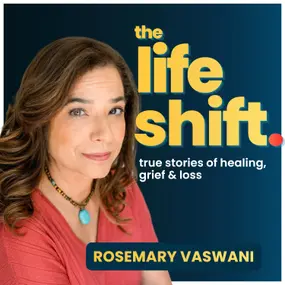
Born and raised in New York and Puerto Rico before making Los Angeles home, Rosemary Vaswani is an actress, author, and storyteller whose work explores love, loss, resilience, and reinvention.
Currently recurring on Paramount+'s hit series Landman under her stage name Rosemary Dominguez, she portrays Isabel, a woman whose husband, son, and grandson are tragically killed in the series' opening episode.
Rosemary has been writing and performing stories since her teenage years, from stage competitions to Los Angeles’ The Write Club, where she shared new work at Improv Olympic in Hollywood, as well as True Story at the Ensemble Studio Theater in Atwater Village.
Her debut poetry memoir, When I Press Stop: A Memoir of Loss (Finishing Line Press, October 23rd, 2026), chronicles the heartbreaking loss of her husband to Creutzfeldt-Jakob disease while raising their teenage daughter. Told through lyrical poetry that unfolds like a novel, the collection offers a deeply personal yet ultimately hopeful exploration of grief, healing, and choosing life after profound loss. The manuscript was named a semifinalist for the Donna Wolf Palacio First Book Poetry Competition.


