Rock Bottom: Where the Most Fulfilling Life Began
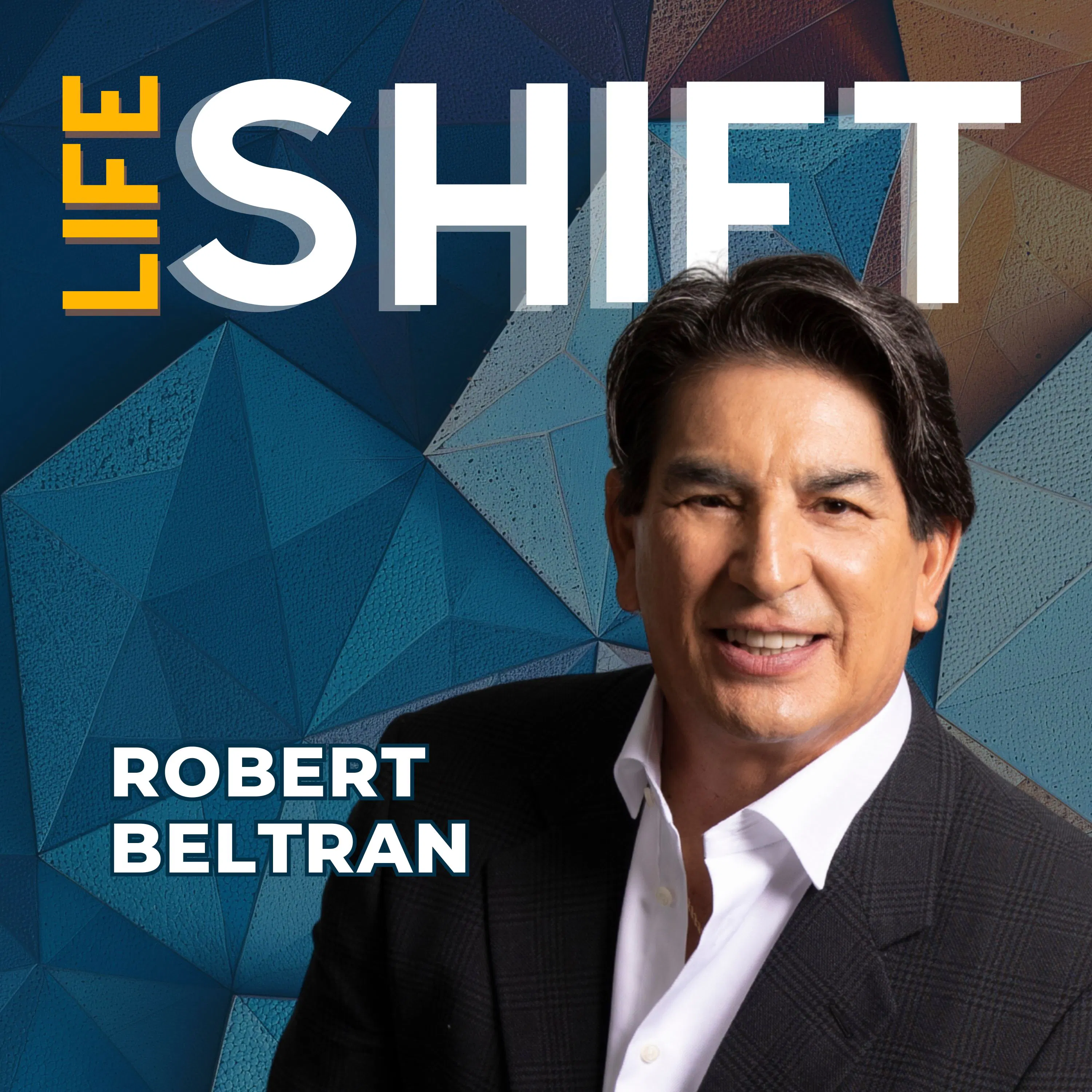
After an accident ended his surgical career, a doctor faced opioid addiction, brutal withdrawal, and a lost sense of self. How he found purpose again.


 Goodpods
  Podchaser
  PocketCasts
  RSS Feed
 Key Takeaways
- Robert R Beltran spent over three decades as a successful surgeon before an accident and subsequent medical complications forced him to confront the loss of his career and identity.
- The pressure to maintain a life built on high achievement can often lead individuals to hide from underlying fears and develop hidden struggles with prescription painkiller addiction.
- Facing rock bottom, including eight days of rehab and intense withdrawal, ultimately opened the door for Robert R Beltran to find a more fulfilling chapter in life.
- Rebuilding after addiction involves choosing not to return to the former career that once defined you and instead discovering new avenues for purpose, such as founding Recomnd Nutrition.
There is a version of you that other people count on. The one who shows up, who fixes things, who holds the whole thing together. So what happens when that version can no longer do the thing that made it yours?
Robert spent thirty-two years as a surgeon. Then an accident took his hand, and the surgeries that followed took something he never expected to lose. First his career, slowly. Then, quietly, his footing. What he thought was control turned out to be an addiction, and the person who saw it clearly was the one who loved him most. This is a story about the identity we build to survive, and what is left of us when it falls away. It is also, gently, a story about what grows back.
Robert does not wrap his hardest years in a neat bow. He sits with the darkness, the withdrawal, the fog that made getting out of a chair feel impossible. And then he tells us what he found on the other side, and why he believes his worst chapter was the one that wrote his best.
What You'll Hear
- Why success can become a place to hide from the fears we never dealt with
- The moment a wife's ultimatum became an act of love
- What eight days of rehab and seven weeks of withdrawal actually feel like
- The brain fog that no achievement could push through
- How a packet of five herbs reopened a door he thought was closed
- Choosing not to return to the career that once defined him
Guest Bio
Robert R Beltran MD, Pharm D, FACS. Doctorate degrees in medicine and pharmacy from the University of California at San Francisco Medical Center. Fellow of the American College of Surgeons. Double board certified by the American Board of Otolaryngology, Head and Neck Surgery and the American Board of Facial Plastic and Reconstructive Surgery. Surgical practice for 31½ years, performing 14,000 surgeries. Founder, CEO and Chief Formulator for Recomnd Nutrition. www.recomnd.com
--
Listen and follow: www.thelifeshiftpodcast.com/follow
Subscribe to the newsletter: https://thelifeshiftpodcast.beehiiv.com/
--
losing your identity after a career ends, opioid addiction recovery, surviving withdrawal at home, prescription painkiller addiction, finding purpose after addiction, rebuilding after rock bottom, starting over later in life, when your work is your identity, hope after addiction, healing after loss of self
You Might Also Like:
Learn more about your ad choices. Visit megaphone.fm/adchoices
Frequently Asked Questions
Who is Robert R Beltran?
Robert R Beltran is a former surgeon with doctorate degrees in medicine and pharmacy who practiced for over 31 years before transitioning to become the founder and CEO of Recomnd Nutrition following a life-altering accident and recovery from addiction.
What is the episode 'Rock Bottom: Where the Most Fulfilling Life Began' about?
This episode of The Life Shift podcast features guest Robert R Beltran discussing how losing his surgical career led to prescription painkiller addiction, hitting rock bottom, and ultimately finding a more fulfilling life on the other side of recovery.
How did Robert R Beltran overcome his addiction?
After receiving an ultimatum from his wife, Robert went through eight days of rehab followed by seven weeks of withdrawal at home, eventually finding a path to healing and starting over.
Matt Gilhooly (00:00)
I think we all build a version of ourselves to survive something. Mine came from losing my mom when I was eight. My guest today built his with a scalpel. Thirty-two years as a surgeon, hundreds of lives saved. From the outside, a life that most people would call complete. Then one accident in 2011 created major issues with his hand, his knee, and nearly his career. The surgeries that followed gave him something else too, an addiction that he never saw coming. For two years,
Robert hid it well, and then his wife saw what he couldn't admit and gave him an ultimatum that put him in rehab within two hours. What came after wasn't simple. It was withdrawal, brain fog, and the loss of an identity he had spent decades building. And somewhere in that fog, an answer showed up that had nothing to do with anything he had been trained to believe in. This is his story.
Dr Robert R Beltran (00:52)
I got to a point where it just was something I desired. You know, it gives you a sense of mild euphoria and you think you're in control, you really do. You think you're control you're in control, you're maintaining well. but my wife was well connected to me and she saw something totally different.
Matt Gilhooly (01:46)
Hello, everyone. Welcome to the Life Shift Podcast. I am here with Robert. Hello, Robert.
Dr Robert R Beltran (01:51)
Hi, how you doing today, Matt?
Matt Gilhooly (01:53)
Doing pretty well. Thank you for wanting to be a part of the Life Shift podcast. I was telling you before we got started at how much this journey has like kind of healed me, if you will, of this, you know, when I was eight, my mom was killed in a motorcycle accident. And that line in the sand moment really left me wondering how other people deal with moments like that. Whether they're intentional, whether they're forced upon you. And so now I just have this.
beautiful pleasure of talking to people like yourself from all over the world about sometimes very deeply personal moments and really finding how everyone's story has a little bit or a little piece of it that resonates with me and makes, you know, heals parts of me that I didn't really know existed. So before we even get started, thank you for just being on this journey, this healing journey that is my own as well.
Dr Robert R Beltran (02:45)
Hey, I'm thankful, I'm appreciative and I'm honored. Thank you very much.
Matt Gilhooly (02:48)
Wow. I appreciate that. So before we get started, maybe before we get into your story, can you tell us who you are in 2026? Like how do you show up in the world? How do you identify these days?
Dr Robert R Beltran (03:00)
Yeah, I am absolutely my best self as we as we sit here talking. It's been a journey. It's been a journey. But as we speak, since twenty fourteen, my life has just been full of passion. been very, very productive, it's been fun, that's been exciting. And not that it wasn't before, but now it's at a magnitude that I never was able to appreciate before. My relationship with my wife has never been better, and it just seems that every year that we're together
It gets better and better. We've been together now for fifty-three years. yeah, I'm just so happy. it's it's been a good life. I look back on it now and all I see is it's been a good life. I've been very fortunate. Like most people, I've had a lot of obstacles and pitfalls, but I was able to survive those and move forward. And in fact I think with this last episode that we're gonna talk about, I actually
created a situation for myself where I allowed myself to actually thrive. So like I said, I'm really happy, really proud and I I just couldn't be more thankful or more humbled by by my life as it sits now.
Matt Gilhooly (04:05)
That sounds pretty ideal. That sounds like good and something that we could all aspire to, maybe. But
Dr Robert R Beltran (04:12)
Well, one thing I do wanna say, I have my wife has lost two brothers and she lost her parents, both of who were elderly. I've lost my parents, they were elderly, but other than that, I've never had a significant personal loss in my family. I haven't lost a brother or sister, in fact, even though I'm the youngest, they're all still alive. My children are still alive and well, and my grandchildren. So I'm not one of those people that's had one of those
sentinel moments in life where they've had such a such a dramatic loss that it's affected them so severely. My wife was nineteen and her brother was twenty one when he passed away in a car accident. And I witnessed how much it it was emotionally traumatic for her. And I basically witnessed a whole lot of happiness and joy leave every member of that family because I was very intimate
within the family at that point in my life. And it was a difficult thing for me to witness as an outsider.
Matt Gilhooly (05:15)
Yeah. Yeah. I mean, that is that is something important to think about. Like I don't remember life without big loss. And so like my my lenses are a different color. Not to say that I don't enjoy what I'm doing and where I am in life, but it took a long while to get here. As you know, you mentioned, you know you went through pitfalls and and other things like most other humans and you found this way to be on the thriving side of it. So I didn't want to make it sound like everything was
Perfect. and I don't want it to also seem like everyone has to have some big loss for for me to understand them. I think it's I think what you're saying is is really something we should all aspire to, is to really enjoy our life at whatever point we're in. And sometimes it's so much easier to choose the struggle side, choose the hard side, choose the negative side.
Dr Robert R Beltran (06:10)
when when my wife's brother passed away, she was nineteen and and we were we were we were an item then. We weren't married yet, but we were an item. And she's an amazing person, an amazing woman, amazing human being. she was very devastated for about two years. And then we started our family. We got married within that time frame, started our family. And she is one of the most positive
Matt Gilhooly (06:25)
Mm-hmm.
Dr Robert R Beltran (06:35)
and strong people I have ever been around. She just said at some point she just said, you know, that's part of my history now. I miss my brother, but I've gotta give everything I have to my children and my family.
Matt Gilhooly (06:48)
Love that. Well, let's let's dig into your story. I think I I'm really curious of what the before, we'll call it the before version of Robert is. So why don't you paint the picture of your life leading up to this life shift moment that we're gonna talk about today? And feel free to go back as far as you need to to kind of give us that context.
Dr Robert R Beltran (07:09)
I grew up in a very small town in California, in the central part of California, a small agricultural community. We were very poor, and my dad had suffered a very, a very difficult childhood, and he had a very severe case of PTSD. And he was lost. My dad was lost. he was an alcoholic. and when he was intoxicated, he was very mean.
And so of course, when you go up in that kind of environment, a lot of chaos and it creates a lot of fear and a lot of anxiety. And basically, of course, you develop PTSD at some point. And associated with PTSD comes anxiety to one extent or another, fearfulness, and something I'll never forget, this sense of impending doom always seeming to lurk.
above you or around you. And of course, you know, you don't have the self esteem, the self confidence, the self-image that you should have. In spite of that, I was always an excellent student. And I was all also a an excellent athlete. And because of those two situations, I had a lot of positive feedback growing up. being on a lot of championship teams and
you know, being recognized for my achievements in school, that created a lot of reinforcement for my confidence and my how I perceived myself, if you will. And with that in mind, you know, I matriculated to pharmacy school. I went to junior college for two years, and then I matriculated to pharmacy school, obtained my doctorate in pharmacy school.
Matt Gilhooly (08:33)
Mm-hmm.
Dr Robert R Beltran (08:52)
far in pharmacy. And then I went to medical school and obtained a doctor's degree in medicine. I then did a very rigorous five year residency and two years of general surgery and then three years of otal laryngology head next surgery at Los Angeles County USC Medical Center where anyone who's in the medical industry, medical community knows what a busy place that has always been because it is the main county hospital.
Matt Gilhooly (09:05)
Wow.
Dr Robert R Beltran (09:20)
for the greater Los Angeles. So it was non stop of of people coming through, very busy, very busy for five years. And after that I started my practice in Orange County where I practiced as a double boarded surgeon for thirty two years and very, very very proud, very, very happy with with the career I had.
Matt Gilhooly (09:38)
Cheese.
I'm pretty curious about that your academic achievements and your athletic achievements. And only because I think of my own experience. And I know after my mom died and when I was now my dad was my only parent, I started doing better in school and better in other things because I had this fear that he would also leave if I wasn't good enough. He would never have done that, but if I wasn't perfect, he was going to leave.
Do you think do you were were you always a good student or do you think you were like being a good student or good at athlete so you could get that recognition elsewhere, but also to not have that doom come at home if you like you were to cause a problem because you weren't good?
Dr Robert R Beltran (10:28)
You know, the rock in my early childhood was my mom. My mom was a lot like my wife, just a rock solid human being. Never I never heard her curse. She never drank, she never smoked. Sh very rare does she raised her voice. She just had a lot of positive things to say, and I learned later that a lot of those things that she used to quote us were actually from Proverbs. So she memorized these verses and used to tell to us.
in hopes that they would have a positive effect on our mindset, of course. I was always a good student. My mom and my sisters used to reiterate from as far back as I can remember, you're very poor, but you have an opportunity to change your life with your education. So don't waste it. Take advantage of it. And so that was kind of the mindset I grew up with, if you will.
Matt Gilhooly (11:16)
Mm.
Okay. So there wasn't necessarily like a fear of your father if you weren't good in those areas, as maybe I gave myself unnecessarily.
Dr Robert R Beltran (11:32)
Yeah, my poor dad had so many of his own issues that he was very hands off with us. He was very hands off. Let me give you example. he never went to any of my sporting events. And it's not that I don't think he didn't want to, it's just that I think he felt he didn't fit in if you know, and I think that he didn't wanna cause any distractions for us. But yeah, that's kind of what what I had to deal with as a kid.
Matt Gilhooly (11:36)
Got it.
Yeah. And then you absorb some of like I guess some of that experience just naturally growing up with with someone like your father around that you carry with you, or did were you able to kind of shed that along the way?
Dr Robert R Beltran (12:12)
I'm not quite sure I understand exactly the what you mean by that.
Matt Gilhooly (12:14)
Kinda like his
his tendencies to lean towards, you know, behaviors that aren't fantastic or things that cause fear or worry or did like that home life of like what you were describing your father kind of there as, did that seep into you?
Dr Robert R Beltran (12:34)
You
know, I always I always had a little bit of that in me, unfortunately, you know, because I suffered from PTSD also, as I told you. You know, you start as you start moving up the ladder educationally, academically, in business, professionally, course you start patting yourself on the back here and there. You start feeling good about yourself. Hey, that was I made it to pharmacy school, I made it to medical school, my practice is thriving.
Matt Gilhooly (12:36)
Okay.
Dr Robert R Beltran (13:01)
You know, you pat yourself on the back a little bit and you forget all about the issues that you that are there lurking. The anxiety, the fear, the impending sense of doom, the the the the diminished self-confidence, self-esteem. So things I've alluded to earlier, they were always there, but they were being masked by all these successes I had as I climbed up the ladder. But they came back. That's part of my story.
Matt Gilhooly (13:24)
That's part of your story. I know. And
I the only reason I harp on that is like I felt like I was outrunning, like I was trying to outrun a lot of those things via successes or doing better or getting promoted or whatever it was next in my life/slash career. And you were doing so much that everyone on the outside would probably see, like, you know, like that's amazing. No one would anticipate that you would have all these these fears or
anxiety or the things that come along with that. Do you think you were outrun or trying to outrun those with that mask?
Dr Robert R Beltran (13:59)
No, you you nailed it. Absolutely. Exactly. And doing everything I could to to try to put it on the back burner. To try to not remember that it was there, you know. But but from time to time, of course, things would happen and you'd realize, well, wait a minute, I I think why am I being so fearful? Why am I so anxious? Why am I down on myself? You know, why is my self confidence lacking? So every now and then it would poke its head up, rear its head up, if you will, but for the most part, because I kept
Matt Gilhooly (14:01)
Okay.
Yeah.
Yeah.
Dr Robert R Beltran (14:29)
having accomplishments it it was kind of in the rearview mirror, if you will.
Matt Gilhooly (14:33)
Yeah, so you were you were you said thirty two years in practice? Wow. That's it's amazing.
Dr Robert R Beltran (14:38)
Yes, I practiced for thirty two years. And
I practiced I kept my practice open until twenty fourteen, but I had this traumatic injury late twenty eleven, late November twenty eleven, where I sustained multiple injuries, a c a severe concussion. I shredded the ligaments in my right knee. And and the worst part was I had a deep
cut my right hand, my dominant hand, that tore through two tendons and a sensory nerve that kind of created a lot of numbness from the mid part of my hand toward the thumb. So it it was problematic, you know, being a surgeon with that type of injury. when I first had the injury, I thought I was gonna be able to return maybe in four to six months.
And the way I kind of geared myself. But in fact, I ended up having eight eight major eight surgeries, five of them major, in an eighteen period eighteen month period of time. And right about the fifteen month period, I realized, you know, I'm still rehabilitating from these injuries. I don't think I'm gonna return as a surgeon. So in conjunction with being disappointed.
That I probably wasn't going to be able to continue with my surgery career. I also became addicted to oxycontin. You know, it was the weapon of choice, if you will, that they gave me to deal with the the pain management after a major surgery. And I did become addicted, you know, despite the fact that I'm a pharmacist, despite the fact that I'm a medical doctor, and I know all the pitfalls associated with something like oxycontin.
Matt Gilhooly (15:56)
Yeah.
Right.
So common.
Dr Robert R Beltran (16:21)
I still allowed myself to become addicted.
Matt Gilhooly (16:23)
You're human.
You're human, you know? Human first. And addiction is is something that sometimes we can't stop from happening. And and especially someone going through what you were going through. I think it's just so common, unfortunately, that that that's the only reprieve. And then you just get would you say you got used to it? You just wanted it? Like how what was that addiction like for you?
Dr Robert R Beltran (16:49)
Yeah, I I got to a point where it just was something I desired. You know, it gives you a sense of mild euphoria and you think you're in control, you really do. You think you're control you're in control, you're maintaining well. but my wife was well connected to me and she saw something totally different. Sh she saw that my decision making was erratic.
That my behavior had changed dramatically. I was always someone who got things done. I was a doer, very responsible, very active. And I started spending hours and hours in our master bedroom. We have a lounge area, and I started spending hours and hours in in any given day just sitting there watching television.
or reading something. And she knew that wasn't who I was, that I was y you know, always doing something very positive and constructive, whether it be something pertaining to my family or something pertaining to my practice or something pertaining to my business. I was always doing something very practical and and constructive. And here I was spending hours and hours basically doing nothing. Just lounging and enjoying the
the calming effect and euphoria from the oxycontin. but what it did is the fact that I was no longer practicing and the fact that I was addicted to the OxyContin was sending me into a doubt downward spiral, if you will, as it pertains to my emotional well being, my mental well being, and my sense of who I was.
Matt Gilhooly (18:35)
Yeah.
Dr Robert R Beltran (18:36)
I didn't realize that being a surgeon was so important for my ego and toward the self confidence, the self esteem, the self image that I had recreated for myself as part of that whole part of my life, if you will. right.
Matt Gilhooly (18:53)
Yeah, I mean it's a huge part of your life too. I mean, I c you can't
not pull some of that into your identity, like and then you can't do it anymore. Like who am I? Besides, you know, a family member.
Dr Robert R Beltran (19:04)
So I guess the best way I
can describe it, I was in a very severe state of darkness and despair. and my wife was picking up on all this. Even though we weren't articulating it at that particular time, she was noticing all these changes I was going through and she knew that I was I was starting to get to a place where I was probably gonna be in trouble and I was gonna do something to injure myself or injure somebody else.
And she just didn't want to be part of it. And so she gave me an ultimatum at w at some point.
Matt Gilhooly (19:40)
Yeah, was that a turning point for you? Was that like a life shift moment for you in which someone gives you the hard truth?
Dr Robert R Beltran (19:45)
Yeah, it was actually
January second of twenty fourteen. I had been addicted to Oxycotton for a little over two years. Toward the last six months or so, maybe a little longer, I really didn't think anybody except the doctors I was getting the prescriptions from knew I was still taking the oxycotton. I really thought that somehow, some way, I I I didn't think my wife knew I was still taking the oxycotton, but she knew.
She knew and she saw what it was doing to me and she was very concerned and she gave me this ultimatum and within two hours I was in a rehabilitation facility.
Matt Gilhooly (20:25)
Good. Yeah. What what was I mean, you don't have to go into super detail, but was it something where it was like you had to make that cho like that was your only choice if you wanted to maintain something? Like w what was that ultimatum really? And that's also your identity. Mm-hmm.
Dr Robert R Beltran (20:38)
Well, she she she was gonna leave me. She said, I'm gonna leave you because I I'm leaving you because I love you and I can
tell you're in a very bad place and I don't wanna witness it anymore. I'm concerned that something terrible's gonna happen.
Matt Gilhooly (20:52)
Yeah. Well, and that would I mean, in my mind, that would be another piece of your identity falling away because of how long you had you know, the life you had built together. Here goes surgery, you're being a surgeon, but also here goes this entire life that I built. So it feels like your only choice is what you what you seemingly chose to do. Would you was it was there a choice in your mind or was it like I this is my only choice? Good.
Dr Robert R Beltran (21:19)
no, there was no hesitation whatsoever. None.
And in fact, I'll I'll tell you a little side story. I had just gotten a new bottle of oxycotton. I had a full bottle of oxycotton in my closet, I never touched that after I returned from rehab. I stayed in rehab for eight days, and what they do is they put clonidine patches on you, and clonidine controls all the symptoms of withdrawal.
So I was thinking this isn't gonna be as bad as I thought it was withdrawing from Oxycotton. And after eight days, they told me the insurance that I had, we had a really good PPO, but they only covered eight days for and you know, it's not that we couldn't a afford it. In fact, my wife wanted me to stay in a minimum of three weeks, maybe a month. it's really what I should have done, but I thought that I'm not having
Too many symptoms of withdrawal. I I think I'm okay to go home. And I ended up going home. And when you go home, they take the patches off of you. And within 36 hours, I knew I was gonna be in a in a very terrible state. Yeah, all the symptoms of withdrawal came upon me, and it was horrible. For seven weeks, I had to basically undergo this withdrawal.
at home and I had to formulate a plan of action for myself because I was miserable. And I tell you what was the most miserable part of it. Not the body aches, not the nausea, not the headaches, but the anxiety. The anxiety and the insomnia almost almost drove me back back to oxycontin, but I just wasn't gonna go that route. I just wasn't gonna do it. I had closed that door, it was behind me and I just did and
Matt Gilhooly (22:48)
Hm.
Yeah.
Dr Robert R Beltran (23:03)
everything I could to e not even think about the oxy cotton I had in my closet. I just wanted to keep moving forward. Excuse me?
Matt Gilhooly (23:09)
I mean, how do you survive that? That's like I
it's I mean, you think of seven weeks of symptoms, I'm sure hopefully by the end of those seven weeks it kind of starts to decrease a little bit, but that just seems really hard to do on your own.
Dr Robert R Beltran (23:25)
Yeah, I had to formulate my own program. You know, I had to take more ad bill than I wanted to. they had given me some Valium because after the concussion I was experiencing dizziness and occasional vertigo. So they gave me that to settle down the the dizziness and vertigo. And whenever I was really, really, really anxious, I just I took a five milligram Valium. You know, I tried not to take it any more than I had to. And then it to help me sleep because I had I had at least
four episodes where I couldn't sleep for three straight days. And Matt, that drives you crazy. That really affects your mind not being able to sleep. And so I also I smoked Indica cannabis to help me relax, to help sedate me and help me sleep. And even though initially I would sleep like maybe four hours, that four hours felt like I had slept for two weeks.
Matt Gilhooly (24:21)
That's good. That's good. And then you and your wife was around while you while all this was happening, or was she letting you do your own thing?
Dr Robert R Beltran (24:27)
Yeah, yeah. She had given
me an ultimatum. She said, you know, I'm gonna stick around because I'm gonna try to help you as much as I can. But if if you get out of line or if you if you if you go back to taking the oxycotton, I'm gonna I'm gonna leave you and we'll see what happens after that.
Matt Gilhooly (24:41)
Yeah.
Did you see this experience? That's a weird question, but did you see this like as a challenge, if you will, as maybe medical school would be, as like something you n you know is gonna be hard but you know you can do it? Or was it just, okay.
Dr Robert R Beltran (24:55)
Absolutely. No, you
nailed it. Absolutely. It was it was a challenge. I didn't know how long that would draw was gonna last, I I kind of guesstimated that it would last somewhere between six to twelve weeks. Fortunately it lasted eight weeks. but it was definitely a challenge. I said, You're not gonna go back. You're you've put it behind you, it's leaving your system. Despite the fact you're going through all this.
emotional and physiological turmoil, don't open that door again. Keep moving forward. Do whatever you can. Try new things to try to maintain and control the withdrawal symptoms. So yeah, that that was my exact mindset. a challenge and keep moving forward.
Matt Gilhooly (25:39)
Yeah, and I mean, clearly you did it. But it feels like as much as you probably still were you, right? Like when you've gone through this withdrawal and you've made it to this other side, did you feel like this was an opportunity or did you feel like this was go back to where you were before? Did like was this a new beginning for you, or was it just let's go back and continue on?
Dr Robert R Beltran (26:04)
So
so where I've taken you now is like to the end of February, beginning of March of 2014. And once I by then I knew the physiological addiction was behind me. I I I just knew the symptoms associated with physiolog physiological addiction were no longer present. But what was present, and we weren't using this term very much back then, was an
Matt Gilhooly (26:16)
Okay.
Dr Robert R Beltran (26:31)
Unbelievably severe case of brain fog. I was mentally and physically stagnant and lethargic. I could not garner enough mental or physical energy to do anything positive and constructive with my life. It was a real struggle just to get out of the chair and walk down the hallway. I had never been to this place before.
And it was very, very concerning and of course I brought it to the attention of my medical team and they wanted to put me on antidepressants. They wanted to put me on mood stabilizers. For my anxiety, they wanted to put me on on Valium or some other sedative, and they wanted to put me on a prescribed sleep aid. Well, I had just come off a narcotic addiction. I know that all of these have significant ev every single
Category of dru pharmaceutical I just mentioned causes some degree of brain sedation, some degree of cognitive impairment, some degree of diminished motivation, and some degree of altered personality. And not only that, they all have the potential to cause dependency, addiction, and death. In fact, I don't know if you're aware, but over sixty thousand people die per year from overdose.
directly or indirectly from the categories I just mentioned. Not a lot and and and then you add to that narcotics, which are responsible for 180,000 people. That's a lot of deaths. And if you ask me, the pharmaceutical industry is being given a big pass as it pertains to benefits versus side effects and complications.
Matt Gilhooly (27:54)
Wow. Yeah, I know.
Yeah.
Yeah.
Yeah. I mean, we're we're in a you know, even at that time, very much a society that most people want an instant fix or a quick fix. And it's a lot harder to think through something that might take a little bit longer or behavior patterns or things like that. At least speaking from my own experience, it was very much
Much easier decision to choose, you know, like, you want to give me that medication? Cool. You know, like that seems like it'll be a quick fix. It wasn't. It didn't do what it needed to do for me, but it seems like that would be the easy choice. But it sounds like that was not a choice that that you wanted to take.
Dr Robert R Beltran (28:56)
No, because I have the insight, I have the knowledge, I have the experience to know you gotta weigh the benefits against the side effects and potential complications. And and it was not appealing to me. It just wasn't appealing. I wasn't gonna go that route. And all my colleagues who I was interacting with, they already knew that I was very anti pharmaceutical for the most part, especially as it pertains to certain categories of pharmaceuticals. finally a Chinese colleague of mine
Matt Gilhooly (28:58)
Right.
And none of them were appealing.
Okay.
Dr Robert R Beltran (29:24)
Who was familiar with Chinese medicine. And in my mind, you know, that's that's ancient medicine, that's archaic medicine. Here I've learned I've been trained and learned in modern medicine, Western medicine. And so I was very hesitant. He said, I think there's some herbs that can help you through this. And so I was hesitant, but eventually I went to this marketplace in Irvine. I talked
I talked to this gal who'd been a pharmacist in China and we talked about what was going on with me and she made some recommendations. I ended up getting a packet with five herbs. And I said, Well, I was hesitant, but I said, What do I have to lose? I don't have anything to lose and potentially everything to gain. That was kind of the mindset when I finally decided to start taking it. Within three weeks, Matt, all of my mental and physical energy
my mental clarity, focus and alertness all returned and then some. So I was I was extremely excited, extremely happy. And then and then three to four weeks later, I started noticing some amazing benefits in the realm of fulfillment during intimacy. And I knew I was on to something really special. I mean I just all of a sudden the light went on and I just became very passionate.
Matt Gilhooly (30:28)
That's wild. Yeah.
Dr Robert R Beltran (30:46)
about studying, researching, learning as much as I could about individual herbal ingredients. And then after that, I started thinking about formulations and try to find ingredients that I thought were complementary with each other and ingredients that were synergistic with each other. And you gotta realize this didn't happen over the course of a week or months. This started in 2014.
And it continues until today. It's now twelve years of of a passion that I can't let go of. I'm I've just I'm learning so much about herbal medicine and everything it has to offer to the public that it just has created a a a fire and an excitement within me that I can't I I haven't been able to contain.
Matt Gilhooly (31:35)
I mean that's great because at the time, right, your your passion, your work, you know, what you were doing was likely no longer possible because of your your hand, right? Surgery and whatnot.
Dr Robert R Beltran (31:48)
You know,
about twenty sixteen, twenty seventeen, I was in a position where I had been practicing with my instruments to see what I could do, even though I had still had some limitations I didn't have before. I had gotten to a point where I felt like if I want to return, I can return now. I feel like I've made enough progress. But one day I looked in my rear view mirror as it pertained to my practice and my career.
And all I saw was a lot of very hard work, a lot of responsibility, and a tremendous amount of stress. And I just decided that's not the direction I want to go anymore. I'm really excited about where I'm at. I'm excited about where I'm going with this passion I have for herbal medicine. And that's the direction I've continued on ever since.
Matt Gilhooly (32:25)
Yeah.
You're like I did that. Yeah.
And this is very ignorant of me, but did your all of your education and background, did that help you in this new passion or was it like a whole new world for you?
Dr Robert R Beltran (32:53)
I'm glad you asked that question. You know, there's a lot of people out there that are recommending this and recommending that. And a lot too many of them come from the world of being celebrities, being influencers, or being highly paid salespeople, talking heads. I during the course of evolving I as I as I propagated through my knowledge and understanding of herbal herbal medications, herbal formulations.
I came to the realization that for health and wellness, it should be a priority for everyone to understand what requirements are necessary for someone to be able to make healthy and positive recommendations. And you know, I think people who are in the the the business of making recommendations within health and wellness have to have a significant amount
of science in their background, especially the biological sciences, have to have a very high level understanding and knowledge of human biology and human physiology, pharmacokinetics, pharmacodynamics, pharmacology, and clinical medicine considerations, applications, and a real good understanding of the effects, which we've alluded to earlier, the positive and beneficial effects versus the side effects and negative effects. So
Matt Gilhooly (34:12)
Mm-hmm. Right.
Yeah.
Dr Robert R Beltran (34:19)
Yeah, that's where I'm at with that.
Matt Gilhooly (34:20)
So the answer is yes. So so you your training and all the things you had done for thirty plus years benefited you in this journey?
Dr Robert R Beltran (34:29)
Everything has contributed to my understanding and knowledge of formulating optimal optimal herbal formulations.
Matt Gilhooly (34:41)
So you're feeling different via, you know, that your first foray into whatever that particular pharmacist recommended to you. You're like a couple weeks in, you're like, What what is life now? This is amazing. Do you then formulate stuff? Are you formulating more stuff to make yourself feel different, feel better and all these things, or is this more for the broader public that you're like that passion brought you?
Dr Robert R Beltran (35:07)
initially it was for me, of course. I formulated a a one shoe with all fits all kind of formulation. A formulation that had twenty something ingredients, and it was tremendous in terms of giving me mental and physical energy, enhancing my mental clarity, focus and alertness, and simultaneously giving me a sense of calm and mood balance because it had Ashwagandha and L theanine in it.
Matt Gilhooly (35:09)
Okay,
Dr Robert R Beltran (35:33)
And at the same time, it was progressively optimizing, improving or or optimizing my my life of intimacy, the benefits of fulfillment and pleasures associated with intimacy. And so I knew I was on to something very special. And I decided, hey, you know what? This is helping me so much. I'm gonna I'm gonna create something that I can take to market. And
When we first put our team together, one of the first concerns my CFO had was, y you know, you have this one product, it's a it's a one shoe fits all, and I think you're gonna confuse the public. You know, if you could find a way to go back to the drawing board and isolate products that are more important toward emotional and mental well being, energy, as opposed to those that are more involved.
for sexual well being for both men and women, I think that would be very helpful. And by that time, Matt, I had I had such a good understanding of a large number of herbal ingredients that it wasn't that difficult for me to either on paper or creating this matrix of my mind of which ingredients were going to be best for propagating brain health and brain power, as opposed to those that were going to be optimal for sexual wellness.
for men and sexual wellness for females, for women. So I was able to do that. And we did studies and sure enough, I think we've we've created some very, very viable products that are gonna help a lot of people. A lot of people in a lot of different ways.
Matt Gilhooly (37:14)
Yeah. Do you when you sit in your existence now and like your day to day, do you look back on the fact that like all of this comes from an an addiction that you had to a pharmaceutic? Like, it feels like if you didn't have that, you wouldn't have had the ultimatum that you wouldn't do you do you connect any of those or do you think you would have found this part? Okay.
Dr Robert R Beltran (37:38)
No, no, no. All all the time. The
worst, the very worst situation and period of my life led to the most fulfilling, productive, happy and joyful period of my life. I I can't help but think that there's a power somewhere that connected the two, you know, that I just didn't luck out and fall into this wonderful situation.
Matt Gilhooly (37:50)
Right.
Yeah, it's it's really interesting to think about because you in your journey, your medical background and and moving forward, you may have stumbled into this, but I it feels like the passion and the pieces that that you have now for it probably wouldn't have been as intense because you didn't know the value that it helped you in your most dire of moments in which you wanted to feel like a human again without the brain fog, without the other things you were going through. So I bet
those really hard times make
Dr Robert R Beltran (38:40)
Matt, there's no doubt that if I hadn't experienced what I experienced, that I would have not been able to create these formulations because I wouldn't have known how bad my situation was, if you will. Does that make sense?
Matt Gilhooly (38:44)
Yeah.
Yeah.
Yeah, it does. What was your what was your like say twenty years ago, if someone would have said, Hey, take these herbs and it'll help you do this, this, this and this, what would have been your response to that?
Dr Robert R Beltran (39:12)
I would I wouldn't have done it. I know I wouldn't have done it. I wasn't desperate enough. And I had so much belief in Western medicine. I bought in like everybody else has that Western medicine is optimal and that whatever faults it has are minimal. But that just isn't the case, especially as it pertains to pharmaceuticals. I think the pharmaceutical industry how do I want to say this? They have not optimized
Matt Gilhooly (39:16)
Got it.
Dr Robert R Beltran (39:39)
the ability to create products as it pertains to compromising side effects and complications. And that is something they should they should think about and try to go back to the drawing board as it pertains to how they formulate these pharmaceuticals and all the products they use in the process of synthesizing pharmaceuticals that create a lot of problems physiologically for a lot of people. And the herbal ingredients
Matt Gilhooly (40:06)
Yeah, and I I think your approach
Dr Robert R Beltran (40:09)
Go ahead, I'm sorry.
Matt Gilhooly (40:10)
I was just gonna say, I think your approach is different. Cause there's an intention there versus some of these phar pharmaceutical companies. that I think the goal make people feel better, but I think there's some bad intentions that get smooshed into some of those bigger companies versus the way that you're approaching what you're trying to put together is truly more about helping other people than it is about
I mean it'd nice to make money from it, but it feels like you wanna help people feel this way. You wanna help people feel a certain way.
Dr Robert R Beltran (40:42)
You you know, as a surgeon, most of especially most of these wereas when I was a resident surgeon, I saved over two hundred lives. They were on the verge of death. I mean they were really close. We're talking about seconds to minutes. And you know, that's a very, very emotionally overwhelming feeling. You know, but at some point you come to the realization it's something very special for your for you, for the patient and for God.
You know, and you don't feel the need to have to share it with anyone else. But it's it's a tremendous it's a tremendous experience to to to have that, if you will, as part of who I am. And it it it's it's very rewarding emotionally. But I came to the realization when I started having first hand knowledge of the benefits that herbal
formulations had and all the different emotional and physiological benefits that they could create that I came to the realization I can help a lot more people than I could as a surgeon. As a surgeon, as I said, I saved 200 lives. I know for a fact that with these products we're creating, we're gonna s help a lot more people survive.
We're gonna have help people who are overwhelmed in their responsibilities, in their job, overwhelmed, overworked, overstressed. We're gonna help people in that category revive. And then people who have it all going, you know, they have a great life, they have a great job, great income, great relationships, but we're gonna help them thrive and take it to the next level. And these are just these are not just theories, these are facts. These are facts. You know, when you can optimize
the your intimacy and optimize your your emotional state of mind and create energy that gives you the ability to go into the gym every day these are things that are gonna help you long term I don't care who you are it's gonna help each and every individual long term in terms of their their aging, the healthy aging, preventative health and both
Potentially their longevity.
Matt Gilhooly (43:01)
Yeah. No, I think it's a I think it's a beautiful mission and I love that it comes from such a passion that you got or that lit was lit inside of you as like this fire after you experienced it yourself firsthand. I th th that's where the best things come from. I mean I feel like you're it's it's so much more of a purpose than it is like a goal, if you will, in my mind. Would what would you say is like if you could name the
Biggest difference between you now and you like twenty eleven around you know, like when you were starting to take the oxy.
Dr Robert R Beltran (43:41)
Well, like I told you, I always had I always had a certain amount of anxiety, of fear, impending sense of doom. And when things didn't go as well as I would have expected them to, I found my confidence, my self esteem, my self image lacking in a very big way. Now I have no fear, I have no anxiety. My confidence, my self esteem
Matt Gilhooly (43:46)
Mm-hmm.
Dr Robert R Beltran (44:08)
my self image has never been better. like the guy I see in the mirror. I feel like he gave everything he had to making not only his life, but the life of many, many others that improve in a very big way. And I'm thankful for all the opportunities I ha I've had, all the experiences that I've had. And I'm just in a very good place. And
You know, it could all change tomorrow, Matt. You know, something dramatic could happen. Something could happen to someone in my family who I love dearly and everything would change in a very dramatic manner. But as we sit here talking, I have never had a better mindset emotionally and I am so active physically. I'm just so thankful, appreciative, and really humbled by where I'm at in life.
Matt Gilhooly (44:54)
Yeah.
I mean, that's great. Do you have bad days or is that allowed? Do you have bad days?
Dr Robert R Beltran (45:01)
I'm sorry. I'm sorry.
I have bad days, but you know, they're they're nothing like what they used to be. Yeah, nothing like what they used to be. I I I I maintain a a certain level of calm and and and and how do I wanna say it? I I understand things better. I I I I work through things, but I process things so much better now than I did when I was much younger. Yes.
Matt Gilhooly (45:06)
Okay.
Right. Okay.
Yeah. Self awareness, yeah.
Yeah. I and the
only reason I ask that is sometimes people are like, Yeah, everything's so wonderful. And I was like, Well, I think sometimes we're all still human and bad days happen. And for me, it was like growing up when I had a bad day, it was a shameful thing. I shouldn't be sad. I shouldn't be this, I shouldn't do that. Now, when I have a bad day, it's like today is not a great day and that is okay.
And here's how I'm gonna move through it, and it won't be bad all the time, and it it will return to a good space in the future. And so for me, it was very much self-awareness.
Dr Robert R Beltran (46:01)
one thing I have always done my entire life is I've always exercised, even when I didn't feel like it, even when I didn't want to. I have always exercised, especially when I felt some degree of stress or duress, or I was for example, when I used to have really, really ba busy days in the operating room, you know, where I'd start at seven, eight in the morning and
not finish up until six, seven, eight in the evening. One of the first things I always did was I'd I'd go to the gym and have a nice hard workout. And that's always helped me tremendously. And you know, I'm sure you're aware, one of the things that happens with exercise, and the more vigorous the more this occurs, is we flood our bodies with endorphins, which are the body's natural opioids, and feel good neurotransmitters, dopamine, serotonin,
GABA and to a lesser degree, norepinephrine. So yeah, I I I wasn't aware of that way back, but somewhere in the middle of pharmacy school or medical school, I learned this and I continued with it. And so whenever I think I'm on the verge of having a bad day, I'll either hit the floor and do a su you know, do forty or fifty push-ups two or three times. Well, I'll go get on my elliptical trainer and just go hard for twenty minutes.
That that's just sort of a mindset that I've had since since I was a young guy.
Matt Gilhooly (47:25)
Yeah.
That's great. I mean, I think that's very healthy of you. Makes sense for for what you're what you're going through now. If you could if you could sit with the Robert that was going through the insomnia and all the pieces during that withdrawal period, is there anything that this version of you would want to say to him?
Dr Robert R Beltran (47:46)
I say I'm very proud of you. You persevered. You showed the type of resilience and determination you have and the love you have for your your family and for yourself. So that that's that's what I would say.
Matt Gilhooly (47:48)
Hmm. Yeah.
Yeah. No, I think that's beautiful. If people are super interested in what you're doing and your story and reaching out to you and connecting with you, what's the best way to find you, find get in your orbit? What's the best way?
Dr Robert R Beltran (48:14)
Well, first of all, I love talking to people. I love talking to people and find out what their issues are and making whatever recommendations I think are pertinent as it pertains to their particular situation because we're all different. And the the other thing is we've created a wonderful website that has a lot of really useful and positive information as it pertains not only to our products, but more importantly, I've written blogs on a lot of different topics.
such as the what I consider to be concerns people should have for the pharmaceutical industry, concerns people should have for the nutraceutical industry as it exists today. Concerns I have about bold claims being made on social media that either there isn't scientific data to support it, or the medical community has studied it extensively and does not agree or support what's being propagated.
so yeah, I there's a lot of really good information. I'm really happy, really proud. I put a lot of work into those blogs so it can be very helpful for people. that I think just about everybody will find something that interests them in in the twenty or so blogs that we've written.
Matt Gilhooly (49:27)
Great. So we'll put your put we'll put that website in the show notes so people can access it. If are you on social media or any of those pieces for people? Okay.
Dr Robert R Beltran (49:36)
We are. We're on social
media. We're we're but the social media thing is more making people aware of our product line and what they can you know, the the benefits and whatnot. but I am gonna start some social media conversations ar articulating what I think are topics of importance that everybody should be aware of and concerned about.
Matt Gilhooly (49:56)
Send them to your website and hopefully that bounce bounces them out to different places where you are. I just really encourage people listening. If something in Robert's story like resonated with you, or you've gone through something similar, or maybe you have an opposing thought and you just want to share that and have in conversation as humans should, I encourage people to reach out and just engage in conversation. I think the more that we can do that and hear from other humans and connect.
in ways, not just agree on everything or not disagree on everything, but just like be humans together, I think the better we all are at the end. So that's what I'm going to encourage people to do, whether you want to want them to or not, I'm gonna at least send them to your website.
Dr Robert R Beltran (50:40)
Well, I appreciate that. I'm very thankful for that. Hey, can I can I give a parting comment to your audience?
Matt Gilhooly (50:42)
And thank you for yeah. Of course,
yes you can.
Dr Robert R Beltran (50:48)
I honestly believe that everyone between eighteen and eighty should make health and wellness their number one priority. And with that in mind, it's important that you exercise on a daily basis, meditate on a daily basis, and start understanding what it means to have a healthy lifestyle, a healthy diet, and how important it is to minimize and or moderate the stress in your life. So go for it.
Matt Gilhooly (51:16)
Mm-hmm. I love that.
Yes, thank you. Thank you for that. And thank you for this conversation and going in all the directions that it went in. I I really appreciate you being a part of this journey.
Dr Robert R Beltran (51:18)
Enjoy life.
Well I thank you for the opportunity, Matt.
Matt Gilhooly (51:30)
Yeah, for sure. And thank you to everyone listening. I will be back in a couple days with a brand new episode. Thanks again, Robert.
Dr Robert R Beltran (51:37)
Thank you.
Robert R Beltran MD, Pharm D, FACS holds doctorate degrees in medicine and pharmacy from the University of California at San Francisco Medical Center. A Fellow of the American College of Surgeons and double board certified by the American Board of Otolaryngology, Head and Neck Surgery and the American Board of Facial Plastic and Reconstructive Surgery, he practiced surgery for 31½ years, performing 14,000 surgeries. After an accident ended his surgical career, he rebuilt his life and is now the Founder, CEO, and Chief Formulator for Recomnd Nutrition.


