Lemon-Sized Brain Tumor: The Life That Grew After Surgery
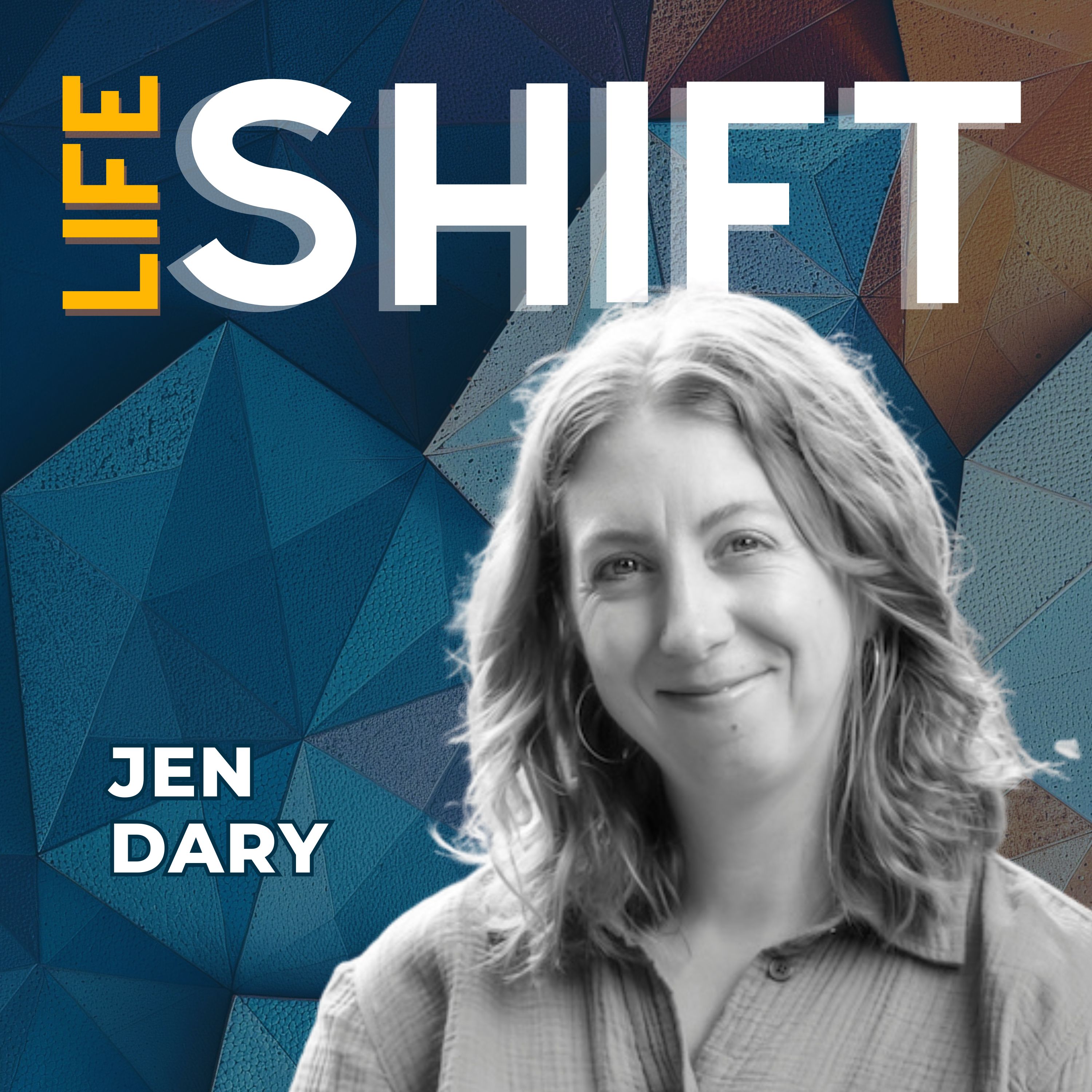
Jen Dary was 35 when a lemon-sized brain tumor changed everything. In this episode, she shares what survival, grief, and radical life shifts really look like.


 Goodpods
  Podchaser
  PocketCasts
  RSS Feed
 Key Takeaways
- A sudden diagnosis can lead to a complete unraveling of identity, prompting a surprising reconstruction of self and purpose.
- Spiritual visions and profound experiences can offer a unique form of healing and a spiritual backbone during medical crises.
- Reclaiming agency, even by considering that one might have 'chosen' difficult experiences, can empower navigating life's challenges.
- Motherhood can provide unexpected grounding and rhythm during personal health crises, forcing a focus on practicalities.
- Releasing an identity that no longer fits and understanding life as a chosen path, rather than something that happens to you, fosters profound personal growth.
Lemon-Sized Brain Tumor: The Life That Grew After Surgery
Some life-altering moments don't arrive with fanfare. They often begin subtly, perhaps as persistent headaches you dismiss, or an MRI scheduled amidst the chaos of school pickups and client calls. Then, an unexpected phone call, just minutes after returning home, can quietly rearrange everything you thought you knew about your life.
Jen Dary was only 35, a burgeoning business owner and new mother to two young children, when a neurologist delivered life-changing news: a lemon-sized brain tumor was nestled behind her left eye. What followed was far more than a medical crisis; it was a profound unravelling of her previous identity and the beginning of a slow, surprising reconstruction of who she truly desired to become.
In this deeply personal conversation on The Life Shift Podcast, Jen shares the almost surreal calm that preceded her brain surgery, the powerful spiritual visions that guided her through recovery, and the wave of grief that eventually washed over her in a quiet coffee shop weeks later. She candidly discusses the process of releasing an identity that no longer fit and how she came to view her life not as a series of events happening to her, but as a path she might have actively chosen.
What You'll Hear in This Episode:
- The unexpected phone call that changed everything, and the peculiar stillness that settled before Jen shared the news.
- How Jen channeled her shock into organized planning and action as a coping mechanism during the crisis.
- Profound spiritual visions and experiences that profoundly shaped her recovery and inspired her new book.
- The complex emotions of survivor's guilt, particularly when encountering individuals whose own tumor diagnoses were not benign.
- The significant shift from a Type-A, high-responsibility mindset to a way of living that feels free and unburdened by the need for external permission.
- How the act of writing her memoir became a crucial part of her healing and a way to leave a legacy for her sons.
About Jen Dary: A Journey of Resilience and Creation
Jen Dary is an accomplished author, a highly sought-after leadership coach, a resilient entrepreneur, a brain tumor survivor, a podcast host, and a dedicated mom. As the founder of the acclaimed coaching firm Plucky, Jen has guided professionals from over 200 leading companies, including giants like Google, Facebook, Slack, Code for America, and The New York Times. Her insights have been featured in the Wall Street Journal, and she has appeared as a guest on numerous podcasts, including the prestigious Harvard Business Review's Women at Work. Jen has also contributed her expertise to Harvard Business Review online and was recognized in Harvard Business Review's Work Smart Series. Her creative spirit has also led her to be a resident at the Virginia Center for the Creative Arts, and she remains an active voice in the DC writing community.
Jen's deeply personal first book, "I Believe in Everything: A Memoir of Illness, Motherhood and Magic", is set to be released in January 2026 by Daring House, LLC. She currently resides in Northern Virginia with her husband and their two young sons.
Connect with Jen:
- Website: jendarywriter.com/
- Linktree: https://linktr.ee/jendarywriter
- "I Believe in Everything" Official Website: daring.house/i-believe-in-everything
- Instagram: @jendarywriter
---
Follow The Life Shift Podcast: www.thelifeshiftpodcast.com/follow
Subscribe to our Newsletter: https://thelifeshiftpodcast.beehiiv.com/
---
Keywords: Jen Dary brain tumor survivor, life shift moment, identity after illness, brain surgery recovery, spiritual awakening, finding purpose after trauma, survivor's guilt, meningioma, radical acceptance, living with intention
You Might Also Like:
- From Chronic PTSD to Anxiety-Free Living
- What Happened to You: Breaking the Cycle Sixty Years in the Making
Frequently Asked Questions
Who is Jen Dary?
Jen Dary is an author, leadership coach, entrepreneur, brain tumor survivor, podcast host, and mom, known for her resilience and insights gained from her life-altering experiences.
What was Jen Dary's diagnosis?
Jen Dary was diagnosed with a lemon-sized brain tumor behind her left eye at age 35, which was not cancerous but significantly impacted her life.
How did Jen Dary cope with her brain tumor diagnosis?
Jen Dary coped with her diagnosis by shifting into 'organized responsibility' and focusing on practical next steps, while also experiencing profound spiritual visions during her recovery.
What is Jen Dary's book about?
Jen Dary's book, 'I Believe in Everything: A Memoir of Illness, Motherhood and Magic,' shares her story of surviving a brain tumor, the impact of motherhood, and her spiritual journey.
Matt Gilhooly (00:00)
In April 2016, Jen was 35 years old. She had two babies, a small business, and headaches that everyone kept explaining away. Stress, hormones, new motherhood. And then she had an MRI, and the neurologist called her back 10 minutes after she got home. A brain tumor, the size of a lemon. What Jen made from that moment and the quiet that followed changed everything.
Jen Dary (00:23)
I call my mom to tell her, okay, well, it's over. And while I'm on the phone with my someone's calling on the other line. So I said, hang on, I'll call you back. I think the neurologist is calling. Now I'm in California in New York. When I say that to my mom and she hangs up, she's like, that is not good. The neurologist should not be calling you 10 minutes after you got home. So she's starting to panic where she is.
Matt Gilhooly (00:39)
Mm-hmm.
Matt Gilhooly (00:47)
You're listening to the LifeShift Podcast. I'm your host, Matt Gilhoolie. This show is built around one simple idea, that sometimes a single moment can change how we see everything. Each week, I talk with someone about the moment that shifted their life and how they learned to live differently after it. These are not stories about having it all figured out. They are stories about what it looks like to keep going once the story changes. Thank you for being here. Here's today's story.
Matt Gilhooly (01:19)
everyone, welcome to the life shift podcast. I am here with Jen. Hello, Jen
Jen Dary (01:24)
Hello Matt, how's it going?
Matt Gilhooly (01:26)
you know, it is a Tuesday night and today actually it's in March. So I don't know when people are listening to this. I think it's going to be this summer, but it's in March today. I released a book into the world. So that was kind of fun. It's called Still Here. Yeah. And it's, I've had four years of conversations on the show. And what I did was I've collected kind of like the parts of people's stories that stuck out to me. And it's around their life shift moments, of course.
and how I remember them telling me, and then what I think that could mean for all of us. So it's like 250 pages, but they're short, easy, of, pass through things. So I'm super excited about it, and I'm proud of it. So I did it all myself. It's just independently published, but put it together and designed it.
Jen Dary (02:14)
Matt, well,
congrats on that one, but I'm more excited for the sequel when you could put my thing in it. no, but that's amazing.
Matt Gilhooly (02:20)
fair. Yes, right now it has 100 a little
over 100 stories in it, which I thought was a good first pass. I've had nearly almost 260 now conversations on the show. And so I just want to say thank you for wanting to be a part of this journey. It's kind of weird to say this, but all the conversations no matter what they're about, have healed me in a way that like I didn't know.
Jen Dary (02:31)
Heck yeah.
Matt Gilhooly (02:47)
that version of me or this version of me still needed healing after my own life shift moment. And so it's just been such a pleasure to understand firsthand the power of storytelling. I think on the surface, I always kind of knew, you know, like, logically, I knew there was power in storytelling, but to witness it to be a part of it, and then to feel it myself has been just such a beautiful journey. So I'm excited that you wanted to just
unpack your story in this mad way.
Jen Dary (03:19)
Yeah, I have a lot of resonance with what you're saying about using narrative to work through something. And I think we'll get into that too. So I see you.
Matt Gilhooly (03:28)
Yeah,
well, you know, and I think that for me, I was always trying to find the medium that would work for me and started with writing. I think that was always like something that everything was much scarier in my head. And then when I got it out on paper or even now saying it out loud, I'm like, ⁓ well, it's I can put that together. I can I can move through that differently, but far scarier in my head. And so
Jen Dary (03:53)
Yeah.
Matt Gilhooly (03:56)
This has been just fun to see people telling their story for the first time sometimes and to just you can like witness the weight leaving which is an honor really at that point.
Jen Dary (04:08)
Yeah,
a shift, one might say.
Matt Gilhooly (04:10)
One might
say that. so ⁓ anyway, maybe you can tell us before we get into your story, which has, you know, I'm well aware that you probably have many life shift moments in your life. But before we get into it, maybe you can tell us who Jen is in 2026. Like, how do you show up in the world? How do you identify these days?
Jen Dary (04:30)
Yeah, well thanks for having me again. So these days I would be known as a mom. I have two sons who are 10 and 13 years old. I live in Arlington, Virginia, but I am from New York and then we spent seven years in California. So I'm a little and I run a business called Plucky and Plucky is a leadership coaching and consulting business. So that's going to be 13 years old later this year.
Matt Gilhooly (04:38)
Mmm.
Jen Dary (04:56)
So a lot of people know me as a coach or a teacher of trainings. But the biggest and kind of spiciest way that people know me these days is also as an author. I also just released a book two months ago and it is the story of diagnosed with a brain tumor. It'll be 10 years in April, so in a few days actually. And... ⁓
Matt Gilhooly (05:21)
Spoiler
alert.
Jen Dary (05:22)
Yes, seriously. And so, you know, a really big part of my identity is being a survivor of a brain tumor. It was not cancerous. There's your other spoiler. Thank God. But had enormous repercussions on my life and who I became and how I approached everything really after that time. So I'll also just say that I am
I don't know if you have these moments, Matt, but I do really feel like I'm exactly where I'm supposed to be right now. And that has not always been true. There have definitely been seasons where I felt like I was like off on like the shoulder of a highway or something. Like, where am I going? What path am I on? But today, these days, I'm feeling pretty solid about that and I'm grateful.
Matt Gilhooly (06:09)
Yeah, feeling more aligned, would you say, with where you feel you should be? I think sometimes we should ourselves a lot.
Jen Dary (06:14)
I think so.
Yeah, absolutely. I'm someone who's pretty intuitive and I pay a lot of attention to my energy and you know who I'm spending time with or what I'm spending time on, I guess. And I think it also depends on my children's ages, frankly, but like, or the responsibilities I have in my life. think right now I feel like everything is very lined up with what I would want it to be and
And there's a big question mark moving forward of, you know, once this, I guess I'll show the book, but this is my book called, Believe in Everything, Memoir of Illness, Motherhood of Magic, and some of the magical things that happened during brain surgery. And so anyway, all that to say that I'm on book tour right now. And it feels like bringing my story to an audience of people who probably haven't had brain tumors, but.
Need a little hope and inspiration in 2026 feels super aligned.
Matt Gilhooly (07:11)
Thank you for what you're putting into the world through your experience. think people don't necessarily have to have the same experiences as us to understand the feelings, the emotions, the things that come along with it. And I think that's kind of what binds us together as humans if we allow it to, which is a really beautiful thing because I've heard so many stories wildly different than my own in which I can still.
connect with and understand, like I said, still heals me in some way because, you know, some part of their story just resonated with me or the way they felt about the experience or whatever it may be. yeah, I think, you know, we need more of that and less of putting us in different boxes.
Jen Dary (07:49)
Yeah.
Yeah.
Well, I was thinking of this, you know, I listened to a few of your episodes, now I'm subscribed, so I'll listen to all of them, but I listened to a few of the episodes in the last couple of weeks and I didn't have anything at face value in common with the two that you had in those episodes, but...
I mean, big same. remember reading a book a couple years ago, like a like a memoir, I guess of an astronaut. I read another one of a guy who lost both his legs in the military and was running marathons. Like I am not an astronaut. I am not in the military and I have both legs. But still, there were things in those stories that I don't know that they healed me, although I appreciate your framing of it. I think for me, they inspired me. And so
It wasn't necessarily like filling a deficit. It was more just like a launching. And I don't really want to run a marathon, but I like the idea of being like, hold my beer, we're doing it. And that resonates a lot for me with, yeah, just like hearing other people's challenges and feeling, well, if they could do it, what might I do with that?
Matt Gilhooly (08:53)
Yeah.
Yeah, and sometimes it's really a nice reminder of the resilience of the human spirit and seeing that. I don't know if you felt this way and we'll get into your story in just a second you could tell me. But I think a lot of us when we're in those moments in these life shift these pivotal moments in which our life changes from before and after however many times that happens in our lives. Oftentimes, we feel very alone like
It feels very isolating. feels like, how could I, like, where is the map? How do I do this? How can it ever get better for a lot? I obviously resonate more with the hard parts, but I think you hear these stories and you're like, I could not imagine going through that and taking another step. And then you hear the stories of how they did and how they're seemingly thriving in this new version of themselves. And so that
Jen Dary (09:35)
Yeah.
Matt Gilhooly (09:58)
in itself is inspirational without really them meaning to be like we're just trying to survive. And somehow they got lucky and they did. You know, I say they got lucky because not everyone has the tools to to find that lucky spot of getting through, you know, and so we have to honor those people that just weren't equipped to move through as well. So anyway, went off on this, this beautiful tangent, which I think is super
Jen Dary (10:08)
Yeah.
Absolutely.
Matt Gilhooly (10:27)
important to talk about, but I do want to talk about your story. to set us up, maybe you can paint the picture of who Jen was leading up to this spoiler alert you already told us, life shift moment. Tell us who that before version of you was.
Jen Dary (10:38)
You
Yeah, so I'll take us back literally 10 years 2016, April 2016, and I had a three year old and an eight month old. So I was I had pretty much just, you know, given birth eight months earlier. I had this little fledgling business that I was doing two days a week when I could have daycare for the boys. And at that point, I think, you know, it was a
I was consulting, I was doing a version of coaching mostly for people in the tech industry. But in both those cases, it was like, it felt really early days. was early days of being a parent. Like even at three years old, you're barely really, or at least for me, I was not, I didn't really know what I was doing. mean, you you're just like stumbling like, well, they're still alive, you know, like there's, don't know. So was so early days as a parent.
Matt Gilhooly (11:29)
I don't think any parent does.
Jen Dary (11:37)
and that identity of mother and then working mother. And then it was also super early days of running my own business. We were also pretty newly in California. We had moved there in 2014. So there's just a lot of like newness. And I guess what I mean is like unrootedness. But you know, the eight month old was getting bigger and things were moving, but I had headaches and I was...
constantly going to the doctor, feeling like I was a pain in their ass, saying like something's... Yeah, no, I didn't always have them growing up. They were getting worse, meaning that almost every afternoon I was taking Advil. There were other symptoms, but again, I had just had a baby. So you're like all...
Matt Gilhooly (12:08)
Was it new? Like new headaches or did you always have them growing up?
Jen Dary (12:26)
janked up, you know, like, who knows, you're not feeling great. And that's what everybody kept saying. Well, you just had a baby, you have a small business, you're stressed, you're a mom. wasn't only headaches, it was like also other weird symptoms, but nothing I would have known to put together. So for example, would notice that my eyes would get teary sometimes, like super teary, especially my left eye. And I was just like, I don't know, maybe allergies, you know, just like a whole bunch of stuff. And I also, Matt, wanna be really clear that
almost definitely anybody listening to this podcast does not have a brain tumor currently because sometimes I describe some of these symptoms and sometimes I feel like there should be a warning on the cover of the book to this end because I think it can start to you can start to be like my gosh I've had headaches I have allergies you know like maybe there's something going on and by all means get it checked out but anyway point is yeah
Matt Gilhooly (12:57)
Mm-hmm.
Yeah.
Were you someone were you someone though
before this like growing up or even in your 20s? I don't know how old you were. But in your teens and 20s? Were you someone that would dismiss kind of how you were feeling and write it off as such? were you someone that was always going to the doctor to check out because you were worried that you were sick? Where were you on that that spectrum?
Jen Dary (13:24)
Yeah, I was 35. Yeah.
No.
Great question. Nope, never worried on big levels. I grew up, my mom's a nurse. She's now retired, but she was an oncology nurse. So I grew up hearing about terminal illness. I was a candy striper at the hospital. I wasn't only working with patients who were in serious illnesses. I was also like wheeling people to.
Matt Gilhooly (13:42)
Okay.
Jen Dary (14:01)
you know, new babies out to their cars, like, you know, stuff like that. So I had familiarity with hospitals. It wasn't scary to me really that setting, but I never I think that what I was perceiving back in those moments was the challenges were having two babies and trying to figure out how to build that business. Like those were the things on my radar. Health, this was irritating these symptoms. It wasn't scary. I wasn't
Matt Gilhooly (14:02)
Mm-hmm.
Mm-hmm.
Jen Dary (14:31)
paranoid about it, nothing like that. And so I kind of advocate for myself enough where eventually some doctors like, why is nobody telling you to see a neurologist? I'm like, I don't know, first I'm hearing of this. And so I get into the neurologist. Again, same thing. You're probably stressed, you're nursing, probably related to hormones, like just all this crap and...
And like on some level, I of course think this is like horrifying that nobody figured this out faster, but on another level, I was 35, I was in good shape, I was healthy and again, had a lot of things to live for and good stuff going on. And I don't think that I really expressed how concerned I was. Maybe I didn't even really know, but all that said, eventually I get referred for an MRI, which is, know, like kind of like a type of X-ray, let's say of my head.
that was specifically like, well, let's just make sure it's nothing structural by which they mean something like unknown in your head. so this was April 8th, 2016. And I had a really early appointment like seven in the morning. So I go, they take pictures. read about this in the book, but they put me in the MRI tube, which is like a skinny little thing, you know. And after a couple of pictures, then very nice gentleman who was doing the pictures.
pulls me out again and he says, something's wrong with this machine. have to take you to the one across the hall. Now looking back, I realized he saw a very large brain tumor and was like, we're gonna need the big guns here. And I think about his day so often, Matt, honestly, like what was that like for him to get me out, walk me across the hall?
Matt Gilhooly (16:05)
Hmm.
Jen Dary (16:16)
I mean, I'm like, thanks so much, man. This is not as scary as I thought to be in the tube. I mean, he has to maintain total chill, right? Anyway, no. Exactly.
Matt Gilhooly (16:23)
Right.
Because he's not allowed to tell you anything, right? Because they're just the technicians, not just the
technicians, but they are technicians and they're not allowed to tell you what they see.
Jen Dary (16:33)
Correct.
Meanwhile, we're like five minutes in you know, there's like a whole bunch of other pictures to take so they put me in this other room and takes a bunch of pictures and then the next time they pull me out another person's in the room this woman and she's there and says ⁓ are you having headaches, sweetie? And I said, I don't know. Maybe I'm my wisdom teeth are coming in, know, like this is how far off I am from what ends up happening and Anyway, eventually they finish
I leave, my sister drives me home and like I call my mom to tell her, okay, well, it's over. And while I'm on the phone with my someone's calling on the other line. So I said, hang on, I'll call you back. I think the neurologist is calling. Now I'm in California in New York. When I say that to my mom and she hangs up, she's like, that is not good. The neurologist should not be calling you 10 minutes after you got home. So she's starting to panic where she is.
Matt Gilhooly (17:23)
Mm-hmm.
Jen Dary (17:31)
And so I'm like, oh, hey, you know, how's it going? And he says, like, I'm calling to tell you, we found a really large brain tumor and we can't believe you're functional, but it is the size of a lemon and it is behind your left eye and it's putting pressure everywhere in your brain. And it's like those little eye teary moments that I mentioned, those are tiny seizures that you're having and
Like, and, and, and, and I am like, huh? Like, what are you talking about? You know, it was like, I think you called the wrong person. Like it was that completely unplanned, shocking news. And this is, you know, we talk about what's the moment. What, I mean, that's the moment, right? This phone call. I remember I grabbed some Post-its and just started writing.
Matt Gilhooly (18:08)
Right?
Jen Dary (18:28)
what he was saying, because I was like, I wasn't crying or freaking out. was just like really like, what? You know, like, what are you talking about? So I'm like taking these notes. he was like, you're going to need to have brain surgery like real fast. This is not good. You should see a neurosurgeon. I don't know. He gave me a few like directions and then he starts to like wrap up the phone call. And I'm thinking, whoa, like you cannot hang up right now, man. Like I got a lot of questions here.
But I just said, what is your advice here? And he said, it's gonna be a long road with many stops along the way. And then he was gone. And I was like, just a few months ago, I had a tiny small piece published in a magazine called Second Diagnosis, which spoiler, I'm okay, but we keep monitoring things.
And it's exactly the same feeling where I had this piece of information about my life and it was like I was in a tiny bubble that if before I called anybody or texted my husband to come home or anything, nobody else knew. And it's like, is it real yet? And I felt the same way in the fall when I wrote this little tiny piece, which is just about this like out of time, little sneaky spot in the universe, you know? And you're almost like,
Matt Gilhooly (19:32)
Hmm.
Jen Dary (19:52)
Well, if I never tell anyone what will happen, you know, but of course I'm so panicked or just like shocked in the moment. That's probably the best word. It's not like I was planning on hiding the secret or anything. just, when I reflect back on it, I think like that was a really thick moment of pause before everything now changes.
Matt Gilhooly (19:58)
Yeah.
Yeah. Do you think it was the words that he said or rather when he hung up and you had the that bubble that you were in to really let it settle in you that was maybe the bigger line in the sand for you?
Jen Dary (20:26)
Like that moment.
Yeah, I think it's when he said the words, because I'm pretty sure that we have that document somewhere. I can't tell if it was an email or a text or something, but I know I sent something while I was on the phone to my husband, said, you have to come home right now. I'm on the phone with the doctor and.
And so like, I hadn't said what it was, but I had kind of shot that flare out. Yeah, exactly.
Matt Gilhooly (20:53)
Yeah, you knew it was serious. Yeah.
Here's a here's an odd question. I wonder if you thought about it. Do you think that you do you think it was better that you didn't have the worry beforehand about the headaches and those things versus the other end where you could be worried about everything and maybe you would have been diagnosed sooner but you would have had more of that panic the whole time.
Jen Dary (21:17)
Right.
Matt Gilhooly (21:22)
leading up to.
Jen Dary (21:24)
I mean, like it wasn't great man, you know, like to have no idea. But at the same time, I'm not really an anxious person overall. And that's like another aspect of this that we can talk about, but.
Matt Gilhooly (21:28)
No, not at all.
Jen Dary (21:40)
I do think the ripping the bandaid maybe was better in some ways, you know, that persistent kind of chronic anxiety. I know a lot of people in my life and my work who have that and it is so debilitating and so smooth sailing until you crash into an iceberg, I guess, like, I don't know. There was no way I could have been more prepared. wasn't like, if I'd eaten less candy, like nothing and they don't know what caused it.
Yeah.
Matt Gilhooly (22:11)
Yeah, I think there it's it's interesting because my brain automatically attaches it to something similar with me and where people have asked me this question before in which, you know, I lost my mom to a motorcycle accident. So that was sudden, unexpected. mean, it was like she got in the accident and five hours later, she was gone, didn't know at all until she was gone.
Jen Dary (22:26)
Right.
Matt Gilhooly (22:35)
But then in my 30s, my grandmother was diagnosed with cancer. She had become the mom to me. We were like best friends and I knew that was coming. And for me, that was a beautiful experience because we knew it was coming and I knew what I didn't get with the ripping the bandaid off kind of experience that I could face that. And so that's where my brain went. like, I've had people say, which one is harder? And you're like,
Jen Dary (22:50)
Yeah.
Right.
Matt Gilhooly (23:05)
They're both really hard and they're hard for different reasons, right? Because one, you're anticipating but you can do things to make it a better experience. One is like, holy crap, now what? Which is what you experienced.
Jen Dary (23:10)
Totally.
And I mean, I think you're
bringing it from another angle too, right? Which is like personally in my own vacuum of a head, it was probably easier for it to be a surprise. But as you advocate for their like a beloved person of me, for sure I would want a slow burn for my children to say goodbye. Like for sure if that was, I mean, especially you were a kid, right? Like that, I
Matt Gilhooly (23:46)
Yeah. But
did you, okay, there's another question. When you got the information from the doctor, did your brain immediately go to, I'm gonna die? Or were you more another ankle?
Jen Dary (23:48)
on this podcast but that sucks.
Yeah.
I think,
⁓ no, everybody else did. But this, yeah, but again, like, I don't know. Sometimes I feel like I'm a total weirdo because my version of this, right, we're all welcome here. My version of this was complete shock and then organized responsibility. So I was like, husband, come home.
Matt Gilhooly (24:08)
Fair, because, yeah, you don't know.
Well, embrace it.
Jen Dary (24:30)
called my mom back, said here's what's going on. She heard, okay, the kind of brain tumor it was called a meningioma. She said, okay, or that's what they think it is. Okay, that's not cancerous. Like this is doable. You know, she like immediately starts that. I'm texting my sister, come back over. I email my clients. 901, this phone call was 858. 901, I email all my clients for the day. Hey y'all, I can't make our coaching sessions today. Something's come up. Like this was my way of,
almost like stabilizing the room. And because I have these two babies, you know, like three and eight months, I have to wean the eight month old within the next couple of days because they immediately put me on anti-seizure meds and stuff like that. So I don't really have the luxury of that emotional breakdown yet.
Matt Gilhooly (25:12)
Mm-hmm.
Jen Dary (25:21)
Like I am so needed with all these, I mean, maybe some people would have that different situation, but I really honestly think that having two such small young kids, I mean, the kids don't know. And even if you told them, they don't really know what you're talking about. They're tiny, you know? So they're hungry. They need a nap. They want to watch Octonauts. You know, they like are have, they need to go to school or have their diaper changed. And so that sort of like incessant.
like life that kept going was probably a real gift. Now that I look back, even though in the time it was like, we're in a tiny two bedroom house, how am I possibly going to get brain surgery and recover here in the back room when I can't read or write or listen to music or have any noise? Like we've got two little boys, you But I do think it created some like legitimate rhythm that I was able to focus on.
Matt Gilhooly (26:15)
Yeah. Well,
and it gave you space in between the shock and the grief of of the experience it gave. I think a lot of people that face something like this or some kind of trauma, the the planning, the being busy, the organizing things is a is a save for a lot of people doesn't really help when they eventually start grieving about it. But at least in the moment, it gives them purpose, if you will.
Jen Dary (26:21)
Yeah, yes.
Hmm. Hmm.
Right.
Matt Gilhooly (26:44)
to kind of move through. And I think a lot of people would resonate with that, like maybe not having the same experience as you, but also when something, when everything feels really dire in your head, literally for you, ⁓ you feel purpose in doing things and putting things together. And I've got this and it, I think it gives space as weird as that might sound too, but you kind of just described it. So, you you found that.
Jen Dary (26:54)
Yeah.
Yeah, exactly. I
was like, okay, my husband got home, my sister got home, obviously, we're all sort of frozen. And I said, let's get the whiteboard, we need to find a brain surgeon. And so now we're all calling that anybody we know, whoever went to med school, anybody who's, you know, my mom, obviously, who worked in oncology, like, we need the best brain surgeon that we can find. And so now this becomes a research project, right? And so I can use that sort of
Matt Gilhooly (27:31)
Yeah.
Jen Dary (27:36)
focus, organizing vibe to help resource the project really. So let's find that person, put it on the calendar. When I was thinking about this conversation that you and I were gonna have all day, there's this feeling that I think is important to share because maybe some of your listeners would resonate with it. So I said with the book that there was some spiritual moments that happened, right? Or magical moments I called them, not religious, but.
there were some moments that proved themselves out for me to feel like, okay, there's something bigger than me in this life. And the first one was I had some visions in an MRI a couple of days before brain surgery, like visions of my future. I felt extremely calm, like I knew I was gonna be okay. Another was like a dream I had a few days after where I met sort of like some big...
very beautiful women. I mean, I think a listener might interpret that as angels. I'm not necessarily going to call them that, but these extremely welcoming, wonderful people who are making necklaces out of light. I mean, I'm like going into the whole thing here, but like there were a couple of these moments where I was just so flooded calm and something is taking care of me that it became a backbone of this whole experience for me.
And before I got to those moments, you know, I'm a coach, right? So it's so bizarre. I'm like coaching myself in a way, right? Like I'm client and coach at the same time. And I just remember coming to this perspective of like, you know, it's sort of like what's destiny and internet. And I just thought, what if I picked this? What if Jen pre-life, if that exists, what if I said, you know what you should schedule me for?
Give me the benign brain tumor. know, like what, I have no idea why I ever would have, but I sort of said, I'm gonna assume that I did. And that now makes me feel more agency in this situation. So if I scheduled that for myself, what if I chose this, this life, this moment, these people around me, what would I have wanted to get out of that? And it was so helpful, Matt. And I honestly just remember that perspective the other day when I was feeling a little overwhelmed with the world these days. And I thought,
What if I chose that? What if I chose to be a person parenting two sons in 2026 in the country I live, in the place? What does that give me? I mean, maybe it was my second choice. Like, I don't know what to say.
Matt Gilhooly (30:02)
I'm not sure that you would have.
Yeah, maybe it maybe really leaned into that one a little bit more. I think I think that makes a lot of sense. I also this is going to sound wrong, but I don't mean it as as wrong or mean not mean God, where am I going? I think I do mean it kindly. I'm curious if if a lot of people do these things to give us some sort of
Jen Dary (30:14)
⁓
You mean it kindly, yep.
Matt Gilhooly (30:37)
safety feeling like a, I don't know, comfort. don't think I like for my own experience, I don't think I could get to a place where I was like, what if I chose this?
Jen Dary (30:48)
Of course.
Matt Gilhooly (30:49)
But I get it because I think, you know, other maybe less impactful things than my mom dying, I could get around that. I could be like, okay, this is this hardship here, surmountable. If I chose this, then I know I need this challenge. I can kind of move through it. So I think that's really interesting and very coach of you as well. Like very, it seems like very like,
Jen Dary (31:12)
Yup.
Yeah, perspective. Yeah. Well, and if I can just step in there to say, again, if we were talking about any version of my children being ill or something happening to them, like there is no way that is an easy perspective for me to walk into. But I do think, and maybe for listeners who are having something tragic or very large happening in their own lives, when it is you, the focus, like you're the protagonist of the story,
Matt Gilhooly (31:19)
Affirmation ish, if you will.
Yeah.
Yeah.
Mm-hmm.
Jen Dary (31:49)
you have control over that versus something happening to someone outside of you, you know, which is it that just feels like triple black diamond level traumatic shit.
Matt Gilhooly (31:51)
Mm-hmm.
Yeah. Well, here's
here's a very signature Matt thought and just curious if you ever put this thought anywhere or you thought it at all as you were planning out choosing the things trying to get the right brain surgeon kind of recovering any of these pieces. Did any of you start to doubt yourself because maybe the brain tumor is actually causing me to think a different way or it's pressuring any of that like, I feel maybe I'm just like,
Jen Dary (32:10)
Yeah.
Matt Gilhooly (32:27)
cups half empty, here's Matt, you know, but just curious if, cause I think that could seep into someone's head of like, well, maybe I'm not a hundred percent me because I have a tumor pushing against my brain or whatever it may be.
Jen Dary (32:30)
Hmm.
Right, something else.
You know, and I think that, you know, we talked about like timing of this stuff too, like how long would you, like what's better? Do you know like long decline or like immediacy? And I think that my situation was so stark, like they were like, you need this out. So it was almost like the logistics were so full on my days that I...
Matt Gilhooly (32:57)
Yeah, that's great.
Jen Dary (33:06)
So I was diagnosed on April 8th and I had brain surgery on the 25th. But before the 25th even, there were other procedures that needed to happen. And again, like the ongoing treadmill of children and naps and snacks and whatever that, know, I immediately closed Plucky, my business to say, I hope I'll be back someday, but right now that can't happen.
So I just, it's almost like I didn't have time to worry about that.
Matt Gilhooly (33:35)
Yeah, you were forced
into decisions as quick as possible, which there's no time for you to like second guess or any of that, which is kind of a blessing in a way. Yeah.
Jen Dary (33:39)
Yep.
Yeah, exactly. And that's what
I mean. Like the fact that it was like the band-aid pull and then shortly after the brain surgery, did not give me personally time to be scared. I was definitely scared when we got close, like they start wheeling me into the OR and not to be graphic, but I hear there's the team around, they're so friendly. Hey, hey Jen, you know, we're here to help, nah, nah, And then I hear a guy with like saws and like,
Matt Gilhooly (33:55)
Mm.
Jen Dary (34:13)
metal sounding things. And then I was like, my God, like what is about to happen to me and get in there. Yeah, exactly. And you know, so I think like the narrative building of like, why would I have chosen this? And then like, okay, like everybody's okay. And now when my mom flew in, when she got there, it was like, okay.
Matt Gilhooly (34:13)
Mm-hmm. Yeah. Yeah, they're taking off your... Yeah, they're about to saw into your skull.
Jen Dary (34:39)
my mom and my husband can handle the kids, like I'm off duty a little bit. You know, like just like preparing all that stuff, packing the metaphorical lunches. Then when they wheel me into the OR, that's the time where I'm like, what the ever loving F is about to happen to me? And well, luckily they had already put the thing on, so it was about four seconds and then it was like, boom, gone, you know? So yeah, the fear came later.
Matt Gilhooly (34:44)
Mm-hmm. Yeah.
But luckily you didn't have a decision there. Like you were already. Exactly.
Yeah.
Jen Dary (35:10)
like probably six weeks and anger and grief and confusion and all that. But in those, was like frozen time really beforehand.
Matt Gilhooly (35:10)
after.
Hmm. Yeah.
Mm-hmm.
Yeah. Well, tell me about that other part because I think a lot of us might be able to relate to those emotions but not in the same way that you did. So what was after you woke up? Like, do remember waking up?
Jen Dary (35:29)
Yeah.
I do remember waking up. it was like,
It was
don't know, like waking up from a good dream or something. Like you're kind of barely there. And I remember my husband, and this is in the book too, this scene, but like my husband and mom and brother were there. And I like recognized their presence, but I don't know that I could have said their names right then. I couldn't really say a lot of things. just, I perceived like they need, they want to know if I'm okay. And I just kept saying, okay, like, you know, I like, and I don't know, that's probably a brain.
problem in itself, had this wonderful nurse, this guy Ron, and he was behind this glass window. Well, at least is what I remember, right? One of my eyes, you have to know at this point, is now completely swollen shut and everything. My head's shaved, my head's bandaged. So in the end, I couldn't really see too much. I didn't realize that I was shut until the next day, and then I was like, ⁓ okay. But anyway.
Matt Gilhooly (36:26)
Mm-hmm.
Jen Dary (36:35)
I have this like lovely nurse guy who keeps coming in to check on me. And I felt the room is so dark and there are just these little lights, you know, from machines, I guess. And I felt like I was in space and he was like NASA ground control, you know, and he would come in and check on me and then he'd go away. And I just like, again, alluding to the spiritual stuff, like I just felt so held in love in that room. I did not feel alone. I felt like there was...
Matt Gilhooly (36:50)
Hmm.
Jen Dary (37:03)
something or some things that were like with me and holding with me and then this lovely nurse he would come in and and I was like I just need to tell him about those visions I had but I couldn't really put a lot of sentences together so I kept it chill but the you know those first that those first few hours were lovely and then the next day it's like the Sun is in your eyes and you don't feel great and you realize they've taken out like
Matt Gilhooly (37:15)
Right.
Jen Dary (37:31)
cheekbone and stuff and put it back in, but you can't eat. You can't open your mouth and like you haven't slept and the daytime nurses are grumpy and you know, it's just like crash. Like what the hell is this now? So yeah, that was the first sign of grumpiness. I guess I will say.
Matt Gilhooly (37:46)
Yeah.
Yeah.
Did you would you say that's when a lot of those like grief or like, is my life going to come back to where it was? Like, did you have any? Did you go through the stages of grief in whatever order? Did you have any of those elements?
Jen Dary (38:01)
Right.
Yeah, I think,
I mean, it feels like you put the stages of grief in a blender and that's how I had them, like not in necessarily the logical order. The big moments that I remember really breaking down were probably about six weeks later. I had randomly, coincidentally, but maybe not, know, met a guy in a cafe. My husband had gone back to work. I was, I had, I think it was maybe eight weeks actually post-op. But anyway, I was able to drive, so I drove.
Matt Gilhooly (38:12)
Yeah? Yeah.
Jen Dary (38:35)
you know, to a coffee shop, I would go there in the mornings. And this guy from across the bar or across the coffee shop says like, did you just have brain surgery? And I was like, yes. And I noticed that he also had a rainbow scar, but his hair had grown back a bit. And I said, did you? And he said, yeah, who's your doctor? And I said, Dr. McDermott at UCSF. And he said, me too. And so we were like connected and I thought, my gosh, we're like the alumni of
Dr. McDermott, who's amazing. And then he said, are you going to the cancer support group? And I said, no, actually mine was not cancer. So there was no, I mean, not that I knew of, there was no support group. And this guy, so I was 35, I think he was a couple of years younger than me. We kind of make a plan, okay, in a couple of weeks when he's back up for treatment, he and his fiance and I.
We meet for breakfast and you know, it's just so different. Like his situation is just my worst nightmare. know, mine was not cancer, his was. And the guilt that I felt, it was like gratitude, but guilt, ugliness, like, you know, now I'm supposed to be.
happy about my circumstance, but it sucked also. know, like all that. It made me very, very up. I don't know how much I can curse in your pockets, but really screwed up. Yeah.
Matt Gilhooly (40:10)
Yeah, confused. mean, it's,
it's just, but I think that's so real. I think that is so real. And we're, think a lot of us grow up thinking each emotion like exists on its own. And you can like have this one and then you move to the next one. But in reality, it's like, they're all there and fighting with each other and so. Yeah. And then we're naturally comparative, I think as a society. then like you said, like, well,
Jen Dary (40:16)
Yeah.
Right.
Right.
Matt Gilhooly (40:40)
Mine wasn't as bad as his, but it was. It was the worst thing you've ever experienced. So, and it's probably the worst thing he's ever experienced. And so that's such a natural thing. And then we have the guilt of not having it as bad as someone else or not, you it's so real.
Jen Dary (40:46)
I know.
Yeah, I mean that survivor's guilt
is was real then.
you know, not to spoil everything, but he did not live a lot longer. And I now have a number of people in my life who have brain tumors that are not benign like mine. you know, just sometimes like, I don't know if this is true for you too, but the trauma, the story that becomes your life, then you're like the touch point. So when somebody's friend or mother or aunt or husband gets diagnosed with a brain tumor, I get that call. And so I'm, you know, supporting as a
Matt Gilhooly (41:06)
Mm.
Yeah.
Jen Dary (41:30)
I know a number of people who are not lucky in the way that I was. so in that most productive version of that feeling, I have a Carpe Diem approach now to life where it's like, trying to think of good example. I guess it was last year. Yeah, last year.
Matt Gilhooly (41:41)
Yeah.
Jen Dary (41:46)
⁓ The long story short is I studied abroad in France. I lived there for a little while teaching English. ⁓ It's very beloved to me and I speak French. My older son started learning French last year. He really liked it. And he's a tricky one to buy presents for because he's so amenable and you he never has like a real passion. His brother's very the opposite. So he kind of expressed last summer like, that's so neat. One day I would really love to go to France. And my husband and I were like...
let's do it. So we took him for his birthday last year and it seemed a little ridiculous. We kept him out of school like four days. He's in seventh grade and there were lots of logical reasons you could make arguments you could make. But we are way into that kind of decision these days. It's like what a core memory. He will be with both of us. He's learning to speak French. This could really connect him with that trajectory. I mean at the end of the day with all this stuff you're just like what are you waiting for?
Matt Gilhooly (42:44)
Mm-hmm.
Jen Dary (42:44)
Like,
let's go, you know? I'm not saying be irresponsible and, you know, burn your life down, but at the same time, like, what a gift to know. You don't actually need to wait for permission from anybody. Tomorrow you could just wake up and say, we're the kind of people that plan a trip somewhere just to spend time with our son because he's into it. And we didn't even use hotel points, you know, like it was like one of those extreme joy things. And yeah.
Matt Gilhooly (43:10)
Were you someone
that wouldn't take those big leaps beforehand, would you say?
Jen Dary (43:15)
What a great question. I think that I had the DNA to want to do those things, but the eldest child of three kids growing up in outside New York City type A organization as discussed personality that it's almost like this life shift just like cleared all that out. I'm still obviously responsible. I'm still
you know, a good eldest child, but I have given up a lot of roles that I used to play before and just feel like, well, that'll be someone else's job now. You know, literally some jobs like volunteer jobs, and then also some roles I play in a family dynamic or other friend groups. Just like, well, someone else could take that over now. I'm all set with it. And that is a huge freaking gift.
Matt Gilhooly (44:04)
Yeah. here's a dumb question. So you had what was seemingly the size of a lemon removed from your head. Dumb question coming. Do you feel that that what do you feel like you're missing something or something was taken out removed and it may be a good thing, but something about you was taken out at that same time.
Jen Dary (44:07)
please.
Yeah. Yes.
can't wait.
Mm.
Hmm. You know, I've never really connected that metaphorically. I didn't think of it that way. But again, that intimacy that I was talking about with the universe and the bigger things, I call it in my book, bigness, like whatever bigness is, obviously, some people are going to use God or the universe or who knows the math of everything. But the intimacy that I
felt like I was introduced to there, that was like the takeaway. It wasn't necessarily something was removed or something was put back or, you when you look at the MRIs, it's absurd. My brain is crammed in over to the left side, no, right side, I guess, away from this tumor. And then you look at the next one and there's this huge hole, like where they took it out. And it took time for things to sort of move back. It hasn't fully, but.
you know ⁓ I think it did yeah and it well okay so great great point there I was just saying this as somebody yesterday I know other people who are going through illnesses right now as you know brain surgeons or brain surgeries and whatever and all I want to say to them is dear god don't go on Facebook two days post-op
Matt Gilhooly (45:24)
So maybe it made space for that bigness.
Jen Dary (45:46)
Use that time. Like people jump right back into life so quickly. You know, and sometimes there's a necessity. I do understand that. But if you ever have any other time in your life where you don't have to text people back, where you don't have to post what your breakfast was on Instagram, where you don't have to worry about who emailed you or just any of that, like take the W, man. Like clear your schedule and don't Google things. Yeah, exactly.
Matt Gilhooly (45:52)
Mm-hmm.
Yeah. And don't Google things.
Jen Dary (46:15)
I really think that I would not have been able to hear myself so deeply if I had allowed that noise to persist and continue. mean, luckily my brain was pretty fragile. I couldn't listen to music or podcasts or watch TV or anything for a while. But like all of that represents just like content flow in. And I think avoiding all of that for, know, whatever it ended up being, let's say two or three weeks, allowed me to hear stuff that I never would have if I hadn't made the space.
Matt Gilhooly (46:20)
Mm-hmm.
So with that in mind, how did this experience affect the people around you, like your husband or your children or your mother? Did something change in your relationships with them because of this?
Jen Dary (46:50)
Yeah.
Yeah, well, mean, first of my husband is a flippin' saint, you know, like he kept everybody together, kept the kids on rails, like everything. I think we, I think that kind of situation could make or break a marriage, honestly, and I'm sure it has many times, but for us, we sort of...
Matt Gilhooly (47:11)
for sure.
Jen Dary (47:16)
it really cemented us and we know that we're so lucky in so many ways. We talked about what happens if I don't make it through this? Like, what do I want you to do for the kids? you know, like we had some of those serious conversations. The weirdest part was when I was like, hey, I kind of think there might be a God thing. And he was like, it's like a first aid question, right, Matt? Like you go on a first aid, like, are you religious? Are you religious? Okay. And I was like, I'm not really religious, but.
but I was like, I answered that a little differently now. And so that was an interesting dynamic for my mom. I think. You know, she probably just everyone's traumatized, right? But like, I think she's especially with the book out just really proud, really the kids. So I said they're 10 and three. Neither of them have read the book yet, even though there's nine thousand copies of it around. And we know the e-book. But.
I think that they perceive, you know, they've come to some book tour events with me and I think they perceive people are like really like, my God, like that was so scary or you lived or, and I think they're just maybe not ready to read that yet, which is completely fine by me. I think that they should have a period of time where they allow themselves to be like, mom is annoying instead of like.
God, mom almost died. You know, like that, you know, that's literally the life you lived. It's a lot of pressure. So my biggest hope for this book, honestly, was to like put myself in an object so that if something ever happens again or in some other illness or life circumstance that like I'm leaving a part of myself for them. And it's not like a guide to anything, you know, when you get married, do this, nothing, but
Matt Gilhooly (48:42)
Yeah, it's a lot of pressure.
Mm-hmm.
Jen Dary (49:06)
that I'm modeling a kind of behavior, a kind of way of looking at life for them. And, you know, maybe for my grandkids and Greek recant kids, like, who wouldn't want a memoir from their, like, ancestor, right? Like, I would love to stumble on one of those.
Matt Gilhooly (49:13)
Yeah.
Ha ha ha.
Well, they got the podcast that you're going on. they also have your voice to hear you, which a lot of us don't have of our ancestors. you know, even I didn't I don't have recordings of like grandparents, you know, so it's, know, so that's a it's a whole thing for for all the generations to come that they get to hear these conversations that were hundreds of years ago or whatever it may be at the time. So that's that's a fascinating thought. And now I feel some sort of way about that.
Jen Dary (49:23)
Truth. Truth.
Yeah.
Right, same.
Yeah.
Yeah.
Great. Hopefully inspire. Complex.
Matt Gilhooly (49:49)
But wonder, well, I don't know, I'm not sure.
All the feelings at once, know, put them in a blender, like you said. I'm wondering if this version of you, one of those headache days where you're just like, this is annoying. Is there anything you'd want to whisper in her ear?
Jen Dary (49:56)
you
Yeah.
Well, I recognize the question because like I said, I've listened to a couple of your episodes and another version that you sometimes ask people is would you change it? You know, and I was thinking about that today too. Yeah, I know it's very annoying to have, you know, perspective myself out of it. The truth is that I would not change the perspective I've come to, which is that type of like,
Matt Gilhooly (50:25)
Well, you chose it.
Jen Dary (50:40)
live life to the max, not irresponsibly, but like, why not have a have a, you know, do it Appreciate when you can and take risks. Also when you can. But I wish I wish I didn't have to go through it to learn that, you know, that's the honest truth. There is there are some days now that the book is out, it feels like a more inspiring glow around it. But certainly before I had
you know, the before the book was coming out when I was working on it, I just was like sick of this story. Like I'm the brain tumor girl. Like I'm the one who almost died. I'm, you know, the one that people like are going to be careful with in some ways. Yeah. And that's boring. I want to, you know. Yeah.
Matt Gilhooly (51:16)
Hmm.
You're fragile. But you're not.
Well, mean, you have you have your own narrative like you've you've taken that
and you've run with it. And yes, will you always be the the woman who had brain surgery? Like, yeah. So what? You know, like this is what you're making of it now and and what that journey that you wouldn't wish on any other person taught you about yourself. mean, I have I have the same conversation with myself. It's like I never would.
Jen Dary (51:44)
Right. Right.
Yep.
Matt Gilhooly (52:00)
want my mom to die. Like I can't imagine what my life would be like if she hadn't. But I also know I would not be this version of me talking to people like yourself and really feeling in tune with or aligned with who I am and how I feel and all those things. I know for sure, at least the way I was living with her before, I wouldn't be this version of me. So it's like, it's a very hard question.
Jen Dary (52:22)
Yeah.
Matt Gilhooly (52:26)
But luckily we can't make, we can't go back and change things. So I guess we're stuck with the versions that we are. And it's to your point of what you've kind of adopted now is like make the most of what you're doing because we can't change it.
Jen Dary (52:34)
Yeah.
The other like exciting thing about it is what would I need to do to make some other story the headliner, right? So like, I don't know, I'm making this up, right? But like Jen wrote a book and saved a thousand kittens, know, like it has nothing to with the book, but you know what saying? Like what other amazing thing, feet, adventure, what else could my life?
Matt Gilhooly (52:51)
Hmm.
Yeah?
Jen Dary (53:07)
hinge on in the next 10 years? And how could the brain tumor story be a stop on the way, but hopefully not bad things, but like what adventure could I have that would also define my identity? And I think there's a real invitation there for me to say, yeah, bad stuff happened, but what do I have control over? What can I raise my hand for? What could I stir up in this moment? Exactly.
Matt Gilhooly (53:31)
What could you intentionally choose instead of the
story, you know, like of saying like, what if I did this? It's now like, this is what I choose. Like, let's go. I, it's so much easier said than done though. I think for so many, especially Americans, I think just society taught us to be a certain way. And it's really hard. I think there are a lot of people like us in our forties, like now realizing
Jen Dary (53:38)
Yep. Let's go.
Definitely.
Matt Gilhooly (54:01)
from whatever experiences we had before that like, we can live a full life. We can do all these things. can, we don't have to please everyone around us. We don't, you all the things that a lot of our generation is now like shedding and moving through the world. And it's kind of a shame, but again, would we know the value of it had we done it all along?
Jen Dary (54:08)
Yeah.
Yep.
Yeah. Yeah.
Totally, every generation has their thing. So, you know, like, it's probably screen time for the, you know, the people right now who are, who were kids during COVID. But, you know, if you say like, okay, I am part of that generation and maybe some of that is my story, but what parts of the story do I get to write myself? And that I think is the big invitation.
Matt Gilhooly (54:43)
Yeah.
Well, yeah, and I think that's what a lot of us are doing now. We have that opportunity. And I think we always knew we had the opportunity, but maybe some of us were just a little apprehensive about taking that life by the reins and doing, you know, what, what served us, I guess, instead of like what we thought other people wanted to see us do, which was very much my story for for a very long time. So, you know, I think you are who you are.
Jen Dary (55:09)
Yeah.
Matt Gilhooly (55:14)
because of what you made from your experience. I don't think your experience made you. I think you I mean, from what I got in this really long hour that we've spent together, but you know, like, what I gather is it's your experience didn't define you, you defined your experience. If that makes sense.
Jen Dary (55:21)
Yeah.
That seems right.
It does. And I had someone a couple of weeks ago just say something off the cuff about, know, there was like there's sort of this like vision that I alluded to before about my future that's in the book. And she said something about that, like, oh, yeah, when when are you going to do that plan? And I thought, you know, the fact that you just think I might buy land and make this property and then in a net like.
The fact that you think that's like at all, like one step away from who I am today shows how much I have changed in 10 years because I wasn't afraid and I wasn't like a, you know, risk averse person, but I kind of feel like how you were just describing it. I feel like maybe I was the like, you know, when you have a coloring book, it's like the shape of something, but there's no colors on it. I think I had that again in my DNA. I wanted to be a big dreamer. I wanted to do that stuff.
But today I'm like colored in, you know? So I like lived into that. And the fact that like some of these crazy risky things that I lay out in the book seem very natural as qualities of mine to people I randomly meet today, it's like that more than anything proves that I am a different version of myself today.
Matt Gilhooly (56:51)
Yeah. Well, and you're showing others how they could possibly be, not to copy you, but to align, to feel aligned, to move through the world in a way that feels purposeful for themselves and whatever that might look like. And it might be little tiny steps, who knows? Or it could be just big giant leaps, but whatever gets people leaning more into who they are and what they want for themselves in this world, I think the better off we all are because I think...
Jen Dary (56:59)
the floor.
Yeah.
Matt Gilhooly (57:18)
you by you living in your space, by me living in alignment with myself. I think if everyone does that, the world just becomes more rich and interesting. who knows where that thought just came out of my head, but that's how we do here on the life shift. So you mentioned your book, like if someone's interested in your story from this conversation, they want to read your book, they want to read the little, the future.
Jen Dary (57:28)
Absolutely.
Yeah.
Matt Gilhooly (57:42)
predictions that you have in your book? Like what's the best way to find you? Maybe tell you their story? Get your book. What's up?
Jen Dary (57:49)
Yeah, I would love
all of it. OK, so the book for people watching, here's what it looks like. But it's called I Believe in Everything. You can just also look for Jen Derry the author. You could look on Amazon. You could look on Barnes and Noble, bookshop.org, like any indie bookstore. won't stock it unless you live locally to Arlington, Virginia, where I you can get it anywhere you like books. There's also an e-book. jenderrywriter.com. I'll give it to you maybe if have show notes.
Gendarywriter.com is my writing email and there's a contact form. And I would absolutely love to hear from people who have had their own life shift or who have had a brain tumor or who any kinds of things have like felt not alone in the universe because of some bigger presence. Like those are honestly my favorite emails coming out of this book, Matt, is people who are saying, I had this experience. I never told anybody because I thought people would think I was nuts, but I read your book.
and I want to tell somebody. I'm telling you that whatever it is, I saw my dead mother, I gave birth and I almost died and I became a bird for a few minutes and then I went back in my body. Like all this stuff. I'm like, everyone should only email me that for the rest of the time. I don't want any other emails. Nothing else. Only those. It's beautiful. I love it.
Matt Gilhooly (58:57)
Yes, more.
Yeah, yeah, it is.
Yeah, and it's something when someone else's story can validate your own. Like you said, like, I thought this was so weird, so I never told anyone. Then you hear someone say it you're like, maybe I wasn't weird. Maybe that was just me surviving or whatever it means for the world. So thank you for just going on this journey and this conversation today. think it was just the way it was meant to be.
Jen Dary (59:14)
Yeah. Yeah.
Yep.
feel the same way. Thank you Matt for having me.
Matt Gilhooly (59:32)
Well, I appreciate you and I appreciate everyone listening. It's been a beautiful going. I'm in year five now, which is kind of crazy to me, but also just I couldn't imagine not doing it. So here we go. We're gonna, we're gonna carry on and I'm going to say goodbye to Jen and I'll be back next week with a brand new episode. Thanks again, Jen.
Jen Dary (59:52)
Thank you.
Matt Gilhooly (59:53)
Thank you for listening to the Life Shift Podcast. If you wanna learn more, go to www.thelifeshiftpodcast.com.
There you can check out all the different episodes. You can check out the blog, some of the reviews for the podcast and the Life Shift journal. Links are there so you can purchase your own copy, whether in digital or print format. Thanks again.
Jen Dary is a writer and leadership coach whose work explores the intersection of identity, belief, and personal transformation. She has worked with hundreds of tech leaders through her coaching firm, Plucky, and travels widely to teach professional development workshops. She lives in Northern Virginia with her husband and sons.


