Addiction and Recovery: When the Hero Asks for Help
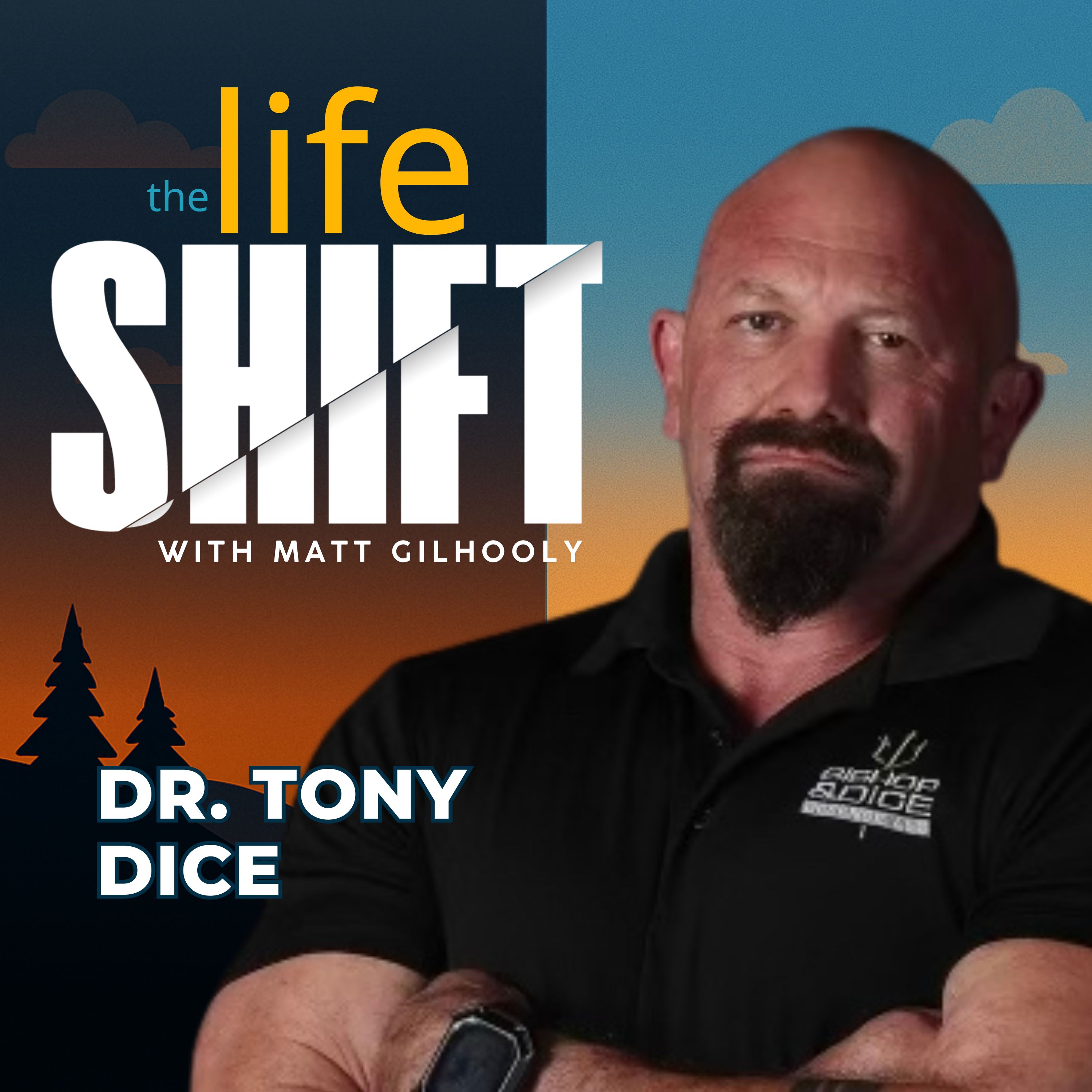
A Navy SEAL veteran shares how a nine-year addiction brought him to his knees, and how rock bottom became the foundation of his life's real mission.


 Goodpods
  Podchaser
  PocketCasts
  RSS Feed
 Maybe you've built your whole life around being the one who shows up. The one who runs toward the hard thing when everyone else steps back. You know the feeling of being needed. What you might not know is how long you can keep that up before you lose track of who you actually are underneath it all.
Dr. Tony Dice spent years chasing the highest version of that identity, from a remote mountain town in Northern California to the Navy SEALs, from the brotherhood of elite service to the unraveling of a nine-year addiction. What looked like strength from the outside was quietly hollowing out everything beneath it. And the moment it all became undeniable wasn't some dramatic public collapse. It was a phone pushed under a bed. A call from a daycare. A son who needed him, and a room he couldn't leave.
This conversation is about what happens after that moment. Tony has been in recovery for fifteen years, earned his doctorate, returned to the very treatment center that saved his life, and built a career helping veterans, law enforcement, and high performers face the thing they've been outrunning. His story doesn't wrap up neatly, and he wouldn't want it to. It just points somewhere real.
What You'll Hear:
- The moment Tony's addiction became undeniable, and why he couldn't get out of that room
- How the identity of "the hero" became both a lifeline and a trap
- What the decision between the SEAL teams and his addiction actually felt like in the body
- The small, unlikely moment in a treatment center that redirected the rest of his life
- Why he believes addiction is far more universal than most people are willing to admit
- What it feels like to watch someone's guard finally come down, and why that's the work he was built for
Dr. Tony Dice is a Navy SEAL veteran, 15-year recovery advocate, professor of counseling at Old Dominion University, and founder of Bishop and Dice Defense, a veteran-owned business that pairs tactical training with mental health services. He is the author of After the Trident, a raw, memoir-style account of shame, addiction, and the recovery model he developed over more than a decade of working with high performers.
https://bishopdicedefense.com/
Listen and follow: www.thelifeshiftpodcast.com/follow
Subscribe to the newsletter: https://thelifeshiftpodcast.beehiiv.com/
Mentioned in this episode:
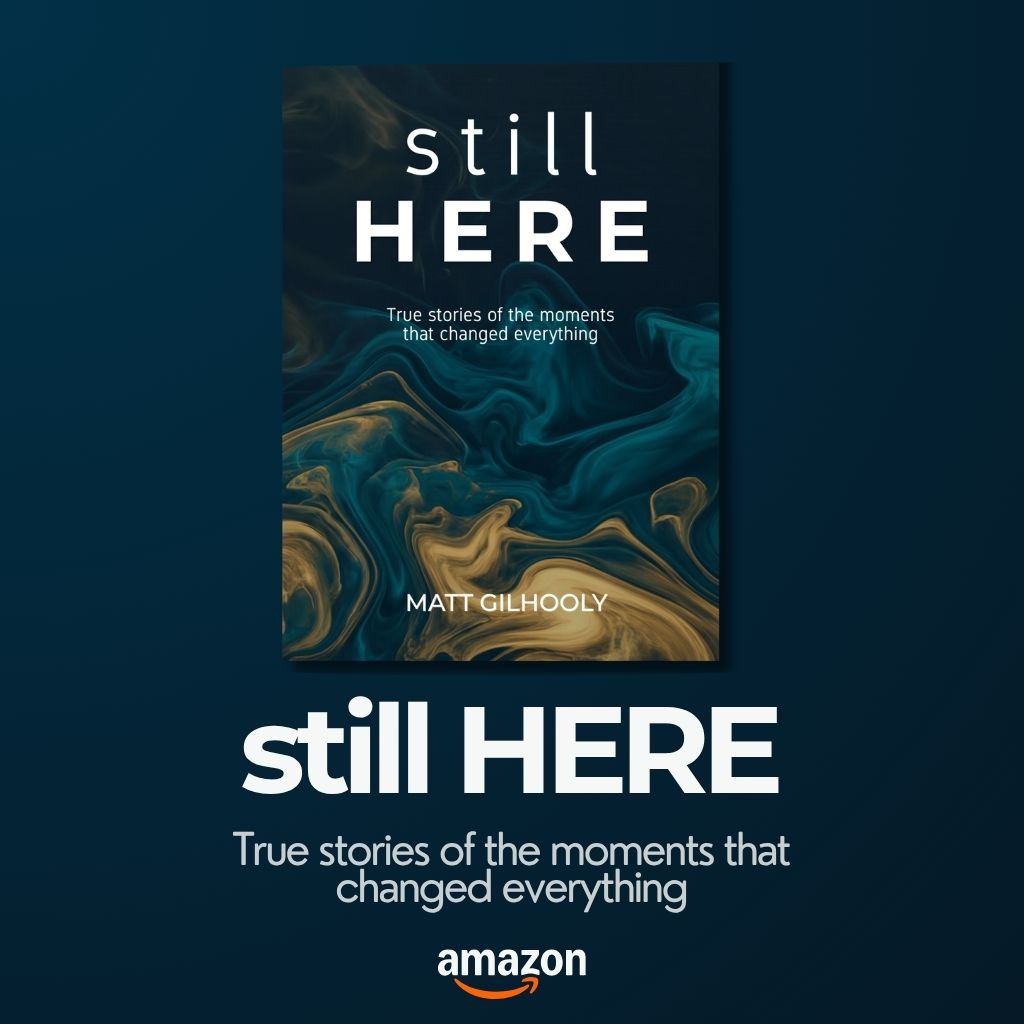
Available Now: "still HERE: True Stories of the Moments That Changed Everything"
This episode is brought to you by *still HERE: True Stories of the Moments That Changed Everything* by Matt Gilhooly. Matt is the creator and host of The Life Shift Podcast. Over four years and more than 240 episodes, he has sat with strangers and asked them about the moments that changed everything. *still HERE* is what he found. Over 100 true stories. Eight sections. One listener making sense of what it all means for the rest of us. Available now in Kindle and paperback on Amazon. Find it here: https://www.amazon.com/Still-Here-Stories-Moments-Everything/dp/1639011854/ If you read it and it moves you, an honest review on Amazon helps more people find it.
You Might Also Like:
Matt Gilhooly (00:00)
There's a version of strength that looks like kicking doors and running towards chaos. And there's another version that looks like sitting still long enough to feel what you've been avoiding. Dr. Tony Dice has lived both, from Navy Seal to addiction to recovery and service. This is a story about redefining what it means to be strong when your old definition nearly destroys you.
Dr. Dice (00:23)
I remember turning off my cell phone, like turning it off and pushing it under the bed and just using and hating what I'd become. Like man, my whole life I'd been trained to be a hero, my whole life. And my son needed me and I could not. I mean, it was, if you could hear a spirit break, was.
Matt Gilhooly (00:45)
Yeah.
Matt Gilhooly (00:48)
You're listening to the LifeShift Podcast. I'm your host, Matt Gilhoolie. This show is built around one simple idea, that sometimes a single moment can change how we see everything. Each week, I talk with someone about the moment that shifted their life and how they learned to live differently after it. These are not stories about having it all figured out. They are stories about what it looks like to keep going once the story changes. Thank you for being here. Here's today's story.
Matt Gilhooly (01:20)
Hello everyone, welcome to the LifeShift Podcast. I am here with Dr. Tony. Hello, doctor. I don't know why I said hello, doctor, but you know, just going with it today. Yeah, yeah. Do you go by Tony or you go by Dr. Dice or?
Dr. Dice (01:25)
Hey Matt, how you doing buddy?
What's up, doc? You didn't go with what's up, doc. There you go.
Dr.
Dice is my handle on all my social media, yeah.
Matt Gilhooly (01:37)
Okay, all
right, but I can once in a while refer to you as Tony.
Dr. Dice (01:41)
You
can tell Big D or Dr. D, whatever you want,
Matt Gilhooly (01:45)
All right. Well, I'll
try to stick to what actually is your name and that will go there. So thank you for being a part of the LifeShift podcast today or just wanting to join me in this very fulfilling journey that I have found for myself and somehow been able to talk to so many people about these really important human moments. So thank you before we even get started.
Dr. Dice (02:07)
Thank you for the platform. And it's amazing to watch people who can really sense the feeding nature of this kind of service to others. It's admirable.
Matt Gilhooly (02:20)
Well, thank you for that. And I will say, selfishly, it's been really healing for me as well to have a lot of these conversations and to discover, even though I think I knew on the surface, that we really have a lot more in common inside each other, like with each other than we do that sets us apart. it's nice to kind of get the confirmation of that.
Dr. Dice (02:36)
Mm-hmm.
my gosh, yes, it is. It is, it
is. Someone very wise once told me the emotions are all the same. It's the details that differentiate us.
Matt Gilhooly (02:51)
Yeah,
So before we get into your specific story, maybe you could tell us who you are in 2026. Like how do you show up in the world? How do you identify these days? However you wanna answer that.
Dr. Dice (02:53)
Okay.
no. Gosh.
All right. Yeah. 2026, who I am. I am a loving father of five. I'm married to a superhero of a wife. I'm living in a wonderful home. have two small orange kitties that I just adore. take my kids on canoe trips in the dead of winter. And in the summer, I try to do at least one family vacation with all the kids somewhere.
Awesome. And so that's my social life. In my work life, I'm the owner of Bishop and Dice Defense. It's a veteran owned small business. And our entire mission is to get out there and ⁓ we sell tactics, training, uniforms, apply whatever your police department, your fire department, your VA facility needs the first year. And on year two, we bring in mental health services once you trust us.
On top of that, I teach at Old Dominion University as professor there in their counseling and human services department. also written a book that kind of outlines a new theory of recovery that I've employed over the last 10 years to help veterans, law enforcement, first responders, and high performers work through this thing called emotional compulsivity and addiction and mental health issues. So that kind of, if you want a 90 second blurb, that's who I am today. And I'm also, you know, 15 years in recovery.
which is a big part of my story today. So I'm here to share and hopefully one person out there somewhere gets one thing they can grab onto and hold.
Matt Gilhooly (04:31)
I love that. That is, sometimes it sounds so silly coming out of my mouth saying like my true goal with every episode is that that set of ears that needed to hear that story that day just hits them in the right way and it will. Yeah.
Dr. Dice (04:45)
And isn't it crazy how that happens? mean,
I remember, you know, I do a lot of groups, you know, a lot of group therapy, a lot of people all of a sudden spontaneously sharing something and one person there, that is what they needed to hear totally unscripted and somehow the universe makes this happen, allows us to happen.
Matt Gilhooly (04:52)
Yeah.
Yep. Yeah, and
you know what's fascinating to me is I always go into it thinking, ⁓ the audience is really gonna stick to this. Like, this is gonna be the point that everyone connects with. And sometimes it's the most, like, minor word that maybe they heard a thousand times from a thousand other people, but this one time they're in the right time, right mind space to hear it, and it just clicks.
Dr. Dice (05:17)
Mm-hmm.
Right.
This is what they needed in that moment.
Matt Gilhooly (05:30)
Exactly. Well, it sounds
like you're you're doing a lot of that for the world, which I think is so commendable, and so important and so needed right now, especially in the space that you're in and that you operate in. I think it's just admirable. And I hope that it fills your cup as much as it probably is stressful at times.
Dr. Dice (05:46)
I appreciate it.
I have found a lot of peace in the realm of being of service to others. It's funny, I've always kind of operated in a sphere in my life, but it wasn't until I did it for the right reasons that it became actual feeding and healing.
Matt Gilhooly (06:03)
Hmm.
Yeah. Well, and two, I think it's a great thing that as a man, you are doing this as well, because there is a lot, I mean, whether we want to admit it or not, there is the gender bias as it relates to emotions and feelings. And so I think it's important that you do that. And it's kind of the reason that I just spill the beans every time too. You know, it's important.
Dr. Dice (06:21)
There is.
⁓ mm-hmm. Yeah.
Yeah. If you want to be, if you're a male out there and you would like to be outnumbered by females, I highly recommend you pursue a degree in counseling or human services because every class you'll be in, you'll be outnumbered. Yes.
Matt Gilhooly (06:44)
Yeah, no,
I think it's beautiful and thank you for what you're doing for the world and the people in it. So let's get into your story. Maybe you can kind of paint the picture of your life leading up to this main pivotal moment and however far back you need to go to kind of give us that before version of you.
Dr. Dice (06:53)
door.
Sure, sure.
And I'll try, I'll breeze through the younger years, but I was, I'm the oldest of eight brothers and sisters, eight of us, homeschooled up in the mountains of Northern California, little tiny town called Horse Creek, California, 89 people in our Small, isolated, remote, yes. Yes, most of my family. And so when I turned 15, 16 years old, there was, I was a hormonal teenager who realized
Matt Gilhooly (07:19)
and most of them were your family.
Dr. Dice (07:28)
This is not okay. And so I ran away from home. I ran away at 16, made it all the way down to Southern California. I started going to school. there's a junior college down there. got my GED. And so I was 16 years old going to taking classes, which was just, you know, I had an Indiana Jones hat on because he was my hero and I'm walking around campus with a padora. And it was, it was a crazy time in my life. I changed majors a million times because I grew up.
with, you know, GI Joe's and Indiana Jones were my heroes. And I just wanted to be part of this amazing, crazy world. And there was one class that stuck out to me. It was, it was an EMT class I took and an emergency medical technician. And I was, I realized with this, with this certification, I could be a hero. I could, I could save someone. my dad died. I went back home up in Northern California to be at the family for a little bit.
Matt Gilhooly (08:18)
Mmm.
Dr. Dice (08:25)
And there was a department, the Klamath River Hose Company. had, at first they took on volunteers and then you could get a position on that. And in that job, I got to use my EMT cert and I had to respond to emergencies. You had a pager you carried and a radio, and if a vehicle went off the road, I got to go as fast as I could to save the day. And I loved that job. I mean, it was so feeding.
being the hero. I did that for two years. I then transferred to Northern Siskiyou Ambulance, an ambulance company, because they got to go code three, lights and siren, to the scene, and then go code three, lights and siren, back to the hospital. And those guys were just, they were the man. I got to be that guy. And I loved that job, loved the camaraderie with the people. I loved just the way we were a unit and we operated together. It was very feeding.
Matt Gilhooly (09:10)
Yeah.
Dr. Dice (09:21)
I loved somewhere out there was having the worst day of their life and they were dialing 911 and they were calling me and my team to come save the day. That was super feeding to
Matt Gilhooly (09:33)
it was a lot of that drive because you wanted to be the hero and less of less of helping others. Yeah, right.
Dr. Dice (09:36)
It was, I wanted to be the hero. It was, it was less of service, even though that was a part of it, but there was
this, this drive to save the day. You know, I got to be the, like I saw in the movies, that guy. It was, it was when, when there was an emergency over here, everyone else is kind of running away and you're running towards it. And you know, when there was a structure fire, they're running away, you're running into the fire. And those were all things that were.
Matt Gilhooly (09:47)
Hmm.
That can be really addicting.
Dr. Dice (10:04)
very much the adrenaline surge, very addictive. There was a law enforcement agency, a sheriff's office that was hiring and I was getting ready to put in my paperwork to transfer because those guys got to carry guns and kicking doors and I was getting ready to transfer. Yes! And my chief pulls me aside and he says, hey Dice, what are you doing? Why are you just jumping around job to job? And I asked him, well, what's top of the food chain? And he said, without a pause, a Navy SEAL. And so I said, okay, I'll
Matt Gilhooly (10:16)
Gotta level up.
Dr. Dice (10:33)
go do that. And I had not seen any Navy SEAL movies. I had not been dreaming about that Navy SEAL, but he said it was the hardest, but it was the best. And so I went down to the Navy recruiter and signed up. I went through boot camp, I went through BUDs, and we got to the SEAL teams, and all of a sudden two things happened. I fell in love with this population of guys. They were, no joke, a tight-knit unit that
Matt Gilhooly (10:42)
Yeah.
Dr. Dice (11:02)
that they call it the brotherhood, very raw kind of, and those guys were serious operators and we had a job to do and it was just, you're gonna save the day. It was everything, like my whole life I had hoped it would be. This other side of joining the Navy was, had been drinking before just kind of as I grew up, but all of a sudden drinking, like I turned pro in my
Matt Gilhooly (11:30)
Mm.
Dr. Dice (11:31)
in my alcohol use. What the Navy taught me was that ⁓ if I had a problem, no matter what it was, whether it be I had a buddy die, whether I had my girl left me, whether my dog died, whether I got an advancement, whether I got a raise, got, I mean, good, bad, indifferent, elevate, separate, evaluate, whatever happened, drinking was the solution.
Even if, Matt, you and I had a problem, our supervisor would say, hey, you guys need to go get a drink together. And we would work it out. It was the Swiss Army knife of emotions. It solved everything. And I loved having it a tool for every emergency.
Matt Gilhooly (12:09)
Yeah.
not the healthiest of tools, yeah. But in that environment, it feels like there would probably not be a ton of space to not push down your emotions in certain events, because you have to rah rah, you know, have to be part of that brotherhood.
Dr. Dice (12:15)
Not, but I mean, it was.
Absolutely.
mean, I, you know, as an instructor now, look, looking into the military's relationship with alcohol, it's since, you know, going all the way back to 3000 BC, every single fighting force has used alcohol as a component of its both morale and support, and it's never ever functioned without it. So they go hand in hand. They
Matt Gilhooly (12:40)
Mm.
Mm-hmm. That's... Yeah.
Your upbringing is so interesting to me, and this is my own trauma-speaking, I think. But do you think you were chasing that top-tier hero thing for a particular reason? Like, were you trying to prove something to family? Were you trying to prove or chase... What do you think was underlying?
Dr. Dice (13:15)
I think
there are several things. One, my dad was an addict alcoholic. So I was also always trying to get his approval. There was one, you know, there was like a, they call it the Klamath River days, which was a where you got to throw axes and set chokers. And I remember as a teenager, I won the whole competition for choker setting against grown men who did it for a living. And I remember seeing my dad, very like proud of.
Matt Gilhooly (13:25)
Mm-hmm.
Hmm.
Dr. Dice (13:45)
And I don't remember that ever before after seeing that and that hit me hard. That coupled with my dad dying several years later, all of a sudden, I couldn't get that anymore and I had to fill this role.
Matt Gilhooly (14:01)
Yeah, no, I and I asked that only because like with mine with my loss. And I felt that I had to be perfect for everyone else. Because if I didn't, like my dad was gonna leave, right? Because my mom left if I'm eight. That's what a death feels like someone abandoning you. And so I assumed that role. And so I had to be perfect. I had to be the best in class and do all these things, or choose things.
Dr. Dice (14:13)
Mm-hmm.
and best.
Matt Gilhooly (14:29)
See, yours is a little different because you were choosing hard things. I was choosing things that I knew I could be good at because I didn't want to mess up. Whereas you were like, I'm just, it sounds like you had a lot of confidence in yourself as well.
Dr. Dice (14:34)
Mm-hmm. Yeah.
And I think that, you know, being homeschooled in the of the woods, I don't get beat down by society and social interactions in high school. But also, there was this, my mom wasn't the best teacher. God bless you, mom. I love you. But she would literally give us a book and say, learn or be stupid. And I was scared to death of being stupid. And I was very fear motivated to get this. And I never truly knew if I was falling behind society.
Matt Gilhooly (14:44)
Mm.
Fair. Right.
You
How about where were you in your sibling list? You're the oldest. Interesting.
Dr. Dice (15:12)
Yeah?
I'm number one, the oldest. I'm the oldest. Yes.
And I remember like, like if we were going across on a long road trip, if we stopped at a gas station and I saw another kid my age, I would approach them and I'd ask them like math problems or history questions, trying to figure out if we knew if I was at their level, I was very, very concerned with being stupid or being behind every.
Matt Gilhooly (15:33)
⁓ yeah.
Yeah, but also as being the oldest, it's almost like you have to set the standard for the younger ones. And so you have to be the best in order to set the standard. That's right. Yeah. Well, so I mean, you're in this Navy SEAL environment and you're following protocol, if you will, by drinking.
Dr. Dice (15:44)
Mm-hmm.
That's true. You don't want to get dethroned by the younger ones. Yes.
Oh gosh. Yeah. I mean, learning when to
stop drinking, when to start drinking, know, how to be, how to sober up, how to run while to hang over. Everyone was doing it. And, and it was, there were crazy days, you know, I was very, hard charger. I loved my, my, my platoon. We deployed overseas and this was pre nine 11. It was not an exciting time to be a Navy SEAL. And there was a.
Matt Gilhooly (16:04)
and everyone was doing it.
Dr. Dice (16:23)
just say, if you don't give me a mission, I'm gonna make one up for myself. And so I would get in a lot of mischief and I was not getting in trouble, but I could tell my head shed was like, what is dice up to now? It was definitely, I mean, it was a handful. Yes, very much so. But my addiction was growing. I was drinking more and more, turning it on and off. And as the years went by, I was dabbling more with Coke.
Matt Gilhooly (16:39)
That's what boredom does.
Dr. Dice (16:53)
and ecstasy, and I could see the writing on the wall. You I was not getting in trouble yet, but I was, I was barely missing drug tests. I was getting a lot of, dice don't come in today kind of warnings, give me heads up and cause you know, drugs and military do not mix. It's a playing a game of Russian roulette. So when my reenlistment came up, I had to choose between my passion to be a Navy SEAL, this job that I worked so hard for or
Matt Gilhooly (16:54)
Hmm.
Dr. Dice (17:22)
continued to drink and use. And it was amazing how that was an incredibly hard decision. There was no like halfway point. And I chose to get out of the military, give up on this Navy SEAL thing so that I could drink and use how I wanted.
Matt Gilhooly (17:45)
I mean, that question, that ask right there though is almost like, cause like you don't have one without the other. So it's almost like you were living, I mean, you were living that full life and now it's like, well, choose one or the other. Ooh.
Dr. Dice (17:45)
This moment.
Well, I can only have one, yeah.
And right here, this moment when I got out of the military, that was one of the lines in my life that this one here, the people who really love freedom, everyone in America, we stand by all the freedoms that we hold and we're very honored by them. And the ones who step to the line and serve our country, I don't think people realize when you do that, you give up most of your freedoms.
Matt Gilhooly (18:06)
Yeah.
Dr. Dice (18:26)
You can't no longer choose where you're to live, who you're going to work with, who you're going to talk to, where you're going to travel to, where your family is going to live. All those freedoms, you give up to serve in the military. And that's taxing on you. But what they don't warn you about is the day you get out, all those freedoms are returned to you in one day. And all of a sudden, you can do whatever you want.
Matt Gilhooly (18:49)
Hmm.
Dr. Dice (18:55)
I mean, literally, whatever you want, as much as you want, for as long as you want. And so here I was, you know, a very highly trained individual with a dangerous amount of confidence, all of sudden released into the wild. I just as hard and as fast as I could, the drinking, the drug use, the going out. And it was a crazy time in my life. I just had.
Matt Gilhooly (19:11)
Hmm.
Dr. Dice (19:24)
too much of everything for my own good. My addiction quickly escalated.
Matt Gilhooly (19:26)
Yeah.
Yeah, because you just you're chasing, you're getting used to things, you're trying other things you need to you need more and more and more. Were you do you you look at that as more
Dr. Dice (19:36)
More and
Matt Gilhooly (19:42)
trying to fill your life with more things to push other things away? Like was it a masking thing or was it like I just love this stuff and I wanna do it?
Dr. Dice (19:55)
It's funny, there's what I found in my years of working in addiction. Many people use substance abuse to numb or strip down numb pain, push down emotions. There is another level of that where you use to, you use to feel more, to really energize, to, make everything level up and this, this leveling up of life. Like I need to activate normal life feels like static. feels like dull.
Matt Gilhooly (20:01)
Right. Yeah.
Dr. Dice (20:24)
Feels like I'm dying. And so this using to level up became, well, if I'm not going to be a SEAL operating overseas, what else can I do? All of a sudden, 9-11 kicks off. Boom, we're at war. And I'm not in the SEAL team. Yeah, I'm not at war, but our country is at war. Yes, and I am not ready to shed my addiction, but I'm angry.
Matt Gilhooly (20:43)
You're at war. You are with yourself.
Dr. Dice (20:53)
I want to do something. And there's this, back then there was this thing called being a contractor, know, being a work for one of those big companies like Dying Corp uses Blackwater, all these contracting companies. And a while back, I don't know you remember Blackwater got in a lot of trouble for basically giving civilians a lot of too much leeway in there, what they were doing over there. And they took advantage of
I was in, I was a contractor back then and it was the wild, wild west. was, you go over for 30, 30, 60, 90 days. You're making a thousand dollars a day. You don't have near the amount of rules that the military gave you, but you're carrying a firearm and you're in harm's way. And it was very adrenaline pumping, making a lot of money and it allowed my addiction to continue. So.
Matt Gilhooly (21:49)
which is not
a safe combo.
Dr. Dice (21:51)
This was a recipe for further disaster. And this was also, I could feel my life getting darker. When I was serving in the military, there was a sense of doing things for your country. felt very honorable. You know, if I were to die in defense of my country, there'd be a ceremony. My wife would get a flag. You know, there'd be a lot of, yes. When you go into harm's way in pursuit of a dollar, you're a mercenary.
Matt Gilhooly (21:54)
Yeah.
You'll a hero.
Dr. Dice (22:19)
That is not get the same reverence. You don't feel honorable. You do feel when you go out there that, whoa, this is darker. And when I feel have any kind of feelings, my go-to is to drink. So I had tools to cope with these darker feelings, but that just perpetuated the spiral.
Matt Gilhooly (22:24)
Mm.
Right. Yeah,
just pushes it down. mean, I can relate to it in a sense of my addiction was perfectionism and I pushed down the grief for 20 something years and rears its ugly head, which I'm sure certain things did for you as well.
Dr. Dice (22:45)
Mm-hmm. Exactly.
and you know as
I do that, addiction is progressive. I wish the same amount did the same thing forever, but it always takes more to get the same result. My chem.
Matt Gilhooly (22:57)
Mm.
And you kind of
start to forget who you are, I would imagine, as a core individual because your life has been this way for so long.
Dr. Dice (23:08)
⁓ yes!
It is true. there's also this, gosh, you keep thinking you're my high performer. I can achieve, I can achieve, I can achieve. But the substance abuse is eroding the inside. You begin to feel less than on in here. That erodes your self-worth, your self-confidence, and that begins, you keep pushing people at arm's length. If you got to know me, you would not like me. So you just begin to push everyone away further and further.
Matt Gilhooly (23:29)
Mm-hmm.
Yeah, and I would imagine as that erodes just thinking metaphorically here, you pour more of the substance abuse in to fill what's been eroded, because that's the way to feel whole in the moment.
Dr. Dice (23:59)
hole.
luckily, you know, I have a very, know, I have a very scary resting face. So if I just stood there in the corner, nobody ever messes with me, you know. And so it's easy to keep no one wanted to get close to me. And that just worked well for me. And so I was getting more and more distant from others. I when I came back to the States, I did not like it here. I did not like
Matt Gilhooly (24:13)
keep people, yeah.
Dr. Dice (24:24)
I had a lot of PTSD from coming back into the civilian sector. I did not like that there was all these shades of gray here. was, you know, taxes and emotions and doctors, all these things. When overseas, it's good decision, bad decision. Live, die. It was very simple over there. I was, that to me was the life I wanted to live. So I kept going back overseas, taking more and more contracts and keeping me.
Matt Gilhooly (24:39)
Right.
to avoid being a human.
Yeah, we all run from it once in a while.
Dr. Dice (24:52)
⁓
And all of that, you know, along the line, I'm doing the little benchmark life experiences. I got married. I had a son. And I'm doing these contracts, not being a very good husband or dad. And my substance use is escalating. And I'm now using crystal meth. ⁓ It's a very speedy drug. lasts a long time. I thought it was making good financial sense because it's
cost cheaper than blow, it was, it was in full effect, but it takes a toll on your body. I was spiraling, my use had gotten worse and worse. And I remember the first time I went to take a contract and they turned me down. They said, said, Dice, you look like shit. Get yourself together and come back and talk to us. And I was just mortified. That was a blow to my ego.
Matt Gilhooly (25:26)
Rationalizing, that's good.
Yeah.
Yeah.
Dr. Dice (25:53)
I just began using more. I have this, ⁓ this picture I keep on my desk because in the moment I had no idea how bad I was looking. today I weight 220. I'm six, two, you know, that's just my, this is about the same weight I was when I was in the SEAL teams, but I wittled down wasted away to 130 pounds and I was just, you know, skin and bones, telling everybody I've been running a lot.
Matt Gilhooly (26:15)
Yeah.
Dr. Dice (26:22)
And I had this photo of me and my son at Mount Trashmore in Virginia. and I keep it on my desk to remind me that's where that goes. You know, it is, it is part of my, my day to day life right now, this image I have, because back then I couldn't see it. That was how thick the denial was. And the moment that of crisis, as you would say, is that remember that, that H1N1, the swine flu pandemic.
Yeah, that was like our baby trainer pandemic we had years ago. We didn't learn anything. Well, that was in full effect. And I remember being on a three-day bender and I get this phone call and I let it go to voicemail and the voicemail says, there's been an exposure to one of the technicians at the daycare. Please come pick up your son Ronan. And in my crystal meth mind, I'm like, no, my son needs me.
Matt Gilhooly (26:55)
We didn't learn. Gone.
Yeah.
Dr. Dice (27:20)
I gotta get there to him. And so I'm trying, I'm using a little more, trying to get out of this room. The wife calls, goes to voicemail. She says she's out of the area. I have to get him. Okay. Let me just, I'll use a little bit more. Let me get out of this room. You know, the daycare is calling, the wife's calling. Okay. Let me just get myself straight. Okay. Let me use a little bit more. And I'm for three hours. I'm trying to get out of this room. And I am, I remember with like tears coming down the cheeks just
Matt Gilhooly (27:43)
Hmm.
Dr. Dice (27:50)
realizing I can't get out of this room. I remember turning off my cell phone, like turning it off and pushing it under the bed and just using and hating what I'd become. Like man, my whole life I'd been trained to be a hero, my whole life. And my son needed me and I could not. I mean, it was, if you could hear a spirit break, was.
Matt Gilhooly (28:16)
Yeah.
Dr. Dice (28:19)
That was the moment that I knew that I was an addict. I was a drug addict. This was my new master.
⁓ damn.
Matt Gilhooly (28:32)
Yeah, that's
I mean, it's heartbreaking when because you probably knew all along, but you like you said denial and then it's not as bad as you know, maybe it's not it's it's fine. We're, know, I'm functioning. have the checkmark. I got married. I you know, I I've done all the things. And then when you finally kind of like open your eyes a little bit more because something has forced you to do that, you realize like how far
Dr. Dice (28:38)
Mm-hmm.
Yeah.
Far,
far, because the self-talk that had kept me in denial was, I can get through this. I've been through worse. I don't look like a real All these things I tell myself, I could quit if I want to, I just don't want to. All of that, all those lies I was telling myself, it's all been shattered. Like, whoa, this...
Matt Gilhooly (29:02)
how far down you are.
Mm-hmm.
Mm-hmm.
Yeah. I cannot
imagine that your relationships were probably quite different at the time and
Dr. Dice (29:32)
I was such a horrible husband. Just disappearing on these binges. I was not a present father. I mean, was, ⁓
Matt Gilhooly (29:38)
Yeah, which
then becomes a big once you wake up to that becomes another burden to put on yourself, which can push you in the wrong direction. I'm sure it pushes a lot of people in the wrong direction.
Dr. Dice (29:45)
It's, and they can, it can,
it could be a moment of, and it's funny that many people have different reasons that they hit a bottom and they want to change. This one just made me hate myself. I just hated myself and I had more using to use, you know, and it wasn't until like a month later when I was, I was in this, another messed up house and it's 3 a.m. and there was these two young
Matt Gilhooly (29:59)
Yeah.
Okay.
Dr. Dice (30:14)
young boys, 13, 14 years old, and they're shooting those little airsoft rifles at each other, those little plastic pellets. And I'm looking at them at 3 a.m. and I'm mad because they're sweeping with me. They have horrible weapons handling skills. And so I get upstairs and I pass out. And one of those kids comes upstairs and kicks me in the leg and goes, hey, freak, hey, freak. And I roll over and I look at him and I look past the gun and I look into this young kid's eyes and I remember
They're like, they look dead. They look like there is no innocence in this young boy. He's seen too much stuff for your little boy in this house that had all kinds of drug use and craziness going on. I looked at him and I go, ⁓ my gosh, this is going to be my son. You know, my dad died of this disease. I'm going to die from this disease. And now my son is, and that whatever that was that motivated me to get upstairs, get up.
Matt Gilhooly (30:49)
Mm.
Dr. Dice (31:14)
go down to the kitchen and it wasn't my kitchen, but I knew if I look hard enough back then, there was this thing called the yellow pages that was our version of the internet back then. And I started looking through it like, you yellow page searching for a treatment center. And I called up a shout out to the Farley Center. I randomly picked it out there. They had a bed available and I went to rehab. I went to rehab. That was me deciding.
Matt Gilhooly (31:22)
Yeah.
Yep.
It's big.
Yeah. And it kind of goes to what we were saying about people hearing other people's stories and attaching to something really tiny that someone had said, because I'm sure you've had people look at you in that way before, right? But this was the moment in which that particular kid, yeah.
Dr. Dice (31:44)
Yeah, I mean...
Mm-hmm.
⁓ yeah.
This was the moment that I wanted to reach out. Yeah, that
kid. Oh man. you know, rehab, no one's happy when they get the rehab. It's like this balance of 51 % of you. I know I got there. I remember on day six, my insurance company didn't want to pay anymore. They wanted to transfer you out of rehab. And I was going to lose. I wanted to fight them because you give me hope and you're carrying it away. And I was so angry. I was out of control. And then...
Matt Gilhooly (32:12)
but you made the choice.
Dr. Dice (32:31)
I didn't know what to do. They said if I had $9,000, I could stay there longer. And I was, who comes to rehab with $9,000? This is crazy. Yes, I was so angry with them. I went to my therapist and I said, you know, can I get a four hour pass from to get out of this facility? And he was really worried, legitimately worried I was going to like rob a bank or something. And I said, no, no, no, no, I have I'm try selling my car. And he gave me the four hour pass and I took my car down to CarMax.
Matt Gilhooly (32:38)
Great.
Mm-hmm.
Dr. Dice (33:01)
And they gave me a check. I'm sure they ripped me off, but they gave me a check for enough to cover rehab. And I'm looking at that check. And I mean, as I'm walking across the parking lot, a part of me said, I don't have to go back to rehab. But a bigger part of me wanted to be someone else hated who I'd become wanted to change.
Matt Gilhooly (33:21)
Mm-hmm.
Dr. Dice (33:25)
And so I took that check without even cashing it, just straight back to the Barley Center and endorsed the back of it and said, can you accept this payment? And they took it. And so, yeah, I...
Matt Gilhooly (33:32)
Yeah. That's big too.
That's like, that's like almost as big as as walking downstairs and finding the center and calling and then going. But having the opportunity to be as selfless for yourself, like that's not selfish, essentially, but like in the most beautiful of ways, you have this opportunity to totally screw up when you left and you didn't and you chose yourself.
Dr. Dice (33:43)
Yeah, it was.
Mm-hmm.
Matt Gilhooly (34:01)
And as you were telling that story, was wondering if you were doing this for yourself or if you were doing this for your family or was it a mixture of both?
Dr. Dice (34:10)
It was, I think that the motivator here was I realized who I've become and I hated that person. I saw this recovery place as a hope that maybe I could be someone else. And I was scared to death of relapsing and being that guy again. And so most of my early recovery days, I felt like I was running from the disease of addiction. was scared of it. I'm going to do everything I can to prevent relapse. And I was fear-driven.
Matt Gilhooly (34:15)
Mm.
Yeah. Because how long was your your addiction journey? Like how long were you consistently getting more addicted to substances?
Dr. Dice (34:39)
It's just, yeah, very, yeah.
I spent from using hard drugs like, you know, Coke and meth from 2001 to 2010.
Matt Gilhooly (35:01)
Okay, so nine years you were this person that was deeply hiding from whatever real version of you there was. And now this opportunity to kind of meet the new version of yourself. What was that like?
Dr. Dice (35:02)
Nine years.
Well, I
didn't even know what a new version was. I just know I hated that guy. And in a way that's, you know, my whole life had been kind of running from the fear of not being enough. And now I'm running from the fear of addiction going to get me. And that was my primary motivator. And, you know, that whole first year recovery, you know, recovery center I was when went to was a 12 step based recovery center. And I kind of was somewhat aware of 12 step recovery programs.
Matt Gilhooly (35:16)
Yeah.
Dr. Dice (35:43)
And I was like, my gosh, these guys, these guys are a cult. ⁓ But, you know, I was desperate. said, okay, I'll drink. If you said maybe it's a work, I'll drink the Kool-Aid. Let's go. Everything they asked me to do. I said, all right, you know, the military gives you that gift of you don't need to just give me my orders, sir. I'll follow them to the best of my ability. And they would, you know, some, some of the orders they gave me was like, all right, that makes sense. So I'm like, all right, I don't get it, but.
I trust you. And there wasn't even a therapist at the recruitment center who said, when I was a little baby or a little kid, he said, I never learned how to self-soothe. What they wanted me to do is go out to Walmart at night, you know, bring a buddy, go out to Walmart, buy yourself a teddy bear. And for the rest of your time, while you're in treatment, carry the teddy bear around with you 24 seven. And so I was, you know, I said, I'm a Navy SEAL. We don't do teddy bears.
Matt Gilhooly (36:40)
Right. It's too soft.
Dr. Dice (36:41)
They said, it's a suggestion.
I said, all right, fine. I went down to Walmart. I got a black fluffy teddy bear. put a little skull and crossbow arm band on him. So he looked kind of tough. And I, for the rest of the time, for several weeks in treatment, you saw this guy shuffling around the teddy bear in his hand. I didn't know why, but they said it would help me stay sober. So I did it. Yeah.
Matt Gilhooly (36:53)
It'll tough,
Yeah. Yeah. I mean, I think
there's something to be said too of those programs is like, there is proof that it works for other people. So why not you?
Dr. Dice (37:14)
Mm-hmm.
Oh, so much. I got a sponsor. My sponsor said, go to a lot of meetings. Call me every day. And I mean, I went to two, three, four, five meetings a day sometimes, called them religiously. We did step work. I went through the 12 steps and I was blown away how everything in my life began to change. And so a year into my recovery, I'm already, gone through all 12 steps.
And part of the 12 step for me was sponsoring guys. You know, I'd work with other guys as they come in. Yeah. And there was this, this feeling of connection with someone else authentically, just sharing what my experience is you sharing yours. And I was, I was taken aback that, wow, I'm way more empathetic than I realized. I didn't know this about me. Yeah. And so I remember wanting to know, wanting to do more of that.
Matt Gilhooly (37:49)
Yeah.
Dr. Dice (38:12)
And so I went back to school and I went, got my, didn't have any degrees yet, but I went back to TCC, which is a, a junior college out here in Virginia. And I got my, my associates in social services. I transferred to Old Dominion University. got my undergraduate in human services. I stayed on and got my master's in counseling. And now five years clean and sober at that point, I went back to the Farley center and I said, Hey guys.
Five years ago on this day, you saved my life. Can I have a job? And they hired me.
Matt Gilhooly (38:44)
Mm.
Wow, the full circle. Yeah, that's so powerful. No, and, and like that. There's something really beautiful about you choosing to do the hard thing, one with the rehab, but also the hard thing of going back to school. But you were going with a purpose. So I bet that was a really good fuel because I think a lot of people, myself included, you go when you're 18 to college and you have no clue you're just going because you're supposed to go. But now you're going.
Dr. Dice (38:48)
The full circle?
Right.
Matt Gilhooly (39:17)
so that you can do even more for other people. Yeah.
Dr. Dice (39:19)
With a mission, with a mission.
And there was this huge motivator that that therapist that I had at the Farley Center when I was just getting admitted in, his name was Dre Summers. He's since passed on, God bless you Dre. He came to work that morning with a cup of coffee and he saved my life. And I remember looking at him going, dude, my entire life I've had like M4s and kit bags and gurneys and all this shit trying to save people.
He came to work with a cup of coffee and himself, that guy was a bad ass. And I saw that when I started on my life path back to school that I want to do that.
Matt Gilhooly (39:58)
Yeah, there's a lot more weapons you have now as a human, as a fully formed human with your degree and with your heart that you can do a lot more, a lot of good for the world in that way.
Dr. Dice (40:09)
It is.
And I think it's
that connection that I allowed myself to connect. I allowed myself to be vulnerable. I allowed myself to kind of lower my guard. And all of those kind of, it took my sense of being a hero and flipped it on its head. That wait a minute. Right. I was doing it because someone did it for me. You know, I was like, yeah. It took my whole life.
Matt Gilhooly (40:17)
Yeah.
Mm-hmm. Because you weren't doing it to be a hero anymore. You were just doing it to help others.
Right, and he wasn't trying to be a hero.
Dr. Dice (40:40)
It's like my life path. The way I believe the world worked was the end will justify the means, you know, no matter what it takes, become a seal, you know, no matter what. But flipping it on its head, saying, no, no, no, no, the means will justify the end. How we do this matters. That ⁓ my whole mind was blown.
Matt Gilhooly (40:46)
Hmm. Get to the top.
Yeah.
Was it really, was it difficult to accept for you that your life you had taken this journey for so long not doing this? Or do you, or did you, were you like, I had to do all that in order to feel this?
Dr. Dice (41:19)
That's a great question. When I came and started working at the Farley Center again, Dre Summers, my therapist, was still there. For a whole year, he took me under his wing. And at about the one year mark, he went on vacation. He asked me to cover his group. And so I'm sitting there in his therapist chair with his therapist clipboard, watching people come into the same room I came into, like now six years ago, and watching an addict sit in the same chair I sat in.
Matt Gilhooly (41:29)
Mm.
Dr. Dice (41:47)
And I remember this wave of emotion coming over me going, ⁓ everything in my life had to happen exactly the way it had to happen for me to end up in this chair for you. And there was just this, this is what a calling, ⁓ And that just released so much of like, okay, all that pain, all that, that was part of this. ⁓
Matt Gilhooly (42:13)
Yeah, so there wasn't a lot of held on anger that you had. That's good.
Dr. Dice (42:18)
⁓ man, no,
that is, yeah, like it's almost like everything that I had once used as a whipping post became a guidepost in my life.
Matt Gilhooly (42:24)
Mm hmm. Yeah.
Yeah. And all the things that you went through and struggled with and had to come to terms that you chose to do now are your tools to help other people and listen to them and not tell them what to do, but help them through it and help them understand.
Dr. Dice (42:37)
I know.
I mean,
I had hated myself so much for that story I shared with you about not being there for my son. And that was just such a core wound and so much. But to be able to share that now and have others relate to that makes me realize that, well, okay, this horrible experience has value, not only in my life, but in others.
Matt Gilhooly (43:08)
Mm hmm.
Yeah. But I think also having that, that experience, that feeling of just you don't want to be this person and you don't want to do this to your to your son, probably made you a better father, a better husband, all those things, because you're like, Whoa, like I need to rectify this and just be better. And it probably makes you more fulfilled in that way as well. I'm putting a lot of
Dr. Dice (43:23)
⁓ gosh, ⁓ yes.
Hahaha
Gosh.
No, no, no, you're dead on. you know, and at this point in my development, I'm also doing a lot of self-reflection and I'm just taking a back at how much my life has changed by this new endeavor. And so, you know, as anyone, as any addict would do, I went back to school to get further my education and I went for my doctorate and I began really focusing in.
Matt Gilhooly (43:35)
feelings into your head. I hope you're feeling those too, but.
Mm-hmm.
Dr. Dice (44:02)
on the embedded theory found in 12-step recovery programs. There's real functions at work there. How does that work? And that became my goal in life is validity to these programs, harnessing their different outputs, and being able to come up with something that everyone can have access to. Because, Matt, people think of addiction as alcohol and doing drugs. But addiction is gambling. It's going to the gym. It's working.
It's so much of so many lives. It's just over eating. I mean, if we really broaden the definition of addict to its fullness, you know, more than half of our population is a slave to this and it's hurting our lives. Yes. So.
Matt Gilhooly (44:34)
eating.
⁓ yeah.
That's how I felt
about perfectionism when I look back. It was an addiction. was something that I, and it had a lot of addictions that came with it in different ways. so yeah, I would agree. I would say it's probably more than half in that way, because a lot of the things we do, we're just addicted to so much.
Dr. Dice (44:52)
Mm-hmm, it is.
Mm-hmm. ⁓ yes.
Yes,
so that became the drum at which I began to live my life is awareness for people. Get the word out there. And I think that that was a business, wrote a book.
Matt Gilhooly (45:13)
Yeah. And then you started a business.
Helping people
that went through things that you did though, right? Like that was the purpose.
Dr. Dice (45:22)
Exactly, you know,
trying to explain. And there was this, there was this quote by Steven Spielberg I saw, and again, one of those perspective shifters, he shared that, you know, you can argue statistics and facts all day long, and no one will ever change your perspective. But you share a story with someone, and you have an opportunity for them to see the world as you do or someone else does.
and their perspective may follow, perspectives may shift. I believe that. That's how, what are we doing right now? This is what you do for a living, Matt. You share stories. You share stories.
Matt Gilhooly (45:53)
Yeah. Yeah.
I wish. This is my side gig. no, I think it
I didn't realize that either. And I think there are certain things have to happen in certain orders. Like I said, I struggled grieving for 20 plus years. And like, something else happened in my life, which triggered me to go to therapy, which then started opening the door to the like the
the most simple thing that the therapist said to me that like, all of a sudden, everything started to unravel. And I was like, I had the little bit of anger of like, why didn't I figure this out sooner? Because it's so simple. She was like, you realize every decision that you've made, since your mom died was out of this eight year olds brain so scared that someone was gonna leave or something was gonna fall apart. And I was like, ⁓ crap, like why didn't had I so that's why I asked you that question earlier of like,
Dr. Dice (46:47)
Mm-hmm.
Ha
Matt Gilhooly (46:53)
Was there anger? Was there like, because I was so mad at myself at the time, because I was like, God, you could have done this so much sooner. But at the same time, all that struggle that I had allows me now to feel fully comfortable healing, not healing, hearing and, you know, bearing witness to other people's stories in a way that maybe they can feel seen. That's all I needed to do, you know, and I couldn't have done that had I healed at 10.
Dr. Dice (47:02)
Mm-hmm.
Mm-hmm.
Exactly. Nope,
you couldn't. You need to be the ability to receive and the, and the message need to coincide, you know.
Matt Gilhooly (47:28)
Yeah.
What's your favorite part about what you do now? Like the way you live your life. Like what's that look like now?
Dr. Dice (47:36)
favorite part? My favorite part is when you run into someone, you know, and this could be a high performer, it could be, you know, your grizzled veteran. And when you're talking to them, you can just see them like, mentally, they are their dukes are up, they're talking to you like, yeah, I'm doing fine, you know, and this is the energy you're getting from them that there is somehow in a defensive stance, even though you're, you're completely harmless. Yeah, my favorite thing is after spending time with them, talking
Matt Gilhooly (48:01)
Yeah.
Dr. Dice (48:06)
shooting the shit, gaining their trust to just feel the sense that they're letting down their guard. And the moment they're like, it's almost like sometimes when you're about to leave the room and they'll say, hey, man, you got a minute?
And that, can, I mean, it's such a subtle thing, but it's a moment of vulnerability. And you turn and you can see the crack that they're letting you look in just a second. I got a question, man. And they just, that, that moment where you are, the ability for you to be there for someone when they have a little bit of trust in another human being. Yes.
Matt Gilhooly (48:39)
Mm-hmm. Yeah.
it kind of validates why you had such a hard journey leading up to it.
Dr. Dice (49:00)
Yeah, and I know how hard it is to do this. This is so impossible thing for many. Generations of programming. I'm fine, I'm fine, I'm fine.
Matt Gilhooly (49:04)
Yeah.
Yeah. Do you think he would have found sobriety had that moment in that room not happened?
Dr. Dice (49:21)
That's funny. I mean, there are so many people who are forever stuck as a functional alcoholic, a functional addict. you know, and the one day you have one too many drinks and you fly off that track, well, there's, jails, institutions and death. And there's this little tiny ledge called recovery you might land on. So, I mean, I don't know why. mean, don't know why. There must be a reason I was giving this opportunity.
you know, and I'm doing my best to kind of fulfill that. But I feel so incredibly fortunate to land on that ledge of recovery because I don't know the odds were stacked against me to live this long, you know, just the way I was living.
Matt Gilhooly (49:56)
Yeah.
Hmm. Yeah, no, it's it's beautiful. It's like a new lease on life, but also this lease on life allows you to help others have a new lease on there. So it's this beautiful like butterfly effect.
Dr. Dice (50:12)
yeah,
it is. I fully believe everyone in this world needs to acknowledge the different advantages they have and where they stand in the world and say, ask themselves, this is who I am and this is what I have. What can I do with it? How can I use this to serve? Some of us have more to give, some of us have less to give, but we all have to evaluate who we are and what are we doing with these tools.
Matt Gilhooly (50:39)
I think society is afraid to do that. Yeah, I think a lot of where none of us were really trained to do that. And I would imagine that your kids are fortunate in this way now because they're seeing you live that and be that way. But I think for so many of us like yourself, you, you grew up with a father who was an addict, right? And so you saw that that was modeled for you, whereas a lot of other people did not see parents
Dr. Dice (50:41)
it is, very much so, very much so.
Matt Gilhooly (51:08)
being vulnerable with each other in a productive way. You know, was more, we just sweep everything under the rug and we just pretend everything's cool. So you're changing that dynamic as well, just through your kids.
Dr. Dice (51:11)
All
Mm-hmm
It's true. this is kind of a great place for me to kind of do a segue. I always love to do a shout out for everyone listening to your program out there. We come across people on the daily that are just natural. People tend to talk to them. They're naturally kind of conduit for people sharing with them. They have a way about them that allows them to be there for others.
I challenge them, you know, that is a calling. Develop that. Go back to school, get some kind of counseling degree or certificate. Be able to get out there and use that gift to save lives because that is a legitimate life-giving, life-saving ability. It's a superpower, you know. Yeah. And let's harness that because I want to find at least 10 a year of people I can help.
get through some kind of pipeline and get them out in the field because there is a shortage of people who are doing this job.
Matt Gilhooly (52:26)
Yeah, no, I think it like I said earlier, I just commend you for doing it. I think it's, it's so important and so needed now. On a tiny scale, what this podcast has done for me is has taught me how to listen and listen without judgment. If that makes sense, listen to where I don't need to fill the next silence. I don't need to offer a solution. I hope I didn't do that. But you know, like
Dr. Dice (52:40)
Mm-hmm.
Matt Gilhooly (52:54)
really listen. think growing up I was just listening for the silence so that I could feel it. exactly. then when it was my turn, was the goal was to sound the smartest or ask the most intelligent question. And now it's like, if I have a question that you were talking and I thought of a question and you keep talking, I allow myself to forget that question because it's not important anymore.
Dr. Dice (53:01)
Yeah, why don't you your turn? Wait, your turn.
Mm-hmm.
Matt Gilhooly (53:23)
You know, and I think that there's something that I'm super proud of learning the skill of, you know, I at least consider it a skill of mine that I'm developing to just listen. And I think that kind of goes to your point of helping others, because sometimes people just need to be heard. You know? I mean, how powerful was it the first time you told your story to someone?
Dr. Dice (53:44)
Mm-hmm, that's right.
my gosh, besides shaking in my boots. ⁓ Yes, but it was powerful. There was a sense of owning my story. This is me. This is what I did.
Matt Gilhooly (53:51)
Right, exactly. But after.
Right. And then the more
you tell it, do you discover different parts of your story?
Dr. Dice (54:02)
and it comes out differently every time? Yes.
Matt Gilhooly (54:05)
Yeah,
that's my favorite part because, you know, a lot of things stay in our head for a long time and now when we put them out and we start to process them, that's why I did that.
Dr. Dice (54:12)
Yes.
I call this this echo chamber up here. If you keep all your thoughts inside, they bounce around, they get twisted and they work against you. But the minute you bring them out, you can see and hear them and go, ⁓ that makes way more sense.
Matt Gilhooly (54:18)
too scary.
Yes. I say it all the time. It's like in my head, everything's like these papers swirling around. And then when I say it out loud or write it, it just becomes a stack of papers that I can easily flip through and, and find it, find the things that I need. And I'm to your same point. It's like, oh, that's not scary at all. Actually, I can, that's palatable. Yeah, no, this is great. I love this. And I'd love to ask you. I don't know, I like to ask the same kind of question. That's an impossible question. But if
Dr. Dice (54:36)
Yes, yes.
That's not, that's not, that's not who I am. I don't.
Matt Gilhooly (54:55)
if this version of you could go back to that version of you that had to make the decision between one version of your life and the other to either stay in the Navy SEALs or to chase your addiction. Is there anything that you would want to say to that, Tony?
Dr. Dice (55:14)
Wow, that isn't a possible question because that version of me would, would not, there was enough people telling him he was screwing up and he wasn't listening, you know, and even if I went back there to kind of like scare the shit out of that version, he wasn't listening. It was not enough pain required for him to know, to learn. Yeah. And it's funny. Yeah, I wouldn't, I would, if it, it meant not being where I am today, then I wouldn't.
Matt Gilhooly (55:24)
OK.
Yeah. But if you did, you would have skewed where you are now.
Yeah, and that's so hard to, for a lot of people, myself included for a while, to admit that sometimes these horrible things that happen to us or we create for ourselves or whatever can bring good things. So for me, it's like, if I would go back, I don't want my mom to die, but also I am this version of me because my mom died. So it's like,
Dr. Dice (56:12)
Mm-hmm.
Matt Gilhooly (56:14)
I like this, I don't know what that other version of me would have been like. And so it's a really hard thing to say out loud that sometimes these hard moments can, if you have the ability, you can create something good out of these hard things. You're perfect example of that. You could have easily kept on that route and maybe not even be here today.
Dr. Dice (56:18)
Right?
That's true. That's true.
Matt Gilhooly (56:36)
but you made the hard decisions. Like, good for you walking down into that kitchen and opening that big ass phone book and choosing to call and go.
Dr. Dice (56:40)
I know.
And there's another dynamic there. Like one of my gifts for my kids that I've given is the genetic component of being an addict. You know, I believe it's a family disease. walked this harder path I have and showing this example of what recovery looks like, that is also my gift to them, is an example of how they, if challenged by addiction, they have a blueprint of how to get out.
Matt Gilhooly (56:53)
Mm. Yeah.
Yeah, and all the people that you encounter also have the ability to access that blueprint and choose to do with it what they want. We all have this free will. So there's that that comes with it. Right? Yeah. No. Speaking of reaching out, if someone's listening to your story, they resonate with a certain part of it or something, some random thing that you said was like the one thing they needed to hear that day. Is there a way to connect with you, tell you their story? Like, how did we find you get in your orbit?
Dr. Dice (57:20)
They gotta reach out. Yeah, that's right.
Mm-hmm.
Sure, sure,
sure. I try to make it as easy as possible. I'm Dr. Dice on all social media platforms. I have a YouTube page that has a lot of my videos, a of my content out there if you want to reach out. If you want first access at my book drop, it's at www.DrDiceBook.com. That's D-R-B-O-O-K Dice, D-I-C-E, dot com.
Matt Gilhooly (58:00)
And what's name of your book?
Dr. Dice (58:02)
yeah, good call. It's ⁓ called After the Trident, a Navy SEAL's battle with secret shame and addiction.
Matt Gilhooly (58:08)
Nice. it's and is it mostly memoir? Is it tip driven?
Dr. Dice (58:14)
It's
very much memoir, but it's unfiltered, raw. It's like the character you're not going to like. like, my gosh, this guy's an a-hole. And you see, it looks like he's a high performer, but under the hood, he is ripping and and then crashing and burning and clawing your way back. And hidden in that is this, they call it the holistic change model, this model of recovery arc that you can follow.
Matt Gilhooly (58:42)
No, I love that. Yeah, we will make it as easy as possible for anyone listening that wants to connect with you, check out your book, go to your website, all the things. We'll put those in the show notes so people can access you. I want to thank you for allowing this conversation to unfold however it did because I think there was a reason that it did in this way.
Dr. Dice (58:47)
Sure.
And thank you for making it easy. You're an awesome host, Matt. It's an awesome, it's great to be here.
Matt Gilhooly (59:07)
Well,
I appreciate that. And I am so lucky to be able to do this and to talk to people and meet people like you and really feel like I know you now because you've shared so much of your personal journey. So thank you for that. And thank you to everyone listening. I say this every time because I never know how to end these things. So I'm just going to say that I will be back next week with a brand new episode. Thanks again, Dr. Dice.
Dr. Dice (59:28)
Hahaha
Awesome.
Thank you guys. Woohoo!
Matt Gilhooly (59:35)
Thank you for listening to the Life Shift Podcast. If you wanna learn more, go to www.thelifeshiftpodcast.com.
There you can check out all the different episodes. You can check out the blog, some of the reviews for the podcast and the Life Shift journal. Links are there so you can purchase your own copy, whether in digital or print format. Thanks again.
Dr. Tony Dice is CEO/Owner of Bishop & Dice Defense LLC, empowering veterans, law enforcement, and first responders. As a Navy SEAL, therapist, paramedic, and firefighter, Dr. Dice is nationally recognized for his 'TacOps to PsyOps' approach to tactical solutions and mental health services. His memoir, After the Trident, reveals the transformative power of his Holistic Change Model, designed to heal the invisible wounds of those who serve.


