Coma at 14: Learning to Walk, Talk, and Trust Yourself Again
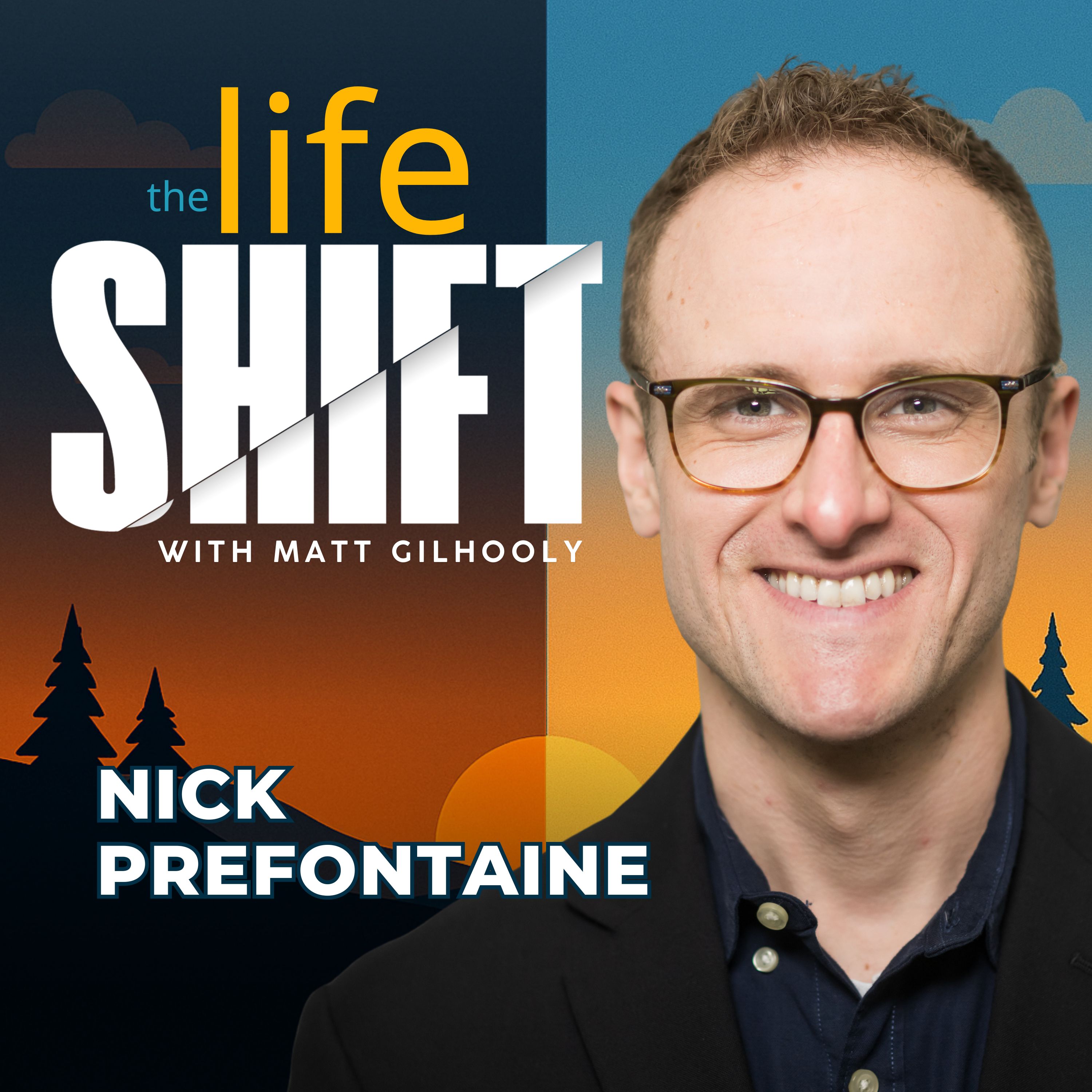
At fourteen, Nick Prefontaine survived a coma that doctors said would end his independence, and spent the next two decades quietly building a life, a business, and a calling around the very voice that told him he'd run out of that hospital.


 Goodpods
  Podchaser
  PocketCasts
  RSS Feed
 There's a moment in Nick Prefontaine's story where the doctors step outside the hospital room to deliver news they don't think he can hear. His mom stops them. She knows better. Even in a coma, she believes her son is taking things in. That one act of belief, quiet and firm and unwilling to accept the ceiling others had set, shaped everything that came after.
Nick was fourteen when a snowboarding accident put him in a coma for three weeks and rewrote the map his future was supposed to follow. The doctors said he might never walk, talk, or eat on his own again. What they didn't know was that Nick was already setting a different goal. Before he could even form words, he was mouthing them. He was going to run out of that hospital.
This episode is about what it looks like to recover not just a body, but a sense of self, a purpose, and a calling. Nick shares the four-part framework he unknowingly used at fourteen and has spent decades refining. It's not a system built for winners. It's built for people in the middle of the worst thing that's ever happened to them.
What You'll Hear:
- The snowboarding accident that changed everything and the series of unlikely moments that kept Nick alive
- What his mother did in the hospital room that set the tone for his entire recovery
- The internal voice Nick heard before he could speak, and how he's learned to trust it as an adult
- The STEP system: Support, Trust, Energy, Persistence, and how Nick applied it without knowing it
- The long quiet after the fanfare faded, and what it felt like when regular life resumed
- How Nick finally said yes to the calling he'd been putting off for years and what happened when he did
Guest Bio:
Nick Prefontaine is a speaker, coach, and founder of Common Goal. At fourteen, a snowboarding accident left him in a coma with injuries so severe that doctors doubted he'd walk again. He did. He ran. And eighteen months later he was door-knocking in neighborhoods, beginning a career in real estate that would eventually make room for the work he was always meant to do. Today, Nick works one-on-one with trauma survivors, accident victims, and people in the middle of life crises, sharing the STEP system he used to recover and helping others find their next step when they can't see it yet. You can find him and download the full STEP system at nickprefontaine.com/step.
Listen and follow: www.thelifeshiftpodcast.com/follow
Subscribe to the newsletter: https://thelifeshiftpodcast.beehiiv.com/
You Might Also Like:
Matt Gilhooly (00:01)
Nick still remembers the chairlift ride, the cold air, the icy hill, and the jump he knew he was going to take. What he didn't know was that it would change everything. At 14, a snowboarding accident put Nick into a coma and it rewrote his future. The doctors told his parents that he might never walk, talk, or eat on his own again. But today, Nick helps people survive their hardest moments and learn how to move forward when life does not go back to what it was.
Nick Prefontaine (00:30)
So got to the top, buckled into my snowboard, took a breath of that crisp winter air and confidently charged towards that jump with all my speed and going up to the jump, I caught the edge of my snowboard, which stood me off balance. And that's the last thing that I remember.
Matt Gilhooly (00:47)
You're listening to the LifeShift Podcast. I'm your host, Matt Gilhoolie. This show is built around one simple idea, that sometimes a single moment can change how we see everything. Each week, I talk with someone about the moment that shifted their life and how they learned to live differently after it. These are not stories about having it all figured out. They are stories about what it looks like to keep going once the story changes. Thank you for being here. Here's today's story.
Matt Gilhooly (01:18)
Hello, my friends. Welcome to the LifeShift Podcast. I am here with Nick. Hello, Nick. Thank you for joining me.
Nick Prefontaine (01:23)
Hey Matt, I'm really looking forward to this conversation.
Matt Gilhooly (01:27)
Well, I am looking forward to it as well because I can never predict where these conversations are going to go.
There's a lot of power in the human ability to reflect and to have the self awareness. And like when I finally found the ability to do that and look back, that's when everything unfolded and I realized how that changed me.
able to reflect ⁓ in a very aware way and not blame and not shame yourself into the decisions that happened has been really healing for me at least. So hopefully you found that as you grew up, you were able to reflect on those moments in that way as well.
Nick Prefontaine (02:05)
Yeah, really, and the more, Matt, that I'm sharing my messages on great shows like yours, I'm really, you know, this is the first I've said it, but...
I think it's almost been a part of my healing journey as well. By sharing my story so many times, and sometimes I share things that I wasn't even consciously aware of, and I come away thinking, what the heck? I, what? Did that just happen? Did I just talk about that? ⁓ It's powerful, yeah.
Matt Gilhooly (02:26)
Yeah.
Yeah, and so much power, yeah.
super excited to get into a conversation. Speaking of, we should do that. But first, I want you to tell us who Nick is in 2026. Like, how do you show up in the world? How do you identify these days?
Nick Prefontaine (02:49)
Yeah, right.
What a great question. I've been thinking about this recently, probably over the last, I don't know, over the past few weeks I've been thinking about this Nick is, I help and it'll make sense as we dive into our conversation and my story a little bit. Who I am today is I show up in the world.
to trauma survivors, accident survivors, life crisis. Those people first primarily get through their trauma, their challenge, their life crisis, get through to the other side, and then give them different tips, tactics, techniques that have helped me thrive with the rest of my life. So I'm imparting on them wisdom that I've learned over my lifetime since my accident.
that's helped me to become the man I am today and helped me to thrive and to show up in this world to be able to help people by sharing my story. So if it boiled down to it, ⁓ I would say that. Nothing about building businesses or I'm involved in a family real estate business, which I'll get to. It's part of who I am.
in my journey. However, none of that matters, frankly, and candidly none of that matters if I'm not helping trauma, accident, life challenge victims through their crisis first and then to be able to thrive with the rest of their lives.
There is no next.
Matt Gilhooly (04:44)
Yeah, and yeah, I mean, we'll get into it. I'm guessing through your story is you're kind of acting or as the person that you wish you had, or maybe you did have and you're emulating them. we all need help in some way. And especially those going through what you've described as a really traumatic accident or something way out of their control. And it's really hard to kind of move through that space. So I commend you for doing that. You are a helper.
And I think that is a beautiful way to show up, especially now in the world. And I commend you for that and putting your heart on the line. Because I would imagine that there's a lot of, I would imagine it's challenging at times to also do that and to hear other people's stories and to not absorb those stories, but to help them in productive ways. So kudos to you for helping the world in that way.
Nick Prefontaine (05:37)
thank you. Yeah, it has been two others, like looking in on my life and my focus right now. It would seem overwhelming and it would seem like, ⁓ why would you want to deal with that? But
To me, discomfort it causes me from being exposed to whatever, I don't want to say drama, but whatever just heavy challenge, crisis. I work with people have been abused. whatever is the momentary discomfort, it's so worth it.
Matt Gilhooly (06:26)
Mm-hmm.
Nick Prefontaine (06:27)
to be able to hear them and reflect back to me that I know I'm doing the right thing because even if that door doesn't open, I took my first step. So because I took my first step, the next step is always going to be available and that's one of my main messages. So momentary discomfort, for me, it can only be, it's temper. ⁓
Matt Gilhooly (06:34)
Mm-hmm.
Yeah, and
it's worth it. And it's definitely worth it. For me, it's also just like listening to other people's stories because there's so much power in that for them to be heard. So good, good for you for what you're doing. I'd love to jump into your story and have you kind of paint the picture of your life leading up to this main pivotal moment. I know you've mentioned the accident, but maybe there's an even more specific moment that kind of turns you into Nick from that accident. So why don't you kind of paint the picture of
Nick Prefontaine (06:52)
as long as it turns out in people.
Matt Gilhooly (07:20)
who before Nick was.
Nick Prefontaine (07:24)
Yeah, happy to. So before my snowboarding accident, I was a very, very active kid. I was involved in every sport you can think of for at one time trying different sports, trying to find my home, if you will. And then I settled on soccer and I was playing like for all these club teams and all-star teams and everything like that.
then it's actually interesting because every season up until the fall before my accident, I have been involved. My parents got me involved whether it was an all-star travel team, a club team. Like I was always heavily involved in organized sports and it became like club soccer.
were like high level soccer. So I was always running. I was always training and everything like that. And then I just said to my parents that, listen guys, I'm just turning 14. I kind of just want to be a kid and just hang out with my friends. I was a big snowboarder. think snowboarding even came ahead of soccer if I was kind of laying out an order.
Matt Gilhooly (08:27)
Hmm.
Nick Prefontaine (08:40)
I was really into snowboarding and I absolutely loved it so much so that from the day that the hill, there was a little hill, like a few runs in the town that I grew up in, Shoesbury, Ward Hill, the day that it opened Christmas, including the actual Thanksgiving, the holiday and Christmas, I was there every day. Every single day I was there.
Matt Gilhooly (09:08)
So you liked it a little bit.
Nick Prefontaine (09:09)
Yeah, just a little bit.
then it actually, if you kind of fast forward into January, I was on my way to ski club, my friends and ski club was always a big deal. because we got released a little bit early and what 13 or 14 year old kid doesn't want to miss any bit of school. So it was a big deal.
We all, my friends and I, we were like the weirdos. We all brought our snowboard gear onto the bus to get ready so as not to miss a precious moment once we got to the mountain. So with the rest of it, we got to the mountain and the rest of the class went inside to get ready. But we're all ready to go. So we hit it right for the chairlift. And going up the chairlift, we noticed that it was very icy.
Matt Gilhooly (10:00)
Mm.
Nick Prefontaine (10:01)
Because it had been raining earlier in the day and where the chairlift went over Was actually right over the terrain park where all of the jumps are and for those of you non skiers and snowboarders out there Excuse me that that's what I all about the jumps tabletop jumps rails all things you can do tricks on So I knew as soon as I saw that I had to go off the biggest jump in the terrain part
There wasn't even a moment of thinking, ⁓ should I do it? Maybe I shouldn't. was definitely, I was definitely going off that. So got to the top, buckled into my snowboard, took a breath of that crisp winter air and confidently charged towards that jump with all my speed and going up to the jump, I caught the edge of my snowboard, which stood me off balance. And that's the last thing that I remember. So.
Matt Gilhooly (10:49)
Hmm.
Nick Prefontaine (10:51)
Due to the severity of my injuries, they wanted to bring a helicopter to the mountain to rush me into the hospital. And they couldn't because it was too windy. So they had to send in an ambulance. And out of all the paramedics in the area, there was only one who could intubate right on the spot. And I needed that to be able to breathe. And ⁓ he was actually sitting in the parking lot, it or not. was actually on, he would,
Matt Gilhooly (11:12)
wow.
Nick Prefontaine (11:20)
He was just in the parking lot he was right there. So there are still several things that I can't explain because of the accident. And now I know one of them is the reason why I'm here with you and your listeners today. So no matter the severity of your crisis, your decision to take action is your first step. And something else I learned was that my goggles
Matt Gilhooly (11:24)
Wow.
Nick Prefontaine (11:46)
were the only protection that my head had. I usually wore a helmet, but I didn't have it on this particular day. I usually wore a helmet to ski club, it was a little, the mountain was a little bigger than what I was used to. So I would always bring my helmet, but I had forgot it for whatever reason this day. not only did I learn from experts, doctors, I would just account that the goggles braced my impact.
Matt Gilhooly (11:49)
Mm.
Nick Prefontaine (12:11)
But as I continued to roll down the hill and continued to tip my head, my goggles moved to cushion each blow between my head and the mountain. is always retelling this story is always easy for me to remember because there are three things that I really credit for being able to be here today and tell this story. Those are the first, I've already shared those. Then once I made it to the hospital, I was out.
Matt Gilhooly (12:21)
wow.
Nick Prefontaine (12:39)
I was in a coma, resting. Yeah, I was immediately out the doctor said based on the impact alone, I probably would have been out for like seven to 10 days. Who knows for real, but just from the impact alone. But they had to partially induce me into a coma because I had swelling in my brain. So they have to wait for the swelling to go down. And when I was...
Matt Gilhooly (12:41)
Were you out the whole time? Okay.
Nick Prefontaine (13:06)
In my room at the ICU, the doctors, no fault of their own, they were just doing their job, man. They came into my room. My parents are the only ones that were allowed in there at that time. They came into my room and started to share the news right in front of me. They figured, he's in coma, can't hear us. So they started to look, okay, well, here's what we think. And my mom stopped them. She said, no, no, not in front of them. Because she understood that even though I was in a coma, I was still taking in information.
Matt Gilhooly (13:34)
Mm.
Nick Prefontaine (13:35)
So she made the doctor step outside the room. And then once they were there, that's when they told my parents that I probably wouldn't be able to walk, talk, or eat on my own ever again. And even if I was able to come out of the coma, there was a good chance that I would need 24 hour care for the rest of my life. And they didn't accept this like so many patients do as a death sentence. They took the information.
Matt Gilhooly (13:44)
Hmm.
Nick Prefontaine (14:05)
thank the doctors and what this allowed me to treat it like any other situation. So this was no different than anything else that I had faced up to this point in my life. I really didn't see the So as I was in the coma, I ended up being in the coma for three weeks. really, no, absolutely not. That period is, it's not even three weeks. I really don't remember a month. So that month of my life is gone.
Matt Gilhooly (14:24)
Do you remember anything during it? Okay.
Yeah, just a blank spot.
Nick Prefontaine (14:36)
Yeah, exactly. Plank spot. That's a great way to describe it. my memories were, they started after four weeks, after a month. I started having like foggy, vague memories of things. And it was after that time that I was transported to a rehab hospital in Boston. And that's where I began my journey.
So it was at that time that I started to unknowingly use a system to not only make a full recovery but run out of the hospital. And before I give like a 10,000 foot view of that and I can give the listeners a way they can download for free at the end, I think that's a good ⁓ point to take a deep breath. See if you have any questions.
Matt Gilhooly (15:23)
Yeah, no,
I mean, that's, that's a really intense thing. Because I think of a guess middle school, early high school kind of time period, right? Is this like eighth grade? Yeah. I think of that age, kid with lots of energy and lots of zest for life and lots of I am kind of invisible and invincible, not invisible, invincible.
Nick Prefontaine (15:35)
Yep.
I knew it, G-Man.
Matt Gilhooly (15:51)
And I can move through the world and do all these things. just like you had probably done silly, not silly, you had done risky, dangerous things before in your skiing adventures and your snowboarding adventures, this particular one, the way one, like you said, you grabbed your board or hit your board in a certain way and things got a little off balance. And then from that, you end up in a coma in which your parents are
or given news that, like you kind of pointed out, a lot of parents might have said, okay, this is the sentence that we have for the rest of our lives. So my first question is really, were your parents people that were glass full kind of people? Like, is it half full, half empty? What kind of parents do you have? Because I think it would be so easy for adults to just fall into that, is our sentence for the rest of his life.
Nick Prefontaine (16:49)
Definitely glass half full. I would say if I had to choose I would say glass half full. Type of people, yes.
Matt Gilhooly (16:51)
Okay.
Yeah,
so important because, you know, I think that there's an energy there. And I'm sure that they were by your side as you were in that coma, which to your to your mom's thoughts of that you could hear or you're taking in certain things. I bet there was something you were taking in from the energy that they were putting out into the world. So curious about do you remember waking up?
Nick Prefontaine (17:20)
No, this is such an interesting thing because I actually it's not like waking up from a coma, especially an induced coma. I can't speak to just a straight out coma without being induced, but waking up from a partially induced coma isn't like the movies. It isn't like TV shows, no.
Matt Gilhooly (17:35)
Mm-hmm.
No?
Nick Prefontaine (17:46)
I have vague memories, so I was in the coma from when I got in the accident, February 5th, 2003, for three weeks. I really don't remember a month, so my first memories start probably around the March 5th, 6th, and 7th time frame. Those were where I started to have like vague memories of things.
It was initially I was transported to the third floor of the rehab hospital. So after a month I was transported there, but initially I was on the third floor, which was deserved for the most critical of cases. Because I was still in some pretty rough shape, Matt. I mean, it took three nurses just to help me sit up in bed for eight minutes at a time, just to give you an idea. I was, after that, was sweating profusely like I had just ran a marathon or something.
Matt Gilhooly (18:40)
Yeah.
Yeah.
Nick Prefontaine (18:42)
So I was still in some pretty rough shape, but really my main memories start after I was transported to the second floor, after I was like stabilized. That's where really all my stories and like a lot of the stuff and lessons that I share come from. So.
Matt Gilhooly (18:54)
Got
recovery. Part of the question
comes from just the curiosity as a human about waking up for a coma is, is it like, but you said it's not, is it the question came from is it like, you remember going down the hill, and then all of a sudden, you're waking up in the hospital, and there's a big gap there? Or is there more awareness because you're gradually brought out of said coma, and now you're you still foggy memory.
Nick Prefontaine (19:28)
It's really hard to say. mean, I think the way that I have the story, told my story is remembering it right up until I jump. It's so hard for me to say whether that was, well, I can actually speak my truth now to say that it was.
Matt Gilhooly (19:29)
Yeah.
Nick Prefontaine (19:54)
think up until probably a few years ago, two or three years ago even, there was something that was just kind of like told to me that this is what happened. then I just, it became my own, what I was sharing. However, after doing some deep work with like some energy healers and like workers like that, I've really come, I've come to learn that like,
Matt Gilhooly (20:03)
Mm. Yep.
Mm-hmm.
Nick Prefontaine (20:20)
Going up, like going up the chairlift, I've done like some deep meditations on this with coaches and things. And I come to learn that this might sound out there, but I'm gonna share it. I feel like it's okay. From the chairlift, it was, I actually went back to that moment and I had like, as soon as I saw the jump, it was,
Matt Gilhooly (20:32)
It's your truth. Yeah.
Nick Prefontaine (20:49)
yeah, I'm definitely doing that. That's the exact same way that I reacted and I'll get to it a little bit later. That's the exact same way that I reacted to when I had the opportunity to work with my mentor, Tricia Brooke, which really helped pull the step system out of me. system that I unknowingly used to not only make a full recovery but run out of the hospital.
Matt Gilhooly (20:50)
Mm-hmm.
Nick Prefontaine (21:15)
and launched my whole business Common Goal and developed talks, like 45 and 60 minute talks. had the opportunity to work with her and it was like that same, oh yeah, I'm definitely doing that. It was that same conviction as I had when I was going up the chairlift that day and I saw the jump.
Matt Gilhooly (21:29)
Hmm.
Well, I think I don't think it sounds out there at all. I think it's your truth. And this is what you've uncovered. And you might not have uncovered that if you didn't experience what you did. So you said you were moved to the rehab. And this is kind of like where the journey started for you to for the recovery part of it. Do you before we jump into that, do you see like the accident itself as as more of this?
changing moment or was it more during your recovery when something was planted inside you to to move forward?
Nick Prefontaine (22:11)
Alright, so when I got, when I was in the accident and then when like my parents were with me and they were my support and everything like that, which is what I'm gonna talk about that just give like a 10,000 foot view. So S is, I think this will answer your question. S stands for, it's an acronym, STEP, the STEP system.
S is support, so make sure you have the support of your family and friends right from the beginning. This is going to have you falling back on relationships that you built prior to your setback. So they were my support. My family, support doesn't have to be just family. It's a question that I get all the time is, well, I don't have a close family, so therefore your system can't work for me.
and everything like that, really couldn't be further from the truth. It doesn't have to be immediate family. for me when I was 14, that's who it was. T is trust. Trust that once you take your first step, your next step is always going to be available to you. And this also starts with trusting that voice that you have, that we all have inside of ourselves, and making sure you're listening to that guidance, that advice.
The way I can illustrate this is after I was transported down to the second floor at the rehab hospital, I could overhear my parents talking with my team of doctors and therapists and they were saying, okay, what do we need to do to make sure Nick makes full recovery? I heard in the back of my head, you're going to run out of the hospital. So this is even before I could talk. So I was mouthing words as if
Matt Gilhooly (23:51)
Hmm.
Nick Prefontaine (23:57)
whisper at best. So was able to communicate that to the rest of our team and then running out of the hospital our common goal. And then E is energy. So maintaining your energy allows your body's natural ability to be able to heal itself and medication has the potential to get in the way of that. So obviously with a reason here, I mean that first set in the hospital cost a quarter of a million dollars.
If it wasn't for modern medicine, I wouldn't be here today. And also one quick note about energy. Energy continues to evolve for me. as it does for all of us. And you just need to be open to that evolution and keep getting better and keep moving forward. P is persistent. Finally, P is persistent. So once you take your first step, keep getting up every day and taking your next step, no matter how small.
Matt Gilhooly (24:27)
Right.
Nick Prefontaine (24:52)
And by continuing to move forward every day, you are building an unstoppable momentum. So if you fast forward less than 60 days later, I realized my goal of running out of the hospital. And it wasn't like my work was done, that I had to continue to go to outpatient therapy for another six months, along with being tutored all summer long.
in order to continue on to high school with the rest of my classmates. And looking back at it, it's a little surreal that only 18 months later after finishing my rehab, I got my start in real estate when I was only 16 years old, door knocking pre-foreclosure doors of homeowners that have received notice of default letters from the bank, meaning that
that they had missed several payments on their loan and the bank hadn't foreclosed yet. So I will get this list, go get this list of addresses, go to these different cities and knock on the door and tell them how we can help them and try to set up appointments for our investor to meet with them the following I didn't realize it until this is probably going back.
Four years ago now, pointed it out to me. She said, wait a minute, only 18 months later after finishing your rehab from being in a coma and having to learn how to walk, talk, and eat again, you were going to knock on people's doors? And I was like, ⁓ yeah, that's kind of, because when you're younger, I'm sure you can relate to this, when you're younger, time is compressed. So if you look like six months, 12 months, 18 months, seems like a lifetime.
Matt Gilhooly (26:41)
Thank
Nick Prefontaine (26:42)
However, the older I get, I'm really seeing it's not, it's not that much time at all. So it's kind of, I was like, ⁓ okay, wow. So she said that by being so close to your action, was a part of your recovery, going door to door, helping people out of their unfortunate situation. So if you go a little bit further, I continued doing that throughout the rest of high school.
Matt Gilhooly (26:44)
you
Nick Prefontaine (27:08)
And then after high school, got my real estate license, was helping buyers and sellers as a realtor. A realtor, excuse me. And then in 2014, my dad came to me. was starting to buy homes creatively without using any of any of his money or credit. then he needed help with someone getting them on the rent to own market.
not as a realtor not listing them as a realtor, but just Putting them on the rental market. It's a different market. You don't need your real estate license If you have equitable interest in the property, so he came to me I was actually reluctant at the time. I was like no no I got my own thing going on here I'm all set, but I finally came around to the idea and over the next 12 or 13 months man my income shifted
I was making the majority with him as a real estate investor. So it didn't even make sense for me to keep my real estate license anymore. And in January of 2016, exactly 10 years ago, this month, as of this recording, I joined him full time. started holding, in 2016, started holding events.
I've always had the opportunity to tell my story. Now, I always thought, okay, I'm listening to that guidance because after I got out of school, after I graduated high school, I've always had this voice in the back of my head, no matter what I'm doing, as saying, yeah, great, Nick. What you really need to be doing is helping trauma and life accidents.
survivors do their challenge first and then so that they'll be able to thrive with the rest of their lives. So I always thought by sharing my story for maybe 10 or 15 minutes once in a while was doing it. Kind of, but not really. in 2019 someone approached me after hearing me talk. Her name was Sharon Spano. She complimented me on my talk and said if I was ever looking to find to my message and bring it to another level,
so I could help the most talented people. She could introduce me to a few coaches and mentors that have helped her along the way.
Matt Gilhooly (29:32)
And she is a former guest of the Life Shift podcast as well. Yeah. Yeah. Yeah, so people will have heard Sharon's episode by the time this episode comes out. Yeah. you always have this determination before the accident too? This drive and to, I mean, it sounds like with sports you did, but did you feel that way in other areas of your life as well?
Nick Prefontaine (29:35)
Sharon? that's awesome. He's awesome.
that's amazing. I love it. So,
⁓ I have to say, I mean, it's hard to say, but just because like I said, it's something I'm just starting to realize that I'm two different people from before the accident and after the accident. However, that's, think, the one constant. I had, yeah, it wasn't sports and everything, but I mean, I had my own car washing business where I would go to
neighbors houses on my motor scooter and wash their car around my neighborhood. So I was always doing something. ⁓
Matt Gilhooly (30:29)
Yeah,
because part of that was actually a question from other people that, I'll speak for myself, with my type of loss and trauma that I experienced, what that turned into for me was perfectionism and chasing being perfect so other people wouldn't leave me like my mom did in that eight-year-old version of my life.
So I would just be perfect. So my dad wouldn't leave. He wasn't going to, but that was the mentality that I took. And so my drive and determination was influenced by a fear. Whereas, so the question was really, did you always have that or did the accident instill this, this drive and determination to prove to everyone that you were going to live and thrive and do all these things. And I don't want to put any words in your mouth. So that was just where that question came from. And curious how
trauma can force people in different directions.
Nick Prefontaine (31:27)
Think
again this art so this this this is this is so funny Because I I don't I don't think I've talked about this once before Being doing all the podcast guessing that I have but I think there was yes, I think there was a
think there was a fear. Not a fear, I wouldn't say fear, but like, yeah, like I'll show you. Yeah, I'll do it. And that always actually motivated me and helped me after my accident because I would get that a lot.
Matt Gilhooly (31:49)
Mm.
Yeah, because I would imagine the doctor said, I mean, you shouldn't be alive, right? Like from that accident, if all the things didn't go in the way that they did, you could have succumbed to your injuries, Mm-hmm.
Nick Prefontaine (32:09)
and people.
Easily, easily.
So were so many things that had to break the exact right way me to be here today. But hit on what you were saying before, like, did you ever feel like, yes, I was determined. I had determination before my accent as well as I feel I have it now. But since my accent, I mean, anytime someone doubts me,
Matt Gilhooly (32:46)
Hmm.
Nick Prefontaine (32:47)
It almost fuels me to keep going. And I think I'm just coming, like just now at 37 years old, coming up on 23 years, it'll be next week, 23 years since my accident. I am just starting to release that. Just starting to release that, like whenever anyone... ⁓
a little anything that came perceived as a barb or froze anything on me. Like, ⁓ yeah, you like you wouldn't be able to do that. I'm just letting it go that just like it doesn't doesn't matter what you think. It doesn't matter what you think. I'm I'm I'm still going to do it. Don't get me wrong. But it doesn't matter what you think. I don't care.
Matt Gilhooly (33:36)
Yeah, well you've already proved to yourself all the things you can do that people discounted for you already. So I think 23 years, lean into it, you know, like just let it go. It took me 20 something years to grieve losing my mom and be able to talk about it in a healthy way. And so maybe that there's something about the 20 plus years of uncovering more about ourselves. Yeah, you have to, yeah.
Nick Prefontaine (33:56)
Yeah, you gotta hit the 20 mark. You gotta hit the 20 mark.
Matt Gilhooly (34:01)
So, I mean, you're building this career for yourself and taking on things, and I interrupted you when you mentioned Sharon, but you were leading into the idea that...
Nick Prefontaine (34:10)
That's awesome.
Yeah, that's awesome. Synchronicity, I love it. So Sharon said to me in 2019, if you're ever looking to fine tune your message so could help the most amount of people, I can introduce you to some coaches and mentors that have helped me along the way. I wasn't ready yet. this really plays into what we were just talking about. I wasn't even planning on going there, into what we were just talking about. So I had developed a
a voice issue in 2012 from like overuse of my voice and pushing myself too much, like too much rah rah, like ⁓ I'll show you kind of thing. I just, for the sake of time, I'll just share that part of it. And I pushed myself too hard. So when Sharon heard me speak, my voice sounded like really strained like that. I had a lot of tension in my throat.
Matt Gilhooly (34:49)
Right.
Mmm.
Nick Prefontaine (35:08)
so I developed that in 2012. However, she still complimented me after hearing me talk and that like I wasn't ready yet because of that voice issue, but I always hung on to our card and I started to, I actually in 2013 I wound up in a voice specialist office in Boston after looking everywhere, going to my primary care physician and
Allergist all these different doctors and everyone not being able to tell me what was going on like yeah You're fine like checked out my levels and everything I finally wound up in this voice specialist office in August of 2013 guy walked in the room heard me speak and right away not surely goes ⁓ that Yeah, we do it all the time go get yourself scheduled for a botox injection in a couple weeks
I was like, my mouth was like on the floor because here I've been looking everywhere and no one could tell me for an answer for the past 12 months. And this guy was finally like, could see, I could like see some hope there. I started getting Botox injections in August of 2013 and I had to continue to get those along with their level speech therapist for eight years.
in order to have this voice issue. Obviously I don't have a voice issue anymore. So to work this voice issue out of my system. when Sharon heard me, I was still ashamed. So I wasn't ready yet. However, I always hung on to her card. In May of 2021, after the voice issue had worked its way out of my system, I finally reached out to her. I said, okay, what do I need to do? Who should I talk to?
She introduced me to her mentor, or one of her mentors, Tricia Brooke, and ever since that first conversation with Tricia, has been no voice in the back of my head. since I graduated school, that voice is, I just couldn't get rid of it, telling me I should be telling my story from stage and helping trauma survivors start with the rest of their lives. So ever since that first call with Tricia, coming up on
Five years ago this May, there's been no voice in the back of my head. And what that's evidenced to me of is that I'm doing exactly what I was put in this chart to do. So Trisha recommended that I do the speaker salon in New York City. And that's where you're on stage with up to 10 to 15 other speakers. get to craft a short like 10 to 15 minute talk. And then on the final week, you perform it for
influencers, TEDx planners, other type of events planners, podcast hosts, people that are looking to book speakers for their stages. yes to that. She said that's 25,000. Said yes. Then halfway through the speaker salon, Trisha pitched the idea of what it would look like to work with her one-on-one. She told me that she helps speakers to build out their speaker platform. Man, I didn't even know what that was.
I didn't know that existed. said, that's 75,000. I just knew.
I had to do this. Like to me, it wasn't even a decision. Like I wasn't gonna live the rest of my life without saying, without knowing what was in me.
Matt Gilhooly (38:39)
Yeah.
because that voice was so loud for so long.
Nick Prefontaine (38:50)
Yeah, exactly. So I wired her in the morning six days later and ⁓
Matt Gilhooly (39:00)
Must have been doing
well in that real estate side. Yeah.
Nick Prefontaine (39:03)
Best decision that
I've ever made because now I'm speaking to Brain Injury Associations, other organizations, at their annual conferences, but webinars too. Like over the last years, I've done a bunch of webinars like the Brain Injury Association of America, virtual events, type of thing and other.
Matt Gilhooly (39:17)
Right? Yeah.
Nick Prefontaine (39:27)
organizations that support individuals that are going through trauma and even telling my story like today on this show. All of that, like, all that wouldn't be possible if I didn't say yes to work with Trisha.
Matt Gilhooly (39:41)
It's a matter of investing in ourselves in a lot of ways. And so many people have that voice, right? They have the voice in the back of their head. And so many of us, I'll just include myself in this, pushed down that voice for so long because of many different things. But a lot of it is, at least when I was growing up, society had like the rule book for everyone is like, this is the step.
the next step that you need to do, I call it society's checklist of like, graduate, get a good job, you know, buy a house, do all the things and eventually you, you reach success, whatever that may look like. And so many of us took that as the gospel essentially, and pushed down the things that we were like, maybe a little out of reach that would have been really cool to try and we didn't invest in ourselves. So you're not only is your story about drive and determination, but it's also
well, it's also a belief in yourself to do things, but also the ability to invest in yourself to try something. You didn't know if it was gonna work out. You didn't know if it was gonna be everything that maybe you dreamed of, but you were willing to try and give it the shot because you didn't wanna know what if, right?
Nick Prefontaine (40:57)
I couldn't wouldn't be able to live with myself. wouldn't be able to live with myself. And that was like an internal battle within me. Once I was on this journey, I didn't even know I was gonna have the opportunity to work with Trisha, but once I was on one-on-one, is, she was the one that helped me launch my company, Common Goal, helped me build out everything that I have. But I mean, I...
Just full transparency, Matt. wasn't...
Again, this is I'm feeling called to say. It wasn't had that kind of money just under my pillow. I could say, yeah, you know what? Let me just collect it. Let me just collect it up and I'll send it to you in a But I have that belief. I have that belief in myself. I said,
Matt Gilhooly (41:36)
You didn't?
Yeah, dig it out of the backyard.
Yeah, you.
Nick Prefontaine (41:54)
don't have that under my bed. However, give me a week and I'll figure it out. And I went and applied for financing and I got approved. Six days later I sent her the money. Now, since then I've been lucky enough to pay that off.
It just couldn't be happier. it's about the trusting my, trusting that guidance in myself. I wasn't going to be able to live with myself if I didn't listen to this. Listen to that guidance and follow it through.
Matt Gilhooly (42:26)
Yeah, well,
yeah, and you had proof that believing in yourself, you could do it, right? Like you had belief, you had it when you were recovering, you knew, or you told yourself, that not only were you gonna walk out of that rehab, but you were gonna run out of that rehab, like, and then you did it. So there's proof that if you believe in yourself enough, your own case study, that this could work out, and what if it does?
Right? Like this could be the fulfilling part. Not that the rest of your life wasn't fulfilling, but the things, but like this could be the pinnacle of what you've been thinking about for a while or that voice was talking to you. So I think there's something to be said about investing, not literally with money, but like investing in our dreams and the things that we wanna do or we feel called to do, especially for you with it being like you wanna help other people. It's not about you like.
making a bunch of widgets and making a bazillion dollars, but rather you want to go out there and help as many people as you can.
Nick Prefontaine (43:30)
Yeah, that feels, I mean, that feels so right. And one other thing I have, I mean, I know we've shared a lot and a lot of time together and I've shared a lot, but I don't think I mentioned this one phrase in that. It's I know that as long as I'm listening to that guidance in the back of my head,
in my soul now different people will call it the universe, God, higher spirit, your higher self. As long as I'm listening to that, I know that I'm going to be taken care of. Whether it's by God, for me it's God, but God, the universe, your higher, like I trust that I'll be taken care of as long as I'm listening to that guidance and
nothing could feel better for me.
Matt Gilhooly (44:23)
Can I ask a question that's not about frosting? And that would be, ⁓
Nick Prefontaine (44:27)
what's
out.
Matt Gilhooly (44:31)
Were there moments in this journey for you that were not frosting, that were not sunshine and rainbows as your rec- because all the parts of your story that you're sharing now are about the power, you know, of the resiliency and the drive and the determination. But, but a lot of me thinks there must have been some really hard days and depression maybe or things like that, that come out in these really hard times that bring us to good places. But did you have moments?
of those.
Nick Prefontaine (45:01)
So yeah, few. My parents surrounded me with they had, I mean, right down there, they had affirmations all in my room before I could even walk while I was in the coma. cheer me on, kind of with each step I take, I'm getting closer and closer to my goal. like all versions of that throughout my room. And to me, it was never framed as...
Matt Gilhooly (45:12)
wow, okay.
Great.
Nick Prefontaine (45:26)
anything that, okay, there's a choice here. You can decide just to sit there and do nothing or do all this work and get back home. It was always just, okay, this unfortunate thing happened. Now we just gotta do this work and then so we can get home. There were those moments though. So I remember one when I was,
Like I'll give you a day in the life of if I can. I would get up, I would need help from a, I forget if it was a physical, I think it was a physical therapist, teaching me how to shower again, I didn't know. Like so I would need help doing that, then I'd have breakfast, then I would have physical occupational and speech therapy.
after which you broke for lunch. And was at one of those lunches in my hospital room, Matt, where I was in a wheelchair and I was just looking over my situation at the time. And my mom who was with me all the time, so whenever she couldn't be here, there I would have like my dad or an uncle or my grandfather would stay the night for me. But my mom was always with me during the day. And I remember turning to her and asking,
I just, was looking at the wheelchair and just couldn't figure it out. So I remember looking at her and saying,
Mom, am I ever going to be able to walk again? And she said, of course you are. That's what we're doing here. So you can get everything back and we go home. Step. This allowed me, this moment of doubt allowed me to just continue to go forward. Continue to take that next step. And just because I was surrounded by so much positivity, I can't say that was like.
the only moment that I can remember being down or negative from when I was in the hospital. Now, different story once I got home and all the fanfare kind of faded I ran out the hospital. I was back at school with my friends and everything and I was in this during the summertime. I was just kind of like, I don't know, everything faded away everyone.
everyone just goes back to their normal life as I'm sure you can understand. So there was probably a moment that summer where I was just kind of like
Matt Gilhooly (47:47)
Right.
Nick Prefontaine (47:57)
I know. This is also something that I haven't shared before, or maybe if I have, it's been one or two times before, but it was just kind of like a...
malaise, I don't know if that's the right word. I wouldn't call it depression, but I would just be like, I was just kind of like, you know.
Matt Gilhooly (48:19)
Yeah,
I think your description of it like of the fanfare when things just settle down, it's like, ⁓ this is this is life now. It's not like when I don't have to work as I mean, I still have to work hard, but like that was like the big everything was big and bold and we were taking these big bold steps. And now it's like now I'm just living my life, moving through and learning more things. But I can I can understand that. I think it's.
Nick Prefontaine (48:29)
This is life now, yeah.
Matt Gilhooly (48:47)
to simplify this in the most non-offensive way, hopefully, is like, you work really hard, really hard in like a graduate degree program and you're pressin', pressin', pressin', pressin', you graduate and then you wake up the next day. And you're like, now what do I do? I've just been doing this for two years, really hard, working hard, doing all these things and then you wake up and the next day you're just like, okay, moving forward. I don't wanna put, I don't wanna simplify your.
really challenging journey to that, that's how I can relate to something where you work really hard for something and then all of a sudden you did it and you're like, now what?
Nick Prefontaine (49:25)
just kind of everything settles down and it goes back to goes back to real life. I don't know it was a it was an interesting point because like I shared earlier I at that point I still had to go to outpatient therapy and I was tutored and everything. Yeah but there was a like drop off in the
Matt Gilhooly (49:28)
Yeah.
Yeah.
You were still working hard.
Mm-hmm.
Nick Prefontaine (49:47)
Maybe even like the amount of time my friends wanted to see me kind of thing. don't know, weird.
Matt Gilhooly (49:50)
Hmm, yeah.
It is, I think it happens too when someone dies in your family, you know, like there's a lot of attention and then all of a sudden everyone goes back to their normal life again. And so I think there's some of that. Here's a question that's really hard to answer, at least from my perspective. And I wonder how you've probably thought about this before. You look at your life now and all the things that you've been able to do and all the things that you are doing and have done. And you look back on that moment.
Is it easy or hard or at all to find silver linings in the really traumatic experience that you went through?
Told you it's a hard one.
Nick Prefontaine (50:34)
I
would say based on where I am today and what I've Common Goal and sharing the Step system the world, with more and more people.
say easy because that's like what I do. I feel like that's what I'm doing each and every week and month is helping someone with some aspect of their recovery. Now it's not just accidents like I shared earlier. It's like even abuse. It's like okay don't worry about that. Don't worry about all that bad like
Matt Gilhooly (51:09)
Right. Trauma.
Nick Prefontaine (51:14)
that stuff over there, that bad, like that already happened. You can't worry about it. You can't worry about what people are saying and doctors, experts, that kind of thing. All you can focus on is what's in front of you and getting a little bit better today. I always, whoever I'm working with one on one, I always liken it back to, ⁓ this is like, this is like my accent in this way. Like let's just keep moving forward. So,
Matt Gilhooly (51:29)
Mm-hmm.
Mm-hmm.
Nick Prefontaine (51:43)
It's who I become, So I don't even have to... It's not challenging at all. I don't even have to train or anything. It just comes naturally to help people.
Matt Gilhooly (51:55)
Yeah. What would you, if you could sit next to Nick going up that chairlift that morning, is there anything you'd want to say to him about this journey he's about to go on?
Nick Prefontaine (52:07)
Enjoy it.
Matt Gilhooly (52:11)
I like it. mean, you wouldn't be who you are, right?
Nick Prefontaine (52:15)
I, yeah, people ask me all the time if you could go back to that day you could do it again, would you? And I say absolutely. Because it's led to who I am today and who I've become and how many people that I'm able to I wouldn't have otherwise. That's right, yeah. Because, I say that.
Matt Gilhooly (52:17)
It's hard.
Yeah.
because you helped yourself first. Yeah.
Nick Prefontaine (52:42)
It's funny because I say that
I say that my mom hears me saying that sometimes. She listens to a lot of my podcasts and she hears me talking, various different talks and everything. She says, because I get asked the question all the time, Matt, is that if you could go back to that day and you could decide to go a little bit right and not hit the jump, what would you do? My mom goes, oh, I'd do it. I'd do it 100%. I think it's where it wasn't...
Matt Gilhooly (52:51)
Right.
Nick Prefontaine (53:17)
It was just something that happened to me when I was a kid growing up. That's how I always saw it, even before up until working with Trisha. I didn't think it was a big deal. And then I started uncovering all this stuff and like, okay, I have something here that I need to share to help people. My mom disagrees with me in that way. She would just because of what I put them through. ⁓ But I'd do it again, absolutely.
Matt Gilhooly (53:19)
Yeah.
Yeah.
Yeah,
well, not on purpose, but you would let yourself live the life that you've lived so that you could be the person you are now. I mean, I get it. For me, it's a hard question because I am this version of myself because my mom died when I was a kid, but I wish her to die. but it's really hard to not be grateful for all the things that happened because of it, right? And the way that I've moved through the world. So it's a hard question for me, but I love that you just like, no, let's go because I like this version of Nick.
Nick Prefontaine (54:05)
Thank
Matt Gilhooly (54:13)
Speaking of liking this version of Nick, if someone's listening to this and wants to connect with you, learn about your speaking services or listen to you on other places or just reach out and tell you their story, like what's the best way to get into your orbit?
Nick Prefontaine (54:28)
So the easiest to go to nickprefontaine.com forward slash step there they're able to download the entire step system for free. So what we covered is only like believe it or not a 10,000 foot view of the step system. There they can download it for free. Check out all my other talks that I've done.
on there and there are also links. am on the social media platforms. I'm on is LinkedIn and Facebook. there are links to those like somewhere on the West. I don't know exactly where but there are links to those as well. you can go check me out there too.
Matt Gilhooly (55:06)
Yeah, we'll put those links in the show notes so people can easily do it. I always encourage someone that's listening and maybe something in your story, spark something in them or they want to share how a certain sentence you said affected them in a positive way. I encourage them to reach out. So I'm going to force them to do that by giving them the social links to your account so that they can bug you about it because you know, power of story. There's it's just so I'm going to say powerful again, because I can't think of another word right now. But just being able to tell your story.
have someone listen to your story or connect with someone about their story. I mean, there's nothing better. You know, so I...
Nick Prefontaine (55:42)
Hmm.
I just feel so good about this. This has been a lot of fun. Thanks for having me.
Matt Gilhooly (55:50)
Well, thank you for, yeah,
thank you for just being a part of this and for having this conversation in this way, not really knowing where I was gonna go with my questions. I didn't know either. So I appreciate you being willing to go along for the ride. And like I said earlier, every conversation ends up being a little healing moment for me. So thank you for being part of that journey.
Nick Prefontaine (56:10)
you're welcome. Right back at you,
Matt Gilhooly (56:11)
And
I appreciate that. And with that, I'm gonna say goodbye and I will be back next week with a brand new episode of The Life Shift. Thanks again, Nick.
Matt Gilhooly (56:19)
Thank you for listening to the Life Shift Podcast. If you wanna learn more, go to www.thelifeshiftpodcast.com.
There you can check out all the different episodes. You can check out the blog, some of the reviews for the podcast and the Life Shift journal. Links are there so you can purchase your own copy, whether in digital or print format. Thanks again.
Nick Prefontaine is a speaker, coach, and founder of Common Goal. At fourteen, a snowboarding accident left him in a coma with injuries so severe that doctors doubted he'd walk again. He did, and eighteen months later began a career in real estate that eventually made room for the work he was always meant to do. Today, Nick works one-on-one with trauma survivors, accident victims, and people in the middle of life crises, sharing the STEP system he used to recover.


