Honesty Over Comfort: The Confession That Changed Everything
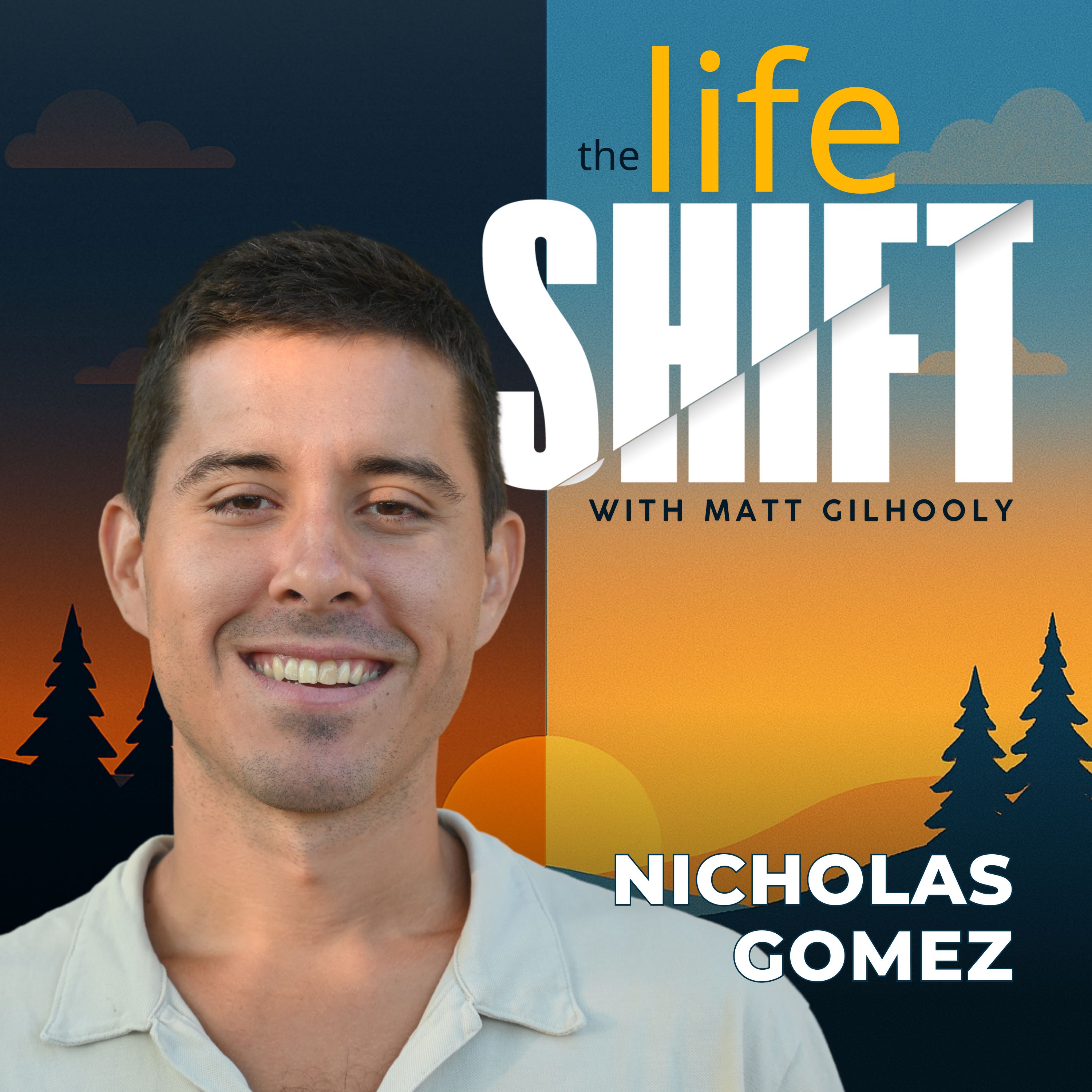
Nick Gomez spent years repeating the same patterns in relationships until one honest conversation, the kind that cost him everything, finally started to change him.


 Goodpods
  Podchaser
  PocketCasts
  RSS Feed
 Maybe you've done something you're not proud of. Maybe you've done it more than once. And maybe the hardest part wasn't the act itself, but facing the honesty within yourself and sitting with what it reveals about you.
Nick Gomez grew up moving fast, through friendships, through relationships, through versions of himself he wasn't sure he believed in. Raised in Cancun with a lot of freedom and very little guidance, he learned early that if no one found out, it didn't really happen. That belief followed him into adulthood, into relationship after relationship, until one moment changed the math entirely.
This is a conversation about what it actually takes to tell the truth when you know it's going to cost you. About the patterns we carry from childhood without realizing it. About grief, writing, the strange relief of finally saying the thing out loud, and what it looks like to slowly, imperfectly become someone you actually respect.
What You'll Hear:
- Why Nick kept repeating the same pattern across three relationships, and what finally broke it
- The three months he spent deciding whether to confess, and what helped him find the courage
- How writing a memoir in 30 days helped him process what he'd done and understand why
- The role his father's death played in reshaping who he wanted to be
- What honesty looks like now, in dating, in friendships, in how he shows up for himself
- Why grief so often goes unspoken, and what it actually looks like to support someone who's losing someone
Guest Bio: Nick Gomez is an author, filmmaker, and coach based in the United States. Originally from Cancun, Mexico, Nick has written multiple memoirs exploring identity, honesty, and the messier parts of being human. Two of his books are available as free audiobooks on YouTube. He approaches his work, and his life, with a commitment to authenticity that took years to build and that he keeps rebuilding every day. You can find him at https://www.realnicholasgomez.com/
Listen and follow: www.thelifeshiftpodcast.com/follow
Subscribe to the newsletter: https://thelifeshiftpodcast.beehiiv.com/
self-sabotage, relationship patterns, emotional honesty, cheating and confession, childhood neglect, self-worth, identity, memoir writing, psychedelic therapy, grief, father loss, authenticity, codependency, personal transformation
You Might Also Like:
Matt Gilhooly (00:00)
There's a version of honesty that costs you something, not the kind you perform and not the kind that makes you look self-aware at a dinner party. It's the kind where you sit across from someone you hurt and you say it anyway, knowing the relationship probably won't survive it. Nick spent years moving through relationships in the way that he learned to move through the world, chasing attention, avoiding stillness, and quietly believing he didn't deserve the things he had. It wasn't until the
third time he found himself at the same crossroads that something shifted. He chose the harder thing, and that choice didn't just end a relationship, but it started a different kind of life. This is a conversation about what it takes to stop running from the version of yourself that you don't want to be.
Nicholas Gomez (00:45)
it was the third relationship I had ever been in, monogamous relationship, and the third relationship I had cheated in. So I had like never been faithful in a relationship. this last relationship, the third one was the first time that I like,
told the other person in person, just like, here's what I did. I'm sorry.
Matt Gilhooly (01:08)
You're listening to the LifeShift Podcast. I'm your host, Matt Gilhoolie. This show is built around one simple idea, that sometimes a single moment can change how we see everything. Each week, I talk with someone about the moment that shifted their life and how they learned to live differently after it. These are not stories about having it all figured out. They are stories about what it looks like to keep going once the story changes. Thank you for being here. Here's today's story.
Matt Gilhooly (01:40)
Hello, my friends. Welcome to the LifeShift Podcast. I am here with Nick. Hello, Nick.
Nicholas Gomez (01:45)
Hi Matt, thanks for having me on. I'm excited to be here.
Matt Gilhooly (01:48)
Well, thank you for wanting to be a part of the Life Shift podcast. This has been such an incredible journey today, actually, not when it's released, but the day of recording is actually start of year five for me. So this is my fifth year going into these conversations that the younger version of myself never could have imagined. I grew up in a time period where my parents, well, my father, my mom died when I was a kid and that's my life shift, but
Nicholas Gomez (02:01)
wow.
Matt Gilhooly (02:16)
my father kind of was in this mentality of like, we don't talk about certain things out loud to like other people or strangers. You only ask them certain questions and everything's nicely in this box. And that was just the time period. And I realized as I got older that like, what's that? Like that doesn't give us much connection. So I've just been on this journey of talking to over 250 something people now about these very oftentimes very personal moments in their lives.
and we get to unpack it like two regular humans would, you know, and not, and put all that shame and the other things that come, or guilt or whatever comes along with our stories, put that to the side and have just open conversation. thank you, before we even get started, for wanting to be a part of this.
Nicholas Gomez (03:02)
Of course. Thanks for having me. Can I ask you a question? That's, I, so I had a podcast for a long time and I got to talk to all these people that I'm like, man, I never would have imagined this. Are there, is there someone that you've already talked to that you're like, was, was your number one or in your top five or something like that?
Matt Gilhooly (03:05)
Sure.
I don't know how I would qualify that because I, this sounds cheesy, but I think every conversation has healed a part of myself that I didn't know still needed to be healed. Like this, this human connection, I've heard stories that I could just never imagine surviving or coming out of the dark from. And I look at these people like, wow, if they can do it, that tells us a lot about the human spirit and the resilience. So,
Nicholas Gomez (03:42)
Mm.
Matt Gilhooly (03:50)
I don't know if I could qualify it, because everyone's story is so personal. I try not to make this podcast about achievements or big wins or things, just really the human story. so categorizing people in a list like that would be hard. I bet there are some that I felt more comfortable in the conversation over others, but I think I would not want to put one over the other. But it sounds like you have someone at the top of your list.
Nicholas Gomez (04:18)
just people that I was like surprised they would even give me the time of day. I meant more in that sense, but yeah, no, it's a.
Matt Gilhooly (04:24)
⁓
yeah, I mean, I've had like Tony Award winners, but they happen to be friends, you know, and like I have had people that have just done big things. But at the end of the day, they were all just people, which is kind of a cool thing to realize. I think also in my generation of growing up, we put celebrities at the top of the list and they're like not people anymore. And then you hear they're really raw stories and you're like, okay, they're actually just like me.
You know, they just happened to have won a big award or had some opportunities that they created for themselves. So yeah, it's been quite a journey. And I think it's something that I hope other people are doing just in their own circles of just having these conversations. Because I know when I was in my dire straits of trying to figure out grief after losing my mom, I was like, I don't think anyone could understand. But at the same level, I knew other people had lost a parent or someone close to them.
In those moments, we feel very alone and we feel like nobody could possibly understand what we're going through. So I just hope that more people are having these conversations. And I think in 2026, people are starting to do that. Maybe a little bit.
Nicholas Gomez (05:35)
Yeah, definitely.
Matt Gilhooly (05:37)
All right, let's get, before we get into your story, actually, maybe you can tell us who Nick is in 2026. Like, how do you show up in the world? How do you identify these days? what's, who's Nick?
Nicholas Gomez (05:47)
Nick is still figuring out who he is in a lot of ways. I have a hard time sort of labeling myself because even though I do a lot of things that other people do, I do them in ways that feels So you could say I'm an author, a filmmaker, a coach, a friend, I don't really feel like any of those things. I'm just like, I enjoy.
writing. So I'm going to write a book or I enjoy movies. So I'm going to try to make a movie or someone who follows their curiosity, I Yeah. And just would say maybe as far as more like the human side in the last six or seven years, my North star has been to be as authentic and honest as I can.
Matt Gilhooly (06:22)
So you're just Nick.
Nicholas Gomez (06:39)
even if it's scary or even if it's risking, you know, other people's judgment. And so I think that paints somewhat of a picture of me.
Matt Gilhooly (06:51)
Yeah, I think it's hard. think it's hard, especially these days with like social media and all the things that were kind of like, taught to be performative in a way and then you want to lean into that authenticity. But then sometimes you lean too far, not you specifically, but someone leans too far and then that becomes performative authenticity. So you get in this circle, or the cycle of performing for others and I think
the more we can do it where we're leaning into who we are and kind of experiencing the world like you said, like if you're curious about it, you're gonna try it or you're gonna do it or you're, you wanna write something, you're gonna write, you know, and I love, I love that. And I love when people are kind of tuning into who they are and not who they think they should be for someone else.
Nicholas Gomez (07:39)
Yeah, no, that's, I definitely did that a lot in the past, especially with social media. Like I felt like every single thing that I'm going through, I have to share a lesson about it or, you know, and now I'm just kind like, I still try sometimes and it's almost like I've lost the muscle. So yeah.
Matt Gilhooly (07:59)
Yeah.
Well, I think that you can. Not everything is a lesson. Sometimes it just is. You're just having a bad day. There's no lesson in today. You just know you're having a bad day, and tomorrow will be different, maybe, if you're lucky. All right. So let's get into your story. ⁓ I like for the guests to kind of paint the picture of their life leading up to this main pivotal moment that we're going to talk about today, fully understanding that you've probably had many life shift moments in your life.
Nicholas Gomez (08:14)
Yeah.
Matt Gilhooly (08:29)
I like to pick apart the one that the guest feels like maybe made the biggest difference between the before and after. So paint the picture, go back as far as you need to to tell us who the before Nick is or was.
Nicholas Gomez (08:42)
Yeah, it's crazy. I go back and read some of the stuff I wrote about the before Nick and it feels in a way like that didn't ever happen. Like it's so jarring to accept that I was actually that person. I would say a lot of it so I grew up in Cancun, Mexico. I
had a very adult life at a very young age. So I was playing online poker, going to casinos, going to nightclubs at like 13, 14 years old. And maybe the most important value in my community of friends and classmates was women. like who you were with as a man was like, ⁓ this guy's got, you know, the cutest girl in the school. So
that made you high value. And so I chased that a lot to the point where even once I had a girlfriend who was like an amazing person, super creative, everybody liked her, I wanted more. And so I would start, you know, sneaking around with other girls, seeking attention from other girls and cheating on
my girlfriend. So lot of that is because I didn't have a ton of guidance as well. So I was just kind of, you know, thrust into this grownup world while still being a child who thinks, you know, like if you break the blender, you could just like hide it under the sink and no one's going to know. I was kind of moving through life in that way. Like as long as no one finds out, it doesn't matter what I do.
Matt Gilhooly (10:30)
Mm-hmm.
Nicholas Gomez (10:32)
because no one's gonna know.
Matt Gilhooly (10:34)
Did you
have a close knit family growing up or why were you thrust into the adult side so much?
Nicholas Gomez (10:41)
So my parents...
Matt Gilhooly (10:42)
besides living in
Cancun where everyone comes to party and do stuff.
Nicholas Gomez (10:47)
Yeah, that's a big part of it. Another part is just that my, so my parents separated when I was like five or something like that. And when I was 11 or 12, me and my brother moved to California with my mom, spent a year there, didn't really like it. And then we moved back to Mexico without my mom. So from the age of 11 onward, I lived with one parent and
that parent was like extremely busy all the time. And even before that, when I was 10 or nine years old, I think my parents were going through a lot in their relationship. My dad cheated on my mom. And so that was like the reason their relationship fell apart. And, you know, my mom was having to process that for years.
And so yeah, I just spent a lot of time alone. Yeah.
Matt Gilhooly (11:46)
Yeah, you have a broken home in a way. Yeah,
and I asked that because the attention seeking element of it, I've talked to so many people how whether it was, you know, trying to find other things outside of their relationship or, or even like, getting a new job and having someone be really excited about that and chasing like the next high.
often comes from us as kids trying to win the love of someone or get someone's attention. So I wonder if you've attached any of those things to your childhood in a way of like, why did you want to seek out something quote unquote better every time or not every time but when you did.
Nicholas Gomez (12:31)
Yeah,
obviously, I think it's always going to be layered. So it's never, I don't think it's ever one thing, but I think that's what was modeled to me. Like my dad was never home and there was always talk of like, he's with his girlfriend or, know, and so it wasn't necessarily that I saw that and was like, I want to be that way. But I just unconsciously started forming, that's what relationships are.
Matt Gilhooly (12:36)
Yeah.
Nicholas Gomez (12:58)
But then also, this was a recent sort of realization was that in a way, I felt like if I'm okay, then no one's gonna worry about me or pay attention to me. And so I would always find ways to like create problems in my life then at least somebody would be...
Matt Gilhooly (13:21)
Mm.
Nicholas Gomez (13:25)
you know, having to deal with that. but yeah, it's, it's a lot of it's also, yeah, it's also neglect, like spending just a lot of time alone that created a lot of stories in my head about self-worth or self-esteem and, am I not loved? Like, so, you know, if, if those are the sort of thoughts that a small boy is having, then
Matt Gilhooly (13:32)
Fairy Laird.
Nicholas Gomez (13:53)
eventually as that becomes my identity that that's when I'm going to fulfilling in my actions too.
Matt Gilhooly (14:01)
Right, and as you described, the society that you were in, that was also the thing. Like chasing, having the best of whatever you're doing. I'm sure that the groups that you were playing online poker and such with were probably not the best role models in general either? Or... I mean, I'm generalizing here, but it just sounds like a young kid in an online poker thing might not be like...
Nicholas Gomez (14:20)
Yeah, I mean, not for a 12 year old boy.
Matt Gilhooly (14:29)
the best advice someone would have for someone else.
Nicholas Gomez (14:32)
Yeah, It was weird because I liked that I was a part of this grown-up world, but I think that that seed was planted at an early age, and I don't think that that's a good thing when you're an 11-year-old boy to want to be adult. I think it's more natural to want to be a child and to play and all those things, and I was like...
Matt Gilhooly (14:38)
Of course, yeah.
Nicholas Gomez (14:58)
sitting at a casino at a poker table with like 50 year old dudes, know, with my allowance. Yeah.
Matt Gilhooly (15:06)
Yeah,
it's interesting. I think that people that have, this is me just thinking as Matt, so I'm not attaching it to anything, but it seems like people that have situations in the home, divorce, know, relationships that they've seen, they tend to feel like they need to be the adult and then they want to be the adult. I did the same thing. Like I felt like at eight when my mom died, I was like...
now I can't do kid things anymore. Like I don't know how to play because if I play, I might mess something up. And if I mess something up, then my dad might leave too. And he was never going to do that. But these little tiny brains that we have, we're just, we just want to be accepted in whatever way that looks. And you were like, well, I got to grow up. I got to do all these things. So, so you're, traveling through the world in your, in your mind growing up and you're, found a seemingly great person.
that you were dating, right? And then, but the other part of your mind was like, I need to seek out more just for more attention.
Nicholas Gomez (16:11)
Yeah, for more attention and also because I didn't know how to end a relationship. I wasn't comfortable being alone. The reason I was in a relationship was because I felt alone at home. And so once I was in it, it was like, that void of just no one cares about me has been filled. So even though I'm kind of unhappy in my relationship, I don't want to risk ever feeling
Matt Gilhooly (16:18)
Mm.
Nicholas Gomez (16:39)
alone again, so I'm just going to be in the relationship and selfishly go and do all the other things that I want to do anyway. yeah, so that was high school. And then that sort of just became my way of moving through relationships for the next several years until the sort of that one moment where
I just, and we can get into it, but that, it was the third relationship I had ever been in, monogamous relationship, and the third relationship I had cheated in. So I had like never been faithful in a relationship. And this last relationship, the third one was the first time that I like,
Matt Gilhooly (17:09)
Yeah.
Nicholas Gomez (17:31)
told the other person in person, just like, here's what I did. I'm sorry. And had to look at them, receive that. and it was awful. Like it was not just that moment, but the three months leading up to it where I was deciding like, what do I do? Do I tell them? Do I not? Do I just break up with them and let them off the hook?
Matt Gilhooly (17:43)
Mm-hmm.
Yeah. What led you to finally make the decision to say it? Because sometimes it's really hard to like start the word coming out of your mouth.
Nicholas Gomez (18:04)
Yeah. Well, it was, it felt, and this isn't like a super strong, like I believe this a hundred percent, but to me, it just felt like it would be more selfish not to tell them and just end the relationship. Like, Hey, I'm just not happy. Like, let's go our separate because like I still
That still happened to that person. I'm just choosing to take it away from them, right? Like even though it's a shitty thing that they are going to have to feel and whatnot, it's going to turn them into, you know, a much better partner or help them evolve in some way. So it took me three months of just, I remember at that time I was still riding my bicycle to work and I had started listening to David Goggins, Can't Hurt Me.
the audio book and he's just basically if you don't know he's like this hard ass Navy SEAL that's like just you got to do the right thing in life and has that kind of messaging and so I would be on my bicycle on my way to work after I cheated just listening to him talk about like there's the path less traveled and then there's bitches that you know don't don't do the right thing and
Maybe that helped me kind of come to terms with plant a seed. ⁓
Matt Gilhooly (19:28)
plant the seed? Did
you have those feelings in the previous relationships when you were cheating or did you feel like you were getting away with it so it was okay?
Nicholas Gomez (19:40)
In high school, I don't think I ever considered even, I did tell her like after the, well, it just kind of everyone found out. But I never, I never thought that I would share that. And then my second relationship, I don't remember. I think I probably also didn't plan on saying anything.
But I think there was something about my third relationship where I had matured enough to like actually connect on a deeper level with her. And it just felt like I was able to feel that there is a right thing to do here. And I care about this person more than I care about getting away with it or just protecting myself or whatever. so I told her.
and yeah, it was that she was such a great person that it's almost like, it's almost shameful to me. Like even after I had done that to her, she was like, I'm not mad at you. I'm like, I'm like that I hurt somebody that loves me this much. and maybe that
goes back to your earlier question of, you know, does this come from childhood or whatever? Like, one of the beliefs I formed growing up was that nobody loves me, nobody cares about me. And so this was a way for me to kind of create that again and again and again. It's like, here's someone that loves me, I'm going to do something so that they won't. ⁓
Matt Gilhooly (21:26)
Yeah,
and she broke that streak for you, would you say?
Nicholas Gomez (21:31)
I would say so, yeah, at least in
Matt Gilhooly (21:33)
like trying
to blow things. Did you stop trying to blow things up?
Nicholas Gomez (21:38)
After that, definitely. I like after that relationship ended, I just was like, this is never going to happen again. I'm going to always be honest. Even if I'm not like monogamous, I dated for several years before I was in another relationship. And there would be times where someone would ask like, what are you looking for? And in the past, I would say, a relationship and what yada yada.
Matt Gilhooly (21:47)
Yeah.
Nicholas Gomez (22:06)
just to have sex and then after that relationship, I would say, know, my life is kind of in a mess right now, so I'm not looking for anything serious and they would get upset and leave and I was like, all right, that's how easy out but also like that's what reality is like when you're not trying to manage outcomes and control everything. You don't always get your way.
Matt Gilhooly (22:19)
Easy out.
Yeah. So this particular time, you this third relationship, you told her you admitted to it, you confessed, if you will, and she like showed you unconditional love or showed you love still even though you may have hurt her? Is that what you saw from her? Because I mean, this isn't about her story, but it's about like what you saw and felt like. Was it was it feeling that love for the first time in that way?
Nicholas Gomez (23:01)
so there was definitely like devastation. I think she probably was in shock in some way. but what I remember she said was, and I don't know if this was that night or like in the weeks after, but she said, I'm less upset that you cheated than I am that you lied about it for three months. I don't know. Like after we,
Matt Gilhooly (23:04)
Right.
Nicholas Gomez (23:23)
ended the relationship officially. We never spoke again. So like, I don't know how she feels about me to this day. But at least in that, like when it was happening, it felt like, wow, this person is way, way more compassionate and understanding than I would be if I was in this position.
Matt Gilhooly (23:46)
Yeah. So after this kind of, you're finally saying, okay, I'm going to be more honest than I have been in the past. Like what changes about you after that relationship ends? Like how are you moving through the world differently or does it take longer to kind of put all the pieces together? Because you're clearly a different person now, at least even in the way that you seem by talking through this story, that you have more reflective elements to you.
And maybe I'm just totally making that up and you're lying to me right now.
Nicholas Gomez (24:17)
No, ⁓
that would be crazy. No, so I think part of it was just in relationships or in dating, just being forthcoming about everything. And then also it was if I'm ever in a relationship again, so like my fourth relationship, I around the five or six month mark, we were having a lot of
Matt Gilhooly (24:27)
Mm-hmm.
Nicholas Gomez (24:42)
issues in the relationship. And I started feeling the desire to cheat again, or not to like I started feeling like I don't want to be with you anymore. And so and I feel like you're not treating me well. So I'm like, my way of of managing that had always been I'm just going to do whatever I want because like, fuck you, you know.
As soon as I started feeling all those things, I sat down with her and I was like, look, here's what's coming up for me. Like, I'm not going to do it, but I think it's important that you know your partner is feeling this way. And like we were able to talk about it and then I just didn't have that desire anymore. Like I just ended the relationship instead.
I got a lot better at making decisions that were harder, less selfish and that considered other people more instead of just always considering me and my own safety. And also, so part of the reason that this particular moment outside of just the breakup was so transformative was because it was
In that sort of month period where I confessed to the cheating, sorry, in those three months, part of what helped me come to like find the courage to share that with her was that I started writing about my last relationship and about cheating on her first so that I could kind of go through that whole whirlwind and
understand that and admit it to myself. And that was like when I started, like my writing pivoted completely to memoir. And I admitted a whole bunch of stuff publicly to friends and family and everyone, not just about the cheating, but about other experiences with abuse and etc, etc. So it was
Yeah, just a sort of like a letting go of a double life in a way.
Matt Gilhooly (27:03)
Hmm.
Yeah. There's something very cathartic about writing or even saying the words out loud. Did you find? I mean, you must have if you'd made this decision to share out loud with her. There was something about that writing that also was cathartic in a way. I mean, hard, but was it hard to get it out?
Nicholas Gomez (27:21)
Yeah. No, yeah. Like,
wasn't, it's weird. That book was, it took me 30 days to write it it was like 85,000 words or something. and yeah, it was the first time I felt like all the shitty things that I did in this one year period of my life are now this beautiful book that might help someone else. so it just helped me.
Matt Gilhooly (27:29)
Mm-hmm.
Nicholas Gomez (27:48)
pull myself out of like, I'm a piece of shit. I've done bad things. Therefore I am bad into no, I've made mistakes and I can stop making mistakes and, you know, become a better person. yeah, just helped me also have some sense of like, how do I even frame this for this person? You know, like,
Because otherwise it's like, I cheated on you. Like, why? Like, I don't know. You know, like, well, that sucks. But if there's at least.
Matt Gilhooly (28:20)
Were you able to give
her some kind of reason, like based on your story?
Nicholas Gomez (28:24)
Yeah, I mean,
I think the sort of in a nutshell, like the one sentence that captured it all was like, I don't feel like I deserve to be with you. Like, I don't feel like I deserve to be loved. And so I found a way to mess that up and to push you away. And it had nothing to do with, you know,
you not being attractive or me not liking you, like it was just getting too real and I didn't know how to navigate that.
Matt Gilhooly (29:00)
Yeah.
And I don't think you're the only person that's ever felt that way. I think there's a lot of people that we'd rather sabotage something that's going okay, just in case it was going to blow up two years from now. And I'm not saying this is exactly what it was, but I think there's a lot of people, myself included, that have done things like that, whether that's through work, through relationships, whatever it may be. It's like, I might as well just mess it up now because I know it's going to be.
messed up in the future and I'm going to be alone again. So is that, does that some, some of that resonate with you or totally off base?
Nicholas Gomez (29:36)
Yeah.
Yeah, no, we, had actually, it was funny. She had, she had started reading this book, codependent no more because I recommended it to her. And then as soon as she started doing some of the things in the book, I got angry and I was like, because it's shifting us out of codependency. and so I, I felt like I was, she wasn't
telling me the things she was going to do. She was just doing them and I felt like, you know, this is selfish or whatever. so again, I fell into the, if you're going to be selfish, then I guess that means, you know, what does this relationship even matter anymore? So I'm going to find a way to destroy it before it can destroy me. Definitely true in that case as well.
Matt Gilhooly (30:27)
definitely a safety.
Yeah. Did you have you ever sought out any kind of professional help to work through like emotions and stuff or was it just right? Because a lot of times writing and stuff like that is really helpful for people. Just curious just as a guy if you want to admit anything.
Nicholas Gomez (30:41)
Yeah. Yeah.
Yeah. No, I've done a lot. And at the same time, I feel like I still have a lot to do as far as emotional work. But yeah, I started. Well, I started therapy in high school. I did three sessions because my dad after three sessions, was like, therapy is for crazy people. You're not crazy. So that's it. And then I didn't start therapy again until
Matt Gilhooly (30:52)
Mm-hmm.
Nicholas Gomez (31:08)
Like the year before that relationship. And I just wasn't really doing therapy correctly. Like I was hiding stuff and just, yeah, but after performing, yeah. after that relationship, I, I started going to support groups for codependency. I started, like actually participating in therapy.
Matt Gilhooly (31:18)
performing.
Hmm. wow.
Nicholas Gomez (31:33)
Actually, that was the therapist I was seeing during that relationship. Cause I remember I showed up to the first session like two weeks after I had cheated, but I still hadn't told her. And I told the guy like, here's everything that's going on. And if in three months we're in the exact same...
place. If I'm in the exact same place I am right now in three months, then like you're not helping me. More so I guess I framed it more as like, I want to take action on this in the next three months. And I think he helped me a lot. So yeah, therapy, I also did psychedelic therapy, ketamine therapy, like
Matt Gilhooly (32:05)
No pressure, therapist.
Nicholas Gomez (32:21)
craniosacral, there are just all kinds of stuff I could find to help me when I can afford to do it.
Matt Gilhooly (32:26)
What do you think helps the most?
What do you think helped you the most or did none of them?
Nicholas Gomez (32:31)
No, they all helped to some extent. I would say either the writing or the psychedelic therapy. ⁓ Yeah, the
Matt Gilhooly (32:33)
Okay.
Okay. I've heard that
before from guests. A lot of people said EMDR really worked for them really well. Have you tried that?
Nicholas Gomez (32:47)
I did, but it was with a really shitty therapist and it was online like during COVID. So I was like doing it on myself. just was not.
Matt Gilhooly (32:57)
think I would be like, am I doing it right? And that defeats the whole purpose. So it's only certain like for me, I feel like talk therapy was the only thing that was going to work for me. Like, maybe I haven't tried anything else, but I did find success with talk therapy. But some people are like, that's talk therapy is nowhere near the top of my list of the things and I've heard psychedelics and, and things.
Nicholas Gomez (32:59)
Yeah. Yeah. Have you?
Mm.
Matt Gilhooly (33:24)
Although that can bring up other things. So I don't know.
Nicholas Gomez (33:26)
Yeah. Well,
did talk therapy help you like, like go feel emotions and like trauma or just kind of like rearrange your whole perception of yourself?
Matt Gilhooly (33:38)
Rearrange.
Yeah, it's I I failed at grief for 20 plus years. So I push it down, assume the role of perfectionist so that other people wouldn't leave and kind of use my mom dying as a crutch. And then finally, in my 30s, I was I was dealing with something at work that just was totally shitty. And so I funny enough went to therapy for that. And it brought up all the other things. And really what it did is
Nicholas Gomez (34:01)
Hahaha
Matt Gilhooly (34:04)
Eventually, it took me five people though. I think that's important, like seeking out, it's not gonna be like one and done kind of thing for most people. But this fifth woman, was, she just, we synced and she was like, you realize that every decision that you've made has been with that scared eight year old brain that someone else was gonna leave. And it was one of those things where like your whole life kind of unravels all at once. And you're like, that is like the most simple of sentences and the most logical of sentences.
yet my smart, assumingly, according to my grades, mind didn't figure it out. But it was one of those things that just kind of rearranged everything. it allowed me to let go of a lot of shame of the things that I did because of. So yeah, but it worked for me. So I wasn't like, let me seek out something else. But other people are like, talk therapy won't do anything for me, which fair. And it's great that you're trying these things out and so interested in because it sounds like
Nicholas Gomez (34:59)
Yeah.
Matt Gilhooly (35:04)
And maybe maybe this is a big difference between the before version of Nick and now is it sounds like you are really into finding out more about who you are at the core and what you can bring to the world in like a really Nick way versus whatever you were doing before trying to just survive.
Nicholas Gomez (35:25)
Yeah, no, I mean, that's partly why it's been so hard to be in a relationship now, because that's, that's not something I do only to myself. It's also I've gotten a lot better. But in the last like year or so, it's something that I was just my default for like friends and partners and family to just be like, Oh, why do think that you didn't do this thing? And why do you think that this and it's like, Whoa, you know,
23 or 24 year old girls like stay out of it, you know
Matt Gilhooly (35:56)
Slow your roll.
I mean, to be fair, you'll find your person. Or if you haven't already, but you'll we all find our people eventually is the more we can live who we are in real time, versus like whatever we're performing to be. I feel like we find our we find our tribe, we find our people. Yeah.
Nicholas Gomez (36:04)
Yeah.
Definitely. it's,
it's just, I think it's, and maybe this is just like favorable to say it because of what I've been through, but in a way, I think like it's better to be with someone who has been through all this stuff, but is already kind of like coming out of it than to be with someone who is seemingly got no issues. And maybe that's because they just are completely oblivious to them. And then.
when you find or when you're in year three of your relationship, it's all going to blow up in your face. But, but yeah, I am also at a place where I've been single for five years. And before that, I was just jumping like from relationship to relationship, not really ever giving myself time to, you know, spend time with myself and build deeper friendships and
Matt Gilhooly (37:08)
Mm-hmm.
Nicholas Gomez (37:19)
pursue the things that I'm interested in. That's something that's always been hard for me is when I'm in a relationship is to still be my own person and to still do all these other things. Because even though my mom, she didn't die, but she wasn't around after age 11. still have that same, a similar thing as what you described of like
If I'm in a relationship and I mess up, they're going to leave. So I have that anxious energy of trying to be hyper aware of everything that's going on. And yeah, it's.
Matt Gilhooly (37:57)
Mm-hmm.
Do you still self-sabotage at all?
Nicholas Gomez (38:05)
Definitely. mean, that would be, that would be ridiculous to say, anybody that says no to that would be lying. But the ways in which I do that now, I feel like are more in my professional life. Like I have a lot of stories around money and work and all that, just because I saw money be this point of tension in my dad's life. Like I think
Matt Gilhooly (38:06)
Okay.
Nicholas Gomez (38:31)
He was maybe he died three years ago. And in those last two years, I remember just him like, repeatedly saying like, what's everyone going to do when I'm dead? Like, everybody depends on me. so work and money were this sort of like, everything to him. So I have a tendency to overwork, I have a tendency to be...
just.
to believe that if I get money, then that's gonna kill my creativity or it's gonna make it not mean the same thing or just silly stuff like that that I'm kind of trying to replace with healthier beliefs.
Matt Gilhooly (39:20)
Yeah, I mean, it sounds like you're on the right path. It sounds like you're, I guess the word I would use is intentional about like, trying to be a better version of yourself each day. We're not going to win every day, but sounds like it. I'm curious about this newer version of Nick existed as your father's, was it a health related decline or anything like that? Okay, so you did the new version of Nick, did that help you in that loss?
Nicholas Gomez (39:27)
Yeah.
Yeah.
yeah, that was maybe the best year and the worst year of my life when he, so like he, he died from, I think within a year of being diagnosed or something like that. luckily, like I had this weird intuition. I don't actually, it's not weird cause he was always complaining about his health leading up to that. But for some reason I was the only person that like saw it coming.
Matt Gilhooly (39:56)
I understand that.
Nicholas Gomez (40:16)
So I, before he was ever diagnosed, he died of brain cancer. Before he was diagnosed, I recorded a podcast with this coach where all I talked about was my relationship with my dad. And then I subtitled it in Spanish and I sent it to my dad and he watched it and he's like, all right, like let's, let's hash things out basically. So I flew down to see him and we had this, you know, very intense.
10 day trip of talking about all these things and crying and yelling at each other and whatnot. And after that trip, just like whatever I was trying to prove to him, I just was like, I don't have to do this anymore. And I was able to feel not just the love that I have for him more deeply, but the love that he has for me and the way he shows it, even though it's not the way I needed it.
is still like an incredibly profound way of showing love. so yeah, from when he was diagnosed, I was flying down to see him all the time and, you know, just holding his hand through it as much as I could and trying to stay out of his process. Because obviously everybody has ideas about, you should do this treatment or that treatment. that was
the way that I would kind of start to avoid my grief was like trying to control his process. And so it was always a reminder of like, you can't save your dad. The best thing you can do is just let him, you know, go down his path, even if that means he's going to die. that year loving him and enjoying him instead of trying to control him.
Matt Gilhooly (42:03)
Yeah. Do you think if he had been diagnosed like when you were like 15, 16, you would have felt the same way? Or is there something about this version of you now?
Nicholas Gomez (42:09)
Mmm.
That's an interesting question because I...
I still really like I loved him and I cared about him and I was more just like angry because of the way he was in or not in my life. But if he was diagnosed with something, I think I probably would I would like to say I would have been maybe not as capable, but still trying to like support him and reconnect with him. But I'm sure that
everything else in my life would have been falling apart and I would have been finding ways to hurt myself and hurt other people. yeah, cause that, I mean, when it happened, I was 27 and it was still like, like it felt like the world was ending. So if I had been 15 or 16, I would have been panicking, not just that he's going to die, but like, the hell am I?
Matt Gilhooly (43:06)
Yeah.
Nicholas Gomez (43:10)
How am I gonna take care of myself?
Matt Gilhooly (43:10)
Right.
Yeah, I think this version of you is weird to say it and I think you would understand, but like that was like a gift, the ability for you to be forced, if you will, to spend that time with him and then find out how valuable that was. And I'm sure it's going to affect you for a long time. I had a similar situation when my mom died. My dad's mom kind of stepped in as that figure in my life and we got really close and
Nicholas Gomez (43:28)
Yeah.
Matt Gilhooly (43:39)
when she was diagnosed, ⁓ when my mom died, yeah. Yeah, and then I struggled for a long time, but my grandmother was always kind of that rock for me. And when she was diagnosed with cancer, I was like, well, I didn't get to do it right the first time, like I screwed up. And so I'm gonna make this the best end that it can be for both of us. And so I was just super intentional, but I know that had my mom never died, I wouldn't have had that beautiful.
Nicholas Gomez (43:42)
You said you were eight?
Yeah.
Matt Gilhooly (44:09)
sad but beautiful ending with my grandmother and spent the last, you know, five days by her side till her last breath, you know, all the things that had I not experienced a sudden loss and then nobody around to help me grieve, never would I have had such a beautiful end with her. So like, there's these weird like, silver linings in things that happened to us when we're younger that we can't that are out of our control, that if we get to if we're lucky enough,
to bring ourselves to a place like you have where we're just like more intentional and more who we are. We get this opportunity, even in the saddest times, to have something that you'll never forget. You'll never forget that year that you got to rebuild or refocus or whatever it may be with your father. And I feel the same way about my grandmother. It's like no regrets in that experience, even though it ended the way that it did.
Nicholas Gomez (45:06)
I'm sure that you maybe have already shared about this in a previous episode, but if you're open to it, I'm just curious, like briefly, you said that you screwed it up, like when your mom died, what do you mean?
Matt Gilhooly (45:16)
Mm-hmm.
Yeah, I mean, it wasn't intentional. It was that everyone around me. Yeah, I know. But everyone around me, my father, my grandmother, like, everyone, it was the time it was the late 80s. People weren't talking about grief, people were kids will bounce back. And so I just saw that everyone was hoping that I was going to be okay. So I had to show them that I was going to be okay. And once you get in that cycle of just trying to perform, perform, be perfect, be perfect. It doesn't stop.
Nicholas Gomez (45:22)
But you were eight? You were eight years old.
Matt Gilhooly (45:47)
And so I did it through my teenage years, I did it through my 20s, and then eventually, like, I hit a wall in another place, and that allowed me to kind of, like, open the door to go, okay, maybe it's time to stop using this as a crutch. Because I would, even in this case, something good would happen in my life, and I would be like, well, that's because my mom died. You know, like, I would just use that. Or something bad happened in my life, that's because my mom died. So it was like this horrible crutch that...
Nicholas Gomez (46:14)
Mm.
Matt Gilhooly (46:17)
I didn't intentionally use, but it was just all I knew, the survival mechanism that just turned into a evil monster for so long. And so I say failed at grief because there were little moments where I tried, but like it just leads to self, self-hate, self-harm, self, all the things that like, you're just trying to survive this, this feeling that you can't put words to. And nobody was helping me and nobody knew to be fair. I probably was putting on a good face.
So I try to take the shame away from that because I think I was just trying to survive. But it was a failure. My parents were divorced. I lived full time with my mom. My dad lived states away. I was only going to see my dad twice a year. So all of a sudden, when she died, I had to leave the state, leave all my friends behind, leave my school behind, start a new school.
Nicholas Gomez (46:55)
Were you close with your mom?
Okay.
Matt Gilhooly (47:13)
live with a different parent. So everything was completely different. Everything about my life had changed. Kind of the reason this show begins or started because it was like literally my dad sat me down to tell me that my mom had died. And like from that moment on, it was the after. Like there was no continuation of what life was like before. So now I get to talk to people like you who in a different way made a decision.
Nicholas Gomez (47:33)
Hmm.
Matt Gilhooly (47:43)
to change his own life in a profound way because the ripple effects that probably you can't see that come from you making that decision are probably pretty big because who knows what she did because of that and like how she showed up differently after she was out of your life, how you're showing up differently and how that's affecting everyone else. I mean, it's big.
Nicholas Gomez (47:58)
Mm.
Matt Gilhooly (48:07)
And had all those terrible things not happened to me and me screwing up for so long, we wouldn't be having this conversation. So I wouldn't be affected by what you do for the world. like, all of it kind of makes sense now. But you know, would I want a different probably, but can't do that. We can only do with what's in front of us.
Nicholas Gomez (48:24)
Yeah. Man,
I wish I could talk to you for another two hours, just about your whole experience with your mom and how you deal with process that that's, that's tough, but thanks for sharing that.
Matt Gilhooly (48:36)
Yeah. Well, we can do that.
Yeah, we can do that another time. This one's more about you. I appreciate it, though. And I appreciate your interest because people that's one of the things when we started that like people should be having these conversations. Growing up, people were afraid to ask me about my mom. You know, because they were like, is he gonna cry? Is it gonna break? Like, I don't have the tools to help. You know, what is it? So we just never talked about her. And so I don't know her anymore. Like, she's just an idea of
Nicholas Gomez (48:43)
Yeah.
Matt Gilhooly (49:06)
mother if that makes sense because I don't have all those memories and no one talked about her so I think it's important that we have these conversations and people ask questions even if they're hard questions or they say things like you did to your girlfriend at the time that were hard you knew that you're you pretty much assumed that your life was gonna blow up when you told her that right like
Nicholas Gomez (49:07)
Hmm.
Yeah,
I mean, I felt way more like I'm about to blow up her life because my life was like slowly falling into a pit of depression. ⁓ So apparently it actually was relieving for me once I told her it was just like, all right, like at least I'm not hiding this anymore. But.
Matt Gilhooly (49:39)
Right. And a pattern.
It's a heavyweight.
Yeah. What if,
what if 2026 Nick could go back to like the Nick on his bike listening to that audio book? And is there anything you'd want to tell him before he got the nerve?
Nicholas Gomez (50:06)
Honestly, I think I would probably just reinforce like, yeah, you got to do this. And I was going to say like, maybe, maybe try to convince him not to still work things like we tried to make things work after I confessed to her. And I think that might have kind of like made things a little bit worse. Maybe not, but
I don't think I would have listened to, I think I was going to do whatever that version of me was going to do. but yeah, actually a friend of mine, I think the day after I had cheated, I like wrote one of my best friends about what I had done. And he just point blank, didn't even entertain like the self pity. was just like, okay, well,
you have to tell her at some point. Like, this isn't funny. You're going to have to tell her. And I just remember being like, compared to when I was in high school and I would tell my friends and they're like, man, you're the best. That's awesome. To hear like, this is not okay. was like, fuck. Yeah. That's yeah. Great friend.
Matt Gilhooly (51:11)
Right.
Yeah, it's a good friend. Yeah.
I mean, it's someone that can tell you the truth to your face and not try to appease you or entertain whatever you're doing. I consider that a good friend. You we need people like that in our lives that care about us enough, just like you did to your girlfriend. You cared about her enough to tell her. And so your friend did the same for you.
Nicholas Gomez (51:28)
And yeah, definitely.
Yeah, no, it takes balls.
Matt Gilhooly (51:46)
takes something, but I think it takes intention. I think it takes like, want to show up in the world the best we can, and we're going to make mistakes. Like you pointed out, and sometimes our mistakes are cyclical or they're patterns that we adopted from early in our life or other people in our lives or whatever it may be. But we do have the power. It sounds so cheesy to say this out loud, but we do have the power to make the changes that we want. mean, most of the time we can choose to do something differently.
And it sounds like you're doing that every day. You're just trying to show up and be the best version of yourself.
Nicholas Gomez (52:22)
Yeah, that's yeah, pretty much. And not all the time, but as much as I can. ⁓ But yeah, I do want to say one thing about going back to the grief thing just briefly. In that way, I actually don't think that at least the people I know are talking about it, when my dad was dying, I nobody would ask me about it. Or if they did, it was always like
Matt Gilhooly (52:25)
Not all the time.
Nicholas Gomez (52:50)
You know, if you need anything, I'm here like in the middle of like, need something and here we are. They, if you need anything, like I'm here. I'm like, no motherfuckers. Like we're here right now. And so I had this beautiful moment with a friend of mine where I told her, like every time this comes up, you kind of ask one question and then like change the subject. And she said, well, what do you need instead? And I said, just be curious. And like,
That is, I didn't know that until my dad was dying. That like, if someone's going through a deep stage of grief, like it's actually more helpful to be like, what is this like to be, you know, losing your mom at eight years old or your dad at 27? Like, you know, what are you going to feel like after? Just questions, just help them to talk about it and put language to the experience.
Matt Gilhooly (53:41)
Mm-hmm.
Yeah, and not be stuck in their head. It's very isolating. can be very isolating. And if the person that you're caring for is dying, like actively dying, that's also like you're trying to navigate. How do I engage with this person? Because they're going through their own end of life stages. Like, so you're also like it's duly exhausting because one you're just trying to process everything yourself, but also
Nicholas Gomez (53:50)
Yeah. Yeah.
Matt Gilhooly (54:15)
You're trying to be there for the person in the way that they need, which is probably different than the way you need at the time. So yeah, think more people need to talk about it. I think more people are more than ever, probably, unfortunately, fortunately. But more need to. I think people are afraid to because we, a lot of us have been taught that like, if someone has a problem, we need to figure out a solution. And so there is no...
Like no one could tell you how to grieve. But if they were curious, like you said, and ask questions, you saying those words out loud or responding or thinking about it, that could help you. So I love that. That's a, that's a good point. So if someone's listening right now and really vibes with what you're talking about or had a similar experience or like the energy that you're bringing forward in the world, like what's the best way to find you, what you, what you bring to the world or even just to reach out and tell you part of their story.
Nicholas Gomez (54:57)
So yeah.
Matt Gilhooly (55:15)
that they feel they want to because there's so much power in telling our stories.
Nicholas Gomez (55:20)
Yeah, no, what I tell people is if you want to connect, you can go to my website, which is realnicolasgomez.com. And if you want sort of like a free way to connect with me, my, I think two of my memoirs that cover exactly what I was kind of sharing here are free as audiobooks on So.
Matt Gilhooly (55:42)
Mm-hmm.
Nicholas Gomez (55:45)
Yeah, that's, we all wear masks is one of them. So check out either of those or just listening to this, think hopefully it will be helpful to someone.
Matt Gilhooly (55:55)
Well, I hope so as well. And I know so I think we never know how someone's story is going to affect us or who it's going to affect or what part of our story is going to affect them. Right. Sometimes I go into these conversations like, yeah, that that line right there. And it's not it's like some little thing that you said on a side tangent about something that really clicks with them. And so the more we have these conversations, the more we get these connections. Question about your website. Does it have links to those audio books on YouTube?
Nicholas Gomez (56:24)
It doesn't have links to the audio books, but there is a little books tab on the website.
Matt Gilhooly (56:29)
Okay. Perfect. Yeah, so I
will I will put in the links that seem most appropriate for the listener so they can easily get to you. I do encourage people I hope there's a contact form on your website because I encourage people that if they feel called to tell you how your story made them feel or resonate resonated with them and what they're going through, I encourage them to reach out and just let you know. think there's a lot of there's a lot of
good energy that we can get from that. People telling you, you hearing that, you know, I think there's a lot more connection that we can get there. So hope you don't mind that I just sent everyone to your website to reach out to you.
Nicholas Gomez (57:07)
yeah,
absolutely. I read all of the contact forms that come in. So please, please do that if you feel called.
Matt Gilhooly (57:16)
Awesome. Well, I appreciate you being willing to go down whatever tangent we happen to go down and share your story in this way. Again, every little episode heals something that I didn't know needed to be healed from that little eight year old that I walk next to these days. So thank you for just being a part of this.
Nicholas Gomez (57:34)
Thank you, Matt. This was awesome. I really, really enjoyed meeting you and connecting with you and hearing some of your own story. Like, definitely going to re-listen to this myself.
Matt Gilhooly (57:45)
I appreciate that. I feel that this is the right place for me to be right now in this point in my life. I ventured into like different art forms to figure out the grief and the connection and all those pieces and landed here, but now still venturing out and just trying to create more. So I'm happy to be here and I'm happy to have these conversations even when they're really hard or we're talking about things that aren't beautiful and sunny and things like that. It's nice to be able to have this space and
really appreciative of everyone listening and being along the ride for these five years. It doesn't go unnoticed. So thank you for being a part of that, everyone. And with that, I'll be back next week with a brand new episode. Thanks again, Nick.
Nicholas Gomez (58:28)
Thank you, Matt.
Matt Gilhooly (58:29)
Thank you for listening to the Life Shift Podcast. If you wanna learn more, go to www.thelifeshiftpodcast.com.
There you can check out all the different episodes. You can check out the blog, some of the reviews for the podcast and the Life Shift journal. Links are there so you can purchase your own copy, whether in digital or print format. Thanks again.


