What Happened to You: Breaking the Cycle Sixty Years in the Making
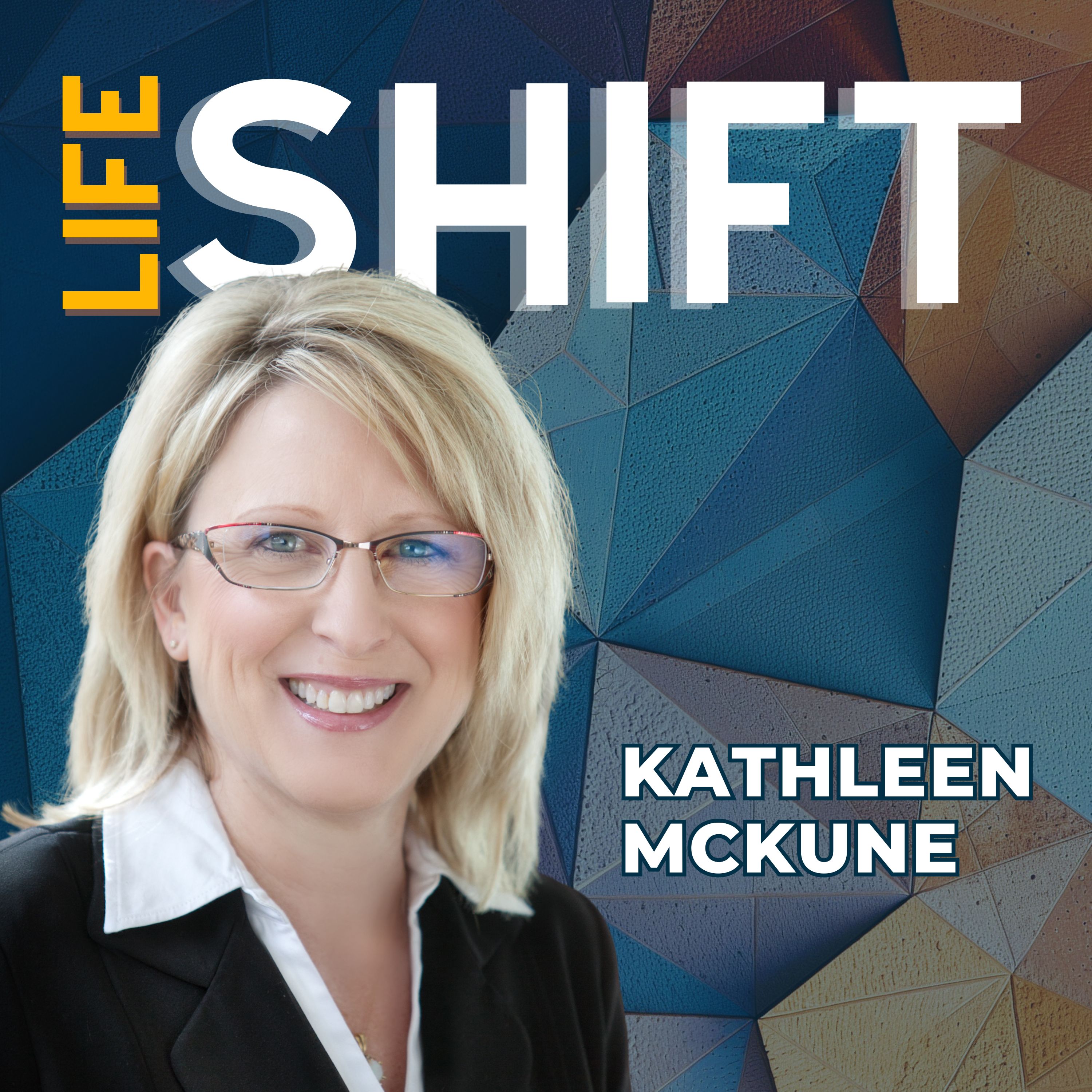
Kathleen McKune spent decades as a high-achieving entrepreneur before a single data point revealed her childhood was far from normal. Her story of trauma, resilience, and healing.


 Goodpods
  Podchaser
  PocketCasts
  RSS Feed
 Some of us build an entire life before we realize the foundation was made of survival, not solid ground. If you have ever pushed hard, achieved big, and still felt like something underneath you was quietly trembling, this episode is for you.
Kathleen McKune grew up in a home marked by abuse, neglect, and a kind of chaos that required a five-year-old to climb up to the stove and start making dinner for her siblings. She became a high-achieving entrepreneur, a strategic facilitator, a co-founder, a mother, and an author. She did all of it with what she calls "steeled up Kathleen": walls up, eyes forward, purpose driving every step. The struggles were internal. The world only saw the results.
In 2017, Kathleen was facilitating a trauma training in Kansas City when a slide went up showing the Adverse Childhood Experiences scale. She assumed most people in the room would score close to her. Most scored zero, one, or two. She had written down an eight to fib a little, knowing she was actually a nine. That moment, at 56 years old, was the first time Kathleen understood that not everyone grew up the way she did. It did not break her. It gave her language. It gave her science. And slowly, years later, it gave her permission to begin asking who she actually is underneath all the survival.
What You'll Hear:
- How perfectionism rooted in childhood fear shaped Kathleen's entire professional identity
- The moment a data slide cracked open sixty years of assumed normalcy
- What it felt like to write a book with her twin sisters and learn, in detail, what had happened to each of them
- The difference between managing trauma and actually healing, and the question that finally forced her to reckon with it
- Why dancing is the first piece of her authentic self she has found, and what that means for the journey ahead
- How Kathleen chose the purpose that was once given to her, and what it means to finally own it
About Kathleen McKune
Kathleen Harnish McKune is a co-founder and CEO of Team Tech, a strategic facilitation firm, and the CEO of Remarkably Resilient, a nonprofit dedicated to trauma-informed resilience education. She co-authored the book Remarkably Resilient: Community Matters alongside her twin sisters Sharon and Karen, sharing the neuroscience of trauma and a framework for building resilience. Kathleen works with state and local governments, corrections, child welfare agencies, and incarcerated populations across Kansas, and brings both lived experience and rigorous research to her mission of helping people understand what happened to them, and how to move through it. You can find her at remarkably-resilient.com.
Listen and follow: www.thelifeshiftpodcast.com/follow
Subscribe to the newsletter: https://thelifeshiftpodcast.beehiiv.com/
childhood trauma recovery, adverse childhood experiences, ACEs score, breaking generational cycles, trauma-informed resilience, healing authentic self, survival perfectionism, high-functioning trauma survivor, neuroscience of trauma, what happened to you
You Might Also Like:
Matt Gilhooly (00:00)
Sometimes we think we understand our story. We have lived it, we have survived it. We have even built a life on top of it. And then one day, a single piece of information cracks something open. In this episode, I'm talking with Kathleen, who spent decades as a high achieving strategist, a leader, a helper, while carrying a childhood marked by abuse and survival level perfectionism. Her life shift came in 2017 when she was facilitating a trauma training.
when she saw the data around adverse childhood experiences and she realized not everyone grew up the way that she did. That moment did not break her. It gave her language, it gave her science, and eventually it gave her permission to begin healing. This conversation is about resilience, about the cost of being steeled up for too long, and about what it means to finally ask who you are underneath the survival.
Kathleen Harnish McKune (00:51)
it was the first time in my life that I realized that not everyone had the kind of childhood that we had. I honestly, and I know it sounds crazy to say that, but I kind of thought, everybody has a lot of stuff and things to deal
Matt Gilhooly (01:07)
You're listening to the LifeShift Podcast. I'm your host, Matt Gilhoolie. This show is built around one simple idea, that sometimes a single moment can change how we see everything. Each week, I talk with someone about the moment that shifted their life and how they learned to live differently after it. These are not stories about having it all figured out. They are stories about what it looks like to keep going once the story changes. Thank you for being here. Here's today's story.
Matt Gilhooly (01:38)
Hello, my friends. Welcome to the LifeShift Podcast. I am here with Kathleen. Hello, Kathleen. Thank you for wanting to be a part of the LifeShift Podcast. You don't know what you got yourself into.
Kathleen Harnish McKune (01:44)
Hello, Matt.
Ready, set,
Matt Gilhooly (01:52)
This show has just been such a journey for myself and it's a blessing to talk to so many people around the world that I otherwise probably never would have run into and learn from their stories and honestly heal certain parts of myself that I didn't know still needed that. So it's just been such a pleasure to be able to talk to people like yourself. So I'm really honored that you chose me to help share your story in this way.
Kathleen Harnish McKune (02:19)
Well, thank you, Matt. I'm honored that you had me on as a guest. I'm really looking forward to the conversation.
Matt Gilhooly (02:24)
Excellent. Well, before we get into the conversation about your life shift moment, maybe you can tell us who Kathleen is in 2026. Like how do you show up in the world these days? How do you identify? Small question, right?
Kathleen Harnish McKune (02:36)
Yeah, I show up in the world with multiple hats like we all do. I am one of the co-founders and CEO of a for-profit entity called Team Tech, and I am a strategic facilitator. So I know how to help people think and take action together, love working with groups of people, and always have worked on behalf of and with organizations, so state and local governments, nonprofits that serve the most vulnerable in our communities. So corrections,
child welfare are two of the primary areas that I work in. And then my other hat is CEO of our newly founded nonprofit called Remarkably Resilient. That leads to later our life-shift moment, my life-shift moment. And then also a mom, a love to travel, don't get to do that as much as I'd like to. And learning to finally heal. And it is taking me
six decades to even begin to understand what that is and to start through that process. That's how I would talk about myself now.
Matt Gilhooly (03:39)
Yeah.
I mean, I think that's beautiful. And to name it out loud for other people to feel okay, if their journey takes them a certain amount of time as well. I can relate to that in the sense of after losing my mom, it took me 20 years to grieve appropriately, I guess, I don't know, whatever that meant for me to heal in a way that I felt that I was no longer using it as a crutch or some other
way. So I love that you are in this season now of finding that healing. Would you have wanted to do it, be able to do it before probably. But you know, this is where we are, right? And life takes us on this journey. And I'm sure you have a lot more tools now that you can use to find that healing. I think that's beautiful. So thank you for naming that for other people that might be struggling with the fact that maybe it's taking longer than they thought they were supposed to take to heal. Because I think we all assume that it's
needs to be a certain amount of time, and then that's it.
Kathleen Harnish McKune (04:40)
Yes, I think very much so.
Matt Gilhooly (04:43)
Well, let's take us into your story. I like to do that by having you paint the picture of what your life was like leading up to this main pivotal moment that we're gonna center today's conversation around, knowing full well that you've had many of life shifts in your life and they've all formed you in some way.
So go back as far as you need to.
Kathleen Harnish McKune (05:02)
I say
I came from a childhood of incest, abuse and neglect at the hands of our father, paternal grandfather. And I did not understand its impact on me. I was very steeled up. I was focused on living life with a purpose.
I only allowed things to go into my memory that fit my perfect view of the world. And so I was very, very driven. So I would say that as I look at myself, as friends looked at me, they would say super driven, perhaps over-functioning driven, perfectionist. I was struggling and have struggled to parent a child that we adopted and through the divorce, we kind of
Matt Gilhooly (05:42)
perfectionist?
Kathleen Harnish McKune (05:52)
became a single parent through that, who has a lot of complex mental health challenges. So trying to figure out how to do that, knowing I didn't have an effective parenting model to lean into. So trying to learn and read and study and advocate and all those things you do for your child. And then always a successful entrepreneur. And until my turning point moment, nobody really knew.
of the background that I had and people were shocked because I am so high functioning and I have been a successful entrepreneur and done very well in that role and a lot of the struggles are internal as you know.
Matt Gilhooly (06:30)
How far back? Yeah.
How far back does, when you think of childhood, is it all the memories that you've ever had that feel boxed in in that way?
Kathleen Harnish McKune (06:43)
have this beautiful coping mechanism, actually trauma response, not a coping mechanism called a memory eraser. Kicked in at age five, erases anything personal that doesn't fit, really just a lot of personal, it still does that. However, I have enough memories to know and to recognize what had happened. And so in that regard, I'm pretty lucky, unlike my identical twin sisters that are 18 months younger, they don't have that memory.
So that helped protect me and helped me function and has helped me function and I don't ever ever want to lose the memory eraser. I don't need to remember more than I do and I don't want to remember more than I do.
Matt Gilhooly (07:25)
So would you say that looking, I mean, I'm sorry that you had to go through that. I don't know why I didn't say that sooner, but I think of this, coping mechanism, but the way that you describe the way that you kind of grew up only accepting or only doing the things that fit in this good mold. Do you think looking back now that you, that,
You were doing that out of fear. Were you doing that out of trying to get acceptance from other people around you? I mean, the only reason I'm asking that is because in my own circumstance, I feel like I became a perfectionist because I thought my dad was going to leave too if I wasn't perfect. So curious of how you look back on that. You probably didn't know in the moment, but looking back on it, do you think you were a perfectionist because maybe if you were perfect, things like that wouldn't happen again?
Kathleen Harnish McKune (08:23)
Yes, I think my perfectionism was also driven by those expectations of my father. And when you're not cared for, you're not loved, it's not unconditional, you know, it's very conditional. We were ranked and rated everything. I wanted to be the perfect child so that I might win the love of my father. And so I think that drove me. It also was expected.
Matt Gilhooly (08:34)
Right.
Kathleen Harnish McKune (08:46)
So when I brought home the 97 % on the paper, was why the blah, blah, blah, blah, know, expletive of words. Did you not get 100 %? And I would be like, oh, well, okay, next time I'll get 100%. I got this. You know, that was my response. And I think it was very much survival. Now I know that now I didn't know it then. I just thought it was who I was. And it's all I understood and all I knew and all I have been for the bulk of my life until really.
my key turning point moment that helped me understand from a different light a lot of what I had experienced and a lot of the things like the memory eraser, stilled Kathleen, perfectionist, those things who I saw myself as and who I was, I recognize now that's not really who I am. Those were my really important trauma responses and I'm so grateful for them and they...
are the reason I'm as resilient and I survived and I thrived. So I thank them, but I really am having to think about them more now since I'm in that healing phase. But boy, I'm mid-60s now and feels like a long time.
Matt Gilhooly (09:57)
Yeah.
Well, I mean, that is life. Do you look back on that growing up period? Because the way you're describing it, I would the assumption that I'm pulling in, and this could be totally wrong. So please tell me when I am. that like, when you were living it, you were living it, but not you like you almost did you like how you were doing that as you were moving through your teen years, like with the good grades and those things? Or were you operating more in a
I have to do this out of fear.
Kathleen Harnish McKune (10:32)
That's a really good question. I would say initially I did it because I had to, but then fairly quickly, I think even in elementary school, it was a way to stand out in school and win the approval of adults when I couldn't get that at home. So I honestly think I got really lucky. Unlike my son that I adopted, I got a really strategic, good thinking brain, quick thinking. I just got lucky.
Matt Gilhooly (10:45)
Mm-hmm.
Kathleen Harnish McKune (11:00)
And because of that, school was easy and I could stand out and I could be that student that they really enjoyed and they interacted with and they called on. And I think honestly, it was part of my learning pro-social behavior that I wasn't learning at home that I could get at school and approval and what I deemed kind of care in a setting that was quite different from the home that we were raised in.
Matt Gilhooly (11:32)
But did it, when you look back though, do you feel, is there fondness in any of those moments? Okay, okay.
Kathleen Harnish McKune (11:38)
Yes. Yes,
no, is fondness. There are wonderful moments, camping in the Rocky Mountains, having strategic conversations with my father. You could not have a small conversation. He talked to us as adults, strategists from a very young age. Lots of, I have some fond memories. Yeah, I do. I do. It's not all bad at all, but there is enough of that that leaves that big hole in your soul.
Matt Gilhooly (11:57)
Yeah.
Kathleen Harnish McKune (12:07)
from being raised in a family where you didn't feel cared for safe or loved. That never quite goes away.
Matt Gilhooly (12:14)
And when you look back, you're like, would my life have been like, had I been able to do all these things? I very much understand that as well from a different experience. But at the same time of like, as I went through my healing journey, I look back and I was like, had I been able, know, had I not had that experience, where would I be? What would I be doing? I'm sure there's a lot of that happening right now for you. Yeah, which is no use to any of us, right? If we do that, but it is, is, you know, you don't know and
Kathleen Harnish McKune (12:36)
Absolutely.
Matt Gilhooly (12:43)
because we had to live the way that we did to survive or to feel okay, those are just the choices we made. But imagine if we didn't have to worry about a thing like some people go through the world. It's always fascinating. Sorry to bring you back. I was just really curious about that upbringing outside of the really traumatic experiences of how you look back on that now. So thank you for clarifying that. So go getter, you're doing, you know.
successful entrepreneur, like thing, the perfectionism is working for you, I'm guessing. At least on a, what I call society's checklist kind of thing, where like, okay, everyone sees that I'm doing well, and then I do this and I start a company and it's not failing, and everyone from the outside can see that you are just kicking butt and taking names, but they don't know what's behind the scenes. So where does that bring you?
Kathleen Harnish McKune (13:18)
Yes.
That takes me to April of 2017, Mad, and I was facilitating the bringing together of the trauma-informed movement in Kansas City with the Trauma Informed Movement in St. Louis. I had never heard of the term trauma-informed, though I knew that a lot of the methods we used always created collaboration and trust and safety, and those things that I now understand are trauma-informed, but I didn't know about that. But it didn't matter, because as a facilitator, you're worried about process.
Can we get to consensus? Can all voices be heard? know, can we make sure that we're working from data and experiences? But that particular day the folks from st. Louis said Kathleen jump to the back of the room We're going to share our trauma 101 training and then we get done. You can come up and do some reflection
It was about seven minutes into the training and they put up ACEs, Adverse Childhood Experiences, which is a list of 10 questions. And all the literature says if you have an ACE of four or higher, then the likelihood of chronic health conditions, mental illness, lower life potential, shorter lifespan, substance use and addiction all go up significantly.
So I'm a math brain and I look around and there's one to 10. I'm like, okay, most people are going to be a five or six. I know I'm a nine, but I'm going to write an eight down. I'm going to fib a little so I'm not as far out of the norm, right? So they turn it all in and they put the data up for the class. Most everyone in the class is a zero, one or two. And I literally said to myself, I did say it out loud, but oh my gosh, like everyone really lied. I should have lied more.
I was kind of shocked that I didn't lie more. Then they popped up the data for the state of Kansas and the state of Missouri. And honestly, Matt, it was in that moment. I was 56 years old. It was the first time I realized, and I looked at the data, and only 2.5 % of the individuals, and it was a big pool, know, thousands of people that answered the survey, 2.5 % had an A score of 8, 9, or 10.
And it was the first time in my life that I realized that not everyone had the kind of childhood that we had. I honestly, and I know it sounds crazy to say that, but I kind of thought, everybody has a lot of stuff and things to deal with. But it was so pivotal because not only that, aha, but then as they went on and showed that correlation and answered two questions that Sharon and Karen and I had always had, we never talked about our childhood.
only knew that it had things that happened, right? But we'd always wondered why every other year one of us got a really significant physical health condition. So I'm talking MS, autoimmune disease, diabetes, infertility, multiple surgeries, you know, to fix female parts. I mean, just lots of things. And we kept yelling, leave us alone. Like, what are you doing here? You know, we've been through a lot.
And then the other question that had always been pivotal with us was how how would we've been able to treat our children differently than we've been treated We know we didn't like what happened, but I didn't realize it was so out of the norm until that very moment and that changed my trajectory Significantly and I decided to learn everything I could about the neuroscience and neurobiology of trauma
and begin to understand resilience and just went on a huge research project that eventually led to me talking Sharon and Karen, they're such beautiful humans, into joining me to write a book published in October of 2019, Remarkably Resilient Community Matters, to share our stories, not so much of what happened in our home, though you get bits of it, but...
To share the neuroscience and neurobiology of trauma to help people understand what that helps us learn and then to share our five Rs of resilience. How had we been able to become resilient and how had we been able to break that cycle that was multi-generational in our family? And that just gave me such a clarity of purpose.
Matt Gilhooly (18:00)
Mm.
Kathleen Harnish McKune (18:01)
I've always been driven by purpose, but I didn't quite understand where that came from and all the reflection back helped me understand where that came from, helped me identify other key turning point moments, Matt. It just was life changing.
Matt Gilhooly (18:16)
Yeah, eye-opening. How did you facilitate after that? Was it hard to jump back into facilitator mode that day after you see this and see all these stats to realize, ⁓ wow, maybe I am a lot different than what other people have experienced in their lives?
Kathleen Harnish McKune (18:36)
Luckily, I have stilled up Kathleen as one of my trauma responses and I was able to just steal up, do the role, do what I was hired to move through. But then I did unlike what I would normally do, Matt. So to your point, I made a lot of connections after the meeting to all the content experts and said, this applies to my life in a way I never recognized. Would you please?
Matt Gilhooly (18:39)
Okay.
Kathleen Harnish McKune (19:03)
chat with me about what to read and who to study and the most prominent researchers, that kind of thing. So was able to make it through, but it was hard. Those moments are very hard. But again, I have that wonderful, steeled up Kathleen. I just went into her and then took that opportunity after to reflect and talk with folks. And it really started me on a journey that was shortcut because
they were able to tell me, here are the four key things. This is the book I'd recommend. I'm going to send you some articles. So it really gave me an opportunity to learn from people that had already spent many years studying this.
Matt Gilhooly (19:42)
Yeah, I can imagine what that would be like, but also it must feel, I mean, great that you had those resources, but was it overwhelming though? Was it like, oh, now this makes sense, and oh, I can't believe I didn't see this before. Did you have any of those senses?
Kathleen Harnish McKune (20:01)
Well, at the moment, I think again, was just in that Kathleen, Stealed Up mode. But the journey between April of 2017 and the writing of our story, we didn't start until the summer of 2019. kept, I first, I took two years to study. I published a white paper, co-published, presented it at a county wide summit, published journal
Matt Gilhooly (20:06)
Yeah.
Kathleen Harnish McKune (20:28)
physicians' medicine, talking about how physicians can be more trauma-informed. But when Sharon and Karen and I started writing our stories, will be emotional, I was the mom of the family. I was 18 months older than my twin sisters, but when everything was falling apart, I remember at age five, I got the little step stool out and I pulled up to the stove and I started making hamburger helpers. And I kind of took over and ran the family.
and needed to do that because of the chaos that was happening in our family. And so the twins are like more than siblings to me. Imagine finding out in detail what had happened to them. And each of us assumed it was only one of us. And you'll say, how can that be? these people, predators, are very cunning, very strategic. They pit you against each other.
tell you different stories, and you only see the emotional and some of the physical abuse together. You don't see the sexual abuse together. there were times that I was in the corner sobbing, unable to function for maybe 24 hours because of something that I'd learned that had happened to Karen. And it was one of the hardest journeys that I've ever been through.
And it was that emotional reaction that a parent would have and a sibling, but you just have to understand I was the mom of the family and I looked at them different.
Matt Gilhooly (21:54)
Right.
Yeah. Well, did it make sense of like how you saw they were growing? Like did things start to make sense of their growth paths and your growth path and and and is that a good feeling like a validation or a or a more darkness type feeling that comes with that? Like understand, okay.
Kathleen Harnish McKune (22:21)
Both.
I would say unbelievably life-giving to let go of that what's wrong with us that we carry for so long and this journey into trauma-informed and neuroscience neurobiology says no, no, no, it's what happened to you. We can't even tell you what weight that lifted. It was a million pound weight, the shame, the guilt, just, you know, the
just feeling broken, that starts to lift. So in that regard, and then we quit comparing and judging, which we had been raised to do. That's one of the strategies that you use to pit the kiddos against each other so they don't talk and more competitors than collaborators. And so all that was able to stop. And Sharon and Karen suddenly said, she doesn't remember because she has this beautiful memory eraser. Gosh, I wish I had that.
And I would think, well, they're just wimps. They couldn't deal with it. And I'm like, no, first of all, it was much more violent what happened to them. I was more the second wife and they were more the unwanted. And so I didn't know that. And it just gave me all these insights in that regard. But again, I must tell you the weight of knowing the darkness that existed in our household that I was not aware of.
That is a darkness that I will never, never be able to let go of, to be honest. And I have to manage it. That's what you do with your trauma responses. You learn to manage them. But it can be challenging some days.
Matt Gilhooly (23:58)
Yeah. I think a lot of us have experiences that shape the direction of what we do or what we're drawn to without us really knowing or intentionally doing that. Do you see now how your career path and the things that you did professionally were really informed by that version of you that was created in that home that you had to create, I guess, in that home?
Kathleen Harnish McKune (24:26)
Such a learned question and reflection, Matt, yes. I was very much driven by purpose and I know that that came to me at age five in a turning point moment at age five. The universe said to me, you will be different, you are to make a difference. And it was at that moment that my steeled up Kathleen walls came up, my memory eraser turned on and I was head down, eyes forward, I am to make a difference in this world.
But Matt, I never understood why I was so driven. But then I entered the world first as a finance person. I was an investment manager. I had my CFA. I was headed to, you know, make money and do great things. And I felt so soulless for me, not for anybody else. I'm just saying for me, I knew that that wasn't the purpose, but I didn't understand any of this that I'm telling you. I didn't remember this turning point. I didn't remember any of that. I just knew it wasn't right.
And so when I met Joel Wright, my mentor, my business partner, in every way the father I never had, he said to me, Kathleen, it's the mission that matters. And I saw his work, I felt the facilitation, the unbelievable reflection, the ability to engage people and empower people. And I said, that's what I'm supposed to do. And our business started working with some of the financial services industry, because that's where I had contacts.
but quickly shifted. And really our life's work is having worked with state agencies. I've worked with two governors. I've worked with most counties in Kansas, so many nonprofits and all of our work. And I can honestly say, whenever that occurs, I know that I have made it better for the children and families in the state of Kansas because of the work that we've done. And I've devoted my life to working and making a difference.
for those people that are most vulnerable, I could, it wasn't something that I could state out loud, because it was too vulnerable until I came into this knowledge of neuroscience, of trauma, and I knew that I wanted to share that with the world, and I wanted to get it out in curriculum and book and materials and presentations, and then it was okay for me to tell my story, and I could be vulnerable enough to do that.
could not have happened without that scientific knowledge. I have to have that first. I just have that kind of brain before I can really be emotionally open. So that was very important, that journey.
Matt Gilhooly (27:00)
Yeah, I mean, I think you see even in the financial services, you were helping people. like, that's that first thing of like, nobody could help me, I'm going to help someone else. So you're kind of dipping your toe into that. And then you find your way into helping people that were like you, in a lot of cases. Was that very clear to you? Or was your memory eraser kind of blocking that piece that you were actually helping versions of you and your sisters? Or you didn't know about
all the things from your sisters at that point. But did you block that out that that there was such a strong connection? Because I know you say you didn't have the words around it, but
Kathleen Harnish McKune (27:39)
No, it was very clear, but I never shared it. When we made that turn in the business, I said, yes, let's go, this is it. But it was nothing that I could ever verbalize or share because that was too vulnerable. I was still, still that Kathleen. I had been since the age of five. Sure, I was 55, but it was really hard to say that though I had shared a bit of that with Joel.
Matt Gilhooly (27:41)
Okay. Okay.
Kathleen Harnish McKune (28:06)
My business partner, again my mentor in every way the father I never had, you know, probably half a million miles we traveled across the state of Kansas doing our work. You know, I started to give him bits of insight and honestly, probably the first real significant healing happened in those reflective conversations.
Matt Gilhooly (28:26)
Yeah, like letting a little bit out, like letting a little air out of the balloon so you don't pop. I did that at 16. I wrote something for an assignment and it was like, I opened the faucet too much and everything flew out and then I got really scared and closed that faucet real quick and kept it all back bottled up. So I'm sure you can relate to some of that. And then finally, 15 years later, I figured myself out to...
Kathleen Harnish McKune (28:31)
Yes.
Matt Gilhooly (28:52)
go through the path appropriately, but it's a lot. I just, like, I don't want to say this out loud, but you know, like, it's hard not to feel bad for those younger versions of yourself who had to be so steeled up. Like, just personally thinking of those younger versions and how hard that is, even if it feels like the normal thing to do, because that's what you had been doing for so long. So I'm sorry that you had to be steeled up, Kathleen, but I mean...
I guess you found a way to use it to bring you to help thousands of other people, hundreds of thousands, who knows the trip, the trickle effect. That's the word I'm looking for the butterfly effect of, know, just helping one person. And if you change their life as a kid, what is that going to do for the future, right of their kids? And so I mean, it's like your purpose brought you to this place, whether you wanted it to or not. And now here you are, right?
like creating that, but now you get to help you, right? Like I feel like that's this new version of you where that it's not you helping other people, you still are doing that, but now it's your turn to help yourself. Do you feel, is that like the purpose now for you?
Kathleen Harnish McKune (30:09)
It I'll share with you in this journey, I volunteer, I teach within prisons and work with incarcerated individuals because I know every one of them has complex PTSD and trauma like my sisters and I. And it was one day I'd finished teaching at Topeka Correctional Facility, our facility for women in Kansas, and Holly Chavez who co-teaches our remarkably resilient Together curriculum, teaching emotional regulation and self-care.
Matt Gilhooly (30:24)
Mm-hmm.
Kathleen Harnish McKune (30:37)
And she said to me, may I ask you a question Kathleen? It's kind of personal. And I said, sure Holly, I feel very close to Holly. She's also shared some of her story with me. And she said, why when you talk with the women do you just talk about managing their trauma? Why don't you talk about healing?
And Matt, said to her, Holly, I have to think about this one. I don't know what healing is. And I don't know what you're talking about. Like it was a foreign concept to me. And so I had spent from 2017 when I first learned and then through our writing and through our developing products and services. And it was 2025, kind of the beginning of that when she asked me that question.
And I said, okay, well, I guess I'm on another journey to understand healing. And I took that to my therapist. I've been in and out of therapy since I was 40, trying to first learn how to parent a child. I didn't know what exactly was wrong when we adopted Zach, but I knew something was off with me. And I knew I didn't know how to parent, but I wasn't going to parent like I was parented, because I knew how that felt, and it didn't feel good. But...
I went back to my therapist, Anne, and I told her this. She said, well, given who you are, I'm not going to say anything right now, but I'm going give you two books to read. I want you read these two books, and I want you come back to me, because she knows I have to come at it that intellectual way. Stephanie Fu's book, What My Bones Know, was incredibly helpful to me. It was as helpful as Nadine Burke Harris's I first read, The Deepest Well. That was the one that I just absorbed.
And not that she had the answer to healing, but she made me start to realize and see things that I hadn't really analyzed in myself yet and about how important that and how much I had kept saying to Joel and his wife, Alice, when are you going to leave me? When are you going to dump me by to the side of the road? When are you going to be finished with me as they poured their unconditional love into me? And I'm kind of like, you know, this shoe is going to drop and I want to be ready for it. So could you please get me ready for it? And they're like,
What are you talking about? We're not going anyway. We love you like you're like a daughter to us, you know, and I'd be like, yeah, right. Yeah, but I eventually but she had the same challenge and I'm like, that's so good to know. And so I go back to my therapist and the long and short of it is I told her and I showed her the book and all the things I'd highlighted and she's going to give you a definition. Healing is when you allow your authentic self to come through.
unencumbered by your trauma responses.
And so I said, Ann, you got to say that again. Got to write it down. I have to think about it. And that definition, and I took that to my board, my nonprofit board, and I don't know what authentic self is.
And I said, I don't know who that is. Because when I started learning about trauma responses versus coping mechanisms and I started labeling them, literally, Matt, I kind of felt like the emperor has no clothes. I could kind of stand in there with nothing. I don't know. And Renee Miller, who is a lifelong friend of my sister Karen and a board member, she said as if it was
so easy for her to relate to, she said, well, Kathleen, that's who you were meant to be, but in your case did not get a chance to be. And suddenly, I can't even tell you the insights about Karen talking about the pieces she'd left behind and things that she had dropped along the way. so I'm still honestly trying to discover who those pieces are, what they are, who they are, as I
Matt Gilhooly (34:40)
Okay.
Kathleen Harnish McKune (34:43)
remove those trauma responses and coping mechanisms and stand before myself and say, what are those pieces that really are my authentic self? And so I'm in that discovery. And that's why I say I'm very new into this healing journey. can tell you one that I found and I remember as a little girl, I would dance all the time to American Bandstand.
and I watch all the steps and I can pick them up really quick. I'm really good at it I wanted to be a dancer, but of course that wasn't allowed. I am a joyous dancer. When I go to dance, I'll dance to any dance, any song, just get out there on the dance floor and people say to me, strangers, you are so much fun to watch. And I can say to them with every bit of my authentic self, that is when I am the most
joyful. And I can tell you, Matt, I feel like the weight of the world that I feel like I carry for a thousand reasons, it's gone. So I know one piece right now.
Matt Gilhooly (35:36)
Hmm.
Yeah.
And you have to find more of that where you feel safe enough to be like, it sounds like that dancing safe space for you, which is interesting because I think a lot of people would not find that as a safe space for them because they're like a lot of people afraid how someone's going to judge them or look at them or whatever it may be. And I love that you found that. So now you just need to find the other things that spark that same kind of joy. But I can imagine the it's really hard.
after so many years to find what feels safe and then to be able to explore whether or not who you are in that safety moment. But I love that you have the dancing. You could do that anywhere. Yeah, yeah.
Kathleen Harnish McKune (36:32)
I do, I love it, I love
it. And then I've been able to reframe that universe message to me, you are to make a difference. I have been able to now say that I choose that. I realize it was given to me, it saved me, it gave me direction, it gave me purpose, it gave me meaning, it made me feel like something saw me as worthy. And I choose it now.
because I love the feeling, I love the joy, I love everything about being in front of a group of other trauma survivors or people that are dealing with their own well-being challenges and trying to figure out what this journey is. I love being able to convey in kind of everyday language this neuroscience of trauma and biology and then saying, hey, here's...
some resilient strengthening tools that every human can use regardless of what you've been through. And people immediately can see it, right? And they can feel it. That I've decided I'm choosing that which was given to me as a absolute incredible survival mechanism. I'm going to choose that. And so I've put that piece in place and to say, I want to continue to make a difference in the life that I have.
I feel like I'm moving into that legacy portion of my life and I am to leave a legacy in this arena. And this is why what happened to us, it's the only sense I can make out of what happened to us is because we happen to be three articulate business women that can share and come at it from a scientific and learning and sharing and vulnerable position. I believe that's why what happened to us happened.
is because we are supposed to be doing this now. Otherwise, I can't make sense of it, Matt, but it fits. And I'm taking it and I'm choosing it as opposed to being given it, if that makes sense.
Matt Gilhooly (38:33)
It sure does. Yeah. Do you, this is going to sound really weird, but you said earlier, you know, the purpose was given to you and then you had to kind of determine or prove that you were worthy of that purpose. Do you feel worthy of your joy when you have it?
Kathleen Harnish McKune (38:49)
Yes, 100%. But only because I learned the value in another whole set of traumas. In 2021, I had four very significant traumas and fell over. I couldn't get up didn't want to get up. In fact, anyway, I was about to make a really not informed decision, but emotional decision. And
In that, I learned the importance of self-care. I had made fun of self-care. I had said to the world, are you kidding me? Have you seen my schedule? Have you seen my list of responsibilities? Do you have any idea what my life is like? Follow me around and you see when you work in self-care. And then in November of 2021, a great colleague with a bit of wisdom said to me, Kathleen, you have let your resilience cup run dry.
And I had never been told that. And of course, you never did self care or took care of yourself in my home. If you stopped to do anything, you were praying like you were on the constant move and you were doing stuff. Right. And so I didn't know what that was. And finally, this aha moment said, oh, that's what self care is. That if your cup runs dry, you don't have anything to give anybody else. And that had happened to me, Matt. And I had never had that happen before. And I don't know why, but it just was this huge aha. And so now those
joyful moments that fills your cup when you think about what does self-care do it's things that feature soul that bring you joy and so I have zero guilt in fact I Changed my schedule to make a dance and I have I'm creating dancing friends and groups and meeting people and it is a priority for me now because you know what I am worthy of that
Matt Gilhooly (40:30)
Good.
Kathleen Harnish McKune (40:42)
and I need to fill my cup so that I can give to my son and has complex needs and I can be there for my husband and I can be there for my sisters and I can be there for my friends and I can be there for the world to teach what we've learned given what we've been through.
Matt Gilhooly (41:01)
Yeah, and it feels like so much of your life, self care also, it just, wasn't safe. It wasn't a safe place because to really, mean, your history, it's not a safe place, but also what happens when everything's quiet? What happens when we could start to let down some of those steel walls? It's really scary and it's really hard to, and in facing dark moments, I think,
so many people that listen to this podcast have been to those places and some have been really close to those places and we don't talk about it enough. We don't talk about that sometimes that's part of this human experience that we're all doing and sometimes we get to those moments and there are a lot of resources now that weren't around when you were younger or even when I was younger there weren't
these resources that people have now. So I think that's really important. I'm glad you named that without naming it in your case. I think it's important because it doesn't make us terrible people. doesn't change anything about us. It just means that we needed some help at the time. And I'm glad that you found a different route to heal or find a way to healing, because it sounds like you're on this.
Probably really challenging part of your life in the sense of finding yourself and who you are and who you want to be fully unencumbered, I guess, in a way. Would you say it's challenging or would you say it's invigorating or something more happy than challenging? Okay.
Kathleen Harnish McKune (42:43)
both because
when I had that aha moment and I started pulling apart the coping mechanisms and the trauma responses from literally I mean I literally there was literally nothing left that was that was not a good feeling that was a vulnerable exposed feeling but I had enough tools and enough knowledge I would not have done well learning that
Matt Gilhooly (42:59)
No.
Kathleen Harnish McKune (43:11)
back in April of 2017, that would have been devastating to me, I think. this way, I had my reflective capacity to lean into. I had my sisters to lean on. I had my colleagues. I had this wonderful network of people that were in the survivor world. And so I had a lot of things to lean on and then this knowledge now of self-care. And so it has made it now.
I'm just, curious and I'm excited and when I run into it, like choosing, you know, as a child trapped in a home like we were, you didn't, like you chose between, you know, crappy and crappier. I mean, you know, literally. And sometimes not always, but that's how it felt a lot of times, right? There were still those pieces of joy and fun and...
Camping, being in the mountains is a great place for me. And so we spent a lot of time in Tucson and my place of peace is Mount Lemmon at 9,000 feet. There's no place that is as peaceful for me as a mountaintop, but that comes from the wonders of camping. That was a beautiful part of our childhood when we lived in Denver and then we moved to Western Kansas and there were no mountains. Western Kansas, as you all know. so I do think that journey for me now is
of wonder us and I'm so looking forward to sharing this journey as Karen and I continue to write other remarkably resilient together materials to kind of share that recovery response journey. What does that look like as you're trying to come through to healing and find that authentic self that I just never thought about before. I never thought of myself as not my authentic self and then one day I did.
Matt Gilhooly (44:54)
Yeah,
one day on, yeah, it was on paper. Is it hard for your brain that everything is not black and white?
Like as far as it relates to your authentic self and how it can evolve and it feels like curiosity and wonder are hard for some of us that think in black and white. I don't know if you always do.
Kathleen Harnish McKune (45:18)
I did until I met Joel Wright, my business partner. Joel is the master of reflection and he taught me the power of the open-ended question and the beauty of helping people through processes with open-ended reflective questions. I'm not as good at it he was, but I learned at the feet of a master and so I'm not bad at it. And using those methods now on myself, I understand
such a visceral way that I didn't when I first ran into Joel and Priscilla was his business partner and ours as well. I just knew there was something magical and I loved what the feeling I had when I was in the room and they were facilitating and I knew I wanted to learn about it and I wanted to be able to do it. And so had I not met Joel Wright and Priscilla Wilson in my path,
then I absolutely, 100 % Matt would say, I don't know how I'd be dealing with this right now. I don't actually think I would. I still think I would be in my steeled up world of what I started at age five. But they really gave me a gift of reflective capacity that has helped me learn, change and grow as a human, which is really what reflection does.
Matt Gilhooly (46:37)
Yeah, no, I mean, love this part of your journey for you and what your life has brought you here and what you get to do with it with all the tools that you now know about and have in your arsenal. I think of this version of you and I know it's not possible, but if it was possible, if you could walk into the kitchen in which you were standing at the stove making the hamburger helper for your siblings, is there anything that this version of you would want to tell her?
Kathleen Harnish McKune (46:41)
No.
⁓ woo!
Go forth, head down, eyes forward, driven to make a difference. It is what you are to do. It is why you were put on this earth. You're gonna go through some hell and you will come out the other side. Keep your eye on, driven by purpose.
I would tell her to pay more attention to what was happening.
everyone perhaps come out of that steeled up Kathleen so that might have been able to tell the story younger because I am the only one of us which is perfectly fine but before my parents passed I'm the accountability queen and I am proud of it
and I let them know what we had learned. I let them know the consequences, the physical, the emotional, the spiritual, the well-being, the substance use we went through, the mental health, all of that. The consequences of having been raised in a home where we were on fight, flight, freeze for all of our life. I wanted them to understand that, and it was important to me, and I think that I could have and might have held accountability sooner.
had I paid more attention, that I probably would tell her that, though she would not have been able to process that for number of years. But I kind of wish I would have been able to look with a little different perspective than just tunnel vision. But yet I know that's how I survived. And I kept the family together. Order out of chaos. That was my role.
Matt Gilhooly (49:03)
Yeah, I mean, I think of these younger versions of ourselves and all the people that I get to talk to and it's like, I know it's not possible, but what would we have done with that? And could we have? But then again, would we be these versions of ourselves that most of us like now? So it's a hard one and I think about it a lot. I wouldn't want my mom to die, but I also, because she did, I'm this version of me.
So it's a very weird situation that we put ourselves in by being evolved humans at some point in our lives, right? It's like, well, here, now we know. But no, I really appreciate you sharing your story in this way with me and allowing me to ask maybe sometimes weird questions.
Kathleen Harnish McKune (49:52)
I, Matt, didn't feel any of the questions were weird. I feel like they're very informed, obviously journeyed from your own lived experience and your care of making sure that we feel comfortable. And I didn't feel awkward in any of it. And I want to thank you for that. You made me feel very comfortable. You made me think, giving me a couple of things to think about a little bit more in this healing journey that I'm really at the beginning of.
Matt Gilhooly (50:12)
you
Well, I appreciate that. I would love to point people to find you and more of you and what you offer to the world and encourage them to share their story with you, whether you want to hear it or not. think there's so much value in sharing our own stories for the first time. So if someone is listening to this episode and they really connect with you or some part of their story aligns with some part of yours, like what's the best way to find you, get in your space, learn more about what you're offering to the world?
Kathleen Harnish McKune (50:46)
our website, remarkably-resilient.com. And we have resources there, we have contact us, we have blogs, we have articles, we have our podcasts. Happy to listen anytime and be helpful if we can be. So we'd love to have you visit and we'd love to have you reach out.
Matt Gilhooly (51:06)
Well, I encourage everyone I will put the link easily accessible in the show notes so you can just go scroll down into the description and click the link and I encourage you to reach out if something is telling you maybe you want to share your story or share something about it. I encourage you to click that contact button. There's something so very powerful about story for the person telling it, the person hearing it, someone hearing it from the outside. You know, there's just I knew it.
Logically going into this podcast, but now I like feel it like I can really feel the power of what it is when I can tell my story in my way when you tell your story to me or when a listener is like when so-and-so says this I thought about things differently so I Don't know if you feel the same way about story
Kathleen Harnish McKune (51:55)
absolutely do and I feel honored and humbled. We have had when we present almost always one person come up and say could I tell you something that I've not told anyone and that is a moment just a human moment where you feel like somebody is going to be vulnerable and trust you with this piece of information and we treat it with that kind of care that I remember.
feeling as I told people close to me about what had happened and the kind of care and vulnerability protecting that came with that. So yeah, Matt, think so many of us have been silent for so long and not felt safe in telling our story. And there's something beautifully empowering when you're ready and it's the right
safe environment to share your story.
Matt Gilhooly (52:56)
Yes, that's an important piece. No one's forcing you to share your story and it might just be as simple as you writing it down or telling yourself or You know anyone however, you want to do it when you're ready. I highly encourage it It does release something and it feels different when it comes out of your mouth and out of your head So again, thank you Kathleen for being a part of the life shift podcast and part of my healing journey that I didn't know when I started this that I still needed those little parts healed of me
Kathleen Harnish McKune (53:24)
Well, Matt, thank you for having me and thank you to all your listeners for taking time.
Matt Gilhooly (53:29)
For sure, yes. Thank you to the listeners. Thank you all for being a part of this journey as well. I'm just gonna say goodbye and I'll be back next week with a brand new episode. Thanks again, Kathleen.
Kathleen Harnish McKune (53:39)
you bet. Bye
Matt Gilhooly (53:40)
Thank you for listening to the Life Shift Podcast. If you wanna learn more, go to www.thelifeshiftpodcast.com.
There you can check out all the different episodes. You can check out the blog, some of the reviews for the podcast and the Life Shift journal. Links are there so you can purchase your own copy, whether in digital or print format. Thanks again.
Kathleen Harnish McKune is a co-founder and CEO of Team Tech, a strategic facilitation firm, and CEO of Remarkably Resilient, a nonprofit dedicated to trauma-informed resilience education. She co-authored the book Remarkably Resilient: Community Matters alongside her twin sisters Sharon and Karen, sharing the neuroscience of trauma and a framework for building resilience. Kathleen works with state and local governments, corrections, child welfare agencies, and incarcerated populations across Kansas.


