Living With MS: Finding Strength From the Inside Out
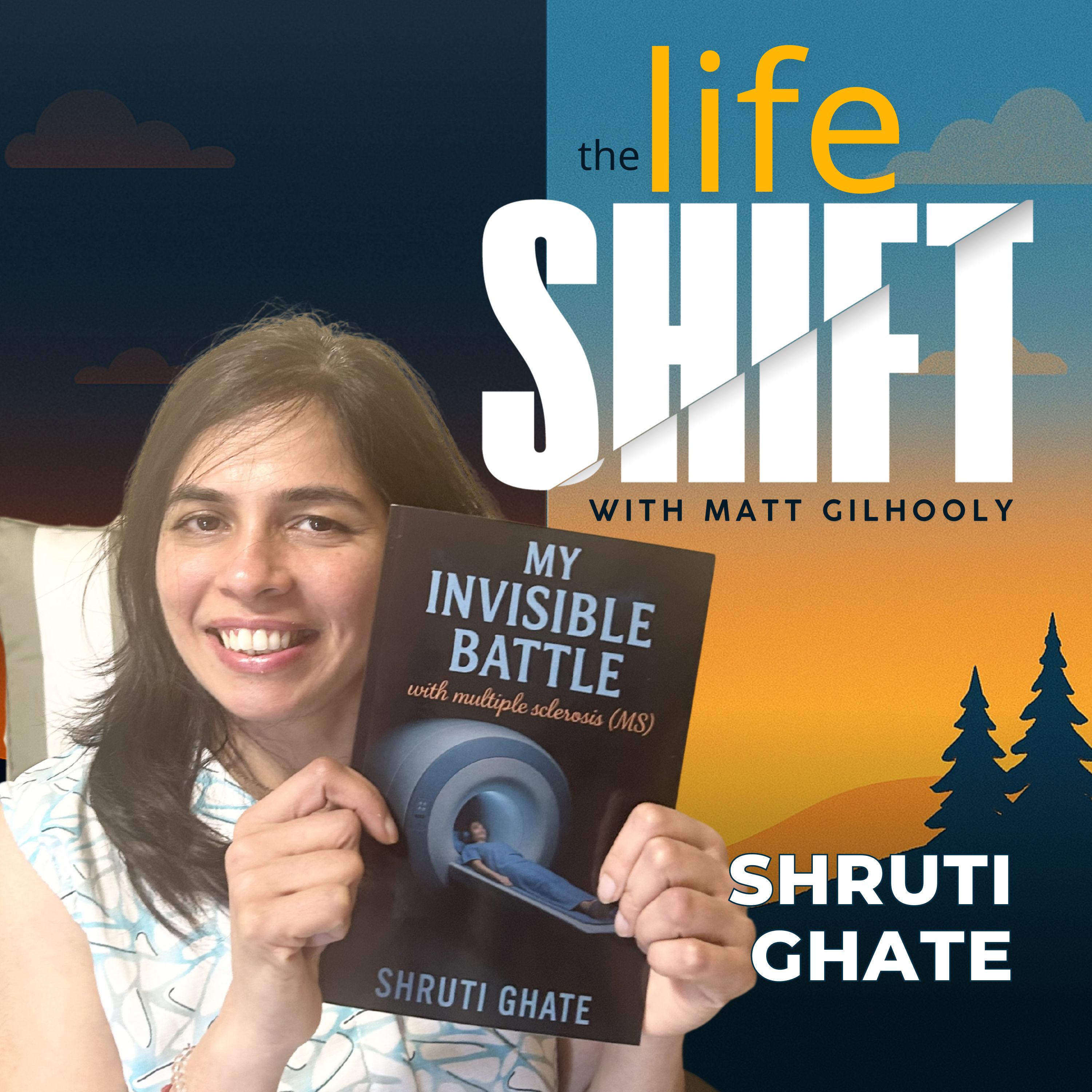
Shruti shares her journey living with multiple sclerosis, from early symptoms and a wheelchair to writing her memoir and choosing resilience every day.


Maybe you have had a moment where your body tried to tell you something and you looked the other way. A small signal, easy to explain away. This episode is for anyone who has ever dismissed a whisper, and then had to reckon with what that whisper was trying to say.
Shruti grew up as a working mom in Melbourne, living a normal, full life, when tingling in her feet gradually became something she could no longer ignore. Over years, that quiet signal grew into a diagnosis of multiple sclerosis, a progression from walker to wheelchair, and a complete reshaping of her career, her home life, and her sense of self. What she found on the other side was not what most people might expect. She found strength, not the performed kind, not the kind someone else told her she had to have, but a deep, steady resilience that rose out of the hardest circumstances of her life.
This is a conversation about what it means to carry an invisible illness through a world that cannot see it. It is about traveling alone to Kerala to try Ayurvedic therapy on nothing but hope. It is about reliving your hardest moments to write a memoir, and about looking back at all the worry you carried before, and finally letting it go.
What You'll Hear:
- How Shruti's MS symptoms progressed over nearly a decade before a turning point shifted her entire life
- What it felt like to lose her job, her mobility, and her previous identity, and how she moved through that
- The solo trip to Kerala for Ayurvedic treatment, and what she found there beyond the therapy itself
- How writing her memoir, My Invisible Battles, helped her discover a version of herself she had never met before
- The connection between stress, chronic illness, and finally releasing the need to overthink everything
- Why she believes strength is not something anyone can teach you, and where it actually comes from
Guest Bio:
Shruti Ghate is an author and mother of two based in Melbourne, Australia. After years of living with multiple sclerosis, she published her memoir, My Invisible Battles, to offer guidance and solidarity to others navigating an invisible autoimmune illness. Her work is grounded in the belief that sharing our stories can reach farther than we imagine.
Find Shruti and her book at www.shrutighate.com, and on Amazon Kindle worldwide.
Listen and follow: www.thelifeshiftpodcast.com/follow
Subscribe to the newsletter: https://thelifeshiftpodcast.beehiiv.com/
living with multiple sclerosis, invisible illness, chronic illness resilience, autoimmune disease journey, progressive MS, finding strength, wellness memoir, identity after diagnosis, invisible battles, caregiver support MS
You Might Also Like:
Matt Gilhooly (00:00)
Sometimes life does not change in a single loud moment. Sometimes it starts as a whisper, a tingling in your feet, a small signal you could easily ignore. Truti has been living with multiple invisible autoimmune illness that slowly reshaped her body, her career, and the way she moves through the world. What began as something dismissible became a line in the sand season, one that asked her to trade worry for resilience.
and build a stronger version of herself from the inside out. This conversation is about listening to the whispers before they become shouts, about choosing light when your body feels uncertain, and about what it means to redefine strength on your own terms.
Shruti (00:40)
I look at the past and learn I see that in the past how I stressed myself over things that were not so important. But now I think why did I stress myself? I regret that I shouldn't have stressed myself. I shouldn't have gone through so much of
Matt Gilhooly (00:40)
and
Mmm.
Matt Gilhooly (01:00)
You're listening to the LifeShift Podcast. I'm your host, Matt Gilhoolie. This show is built around one simple idea, that sometimes a single moment can change how we see everything. Each week, I talk with someone about the moment that shifted their life and how they learned to live differently after it. These are not stories about having it all figured out. They are stories about what it looks like to keep going once the story changes. Thank you for being here. Here's today's story.
Matt Gilhooly (01:32)
Hello everyone, I am here with Shruti. Hello Shruti.
Shruti (01:36)
Hi, Hi Matt.
Matt Gilhooly (01:38)
Thank you for joining me on the other side of the world. I'm in Florida and you're over in Australia.
Shruti (01:43)
Yes Melbourne.
Matt Gilhooly (01:44)
So it's morning over there and evening over here. I'm looking forward to hearing your story today on the Life
Shruti (01:47)
Yes. ⁓
Matt Gilhooly (01:51)
Before we get into your story, maybe you can tell us who you are in 2026. Like, how do you show up in the world? How do you identify these days?
Shruti (02:00)
In 2026, an author and mother of two and living with multiple sclerosis and I'm strong, confident and bold enough to come out there and tell my story to the world.
Matt Gilhooly (02:19)
Yeah. How long ago did you start sharing your story with the world?
Shruti (02:24)
published my first book last year in 2025 and I mean I have been living with this illness for a long while then I thought why not go out and share it with everyone how I handled my symptoms how it got diagnosed and let me at least help someone who has got newly diagnosed and so that
is no guide book at all in this illness. This is an invisible autoimmune illness. So I thought let me at least help as much as I can.
Matt Gilhooly (02:56)
Yeah. Did you find a lot of power when you first shared your story, like out loud with people that weren't your family members?
Shruti (03:03)
Yes, of course. I I felt quite powerful, confident and bold enough to share it with everyone and to answer questions because there are a lot of questions around this by the doctor, for the doctors, for patients and their carers because very less is known about this and a lot of research is still going on.
Matt Gilhooly (03:22)
Yeah.
Shruti (03:28)
So I thought at least let me answer to someone who is already going through this.
Matt Gilhooly (03:34)
Right. Yeah. Did was it scary to share your story? I know a lot of people are apprehensive about sharing like things publicly. ⁓ good.
Shruti (03:41)
No, it wasn't scary at all.
But but in fact, I was happy that I am helping someone. So I had that feeling not scary at all.
Matt Gilhooly (03:50)
Okay, I love that. Okay.
Yeah, I talked to a lot of people who are scared about sharing for the first time, but once they do, they feel such power that you're talking about and the confidence to help other people. So I'm so grateful when people are sharing their story in whatever way makes the most sense to them. Some people it's writing, some people it's podcasts, speaking, whatever it may be, the more we can connect with each other, like you said, and help someone on their journey because
Shruti (04:02)
Yes.
Yeah.
Yeah
Matt Gilhooly (04:18)
of the
things that you've gone through. think it's beautiful. So thank you for what you're offering to the world because I think that's whether we help one person a day or a couple people a week or whatever it may be, it's all worth it.
Shruti (04:23)
Mm-hmm.
And if I just kept restricted to this my family, I mean that would be a very small world. I mean, so I thought that if I tell 200 people, will pass it pass this on to another 100 people. Then, you know, this will this chain might just go on. Yeah, and I'll be able to reach a wider audience.
Matt Gilhooly (04:39)
Mm-hmm.
Yeah, that's beautiful.
Yeah,
for sure. Yeah, there's such power in story for for all the parties involved, the person telling it the person hearing it, the person relaying it. It's just I, I think I knew before doing this podcast, the power of story, but now like, I'm, I'm living it. And I'm feeling it in such a deeper way. And I'm just so honored to be able to just have these conversations with people that I might never have met in the world if it weren't for this. Yeah, it's beautiful.
Shruti (05:02)
Yes. ⁓
Yes.
Exactly. Yes, yes. And the
way you write or the way you tell your story, you also let people reading or hearing your story live, live your life. Yeah, they'll be able to go through what you have already gone through.
Matt Gilhooly (05:31)
Mm-hmm. Yep.
Mm Yeah. And also, I also find it funny that the more I tell my story, the more layers it gets, the more deep nuance comes out in the story. And you start to tell it a little differently because you're more aware of certain areas. So let's get into your story. Maybe you can paint the picture of who you were leading up to this main life shift moment that we're going to center today around fully knowing that you have had probably lots of life shift moments in your life.
Shruti (05:45)
Yeah.
Yes, of course.
Okay, I was a very normal next door girl into IT, my marriage, my married life and two daughters who are teenagers now. But so I mean, it was just a normal life like any other working mom. So but suddenly, know, these symptoms started coming up.
Matt Gilhooly (06:24)
Yeah.
Shruti (06:31)
tingling, numbing sensations in my feet and then sooner started aggravating. So it was almost for 8 or 9 years I was in the same symptoms but then after covid, after the covid vaccine these all started you know aggravating and took
Matt Gilhooly (06:46)
Hmm.
Shruti (06:57)
the walker my muscles were weakening. So doctor recommended using a walker to walk and then the muscles still kept on weakening at all in the legs mainly see so in my case it was legs but the symptoms are varied for this illness. So some others it might be hands some for others it might be speech but in my case it was legs.
Matt Gilhooly (07:01)
Hmm.
well.
I have a
Shruti (07:26)
So,
so I felt that shift in walking. So I started using a walker and then when the muscles were weaker, I started getting frequent falls. I used to fall and hurt myself. So doctor recommended using a wheelchair. Finally, I'm in a wheelchair.
Matt Gilhooly (07:46)
Mm.
I have a question. And this is this could be a very American question of me. But when you first started having those symptoms and the tingling and the stuff, did you did you immediately like go to the doctor and try to find out what this was? Or did you like a lot of Americans would would do over here is dismiss it like, it's just it's nothing. I'm busy. I'm working a lot. I'm doing a lot of things. How did you approach those those first
couple months of feeling that.
Shruti (08:19)
Yes, I dismissed it for a while initially, but then that was not helping at all. So I thought why to dismiss of when it's not helping. So I went to my local GP first that what is this all about? So even he was not sure what is this all about. So he kept on doing various tests for me, blood tests, x-rays and then finally he came up with MRIs.
Matt Gilhooly (08:27)
No.
Shruti (08:49)
So he said, let's do an MRI and find out what's going on with your nerves. Why is this happening? So I got an MRI done and then he got to know that the nerves are getting damaged. The outer sheath around nerves for any wire when the electric signal is passing, there is this outer covering. If the outer covering is intact, only then the signal passes.
Matt Gilhooly (08:53)
Yeah.
Shruti (09:16)
The same functioning is there in all our bodies. So nerves always have an outer sheath covering around it. If that covering gets damaged, the signal doesn't pass. Same happens in multiple sclerosis. The outer covering gets damaged that is called myelin sheath that gets damaged. So if the sheath is not there, the signal no longer passes. So same had happened with me. He said in the MRI results, he got to know.
that the covering is getting damaged that is called demyelination and because of that the signals are not passing and in my case particular case it might be a different for all other patients but in my case it was around legs I mean the signals that brain passes to the legs were not intact because the covering was not in place.
Matt Gilhooly (10:10)
So you're gradually over this, what you said, eight or nine years of a lot of that tingling and whatnot. Was it progressing through that time or did it feel fairly steady for a bit and then started to progress more?
Shruti (10:26)
that time when it started it was relapsing sclerosis. So in that you have periodic relapses. So in my case it was relapse only once in a year. So when it was summer I had relapses. So I had multiple sclerosis only yearly once because that was relapsing remitting that time. So only yearly relapses.
Matt Gilhooly (10:42)
interesting.
in the summer.
interesting.
Shruti (10:52)
And after that, then it changed into progressive MS. So for that, the symptoms just don't go. They are residual. They are with you always.
Matt Gilhooly (11:02)
Yeah. When did you, were you, did you have a diagnosis early on of that or was it something that the doctor just assumed it was?
Shruti (11:10)
It was
diagnosed early on but there was no treatment so I could not treat it at all and that why it went on progressing.
Matt Gilhooly (11:19)
Yeah, so you went from a walker to the wheelchair. how did things progress for you? Would you say the diagnosis was a giant life shift in your body in which you had to look at life differently? I would assume that that plays a part.
Shruti (11:35)
the progress
the progressing of the disease, the worsening of muscles was the life-shift. I mean, that's when I, you know, I lost my job. I was into a walker and then into a wheelchair. And I mean, it affected entire thing, my entire life, my career, my home, duties and responsibilities that I was doing at home. Everything.
Matt Gilhooly (11:42)
Yeah.
Hmm.
Yeah, mental health.
Shruti (12:04)
Happened it. Yes. Yes.
Matt Gilhooly (12:05)
Yeah.
What was happening in your mind about that? Did it feel like you were... How did you feel? I don't want to put feelings into your mind.
Shruti (12:13)
I mean, in mind I
was very anxious, very curious. I mean, that time I didn't even know of this illness, its symptoms. I knew nothing. So I just kept on researching. I kept on asking to doctors, to nurses, to Google. What is this all about? What should I do now? I mean, if I get these symptoms, how to handle? So I kept on, I mean, I was very inquisitive. So I kept on asking questions.
Matt Gilhooly (12:37)
Yeah. Did you?
Okay.
Were you positive through that? Or I mean, I feel like I would not be.
Shruti (12:45)
Yes, 100.
I know 100 % positive because only positivity will help. Negativity just won't help. So I thought let's be positive and do something that will help me.
Matt Gilhooly (12:50)
Okay.
Well.
Yeah, I mean, good for you. I commend you for that. Because myself, I'll just speak for myself, that was really hard for me to do. And maybe it was my age, because I was a kid. And, and then I was a teenager, which has hormones that come along with it. But it was just so much easier for me to be depressed about my situation. And the fact that I didn't have a mom and everyone else did. And all the so much easier than choosing positivity. So I'm so glad to hear that despite your body.
going through this you still maintain positivity to... Did you have bad moments? Okay.
Shruti (13:35)
Yes and
it's very difficult to very difficult to maintain positive when your body is at war with itself. So that's why it is very difficult especially in autoimmune and in this illness it is invisible you cannot tell the symptoms the the the people around you were like you don't look sick it's okay you just have some voice have some of some fresh air some walk you'll be okay.
Matt Gilhooly (13:43)
Yeah.
Mm-hmm.
Yeah.
Shruti (14:03)
But it was much more than that and it was much deeper than that.
Matt Gilhooly (14:07)
Yeah, was it really hard for moments like that? I think there's, we as humans like to try to give a solution to other people. And so your friends and people that were saying things like that, they probably didn't, they probably meant well, but they were just saying those things because they didn't know what else to say. Was that really frustrating that you had to be the bigger person?
Shruti (14:26)
Yes,
yes rather than frustrating it was like I mean nothing is helping me I mean, of course they wished were trying to help me but even they didn't know about this illness and how to handle even they didn't know about this So I cannot blame them. But yes, I were trying questions. What is this all about? Maybe you'll get better in a while
Matt Gilhooly (14:53)
Yeah, and I can imagine how like you're, you're already thinking of how you can help yourself. And now there might be an extra burden of like helping other people understand. Did you feel like you had to teach everyone else around you about this and what you were going through? Or did you just be like, I'll talk to you later.
Shruti (15:14)
No, I mean, I wasn't I wasn't very keen on teaching or you know, letting this know to everyone. I thought, okay, I mean, me and my positivity will anyways, they'll see it and they will learn from it.
Matt Gilhooly (15:23)
Okay.
Yeah. So you get into the wheelchair, you are staying positive, looking for solutions. Like how is this changing you, like the soul of you? Do you find a reckoning? Do you find a new version of yourself? Like how do you get centered from there?
Shruti (15:42)
I
Yes,
new version certainly the this new version is much stronger than I was earlier but because these conditions are such that you have to have to be stronger. So, I mean that is the only way out. So, I thought I maybe even I am a different person altogether now much stronger and much confident and I want to people know.
Matt Gilhooly (16:00)
Yeah.
Yeah.
Shruti (16:16)
that I can, I'm managing this and I'm managing it well.
Matt Gilhooly (16:20)
Yeah.
Yeah. So you say you're much stronger. Were you, would you look at the previous version of yourself as not as strong or determined or confident?
Shruti (16:30)
Yes, because there was no such that make me stronger. Anyway, it was just normal life. That's it. But now these conditions that I'm going through have made me stronger.
Matt Gilhooly (16:37)
Yeah. So what would you say?
Yeah, did you seek out any like, non mainstream ways to try different things or find a different version of yourself?
Shruti (16:51)
⁓
Yes, of course I went to Kerala India have Ayurvedic therapy. Yeah, I was I was taking normal allopathic treatment first, but that wasn't helping. So I thought let me go the Ayurvedic way and I went to Kerala this. were therapies, oil treatments. So, I mean, just to
help me manage the symptoms. Yes, yes I did. So I was there, I was staying there for a while and just to just with that hope that this treatment maybe will help me.
Matt Gilhooly (17:17)
So you left your house and left everyone behind to go do that? ⁓ nice.
Yeah. Yeah. So what was that? Was that a life changing experience? that?
Shruti (17:38)
That
was helpful in bits and pieces in some in some symptoms. Yes, it was. But in others, but other symptoms it was.
Matt Gilhooly (17:40)
Okay. Okay.
Yeah. How about like, did it change you, like your soul at all? I would imagine like leaving, like that's a big step.
Shruti (17:55)
Yes, I mean,
yes, big step. Yes, it changed me, of course, because I was there alone. kids, my family, nobody with me and only the therapists and the doctors working on me to help me and to, you know, help me regain my muscle strength. So I was on that then. I mean, it was it was like a welcome break.
from my office, from my homely life and you know all the chores.
Matt Gilhooly (18:27)
Yeah.
Yeah, and why did you choose there? Have you been there before or?
Shruti (18:33)
I didn't but but I read that maybe Ayurvedic does help in some cases who have milder symptoms and earlier diagnosed. So it helps in maybe in some cases. So I thought why not take a chance and go there.
Matt Gilhooly (18:51)
Yeah, I mean, that's that's another big bold step. I think some people are like, I got to stay close because my family's here. And you're like, No, I'm still doing the positive thing and researching and finding the place to go, which is, ⁓ think for people listening, it's like a trust your gut kind of feeling in a way like, lean into what you're hoping, and that positivity and seek out things that interest you or feel like they could could be something changing for you.
Shruti (18:54)
Yes.
Yeah.
Sometimes hope makes you things where you get out of your comfort zone just for that hope.
Matt Gilhooly (19:28)
Yeah, well, speaking of hope, do you regret any things that you tried?
Shruti (19:33)
Not at all. Never.
Matt Gilhooly (19:35)
you like you're just like this perfect specimen of a human whereas I'm like, yeah, I can give you a list of regrets. ⁓ That's I mean, it's so beautiful. And then something that I think is hard for a lot of people when they're diagnosed with with anything to, to find the strength part without feeling like it's a forced strength. I think some people that have an illness of any kind, feel like everyone wants them to be strong. So they
then have to be strong. Whereas it sounds like for you, it was like, this is coming from the inside of me and I'm going to do this for myself because I want to live the kind of life that I want to live. Yeah.
Shruti (20:17)
See strength and power is someone that you cannot seek it. No one can teach that to you.
it has to have be within. So, I mean it just came from within because of because of this illness itself taught me how to be strong.
Matt Gilhooly (20:27)
Yeah.
Yeah. Do you look back at like your younger years? Are there moments that kind of parallel the feelings that you have now? Did you make big bold moves and stuff when you were a kid and trust in your your gut and your instinct or
Shruti (20:49)
Yeah, as a kid, mean, it was just normal. I mean, I didn't have such, you know, such life changing conditions at all. So, I mean, it was it was just like any other thing. So, but after after I got this illness and I. Just I decided to just have it. I mean, just help myself and and go out there and do things that will help me.
Matt Gilhooly (20:57)
Yeah.
Okay, see you.
Yeah. So what happened when you returned from your trip and your therapy and like, how long ago is that and what's been what's been going on since?
Shruti (21:25)
Yeah, it was 2023. I think it was two, three years back. So, I mean, when I came back, yes, I was fresh and rejuvenated for sure. And it felt good. But but you know, the illness deep within the illness was still there. It was still progressing it was having its own path to progress. So, I mean, for
Matt Gilhooly (21:30)
Okay. Okay.
Shruti (21:51)
initially it was helping and refreshing enough but then the illness was still there.
Matt Gilhooly (21:58)
Yeah. So what do you do since? Like, how does your life change since that? Has it continued to progress? Are you like, okay.
Shruti (22:05)
⁓ Yes,
it is continuing to progress. So I'm still staying with my symptoms and you know, doctors appointments, know, and at home the kids. writing book.
Matt Gilhooly (22:24)
Yeah, is that something that
you had done before? Or is this like, ⁓ I feel like I'm going to write a book? Or were you into writing? Were you into art? Like those kind of things?
Shruti (22:29)
⁓
Writing interested me. So, I mean, since a kid, I was always of writing and expressing myself. So, I mean, I thought when I have such a life shift happening, so why not express myself then? That was the reason into writing and started publish and then
Matt Gilhooly (22:36)
Okay.
Yeah.
Shruti (22:56)
I wrote, I published the book and now I'm here.
Matt Gilhooly (22:59)
Yeah, well, that's I'm sure it wasn't that quick and easy, was it to write that book? I've heard.
Shruti (23:04)
not at all not at all wasn't
because I am thinking about this idea of writing it into writing all that I went through into a book so maybe for say one or two years I was still toying with this idea finally I told myself let no point in just thinking about it go out write and get it published
Matt Gilhooly (23:29)
Yeah, did you did you join any groups or did you do this all like just all by yourself behind the scenes? Yeah, what was the hardest part of that? Because I would imagine for me, I think I express I'm able to express even more in writing than I am when I say it out loud, because everything feels safe when I'm writing. Did you find the same where you were more expressive or open in that way?
Shruti (23:35)
all by myself. No group, nothing.
Yes, am very expressive and I felt liberated when I write. So I mean, and the hardest part was you recollect all the moments that you lived and you have to relive literally when you write you're reliving all the moments at all.
Matt Gilhooly (24:15)
think that's so... I guess we could see it in multiple ways. I think there's a lot of value in that though, because when you're a little bit removed, you can reflect on it differently. Did you find that or did it take you to dark places in which it was really hard to move through?
Shruti (24:21)
Mm-hmm.
as such yes I it was just for time being and then I moved on.
Matt Gilhooly (24:37)
well, you are impressive in that way. Did you learn anything new about yourself when writing? Because I feel like there's a lot of things to uncover.
Shruti (24:46)
a lot. Yes, yes, I never knew this stronger side of myself all this while. But when were adverse, then I knew that, okay, I can also this there is this stronger side to myself, to my soul, there is this stronger side. And I a lot of resilience, I, I mean, I came back.
But I mean, it is very easy to sit there and start crying, start sulking. It was very easy. But I thought, why do something that won't help me at all?
Matt Gilhooly (25:23)
some of us just cry because we know it's not gonna help us but for some reason it feels feels better sometimes than or it's easier I guess maybe maybe some of us like the easy route but sounds like you're not like me which is which is probably really beneficial for you but I think it's it's great that you
Shruti (25:46)
I think
the easy if I have to do the easier part, I will just go and listen to some music that is the easier part and that will help.
Matt Gilhooly (25:53)
Okay. Yeah.
Yeah, well, I will say you're allowed to feel bad and you're allowed to feel sad and all those things are allowed. So I think anyone listening, we don't want to say that you need to be, you know, positive all the time. Life is hard and life will will give you things and you can feel however you need to about it. But it sounds more productive.
Shruti (26:13)
like that
but it is up to you how you perceive it. If you are sorry, exactly.
Matt Gilhooly (26:18)
Yeah. Yeah. Were your parents the same way? Were your parents the same way? They
were? Well, so you learned from that. Yeah. Yeah.
Shruti (26:26)
Yes, yes of course yes I did. I mean
such environment was there at my home also when I was a kid. So, they have always taught me it is okay if you do did not get good marks it is okay. Come back and try to achieve them in that case.
Matt Gilhooly (26:45)
Yeah, well, it is I mean, we are in a when we're growing up, we absorb a lot of the things that our parents do. And so like, for me, I guess a lot of my things came from my dad suddenly having to be a full time parent to a kid who had lost his mom. So his life was just so chaotic, because he was unprepared, as most people would be in those circumstances. And so I think I probably absorbed that.
Shruti (26:53)
Mm.
Matt Gilhooly (27:14)
that type of energy and not on purpose or I'm not faulting anyone, that is just where sometimes the product of the places we're in.
Shruti (27:25)
Exactly. So, mean, it depends you you behave your behavior depends on what situations you are in. So now I didn't I never knew that I'll get this illness and I never invited MS in my life, but it just came on its own and I learned how to handle it.
Matt Gilhooly (27:43)
Yeah, how does it affect your family?
Shruti (27:47)
I mean they are all caring, are caring for me and they have some good and bad moments but that's okay. They do help me and support me always.
Matt Gilhooly (27:59)
Yeah, they mean well and they're humans and have feelings. So sometime and you said you have teenagers. So they come with their own bucket of feelings and emotions. Well, I I think it's I mean, you're setting such a good example, not that you're trying to, but just the way that you are living and approaching your life as it is now. And that's really all if we break it down. That's all we should be doing, right? We should be
Shruti (28:01)
Of course. Of course. course. Of course.
Yes.
Yes, yes, yes. ⁓
Yeah.
Matt Gilhooly (28:26)
making the best of the moments that we're in? Why live for the future necessary? I mean, you can prepare for the future, but you don't want to live for 10 years from now. You want to live for right now because here's where we are.
Shruti (28:27)
Exactly. Yes, right.
Yeah,
make the present better instead.
Matt Gilhooly (28:42)
Yeah,
yeah. And I'm just gonna assume that you don't look back on any past parts of your life with any kind of despair or sadness.
Shruti (28:53)
Not at all, not
despair. But yes, I look at the past to learn. I look at the past and learn then. I see that in the past how I stressed myself over things that were not so important. But now I think why did I stress myself? I regret that I shouldn't have stressed myself. I shouldn't have gone through so much of stress over nothing.
Matt Gilhooly (28:58)
and this is gonna be...
Mmm.
of
worrying. Yeah. Were you a worrier before?
Shruti (29:22)
Yes, Wally.
Yes, worrying, overthinking.
Matt Gilhooly (29:29)
Yeah, I inherited that trait from my grandmother and my grandmother kind of became the mother figure. My dad's mom kind of helped him raise me, but also like I got really close with her. And later in my life in my 30s, she was diagnosed with cancer and it was really like I knew what to do at this point. Like I knew that I needed to have the conversations. I knew I need to make this a really great ending.
Shruti (29:51)
Thank you.
Matt Gilhooly (29:58)
knowing how it was going to end for both of us. And so we did that. But I remember when I was in the hospice room with her the last 96 hours of her life, she well, maybe this was a little bit before, but she was like, I wish I hadn't worried so much. Because all that matters is love in the end. And she was kind of just like looking at all the people that she loved around her. And all that time thinking back on all the time that she spent worrying about things that never happened.
Shruti (30:27)
Okay.
Matt Gilhooly (30:28)
And so I
think of that, but it's like, we don't really know until we know, you know, to stop worrying. It's like a really hard thing to get rid of. But.
Shruti (30:36)
Yes. Yes. And
when we go in the future, when we go there, only then we see that did we fare in the past. Yes. Yes.
Matt Gilhooly (30:52)
right, and then we don't do it again. Or we try not to but it's even like your
who you are now you look at that previous version of you and like say you wish you hadn't done that but that version of you that was how she lived and that was how she had to move through moments right the worrying and those it was just it was part of your your nature. Yeah.
Shruti (31:09)
Yes, yes, yes, but not anymore. I
have stopped overthinking and pressing myself over small issues, small things now. So, no, yes, yes, it is. And that's why I took this approach because that is helping me now.
Matt Gilhooly (31:17)
Hehe.
And that's probably helpful for your illness, right?
Right, because stress can make things worse? Okay.
Shruti (31:36)
Yes, yes, stress
is a stress. It doesn't help MS at all
Matt Gilhooly (31:42)
Yeah. So what is your book called? Tell us a little bit more about your book. Like, is it a memoir? it a... How did you approach it?
Shruti (31:50)
It is a yes personal memoir. called my invisible battles here it is and ⁓ It's in Amazon Amazon Kindle It's all about how I was diagnosed and then how I handled my symptoms my illness and You know how I approached various therapies. How did they help me and what
What were ⁓ my thinking on all this?
Matt Gilhooly (32:21)
Yeah, would you say that it's kind of, it's not really an instructional guide, it's not a how-to, but you're hoping that people reading your story might get some ideas or might get, okay,
Shruti (32:33)
Exactly. It is not a guidebook at all.
it is something like how to what to do and what not to do.
Matt Gilhooly (32:41)
Yeah. Have you heard from any readers about how they've taken your work?
Shruti (32:49)
Yes, yes, yes. I mean as a personal member they are in fact looking forward for someone for someone who has already gone through it. It is not easy to find anyone who has gone through such an illness and writing his or her own book.
Matt Gilhooly (32:59)
Hmm.
Yeah, and I bet you could probably collect a nice community of people around you of, and I think there's, when we find our communities of people that have gone through similar things, we are, we tend to be more open with those people because they quote unquote understand more. I remember growing up, I gravitated towards other teenagers that had a deceased parent.
just because maybe someone with both parents would not quite understand why I felt certain ways or the weird things that I would think about my circumstances, but I knew these other folks would feel very similar or would understand at least. And so I would imagine even though MS shows up differently for people.
Shruti (33:54)
Yes.
Matt Gilhooly (34:01)
you could probably have very similar feelings about things or approaches or those kinds of things. Do you find that? Do you have a community like that?
Shruti (34:05)
Yes.
Yes, there lots of communities like that. The feelings are same. Although the symptoms are different, the way people are approaching treatments are different and probably what the doctor's thoughts are different, but feelings are always the same.
Matt Gilhooly (34:25)
Yeah, and I find that too of the Life Shift podcast, just all the people that I've talked to, it's like, nobody has the same story. But the feelings that we have in certain moments and certain cycles of our lives are very similar. And so it's like, so much connection that sometimes we dismiss.
Shruti (34:40)
Yes.
Yes, yes,
yes and for any life trade the way you react is what everything is about.
Matt Gilhooly (34:52)
Yeah, well, unless you're me when I was eight, I didn't react very well. But I didn't know how I didn't have the tools. I wasn't a full full human. you know, also adults might not have the tools. I'm sure a lot of adults that have been diagnosed with MS don't respond in the way that you did, and the way you approach things. And, and that's okay, too, because maybe they weren't prepared through their upbringing and the people around them to, to be that way. But maybe
Shruti (34:57)
Exactly.
Matt Gilhooly (35:21)
by hearing your story or reading your book, they might think of the way to approach life in a different way. And that's my hope for you.
Shruti (35:31)
Even if I am able to inspire or motivate at least one person then I have achieved a lot.
Matt Gilhooly (35:39)
Yep, I say the same thing. think of all of these episodes, as long as they find the set of ears that needed to hear that story that day, then we win. Like we've, we've changed something. We've allowed someone to feel less alone. We've allowed someone to feel validated in their experience. There's something really powerful about that validation. I'll give you an example. I was talking to a
Shruti (35:58)
Mm-hmm.
Matt Gilhooly (36:07)
guest on the show and she was talking about she lost her father when she was five she was very close to her father and so she was going through the same kind of grief journey as a teen that I did and she said something out loud she said you know when I was like 15 or 16 I had convinced myself that my father was in witness protection and at that moment I remembered that I did the same thing
And when I was a teenager, thought, okay, my mom's just in hiding and when everything's safe, she'll come back. I would never have told anyone because I thought it was weird. Like as a teenager, like that's the weirdest thing. Cause I knew logically it wasn't true, but I had convinced myself. And when she said it, I was like, I'm not weird. I was just trying to grieve. Like I was just trying to find safety. And so it's like things like that where we can hear our stories and other people's stories to know that like, ⁓
Shruti (36:40)
Bye.
Okay.
Mm-hmm.
Matt Gilhooly (37:02)
I'm not alone. You know, like, there's a lot of feelings. Yeah.
Shruti (37:04)
⁓
That's what when I went to Kerala there I had fellow patients with me with the same illness, but the symptoms were different for all. So everyone approached it in a different way. Yeah, so I mean that's where you learn that okay, how what not to do how to not handle it and and how to make sure that things work well for you.
Matt Gilhooly (37:14)
Okay.
Did you absorb when you were there and talking to other people that had this the same diagnosis? Did you learn anything from them to incorporate into your life?
Shruti (37:44)
Yes, yes, the strength that they showed and very, they were happy. It doesn't mean that once you get this illness, you stop being happy and start crying. Yeah, how to be happy and go ahead in life.
Matt Gilhooly (37:58)
Right.
Yeah. What would you say if you could bump into the version of you that first started feeling the tingling in your feet? Like, would you want to say anything to her about this journey?
Shruti (38:15)
Yes, yes about this journey then I'll say to that version of myself don't get stressed. Don't don't get stressed. It's okay. Just let it go. This phase will pass if you let it go by itself.
Matt Gilhooly (38:24)
Would that work?
Yeah,
would she listen?
Shruti (38:33)
Live your life your own way. Don't overthink. Don't overstress.
Matt Gilhooly (38:38)
Yeah, but would you listen with that version of you listen to you saying don't stress about this? Okay. I think sometimes I would be like, I don't know what you're talking about. I don't know. But good for you. You're you're proving to be much evolved human.
Shruti (38:44)
Yes.
No, if then
in my if my earlier version would have listened to this, certainly she would not behaved it the way she did. For sure.
Matt Gilhooly (39:04)
Fair. Yeah.
Well, I, unfortunately, we can't go back, but it seems like you're, you're making the most of all your moments and finding the light in everything. Yeah. I know. It's, it's one thing to know and it's one thing to do and it's another thing to do. So you're, you're knowing and doing and it's, it's probably really infectious for the people around you to, to get that energy. So you're,
Shruti (39:16)
Yes, because that's what will help.
Yes, yes, yes, yes.
I mean once you have the habit of finding positivity in anything you can just find positivity in each and everything then.
Matt Gilhooly (39:43)
Yeah, well, from your lips to everyone's ears that we should all we should all do that the world needs it, at least over here in America, we need it. So I think there's more positivity there. If people are listening to your story, maybe maybe they have the same diagnosis, maybe they don't maybe something that you said resonated with them, or they have someone in their life that has it. And they want to learn more about you find your book, reach out to you on
Shruti (39:47)
No.
Matt Gilhooly (40:08)
wherever is what's the best way to find you and what you offer to the world.
Shruti (40:13)
can find me on Amazon Kindle. I have also over this website www.shrutighate.com. There it's everything where on which all events I feature. I'm there on Kindle my book you can buy it. Kindle Australia, India, US, UK, Japan everywhere.
Matt Gilhooly (40:37)
Perfect, yeah, well, I think, it safe to say if everyone goes to your website, they'll be able to get different links to different things? Do you have an email link or anything on there that they could reach out to you if they, okay. I really encourage people listening, if something even minor resonated with you in this story, reach out and share your story, whether she wants it, whether Shredde wants it or not. I think there's so much.
Shruti (40:43)
Yes, yes, yes, yes.
Yes, yes.
Matt Gilhooly (41:01)
power and connection and just sharing your story. So I encourage people to reach out and make these connections. You never know what that will bring us. And I think connection is beautiful. So do you welcome that?
Shruti (41:13)
Yeah, I know.
Yes, of course.
Matt Gilhooly (41:17)
Well, I appreciate you coming on this journey and letting me ask you all these questions and being really in awe of how you approach the world and your positivity and the light that you are seemingly bringing to the world. So thank you.
Shruti (41:34)
Thank you. Thank you, Matt. Thanks.
Matt Gilhooly (41:36)
Yeah,
for sure. And it's just such an honor. I know that definitely lots of parts of your story will resonate with others. And it doesn't have to be people that have the same diagnosis as you. might just, you know, they might take some other part of your story. And that's what's so important about all of us just asking each other questions, listening to each other.
Shruti (41:56)
Exactly, you know, I mean if you if people just help each other to figure out things It'll the world would be a lot of better place then
Matt Gilhooly (42:07)
Yeah, and just listening, I've just found there's so much value in hearing other people's Instead of just listening for the next silence to say something, I think a lot of us were conditioned that we got to fill the gaps of silence. But if we just sit around and listen, I think we're gonna connect to each other more. So thank you for allowing me to do this in this way and letting you tell your story in the way that Matt.
Shruti (42:13)
Yes, of course, of course, of course.
Okay.
Yes, yes.
Matt Gilhooly (42:35)
pushed you to do it. So I appreciate it.
Shruti (42:36)
Yes.
Thanks a lot bringing me here and listening to all my stuff here. Thank you very much.
Matt Gilhooly (42:42)
Yeah, super
inspired and thankful that you wanted to do this. And also on the same note, super grateful that everyone's been listening to this show for I'm going into year five now and it's just what a journey and such a healing journey for myself and all those parts of me that I didn't know still needed to heal. And so thank you for being part of that healing journey as well, both you Shruti and all the listeners and
With that, I'm going to say goodbye and I'll be back next week with a brand new episode. Thanks again, Shruti.
Shruti (43:13)
Sure, thank you.
Thank you very much.
Matt Gilhooly (43:15)
Thank you for listening to the Life Shift Podcast. If you wanna learn more, go to www.thelifeshiftpodcast.com.
There you can check out all the different episodes. You can check out the blog, some of the reviews for the podcast and the Life Shift journal. Links are there so you can purchase your own copy, whether in digital or print format. Thanks again.
Shruti Ghate is an Australian author, speaker, and advocate for disability awareness. Living with multiple sclerosis, she brings raw honesty and emotional depth to her debut book "My Invisible Battle." Through her storytelling, Shruti sheds light on the unseen struggles of living with a chronic illness while inspiring hope, resilience, and self-acceptance. She uses her platform to promote accessibility, inclusion, and compassion for people living with invisible disabilities.


