Resilience After Amputation: Rebuilding Life From the Ground Up
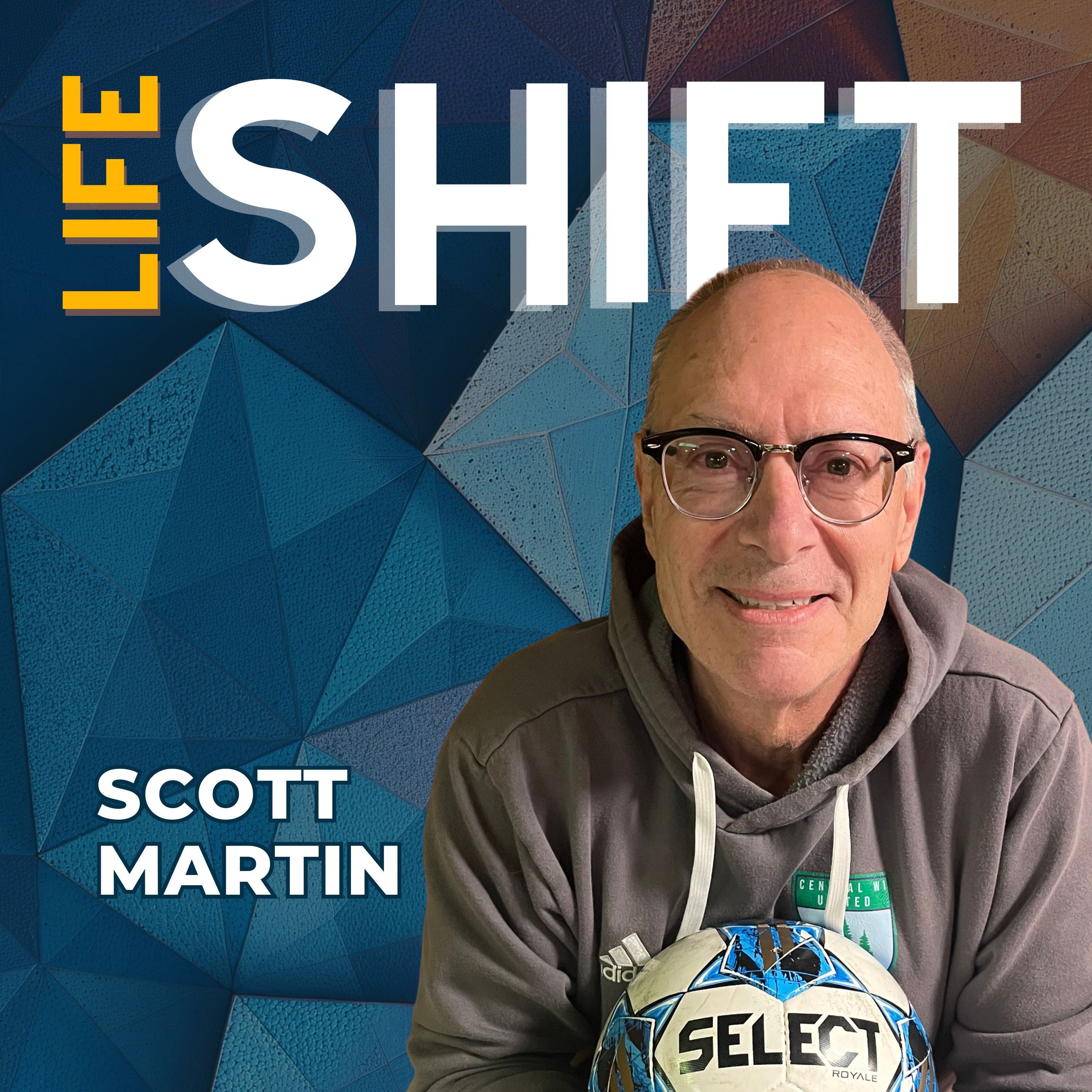
Scott Martin lost his limbs at 35 after a coma. This is the story of how he chose a list over despair and rebuilt everything, one decision at a time.


 Goodpods
  Podchaser
  PocketCasts
  RSS Feed
 Key Takeaways
- Scott Martin rebuilt his life after becoming a quad amputee by intentionally focusing on work and future actions rather than dwelling on past trauma.
- Experiencing significant loss, including a malpractice trial, can be a catalyst for intentional rebuilding and rediscovering one's purpose.
- Reconnecting with past relationships and embracing unexpected paths, like adoption and coaching overlooked children, can lead to profound healing and a renewed sense of self.
- Beyond the traditional stages of grief, Scott Martin identified fear, guilt, and shame as critical emotional hurdles to overcome after life-altering events.
- True resilience involves choosing the next step, even amidst gaps and detours, and finding purpose in the fragments of a life dramatically reshaped.
Resilience After Amputation: Rebuilding Life From the Ground Up with Scott Martin
Scott Martin's story is a powerful testament to the human spirit's capacity for rebuilding after unimaginable loss. While many narratives begin with the crisis itself, Scott's truly starts with what came after. At just 35 years old, a thriving collegiate coach mingling with national team players at a Nike camp, his life took a drastic turn. A seemingly minor fever escalated rapidly, leading to a coma from which he awoke a month later to a life irrevocably changed: as a quad amputee.
This episode goes beyond the immediate survival of such a catastrophic event. It explores the profound journey that followed Scott's quadruple amputation, the years of carrying the weight of his new reality, and the unconventional paths he forged. We hear about his initial instinct to bury himself in work as a coping mechanism, the disheartening discrimination he encountered when seeking to return to coaching, and the pivotal, soul-searching moment in his garage after losing a $10 million malpractice trial. It was in that quiet darkness that Scott chose not to succumb, but to create a list – a roadmap for his future.
That list became a journey. It led to a coaching position he initially took for free, to the unexpected joy of adopting five children from Romania and Ethiopia, to coaching two underdog teams to state championships, and to a miraculous reunion with his soulmate after forty years. It also culminated in his inspiring memoir, Play From Your Heart, published by Simon and Schuster. Scott's healing was not linear, a truth that resonates with us all. His story is a profound illustration of choosing the next step, and the remarkable life that can be built, piece by piece, even after immense loss.
In this conversation, you’ll discover:
- The precise moment Scott Martin realized his life as he knew it had ended, and the immediate mental fortitude he employed in his hospital bed.
- The deep-seated reasons behind Scott's years of immersing himself in work, and how this avoidance served as a shield against confronting his trauma.
- The critical juncture in his garage following the devastating malpractice trial loss, and the intentional choice that rerouted his life's trajectory.
- How a simple news segment about adoption unexpectedly led Scott to welcome five children into his life, a path he never envisioned.
- The parallel journey of coaching an underestimated 12-year-old soccer team to a state championship, and the profound reciprocal impact they had on his own recovery.
- Scott's perspective on how all the disparate and seemingly broken pieces of his life now form a cohesive whole, despite the undeniable gaps and detours.
About Our Guest: Scott Martin
Scott Martin is a dedicated soccer coach, an educator, a published author, and a proud father to five adopted children. His life dramatically shifted at the age of 35 following a near-fatal illness that resulted in his becoming a quad amputee. Scott has since rebuilt his life with remarkable purpose through his passion for coaching, his commitment to fatherhood, and ultimately, by sharing his powerful story in his memoir, Play From Your Heart, published by Simon and Schuster. Scott currently lives in Wisconsin, where he coaches at the club level. He is deeply committed to supporting the disability community and inspiring others who have faced the challenge of starting over. His book is available for pre-order now wherever books are sold.
You can reach Scott directly at reader.playfromyourheart@gmail.com.
—
Listen and follow The Life Shift Podcast: www.thelifeshiftpodcast.com/follow
Subscribe to the newsletter: https://thelifeshiftpodcast.beehiiv.com/
–
Keywords: life after amputation, rebuilding identity after trauma, disability and resilience, overcoming depression, quad amputee recovery, coping with grief and loss, starting over in your thirties, adoption as transformation, identity after illness, shame and disability, quad amputee resilience
You Might Also Like:
- What Survives: A Story About Loss, Resilience, and Inner Friendship
- Lemon-Sized Brain Tumor: The Life That Grew After Surgery
Frequently Asked Questions
How did Scott Martin become a quad amputee?
Scott Martin became a quad amputee at 35 after a near-fatal illness that led to a coma and subsequent amputations to save his life.
What challenges did Scott Martin face after his amputation?
Scott Martin faced emotional struggles including grief, guilt, and shame, as well as discrimination when attempting to return to coaching, and a significant financial loss from a malpractice trial.
How did Scott Martin rebuild his life after such a devastating event?
He rebuilt by intentionally working through his trauma, taking on new challenges like coaching for free, adopting five children, and writing his memoir, 'Play From Your Heart'.
What does Scott Martin mean by 'intentional breakdown'?
Scott Martin intentionally created a situation where he had nothing left to lose by moving, working for free, and discarding past achievements to force a complete reset and rebuild his life from scratch.
Matt Gilhooly (00:00)
Scott was 35 years old at the top of his career when he got sick at a soccer camp outside of Chicago. A month later, he woke up from a coma as a quad amputee. That's the moment that most people would focus on. And honestly, it was a lot. But what I kept thinking about as Scott and I talked was everything that came after. The way he threw himself into his work as a way of not sitting still. That night.
that he lost a medical malpractice trial and pulled into his garage and had a very quiet and very real moment with himself. And then the list that he made, a long one about what to do next. Scott is a coach, a husband, an author, a father of five adopted kids, and someone who has had to rebuild his life more than once. His book, Play From Your Heart, is out now, and it's the kind of story that makes you want to figure out your own next
Scott Martin (00:50)
the last thing I remember is my stepfather outside of the driveway and my mother standing outside her kitchen door just looking freaked told later on that I was I went over to the hospital a second time, but I ended up slipping into a coma as sepsis was settling in and all of my organs were shutting down.
Matt Gilhooly (01:13)
You're listening to the LifeShift Podcast. I'm your host, Matt Gilhoolie. This show is built around one simple idea, that sometimes a single moment can change how we see everything. Each week, I talk with someone about the moment that shifted their life and how they learned to live differently after it. These are not stories about having it all figured out. They are stories about what it looks like to keep going once the story changes. Thank you for being here. Here's today's story.
Matt Gilhooly (01:45)
Hello everyone, welcome to the LifeShift Podcast. I am here with Scott. Hello, Scott.
Scott Martin (01:50)
Hi Matt, how are you today?
Matt Gilhooly (01:52)
doing well-ish. I just got off of vacation, and it's one of those things where you feel like you need a vacation from your vacation. So, yeah.
Scott Martin (02:00)
from verification.
I'm gonna be finding out about that. My wife and I were just, finishing up packing. We're heading to New Orleans tomorrow for five days of good music, good food, good hanging out. So looking forward to that.
Matt Gilhooly (02:13)
a little bit more warmth
than Wisconsin.
Scott Martin (02:16)
A little bit more than warrant that Wisconsin. Yes.
Matt Gilhooly (02:19)
Well, I appreciate you wanting to do the LifeShift podcast and to just be a part of what I call my healing journey. It's just been such a I don't know. I don't think joy is the right word, but kind of it is. It's just been such a pleasure to be able to speak with people that I probably never would have encountered in my life without this podcast and learn from their human experiences, compare them to mine and see how much in common we have.
I know it sounds really silly to say that, but we have wildly different experiences, but the feelings around those experiences and these life shift moments, very similar and it's, it's been refreshing in that way. So thank you for wanting to be a part of it.
Scott Martin (02:48)
Hmm.
Exactly. Mm-hmm. Mm-hmm. Mm-hmm.
You bet.
Matt Gilhooly (03:05)
So before we get into your story, let's have you tell us who Scott is in 2026. Like, how do you show up in the world?
Scott Martin (03:14)
I'll use bullet points. All right, so I would say I'm a husband, a father, an author, a teacher, a coach, and a quad amputee, which is probably the reason why I'm here and be able to talk about dealing with becoming a quad amputee.
Matt Gilhooly (03:16)
Okay.
Yeah. What brings you joy these days?
Scott Martin (03:38)
Oh gosh. They're, know, having written a book and now that's all done and now the marketing aspect. Yeah. That's just crazy, but crazy fun. at the same time, that I'm just going to be starting with a, I coach soccer at a state level for club level. And I'm going to be starting out working with a new group of players, under 19 players that worked at age level before. So I've got a lot of.
Matt Gilhooly (03:49)
Okay.
Scott Martin (04:07)
balls in the air, so to speak, on having to deal with things coming up and in the midst of. So a very busy life and I just loving it. It's fantastic.
Matt Gilhooly (04:17)
Yeah, well,
that's great. I've heard the marketing aspect of having a book out is not the most fun, but I'm glad that you're finding the fun in it. It's a lot of work.
Scott Martin (04:27)
Meeting people
like you, that's what it's all about. Yeah, all the podcasts that I've been doing, they're a blast because I get to speak with people like you. So looking forward to this is kind of another getaway.
Matt Gilhooly (04:36)
Yeah.
Yeah, well, I appreciate that I have found the true power of storytelling. think I knew like on a surface level level that storytelling was very powerful. But it's been something else to see. I've had people on this show telling their story for the first time and you can like actually see the power that it gives them to let it out or to put it to words in a way that they haven't done that before.
Scott Martin (05:00)
Mm. Mm-hmm.
Matt Gilhooly (05:04)
and then to see what comes after is just so fascinating. So I just love storytelling and seeing what it can do for either the person telling it or the person listening or the person engaging in that conversation. Yeah.
Scott Martin (05:16)
Exactly.
Exactly. Yeah, totally agree. Writing has been very cathartic on being able to get in depth and being able to share and understanding and expressing the emotions that I've been through in my story when I present the book.
Matt Gilhooly (05:29)
Yeah.
Yeah. Well, let's get into your story. I know going into this, we going into building this podcast, I was like, everyone has one life shift moment, you know, like, well, that was very naive of 2022, Matt. But now I understand that we all have many, if we're lucky, many different life shift moments that we have made it through. And they can be good, bad and different, whatever they may be. But
Scott Martin (05:50)
Hmm.
Mm-hmm.
Matt Gilhooly (05:57)
I know you have multiple life shift moments that are big and impactful in your life. And so I'd love for you to just kind of paint the picture of this before version of Scott and whatever pivotal moment we want to center today around.
Scott Martin (06:12)
Okay, so my life, a lot of it wrapped around soccer. And I grew up as an athlete playing various different sports. But when I was 16, I was asked to play for an adult team, men's team at a fairly high level here in the United States. And with that, it's basically sink or swim when you're competing against 20 and 30 year olds, some former ex pros first division, excuse first level.
coming from Europe and things on that order. So sink or swim sort of moments. Carried that through college and past. But in college is where I think I really grew up and started understanding about life. I originally went into college with broadcast journalism. coach there got me into working with kids that were 10 years old. So my first coaching gig within the first semester, I ended up changing to physical education because I saw that relationship and I really
learned about myself more and get into it, but ended teaching social studies and history because I had, I found in myself a real desire to be away from the gymnasium and do something different than the soccer field by getting into what I call the stage of my classroom, social studies and history. And I was working, teaching at the high school level and I would be working with both, I would run both the boys and the girls soccer programs.
as we were with that. And the opportunity came up to move on to the college level, which was always very intriguing to me. But I was of the ilk, Matt, that instead of going right after college to become someone's assistant at a Division I level, I wanted to get in as a head coach at Division III and work my way up. So that was the objective. The opportunity came and I grabbed it. And this was in 1992.
Matt Gilhooly (08:01)
Hmm.
Scott Martin (08:09)
But in 1993, where things were going extremely well, I guess you could say I stepped on a rake and slapped me in the face. was that kind of a life shift moment that not really welcomed at all, but you just have to deal with it. learned a lot about myself through that journey. And I learned a lot about becoming disabled. So I went from a white guy in athletics to coming out.
Matt Gilhooly (08:19)
Yeah.
Scott Martin (08:37)
as a quant amputee and being discriminated against. So a lot of life shifts going on at same time, a lot of learning going on about life with what ended up happening to me.
Matt Gilhooly (08:43)
Mm-hmm. Yeah.
Yeah, I mean, well, first of all, you were you were living kind of it sounds like the quote unquote dream kind of path that you were on in a way.
Scott Martin (09:00)
Yeah. yeah. When, when I first became, when I first had signs of becoming ill, I actually was going to be, I was a guest speaker at a Nike regional camp outside of Chicago. And that's when I first started feeling poorly and from there ended up in a month long coma. You know, so that leads up to where people might be now be wondering what the heck happened to this guy. So
Matt Gilhooly (09:19)
Mm-hmm. Psst.
Yeah, yeah.
Tell us what happened or what that first kind of, guess, trigger would be of feeling ill.
Scott Martin (09:31)
at the Nike camp, because it was Nike and they had contracts with the U.S. soccer players. There were national team players at this camp coaches from across the country. So I was in a position where it was, you know, there's the old adage, it's not what you know, but who you know. And I was rubbing elbows with the certain, certain people that were going to be beneficial to me continuing my career. And it was during an exhibition match that we had with the coaching staff and these national team players.
Matt Gilhooly (09:49)
Yeah.
Scott Martin (10:01)
that I had to pull myself out of a match, which was really strange. So I knew something was wrong. So I spent that night either throwing up profusely or sweating like crazy and shivering like crazy in my dorm room and not understanding what was going on with my body. And I woke up the next morning and realized that I need to do something about this. So outside of Chicago, not knowing where any hospitals are, my mom was an hour and a half away in Southern Wisconsin. So, okay.
You don't know where a doctor is next person you see as your mother. So in as wise as women are, as soon as I showed up and this was 1993. So it was before cell phones. So I showed up a day early and she was wondering what's going on. But very quickly she said, some you have to get over the emergency room. Something's going on. So presented myself. they basically took my temperature of 102.8 and said, go drink some Gatorade. You're going to be fine.
wrong. Next morning was even worse. And this is when the last thing I remember is my stepfather back outside of the driveway and my mother standing outside her kitchen door just looking freaked out and being told later on that I was awake when I went over to the hospital a second time, but I ended up slipping into a coma as sepsis was settling in and all of my organs were shutting down.
And luckily there were people there that understood what was happening and they jumped on it very, very quickly and pulled me in. again, I was supposedly awake during all this, man. I don't remember. My mind has said, you know, put that away. don't. Yeah, exactly. Exactly. So then came, I guess, wake up time could be described in two ways. One is literally waking up from the coma from which it couldn't move.
Matt Gilhooly (11:42)
We don't need to. We don't need that.
How long did you say that was?
Scott Martin (11:59)
And
one month, one month. what had happened, reason why I couldn't move was that I later learned that I had lost 40 pounds, basically a muscle from atrophy from laying in bed for a month and not moving. So really, Matt, when I woke up, I had a neck brace on, I was intubated and I couldn't move. So I put those things together. And the first thing crossed my mind was, you know, that I must have been in a car accident.
And something happened and, you know, I just wasn't able to do anything. so when the doctor started talking to me about what actually was going on, and I guess a good thing was telling me about the atrophy that at least call me a little bit, but not being able to talk to him describing, okay, you came down with group A strep and necrotizing fasciitis. Okay. Whatever this is.
And then he laid the bomb on because at the time, a couple of years earlier, Jim Henson, the creator of the Muppets, had died from this group A strip. And what the media was calling it was the Fleshing disease. So as soon as he mentioned that term, okay, now I get it. And then the A word came up, amputations.
So was what's been amputated and then learning about in order to really to save my life. And my mother and a brother had to make the decision for me. Let me die. Just pull the plugs. Let me die or amputate and see how it handled life. And they made the right decision. A lot has gone on because of that. I've had guilt issues. Yeah, so to wake up.
Matt Gilhooly (13:27)
Right.
Great.
Well, I think that's natural.
Scott Martin (13:49)
Oh yeah. thank you for understanding that. I mean, cause that, because I could see how what had happened to me affected my loved ones, you know, and hence, you know, friends and I was coaching at the college level at this time and my players too, you know, had to go through all of this.
Matt Gilhooly (13:51)
Yeah.
Yeah, well, thank you for naming it. I think that's
important naming it because I think as a guy where or at least I was taught that I shouldn't name certain feelings at certain times and and it feels then you feel shame about feeling that certain way. So I think it's so important. You naming it because it is what it is like you're a human, you're not like you're going to have different emotions, whether they're rational or irrational, it doesn't matter.
Scott Martin (14:19)
Hmm.
There you go.
Matt Gilhooly (14:35)
I mean, should you feel guilt? No. But do you feel guilt? Yes. You know, and so that's just part of being a human.
Scott Martin (14:43)
You you brought up shame, If you think of Elizabeth Kubler-Ross's five stages of grief, denial, anger, bargaining, depression, acceptance. I came up with three more that I lay out in the book. Fear, guilt, and what you said, shame. I think that those are part of this as well, with dealing with things that we go through. You know, I never...
really experienced anger. I never really did any bargaining either. Definitely, I mean, four years later, I ended up running in the brick wall of depression. You maybe we can get into that. But there is, I think that guilt and shame, that's a good point. Shame was another big one for me.
Matt Gilhooly (15:28)
Yeah. And I mean, those are all normal. Like, I feel like we need to make it clear that there shouldn't be shame in how we're feeling, necessarily. If we're being true to ourselves and as authentic as we can in whatever moment that we're in, it shouldn't be shameful. I just remember growing up having lost my mom at eight and I just assumed that my dad would leave if I wasn't perfect because my mom left in that tiny brain.
And so I captured that I needed to only show that I was either happy or the boy energy of being mad at something. Like there were only those two elements that I felt like I was allowed to. And anytime I felt sad about it and it was outside the, you know, two week window that you're allowed to be sad after someone dies, then I felt shame about it. And it took a while for me to go put that down. Like that's...
Scott Martin (16:10)
Hmm. Mm-hmm.
Matt Gilhooly (16:27)
not necessary to do, but it's interesting what our brains do, but I think it's all in way of how we move through the world and something like that.
Scott Martin (16:36)
Hmm. You bring that up and I think it's extremely interesting that because I remember learning that we are as adults who we were as children, but yet what we, what has formed as children is what we build the structure on. So you're talking about something happened to you at eight for crying out loud. So your, your base was unstable. Obviously, you know, I went through a base, I went through parent divorce and fighting and all of that. So.
we're on alignment on that a bit on our bases not being firmly formed. But it sounds like what I've studied up on you is that we're similar in that we firmed up that base or at least we use that base and we still were able to build the structure of our adult lives on that. So you went through something really huge.
Matt Gilhooly (17:28)
Yeah, a big.
Well, as did you, you know, we can't compare because our worst moments are our worst moments. you know, I agree with you. When I was finally ready, 20 years of failing grief, when I was finally ready to like, face it, my therapist was like, you realize that every decision that you've made since was with that scared eight year old mind that someone else was going to leave. And it was like the most simple of things.
Scott Martin (17:34)
Well, you did.
No.
Matt Gilhooly (18:01)
that I hadn't thought about because I guess I had blocked that rationale out of my head. And when that happened, actually, everything started unfolding and then there was a lot of grief about me not doing or learning that sooner. And so I had to, I felt like I kind of knocked the house of cards down and started to rebuild at 30 something with a more secure emotional base that made sense.
for me versus the crutch that I was using. Like was always using my dead mom as a reason I did something well or the reason I did something poorly. It was always a crutch for me and never really took ownership. but yeah, I think so much of my life was built on that and yours as well. I mean, we are a product of what happened to us and what we've made happen.
Scott Martin (18:50)
But you just said something too that was really reflective to me. You said that you were in your mid thirties when you're basically pulling it together. I was 35 when this happened. So everything blew apart for me, but we still kind of played the same games at the same time in our lives on how to deal with things. You were coming out of something hopefully, and I was now going into something.
Matt Gilhooly (19:07)
Yeah.
Yeah.
Scott Martin (19:19)
but from basically from the same point in our lives. That's really interesting. Yeah.
Matt Gilhooly (19:23)
That is quite it. Yeah. Well, I
mean, for sure. I want to before you carry on with your story, because I know there's a lot more to it. Would you would you see like, or did you feel that life was entirely different when you heard from the doctor? Or was it weeks later when you really realized the situation you were in or what you were facing moving forward, and how you were going to have to build your life differently? Or was it like
when you started feeling it in your body beforehand.
Scott Martin (19:55)
I think it was immediate because again, writing is very cathartic. So I could think back to that time and it was immediate because the first thing that ran through my mind was I'm done playing. Okay. So that's the self-assigned, but not a bad self-assigned understanding that. So I grabbed onto that. knew it immediately. Okay. I'm done. But then as he was talking, I know that my brain started
Matt Gilhooly (19:57)
Okay.
Yeah.
Scott Martin (20:26)
taking all this information and putting it away into a bag that became over there and my bind, think, all these years still met, all these years still. My brain has said, don't go there. Because I have no clue, even though I've read letters from my family and such, some of their letters are in the book, about
Matt Gilhooly (20:41)
Mm.
Scott Martin (20:52)
what it was for their side and what they saw for me. have no idea about any of that, know, being comatose, but I'm talking about before comatose. So it's just amazing that I think my mind out of the eight or the ego or whatever that said, don't go here. You know, we've put it all over here in a corner. We don't want you to go over there and explore it. So it was immediate. It was immediate.
Matt Gilhooly (21:16)
Yeah. What do you think? Yeah.
That's, mean, a subconscious protection, I'm guessing. What do you think would have happened had you tried to process it? Like system malfunction kind of thing or?
Scott Martin (21:25)
Yes. Yeah, I'm sure.
could have been, but maybe that would have been good because for here is a, went back to work and I still, we had a national rank program before I got sick and we continued to have a national rank program afterwards. But four years later, I ended up, like I said, ran into that brick wall of depression. And that's where it kind of came tumbling down that it was basically, how am going to deal with this? But maybe if that would have happened sooner, I, the only time I ever saw a psychiatrist on all of this.
I saw two when I was rehab and it was to take, do an IQ test. That's the only time I ever saw anyone. Yeah. I'm not blaming anyone else. You know, I had opportunities after I got out of the hospital to go do things about it, but I made, I played mind games with myself and I did a pretty good job to be myself. Pretending. Cause I, again, I, I think
Matt Gilhooly (22:13)
Interesting.
Scott Martin (22:34)
My subconscious put emotions in a bag, but I think I also put emotions that were, that I could see and feel in a separate bag that I knew was there. And that's what was still stirring within me for years, decades, decades. It's only been since late teens, 20 teens that I think that I've busted through that wall, you know, to return basically to who I was before.
Matt Gilhooly (22:51)
Yeah.
Now this might sound like a totally inappropriate question, but this is my curiosity speaking. Do you think that your healing journey, your rehab journey, finding the new version of your life, do you think you did that for others or do you think you did that for you?
Or both, I mean.
Scott Martin (23:21)
I
think I know it, I know it was because of someone. so when I was 19, I met a high school senior, she was 17. And I think, well, I know we were so soulmates, but I was too immature. So I kind of let it falter. And 40 years later through various means, she tracked me down. And ever since I've been with her again,
I've returned to being me. So I think it was a person that allowed for this to happen, you know, maybe diluted everything. ⁓
Matt Gilhooly (23:50)
Yeah.
Yeah.
Yeah. How about when you were healing
after the hospital? Were you doing that for you?
Scott Martin (24:08)
No, I wasn't healing. No. Oh yeah, physically I was healing and it was all about, I think the game I was playing besides faking myself, Matt, was work. I worked and worked and worked and worked and worked. mean, for on the personal side, when I first came out of the hospital, it would take me three hours from start to finish to get out of bed, to be able to be leaving my apartment to go to bed.
Matt Gilhooly (24:09)
You weren't physically?
Yeah.
Scott Martin (24:36)
get to go to work. So that was a process. Those were obstacles. Those were challenges for me to beat down, beat up, get past, get through just like it was in athletics. You know, just obstacles and projects to deal with and something to overcome, but never really felt good about overcoming some of those, you know? Yeah, it just, okay, what's the next one?
Matt Gilhooly (24:38)
Mm-hmm.
Mm-hmm.
got it. Yeah.
Yeah, and you said work. And it makes me think of other people that I've talked to that I've had very traumatic events and they throw themselves into work as much as possible so that there isn't time to sit with themselves and think. Yeah. Makes sense. It's just another protection.
Scott Martin (25:06)
That's all I
Hmm.
Yes.
Yeah, you nailed it.
There you go. Yeah. So I guess going back to what you're saying, did I do it for me? I did do it for me because it was a protection. Okay. Good. Okay.
Matt Gilhooly (25:29)
Yeah. But then.
Right? Yeah, fair. Yeah,
I mean, I but I also think there's the other option that sadly, part of me puts myself in is that I don't know that that I would have tried as hard as you though. Like I watch is it I don't I know, but I watch this is gonna be a silly connection to it. But I watched like those apocalyptic movies. And you know, people are like, trying to survive and
Scott Martin (25:51)
We don't know until we're there, man.
Okay.
Matt Gilhooly (26:03)
what seems like the worst of situations or even like the walking dead or something. And I was like, I don't think I want to live that bad to do all these things that these people are doing. So I think of moments in which the easier route is to just give up and you didn't. So there must've been like an inkling or a fire inside that.
Scott Martin (26:04)
Hmm.
You
some events happen. So I'll jump into this next thing that, ⁓ so at no, don't four years later, you know, the program was starting to slide. saw it winning program, but we're no longer nationally ranked and things like that. So I just became tired and I ended up resigning. So within the period of three months, I resigned from the university. I went out East just to try to do something different. I went out East.
Matt Gilhooly (26:24)
Okay, yeah, shut me up whenever you need to. ⁓
Scott Martin (26:51)
and had a couple of interviews. And then one of them was where ran into discrimination, being discriminated against, where I had an interview with an athletic director and I walked down the hall and stopped to get a drink of water. And they're hurting me all across the hallway. Why did I just interview a guy with no hands for this position? Whoa. I mean, slapping the face, really brought, you know, I'm sorry folks, but.
You bastard, because it really made me feel bad. I didn't have to internalize it, but I did. And a little more than a month later, we had a medical malpractice trial against that doctor that said, have Gatorade. He never took a blood test. So two week long, $10 million medical malpractice trial where our expert said him testing my blood would have made a difference.
their expert said it wouldn't. So it came down to perception. Lost the trial. During the trial, Matt, I was asked not to be in the courtroom when they brought in a psychiatrist. So I knew darn well that they were going to be bringing up suicide. Was he suicidal? Potentially suicidal. And this is where, interesting, I learned a heck of lot about myself.
happened to be over at a friend's place when they tracked me down and my attorney called to say we lost. So I excused myself and I drove over to my apartment and I pulled into the garage and the literary as the garage door is going down and I turn my car off, I thought to myself, you know what? There are a lot of people that wouldn't be surprised if I don't turn my car off. And there are probably some that wouldn't be surprised if I went out and bought a pistol because look the heck, you know.
I had nothing, man. I had nothing. But instead, I did just the opposite. This is where I can look back and say, I'm pretty proud of myself for what I did. I went up to my office, pulled out a bunch of CDs, and I knew what I was going to be doing all night was listening to music. My cat was across my shoulder, and I was going to be creating a list. It was a long list of what are my options? Who can I contact? What can I do about all of this? And by the end of the night, I came up with a place
Well, that didn't happen for another week, but I came up with the concept of breaking myself down in order to build myself back up. So I was intentionally creating a situation, right? Have to do something about it.
Matt Gilhooly (29:24)
So you created something to break you down? Like mentally?
Scott Martin (29:24)
So I'd have to do something about it.
Yeah, I created that emotionally, I think, because the idea was to go find something to do, to start moving forward. The pendulum of my life had swung in the wrong direction, way too far. I needed to do something. So to put me in a situation where I was basically, I didn't have anything. So what was I going to do about it? So I did come up with a deal with a gentleman at Evergreen State College out in Washington state.
Matt Gilhooly (29:32)
Okay.
Scott Martin (29:59)
that I would go out and, and I had sent him a coaching manual that I had written. Cause I knew after what happened, I had to direct the lead the program in a different, different way. So I sent him that he said, man, I really want you out here, but I don't have any money. He pays like no problem. John, was his name, John wedge. You know, where do you want me? When do you want me? And so we had an agreement with, I was going to come out and work.
with his team tactically and break down his team, break down opponents and provide him information. Good deal on the other side, because he was so well known on the West coast, he was going to help me get back in to coaching at the collegiate level. So good deal. But I had to go on food stamps. But what I did to really represent breaking myself down was I took every award I had ever won, every important photograph I ever had, trophies and everything, threw it in the
dumpster, sold everything that didn't fit in my car and my cat again on my shoulders for three days, we drove out to Washington and that's all I had. That's all I had. Food stamps. I was going to be starting a food stamps when I got there. had a crap ass apartment, but I was working for free, but I was liking it. I was back to basically, yeah, I see, there you go. I was rebuilding myself. You know, it was a positive experience.
Matt Gilhooly (31:17)
Yeah, yeah, you were building.
Mm-hmm. Yeah, I've done that.
Yeah, it's well, I moved to Colorado 2016 and it was like a year and I was getting settled out there and then I decided I didn't want to be there anymore and I sold everything and it was very refreshing. It was, I've moved 35 times or so in my life but
Scott Martin (31:28)
⁓ OK.
⁓ See?
Man.
Matt Gilhooly (31:51)
That
one was so refreshing because it was like, it was like starting over and it was a really good feeling. So I can imagine different circumstance for you since you were in this place in which society was signaling certain things that weren't true to you and can add to depression and everything. it sounds like you made a clean slate for yourself to like, you can be whoever you want to be at this point.
Scott Martin (32:16)
Yeah.
Good point. Good point. And he...
Matt Gilhooly (32:21)
instead of resting on the laurels
of all the things you did before.
Scott Martin (32:24)
Well, something did change because John came through and got me in as an assistant coach at Gonzaga University. The deal was, excuse me, that the head coach was going to be resigning, but he had yet to tell the athletic director. He was going to bring me in as his assistant. And then last moment he would resign, which would force them to slide me in as the acting head coach. Cool guy, really great guy. But the problem was in the meantime, I heard a new athletic director who was not aware of this deal.
So I came in as the assistant to his prior year's assistant, and this was a women's program at Gonzaga. So was the woman that was his assistant the year before. And the only experience she ever had coaching was the season before. So I came in with all my experience being asked to basically run everything, prepare the team, do suggestions or make changes at halftime on things and do all of this stuff.
Worst experience I ever had was soccer, but the position was going to be opening up and the athletic director came to me personally and said, I want you to apply for this. Well, there's a fork in the road for you. there was a night I was, watching a news program out of Seattle and they had this couple on that had adopted two children from Haiti and their parents had passed away probably from an earthquake or something.
I still to this day that I have no idea why this happened. I went upstairs to the office and started researching adoptions. The next morning I ended up leaving a message and I'm glad the athletic director did not pick up because I don't know how I would have told him. I just left the message, please remove my name from consideration for the head coaching position. And I started down the path for adoptions and it took a year and a half, but two little kids from Romania came home.
year later, a little boy from Ethiopia, a year after that, a little girl from Ethiopia, and two years after that, I went from coaching in soccer to coaching a basketball team with five kids. I don't know.
Matt Gilhooly (34:27)
all from that
commercial or news program triggered something.
Scott Martin (34:33)
Yeah, all from
the news. was something I was I cannot describe why There is no why there was just something I was supposed to do something pulled me gently pulled it just yanked me seems like it now Was pulling me into doing that so here I was I went for 20 years Just as Tata which is Romanian for father. I was just that for 20 years until I came back to coaching soccer
Matt Gilhooly (35:04)
So you just left all those things behind. You left the coaching and all that. You didn't do it like part-time or anything. You were just a new life.
Scott Martin (35:04)
Strange things, man.
Mm-hmm.
No. If the kids,
if the kids happen to be playing rec, I mean, they were never really into athletics all that much, which is cool. That's fine. ⁓ I would help out, you know, but nothing really, but I still stayed in touch with the game. I still studied the game and I still read on it. I still watched premier league champions league and any world cups that were come out. I attended some world cups. I was still a soccer rat. So was, but, you know,
Matt Gilhooly (35:30)
Yeah, got it.
Scott Martin (35:42)
It was okay for me for 20 years, but then I got the itch again. Yeah, that came back.
Matt Gilhooly (35:46)
Yeah, well, that was your
new job for the time. you see any, with your writing and knowing you picked apart your life and the way you felt in certain moments, do you see something about your journey after your coma that makes more sense as to why you wanted to adopt and help these children from other countries?
Scott Martin (35:49)
Yeah, exactly.
Hmm.
I've theorized that, that the type of person who I was, there are a lot of people that wouldn't have been able to deal with it. And I think I was able to deal with it, but there's something going on now because I think I'm supposed to be presenting a message, message with the book and talking and doing all of these things. I'm not saying yes, bow to me because I am this. not at all. It's just,
I've been put in a situation that I wrote this book, Play From Your Heart, with the thoughts of it would be important within the disability community and picked up as an interest by the soccer community. But something totally different has happened. Totally different. And now I'm learning and I'm going with the flow and I'm picking up on how to deal with this new thing.
that has happened from the book. And it's pretty crazy what I got myself into without knowing it.
Matt Gilhooly (37:15)
Yeah. What is that? What is this new thing?
Scott Martin (37:18)
Well, and I think the more that happens outside, the more this book is being picked up as a positive story and negative times of the more than 50 people I've spoken with journalists and podcasters so far, more than 95 % have been on the inspirational side, the story, negative times side. It's being picked up more as, ⁓
You know, there isn't so much crap going on or there is, but at least this is a positive story because no one's getting positive stories when they watch the news anymore. It's all negatives. But here we are with this story. That's kind of a, well, somebody has talked to me about, sending, the book over to, Disney. So we'll see what, see what I mean. I don't know what's coming, man. More things just keep happening. Possibilities at least.
Matt Gilhooly (37:55)
Right.
Hey.
Yeah,
yeah. And you're ready to embrace them.
Scott Martin (38:15)
that might turn into something.
I'm being, I am, mean, in the disability community, the disability community is splintered at best. And I've, I've said to people in the disability community, duck on it, follow what LGBTQ plus has done, but I don't know if it's being picked up. And I don't know if my book is going to be totally viewed as that, but like you said, in the opener that some one person might pick it up and read it and be inspired to do something or.
being disabled might feel less guilt or shame as we were discussing, you know, to maybe help them more than it helped you and I maybe earlier just from reading this thing. I don't know. You know, it's one of those situations. We'll see what happens. I'm just going to keep trudging forward and, you know, deal with it as go.
Matt Gilhooly (38:56)
Yeah.
No, I mean, I love it.
I mean, your story could have gone so many ways, right? I feel like it could have very easily gone bad ways. I think there are a lot of people that have faced severe trauma and life change in that way that would have gone bad ways that maybe weren't supporting the community around you and bettering the people around you. And you chose, although dark for years,
Scott Martin (39:10)
Yeah.
Mm-hmm.
Matt Gilhooly (39:33)
you chose to keep taking those next steps to whatever this new life is going to bring you. But then the total like pivot of like, no, now I'm going to like offer up my life and my love and all the things that I have to these. Do you say five children? Five kids. Was that ever in your mind before that?
Scott Martin (39:50)
Five.
No, of course I wanted to grow up. I wanted to be a parent at some point. And it was always, your kids are going to be soccer players. We all know that. And it was like, no, they can do whatever they want. I always had to defend on that aspect. No, had no clue what the heck was going on. And I could easily look back and say, that was a blast. mean, they're in their twenties I had a blast with that. And I think I did the right thing to help out.
Matt Gilhooly (39:58)
No.
Scott Martin (40:24)
And that's another message that maybe people can pick up is, I can help out in certain ways, maybe become a foster parent. Who knows what they want to do, get into volunteering for some reason. And I'm hoping that the book is picked up and looked upon that positively.
Matt Gilhooly (40:41)
Yeah. How have they enriched your life?
Scott Martin (40:44)
Well, I mean, it's been a settling. folks, I did not go adopt to help myself get through all of this. No, like I said, I have no idea. Some people might pick it up though. We know how media can go with things, know, my selfish reasons. did the, no, not at all. I mean, I had a blast doing it. Yeah. Right. So, but really what, what happened.
Matt Gilhooly (40:53)
No, of course. Yes.
Hmm.
It's a lifetime commitment.
Scott Martin (41:11)
Afterwards, 20 years later, once I knew that the kids were going to be okay, a couple of college military, one was upper levels high school, I went back to coaching. And this is where the second half of the book comes in, where I was given a group level, nobody cared about 12 year old soccer players at this club where parents paid thousands of dollars for their kids to maybe be able to play in college one day. And I was told just
Go coach the C team, not the A team, not the B team, even with my resume, you're going to coach C team, keep the parents happy. Well, I took those kids through a summer doing extremely well. And then an 18 league state league, 18 match state league season in Washington and going undefeated and taking these kids to state championship. So all of that stuff, you know, those kids, their story paralleled mine. They lack confidence.
I needed to regain my confidence as well. So we did all of this together. And even though I had to stay one step ahead of them by being confident and knowing what I was doing with this, it all really did come back around to me. I I ended up moving back to Wisconsin and won another state championship with another group of, I call those 12 year olds, my soccer rats. So I ended up doing it. that to me is I'm back to who I used to be.
Matt Gilhooly (42:17)
Mm.
Yeah.
Scott Martin (42:36)
I don't know if it's soccer. don't know if it was the adoptions. don't know. My wife Sue, I think a lot of it has to do with Sue, and maybe it was writing too. I don't know, but it's all come around to, man, here's this crazy guy with a pretty good message. Yeah. So being picked up as that.
Matt Gilhooly (42:47)
Mm-hmm. Or tall of it.
Yeah, yeah,
I immediately thought of the Mighty Ducks when you said that about your soccer team.
Scott Martin (42:59)
Muddy
Ducks and Bad News Bears. That's what the combination is. Muddy Ducks and Bad News Bears. Maybe even meets Soul Surfer. Do remember the book Soul Surfer? young lady who lost an arm to a shark. So you've got the amputation involved. So it's basically three books and movies all brought into one. Yeah, yeah, there we go.
Matt Gilhooly (43:02)
Yeah.
There you go. All right, Disney, who's listening? Yeah.
Do you okay, so this is gonna this is always a thing for me. How do you look at this pivot in your life now or this main pivot of your coma and amputations and those things? How do you look at that as it relates to who you are now? I say it's weird because people ask me about my mom. So
Scott Martin (43:40)
I think I can relate.
Yeah, I mean, I would want to get into you deeper on that. That might be interesting too. So I look at it very similarly to Sue and I. There was a 40 year gap, 40 years that life was happening for both of us separately. And since we've been back together, we recently celebrated our sixth wedding anniversary. So every once in a while we did it more when we first got back together than we do now.
Matt Gilhooly (43:47)
You go first.
Scott Martin (44:13)
But we look at, darn it, you know, I wish I would say, I wish I was more mature because then we wouldn't have this 40 year gap. We would have been together for all this time. But then we both come down to the same thing. We don't know what was going to happen. We have to look at now. So I look at my illness is that's where I got to now. Maybe I had to go through this for other reasons. Some of those I still might not know about. So.
Again, the same as with Sue and I, we don't know, but here we are now. So it's okay now because I'm feeling pretty good about life now. So that's all we can say is where we are.
Matt Gilhooly (44:54)
⁓ Yeah. Yeah,
and you're this version of you because of the ups and downs and all the things that happened in between. And had you been brave at 17, who knows what that path would have looked like for you and who you would have been then. And you could have ruined it from the start.
Scott Martin (45:04)
Exactly.
I might have been stupid, who knows? Yeah, yeah, I might have done
something. Exactly, see, there we go. So we can't go backwards. I think it's good that there's no backward time machine. Well, there's no forward one either, but we could speculate. The way things are now, who knows? ⁓ Yeah, could always easily put things together on why pieces are the way they are, but they fit. That's the thing, they fit together now for me.
Matt Gilhooly (45:40)
Yeah, it's a really hard, I mean, it's, it's really hard for me to share that with others that, you would I want my mom to die? No, like if I could change it, that sounds like a really good idea. But at the same time, I like my life now and I like who I am now. And much of this was formed because of my response to that loss, you know, over the last 35 plus years.
So it's hard because you're like, do I want her to die at 32? No. But also, if she didn't, would I be this version of me? It's really hard.
Scott Martin (46:22)
When you
turn 32, when you're going to turn 32, is it? When you turn 32. Just kidding. When you turn 32, did it cross your mind about, man, this is when my mother passed. Same age.
Matt Gilhooly (46:27)
No.
Yes, I
never pictured my life beyond 32 because I didn't know. mean, obviously the people other my dad and everyone else was older, but I always just attached that like, well, she died at 32. There's no sense in me planning out my life for past that, which now looking back at 45 and looking
Scott Martin (46:40)
Hmm
Mm-hmm.
mad.
Matt Gilhooly (47:00)
as a kid, I never dreamed you know how kids like dream they want to be an astronaut, they want to be a this that I never had that it was always like, I can't plan for that because it might not happen. I was always just determining what to do next to make sure that I appeared perfect. Because I thought if I wasn't my dad was gonna leave, he wasn't going to do but time you know, was late 80s early 90s people weren't talking about stuff. They weren't talking to their kids about grief and just how that works. So
Scott Martin (47:05)
yeah, of course.
Mm-hmm.
Yeah.
Matt Gilhooly (47:29)
It's always interesting to look back at and wonder what would life be like, but it seems like a wasted effort.
Scott Martin (47:37)
Have you felt your mother since she passed?
Matt Gilhooly (47:41)
No. No, not really. I don't I don't have a attachment to kind of spirituality at all, really. But I will say, and people have heard this on the podcast, it did afford me the most beautiful of relationships with my dad's mother. We we just got so close because she became like the mother figure and gave up all our stuff and moved down closer to us to help my dad. And I just had a beautiful relationship. And when she got sick with cancer,
Scott Martin (47:43)
It's like nothing there.
Mm-hmm.
⁓
Okay.
Matt Gilhooly (48:10)
I knew that I was going to face her death in the best way possible for myself and for her. And we had the final conversation a couple months before she died and said everything to each other, so there was nothing left unsaid. And we were just very open and I stayed by her side for the last 96 hours of her life and regret nothing. Like was the most beautiful of endings and I never would have done that.
Scott Martin (48:17)
Okay.
Okay.
Okay.
Matt Gilhooly (48:36)
had I not lost my mom in the way that I did and then struggled for so long to figure it out. So, you know, like there's these little silver linings that we can look at.
Scott Martin (48:41)
Mm-hmm.
Yeah, yeah, that we should look at that we should. Yeah. Of course. Yeah, we're only human and we still have no clue. You know, if there if there are other beings that are smarter than us, and it probably wouldn't take much, right? They probably have a better understanding about it, you know, and probably look at us and kind of laugh at how far behind we are with things. But, you know, the human emotion. ⁓
Matt Gilhooly (48:47)
Yes, but it's also weird.
Yeah.
These days.
Scott Martin (49:13)
It's a tough thing, tough things. A lot of people have looked into it.
Matt Gilhooly (49:14)
Yeah. But.
If we're lucky enough, we're able to move through these moments just as you have, and now you can look back and reflect and think about how you approached it then and how maybe you would do it differently now, or maybe you wouldn't. And I think that that's the lucky part of having some resilience or finding resilience in these moments. Do you see it the same?
Scott Martin (49:38)
Hmm.
Good point. Yeah, I don't think I've heard it like that. I think that that's
That's really deep, but not deep enough. Ooh, that's bogged down sort of deep, but that's thought provoking, Matt. It's thought provoking. And it's probably going to stay with me into my sleep tonight about, you know, this guy, I'll tell Sue, this guy, the, the podcast brought up this point and now it really has, you know, who knows? We might end up getting into a deep discussion about stuff because we like to do that on. Yeah, just.
Profound. That's a profound thought.
Matt Gilhooly (50:16)
⁓ Well,
I've been thinking about a lot in these last 250 something episodes of this podcast. it's, I'm just so lucky to see people in all different versions of their journey and, you know, how they've done things that I think are like, wow, I can't believe you did that. Or, wow, I did the same thing. And, you know, and we somehow find ourselves in this new version in which we enjoy, hopefully.
Scott Martin (50:24)
Hmm.
Mm. Mm. Mm.
Matt Gilhooly (50:46)
the new version of our lives and I appreciate you sharing yours. Wondering if this 2026 version of Scott, if you could talk to that Scott that pulled into your garage that day, turned off your car and was heading upstairs, is there anything you'd want to whisper in his ear as he passed you?
Scott Martin (50:46)
Hmm.
Hmm.
I think probably what he already knew, you're going to be okay. You're going to get through this. You're going to be okay. Yeah. I think he knew that.
Matt Gilhooly (51:13)
Do know that
that is the, probably I would say nine out of 10 people on this podcast, when I ask a similar question, they would tell the previous version of themselves that they would be okay. That's it. Which is, it's fascinating.
Scott Martin (51:27)
interesting. It's,
is it, is it we can label it as maturity, you know, but simplistically, maybe even the most simple terms, age, and life experiences, you know, that we have these things that just kind of build up when we use these lessons that we've been through, and pull them together and can retrospectively.
see that I did okay and I was going to be okay.
Matt Gilhooly (51:57)
Yeah.
Yes, and I think that when people are in these moments that we kind of identify as pivotal or very important in our lives that are hard, I think all we feel is like, how can anything get better? You know, like there's a lot of us that get stuck in this, like, like, nothing's gonna work out. Everything is, you know, because it's really hard and it's
Scott Martin (52:22)
Mm-hmm.
Matt Gilhooly (52:27)
so easy to get bogged down in that dark space in which you just feel like it's not going to be okay. Like how could it possibly be okay after all this crap that I'm going through right now, whatever it may be, how's it going to be okay? So I think there's a little bit of the wisdom of growing through it and growing up, but also like just knowing like in that moment it just feels like so much despair for a lot of us.
Scott Martin (52:42)
Yeah.
Mm hmm.
That the the human spirit and the good and the bad flip sides of the human spirit and the unknown versus the known versus the how the hell am I going to deal with this versus the okay, let's go take care of it sort of process that we all have been through in our lives that bring us to certain points, which is like your show, you know, the life shift.
We come to those points and then we find out more about ourselves from them.
Matt Gilhooly (53:25)
Yeah, well, thank you for teaching me your ways. I always say a little bit of everyone's story hits me in a way that is like healing for that young version of myself. And so I look forward to unpacking this after we hang up today. think there's always something that lingers and I'm like, okay, there we go. There's that check mark. So thank you for doing it in this way. If people are like listening to your story, they're
connecting with you, maybe they've had a similar experience or they want to share something about their story that was triggered by something you said, like what's the best way to find you, find your book, get involved in what you're doing for the world these days?
Scott Martin (54:07)
Well, we're working with Simon and Schuster. they're behemoths and people can, we're doing the book drops on June 9, Play From Your Heart. And, but we're doing pre-sale campaigns. You know, you got to, because I'm not a celebrity, I need to get out there sooner and more aggressively. So people can actually, Amazon, wherever they buy books online, Barnes and Noble, people can actually pre-order the book on Walmart. I tell you Simon and Schuster, thank you very much. But people, if they want to get in touch with me directly.
Matt Gilhooly (54:22)
Right.
Yeah.
Scott Martin (54:36)
It's just reader. Contact me at reader.playfromyourheart at gmail.com. So reader.playfromyourheart at gmail.com. Yeah, let's, I'm there.
Matt Gilhooly (54:47)
Great. I love
that. And if you're still listening by the end of this episode, let's just say that this is coming out on June 9th on day of in this little pub day release. Yes. So, no, congratulations on your book. I know it is a long process for a lot of people and a lot of hard.
Scott Martin (54:58)
cool. That is a Tuesday. Yeah, that'd be cool.
Thanks.
Matt Gilhooly (55:11)
times as you unpack your life and analyze it and see it from different angles and then working with Simon and Schuster probably had some editors that looked at it and questioned you in certain areas and pushed you in other areas that yeah, did you enjoy it?
Scott Martin (55:13)
Mm-hmm.
as a process.
I did. actually, just a quick mention, something that, I went it the second time it kicked back from the editor. I was reading electronically. I decided, cause I've got a lot of music in the book I referred cause I play music during my training sessions. there's music interspersed throughout the book, like 15 songs or so I refer to. I opened up a second tab and I went to Spotify and anytime. So early on in the book, when I'm, when I'm traveling down to Chicago,
I was playing Love and Happiness by John Mellencamp. So I went in and when I first opened the book that I was reading it, I plugged in Love and Happiness and I went and listened to that song. Then I came back. So not knowing yet, I'll admit to it, not knowing what I was doing, I actually created a book that people could be interacting with. I think it's really cool. I ended up reading it myself in that way. So I stopped, go listen to song, different songs and then come back. It really, I think,
Matt Gilhooly (56:17)
Hmm. Yeah.
Scott Martin (56:26)
pulls the reader into the story more because the music that I refer to is a very emotional because that's how I view the game and even training sessions. want my players to become emotionally involved in the training session of what we're doing. that's editing though. A lot of work, man. A lot of work.
Matt Gilhooly (56:29)
for sure.
awesome.
Well, congratulations to you and anyone listening now. also create Spotify playlists that go along with the conversations here on the Life Shift. there will be a different playlist that comes along with Scott's episode. So I encourage everyone to look out for those. there's one for nearly every episode of the show, because I think there is a lot of power in those songs being told. And you can only listen to a podcast episode.
Scott Martin (56:56)
Cool
yeah.
Matt Gilhooly (57:12)
one or two times, but if you wanna stay in that vibe of the guest, that's why I make those playlists. So I look forward to sharing that as well. Music is fun. Well, thank you again for being a part of the Life Shift Podcast. I truly do appreciate you going through your story in the way that I sometimes do.
Scott Martin (57:23)
You got it.
I have to commend you. I'm kind of picky. mean, my publisher tells me a lot of things to do, but yours is one of those shows that I picked out myself because I came across what you're doing. And I really appreciate the message that you're trying to help people with. So kudos to you. Keep it up.
Matt Gilhooly (57:53)
Well, I appreciate it and I will take that to heart. It really means a lot. And I think of that eight year old Matt or Matthew at the time that was really, really lost and looking for these types of conversations. So thank you. And thank you to the listeners for just being a part of this journey. I'm in year five now and I never could have imagined it for myself. So with that, I'm going to say goodbye and I'll be back next week with a brand new episode. Thanks again, Scott.
Scott Martin (58:16)
Thank
Matt Gilhooly (58:17)
Thank you for listening to the Life Shift Podcast. If you wanna learn more, go to www.thelifeshiftpodcast.com.
There you can check out all the different episodes. You can check out the blog, some of the reviews for the podcast and the Life Shift journal. Links are there so you can purchase your own copy, whether in digital or print format. Thanks again.
Scott Martin is an award-winning soccer coach, educator, and disability advocate with more than 30 years of experience at the youth, high school, and college levels. A four-time Coach of the Year, he has led multiple teams to state championships and a nationally ranked college program. After surviving a life-threatening illness that resulted in the loss of his hands and parts of his feet, Martin became a nationally recognized voice for amputee abilities, prosthetic innovation, and resilient leadership.


