The Hero's Journey: Finding Yourself in the Story You Already Lived

Peter Bailey crossed a bridge on the outside of a fence just to feel seen. Years later, sobriety and the hero's journey gave him a map for every chapter of his life.


 Goodpods
  Podchaser
  PocketCasts
  RSS Feed
 Key Takeaways
- Understanding Joseph Campbell's Hero's Journey provides a powerful framework for reframing past challenges and navigating future life transitions.
- True growth comes not just from adapting to survive but from actively confronting unhealthy mechanisms to thrive.
- Reclaiming difficult past experiences can build compassion, strength, and resilience, contributing significantly to personal development.
- Embracing vulnerability and emotional intelligence is crucial for effective leadership and building stronger connections.
- Viewing your own life, including ordinary moments, as a heroic journey can empower you and foster a greater sense of agency.
The Hero's Journey: Finding Yourself in the Story You Already Lived
Have you ever felt like you were presenting a different version of yourself depending on who you were with? Perhaps you learned early on that being liked was a safer path than being truly known. If any of this resonates, then this conversation is for you.
Peter Bailey grew up carrying a significant weight: the persistent feeling that something in his family was fundamentally broken, and that he was somehow responsible for fixing it. This inherited sorrow profoundly shaped his childhood, leading him to engage in risky behaviors, like crossing the outside of a bridge over a six-lane highway, simply to feel a sense of significance. Throughout his twenties, he navigated life through drinking, people-pleasing, and constant performance. This cycle continued until a pivotal moment one night, sitting at a typewriter with a beer beside him, when a deep realization struck: this path was leading nowhere.
What followed for Peter, including his journey to sobriety, his deep dive into Joseph Campbell's concept of the hero's journey, 45 years of leadership work across 50 countries, and the creation of his new book, "The Epic of You," is a powerful testament to what becomes possible when we stop running from our life's chapters and start to read them with new understanding. This episode delves into the transformative power of embracing your personal narrative, even its most challenging parts.
What You'll Discover in This Episode:
- Peter shares how he inherited his family's sorrow from a young age and how this deeply influenced his pursuit of approval and his sense of identity.
- He recounts the specific moment at a typewriter that marked his rock bottom and became his ultimate turning point.
- Discover how Joseph Campbell's "hero's journey" framework provided Peter with a vital map to understand and navigate every season of his life, both past and future.
- Explore the crucial difference between merely surviving challenging circumstances and truly thriving, and why we often remain in metaphorical closets, seeking light without confronting our coping mechanisms.
- Learn about Peter's guiding principle of teaching others to "don't fix, don't judge, don't steal" as a way to support people without overshadowing their own light.
- Understand what it truly looks like to treat your own life, including its ordinary moments, as a heroic journey.
About the Guest: Peter Bailey
Peter Bailey is the President of The Prouty Project, a renowned strategic planning and leadership development firm based in Minneapolis. He is also the author of the recently published book, "The Epic of You - Reframe Your Past to Navigate Your Future." Peter's personal story, a rich tapestry of challenges, triumphs, extensive travel, and profound transformation, serves as a living example of how obstacles can powerfully shape our identity and fuel our growth.
Whether you find yourself at a significant crossroads or simply pondering "What now?", Peter's work, and the insights shared in this episode, offer a path to see your past with fresh eyes and embrace your future with renewed purpose. You can learn more about his work and book at www.peter-bailey.com. The Prouty Project can be found at www.proutyproject.com.
—
Listen and follow The Life Shift Podcast on your favorite app: www.thelifeshiftpodcast.com/follow
Subscribe to my newsletter for updates and insights: https://thelifeshiftpodcast.beehiiv.com/
—
Keywords: sobriety journey, hero's journey, people pleasing recovery, self-esteem and identity, Joseph Campbell transformation, leadership and vulnerability, emotional intelligence, disease of comparison, reclaiming your story, life shift moment, hero's journey transformation
You Might Also Like:
- Honesty Over Comfort: The Confession That Changed Everything
- How Misha Brown Got Sober and Learned to Be His Own Best Friend
Frequently Asked Questions
What is the hero's journey transformation concept?
The hero's journey transformation is a narrative archetype where an individual embarks on an adventure, faces trials, and undergoes significant personal change, ultimately returning transformed.
How can the hero's journey help me reframe my past?
By applying the hero's journey model, you can view past challenges not as failures but as essential parts of your unique story, leading to new understanding and growth.
What is the 'disease of comparison'?
The 'disease of comparison' is the detrimental tendency to constantly measure oneself against others, hindering personal growth and leading to dissatisfaction.
How does vulnerability relate to leadership?
Vulnerability in leadership, as highlighted by Brené Brown, involves showing courage and authenticity, which fosters trust and strengthens connections with others.
Matt Gilhooly (0:00): Peter Bailey was the kid on the outside of the bridge, literally, crossing a six lane highway overpass on the wrong side of the chain link fence just to feel seen. Decades later, he's a leadership coach, an author, and a living example of what it looks like to take every hard, painful, embarrassing chapter of your life and ask what it was actually for. This one is about the hero's journey, but mostly, it's about the courage to live one.
Peter Bailey (0:27): I was writing at a typewriter. I was trying to write poetry and stories, and and and I had a beer next to me, and I just sorta got that sick and tired of being sick and tired feeling of this is going nowhere. And I had family members in the 12 step program, and I ended up thinking, well, they seem to have found a help here. Let me try that. And I truly asked, you know, higher power, god, as I call her or him, just this idea of I hope this works because I don't know what I'm going to do if it doesn't.
Matt Gilhooly (1:02): You are listening to the LifeShift podcast. I'm your host, Matt Gilhooly. This show is built around one simple idea that sometimes a single moment can change how we see everything. Each week, I talk with someone about the moment that shifted their life and how they learn to live differently after it. These are not stories about having it all figured out.
Matt Gilhooly (1:21): They are stories about what it looks like to keep going once the story changes. Thank you for being here. Here's today's story. Hello, everyone. Welcome to the LifeShift podcast.
Matt Gilhooly (1:36): I am here with Peter. Hello, Peter.
Peter Bailey (1:38): Good to see you, Matt. Thanks for having me.
Matt Gilhooly (1:40): Well, thank you for wanting to be a part of this beautiful journey of the LifeShift podcast. I say that selfishly because I do believe that every conversation that I've had on this show has healed a little part of the younger version of myself. So it's been a beautiful journey for me, and I I hope it is the same for others.
Unknown Speaker (1:59): That's great. I love the name, the Life Shift. It just means much is happening, which is great.
Matt Gilhooly (2:04): Yeah. You know, naively, I don't know, maybe I knew, but coming into this, I was like, yeah, everyone has one main life shift. And then I, like, you know, sat with myself for a second and was like, okay, Matt, We have lots of life shifts. Guess if we're lucky in some ways, some of them we don't want to have, but they happen upon us and we are able to again if we're lucky, move through those moments and learn from them and build a different version of ourselves. And it's been just quite a journey to hear other people's stories and just see, even though I didn't have the same lived experience, the way I felt about certain parts of my own experience aligned so closely with other humans across the earth wherever they are.
Matt Gilhooly (2:49): And so that's what's really beautiful about this is we can make a lot more connection even if we seem on the surface so different. So before we get into your story, maybe you can tell us who Peter is in 2026. Like, how do you show up in the world these days? How do you identify?
Peter Bailey (3:04): Oh, it's great. I, live here in Minneapolis. I'm a former New Yorker, but I've been here thirty five years. But I always say, you can't take the New Yorker out of me. So I'm, I'm still here.
Peter Bailey (3:15): But I serve in a leadership capacity at a small strategic planning and leadership firm called the Prouty Project, and we work with corporations and nonprofits and work workshops to help them better understand their strategy. How do you operationalize that by really galvanizing your team to move forward and have the best and brightest working better together? So have many years, forty five years of doing leadership. Started in South Bronx High School doing urban youth work and have sort of, through the years and 50 countries, come to this point of seventeen years at this firm doing this kind of leadership work.
Unknown Speaker (3:55): Wow. Well, that you must like it.
Unknown Speaker (3:57): I love it. I love it.
Unknown Speaker (3:58): It's all
Unknown Speaker (3:58): about helping others. Yeah. It really is. It really is.
Matt Gilhooly (4:02): And it's about helping others maybe uncover things that they probably knew deep down inside, but you're helping them operationalize the way that they feel about certain things and what brings them to this work that they do?
Peter Bailey (4:15): Well, yeah. And, you know, we're never given I call it a leadership backpack. Like, what are the things I need to do my work? And we're sort of assumed to have that along the way. And much like many of your former guests on your show, we we get them at different times.
Peter Bailey (4:30): And and if I can be a part of, oh, let me give you this piece now, all the better.
Matt Gilhooly (4:36): Yeah. And I bet you learned some awesome things from the people that you work with as clients or even, you know I mean, obviously, your coworkers, but even as clients, we were that's probably a beautiful place to kind of uncover new things for you to consider and move through.
Peter Bailey (4:50): Absolutely. And demonstrating being vulnerable as a leader. I get to do that all the time.
Matt Gilhooly (4:56): Are you seeing more of that, like, in the last five years compared to twenty years ago or the vulnerability aspect?
Peter Bailey (5:05): I think, you know, thank you. Hats off to Brene Brown for really making that visible and acceptable approach. I mean, we showed her TED Talks all the time for a while there of just really helping people recognize that vulnerability wasn't weakness. It's about showing up with courage and strength. So I think that was a a shift or a tipping point for a lot of people was to say, this hasn't felt good for a long time.
Peter Bailey (5:31): We can stop doing this now.
Matt Gilhooly (5:33): Yeah. For me, it was so much of I thought society needed to see me a certain way. And so I was just playing to the box, which I think is very much what a lot of management did in the past. Right? Like, you're you show up as a different person when you're coming to work.
Matt Gilhooly (5:49): You're a manager, but you're not like your full self. And it seems these days, people are allowing themselves or permitting themselves to show up as a full human, which is is is a beautiful thing in most cases. I think there's probably some poor examples of that. But
Peter Bailey (6:05): Yeah. Well, ideally, you're bringing your whole self, but you're doing it with emotional intelligence.
Unknown Speaker (6:11): Right.
Peter Bailey (6:11): And so we teach that a lot too. We teach a lot of emotional intelligence where people have a sense of self awareness and then self management, and then even more compassion and other awareness so that they can build better bridges. So we want your whole self, but we want it kind of regulated.
Matt Gilhooly (6:26): Well, that's why I said there's some that have maybe brought too much of themselves to it.
Unknown Speaker (6:31): So Right. Right.
Matt Gilhooly (6:32): In any case, let's let's get into your story and lead up to your life shift moment. So why don't you paint the picture of who Peter was before this this main pivotal moment that we're gonna kinda center today around?
Peter Bailey (6:45): Yeah. Well, you know, I said I came from New York, and I'll start off by saying many people have had a much harder life than I have had. But I, I just wrote this book, The Epic of You, because I wanted to retell my story. What happened to me as a young person, I was my dad was a navy pilot. My mother was a nurse, and I was born into the family after my dad had a brain hemorrhage.
Peter Bailey (7:09): He had just come home from working in, you know, flying planes off aircraft carriers. And I was born into a family where I just felt the tensions of something's wrong. And I hadn't done it, but whatever the chromosomes and gene coding was, I took on the, oh, something's wrong in this family, and I have to fix it. So I inherited the sorrow of my mom trying to handle my dad in a nursing home. He was home for a number of years.
Peter Bailey (7:42): And that began sort of a pathway to that low self esteem kid in grade schools, not being enough, highly self, focused, you know, worried about walking with a a tray in the dining hall thinking everybody's looking at me, and then taking risks. I did a TED Talk, and I showed the picture of the bridge. But at seventh grade, I crossed the outside of a six lane highway bridge, crossing on the outside of a fence, chain link fence, just to sort of bolster my self esteem because my friends dared me to do it. And I get, you know, nervous thinking about, my god. What was that kid thinking?
Peter Bailey (8:24): But I was so lonely and so not in my sense of self at that point that I would have done anything, you know, and climbed trees and did things that were just highly risky to just get a sense of myself at that early age.
Matt Gilhooly (8:39): Like approval and love from the people around you, whoever that may be.
Peter Bailey (8:42): Absolutely. Yep. Class clown. You know, make them laugh, then maybe you're accepted. And then, of course, that path goes into earlier years where you get into alcohol and drugs.
Peter Bailey (8:52): And that was an immediate elixir of, oh, wow. This changes everything. And so at an early age, I thought, okay. That's different. And I hit it pretty hard until about 22 when I just finally said, I can't do this anymore.
Peter Bailey (9:09): And so I stopped drinking, and that was a big pivot point for me to start pulling things back in to say, okay. That road was seriously the wrong choice. What's another way?
Unknown Speaker (9:23): What made you stop?
Peter Bailey (9:25): You know, I think it was an awareness. And I used to have this analogy, and maybe this is what some of your listeners have experienced, where they're walking on the road and one on the curb, you know, where their life is unbalanced. I was this way to some people and this way to other people, and I couldn't get the faces to line up. And I had put on so many masks to do be somebody else, and it finally just came crashing down. It was after college, and it was one of the many turning points.
Peter Bailey (9:52): But what that ended me doing was starting to focus on stop being the people pleaser I thought I needed to be, you know, and start having a little more awareness of self in a way that I'm here for good, and I'm not delivering on good. So how do I do that better?
Matt Gilhooly (10:10): That's a I mean, that's a big decision, to stop what many would see as an addiction to a substance. And a lot of people have to hit, like, a rock bottom. Do you see that moment as a rock bottom for you? Like, was?
Peter Bailey (10:26): Absolutely. They they actually say in in the 12 step programs, you hit bottom when you stop digging. You know? Like the last
Unknown Speaker (10:34): drop for you?
Peter Bailey (10:35): Yeah. Well, I think the last drop was not a, you know, a car accident or or, you know, a jail cell. But for me, it was actually I was writing on a typewriter. I was trying to write poetry and stories, and and and I had a beer next to me. And I just sort of got that sick and tired of being sick and tired feeling of this is going nowhere.
Peter Bailey (10:57): And I had family members in the 12 step program, and I ended up thinking, well, they seem to have found a help here. Let me try that. And I truly asked, you know, higher power, god, as I call him, her or him, just this idea of I hope this works because I don't know what I'm going to do if it doesn't.
Matt Gilhooly (11:17): Yeah. And I would imagine that you don't well, this is me putting my assumptions. Did you feel like you had to relearn who you were or create a version of you that that existed without that because all those masks and everything? That might have been quite scary.
Peter Bailey (11:35): Well, you know, I have this theory, Matt, that if you put a plant in the closet, it will continue to grow, but it'll find that little light beam at the bottom of the closet, and that tendril will look for light. It's it's not thriving. It's adapting or even mutating to live. And I would say my family was a loving but highly dysfunctional family, and I had adapted and mutated to survive. Whereas if you have a plant by the window with sunlight and good soil and plenty of water, it will blossom and thrive.
Peter Bailey (12:07): And so I think these types of turning points where there's a fork in the road, I don't wanna keep being this person, I now, as you said, have to unlearn the the default mechanisms I learned that help me survive and now try them a new way.
Matt Gilhooly (12:25): Yeah. Is that scary, or is it energizing? I think you could see it either way depending on your personality.
Peter Bailey (12:30): In some ways, it was energizing because, you know, to go from drinking every day and every night to okay. I was out on an island in Rhode Island, doing carpentry, and I'd switched to coffee and ice cream. That was my thing. Okay. Like, what am I gonna do now?
Peter Bailey (12:45): And it took a little while to sort of set the machinery in motion for another way of thinking.
Matt Gilhooly (12:51): Yeah. Well, part of me thinks of my own experience, and it's a it's a weird connection. And I don't know if I've ever said this out loud, but I struggled. I lost my mom when I was eight, and I struggled for, like, twenty plus years of trying to push the grief down, trying to be perfect for everyone else. And what I found a lot in my teenage years and in my twenties, really, was I think I was addicted to being depressed.
Matt Gilhooly (13:19): And so when I think of your story of and the kind of the reason I asked those questions is that when I finally hit the place in which I was able to start grieving, it was scary to figure out who I was without attaching myself to the fact that I had a dead mom and the fact that I only knew my formative years as someone that was pretty depressed. And so I, it's weird that I make that connection, but I'm, I'm sure I'm not the only one that's ever felt like addicted to being that way because it was just easier. And like, now I gotta go out in the world and like, figure it out and be happy about it. Like, how do I do that? So that's where that question came from.
Peter Bailey (14:00): Yeah. Well and so here, I'm 66 today. So I you know, that was 22 when I stopped, and I haven't had a drink or drug since. But, you know, it was one of those things where I look back at my life and I said, well, this collection are bad things, and these things are good things. But then I realized, well, some of those bad things, I actually learned a lot from them.
Peter Bailey (14:20): They gave me compassion or what I call honey to my heart. Or the other hard things, take a deep breath, gave me strength and fortitude and resilience, and I could get through hard things because of those things. And I kind of say they gave me strength to my sword arm. And so I went back through all of those stories that were painful and some PTSD generating scenarios and said, let's reclaim those and say, what did I learn from those? And retell the story of every pool ball click was supposed to happen for me.
Peter Bailey (14:56): I have a friend who says, life doesn't happen to you. It happens for you. Now for some people, that might be a big stretch, but it's like, well, it did happen to me. And so what is the fourness of that that I can take from it? And I am today who I am because of every single person I've met, every single situation I've ever had, and it's what I do about it.
Peter Bailey (15:18): And that's, I think, exciting. That's the opportunity to own more fully who I am.
Matt Gilhooly (15:24): Yeah. I think it is. I also think there's an asterisk for me in that because it's hard to admit that such a tragedy early in my life happened for me to be able to do this. At the same time, I agree. I am this version of me because she died when I was younger, because nobody had the tools to help me, because I struggled for so long and went through all those things.
Matt Gilhooly (15:54): I am this version of me. So it's a weird dichotomy of feeling as it relates to something that did happen to me, that it's hard to say that it happened for me. But I totally get it. And I think it's, you know, making that hard, hard decision to stop drinking. I'm sure it wasn't easy.
Matt Gilhooly (16:13): Most people wouldn't say that stopping is easy. That is a beautiful way to take the reins and create the life that you that you lead, but then adding to it, having the self awareness that you clearly had to be able to look back and reflect on those whoops moments as something that built you to this version of you is is is refreshing, but also lucky. I don't know that all humans are able to do that.
Peter Bailey (16:41): Well and brings me to another sort of life shift point where I was in grad school going through a a master's of experiential ed so I could continue on the outward bound world that I was leading. And I stumbled on Joseph Campbell's heroic journey. And if you've ever seen that that circle model of where you are when you begin, there's a call to adventure, you bump into guardians, you go through the road of challenges, you climb the mountain, you survive the ordeal, and you come back to tell about it. And that was almost, in some ways, besides the stopping drinking, that was another one of those life shifts of now I have a map of my life. And I can even, in hindsight, go back and retell my life of, oh, that's what was going on back there.
Peter Bailey (17:27): And I could retell it for the past, all those painful moments. What were the barriers? What were the guardians at the gate? Who pushed me back? And I was so resentful, but then realized later that was a good thing.
Peter Bailey (17:38): And then as I come around again, I get to do this circle many times in my present and even in my future. And so that would be almost another life shift that I would talk about to say, how can we see our lives as heroic journeys? Doesn't mean I have to be, you know, climbing Ephraths to be heroic. But when I was raising my kids as a single parent, you know, there are a lot of single parents out there who are driving them to school, doing their job, coming back home again, getting food on the table. That's heroic.
Peter Bailey (18:10): And so I love passing that on to people now is that we need to look at the heroism of what you did in your life from, I remember your story, eight years old on to then losing your grandmother at a very important the connection you had there. These are sort of acts of heroism in our own lives that give us the strength to carry on to go forward.
Matt Gilhooly (18:33): Yeah. You know what? This is the cynic coming out. Ready? How did you develop the mindset before coming upon Campbell's work to attach to that?
Matt Gilhooly (18:48): Because I think from a cynical aspect, this is just my own experience. I think that that would be very hard for me at certain points in my life to see it. Was it the right point in your life in which it came about, do you think?
Peter Bailey (19:04): Well, you know, and maybe this is true for you and your listeners too, is that there is always this sort of very cognitive, sentient person in us even as a young age that is sort of taking on everything. And, yes, I'm five years old. Yes, I'm 10. Yes, I'm 14. But there's sort of this older mind that's thinking at the same time, like, well, what's really going on here?
Peter Bailey (19:25): And one of the things I noticed was that where I was happiest was out in the wilderness, in nature, with animals, and overseas travel. I had a chance. My mom took us to India when we were 16, and we did an overland trip in 1976, and I crossed Germany, Austria, Yugoslavia, Bulgaria, Turkey, Iran, Afghanistan, you know, India and Nepal, and Pakistan, India, Nepal. And as a 16 year old kid, my mind just went boom. And I was able to learn Farsi and juggle oranges in the marketplace, and I I refer to that in the book as my my inner Mowgli.
Peter Bailey (20:03): So there was this kid who was highly self minimized in my own life at school, but then there was this other Mowgli kid. And so this freer agent of myself, I was trying to, as you said, pull them together, and I didn't have the map yet. I didn't know how to make sense of both of those worlds. And it wasn't until later on where you've you get sort of that lightning bolt of, oh, this is it. You know?
Peter Bailey (20:33): And now I can go back and be both the Mowgli, that jungle boy kid, and that kid who, you know, climbed fences to get approval and nearly died a couple of times because his his self esteem was so low. So I it got both in there. It's I don't know whether there's the the superhero where they're they're weak and until they put their costume on or something. You know?
Matt Gilhooly (20:56): Well, part of me immediately thought, well, you're not in a a space where people know you. So there is the safety to explore for your for your child mind. You know, your when you were at home, everyone knew who you were. Everyone was always gonna know who you were, and you wanted them to make sure that that they knew you the way you wanted them to know you. Whereas traveling across the world, like, nobody knew who you are.
Matt Gilhooly (21:19): So you could be, like, the true self, I guess, out there. That was that's how my brain went when you told that story.
Peter Bailey (21:26): Yeah. Well and I think there's a point there. That's the reinventing. I get to be a different me than people know. And we run corporate retreats all the time, and one of the things I love about them is that I'll invite two or three people from one company to come up for a three day trip, and the other people don't know them, and I actually invite them.
Peter Bailey (21:45): You can reinvent yourself here. You get a chance to listen to yourself. Are you interrupting others, or are you listening? Are you engaging or checking your phone? Are you like, we have a phrase at where I work, the Prouty Project.
Peter Bailey (21:59): We say catching yourself in your own behavior. And I think some of that is really important, not to be self focused, but to be intentional and to have a little more agency around, am I just flopping around in life here, or am I actually picking up and making decisions in a way that are impacting others more positively? And I think now having a map like the heroic journey helps me do that with my past so I can actually reconcile and shake it off a little bit and say, you know, all of that was what it was, and here's where you are now. And now how do you wanna be going forward? And there's a lot of narrative about what it's like to get older and then the society and the world is really a mess right now in so many ways.
Peter Bailey (22:44): But how do I wanna be? And we get to reinvent that. And so I think we have more control or more agency to do that, than people think.
Matt Gilhooly (22:52): Yeah. So when you when you saw this this hero's journey and you were like, oh, this is this is intriguing. This is something that that makes sense. Did it take a while for you to kinda start piecing things together, or was it like a snap of the finger, everything started to unfold? And I have there's a reason I asked this question.
Peter Bailey (23:10): Yeah. Well, I'm I'm like you. I get fascinated by people's stories. So I did my master's thesis on the heroic journey, and I interviewed a number of people asking them, tell me your heroic journey. What were the points that you can see yourself on that map of RODA challenges, getting through hard stuff, reentering, whether it was a cancer journey or a divorce or overseas living or running a marathon?
Peter Bailey (23:34): You know, whatever it is, it's different for people. But hearing their stories, I got fascinated by those points of learning that people can begin to place themselves on that map.
Matt Gilhooly (23:44): Yeah. The reason I asked that, and it's not specifically related to the hero's journey, but rather when I finally hit my point of like the clouds parting, the curtains pulling back, it was like the most simple of sentences that a therapist said to me was like, you realize that every decision that you've made was with that eight year old scared brain since. And and it was like, oh. But at that point, every everything started to unfold, like, it was a really messy time because it becomes this you start grieving the things you didn't do because of the grief that you were in. It was like this really weird unwinding.
Matt Gilhooly (24:23): Part of that came from, was this hero's journey the first time you really sat with it? Was it instant that everything felt different, or was it unveiling through your your thesis or whatever?
Peter Bailey (24:36): Yeah. Well, I think there was an instant awareness of, oh, this is something. You know? This is something that I've not seen before that you can actually and I know other cultural traditions have storytelling more deeply woven through their fabric of their lives and how they raise children. I miss that.
Peter Bailey (24:54): Grew up in the East Coast like you, and my family group didn't tell stories about how you can go through rites of passage like other groups might have. And so when I saw this, it became, on a primal level, really significant to plot where we are in our choice making. And but then, again, to your point, it took some practice to live into it and learn into it.
Matt Gilhooly (25:18): In your experience with it, through your own story kind of you piecing that together and hearing others, do you think that it's easier for people to plot someone else's journey onto the the map, if you will, or their own.
Peter Bailey (25:36): Yeah. It's interesting. I think, you know, you mentioned you were drawn to other people's stories, and I think your listeners are drawn to your podcast stories because they see themselves. So I think there's power in witnessing somebody else and seeing, oh, I can see them going through this. But I I believe this is my process, but I teach the heroic journey a lot to people so that they can be the four quadrants have allies.
Peter Bailey (26:00): I want people to be better allies to others, and I think you actually have to go through it yourself to be a better ally. So, yes, you'll get better at it, and I could place, you know, my kids by seeing where my adult children are. Oh, they're probably in this area. But if I didn't have it myself, I probably couldn't have done that.
Matt Gilhooly (26:18): Fair. Yeah. That makes sense. So this, would you say, really changed you coming into this? And did that come to your life's work kind of thing?
Peter Bailey (26:29): Well, it is now. In fact, the Epic of You book is about the Epic of You, Matt. You know? It's the Epic of You, listener, of how do we see our lives for the the journeys we have been on, that every flake that came off the diamond, that chip that hurt each time, actually gave us a chance to shine more brightly on those new facets. And so I do this work with corporate groups and nonprofit groups because I want them to see that, you know, everything they're doing is actually, if they're intentional about it, the right thing.
Peter Bailey (27:00): You know? And I think we tend to downward spiral a lot on I'm not enough. I'll never be enough. They have more money. They have a bigger house.
Peter Bailey (27:08): You know? And I I write at this. One of my phrases is I grew up with the disease of comparison, and that was, you know, defeatist. And now I can shed that and live a little differently by not comparing myself unfavorably to the way I could be living.
Matt Gilhooly (27:25): Yeah. No, I think it's, to your point, it's very easy to go on the downward spiral. It's just simple. It's like going down a slide. It's much easier going down the slide than walking up a slide.
Matt Gilhooly (27:35): Right. It makes a ton of sense, and I can see how that it becomes Would you say it's kinda like your North Star? It's your it's your something that that drives you forward? Or did it serve its purpose through the book, now you're like, meh? Next thing.
Peter Bailey (27:53): Well, actually, you know, I'm as I mentioned, I'm 66. I've been at this career forty five years, at this company seventeen years. So I'm probably embarking on yet another heroic journey as I go into, well, what's my next chapter? You know, I you know, probably next two, three, five years, I'll be looking to do something else. Now I could go blindly with a machete through the jungle and, you know, woe is me.
Peter Bailey (28:17): I'm not good at you know, whatever. Or I could be more planful and say, what is my call to adventure? Who are my allies that could help me here? Who are the guardians of the gate that might push me back? I can actually use this material in a way to help me make a better choice going forward than jumping ship and realizing there are sharks later, you know, that kind of thing.
Matt Gilhooly (28:39): How old were you when you encountered the model for the first time or the hero journey?
Peter Bailey (28:43): Gosh. Probably 25.
Unknown Speaker (28:46): Okay. So shortly after becoming sober. No.
Peter Bailey (28:50): I'm sorry. Was 29. I was in I was about 29. So sober early on, went into work New York City urban youth programs for years, came back to Minnesota, ran programs here for youth, and then got into the grad program at about 29.
Matt Gilhooly (29:03): So So you've been doing this a long time. It's been part of your your everyday kind of thing, which how do you think it's changed you as a person compared to that that version of you that was trying to just get the approval of others or the love of others? Like, how are how are you different because of that?
Peter Bailey (29:20): Well and I think you mentioned that, you know, I'm human, so there are days I wake up, and I've got the downward spiral already going. But I think, you know, I have a tool, and it's just a question of do I wanna pick up the tool and practice this mindset, or do I want to flail around in the dark a bit? And sometimes I flail. You know? And other times, it's like, no, there's a better way.
Peter Bailey (29:44): Let's be more intentional. And what I have definitely tapped into allies in recognition of and you mentioned this about vulnerability. I can't really do this life alone. We are people of connection. And so when I was a lonely kid in seventh grade, you know, climbing the outside of a bridge for attention, that's a pretty lonely place to be.
Peter Bailey (30:06): And there are a lot of lonely adults who are pretending they're fine, and they're not fine. And so, you know, one of the messages are, how do I find my my allies? How do I find my fire circle of people who can help me come back to center, catch me when I'm going off. One of the things I talk about is developing an awareness for rumble strips. You know, when you're driving along the highway and you start to veer off the road, it goes, you know, that brings you back on the highway.
Peter Bailey (30:33): Well, we have, as human beings, rumble strips that take us off the path when we know we're beginning to to waver. I think if I have my allies in place, they can actually help me see those too and say, hey. You've not seen yourself these days. Thanks. You're right.
Peter Bailey (30:48): You know? And and and call ourselves back into and we can do that for for others too.
Matt Gilhooly (30:53): Do you find it harder as a male? Do you think oh, well, I guess you don't know what it's like to be a female, but do you think it's harder for for men to lean into this without getting, like, all machismo and, like, I am the hero kind of attitude.
Peter Bailey (31:09): Right. You know, I think there's a lot of research that says that's true, that a lot of men do not have the friendships that a lot of women seem to have. And being more relational, they tend to bond that way anyway. And I background in anthropology, and I can see where the hunter gatherers are out there hunting. Keep it, you know, keep it quiet.
Peter Bailey (31:28): You know? Whereas the women were tending the fires and the food and the children. There there's more of a community connection. But I push back on that and say, you know, back in the seventies, all of that, you know, trying to find who men were has really helped us say that, no. God.
Peter Bailey (31:45): I need men. I need people around me. And while I spent my life looking for women, you know, and other relationships, this is a healthier circle for me is to be with people about my same age who have that you know, like you do, you bring depth to conversations, Matt. I need to be around people who have that depth of conversation, that willingness to be vulnerable. And I do seek them out.
Peter Bailey (32:10): Sure. There are guys who will, you know, stand lean on a truck and throw a rock at a stop sign, and that's their bonding time. And that's good. And there's fishing, and there's hunt. There's lots of ways to do it.
Peter Bailey (32:20): But I do that with guys, and we go fishing, and then we talk about what's going on. Like and so I do think you can do both. I don't think it has to be blocked in how we have connection.
Matt Gilhooly (32:31): I agree. I I and I think that these days, compared to when I was maybe a teenager in the nineties, more guys are talking and more like people my age. I'm 45 now, so I'm way open with how I feel about certain things because not being that way for so long was not helpful. It was not healthy. It was not a way that I ever want to live again.
Matt Gilhooly (33:03): And you just mentioned, you know, like, some days you wake up in a downward spiral, and that's okay. And for so long, that was not okay. Even though I was living it, it was just a shame that I took on and carried with me. And and it took me a little bit to realize that, like, I can be a full human. I can show up with all those things, and I can share all those things with the allies close to me without shame or fear.
Matt Gilhooly (33:31): And if they aren't open to it, then they aren't the people that I need to be in my space. Whereas when I was a kid, I wanted everyone to like me, which is what you did.
Peter Bailey (33:42): Yeah. Right. And I think that's an important piece too is who am I picking, you know, as my group? And I don't know if a tribe is an okay word to say, but I'm looking for my group, my people, who who think and feel that way and are okay with others thinking and feeling that way and being not okay today. You know?
Peter Bailey (33:59): One of the ways we even check-in in our corporate groups is we'll say, alright. Let's do a check-in. How's everybody doing scale of one to 10? Not that you have to be a 10, but if you're at a five or a six, I just wanna know. You know?
Peter Bailey (34:11): And that gives us a sense of the water temperature in the room today. Great. Let's can we still do this work when you're at a five and a six? You know, so that there's an acceptance. And I think that's where we can help each other as human beings better than we do.
Peter Bailey (34:26): I mean, because we were inheriting things from our parents and their parents. And I don't think, as wonderful a generations that those were, they didn't have all the psychology that we have today. And so now with, you know, emotional intelligence, I'm not a fan of teasing. I'm not a fan of people throwing darts at each other as a joke in the middle of a crowd of people because that's revealing that that's something that that person's dealing with that they should have dealt with. You know, like you've mentioned on previous podcasts, do the work.
Peter Bailey (34:58): Do the work. You know? And it's not okay for you to bring your nonworked self to this community. Yeah. So how can we help make that safer for people?
Matt Gilhooly (35:07): It's hard. It's it's very much about awareness of yourself and awareness of others. And a big thing that I think a lot of people still need to learn and that we always should practice is not trying to fix everybody and everything. And I think we so many of us grew up in a space in which we felt that we were the fixer. I mean, you felt the need that you had to somehow fix your family.
Matt Gilhooly (35:32): So I'm sure there were tendencies that you had in other places when someone was having something rough that you wanted to come in and solve the day. And I think people are still in that mentality. So when I when you said you asked people at your retreats, like or whatever when you're working with them at one to 10 and they say five, my fear is that someone is gonna try to fix them when, really, it's not that. It's just, like you said, getting the temperature of the water and figuring out how do we move forward with that.
Peter Bailey (36:01): Right. And three phrases I'll share with you that I find useful that I learned in the process here is when we ask people to share a story or something, we say don't fix, don't judge, and don't steal. And the fixing is you're not going in there to solve anything. Oh, I'll tell you what you need to do, Matt. You know?
Peter Bailey (36:17): You're not gonna steal. Oh, you think that was bad? Let me tell you about mine. You know? Or you're gonna judge them and say, oh my god.
Peter Bailey (36:24): That was really bad. No. All of those take the light off that person and puts it on you. And so by even giving those simple tools to people, don't fix, don't judge, don't steal, Even at your kitchen table with your significant other, that makes a difference. And those are the types of things I love to put in leadership backpacks so that people, oh, here's the situation.
Peter Bailey (36:46): I almost fixed or I almost judged or I did steal. I'm gonna apologize. How do we become just better humans with each other?
Matt Gilhooly (36:53): Yeah. You know, I think on a similar note, those would be really helpful in dealing or not dealing, encountering someone that is going through grief. I think because people get so uncomfortable, and maybe they haven't experienced it directly, or maybe they've waited it and they're like, mine is not as bad as yours, when really our worst moments are equal to other people's worst moments. That's the worst moment we've had. But I do find that there is a judgment.
Matt Gilhooly (37:24): There is a stealing. There is all the fixing. There's all those elements that you mentioned in the grief bubble world, whatever it may be. And I weirdly, I guess not weirdly because I talk openly about my grief, but people come to me when they're experiencing maybe grief for the first time or a big loss for the first time, and they're like, what do I do? And, you know, like, wouldn't I love to give them some kind of formula to to help them grieve?
Matt Gilhooly (37:52): But there isn't one. There we're all gonna do it differently. Sure. There are things that work for some people that might work for you as well. But the only piece of advice I give, if they ask, is allow yourself to feel however you're feeling at any moment in this journey.
Matt Gilhooly (38:07): And I I say that just because I hate I don't wanna give them advice, and I don't feel like that's, like, very prescription driven. But rather, like, don't shame yourself for laughing because you're watching something funny on TV and someone just died three days ago. Don't shame yourself for actually smiling because a bird flew by your wind you know, like, I did all those things. Like, I thought I was only allowed to be mad or happy. And, like, that's all I allowed myself.
Matt Gilhooly (38:36): And then anytime I felt sad beyond the allowed two weeks of grief or whatever people assign, it was just like shame that just builds and builds. And so, you know, I think of those those three would be great in in grief circles as well. I'm sure they are, but that would be a great thing.
Peter Bailey (38:52): Well, even I wanna just pick up on what you said about judging ourselves harshly. Like, instead of, like, oh, there. I did it again. I'm so stupid. You know?
Peter Bailey (39:00): Just notice it, hold yourself gently, and get back on the road. You know? Like, how do we take ourselves in whatever grief cycle or process we're in to be a little more nurturing? And I think too often, we have that committee in our head that's really harsh on us because we are those kids again. You know, and we've got the angry teacher or the bad teacher in our mindset.
Peter Bailey (39:22): I think it's a lot better in a recovery process and a grief process for us to just sort of nurture us as we grow and be kinder and to hear those inner voices as softer and more encouraging of, hey. You did it today. Nice job. Or, oops. You're about to go off the edge there.
Peter Bailey (39:38): Why don't you come on back here, buddy? You know? Yeah. Rather rather than being so harsh because my voice initially could be pretty harsh on myself.
Matt Gilhooly (39:46): Yeah. It it's if you grew up that way, it's hard to, to shake. Do you, but I, I think of your, you said you have children that are of adult age. Do you think that having the mindset, a sober living, but also pulling in this this hero's journey and this approach to looking at your life, do you think it made you a different type of parent you otherwise would have been?
Peter Bailey (40:13): Yeah. I'd be interested to hear what they would say because That's all I'm talking about. I did it well sometimes and not so well other times. You know? Was the kid that when I I mean, I think that's the nature of it.
Peter Bailey (40:25): I was certainly grew up in the generation where you could ride your bike and go on a bike hike and be back at dark. And my kids grew up you couldn't be in the backyard if I was in the front yard. You know? And we had the, you know, kidnappings of young kids that happened, and and I became sort of a hover parent too, which even as an Outward Bound instructor and leading people in the wilderness and all about risk, it's all about, you know, carefully maintained risk and minimize safety and danger. So or increase safety, minimize danger.
Peter Bailey (40:55): But I'd say that when I was overshadowing and hovering, they did not bloom and blossom in that time period. When I was more releasing of them to their own life experience, then they had a better time. So I think it probably wasn't a consistent and I wasn't a consistent parent. I will own that. But and and I'm on my third marriage, last wonderful marriage, but they went through two divorces, you know, with their mom, with a second person they cared dearly for.
Peter Bailey (41:24): And now so they've seen dad go through all kinds of, you know, journeys of of trying to get it to work. So I'm not perfect by any stretch, but I am better than I was and intend to be better, you know, next week than I am today if I keep practicing. Some of these things we we're all learning each day.
Matt Gilhooly (41:46): Yeah, and I think to your point, I mean, yes, parents make good decisions and they make bad decisions. And it's just part of the journey I think we've all been on. And in most cases, the lucky ones, our parents, we believe that they made those decisions because they thought that was what was best at the time. But what I'm thinking is about the backpack idea, and I bet that your kids have a lot of tools in their backpack by seeing your journey, seeing your ups and downs, your, you know, like whatever it may be and seeing how you handled that and how you move through it, whether it was good or bad. And so I think to the same point of us looking back on our journeys to see, you know, like what we made from them, I bet they've done I mean, I did the same with my father and seeing, you know, the relationships he was in or whatever was happening at the time and and seeing, you know, he was making the decisions that he thought were best at the time.
Matt Gilhooly (42:42): Does it mean they were best? Probably not. But at the same time, I learned from those, and I put those things in my backpack. So I would imagine that the word intention that you've brought up many times is that we can learn when we see people acting with intention, whether the outcome is good or bad.
Peter Bailey (43:01): Yeah. Well, I'll tell you a quick story that highlights that. I wrote an article recently about sort of teaching life skills, and my daughter was six years old at the time. And I wanted her to sort of learn that there was going to be some bumps and scrapes in life. So I made a little poem up, and I said, I want you to repeat after me.
Peter Bailey (43:20): I'm a tough little girl in a tough little world, and there's bound to be bumps and scrapes. So she'd fall off her bike. I'd say, what do we say? She'd say, I'm a tough little girl in a tough little and so she'd repeat it, and it actually helped her kinda own her experience. So I wrote that article, and I sent it to the family members.
Peter Bailey (43:38): My daughter that day sent back a photo of a little card. She says, I carry it in my wallet every day, dad. She's 32. I'm a tough little girl in a tough little world, and I'm bound to have bumps and scrapes. So you get those moments where, yes, parenting, it came through.
Peter Bailey (43:56): Yeah.
Unknown Speaker (43:58): I'm sure she has a list of other things you've said that
Unknown Speaker (44:00): Right. And he said this, and he said that. Yeah, right.
Matt Gilhooly (44:03): But that's what every that's what every kid has. And that's the fun part to bring up. But that is that's a really beautiful thing because, you know, parents, you impart things on us, whether whether you know it or not. And that one seemed like it was intentional and it stuck. So that's that's a really good story of, like, her filling her backpack because of the experiences that you gave her.
Matt Gilhooly (44:24): I like that. But what would you because I I I know you probably feel like a quite different person right now. But what would you say if you walked in the room of that Peter that had sat down to write out some poems and had that last beer on the counter? But before he sat down, is there anything you'd wanna tell him about this journey that you were about to embark on?
Peter Bailey (44:45): Forty four years later, what to tell the 22 year old? Boy, first stop doing that. That's getting in your way. You know? In fact, I remember writing a clip that Hemingway had written in one of his short stories, and he says that alcohol dulled the blades of his perception.
Peter Bailey (45:03): You know? And he had wanted he saved to write what he wanted to write until he thought he could write it well. And I'd put those little cards on my writing table or something, and they were kind of jabs every time I look at them and that I wasn't writing my best stuff if I was drinking and drugging or obsessing in any ways that we can obsess. So I would say, let's get rid of that. And in terms of your heart that feels like it's gotta be filled by other people's approval, I want you to know you've got that inside you that you don't have to get other people.
Peter Bailey (45:36): You can be yourself. And I think that disease of comparison, if I could have figured out what would heal that earlier, I would have had a better life. Because I went on trying to please every woman and every relationship I've ever was in, and clearly, that didn't go so well. And a people pleaser to to jobs and bosses and and just really not taking care of me as a you know, I'm the there's only one Matt. There's only one Peter.
Peter Bailey (46:01): You know? So why am I trying to be a bad one of them when I could have been a really good one of me? And I would have loved to have told that to that 22 year old to say, hey. Pattern interrupt. Let's try this differently.
Peter Bailey (46:13): You know?
Matt Gilhooly (46:14): Well, I bet you're saying it to a bunch of listeners now because it this is not a unique story as much as we think our stories are ours alone. Like, we've that A lot of us have been there and do that. And people pleasing is a big thing. And a lot of it stems from our parents and generations before that and the epigenetics part of that. But yeah, I think, man.
Matt Gilhooly (46:37): But again, had you told that person to do those things, would you be this version of you now?
Peter Bailey (46:45): Right. Well, I'm hoping that I would have gotten her sooner.
Matt Gilhooly (46:49): Maybe. You never know what would have unfolded because you took the the left sooner than you did. You know? Or we never know. So our decisions make us who we are, and sometimes they come a lot later than we wish they would have.
Unknown Speaker (47:03): And here we are. Here we are.
Matt Gilhooly (47:05): You know? I I had I been able to grieve at 10 instead of 30 something, you know, that would have made a different life. But I wouldn't be having these conversations because I know I wouldn't have had the same curiosity having, you know, having that struggle. So I I I think this is a beautiful journey for you, but it's also creating wonderful ripple effects with all the people that you've worked with over the last forty years of bringing this mind this version of you to them. Well, not full forty years in this version, but, you know, I think that that is beautiful.
Matt Gilhooly (47:36): So someone listening to your story now, they, like, wanna get more about you, read your book, message you, tell you a part of their story. Like, what's the best way to find Peter these days?
Peter Bailey (47:47): Yeah. That's great. So I've got a book website. It's at www.peter-bailey.com. And I've got my TED Talk there, which talks quite a bit about those stories and podcasts like yours, and I'd love to post yours if I could, and articles I've written.
Peter Bailey (48:02): And there is a way to communicate on an email there as well. So I I do feel that it's a book that I hope will ripple for a lot of people that they will see their lives in their these stories as a trigger for them to say, this is what happened, but it doesn't have to carry with me any further. I can take the learning and move on.
Matt Gilhooly (48:21): Yeah. I'm excited to read your book. I I think everyone knows by now, but I don't like to know too much about my guests before they come on because I spent so much of my life living inside the lines that I know that I would if I knew too much. So I'm excited to read it now. And and now that I know you in this way and and how you've shared your story here, I think it's gonna be a fun read and maybe uncover some uncomfortable things about my own past and put them in perspective.
Peter Bailey (48:50): Well, it will honor what you've done and the fact that you're here. So I hope you'll see that too, and I'd love to reconnect after this after you've read it too. Yeah. So
Matt Gilhooly (48:58): For sure. And and I would encourage anyone listening now if something that Peter said, like, sparked an interest in you or reminded you of your own story or validated an experience that you had, I would encourage you to use that email feature and bug him because I think there is so much power for us when we get to say our story to someone else or share part of our story to someone else. But then Peter reading that will be like, oh, I validate think, like, what I shared helps someone else. You know? Like, there's such this beautiful connection piece when we are willing enough to share our story.
Matt Gilhooly (49:33): So I highly encourage anyone listening to bug Peter, and he'll just have to deal with it.
Peter Bailey (49:38): Good. And there's an audiobook I just finished, so they get to hear it while they're driving.
Unknown Speaker (49:42): Yeah. Is it out now?
Peter Bailey (49:44): Not out yet. It's coming soon.
Matt Gilhooly (49:46): Alright. Great. Well, I bet by the time this episode comes out, it'll be in the show notes for everyone. We will put your your website link right there in the show notes and encourage people to go there and check out the book, but also see see your TED talks and all those other things. So thank you for just being willing to share your story in this way and answer some of my wacky questions.
Peter Bailey (50:06): Well, Matt, I appreciate you taking your journey and sharing it with us. So this has been a a gift to the world too that you've done this many. 251, did you say? Holy mackerel. Yeah.
Peter Bailey (50:17): Good for you. Air high five. That's great.
Matt Gilhooly (50:19): I gotcha. Now I think, thank you for that. I think there I never would have been this inquisitive about other people's stories and really want to understand other people had I not gone through what I went through. So we go back to the beginning of our conversation or earlier in our conversation of, like, really seeing how these moments as unfortunate as they were made us these versions of ourselves. And for that, I am grateful.
Matt Gilhooly (50:47): So
Unknown Speaker (50:47): Great.
Matt Gilhooly (50:48): Here we So thank you again, and I wanna thank the listeners for just being on this ride going into well, I'm in season five now as this episode comes out, which means year five, which is super cool. And, I appreciate everyone listening, and I will be back next week with a brand new episode. Thanks again, Peter.
Peter Bailey (51:05): Take care. Bye for now.
Matt Gilhooly (51:07): You for listening to the Life Shift podcast. If you wanna learn more, go to www.thelifeshiftpodcast.com. There, you can check out all the different episodes. You can check out the blog, some of the reviews for the podcast, and the Life Shift Journal. Links are there so you can purchase your own copy whether in digital or print format.
Unknown Speaker (51:27): Thanks again.
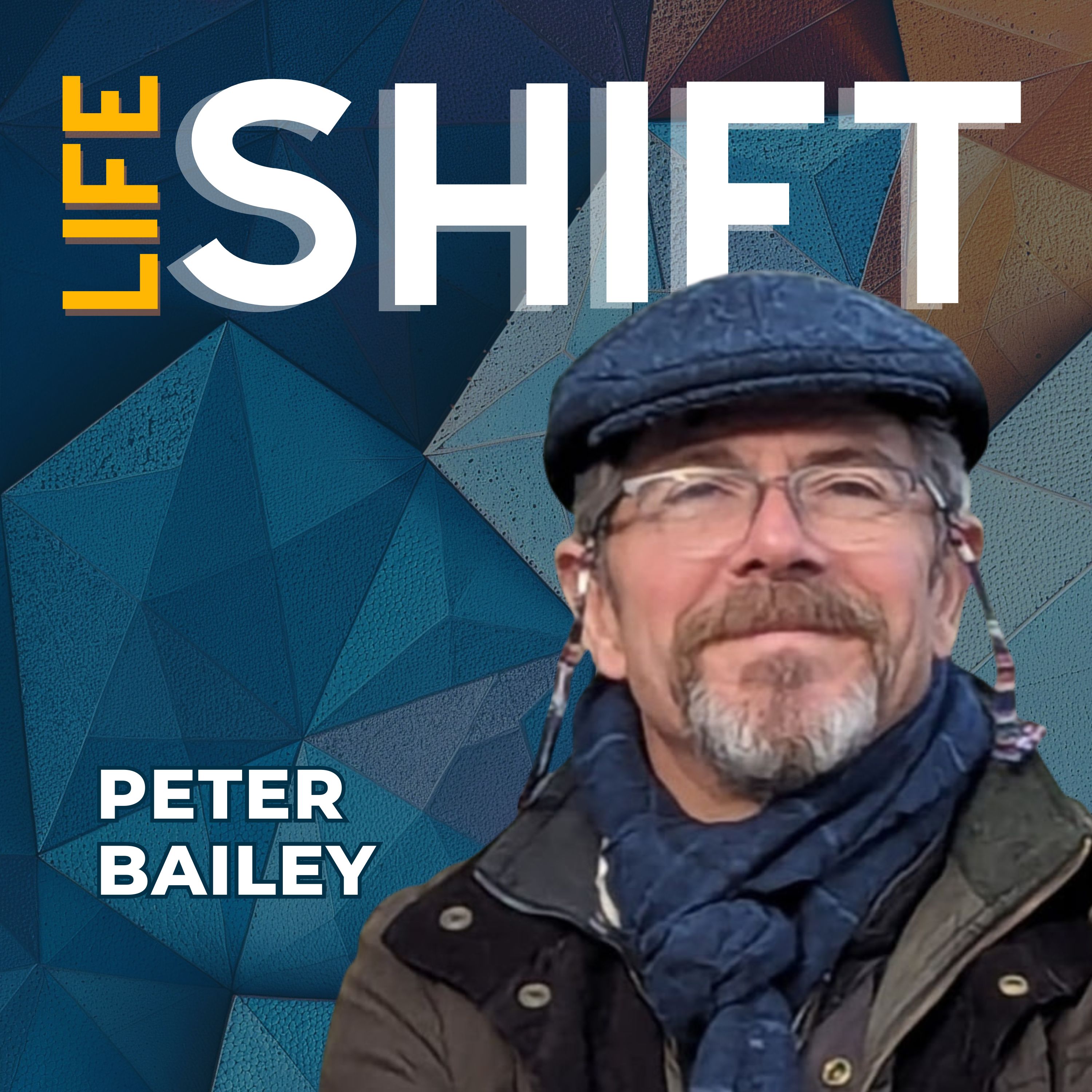
Peter Bailey is the President of The Prouty Project, a strategic planning and leadership development firm based in Minneapolis. He is also the author of the newly published book The Epic of You: Reframe Your Past to Navigate Your Future. Bailey's personal story, from challenges to triumphs, becomes a living example of how obstacles can shape our identity and fuel our growth.


