Under the Surface: The Shark Attack That Taught Tim Thomas to Trust
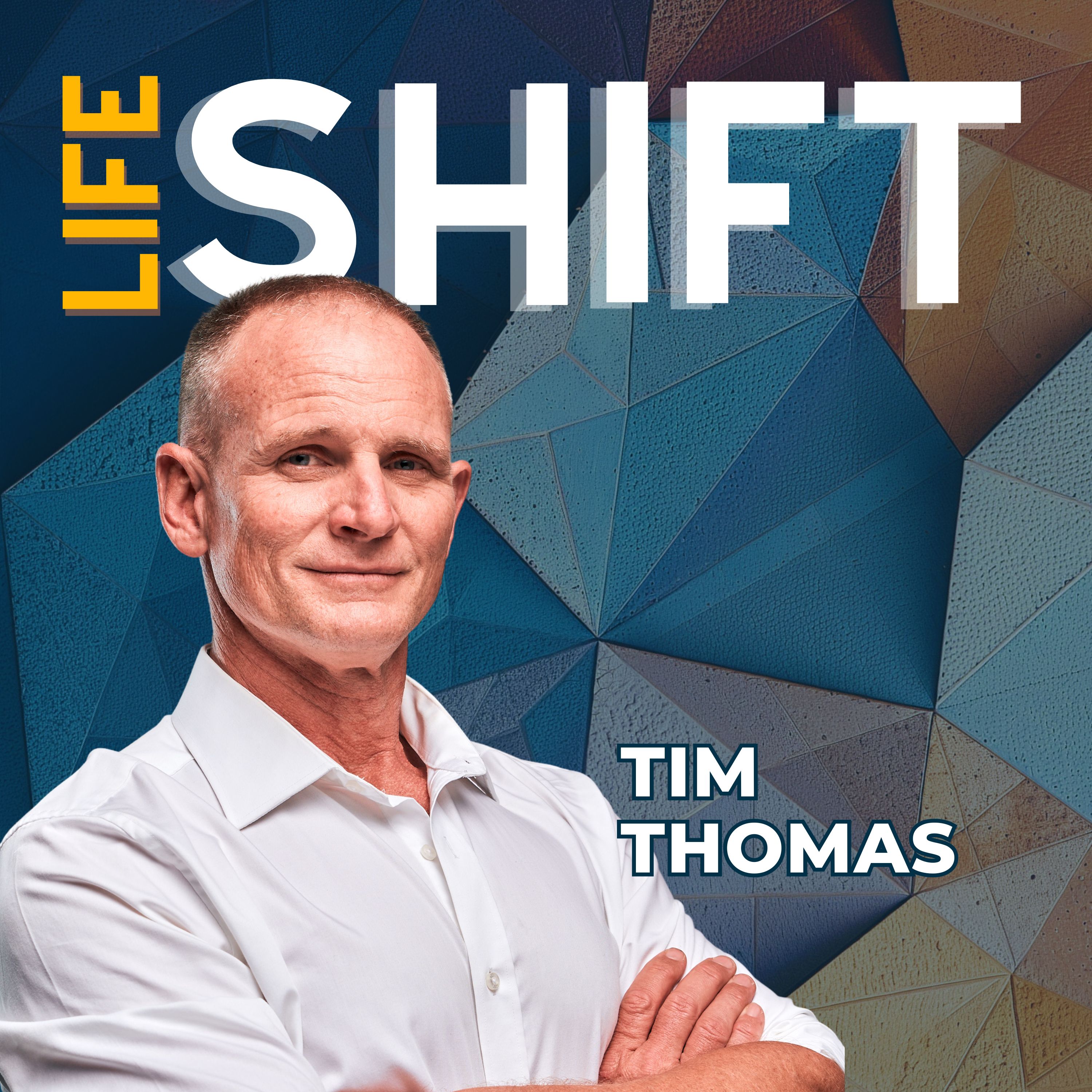
Tim Thomas survived a shark attack off Sydney and discovered that what we need most isn't more stuff. It's trust. A conversation about isolation, sleep, and finding your way back.


 Goodpods
  Podchaser
  PocketCasts
  RSS Feed
 Key Takeaways
- A shark attack became a pivotal moment for Tim Thomas, shifting his focus from self-reliance to the profound importance of trust and human connection.
- Living solely through one's own perspective can lead to unconscious isolation, cutting individuals off from what truly matters.
- The combined effects of loneliness and fatigue can be more detrimental to well-being than either state individually.
- Authentic conversations are highlighted as the most powerful tool for overcoming challenges, surpassing weapons or strategies.
- Improving sleep quality through practices like breathwork can be a catalyst for significant positive change and reclaimed mental clarity.
- Tim Thomas now helps others move from surviving to truly living by making better sleep accessible through his 'Breathwork in Bed' app.
Under the Surface: The Shark Attack That Taught Tim Thomas to Trust
Some life-altering moments arrive with a whisper. Others arrive with teeth. In this episode of The Life Shift Podcast, we sit down with Tim Thomas, a former MMA fighter and Australian Special Forces Commando, to discuss a moment that arrived with the latter: a harrowing shark attack off the coast of Sydney.
For much of his life, Tim navigated the world with singular focus. As a fighter and Special Forces operator, he found clarity in high-stakes situations, relying on his gut and his forward momentum. This approach served him well, allowing him to perform under immense pressure. However, it also created a blind spot, preventing him from seeing the richness and importance of life beyond his immediate experience.
The Shark Attack Incident and the Dawn of Trust
Everything changed when a shark attacked Tim. This terrifying near-death experience, however, didn't lead to lasting fear. Instead, it unlocked something unexpected: peace. This profound shift wasn't a result of the danger itself, but rather the powerful realization of human connection. Witnessing a friend's support in the water, and feeling that someone had his back, allowed the immense stress to fall away. In that instant, Tim understood a fundamental truth: "We don't need more stuff. We need more trust." This pivotal moment, sparked by the Tim Thomas shark attack, fundamentally rewired his understanding of human connection.
The Dangers of Self-Reliance and Isolation
Tim reflects on how living solely through one's own perspective, while effective in certain high-stakes scenarios, can unconsciously disconnect us from others and from what truly matters. He shares insights into the dangerous synergy between loneliness and fatigue, explaining why their combined impact can be far more detrimental to our well-being than either state experienced alone. This understanding is crucial for navigating the complexities of modern life.
Finding Connection Through Authentic Conversation
During one of his most challenging periods, Tim discovered a simple yet powerful 'golden question' that helped him break through his deep-seated isolation and reconnect with the world around him. He emphasizes that authentic conversations, filled with genuine human interaction, are far more potent than any weapon or strategy. These honest exchanges are presented as the most powerful tools we possess for overcoming adversity and fostering deeper bonds.
Breathwork, Sleep, and Reclaiming Your Life
Drawing from his experiences, including his work with veterans struggling with PTSD, Tim now dedicates himself to helping others reclaim their energy and mental clarity through the transformative practices of sleep and breathwork. He observed that significant positive change often began when individuals started to improve their sleep quality. This led him to create Breathwork in Bed, an app designed to make achieving better sleep simple and accessible for anyone feeling exhausted and overwhelmed.
His mission is to empower people to move from merely surviving their days to truly living them with peace, power, and presence. Tim Thomas is offering listeners 28 days of great sleep through the Breathwork in Bed app, designed to guide you to sleep with peace and wake up with power.
Guest Bio:
Tim Thomas is a Father of two, former MMA fighter & Australian Special Forces Commando who now helps people reclaim their energy and mental clarity through sleep and breathwork. After working with veterans struggling with PTSD and noticing that real change began the moment their sleep improved, he created Breathwork in Bed to make better sleep simple and accessible for anyone battling exhaustion and overwhelm. His mission is helping people move from surviving their days to actually living them with peace, power, and presence.
Tim Thomas wants to gift you 28 days of great sleep. Sound good? These links are for immediate and natural sleep improvement; They’re Tim’s company's online resource called - The ‘Breathwork in Bed’ app. The app will guide you to sleep with peace and out of bed with power. Enjoy!
Apple: https://apps.apple.com/app/apple-store/id6575362285?pt=127061224&ct=BIB50K&mt=8
Google: https://play.google.com/store/apps/details?id=com.breathworkinbed.bibsleepapp20&hl=en
https://breathworkinbed.com.au/
https://www.instagram.com/breathworkinbed/
https://www.facebook.com/breathworkinbed
https://www.tiktok.com/@breathworkinbed?is_from_webapp=1&sender_device=pc
https://www.linkedin.com/in/bettersleepbetterworld/
----
Listen and follow: www.thelifeshiftpodcast.com/follow
Subscribe to the newsletter: https://thelifeshiftpodcast.beehiiv.com/
trust and connection, near-death experience transformation, veteran mental health, sleep science, breathwork for sleep, overcoming isolation, freediving mindfulness, internal compass, authentic conversation, loneliness and fatigue
You Might Also Like:
- The Unexpected Fight for Survival: Taylor Coffman’s Story of Resilience
- What Survives: A Story About Loss, Resilience, and Inner Friendship
Frequently Asked Questions
What happened to Tim Thomas in Sydney?
Tim Thomas experienced a shark attack off the coast of Sydney, which became a life-altering event that taught him the importance of trust and human connection.
How did the shark attack change Tim Thomas?
The shark attack, rather than causing fear, brought Tim Thomas a sense of peace and the realization that he was not alone, leading him to value trust over self-reliance.
What is Breathwork in Bed?
Breathwork in Bed is an app created by Tim Thomas to make sleep improvement simple and accessible, guiding users toward better sleep and more powerful mornings.
What are the dangers of loneliness and fatigue?
Tim Thomas explains that loneliness and fatigue, when combined, can be more dangerous and detrimental to mental well-being than either feeling alone.
Matt Gilhooly (00:00)
There are moments in life where everything you've been running from finally catches up to you. For Tim, that moment involved a shark, a near-death experience, and a realization that his entire life, seen only through his two eyes, had been missing something he didn't even have a name for yet. Tim is a former Special Forces operator, a professional fighter, and a sleep scientist who spent a decade helping veterans find their way back to themselves. But before any of that, he was
just a guy living inside the boundaries of what he could see, what he could control, and what he could feel underneath his own skin. And it took shark attack off the coast of Sydney to crack that open. This is a conversation about trust, isolation, and the things we carry when no one's watching. And what it looks like to wake up, not just from sleep, but from the version of yourself that was never quite fully present. I'm so glad that you're here for this one. Here's our conversation.
Tim Thomas (00:55)
I realized just how powerful trust is. Because I'm like, I trust this man. And then this this curtain of stress fell from the top of my head to the bottom of my feet.
Matt Gilhooly (00:59)
Mm.
Tim Thomas (01:12)
And I felt peace in an environment where you wouldn't normally be peaceful because of the trust I had in a fellow human. you know, I realized then that it's not more stuff we need. You know, it's more trust.
Matt Gilhooly (01:36)
You're listening to the LifeShift Podcast. I'm your host, Matt Gilhoolie. This show is built around one simple idea, that sometimes a single moment can change how we see everything. Each week, I talk with someone about the moment that shifted their life and how they learned to live differently after it. These are not stories about having it all figured out. They are stories about what it looks like to keep going once the story changes. Thank you for being here. Here's today's story.
Matt Gilhooly (02:07)
Hello everyone. Welcome to the LifeShift Podcast. I am here with Tim. Hello, Tim.
Tim Thomas (02:12)
Howdy, good to be here.
Matt Gilhooly (02:13)
Thank you for wanting to be a part of the LifeShift Podcast from the other side of the world.
Tim Thomas (02:18)
Technology is great. know, we can have these conversations. We don't have to be on a 16 hour flight and we can talk to someone with a strange accent through the phone, through the car speakers.
Matt Gilhooly (02:29)
And I'm assuming you're talking about my accent. So thank you for that. No, it is. You're right. It's really opened the doors to be able to talk to people and have real conversations with people that we probably never would have run into in our lives. And what a gift that is, especially in 2026, to just be able to connect with other humans and see that we are like each other, you know, in so many ways.
Tim Thomas (02:32)
Hahaha
and you hit the nail on the head there, authentic conversations there. a. power punches through all the electrical interference, you know, when you're really with somebody. And so, yeah, that said, I'm grateful to be here
on the Life Shift podcast. I've listened to an episode on the drive over here. I had to set up in someone else's office today, because I'm doing some work with the local uni. And I must say, it was quite nice to get a bit of a tear coming down the eye. I know in the morning, what experience has taught me is if I can have a, I call it bit of a gush, a gush from, know, a few tears from the eyes when I'm sort of in a space where I'm like focused and allowing myself to be gentle.
Feel emotions. I know it's going to be a good day. I really do, you know.
Matt Gilhooly (03:53)
I agree. It took me so long in life to realize that all of my emotions were okay. You know, I grew up with a, you know, losing my mom when I was a kid and for so long I just thought everyone else needed to see that I was going to be okay. So I just didn't cry. I just thought boys can only be mad or happy. They can't be any of the other pieces in between because that will show that you're not perfect.
And so it's nice to be in my 40s now and be like, it is what it is. How I'm feeling is how I'm feeling. And I know how to address that. And that's okay. All of it's okay. So I'm glad to hear you say that as well.
Tim Thomas (04:32)
Mm-hmm.
Look, I'm not...
saying, well, I'm dyslexic, so I see things in patterns. So, you know, if I had my way, I wouldn't feel comfortable enough to let the tears come out. But I've just noticed pattern recognition is my skill. I'm in the top percentile of pattern recognition. So that's why I often work with research, academia, not because I've done the study, but I can see patterns. And the pattern I saw is if I can have that really emotional connective moment where you kind of it's very unfamiliar when I go into that
familiar space, my day is amazing. And I'm like, I don't understand that. But I see the pattern that keeps happening. So let's just keep doing that. You know, yeah.
Matt Gilhooly (05:17)
Yeah,
that's a good pattern to attach to. There are some other ones you could attach to that wouldn't be so great. So I'm glad you chose that one. So why don't before we get into your story, why don't you tell us who Tim is in 2026? Like how do you show up in the world? How do you identify these days?
Tim Thomas (05:24)
Yeah.
Sure, I design environments where success is a metric of success. Did I say that right? No, sorry. I'm trying to explain something here and I've, you know how you repackage some things in your head and they don't come out right? So sleep is a metric of success. So I design,
spaces, environments where sleep is a metric of success. And that's on the back of about 10 years working in the veteran community, noticing that if we could improve sleep, you know, easier said than done. But if you could do that, all these other metrics would improve all these other symptoms that people would try and sort of fix inverted commas would fix themselves once sleep improved and
behind that my former life in the Special Forces. Before that, I was a professional fighter in the early days of mixed martial arts. And I was the guy that knew how to push hard, sleep when you're dead, cashing your tomorrows to live today. And now I've just seen the pattern that when sleep improves, everything improves. But...
It's not something that we often are in a culture that encourages. It's all about things are only valuable if you can see it. I'm, you know, from hard life lessons, I've understood that if you want a good life, sleep is foundational to that. Yeah, I hope that answers your question.
Matt Gilhooly (07:04)
hustle.
Sure, yeah. You're allowed to answer that question however you want to and it sounds like you're trying to help people in ways that they need it. Do you find resistance or do you find a lot of people that will willingly accept that and move in? I think we all know sleep is important but you have to go over the hurdle of, I'm just too busy or this is happening and this is happening and I can't do this.
Tim Thomas (07:47)
Yeah, yeah. And this is the loop that happens when you get so busy. You go into your part of your brain, which is your amygdala, your fight or flight, and things have to happen fast. You can't drop your guard for a second.
But that's a very limited perspective. When you actually get proper sleep and you can activate your prefrontal cortex, all of a sudden you have so many more options, a lot more energy, more energy, more options. Like you've sent a drone up and you can see everything. So the people that know really know. Okay. But also understand that the people that know the power of sleep also weaponize it. So when I was in the special forces in Afghanistan, we used to target the enemy's sleep. Not because.
We knew the science of it. We just knew if we could take it out for three nights, it would mess them up better than a bullet. And so if that's what you would do to your enemy, how would you treat people you care about? So my saying these days, if you care about people, you care about their sleep. And there's lots of ways to show you care to others. But I ask people for the people you care about, how often have you said, you know what, I'm going to ensure that that person has an amazing night's People don't ask that question.
Matt Gilhooly (08:57)
Nope.
Tim Thomas (08:59)
And there's this shocking vacuum of, no, I've never even looked. ⁓ So, So, so people always. It's generally the length of conversation. Some people seek me out and go, look, I just need a better night's sleep tonight. And we've got things in place to help them do that naturally and immediately. I was a guy that lost six years of his life to pills. So when I.
Matt Gilhooly (09:04)
Never even thought of it.
Tim Thomas (09:24)
Now, you know, when I thought, well, if I get through this, I want to be able to give people the good stuff straight away and not have them lost in years of unnatural stuff. When it comes to, corporates that are all, you know, sleep when you're dead, I have to talk in their language and say, look, think of performance like a pyramid. Top of the pyramid, you kick an ass, chewing bubble gum, achieving what you want in the external world.
Everyone sees that everyone cheers you on and you often get a sense of self-worth from that. The bottom of the pyramid is your rest, recovery and healing art forms. So if you want those graphs to keep going up, you need to work on the bottom of the pyramid and
then I play a little game with them saying, how much of a percentage do you think this rest recovery section of the pyramid is compared to the performance part? And they might give a few percentages. I listen, before you ask that question, let's deny ourselves sleep for three nights and then answer that question again. So if you ask me, sleep is 80 % of the pyramid.
Matt Gilhooly (10:24)
Yeah.
Tim Thomas (10:29)
and people are trying to wring the life out of their scene activities, their daytime activities, but no one's actually looking at the soil from which everything grows. And I only came from this space from the damage it caused me, the damage it caused others around me, because it's not just me getting a bad night's sleep. If I wake up in a crappy mood, I'm kind of pushing my crap onto others. And
you know, conversely, as I, I noticed when I slept better, my energy was better. And the more energy I had, the more aware I was of others. And the more I could see from like that higher perspective, you know, if my team's having a bad day, I'm having a bad day. So let's make sure they have a good day and do it from a place of strength, not a place of, you know, I'm really tired. You're pissing me off. I guess I'm supposed to do this.
So, so that's kind of, that's kind of once I saw the power of that and I found some pretty easy natural access to that, then that became, well, I don't know if it's a calling, but I just saw because no one was doing it. I thought, well, if not me, who? Yeah.
Matt Gilhooly (11:36)
Yeah, that's great. Yeah.
And now you can start adding in the eye gushing part to to improve their day even more if you can get that pattern for them. I think that's great. So let's let's get into your story. And I know that when we first talked about you coming on the show, you had one of your life shift moments in mind, but it sounds like you might have pivoted here to what you want to center today's conversation around. So why don't you paint the picture of who Tim was before this
pivotal moment that we're going to talk about today.
Tim Thomas (12:08)
Sure, Tim was a guy who was just looking at life through his own eyes. And it wasn't a bad life. I was gainfully employed, I was raising a family. it was just whatever was in front of me.
Matt Gilhooly (12:22)
Like in a pleasure, of like whatever made you most happy in that moment type approach.
Tim Thomas (12:22)
and
Well, I was only
ever aware of the actions that were in front of me and the actions that I could see maybe either side of me, right? Just aware of the world that was within my scope of vision. And I didn't have an awareness of anything outside of that or the possibility of what's outside of that.
Matt Gilhooly (12:34)
Okay.
Tim Thomas (12:48)
And again, it wasn't like I was a bad person. But you know what? I would say I was unconsciously selfish because there was just things I didn't know that just never was on my radar. So I wasn't doing what I was doing with any kind of awareness outside of that. So I guess that was. There was just this certain amount of unconsciousness.
that was in my life that I didn't even know was there until I had sort of my eyes opened in this particular experience.
Matt Gilhooly (13:19)
Yeah. Did you grow
up that way as well? like as a child or was this more adult kind of mind frame in which you were, was like whatever opportunity was right in front of you, was a yes or a no. And you kind of move through, was that always your approach as a kid?
Tim Thomas (13:35)
Yeah, yeah, so I was always
very, very sort of gut instinct. Do this, do that, do this, do that. And, you know, play the game, play the game and not even know you're in the game. And.
Matt Gilhooly (13:39)
Okay.
Because it sounds like fighting is like you said you were in fighting like a lot of that seems to be only what's in front of you is what you're dealing with at that too.
Tim Thomas (13:50)
Yep.
You know, good point. And I'm glad you presenced me to that because sometimes, you know, when you're doing stuff, you can't see that outside perspective. So yeah, the great thing about fighting was I noticed when you've got an opponent wanting to hurt you or when I had an opponent wanting to hurt me, all of a sudden something went click, click, click and everything worked out. Like I just knew it's like this deep ancient wiring took over and I knew what to do. But in training, I was always the one that was kind of awkward.
took a long time to learn stuff. But when the fight was on, you'd put your money on Tim. So that was sort of I would chase experiences that would sort of put me in this moment. And in that respect, it was very a self-centered way of, OK, this is Tim's world. What can Tim do to put him in this moment and get this, you know?
Matt Gilhooly (14:43)
Hmm.
Tim Thomas (14:50)
experience and that kind of naturally led into the you know the Special Forces.
Matt Gilhooly (14:55)
Yeah, I mean, I feel like there's a thread there was here's a this is a question coming from Matt's experience. Was there a sense of like, did you have a sense of any kind of failure? Like, or was everything just an experience for you? And it was something that you that you move through, whether it quote unquote, worked out or not. And the reason I asked that is like, for me, I was so afraid of taking chances if I even had an inkling that I would be
Like I wouldn't do it perfectly or I wouldn't do. So what was your, your relationship with the word failure? If you were someone that was just pulling in those activities and things you were doing in your life.
Tim Thomas (15:37)
You know what? The word I would use wouldn't be failure. It would be regret. So the conversation I had I was I was just turning 25. I don't want to get off the main one, but I had this experience where I felt that I noticed dyslexic here. I see things in patterns when I eat. My body was satisfied, but there was something about my spirit that was completely unsatisfied. So.
Matt Gilhooly (15:42)
Okay.
Tim Thomas (16:05)
I thought, the only way for me to focus on my spirit is to get rid of the distraction of the body. So 10 days before my 25th birthday, I started fasting so I could just focus on this unnourished spirit, if you could call it that. And I did that. at the end of 10 days, I was working night shift.
in a hotel in town, was one of the tallest buildings. And I got up on the roof and I was looking at the sunrise expecting this scroll to fall out of the sky. 25 year old, right? And nothing happened. Absolutely nothing. And I'm like, whoa, I did all that for nothing. What do you know, Tim? And I thought, well, I know that I've got about 25 years of time awareness.
Matt Gilhooly (16:35)
Let me guess, it didn't.
Tim Thomas (16:50)
No more, no less. And if you ask me how long that took, it went like that. Flicker the fingers. So Tim, you're going to do again, and you're going to be 50. And what would that 50 year old say to the 25 year old version of you? And it was this really interesting law. was listening to this live conversation with the 50 year old version of me saying, Tim, okay, here's what you know right now. You know, you can live with not a lot of money. You've proven that.
Tim, you can also live with people not thinking much of you. You've proven that. But what you cannot live with, what would be a pain worse than death would be regret. You can't live with regret. So start doing now the things that, you know, imagine the pain you'll be in if you put those things off and you get to 50 and you're not doing them, you know?
Matt Gilhooly (17:47)
Yeah. So.
Tim Thomas (17:48)
And
that's when I step back and it gets a little sort of woo woo here. I actually heard an audible whisper. I've only heard two audible whispers in my life. One was in Afghanistan, one was now. And it was turn up five minutes early. And I instinctively knew that meant turn up to training, martial arts training five minutes early. And I trained for years, but I'd never sort of turned up early.
And I turned up early and I just started staring at this, at this dojo mat area. And I'm like, what's the point? But then I start seeing myself on the mat, like training how I want to train, you know, when fatigue comes in, find a second win. When the coach says, 10 pushups, do 10 of the best pushups you've ever done. You know, and I just saw this thing happening. And then when the time came to start, it's like my body got pulled into a
vacuum, vacuum mold, you know, those suction molds, and I got sucked into this space. And I'd realized I'd been training for years, but I hadn't had my
Matt Gilhooly (18:45)
Right.
Tim Thomas (18:54)
mind and body 100 % in that moment for the whole time. It might have been in there, you know, at levels of extreme exertion, but never in there from start to finish. So that, you know, I'm about 190 pounds in your language, but my mind doesn't contain any mass. So it's not stuck here. It can be in the past and the future. And so I'd been sort of living life training, but not 100 % in that moment. I noticed when I was 100 % in that moment, this click happened and
It's like, not just, you weren't just powerful in that space. I noticed that there was a gravity outside of that space. I started getting all the things I really wanted in life. The friendship circle, the life partner, the coach, all these different sort of, and work opportunities all happened because I was like, in that moment and my path to that, I call it totality. My path to that was martial arts, but there's a lot of different ways to get there.
I think, you know, there's meditation, there's all sorts of stuff, kind of put me on this path of, I want to go to places where I've noticed that it forces me to be 100 % and I've got to be there. And so that was kind of my life getting into these combat scenarios where this superpower kind of kicked in, but it was, it was very Tim centric. It was all about
Matt Gilhooly (20:12)
Mm-hmm.
Tim Thomas (20:18)
the stuff going underneath my skin. And I wasn't, you know, deliberately trying to be, you know, a prick or anything, but I'm pretty sure it came across that way sometimes because this was my world, you know, don't get in the way of it.
Matt Gilhooly (20:29)
Yeah.
Why choose Special Forces at that point? Do you know why you chose that?
Tim Thomas (20:36)
I would say two reasons. One of my mates was in the Bali bombings terrorist group blew up nightclub in Bali. And I'm like, well, these guys aren't respecting boundaries or borders. You know, I'd rather destabilise them in their country than them getting organised and coming over to mine. The other one was I was a broke professional fighter.
Back in the 90s, it wasn't a very well paid gig at all. And I was wanting to start a family. And the only skills that I had that paid above minimum wage was this coincidental first time in Australia's military history, they started this direct recruiting into special forces where they you'd normally have to spend two years in the military before you could even apply. But on this occasion, they were pulling from the civilian
pool of, you know, human resources. And the cutoff age was 30 and I was 30 at the time. And I thought, well, if I don't do this, I might regret it. Right. And so I went into this thing and everyone's telling me I was too old. But again, dyslexic, I'm like, this is the first time I've aged.
Matt Gilhooly (21:38)
Hmm.
Tim Thomas (21:49)
I've never actually aged before. So shouldn't I be determining what I can and can't do at that age? You know, and I asked everyone to ask that question of themselves. Is the first time you've been 40 something, you know, shouldn't we be determining what we can and can't do? Or should we let others say what we can and can't do? You know, so I said a polite F you I'm going to do it anyway. And you know, there was guys younger, fitter, faster, stronger than me. But I think, you know, just growing up in the 70s, getting beat up at school was just a Tuesday.
Matt Gilhooly (22:01)
Yeah.
Tim Thomas (22:14)
There was a certain amount of resilience I had embedded into my physicality. And yeah, I was quite proud to say of the 70 that started, there was less than 15 that got through. And yeah, I was one of them.
Matt Gilhooly (22:30)
Wow. Well, I mean, good for you. And I didn't mean to take us off the path that you were taking us on, but it's such an interesting approach because the way you describe it is like, to me, sounds like you're getting the most out of life, but only the life that's presented in front of you. And that almost seems like a good thing, but I could also see how maybe from the outside it looked like you said.
selfish in some ways, because you weren't making those decisions based on necessarily how other people would feel about it, but rather how would you feel about it or whether or not you would regret not doing it. So it's just fascinating to me. But take us back on your path to this life shift that we're centering today around.
Tim Thomas (23:15)
Well,
one thing I found really focusing and mindful is free diving. know, take a few deep breaths, go underwater and it well, I know that sounds strange, but and you know, you can access this power without getting in the ocean. But ⁓ we're actually built for being underwater. So we're mammals. We have the same reactions to going underwater as dolphins and whales.
Matt Gilhooly (23:26)
Thanks.
Tim Thomas (23:42)
Okay. And you breathe a certain way to relax the whole body, go underwater, and we have this human superpower that not many people know about it. And I know Maddie, you would actually love this, the space that gets created. So we've got this gland between our eyebrows that tells our body that we're underwater. And it starts this cascade of chemical reactions and automatic reactions within the body.
So it draws all your blood into your center. It slows your heart rate down. But here's the best part about it. It actually sends a signal to your brain saying, hey, we're in survival mode. We don't need stress. We don't need worry. And it changes the circulation in your head, mechanically changes the circulation and it lobotomizes all the crap you don't need. ultimately our ancient wiring knows we don't need stress to survive.
Isn't that fascinating?
Matt Gilhooly (24:37)
Not many people can tap into that, I'm guessing.
Or do, I should say. Not many people tap into that.
Tim Thomas (24:43)
Whoa.
They don't know what's available. And if you wanna ask the question, how much dumb stuff do we do to try and turn that stuff off, to try and find peace, you know? So here's the thing, the mammalian dive reflex, freediving, is the only thing that balances out your parasympathetic nervous system, which is your fight or flight, oh, it's correction, your sympathetic nervous system, which is your fight or flight, and your parasympathetic nervous system, which is your relaxed rest and digest, okay? So I used to
love the ocean growing up because I grew up near the water, but I also grew up near Australia's capital for great white sharks.
So I loved the water, but I was terrified of sharks. used to wake up screaming of nightmares of sharks. And it's not like the boogeyman where, okay, check under the bed. He's really not real. These sharks were real. They were really real. I was terrified, right? So as much as I loved the ocean, I was terrified of sharks. And as an adult, I got into freediving when they had this device called the shark shield, which is an electrical device that would create this pulse through the water.
that would hit because sharks have very sensitive electrical sensors on their nose so if a fish is stressing it can pick it up. It's almost psychic in the way that it's unseen sensors you know and this thing overrides that. It's kind of like getting kicked in the nuts the closer it gets to this thing and so I started you know diving in the ocean realizing it's not suicide and I started spearfishing because you know
why not have dinner and a show? that kind of, that was awesome. But then in, if we want to dive into, excuse the metaphor, dive into the changing life of then, I was spearfishing off the coast of Sydney near a place called Boat Harbour. And,
Matt Gilhooly (26:19)
Right.
Tim Thomas (26:41)
had a near-death experience when a shark had me by the leg and yeah, I thought I was gonna die.
Matt Gilhooly (26:51)
and but you didn't, which is good, first of all, but it was like your nightmares coming true in this moment. And but were you in that space? Were you in that calm space and all that that allowed you to find your way out of it? Or like, how do you how do you escape from something like that?
Tim Thomas (26:53)
No.
Good question, because I had the classic NDE near death experience where my life flashed before my eyes. And that was cool. But then I'm like, well, I see it all. And I just automatically knew with everything I see, I should be able to draw up information that will help me right now. Okay. And so I saw it online, okay, give me everything on sharks.
Matt Gilhooly (27:16)
Really.
Tim Thomas (27:34)
And that didn't help at all because all I had was images of me completely terrified of sharks and bad experiences, right? I'm like, okay, delete that search. I don't want look at that. Okay, let's, and I'm sure that this moment, it seemed like 15 minutes. So, you know, imagine you at your computer searching going, okay, I was in that mode and I'm sure it seemed like 15 minutes, but it's probably only a couple of seconds, right? Time dilation as they call it.
Matt Gilhooly (27:40)
Right. Yeah.
Tim Thomas (28:03)
And I'm like, okay, let's search up predatory animals. Predatory animals. Okay, crocodiles. Oh, okay. So you may have heard of Steve Irwin, the crocodile hunter. Well, his right hand man is a guy called Wes. Wes is a good mate of mine. He trains martial arts and I've known him for a while. And time ago, he was actually attacked by a crocodile. And I think Steve him. And
I visited him in the hospital. I'm in for when I go predatory animals and I'm like crocodiles and then boom, I'm literally in my mind's eye in this room with Wes in the hospital bed. And he's showing me scars and he showed how, know, he basically bit him in the butt and the the behind the knee and compressed those two points together. And and I, you know, I said.
know, Wes, I got to ask what what was it like getting bitten by that thing? And he goes, Tim, you know what, all my life, I've been terrified, but also fascinating on what would it be like to be bitten by a croc. And I finally had my answer. I'm like, Huh, thanks, Wes. And then I go back into my physical body. I'm like, Wow.
Yeah, all my life I've been terrified of sharks and it's finally happening. It's finally happening. It was kind of like a strange relief, like this thing that I was terrified of finally happening. And it was pretty graphic, like this thing was on my leg and when they bite, they've got this eyelid, it's got a nictating membrane that closes over. So they're kind of almost like it's looking at you while it's trying to eat And this thing was really real, but the problem was it wasn't like
Matt Gilhooly (29:30)
Yeah.
Tim Thomas (29:51)
The fear wasn't getting eaten, the fear was drowning because this wasn't a particularly big shark. was two meters. But you don't know how strong these things are one has you in their environment. And, you know, in martial arts, I've taken plenty of hits. You know, I've jumped out of planes and I what it is hit the ground. was something else. This was like, imagine someone has you.
Matt Gilhooly (29:54)
Mm.
Tim Thomas (30:17)
And they're shaking you like that. Like my whole body in this water was getting shook. I could feel my brain getting shook and around inside the skull. it had me, it was twisting me up in my spear fishing lines and it was drowning
Matt Gilhooly (30:19)
Right, yeah.
Tim Thomas (30:32)
I'm not going down without a fight. I pulled out my knife and I'm stabbing this thing in the eye. It is not letting go. It wants me. And then my mate Jimmy. You know those guys that are kind of assholes, but you like them anyway.
As much as Jimmy is hard to be around sometimes, he's like, that's the guy you want around when when shit's going down, you know, and that's when, you know, Jimmy's coming down, he's had he's got this look in his eye, right? And I'm, you know, down underwater, and he's coming down. And I can see this look in Jimmy's eyes saying, I got this, and I got fucking you, you know. And he's, he's lining up his spear gun to shoot, you know, the shark.
Matt Gilhooly (31:08)
Yeah, that's the friend you need.
Tim Thomas (31:15)
And this thing's, know, tossing me around. It's not a hard, easy target to hit, but you know, he's a fellow special forces operator. where I thought of all the people to have in this scenario, we're quite used to shooting in, in, in closed spaces right next to each other, you know, and, and, do it in a way. I'm like, that was the moment Matt, where
There was a few little tipping points in this, you know, life shifting moments in this in this experience. So I'm like, shit, I'm going to die. I see Jimmy's eyes and I realized just how powerful trust is. Because I'm like, I trust this man. And then this this curtain of stress fell from the top of my head to the bottom of my feet.
Matt Gilhooly (31:41)
Yeah.
Mm.
Tim Thomas (32:06)
And I felt peace in an environment where you wouldn't normally be peaceful because of the trust I had in a fellow human. you know, I realized then that it's not more stuff we need. You know, it's more trust.
and I turned to let him take the shot. So I wanted him to have a clean shot as possible. The spear went right past my leg, hit the shark and it pissed him off even more. know, this shark got extra angry because spears aren't bullets. They don't go in and explode. They just poke holes through things, right?
Matt Gilhooly (32:45)
great.
Great.
Tim Thomas (32:52)
So Jimmy is now trying to pull on this shark. The shark's fighting him. It's got me. So was another thing that was sort of, I was getting wrapped up in. well, just, this, this, this, you know, when people laugh at things that are kind of not the normal things that people laugh at. I, looking back, it is so funny.
Matt Gilhooly (32:59)
you
We only laugh because you're here right now talking about it.
Tim Thomas (33:19)
to see, you I trust this man. Shit, you just made it worse, you know? And so there I was, you know, I'm checking out. But the thing was, the only thing that saved me was the fact had this shark shield on, right? And it was one of the older versions.
But the thing is, with electrical equipment, it only works if you turn it on.
Matt Gilhooly (33:39)
I see you.
Tim Thomas (33:41)
You know, so guess who didn't turn the thing on? So this shark, of all the places to bite me, bit me right on the shark shield. And guess where the on button was? In its mouth, like right where its mouth was.
Matt Gilhooly (33:44)
Ha ha!
in its mouth,
Tim Thomas (34:00)
And I'm thinking, you know, look, my whole body's about to die. What's it matter if I lose a finger? Right? So I stick it because when it was biting down, so think of my leg and it was ⁓ I could get my finger just in the crack of its mouth. So I put my finger in the crack of this shark's mouth and I'm feeling around inside the mouth where this on switch is. I find it. I flick the thing on and then boom, this thing let's go. You know,
Matt Gilhooly (34:05)
Right.
Right, so it's got a little spot, yeah.
⁓
yeah.
Tim Thomas (34:29)
it lets go. And I'm like clawing to get to the surface, get me to the top and then man I don't know if I've ever had such a sweet breath of air. My goodness. And then Jimmy's coming over and he's high fiving me right?
Matt Gilhooly (34:37)
Right.
Tim Thomas (34:46)
And afterwards, and this is the tipping point, this is the tipping point. Afterwards, someone asked me, you know, when you saw your life flashing before your eyes, do you think that was a spiritual experience?
And I'm like, good question, absolutely not. Because that was just a sequence of events in my life. I mean, it was cool how it was all compressed, but it was nothing new. It was just my life through my own eyes, nothing outside of that. And this is the kicker. I'm like, well, if that was a really spiritual experience, I wouldn't just see a linear.
action, action, action. You'd see how that one action then impacted others and then others and others. You'd see the whole family tree from this little butterfly wing turning thing to this, you know, tornado that you have no awareness of. And I'm like...
Something has shifted.
My life is not just my own.
And I had this.
faith moment where it wasn't whether God existed or not. Because he simply does or he doesn't. In my heart of hearts, I saw that I was given the faith to see that when this physical form goes,
Book of Knowledge is going to be opened up and God's spirit, higher intelligence is going to, hey Tim, here's your life as you saw it. That's pretty cute, right? Well, here's your life as you didn't see it. That action then impacted others and that action, that thing that you thought was a really big deal, ⁓ not a big thing. That small little thing that you did, look what happened there.
And I didn't just start seeing the actions, I started seeing the spirit in between the action to someone else. Because if to me, the proof of spirit is that, actions, words, they kind of stay here, right? But if anything goes from, you know, this sealed unit to someone else's sealed unit, then there is something between us. can call it, I called it spirit.
call it a frequency, call it whatever, call it some form of interconnection, that's what I became present to.
I realised that the form I'm in still only has two sets of eyes.
But I do believe we were given an internal compass that if we follow and we observe the things that bring us more connection in our life, more love, more peace, higher quality sleep, know, more joy.
That is the compass that puts you on the path to creating these really powerful, positive ripples either side of you. Because it's not our job right now to see it all. We weren't given that capacity. Every now and then you might get a glimpse. For the last decade I've been helping veterans. And there's been some real life turnaround moments.
But I've observed that if, I genuinely made a life turning, changing difference to a hundred people, maybe only two or three would ever sort of stop and go look back and go, oh Tim, you know, that was really good. So, so, you know, we can't do this for external affirmation. We've got to do it because it's the thing that's giving us those, know, more love, more joy, more peace. So I still was
seeing that we are supposed to follow our own internal compass, but doing it in a way that is selfishly wise and observing if we're getting those things happening as a result.
Matt Gilhooly (38:54)
Would you say that that was like the crack open of just intentionality with your decisions and whatnot? That not self-serving, not that that sounds really negative, but it sounds like your life before that you were making the decisions that felt best for you. Was this a cracking open of like, weigh a couple other things in relation to what I do next.
Tim Thomas (39:21)
Well, learning to, I call it sitting in the spirit. Okay, you're still moving forward, but you're sitting in this space where you realize if you can stay in your peace, if you can stay in your power, if you can stay in your love and connection, everything's going to be okay. Everything's going to be okay.
Matt Gilhooly (39:44)
Yeah, for me, am just I'm thinking of like, I had a very, it felt very similar the way you were describing of the decisions that I made growing up were mostly self serving. And for me, it was because later on after therapy and whatnot, and I realized every decision that I was making in that self serving lane that I was in
was with the eight year old brain that had just lost his mom, like feared that anything that I made a decision on that would mess up, someone else would leave. it was so like realizing that, which is so logical, but at the same time, like my smart brain didn't really realize it until I was 30 something. That was my point of like, ⁓ it's not just about me.
You know, like I need to listen to others and do things for others. Not that I wasn't doing that, but with more intention, like leaning into how it's not just my life. Like it's like we're all here together and some of my decisions are going to impact other people around me, whether I like it or not.
Tim Thomas (40:59)
Yeah, yeah. And for me, and I hear what you're saying, and that's no small thing, because our sentient thinking mind tends to get frozen in time, you know, and that eight year old version making decisions, you know, when I was a child, I thought as a child, no reason to as a child, you know. But that gets frozen in time. We don't know that. We just know pain, not pain, safe, not safe.
Matt Gilhooly (41:20)
Mm-hmm.
Tim Thomas (41:23)
Because of the...
variety of different outcomes that can happen from any given choice that we make. I used to get very lost in, well, what if this, what if this, what if this? And it's beyond our human comprehension. So I've sort of found that if we can find that place where you can actually be still and know that there is a spirit there and you can rest in that and you can have a bit of a tear down your face at the beginning of the day.
You know, can kick ass in combat and still be okay. know, all giving yourself permission to know that you know there's this inner space that, know, and obviously reality check that you do have to attune yourself to what it is to have peace, what it is to have real power, what it is to, you know, show love, receive love.
And again, I'm saying this as an experience, not saying it as I know more than others, just an observation that there is this space that we can sit in
Matt Gilhooly (42:22)
Mm-hmm.
Tim Thomas (42:27)
will innately guide you to have these impacts that you've always wanted to have, but you can't have the impacts you want to have if your head's out there trying to influence the things outside of you that you want to have.
Matt Gilhooly (42:43)
It's like releasing
a little control, maybe.
Tim Thomas (42:46)
Yeah, yeah, the illusion of control. I tell you, know, life shifting moments, I, people sometimes say, Tim, you're over 50. And you're so you're so fit. You keep up with 20 year olds. And they said, what's your what's your life hack? And I'm like, you want a life hack? Okay, here's a life hack for you. You get divorced, you lose all your house, your home, your money, your regular access to kids. And you realize that this thing here, this bit of skin
is about the limit of what you can control. Everything outside your skin you cannot control. Other people, money, stuff, access to stuff, that is outside of your control. But underneath here, you got that. This is yours. You own that. You flick that switch and life occurs very differently. And you start choosing what goes underneath here because this is all we got.
Matt Gilhooly (43:38)
Yeah, I mean, it's hard. I think society puts a lot of different pressures than what you're talking about on us. And some of us, I'll include myself into that, some of us buy that BS that is being sold to us. And then we live our lives in that way. And it's really hard not to, it's really hard to be like you're describing the way that you see things because of all the noise. So I mean,
Kudos to you for finding this space that seemingly does it, is it fulfilling? it, are you, is that a word that you use fulfilled or?
Tim Thomas (44:19)
Yeah, well, it's fulfilled on the back of daily intentionality. So every time I wake up, it's at zero. All right. And I've got I got two sets of birds sitting on my bed head. I got the negative vultures or I got the peace and powerful doves and whatever I choose to let in is going to be my day. I just noticed and again, I'm not lazy, but if there's an easy way to do it, I'll do it right. I've just noticed if I can win the first five minutes of the day.
Matt Gilhooly (44:23)
Okay.
Mm-hmm.
Tim Thomas (44:46)
⁓ I've won the day, you know, so I've got these stupid little recordings that I'll play that really worked for me to put the good stuff in for the first five minutes with breath work, positive affirmations, these sorts of things all pre-recorded. You know, I'm not motivated enough to tell myself most mornings. So I've got to have that little button there. And that is the thing that allows me to tip the needle, you know, in that space, because if I don't. Those negative vultures, they'll swoop in.
Matt Gilhooly (44:48)
Yeah.
Tim Thomas (45:15)
You know, and and and I guess what I'm trying to say here is my goal for people is to live like energetic millionaires because you know, and energy is like money. How you invest is how you get it back. And, you, Matt, you got a unique energy signature.
Matt Gilhooly (45:15)
Yeah.
Tim Thomas (45:33)
You got a set of things that you can do with your body in mind that it might take a bit of effort to do might cost $100 worth of energy to invest in, but that gives you $10,000 back. ⁓ that worked for Matty. Let's let's keep doing those little investments.
And again, that's a unique energy signature according to you. There's a lot of people out there going, hey, this works for me. You should do it too. it does. Maybe I shouldn't. maybe I'm doing it wrong now. Okay. So, the mechanics is up to you. Energetic millionaire is the desired end state because life occurs very differently walking down the street with a couple of million dollars in your back pocket than if you've only got 50 cents.
Matt Gilhooly (46:08)
Mm-hmm.
And you've done both.
Tim Thomas (46:13)
I was that guy who only had 50 cents and I'm protecting it because I don't want to lose it. I'm in deficit right now. And someone's smart enough to take 25 cents from me. I got to revenge that stuff. You know, they're wrong. I'm right. I got to get that back. And I've completely forgotten the fact that I could be an energetic millionaire the next day. So, you know, the only wisdom I could offer here is that if you don't make a choice,
to put the good stuff in and to invest in yourself, you are going to have the negative stuff coming in and running the show, you know, as that's been my experience of and nobody does this for you. so the wise person knows that you don't. If you don't make the choice, the choice gets made for you. If you don't choose to live like an energetic millionaire,
you end up living as an energetic pauper and the current economy we're in loves it when we can't self generate because then it'll sell you short term fixes. You know, the term I use is the economy we're in pours dopamine over dysfunction. Okay. So when I was imbalanced, I just had to drink half a carton of grog before I spoke to my then wife. You know,
Matt Gilhooly (47:31)
Yeah. Well, I
like what you said though about like, what you do is not the prescription for everyone else. Like you had to find what works for you to reach this point in your day or in your life as you move forward. I liken that to, for some reason, people come to me like if they're losing someone in their life for the first time or they've lost someone, like, how do I do grief? And I'm like,
There's no one way. Like you have to find your path. And it took me a long time to find mine. So I can tell you what worked for me, but I'm not going to tell you that's the way you grieve. And it kind of feels very similar to what you're saying in a more positive way, guess. I guess you can say grief brings other things out. But in a way of like choosing first that that's the way you want, the direction you want to go, but then finding the tools that are going to help you get there.
are not pills.
Tim Thomas (48:31)
Yeah, yeah.
A great, a great saying. I've worked Queensland police and so sometimes I've had to sort of talk to veterans and I say, look, never say you can help. Don't use the help word. So look, I might not be able to help you.
but I might be able to give you some options moving forward. So when I'm working with somebody, I said, look, I'm never gonna say I can help you, but I might be able to give you some options you haven't thought of before. And I'm just gonna lay them out and those options, just keep in mind, it took me 10 years to figure that out. So if you can pick that up now and use it, then this conversation saved you a lot of time. So.
This is where...
Matt Gilhooly (49:16)
I think that's
intention though. I think that's like a beautiful intention of your own. Would you say that the 25 year ago version of you would say that you could help that person versus give them options?
Tim Thomas (49:30)
Yeah, I would pour so much energy because when something's wrong, I make it my mission to make it right. You know, I've been that crusader. So exhausting, you know, and you're not doing any good to them or others, right? And so, you know, when we discovered that
Matt Gilhooly (49:38)
It's exhausting. You definitely need to sleep after that.
Yeah.
Tim Thomas (49:50)
It doesn't matter what the pain is, emotional or physical. I'm talking about the veteran space here. And I'll just preface this so you can lean in. We discovered two things about how pain works and it enabled us to save a lifetime goal of saving 40 veteran lives within 12 months. Okay. So, so lean into what I'm about to share with you. It didn't matter if the pain was emotional, physical or where it came from.
you know, cancer, trauma, veteran space, it would get to a certain duration, Matt, or intensity, where it transformed without the person knowing it into loneliness and isolation. I'm the only person going through this. And that drops you into your amygdala, your fight or flight. Life occurs in two colors, pain and no pain, safe and not safe. And we tell ourselves, because I'm the only one that's got my back, all right?
Matt Gilhooly (50:32)
Mm-hmm.
Tim Thomas (50:46)
So let's create the picture here. When I was about to die and a shark was on my leg and I could trust another person, good old Jimmy, everything was okay. In a moment where it shouldn't have been, everything was okay because I could trust. Because we're social mammals, you know?
deep ancient wiring that goes beyond words. But if you flip that over, if you are isolated, if you are all alone and no one's got your back, well then everything's a threat because everything is a threat. You could have good stimuli coming in, but that's judged as a threat. You can't drop your guard for a second because something bad is gonna happen, it's gonna be your fault. So loneliness ends up becoming fatigue.
Fatigue and loneliness combined, people aren't sleeping, that is a devastating combination. So when I say I designed spaces where sleep is a metric of success, our programs were designed to break isolation and get people out of fatigue. And sleep is a very measurable metric. Okay. And so we could see how much sleep was improved post-event. And
Matt Gilhooly (51:36)
Not good.
Tim Thomas (51:59)
Those two things aren't on the spreadsheet. And if they are, they're not addressed properly. Cause it's one thing to talk about this stuff. It's another thing to actually do it, right? And we noticed that if we could break someone's isolation and then get them out of fatigue, their inner knowing would come out. That switch from their, know, flight of flight to their high thinking. And it's like their internal compass goes, I know where I need to go next. And it was such a transformation, a complete change of state.
Matt Gilhooly (52:06)
Mm-hmm.
Tim Thomas (52:28)
I'm kind of laughing now because it's like they were always like that and they were never in the dark, they're always in the light. And that's why you help 100 people, like genuinely, and I use that word, you might only have two or three go, you know what, actually, I see what you did there. So I hope that answers your question.
Matt Gilhooly (52:46)
Yeah, no, think it's, mean, helping people in that state. If we, I mean, my podcast, I think of those people, the people that feel like they're the only ones going through it. No one could understand what they're feeling right now. Unfortunately, or fortunately, or both, we're not the only ones going through what we're feeling and experiencing and the more social
in a way of either hearing other people, listening to other people, talking to other people, whatever that may be. think there's so much, I don't know, healing's the right word, but there's so much connection that comes with that, that allows us to feel less alone, less stuck in these places that can be very dangerous for ourselves.
Tim Thomas (53:33)
Matty, can I expand on that please?
Matt Gilhooly (53:34)
Sure.
Tim Thomas (53:36)
It's this golden question that once people ask, life occurs very differently. we're all up against something. And I like, I wanted to be on here today because grief is not something is widely spoken about. I don't have to tell you that, whatever you're up against, whether it's grief, relationship, cancer, like I said, I came to this through the veteran space, but it's a universal thing. Asking the golden question.
how many other people are up against what I'm up against right now. And don't just think about that, give it a number. Because when I was in a low spot stuck in a healthcare system that didn't seem to want to help, I thought, well, there's at least a million others, okay, stuck in the same situation. And so give it a number. So if it's 10 or 100 or whatever, I invite you to put those people, half of them to your left, half of them to your right.
And they're all looking in, stuck in the same place saying, talking to me when I heard them speak, hey Tim, you can find a way forward for you. You can find a way forward for us. And it doesn't matter if it takes you a week, a year, a decade. That's the amount of time you're to be able to save them. And it also doesn't matter if you're only making an inch.
of progress. When I thought of that, I think there's at least a million others, right? So that's it. I'm not just making an inch. I'm making a million inches of progress right now. So asking that question broke my isolation. So do you remember how I said loneliness is the killer? So when I when it was my moment for that happened in 2011, when I was in this very competent psychologist office, and I was about killing, I'm like,
Matt Gilhooly (55:11)
Hmm.
Tim Thomas (55:29)
How many other people are stuck in this situation? At least a million. And a lot of those people we haven't met yet. We haven't met yet. And I'm pretty sure that when they do meet us, they're to say, you know, we're so glad that back in 2026, when you started making progress forward, we're so glad because you've made us move forward in far less time. Thank you. You know, so sometimes we live in life for people we haven't even met yet.
But they're our tribe. That for me broke my isolation, got me out of the, know, fire to flight and into the higher sort of thinking.
Matt Gilhooly (56:04)
It's so important and so important that we talk about these things more openly and it sounds like you're doing this just in your work regularly, which is something I think a lot of us would have wished that we had as children or as teenagers or 20-year-old idiots that some of us were. Speaking of 20-something-year-old idiots though, with this awareness that you have now, what would you want to say to that?
Fasting Tim day eight. Is there anything that you would want to tell him about this journey?
Tim Thomas (56:39)
I will
say this because something popped out when you were sharing that, Matty. And this is from a guy. I got six pages of weapons I'm qualified in. The most powerful thing we have on the planet is not a weapon. It's an authentic conversation. Authentic conversations can change the axis of rotation of the whole planet. And this is where whatever you're up against,
If you can have an authentic conversation with somebody, you are qualified to break that person's isolation. No one else is. know, Matt, with what you've gone through, you are qualified to break people's isolation. No one else is. And that authentic conversation is the absolute beginning. It's not on the spreadsheet. No one's going to do this for you. But if you can, if people can sort of get that power that they have that
Like if I'm talking to veterans, I say, you might not think you're special, but I bet you've been through some shit. know, our job's not to stay in this shit, but to turn it into fertilizer. And the stinkiest shit makes the best fertilizer. Okay? And how many other people are stuck in the same situation? Well, guess what? You turn yours into fertilizer, you're to be able to help them do that in far less time.
Matt Gilhooly (57:56)
Yeah, well, and that's why we that's why there's so much power in story to your whole fertilizer thing. People share their stories of what they've gone through, good, bad and different, whatever they see it as other people hear it, they feel validated in their experience, they feel seen, they whatever that may be. And it turns it into your story helps other people, whether it's a little nothing story that you assign nothing to.
or it's some big grand story that other people see it. There is so much power in story. And I think on the surface, I knew that coming into this podcast space, but hearing these other people's stories, seeing what power it gives to someone sharing their story for the first time, like they've never shared it with anyone in their life and the power that comes from that. I mean, it's it's winning. It's like the winning formula is like the simplest thing.
Tim Thomas (58:52)
Yeah, that's well, when we break our isolation, we tap into this universal truth, this incredibly powerful energy that's always there, always available for us. And that is the power of real connection, not just saying connection, connection, like feeling it, sitting in that space.
Matt Gilhooly (59:09)
Mm-hmm. Right.
Tim Thomas (59:14)
And I think when we actually have that.
we start realizing that there's nothing outside of us that can give us that. And so much of our life gets spent chasing the thing that we could otherwise give ourselves. You know, and I think I want to sort of tip my hat to you, Maddie, because what you're doing is giving people. You're not just breaking isolation, you're giving and you're giving them permission to actually feel these things, you're leading by the example. Like I might not like you, Maddie.
But I can't, but that doesn't change the fact that this man is moving through something and showing that what's possible on the other side of this.
Matt Gilhooly (59:56)
Thank you for that. Hopefully you don't hate me, but that comes with the territory. ⁓ Thank you for having this authentic conversation and going where it needed to go or where the universe decided that it was going to go today. I know people will resonate with a lot of the things that you share, but if they wanna connect with you, tell you their story, see your work, like...
Tim Thomas (59:59)
Thank
Matt Gilhooly (1:00:22)
What's the best way to get in Tim's world so that they can be part of that?
Tim Thomas (1:00:26)
Sure, sure. So like I said, I
work with people wanting to design environments where sleep is a success metric. LinkedIn is the easiest way to do that. Tim Thomas, Breathwork in Bed. But if people are listening and going, you know what? I want to be able to go to sleep with peace and power and wake up with peace and power. Breathwork in Bed. That's my company. Whatever phone you've got, you can look up Breathwork in Bed in your app store.
All you have to do is tell it when you want to sleep, when you want to wake up.
and you'll get that peace and power guided through your breath. So it's a lived experience of what it is to tap into this awesome resource that we have. And, you know, those vultures that sit on the bed head sometimes, you know, when you've got that little notification there to press play and you breathe into your body, you put, win that first five minutes, that's, that's for the people that go, you know, I just want to sleep better tonight. That's what can you got access to literally tonight. And, and, know, as a gift for all the people listening.
Matt Gilhooly (1:00:58)
Awesome.
Mm-hmm.
Yeah.
Tim Thomas (1:01:24)
I'm giving away 28 days free sleep of the Breathwork in Bed app and you get a chance to see if, to experience what your own body can actually do for you. Yeah.
Matt Gilhooly (1:01:35)
Right,
I think that's beautiful and I encourage everyone listening to go, I'll put the link and all the information in the show notes so it's just easy for them, but I encourage everyone to do it. Like who can't? I mean you probably get good sleep, but the rest of us out here, sounds like we need to test this out.
Tim Thomas (1:01:55)
Matty, can't do what you do, but if I can improve your sleep, then you're gonna bring your gifts into the world. Okay?
Matt Gilhooly (1:02:02)
I love that. I need to sleep
better. So I think I'll be, you know, first person testing this out. But I do thank you. Thank you for just being part of my healing journey. And all these stories do something for me. so selfishly, thank you for doing that for me.
Tim Thomas (1:02:20)
And mate, I don't want this to be the last conversation. Let's follow up after this. I wanna have this authentic connection, not just as a hit it and quit it.
Matt Gilhooly (1:02:22)
Yeah.
Yeah,
most definitely. And I also encourage anyone listening that wants to share some of their story with you to do that and bug you whether you want it or not. Because there again, so much power in that story. And that's what I want to hopefully influence others to do is just be more authentic and share them with the world and not
whatever you think the world needs to hear from you, because we've done enough of that. Society does that enough for us. So let's just connect in that way. So thanks again for being a part of this, Tim.
Tim Thomas (1:03:03)
No worries, Matty.
Matt Gilhooly (1:03:05)
And thank you everyone for listening. I say this every single time and someday I'll figure it out, but I never know how to end these. So I'm just going to say goodbye and I'll be back next week with a brand new episode.
Matt Gilhooly (1:03:16)
Thank you for listening to the Life Shift Podcast. If you wanna learn more, go to www.thelifeshiftpodcast.com.
There you can check out all the different episodes. You can check out the blog, some of the reviews for the podcast and the Life Shift journal. Links are there so you can purchase your own copy, whether in digital or print format. Thanks again.
Tim Thomas is a father of two, former MMA fighter, and Australian Special Forces Commando who now helps people reclaim their energy and mental clarity through sleep and breathwork. After working with veterans struggling with PTSD and noticing that real change began the moment their sleep improved, he created Breathwork in Bed to make better sleep simple and accessible for anyone battling exhaustion and overwhelm.


