Mental Health: Learning to Live on the Other Side of Breaking
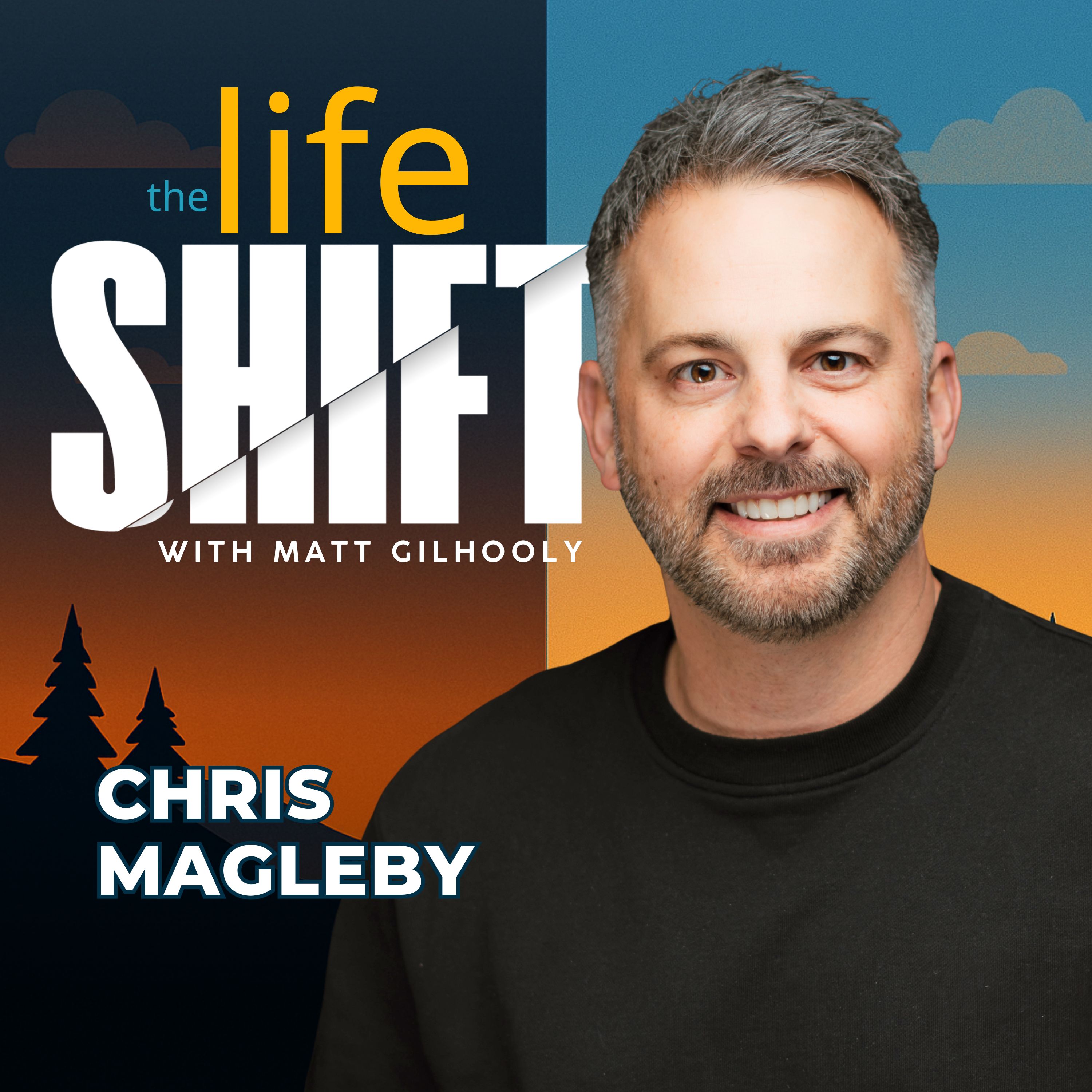
Chris Magleby's story is about what happens when the control you've spent your whole life building finally cracks, and what you find when you stop trying to think your way out.


There are moments that don't give you any warning. You're living your life, things are working, and then something happens that makes you question every single thing you thought you knew. Including yourself.
That's where Chris Magleby found himself in 2017. A small piece of a pot brownie triggered a full psychotic episode, one that landed him zip-tied in his front yard, fighting cops he didn't recognize, hearing sounds that weren't there. It was terrifying. And it was, in a strange and quiet way, the beginning of something.
Chris spent the next two and a half years working through acute anxiety, a manic episode, and the slow, painful process of rebuilding a relationship with his own mind. What came out the other side was a man who understood the difference between controlling life and actually living it. Now he's channeling all of that into Mindless Labs, a mental health startup built for people who know what it feels like to be lost inside their own heads.
What You'll Hear:
- How a childhood marked by his parents' divorce shaped his relationship with control and safety
- The night a psychotic episode cracked everything open, and what those terrifying hours felt like from the inside
- Why the two and a half years after were, in some ways, harder than the episode itself
- How Chris found his way to mindfulness, meditation, and Eastern philosophy as tools for survival
- The difference between pushing through and actually feeling your way through
- What it means to turn your hardest experience into something that might help someone else find the light
Guest Bio:
Chris Magleby is the co-founder of Mindless Labs, a mental health startup with an apparel line that funds mental health resources and an app built around professional-led content for people navigating their own mental health journeys. He's been married for nearly 22 years, is a father, and brings to all of it a hard-earned understanding of what it means to fall apart and come back differently. You can find him and Mindless Labs at mindless.org or on Instagram at @mindlesslabs.
Listen and follow: www.thelifeshiftpodcast.com/follow
Subscribe to the newsletter: https://thelifeshiftpodcast.beehiiv.com/
Matt Gilhooly (00:00)
Some life shifts do not arrive gradually. They arrive all at once and leave you questioning everything you thought you knew. For Chris, that moment came in 2017 with a psychotic episode that cracked his life wide open. We talk about fear, healing, and what it looks like to rebuild trust with your own mind after everything you relied on falls apart. This is a story about rupture, recovery, and learning how to live differently on the other side.
Chris Magleby (00:26)
As I'm in psychosis, I have a panic really describe it other than just complete terror taking over me. I've got, and I'm like jumping off my furniture. I run out into the front yard. I'm smashing my head into the bushes in my front yard because I have this, I can hear this like chanting in my head and I'm trying to get these voices out of my
Matt Gilhooly (00:49)
You're listening to the LifeShift Podcast. I'm your host, Matt Gilhoolie. This show is built around one simple idea, that sometimes a single moment can change how we see everything. Each week, I talk with someone about the moment that shifted their life and how they learned to live differently after it. These are not stories about having it all figured out. They are stories about what it looks like to keep going once the story changes. Thank you for being here. Here's today's story.
Matt Gilhooly (01:20)
Hello everyone, welcome to the LifeShift Podcast. I am here with Chris. Hello, Chris.
Chris Magleby (01:24)
Hey Matt, thanks for having me. How are you doing today?
Matt Gilhooly (01:27)
Well, you know, it's the end of a work day and it's a holiday week. People listening to this are way in the future in 2026, but we are recording this during the week of Christmas. So thank you for giving up your time, Chris, during this holiday week.
Chris Magleby (01:30)
you
you're welcome. I'm actually really excited. This is kind of like my last thing before I unplug and I think I got to wrap 500 presents tomorrow and then probably just, you know, home alone marathons the rest of the week. So this is a great way to kind of end the working year for me actually.
Matt Gilhooly (02:01)
Before we get into your story, maybe you can tell us who Chris is moving into 2026. Like, how do you show up in the world? How do you identify these days?
Chris Magleby (02:09)
So about two years ago, I started a mental health startup that we have an apparel line that funds mental health resources. And we also have an app has those mental health resources. And we partner with mental health professionals and they create content for the app. And so it's been very rewarding. This is something new for me. The brand is called Mindless Labs. And I'm the co-founder of this company. And I kind of run the day to day operations with my
partner, name's Caitlin. this is the current iteration of me. But I'm also father, I'm a friend, I've been married for 22 years now, well, coming up on 22 years in a few months. And I have an excellent relationship with my wife. And so I try to have a very kind of robust, well-rounded.
life so I can't say that I'm just an entrepreneur right now but that certainly zaps a lot of my energy or takes a lot of my energy so maybe I kind of lead with that these days.
Matt Gilhooly (03:10)
Yeah, do you fill your cup with it as well? Like I can understand how something can also like zap your energy, but because of the work that you're doing, it feels like it could be very fulfilling in that way.
Chris Magleby (03:17)
Yeah.
That's a very good question. I'm going to give you an honest answer of how I'm feeling right now. There certainly have, that's the reason I do it because it fills my cup. This is a passion project. I mean, I sold my last company in 23 and I can talk, that's part of my journey. I'll talk about that. And I wanted to do something that gives back, especially because as when I went through my own mental health challenges, I had so many people help me to just, there's this long
Matt Gilhooly (03:28)
Yeah. Yeah.
Chris Magleby (03:50)
list of people that helped me through it and ⁓ I wanted in their honor to to help and I and we have and you know we get a lot of messages from people who have used the resources and have helped them and people have been in really dark places and and it helps them kind of find some light in a dark place and that's very very meaningful so it does it does fill me up but I'll tell you
taking something from zero to one is just so much more difficult than I could have ever imagined. And so it's also just extremely challenging and trying to find, like, sometimes you don't have any strength. It's your energy. When you're starting something small and it's something it lives on your energy that you can provide. And if you wake up,
and you're not feeling very well. Like, honestly, like we rescheduled once because I got sick. And I really appreciate that, Matt, by the way. But since then, that was like three weeks ago, I've not really bounced back. And so my energy is so depleted. And so trying sometimes to find my own energy to push this forward can be just incredibly challenging. So this is a shout out to all the entrepreneurs out there who give their whole heart.
to something, whatever it is, whatever they're passionate about, they're trying to make the world a better place. Everybody who starts something is trying to make the world a better place. And it can be incredibly challenging. you know, I've run businesses before, but I kind of came in after it had gotten a little bit of momentum. And so, you know, the only way to know what this is like is to experience it. And man, it can be pretty...
challenging and very rewarding.
Matt Gilhooly (05:44)
Yeah,
no, I love that honest answer. And as you were saying, and I'm also like, there must be, and I'm projecting my own feelings here, there must be some type of, like responsibility that comes with with the fact that you're dealing with mental health, and you're trying to put out something that could potentially help people. And I know you're working with, with mental health professionals. And that's important. But also, do you feel that like, I got to get this right kind of
feeling because you are dealing with a topic like that? Or is it or you a little bit removed as an as an operations kind of guy, where you don't have to worry about that for every decision?
Chris Magleby (06:23)
That's an interesting question. yes and no. There's definitely a...
Matt Gilhooly (06:28)
Okay.
Chris Magleby (06:31)
The gravity of what we're doing sometimes hits me, especially from one-on-one Like here's just an example that comes to mind. I posted kind of post on LinkedIn, I don't know, a month and a half ago about just an update about what's been going on with Mindless Labs and some of the impact that we've made. And I got a lot of beautiful comments, people reaching out to me. And one of the comments said, you know, thank you for...
Thank you for what you guys are doing. This is so meaningful. One of my best friends just lost her son to a struggle with mental health and he didn't make it through his. And she goes, had shared some of your content with him and some of your resources, but it wasn't enough. when I, she didn't say it wasn't enough, but it just didn't reach him. And so I don't take that as,
as we aren't doing enough, but I but I did take it as I'll do more, you know, and if we can, if if we can find more therapists to come on and and share some of the their modalities or the different things that they do, or if we can find more practitioners or different type of healers that maybe connect with someone and in a way that only they can connect with them, you know, so it's inspiring to me. It's it's a it's
Matt Gilhooly (07:30)
Mm-hmm.
Chris Magleby (07:54)
it's a somber type of inspiration because it's like, wish that we could have done more. And so there is this sense of, I want to get it right and I want to keep going. you know, imagining some, sometimes when I said it's really hard to, to find that energy, sometimes you think of those people's faces and it does give you that energy.
Matt Gilhooly (08:16)
Yeah,
I commend you for doing that. think it's beautiful and the more people that we have like you that have experienced kind of what people are seeking the help from your company, you I feel like you know, you know what it's like and you know the things that you needed, but you also know that the people around you needed something different. And I think that's beautiful as well.
Chris Magleby (08:40)
Mm-hmm.
Matt Gilhooly (08:42)
I was so naive thinking talk therapy was like the only modality that there was and it luckily that's what worked for me. But having this these conversations with people I've heard so many different things and they try all these other things and this is the particular whatever it is is the particular one that spoke to them and worked for them. So kudos to you for what you're doing. I'd love to kind of hear how you got there. And I think the best way to do that is maybe have you kind of paint the picture of
your life leading up to this main pivotal moment that we're going to talk about today.
Chris Magleby (09:13)
You know, I'm gonna go back to my childhood. I'm not gonna tell you my whole life story, but I'm gonna tell you some, a few key parts. I grew up as kind of a very carefree, happy kid. And this first turning point in my life comes from a similar conversation, you where you said your dad sat you down. My dad sat me down on a park bench once.
Matt Gilhooly (09:18)
Yeah.
Chris Magleby (09:35)
when I was about nine years old and told me that he was moving out of the house and my parents were splitting up. And that moment, and that's very common, that happens to 50 % of kids. for me, it was very difficult. And I went from being a very happy, carefree kid that was full of light to a very sad, kind of withdrawn kid.
My mom got remarried. I lived with my mom. you know, I would back in this was, you know, 1989 when, when this happens, I was born in 1980. So I'm kind of going through this back when there's no 50 50 custody split. It's like, I would see dad now, know, once every other weekend, every Wednesday we'd go to Burger King, like the only burger place in our town. He'd come pick us up. Yeah. He could go to McDonald's. We'd go to Burger King we would
Matt Gilhooly (10:17)
every Wednesday.
I did McDonald's.
Chris Magleby (10:27)
I'd go see him every other weekend. And that was that was 80s. Yeah, that was the 80s plan. And so luckily, it's changed a little bit now. so anyway, and then as I kind of, you know, grew up and became a teenager, I really felt like from this point, when I was nine till till almost graduating high school, I really felt like life happened to me. I didn't have much
Matt Gilhooly (10:30)
Yeah, that was the 80s. That was definitely the 80s plan.
Chris Magleby (10:55)
say in what was unfolding in my life and a lot of it made me kind of sad and withdrawn and so not a long list of difficult things that happened to me it was almost just this one that really changed my perspective and I chose this perspective of life happens to you you don't
Matt Gilhooly (11:01)
Mm.
Chris Magleby (11:15)
get to choose what happens in your life. You're kind of a victim of your circumstances. And I didn't really know I was doing that. I was nine year old kid, but I just thought this is what life is. And this was my perception. And then when I got into college and I started kind of working on my own career and I got a job while I was in college, I met this wonderful, beautiful woman and we started dating.
And my life really started to change and all these kind of great things started to happen, but it felt very different. It felt like I was in control and I was making them happen. And so what happened was growing up, I had this kind of perspective on life life is outside of your control and things just happened to you. And then as I got into, to be an adult, I learned that I could take control of life. And it was very,
rewarding and I started to be very productive adult and I started to, you know, I went through a few different jobs and started to progress in the workplace. I graduated. ended up and actually working for my dad. And so this was this beautiful thing. We got to spend time together as adults that I didn't get to do, you know, when I was younger after they split. But something inside of me was happening where
I was there's a term called the locus locus of control meaning what you there's two different types of locus of control. You can think that things are outside of your control and that life happens to you or you can think that life is completely within your control and you can control it and the healthy place to be is right in the middle of that and some things are outside of your control and some things are in your control and you kind of can flow between the two. But for me, this is this is not something I knew this was all subconscious.
when I was younger, I had this very external locus of control that things were happening to me. And, and as an adult, I developed a very internal locus of control that I could control everything so much so that it became very unhealthy. And I started controlling everything in my life. And I was like, I can make life to be exactly what I want. And that helped in some ways because I started to have a very successful life, but I also had these things.
Matt Gilhooly (13:21)
Mm-hmm.
Chris Magleby (13:35)
brewing inside of me that was very intense levels of anxiety, feeling like I needed to control everything and I couldn't trust life.
Matt Gilhooly (13:43)
Yeah.
And by successful, you mean from the outside looking in or did you feel successful? Okay.
Chris Magleby (13:49)
I felt successful. This
was what's so interesting before I have this this big change that I'm building up toward in my mid 30s The outside looking in I'm sure my life looked very successful and to be honest from the inside looking out I felt very Happy and I had achieved everything I wanted to achieve I had you know in my 30s. I had a very happy
Matt Gilhooly (13:56)
Yeah.
Chris Magleby (14:13)
successful marriage. My wife and I really got along well. We enjoyed each other's company. It was a great marriage. still We had we at this time we had three kids. We had a beautiful new home. My career really blossomed. was I had taken this company that I started out when it was small and we had turned it into a successful tech company. We were offering services.
when I started and we turned them into software as a service. know, this is in 2015, 16, when SaaS is just like booming and we're kind of like right in the middle of this. And it was, it was, I was very the outside. I was happy, but I had this thing that I wasn't quite recognizing that I was controlling everything in my life. And it, and I was starting to get
Matt Gilhooly (14:46)
Yeah.
Okay.
Yeah.
Chris Magleby (15:03)
real intense anxiety and I didn't really, couldn't recognize it. I was just like, well, I'll just push through this, you And I was putting a lot of...
Matt Gilhooly (15:10)
Right? A lot of pressure on yourself to... Was it a perfectionist?
Was there any of that element that played into it? Okay.
Chris Magleby (15:17)
Certainly. Yeah,
I have some tendencies for perfectionism
Matt Gilhooly (15:22)
The reason I ask you really, stems
from just being curious about that earlier shift that kind of had you like.
feeling like life happens to you versus what was before. And a lot of my experiences kind of I'm like, trying not to put them into yours. But there was a sense of abandonment when my parents got divorced and my father lived away and I internalized some kind of shame that came with it. And it made me really struggle to make things happen for myself out of fear that I would disappoint and someone else would leave. Same thing when my mom died.
I was afraid to not be perfect because she left, someone else might leave. So did you have any of that, like an abandonment piece from your dad kind of separating from your mom or am I totally projecting here, which is totally normal? Welcome to the life shift.
Chris Magleby (16:17)
Well, first of
all, I like that you do that. think, hope anyone listening would do that and think about, you know, the, some of the similarities that, that maybe our stories have, because that's so important to recognize the shared humanity and the shared similarities that we all have. We all have so much more in common than we don't have in common. I think the last couple of years have really shined a light on the differences that we have, especially since 2020. But,
We're so much more alike than we are different. Like everybody is. And so I'm glad that you do that. And I would say, yes, there is some, abandonment issues and, and wanting to be loved and accepted. I, know, even as I got into my romantic partnerships later in life, I was like, I need, I felt very much pressure to, look a certain way and be a certain way.
Matt Gilhooly (16:49)
Mm-hmm. Yeah.
Chris Magleby (17:15)
so that this person would always love me and accept me and not leave me. And at the same time, I have very good parents. They're both very kindhearted, good hearted people. And so I never really could blame either of them or didn't want to and was almost afraid of blaming them I was afraid. This is subconscious. I didn't know this at the time. These are things I've learned later in life, but
Matt Gilhooly (17:27)
Mm-hmm. Yeah.
Chris Magleby (17:45)
I was afraid to be upset at them because I didn't want to lose them, especially my dad who had moved out. My mom, I would take out a little bit more. You know, I would, I would, I would act out at my mom and get upset at her. But you know, she had a very good therapist helping her through this and explained to her, he's doing that because he knows you're safe. He knows you, you, you won't leave him. And so he can take, he's taking out some of his anger that he feels he doesn't know what else to do with it on you.
Matt Gilhooly (17:50)
Right? Right.
Yeah. Yeah.
Chris Magleby (18:15)
And so she was able to handle that because she knew what was going on and I'm grateful that she did.
Matt Gilhooly (18:20)
Yeah. Well,
I mean, and it's kind of the same reason I asked if like if you were happy or if you or if the outside just saw us successful because so many of us that grew up in the 80s, I was born in 81. So we have a very similar time period here. But so many of us assumed the checkbook. mean, the checklist life in which, you know, you do one thing, then you check that off the list. And then you, you know, you get a college degree and you check that off the list, you get a good job, you check that off the list. And eventually, happiness appears for me.
never happened. But I think for some so that's really where that question came from. It was like, are were you doing the checklist things to appear successful, but it sounds like you were very happy and content in what you were doing as well. That's great.
Chris Magleby (18:59)
I really was happy and content
with what I was doing. So I'm lucky that way. ⁓ was a lot of control that was happening. And the other thing that I haven't mentioned yet is, I told you I'm from Salt Lake City. This is a very religious part of the country. And I grew up very religious in the LDS faith. And I practiced that until I was in my late 20s. And so
Matt Gilhooly (19:05)
It was just too much.
Yeah.
Chris Magleby (19:26)
That was a very big part of my life that I, not abruptly, but fairly abruptly within two years, stopped practicing and I never really dealt with that. And so what happened was in my thirties, had developed this intense internal locus of control that I needed to control everything. And some of that was from the religious upbringing. Some of this like,
in Mormonism, there is this kind of intense culture of doing everything right so that you are worthy, so to speak. And so that certainly influenced me. I'm careful how I talk about that because I actually still have a lot of fond feelings towards the LDS faith and towards a lot of faiths. I have, you know,
Matt Gilhooly (20:17)
Mm-hmm.
Chris Magleby (20:20)
Faith to me has been a really important part of my life and it's something I'm interested in and I read a lot about it and I study other faiths. I really like the perspective of religion gives a language to the ineffable. We have these things with, you you could call divinity or deity or God or the universe or whatever you want to call it that is, it's
almost impossible to talk about it because it's something that I can't really wrap my head around. And so I think religion is powerful in that it gives you a set of vocabulary to talk about something that is, like I said, kind of ineffable. It's very hard to talk about that kind of stuff. It's a mystery. And so I still have...
Matt Gilhooly (21:06)
Yeah.
Chris Magleby (21:10)
kind of fond feelings towards the faith that I was raised in. And I still know a lot of people who are active in that faith. And I know a lot of people who grew up that way and no longer practice it the same way that I am. And everybody has their own unique journey. And I kind of respect everybody's journey. Mine kind of took me away from it, but it was, know, the LDS faith is if you're doing it actively, it's a pretty intense.
Matt Gilhooly (21:37)
Yeah. And your identity is wrapped up in it, wouldn't it be? So if you do you lose yourself?
Chris Magleby (21:38)
faith and religion your identity is wrapped up in it and yeah
yeah you you can yeah i i'm not sure that i lost myself but i definitely had a lot of fear when i left it i some of this faith was replaced by fear like kind of this fear that i had abandoned god or that i had let's
people down or that I was, you know, had done something wrong. was the, that was something that I had not really dealt with. And I just kind of just kept living my life. But so anyway, fast forward to now I'm in my mid thirties. It's the year's 2017. I'm 36 years old
A friend of mine comes over one night and he brings like this pot brownie from California that he'd got at some dispensary or something like that. so growing up LDS, never, I didn't drink, never, you know, had smoked pot. In my thirties, I didn't drink coffee. I still, still actually don't drink coffee very often because it makes me so jittery. I don't know how everyone's walking around drinking coffee all the time. If I drink even a cup of coffee, I'll be like, maybe that's what it is. didn't.
Matt Gilhooly (22:41)
coffee.
That's because you didn't grow up with it.
Chris Magleby (22:54)
I'm not accustomed to it. you know, everyone around me drinks coffee, but I usually just have to get a seems to work for me. anyway, there's this evening in 2017. You know, I weed a few times, probably like, I don't know, 10 or 15 times before this. is also when Colorado had just like legalized marijuana recreationally and Utah's right next to Colorado. So we started getting all this stuff.
showing up in Utah. So this one night I, I take a, like a tiny little piece of this and I estimate it probably had like 10 to 15 milligrams of cannabis in it. And, something happened to me when I took it that, triggered psychosis in me. And, I didn't, I didn't know this at the time, but there is about 2 % of the population that has tendency to have what's called.
cannabis associated psychotic syndrome. That doesn't happen every time, but sometimes if you have marijuana, it can trigger psychosis in you. Some people can even have dormant schizophrenia and marijuana can trigger schizophrenia in people. It's a very scary thing. think that's a lot more rare. That's a lot less than 2 % of the population, but I actually know one person that that happened to him in his teenage years.
it triggered schizophrenia in him and still has it to this day. And so it was a very, very scary thing for me. what happened, man. So what happens is, you know, everyone kind of jokes about the paranoia of Puyid and that certainly happens to everybody, but for me, it started as paranoia and then it just started building and building and building.
Matt Gilhooly (24:25)
Yeah, what does that look like? Yeah.
Chris Magleby (24:41)
And all this and then all of sudden I lost touch with reality and I couldn't I couldn't like I started hearing things that weren't there and I could hear like this like this demonic chanting in my head and and I it felt like I was like being possessed by a demon or something and I I didn't know what to do and I I started kind of like hearing things that weren't there and seeing things that weren't there and then I started believing all this
What happened was a lot of my subconscious started spewing out of me. And so I've got all this stuff that is repressed of these fears of having stopped practicing my faith. And also I hear this demon chanting and I start thinking that I'm going to hell. And so for me, when I started to believe that, it just started amplifying everything. And I don't know what's happening. in psychosis.
Matt Gilhooly (25:32)
Mm-hmm.
Chris Magleby (25:36)
As I'm in psychosis, I have a panic attack really describe it other than just complete terror taking over me. I've got, and I'm like jumping off my furniture. I run out into the front yard. I'm smashing my head into the bushes in my front yard because I have this, I can hear this like chanting in my head and I'm trying to get these voices out of my
You know, I don't know what's going on. Yeah. People are with me. My friends with me, my wife's with me. they're trying to keep me calm down. I think that everyone around me kind of turns like, I can't really describe it. I can't really recognize them. I think that they're demons or something. I don't know what's happening. I ran over to my neighbors to try to get help because I had asked them to call the ambulance. I'm like, something's not right. think I'm,
Matt Gilhooly (26:00)
Were people with you?
Chris Magleby (26:27)
don't have any concept of time that happens on weed sometimes too. But so I went to my neighbors to try to get help. I pounded on their door to see if they would like call an ambulance because I don't know what's happening. And I pounded so hard. like 930 at night. They got really scared. They thought it was a gunshot because I hit the door so hard. They called the cops and were like, I think that there was a gunshot. So the cops show up to my house with guns drawn and I'm in the front yard.
Matt Gilhooly (26:49)
Yeah.
Chris Magleby (26:54)
And I'm like, look, some, something's happening to me. I don't know what it is, but I know it's like, I'm going crazy. And, so luckily they like, they get, calm. They see that there's no threat. They're like, where's the gun? We're like, no one has a gun. They go into my house. They're searching for a gun. There's no gun. and then I start to lose it again and I can't really, I don't understand who the cops are and, and what's going on. And like,
my sense of reality, I can't really describe psychosis to someone. All I can do is, all I can do is not recommend it. It's the worst thing ever. So I can't really understand who the cops are anymore. And I don't know. And it's like, so I start like wrestling with them. I'm like, like what they're trying to calm me down. And I'm like, I'm like, get away from me, because I don't know who they are, what they're doing. And so they, so, so they
Matt Gilhooly (27:25)
Yeah. I mean, you're doing a good job.
Chris Magleby (27:49)
get me down on the ground and get me in zip ties because I'm like wrestling with them. They did a good job. Honestly, it could have gone a lot worse. And I'm grateful to them of how they handled the situation and got me under control. But I, so I got zip ties on me. I'm fighting against these zip ties. don't, you know, I don't know why I'm zip tied and I fought so hard. got nerve damage in my hands for like six months after this.
Eventually they get an ambulance there they get me into the back of the ambulance They give me some shot that sedates me and I wake up several hours later in a hospital Coming out of sedation and and I don't and I like have memory of what I've gone through but I didn't know what it was and it was this really terrifying experience and Then they discharged me the next day I wake up and I'm home and I remember waking up that morning and being like I Feel like my life
has just changed forever. Like I have no idea. I thought maybe I had just gone crazy and I'm like, maybe I'm, maybe I I've lost my mind. And that's actually where the name of this brand that I've launched comes from. It's called mindless labs. And it's a tribute to that process of feeling like you're losing your mind. And there is also the next chapter of my life is two and a half years of really intense
Matt Gilhooly (28:48)
Mm-hmm.
Yeah.
Chris Magleby (29:11)
acute anxiety, so much so that I have a hard time living I it starts to take over me and because I don't know what has happened. I didn't know anything about cannabis associated psychotic syndrome. I thought I had just I thought I just went crazy and was losing losing it. And yeah.
Matt Gilhooly (29:25)
Right.
Yeah. So kind of like opened a portal to
allow you to feel worse.
Chris Magleby (29:37)
It allowed me so I had all this stuff that was bubbling beneath the surface and it essentially just erupted this night from this incident. And so because I had not dealt really with faith transition because I had was developing this intense control over everything in my life. I was just like a ball of I don't know nerves that exploded and it just
Matt Gilhooly (29:39)
for two and a half years.
Chris Magleby (30:04)
It made for a two and a half years of a very difficult time. And so I have, you know, in my life, I've seen these kinds of mood changes that I never would have considered them bipolar. But as I got into therapy and I got into working with a psychiatrist, they're like, you know, you hear of autism being a spectrum, but she says really every mental illness is a spectrum.
And we all are somewhere on the spectrum and we all have a tendency to be OCD or to have mood swings and to be bipolar. But it's really only a disorder when it crosses that place on the spectrum where it starts to affect your life. But what happened is my body, you know, reacting to this kind of traumatic event that happened, it didn't really know how to deal with it. And it started triggering some of like, I started having manic and depressive episodes.
which I had never really had before. I had one manic episode in 2019 difficult as that experience I'm telling you about in 2017 was this one in 2019 was probably worse because I stopped sleeping. was like, this one episode was acute. This thing was prolonged where I was kind of losing touch with reality. I was so anxious. was so just was hard for me to function every day.
Matt Gilhooly (31:25)
Yeah.
Chris Magleby (31:25)
And I, my mind was just racing and I was like connecting dots that weren't really there. And I'm like just writing pages and pages in a journal. And it was a very difficult time, but, but. man. Yeah. It was really, it was really challenging for my wife. I, she, there was.
Matt Gilhooly (31:36)
Yeah. How does that affect the people around you too? Cause I mean, you were married at the time. You still are.
Did you have kids at
the time, too?
Chris Magleby (31:48)
I
had kids and I think they were shielded from my wife did a good job of shielding them from it a little bit, but I would get this. I you know, as I was going through this mania or this anxiety, I was living completely up here. I wasn't living out here with the people I was with. And so when she would see my face start to go, she could see when I was going inward. And for me, I'm trying to find I feel like I'm trapped inside in my own thoughts.
and I'm trying to find a way out of them. And I think, you know, to me, I thought the way through this was thinking about all these fears and anxiety and difficulty that I had. And if I could just figure out why I was feeling this way, I find the exit. But really the exit was to engage with the present moment. The exit is always to be present. And that's something I didn't know. And you know, I'm trying to sneak my way through something that's a labyrinth that has no
no end. There's no exit to the labyrinth. It's just, it just keeps you there. The exit is to get out of the labyrinth. And what how do you exit the labyrinth? Right here. You you look around and you engage with the person who's across the table from you. You you take a bite of your food and you taste all the food. And and that is the introduction to how I healed. And that's a very beautiful part of my story was
Matt Gilhooly (32:46)
Hmm.
Chris Magleby (33:14)
I discovered kind of Eastern philosophy. I discovered Buddhism. discovered what I'd call like practical Buddhism, not so much the dogmatic parts of Buddhism, but the how to be mindful, how to meditate, how to be present. I had to work with several different therapists and I found some really great ones who, you we were talking, some what? I went to maybe,
Matt Gilhooly (33:34)
some terrible ones. Some terrible ones too, right?
Chris Magleby (33:39)
I went to one that didn't click with me. I don't know if I could say that she was terrible, but she was not for me. But you know what? This is a good, I'm glad you're saying this because anyone who's going to work with somebody, treat it almost like dating. You've got to find the person. There's not someone who's better or worse than somebody else, but there are people who are on your wavelength that vibe for you or don't vibe for you. And so it's like a college degree.
Matt Gilhooly (33:42)
I went to four, so I get it. Four terrible ones.
Mm-hmm.
Chris Magleby (34:06)
You know, it's not like finance is objectively better than marketing, but you might just like marketing better. And so as you go with, I think it's very important to try different therapists and see who's right for you. Yeah, don't give up.
Matt Gilhooly (34:22)
Yeah, don't give up. I think a lot of people give up
because they're like, well, I went to a therapist and you're like, yeah, but you you have to find like the one that I ended up with that helped me on paper, you would be like, no way Matt and this woman would vibe, but that was the one I needed. And so I think, you know, you, I'm sure you had, mean, you said you only had one, but I'm sure there were some that you vibed with even better than the others. But I was also thinking about you.
learning to meditate and be more mindful in those things. And I'm thinking that's probably really hard for someone that held on so much anxiety for so long and control. Like you have to like go of control to be able to meditate and be present. So was that a challenge to kind of find your way into?
Chris Magleby (35:09)
That's a great question. don't know if it was a... When I got into mindfulness, I learned why we needed to do it. And so it was kind of difficult, it was like, that's the whole purpose. It was like, you've exercised too much control in your life, and this is now how you're... This is the vehicle that you're going to learn to give up that stuff. And I'm chasing...
Matt Gilhooly (35:26)
Mm-hmm.
Chris Magleby (35:34)
thought would come in the front door and I'm chasing it around my mind and I've got to learn to open the back door and let that thought just leave. You know, there's a great quote that was, you can welcome any thought in just don't serve a tea, know, thoughts can come and go. That's what they're supposed to do. But it's the ones that you focus on and try and give attention to that can really start to be problematic. And so
I so meditation was like I got explained the reason that we do this is because you had I had exercised so much control in my life. This is now how I'm going to stop that and and let things go let things happen and you're just going to observe your breath or you're going to hear a sound and instead of like trying to wonder what that sound is and explore it and decide if you like it or dislike it you're just going to let that sound happen and you're going to move on to the next moment.
And so all this stuff was, there's such simple practices and it's such a simple idea, but there's a reason it's thousands of years old, because it works. And it's like, as I learned to do that I started to have a much better relationship with my mind. The example I always use is, ever...
Matt Gilhooly (36:48)
Hmm.
Chris Magleby (36:52)
Like for me, sometimes I'll be driving around in my car and I'll get into like a fake argument. I do it with my wife sometimes, or like I'll think of something that happened in the past or like you ever like, you know, you redo an old argument in the shower and you're like, I should have said this and I would have won, you know, I learned through meditation. learned to recognize when I was doing that and kind of laugh at it and just say, I'm not going to have a fake argument with someone in my head right now. I'm going to let it go. Meditation was this way of learning how to be aware of my thoughts.
Instead of just having my mind going all the time and my body's reacting to this and I'm I'm like, you know, getting in a fight with somebody in my head and my body's getting adrenaline and tensing up. And it's like, there's no reason to do that. And, and so being aware of your thoughts, you can kind of start to catch that before, before you're doing that.
Matt Gilhooly (37:40)
you make it sound really simple. And all the while you're talking, I know it's not all the while you're talking like about meditation, all my brain is doing is like, my perfectionist tendencies is like, I know I can't do it currently. And, and have I tried very hard? No, because I'm like, am I gonna do it? Right? How do I do it? You know, like, what's the right way to do it? Am I doing it? Like, I would just be so on that. So you make it sound like you just went from anxiety to like,
Chris Magleby (38:10)
⁓
Matt Gilhooly (38:10)
freedom in your mind, which I know you didn't, but I know. But you are open to changing.
Chris Magleby (38:11)
it took a long time, but that was a that was a beautiful piece of it. And you know what, I have to comment on what you just said, because that's such a common kind of pitfall that we all get into, because we want to do things right. And so a lot of meditation teachers will talk about that. And they'll they're very careful of how the words that they use, because they're like, there's no wrong way to do this.
And you can, you if it feels right, do this if it doesn't feel right, because it's not a right. Don't do it. It's not a right or wrong. And there's a meditation teacher I like named Sharon Salzberg. She's written a book called Real Love. That's very beautiful. But she has a couple of meditations that she but whenever she teaches meditation, she says the victory is when our mind has wandered and we realize we're not meditating anymore. We're thinking about something else.
The victory is when you realize that your mind is wandered and you come back to your meditation. And that's the only thing that exists. So you're not doing it right or wrong. You're just trying to practice that moment of success. And so when your mind wanders and you're not doing it right and you're like, ⁓ thinking about your day, that's okay. Because it's when you realize that your mind is wandered and you come back to your practice, that's it. That's, that is the, the, the big successful moment and, and we all do it.
And so you're not alone in that.
Matt Gilhooly (39:31)
I know I'm not, but also at the same time, I admire people that can do it. And someday I will. Someday I'll be serious about it. And it sounded like, it sounds like at this point in your life, you were open to searching for a way that you could exist differently or safely for yourself. Like, what was the search that you were on for yourself?
Chris Magleby (39:55)
I needed a
way to...
I was trying to survive, to be honest. It felt like a survival. I was just so miserable and so anxious and so, I can't really describe it. And I'm sure there's people listening that have felt something like this before, where it's just, you're consumed by these negative thoughts in your head and these fears, and it just feels like life is stacked against you.
Matt Gilhooly (40:12)
Mm-hmm.
Mm-hmm.
Chris Magleby (40:27)
And I was look, I had to figure out how to survive this. And so I, for me, I needed to understand the human condition. And so I just started reading everything I could get my hands on. And I read a lot of, like I said, Eastern philosophy, especially anyone who took Eastern philosophy and brought it to the West. So like philosophers like Alan Watts, he you know, had a lot of kind of interesting insights into Zen Buddhism, but brought it to
the Western culture where we could understand it and knew what they were talking about. Eckhart Tolle did the same thing. Michael Singer did the same thing. So I tend to be drawn to a lot of those types of authors. also, through therapy, that I had some, I learned what trauma was. I thought trauma was something that soldiers got at wartime, and that was very Or if you, someone,
Matt Gilhooly (41:03)
Mm-hmm.
Chris Magleby (41:18)
broke into your house and tied you up or something like that and robbed your house. Trauma is anything that's too much, too soon or too quick for nervous system. so trauma is very relative. Each of us experiences trauma in different forms. And my trauma can be very different from your trauma, but it is...
You know, if I'm a six year old and I got locked out of the house and that's the worst thing that's ever happened to me in my life, that's still the worst thing that's ever happened to the six year old. And you have to understand everybody has different bad things happen to them. It's like, you know, I hear your story and I'm like, my that's would be the worst thing to experience. But that doesn't mean that people who you can't compare those things, you know?
Everybody has a relative experience of something difficult that's happened to them and you owe it and you can go on your own journey to understand that trauma and process it. And because if you don't feel your feelings, if you don't process it, they stay in there and they start to affect you in ways that you don't understand they're affecting you. And so one of the things that I learned was to look at, you know, all these things that has happened to me in life and to let myself feel them and to grieve.
and to cry or to be frightened and to feel these things. And as I could feel those emotions, I processed them and I was free from them. And so that's something that I think is that's one that's probably the reason why we talk about therapy. And it's so important is because having a trained professional to help you go back and safely revisit some of those things and feel the pain.
Matt Gilhooly (42:51)
Mm-hmm.
Chris Magleby (43:08)
or feel whatever you need to feel and then graduate from it change your life.
Matt Gilhooly (43:13)
Yeah, I just think of, you know, the generations that came before us, including our generation, and maybe the generation after us that we just didn't have the awareness of all these things. People weren't talking about it. We were conditioned to push, especially growing up as boys, like we're just taught to push it down. You're not allowed to cry. For me, I just felt like my mom died, but I was only allowed to be sad for like
this amount of time, right? And then I just had to show everyone I was fine, because they didn't know what they were like, my dad had no clue on how to help me, my grandma, everyone. So I always feel bad. But I hope kids now, and their parents that have kind of worked through their trauma, and the things that that they grew up with, now are helping their children kind of exist as full humans and feeling the feelings when they occur versus 20 years later, 30 years later, when
some of us are lucky enough to bring some of those things up. So I always think of that.
Chris Magleby (44:08)
I think that's
so smart. And you're right. There's been a big change. And the one thing that the generations that came before us that they did really well is they were very resilient. They were just like wildly resilient. And I think we can now marry, the best thing would be to marry that sensitivity that we're starting to learn that it's okay to feel things
That's okay. You need to you need to fill your emotions if we can learn to marry the resilience of you know, the the Baby boomers the greatest generation, especially the greatest generation was the most resilient generation ever if we can bring their resilience with the sensitivity ⁓ man, that's like that's the recipe. It's like to be able to feel and then Be able to get up and keep going, you know, it's it's a really beautiful thing
Matt Gilhooly (45:01)
Yeah.
Would you say that that drives what you do now? Does that like the kind of part of the mission to kind of help create or help people create this in themselves, a more resilient and also full human on the side?
Chris Magleby (45:18)
I would say that's exactly what drives us, yeah, is you have to be resilient because it's like shit happens to us, you know? And it's like...
things are gonna knock you down and everybody gets knocked down. But we have to get up and keep going. But at the same time, you can't get up mindlessly or you can't get up without honoring this part of yourself that deserves to feel and deserves to hurt and deserves to cry after your mom passes. You don't get this amount of time.
to be sad, you get your whole life to grieve the loss of your mother. we still push forward and it's just like what you're doing. It's like you bring, you have this podcast where you bring these messages to people and you're doing it and at the same time you're honoring that eight year old boy who has that grief. And I think you are a great example of marrying those two things. I think it's pretty dope.
Matt Gilhooly (46:26)
Well, I appreciate that it took a long messy. And I also think like if it didn't though, I don't know that I would count myself as resilient, right? I think there's something about like, it's, this is the weirdest thing that's going to come out of my mouth. But the idea that I struggled myself for so long to do something that could have been done differently was kind of like a gift in a way because
like what happened for me and the reason I say it's a gift is like, I just pushed down grief for 20 plus years. I was like early 30s when I decided, okay, it might be time to, to deal with this and went to therapy and all that. But what it did is I once I was able to reconcile all the things that I consider that I failed at at grief from all the different stages, adolescence and young adult and adult. When my grandmother who took over the role of my mom got sick,
I was able to face the end in a way that never would have been possible had I not royally screwed up the journey of grieving because I realized how important it was for my own grief journey after I was eventually going to lose her, but also for her going through the process of losing everything around her. So it was like a gift. It was a gift to be like total F up.
in that journey, right? And so then I think, okay, well, now I'm wishing people to have these feelings right away. Are they missing out on some big revelation?
Chris Magleby (48:00)
Huh, boy, that's a conundrum. Because there is so much growth that happens from that kind of effing up or that struggle. And my life is now completely different because of this intense challenge that I went through. And I have so much more peace. And I've learned to balance this locus of control that I started talking about.
Matt Gilhooly (48:04)
Right?
Mm-hmm the struggle
Mm-hmm.
Chris Magleby (48:27)
100 % because of that difficulty that I went through where it erupted and
Matt Gilhooly (48:32)
Yeah. Do you think that if
it hadn't erupted, you'd be on this journey? Like, do you think if, if like you hadn't had that edible and like maybe things just stayed status quo, steady state?
Chris Magleby (48:45)
I
think at one point or another, it was going to erupt. There was too much lava underneath the surface of this volcano for it to not come up at some point. And so for me, it just happened to happen at this time. ⁓
Matt Gilhooly (48:54)
Mm-hmm.
So when you look at that
moment, do you see it as a blessing? As scary as it was? It's a horrible question.
Chris Magleby (49:07)
⁓ I have these paintings,
it's not a horrible question, it's a good question. think it's a very, I like... ⁓
I think a lot of people not ask me that question, but they ask the question of any difficulty. And to me, the answer is like, can, well, I have these paintings here in my office. Yeah, the Stephen Colbert thing. Yeah, that's exactly it. I have these paintings in my office and it's a caterpillar, it's a cocoon and it's a moth. And you know,
Matt Gilhooly (49:29)
Stephen Colbert, right? Stephen Colbert. You gotta love the worst thing.
Chris Magleby (49:42)
The caterpillar, in order for it to turn into the moth or the butterfly, and people usually use the butterfly metaphor, I like moths, so I'm using the moth. It has to go into the chrysalis or the cocoon, and when it's in the cocoon, it releases an enzyme that melts it into nothing. It turns into goo, and then as it's goo, it rebuilds itself into this butterfly or this moth. And so for me,
It's not just a blessing or a good thing. It's a non-negotiable part of the journey. And had I not done that, I'd still be a caterpillar. And the only way for me to have wings is to have gone into the chrysalis and the cocoon. And so I can't even say that it's like a blessing or a good thing. It's the only thing. It's like, this version of me does not exist without it.
Matt Gilhooly (50:34)
Yeah, I think that's very big of you to say, because I bet there are people that you know from growing up that wouldn't be able to say that.
Chris Magleby (50:44)
don't, probably, and I think, yeah.
Matt Gilhooly (50:46)
Well, people that I knew growing up,
maybe they wouldn't be able, I don't want to put your friends into it, but people I know, they would just, I think there are a lot of people that would not look at that moment as such.
Chris Magleby (50:49)
Yeah.
To me, you have to do that or you will, it's too painful. It's like, there's a beauty in it. And if you just ignore the beauty and just hang on to the difficulty, you do yourself a real disservice. And it's like, but also if I just try to look at the world through rose colored glasses and say, it's just beautiful and there was no difficulty, you're also doing yourself a disservice. The two things are the same.
different sides of the same coin.
Matt Gilhooly (51:29)
Yeah, I think for me it's really challenging. I don't think I could say my mom dying was a necessity, but I understand the concept of it, right? I understand that this version of sitting right here talking to you would not exist if that moment had not happened. Would I wish it on anyone? Do I want her to have died? No, right? But so it's a very weird space to be and it's also something that a lot of people don't talk about.
Chris Magleby (51:35)
Mm-hmm. Mm. Yeah.
Matt Gilhooly (51:58)
because it's like, it's this weird space where you feel both and you always wonder. So that's really where that question came from is like, my mom dying was not a blessing, but at the same time, I can appreciate what it created. And it's like a really crummy thing to say for people that haven't processed grief before, because you don't understand it until you've felt it and done it. So,
Chris Magleby (51:58)
Yeah.
Mm-hmm.
Yeah, no.
Matt Gilhooly (52:27)
And in interest of time, I do wanna ask you the question that I like to ask people is, and it's super cheesy and there's really no way to do anything. But if this version of Chris could go back to the Chris that was about to take a bite of that edible, is there anything you'd wanna say?
Chris Magleby (52:41)
You
Boy, what a question. There's a big piece of me that would say, don't do this and just throw it and then flush it down the toilet. I'm not sure that.
I'm glad I can't do that, to be honest, because I would be taking so much of my growth away, but knowing the difficulty the next three years we're going to have, and I still have, to be honest. Eating is not a linear thing. Like, yeah, congratulations, I made it. So I still have very difficult times, but I also grew wings, you know?
Matt Gilhooly (53:11)
Yeah.
No, you're not done.
Yeah.
Yeah.
And you also have the ability to acknowledge those times in the moment and respect them or process them in a way that maybe is a little bit healthier. Yes. Okay.
Chris Magleby (53:25)
and
Oh, absolutely. I mean,
I've definitely in a way that I can appreciate those things. I have a lot more empathy for people. I, it's why I'm doing what I'm doing is because I know what hell feels like. And there are a lot of people, one in five people, one in five adults in the, in the U S suffers from some type of mental illness and you know, only half of them receive treatment. And if I can help any of those people,
Matt Gilhooly (53:56)
Mm-hmm.
Chris Magleby (54:04)
I know what it feels like and I will do everything I can to help those people. I wouldn't, before that day, wouldn't be this way. And so it's both awful and wonderful. And I think that's probably how most people's difficult life shifts are. They're both awful and wonderful.
Matt Gilhooly (54:20)
Yeah.
Yeah. And I think when, when we have the space to reflect on them, we find that we find that right. Like you wouldn't have said it a week later. Exactly. You know, so it took a while to get there. And I'm so happy that you did because it's, it's brought us to have this conversation, which I think is so impactful for me, you know, to walk away from this conversation and see parts of myself in your story, even though our stories are wildly different, you know? And so I thank you for that. If
Chris Magleby (54:34)
⁓ Yeah.
Matt Gilhooly (54:57)
If someone's listening to this and part of your story resonated with them or they want to get in your circle and learn more about your company or tell you their story, like what's the best way to like find Chris and bug him?
Chris Magleby (55:10)
First of all, I would love to hear anyone's story. So definitely that's an open invitation. You can find our company on Instagram, if you just at mindless labs, you can find us at mindless.org. Probably the best way to get in touch with me is to go to mindless.org and there'll be a contact us information. You could send something there. If you follow us on Instagram, you can send us a message. We've got staff that checks those messages all the time. So through Instagram or through our website, mindless.org.
Matt Gilhooly (55:28)
Perfect.
Chris Magleby (55:38)
You could get in touch with me or the organization, but I'd be happy to talk to anyone, especially if you're going through something difficult like I went through. Let's chat.
Matt Gilhooly (55:47)
Yeah, I encourage people to do that. I think there's so much power in telling our story for the first time. And I know there are listeners out there that maybe just keep something a secret because they feel like there might be some shame for them and they shouldn't be holding that shame anyway. hearing someone's story or being able to just say it out loud to your whole point of everything in your head seems so much scarier. And then when you say it out loud, things become palatable things become
you're able to like process things in a logical order in which maybe without saying it out loud, you can't do that. So I encourage anyone to do that. I will include the links in the show notes so people can just click and find you contact you, bug you like I like to say, but no, seriously, don't bug him. But also if some if you feel, if you feel that urge, just even if it's tiny, do it.
Chris Magleby (56:33)
No, I want to be bugged. Please bug.
Matt Gilhooly (56:40)
There's no regrets. Let's just connect more as humans. So I say all that to say thank you all for listening, but thank you, Chris, for being willing to go wherever this conversation went. And I think it was exactly where it was supposed to go.
Chris Magleby (56:55)
Well, you're welcome. Thank you for having me and really enjoyed this last hour or so.
Matt Gilhooly (57:01)
Well, thank you. I say this every time too. You would think I would know how to end these conversations, but I don't really. So I will say thank you and I will be back next week with a brand new episode. Take care.
Matt Gilhooly (57:13)
Thank you for listening to the Life Shift Podcast. If you wanna learn more, go to www.thelifeshiftpodcast.com.
There you can check out all the different episodes. You can check out the blog, some of the reviews for the podcast and the Life Shift journal. Links are there so you can purchase your own copy, whether in digital or print format. Thanks again.


