Identity: What a Stroke Couldn't Take
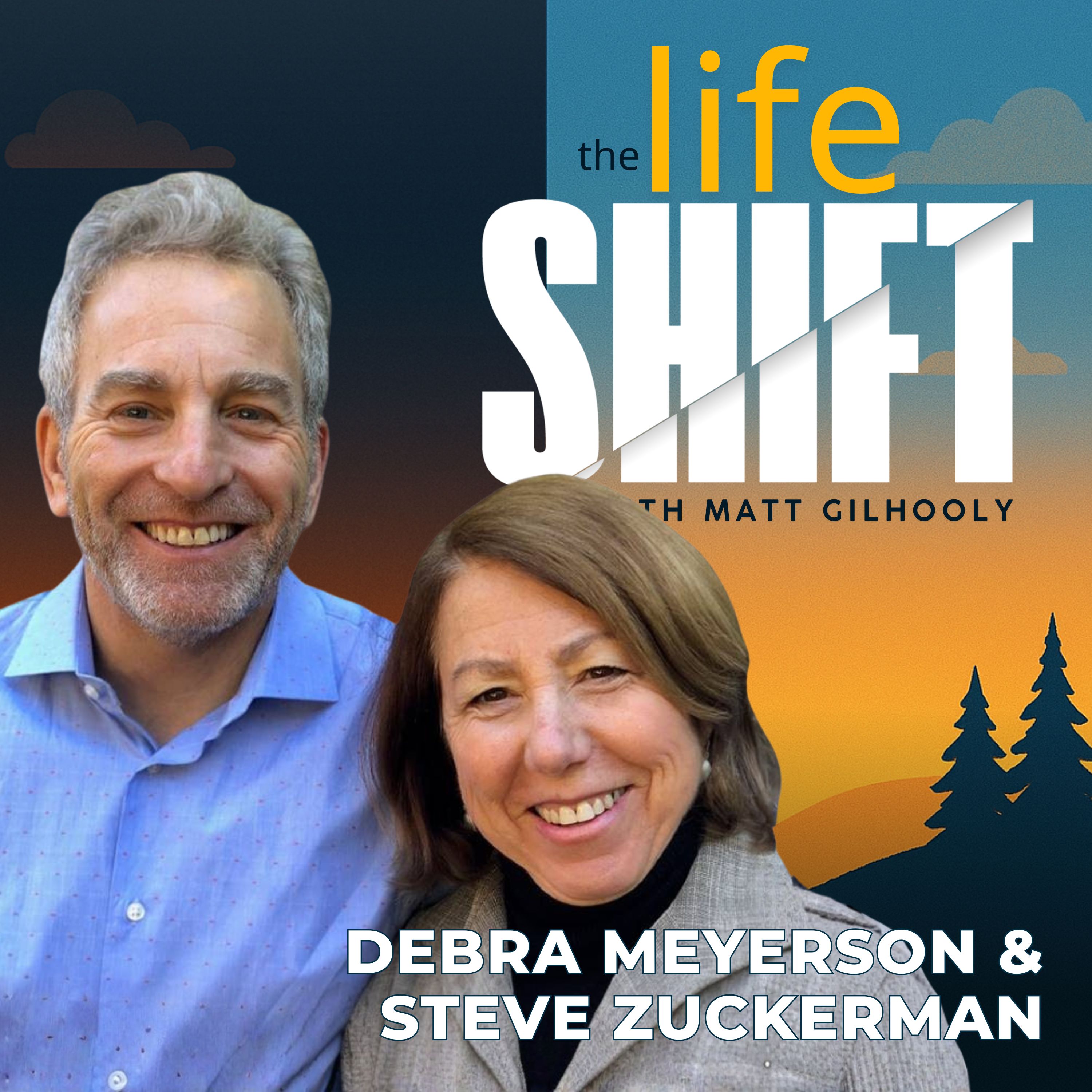
A stroke took Deb Meyerson's voice, her mobility, and eventually her Stanford career, and this is the story of how she and her husband Steve found a way to build something meaningful from what remained.



Some shifts don't arrive all at once. They come slowly, over days and years, asking you to let go of things you weren't ready to release. If you've ever had to reimagine who you are after something took a version of you that you loved, this episode will feel like a hand on your shoulder.
Deb Meyerson was 53, healthy, and doing meaningful work as a Stanford professor when a stroke began on a drive to Lake Tahoe. What followed wasn't a quick recovery. It was a slow reckoning with the body, the voice, the professional identity, and the quiet realization that some parts of the old life weren't coming back. Her husband Steve walked every step alongside her, navigating his own grief as a care partner while trying to hold the family together. Together, they eventually found a way to transform the loss into something that now helps thousands of stroke survivors feel less alone.
This is a conversation about the kind of grief that doesn't announce itself. The kind that shows up on your happiest days and in your proudest moments, reminding you of the distance between who you were and who you are now. It's also a conversation about what it looks like to keep creating meaning when the old map no longer works.
What You'll Hear:
- How Deb's stroke unfolded slowly over a Labor Day weekend, and what the overnight "slow fall off a cliff" felt like for both of them
- The moment three years in when Deb had to leave Stanford, and how that second loss broke something open
- What it actually means to hold multiple identities at once after trauma, and how Deb navigated the "yes and" of still being herself
- The grief cycles that don't end, including the morning after their grandson was born
- How writing a book became the most affordable therapy Deb never expected, and what led them to start Stroke Onward
- What Steve learned about being a care partner, and why that role is so rarely seen or supported
Guest Bio:
Debra Meyerson is a stroke survivor, author, and co-founder of Stroke Onward, a nonprofit dedicated to supporting stroke survivors and care partners through the emotional journey of recovery. A former tenured professor at Stanford, she wrote Identity Theft with her son and husband Steve after her own experience of rebuilding identity in the wake of a stroke and aphasia. Steve Zuckerman brings decades of experience in business, economic justice, and nonprofit leadership to his role as co-founder and care partner. Together, they work to ensure that the emotional side of stroke recovery gets the attention it deserves.
Listen and follow: www.thelifeshiftpodcast.com/follow
Subscribe to the newsletter: https://thelifeshiftpodcast.beehiiv.com/
Mentioned in this episode:
Available Now: "still HERE: True Stories of the Moments That Changed Everything"
This episode is brought to you by *still HERE: True Stories of the Moments That Changed Everything* by Matt Gilhooly. Matt is the creator and host of The Life Shift Podcast. Over four years and more than 240 episodes, he has sat with strangers and asked them about the moments that changed everything. *still HERE* is what he found. Over 100 true stories. Eight sections. One listener making sense of what it all means for the rest of us. Available now in Kindle and paperback on Amazon. Find it here: https://www.amazon.com/Still-Here-Stories-Moments-Everything/dp/1639011854/
If you read it and it moves you, an honest review on Amazon helps more people find it.
Matt Gilhooly (00:00)
Some life shifts arrive in an instant, and others unfold slowly and they change you again and again along the way. For Deb and Steve, everything changed on a drive to Lake Tahoe. When Deb started to experience what was eventually a stroke that altered her body, her voice, and eventually her professional identity as a professor. What followed was not just recovery, but truly a reckoning. With grief, with loss, with the quiet realization that some versions of life
just don't come back. In this conversation, we talk about the identity after trauma, the emotional journey of stroke recovery, the unseen experience of care partners, and how meaning can be rebuilt when the old map no longer works. This is a story about surviving, grieving, adapting, and creating something new together.
Debra And Steve (00:49)
Three years after my stroke, my phasor is so bad and I had to give up my job at Stanford. What I do now, who am I now? My identity theft.
My identity faces began.
Matt Gilhooly (01:18)
You're listening to the LifeShift Podcast. I'm your host, Matt Gilhoolie. This show is built around one simple idea, that sometimes a single moment can change how we see everything. Each week, I talk with someone about the moment that shifted their life and how they learned to live differently after it. These are not stories about having it all figured out. They are stories about what it looks like to keep going once the story changes. Thank you for being here. Here's today's story.
Matt Gilhooly (01:49)
Hello everyone, welcome to the LifeShift Podcast. I am here with Deborah and Steve. Hello.
Debra And Steve (01:54)
Hi. Good to be here.
Matt Gilhooly (01:56)
Thank you for wanting to be a part of the Life Shift podcast.
before we get into your story, you can tell us who Deborah and Steve are in 2026. Like how do you show up in the world? How do you identify whoever wants to start? Go for it.
Debra And Steve (02:11)
Hi, I'm Deb Meyerson, author of Identity Theft, stroke survivor who had morphed life of a professor at Stanford to the different academic and the advocate. I'm Steve Zuckerman, Deb's husband. We use the phrase care partner.
in this stroke journey. I've had a couple of careers, one in business and finance, one in economic justice, nonprofit leadership, and now as Deb's co-founder of Stroke Onward, trying to be a little less than day-to-day involved, still leading the growth of Stroke Onward. And I'll just share that we've got three great grown kids, two of them married, one engaged.
one grandchild, that's our big new identity in the world for the last 18 And so we're on this journey.
Matt Gilhooly (03:08)
Nice.
Yeah,
congrats on the the grandchild. know that grandparents love having grandchildren. Are you are spoiling them? As you should.
Debra And Steve (03:18)
Yeah.
Yeah. Yes.
I am a... He is in Brooklyn. Yeah. Yeah. We have seen him about 10 times in his first year and a half. So we're doing a good job at spanning the distance. Yeah.
Matt Gilhooly (03:34)
Okay, so pretty far away from where you are in San Francisco
Okay. Yeah. Yeah,
you sure are. And you know what, I had such a special relationship with my grandmother. And I, I hope that you have these bonds with your grandchildren, because she really stepped up when my mom died. And it was my dad's mom. And she just like, gave up so much of her life to make sure that I was going to be okay. And what the journey gave me was a beautiful ending with her that I never would have had had I not lost my
mom in the way that I did and then created this beautiful relationship in which I could see her off into whatever the next step was. So I hope you have a just as beautiful of a relationship with your grandchild now and maybe more in the future. That's beautiful. Congrats. So let's let's start off the conversation with you kind of painting the picture of your life leading up to this main pivotal moment that we want to kind of start today with. I know
Debra And Steve (04:23)
Yeah.
Yeah. Thanks.
Matt Gilhooly (04:41)
fully understand that we as humans, guess, you we'll have many life shifts, little ones, big ones, somewhere in between. So what you feel is maybe the most pivotal here that's changed you from one moment to the next. So just paint the picture of who you were before and how life was before.
Debra And Steve (04:59)
I am 53, healthy and fit. 100 for professor at Stanford and teaching at Ed School and Business School, organizational behavior. Most of
the diversity and gender issues in organizations life was mostly work steve kids and sports and travel for fun
no, 15 years ago, that three tids are 15,
18 and 21. One in high school and other two in college. Really a lot of three, careers, three kids. Really a lot of really, yeah.
Matt Gilhooly (06:17)
Was
it busy?
Debra And Steve (06:19)
We were a busy two-career, three-kid family. I had...
Matt Gilhooly (06:23)
Yeah. Kind of like an
idyllic life, if you would be in a way. Is that saying too much?
Debra And Steve (06:27)
Yeah, yeah. I mean, in many ways,
many ways idyllic in that, you know, life was good. ⁓ Our kids were healthy. Our jobs were good. We both loved our careers. I was about four years, no, yeah, about four years into starting having shifted from the business world into the nonprofit world. And I was building a ⁓ nonprofit operation in California doing really meaningful work.
Matt Gilhooly (06:35)
Yeah.
Right.
Debra And Steve (06:55)
So in many ways, idyllic, but also frenetic. were that sort of Silicon Valley couple, even though we weren't in tech, but we were burning the candle at both ends, but it was good stuff.
Matt Gilhooly (07:01)
Yes.
Yeah, and
I think the idyllic part comes from my own, you know, my parents were divorced as early as I can remember and seeing different families. Idyllic in my mind is like the families together, the parents are working, there's like, obviously there's not every day is the best day ever, but the idea of picture book kind of like family of two working parents and the kids are doing good things, going to sports games and all the things that come along with that.
Debra And Steve (07:23)
Yeah, yeah, yeah.
Matt Gilhooly (07:38)
I wasn't trying to paint that your life was perfect.
Debra And Steve (07:38)
Yeah.
We get it completely. And yes, one of the words we use all the time is we were living a pretty privileged life. It ⁓ was everything held together and we could make ends meet and it was good. Yeah.
Matt Gilhooly (07:48)
Yeah.
Pretty routine,
scheduled, like your life was pretty run by your calendars. Is that what I'm gathering?
Debra And Steve (08:00)
Yes,
yeah, it's I have travel and Yeah, would say they were run more by our kids calendars Yeah, and we were we were we were both lucky that that we both had a lot of flexibility in our work schedules So even though we both worked very hard we could usually juggle when each of us needed to travel and be home when we
Matt Gilhooly (08:09)
Yeah.
Right, all the sports and stuff.
Yeah.
Debra And Steve (08:28)
really wanted to be home. So it was, it was good. Yeah.
Matt Gilhooly (08:29)
Okay. So
is it right to assume that you didn't absorb maybe what I did growing up is to work really hard and work maybe too much and overwork? Was it kind of balanced for you? Okay.
Debra And Steve (08:45)
No,
no, don't. So my stroke is, the stroke is, straws. You think it was, yeah. I mean, at the time at least, we felt like we were incredibly busy, sometimes frenetic, but we did, you we were home for dinner every night that we weren't traveling, you so in some ways I think.
Matt Gilhooly (08:58)
stress related.
Mm-hmm.
Yeah. Okay.
Debra And Steve (09:14)
We coached our kids' sports teams. We were able to be active parents as well as working hard. So yeah, in that sense, we had a pretty good balance.
Matt Gilhooly (09:20)
Yeah.
Yeah, and then the natural just working and all the responsibilities come with some stress. So, so you're doing this on a regular basis, you're kind of living this life that seems like on paper, at least everything is going very well for you. So, so what happened?
Debra And Steve (09:36)
Yeah, yeah, yeah,
yeah. My stroke. 15 years ago, it's when I... Want me to tell the story? Yeah. So basically we were literally getting in the car to go up to Lake Tahoe for Labor Day weekend with two of our three kids and a friend and our dog.
Matt Gilhooly (09:42)
What? Yeah.
Debra And Steve (10:06)
And Deb said, God, my right leg feels funny. And she said it hurt. It just felt funny. Deb's stoic. She was like, it's fine. It'll be fine when we get to Tahoe. And we got to Tahoe and it still felt funny. We went for a hike, but she was noticing that she couldn't support her weight as well in every place. But again, still not in pain, not a problem. We went through the day, went out for dinner that night, home, went to sleep.
And in the morning when she woke up, she asked me for some Tylenol because she had a headache. And when I tried to hand them to her, her right arm wasn't moving normally. She was like concentrating double hard to like find my hand. And somewhere along the way, I had heard one of the signs of stroke is right arm and right leg or left arm and left leg not operating properly.
Matt Gilhooly (10:45)
Hmm.
Yeah.
Debra And Steve (11:02)
And so off to the hospital we went and to not stretch it out too long, Debs was a little bit of an unusual stroke in that the symptoms came on slowly. For a lot of people, just, boom, it hits you right away. But we got transferred to a hospital in Reno, finally got into a room. And then that night from midnight until 8 a.m.,
Matt Gilhooly (11:12)
Mmm, yeah.
Debra And Steve (11:27)
Every hour they'd wake Deb up to do a classic neurological exam, know, touch this, touch that, raise your leg, what's this picture of, et cetera. And her right arm, her left leg, her right arm, her right leg and her speech just got worse and worse and worse. And we call it the slow fall off a cliff by 8 a.m. Deb couldn't move her right arm, couldn't move her right leg and was fully mute.
Matt Gilhooly (11:53)
gosh.
Debra And Steve (11:56)
no speech, no sound whatsoever. And that was, you know, that began our stroke journey.
Clearly a big life shift.
Matt Gilhooly (12:05)
Yeah,
for both of you in different ways, I would imagine, because here you are, Deb, you're kind of experiencing these things. Did you have any inkling that something could be going on when you said your leg felt funny? You're just kind of dismissive of it?
Debra And Steve (12:08)
Yeah.
Nah, ⁓
No, six months ago, no, prior to my really bad headache, really bad, and I too,
One is the, ⁓ my, yeah. So she started getting headaches about six months before this and had one or two events when she really got disoriented and thought something was really wrong, but then it resolved itself immediately and she was back to normal within seconds. And she went and had a neurological exam. She got tested.
Matt Gilhooly (13:01)
Mm.
at the time.
Debra And Steve (13:13)
and they couldn't see anything wrong. And as I said, Deb's stroke was an unusual one in that it was caused by something called a dissection, which is a tear in the inner wall of an artery. So unlike most strokes, which are formed by a blood clot, and if you do testing, you can see that the arteries are narrowing. In her case, it was caused by this flap. It's not really skin. I don't know what the inner wall of the artery is called, but.
a flap going across and sealing off the blood flow. But when she was tested, the flap had sort of adhered itself back to the wall. So nothing showed. And that's why they didn't catch it in those early months. But right after it was clear she was having a stroke and they had tested her and cat scan and detected the stroke.
Matt Gilhooly (13:43)
Right.
Debra And Steve (14:07)
Deb was really in denial. She was slurring her speech a little bit, but still saying, but this has gotta go quickly, because I gotta be in class in three weeks. She was talking to her mom and her brother saying, yeah, I'm sure it's nothing. You, the optimist. I am the eternal optimist, but at that point, they had used the word stroke.
Matt Gilhooly (14:17)
Mm-hmm. Yep.
Hahaha
Debra And Steve (14:37)
and it had sunk in on me, I think a little bit more than it had sunk in on you. to the being optimists, even after Deb had paralyzed right side, no speech, spent about two months in critical care hospitals and rehab hospitals, and then we finally got home,
Matt Gilhooly (14:37)
Mm.
Yeah.
Debra And Steve (14:59)
even though we were now totally in reality of the changes that Deb's body had just undergone, we were both very optimistic in that we thought with enough therapy, hard work, regain capabilities, go back to life as we know it. And we really kind of maintained that posture for about three years.
Matt Gilhooly (15:22)
Okay.
And then it went somewhere else. I mean, we can go there, but I just curious before we get there is that I was just wondering ⁓ for you, Steve, when you wake up that day and you see what's happening like in real time, is that when things started running around in your brain as like, this is, this is something more.
Debra And Steve (15:26)
Yeah.
Yeah, well, ⁓ I didn't wake up because I didn't go to sleep. And during those and our oldest son. What's that?
Matt Gilhooly (15:50)
⁓ OK.
Before you went to the hospital though,
did you go to sleep before you went to the hospital when you woke up that day to ask for the Tylenol?
Debra And Steve (16:00)
you're talking about the, ⁓
You know, I think when we headed to the hospital, I was concerned, but I wasn't yet panicking. It was really the overnight in the hospital because what the doctors had told us is that the damage to the brain has been done. know, brain cells have been killed and we can't reverse that. And it'll be over the next eight to 12 hours that you'll see.
Matt Gilhooly (16:08)
Okay. Okay.
Debra And Steve (16:28)
what's the ramification of that brain damage? And the scariest part was we had no idea what the bottom was and whether Deb would have any cognitive ability at all. You just don't know. And so that phase, and our oldest son was with me in the hospital, that was by far and away the scariest time of the whole stroke.
Matt Gilhooly (16:30)
interesting.
Yeah.
Yet you remained optimistic on the outside or did you also feel optimistic? Because I guess I think sometimes we pretend, but I don't know if you did.
Debra And Steve (17:01)
⁓
I think it was sort of two different phases. While that was happening, I think I tend to be a pretty calm, collected person, so I didn't freak out, but I was reeling. ⁓ Once we had a path, once they identified, okay, this is what happened, and this is what you need to do to try to get better, a pretty goals-oriented person, so I kind of turned into...
Matt Gilhooly (17:31)
Okay.
Debra And Steve (17:34)
you know, into a, this is the path, let's do it. And Deb, I gotta just brag, Deb is a workhorse. Nobody works harder and nobody is more determined than Deb. So once we got into that therapy mode, it was just all about work. Three years after ⁓ my stroke, I really, am so determined to...
back to Stanford. I am, yes, yeah, yeah. And then what happened three years after your stroke? The medical team, the medical, the,
Matt Gilhooly (18:06)
Mm. You want to get back to teaching. Yeah.
Debra And Steve (18:32)
Three years after my stroke, my phasor is so bad and I had to give up my job at Stanford. What I do now, who am I now? My identity theft.
My identity faces began.
Matt Gilhooly (19:00)
Yeah, because that was what you lived and breathe for so long, right? That was your passion and all the things and now something completely out of your control has just stolen that from you in a way. How do you does that bring you to pits of places that some of us have been before? rough spots and depression and things that come along with that?
Debra And Steve (19:21)
Yes, yes,
yes. I struggled, really struggled, and I ⁓ had less. I still had the academic. I wanted to be an academic, and I...
I'd like to write a book about the identity and stroke.
Matt Gilhooly (19:53)
Yeah, and you did. mean, that's, that's great. The question be as you were getting through the third, like those first three years, were you finding that there were good communities of people that you could talk to about your condition versus their condition or like, did you find people around you or was this navigating a world where there wasn't a lot out there to understand?
Debra And Steve (19:56)
Yeah.
I had really friends too, and I really had lot of friends and survivors too. Yeah, and the caregivers. I am, I, yeah.
Matt Gilhooly (20:31)
Right.
Debra And Steve (20:44)
Yeah, mean, Deb, again, living in the Bay Area, it's lots of medical community, nonprofits. There were stroke groups around. We were lucky. Deb actually didn't spend a lot of time, like she had a lot of family and friends around her, and because her focus was just, how hard can I work to get through this and get back to life?
Matt Gilhooly (20:51)
Fair, yeah.
Mm-hmm.
Debra And Steve (21:10)
unlike many stroke survivors that we've met who really find a tremendous amount of support engaging in a community of stroke survivors during that period of Deb's recovery, that wasn't as important to her. She really, she wanted to spend her time in the gym or on the stretching table, really keeping doing the work.
Matt Gilhooly (21:26)
Okay.
Yeah. Yeah.
Debra And Steve (21:35)
And again, because at that point, she and I really thought that long-term, life wasn't gonna change all that much, that this was gonna be a blip, we were gonna have to get through it. We didn't really start investing in the stroke community as much until, and the loss of tenure, it's not like Deb's profession was the only thing important to her, but it was sort of the trigger ⁓ that made us accept
Matt Gilhooly (21:42)
Yes.
Mmm.
Debra And Steve (22:03)
the possibility and the likelihood that life really was changed forever. that was on all fronts in how Deb would be a parent, how Deb would be a wife, how Deb would be a daughter. that's when, as Deb said, it got dark, but then she also, being Deb, decided, well, I'm gonna write a book, because they tell me I can't be a professor, but damn it, professors write books, so I'll show them.
Matt Gilhooly (22:08)
Yeah.
Yeah.
Yeah.
Debra And Steve (22:32)
Yeah.
Matt Gilhooly (22:32)
And part of that earlier question about finding community and whatnot, think from, I don't feel like it's talked about that much publicly as, and so there's a lot of ignorance that I have that I think a lot of the public has about stroke survivors and how you navigate through the world. Something as simple as, do you feel the same? Like inside as a soul, as a person, do you feel the same or do you feel different? Like that,
is probably one of those questions that I was probably not allowed to ask when I was a kid, but I think it's important. Do you feel the same,
Debra And Steve (23:08)
Yes and no. I have really a lot of identities simultaneously. And I am the...
Matt Gilhooly (23:10)
Okay.
Mm-hmm.
Debra And Steve (23:37)
athlete? Yes and no. I am a daughter? Yes. Yes, but you can't support your 91 year old mom in the same way you'd like to and you would have before. Yeah. And I think you're
Matt Gilhooly (23:41)
Mm-hmm.
Right.
Right. Yeah. So it's like a yes and.
Debra And Steve (24:05)
Your question about, or your comment about community is really important because in, and I'm jumping forward in the story here, but with the nonprofit that we started called Stroke Onward, creating communities for stroke survivors and care partners where they can talk about these emotional issues and get resources to navigate the emotional journey and recovery. That's really what,
the nonprofit is all about. So even though Deb wasn't particularly eager for those communities in the first three years, across the stroke survivor community more broadly, we see that as critically important. And I am really lucky, friends of mine, so lucky.
Matt Gilhooly (24:37)
Yeah.
Yeah, and I think it's very similar for all of
Debra And Steve (25:05)
The funds of mine are really stayed intact.
Matt Gilhooly (25:11)
Yeah. And take care of you and love you just the same, because they should. think that there's a missing piece, and I'd love to know why you started the nonprofit. I mean, I guess I could make assumptions, but I'd love to know what triggered you to want to invest your time and energy into this. But part of it comes from wondering if part of it is educating the public more of how we can be good.
Debra And Steve (25:13)
Yeah. Yeah. Yeah. Yeah.
Yeah.
Matt Gilhooly (25:41)
humans walking this earth with you and help you.
Debra And Steve (25:44)
Yeah,
the book is five years, five years, and Danny's, my son and I and Steve wrote it and
The book, the identity theft book. Yeah, I mean that once Deb maybe hit that second life shift, the one where we had to realize life was now different, Deb set out to write a book, which I thought she was insane. I had watched her write a book before she had aphasia and that was hard, unbelievably hard.
Matt Gilhooly (26:36)
That was enough, right?
Debra And Steve (26:38)
You know, I helped how I could, but I had a full-time job, so we hired somebody to help. And then as Deb mentioned, our oldest son was between jobs and kind of stepped in, and he was the co-author of the first edition. And that really was, I sometimes say, maybe the most inexpensive five years of therapy somebody could get, because Deb turning a lens, her identity knowledge, as a lens on her own struggles.
Matt Gilhooly (26:56)
Yeah.
Debra And Steve (27:05)
kind of was her journey. And she interviewed 25 other survivors for the book and 35 care partners and healthcare professionals. So it was part personal story, but part academic study. And it was really through that process that we kind of identified the importance of rebuilding identity, the importance of an emotional journey in recovery.
Matt Gilhooly (27:18)
Right.
Debra And Steve (27:33)
And because the people we were talking to were saying like, nobody's talking about this. That's what led us to start the nonprofit was that we had stumbled on a real need in the medical system, in the stroke survivor system and decided to try to do something about it.
Matt Gilhooly (27:49)
Yeah.
How even do that? Like, feel like so many of us are like, this would be a great idea and we need more of this. But like, not so many of us are like, we're gonna make it happen. Like, how did you find the time energy? I mean, you're working on your book. This was after the book, right? But you're still talking about the book, you're communicating with others, you're doing all the things that this new version of your life.
Debra And Steve (27:56)
Yeah.
Mm.
Matt Gilhooly (28:20)
presents to you and now you're like, let's start a nonprofit to help others.
Debra And Steve (28:25)
The book is done and
Matt Gilhooly (28:27)
Right.
Debra And Steve (28:33)
onward is we had the... Not sure exactly what you're trying to say, but this may be it. But as the book was coming out, one of the real messages of the book around identity is...
Matt Gilhooly (28:54)
Okay.
Debra And Steve (29:02)
Yes, Deb was a professor at Stanford. And so you could say, does she still have that identity? You might say, no, she's not a tenured professor at Stanford anymore. But when you think about what was it about Deb as a person that made her love being a professor, it was the ability to create and share knowledge. And so now with different set of capabilities, how can Deb rebuild
Matt Gilhooly (29:23)
Mm-hmm.
Debra And Steve (29:30)
that love, that passion into her life and stroke onward became the way. So it really was, and we were fortunate, Deb had the academic background, the expertise on identity, the lived experience as a stroke survivor, and I had the lived experience as a stroke care partner and the experience of starting nonprofits and serving on nonprofit boards. So we brought that together to say,
Matt Gilhooly (29:47)
Yeah.
Debra And Steve (29:58)
This is a way to create something, A, through which Deb can continue to have professional meaning and purpose, and I could and obviously try to solve a problem that we thought needed solving.
Matt Gilhooly (30:06)
Yeah, I love that.
It definitely needed solving and you're probably doing that. Does that fill you up in ways that you never could have imagined for yourself? Like I know Stanford was very fulfilling to you and teaching and research and all those things. Does this give you a different type of fulfillment that you never could have?
Debra And Steve (30:28)
Yes, Yes,
really a ⁓ lot of the phasor classes and ball worm class. Ball worm. Yeah. Yeah. Yeah. The I the zoom.
Matt Gilhooly (30:42)
Dancing? Are you saying dancing? I
Debra And Steve (30:53)
the phagic classes, really a lot of the eight awards, nine university professors, know, the... You want me help? Yeah. Yeah, so, you know, I don't know, eight or 10 different speech therapy programs around the country.
Matt Gilhooly (30:55)
Mm-hmm.
Debra And Steve (31:21)
teaching about aphasia are using identity theft as part of their curriculum. And we often get a request as to whether we can usually by Zoom, Zoom in and talk with the class. so that's sort of, Deb loves being a teacher. Being an educator. a kind of fulfillment. And I think, while there's a certain kind of fulfillment educating,
Matt Gilhooly (31:23)
Mm-hmm.
I love that, yeah.
Debra And Steve (31:48)
people already in sort of a privileged higher education kind of framework, some of the people that we're trying to help have just been knocked off their horse and are really struggling. And I think that's a kind of fulfillment that may be a little bit different than in the academic world.
Matt Gilhooly (32:11)
Right, because there's the element of giving. I think there's a couple of things that come along with it. Like you can validate someone else's experience, right, by what you're offering. They can feel seen. They can feel understood. They maybe get hope by seeing you or hearing your story or hearing the people around you. I think there's so much beyond, you know, what you could put on paper that would be so valuable for someone to be part of that community or get those resources. Like in a tiny little weird way.
Debra And Steve (32:26)
Yeah.
Matt Gilhooly (32:40)
I say it about this podcast of like hearing other people's stories, heals certain parts of me or validates things that I dismissed as silly or weird as I was in my deep in my grief journey, you know, and I hear someone else's story. like, maybe I wasn't weird. Like maybe that was just that 16 year old trying to figure out what life was like, you know, even eight years later. So I can just imagine the people that get the resources from your nonprofit of like,
Debra And Steve (32:57)
Yeah.
Yeah, meaning and hope and purpose. The book is three chapters of meaning and hope and purpose. ⁓
Matt Gilhooly (33:09)
the intrinsic value that comes from that too.
Would you say that the
book is more is like memoir slash like self help or is it a god? No, okay. Okay. Yeah, what is what? Like if I'm walking away after what do you hope someone walks away after reading the book?
Debra And Steve (33:36)
No, no, no, no, no, no, no, no.
The one. Yeah, I mean, it. Deb, in fact, fired our first publisher because he kept referring to it as a memoir. And it is part memoir because Deb's story and our story threads through the book. But as I mentioned, Deb also interviewed 25 other survivors and their stories thread through and.
Matt Gilhooly (33:56)
Okay. Yeah.
Right.
Debra And Steve (34:10)
Deb did a lot of academic research to understand what are people saying about grief, what are people saying about identity in the sake of ⁓ medical trauma. it reads, it's got the approachability of a memoir, but I think it brings something deeper. And the real message, I mean, is that one, for somebody going through the stroke journey, it's you are not alone.
Matt Gilhooly (34:15)
Yeah.
Right.
Yeah.
Debra And Steve (34:40)
There are other people having different but similar experiences and a lot of people feel very alone. The second thing is that the messages are relevant to not just stroke survivors, anybody who's gone through a trauma that's changed their lives or
even more broadly, I mean, we're at the point where most of our friends either have recently retired or are thinking about retirement or retiring. And they're going through the same identity crisis of, know, what am I now? Who do I want to be now? And so I think the message is there are ways to think about change that you can build a positive new life, not one that's just a
gray version of your old life, but genuinely new. And we talked to a lot of people, don't know that we've talked to anybody who said, I'm glad I had a stroke, but we talked to a lot of people who say, there are some things that I have in my life that are really, really powerful and important that I never would have had in my life had I not gone through this journey. And that's what we hope people will strive for.
Matt Gilhooly (35:39)
That's so beautiful, the way you said that.
Debra And Steve (36:01)
And that's what we hope the medical system will better support in the future. Yeah. Yeah.
Matt Gilhooly (36:05)
Yeah, no, I think
hearing people's firsthand stories and all the people that you collected, it's so valuable. the I understand that sentiment of, you're not glad it happened. Like, I'm not glad that my mom died in the way that she did. However, she died and I am this version of me because of the 20 plus years of grief that I struggled with and finding that way. You know, like, so.
Debra And Steve (36:17)
Yeah.
Yeah.
Matt Gilhooly (36:33)
we would not be having this conversation if that experience did not happen to me. We would not be having this conversation if that experience did not happen to you and this journey and this version of you that you've created with what you have in the world now. it seems, and forgive me if I'm putting words in your mouth, but it seems like you've created something really beautiful from this experience, both in the way you described how like what you're doing now with the nonprofit is very like, it's like a
a mirror to the Stanford experience of like being able to bring that version of you in a different way to all these people. It's so beautiful. Not that I would wish your experience on anyone else. You know, it's like, it's so weird to hold both of those ideas at once.
Debra And Steve (37:09)
Yeah.
Yeah, I agree.
Yeah, I agree. We had trouble holding both those ideas at once for a long time. Yeah. Yeah, just acknowledging you for a long time, you were sort of unwilling to acknowledge that there were some good things that came out of it because to you that felt like, no, it sucks. so it is hard to both.
Matt Gilhooly (37:27)
Did you? Yeah, it's.
Yeah. Yeah.
Well, and I think
society doesn't promote the ability to hold those two things at once, right? We just assign something a very surface level thing. And if we dig down, unfortunately or fortunately, there are good and bad parts of all the little things that we experience, but society wants to paint it with a, you know, a black or white, like this is it. And it's not. And those of us that have been through some kind of trauma,
Debra And Steve (37:54)
Yeah, yeah.
Yeah.
Yeah.
Matt Gilhooly (38:17)
I think we see that more than those that haven't experienced something quite as traumatic. Do you see that in the people you work with, that there's a little bit more nuance to the way that they see things?
Debra And Steve (38:22)
Yeah.
Yes, really. ⁓
a lot of the stroke and brain injury, the Rutney Hardy,
the brain injury.
Whitney Hardy. I know who you're talking about, but I'm not sure what message you're trying to say. This is unusual. Usually I do. ⁓ I don't know. What is the question?
Matt Gilhooly (39:09)
You
Ha
Well, actually, I was I'm not sure what my question was now. It's a good. That's a good question. I am am curious, though. I think I think what I was saying is that are you seeing that people that have experienced similar things as you within your nonprofit that you work with? Do you see that they see life with a lot more nuance and less? It's black or white.
Debra And Steve (39:30)
Wait, you're too young to say that.
Yeah.
Matt Gilhooly (39:56)
there's more color I think that we can see when we've been knocked to the bottom and then trying to crawl our way back up. Would you agree with that?
Debra And Steve (40:03)
Yes,
yes and no. It's really...
Matt Gilhooly (40:07)
You can say no, I'm fine with that.
Debra And Steve (40:17)
I am going to say yes and no.
Matt Gilhooly (40:23)
Okay, yeah, I mean, there's a spectrum, right, of people and where they are on their journey, too. Just like you weren't willing to say there were some good parts for a while.
Debra And Steve (40:33)
Yeah, yeah. No, I the the three years after my stroke, I am happy. I am happy for the first three years. Yeah. Yeah. I would say from from about three months to three years because a. Deb had so much less stress in her life and she had a clear purpose.
that was working hard physically, which she loves to do. We had lots of friends say, Deb, you laugh more now than you did before your stroke, and you laugh deeper and heartier than you did. And I think that was sort of some of the stress and the constraints and the self-policing was gone. But I think to your question, I think the reason
Matt Gilhooly (41:15)
Yeah.
Debra And Steve (41:29)
that a lot of people who have struggled with some kind of a serious trauma or situation see the world more nuanced is because if you're forced to put the world in black and white, theirs is black. And none of us want, or very few people want to be purely black. So you learn to look for the white in the face of the black. And I actually don't like the black and white use, but.
Matt Gilhooly (41:42)
Mm-hmm.
Right.
Mm-hmm.
Yes. Yes.
Debra And Steve (41:57)
the good in the face of the bad.
⁓ so I think that is true. And if you're suffering from something really bad and you can't see the positives, that's depression. ⁓ And that becomes very hard to break free from.
Matt Gilhooly (42:02)
Yeah.
But also, I mean, normal. It can be a normal experience for someone that has experienced that as well. I think so many of us took on shame for being depressed about certain things because we're like, well, you're, for me, I was only allowed to be sad for this amount of time and then move on.
Debra And Steve (42:22)
Yeah. Yeah. Absolutely.
Yeah.
Yeah.
Yeah. Yeah.
Matt Gilhooly (42:39)
And so then you just take shame when you are sad and you're just, know, and so
the more we talk about these things, the more we have these types of conversations, the more that you're going out and talking to all these universities on Zoom with your book and everything, the more we can have these open conversations where all of it's okay.
Debra And Steve (43:00)
And the my, the mental health is the, am going to say mental health is the really the counselors and psychology professors or the psychology.
and social workers, I'd like to see them... More engaged in the stroke recovery system. I think one of the things we've seen is that ⁓ because stroke starts as a critical care intervention in hospitals and then is a rehab focus, it doesn't necessarily attract
the mental health resources that chronic conditions like ALS or MS, things that are deteriorating chronic conditions get. Not that they get enough, there's a mental health resource shortage across everything, as well as all the taboos that you were referring to. But stroke in particular, three years after the stroke, when Deb realized she had to rebuild her identity and rebuild her life,
Matt Gilhooly (44:11)
Right. Yeah.
Yeah.
Debra And Steve (44:24)
we were
pretty much disconnected from the mainstream medical system because she didn't have medical problems anymore. ⁓ And so that's one of the challenges in stroke is that most people who survive a stroke live with chronic conditions for the rest of their life, but they're also very different across people. Unlike other chronic conditions where the symptoms tend to progress fairly consistently across the whole population.
Matt Gilhooly (44:31)
Right.
Mm-hmm.
Debra And Steve (44:53)
With stroke,
you might have physical problems, you might have emotional problems, you might have speech problems, you might have balance problems, you might have vision problems. So the nature of the chronic condition you live with is very different. So that makes it hard for our very siloed medical system to treat stroke because all of those things need a different kind of treatment.
Matt Gilhooly (44:57)
Right.
Right.
Right. And from the mental health aspect, it probably takes someone that has experience working with someone or talking to someone that has had some of these experiences and the reason that they feel the way that they do. I think it's really hard. Just as one therapist is not necessarily the right one for me, it's, you know, like I, took me five people to find the right one, but
I, know, mine were more, I guess we should say, well, a death is a normal thing, we should say, right? But you probably need people that are more well-versed with other stroke victims, And survivors, I should say, stroke survivors that, ⁓ so they have a better understanding of what's going on too. And those are probably not like specialists, right? I don't think they do that.
Debra And Steve (46:00)
Yeah.
Yeah,
that's really a lot of... The psychologists are really five psychologists or eight. Yeah, just there aren't very many people in the mental health field to the extent there are. There are...
Matt Gilhooly (46:30)
Right.
Debra And Steve (46:33)
neuropsychologists, but they tend to deal more with kind of diagnosis than they do treatment. you if you look, my sister happens to be a psychiatrist. If you look at a directory of mental health professionals and they often put what they specialize in, you almost never see stroke again, because what does that mean? Well, it's so different for everybody else, but it's something that we
Matt Gilhooly (46:39)
mate.
Debra And Steve (47:00)
one of the avenues of change we'd like to try to pursue is can we get the mental health field to see stroke as a need and an opportunity to specialize because like you said, somebody who's got a little bit of experience, that goes a long way.
Matt Gilhooly (47:00)
gonna ask that. Yeah. Yeah.
Yeah. And I
think, I mean, I just love that you're doing this nonprofit because I think just for the public to have better understanding as well or know that, you know, like with the resources that you're putting out there and the people can come upon it because there's, there's the whole other side of it of like being the care person, right? The person that's helping that's a whole journey in itself, right? An identity shift and, and the things and mental health can come with that and all the same things. And so that's important to talk about too, that I don't
I know that we give enough attention to either side in your community at all. Do you feel the same? that's why you started your nonprofit. ⁓ Wow, look at that. Yeah, and why you wrote the book.
Debra And Steve (47:50)
Yeah.
Yes. Yes. My book.
the Sarah. Oh, you're talking about the impact on families. Yeah. We often say if you're, if you.
If you need a good cry, start reading our book at chapter nine, which starts with a story about our daughter who was 15 when Deb had her stroke, but then gave a talk at her school when she was two years later about sort of the impact of the stroke experience on her. And it's a powerful story because it really shows how much she grew.
Matt Gilhooly (48:27)
Mm.
Yeah.
Debra And Steve (48:49)
because of the stroke. And again, would you say, well, so that makes it worthwhile for Deb to have a stroke so our daughter can experience that growth? Of course not. And yet, you know, she probably came to some life lessons at 17 that otherwise she might not have gotten until she was 27. And that's...
Matt Gilhooly (49:09)
Yep. And by her sharing that
story, she's also validating the experiences of other children of stroke survivors. And it's just, it's that butterfly effect that we just need to talk more. We just need to talk about it more, share more information, have conversations like this where Matt, somewhat ignorant comes in and asks you questions because I think it's important. It's how we build humanity and we build understanding of each other. Even if we
Debra And Steve (49:21)
Yeah,
Matt Gilhooly (49:37)
Like we come in not knowing we're gonna leave having a whole different perspective of how people live in this crazy world that we're all in together, right? And so I think I appreciate you for being willing to answer my questions even when the answer was no, because that's okay. I love that. I'm wondering, what's your favorite part about you in 2026? And Deb, you go first.
Debra And Steve (49:45)
Yeah. I agree. Yeah.
The favorite part of this, am, the two, I am done with 25.
Matt Gilhooly (50:31)
Yeah, I think a lot of us feel that way. That's my favorite part too. 2025 has been a challenge or was a challenge.
Debra And Steve (50:35)
I
thought your answer was going to be immediate, being a grandmother. ⁓ yeah.
Matt Gilhooly (50:43)
⁓ Yeah, does it feel do you feel
different because of the grandchild do you feel like a new person?
Debra And Steve (50:48)
I
love, it's so, really good. I love, I really love, Nillan. And I don't, it's so,
Matt Gilhooly (50:52)
Mm-hmm.
Yeah.
Debra And Steve (51:16)
I am so in love with Nilla. I think the way I've described it is it's like it's this feeling of limitless love, kind of like you have with your own kids, except now there's none of the associated stress. Yeah,
Matt Gilhooly (51:18)
Yeah. Yeah.
Mm.
And it's probably
beautiful seeing your kids become parents as well. I'm sure there's something really fulfilling about that. What's your favorite thing about who you are these days, Don't cheat. You can't say the same thing now.
Debra And Steve (51:47)
I ⁓
think it's that I feel like we as a couple ⁓ and me as an individual, think we're very much right smack in the middle of a transition in that we hired a full-time experienced CEO for Stroke Onward. We're trying to be less involved in the day-to-day, more on the board.
Matt Gilhooly (52:11)
That's great.
Debra And Steve (52:15)
I'm still very part-time at the economic justice nonprofit that I have been with for 20 years and doing less and less in ways that are very, very flexible. So we were just having a conversation before this about what does retirement mean in this day and age? I we're gonna keep working and doing things until we can't.
Matt Gilhooly (52:37)
Yeah.
Debra And Steve (52:39)
But I think what I like best is that I feel incredibly ready for that transition. not hesitant and I'm just really eager to just lean into it. And hopefully my lovely wife is gonna be along for the ride and just create the next chapter.
Matt Gilhooly (52:59)
Yeah.
Yeah, no, I think that's beautiful. And the idea that like, you feel really settled. I mean, from the long time that I've known you now, but it feels like you guys are settled in this identity, this current one, at least. And as you kind of move through where you were saying, like some people when they retire, it's like, who am I now? But you guys have found this purpose that can continue in whatever capacity you want it to. I think that's Yeah.
Debra And Steve (53:21)
Yeah.
But I think one thing that might be worth adding because you sort of
raised it about this, well, you're allowed to be sad for so long and then you're done. And I appreciate your saying that it seems like we found a good equilibrium in the new reality. We talk a lot about cycles of grief that, you know, sometimes in the most happy of times, just a wave of it ain't like it used to be.
Matt Gilhooly (53:45)
Mm-hmm.
Debra And Steve (53:53)
and that sucks and that happens to both of us and we have to give ourselves the space for that. The skill and what we are trying to learn to do is to manage through it a little quicker each time so that we don't get stuck in that. But I wouldn't want listeners to think, ⁓ Steve and Deb have nailed it because it just, we don't think it works that way. I agree completely.
The sakesills of grief, one year and half ago, we have the New York and really I am so happy and I am really to be impressed.
When our grandson was born, we got to New York the day after and Deb was just like, she had to wear a mask, but you could tell she was smiling from ear to ear. mean, she was just so happy. And then the next morning, she was tearing my head off for any infraction or none. And that's because she had spent hours thinking about how she can't be the grandmother that she wants to be.
Matt Gilhooly (54:53)
Hmm.
Yeah.
Yeah, yeah.
Hmm.
Debra And Steve (55:20)
So here in the middle of this absolute moment of joy, she got dragged into, I don't want to say depression, not clinically, but into a dark place. And that's...
Matt Gilhooly (55:23)
Yep.
Mm-hmm.
But yeah, a depressive state, yeah. No, I
⁓ love that you are vocalizing that. I think it's so important to talk about being full humans and how we have all the emotions and we have good days, bad days, in between days, places where we're holding both at the same time, and all of it's okay. And we find our own ways to navigate that. Like I was...
I used to be so ashamed of being upset or mad. gotta fix this. And it's like, no, I just have to move through with the tools that I know how to do, honor it, and carry on. And so many people are just holding all of that. They have to be this perfect version of someone. And just be you. I love that.
Debra And Steve (56:11)
Yeah, all right.
Yeah.
the American circumcision, we have a column and American circumcision. And one of the columns is grief.
We talk about the cycle of grief and it's also available on our website as well. yeah, that was for the first three years of Stroke Onward, a lot of our work really was about just trying to spread the word, tell the story, show as many people as possible how messy this is and how important the emotional journey is. Now we're focused more on clear programmatic activities and trying to
Matt Gilhooly (56:43)
⁓ yeah.
Okay.
Yeah.
Right.
Debra And Steve (57:12)
A big part of the work now is really trying to build the community of survivors, of care partners, of other interested humans, and of medical professionals who see the need for a sense of community around the emotional journey and recovery, and then can be part of the community to try to drive change. And so we have an online community that is free and
Matt Gilhooly (57:22)
Yeah.
Yeah, no, I think that's beautiful.
Debra And Steve (57:42)
provides resources and chat spaces and live events and ⁓ the like.
Matt Gilhooly (57:46)
Yeah.
Well, we'll say that at the very end. I just want to ask one last question and then we'll get like the website and all that stuff because I think that I want to, I mean, I know I'm going to put it in the show notes and everything and I want to encourage people to do that. But I also, I just cause I'm me, I like to ask the same kind of question at the end of every episode. And I'm wondering if, if you guys could go back to that, that drive out to Lake Tahoe that day, is there anything that you would want to tell?
each other or that version of you about what life was was going to bring to you.
Debra And Steve (58:27)
Yeah
⁓
Not, I don't know. ⁓ Yeah. I'll say that I would say I'm really glad I married this determined, pigheaded, unrelenting woman because it's going to stand you in really good stead for what we've got coming in front of us. What? Just that you are so tenacious and, you know,
Matt Gilhooly (58:37)
That's a hard one.
Hmm.
Yeah.
Debra And Steve (59:04)
That pre-stroke, sometimes how strong-willed you were, was frustrating. And yet, if you weren't as strong-willed as you are, you would not have made the progress you did in stroke recovery, and you would not have written a book, and you would not have helped start a nonprofit with me. And that that's a gift I appreciate more today.
Matt Gilhooly (59:30)
Yeah.
Debra And Steve (59:32)
than I did before the drive to Tahoe. Yeah. I mean, clearly I liked it all, but I wouldn't have married you if I didn't. It was truth in advertising. You didn't hide it. Yeah.
Matt Gilhooly (59:34)
Yeah, because you didn't know. I mean, you didn't know it was coming down the pike, but you. ⁓
Yeah, no,
I think I think it's important to I like to think back of that eight year old, like, what would I say? I'm like, there's nothing I could say to him. He was about to have a terrible experience for a long time. But somehow, we got to this place that we're in now showing resilience, finding the the good in the bad finding ways to help other people, you coming on this show going on other shows going working with universities, writing your book.
with your nonprofit. You're helping people you don't even know that you're helping because the ripple effect is insane, right? So thank you for what you're doing for the world now, not only for yourself, but for other people so that they feel less alone. They feel connected to other people. I think it's a beautiful journey that you've created out of the situation that you were given.
Debra And Steve (1:00:14)
Yeah. Yeah. Yeah. Yeah.
Thank you. Thank you for having us and thank you for doing what you're doing. Yeah, I agree.
Matt Gilhooly (1:00:38)
Yes. Well,
thank you for that. And now I want to tell people where they can find everything. So give me your website. What's the best way to contact you? What if someone wants to tell you their story? Where can they find your book? Like, what's all the stuff?
Debra And Steve (1:00:46)
We're
not getting the video right now, but I'll hold it up and at least those who are seeing the video. ⁓ Really the easiest place is at our website, which is www.strokeonwardtowordsstrungtogethernospaces.org. And there's links to our online community there. There's links to the book. There are links to our other programs. And the audio.
Matt Gilhooly (1:00:54)
Yep, we can see it.
Debra And Steve (1:01:16)
⁓ The book is available on audio. That was really important to us because so many stroke survivors do have speech and comprehension yeah, we welcome anybody and everybody who's interested and really just encourage, know, one of the things I'll just do a little another little dead brag here is that particularly with aphasia,
Matt Gilhooly (1:01:28)
That's great.
Debra And Steve (1:01:43)
people tend not to tell their story. And clearly it's really hard. Deb gets frustrated all the time in an interview like this or when she gives a talk to a class, but pushing through that discomfort.
Matt Gilhooly (1:01:45)
Mm.
Debra And Steve (1:02:00)
The voice is critical. And so just really encouraging all stroke survivors and particularly those with aphasia, don't isolate. Come join the community or join whatever community you can. Tell your story, tell the world because that's the only way people will understand and relate and hopefully make the system better. So final pitch.
Matt Gilhooly (1:02:22)
Yeah. And to add to that,
everyone else listen when they tell their story. You know, because listening is how we get to be better people. So thank you for telling your story in this way. Thank you all for listening and people that tuned in just for Deb and Steve today. Thank you for just being a part of my healing journey and allowing me to have these conversations. It's been really a pleasure. So I will say goodbye and I'll be back next week with a brand new episode. Thanks again, Deb and Steve.
Debra And Steve (1:02:27)
Yeah. Yeah. ⁓
Yeah.
Bye. Thank you.
Matt Gilhooly (1:02:54)
Thank you for listening to the Life Shift Podcast. If you wanna learn more, go to www.thelifeshiftpodcast.com.
There you can check out all the different episodes. You can check out the blog, some of the reviews for the podcast and the Life Shift journal. Links are there so you can purchase your own copy, whether in digital or print format. Thanks again.