Unsaid: The Stories That Disappear Before We Think to Ask
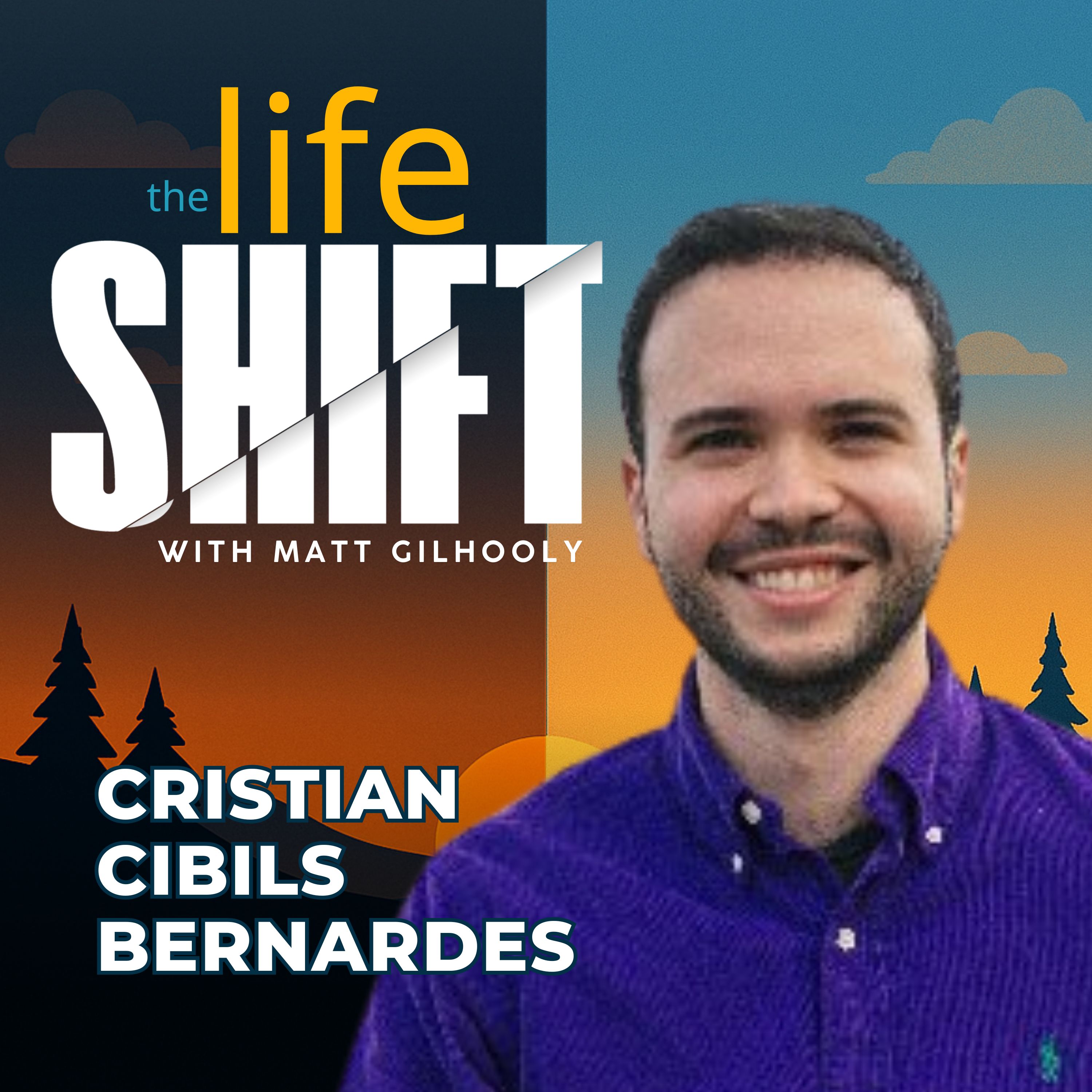
A conversation about the life shift that happens when you lose the chance to capture someone’s story, and the quiet urgency that follows.


There is someone in your life whose story you have not asked about yet. Maybe you keep meaning to. Maybe you figure there is time. This episode is a quiet reminder that time is the one thing none of us actually have on hold.
Cristian grew up in Paraguay, surrounded by family lunches that stretched into the afternoon, stories layered on top of stories, and a kind of closeness that most of us only read about. He carried all of that with him, through Stanford, through Google, through the blank whiteboard moment of figuring out what he was actually supposed to build. And then, a few weeks before a trip home to finally sit down with his grandmother and record her story, she had a stroke. The conversation he had been saving for later became one he would never have.
What came out of that loss was not just a product. It was a reckoning. Cristian built Autograph, an AI-driven platform that interviews people about their lives, so that the stories we keep meaning to capture do not quietly disappear. This episode is about grief, yes. But it is also about what happens when you stop waiting and decide to become the author of your own life.
What You'll Hear:
- Why the stories we never say out loud are the ones we lose forever
- How growing up in Paraguay shaped the way Cristian thinks about family, identity, and belonging
- The moment his grandmother's stroke became the catalyst for everything
- What it actually feels like to become the main character of your own story
- How grief and technology can hold hands without losing the human part
- Why your story matters, even if you have never once believed that it does
Guest Bio: Cristian Cibils Bernardes is the founder of Autograph, a platform that uses AI to help people record, preserve, and share their life stories with the people who matter most. He grew up in Paraguay, studied symbolic systems at Stanford, and worked at Google before stepping back to figure out what he was actually building toward. The answer, it turned out, had been waiting in his own family all along. Learn more at autograph.ai.
---
Listen and follow: www.thelifeshiftpodcast.com/follow
Subscribe to the newsletter: https://thelifeshiftpodcast.beehiiv.com/
Matt Gilhooly (00:00)
There's a moment when you realize the stories we never record can quietly disappear. Christian knows that moment well. After losing the chance to capture his grandmother's story, he began asking a bigger question about memory, legacy, and what we leave behind. In this conversation, Christian shares how grief, technology, and a deep love of storytelling led him to build something that helps people become the authors of their own lives. It's a reminder that your story matters and that saying it out loud can change everything.
Cristian (00:29)
I is a point in life where it's too you know, a lot of unsaid for a reason, you know, like a lot of stuff is actually hard to put into words, it's hard to articulate, it's hard to unpack emotionally what you're going through. And some of the stuff we're just too busy.
Matt Gilhooly (00:45)
You're listening to the LifeShift Podcast. I'm your host, Matt Gilhoolie. This show is built around one simple idea, that sometimes a single moment can change how we see everything. Each week, I talk with someone about the moment that shifted their life and how they learned to live differently after it. These are not stories about having it all figured out. They are stories about what it looks like to keep going once the story changes. Thank you for being here. Here's today's story.
Matt Gilhooly (01:15)
Hello everyone, welcome to the LifeShift Podcast. I am sitting here with Christian. Hello Christian.
Cristian (01:20)
Hey Matt, good to be here.
Matt Gilhooly (01:22)
Well, thank you for wanting to be a part of this life shift journey
Cristian (01:27)
I'm excited to get into the origin story a little bit and unpack this stuff. But basically, just for context, I started a company about a year ago called Autograph. And what we do is we interview folks over the phone about their life, not unlike this podcast, but more for private sharing and for self-reflection and to...
share those moments in life where perspective shifts or where the hard lessons are earned with our loved ones in a high trust, high safety way. So the basic way we work is we have an AI interviewer called Walter. Walter will call you over the phone, interview you about your life. And after every call, we process the recording and generate a transcript.
And we create these Wikipedia style pages for your life with a page for every person, every place, every story, for themes in your life. You you may be interested in philosophy, music, what have you. We all have themes in our lives. And, you know, you can share those library pages with whoever you want. could create groups to add your family members to it. And so you can start building out, know, your family library of wisdom and earned lessons that then can be passed down to
future generations. In the age of AI, also do this pretty, we're able to do this pretty crazy thing. That is we can create a model of the person that sounds like them and speaks like them and has all their memories. a lot of times we don't know what we don't know about our family. And idea is that as the next generation is going through life, sharing their journey, Walter can say, hey, this reminds you of something that your grandpa went through when he moved to New York. Do you want to talk to him for 15 minutes?
so the future would be able to talk to the past and get to know it firsthand, not through, you know, the all the weird distorted incentives that we have to pass down knowledge from one generation to the next today. And so it's as you may imagine, it's also it's very high emotion, high contact sport to be in this in this business, because, you know, people come to us at the peaks and valleys of life, right? When, know, some milestone is accomplished.
Matt Gilhooly (03:23)
Yeah.
Cristian (03:31)
some big birthday, some big anniversary, or also when you get bad news from the doctor, right? Or when you get one of those precious reminders of how limited time really is and how it's too easy to take it for granted. And so we want to create the entire experience to as, to honor that sentimental place where people come, that people come to us with and to enable people to start
taking ownership of their own story as well. know, like a lot of times, unless you're very intentional about, you know, self-reflection and understanding, you know, that, you know, this thing that I think I am is really just a product of the stories I keep repeating to myself or that get repeated to me even if I don't want to, you know, it's the story of grandma and, you know, the same family mythology that you inherit growing up. It's the story that you tell yourself when you wake up in the morning and for a second you don't know who you are and you reboot your computer.
you know, we're very happy that, you know, seeing these library pages reflecting your life back at you leads to ownership. You know, you feel like the main character in your story and you feel like the author of your own story. know, like every decision we make is a plot twist that we are the authors of. been really fortunate that, you know, like I've been able to find, you know, this thing to channel.
Matt Gilhooly (04:28)
Yeah.
Cristian (04:45)
happens to be at the intersection of all my interests. It's AI, it's storytelling, it's media, it's psychology, it's...
Matt Gilhooly (04:47)
Yeah.
I mean,
you found the right place if those are all your interests.
Cristian (04:56)
Yeah, I certainly feel very fortunate. But the path there was not expected at all. It was a very roundabout, know, scenic route.
Matt Gilhooly (05:04)
Yeah, I think that I think that's important, though, ⁓ to realize that some of us have these dreams early on, or we make little pieces of it along, and then something almost cataclysmic happens in which all the pieces kind of come together. I don't know why just made that noise, which was very weird. But I think that, you know, it's a beautiful thing, because sometimes we just discount certain things, or we don't allow ourselves to bring all those pieces together. And here you are.
Cristian (05:22)
Mm-hmm.
Matt Gilhooly (05:34)
probably in a beautiful way, helping yourself through this company and not financially, I mean, more like in a intrinsic type way, you're kind of helping yourself feel differently. But also the power of story is, as you described, so impactful for the one telling it, the one hearing it.
and the people that are witnessing it from aside or seeing the power that it's giving others. And like you mentioned, I see that so often on this show of how maybe someone's telling that story for the first time and the power of getting it out of their head and into words is so indescribable, I think, until it happens to you and you're like, either.
it's really not as messy as I thought it was, or this is something I can move forward with, or I can learn from this. But when it's in our head, either we forget it, we create our own version of it that isn't true, or we just kind of dismiss it. So I think it's beautiful what you're doing, and I'm so curious as to how we got there, but I don't know if you want to button that up.
Cristian (06:38)
I appreciate it
man. No, I had a note there that is like, know, part of the whole premise of this thing is like, how do we account for what is unsaid? You know, I is a point in life where it's too late. And so, you know, a lot of stuff, it's unsaid for a reason, you know, like a lot of stuff is actually hard to put into words, it's hard to articulate, it's hard to unpack emotionally what you're going through. And some of the stuff we're just too busy.
And so there's low hanging fruit in terms of expressing how people feel to you or what people mean to you that you, that if you really were for, you know, for a second to think about, you know, admit the fact that I'm going to be gone someday. What do I want to the record to show about my lived experience as a human being? And you'd be surprised at like, man, like this person in seventh grade, this teacher who I rarely think about.
Matt Gilhooly (07:22)
Yeah.
Cristian (07:28)
changed my life. They instilled a love of reading that eventually compounded and took me on a journey that I couldn't really describe. But I don't do enough to let the record show the importance of that moment. Hundreds of examples like these. if you get to the deeper stuff, where it's like some of the harder to formulate things, the act of saying them could be extremely cathartic.
Matt Gilhooly (07:41)
Yeah.
and
Cristian (07:52)
Even
if it's a very simple conclusion, like why did you do that? Well, because I love that person or because I can't stand that person or because you know, like and there's a, you are witnessing your own self discovery ⁓ by our journey of discovering you. it's, I don't know. I get really excited about it. But the journey here was pretty crazy.
Matt Gilhooly (08:05)
Yeah, it's beautiful.
It's fulfilling. I could tell.
I think that's great. Yeah.
So why don't you kind of paint the picture of the before version of Christian before kind of the main life shift moment and you can go back as far as you need to, to kind of give us some context, but this is your story to tell. So I don't want to tell you where to start.
Cristian (08:31)
I appreciate that. I'm just going to start from the beginning. And I think I am in my main character era. So I think my whole life is led up to this moment. So I'll paint a brief picture of what that was like. I grew up in Paraguay, of all places. Paraguay is little country in the middle of South America, Spanish speaking. has about 90 % of population also speaks Guarani, the native language. It's a very interesting case study sociologically.
social dynamics and whatnot is a small landlocked country in a neighborhood with big countries like Argentina and Brazil, a lot of violence in our But ultimately, Paraguay is, if you're a Lord of the Rings person, it's basically like the Shire. So it's very tranquil, very idyllic. It's about agriculture.
Nobody ever leaves and so there's like multiple generations of folks that are all co-located within the same like 20 block radius or something and so There's always an event. There's always a wedding a birthday a baptism a funeral, you know a graduation and Family dynamics are also different where you know, know, your family is basically your extended family and like with your first cousins
Extended family is your second cousins and like your nuclear family is like your intimate And so it's not uncommon for families to have regular family lunches like every Saturday or so with whole one side of the family, like all the cousins because families are bigger, these are also bigger gatherings. Anyway, all this to say, I grew up in a very familial environment where there was always like...
Matt Gilhooly (10:05)
Mm-hmm.
Cristian (10:07)
stories and families and arguments and like people debating, you know, the future of the world and what have you. And to add to that crazy mix, my parents are entrepreneurs, which is very rare in Paraguay. I mean, there's basically no tech scene they're too crazy. I don't even know what they were thinking, but they took, you know, they studied computer science in the eighties in Paraguay. You know, way before there was the concept of a personal computer. had to like literally break into the university to
Matt Gilhooly (10:19)
Hmm.
Right.
Cristian (10:34)
to like use the computer, mainframe after hours. anyway, yeah, exactly. And growing up, I watched them try and try and try different flavors of technological solutions for problems. Anything from, they were all, my dad taught at college too, so he always had a flair of education in the family. And so they ran
Matt Gilhooly (10:36)
Right. Yeah. The whole room.
Cristian (10:58)
essentially like software teaching skills for a high schoolers program where like they would license out, know, like they would teach it and they would teach kids all across the country, things like Microsoft word, Excel, basic programming and that kind of stuff. And a hundred iterations of these, you know, like there was that for awhile. There was, they sold, you know, Microsoft box software, they sold video games. and it wasn't till I was like in my early teens or maybe even mid teens that they
discovered that SMS was going to be a thing. know, text messages were sort of becoming all the rage. so they would build out the SMS infrastructure for the AT &Ts of Latin America and Africa. And anyway, this was a very inspiring story because, know, and I should say they work together. So they're 50 % partners in the business. And my mom's the CEO, my dad's the CTO. So this was all very, like the more time happened, you know,
flies by the more I'm like, this was a very unique setup, know, all everything was subverted. And anyway, so I grew up in this country. Another like little tidbit about my upbringing that I think is pretty important is Paraguay is a very Catholic country. but my and my mom is a very Catholic. My dad is Protestant. My
Matt Gilhooly (11:55)
Yeah.
Cristian (12:15)
his side of the family is originally from Norway and Britain. And so he is Anglican and I went to an Anglican school. So I always had this internal, know, critical lens of the water around me because, know, in the Protestant school, they would be like, well, Catholic Catholicism is great, but they do these things, which is which is different. of course, you know, everywhere else, would be like, yeah, these the Protestants are different. They do it. So there was always again ambient.
Matt Gilhooly (12:27)
Mm.
Cristian (12:41)
know, like not everything is what it seems, I think sort of carries, you know, a long way growing up. Anyway, all this to say, I grew up in this environment and my parents encouraged me to be through really well in school. know, they were expanding their business internationally. We started thinking internationally. I applied to school in the U S and by some miracle, know, the stars align and I get into Stanford. get admitted into Stanford and.
you know, that was definitely a life shift moment, 100%. You know, I don't know what would have happened to my life if I didn't end up going there. ⁓ You know, not at all, fortunately. I mean, or very minimally. Like the culture shock to me was it was always reverse culture. Whenever I came back to Paraguay, I would notice all these little cultural artifacts that had been invisible to me because I was submerged in them. But now having spent time abroad, then I get back and think, that's...
Matt Gilhooly (13:08)
Yeah.
Was it a culture shock?
No? Okay.
Right.
Cristian (13:34)
That's very interesting, which I think is a very healthy exercise for everybody to do is like to spend some time in a different culture and then come back and realize that the way you do things is just as quirky as what we think other cultures do in a quirky way, right? And.
Matt Gilhooly (13:47)
Yeah. It's interesting
though. I always think of how so many people that are from other countries, when they come to the U S they have so much more context of the world and different, know, and Americans are so, this is painting with a very big brush here, but Americans don't normally have that experience or they choose not to, they have, they're not well traveled compared to other parts of the world. And therefore they don't have as much exposure.
you're seeing it now in 2025, 2026, just in how people interact with each other. Right. And so that's kind of where that question came from is like, does coming from a place that is so connected, so familial, so probably loving, caring, and all these elements that come with that coming to America, which isn't necessarily known for those kinds of things. That's where my mind was going is if you found like, Oh, wow,
people are a little disconnected here comparatively.
Cristian (14:46)
Well, yeah, there was definitely a different value set, you know, and growing it's... It's my media training. I'm just kidding. Well, you know, like in Paraguay, it's all about who you're related to, like who's your family. Like, let me place you on this map that everybody knows each other. Here in the US is a lot more professional, you like you're...
Matt Gilhooly (14:49)
Hmm. You're kind.
That's
Cristian (15:08)
You kind of move out of your house at 18 and you kind of have to fend for yourself. And you know, have to accrue your resume virtues that those are your kind of, you your identifiers. You meet somebody at a party and you ask them what they do, not who their parents are, who their relatives are. other thing that I think is interesting is, you know, America exports a lot of culture. So like it was easier for me to understand the map coming to America because there's so many TV shows and movies and.
Matt Gilhooly (15:24)
Yeah, so
Cristian (15:36)
You know, so it's more familiar to navigate something where you already have cultural artifacts about, then, you know, if you're immersed in that all the time and then you go somewhere that you don't have as much exposure to, then you're gonna be met with that stuff anyway. ⁓
Matt Gilhooly (15:40)
Hmm.
Yeah, I could see how
it would feel like living in a TV show. If that.
Cristian (15:53)
Oh, oh, oh, wow.
In 2026? What do you mean?
Matt Gilhooly (15:58)
Yes, exactly. No, I love that. And did you did you have ties to Stanford or was this something that you just knew they were good for what you wanted to do?
Cristian (16:05)
No, truly.
I mean, there's a bit more lore here, but my mom had spent a year in Michigan when she was 11 to learn English, and she stayed with a family. It was her godfather and his kids, who happened to be distant cousins of ours. And this family is extremely, extremely high achieving. So like all the kids went to Ivy Leagues. All of them have graduate degrees, truly like, you know.
gifted, gifted folks. And in fact, the most intellectual of them had gone to MIT. And so I wanted to go to MIT. That was the carrot that was always dangled in front of me. And so it wasn't until I was in senior year that I had to apply to school and realize, my gosh, I don't know anything about how to apply to school in the US. I hadn't taken the SAT. I hadn't really done anything. And so it became apparent that I needed to.
You need to hedge your bets. Like it's a moonshot to get into any one of these universities. And so like you have to kind of like try a few. And Stanford was a you know, I was kind of it was a begrudged thing that I applied to Stanford because I didn't really know much about it. And California is very far from Paraguay. You know, like we have a lot closer connections to the East Coast. know, it happened that this was around the time that the Facebook movie came out.
Matt Gilhooly (17:03)
Mm-hmm.
Cristian (17:22)
And so there was a bit more of the, wait a minute, Silicon Valley is actually where a lot of these innovations are coming from. That's where Facebook is, that's where Apple is, that's where Google is. so then later when you connect the dots backward, given my family's entrepreneurial background, the match was a lot closer with Stanford. And of course, then there's the whole life-changing stuff of I met some of my best friends there, I met my wife there.
Matt Gilhooly (17:30)
Yeah.
Cristian (17:47)
discovered this major that changed my life called symbolic systems symbolic systems.
Matt Gilhooly (17:52)
That is not
one that you hear too often. Maybe in your circles.
Cristian (17:55)
It is not, is a quartet.
Well, yeah, I guess I'm kind of in it, right? But ⁓ it's a flavor of cognitive science. It's the Stanford spin on cognitive science where it's a bit more abstract than how do brains work. It's more how do systems that process symbols work? And this is, know, minds and machines kind of a tagline.
And so what I really liked about it is that I could swap out all the chemistry requirements from computer science and fill those with philosophy, psychology, and linguistics. I, given my background, I had always been interested in education. I'd always been interested in the effects that technology has in society, like the why, not just the how. And symbolic systems became this kind of like catch-all discipline or interdisciplinary discipline.
that allowed me to explore, know, like how does, how do these systems affect the economy? How does these systems affect geopolitics? How does it affect my own mental health? And, you know, what is the relationship between language and my sense of being? And, you know, it got me thinking about AI pretty early on because a lot of the thought experiments were like, well, if AI becomes autonomous, when do you give it rights? Or, you know, so this was like, I can't believe this was 10 years ago, but there
the conversations around like moral agency of a Waymo for instance. Waymo runs into someone or has to make a split second decision about whether to pump the brakes or hit the gas. Whose safety is the Waymo prioritizing? The passenger, the pedestrian, and who's liable? Is it the software manufacturer? Is it the car manufacturer? Is it the sensor manufacturer?
Matt Gilhooly (19:26)
Right.
Cristian (19:35)
It's not easy at all, I also just always like the big ideas. Like I enjoy being human so much that I've always been interested in like, but what is really going on? And why does it feel like this? Anyway, all that to say, I turned that into a job teaching computer science at Stanford. I love computer science. mean, I think...
Matt Gilhooly (19:40)
Yeah.
Cristian (19:55)
That was, if there's one thing, one thing that changed the way I see the world, it's definitely learning to think like a programmer. Not so much in sort of the nitty gritty aspects of it or code specifically, but the idea that you can split problems into smaller sub problems that you need to solve once. And once you solve it, you don't need to worry about it again. And a lot of problems are just repeat sub problems that if you're disciplined about executing, you can actually do anything.
Matt Gilhooly (20:02)
Hmm.
Yeah. You know, it's this is going to sound so wrong. But forgive me. It's just what I think it sounds like you were. And maybe you're just painting a beautiful picture here, but it sounds like you kind of knew that you needed you wanted to do something bigger. You wanted to learn. You wanted to serve. Did you have it the way you're painting it? There were no roadblocks really in your world.
Like, did you see roadblocks? Were you someone that was like, that's just something else to overcome? Or were you someone that were like, man, this is going to stop me in my tracks? Because it feels like you were just rolling. Like you were that snowball going down the hill and things were just getting better.
Cristian (21:10)
I think there's some sanitization going on. Everything was an obstacle. I wasn't particularly... Not as an insurmountable. I don't think I meant anything insurmountable at that point. There were many close calls, I think, of things where was like, didn't want to think about it too much because if I thought about it, it would have seemed insurmountable.
Matt Gilhooly (21:16)
But did you see it as such?
Yeah.
Cristian (21:34)
And then I would have had to go up against my own perception. But if I didn't think about it too much, then I would just steamroll through it. ⁓ Tiny. Well, thank you. I don't know. It's also like hindsight 2020. So I think that I was also going to a bit more more fear. But, you know, all of these were all of these were insecurities and ambiguities that I had. You know, it's not easy to get a job teaching at Stanford. And so it took me four times to apply. ⁓
Matt Gilhooly (21:40)
So smart though.
Okay,
Cristian (22:02)
That kind of stuff, you know.
Matt Gilhooly (22:03)
I mean, we don't need to sanitize it. of me is thinking the people around me, I know a handful of people that nothing was insurmountable to them. Like there was never like a, that's just an extra challenge. wasn't like, well, that's gonna stop me dead in my tracks. But most of the people that I knew, we were the worriers. We were the ones that were like, well, that doesn't seem like it's gonna work out. And for me,
it's because of the early trauma. Like, I became a perfectionist and all I did was the things that I know I could be perfect at. I didn't try for that, you know, that big mountain. I would try for the smaller one because I knew even with the little challenge, I could still do it. And so I never really challenged myself. I never really dreamed about things. And so that's where all of this is coming from of like,
Was it really that easy? Because for me, it was so hard, even though I knew I was not doing the things that I probably was capable of, because I thought, if I do this wrong, my dad's going to leave me. My mom left in my eight-year-old brain. And so that followed me to like 30. So it's so curious and naive to think that everything was sunshine and rainbows for you as you were going through this journey. But also at the same time,
Cristian (22:56)
Mm-hmm.
down.
you
Matt Gilhooly (23:17)
It kind of feels like everything was in a great momentum for you and that's probably your character and the family dynamics that you had growing up around you. And it wasn't this ⁓ one, you're doing it all for yourself, but rather it's this all for one kind of mentality.
Cristian (23:33)
Yeah, I think now that you probe, think that there's, you know, I found myself in a very unique position. I was the second undergrad ever at Stanford, Paraguayan undergrad at Stanford. So I had this huge chip on my shoulder around, you know, representing this place that nobody knows. know, like I'm since I'm moving to the US by far, by and large, I am the only Paraguayan that people I meet know.
And so I carry the whole like, you I have to perform for the continent, basically. And and I had, you know, the one thing that my parents did very well is disambiguate or to sort of disenchant imposter syndrome very early So if you find they were they always say things like, you know, like the world is of the shameless, you know, like if you're shameless and you show up and you're like you think, know.
Matt Gilhooly (24:00)
Mmm.
Cristian (24:23)
Showing up is 80 % of the battle. And so if you find yourself in a position where, you know, and I found repeatedly Stanford was a huge culture shock, my gosh, and I'm like, I was, quote unquote, the smart one at my school, you know, and then you go and you meet these like, my, ⁓ my God, you are smart, my goodness, you know, same thing later on when I joined Google, you know, like it's, so it turns out I'm not just not the smart one anymore. Turns out I'm the stupid one, you know. ⁓
Matt Gilhooly (24:30)
Yeah.
Ha ha ha ha ha.
Hmm.
Okay, so it wasn't all just this paved road of gold for you as you were kind of walking down coming to the States. You just were instilled with things from your family. And I think that's really a lot of the people that I know didn't have that because of the time period in the States. We didn't have a similar connected community like you did.
Cristian (24:57)
No, no, not at all, not at all. mean, like, mean...
Yeah, so I think there was, you know, I felt that my tribe supporting me in the background always. But, you know, just for fun context, know, like even this is how close it got, you know, I, my deal with my parents was that they were going to pay for my personal expenses freshman year, you know, and sophomore year on, I have to figure out how to pay for my own personal expenses. So I needed a job. And so I was applying to teach computer science, you know, like, and I applied once, I didn't get it.
Matt Gilhooly (25:21)
Yep.
Cristian (25:42)
Fall quarter, I applied again, winter quarter, didn't get it. I applied again, spring, finally got it. By the time my paycheck came in, like my first undergrad teacher, computer science teacher paycheck came in, I had $23 in my bank. So that was, it was one of those like, don't look down, don't look down, just keep going. then, know, and then, you know.
Matt Gilhooly (26:03)
But a lot of people would fold
there. I feel like a lot of people would fold and give up. So there's something, some seed planted in you that has grown to be assertive in that way and go get her. I love it. I love your story. And I think that part of me is a little jealous that I didn't do the same thing. But you know, I'm also a product of my circumstances too. And yours.
Cristian (26:08)
Yeah.
Hmm
And everybody is, mean, I think there's, know, we all get certain cards and it's about, and nobody knows the inner game either, right? So there's, mean, I think... ⁓
Matt Gilhooly (26:36)
Yeah. But that's why we have these
conversations. I think people don't talk about all the pieces to it. So. Right.
Cristian (26:41)
yeah, for sure. And there's so many layers to it too, right? You know,
like there's, don't know, like there's so many layers of interpersonal connection that come out of these conversations that I love so much, know, you know, unpacking one's personality. Anyway, ⁓ so I always loved education and I love, you know, the process of education. You know, we were a very reading oriented family, so I loved reading.
Matt Gilhooly (26:55)
Anyway, yeah. Carry on.
Cristian (27:06)
And I turned my teaching job at Stanford to a software engineering position at Google. This was also a very scary thing at the time, applied to 40 companies in the Bay Area. One of them responded with one interview that I worked my butt off to perform on. Fortunately got an internship and eventually turned that into a full-time job where I was a sort of vanilla software engineer at Google doing shopping ads.
So if you search for like HDMI cable near me, you get the little carousel on Google search. That was the job and And you know like at this point, you know, it seems like there's a there's a story arc happening because there is now but like at that point I was just trying to figure out you know I was dating my now wife and I wanted to make and she's a doctor. So she was gonna go to med school
So I wanted to work for a company that would allow me to move offices, that would help me with my immigration journey. And it just so happened that Google worked that way. And Google was an amazing place to learn how to be a software engineer. Google's a weird place. mean, Google doesn't make sense. just undermined that I took for granted about a workplace. No hours. You self-report, you evaluate yourself.
you set your own deadlines. It was very self guided. And I was like, how does that make sense? Like I grew up in a place where you do as you're told at 7 a.m. you're supposed to be here and you check out at six and you know, like whatever the, you you're instructed to do stuff and here you're supposed to find out what you're supposed to, did that for, for two years. And then I got promoted and I wanted to, you know, I wanted to do something that was closer to my interests. So I joined an education team at Google.
Matt Gilhooly (28:29)
Yep.
Cristian (28:45)
That was an AI app that you, you you open it up, you open to the camera, you take a picture of your homework and we helped you solve your homework. this was like an AI tutor, think, you know, like 2019. So before any of the AI craziness today that was an amazing experience. I mean, like that was, that was really cool because it was impactful. It was cutting edge. I was doing AI stuff, which I liked, and I was doing education stuff, which I liked.
And it was great. But one of the things that happened in that team was that it was very start-up-y. Everybody had to do a bit of everything. I was doing some design. I was doing some project management kind of stuff. And when we launched, and we launched and did really well, like number one in the EDU category in the App throughout the pandemic. Because then the school shut down and kids had no support.
Matt Gilhooly (29:17)
Right.
All right, everyone was at home.
Cristian (29:37)
But then, know, classic, there was the classic Google thing that happened where, you know, we launched the product and there was no clear follow-up vision. so, you know, within a month or two of launching, it was put in maintenance mode. And that was pretty And around the time I realized that I enjoyed being a software engineer, but it wasn't my calling. know, I felt that I could have more impact in the world by developing other stuff, know, like interpersonal skills or thinking like an economist or thinking.
Anyway, I sort of wanted to branch out from my just like, you know, say that the computer and code the time, the pandemic was in, you know, just beginning. My wife was doing med school in Chicago my parents were all in Paraguay. And I was like, man, if it's the end of the world, I want to spend more time with the people I love. And so I decided to move to Chicago and work remotely for my parents who their business, you know.
SMS isn't a thing anymore. And so, you know, they were going through their whole like existential, you know, decision making of what to do next. And what they landed on was that they want to be a platform for future Latin American entrepreneurs to to have capital to support the, you know, their growth, you know, like dirties. And so that was that was a big culture shock. Talk about culture shock going from Google to working for the family business.
Matt Gilhooly (30:42)
Right? Yeah.
Cristian (30:51)
where you're not just employee numbers so and so, but you're the son and you're the older brother and you are the, know, like it's a lot, there's layers of, I don't want to say politics, but certainly like the interpersonal dynamics, but it was all these conversations about like, okay, the world looks different. Our family looks different. You know, like I came to the U.S. My sisters, both of them studied in the U.S.
Matt Gilhooly (30:58)
Right.
Cristian (31:15)
We were all kind of living in different places. And so what are the structures that we can put in place to maintain our family culture that we're such big fans of? do we think about legacy? How do we think in the world? And what do we want to be left to us after this moment that we share disappears?
lot of conversations about what happens if, you know, bad news A arrives, what happens if bad news B arrives and that kind of stuff. So very sobering and in general in the context of the world, it was very heavy stuff, So then I did that for two years and it was great, but my parents are the ultimate founders. And so they would say things like, you have to think like a founder and act like a founder and build your founder instincts. And
You know, I realized that I don't think I could fake it. You know, I don't think I could simulate these founder aspects. I think I need to put myself in the position of a founder to actually be able to understand what it means to create something from nothing and to steer a little, you know, like steer something into reality, you know? ⁓ And so...
Matt Gilhooly (32:20)
Yeah. I laugh because
I feel like that's just such the antithesis of like my experience where it'd be like, well, I just can't do it. So I'm just going to keep doing what I was doing before. Yeah. So I love that.
Cristian (32:29)
really?
But you know, okay, and then I think this is the part where our paths become a little more similar, is that I had made a commitment that I was going to do something of my own, but I didn't know what. And so after med school was done and my wife got her residency match to San Francisco, we moved back to the Bay and within a couple months of each other, we got engaged. I turned 30, moved to a new city. I knew that I was going to...
start my own thing and I had like this not quite breakup conversation pending, but almost breakup conversation pending with my family. And chat GPT dropped at the same time, you know, like in this context. And so this was kind of you know, like there's this tool that I think I'm gonna I'm formally trained on. I have experience in building and I this is going to be the platform that I used to build something, but I didn't know what and.
So I decided this was a crazy moment. I don't know what came over me, but I decided, you know, all in, I'm gonna quit the job. I'm gonna like, and I'm gonna trust myself that when I hit the eject button, I'm gonna hold onto something. And I was very open with myself that, you know, I was not dogmatic about what that something would be, you know? If I, you know, with a white, you know, blank whiteboard, I say,
What are all the possible paths I can take? could be a personal, I could be a coach. I could be a, I could be a software engineer. I could be an entrepreneur. could, you know, start a nonprofit. can, all these very different flavors of life. I could go into academia and do a PhD. I could get an MBA. I could be a lawyer, you know, and it was pretty overwhelming, you know, especially because, you know, like,
ChatGBT had just come out and I saw how this was gonna change everything. And so I couldn't really like bet on anything, because I didn't know that anything would have like solid ground underneath The only thing that kind of persisted this three month process where I took time off to figure out my next swing was this idea for a story. I had been collecting notes, you know, like forever growing but.
on the evening of turning 30, I had this opening scene for a story. I didn't know what it was, but it was these two characters that were worried in an alley. And I kind of pulling at the yarn a little bit, and I was like, the characters named Rabbit? That's an interesting name. These other characters named Orphan? That's interesting. What's their backstory? And sort of like, this would be the...
the procrastination thing that I would actually make progress on. know, like, there's a story that kept evolving. And by the time the three months had gone by, I didn't know what I was going to do, but I knew that I had to finish the story. The story had become the sort of lightning rod for, I can tell my own lived experience and I have to get all my philosophy in order and I have to sort of game out what I think is going to happen. I get to sort of express some of the angst around.
Matt Gilhooly (35:13)
Hmm.
Cristian (35:27)
having lived through COVID and how that felt in a world that had seemed to go completely crazy. so was just trying to grasp at like, how do we keep sanity around in case something else happens like this in the future? And I should say, for this three month process, I remember thinking like, man, I really wish I could use AI to help me write my next chapter in my life.
If AI knows me and knows my family and my cultural background, like, I wish that like AI could help me imagine the potential futures and help me like say, okay, this is the path I want to take. In absence of that, I was writing my own story. I commit to writing this book. And it's the most transformational thing I've ever done by far. You know, in this journey, I, you know, all these things around
Matt Gilhooly (35:50)
Right.
Hmm.
Cristian (36:14)
accepting that I'm the main character in my story that I'm, you know, I literally took time to become the author of my story. Took on this almost spiritual quality where it was like, wait a minute, if I have, if I have actual control over, over how I interpret my identity, then I kind of, I, I kind of am invisible, know, like I can always reframe a challenge as, you know, a workout.
Matt Gilhooly (36:16)
Yeah.
Cristian (36:40)
you know, or a setback as a, you know, like you can connect the dots in a way that serves you and doesn't hold you back. And it wasn't like this was excruciating, by the way. mean, I was in tears half of that time. Just like sort of like allowing myself to process some of these narrative junctures that had shaped who I was. But at every corner, there was emotional release because I was allowed to see myself for like the human being living them.
Matt Gilhooly (36:53)
Yeah.
Cristian (37:08)
even when some of those emotions were coming through the voice of the villain or through the voice of, you know, a side character.
Matt Gilhooly (37:16)
So is this like a
parable and was kind of like your life in that form? Yeah, wasn't like a memoir. Yeah.
Cristian (37:21)
Basically, it's like my story told, not a memoir at all. It's a sci-fi
story about a spy infiltrating an Elon Musk neuro company that gets psychedelic. It's completely different. ⁓
Matt Gilhooly (37:32)
Right. But you were able
to kind of process, like insert your life and stories through that. Kind of reminds me of something else. I'm trying to think of the book. Ender's Game? Was it that one?
Cristian (37:44)
⁓
There's... It's a bit of a trope. there... I mean, probably the most famous one is the Divine Comedy. ⁓ So Dante... Dante... It's like... I didn't even know this at the time. Later, some friend told me, like, this is what Dante tried to do. you know, basically it's like, what is going on through the lens of the story where the protagonist happens to be the author? ⁓
Matt Gilhooly (37:48)
Yeah, that's cool.
Yeah. Okay. Yeah.
Mm-hmm.
Yeah. No, I mean, I think that's
beautiful. think there's so much, like we said before, that power in story, you know, is so much there, but you really understood yourself and the journey through that.
Cristian (38:18)
⁓
transformational. mean, truly, truly super important. And I remember thinking, I wish everybody could take the time to write out their story so that they could go through this thing that I went through, because, you know, like that was a before and after moment where I had no clarity on where my life was going to go next. What the output of this book was going to be, you know, like as I'm going to publish it, as you know, what is what am I thinking, you know?
Matt Gilhooly (38:35)
Yeah.
Cristian (38:48)
I had some more, it was a bit of a hail Mary too in the sense that I saw where AI was going and I realized that the only thing that can save us is if we train AI with good data. And if we feed AI garbage data, data that is exemplary of the worst of us and not the best of us.
Matt Gilhooly (39:00)
Mm-hmm.
Cristian (39:08)
then we're going to get super god AI machine god that is the worst of us as opposed to something that could be beyond exciting, right? so then I was trying to say what is the the software update I can write in narrative form that would, you know, when pass through AI training systems would upgrade the machine so that it starts thinking about how are we part of the same experience and not
How are we different experiences and I need to be. And the idea was like you do it for machines, it may work for humans so in any case, I finished the story and then I'm like, what happens next? What do I do? I had gone to the, I was Alice coming back from Wonderland and I was so what comes next? And.
Matt Gilhooly (39:38)
Yeah.
Cristian (39:54)
I learned about the publishing industry and discovered that the publishing industry is in the 1600s still, you know. I realized that even if I, you know, like no matter how I chose to publish the book, I was going to have to do some promotion so in order to build a tiny little audience to then sell the book to, I started a podcast where I, because I kind of bought into this whole idea of being an author in the 21st century, you know, like what there really is like
Matt Gilhooly (40:17)
Yeah.
Cristian (40:19)
It's a book and a podcast and events and all that kind of stuff. so I started a podcast to talk about the ideas in the book, roughly, or like the stuff that is all in this library, like science fiction, poetry, philosophy, psychology, AI research, software engineering. ⁓
⁓ the economy and jobs and just really try and understand like what happens to our humanity in the age of AI, like what is left of us. I'm as you know, not quite I made it to 50 episodes. So not quite the 237, but I also fell in love with the format. It's the best. It's the best you get to it's storytelling, but also human connection and you get to like meet someone who
Matt Gilhooly (40:55)
Yeah. Storytelling.
Mm-hmm.
Cristian (41:03)
You probably otherwise had no chance of meeting and you get to jam about the stuff that is important to them and that you find important to you too. so that was another sort of inspiration moment where I remember thinking, man, I wish I could interview everybody on earth. I love people and I love discovering who people are and I think I meet everybody and there's a reason for my meeting them. And I want to get to that reason as fast as possible because I'm excited.
Matt Gilhooly (41:06)
Exactly.
and
Cristian (41:31)
I remember thinking, I wish I could interview everybody on earth. So I did that for a bit. And, you know, I was doing consulting gigs here and there to to to pay the bills. realized that one of the people I should be interviewing, not necessarily for the podcast thing, not not to publish, but to record, was my grandma. My mom's dad has had a crazy life story. like her dad was an MI6 agent.
Her mom was Norwegian. When the war breaks out, great grandpa says, off to the ends of the earth, to somewhere safe. so great grandma and her two daughters ship away across the world, end up in Paraguay of all places. And they have to sort of make it as this very non-traditional family unit in a very machismo-oriented 1950s Paraguayan military dictatorship.
And they made it. They absolutely made it. they would communicate with Dad over secret messages and all that kind of stuff. so I wanted to unpack that mythology that had never been written down anywhere. so we sat, you know, like next time I'm in Paraguay, let's find a time and we'll do it. And a ⁓ few weeks before my trip to Paraguay, she had a stroke that left her paralyzed.
incapable of having that conversation. you know, I had lost my grandpa, like a few months before, know, and so I was already in...
Matt Gilhooly (42:59)
And you're just coming off
a season of the whole world losing all these people that they loved because of COVID. And I realize now that you've, that you kind of found that spark, that light of like, there is a different purpose here for our family. And now you set this stage in which maybe you're not going to get that.
Cristian (43:20)
Right. And I have the outline of the questions that I now know were gone. These are things about my story that inform my grandma's personality, that in turn inform my dad's personality that I just won't have access to, that I'll have to sort of hope to reverse engineer. But it will never be as, like, it will never be certain and it will never be as cool as getting the as lived. And that was the catalyst. mean, that was the moment where I was like, OK, let's take stock.
Matt Gilhooly (43:22)
Yeah.
the source.
Yeah.
Cristian (43:47)
of everything that happened in the last couple years and like, let's see if I can make all the threads come together. And yeah, and I had the menu and I looked at it like a puzzle and I was like, how do I make this a solved problem so that nobody else has to go through this Like we can't stop people from dying yet, but we can at least do something to preserve their story, you know? And.
Matt Gilhooly (43:52)
Yeah, I mean you had all the threads.
Yeah. So you took
all the skills and all the things that you worked your tail off, you know, trying to find the spot and you found it. But it was, but it was really important now because you know what it's like to not have what you desired. And there does that create a bigger fire to to get it out there quicker or more functional or do something for other people in a faster way?
Cristian (44:18)
Yeah.
Matt Gilhooly (44:36)
because I could feel like that whole idea of death kind of would make you want to do it.
Cristian (44:36)
Certainly. ⁓ my gosh.
Yeah, there is. I've had to go through sort of like recalibration every now and then because, know, the motivation of if you ask, you know, how many people pass away every day, that number, if I'm in the wrong, if I'm in the wrong mindset, that number is very heavy. Like these are all the all the if we think about this as a giant fire, like these are all the rooms I should be jumping. I should be like
rushing into. And so there's this like, why are we not there yet? Why are we not there yet? Why are we not there yet? There's so I've had to manage that, you know, and so there's like, but this whole idea of like, sort of spending a bit more time thinking about grief and, and death and not being and purpose, and they're kind of all intertwined. I think that that was the surprising discovery to me is that you find purpose after you're gone.
Matt Gilhooly (45:11)
Mm-hmm.
Cristian (45:35)
Like the purpose is what happens when the traces of you are all that is left to unpack. And so can we be intentional about those traces? so sort of autograph emerged as this kind of, you know, solution for people to go through the same experience that I went through when I wrote my story, but in a much easier way. So they don't have to face the blank page. It's not an editorial thing. There's no judgment. really is.
Matt Gilhooly (45:55)
Yeah, help facilitate it.
Cristian (46:01)
Imagine a podcast about your life for everybody on earth. And as a side effect, we get all this like this ability for the future to talk to the past that I think is a huge gift. I think it's a tribute. 100 percent, 100 percent and accountability to I mean, how many acts, silent acts of heroism shape the world that we don't know about? You know, it's the smile on the train and the smile on the like at the kiosk that.
Matt Gilhooly (46:11)
and the legacy. Yeah.
Yeah.
Cristian (46:27)
put
you in a good mood that allowed you to make a slightly better decision that then shaped the course of history. ⁓
Matt Gilhooly (46:33)
Yeah,
and there's so many, I would imagine, that there are so many prompts that can help people get to places and talk about things that they forgot about.
Cristian (46:45)
It's unbelievable. It's unbelievable.
Matt Gilhooly (46:46)
Right, because there's so
many things that, especially if we're 70, 80 years old, we're not gonna remember that smile until someone says something that sparks that memory to come back up and then you share it and now it's forever documented, which is beautiful. And something that feels so personal to me that probably your service would have been beautiful but
she wouldn't have allowed it was I had a very close relationship with my grandmother and she got sick. And knowing that how I lost my mom and I didn't have all this opportunity to grieve properly and do all the things, I forced the conversation with my grandmother for us to tell each other everything, not about her history necessarily, but all the things that I would have regretted not saying all the things that she might have regretted not saying. And it feels very similar in my heart.
of kind of what you're doing for other people is it's like missing thing that so many people don't get to have, but like on a much bigger scale from your side. But yeah, it's, it's like, I would probably want to document that, right? Because to hear all the things, you know,
Cristian (47:58)
for sure.
We'll think about like a parent or a new parent that is suddenly faced with the existential stuff about becoming a parent and like, my gosh, I have to get my stuff in order because I need to teach the kid. And there are thoughts that I have about stuff that I think are very important to who I am that I would love to jot down so that at some point, you know, like if something happens to be,
Matt Gilhooly (48:13)
Yeah.
Cristian (48:26)
the kid can have that conversation even if it's 15 years too soon, you know, because otherwise they may not have that conversation. So there's like, it's a time vault, you know.
Matt Gilhooly (48:36)
Yeah. How do you, in this service, how do you keep people from overly sanitizing their history and experiences? Because I feel like that is something, especially the older generations, even my generation was taught to do. We were taught to only share the good things and not the hard things, not all those things. How do you approach that?
Cristian (48:50)
Yeah.
100%.
We there's usually repetition helps. ⁓ Well, there's a really fun and kind of challenging product decision here around. So it gets at this really difficult question of who are we really, you know, A couple of notes, for example, you know, like. In a certain way, we're painting a portrait of the person.
Matt Gilhooly (49:03)
Or do you? Okay.
Cristian (49:23)
We are engaging with the version of themselves that they want to be remembered as. And there is a sovereignty there that I think is very important to respect. I would think of my grandma, my dad, these would be people who would not share the difficult stuff first. And so they would probably say the sanitized version, and then you can paint the portrait of them in that way, and then they feel acknowledged and valued and seen. And once you build that rapport of,
Matt Gilhooly (49:41)
Mm-hmm.
Cristian (49:52)
Okay, this is how you want to be seen. How do you see yourself? Like what were some moments that you could have done things differently? What were, and so it really is this long term trust game where we, ⁓ it's an emotional safety thing. But I will also say that there's, we find everything. There are people who have stories of extreme difficulty and trauma.
Matt Gilhooly (49:55)
Mm-hmm.
Yeah, that's the safety.
Cristian (50:15)
where almost the first thing that they wanna share is that because they wanna say, hey, I made it. I'm on the other side of this horrible thing. And it's identity defining for me to tell you that I went to rehab or that I was imprisoned or whatever it is. So we get a bit of everything. And what we want to do is create that space where people feel ultimately comfortable to share the hard stuff, the mistakes.
Matt Gilhooly (50:30)
I would bet.
Cristian (50:40)
that you paid for in blood, sweat, and tears. Because at the end of the day, when the next generation is going about their life and they're thinking of making a decision, and they may not have visibility into the cost of the mistake there, that is where you want your tribe to show up and say, if I hadn't fucked up this thing, I would be in a different place now.
Matt Gilhooly (50:55)
Right.
Cristian (51:04)
Or conversely, if I didn't take that opportunity, or if I hadn't taken that opportunity, I would have been And because it's coming from a position of folks who, by biology, are designed to have your best interests at it's higher signal than what you would probably get from, certainly from Instagram. Or if I search on Google what to do about this decision,
you're gonna get a few sort of life advice from the AI as opposed to like, this is what, and name, you you pick your name, but there's all the big life stuff, you know, like this is what a sickness does to a family. is the cost of not paying for insurance. This is what infidelity feels like, and this is what, know, like all the like,
Matt Gilhooly (51:34)
Right.
Cristian (51:55)
hard, hard stuff about life. This is what getting fired feels like. This is what proposing to someone and them saying no feels like, you know? ⁓
Matt Gilhooly (52:02)
Yeah,
I have a question for you. And probably one of the last questions, but this one I want to know for you internally in your heart, in your head, whatever, whatever that means to you, when you saw the first client's results or first customers or first person's results and, their reaction to it, what, what does that do for you?
Cristian (52:28)
I can't even explain it, Matt. One of the first pieces of feedback we got was, thank God you exist, because I don't know how I would have told my story otherwise.
I immediately thought, thank God you exist. And it's the most motivating thing in the world. My job is to remind people that they have infinite power in the internal richness of their mind. And that their story is a hidden puzzle piece to some problem in the future. It's like unlocks some kind of lock in the future that only
Matt Gilhooly (53:04)
Mm-hmm. Yeah.
Cristian (53:08)
your lived experience can inform. whether it is because, you know, and this is just like a function of society, right? But a lot of women, a lot of moms don't even allow themselves to feel like the protagonist in their own story. And my gosh, talk about...
Matt Gilhooly (53:11)
Yeah.
I think a lot of people don't
think their story matters.
Cristian (53:29)
Most people don't, most people don't. And I, yeah.
Matt Gilhooly (53:31)
Yeah. Yeah. So you're giving power to these people as much as you're
giving to their, their legacy and all that stuff. You're giving the power of these people to see how much they actually do matter and what their life means to them more than other people. Yeah.
Cristian (53:49)
Totally. And even
if it's not for someone else, even if we just remind you how much your life should mean to you, that's a job well done. So yeah, it's, but as you may imagine, it's also very heavy, right? Because at the same time, we're getting such good feedback and at the same time we realize, my gosh, there's so much more to do in terms of like getting the word out there and improving the product and Walter, he's amazing, but he has his issues.
Matt Gilhooly (54:10)
Yeah.
Right?
Cristian (54:15)
And so there's that,
Matt Gilhooly (54:15)
But don't we all?
Cristian (54:17)
but don't we all, you know, so there's, it's extremely motivating. know, I have to pinch myself to realize, my gosh, you know, I have an honest shot at doing this thing that I think if done correctly could change history. And ⁓ no, not at all, right?
Matt Gilhooly (54:32)
That's not heavy at all.
It's a lot of responsibility
though to hold these stories and help them and shape them by their words, but shape them into something true and authentic. Because as a lot of people are skeptical, technology can also do things that are not as great. And so I feel that there's probably a lot of that agent, that moral agency we talking about earlier and how do we make sure that people are protected
Cristian (54:48)
Yes.
Matt Gilhooly (55:07)
in the way that not in the privacy area, but really in how their story is developed and ⁓ in a way that makes sense to them and true to them. Yeah.
Cristian (55:17)
100%, so many things,
know, like what usage patterns are acceptable, you know? Like we don't want to build a companion that takes away from your existing social relationships, And so there's so many layers of ethical concerns that we, ⁓ so many, so many, you know, like if you mention, you know, like wanting to harm someone.
Matt Gilhooly (55:30)
Yeah. Mm. I didn't think of that.
Cristian (55:42)
But as our reaction, if you mentioned that you may be depressed or anxious or something like that, what are our protocols to forward you to the right resources?
Matt Gilhooly (55:47)
Hmm.
Yeah. You're doing the good work. mean, that's, it's all important stuff and the
end result is what's most important. And it seems like there's no better person to kind of lead the charge because you're talking about all the right things. think there are many tech entrepreneurs that don't have the heart that you have not to insult people, but I think this particular venture you have to like you're holding such important things.
Cristian (56:11)
You
Matt Gilhooly (56:18)
that it seems to be that your heart is in the right place, which I think for here is the most important. A lot of people can come with the skills and the education, all that stuff. You have that as well, but most importantly, your reason for existing in this space is true, it seems, from our long time that we've known each other now.
Cristian (56:38)
No, I mean, I appreciate that so much. When I saw what the idea meant, and I realized that the job would be performing as a character, who is the captain of this ship? And when I saw that that was the challenge, then I was like, sign me up. That's the challenge of a lifetime. I will...
I will be the keeper of stories if I need to be. just playing against myself. What is the best version of that guy that I have to become? no, it means so much to hear you say that, We're certainly trying. We're trying to do something that matters to folks, remind folks that they that's...
Technology can have a soul, know, if allowed to express itself.
Matt Gilhooly (57:20)
That's important.
Yeah, I think that's important. Curious that if this version, you know, we're recording here in December 2025, if this version could go back to the one that was kind of like quit your family job and you're at the whiteboard kind of just ideating on all the possible things, is there anything that you would want to tell him?
Cristian (57:43)
Don't look down.
So I didn't even get so now it's but there was there was another traumatic layer that was okay. I had the idea but then how do you turn it into a business? You know, like and what's the model and like how do you what are your marketing channels and how do you sell this because it's like not it's not something that exists today. And how do you raise money for it? And so raising money for it was the by far the hardest thing that I had to do.
Matt Gilhooly (58:07)
Mm-hmm.
Cristian (58:11)
And that's where a lot of the I connected with the real motivation for why I was doing this. I'm like, like, sure enough, there's influential business to be built out of this. it's, you know, this eventually transcended to like, oh, because I want to make a difference. And then I was like, because I want to make my parents proud. And then I was like, because I love my parents and I want to record their story and I'm the guy who figured out that I could do that. You know, how can I forgive myself if I wasn't that guy? You know, and
Matt Gilhooly (58:36)
Yeah.
Yeah. Yeah, I mean, there's
all sorts of avenues that your story would take. think the biggest thing for me is that the beginning of your story started with how close you are to your family, the people around you, your community. You take, you know, all these other routes, not losing that, but here we are back again.
at the importance of family, family story, the connections that you're providing to people. So all along that heart thread was there. Sure, there are tricks and tools and tips of things that people could do to get funding and build a product and all these things, which I'm sure is amazing. But to me, the most important thing is when I talk to people is like, why are we doing these things? Like, what is the point? Because for so long, I grew up thinking,
everything that I need to do is to make money. That's all that mattered. And it's, yeah, that's nice. We need to be able to pay our bills. But at end of the day, I think where we find our passion, we can create something out of it that brings us the things that we need to cover the other things that we need. So I appreciate you going on this journey and telling your story in this way. I think people can learn more about you right on your website and stuff. They can probably find out more. What's the best way to like,
Cristian (59:58)
Most certainly, yep.
Matt Gilhooly (1:00:01)
Maybe something you said triggered something in someone in a good way and they want to share part of their story with you. Is there a way to get into your circle, learn more about your product, but also connect with you?
Cristian (1:00:12)
Yeah, of course. Best way to learn about what we're doing is at autograph.ai. We have a blog there where we constantly update what's going on. You can try out talking to Walter, get a feel for the experience. If it inspired something in you, phenomenal. But if it reminded you of a story that you know you need to keep before it's too late, we also allow you to invite other people to the platform. It's a project. So it may not be time for you.
But it's also a great lifetime achievement award for anyone who you consider a hero. And I'll send you my like ex-profile on LinkedIn if people want to connect with me personally. I'm super open to chatting as well.
Matt Gilhooly (1:00:51)
Yeah,
I think they're back to that whole power of story back to the, know, basically your the what you're doing for the world, the power of story right there. But for me, when someone something triggers something from someone else's story in someone and they've never shared it before, or they just need to get it out and be like, Hey, Christian, when you said this, I really connected with it, because this is what happened to me. You're giving them a gift because now they said it out loud.
Right? And it may be it's something that turns into a connection with autograph. Maybe not. But at the same time, we're trying here in these podcast conversations to help people feel less alone, to help people share their stories more. You're helping document those things in that way. And I think it's so beautiful using technology and finding that humanity that can be found there and just helping future generations that we don't even know what they're going to look like or who they're going to be.
Thank you for the work that you're putting into the world and being willing to be a part of this show.
Cristian (1:01:51)
I appreciate you saying that, It's a pleasure to be here.
Matt Gilhooly (1:01:54)
Well, I could talk forever, but I know that I've kept everyone listening for a little bit longer than normal, and that is okay with me because I think we went exactly where we need to go. So I'm gonna say goodbye right now, and I'm gonna thank you all for listening and being a part of this journey. And I will be back next week with a brand new episode. And thanks again, Christian, for just being you, doing what you do for the world.
Cristian (1:02:17)
Pleasure to be here, Matt. Excited to chat soon.
Matt Gilhooly (1:02:20)
Will do. Talk to everyone soon.
Matt Gilhooly (1:02:21)
Thank you for listening to the Life Shift Podcast. If you wanna learn more, go to www.thelifeshiftpodcast.com.
There you can check out all the different episodes. You can check out the blog, some of the reviews for the podcast and the Life Shift journal. Links are there so you can purchase your own copy, whether in digital or print format. Thanks again.


