She Found Her Voice After Years of Silence
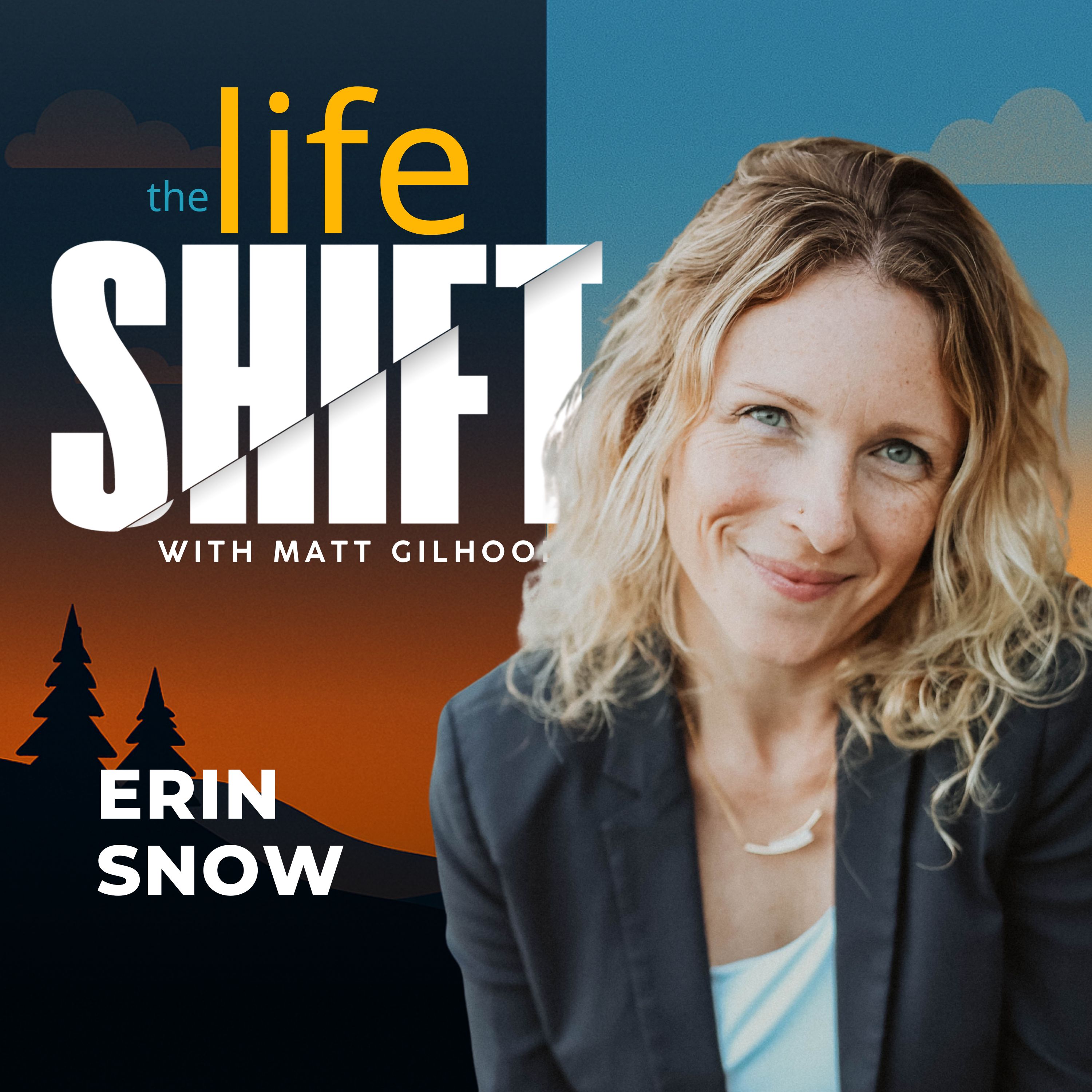
After surviving childhood trauma, Erin Snow found her strength in listening, turning years of silence into a life built on empathy, healing, and truth.



Some moments reshape us before we even have words for them.
In this episode of The Life Shift, we explore a pivotal life shift and the before and after moments that shaped Erin Snow’s journey toward reclaiming her voice, worth, and sense of self.
Erin Snow carried one of those moments for most of her life. What began as a buried truth became a quiet weight she learned to navigate on her own. And somewhere along the way, that silence started to turn into something else. A nudge. A voice. A call to reclaim the parts of herself that had been taken.
Her story is not only about what happened. It is about the slow return to her own strength, the tenderness of being heard at the right time, and the courage it takes to tell a truth that once felt impossible to say. Erin reminds us that healing is not tidy. It grows in seasons. It begins in small ways. And often it starts with listening.
What You’ll Hear:
- The childhood moment that marked a clear before and after
- How silence shaped Erin’s sense of worth
- The long path toward reclaiming her voice
- Why advocacy became a way to heal
- How listening became her life’s purpose
- The freedom of saying something you once held alone
Guest Bio:
Erin Snow is a transformative listening strategist who turns the art of hearing into a powerful tool for personal and professional empowerment. As the founder of Seacoast Listening Lounge, she has pioneered a revolutionary approach that creates a sanctuary where women can not only survive but also truly reclaim their narratives and inner strength.
With sixteen years of frontline experience as a legal advocate for survivors of domestic violence, sexual assault, and stalking, Erin has witnessed firsthand the life-changing power of authentic, compassionate listening. She made history as the first paralegal in New Hampshire to represent clients directly in family court, breaking barriers and reshaping traditional legal norms.
Her work bridges trauma-informed advocacy with deep emotional intelligence, offering individuals, leaders, and organizations a pathway to genuine, transformative connection. Erin can be reached at seacoastlisteninglounge.com.
Listen and follow: www.thelifeshiftpodcast.com/follow
Support the show for ad-free and early-release episodes: www.patreon.com/thelifeshiftpodcast
Subscribe to the newsletter: https://thelifeshiftpodcast.beehiiv.com/
00:00
Some stories stay buried for years until we finally find the strength to say them out loud. When Erin Snow was nine, a night at a friend's house shattered her sense of safety and trust. For decades, she carried that secret alone until she decided to reclaim her story and use it to help others find their voice. In this conversation, Erin shares how she transformed deep pain into purpose, built a life centered on listening, and discovered the power of turning silence into connection.
00:27
When I was leaving that job to start this business that I said, you know what? It's OK. That I'm good at what I do because of what happened to me. It does give me an understanding. It does give me a strength. It does give me this push to want to advocate and this want for people to have a voice and to be heard. I'm Mackel Hoolie and this is the life shift.
00:55
candid conversations about the pivotal moments that have changed lives forever.
01:10
Hello, everyone. Welcome to the Life Shift podcast. am here with Erin. Hello, Erin. Hi. Thank you for wanting to be a part of the Life Shift. It's just, I don't know, we were just talking 228 people from around the world that I never could have imagined being able to talk to these people, especially at my Life Shift moment. Just a little backstory of the show. The Life Shift podcast exists because I had my own Life Shift moment at eight years old.
01:40
I was visiting my father, my parents were divorced. I lived with my mom full time in a different state. And he had to pull me into his office one day to tell me that my mom had been killed in a motorcycle accident. And I don't know that I fully understood like the finality of death. But I also realized that I was never going to be able to go home again. And I never really had a home like that.
02:06
with my mom was home and so everything was gonna be different. was gonna have to move states and live with a different parent and go to a different school and everything about that singular sentence that came out of my father's mouth was this line in the sand where everything was gonna be different. And I think for most people we can relate to that, but for me, the time period really impacted that a lot because nobody was talking about grief or
02:34
how to help a little kid who's grieving or anything like that. And so I stuffed it down for a long, long time. But also behind the scenes, I kind of wondered, do other people have these line in the sand moments? And in which one moment to the next, everything is different. And I think logically I knew, but now I get to talk to people about these moments and how as humans, if we're lucky, we are able to move through them and help
03:03
inform different ways of living and helping others through our stories. So it's just been really such a unexpected impactful journey to talk to people like yourself about sometimes really, really hard moments and sometimes really light and beautiful moments that things you know that people have created for themselves. So thank you for wanting to come on this journey and share your story. Yeah, thank you for sharing yours. And thank you for creating platforms like this. I think
03:31
people are becoming more comfortable coming into their own because they, there are safe spaces where they can do that. And I'm not sure like growing up, like there weren't podcasts, obviously, but there wasn't, it was still like, you're, you're meant to be quiet about this. You're meant to kind of go through this on your own behind closed doors, don't make things public. And now it's like almost this movement.
04:01
why are we doing that? Let's not do that. I don't know exactly when the shift happened or why it happened, but all I know is it's happening. And people like you, people like me, all the hundreds of people you've had on your podcast are now stepping into this moment of it's the time to tell my story. It's okay. It's safe. And regardless, and maybe it's that people are not so afraid of what the response is going to be. They're like,
04:29
If you don't like what I have to say, that's okay. Don't don't listen to what I have to say. But this is my truth. And I'm going to tell it. Yeah, no, think it's beautiful. And I agree with you. I think there's something about permission or the word permission, because one some when someone tells their story, someone else hears it. And now it feels like permission in a way to to share their story. And then it just becomes this ripple effect of the more of us just
04:58
telling all the all the things and how we felt and the real feelings that we had behind them, not the ones that were given to us to say or whatever it may be. I think it just gives people that are hiding because they're afraid a little bit more confidence to come out and say, Hey, you know, this is what my upbringing was like, or this is what this moment was like. And, you know, I've I'm working my way through it. And that's okay, because
05:25
I think we're just humans. just trying to do the best we can. And there are no rules really. Like there's no rules of how our story can be told. Yeah, I agree. And it just there's something about that feeling of I'm not alone. Like, Oh, totally. Somebody else went through this. It's I'm, I'm not the only one that experienced that. And there's, you know, whether you connect with that person or not, there's this
05:53
sense of community and belonging, like, okay, I'm not alone in this pain. I'm not alone in this uncomfortable feeling. ah There are other people out there that that have lived it. Yeah, 100%. And I think for me, I think I logically knew that other people had dead parent or dead moms. But it really, to your point, it felt like I was the only one that could ever feel the way I did, because I didn't have my mom. Right. And so I think, yeah, we're just
06:21
where that's my whole goal is helping people feel less alone in whatever circumstance they're going through. Or on the other side, get a little inspiration by someone else that that tried something that maybe worked for them. And maybe they want to try something that that might work for them. So I think it's just beautiful. And I'm so grateful to meet so many people here, their deeply personal stories and learn and grow from them. So I look forward to to
06:48
unpacking your very difficult story, but also hearing the happy ending parts that are happening now for you and things that come from these moments. So before we jump into that, though, I want you to tell me who is Erin in 2025? Like, how do you show up in the world? How do you identify these days? Like right in this moment, I just feel so freaking brave. Like, I'm just owning that and
07:14
you people probably like, well, you say that and that's like kind of conceited or whatever. Like, no, like honestly, like I have this, I don't know, just, I have this inner strength that I'm finding and probably because I am talking about what I experienced and it's, I'm figuring a lot of things out. I'm 44 years old. I'm starting, you know, some brand new things, never tried before. And that can be really scary.
07:43
scary, but it's also just really exciting for me. And I just, I'm just excited and I have a lot of joy and energy and yeah, what I'm, the work I'm doing right now, I'm just really excited about. And I'm a mom, so I have five kids between myself and my husband. have two, he has three.
08:10
So between the ages of 11 and 18, we have two dogs. We both run our own businesses. It's crazy. It's crazy. I'm exhausted a lot of the time, but I'm just also just really excited and equally energized as I am exhausted because I'm just, I, I'm just feel so good about the direction I'm heading in. It's a long time coming. It's a long time coming to step into your own.
08:40
Yeah, right. And so many of us feel like, someday I'll get there, right. And now you're just like, let's go, like, let's make this happen. And it's and it's lighting you up, which is going to make things even better. So I think that is, that's a beautiful way to describe how you are now and your story likely informs some of the things that you do now, and then the reason you do things now. So maybe you can paint the picture of your life leading up to
09:09
this pivotal moment that we're going to kind of center today's conversation around and however you need to do that, however you need to paint that before version of Erin, have at it. Yeah. So my pivotal moment, I was around age nine. So pre age nine, I was, you know, I grew up in central Maine, pretty typical upbringing. I had a really close family, two parents, older sister, younger brother, kind of
09:37
going all around the town. That's what people did in my town. Like there was a downtown, like a historic downtown and, you know, summers were spent going down to the library. We'd say we were going down the hill. So we would go down to the library and there was a card shop and a candy shop. So, you know, we're hanging out at the park, but there was like a lot more freedom, I think back then, like parents were like, all right.
10:03
this is what's happening, this is what you're doing, go do that, go ride your bike around the neighborhood. Like that's just what you were kind of expected to do. And I was really into old movies. I grew up watching old movies. So the musicals and Hitchcock and all of those, I was really into that. I thought I was going to be on Broadway. I was really into singing and the church choir. I played with Barbies. I loved horses. Like I was kind of was. Yeah.
10:33
Was it a typical like would you say like that's the typical like dream little girl life or all those things that you're describing the things you were doing Yeah, I was happy like we strawberries in the summer like, you know, I was playing sports It was it was a small town like I had I was happy I was a totally happy kid and I you know, I was at some points probably like
11:00
I want to be in Hollywood and this is such a small town and I need to get out to the big city kind of thing. But aside from that, like, yeah, we went to the beach and we were outside a lot and you hung out with the neighbor kids and yeah, it was I was happy. Yeah. And was like and was that only when you were outside of your home or was like you had the the parents were married, like all those things. Was that kind of the norm for you? Yeah. Yeah. So
11:30
Yeah, I grew up in a family where it's so funny. Like you hear people say that they're going to go to therapy because they saw their parents arguing and fighting and they got divorced and now they're in therapy. For me, it's like probably the opposite. My parents, felt like had the perfect marriage. I never saw them fighting. They were college sweethearts and I'm probably would go to therapy because I'm like, is that even real? Like just now being an adult and having gone through a divorce.
11:59
I'm like, is that even real? it was my dad. He passed away three years ago from Alzheimer's, but he was a lawyer. But I never felt like he wasn't around. He worked really hard, but he was around. And that was like pre-internet, right? Where people couldn't get you after hours really and pre-cell phones. I never felt like we were...
12:29
not as important as his work. My mom worked too. She was a medical librarian, but they were home in the evenings. went to all my sporting events. My dad made the most amazing birthday cakes. Christmas and birthdays were like a really big deal. They were special. You know, I'm not going to say that there was never any fighting and there was never any family drama. I mean, that comes with every family, but you know, I really, I feel very fortunate that
12:56
Had that foundation and I really believe that had I not had that upbringing if I had not had that foundation with my family that when I got to my high school years I I would have been a statistic. I Really? I really feel like I would have been a statistic Because of your life shift moment. Yeah, exactly. Yeah, so why don't you I know this is a hard one, but
13:23
Why don't you lead us into what happened and how that changed you? Yeah. So as I talked about, we were kind of a pretty strong community and neighborhood. It was a small town. You're friends with everybody. So I had a friend who was in my class, my age. She may have been a year older, but anyway, we were around the same age. And so we hung out at each other's houses. I was at her house a lot.
13:49
And she had an older sister that my older sister was friends with, and then she had a younger sister. And so we would sleep over at the house, their house a lot. I remember playing mall madness. I remember watching Halloween movies. Like I remember these things and one night. Yeah. Girl talk. Like it was, it was fun. And one night I remember, I remember
14:17
having a sleepover and that was the norm. And my sister was there and uh she was there with her two sisters. And I remember we were all uh sleeping in the front room. There was like a front, it was an older house and in the front room was kind of like their big living room, family room. And I remember we were all sleeping in that room and I was probably in the middle on the floor, sleeping on the floor on sleeping bags, in sleeping bags.
14:46
And I remember at some point during the night, was sleeping on my right side. remember being woken up on my right side and I was just experiencing just incredible pain that I had never experienced before. like, I don't know what's going on, but I knew instinctively something was wrong and that this was bad. And I also knew that I had to be quiet. And I also knew that I needed something, some voice, something in my head was like,
15:16
you need to just be quiet. You need to pretend that you're still sleeping. But at the same time, I'm experienced excruciating burning pain and I'm like, don't know what to do. And so I remember fluttering my eyelids open and I saw him, the dad, my friend's dad, and he was like up. So I'm on my side, my right side, and he's up by my head. And when I couldn't take the pain anymore, and I'm talking like I
15:46
burning pain in my vagina. Um, just to be clear, I was like, I can't take this anymore. And I started squirming. Like I was waking up. I thought, okay, it will stop if I act like I'm starting to wake up because that, you know, at nine years old, I don't know. That's what I thought. That's what my brain or whatever voice was telling me to do. And so I did, I did. And he did stop at that point. And I just remember he like,
16:15
hold up my underwear, but it was wrong. was like awkward and not all the way up. it was, it was just super uncomfortable. And then, I mean, that that's enough, like pivotal moment right there to like change pre events to post. But like, then he did this, he put up his finger like this, like a shh. And I just remember making eye contact with him. And I remember him making that motion.
16:44
That right there changed the trajectory of my entire life. that, I mean the whole thing, but really that is what's burned into my brain. Right, because you know, after this horrific thing, it's like, you better not say anything because this is not, I mean, it's just, I'm sorry that as a child you were violated in that way because there's no way something like that could not.
17:11
affect the rest of your life, especially what is this 1990 that you're experiencing this. know, growing up, I'm the same age as you growing up, we were taught that like, the adults around us were right, and we needed to respect them. And they they were the rule makers. And they were all these things. And I can't imagine as a nine year old, you're there's even a possibility that you could tell on him and feel like that. Did you immediately assume that like,
17:41
this is something I need to keep a secret. And does that bring in, what does that bring in? Shame? Does that bring in guilt? Like I don't, I mean- All of it. Yeah. I mean really all of it. And I just knew that I wasn't supposed to say anything. And he left and I went back to sleep, I think. But the next morning, you know, we're out in a different room. There's like a side porch and he made me pancakes.
18:07
And he handed me a plate of pancakes and he again made eye contact with me. And in that moment, I knew we both knew what had happened and it's, are you going to say anything? Are you not going to say anything? Don't say anything. Like you could just, there was that shift in that like unspoken, we both know what happened and kind of a, are you going to do about it? And I saw him after that. oh
18:37
I saw him after that around town. ah He would walk by my street, my parents would be outside at the lawn. And I just remember one day specifically, also grew up in uh an older house from like the 1800s. And I just remember being at the front door and it must have been summer because the front door was open, it was a screen. And I remember he walked up on the sidewalk like everyone did.
19:05
and he was talking to my parents and at some point he made eye contact with me. And it's the same thing, same thing. Every time we made eye contact, it was that we both know and are you gonna say anything? And it was this unspoken secret. And I didn't like that we had a secret, like that we had a secret. It felt like it's too intimate. Like the whole thing is, but intimate almost in some ways for me has like a positive connotation. This was like,
19:34
intimate in a very negative connotation. you know, you're right, like, the 90s, early 90s, we didn't have, like, talks with our pediatrician, we didn't have talks in school about pamphlets, like, this is what you do, your, your, your parts are your parts, and they shouldn't be touched by anyone. And we didn't even say the right words for parts. was, it was, yeah, so yeah, but you're also kind of being stopped.
20:03
in a way of with the emotion of this guy, not that he was literally stocking and maybe he was, but but every time you saw him, you're stocked with that guttural feeling was there also like, I don't, I don't mean to put any kind of emotions in you. So I'm just genuinely curious, does it come with, like a disgust? Does it come with a uh nausea? Does it come with a physical reaction when you see him? Or was it more of like, uh like this?
20:31
this kind of shame feeling that comes with it. was shame. was uncomfortable. It was, I don't know what to do with this, but I just know it's wrong. Like I it's wrong and unsafe. Like there was there was not like any verbal threat or other than that, which I took the as like don't say anything. Like if you do say something, what it's implied what's going to happen to you.
21:00
So there was some of that. But yeah, I didn't have anywhere to put this. didn't know what. Right. I didn't even know what had really happened because it's not like anyone talked to me about sexual actions before that point. Like, I don't know about you, but like I wasn't getting sex talks pre-nine years old. No, no. Maybe they are now because we know.
21:28
better. And we know we need to start the conversation sooner. But it's hard because you know that if your parents knew they would probably would have done something and protected you at the time and like, but nobody had the tools, nobody was talking about these things, there was no permission to have even that breach that conversation. Like, I mean, to simplify and bring it to like, when my mom died, not that that's a simple situation, but my dad didn't have the tools.
21:58
So I can't like, there's no fault anywhere because our parents didn't know what to do anyway, even if they knew about it. Even if they knew it's like, what do they do with that? It was very different time. I am grateful that today things are different and that people have resources and people can say, okay, there's something that can be done about this. And there's mandatory reporting requirements and all of that. There are
22:26
there are things in place or safeguards in place for if a horrific event like this happens to someone. I mean, it's not, it's not perfect. And there's definitely flaws, but definitely more education, I guess I will say then when our awareness. Yeah, yeah, more awareness. Yeah, for sure. So, so this, this horrible life changing event happens to you, you
22:53
probably rightfully assume for the time period and what you knew that you couldn't talk about it. So how do you like how do you start showing up? It's like, how does this change your persona? Because I would imagine keeping a secret that big and a violation that big can change someone even at nine years old. Yeah, I think I
23:14
did try and talk about it. My recollection is there were times where I may have like said something to a friend or maybe in the hopes that, I don't even know if I have this thought process at that age, but thinking back now as an adult, why would I do something like that? Why would I drop these clues? And just knowing what I know now, I think people do that because they're hoping someone will kind of pick up on those and that they'll start asking questions.
23:41
and they'll involve other people who will ask other questions. But again, that didn't happen because again, how do you put words to that and also put words to it also while knowing it needs to be a secret. it did. And knowing you didn't have the words. right. Exactly. But I think from that moment on, like before that,
24:10
pivotal moment, didn't see myself as a body. was a kid, right? I was just a kid. that moment forward and experiences that happened to me since then, it suddenly became this. I just had this awareness that my body has value, but not in a good way.
24:39
that that's how I was seen as.
24:43
where I could offer something. That's how I was worthy or how I was judged to be worthy was by my body. And that's how I felt in high school. That's how I felt as an adult. And I didn't, it's not like I didn't go to therapy when I was a kid. Like, so I just had these expectations of, oh, that's what I'm here for. That's my job. That's what I'm here for. And that never got,
25:12
at those formative years resolved for me, which got me into a lot of trouble, like in relationships. Well, you said that your your solid family was kind of like the the saving the saving grace in your teenage years. How's how so because if you're getting in trouble and maybe not, were you getting in trouble to
25:34
No. So the thing is I was in relationships. I was like the perfect kid in high school, right? Like in terms, not at home, probably my parents would probably like argue that I was a teenager that, you know, I thought I was an adult, probably because this adult thing had happened to me. I thought I've handled this all on my own. I don't need anyone else telling me what to do kind of attitude with my parents. So I was
26:02
very resistant. was very independent, probably too independent, you know, but they didn't abandon me in any way. But they also, again, I kept a lot of stuff to myself. They didn't know what was going on with me in high school and my relationships with boys and what boys were telling me. But I think, but there wasn't cause to be concerned because I was doing so well.
26:30
I was in the top 10 of my high school. I was getting really good grades in a very difficult private school. I was getting the leads in all the plays. I was doing mock trial. I was doing all of the things, sports, lots of activities. There was like no real red flag other than I sometimes- Other than all of that? Other than, right.
26:58
as I hear it, I kind of did the same thing. And it was this fear of, for me, it was a fear of abandonment. Like if I wasn't perfect, I was gonna leave. for you, it almost sounds like and this main may or may not be true. But you said you assigned value, you know, kind of to that body. And it was almost like some way of proving like, look at all the other things that I can do. Look at all the the pieces of me that I can be worth it. I don't
27:24
I don't know if you were projecting that or doing it for yourself, but it almost feels like that's maybe why you were so good at all the other things because it was like subconsciously you're like, Hey, Erin, look, look what you did. Look what you can do. You know, no one has ever said that to me before. That's really an interesting perspective that I had not considered. Wow. Thank you for saying that. Honestly, I like never have.
27:52
thought of it that way. just, I don't know, I just figured that's what I was supposed to do, like do well in school. And I don't know, I don't know if I put that expectation on myself or my parents did, I just society did. Yeah, I don't know. But, know, behind the scenes, I was in relationships with boys that were far too serious. had, you know, I was having sex in high school.
28:18
ah I have boys, you when I tried at some point, I was getting to the point where I was like, okay, I don't like this. I don't want to be doing this. And I said, I voiced that I remember with one boyfriend in particular, I said, you you want to have sex, I didn't want to have sex. And I said no. And he was like, Well, you're not supposed to say that. And I was like, what? Like, I finally got to the point where I was. And it was still
28:47
No, that's wrong. That's the wrong response. And I was like, Okay, well, saying something not saying something, the outcome is the same. So what the hell am I supposed to do? You know, and I had similar experiences in college, it just, and as an adult, it's, it's just, um I just, I, there were things that I tools that I wish I had had, I wish I had
29:17
know, probably therapy would have been great. um And, you know, I did go to therapy in college because I started exhibiting uh obsessive compulsive. Control. Symptoms. Yeah, was like, Yeah, I was terrified of, uh it was all focused around STDs. Like I didn't have one, but I was like terrified. Everything had to do with sex.
29:46
and I was like terrified and so I was washing my hands constantly and I was avoiding things and so I had a really good therapist who kind of helped me through those things and recognizing that this was really brought on by trauma and helping me with the tools around that and that you're safe and you're okay and there's nothing wrong with your body and there's nothing wrong with you and you have a voice and I have a voice and I think that that really you know my career
30:15
was helping other people, women in particular, have a voice. At the time in college? That's what you were working towards? No. I was a musical theater major in college, and then I switched majors and was a media studies major. And I didn't really know what I was going to do after I graduated. And so my dad was like, don't you just, you you've done mock trial. You enjoy that. Why don't you maybe
30:45
do something in a law firm, like a paralegal. I'm like, okay, that sounds good. So I got into typical eighties child, right? Yeah. So I got into a law firm in DC, um, had some experiences there. And then I went to a law firm in Boston. And then, um, I went to the Rhode Island attorney general's office because I done the corporate thing. And I was like, this is so not for me, not my jam.
31:12
And then I found my way at the Rhode Island Attorney General's office and I started working for victims and helping victims uh find accountability in their perpetrators. I was like, okay, justice is happening. this, wow. And I don't know. And even when I came to New Hampshire and I was doing...
31:38
uh legal work here on behalf of domestic violence, sexual assault and stalking victims. I was always like, yeah, I saw the job posting and it was for the domestic violence project and it was a job. I was like, yeah, I can do that. That seems like a uh job I would do well at. And I denied, denied, denied, denied that my strength in that job had anything to do with what happened to me.
32:05
Like I did not want to be good at my job. I was awesome at my job. I I went from, I started as a paralegal. I ended up directing that the domestic violence project as a paralegal, which had never happened before in the organization. And then I became the first paralegal in New Hampshire to represent my own clients and family court because of a new rule that a new law that passed a few years ago. Like, but still I'm like, I'm just good at my job because I'm good at my job. And in the back of my head, it's like,
32:35
I don't want to be good at my job because of what happened to me. And it wasn't until a year ago when I was leaving that job to start this business that I said, you know what? It's okay that I'm good at what I do because of what happened to me. It does give me an understanding. It does give me a strength. It does give me this push to want to advocate and
33:02
this want for people to have a voice and to be heard. And it doesn't give him control. doesn't, it doesn't make him a positive part of my story. I am my positive part of my story, but it took me a really long time to recognize that and to own that. And I guess that's when I was talking about at the beginning, my excitement, it's I'm, I'm coming into this realization, like all of this,
33:32
all of what I want to do and what happened to me, it all brought me here and it was awful and it was horrific and it should never have happened. But I took something so awful and horrific and I have turned it in a way that is giving me some purpose and is giving me some understanding and that feels amazing. And changing
34:00
so many lives in the process. I mean, your story is changing lives like, and it's a hard story. And it's one that you wouldn't wish on your worst, worst enemy, you know, but at the same time, I think by sharing it now, I'm sure that the the individuals that you work with are feeling such a relatability, right? Like they understand that you really understand them like you can relate, you have experienced certain things.
34:29
I do want to go back just a second to when you started this work with helping individuals that have experienced this. Did you did you feel like you were trying to rectify something for yourself? Did you feel did it bring up anything that that made you kind of go awry? Was there any what was the impact of like working that first situation with with someone that had experienced something similar to you? Did it trigger anything for you?
34:59
Um, not in the way that I think a lot of people would expect, like I didn't have any sort of triggering in terms of like flashbacks or I was feeling re-traumatized. I think for me, it's what gave me purpose in the work. And I don't even know if I recognized that. Like I said, initially I felt like, oh, this is a job, but really it was a calling and a way for me to give back to
35:29
women especially, but all the victims that I came in contact with the opportunity to have someone hear them, even if it was just me in a way that I never had. So it was very healing for me, but I never told my story. I didn't really even start telling my story until a year ago after when I was leaving that job because I didn't want other people to, I didn't think it was fair for me to impact what was happening for them. Like these horrific,
35:59
situations to be impacted by what I had experienced. So I didn't want my story to take up that space, but it really helped me. Everyone's like, how'd you do that work for so long? That's probably why you left. Like it was just too much. And I was like, no, like I could have kept doing that work probably indefinitely. I loved my job, but it got to the point where I was like, okay, I'm ready to
36:28
tell my story. And this is how I can do that while also still creating a space where women can be heard. Yeah, because for so long, even if you had the words to share it, you probably felt like you wouldn't be heard even if you shared it. Right? Because you were, you know, do you did you did any of you be like, where was any of you? I don't know where that English came from. But did any of
36:57
of you in that job feel like you wanted to get justice for yourself?
37:04
Yeah, that is something that I can't even remember when I first started thinking about, do I make a report? Do I not make a report? It was with me for a really, really long time. And there were days when I felt guilty for not reporting. There were days where I was like, it's not fair that he's wandering around. I think it really started to me in 2015. I would kind of Google him every now and then just to kind of see like,
37:32
Is he around? Is he alive? Like what's happening? And in 2015, I was at a domestic, a state domestic violence conference and I Googled him. I was in the parking lot. I just finished a session and his name came up and he had been arrested for child pornography. And I was like, okay, now people will get it. Now people will.
38:00
Believe me now, there's validation. I didn't make this up. This is somebody who is a predator. And so I think even after that time, 10 years later, I was thinking more and more about what happens if I don't make a report? What happens? How am I going to feel? And I think since leaving my job and starting this business,
38:30
I have become more empowered. so, and there was part of me that was like, he took my choices away when I was very little. And I don't want him to have that ability to take my choice away, whether or not to report him. Like I was thinking he's older. What if he dies? That I will never have that ability to do that. And that's been staying with me.
38:59
And, uh, I did actually, uh, maybe a month ago, I made a doesn't have a stat. That was, I, I, I went to a parking lot. I don't know what it is with me in parking lots, but I went to a parking lot and I called the police and I said, look, I don't know what you want to do with this. It's not even whatever you want to do with it is okay with me, but I just need today's the day.
39:27
Today's the day when I need to do this and I need to say this and it's in your hands now. I don't need to make that decision. And the officer was really very kind and I'm grateful that Maine does not have a statute of limitations. So they are still, you know, it is possible to prosecute in Maine, but I said it and it's out there and it's been said and there's a report and that feels very freeing.
39:57
Yeah. Yeah, I think I mean, I commend you for that. I know it was probably a hard decision. And it hurts a little bit when you said that he was arrested for child pornography and you felt validated because it was it happened to you. You know, you don't need the validation from those other sources. This is something that as and I am imagining you do this for women now is that
40:24
Like you have a voice and if only someone had reminded you of that when you were nine, that you have this voice and you need to tell people when the things aren't happening in the way that they should be happening. But I love that you made the choice to do that. And I also love that you didn't tie anything to it, right? Because that could just pull you into a whole other direction. Like you needed him to be
40:52
incarcerated for this amount, you know, like you just said, this is what you need to do. You do whatever you do. I need to do this part. Yeah. And I that must be a extra freeing part. Yeah. Have you? Have you ever encountered any of any other victims of his? Like that you grew up with any of girls that you're not really connected with kids that I grew up with? I kind of probably I so yeah, well,
41:21
And so up until eighth grade, I was in the public school system, so in my town. And then after eighth grade, I went to a private school that was about 40, 45 minutes away from my house. And so I didn't stay very connected with the kids that I grew up with. And then I was off to college and I didn't really ever come back. Yeah. Well, I mean, I hate your journey, but I also love that
41:50
you've created something of purpose for yourself. I mean, all your career of helping other people in that capacity, but now kind of venturing in your own new, brave, you know, spirit, you created something that's helping others. Can you tell us a little bit about what that is? Because you've kind of hinted at it, but I'd love for other people to know what you're actually doing. Yeah, so I created Seacoast Listening Lounge, and I'm a professional listener. So I listen
42:19
to women's stories uh on an individual one-on-one basis. I hold space for women who are overwhelmed by daily life and need a space to kind of put down that emotional load that they've been carrying in a way that feels safe and comfortable for them. So yeah, I did it. How did you get that idea? So I actually had gone through a divorce and didn't have anyone to talk to.
42:49
I didn't tell anyone I was getting divorced. Didn't want to talk to my friends and deal with the judgment and the questions and tell things, personal things that I didn't want to tell people. So I didn't have, I was like, where can I, where can I go? If I don't want to talk to my friends about it, I don't feel like I need therapy. Where can I, where can I go and talk to someone and let this out? And I couldn't find anything.
43:17
And then I watched Sex and the City again. I was like, really just pissed off that there were these women that were sitting down at a coffee shop and just talking about anything. I was like, I'm so mad. I'm so mad. So last summer I was on, I'm remarried. I was on the beach with my husband. was like, I think I just want to start this business where I listen to women. And he's like, I don't know if that's a thing. And I'm like, I'm going to make it a thing. And so I did. And
43:44
Here I am a little over a year later. uh mean, literally, I think most people when they start, I'm not a business person. I mean, I am, but you know, like I didn't go to school for it or anything. I think most people are like, come up with a business plan and have a structure and a finding. I was like, I'm just doing it. I'm just doing it. And so I did, I just started doing it and, you know, have been figuring it out, throwing a lot of spaghetti at the wall to see what sticks. But it has been...
44:14
It's been really incredible and just, I'm very, very grateful and honored and humbled by the women that have come in and felt safe to tell their stories, who have taken that brave step to talk about things that are difficult and just know that there is this need out there for people to talk about. it's not like your story is more challenging or horrific than the other story.
44:44
These things are, life is just heavy sometimes and it's hard. you know, sometimes I think we hold onto things because we're like, well, in comparison to that thing, this really isn't that bad. So I'm not going to talk about it. It still makes me feel pretty crappy, but it's not that bad. And then we just hold onto it. and I just so appreciate the women that come in and just say, can identify and say,
45:13
this is bothering me and they're not putting like a degree or scale or weight on it other than it, it's hurting me or it's stressing me out or I'm overwhelmed and I just need someone to hear this and be a witness to this and to just care and give the time like to genuinely listen to me because we're just not doing that enough. We're just not, we're missing the mark I think and
45:41
You know, lot of it, it's not for lack of care, I don't think. I think it's time, it's people are busy. People have just, you know, so much of their own stuff going on that they can't take on anymore, ah even from their loved ones. And so they hold onto it, but it just, if we're not getting it out anywhere, if we're not letting it go or we're not hearing it be said, then it just sits there and it just, doesn't.
46:10
doesn't leave. just, that feeling grows. And I just, there's lots of healthy ways to let it out. And I, I wanted to kind of add a different option in, you know, there's therapy, there's coaching, there's going to the gym, there's a lot of wellness things, but that doesn't, that doesn't fit for every, everybody. didn't fit for me.
46:36
Those things were great, but it's not what I needed. And I was like, I cannot be the only woman out there that needs this, this authentic, genuine listening. That's what I needed as a kid. That's what I needed as a teenager. I need it as an adult. And I'm like, this is important. And it was important enough for me to say, I can add value to this and I can use what I learned in my work and I can do this.
47:04
genuinely want to do this. this, I feel like I can make a difference here. And I'm just so honored, truly and humbled every day that women let me do that for them. I mean, I can relate with this podcast and people just like, who am I? Like, and people like yourself are willing to share your story with me and know that
47:31
or hope that I'm going to listen and take in your story and grow from your story. I think it's beautiful. think to add to your list of why some people don't share is because I think there are a lot of people that just don't know how to listen. And I don't know that they feel prepared to listen because so many of us Americans grew up in this space where we
47:58
listen to respond with some solve and listening doesn't involve solving really, you know, and so I think people get uncomfortable if they hear your story, they hear my story and they don't know what to say and I'm like, there's nothing you don't have to say anything. This is just part of my journey. So I think that's beautiful and creating a space where there is a need and just because
48:27
A lot of people, including your husband, were like, I don't think that's a thing. I'm sure you had a lot of people going, that's a thing? Yes. clearly is. And so I think that's also beautiful and trusting yourself enough to kind of create this and create what the younger versions, all of them, would have needed. And now you can do this for other people, which then I think has this butterfly effect as well, because they know what it feels like to be heard.
48:55
So now maybe they're doing that for other people, not to take business away from you, but you know, in their own lives, other people feel seen and heard. So I love that. And I love that you've taken your story to create that. Yeah, I love that. And I, that's why I always ask people whenever they come in for a session, I'm like, how do want me to listen to you today? And people are like, what, what, what do you mean? Like I get to say, yeah, you get to say like, do you want me to
49:22
be here and engage in the empathetic listening of the eye contact and the mm-hmms and that really being engaged or do you want it to be a conversation? Do you want it to be feedback? I'll give feedback if people want feedback from a completely neutral person, but it's not a place, I'm not coming at it, there's no judgment. There's not a place of fixing like you're a problem to be solved. And so it's, don't think that's a, I would love it if everyone asked that question.
49:50
Like I think our conversations, our communications would be so much better if uh we stopped and took a minute and were like, okay, what do you need for me in this moment? Do you need me to just listen to you? Do you want me to problem solve with you? What do you need? You who's trying to convey this message to me, what would be helpful to you in this moment? And that's how I started every session. And I love it when people are like, I want to take that with me. Great. I love that.
50:20
I love that. You know, speaking of listening, I'm wondering, I like to kind of ask this similar question, but I'm wondering if, if this brave version of Aaron now, if you could talk to the Aaron walking out after pancakes that next morning, is there anything you would want to say to her?
50:40
I think I would say that I think acknowledging what happened to you was not okay. What happened to you was not okay. And you have value. And there, it's going to be hard. But this is not the end. And there's so many more beautiful things to come for you. And
51:07
Yeah, acknowledging that it's, it's, it's going to be hard, but you will get through and, um, something good will, will come of this. Yeah, it's hard. can't, we can't do it. Right. Like we can't go back and fix it. I don't think it's a possible, so many people, it's just like, literally what you said, it's going to be okay. And in the moment, none of us would believe that.
51:36
we would be like, how? Like, how is this going to be okay? And I think that what that tells us is that, as I said earlier, if we're lucky, we can move through these moments and show this resilience with a lot of hard work. It's not luck. But if we're lucky to get through these moments, we can see looking back now, 30 years on how you were as a teenager, right? You're like, dang, pretty resilient human being right here.
52:05
and the things that you can overcome. And it's such a common thread in all these conversations that I have on the show of just like, we hear the moment, we're like, how do we survive that? And then we talk about where we are now, we're like, dang, we did it. So, know, good on you for continuing on however you needed to feel the safest to move through life. And now in this new chapter of being brave and bold and just like,
52:34
filled with joy. I love this trajectory for you, considering how wrong it could have gone, you know, and the choices you made to kind of right the ship. Yeah, thank you. I appreciate that. And I do feel incredibly grateful that I do. think if I, my strong, my family, even though they didn't know what was going on with me, that
53:03
I knew that they loved me and they cared for me and I was safe with them. I think had I not had that, I wouldn't have known how to move forward. And I could have turned to so many other things and I may not even be here right now to be like a hundred percent honest. know statistically with things that happen, similar things that happen, uh you you fall into things. And um I was very fortunate that that
53:32
heart didn't happen to me. But I do recognize it is a really a very real outcome. And it's it's incredibly sad. And so I do feel incredibly grateful that I had that I was very lucky to have that. And m yeah, I you did the work. You did the work. You know, you have a safe place to land if you needed it or when you needed it. But you did the work. Yeah.
54:01
If people are inspired by your story, maybe they want to tell you their story or whatever it may be. What's the best way to like connect with you, get in your circle, learn more about what you're doing? Yeah, absolutely. uh Visit my website, seacoastlisteninglounge.com. uh I do free 10 minute consults. So I really encourage people uh to reach out to me.
54:26
all my information's on my website. I'm on Instagram, Seacoast Listening Lounge, so can follow me there. ah But yeah, definitely check out my website, email me, do the free consult, check it out, go, hey, this resonates with me. What you're saying resonates with me. And I think I might wanna try it, or hey, I just wanna talk to someone. Do the 10 minute consult. doesn't, it doesn't, there's no money involved, it's free. Like there's no.
54:54
uh risk to doing that. So I would just say try that and see if it's something that might work for you. And I would love to hear from you and everything is confidential. I am located in New Hampshire, but um I do everything virtual as well. So I have office space in New Hampshire, but I am also virtual. So wherever you are, I can be as well.
55:20
Perfect. Yeah, we'll we'll put your website and your social media links in the show notes so people can access them really easily. I I highly encourage anyone if if something that Aaron said resonated with you, or maybe you had something similar, I just just reach out share your story. Maybe you've never shared it before. Just saying it gives so much power back to you. And I really encourage everyone out there to share their story in whatever way it is. It's your story and you can
55:50
you can be the narrator, right? Like you can tell this story. So thank you, Erin, for being a part of the Life Shift podcast and telling your story in this way. Who knew where we were going to end up, but I appreciate where we did. Thanks, Matt. I had a wonderful conversation and thank you so much for having me. I really appreciate you listening and being part of your community. So thank you.
56:18
Well, I will accept that. Thank you. you know, I just want everyone out there that may have gone through something similar to what you went through to feel less alone. And I think they will by hearing your story and how you're feeling now and how you are taking back all that ownership and the pride in it. So thanks again. Thank you all for listening. And with that, I'm going to say goodbye and I'll be back next week with a brand new episode. Thanks again, Erin. Thank you.
56:58
For more information, please visit www.thelifeshiftpodcast.com