Healing Childhood Trauma and Remembering What Never Broke
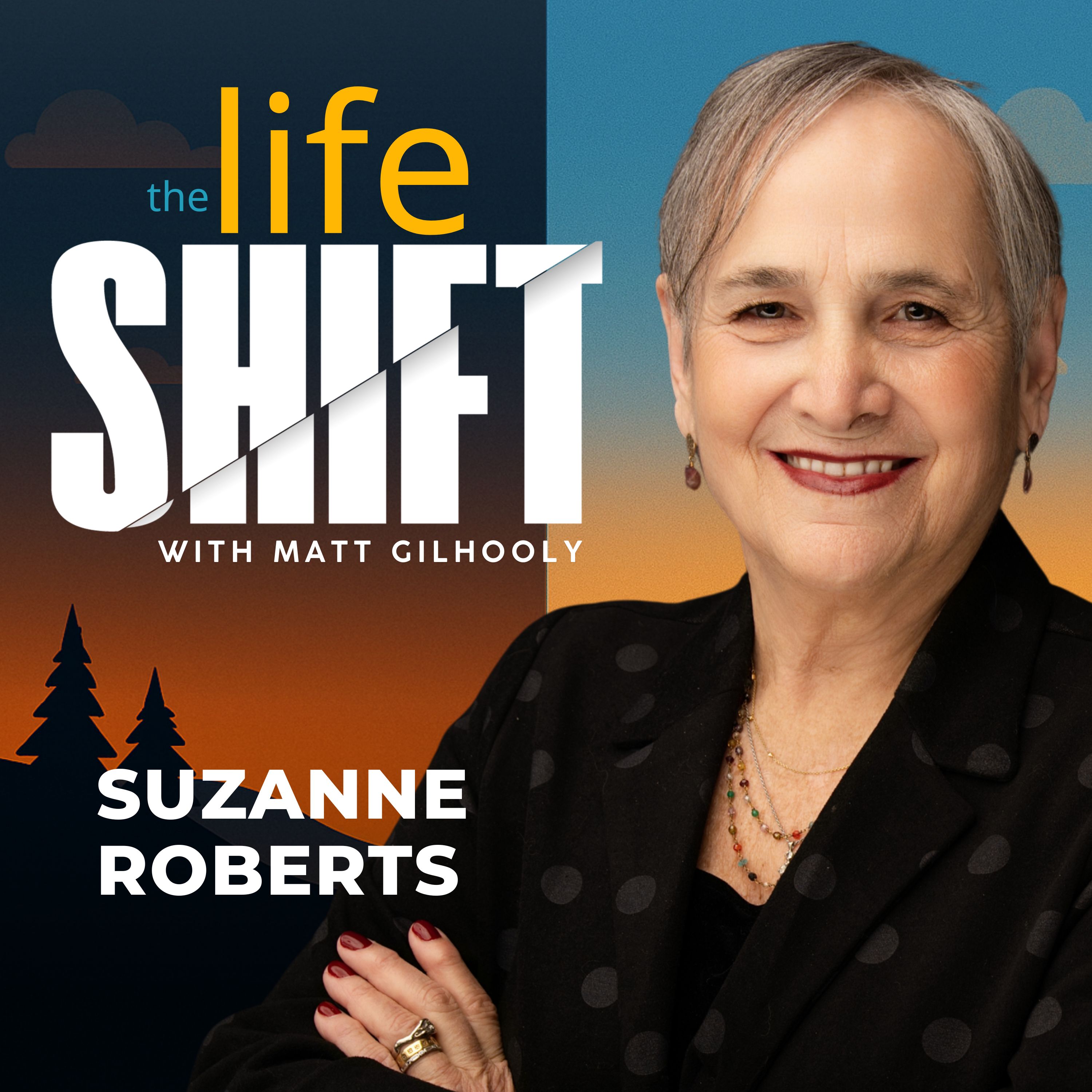
After surviving childhood sexual abuse, Suzanne Roberts spent her life learning that the holiness she once felt in dissociation was actually the soul within her, and that healing meant remembering she was never truly broken.


Sometimes the light we find is born in the darkest places.
In this episode of The Life Shift, Suzanne Roberts shares what it was like to grow up in a home that looked perfect on the outside but felt unsafe within. After surviving childhood sexual abuse, she dissociated into something she did not yet have language for. A quiet presence. A sense of holiness. A light that never left her.
This conversation holds grief and wonder side by side. It explores what it means to live after trauma, to slowly feel safe in your own body again, and to loosen the grip of self-hatred that never should have been there in the first place. Suzanne’s story is not about erasing the past. It is about remembering the part of you that stayed whole, even when everything else felt shattered.
What You’ll Hear
- The early moments that shaped Suzanne’s sensitivity and sense of wonder
- The line in the sand moment that changed everything
- How dissociation became a doorway to something life-giving
- Relearning how to trust her body and inner voice
- The slow shift from self-hatred to self worth
- Why movement, nature, and connection played a role in her healing
Guest Bio
Suzanne Roberts is the Founder of UnifyingSolutions and a transformational speaker, facilitator, and author with over four decades of experience guiding leaders and organizations toward sustainable, systemic change. She is the creator of Polarity System Design, a methodology that helps individuals and teams reclaim inner capacity, lead with clarity, and design cultures rooted in purpose, equity, and lasting impact. Suzanne creates spaces where people can thrive and contribute with clarity and purpose. Her book and documentary, It’s Deeper Than That: Pathway to a Vibrant, Purposeful Life, premiered in October 2025.
Book a free coaching session with Suzanne:
https://unifyingsolutions.com/schedule/
Listen and follow:
www.thelifeshiftpodcast.com/follow
Support the show for ad-free and early-release episodes:
www.patreon.com/thelifeshiftpodcast
Subscribe to the newsletter:
00:00
Sometimes a story holds pain and light in the same breath. Suzanne Roberts grew up in a home that looked perfect and felt unsafe. And the worst moment of her childhood opened a holiness she would spend a lifetime learning to trust. This conversation includes childhood sexual abuse and the quiet courage it takes to heal. And I'm grateful you are here with us as we talk about wonder, survival, and the work of coming back to yourself. This accuracy that this, my soul,
00:30
is a drop of the eternal ocean of love and it's inside of me. And if I can let that tell me who I am instead of my traumatic experience, then I have a different way to live inside myself and truly live. I'm Maciel Houli and this is The Life Shift. Candid conversations about the pivotal moments that have changed lives forever.
01:04
Hello, my friends. Welcome to the LifeShift Podcast. I am here with Suzanne. Hello, Suzanne. Hi, Matt. How are you doing? Let's see. Real answer. I am OK. I was sick last week, so I'm on the recovery upswing. And so I feel so much better than last week. So I'm OK. Thank you for asking. Absolutely. And also thank you for wanting to be a part of the LifeShift Podcast. It is been.
01:32
I think pleasure might be the wrong word, but it has been a pleasure to be able to talk to people about these really important moments in their lives, whether they're super traumatic or really devastating or super positive or something that they created for themselves. I've just been so lucky to be able to talk to people all around the world and learn from their stories and also realize how similar our feelings around.
01:58
certain moments in our lives are. We might not have the same exact experience, but a lot of our feelings that we have are very similar, which I feel is really comforting to know that we're not that different from each other. Absolutely. So to give a little framework for someone that might be signing in to hear signing in, I don't know why I said that, but someone that's tuning in to listen to you on the LifeShift podcast. This show's idea stems from my own personal experience. And so
02:27
When I was eight, my parents were divorced. lived with my mom full time. My father lived in Georgia. I lived in Massachusetts with my mom. And one summer I went to spend an extended summer with my father and I would go to summer camp and do all the fun things with my dad. And I was really only going to see him probably a couple of times a year. And one day after summer camp, he brought me into his office at his work and he had to tell me that my mom had been killed in a motorcycle accident. And
02:55
At that moment in time, kind of everything that I knew about my everyday life was no longer. It no longer existed for me. I knew that I was now going to have to live with the parent that I wasn't used to living with. I was going to have to live in a different state, go to a different school, be the kid with the dead mom. Like everything about my life felt very different. And this was...
03:21
1989 so people weren't talking too much about grief people weren't talking about how to help a little eight-year-old and my dad didn't have the tools and his mom didn't have the tools and So I just heard others like oh we need to make sure he's okay and so I just assumed that I had to show everyone I was okay, and so I just pushed it down for about 20 plus years and just leaned into that perfectionism and
03:46
that fear of abandonment kept me in a straight line so that I would just accomplish, accomplish, accomplish. then, you know, luckily I got into therapy in my early thirties because of some other triggering event and I was able to process it all. But I say all that because in that 20 years, was like, do other people have these line in the sand moments in, which one, one second to the next, they're a totally different person or something about their life is so different. And so
04:16
I'm just so honored to be able to hold the conversations with people about these moments. And it's really taught me more about humanity and about myself and has been a little bit of my healing journey as well. So just a long way to say thank you for just being part of my healing journey. Absolutely. Thank you. Well, that was my first time hearing your story and it caught my breath. So I just want to say that because I mean, I can see you're doing fine and
04:45
was impactful to hear that. don't want to pretend like it wasn't. Well, thank you. Yeah, for me, I think of the listeners out there. They might be going through something and they feel really alone. And for me, I knew logically that I wasn't the only kid with a dead mom, but I really felt like I might have been the only person and no one could understand how I felt. And so I just think these conversations, the more we put these stories into the world,
05:14
Other people might hear them and then feel permission to share the story. Maybe they haven't before, or maybe they just feel seen or validated or whatever it may be. So it's just, you know, out of trauma sometimes grows something beautiful. And that's what I consider this podcast is like a really nice good growth from, from that really hard time for my life. Absolutely. All right. Before we get into your story, which I know is a really hard story, but an important one to share and probably one that
05:44
a lot of people go through and can't share or feel like they can't share. But before we do that, I'd love for you to tell me today, 2025, going into 2026, who is Suzanne? Like, how do you show up in the world? How do you identify these days?
06:01
Gosh, that's interesting. em I would say where I am right now, I just launched my first book. I'll show it to you. It's called, it's deeper than that. And we had a documentary along with it. We did it in a historically black theater in Columbus, Ohio. We had a spoken word poet, a panel. I taught and then we showed the documentary and we built collective power with a very diverse group of people at the end. was a very powerful experience.
06:31
And I'm, just turned 73 at this point in my life. feel I'm leaving legacy work. I'm, just launched a big program. Yeah. I'm, I'm a wild person. Like I have, I have vision and I take action, but I'm combining. I've been an executive coach and consultant for many, many years. have my own company and I've been also on the side exploring metaphysics and science.
06:58
as a way to explain human consciousness and our deeper purpose for our life. And so now I'm combining the two. So I started something called the Great Reconnection. It's a signature leadership program that I have brought leaders together from around the country to look at how do we put soul into leadership. So it's I've already I was just before we got on the call putting in their answers to into chat GBT to get the themes about
07:27
What are the collective things around disconnection? What are the collective things around reconnection? How does longing for deeper contact with ourselves relate to leadership? Like we can think about it for personal development, but how does it actually shape leaders moving forward in the world, having access to their own soul currency and their own soul wisdom? What might change? So we're in an experiment right now and I'm excited about that.
07:55
I'm a grandmother and I hike and I kayak and I love life. So those are some of the things about me. I could go on for longer, but I think that's enough. Well, you certainly know how to fill your time. It sounds like you're a very busy person, but it sounds like so much of it is heart-driven and this new project that you launched feels so timely and so needed right now. divine timing you got going on there too.
08:24
Totally, and I'm looking to build this cohort as potential trainers so we can ultimately take this global because I think people experience disconnection all over the world and especially in the workforce. I think it's like 66 % people are experiencing burnout at work. Add me to the list. Yeah, exactly. Right. But why? Why live like that? And so how can we build leaders that cultivate a different
08:52
kind of reconnection where there's regulated nervous systems and um collective thought. And yeah, I just worked with a team on Monday and had a great experience with the team, but I just see possibility and I want to bring it to the world. Yeah. Have you always felt this way as far as, you know, really excited about new things and implementing new things and starting new things, or is this like a new chapter that you've kind of started?
09:21
I always, if I see something, I want to create it and experiment and see what happens. So I have started many different things within leadership, I would say, and within my own company. I've been fortunate. I'm an explorer and an adventurer and I'm willing to fail to succeed. Love it. And I think that we have to be able to fail to succeed or we won't experiment and grow and learn. oh
09:48
I needed that instruction after my mom died so I didn't become a perfectionist because that is a hard trait to shake off after 30 plus years of being one. So I'm working on it. Good. there is no... You have to. You cannot grow without failure. Exactly. You just don't want to repeat your failures over and over and over again. You want to have new failures. I am finding the freedom with...
10:13
Failure through this podcast because I get to make the rules This is my show and mine only and so I can try things and if they don't work I can create products and if people don't like them, but I like them that's cool You know like and so I'm learning different things through this journey and I'm trying to really use this as as that that healing element of My earlier story, but then like get to try things and make this thing, know, like it's mine. It's so fun to do So I I love that
10:42
I love that you're doing this now and anytime and do see any stopping in the future or you feel like this is no, my mom was a doctor and she worked till she was 85 and I'm youthful. have energy and I'm interested. And I, as long as I can, I'm taking care of myself like by hiking and resting and you know, like I'm willing to engage and be committed until I want to say stop. Yeah.
11:12
I love that. mean, growing up, was like, oh, yeah, we all retire at 60. Like, I think we all had this like rule that I was following the checklist for sure. Like, do well, get a job, get promoted, do know, like, and then you'll be happy. And I was like, that didn't happen. So I love that you're doing this and you'll keep doing it until you don't want to do it anymore. that's exactly that's a that's a fun journey to to create for yourself. So we hear this super
11:39
Joyful and full of life person, but your story is a hard one. So I just want to let everyone know We're gonna go into something that's it that could be triggering and I just want to be super careful about Anyone listening just as a heads up. I don't want to spoil it, but I'd love for you to paint the picture of your life before this pretty early pivotal moment in your life and Just kind of give us whatever that before however much of the before you can remember
12:08
of what life was like and then we'll talk about that moment and how it changed you and how you move through life after. I'd say before my strongest memories, I had a brother that was a year older than me. He died of cancer about 40 years ago. But he and I were sort of inseparable. So I remember feeling very grateful to have a connection with
12:36
somebody we were sort of insular. other two brothers were older and they were challenged people and challenging people. I would say my parents weren't happy, uh but I had this bright light with my brother. And I think that's beautiful, you know, that I got to know something very intimate and touching and kind.
13:05
in the midst of a hard house to be in. So your family life was chaotic? it hard? it like what was what was the family dynamic like? And it feels like just in a little bit you said as your brother was like the safe, the safe space. Totally. And we were younger, a little bit younger. And so we kind of created our own little cocoon, I would say, and kept sort of
13:34
uh My father was a terror, he kind of ruled the tone of the house, so my mother was afraid of him. And they were both doctors. It wasn't like my mother. My mother was very bright and wounded. And there was just a lot of... It was more like I could remember the tone of the house. Because you were pretty young. How old are we talking? Well, before five. But I was also still always adventurous.
14:03
I was always outside. I would make teacups in the mud and I climbed trees. And so I found ways to keep myself outside of that. Yeah. Outside of there. And then I think also I had this is a, this is a very different pivotal thing, but something happened to me when I was four, we were down in Little Rock, Arkansas, and this moment is etched in me and
14:32
Shaped some of the work that I've done later in life and what's in my book. But I remember we were down in Little Rock, Arkansas and we were in this big uh house with pillars with a circular driveway and it had a hill down the back and I ran down and played with the helps kids and it was like they had a dingy room off the garage with like dirt floor and I remember it was very hot and sweaty, but I was playing with them in the dinner bell ring and. uh
15:01
I went in with the kids into the helps. don't know what I, Shaq, guess is what I would call it. And they came and grabbed me and said, you don't belong there. Now, cognitively, I didn't understand racial things. But as I was walking up the hill, I felt this kind of cold chill come over me, like a, why don't I belong there? What do I belong here with this mansion? You what I'm saying? Like, but that was an interesting moment in life. But,
15:29
it sensitized me to something because I have done a lot of racial equity work in my last 15 years. I think that shaped this part of my life, you know, for sure. Like planted a seed almost of like, into curiosity and why, why. But you know, mostly I think I found solace outside and with my brother and those are really sweet memories for me. What time period was this?
15:56
So it was, I was born in 1952. So it be like around 1956. Okay. So this was also the time period in which I bet a lot of families were very similar in what was happening inside. But we, I say we, but like my, my dad's younger years, he, his family would have swept anything that was happening under the rug. Like no one knew, did anyone know what your home life was like outside those doors? Or did you present as a, as picture?
16:26
Perfect kind of family. I grew up in an upper middle class neighborhood. So you can't share any of that. Country club, know, whole thing. Yeah. Right. Yeah. So it's just another layer to your story in which like everything that happens inside the house, state, it's like what happens in Vegas stays in Vegas. It's kind of like we don't share, we don't talk about, we don't talk about our feelings, we don't talk about anything.
16:53
I can imagine as just a four year old who before this main event um was, it was probably really hard, but you were still finding this beautiful space to be you as much as you could, right? Totally. And then when I was five is when the really hard stuff I figured out how to say it in a way.
17:15
If you want to read it in greater detail, you can read it in my book because it's too much to listen to in a certain kind of way. But how I say it is this is uh when I was five, I experienced childhood sexual abuse by my father. uh I fought him off. He did it on the living room floor. So I wasn't in a private room. And my family saw. And because I screamed.
17:45
And, um, I saw them watching it happen and I just wanted to die, you know, because whoever he was, he groomed the house to make that possible. Think about it. Most perpetrators go, you know, don't tell anybody and they do it in private and not my dad. So, um, you know, that definitely, I'll tell you the thing that happened that saved me and the thing that then I had to wrestle with.
18:14
would save me because it was so horrific. You know, I kinda, kinda kept banging my head when I saw people watching me. I'm like, excuse my language, but I'm like, fuck, you know, like banging my head, go and get me out of here. And something happened where I actually went into this holy state of consciousness in a dissociative state. But in that state, I found something that saved me. I say I felt like bathed by
18:45
mercy, grace and love. felt held by a presence or by a force of light and love. I just feel like I can say this horrible thing happened and also this incredible thing happened. The thing that was hard and it went on for many years, but the thing that was hardest for me is that there's no way for a five-year-old to understand.
19:13
what's happening or the whole scene that just happened. And so I figured it was my fault. And then I like, I must be horribly bad and I wanted to die and you know, all kinds of things. Yeah. So I, I just had this repetitive mindset of like, I'm a horrible person. want to die rather die than be here. I must just, you know. Yeah. Cause you don't really understand. It's like you're that age. You don't
19:42
really understand what all the parts are, what's happening, like what this, you know, it's wrong. You know, it feels violating, but you don't know why. But everybody let it happen. So I couldn't know that it was wrong. Do you see what I mean? Because if nobody else is affirming that it's wrong, you know, we all eat dinner together afterwards. You know, nobody's acknowledging that this is wrong. Nobody stopped it. So for me, it was like,
20:11
is this wrong or am I wrong? I mean, sure, somewhere inside it felt wrong, but I couldn't identify with that because nobody else was like reflecting it back to me, just like nobody was talking to you about grief. Right. I, the thing that happened for me, honestly, is that because I loved physics, which I love the study of energy. And I think because my world was so crazy, I
20:41
Like you can measure levers and mechanics and energy flow became something fascinating to me. When I was 20, I learned about uh something called polarity therapy. And the depth of polarity therapy is about that our soul consciousness is operating through form to remember itself. And there's an operating system like a battery inside of us that conducts energy. And it was fascinating to me. And then I learned that my soul is
21:11
you know, pulsing through my cerebral spinal fluid. We don't, we can't breathe or our heart doesn't beat without our soul current when the soul leaves the body we're dead. Right. So I was like, how can a soul, which is a drop of a source of life for all of creation, how can that be inside of me? And I'm a horrible person and want to die. I couldn't, I was like, couldn't rationalize. I was like, Oh my gosh, like
21:40
What do I do now? Because science says so. And then now here I am. And it took me a lot of years, but I worked with this notion of not even notion, this accuracy that this, my soul is a drop of the eternal ocean of love and it's inside of me. And if I can let that tell me who I am instead of my traumatic experience.
22:08
then I have a different way to live inside myself and truly live. so that's, you know, and the dissociative state I went into uh really helped me understand that's me. But I was associating it with my trauma, but that holiness is actually in me. Was that your first time like experiencing something like that? that dissociation?
22:38
Yeah. Yeah. I mean that I know, but like, yes, but like, people dissociate in different ways. I'm just really fortunate that the way I dissociated was in, into a state of holiness. You know what I mean? Like it. And then I was, and then once I went, maybe that holiness that I experienced during the trauma is actually my soul inside of me. Not, I don't have to go somewhere else. And how can I begin to experience?
23:08
that which is in me and not be ruled by my history and my trauma. Yeah. Well, and you said you kind of started thinking about that more around 20 or so. Yeah. said. So I mean, that must have been a journey to get to because it said that you were or you said that you were kind of feeling like you were the in the bad in the wrong. You were you were the reason or whatever it may be, which I think is probably natural for a lot of kids who
23:36
don't understand, just, like, well, I must have done something wrong because I feel the pain and the pain means that I did something wrong. Well, neurologically, honestly, you don't even have the nerves, development till between the ages of 11 and 12 to differentiate. So you're eight years old and somebody walks in the room and they're in a bad mood. You think it's your fault. You can't, you have to have an adult outside of you or someone to say to you,
24:06
I just want you to know that it's not your fault because you can't think it yet. But if somebody can plant the seed for you when you do have the neurological capability, then you can put the pieces together. But if you don't, you can't before those ages, you can't think anything different because you can't differentiate yet. Well, as you were saying that, I'm like, well, man, too bad didn't happen when I was 11. Maybe my life would be different for me and for you as well. But no. m
24:35
How do you show up in the world the day after something like that happens?
24:44
How are you able to keep going? mean, I know you don't really have a choice, but at the same time, it must feel so different the next day being a human. ah Well. Or did anything change or did you show up the same way and just kind of. I am. I just started. I just started tucking myself away inside and. There was just so much chaos in my house anyway, then my.
25:12
parents were fighting and my brothers were fighting and there was a lot of violence. It was like so many things and I just learned how to kind of tuck away inside and I got good grades but like by the time I got to high school I was suffering pretty greatly actually but I was athletic which helped me so I and I didn't go to school enough to graduate.
25:39
Honestly, but they said I was smart, so they let me out, but I would just stay home. And honestly, and just kind of like, I needed a break. So I just didn't go to school a lot. And I was like a honors physics. I don't understand how I did this. You know what I mean? Like I would play sports. I would stay home as much as I could. Sometimes one time I didn't go to school for six weeks. So yeah. And I just, um,
26:09
I learned how to forge my mom's handwriting. She knew it later in life. But my parents got divorced and she was working a lot. She was a doctor. uh so she didn't know. I just didn't go to school. Did you have an opportunity to bring up that assault with your mom, with your brothers, any of that as you were growing up or did that come later? No.
26:38
No, my brother, my oldest brother would tell me, cause if I ever defended my dad, he would say you should hate him because he raped you. So he would, cause he saw it. So he would tell me he raped me. So, um, with my mom, I did, I did many years later say something to her, but I, I.
27:04
I knew my mom well enough to know that she didn't really have the capacity to face it, you know, and that it would crumble her. Cause how could you watch your daughter be raped and not do anything? Do you know what I'm saying? So I did, I just, one day I just needed to know that I wasn't crazy. So we were sitting next to each other, not looking at each other. And I just said, mom, I just need to know.
27:34
Is it true? And she said yes and she cried and we never talked about it again. And I didn't need anything more than that. I it tooks. I'm sure you know this from being in therapy. It takes so much work to do your own work and you have to work to be able to do the work. Do you know what I'm saying? You have to build the capacity for the work and my mom didn't have it and I knew it. You know so and.
28:01
We got really close and we were close when she died. It's just something she gave me the gift of confirming and that's all I needed. I feel like, and it sounds like you kind of, you said you tucked yourself away. Did you lose that sense of wonder or adventure in those years? Cause it sounds like, you know, before you were making teacups in the mud and you were doing like fun little things and exploring, did you lose any of that sense of wonder?
28:31
Well, I always got out of the house. I would ride my bike really far or go to the playground. I think physical activity saved me. So, and I spent a lot of time outside when I could. So I would say in some ways, no, I would take myself on adventures with my bike or, you know, I I'm going to go ride 30 or 40 miles, which nobody else did. You know what I mean? And like, uh, but I think I had to cause moving my body helped me.
29:01
Getting out of the house helped me. uh Physical exertion helped me. Playing sports helped me. So I think, no, I think I always like, It didn't dim your light? Well, I think it dimmed my light, but it didn't dim my adventure. Okay, yeah. I mean, I would say, yeah. I mean, I think I hated myself. How can that not dim your light?
29:28
You know, I was in pre-med in college. ended up dropping out of school and, you know, going to California and studying like all kinds of things that like flipped my mom out. Cause I was in pre-med and you know, I got a degree in holistic health. This is like 50 years ago, but I studied like herbs and natural healing. went to massage school. I also danced. was a modern dancer and it's so, I always kind of found a way. think.
29:56
I think there's something inherent inside of us to find a way, whatever that way is. Like we're hardwired to survive and we find creative ways, whether whatever it is, you know? And so, um, the bigger thing for me was changing my mind from hating myself to seeing myself as precious. How did that come about? Cause that seems like
30:24
I mean, like for me, the perfectionism kind of thing for 30 years is hard to get rid of. think a self-hatred is probably just as difficult to kind of wean yourself off of. did you, I mean, I'm not surprised that you were able to do it, but how did you find a way to do that? What was using the living scientific model, which is in my book, but like that soul consciousness is operating through form to remember itself. It's a battery of how our soul operates in form. And I just,
30:53
couldn't deny it. So I had this uh model, a living model of how energy operates to attach my attention to. And in the beginning, would just go like, would repeat in the mirror, like, oh, your soul's a drop of the ocean of blah, blah, You know, and I didn't really believe it, but like, I just couldn't deny. And then I also wanted to experiment. I...
31:20
I thought, okay, if my soul is pulsing in my cerebral spinal fluid, which it is, I want to feel it. So I wanted to know if it was true. had been in physics laboratories and chemistry laboratories. Why not be in a human laboratory? That was my thinking. So I took myself up onto this beautiful hillside. This was in California with eucalyptus trees and I laid there. I just laid there and thought, okay, show me.
31:49
me, you know, and it took a while, after like, maybe even an hour, I don't know how long I was there, I started to feel this like warmth emanating from the center of my being. And it was like, Oh my God, it is there. You know, like, I could feel like these waves of energy and I'm like, Oh my, it is true. then once that experience happens and it's inside, what are you going to do? You can either
32:19
tune into it, deny it, abandon it, learn from it. And it's been a slow, long process, but it became fascinating to me. that sense of wonder is still there. Right? Yeah. And if that's there, like you can't let go of the perfectionism without having something else better to attach to. In this radiant life, energy was a lot better than the
32:47
the darkness. Yes, much better. And I could, I could rest there. And it reminded me of the holiness I experienced during the rape. So it's like, oh, it's in me. m Yes, I got held by it in my darkest hour, but it's actually in me. And I've spent the rest of my life tuning into it. And I'm, I still do. Like I still have to work with my mind and
33:14
You know, always will. Our minds are very clever and they do other things. And there's this other thing that like is such a gift. It's like, and I feel so grateful that I get to be honored to be given this gift of life. And, you know, while I may have been a victim to external circumstances, I'm not a victim inside of here. You know, like I'm, I'm grateful and
33:43
I were not our life experiences. I'd be a mess if that was all I knew, you know? You know, and I, I mean, like, I'm, I'm 73. I'm really youthful. You know what I'm saying? I'm, I'm, I'm deep. on. you, I commend you because I don't, I wish more people had the capacity or the ability or the wonder or the curiosity or whatever kept driving you to
34:12
to feel that way and to remember that the holiness part of that experience. I'm hard-pressed to say that people that have experienced similar things as you did find that route, find that space, find that drive, determination to find their way out. Society doesn't give us those tools. Society doesn't prepare us when something
34:41
external happens like that. And we don't have anyone around us to help us. Right. We're not equipped. And so I commend you for creating or you creating you, you know, like I don't even know how to explain it. But you like took the hard path from an outsider's perspective. Yeah. Is the easy path is to fall into the bad patterns. It's for me in my darkest teenage years.
35:10
still pushing down grief, not figuring that part out. It was so much easier for me to stay depressed and down and just in a terrible space than it was to claw my way out. And so, so many times I just gave into that because it was just easier. Did I know that I should be on the other side? Yes. But it was so much easier to just stay stuck in my space. So when I hear your story, I'm like, you know, like this is...
35:37
I hope you notice what you've done for yourself because you created this newer version of you or expanded it, I guess is maybe the better thing as you kind of move through something really hard that would take a lot of people down. I don't know if you see it like that. That seems like. Well, in some ways, I guess, yes. mean, I think I also had hard years in my teenage years. know what I'm saying? But like,
36:08
Maybe it was the holiness I found or that I already had found resource outside by movement, like, being active. Yeah. Maybe, but I already had resources before it happened or, or I remember being outside when I was young, before this happened and like looking up at the night sky and going, wow, I don't think it ever ends. And
36:38
you know, if it doesn't ever end, I just had this sense of on. So maybe it was like the physical activity and the sense of awe and the holiness I found in the worst experience of my life that like kept a part of me going there something more, you know, and once I got this living model that showed me that
37:04
what this something more was and I could apply it through science, like metaphysics and science. Then I was hook, line and sinker. Now it wasn't like an overnight thing. Like it's a gradual slow thing. like, think it wasn't a light switch. No, no. And I think you said something really good. One of my uh somebody on my teaching staff, her name's Sharonda Chrome, but she's like, choose your hard. It's hard to recapitulate with your wound.
37:34
And it's hard to choose your living energy, but one's life giving and one's life taking. And that's, think I've, I, but you know, I think I've always been a fighter too, because when my dad was raping me, I fought him physically and I called for the police and that's why my family came in. So I was, I wasn't just like, take me down, dude. You know, I'm like screaming and it didn't work, but
38:03
that fights always been in me and I think I think we do fight for our lives. We can't see it and we may not be able to find that fight until there's enough space or enough something else that we can taste that's worth fighting for. But we have to have that taste of that something else that's worth a fight, whatever that is. Yeah, I agree with that. I when you were saying that I was thinking about my own pushing down of grief and the
38:33
I call it failing a grief. But I think that was what I needed at that time to feel safe. That was what I needed to kind of move through whatever I was moving through. And I found it when I needed it. Because 20 years of that grief, you my mom died when I was eight. So my dad's mom became like my mother figure. She became the closest person I was ever close to. She sold all their stuff, moved down closer to us.
39:01
You know, like she really wanted to make sure that I had a good life and I did with her. But I failed that grief, get to a place where I understood I was able to kind of close the door on grieving my mom. And when my grandmother got sick, I was like, okay, this is gonna happen and I'm gonna do it right this time. And so it gave me such a, that horrible experience gave me such a beautiful experience with my grandmother as she was getting sick and.
39:31
I forced the conversation with her to talk about everything that we ever wanted to say to each other before we ran out of time. And I'm like, single best thing I've ever done in my life. And I never would have done it had I had I had the tools when I was eight, because I wouldn't have realized all the things. And so I'm just, you know, it's like one of those things where like, I think I protected myself for long enough, but it taught me so much so that I didn't do it again. And so
39:58
I guess it's kind of like your failing example. You got to fail that way, just don't do it again the same way. Well, I think there's something so visceral. I have had a lot of people die in my life, like my brother, who is my best friend and my best friend. I've sat with a lot of people dying. My godson died of leukemia, but I wasn't prepared for my mom dying.
40:23
It was so visceral and so hard. think it's so primitive. was like, I've done grief before. This shouldn't be this hard. I can't imagine being eight years old and it's your, it was your primary parent. Right. And so I just can't the visceral rip of the mother shot. don't know. Cause you share blood or whatever it is you share. I just can't imagine like having to take that hit and
40:53
uh I think I eh just don't know. I think if it was nowadays, there's a lot more tools. There's your situation as well. You would have had a lot more resources and people would be talking about it. I think there's something where in your circumstance, in my circumstance, people just didn't talk about it. And so we had to figure out how we were going to survive and you...
41:22
found your way through something that could have easily knocked you out and I love that you still have this wonder maybe even more so maybe you have that 4 year-old wonder again of that that little girl like looking up at the stars I bet you do that now. Yeah, do because it's a it's a beautiful journey despite that experience and more because of the experience like I I mean I honestly feel like I would in.
41:52
I wouldn't be who I am today. wouldn't, I wouldn't be as, as good of a coach as I am. You know, I know how to read people, you know, I, I mean, I have superpowers because of it and I wouldn't change it at this point. I wouldn't be who I am. Right. Don't you agree? It's hard. That's a hard thing. That's another thing that people don't talk about. It's like, it's true. I wouldn't, we wouldn't be having this conversation if either of our experiences didn't happen to us.
42:20
We would be completely different people. wouldn't be doing the things that we were doing. I know for a fact I would not be this version of myself because I was a mama's boy. I didn't care about school. I just wanted to hang out with my mom. And after that, I was like, well, I have to be perfect. So now I'm going to get straight A's. And now I'm going to go get a free ride to college and then get a free master's degree. All the things just so my dad wouldn't leave. He wasn't going to.
42:49
But in my tiny brain, thought, if I screw up and I mess up, so I didn't take the chances like you did, like, and just do wild things because I just chose the thing that was maybe a little bit harder, but I knew I could still do it. So it seemed like I was like a stretch goal, but I knew I could achieve it. And so I never did the wild things. never, you know, if there was any chance of me messing up, I wasn't going to do it. Wow. But, you know, it's
43:19
It's just a product of what happens, right? And yeah, but on your side, you, it sounds like, and forgive me if I've make, I'm making the wrong connection, but all the things you were saying, you like your physical activity, you would ride your bike 30 miles away and then you dropped out of pre-med and you went across the country and did whatever you wanted to do. And it all feels like a little bit of like running away. Do you see any of that as, yeah. Or running away or just escaping.
43:49
I guess escaping and running away are the same thing. just needed a break. when I got to California, like I was sent by the Pacific Ocean, I would like go into the freezing cold Pacific Ocean because it would thaw me. I was just like a frozen mess. You know what I mean? And uh although people from the outside would not know, I knew inside, but on the outside I just looked fine and I wasn't.
44:16
But I, you know, I hiked the hills barefoot. would walk on pebbles and stuff. I needed to feel myself, but I found like, I rebuilt a logger's cabin in the Redwoods and I just did things like, I don't know. I think I was just trying so hard to give myself a home in me. You know, I just couldn't, I couldn't, and yeah, I just couldn't, but like over time I just started thawing and then this
44:46
that, like I said, the hum of that current inside of me just kept feeding me and feeding me until it got louder and louder and louder. And now my mind is quieter and this pulsing is what's, you know, strongest and it's good, all good. Do you recall the first time you felt fine?
45:14
I don't. This is kind of a gradual growth. Yes, ah it was or when I felt like, oh I jumped over the line and it was I had a therapist in my 30s was my first like I had crazy stuff going on at work and I was like, I'm going to quit and I'm like, I can't quit. So I went to this therapist turns out half of the people I worked with went to that same therapist because of the same person at work. So she's like, oh, I know that person.
45:44
ah But we started talking about my own story. And she said one sentence to me and that was the line I needed to hear at that moment in time. And it was, you realize that every decision that you've made, you've made with that scared eight-year-old brain since. And then everything started unraveling. And I was like, like it was, but it was, it was a moment where I was like, all right, I didn't realize that. But now that I do, I'm not going to do it anymore.
46:13
And so it felt like that another line in the sand in which I was like, okay, we're going to close this door. We're going to figure out how to get rid of this. So yeah, I kind of do. I don't know that it was a fine, but I think it was that journey to fine. But it's sometimes it's the weirdest thing. Like I've talked to a lot of people on this podcast about how a certain book that they've seen a bunch of times or a movie they've seen a bunch of times this one particular time, this one phrase stood out to them in a way.
46:43
that inspired them to make a big move or, they read another line in a book and they're like, that's the line that made me want to quit my job and start a business, whatever it may be. So sometimes it's those little things that like you get surprised by that sneak into your life and plant the seed. I think it was lying on the ground and feeling my energy for the first time because I couldn't, I mean, I had a long road to go.
47:13
but I couldn't deny. uh
47:17
what was inside me. Yeah. You felt right. Yeah. I felt like I knew. I understood. Like you got it right. You're not wrong anymore. You know, I look, I mean, I think your, journey is so fascinating and the wonder is what sticks out the most for me. And I just honestly envious a little bit, but I mean, you like it's just, I, I realized recently that I never was able to dream.
47:45
as a kid on actual dream when I'm sleeping, but I was never able to imagine anything bigger than what was right in front of me and that's kind of sad to say, but I love hearing your story because it feels like this because of or despite the circumstance you still found your way to dream and now in your 70's are doing world changing things like you're changing the world by one person at a time couple people at time cohort at a time whatever it is and I just I
48:15
I love it. It's so inspiring. So thank you for just being you in this world now because of all you've gone through. Yeah. Thank you. I don't know. I know the answer to this, but well, maybe I don't. If this version of you... m
48:35
could go back and say something to the Suzanne 25 miles into that 30 mile bike ride in your teenage years. Is there anything you'd want to say to her?
48:52
Um, honestly, like you're so smart that you found joy in riding your bike and I still find joy riding my bike. Wait, I think.
49:04
Not really, like you were smart to find a way to feel freedom. Yeah. I mean, it's not possible. We can't go back and tell ourselves. I mean, I think there I felt pretty free though. That was, I just felt so good riding my bike because I was moving and nobody was coming after me and there was no yelling or fighting. I could feel the wind and the motion and I safety.
49:34
the safety and I think just I would just tell her how smart she was. Well, she still is. oh So you are doing so much for the world. You have this book out in the world. You have all these services and whatnot. would if someone's listening to this story, they maybe they went through something similar, but their journey looked quite different or something that you said resonated with them. I'd love for them to be able to find you connect with you, read your book or even just reach out and tell you their story if you'd be open to that. So
50:04
Perhaps you can tell us how to get into Suzanne's world or what's the best way to find you. Well, my email is suzanne at unifying solutions.com. You can go to my website on the front of it. There's a tab to get into my book portal, which you don't have to read the book to do the book portal, but there's meditations, teaching videos. There's a journaling workbook and, um, the trailer to the documentary will be in there. I do recommend reading my book.
50:34
because it has three sections. It's the me, my story and how I helped restore myself. And then it's about you. How does this operating system work? And then it has distinctions in there. Like what's the difference between aloneness and isolation, stillness and sedation, longing and wounding. So there's a lot of rich information. And then the last section is called everyone.
51:01
If life energies and everyone and everything, how come our social systems don't look like that? And how can we come together to be better human beings? Really is really, but there's a, I, even though I wrote it, like I'm like, glad I have my own book because I pick it up and read it and I think, oh, wow, I don't remember writing that, but I needed to hear that today. And there's, yeah, there are really good reminders in there. It's not a long book.
51:28
So I encourage you to listen to it and read it and do get a hold of me anytime. And I do offer, call it a complimentary and coaching call, but we could consider it a discovery called 30 minutes. can do that through the website too. we'll put, definitely put the links to your website and your, I don't know if you want the email, they can probably find you on the website, right? They can find a contact. So we'll put that for, for ease. I, I encourage you.
51:57
if you're listening now and something that Suzanne said, maybe it's not the main pivotal part of her story, maybe it's something else and it resonated with you. I think there's power in reaching out to someone else and letting them know how something affected you. I think there's a lot of power that we can get from that and I think it would probably be beautiful for Suzanne to hear and it would be lovely to know that this conversation sparked something in you.
52:24
I just encourage the listeners to just connect more with people. think it's. That's great. It's so important, right? I think that's how we grow. That's how we become better humans by connecting more with other people. I think. I think so too. Well, thank you for going on this journey, answering my questions, kind of having this conversation, letting me share some of my story. really appreciate it, Suzanne. Me too. It's been great being here with you.
52:52
been a real pleasure, actually. Thank you. Thank you for having me. Well, thank you for the wonder that you put into the world through your own wonder, because I think it can be very infectious in such a good way. So keep being adventurous and full of wonder because I'm sure you're inspiring the people around you. And I guess I will say thank you to the listeners for being a part of this journey now for almost four years.
53:22
I think I'm going to say goodbye and I'll be back next week with a brand new episode. Thanks again, Suzanne. Thank you.
53:38
For more information, please visit www.thelifeshiftpodcast.com


