Grief: Making Something Beautiful From What Broke
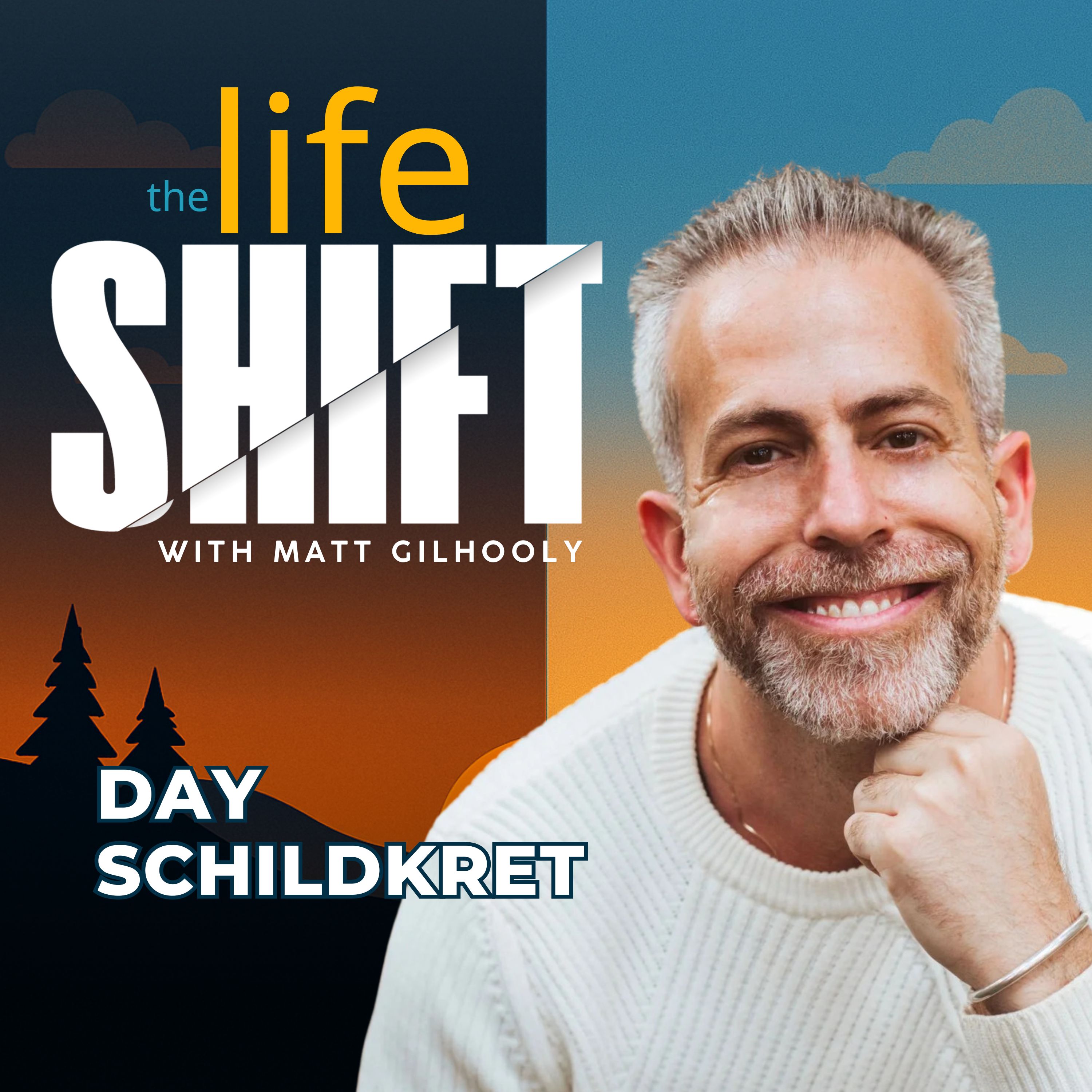
A quiet conversation about learning to stay open and find meaning when life moves you through loss and change.



Some moments do not ask to be fixed. They ask to be felt. To be witnessed. To be held gently until something inside us loosens just enough to breathe again.
In this conversation, I sit with someone who understands that grief is not something to get over. It is something to learn how to live with. Day shares what it was like to lose his father, lose a relationship, and find himself standing in a quiet in-between space where nothing felt stable. Instead of rushing through that season, he slowed down. He listened. He followed a small impulse into the woods. And in doing so, he discovered a way to turn pain into presence.
This episode is about thresholds. About endings and beginnings that overlap. About how creativity, ritual, and attention can help us stay open when life changes shape. It is an invitation to soften your grip, trust what is unfolding, and remember that even in loss, something meaningful is still possible.
What You’ll Hear
- Why grief is not just an emotion but a skill we can learn
- The power of slowing down when life feels unrecognizable
- How ritual and creativity can help metabolize loss
- Learning to hold endings without closing your heart
- The quiet role of pleasure in times of deep heaviness
- Finding meaning in the space between goodbye and hello
Guest Bio
Day Schildkret is an award-winning queer author, artist, ritualist, and teacher known for Morning Altars, a practice rooted in nature, art, and ritual. His work helps people navigate change, grief, and life transitions with intention and care. Day teaches internationally and creates spaces where people can slow down, remember what matters, and reconnect to themselves through creativity and presence.
Sign up for Day’s Newsletter: https://www.morningaltars.com/
Morning Altars Teacher Training: https://www.morningaltars.com/teachertraining
Purchase Hello, Goodbye: https://www.morningaltars.com/hellogoodbye
Purchase Morning Altars https://www.morningaltars.com/morningaltarsbook/1
Follow us on Instagram: https://www.instagram.com/morningaltars/
----
Follow us on Facebook: https://www.facebook.com/morningaltars
Listen and follow: www.thelifeshiftpodcast.com/follow
Support the show for ad free and early release episodes: www.patreon.com/thelifeshiftpodcast
Subscribe to the newsletter: https://thelifeshiftpodcast.beehiiv.com/
Matt Gilhooly (00:00)
Sometimes a story reminds me that grief is not just an emotion, it's a skill. And Day has spent years learning how to practice it in ways that open us instead of shut us down. Day went through a season where pretty much everything collapsed at once. His father died, his relationship ended, and his life really just felt unrecognizable. And in the middle of all that heartbreak,
He followed his dog into the woods and stumbled into a ritual that helped him breathe again.
of survival eventually became a global practice that helps people move moments of ending and beginning. Day invites us to slow down, notice the small things that feed us, and remember that the messy parts of our lives often sit right next to the gifts we most need.
His story is tender and human and, dare I say, beautifully honest.
Speaker 1 (00:51)
My dad was battling cancer for four years. I was in a relationship with a partner that I loved and pretty much within the same time period, my dad died and I broke up with my partner. And so the grief that I was with was life altering. I mean, I could not work. I could not socialize. I could barely, you know, take care of my household at the time.
Speaker 2 (01:22)
Hello everyone, welcome to the LifeShift Podcast. am here with Day. Hello, Day. Hey. Well, thank you for wanting to be a part of this show that I never could have imagined for myself, maybe even five years ago. So it's really a pleasure to have you here and be able to talk to you about ⁓ a pivotal moment in your life, realizing that there were probably multiple and there probably will be more. But I love to...
Speaker 1 (01:26)
Hey, good to be here.
quite a few.
Speaker 2 (01:49)
have people kind of identify the one that they feel maybe has changed them the most. And the whole idea comes from my own personal experience. When I was eight, my parents were divorced. My dad lived in Georgia. I lived with my mom full time in Massachusetts. And I was visiting my father one summer and doing all the fun things and just living life up as an eight year old. And one day after summer camp, he brought me into his office and he had to tell me that my mom had been killed in a motorcycle accident. And for me,
It was such a line in the sand moment in which I knew that everything about my life was about to change. I didn't have the primary parent anymore. I wasn't going to live in that same house anymore. I wasn't going to see my friends or my school. So everything in that moment changed for me. But because it was 1989, nobody was talking about it. Nobody was talking about grief or he's a boy, he'll be fine. You know, like he's going to adjust and we'll just need to make sure he's okay. So
I didn't let anyone know how I was feeling because I assumed they just needed to see that I was fine. And it took about 20 years to fully grieve the loss of my mom. It was a messy, messy journey. But I say that because all the while, I always wondered, do other people have these moments in time? And from one second to the next, everything is different. Turns out we do. And it's human thing.
we get to go through these journeys. And I've heard so many stories now, over 200 plus stories, all wildly different, but so many feelings and emotions and those elements I can relate to exactly. it just reminds me how much we are alike. And there's not that much that separates us as it relates to the human condition and how we go through life.
Speaker 1 (03:40)
Yeah. Well, I mean, if I could jump in and just say first off, I'm, you know, I'm, I'm sorry. You know, that's, that's, I have my own story like that of not being attuned to and having to hide and, know, all of those things. And so just from a human to human, I'm sorry. That's, that's such, you know, I wish we could somehow correct those moments of like real vulnerability and catch each other on the other side of that.
So that's how I'll start off just by saying, yeah.
Speaker 2 (04:11)
I appreciate that. I also, you know, at this point in my journey and in my almost mid forties, I see all the messy parts and I realized that all the messy parts brought me to this exactly myself. So there is the, you know, the silver lining in such a tragic event for an eight year old that had no tools. here I am. And I feel like I do have a toolbox that is far more equipped than anything I had at that age.
Speaker 1 (04:40)
There's an old expression which is that the the gift lies next to the wound Right and so, you know without the woundedness We don't really get to know our gifts and so if we keep on avoiding the wounds then we don't really discover the ways that we can redeem them into something that feeds our life or feeds the world
And so, you know, we just have to remember like the parts of us that want to turn away from those wounds. Like that's actually where the gift is. It's right next to it.
Speaker 2 (05:10)
⁓ We're not taught to turn towards them, though. We're taught to turn away from them. So I think there's more people now that are are kind of have this more self awareness and reflection and the ability to to do that and see the quote unquote value in in moments like those. So in any case, I say all that to kind of set the scene, but also thank you for being willing to share your story and your vulnerabilities and all the things that come along with it.
Speaker 1 (05:38)
Yeah,
of course.
Speaker 2 (05:40)
So before we have you do all that, maybe you can tell us moving into 2026, who is Day? How do you show up in the world?
Speaker 1 (05:47)
Are we moving into 2026 already? Oh, yeah, yeah, I feel like we're just moving into 2020. How am I? What am I carrying into this threshold with me? I would say that there is one word that comes to mind and this is a little window into my inner world. But the word is pleasure. And I am someone who is
Speaker 2 (05:50)
We are, yeah.
Speaker 1 (06:17)
really programmed to carry a pretty heavy burden. I work with lot of people. work with, you know, I train therapists and social workers and death doulas and people and grief counselors and and I train them in ways to transform their pain and other people's pain into beauty. But you know, it could be heavy. And I'm also a Scorpio. I just celebrated a birthday the other day. Happy birthday. Thank you. And so
My work as I cross into this new year is to really not turn away from the simple pleasures of life. I have a new puppy. You know, I just went to a hot spring. I just made a delicious meal. Like the small little pleasures that make life really valuable, especially in such turbulent times where it's so easy to get lost in the big headlines of things. Yeah, I want to slow down into this new year and
really just take in the pleasure of being alive right now. That's what it's about for me.
Speaker 2 (07:22)
And that's, and that's beautiful too, because I think there, there needs to be for, for many of us. I'll, I'll talk for myself. That would take a lot of intention for me to do because it's very much grew up on this like conveyor belt of checklists, the thing. And so to be able to do that, I commend you for that. And I bet it brings you.
Speaker 1 (07:32)
Yes, exactly.
Speaker 2 (07:45)
not only celebrating those little pleasures or recognizing them, but I'm sure by doing that, it also gives you this layer of like joy or a different sense on top of that. Would that be true?
Speaker 1 (07:58)
I'd say the way I would frame it is kind of from a from a like digestive angle, it allows me to it allows me to absorb the nutrients of the moment. Right? So like we could be living our lives, we can be having a meal, we can be with our partners, we could be on a trip, but not really absorbing the nutrients of those things. So to me, the the
The impulse, the mechanism here is like, can I slow down and remember nothing's wrong right now. Nothing needs to be fixed and like really like absorb the like sweet nutrients of whatever playing with my puppy or, you know, talking to a friend or shopping or whatever it is and like receive. That's really the basic word of it is like receive these things.
Speaker 2 (08:56)
Yeah, no, I mean, good on you. I hope hope all of us listening and partaking in this conversation can take away some thank you, some good nuggets to bring along. And maybe we'll just call them nuggets that you can eat, because then there'll be nutrients maybe in them as well. So to get into your story, maybe you can kind of paint the picture of your life and who day was leading up to this life shift moment. And if however far back you need to go to really give that
that understanding of the before version of you.
Speaker 1 (09:26)
I mean, how many I it's an interesting question. You kind of alluded to it before. But, you know, it's at what at what stage are we talking about? You know, like the me before coming out of the closet, right? Or the me before my mother had dementia. I'd say the most the one that I speak about the most is the me. In 2011, when my dad was dying.
And I went through a major relationship breakup. And I'd say that's the one of the more pivotal thresholds I've been at because I lost so much in the in that time. And so such a new, beautiful gift came through that. And so, you know, to paint the picture, my dad was battling cancer for four years.
I was in a relationship with a partner that I loved and pretty much within the same time period, my dad died and I broke up with my partner. And so the grief that I was with was life altering. I mean, I could not work. I could not socialize. I could barely, you know, take care of my household at the time. And I adopted my father's dog.
And so this little miniature schnauzer named Rudy got me out of the house, literally got me over the threshold because I think because of my grief, I probably would have just hunkered down and hermited under the covers. She got me outside and she got me to in some ways like engage with the world again. And the beginning of that, like, you know, maybe a...
few months after my dad died, those walks were kind of, she got me outside, but I was still in my head. Right. I was taking her out. Exactly. And she was modeling for me, like what curiosity looks like and playfulness looks like and like being alive looks like. And I was just trying to, you know, kind of like put together the pieces.
Speaker 2 (11:26)
Yeah.
Were you in touch with those things before you were like, before your father got sick, when you were in a happy, healthy relationship and all those things, were you someone that found the little things, curiosity, the wonder and all those things? Or were you?
Speaker 1 (11:57)
I'd say like,
again, it's it's different, like, yes. And there's a deepening that happens with every threshold. Right. And so a new ⁓ my world at that time was falling apart, but I had some capacity. Yes, for curiosity, for listening. But the thing about loss is that it's sometimes really hard to access those things.
Speaker 2 (12:07)
Okay.
Speaker 1 (12:24)
You know, and so if you're in a new loss, it's almost like you are kind of a new person. It's you're in this there's an expression that a very old ⁓ ethnographer by the name Victor Turner and like, think this was like in the 1930s, he referred to it as betwixt in between. You're you're not here, you're not there. Right? You're kind of in this in between space. So
There's a way when when life changes and you cross over these thresholds, my dad died, right? ⁓ Or I'm in a relationship breakup or whatever it is, I get a divorce that for some time period, you're neither here nor there. And it's really hard because the culture that we live in is one that really wants you to be here. Like that wants you to be capable and on your game and crushing it and all the bullshit stuff.
Right. has no capacity for change. It just wants you to always be on the horse. So when life inevitably changes and it happens for all of us, it knocks you off the horse. The question is, are you just is your impulse to just get back on and be heading in the same direction and just be like, shit, I fell off. Now I'm back on. Or can you let yourself stumble a bit and be in that in-between space? Because that's where the deep wisdom and the treasures are and the
and the insights are and all of the things that's where the new person emerges from.
Speaker 2 (13:54)
Do you think that people jump back on the horse and people, okay, this is going to sound so circular, but do you think that I know you do you think that people want you to get right back on the horse? Because if you don't, it makes them uncomfortable. And therefore we feel compelled to get back on the horse so that we don't make people feel uncomfortable.
Speaker 1 (14:03)
Thank
I think that's a consequence. don't think that's the root. OK, I think the root of it is that the that we are terribly we meaning the culture is complete is so scared of change. And we're so addicted to permanence and for things looking familiar and being quote unquote normal. And so as soon as there's change, the the the the impulse is fear.
I mean, you saw it during the pandemic, right? Like trying to get back to normal and really want to. What'd you say?
Speaker 2 (14:52)
get back to normal.
Most of us didn't want to get back to normal.
Speaker 1 (14:56)
But the but the narrative was alive in the culture, right? And and I think deep down inside we have a deep fear of endings of things ending and the deeper, deeperness of it is we have a deep, profound fear of death. And so all all change has an ending. All change has a beginning. You go to bed tonight, there's an ending and a beginning just in that.
Right. And so we don't understand as a culture how to operate around a threshold. We just don't. We try and get through it as fast as possible or we ignore it or we don't even know how to recognize it. But this is like the landscape of my work in the world is that like thresholds, anything going to bed tonight is a threshold. My dad dying is a threshold. Marriage, your baby losing a tooth. They're all thresholds weaning. The question is.
Okay, so you pass through something changes your life shifts. What do you do? What's being asked of you? And there's a totally different choreography than normal. That's called the betwixt in the between choreography, right? Like, it, for instance, like, it asks a different speed. Right? Like, don't go as fast, slow down.
or maybe a different language or maybe a different schedule or, you know, so many different things. But the first thing is to recognize that there's change happening, that there's an ending and then there's a beginning. And that's part of how we grow a certain kind of threshold literacy.
Speaker 2 (16:38)
Interesting. Yeah, it's the whole time you say that. It's funny because and probably not it probably makes sense to you. But because of my experiences in eight, ⁓ eight, I want constant change. So I'm not someone that wants permanence like it scares me because I'm so used to like I've moved 35 times in my 44 years. Like I just want newness. And I think it's because I was so forced into it.
And it just created that like feeling of wanting something different to adjust to because that was my norm. So it's, it's very interesting as you say that, cause I'm like, man, I guess I am different.
Speaker 1 (17:20)
Well, everyone's got a proclivity towards, for instance, like it sounds like you lean into like, yay, change because of newness, right? Some people lean into yay, change because I get to let go and leave behind and something gets to end. And I think it's always about balance. And so the question is, you know, are we turning towards the thing that's ending and really like practicing goodbye to that?
thing and or that person. And can we also turn towards what's beginning and say hello to that thing or that person and it is kind of two wings of the same bird and getting good at change is getting good at saying goodbye and hello.
Speaker 2 (18:07)
Yeah, no, I think I think that makes a lot of sense. And I probably lean I would probably fly in in circles a little bit because one side is stronger than the other. But anyway, so you were in this space, you were kind of walking in that threshold area trying to but but you have this this being this other dog to kind of yeah, nudge you at least out. So like, where does that bring you? Like, how do you get through that?
Speaker 1 (18:35)
So the story goes basically that she would we would go on these long dog walks, you know, for hours and I would kind of just be in my head. And one morning it was dawn we were on a long dog walk we were walking through the the regional park and we came upon the crossroads of I mean literally the crossroads of three paths converging. And it was a beautiful morning and.
The eucalyptus trees were gently swaying and there's this fog was rolling in. looks cinematic. And underneath this tree were these mushrooms that were growing. And I just I don't know what compelled me to do it. I just sat down under that tree and I started to arrange all of the stuff under the tree. And I just made art.
I just made something symmetrical and beautiful with the eucalyptus bark and the eucalyptus caps and the mushrooms. it was an hour. I did that for an hour. And it felt like a minute. And after making that art, I thought to myself, something is here. I don't know what this is. I gotta come back and do this again.
And so I challenged myself, can I go back to that same tree for 30 days and just make art under the tree for 30 days? So I did that halfway into it. I realized what I was doing, which was I was actually storytelling. And I was making art that was telling the story of my dad, and I was making art that was telling the story of my breakup. And I was making art that was telling the story of him being in hospice and like all of this symbolism.
with what I was making. And I realized that in making the stories and almost dedicating them to, for instance, my dad, I was metabolizing my grief. was, I was like presencing it and changing it and making it into something beautiful rather than just being in my head with it. Right. And so, I mean, the long story short of it is that this little thing I did to
move through my own grief actually became a calling. And so it flowered into something that, you know, suddenly became like an like a social media movement. ⁓ And now I teach tens of thousands of people around the world who are therapists and social workers and doulas, how to take it's become a modality, how to take this modality to their communities.
and help people move through their grief.
Speaker 2 (21:26)
Wow, I mean, there's a couple steps there that I'm curious about first. Did you do creative things before this?
Speaker 1 (21:35)
So I can I yes, I'm deeply creative. I had other pathways. For instance, I worked on Broadway for about eight years as a assistant director and director. I was painting. was kind of like always trying to find the medium. ⁓ And it wasn't in. Yeah. And it wasn't until. It actually like I needed the art to move through something.
internal to really find some sanity and some orientation and some ground under my feet and the amazing thing about this art by the way is that it's all impermanent right and so I've made thousands of these and none of them are around anymore yeah and that's part of that's part of that's part of it's like the deepest yeah but it's also like there's something really profound about making something to understand my grief
through something that is not meant to last. There's something very profound about that.
Speaker 2 (22:40)
can kind of wash away and there's and and you went into it it seems like without the intention like this was zero byproduct of you feeling compelled to sit down and just do
Speaker 1 (22:42)
blow away or die. Yeah.
It was a by-pro- you know, in retrospect, I mean, so many things, but one of them was like, my life was in real disorder because of the loss. And I was making something that was so symmetrical and ordered. And so it gave me an opportunity to make sense, to make order of a time that felt very disordered. And in a very low stakes way, it's not like I'm making jewelry or...
paintings or whatever. I'm just playing with leaves and sticks and berries. But because it's so accessible, it really allowed me to remember what order feels like, what symmetry feels like, what balance feels like in a time that was very unbalanced.
Speaker 2 (23:45)
Yeah. And it sounds like mean, and creating the routine feels like there's some element of creating like a new normalcy or what did that do anything for you the routine of going back every day?
Speaker 1 (23:59)
Yeah, the routine did and also the ritual of it did. And those are two different things. But the ritual of it was a way for me to remember. And we don't have in our day to day lives, most of us don't have mechanisms to remember.
⁓ and so that was really helpful because in doing that, I got a chance to almost remembering as a way of like, including, right? It's like taking the parts of us that like we forget or that get left out and it brings it back together into something that is whole or that we remember. And so it was this one hour a day where I got a chance to be like, right. Like there's something good here or, right. I
feel connected or alright I'm grateful or whatever the remembering was as opposed to me just like being lost in my freaking mind which sucks.
Speaker 2 (24:56)
Yeah. Yeah,
no, I found the same thing in a, and I can kind of equate my own experience of when I was finally able to kind of crack, at least crack the grief bubble in my head was through writing and just like getting the thoughts out of here on here made sense of things it ordered things it you know, so I can really equate to finding that outlet that you need to
to do that. It got really scary though. Like the first time I did it, I was like, this is too scary. I'm closing that again for another 15 years.
Speaker 1 (25:31)
I mean, what's what's really remarkable? I mean, this is just my experience. But like, what's remarkable is once I started putting this out in the world, I got a lot of feedback from other people who were also starting to do this. For instance, this one woman in England, ⁓ she sent me an email the very next day. She then the story basically is like she dropped her kid off at school. She was sitting in the parking lot of her kid's school. It was the 10th anniversary of her mom's death.
She had no idea what to do. She knew that this date was there. It made her deeply uncomfortable and sad. But she had no ritual, no way to do anything with the date. She's scrolling on Instagram. She comes to a post of mine talking about my dad and making some piece of art for him. And she gets compelled to leave her car. She goes, wanders around the woods behind her kid's school. She comes across a bunch of stuff like moss and pine cones and whatever.
And she sits down and she puts something together for an hour. Same like me. And she wrote to me and she said it was the first time in 10 years that she felt like she could talk to her mom again. And she was making it and crying. And there was something she said, and this is goes back to your writing. She said there was something that needed to be said that was beyond words. Right. And like, because the grief is sometimes beyond words.
But there was something, but as humans we like, we need to sometimes make things. mean, we've so much, some of us have forgotten like, that's a fundamental way of expressing ourselves, making things, making a meal, making a sweater, whatever it is. Like sometimes the hands can express something about the heart that the mind or the mouth can't. Right? And so she had this very low stakes way. She didn't need to buy anything. She could just go outside her car and collect shit.
And she brought it back and she sent me this email. And it was so, I mean, I get hundreds of these, but it was very, at the time, is very touching to see that something that helped me with my father make sense of my grief could translate to a totally different country, a totally different stranger, someone rolling around with their own changes, and that she could make meaning out of her loss.
That's as profound for her as it was for me.
Speaker 2 (28:02)
I mean, it's beautiful. If only, you know, we could all touch people in that way with the things we do. You know, it's not on purpose, but just by a byproduct of what we're doing and sharing with the world. So speaking of that, like, when on the journey or why did you decide to start sharing it publicly and make it more than just your own ritual?
Speaker 1 (28:25)
So it's the movement from something very private that was just between me and, you know, the park moved from there because life, you know, continues and I just wasn't all the time like feeling, you know, months later, it's like I was still grieving, but very differently than when my dad died. so life happened. so friends of mine had babies and someone moved and someone got a job and like, and so I started to make them for other things.
Right. So a friend of mine had a baby. So I would just that morning just like make one of the I ended up calling them morning alters, by the way, alters interesting word, but the etymology of the word is to like, you raise something up, you put something down on an altar to raise it up. And so these were my ways of like raising up the little things in life. And so a friend of mine would have a baby or someone moved or whatever got a new job doesn't
really matter. And I would just spend the morning kind of making something for them. And I would take a photo of it and I'd send it to them. And can you imagine like you're at work in a cubicle and you get like this beautiful like piece of art out of leaves and berries and and also a note that says like sometimes I would just share my process or I would offer a little blessing and it deeply touched my friends like deeply that they would be remembered like that.
And so then it was a very easy transition to just wanting, and this was also at the time when social media was actually interesting. And I share exactly. And so I was just, you know, kind of like I made something beautiful and here's the reason that I made it. And I just want to like genuinely share it almost like a planting a seed.
And then the seed like actually spread all over the world. And so just became this very easy transition from like something deeply personal to like actually wanting to inspire other people.
Speaker 2 (30:27)
Yeah, well, and it seems very, the pun is intended here, but like, it's very organic in a way of the growth and the spread of it, because the intentions were right. You weren't going in there to be like, I'm gonna sell you my services. Look what I can do. I'll send you this. It's more of like, this really helped me. Yes, deeply. Because there's so many people that will, I mean, everyone will, I'm guessing, experience grief or great change. Right.
But so many people just want the answer of like, how do I do it? What are the steps? How long is it gonna take me? And it's just like, well, you're gonna have to figure that part out. But, Day did this and this helped him. Maybe it is something, you know, like it just gives people ideas. It drops these things in, in which maybe other things can help. For me, like I said, it was like writing, but then I was like, maybe I need to do art.
maybe I need to draw and then I made coloring books and then I made, you know, like I just try to take, I didn't realize it at the time, but I was trying to find the outlet. I was trying to find the medium that worked for me to sort it all out. Eventually I got to the podcast, which then just all made sense and it started as a school assignment. So I was forced to do it, yes. So, you know, I think there's something beautiful about giving
not on purpose, but giving ideas to people on how they could approach something or create something, both in a ritual sense, but also in a physical sense.
Speaker 1 (32:03)
I think
people need, know, be again, like as a culture, we really do a terrible job of
helping people become grief literate, right? And helping people move through their losses. And so people feel very isolated and very alone and very unskillful. And so the impulse is like, how do I just move through it as quickly as possible, not feel numb out, know, shop, watch Netflix, like try and just like not feel it. And, ⁓ you know, when I teach about
loss. And by the way, sorry, I have a puppy who's barking in the background. This is just
Speaker 2 (32:43)
life.
Just wants to be part of the conversation.
Speaker 1 (32:46)
actually sees someone parked in front of my house. But, you know, I think that what we don't, what we get grief confused with sorrow and sadness. And grief is actually a skill. It's not an emotion. Grief is a way of loving all of life, not just the parts we prefer, not the like the beginnings and the middles of it, but like it's also
A willingness to look at the end of things and to love that too and to not turn away from life even as it's ending. And so, you know, for instance, my last dog, the one that I walked on that got me out of the house, you know, she died at 16 and like I loved her so she was my dad's dog. I loved her so much. And even when she was old and sick, you know, I didn't turn away from her. I didn't just give up on her.
And that's my grief is like loving her even when she's ending and even when she died and even like now, I don't know, it's been six or seven years, even six years later, like she's on my desk right here. I miss that little bitch. And she was, you know, and I, and my grief is my love for her. Sometimes it shows up as sadness, but not all of the time. And so I think that is part of the work that I'm doing is to help people.
give people ⁓ a skill modality. I mean, this process that I've been talking about about making this art turned into a seven step modality, giving people really clear steps to move through so that they can, in some ways, not be scared of what's changing, but have a way to make meaning, to make value out of what changed.
Speaker 2 (34:42)
So what, because you started sharing on social media, it became kind of a movement. What brought you to be like, maybe I can create this as a modality or like, how did you transition from it just being this social media sharing, doing it for friends and those things to actually formalizing or making it more of a formal approach and be able to do what you're doing now? Because it feels like...
There are probably a lot of people that have found ways or things that work for them and the people around them and maybe they want to do it too. What... I don't know. Not to give them a lesson on how to do it, but what made you want to do it?
Speaker 1 (35:21)
I mean, I so you know, part of my gift in the world, in addition to being creative and being an artist is also being a teacher. I love transmitting information. I like sharing what life experience I've learned. And so it's a very and I ran a school for 12 years like I like I come from five generations of teachers like it's in my DNA. And so I went through this very massive
transformation and received this gift that really helped me and I started to put it out into the world and it was clearly helping other people. And so I when I started to look at like what am I doing. Like what am I actually doing when I because there's like there's actually a choreography here. And so I started to say like there's actually like 7 movements or 7 steps that I'm doing. And each one kind of became its own kind of teaching. ⁓
pedestal or platform and it led to a book like I went deeply into each step in the book and and then from that it became you know workshops and whatnot and I think we're really changed was when I realized that actually I don't want to be the only one doing this and I want to almost give these seeds away and who can I give them to who are the people that are like really working in the trenches and so ⁓
You know, I really, created a school. And so, you know, we've graduated now almost 700 students from about 13 countries. And they're all therapists and social workers and doulas and kindergarten teachers and clergy. And they're all people serving people, right? But they're all people serving people who are in need because life is changing. And so it's giving folks an extra little
both it's a tool for them as people in service to people, but also, I don't know if this resonates with you, but those of us that are in service to people right now are burned out. This is a really intense time to be serving people. And so we also need in some way to fill up our cup and take good care of ourself. And so,
What I realized was like, I don't want to just give this to people so that they can bring it to other people. But I also want to take good care of the people that are serving people. And so the school is basically a sanctuary for them. And it's also a way to give them the gifts to take to their communities and clients.
Speaker 2 (38:10)
Right. And create just like such a ripple effect that as one person, it's a little harder to do, but if you can, you know, take care of those people, they, they know what it feels like. So now that they can do it even more effectively too. And then the next, you know, it's just a nice, beautiful, I guess, butterfly effect if we want to go to that. But I mean, the impact is probably way more than you could ever quantify, right? Like the normal.
Society would tell you okay. Well, what is your X number of people that you've served or whatever it may be and you'll never be able to quantify that because I mean, I know myself I just just being able to hear Sit here and listen to people's stories The effect that that has on that person the confidence they get the power that they get from telling their story I had one guest on I don't know why this is coming into my head, but
Speaker 1 (38:54)
or
Speaker 2 (39:07)
I had one guest on, she shared with me her infertility journey. And she had not told anyone besides her husband and her parents. And so it gave her so much power. She felt like, okay, this isn't it's not about me. It's it's my journey. And I'm not the only one that's kind of gone through this. There's nothing to be ashamed of. And people reached out to her and all that happened. But then, because she shared her story in that way, and she heard from other people, she actually went to the HR
at her company, and she advocated for everyone to get a stipend for fertility treatments and or adoption. And you're just like, what is that butterfly effect, right? And it's just such a power of storytelling for me is the ability, if we can share our stories in the most truth that we can offer, and whatever truth makes sense to us at that point in time, because kind of evolves sometimes when you
realize other things, whatever we can share at that point, I think it just gives permission to other people to do feel, adjust, share, whatever that may be. And so I just think of the work that you're doing now, I'm sure it's a lot of work and I'm sure there are stressful times and things that come along with that, but also like the effect. And if we can help people in this way across the globe, maybe it won't be as, people won't be as burnt out.
Speaker 1 (40:35)
My absolutely I mean to me this is the difference between me and we right like I'm I in it for myself or am I am I receiving these gifts because that's how I see them right like this is a gift never in a million years would my parents have thought this would be my career right. But so somehow it's a gift it's and it's a calling. And is that my question is always like is it for me.
Am I in this for myself? Am I stuck in like a smaller story around this? Or is this for us? Is this something that can outlive my life? know, and so there's a lot of understanding of what is it like to me, reciprocity. And I teach a lot about this in my class because, you know, the fifth step of the practice is gift. It's taking this from being like an art piece that's just for me.
and giving it away, right? Like offering it as a gift. And so there's a deep lesson around reciprocity, like where do gifts come from? Do they come from us or do they move through us? And then if they move through us, if they don't originate from us, then it's not ours to hold. And so then the gift has to like move out of us. part of the, I don't know if you know the book, The Gift by Lewis Hyde, it's like this classic from the seventies.
But he says, you know, one of the fundamental attributes of a gift is that it has to move. As soon as a gift stops moving, it stops becoming a gift. Right. And so the gift doesn't have to be physical. can be like, you know, when someone does something nice for you and like you're compelled to do something nice for someone else. And that's how I see this is like my biggest wish is that whatever's moving through me moves into someone else and that they they are compelled to, I don't know, like
make something beautiful for their life or, you know, for their thresholds or something that changed. then that ripples into someone else. And that is my story. It's like how I... It's really a tuning and remembering the gift. You know, like... I'm about to quote like a lyric from a chorus line. Like, it was, you know, I think it's something... I mean, the gift in a chorus line, I'm a Broadway nerd, so...
But the gift in the course line is like the dance, right? Like these are dancers and they're receiving that gift. And they say, you know, it was never ours. It was, you know, it was only ours to borrow. It's from a song called What I Did for Love. And that's how I feel about my life. It's like, this is love. It was never mine. I'm only borrowing the gift. And can I give it away? And so I'm doing that by writing books and teaching people and...
and trying to make a tiny little bit of change in a very turbulent time.
Speaker 2 (43:39)
Yeah, no, I mean, I think it's beautiful and it sounds it sounds very fulfilling. It sounds like not to say it's not a lot of work and it's not a lot of heavy and hard things that you have to be challenged with. But also it sounds like it would fill your cup. Does it fill your cup all the time? Do you have moments where you're like
Speaker 1 (44:02)
I mean look I Everything's kind of a paradox right like I teach a nature-based creative practice And I'm like on the screen a lot of the time right it's everything these days is kind of a give-and-take the heart of it though is a blessing Like it really is this is a privilege to be able to create a school out of something that like I
you know, got from as a way to navigate my own grief. And so when I can remember that it's a privilege and a blessing, we're good. When I forget and I get into like, I don't want to do this and like kind of the weeds of things, then it it stinks. And I forget that it's a gift. And I just take it for granted.
And I think that's a microcosm of a much bigger thing for my life, which is like, how do I not take my dog for granted? How do I not take food for granted? How do I not take health in my body for granted? Like all of the things, how do I really, you know, we're talking at the beginning of our conversation about pleasure, sort of full circle, right? how do like, how do I receive the nutrients of what I have?
Including the gift and my career and these moments and even this podcast right now like this is a gift to be able to talk about this work Right. So thank you for helping me remember
Speaker 2 (45:33)
Well, I think it's important and I guess part of me thinks you're also human. so there are things. I think I always say that to myself that one of the hardest things for me was to show up as a full human that I could cry. I could be angry and that's okay. I could be happy. I could be in a sad period of my life and also laugh at something on television.
And all of those things were really hard for me to reconcile for so long. was just, you could either be happy or mad because you are a boy and those are the feelings you're allowed to have. And so, for me, I think, okay, all the things that you're saying are so beautiful and feel so intentional and also feel like they would take a lot of work for me to do. So that's why I'm like, do you have moments where it's just, things just suck?
Speaker 1 (46:31)
Me all the all the time
Speaker 2 (46:34)
Okay, so but you still probably I'm assuming see those really shitty moments and try to find value in them. Sometimes you just throw things, it's fine.
Speaker 1 (46:42)
Sometimes. I mean. Yeah,
I mean, look, it's. My. And I appreciate you asking the question and circling back to this, because I think we're in a, you know, especially social media, but podcast, too. I think it's it's we have a tendency to like lead with what works and not include the parts that suck and that are messy. You know, I'm a big word nerd, by the way, and the word
The word mess, the etymology of the word mess means food, like mess hall, right? So like, it's actually the messy shit that feeds us. And so, yeah, I mean, I'm having actually today kind of sucked. You know, it's like gray here and you know, I'm going through a big life change right now. My mom, who is in late stage dementia, we're moving her to my town.
in just a couple weeks. There's a lot of like unsettling shit in the culture, in the world, financially. I mean, there's a lot of burden. I don't have to like, I feel like that's super identifiable, you know, to wake up and just be like, this is hard and this kind of sucks. I think the part that I'm trying to highlight is that even in the midst of it being hard and messy and sucky, I'm doing my best
to continue to pivot back to not taking it for granted. For instance, this entire conversation, my dog's been barking at some guy in front of my house in a truck. It's hard to do a podcast when my dog's barking, right? But at the same time, like, I love her and I'm grateful for her, you know? And so I'm I wrestle internally with like, I want to strangle her and I love her.
Speaker 2 (48:39)
Really.
Speaker 1 (48:40)
No, it's it but it's it's like that all the time. It's like that with family. It's like that with partners. It's like that with our bodies, right? It's like we constantly have the the both end of it. And that's the human part. It's not one flavor. It's not a freaking sitcom.
Speaker 2 (48:58)
night. No, it wouldn't be. think all the pieces make us really interesting. I only go there because sometimes I've talked to people who are like, joy is like their number one and that's always, but that's all I got to hear about. I'm like, are there other parts? Because think joy doesn't feel as good unless you have the other crappy parts to like realize what joy is like and what I want to seek in whatever moment.
Speaker 1 (49:27)
mean,
I think you for sure. And I start and I and I started off telling you, you know, like, I work with a lot of grief. It's part of my work. It's part of my makeup is to is to work with grief. And so I'm doing my best to also turn towards pleasure, because my tendency is to turn towards the harder things. And so I think it's just whatever your proclivity is, it's like, how do you balance that, for instance, you were talking a lot about like moving towards the new things all of the time.
Speaker 2 (49:28)
Yeah.
Speaker 1 (49:55)
So what does it mean to also like stay in one place, to not move, to be with the kind of the older things? And so that's the work is like, is, you know, finding the way to consistently balance yourself, balance life.
Speaker 2 (50:16)
Yeah, no, I think it's really beautiful what you're doing and how it came about because I think that just creates more value in it because it came about in this way through your grief journey and creating that. And it sounds like you are someone that is super intentional and super tuned in with how you feel and what you want out of the world. And I think that is so commendable. I am curious.
if you feel like this version of you, are you different now than maybe before your father got sick? Do you feel like a different
Speaker 1 (50:52)
Totally
different. ⁓ okay. I've had yeah, I think I've had three lifetimes since my dad died I'm a very diverse
Speaker 2 (51:01)
So you're evolving in a way. What's the most different about you? ⁓
Speaker 1 (51:04)
I'm older. That
is the most different. I'm older. And and what I mean by that is that I have more of an understanding of mortality. Right. And and limits. My energy is more limited, like all of like there's all the things that and I'm only 47.
You know, but I can see kind of 10 years down the road, like, it gets more limiting. Right. And so my question is like, how do I keep reinventing? How do I keep kind of taking more risks? How do I keep leaning into life and saying yes to life and, know, and, and like, that's, that's the piece that I feel very.
interested in and challenged by right now because I can see that as I get older, it becomes easier to want to like stay in and be comfortable and watch a show and order in and you know, and like it becomes harder and harder to take risks and to say yes and yeah, and that's that is like as a creative person.
I have to keep on leaning into possibility in my life.
Speaker 2 (52:31)
If this version of you could go back to the day that didn't want to cross that threshold after your father died and after your relationship split up, but you have the dog that you had to, is there anything you'd want to say before he walked out the door before? No to you.
Speaker 1 (52:44)
To my dad?
to me. Is there anything I would want to say to my past self?
Speaker 2 (52:50)
Yeah, before you took that walk that first time to go out into the woods.
Speaker 1 (52:57)
I'd say...
You know, the thing that keeps on coming to mind is the last thing that my dad said to me on his deathbed. And the last thing he said was keep the faith. And so I think there's, I would say to him, just have faith, you know? And what that means is like, relax. Like, you don't have to control it all. You can just...
put it down and have faith that something else is carrying you something bigger is here like you don't have to carry the freaking world's burdens on your shoulders. And yeah, I would say like I would say the same thing that my dad said to me.
Speaker 2 (53:40)
to him. No, and it sounds very similar to, I asked a similar question to other people. And so many of us would say something along the same lines of like, it's going to be okay. You know, in a way, you have to trust that. And that's faith, I guess, is trusting that things are going to kind of move through the world in the way that they need to.
Speaker 1 (53:59)
I
do this all the time by the way with my future self like what would yeah, what would my 70 year old self say to me now? Right, like what am I forgetting that like the older me would be like hey young one who's gray Like relax or trust or whatever it is, I don't know but yeah, I practice that all the time
Speaker 2 (54:16)
snapper snapper.
interesting and for me, I was never able to picture myself older than my mom was and she was 32. So I like growing up I never dreamed of what could be because I just figured I couldn't because that was going to be my story as well. So I'm in my 40s now trying to figure out how to dream again, how to do all the things like move through and in an intentional way with
Speaker 1 (54:55)
Thank you.
Speaker 2 (54:55)
and not like pretending that I have this dream. Like I really want to feel it and I don't want to just like say it. So that's my journey now is to find so I don't have a future self is really what I'm saying is I don't have that practice yet to be able to talk to.
Speaker 1 (55:12)
My
dad didn't live to 70, you know, and so and I'm closer to his age when he died than my age when he died. And so I get that, you know, ⁓ but at the same time, that is the beauty and and power of imagination is we get to dream into possibilities. Right. And so we have to exercise that imagination Willy Wonka style.
Speaker 2 (55:42)
Be that gobstopper. Yeah. Well, ⁓ I imagine people listening to this will want to check out your books or your school like all the things are just like find you and say something to you like what's the best way to Find you get in your orbit tell you their story
Speaker 1 (56:00)
Everything is connected to morning alters morning like this morning alters a L T a R S dot com or on Instagram or Facebook. And the school is called it's a teacher training. So it's the morning alters teacher training and and it is part Earth Church. It's deeply inspirational. It's deeply connective and also it's a certification. And so we give people skills, but it's it is.
It's really an education and in thresholds and change. What do we need? How can we be in better relationship with change? ⁓ What is change ask from us? What are the skills that we can cultivate when life changes? ⁓ And so the three, you know, kind of modalities that we use in the school are nature and art and ritual. And then the last thing I'll say is I've written two books.
The first one is called Morning Alters and that's a beautiful book, many photographs, but also the seven steps. And then the second book that came out recently is called Hello Goodbye. And that is the subtitle is 36 rituals for life transitions for loss for celebrations for change. And so it's anywhere from divorce and your kid leaving home, coming out of the closet.
death, know, whatever and helping people understand those life transitions and to make meaning from them.
Speaker 2 (57:34)
I love that. Can they find that on your website?
Speaker 1 (57:37)
website, Amazon, wherever, wherever you sell the books.
Speaker 2 (57:40)
books are sold. Yes, perfect. No, I really encourage people and I think there's something to about someone hearing your story, maybe they resonate with a part of your story, or they feel compelled to reach out to you and just say, Hey, thank you for this. You know, this made me think of this part of my story and you've given them permission to share it. So hopefully you're okay if someone reaches out. love
Speaker 1 (58:01)
love that.
Speaker 2 (58:04)
Well, thank you for just coming on this journey and taking this conversation in whatever directions I was going to try to force it into.
Speaker 1 (58:11)
It's awesome. I'm grateful for you and I'm grateful for you raising up life changing. mean, it's such an important topic and we're all going through it all of the time. And yeah, I don't take for granted the opportunity to tell my story and to listen to yours. So thank you for having me.
Speaker 2 (58:30)
I never, I mean, I always know going into these conversations, never really expect it, but I always know that I will heal a little part of myself by either hearing someone's story, reflecting on it and sharing part of mine. So thank you for being a part of my healing journey.
Speaker 1 (58:46)
Yeah,
awesome. Pleasure.
Speaker 2 (58:48)
And with that, since I don't know how to end these things, you'd think after 200 and something episodes I would, but I'm just gonna say goodbye and I'll be back next week with a brand new episode. Thanks again, Day.