Grief: Learning to Stay Open When Everything Hurts
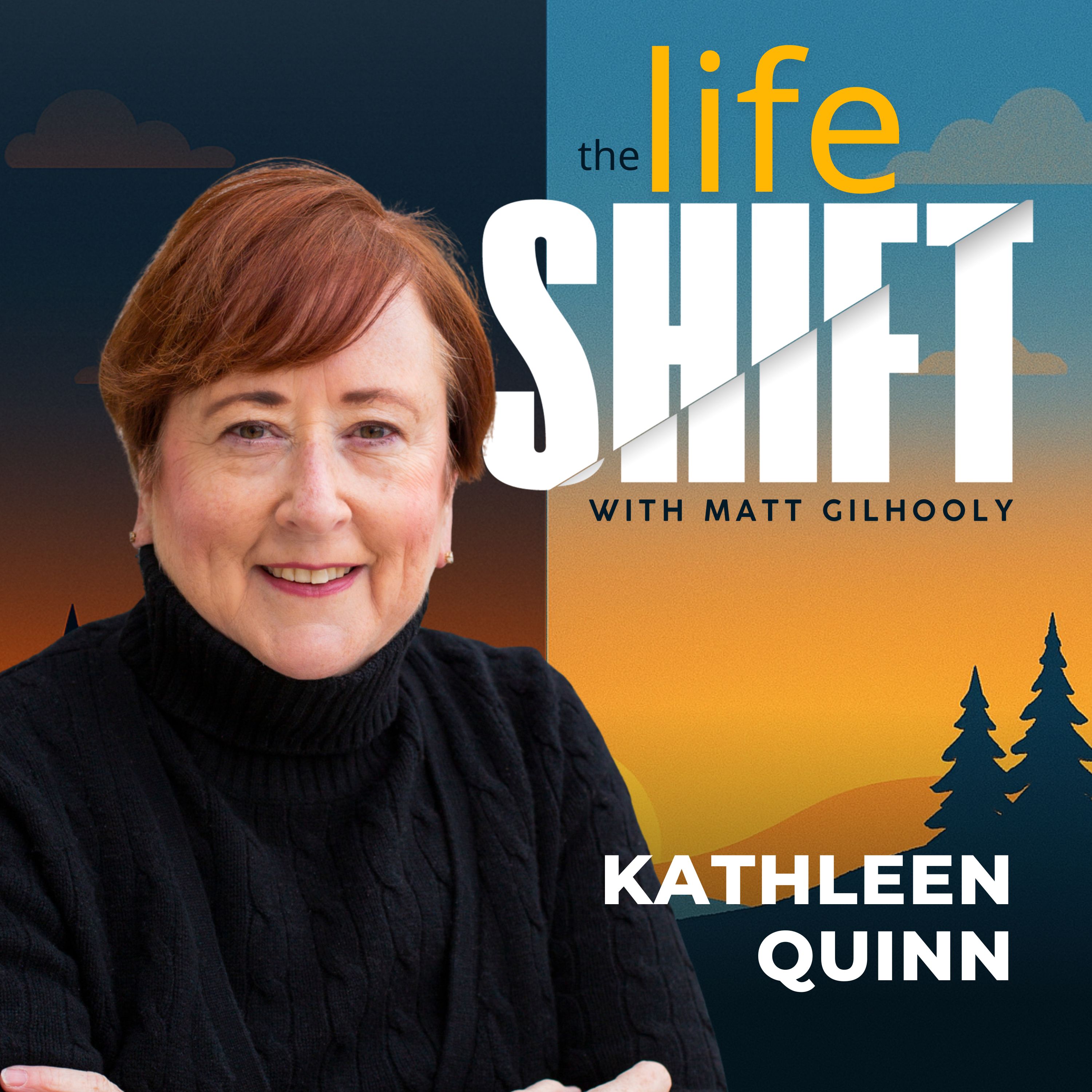
A tender conversation about loving fully, grieving honestly, and staying open to life even after profound loss.



If you have ever loved someone so deeply that the thought of losing them rearranged everything, this conversation is for you. It is for the moments when you try to stay steady while the ground is already shifting beneath you. It is for the quiet questions that surface when life no longer follows the plan you thought you were living.
Kathleen Quinn shares a story shaped by devotion, sudden illness, and the long unfolding of grief. She speaks about caring for her husband through a devastating diagnosis, about choosing presence over denial, and about the many small decisions that come with loving someone at the end of their life. This is not a story about moving on. It is a story about staying open. About learning how grief and joy can exist side by side. About discovering that the life you are living now may still hold meaning, tenderness, and purpose.
This episode is a gentle reminder that there is no correct way to grieve. Only your way. And that honoring what was lost does not mean closing yourself off from what still remains.
What You’ll Hear
- Loving someone through a terminal diagnosis without turning them into a patient
- The quiet weight of anticipatory grief and how it shows up unexpectedly
- Choosing presence in moments that feel unbearable
- Letting go of rules about how grief is supposed to look
- Staying open to life after loss without rushing yourself
- How grief reshaped her relationship with worth, joy, and purpose
Guest Bio
Kathleen Quinn is a mindset coach and former philanthropy leader at Stanford. After more than three decades working closely with high-achieving and high-net-worth individuals, she now helps people explore the deeper questions of worthiness, wealth, and fulfillment. Drawing from her professional experience and personal journey through loss, Kathleen guides clients through meaningful transitions rooted in self-trust, clarity, and impact.
Listen and follow: www.thelifeshiftpodcast.com/follow
Support the show for ad-free and early-release episodes: www.patreon.com/thelifeshiftpodcast
Subscribe to the newsletter: https://thelifeshiftpodcast.beehiiv.com/
Matt Gilhooly (00:01)
Sometimes you meet someone who reminds you that grief is not just a single moment. It's a series of rooms that you walk through. Some are dark and some are just really bright and some hold both at the same time. Kathleen walked into this conversation carrying a story of really great love and great loss. It's the kind of loss that kind of moves you around, the one that forces you to see who you are now and who you still have a chance to become.
She shares how she cared for her husband through a sudden and devastating diagnosis and how grief asked her to soften and open in ways she didn't expect and how that journey has quietly shaped the coach and the guide that she is today. It's a conversation about worthiness and love. It's about choosing presence in the moments that break you. And it's about the power of finding your way back to life in the most tender and human way possible.
Speaker 2 (00:52)
hands you a card that says, or what you can do is take retirement and enjoy your life because in less than five years he's going to be dead. Do I trade a day of that life with him for a dime of that money? Not a chance.
Speaker 1 (01:09)
Hello everyone, welcome to the LifeShift Podcast. I am here with Kathleen. Hello, Kathleen. Well, thank you for joining with your lovely fire going behind you to keep you warm during this conversation. It's important to stay warm, right? I think it feels like a hug.
Speaker 2 (01:14)
Hello, Matt. Good to be here.
Yes, especially in Madison, Wisconsin.
Speaker 1 (01:31)
Yeah, it's
pretty chilly. I not I don't know what that's like anymore because I live in Florida, but you know, it happens. Anyway, thank you for wanting to be a part of the life shift podcast. It is I'm trying to think of a different way to say this because I say it every time. But it truly is an experience that I really never could have imagined for myself. One to just be able to talk to so many people about these
really important moments in their lives and which from one moment to the next, everything changed. But also that people trust me to do that is a beautiful thing. And also that I feel comfortable sharing my vulnerabilities now because when I was eight, which is really the start of the life shift idea for me, when I was eight, I was visiting my father. He lived in Georgia. I lived with my mom full time in Massachusetts and I was only going to see my dad every once in a while.
And so I spent an extended summer with him. And one day after summer camp, he brought me into his office and he had to tell me that my mom had been killed in a motorcycle accident. And at that moment, I think, you know, at eight years old, you don't really understand all of that, but you also kind of understand that nothing that you loved and were used to doing was ever going to be the same.
especially because my parents live so far apart and I really didn't ever live with my father in that way. And this, the time period just didn't allow for grieving and parents and grandparents didn't really talk about it. It was still the time period in which people would just keep that private or not talk about it or sweep it under the rug. And I saw that from people around me. And so I just assumed that that was my role to show everyone that I was going to be okay. And so 20 years of grief journey.
You know, it took a while because I was pushing it down or doing whatever I was doing to try to survive that. And I just wonder, do other people have very similar kind of experiences with this one moment in time in which everything about them feels like it's changed and maybe not changed for the better at first? And so it turns out that they do. And now I get to talk to people like yourself about all these different moments. I mean, we don't have one life ship moment if we're lucky, right? Like we...
can manifest some, can experience some that we never want anyone else to ever have to experience, but we can learn from them. And I think that is the beautiful part is if we get to the point in which we have this awareness and ability to reflect on our experiences and how we approached it and we can learn from it and not do certain things the same way again. So it's just been a beautiful journey and I'm so glad that you want to be a part of it.
Speaker 2 (04:23)
Thank you, and I'm honored to be asked and glad to be present with you.
Speaker 1 (04:28)
Well, thank you for that. That's very kind. Before we get into your story, I'm wondering if you...
Speaker 2 (04:34)
and I'm sorry for your loss. Tell me your mom's Joan.
Speaker 1 (04:36)
⁓ Joan.
Thank you. Before we get into your story, maybe you can tell us going into 2026, who is Kathleen? Like, how do you show up in the world? How do you identify these days? However you want to describe it.
Speaker 2 (04:56)
Sure. ⁓ I'm a mindset coach. This is my second career. For 35 years, I did university alumni and development, which meant I built relationships with people who had the capacity to make a difference in the lives of faculty and students through their philanthropy. And that was my career for a long time. And then I ⁓ took early retirement and became a coach. And now that was all.
Well, you asked about 2026. So going forward, I'm a mindset coach and I really focus on the intersection of worthiness, wealth, because of my work in philanthropy, and fulfillment. So I work to have people feel grounded, free and fulfilled to live in alignment with what matters most because life is so short. And that's what I do. And I love the work.
And it's become more of a full-time effort at 64 than I expected it to be when I started being a coach. It was at 57 when my late husband and I took early retirement and I thought, oh, well, I need to do something so I can do this. And I was present with my clients, but I was not worried about building a business.
Whereas now it's really about a business that I'm trying to build and a message I want to get out, which is why it's wonderful to be here.
Speaker 1 (06:25)
What's your favorite part about being a coach?
Speaker 2 (06:29)
Joy. My purpose in life is ⁓ when I talk to my clients and just talking to them is a wonderful connection. But when they have that aha moment and they let go of a burden that was never theirs to carry. What you talking about? Yeah, what? Not those 20 years you had there.
Speaker 1 (06:51)
Nobody does that.
God, I'm sure there's still things in my pocket.
Speaker 2 (06:59)
Yeah, exactly. ⁓ But yeah, so when they have that experience, they have joy. And so do I. It's my kind of unmet need. And especially in the last four and a half years since my husband died.
Speaker 1 (07:15)
So, well, I think that's beautiful. I mean, I think what what more could we ask of others to help us find joy? I mean, I think I mean once and then we know how to do it on our own, right? Like, I feel like not to put you out of business, but at the same time, you're giving people the tools to create that joy as well. Or am I assuming things?
Speaker 2 (07:34)
No, no, that's true.
Speaker 1 (07:36)
Well, let's get into your story. I think the best way to do it would be to have you kind of paint the picture of your life leading up to this main pivotal moment that we're going to talk about today. And feel free to go back however far it makes sense to give us a little sense of the before version of you so that we can unpack the after version.
Speaker 2 (07:55)
Sure. I was raised in Madison, Wisconsin, and I say that I was raised in an Irish Catholic democratic family, and I'm not very Catholic now, but I have always said there, but for the grace of God, go I, because I feel I've had the good fortune of being raised in a healthy family, know, healthy conflict that happened and all those kinds of good things, right? Eight people and 1,500 square feet in one bathroom. So, you know.
⁓ But a really good loving family. I had the good fortune of being able to receive a state education, find a career that I fell in love with. I I just said to the chancellor, I've been student body president, and I said I'd love to work at the university. And I said like admissions or alumni or something. And they pointed me in the direction of alumni development. It's a good thing I would have failed at admissions. I would have admitted everybody. ⁓
And so I did that work and it became this profession that led me to 35 years of doing that. And I ended up 18 years at Stanford University where I had a leadership role. And it was so joyful to see people set up a scholarship that would help a student because they had been helped or to help create a whole new arts district on campus because Stanford's not known for the arts. And so now there's a concert hall and a new museum and different things.
that students can avail themselves of and the joy that brought to people to be able to do that and then to witness it and to tell the stories. A lot of what our work was was to go back and tell a story of how someone made a difference through their philanthropy. So that stewardship as we would call it is really important to me. It was never about the size of the gift or what gift I was going to get next. It was about the through line.
from what's gonna motivate and drive this person to wanna do something and where at the university are they gonna make the greatest impact and then how do we keep them engaged so they know that they're making a real difference. So that was the work. Yeah, yeah, I loved the work. And so that was 35 years of my life, 18 at Stanford. And then my husband, 12 years older than I am, was ready to take retirement.
And Stanford has this cool retirement program where you can, your age and your years of service equals 75. You can buy into the health insurance as a retiree. So it's expensive, but at least, you know, at 57, I had health insurance. So I was able to do that. And we took early retirement and moved up to Ashland, Oregon, because we're self-proclaimed theater geeks. And there's a phenomenal repertory company there, the Oregon Shakespeare Festival. Really worth going to.
And so we moved there and we were there for 2016. We moved up there. I did remote for a couple of years, 2018. I was officially retired. And then I started this coaching business. I had a couple of clients every year, but it was very kind of a quiet thing. And so we got to travel. We did a lot with the theater company in town and another nonprofit in town that worked with homeless youth.
Speaker 1 (11:12)
How long had you been married? By this time.
Speaker 2 (11:14)
Oh,
you know what, Matt? It was 33 years ago today that I met Michael. Yeah, so it's a little anniversary that I always acknowledge. Yeah, so we were together. We were long distance together for four years. And then I moved up there in 97. We got married in 98. And so it was like 20 years, our 20th anniversary we celebrated when I retired.
Speaker 1 (11:41)
Yeah, that's a long... Was he like the partner of your dreams kind of thing? because you found the career of your dreams.
Speaker 2 (11:50)
He was and
is the love of my life. Yeah, ⁓ he had been married once before and his first wife died of colon cancer when she was 41 and he was 43. And so he was what I would call a grief whisperer. He really studied and understood grief really well.
He moved out of his parents' house to his marriage. So this was like the only life he knew. And so he just didn't want to fall into another relationship. He said he had ⁓ people out there that were watching for him to just suddenly try to replace her, and their job was to stop him from doing that. so he really, over the years we were together, I witnessed him.
guide probably 18 different people through grief. Yeah, people would call him and ask him about things. And so our first date, we were going to a movie, we're having coffee before the movie. It's Christmas time. He knows that my mom died four years earlier because the friend who introduced us had said something about it when we first met. And he looked at me while we're sitting there having coffee and he goes, I have to ask you something. And I'm like, what? And he goes,
What do you miss most about your mom at the holidays? Why are you asking me that? And he said, because I know no one else will.
Speaker 1 (13:20)
People are so afraid. I think that's beautiful. I mean, gender roles, I think, at the time, even still, people assume that men aren't as capable. But that's so beautiful. And shocking, too, right? On a first date.
Speaker 2 (13:35)
Yes. he. And I'm
like. And so then I told him I missed seeing her with her beautiful aprons on taking food out at the holidays. You know, I got really specific about what it was. And now I have those aprons, you know, and I put them out at the holidays. And I might never have done that before. You know, so.
Speaker 1 (13:58)
gives you permission to grieve and miss out loud. And sometimes we just need to know that that's okay. And we don't have to keep it all bottled up. But I mean, I love that he did on the first date because it gives you it gives you a picture of the quality of this person, right? Like, so you're like, I mean, he showed you who he was on day one versus showing up in whatever, you know, I think a lot of people that go on first dates kind of show up as a different version of themselves a little bit.
Speaker 2 (14:27)
Yeah, he told me that the rules were, you know, that there were no rules when it came. Like he didn't understand how to date. You know, he didn't, he called it socializing, not dating. He had all these, you know, but he called me, he sent me a card after I first met him in San Diego. I, my friend said, he's going to write to you. You have to write to him. So I sent him a card and he called me and we were talking, he goes, well, I'm going to be back in San Diego.
And he told me when and I said, ⁓ I'm having my Christmas party then he goes, good. He goes, well, assuming I'm invited. I'm like, yeah, yeah, you're invited. You know, so he was just like, there's nobody invites themselves to someone's party. You know, he was I just, don't know how to behave. So you just have to put up with it. So
Speaker 1 (15:12)
Yeah. So was that a lot of the years, what you did with him?
Speaker 2 (15:16)
Oh, yeah. Those type of things. Yeah, we had to have marital script that, you know, people pleasers are not always pleasing. He had all these different like sayings. If it was a five for me that he, well, out of a scale of one to five, if it was a five for me that he had to go to this event at Stanford and it was a five for him not to go, we had to talk and you had to be honest about what your number was. If it was only a three for him not to go, then he he needed to go.
You know, so he didn't believe in the phrase chick flicks. You know, there was so much about him that was just so real and human and kind and loving and funny.
Speaker 1 (15:54)
So the retirement part, I it's great. I mean, because now you don't have to worry about working, right? You can do everything in anything.
Speaker 2 (16:04)
Right, and we did. 2019 was our first full year of retirement, because I retired in mid-August in 2018. So 2019 was our full year, and then 2020 was kind of not a great year. So we had done all kinds of travel in 2019. We actually went to a cooking school in France that someone told us about that was Julia Child's property, and this woman had started it, and she had done it.
really underpricing the whole experience. Now it's like three times what we paid. And so we went with our best friends and we had the best time. It was amazing. It was his 70th birthday. I said, we have to go to Crater Lake and stay at the place there, the lodge, so we can see the stars at night. And we did all these things in 2019. And then 2020 was COVID. And then September 2020 was a pancreatic cancer diagnosis.
that five months later ended his life.
Speaker 1 (17:07)
Was it totally out of the blue? Yeah.
Speaker 2 (17:11)
Yeah, I mean, he, we were at an event, the Shakespeare Festival had done a fundraiser for people who were out of work. Some of the actors had put together a concert. all outside at this gorgeous winery, know, stage seating and everything. And we were having a little...
thank you for the people who put it together at one of the actress homes in their backyard. And then next day he got really sick and we thought, it's food poisoning, right? You know, he ate something, whatever. No, no.
Speaker 1 (17:47)
So what does that look like? Is that something where you dismiss it? Or is that something where you...
Speaker 2 (17:54)
No, he was
sick enough that we just thought, well, we thought it was like really bad food poisoning or something. So he talked to the doctor. They ended up running some tests and then he started losing weight. I mean, he was a guy who was probably 220, 230 pounds, six foot. And in the month of August, he lost 20 pounds like that.
And so they pretty quickly knew something was wrong and he had a ultrasound or I don't know what you call it. had some test and the guy came back and said, this looks like it could be pancreatic cancer. And so that was where it started was in late August and he died January 9th. It'll be five years in January.
Speaker 1 (18:43)
I'm so sorry for your loss. think it's, unfortunately, it's more common than we want it to be, right? It's something that so many of our loved ones have to experience being the partner of someone that receives this diagnosis. Would you say that the diagnosis was...
more of a shift for you in the way that you felt and moved through the world or his passing.
Speaker 2 (19:16)
⁓ I think it started with the diagnosis because remember it was August of 2020. COVID was only five or six months in. So it was all of this, you can't go anywhere. Like we would do appointments and I would sit in the car and be on the phone. And when the oncologist realized that, he's like, where are you? I'm like, I'm in the parking lot.
And he goes, Kathleen, come in here. And I went into the office and he looked at me and he said, you will never sit in the car. And I thought, this is bad. You know, I could just tell that this doctor was like, this is not going to take long and you are not going to be separated from him for even a half an hour in the car.
Speaker 1 (20:07)
There's compassion there though.
Speaker 2 (20:09)
He was very compassionate
doctor. was wonderful. But it was so I think in that moment, I understood that it was bad. And Michael and I given his ⁓ nature, talked about it a fair amount. And I mean, the doctor said this is not the chemo is not a cure. It's, you know, it's just what it is. ⁓
And I wasn't even sure if he would do it. He had to debate whether to do it or not. So he did four treatments until we got to his fifth treatment by date would have been December 24th. And of course we didn't want to do that on Christmas Eve. So we said, well, what if we took a break for two weeks until January 7th? Cause then we could see like, was he getting stronger and all those kinds of things.
And so we had two weeks off and he ended up January 7th going into the hospital, going to the doctor's office in a wheelchair. And just the doctor walked in and just looked down like, Yeah. He said, we're days. We're at days now. He goes, maybe a week. And I said, are you saying a week to be nice to me? He said, yes. He goes, we're at days. And it was literally, that was Thursday and he died on Saturday.
Speaker 1 (21:18)
doesn't happen.
Speaker 2 (21:34)
But he died at home with our best friends there, thanks to hospice. And otherwise I wouldn't be here if I had said goodbye to him on this thing. Yeah. I'd be in a corner still. I don't know how people did that. They just don't know.
Speaker 1 (21:51)
Yeah, I mean, it sounds like who he was may have helped in this journey a little bit in the I mean, a of people shy away from talking about it talking about the reality of what might happen. I think people hold that to themselves. Maybe they grieve in their own way. How did you handle that? Because I think that's something we a lot of people don't talk about because
I think we as humans feel like we have to be strong or we have to do everything we can or what was your approach as you knew things were not good?
Speaker 2 (22:33)
Well, we knew it was a fatal diagnosis. just, knew he couldn't do immunotherapy. I didn't think it was going to be five months. I thought maybe we had a year. didn't know, but either way I knew this was, we were on a short run of And with COVID hovering over us, it felt more fatalistic, I think, just because of that. He never ended up in the hospital except one time and it was a migraine he had that got really out of control.
and he wasn't even in overnight. So we were lucky from that standpoint. ⁓ My reaction was never to make him a patient, but he was always a person. And the disease was a situation we were dealing with. So I tried to always keep things
about him as a whole person and not as a dying person. And I think we all go to whatever our thing is. For me, communication is really important. Like you sending your email to tell me how all of this was going to work. I'm like, okay, good, this man communicates, right? If you don't communicate with me, it makes me a little nutty. So I tend to communicate with people. So
I made an Excel spreadsheet of everybody we needed to tell and I needed him to look at it. Is this accurate? Is there anyone else who would want to add to it? Because I'm going to do a Karen Bridge page, right? You Karen Bridge page. Once he decided he was ready to tell people. And ⁓ so I was about a lot of communication and a lot of communication between us. But then there was a phase where he started getting quieter and quieter. He was someone who
never needed music on in the house. Like if I was doing something and I had music on, be like, can you turn that off? And I'd be like, okay, you know, like sometimes whatever, right. And in his last two months, he had the music on a lot in his recliner, his feet were tapping, he was pseudo napping, but I think he was processing. And I never really pressed him about what he was thinking about in that when he was on those days.
But I knew from, well, from that first test when he first said pancreatic cancer, Michael was still coming out of the medication of having had this procedure. And Michael said, does that mean it's fatal? And the doctor said, I don't think we need to talk about that right now. And I just looked at the doctor. Well, yes, it is. You know, it was, it was right around the time that Alex Trebek was like living so long with it and stuff. And it was like, yeah, well, good luck.
Congratulations to Alex Trebek. He had immunology, he had all the stuff that he could do, and we had already been ruled out for a lot of that.
Speaker 1 (25:32)
In that journey, were you finding, I mean, you said, know you said communication is important that keeps kept you quote unquote sane in a way. Did you have moments of denial or were you depressed about it? Did you have this anticipatory grief? Like did any of those seemingly common things happen to you?
Speaker 2 (25:53)
The anticipatory grief happened. There's two things I'll share. One was a time where I was just sitting there next to him and I was, I just started sobbing. And he's like, you know, and he listened to me and we talked about it and he said, let's not buy trouble. Let's just let this play out the way it's going to play out. Right. You know, and let's just live every day that we have the best we can during COVID.
You know, and so we go to there's a beautiful park in Ashland and we would go there and there was this guy who I'll very often would be there playing his cello. And we were down there one day and it was the day he decided I'll do chemo because he said I want more days to sit here and listen to this man play his cello and hold you. Right? So there was that. ⁓
was one reaction and the other was we didn't own recliners and I had tried to order these recliners from some store in Portland that was, I don't know, there was something special about it that I thought was just going to be perfect for him, you know, that he had to have, whatever it was, I don't know. They were delayed, they were delayed and when I got off the phone and realized they weren't coming,
I emailed our best friends who kept saying, we can get you the ones we have at Costco. That wasn't good enough for him. And I emailed, I texted my friend and I said, get the Costco ones. I'm done. And I couldn't even call her. And I looked at him and I said, I'm going to the grocery store. And I stormed out and I was so angry because that was going to fix everything, right?
And in the end, our friends dismantled one of theirs and brought it over that day. So he had theirs and they had actually one of the chairs that he was sitting in was a chair they had given us from their move, whatever, big one, sorry. So they just took that chair back home. And then finally the recliners came like, you know, a few days later, but it was this, made me so angry that I just erupted.
But that was the only time I erupted and it was over a recliner. And the poor person at whatever that store was, because I had no patience. yeah. I those are my two and five months that I remember.
Speaker 1 (28:22)
I mean, I think it's common though.
Yeah.
Right. Yeah. I think it's important to talk about though, because there's no perfect way to do this. Right? And there's not one way to do it either. Right? but I think it's important to to normalize the fact that everyone's experiences are going to be different, but also that there could be moments of anger. There could be moments of
I mean, I don't know if you ever did this, but you laugh and then you feel bad for laughing because, know, a little things and we don't talk about it. Right.
Speaker 2 (29:04)
It's in the, that, what's Sex and the City's new show, you know, when Mr. Big dies. No, no, Yeah, no, no, no, no. It's in the movie. It's in the movie when she breaks up, when he doesn't show up for the wedding and she's so depressed, so depressed, so depressed. And there, none of them can figure out what to do. And ⁓ Charlotte drank the water in the shower.
Speaker 1 (29:15)
Spoiler alert.
Speaker 2 (29:33)
And then she has a little oops moment. And it does a little number in her beautiful pants. And Carrie finally bursts out laughing, right? She finally laughs and they all look at her and she goes, come on, please. I have to be able to laugh at this. Yeah. ⁓
Speaker 1 (29:51)
It's important. I don't think we know I will keep that poop story in I think, I think it actually illustrates something that society taught many of us that grief or anticipatory grief looks one way. And it looks like sadness and it looks like no joy. It looks like you know, and I think it's
Speaker 2 (29:53)
And you can cut that whole story.
Speaker 1 (30:20)
I mean, I hope people are breaking that feeling now. mean, for me, I told you I failed at grief. I don't know if I said the word failed, but I did for nearly two, actually maybe more than two decades. But, you know, yeah, it sucked. But at the same time, I think that long journey taught me a lot. And when my mom died, my dad's mom became like a mother figure to me and became like a
a best friend, confidant, everything. No siblings, no. So when my grandmother got diagnosed with lung cancer, yes, it was a lot. But also, I was 34, I think. So we were, you know, I knew her better than I knew my mom. She was my mother figure. so I went into this though, like knowing that I was going to do this one right.
Speaker 2 (30:52)
No subjects.
Speaker 1 (31:17)
I didn't have the opportunity to do the first one right. I didn't have the tools. I didn't understand all those things. And so I made those last few years with her the best I could for myself, but also the best I could for her, including the one thing that I'll probably be the most proud of in my entire life is forcing sounds bad, forcing a final conversation with her sitting down when she still had her. This was about two months before she died.
And I said, we need to have the talk. We need to have the talk so that I'm not saying these things when you're not around. And we sat and we told each other everything that we ever loved about each other, that annoyed us about each other, like all the things to the point that when I left that night, I felt like there was nothing left unsaid. If she died that night, I would be terribly upset and sad, but I would have no regrets.
And I only was able to do all those things because of doing a terrible job at grieving my mother, losing my mother.
Speaker 2 (32:25)
eight years old and didn't get to say goodbye to her.
Speaker 1 (32:28)
I didn't get to say goodbye. didn't really, and I didn't take care of myself. I didn't really honor myself and how I was feeling because I didn't know that that was allowed. And then I just ended up being a crutch. And then I ended up being a perfectionist and all the things that came along with it because I was just afraid that my dad was going to leave if I wasn't perfect or anyone that I loved. So I say all that not to make this about me, but curious if your approach to
Speaker 2 (32:48)
natural.
Speaker 1 (32:58)
your husband's diagnosis and his passing, any, did it build upon losing your mother earlier? Did that grief journey make this one different or were they kind of the same for you?
Speaker 2 (33:13)
That one was really hard because she had a heart attack at the kitchen table, dropped her cup and was gone. It was five days after Thanksgiving. had, so here's what's slightly similar, what you can appreciate. Five days earlier, I had just moved to San Diego, it Thanksgiving. Someone invited me to their home because I was the lost person without a house. And I'm on their phone with my mother, of course, actual phone.
I'm saying, I don't like being here, you know, all that kind of stuff. And she's like, you should be grateful. They're very kind to you, you know, right. And I got off the phone and I was pissy about it with her. And that was my last conversation with her, right. And then after that, I have had two brothers who died at age 57, three years apart, one from
delayed lung cancer. He'd quit smoking years earlier and the other one from a stroke. And the man who hired me at Stanford died by suicide. And there's a longer story where there was a lot of guilt that I felt ⁓ related to his life and career because he had wanted to come back to Stanford after having left. ⁓
Anyway, he had, you know, in my therapy, I learned that, you know, when someone goes off their meds, it's a, you know, it can be really difficult. So it wasn't my fault, although I believed it for a while. And I just thought the world of him. So, and then one of the people who worked for me, who shared a birthday with me, died of breast cancer.
and one of my colleagues, three year old sons died. So I had this like journey of people and through all of those, Michael was there for me, except for my mother. Michael was there for me through all of those. So he helped me understand the notion of what to do with grief. Like Anna Marie, my colleague who had breast cancer, she called me up and said, I want a retirement party. She'd worked at Stanford her entire life after graduating.
And she said, I want a retirement party. It's not a funeral. And I said, I've got it. So I planned it for her. We created this whole thing. She had to sit in a chair. People couldn't get too close to her. know, like the whole thing, but we created it we're like, yes, we will do what you want to do. And what I have come to believe is,
It is about the person, not about anybody else. Cause everybody got their opinions about what we should be doing or saying, or how you should be feeding them or, you know, whatever obsessive behavior someone has that thinks it's going to make it all okay. And it's like, what does our loved one need from us in this moment? And that is what we will do and nothing else. Thank you ever so much. ⁓
Speaker 1 (36:12)
Right.
Speaker 2 (36:23)
Because I think that people get really obsessed about, know, well, if they ate this one food, they would feel better. Yeah. Maybe they don't want to eat that.
Speaker 1 (36:35)
I think it's just people, don't know what to do or say, and they want to try to help. they don't, maybe they've never been in those shoes, and they don't understand how to help.
Speaker 2 (36:45)
they want to feel better themselves. That's my take. in the, yeah, they're, they want to feel better that they've done something that's made a difference, but they don't do it through the lens of what does that person need.
Speaker 1 (36:50)
But I think they're one and the same.
Yeah, yeah, no, and I think having...
Speaker 2 (37:07)
really wonderful
and beautiful and helpful things. But there are those that I will no longer link around.
Speaker 1 (37:12)
Yeah, so I mean, I was just curious if if one I mean, you had rapid succession of loss, loss, which then translates oftentimes to grief. But you also had this outlet in your husband, who was the grief whisperer, as you said, you know, to help you through this, which, I mean, how lucky are you to have someone like him to guide you? I mean, not that you didn't understand, but also to just
be a sounding board, be, you know, ⁓ give you recommendations if you ask for them or whatever it may be. So many people don't have that. And so do you think he survived all of those really hard times just because of the way that he was? Absolutely.
Speaker 2 (37:59)
Absolutely. And the year before he got sick, literally 13 months before he got sick, the woman who replaced him in his job, her husband got pancreatic cancer and died in three weeks. And he had written emails to her. I mean, he talked around everything, but then he would write emails to her regularly about the grieving process. And so then the next year he's like, I have all my emails to Alan in a folder here for you.
And I'm like, thanks, you know? ⁓ But we did talk about things. And one of the things that, there are two things that I always share with people is that, and it's affected where I've gone since he died. ⁓ He said to me, there's one request I make of you.
And I said, what is it? He said, I asked you to struggle to stay open to life. He did not say love. He wasn't saying go find someone. He pretty much knew that was not going to be on my agenda. And the second thing was it was in the last day or two. And I'm holding his hand and I had my wedding rings on and I looked at him and I said, you know, I'm not going to stop wearing these for a long, good long time.
And goes, you absolutely should not. And I said, Good.
Six months from now, if I want to take him off, I'm not going to be able to because you told me that. So why did you say that? Thank God I asked him that, right? And he looked at me and he goes, sweetie, you should do whatever makes you the most comfortable.
Okay, so when I left Oregon where we were living and moved to Madison, I took them off because I live in a condo building with 64 units and I just didn't want people asking me, I haven't met your husband yet and getting out of the elevator and going, he's dead, you know, and then walking away, right? So I thought, you know, this is the dark humor, right? So.
Speaker 1 (40:17)
I did it all through high school. Don't worry.
Speaker 2 (40:19)
Oh, yeah. So and that now I finally have put them back on as a statement of, you know, I, I'm not looking for anything else. I talk to him every day. He's with me. He loves me. He's proud of what I've accomplished, what I've grown, what I've built. And, you know, I had to plan my own funeral for him because it was 2021. So no one could come to Oregon for me.
My sister was in Florida, could not fly. I'm like, I will not let you fly. said, I cannot have anything happen to you because she's my best friend. ⁓ And so it was no funerals, no visitors. So I did Zoom funerals that I planned. And so I did a eulogy that people had to listen to for 30 minutes where I told them who he was. You know, so all of that I crafted.
on my own because it was my way of making sure I sent him off in the right way. And then a year later, he'd been cremated, so a year later I was able to, and this is for anybody if they need a good idea, I was going to take everybody out in a bow because I'm in California, right?
where we had lived for so long was where I wanted to do it. I was going take everybody out in a boat. I found out that two key people have seasickness. And then I found out this woman in Southern California does this thing called the journey with wings, where she flies her plane. You are on the ground. She flies by, she tips her wings and comes back around. So then you wave, acknowledge that you see her. Then she comes back over and the canister is affixed to something she's got set up in the plane. She depresses it.
and as she's flying along there's just this trail that are the ashes. So he is in the Cove at La Jolla, which I was just back in San Diego on the first morning. I by myself drove up there and sat by the Cove, which is where we used to walk when we would date, before he had to fly back to the Bay Area. So it worked out kind of perfectly.
She said I could have been up in the plane with her for a few extra and I'm like, no, I want to be with my friends. But it was reasonable. It was $900. And to bury somebody, it's a lot more to have a funeral and a casket and all that. So ⁓ it was beautiful. And I had music and food and I did it all the way I wanted it. So. ⁓
Speaker 1 (42:52)
I mean, I think that journey you created for yourself and you created your own grief journey, if you will, of the things that that that you needed, you were taking care of yourself to honor him, right? Like you needed to do these things, mostly for yourself, but also in honor of him. And I think it's, it just proves that there's no right way to do any of this.
But the right way is to honor yourself and how you're feeling and not shame yourself into feeling like, had you gone out and had a great time with your friends, you know, if you could, because it was COVID, but you couldn't. But if you had, that would have been okay, too. Because that's all part of your journey to finding the, I don't want to say new version, but the different version of you and your life moving forward. Would you say that that was
the way you grieve through doing all these little pieces.
Speaker 2 (43:52)
Absolutely. my, he died January 9th of 2021. I decided fairly soon after that, that I was probably going to move because where we lived, the theater was shut down because of COVID. There'd been this huge fire that had swept through the two towns next to us. Literally, it happened like three days before he got his official diagnosis. So everyone's calling us to say, the fire, the fire, are you okay? And we're like,
Yeah, we're okay. Call you in a few days. Right? ⁓ So I knew I wanted to move back to Madison, which I say here I'm bubble wrapped in love. There's so many I have siblings and nieces and nephews in high school and grade school and college friends. So I say I can't fall down without bouncing right back up. So I knew I wanted to move home pretty quickly. And
but I didn't want to move until after the first anniversary. I needed to stay in Oregon for that. So my 60th birthday happened in November of that year and his best friends and I went out for dinner and we had a big dinner celebration. And yeah, it was poignant, it was hard and there was tears, but there's also champagne, right? know, cause I'm 60, woohoo, right? And I'm still living. And that still living thing is a big piece. So.
Speaker 1 (45:08)
you're still living.
Speaker 2 (45:15)
that spring after he died, I remembered someone had invited me to a grief group, a loss of spouse grief group on Zoom, and it was the worst experience I could have had. It just felt, it just wasn't good. that's all I'll say. And I thought I need better help than that. And so I remembered having heard
David Kessler, the grief expert, being interviewed the year before on Brownie Brown because he had just written his new book, Finding Meaning, ⁓ after his son had died. And not finding meaning in the death, but finding meaning in your life.
And I thought, ⁓ wonder what he does. And he had suddenly switched from his weekend retreats in LA to an online program called Tender Hearts. don't know if you've bumped into anybody who's been part of that, but grief.com, Tender Hearts. At the time I signed up, it was like $34 a month. You could sign on to as many classes as you wanted. He offered him like four days a week. And from a coach, I was fascinated to watch him.
take people and hold them in his palms like a broken little bird and care for them through or say hey you're saying it's all your fault that your husband died because you insisted on going to your mother's birthday party so what you're telling me is if you had woken up and said you're gonna die today but because i'm gonna go to mom's birthday party and i don't care
And the person was like, well, I didn't say that. And he goes, well, you kind of did. And it had been long enough that he knew he needed them to hear. And he said, here's what's happening. Your brain is more willing to blame you than accept no answer for why. We are always willing to blame ourselves rather than accept the answer that we don't. There's no explanation. Your husband's heart gave out.
My husband got pancreatic cancer. Now I used to scream at the diabetes commercials, drug commercials on television, because he was a diabetic. And I decided it was their fault. And so I would scream at the television irrationally, whatever. ⁓ But it's that notion. So I found David. And then that summer, he said, people have told me I need to show people how to do this work.
And he said, I am going to do a certified grief educator program. And so I thought that's going to help my clients. So I went through that with him, which was so powerful to understand that sometimes you do have to hold that person carefully. And sometimes you do have to kind of help someone see what they're saying in a way that he did it very lovingly the way he handled that, of course. ⁓ you know, but it was understanding how you approach each person so individually.
Like I said to him, my husband, his wife died in January. He met me a year later in November. He died in January. Like, am I going to have to start dating someone? And he looked at me and he goes, why would that be the case? Well, I just thought that's what I'd have to do. You know, and he just looked at me and smiled and said, it's your journey. Yeah.
You know, and just was probably like, good grief, why do I do this work? No, no, no. Yeah. Yeah. Yeah. And so that was, you know, so that becoming a grief educator really helped me, well, just going through his grief program. And then I did is the notion of you grieve fully to live fully. That is the point of grief. Cause otherwise it's going to come out sideways.
Speaker 1 (48:50)
It's not the first time he's heard.
Speaker 2 (49:15)
like yelling at the person who couldn't deliver a recliner.
Speaker 1 (49:20)
It's almost like you have to go through those pieces though to learn and understand and recognize that.
Speaker 2 (49:27)
It was always the people who were least connected to me that were doing something poorly in my grief brain view that got the frustration. It wasn't usually my friends or my loved ones because they seemed to know how to handle me somehow.
Speaker 1 (49:45)
Well, this is going to be a terrible question. Yeah, I'm curious if this experience of diagnosis, watching the deterioration of someone that you loved and then losing him, does that that experience and then your grief journey after does that make you a better coach now? Do you think?
Speaker 2 (50:07)
By a mile, I'm less afraid to be real with people.
Speaker 1 (50:14)
and share your own vulnerabilities.
Speaker 2 (50:16)
So
what I say is, so I met David, I go through this grief journey, I go through the certification program, the second to the last class with him, he brought in this woman, Nancy Levin, who has a coaching academy to talk about self-worth because he said, you will find it difficult to charge people for grief services. Because they're like, I'm grieving, why are you charging me? And he's like, did you pay your doctor?
Right? But people just think, how can you charge me for this? And he said, you have to have enough self-worth to understand it's okay. So Nancy does that kind of work. And I thought she was amazing. I end up signing up with her coaching academy and I've done so much more training through her. It's all based under Carl Jung's philosophy. And so worthiness, boundaries, ⁓ all kinds of things.
And so David gave me Nancy and then Nancy introduced me to this woman, Amber Villauer, who does this work around alignment where you get an alignment with what matters most. You have an avatar that is exactly the person you're trying to help in the world who needs you more than anybody. And what is your purpose and what is your why, which is where the joy comes from. And then you ground it in your values. And I have had moments where I have felt oddly guilty.
that the joy I have in my life right now, I wouldn't have if Michael hadn't died. And I flipped that finally to say, he gave me three angels. He gave me David and Nancy and Amber. And that has allowed me to become a coach that people work with multiple times because I am willing to say, what are you making that mean about you?
Who is it that you want to be? Why are you telling yourself that? What is it about being eight years old that makes you think you have to be perfect? All of us. Yeah, yeah. But and now, now that you know that, what new empowering belief can you create for yourself? Right? Yeah. Sorry, I didn't mean to go quite so close. But it's all of that work.
Speaker 1 (52:38)
No.
Speaker 2 (52:42)
and willingness to just say to people, you you can have a different life. And frankly, you know, I say this to, I said it to a group of women I spoke to about this notion of alignment, about what is most important, what matters.
And I said, look, I could have said, I cannot retire until I'm 60 years old. It's what I believe. I'm too young. Brack, brack, brack, brack, brack. Not that there's something really motivating me to keep working. It's just some belief I have about myself. And he would have stayed and been retired in Palo Alto, and I would have worked four more years. And I would have X amount of money in my bank account now.
No one hands you a card that says, or what you can do is take retirement and enjoy your life because in less than five years, he's going to be dead. Do I trade a day of that life with him for a dime of that money? Not a chance. So when you're making up rules that are based on nothing significant in your life, you really have to question what is that about?
I always have to work, always and never. Anytime anyone says always or never, it's like, what's that about?
Speaker 1 (54:02)
No,
I it's not true. think it's, it's a unfortunate, but also beautiful journey that you had, right? I feel that's, mean, such high highs and such low lows and every messy thing in between. And I think it creates the beautiful version, the current versions of ourselves as we kind of go through these, these journeys. I like to ask this question to everyone. So I'm curious. I guess I'm curious a lot, but.
I wonder if this version of you could speak to the Kathleen that slammed that phone down after she found out that the recliners were not available and just were you're so mad and in your anger and in your grief. Want say to her? Yeah, what would you want to say to her?
Speaker 2 (54:49)
What would you want?
Go stand out in the backyard and scream for a moment and then come back in and love on that guy and love on yourself. And don't go off to the grocery store in anger and let your friends help you, which they had offered to do like four other times. So part of it was I was mad that I had to finally accept that I was wrong and I should have just accepted their help a week earlier. ⁓ You know, yeah.
Speaker 1 (55:24)
It's just kindness, right? Like you just would be kind to yourself and let yourself know that all of it's okay. You can go scream. And you can ask for help because they want to help.
Speaker 2 (55:35)
Yes. There is a group of people who screams off a bridge. I think it's in Chicago because they're not happy with something in the world today. They won't go there, but, and they said to each other when they realized something was going to be happening now in our country. And they said, I want to scream. And they, and they turned to everyone on the bridge and said, we're going to be screaming because we're not happy. And anyone's welcome to join. And it's now this tradition they have.
Speaker 1 (56:04)
It's a community.
Speaker 2 (56:05)
They
should do it for grief. We should be doing this for grief.
Speaker 1 (56:08)
It's creating a community. Yeah, mean, was the same. You saw in New York, the people like that would cheer off their balconies for the frontline workers and those things and the community that people felt by going out at the same time every night and doing that with each other. Yes. And understanding it's a it's it's a connection that we have to each other. And I think it's the the importance that that you know very well of communication and talking to each other and sharing our stories.
and understanding each other's, even if we don't have the same beliefs or we don't have the same thoughts as someone else, but understanding that that's who they are and that's kind of how they see the world and we can still live in harmony and we can still work together and do the things together. It's so important.
Speaker 2 (56:57)
want to thank you for asking me that question about what I would say to that version of me, because that space is something I probably haven't let go of.
It was a gift just now that you gave that to me, so thank you.
Speaker 1 (57:15)
You are most welcome. think it's an impossible question. But I think we often, when we go back to those versions of ourselves and the people that I talk to on this podcast, it's usually with this kindness, this everything's gonna be okay and I know how hard it is right now and you're gonna do what you need to do, but also know that I'm here.
Speaker 2 (57:36)
And it made it harder
on him in that moment. So he had to call Jean and go, we just take care of this? Whatever you can do, she's kind of freaking out, you know? And granted, in five months, I think I get one freak out, ⁓ you know?
Speaker 1 (57:50)
We're human. think you can have two freakouts. You can have as many as you need to. And I think that the compassion that we have for ourselves in these really hard moments is really hard to do, but I think it's so important. And I just love that you were so willing to go down whatever road we were going to go down today talking about your journey, because there are people out there that are going through something very similar, and they feel like they're the only person on the planet that is feeling like they do. And hearing your story,
might give them inspiration, might make them feel less alone, whatever it does, it's going to help change their world, maybe taking a step that they weren't ready to take and now they are, you know. So I would love to have you tell us how people can like find you, connect with you, tell you their story, how, you know, like what whatever your services are, like what's the best way to find you and get in your circle.
Speaker 2 (58:43)
KathleenAQuinn.com or on LinkedIn Kathleen A Quinn. I incorporate grief work into the coaching that I do. I haven't done a lot of like organized grief programs for people, but if somebody said, Hey, I could use this or that, I would be open to talking to people about it because I think there are so many things like the timeline of grief, right? Mature grief isn't until a few years out.
You know, one year is not really all there is, which so many people think. And just that notion of talk about the person, it always helps. I to see Anderson Cooper and Stephen Colbert, and Stephen Colbert said, 45 years after my dad and the boys died, I still wonder why no one asked me about them. 45 years, right? So talk about the person, say their name, which is why I asked you your mom's name. When was the last time you said Joan?
to anybody that didn't know her. Yeah. Right. So yeah. So it's all of those things of learn about how this works. And don't accept what everybody tells you. Find your path. David always said when people said, I'm doing this wrong. He said, No, you're absolutely not. You're doing it your way. And that's right. Yeah.
Now I, you know, and he would say, but I invite you to think about tomorrow, whether you can get up and shower and put some clothes on, just see if you want to try it or not. Right. You know, so, but you were always doing it right. But he would always kind of help you with like, no, and maybe do you think it's tomorrow? You want to try that or not? Yeah.
Speaker 1 (1:00:23)
I think it's so important and I think that if you're listening right now and something that Kathleen said resonated with you or you felt something similar or you just want to say, hey, Kathleen, when you said this, it really stuck with me and I think I'm going to do this. I'm sure she would be willing to hear from you. So go on her website, find a way to contact her and tell her because I think there's a lot of power in telling your story. So
For listeners, think sometimes they haven't told their story in their own way, in their own words yet. So saying it out loud or writing it out loud or writing it in an email or something is going to help. So I encourage everyone to do that. So thank you for just being you, Kathleen. think it's a wonderful experience to talk to someone for an hour and get to feel like you really know a person just through regular conversation. So thank you for being a part of this.
Speaker 2 (1:01:17)
Thank you, Matt, for what you're doing. really matters in this world. Maya Angelou told Oprah that you would never know your true legacy because you don't know every life you've touched. And that's true about you.
Speaker 1 (1:01:30)
I
thank you for that. That's very kind of you. And I hope, I think of the eight-year-old version of myself that wishes he could have heard some of these conversations to know that there was a path forward and there was, that could be this version of me. So that's what I try to put into the world. So thank you for being a part of this. Thank you all for listening for the last multiple years and more to come. So I will be back next week with a brand new episode. Thanks again, Kathleen.
Speaker 2 (1:01:58)
Thank you very much. ⁓