Existing vs. Living: A Mother's Journey Back to the World
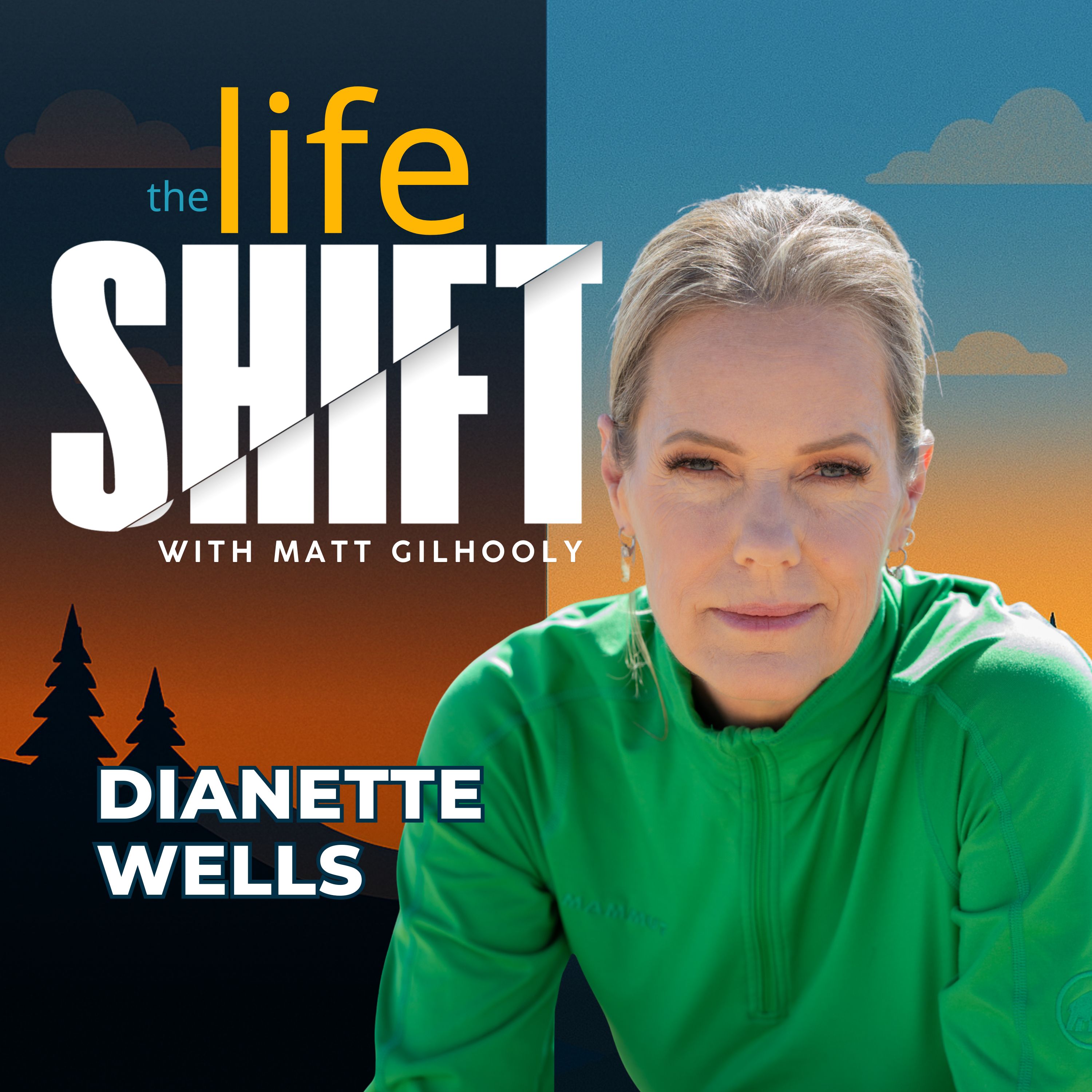
After losing her son at 23, adventurer and author Dianette Wells had to find her way back to a world that had lost its sparkle, and she did it one step, one trail, and one yes at a time.


There is a version of grief that nobody warns you about. It is not the loud kind. It is the quiet kind, the one that creeps in slowly until one day you are walking your dogs on a trail you love and you realize you no longer feel connected to the ground beneath your feet. That moment, as small and ordinary as it sounds, was the one that changed everything for Dianette Wells.
Dianette has lived her life reaching toward something higher. She grew up in flat Southern California, looking at snow-capped mountains from her backyard and knowing, in the way some people just know, that she was meant for something beyond what she had been handed. That instinct led her to Mount Whitney, to Kilimanjaro, to all seven summits, and eventually to ultramarathons across the world. Movement was not just her passion. It was her language, her therapy, her way of sorting through whatever life threw at her.
And then her son Johnny died. He was 23. He was a wingsuit pilot and a base jumper and the kind of person who had climbed the seven summits before he was legally allowed to do most of the things he loved. His death stripped the sparkle from the world for a long time. And Dianette had to find her way back, not to who she was before, but to someone who could hold the grief and still choose to live.
What You'll Hear
- How a girls' trip up Mount Whitney cracked open a hunger for adventure that Dianette had never known she had
- The quiet devastation of losing her son, Johnny, and how grief made the world feel physically different
- Why she believes year two of loss is harder than year one, and what finally shook her out of just existing
- Her honest take on grief without a roadmap, and why there is no right way to do any of it
- How movement, travel, and even a plant medicine journey became her path back to herself
- What it means to honor someone you lost without feeling obligated to perform that grief for the world
Guest Bio
Dianette Wells is an adventurer, author, and mother who has spent decades pursuing the kinds of experiences that most people only dream about. She has climbed the Seven Summits, run ultramarathons around the globe, and lived in Malibu before relocating to Park City, Utah, where altitude and single-track trails became both her home and her healing. After losing her son Johnny Strange at age 23, Dianette channeled her grief into continued movement, memory-making, and writing. Her book, Another Step Up the Mountain, is available at dnatwells.com and is now moving to a new publisher, Flint Hills Publishing. Johnny's story is documented in the film American Daredevil on Peacock and Born to Fly, Johnny Strange on Tubi.
Listen and follow: www.thelifeshiftpodcast.com/follow
Subscribe to the newsletter: https://thelifeshiftpodcast.beehiiv.com/
Matt Gilhooly (00:00)
There are moments in life when everything you thought would save you suddenly disappears, and you have to decide whether you will keep existing or find a way to live again. Dianette Wells has spent much of her life climbing mountains, chasing adventure, and listening closely to the quiet pull that told her there was more waiting beyond the life she was handed. In this conversation, Dianette shares how adventure became both her grounding force and her grief language after the loss of her son.
and how movement and presence and choice help her find a way back to the world. This is a story about resilience without bravado, grief without a roadmap, and what it means to keep choosing life even when it no longer sparkles the way that it once did.
Dianette Wells (00:46)
I literally felt disconnected from the planet. I was like, whoa, it was a physical sensation. It kind of scared me a little bit. I was like, no, this is not how I want to live. I'm tired of existing. I want to
Matt Gilhooly (00:49)
Mm.
Matt Gilhooly (01:01)
You're listening to the LifeShift Podcast. I'm your host, Matt Gilhoolie. This show is built around one simple idea, that sometimes a single moment can change how we see everything. Each week, I talk with someone about the moment that shifted their life and how they learned to live differently after it. These are not stories about having it all figured out. They are stories about what it looks like to keep going once the story changes. Thank you for being here. Here's today's story.
Matt Gilhooly (01:32)
Hello, my friends. Welcome to the Life Shift podcast. I am here with Dianette. Hello there. Thank you for wanting to be a part of the Life Shift podcast. Well, you don't know what you got yourself into. So I am so honored to have this show.
Dianette Wells (01:37)
Hi.
Thank you for having me. It's good to be here.
Matt Gilhooly (01:48)
so going into 2026.
How does Dianette show up in the world? How do you identify these days? What's your vibe?
Dianette Wells (01:56)
Well, I'm a grandma, so I have a grandma vibe. ⁓ I just got an amazing job offer. And that just happened today, so I'm very excited.
Matt Gilhooly (02:07)
Nice.
Dianette Wells (02:08)
I would say 2026, I want it to be about adventure. And as I've been saying for the last few years, I just say yes to everything. And unless it's illegal or immoral, there are some boundaries and standards, very few, but there are Yeah, just, you know, I have a deep appreciation for life and living it to its fullest. And especially as I get a little bit older and
Matt Gilhooly (02:18)
everything.
Fair.
Dianette Wells (02:36)
You know, yeah, I just I want to do as much as I can while I can. know, as far as, you know, my son, I want to meet up with him again and him saying, you know, yeah, you live the hell out of that life, you know, good for you. I don't just want to sit around and, you know, not do anything. I want to have fun. Yeah.
Matt Gilhooly (02:56)
Waste away, yeah? No, I think that's
beautiful. think that, I mean, you have the adventure spirit because of what you've done in your past as well. So it kind of makes sense to me and that you want to keep going, but I'd love for you to paint that picture of your life leading up to the main pivotal moment, fully understanding that we all don't just have one life shift in our lives and there are lots of things along the way, but paint who this before Dianette version was so that we can understand the current.
Dianette Wells (03:24)
⁓
Well, the pivots in life, think we all have many. It's turn right, turn left, which route are you gonna And that's what's fun about life. that, you know, we can be having the absolute worst day of our life and thinking, what is the point? What does this all mean? And a phone call or an email can change everything. And you're in that low, just...
hang there for a minute. that call or email is coming and things will change or you throw spaghetti at the wall and see what sticks. But my life was I grew up in Longarota, California, very flat. I could see the mountains of Big Bear from my backyard. I could see the snow on it.
And just knew that I didn't belong there, that I was meant for something else. Yeah, I knew from a very early age. And yeah, when I turned, let's see.
Matt Gilhooly (04:24)
Was it a family thing or was it a location thing for you? Like, was it?
Dianette Wells (04:29)
Family and location. Knew I didn't belong in La Mirada. I knew that something bigger was out there for me. Not a good childhood. yeah, once I turned 18, I was still in high school. I moved out. My mom had had a rough, know, two marriages that, you know, weren't good for her.
Matt Gilhooly (04:30)
Okay.
Mm-hmm.
Dianette Wells (04:52)
And I vowed to never make that mistake. And I was just, you know, young and feisty. I went to college, met my husband and right away had, you know, three kids when I was still young.
Matt Gilhooly (04:54)
You aren't the only one.
Dianette Wells (05:09)
But I still, and I'm living this beautiful life in Malibu, can't get much better than that. But I still felt like constrained. I needed something. And then I had climbed a mountain with 10 of my girlfriends. That was pivotal. That was, I would say almost that was big moment pivot number one, which blew the doors off my life. And I wanted more of that.
Matt Gilhooly (05:25)
Hmm. Really?
Was that, I was curious, because you said you climbed a mountain with your friends. A lot of listeners and myself included, is that a fun little climb? Like you went for a hike with your friends or was this like a serious, climbed a mountain with your friends with equipment and camping and all the stuff that comes along with it?
Dianette Wells (05:39)
And that was.
So it's a hike. For me, it's a very, I use it as a training day. I try to do it once a year just to see where my fitness is, but it kills people. I mean, they just got a body off It's Mount Whitney. It's a climb. I mean, for some people, they'll say it's the hardest day of their life.
Matt Gilhooly (06:10)
Okay.
Okay. So this was legit. This wasn't like a girl's trip to the mountains and you just like climbed. Okay.
Dianette Wells (06:22)
it was a girls' show. But,
you know, someone ended up in the hospital. mean, can we swear? It was a climate. It was a little bit of a shit show for a minute there. But everyone ended up saying good and accounted for. But it was a moment that I was like, I wanted more. 50 feet from the summit and I could see the little cabin on the summit and
Matt Gilhooly (06:28)
It was a real climb.
Good.
Dianette Wells (06:48)
I don't know what came over me, but I just knew, ⁓ I want more of this. Whatever this is, I had never experienced it before, but I wanted more. And so the following year, I climbed Kilimanjaro and it was so wild on, I don't know, night two or three or four. I had this weird sensation of...
Matt Gilhooly (06:52)
Hmm.
Dianette Wells (07:10)
everything is right in the world. This is where I'm supposed to be at this moment. And I've only felt that a couple of times, but it's a really amazingly odd feeling of, this is all correct right in this moment. Because half the time we walk around going, should I be doing this? Should I be doing that? But you know, our minds are spinning. And no, I was very much at peace and very, the what?
Matt Gilhooly (07:35)
Felt aligned.
Felt aligned, like you felt aligned with.
Dianette Wells (07:40)
Yeah, that's a great way to put I was aligned with my path in the universe. ⁓
Matt Gilhooly (07:45)
Yeah, no doubts,
no regrets, kind of just that very present. Yeah. Is that a spiritual thing for you or, or something you experienced before? Or is that more of like, just, just to felt like you were in the right place doing the right thing.
Dianette Wells (07:48)
Nothing. It was.
I had never
experienced it before. I wasn't super spiritual back then. I was raised Catholic and But so I didn't know what that feeling was. I just knew that, wow, this feels really good. What is this? And so then I found myself chasing that. I've had it a few times since. And now I am very spiritual.
I think if anything that was the universe like, okay, this is your path. And you know, by luck, I kind of took it and ran.
Matt Gilhooly (08:30)
Hmm.
I mean, I love that you the way that you said and then the next year I just climbed Mount Kilimanjaro like it was like old hat for you because you know, but I'm sure there was a lot of work to go into doing something so serious.
Dianette Wells (08:45)
So once I Whitney, my next thought was, okay, what's next? What's higher? What's... I knew nothing about anything technical. I knew not a thing. My ex-husband...
He was all in. he, you know, he, we went shopping together for the gear list and, and he was really helpful about, okay, you know, this gear and that gear. and I think it wouldn't have been as easy if I'd been with someone who like had no interest in that. So he was gung ho. And so we went and did this climb together.
he had brought a friend and that friend's girlfriend and so we had a really fun great climb but yeah that that climb I think the universe telling me that yeah this is this is your path and you know and then divorce and everything else was then
I mean, I think in life, all of us, we think we're on this one path and we know what our future looks like. And then that pivotal moment happens and no, now you're going this way. And it's, okay, pivot shift, what do we do now? And I just kept on doing sports and climbs and...
Matt Gilhooly (10:01)
Was that like your guiding line, path, light that kept you on track when life was trying to push you in other places? For instance, a divorce can really rattle someone's life. Did you always have that like, this is my space where I can feel most myself to keep me on track?
Dianette Wells (10:21)
Living in Malibu, there's this one hike. We always just called it Buzzard's Roost, but there's a real, it's real name, I think is Zuma View Trail or something. I don't know. We just, my friends and I called it Buzzard's Roost. And that hike I would do every morning. And I would say that, you know, it was my meditation because whatever was rattling around in my head, when I did that hike, I had answers, I had clarity.
And that hike is what got me through my divorce,
Matt Gilhooly (10:52)
so it was it
was kind of like that activity of hiking slash mountaineering in a way not that that one. I don't know what these look like. I'm picturing maybe a walk for you. Yeah.
Dianette Wells (11:01)
It's just a walk. It's a walk. It doesn't stop going up. ⁓
I think when my body is in motion, my brain can slow down and just, okay, figure stuff out.
Matt Gilhooly (11:16)
Were you an athlete as a growing up?
Dianette Wells (11:20)
well, as a gen x, which is funny because now that I can with social media and you see online people posting about gen x, it's like, wait, that was my childhood. And, you know, we left in the morning and had to be home when the streetlights came on. So, I mean, I was riding my bike, I was climbing through the storm drains of the city. mean, my friends and I were crazy. I was a cheerleader, but no, was I an athlete?
I wouldn't call myself, well, and cheerleading isn't back then what it is now, but I was active, but I would never in a million years have referred to myself as an athlete.
Matt Gilhooly (11:57)
Yeah. The reason I asked that is not so much the physical aspect of it, but you said when you reached the summit of that first mountain, you were like, what's next? What can I do more? And sometimes that feeds in from a, from an athlete's perspective. For me, it was, I assigned myself as a perfectionist. So nothing was ever good enough. So it was always like, do good. And then the next thing, any of that resonate with you or was it more of a challenge?
Dianette Wells (12:26)
I'm definitely a perfectionist. everything I do, it's okay. The next time we're going to do it this way. Still, even still climbing Whitney, I always think, okay, what could I do better next time? And you know, that has its good and bad sides to that. But you know, I, I, I'm okay with improving yourself and everything you do, as long as it, doesn't drive you crazy.
Matt Gilhooly (12:32)
Hmm.
Right. Yeah. And for me, it was more that I just never stopped to celebrate that. There was, it was, it was always just a checklist for me. So were these mountains and these summits, were they checklists for you or did you celebrate yourself for the accomplishment that you had?
Dianette Wells (13:06)
That was a
question. my gosh. Wow
Hmm. I would I mean, both. Say once I had the seven summits as a goal, one is a checklist. I mean, when you come down off the mountain, you're celebrating. But yeah, your mind is on okay, the next one, the next one. So maybe you don't appreciate it as much as you should. Now when I go to climb Whitney.
Matt Gilhooly (13:19)
Okay.
Dianette Wells (13:38)
I'm definitely appreciative of one, that I can still physically do it, of two, the beauty of this amazing mountain that I have access to. The people who I'm with, usually, I will say 99.99%, usually very funny, fun people, and I appreciate them, and I appreciate what we all did together. So yeah, I'm much more appreciative now.
Matt Gilhooly (13:48)
Mm-hmm.
Mm-hmm.
Dianette Wells (14:06)
than I'm sure it was then where it was just you know run up as fast as you can and run down and I used to not I used to try to get to the summit as fast as I could and the last I think three or four times we now even if we arrive to the top of the switchbacks in the dark we stop and wait for that sunrise because once the sun if if you're once you get to the saddle
you're behind the mountain so you don't get to see the sunrise. So I've been so lucky now to be with people just want to sit and wait for the sunrise. And it's the most spectacular, beautiful sunrise that you can imagine. But it's nice to appreciate this beautiful thing that we could have rushed to the, you know, been on the backside of the mountain and missed it.
Matt Gilhooly (14:52)
Right? Right.
It's less of an accomplishment these days and more of an experience, would you say? Yeah, because you've done it. You've done all the things. So yeah, take us through. I mean, you just mentioned the seven summits. You did that. You climbed all sorts of mountains and this was your life for, well, till now. But what was that inner period to bring us to the harder parts as well?
Dianette Wells (14:59)
Yeah.
I mean, divorce. You know, I homes for a living, so I move a lot, which is now becoming exhausting. You know, my son, he too climbed the seven summits by the time he was 17. He climbed with me, and then he did one with a friend and the rest he did with his dad. So...
Matt Gilhooly (15:33)
wow. With you or separately?
Dianette Wells (15:45)
you know, just it was kind of who's going to go with him for this one. And yeah, and then he took up wingsuiting. Well, he took up base jumping and wingsuiting. And that was the other pivotal moment that you know about you know, that's what ended up killing him. But
Yeah, then it took a took a minute for me to be able to physically go back to what I love doing. And, you know, it's you think you're in shape and then you can't walk around the block. So
Matt Gilhooly (16:16)
because
of the grief and the weight of life around you. Yeah, I mean, you say base jumping and wing, what is it? Wing suiting? That just frightens me thinking about it, but it sounds like you raise some adventurous souls, would you say, based on, no? Or one, at least?
Dianette Wells (16:25)
Wingsuiting?
No,
daughters are adventurous in different ways. mean, both of them climbed Kilimanjaro as teenagers and put me to shame, embarrassing. But yeah, thankfully they don't do extreme sports. But yeah, Johnny, think Johnny climbed the seven summits. It's just kind of a placeholder because he wasn't 18 and.
You know, no one's going to take you, no one's going to let you base jump or jump out of their helicopter. So I was like, yeah, I'll climb to seven summits for fun. He surfed in Nazare's 40 foot wave just for fun. was just all these things to do before he could really do what he wanted, which was, you know, to base jump and be a wingsuit pilot.
Matt Gilhooly (17:06)
⁓ So it was just like for fun.
No big deal.
Wow. Yeah.
Yeah. And so was it like a planned event or something that he was doing? Or was he just doing this for fun and... Okay. Yeah.
Dianette Wells (17:33)
was always for fun. He'd entered a couple of races. I
I guess if that's the right term for what they do in wing-suiting, but I think they call them races every now and again. No, he was just doing it for fun.
Matt Gilhooly (17:45)
Yeah,
how old was he when the accident happened? 23. Were you very close with him? Like what was your relationship like with him? Yeah.
Dianette Wells (17:48)
three.
Yeah. ⁓
Matt Gilhooly (17:57)
Yeah, it's, mean, something like that. Actually, my first question would be, had you experienced death of someone close to you before this? I know having a child.
Dianette Wells (17:58)
Yep.
parents, friends, my friends' kids have passed. I I've been through it, but, you know, it's always, well, it's always different when it's your own child, ⁓
Matt Gilhooly (18:20)
this was different.
Yeah, yeah.
So this happens, you have to go through the standard response, I think, that we as Americans kind of go through the process, right? The week after, the two weeks after we go through funerals and memorials and people reaching out to us and then for many of us, it just gets quiet again. Did that, was that kind of the trajectory for you?
Dianette Wells (18:47)
Yeah, but I wanted to be left alone. Thankfully I had, I had moved to Park City at the time. I had just, I had been in Park City, think five months when he passed. I had moved to Park City because I was going, now that I was an empty nester, I was training for the triple crown, which was Everest, Lodz and Nupsey. I was going to do them in three days. We wanted to live in altitude. wanted to train. My deposit was paid.
Matt Gilhooly (18:49)
Yeah.
Yeah.
Dianette Wells (19:14)
And then this happened and it was nice living in a town where I didn't really know anyone. So nobody bothered me. I could just live in anonymity. I could go to the grocery store and no one knew me. We're in Malibu, such a small town. You can't do anything without running into 20 people you know. So I was really happy that I lived where I didn't know a soul. ⁓ I knew a few people but.
Matt Gilhooly (19:20)
Hmm.
Yeah.
Dianette Wells (19:38)
that was much needed. And I found that I could make a Facebook post of the dogs, you know, once a week and people think, she's doing good. She's walking the dogs. Okay. You know, but yeah, it's, you know, but also I have so many amazingly great friends that, you know, they didn't just let me disappear and fall through the cracks. I had people visiting, I had people checking in on me, but I really just wanted to be left alone.
Matt Gilhooly (20:07)
Yeah, what how did that how did that change your your life? Was it? I mean, you had the friends, thankfully, but like, was it just you just wanted to isolate and shut down? Or were you still participating in life?
Dianette Wells (20:20)
I just wanted to be left alone. changed everything. Obviously, I mean, I couldn't go do the Triple Crown. I couldn't walk around the block, much less now I'm gonna go climb these mountains. I mean, so that went away. You know, it took, like it made the world less sparkly. I found nothing.
Matt Gilhooly (20:23)
Yeah.
Dianette Wells (20:44)
It was weird, mean, little things. I was at a friend's house for dinner and the house behind her caught on fire. And so we're standing there watching this. Normally it would have been like.
Okay, let's let's go point to how is that and take it out and I like emotionally I couldn't even handle looking at this fire. I had to go home. I couldn't I couldn't handle anything any external anything that was just too much. Couldn't handle it. I you know, I left I went home and I got I backed out of the Triple Crown.
Matt Gilhooly (21:04)
Yeah.
Dianette Wells (21:16)
I wouldn't leave my house for a week at a time. I would feel my bird feeder, that did help. But yeah, it changed everything. It took the sparkle off of being on the planet.
Matt Gilhooly (21:27)
Yeah. And it's like, never, I mean, we hope we never have to feel that kind of pain, but then it gets to a point of numbness. It gets to a point of like, you almost don't feel anything because you're in so much pain.
Dianette Wells (21:42)
Yeah, totally numb. I was walking my dogs. What changed it for me was I was walking my dogs and I literally felt disconnected from the planet. I was like, whoa, it was a physical sensation. It kind of scared me a little bit. I was like, no, this is not how I want to live. I'm tired of existing. I want to live. I went home.
Matt Gilhooly (21:51)
Mm.
Mmm.
Dianette Wells (22:05)
messaged my friend Mary Gattams and I said, I know you have a race coming up. She's a race director for Racing the Planet. I said, is there any way I can, it was so last minute. I said, can I please get a spot? Is there one left? She's like, absolutely. Boom. Pat, hadn't trained once. I've.
found myself on a plane to Sri Lanka and did an ultra and somehow finished. And yeah, that, yeah.
Matt Gilhooly (22:33)
but it woke you up again. It's interesting
when you say that and you felt that embodiment of or being disconnected from the universe reminded me of what you said about climbing Mount Kilimanjaro and the feeling that you felt in the universe kind of centering you again and saying, pay attention, this is important. Whereas that is the other side of it. It's like the antithesis of that good feeling, but at the other side, it's like pay attention because you are drifting off of this.
this earth in a way that is not right for your soul and you listened.
Dianette Wells (23:09)
Well, yeah, I mean.
Matt Gilhooly (23:11)
I mean, I
don't want to tell you what happened, but that's what I hear when you tell me that story. did it, did it feel like you were trying to pay it? Like it was something telling you like.
Dianette Wells (23:20)
I didn't take it that way. I I knew that I didn't like, it was just, it scared me. And I knew I couldn't keep going on like that. And you know, we are here to live. We're not here to exist. I wanted to enjoy life again.
Matt Gilhooly (23:27)
Hmm.
Yeah.
Yeah. So I mean, but it was it was not anything that you were doing. It wasn't it was just like was this moment in the universe that kind of shook you and you paid attention and I mean, it was bubbling there, I'm sure all along that hiding.
Dianette Wells (23:55)
Yeah, I mean,
down we know, hey, this is a quality of life or it's not. But most of time we can ignore it and just do what we're doing. But yeah, this this kind of frightened me a little bit.
Matt Gilhooly (24:08)
Mm-hmm.
Did you seek any traditional help getting through this grief journey?
Dianette Wells (24:15)
I didn't because therapists are so expensive. And I thought, God, for one hour sitting in a therapist's office, that's a plane ticket somewhere. And a plane ticket somewhere is making a new memory. And so that's what I wanted to do with my money was buy plane tickets. So I traveled a lot, know, racing, climbing.
Matt Gilhooly (24:17)
Mm-hmm. Fair point.
Mm-hmm.
Dianette Wells (24:37)
anything to make a new memory a happy memory and you know when you're out on a race course or a climb you have all those you know your brain my brain just goes through every situation scenario how to do this better what i should have said in this moment what i should have done so that for me is my therapy and my medication so ⁓
Matt Gilhooly (24:59)
Yeah.
Yeah, I think it's
a beautiful version though, because you knew what worked for you. You said it before when you went on your hikes, that got you through your divorce, you know, being able to sort things through. you kind of did do a traditional form of therapy for you because that was what had worked before. And the reason I asked that is like so many of the listeners and so many of the people I've talked to, there's not like you even said, there's no one way to grieve, right? Like we all have to find our own path that works for us. And for me,
it was finally finding the right therapist. So it was like, went through five of them in my 30s and it was the one that I clicked with and she said like a sentence and I was like, mind blown. And I was like, okay, now it's time to sort through this mess that I've been pushing down for 20 plus years. But then other people I talked to have tried all sorts of like ⁓ ketamine, they've tried.
different like trips in the woods, the ayahuasca things, they've tried EMDR, they've tried all sorts of things. And it's amazing to see that. I think growing up, I just felt like there was only one way. You like there's you just go and talk to someone on a couch and all your problems are solved. And it's not true. We have to find our own path.
Dianette Wells (26:16)
And every path is legitimate. It's what's for you. I have recently done a plant-based medicine journey and it was profound. ⁓
Matt Gilhooly (26:19)
Mm
That's what I've heard.
Dianette Wells (26:29)
And I'm grateful for it. And I've always been so afraid of that stuff because I grew up past when PCP was a thing and all I did was, if you do it once, your brain is mush for the rest of your life. And so I've always been really terrified of any hallucinogen or any of that stuff.
Matt Gilhooly (26:37)
Hmm.
Dianette Wells (26:49)
I will say it was very beneficial and I have friends who are recovering addicts and alcoholics and they've done it and said, it's amazing and it's not something that they become addicted to or I would, something, I don't think it's an addictive thing. I'm not even sure what it is exactly, but.
But yeah, I probably got five years of therapy out of one session. so yeah, whatever, know, people's, and I've said it myself, I'm not doing this right because I see other people, they've started a foundation or, you know, they're so positive and happy and like, what am I doing wrong? And how come they're handling their child's death better than me? And I realized, know what?
Matt Gilhooly (27:37)
Yeah.
Dianette Wells (27:43)
You don't know what goes on behind closed doors and we're all just fighting to live another day and survive the day we're in. And everyone's just trying their hardest and you just have to give people grace that everyone's trying their best. We are on the spinning globe trying to hold on for dear life and live a good life and have fun. And there is no right or wrong way.
Matt Gilhooly (28:07)
Yeah, I think the hardest part to I mean, yes, give other people grace, but giving ourselves grace is often sometimes the hardest part. Like you just said, you were kind of almost shaming yourself like you weren't doing it in the right way. And it's like, nobody should have to prepare for what you went through. And there's no right way to do it. And we have to give ourselves grace that it might take me 20 years, it might take you two years, you know, like, and all of that is okay. And
We can't determine that ahead of time. It just happens. So I think that's beautiful. Do you feel like you show up differently in the world now since you've lost your son?
Dianette Wells (28:39)
Yeah.
I'm much more empathetic. I mean, I used to watch the news and, this person died or that, I mean, you're like, oh, their family will get over it. Oh, and it's like, now I can barely, know, these kids die, it just kills me because I just know, oh, that family's life is, you know, never gonna be the same. So yeah, it made me much more empathetic.
Matt Gilhooly (29:04)
Yeah. Cause you know.
Yeah. Yeah,
this might be a totally inappropriate question, but I'm curious if ⁓ losing your son made it easier or harder to be a mother for your other kids at the time.
Dianette Wells (29:29)
So I would say of the two parents, I was the most aware of my daughter's grief. And I also, of all the couples I've seen who've lost kids, which Malibu has lost far more kids than any other town I've ever heard of. It's weird, but the women seem to be the strongest and carry the weight more.
And I knew that my daughters are struggling. I tried to be there as best as I could for them because I think when you just take everything and you focus it on the kid who is not there anymore, what does that tell the living kids? we don't matter. And so I tried really hard to, because I think too that siblings get lost in the shuffle. We always hear about the parents or
Matt Gilhooly (30:10)
Yeah.
They sure do.
Dianette Wells (30:19)
you know, the husband, the wife, but you really don't hear much about the siblings. And for the siblings, it's brutal. It's this person they've been with their entire life. And it's just, the sibling, the death of a sibling is really, really hard. And I don't think it's addressed enough.
Matt Gilhooly (30:39)
I agree. have a friend who has a podcast called grief and light and her name is Nina Rodriguez and she lost her brother and she tries to talk more about sibling loss and how she still is a sibling and how, you know, that she's not an only child and people like to say things and, you know, and it's, really hard. And I agree with you that people don't talk about it enough because it happens.
And it's not like we should be talking about it. And the reason I asked you that question is because I think it's real. I think it's real to as a mother to feel like you need to take care of all your kids. But obviously you're pulling over here and what you know, I don't I need to fix myself, but also my kid. And I think it's a big challenge that none of us are taught how to do. Not that there's a right way, but none of us are taught. Did you talk about that kind of stuff growing up?
like loss and stuff.
Dianette Wells (31:35)
Um,
no, mean, well, my mom was a nurse, so she saw loss every day. She showed up to work and she would tell us about these horrible accidents and you can never ride on a motorcycle because, so I grew up with, okay, I need to be careful. and then of course, you know, mountaineering. but yeah.
Matt Gilhooly (31:39)
Okay. Yeah.
Yeah.
You do the opposite, right?
feelings,
grief, did they talk about that, your family?
Dianette Wells (32:02)
I mean, I went to one funeral when I was a little kid and it was for an older woman down the street and at the memorial, people are drinking and eating and laughing. And thought, what the fuck is this? Why are these people smiling? I had no idea what was going on with these people or why they were celebrating. And so I just thought it was weird.
Matt Gilhooly (32:13)
hahahaha
Yeah.
Dianette Wells (32:24)
And I think I remember one, there might have been two kids who died in my high school. And one, like the day before our senior year, this kid killed herself. And we were sad, but none of us went to the funeral. wasn't talked about it. was talked amongst ourselves at school, but the school didn't address it. was just, you know, sweep it under the rug and don't talk about it. But then as a mom in Malibu,
Matt Gilhooly (32:30)
Mm-hmm.
Hmm.
Right.
Dianette Wells (32:54)
I mean, you know, I've been to a few funerals. It's, it's nutty.
Matt Gilhooly (32:58)
Yeah.
Yeah, that's yeah, because I mean, for me, I just like, the first funeral I went to was my mom's. So that throws a whole like, very odd situation. And, but nobody talked about like, how like, I just assumed that I was supposed to be sad the whole time. And then I found myself that like, I laughed at a TV show. And then I felt bad that I was not sad all the time. And then my dad didn't know he didn't have he was
Dianette Wells (33:08)
Yeah, my dad's got about that. But yeah.
Matt Gilhooly (33:28)
37 or so. And he didn't know what to do. First of all, he's now got to be both parents. But now he has an eight year old that is missing his mom who was I was a mama's boy, like, that was that was my life. But nobody like helped him. And so like, nobody was talking about it in our circle. So none of us knew what to do. And it's really hard to find it. Find a way to walk in that time period, I think now and I hope now more people are talking
out loud about feelings, about grief, about mental health, about dying by suicide, like the person in your school. Like these things happen. And if we talk about it more, we can normalize the fact that they happen and we can learn from each other of like, okay, maybe your path is not gonna be exactly like mine, but maybe you tried something that I might wanna try, but I didn't know about it until you started talking about it. And so that's why I've...
I'm like almost jealous of people that have these big sad, it's stupid to say, but like these big sad grief moments now because there so many tools available and some of us had to just stumble.
Dianette Wells (34:38)
Yeah, I mean,
if this girl had done this today in 2025, the school would be offering counseling and there would just be so many more resources. I mean, that's good thing about humans is we evolve better.
Matt Gilhooly (34:50)
Exactly.
Yeah.
So you've evolved. You're enjoying life more now. Not more. This is the wrong way to say that. you?
Dianette Wells (35:03)
I mean, I still have my days, for sure.
You know, but...
Matt Gilhooly (35:08)
and as you
should, he was your son.
Dianette Wells (35:11)
And yeah.
Matt Gilhooly (35:14)
Are there more good days than bad days these days? How long ago is this?
Dianette Wells (35:16)
100%. Well,
I mean, this we just had the 10 year anniversary, but I think, you know, everyone who loses someone, I mean, you know, the first. So the first year, you're kind of in this bubble. what I found that not only was true for me, but true for lot of my friends was year two is harder because I think the first year we're in in shock and just.
kind of disbelief and you go through all the scenarios. I mean, I would tell myself daily, he didn't really die. He has joined the CIA, you know, cause Johnny has some wild plans and you know, he's just, he'll come back.
Matt Gilhooly (35:53)
Mm-hmm.
Dianette Wells (35:58)
I mean, I would tell myself that and part of me knew that's not true, but I lived for that. Like that is that is what actually happened. And that was my story. ⁓ And then year two comes in. It's like, ⁓ no, he's really not coming back. Like this is true. This now you have to figure out how do I move forward? How do you know? And.
Matt Gilhooly (36:18)
Yeah. Do you feel
a pressure to honor him in what you do? Okay.
Dianette Wells (36:24)
No, I
don't feel any pressure at all in honoring him. I love to honor him. ⁓ You know, even now, and I just did Whitney on the 10 year anniversary. You know, I had some of his ashes with me and I was going to throw him off this off the summit. And I was having a really hard time. Like, do I want to let these go? And want to get it. And right then a jet like so loud and.
It was funny because I couldn't see it, but I could hear it. And I just started laughing because that was Johnny gave me a little jet on one of my races and he said the name on it. And I was and I had the jet with me and I started laughing and I just threw the ashes like, OK, Johnny, like just great, great funny sign. So I don't feel pressured at all to honor him. I live to honor him and I love honoring him.
Matt Gilhooly (36:57)
⁓
Yeah.
Yeah. Right.
I think that's a beautiful way of approaching it. I think that there are others that get stuck in feeling like they have to do it. Right? You don't. But society did not teach us that. You are far wiser than your years.
Dianette Wells (37:27)
You don't have to anything.
don't care what society has to say. mean, I really don't. you have No, but you know, I'm almost 60 and you know, the older you get the less fun you have to No, I mean, and especially with all the social media, I mean, there's just so much pounded on every single person every single day of you should do this, you should do that. And who can keep up with all of that? I mean, I think you should.
Matt Gilhooly (37:39)
Did you always feel that way?
Okay. Yeah.
Yeah.
Dianette Wells (38:05)
Go to bed at night, grateful for the day you had, and hopefully you did your best in whatever you pursued, and wake up ready to face the next day. it doesn't matter what anybody anywhere has to say about it. It's you in yourself. How do you feel? And that's what matters.
Matt Gilhooly (38:24)
Yeah. Yeah.
I mean, it's a beautiful way and it sounds like you're doing it. You're creating more experiences, like you said, more memories, going places and you're no stopping, right? Until you can't.
Dianette Wells (38:41)
Until, I mean, you know, at some point, all of these physical activities, mainly the adventure racing, I think is what has destroyed my back and the running the most. Yeah, as long as I can keep walking and climbing and in doing all this stuff, I don't see a reason to stop. I mean, there's still some big mountains I want to climb and some ultras I'd like to run and we'll see.
Matt Gilhooly (38:59)
Yeah.
And you do
it. I mean, I love that for you. I hate the tragedy and the things that you have faced, but I love that you found something that feels so right for you and your body and how you move through the world and something to look forward to and to plan for. And a lot of people don't have that. A lot of people are on the conveyor belts of life. And we just do what we think we're supposed to do versus what we versus really sitting with ourselves and determining what we want.
to do. So I commend you for setting the example for the people around you as well.
Dianette Wells (39:42)
Thanks, I I think we're here on this planet to experience joy. And if you're not getting joy out of your day, I don't know, maybe someone, one of Johnny's friends put it to me this way. He said, you know, what's the one thing you do every day that brings you extreme joy? And for me, it was walking my dogs on a single track trail. And that was why I ended up moving to Park City. That was the main reason besides wanting to train, but.
You know, if you can string those little moments of happiness, whether you're knitting or it's doing a puzzle or riding your bike, whatever it is, if you can string more of those little joyous moments together, you know, your day gets better.
Matt Gilhooly (40:26)
Mm
hmm. Yeah. And you focus and then you find yourself focusing on the good versus on the bad or what could go wrong. It's more like what could go right. Like what could I learn from this? What could I enjoy from this? Whatever it may be. And it sounds like that's where you're kind of living. Yeah, you're not perfect.
Dianette Wells (40:44)
I'm trying, it's still about
some days are just like, God, what is the, yeah, and then I just, know what? I call it a Netflix day and that stays are okay. And thank God for Netflix.
Matt Gilhooly (40:49)
Because you're a human, you can't. ⁓
I love it. Yeah.
Yeah,
I love to ask the same question to people. But I want to ask you if like this version of yourself could talk to the Dianette that was before you had gone on that first hike with your girlfriends. Was there anything you would want to tell her about what's going to come or any any advice you would give her?
Dianette Wells (41:25)
Don't take any shit from anyone. Stand up for yourself. I say stand up for yourself at a much earlier age.
Matt Gilhooly (41:34)
Yeah,
that would be good advice for a lot of people.
Dianette Wells (41:40)
I didn't know if that was my mom's advice. I didn't take it. should have.
Matt Gilhooly (41:40)
you
Well, we never take our parents advice until we learn it for ourselves. Or we hear someone else's parents say it and then we're like, and then we bring it home.
Dianette Wells (41:47)
Yeah, that's so true.
I know, yeah. think all
us parents are so much smarter than our own.
Matt Gilhooly (41:55)
Yes, it's, it's, we're just, we're, we're, we're bunch, you know, these humans where we, it's interesting how many people live seemingly the same life, but they're so different. And the feelings, but the feelings that we have around certain things are very similar. It's just like, so odd that we are all so different, but exactly the same.
Dianette Wells (42:19)
Yeah, I mean, he's a funny bunch. And you know, you can be at a bus stop and everyone around you, you just, you know, you think you know someone or you can guess what their life is. But everybody, everyone you meet has the craziest, most wild stories. And if we just took a moment to...
Matt Gilhooly (42:20)
in a collection.
Dianette Wells (42:40)
And I'm not good at that. I'm really bad at just starting a conversation with strangers. have friends who are so good at it and I'm always in awe of it. But everybody really does have quite an amazing story that just blows me away.
Matt Gilhooly (42:53)
Yeah, and to your earlier point, if we give people more grace about that, about the fact that we don't know what's going on in their lives, and we start with kindness and good intent, I think we'll get a lot further. I'm the friend that everyone yells at because I talk too much to the Uber drivers, you know, like, I'm one of those because, you know, they must be, I mean, maybe they're having a terrible day, and maybe just a conversation with them can make them feel better, and it's important to me.
Dianette Wells (43:12)
You're one of the...
Uber drivers,
those people usually have some of the best stories. They are people I will talk to and not be uncomfortable about it. I've met an Afghanistan interpreter who worked for the US interpreting for our troops. And then he was driving a cab in DC and it was like, this guy's really cool. Yeah, it was amazing. Yeah, Uber drivers are pretty, they're pretty fun.
Matt Gilhooly (43:28)
Yeah.
wow, right.
Talk about a life shift. Yeah.
They can be, If someone was listening to your story today and some part of it resonated with them or something you said triggered a memory and they want to reach out to you or learn more about you or just tell you their story, like what's the best way to find you, find what you're offering to the world, learn more about you, like tell me more.
Dianette Wells (44:09)
I
have website, dnatwells.com, and they can buy my book, Another Step Up the Mountain, from the website. exciting for 2026, I ⁓ have a new publisher. So onward and upward with that. Yeah, I'm pretty excited about that. New publisher.
Matt Gilhooly (44:25)
Is it a new book or just a new publisher for the same book?
Dianette Wells (44:29)
Yeah, so a really cool publishing company, Flint Hills Publishing. And this is first time I'm announcing that anywhere. yeah, but you can still buy the old version off my website. you want to watch a movie about my son, is on Peacock called American Daredevil and on Tubi, it's called Born to Fly, Johnny Strange.
Matt Gilhooly (44:37)
Awesome.
Dianette Wells (44:55)
And yeah, they can reach out to me. My email is on my website, dnlwells at aol.com, which ⁓ thank you. I'm not giving up that AOL account. do not. I somehow I'm on Gmail and I can't even figure it out. I don't know. I just AOL until the day I die, I will be AOL.
Matt Gilhooly (45:01)
Very Gen X of you. I have my hotmail, don't worry.
Yeah. Hey,
I love it. No, I think it's, I'm glad that you're open to that because I think there's so much power in telling our story. And I know there's so many people that just hold it in and they don't say it out loud or they don't write it or whatever it may be. And so I encourage people listening that if you triggered something good or bad in them that like makes them want to share their story to like reach out to the person and just say, Hey, when you said this,
really reminded me of this. So anyone listening, you're, or reach out to me, either one, telling your story is so powerful. And I think that you'll realize that power once you get it out. So.
Dianette Wells (45:56)
And it also could be really cathartic, pretty long paper.
Matt Gilhooly (45:59)
Mm-hmm.
Yeah. Writing it, saying it, I just, for me, I think that things in my head are so much messier and scarier and seem insurmountable. And then I say it out loud or I write it down, like, it's not so bad. Like, I can figure this out. And so, or everything starts to make sense. It's like a big mess and then it just stacks of paper, you know, once I say it out loud and it feels more aligned, so.
I really appreciate you allowing me to ask you the questions that come from my own tortured, traumatized child brain that has turned into this 40 something year old man who tries to be really in touch with feelings and want to know people's stories. So thank you for just allowing that.
Dianette Wells (46:47)
and thank you for having me. And again, I'm so sorry about your mom, but you've turned out really well. So kudos to your dad.
Matt Gilhooly (46:53)
Yeah,
we'll give kudos where kudos are due. I will pass that along and thank you all for listening because that eight-year-old felt so alone and just by you all listening to these stories and listening to these conversations, I hope they inspire you to talk to someone new, learn their story, figure out how we can connect to each other more, especially in these days when everyone feels a little bit more divided. So with that, I'm gonna say thank you once again.
and I will be back next week with a brand new episode. Thanks again to you, Annette.
Matt Gilhooly (47:28)
Thank you for listening to the Life Shift Podcast. If you wanna learn more, go to www.thelifeshiftpodcast.com.
There, you can check out all the different episodes. You can check out the blog, some of the reviews for the podcast, and the Life Shift journal. Links are there so you can purchase your own copy, whether in digital or print format. Thanks again.


