Domestic Violence: Breaking the Silence Men Are Taught Not to Break


Some of us spend years learning how to look okay when we are not. We get good at reading rooms, making ourselves small, keeping quiet. Not because we want to, but because it felt like the only way to stay safe. If that sounds familiar, this episode might feel like someone finally said the quiet part out loud.
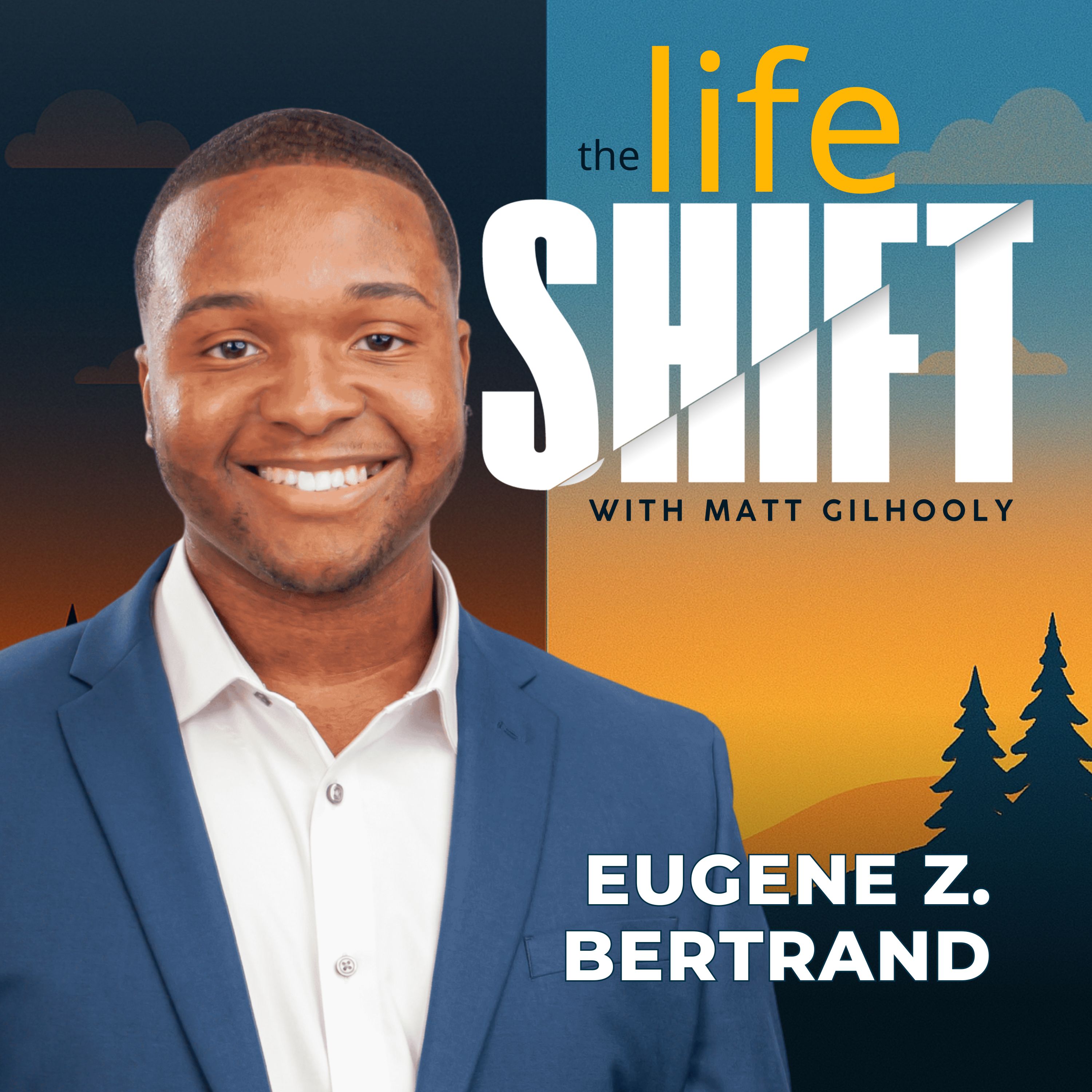
Eugene Z. Bertrand grew up navigating a home shaped by domestic violence. For most of his childhood and into early adulthood, survival meant masking. It meant saying he was fine when he was not. It meant watching and waiting and staying alert. And then, just days after graduating college, something happened that nearly took his life. And the most unsettling part was how calmly he described it afterward.
In this conversation, Eugene talks about what it felt like to say it out loud for the first time, to sit with radical acceptance, to forgive not because the other person deserved it but because he did. He talks about EMDR therapy, about the friends who held space for him, about vulnerability as a superpower, and about the book he wrote, five to ten pages a day, just to keep moving forward.
What You'll Hear:
- What it felt like to grow up in a home where uncertainty was the norm, and how that silence shaped who Eugene became
- The moment he almost lost his life, and why it took a friend's reaction to help him truly understand what had happened
- How radical acceptance and EMDR therapy helped him move through trauma without staying trapped in it
- What it actually felt like to choose forgiveness, including the morning after when he was not sure he had made the right call
- Why Eugene believes vulnerability is your greatest superpower, and what happens when you finally stop hiding your story
- How writing a book became a form of healing, and what he hopes other survivors of domestic violence find when they read it
Guest Bio:
Eugene Z. Bertrand is a survivor, author, and social work student at Columbia University. He is the author of Resilience: Breaking the Chains, a fiction-based exploration of domestic violence and the long road toward healing. Eugene is a mentor, speaker, and passionate advocate for vulnerability as a form of strength and for creating spaces where survivors, especially men, feel safe enough to tell the truth.
If Eugene's story moved you, send him a message at eugenezbertrand.com or pick up his book, Resilience: Breaking the Chains, on Amazon. And if you want more conversations like this one, subscribe to this newsletter and never miss an episode.
Listen and follow: www.thelifeshiftpodcast.com/follow
Subscribe to the newsletter: https://thelifeshiftpodcast.beehiiv.com/
Matt Gilhooly (00:00)
There are moments in life when the truth you've been carrying finally asks to be spoken. Eugene knows that feeling in his bones. His story begins in a home where safety was unpredictable and silence felt like the only way he could survive. And it follows him into the moment that nearly took his life and forced everything into sharp focus. Eugene shares what it means to rebuild yourself from the inside out, to name what happened, to choose your own power and to trust that vulnerability
can become its own kind of freedom.
Eugene Z. Bertrand (00:31)
I recognized the situation and what it was. Like I really sat with myself and I said it out loud and said, Eugene, you really, you could be dead. Like you literally almost died.
Matt Gilhooly (00:45)
Hello, my friends. Welcome to the LifeShift Podcast. I am here with Eugene. Hello, Eugene.
Eugene Z. Bertrand (00:50)
Hey Matt, how are ya?
Matt Gilhooly (00:51)
doing well. Thank you for wanting to be a part of the Life Shift podcast. is, and I say this every single time, but it's really like this unexpected journey in which I'm kind of healing little parts of me that I didn't know still needs to be healed by listening to other people's stories. So thank you for just wanting to be a part of it.
Eugene Z. Bertrand (01:11)
Yeah, amazing work that you're doing here. Thank you so much for having me.
Matt Gilhooly (01:15)
Well, like I said, thank you for wanting to be a part of it. It is kind of weird to think that I've been able to speak to over 200 people from all over the world, people that I probably never would have bumped into in my life, right? I think these kind of open the door to these opportunities. But the best part is these deeply personal stories that I get to hear. And with
Eugene Z. Bertrand (01:31)
Yeah.
Matt Gilhooly (01:40)
the goal of not me hearing them or having the conversation and maybe not you telling them, but other people out there are going through things in their lives. And a lot of times they feel really alone in that circumstance. And so I think by hearing other people's stories, we kind of give them permission to start sharing theirs and to maybe feel just less alone and kind of move through the world a little differently.
Eugene Z. Bertrand (01:57)
Yeah.
Yeah, and I agree. think having some type of community is super important and letting people just kind of know that they're not alone in their emotions is oftentimes something that I've discovered can be really supportive to them. So I think, again, the work that you do here on the LifeShift is amazing. And I think that a lot of times people can take so many things from
this show. And I'm super, super excited to be here.
Matt Gilhooly (02:35)
Well, I appreciate that. I will let me just give a little baseline for people that are tuning in just for you. The Life Shift podcast exists because when I was eight, my mom was killed in a motorcycle accident. And at that moment that my dad had to sit me down and tell me everything about my life changed. I lived with my mom full time. And she was a primary parent. And we lived in a different state than my father. And all of a sudden,
Eugene Z. Bertrand (02:42)
Yeah.
Matt Gilhooly (03:03)
I was not going to have that safety net of that I was used to and I had to move states and move schools and find new friends and all the things were so different in my life. And this was early night, late eighties, early nineties, and people weren't really talking about mental health or grief or it was just kind of kids will bounce back. They'll be fine. And they weren't because I know, but I pushed it down for, many decades and finally found the way to kind of start voicing my story. And so
Eugene Z. Bertrand (03:24)
Mm-hmm.
Matt Gilhooly (03:32)
Now I get to talk to people about all these different life shifts, understanding fully that not everyone's are traumatic. Some are, a lot of them are, but sometimes there are people that also have these fires inside them to kind of move through life differently from one moment to the next. And so I know yours is on the traumatic and tragic side, but you know, I do want to acknowledge that there are so many people that have so many life shift moments, some of them positive, some of them external, like
mine and yourself. So I think it's really important to kind of set that stage and understand that I'm trying to come from this or come to this from an experience of my own that was very life shifting in a way. So before we get into your story, maybe you can tell us who you are moving into 2026. Like how does Eugene show up in the world? Like how do you identify these days?
Eugene Z. Bertrand (04:25)
Yeah, so a whole bunch of things. You know, I'm a son, I'm a friend, I'm a brother, but more so I like to kind of think of myself as a conscientious member of society. I try my best to remember that it's so important to learn. You know, in 2026, I'm 23 and I think I have a lot of different life experiences that oftentimes people are like at 23. Yeah, and I think that that's okay. I think
Matt Gilhooly (04:51)
Mm-hmm.
Eugene Z. Bertrand (04:54)
⁓ you know, I'm a learner. getting my MSW from Columbia and I try to always just do my best to kind of lean in with curiosity. So I think overarchingly, Eugene in 2026 is curious individual, open to learning, open to hearing people's stories and, telling the truth about, you know, where I've been, I've recognized has, you know, become a part of how I help others find their voice. and that's.
All Eugene, I'm in social work school, so all of that is social work for me.
Matt Gilhooly (05:26)
Yeah, do you feel that your life experiences have brought you to want to do this kind of work? Yeah.
Eugene Z. Bertrand (05:31)
Absolutely, man. You
I think, you know, when my traumatic event happened, I was just about to start social work school. And I think that because I carry that experience with me, I'm a type of person that wears, you know, his heart on his sleeve. And I'm very honest, very vulnerable. And I think that within reason, I carry that with me. every single day, whether I'm with clients, whether I'm in the classroom,
I just always try to the experiences that I've had and the significance that it has to me. And, you know, I try to put that same passion into my work and how I show up.
Matt Gilhooly (06:10)
Yeah. And were you always open to vulnerability and sharing how you felt? Is this something that was always part of you?
Eugene Z. Bertrand (06:18)
That's a good question, man. I think, yeah. I grew up kind of seeing vulnerability through my mom. I'm very close to my mom. she's always just modeled the importance of vulnerability. I also just, in my opinion, I feel like being vulnerable is like your greatest superpower. Like if you're honest and you're vulnerable and you're real with yourself, it's much easier to kind of show up in the world. The world that...
you know, demand so many different things. If you're vulnerable and you're honest and you're real with yourself, even though sometimes it's not always the easiest thing to do, you know, you feel more comfortable in this world that's just full of, you know, the stuff that it is. So that's what I've learned. And I think I've, I've always been like that.
Matt Gilhooly (07:00)
Yeah. Yeah.
well, that's that's fantastic. And kudos to your mom for for raising a man that that can do that, because I think some of us had to maybe mask for a long time that, you know, that vulnerability and now kind of moving through the world, I see being as vulnerable as possible is what helps other people relate to me way more than anything that we were kind of taught to mask as a child. You know, I was taught or
Eugene Z. Bertrand (07:07)
Thank you.
Yeah.
Matt Gilhooly (07:35)
society taught me as a kid with a dead mom, like I couldn't show that I was sad. You know, I couldn't show that it really upset me or I was missing her. It was more your boy. You don't cry. You can be mad and you can be happy. Right? Exactly. But at the same time, now, now that I'm in my 40s, it's like, bring on the tears bring on whatever I need, because, like, I should be able to have a full gamut of emotions because I'm a feel a full human being so
Eugene Z. Bertrand (07:48)
Man up. Yeah.
Right.
Exactly.
Matt Gilhooly (08:04)
I love that you've had it.
Eugene Z. Bertrand (08:05)
And I appreciate that, man. You know what? Like now that I kind of think about it, there are moments where I have to mask too. Like my story, like you said, it's traumatic. It's enduring domestic violence. And I think that, you know, when you are in that space, at least in my experience, I have to tell a lie every day and that was that I was okay. I have to tell a lie every day that I was safe when I wasn't.
I think when you mentioned masking and being vulnerable, that brought up a lot for me, actually. I think that when I was much younger, I did those things. I would mask and say that I was OK. But I think now that I'm older, I recognize the power of vulnerability because now I have the vernacular. Now I have the verbiage to say, I am not OK. I have the verbiage to say, OK.
Like when I'm in this circumstance, this is how I feel. And I know that I'm okay to be in a position to be safe enough to be able to share that with others. When I was younger, you know, I don't know if, talk to me. I think exactly. don't think, I think when I was younger, I didn't feel safe enough to do that. And I think now that I've gotten older, like I've been able to kind of feel like I can take the world by storm. If there's something that I want to do, I'm going to do it.
Matt Gilhooly (09:13)
Yeah. I don't think it's the verbiage though. I think it's the safety.
Right, there's a fear.
Eugene Z. Bertrand (09:34)
And that's it. think now I feel more grounded in my safety. when I was younger, again, enduring domestic violence, I felt like I had to mask and I felt like I had to say I was okay when I wasn't. Really good point there.
Matt Gilhooly (09:46)
Yeah. Yeah.
Well, why don't you kind of paint the picture of your life leading up to kind of the first or main pivotal moment that you feel kind of changed you from one second to the next. And go back as far as you need to get you gave us a little insight into your childhood, but whatever, whatever you need to show us the before version of Eugene.
Eugene Z. Bertrand (10:04)
Yeah.
Yeah, I'm trying to like, think the best way to kind of explain it. So I think before everything like, changed before I got here, think I was doing what many kids and young adults do in families that are touched by violence. I learned how to like read moods. I learned how to like, stay alert and make myself small to avoid conflicts. I didn't realize how much
that was hurting me. And again, I was young and
Matt Gilhooly (10:42)
Was that always what
your home life was like from birth to that unsafe feeling?
Eugene Z. Bertrand (10:49)
There was a part of my life when I was much younger where I felt like I was safe. But I think from like probably like age five until age 21, I didn't have that safety. And like that's a big chunk of somebody's life. Those are all like the formative years. Those are all the formative developmental stages of your life. You know what I'm saying? And I think that for me, I
felt like I was scared. I felt very scared growing up because of the uncertainty. loves feeling the feeling of uncertainty. again, surviving domestic violence, not too long ago, I survived incident where I almost lost my life. And that was really traumatic for me. And I think that ⁓ I have, well, the one thing I can say is that
Growing up, I learned the power of betting on yourself and I learned the power of trusting yourself and trusting that you endure something. If you have the intrinsic motivation, you can get through it.
Matt Gilhooly (11:59)
Yeah, so I mean, I'm sorry that you had to face that. And I don't know that that I mean, it's a huge pivotal moment, but there's also other moments in your life that feel power. I'd love to ⁓ love is the wrong word. I'd like to ask you
you you grew up in this this household in which you were fearful, but you also grew up in this household, where you felt love from your mother and saw the vulnerability and you saw all these things. So it's a very tricky balance of like, feeling safe, but also not safe and, and kind of moving through the world was this incident where you nearly lost your life was this the first kind of experience that you
Eugene Z. Bertrand (12:34)
Thank you.
Matt Gilhooly (12:46)
that was like that intense or was it a buildup? Was it something that started small and then eventually kind of over the years grew to this big event?
Eugene Z. Bertrand (12:56)
That's a really great question, Matt. Exactly. It started small and then over the years it grew into this big event. Never in my life, Matt. Never in my life did I think that, you know, after graduating with my undergrad, being so excited and having this great moment, three days after, I would be faced with situation where it's life and death. And I think, yeah, it was a situation where, you know,
Matt Gilhooly (13:18)
Hmm.
Eugene Z. Bertrand (13:24)
Because domestic violence looks very different for different people. There is financial abuse, there's manipulation, there's so many different things that can kind of accompany the domestic violence umbrella. And I could definitely say that over the years, you know, there's been things that have led up to this incident. And it was not just like one simple, like, my gosh, that just happened. There were signs. like you, like you, you know, held space for early, like you mentioned.
It was tricky for me because it was like, okay, I'm seeing vulnerability. I'm seeing love. I'm seeing strength. And then on the other side, I'm seeing, you know, well, I'm feeling emotions of like, just uncertainty, feeling emotions of being scared. And I think feeling the emotions of uncertainty can make you feel scared. You know what I'm saying? Cause you don't know what's going to happen. You don't know what the impact it's going to have on you. You don't know what the impact it will have on the people that you love.
Matt Gilhooly (14:20)
Mm-hmm.
Eugene Z. Bertrand (14:21)
But I do feel like it was something that had kind of festered. And I think sometimes when you're blowing up a balloon so much, it can only take so much air before it pops. And I think that's how it was. I think the situation needed to pop. The pimple had to pop, and it popped.
Matt Gilhooly (14:26)
Mm-hmm.
Yeah. And was was part of the I mean, this was a male figure in your life. Can we say that this we're removing it from your mother because it sounds like your mother was the vulnerable, vulnerable element in this in your life, showing you heart and grace and all the things that mothers can do with all the power that they have. And you said you were like 2120 when this happened. Okay. Yeah. And a part of it makes me wonder
Eugene Z. Bertrand (14:49)
Yeah.
Yeah.
Yeah.
Matt Gilhooly (15:11)
there's an element of that love that you shared with your mom that kind of creates more of that explosive type feeling there as well. This was a physical event that happened? Okay.
Eugene Z. Bertrand (15:24)
⁓ physical
event, physical event man. And you know, I, I've learned how to have radical acceptance. I've learned how to recognize a situation for what it is. And it's so hard.
Matt Gilhooly (15:38)
It's much harder when you're in it. It's much harder to see someone else, you know,
to see your own, but much easier to see someone else's.
Eugene Z. Bertrand (15:44)
It's so it's that's that's a word. That's real, man. That's so true because it's like I think it's one thing to kind of read about it. It's one thing to kind of like hear somebody else kind of share their story. But then when it's happening to you. It's hard and it it wasn't an easy thing to do. And it was something that was normalized, right? Since I was five and, you know, we're living in a society again, like you kind of pointed out where it's like, OK, if men show their emotions, they're weak.
Matt Gilhooly (16:01)
Plus it was normalized for you. mean, right? Since you were five.
Eugene Z. Bertrand (16:13)
If men show their emotions, it's like an attack on their masculinity when really it's okay to kind of feel your emotions. It's okay to kind of be vulnerable and talk about your emotions. And, you know, I faced my own, you know, situation with that when I was being vulnerable, I was met with people that said, what did you do to deserve it? Or I was met with people that said like, was it really that bad? Like.
Matt Gilhooly (16:32)
Mm-hmm.
and before
this event or because, okay, because of that.
Eugene Z. Bertrand (16:40)
After, after,
because of the stigma, because of the stigma that, you know, that ⁓ is entrenched in our society that, you know, men aren't supposed to like feel aren't supposed to have emotions. I was met with people that have said like, you know, like the most hurtful things. But the reality is, is the situation happened ⁓ and I had to have radical acceptance and, you know, not really judge the situation.
Matt Gilhooly (17:01)
Mm-hmm.
Eugene Z. Bertrand (17:07)
Well, it's okay to judge situation, not like, this is bad, this is good. I'm just recognize it for what it is. And then more so focus on how I can heal from a situation and the power that I have in myself to say, I forgive you. And this is how I'm going to move forward in my life.
Matt Gilhooly (17:28)
Yeah. So would you say that this super tragic, traumatic event, would you say that that, like from one moment to the next, you were different? Or do you think that kind of was prolonged? Because I think a lot of us, you know, I do say that that moment that my dad said that my mom was dead was really a shift in me. But then it's like 20 years later when I realized what I was carrying and was like, ⁓
I got to let go of that scared eight year old was another moment. And sometimes it's like saying the things out loud to for me, it was a therapist and being like, these are all the things I had told my story way a lot before, but it was when she reflected back on me, it was like, you know, you were doing that with all with a scared eight year old brain, every decision you've made since until your 30s. So did you see this as a really big turning point in the violence act? Or did it come later?
Eugene Z. Bertrand (17:57)
Yeah.
Yeah.
Yeah. Yeah. Yeah.
Matt Gilhooly (18:27)
Or both.
Eugene Z. Bertrand (18:28)
I feel like it's a little bit of both. I feel like it was kind of similar to what you kind of shared. I realized the shift when I was talking to a few of my friends and I was like, this really just happened to me. I almost lost my life. And they were like, Eugene, you said that so nonchalantly like that.
didn't happen. I was almost like on autopilot. It I was again, it was normalized for me. But that one experience I've never almost lost my life before. And the way that you know, my friends who were men, kind of took care of me and held the space for me and even identified with what I was talking about and shared that they also experienced something very similar showed me that it was bigger than me and showed me that
Matt Gilhooly (18:58)
Mm-hmm.
Eugene Z. Bertrand (19:22)
there's so much power in being vulnerable. But I think the moment that changed everything was when, you know, I recognized the situation and what it was. Like I really sat with myself and I said it out loud and said, Eugene, you really, you could be dead. Like you literally almost died. And I think that idea kind of helped to kind of shatter the idea that I can just kind of push through the danger or pretend that things weren't as bad as they were.
It forced me kind of recognize and face the reality of domestic violence in a way that was just really raw, terrifying, and almost like impossible to hide from, especially because I had friends that I confided in that held that space for me and identified with something that I had endured.
Matt Gilhooly (20:10)
Yeah, was it and this is not a really a yes or no question, but it kind of is and this is just assumption. So forgive me if it's totally off. But did that release maybe a shame that comes along with with facing something for so long. And I say that because sometimes we take on this blame, we take on the shame that something happened to us when it clearly wasn't our fault. And no one deserves that.
Eugene Z. Bertrand (20:15)
Yeah.
Go ahead.
Matt Gilhooly (20:38)
Somehow we are like, I can't tell anyone about this because you had those people in your life that were like, well, what did you do to deserve it? So by sitting with that, did it release something in you that something along those lines?
Eugene Z. Bertrand (20:45)
EO.
Yeah, it honestly, man, set me free and it saved my life because it released me of the burden that I was carrying. Like I was so down on myself.
Matt Gilhooly (21:12)
or you're being destructive or anything, think sometimes that can happen.
Eugene Z. Bertrand (21:15)
I wasn't necessarily being destructive, but I think I was more so like, I think like when that something like that happens of that magnitude of trauma, your brain is just trying to kind of process that. Your brain is trying to figure out what that means. Your brain is, you know, trying to process it, but your body is saying something different. And I think with that comes a series of emotions. I think for me, I had so much shame because
again, like when this happened, it was public. So it wasn't like it was happening behind closed doors like other incidents. People saw this. And I felt so bad. And because I was like, my goodness, like, this is something that people are actually seeing. And I was embarrassed. I was embarrassed that this had happened. And I was more so shameful after it happened. And I kind of
you know, took time to kind of take care of myself after and release it with my own emotions. And I was shameful because it was just like, wow, like, wow, Eugene, really waited so long to kind of, you know, be very vulnerable because I've always been a vulnerable person. Like I shared earlier, I've always been somebody who's where his heart on his sleeve. I've always been very honest in my own honesty, my own opinion, being very, very vulnerable. But when it came to things like that, domestic violence,
That's not something that I feel like I was always open to talking about until after I almost lost my life. After that experience, Matt, I knew that there was no way that I can continue being quiet. There's no way that I can continue not speaking out about things like this because my life was spared and I feel like my life was spared for a reason.
Matt Gilhooly (22:49)
Yeah.
I mean, that's very big of you. I also think that maybe you didn't, or people in your circumstances don't say much because people won't talk about it much. think, and this is totally, I don't know why, but ignorant of myself, to automatically associate domestic violence with ⁓ spouses, not with children, not with, and so those are like,
Eugene Z. Bertrand (23:10)
Thank you.
Yeah. Yeah.
Matt Gilhooly (23:36)
you hear stories of child abuse and those kinds of things, and you feel like those are like isolated in their own bucket. And so when you say domestic violence, it kind of opens my eyes to think, wow, how many people are keeping this at bay because safety of their other parent or safety of themselves or their family members or they're afraid that of retribution if they do say something. you know, it's very big of you to...
one, have radical acceptance, two, have some kind of forgiveness in your heart. I don't think anyone would blame you if you didn't. But I think it frees you probably more so it's more for you than it is for the other person. Did the other person get their comeuppance? Did they get their their ⁓ trouble taken care of?
Eugene Z. Bertrand (24:16)
Exactly. Right.
Yeah,
they got their, well, they certainly got their trouble, but it was public, ⁓ but that trouble was over. And, you know, I think for me, the one thing that I want.
Matt Gilhooly (24:31)
Okay? Because it was public.
Eugene Z. Bertrand (24:44)
people to recognize is that when you hang on to things that people have done to you, regardless of the circumstance, that keeps you tied to that person, that keeps you connected to that situation. Actually, let me rephrase that. I think it can keep you tied. It can keep you connected, but it doesn't always have to. And I think what I was recognizing was that it was keeping me connected. was keeping me angry. was keeping me upset.
Matt Gilhooly (24:55)
Hmm.
Eugene Z. Bertrand (25:12)
And I think when I learned to let it go and I learned again to have radical acceptance and it also came a point where I had to do EMDR, eye movement desensitization reprocessing therapy because what was happening with me man was I was having intrusive, intrusive nightmares, having these crazy symptoms ⁓ after that event. Cause again, it was very traumatic. And when you have your body.
Matt Gilhooly (25:36)
Yeah, the body keeps the score.
Eugene Z. Bertrand (25:39)
That's a good book, by the way. That's a really good book, by the way. And what was happening is like with the trauma, it gets stuck in your brain and with EMDR, it allows you to push through it safely. And I think after I went through my EMDR sessions, I was able to like sit with the emotions and really be able to say, I don't agree with what you did, but I forgive you because I have to forgive you because I am, you know, going to school to be a social worker, hold space for people, support them.
Matt Gilhooly (25:40)
Exactly.
Mm-hmm.
Eugene Z. Bertrand (26:10)
And I don't want my emotions that have been tied to this incident to spill over into my work and spill over into the space that I want to be able to hold for other people. So I forgave this person and I forgave the situation with radical acceptance because I recognized the power that it could have over me Eugene.
Matt Gilhooly (26:31)
Yeah.
Do you remember what made you say, okay, I'm gonna do it. I'm gonna forgive.
Was there a trigger moment or was it just what it looked like?
Eugene Z. Bertrand (26:42)
Yeah.
Surely wasn't dry eyes. It was very wet, wet, wet face, tears. And I think I was just sick of it. I was tired. And I keep bringing it back to like sitting there holding, having my friends hold space for me the way that they did. Like having that brotherhood, having that camaraderie, having people around me like that, especially men.
that are vulnerable and that are saying like, Eugene, like this happened to me too. Hearing that and like knowing these people for such a long time showed me that like, listen, I have to forgive this person because I recognize that this other person might have been holding on to something that they might not have had, you know, the space or the opportunity to feel like they could be very vulnerable or they could be honest.
And I didn't want that for myself. And in order for me to take care of myself and kind of almost like set myself free from that situation, I had to, I had to forgive. And I also have a little brother who is the light of my life. And I want to show him that when you are in the midst of an adversity, you can come out with a story of resilience. It's up to you to do that.
And I want it to be good example for him.
Matt Gilhooly (28:12)
So what did the next day after you decided to forgive, what did that next day when you woke up, did you feel different?
Eugene Z. Bertrand (28:18)
I awful. I felt like I felt terrible, man. I felt awful. Honestly, I felt awful. I felt terrible. like I said, was, I was not doing well at all. I felt terrible. Like I had like this pit in my stomach. I was going back and forth. Like, should I really do this? Should I really forgive this person? And I just kept choosing myself every single day afterwards where like, if I see this person on the street, I can.
Matt Gilhooly (28:19)
You ⁓
honesty. Love it.
Eugene Z. Bertrand (28:48)
not my head, acknowledge and move on and get in my car and go get my coffee and feel fine. Like, and not have any like negative emotion after it. No triggers because I think what happened for me was again, like that EMDR was incredibly helpful for me. And
Matt Gilhooly (28:59)
No triggers or anything. Good.
Hmm. Had
you done any other kind of therapies before that? Okay.
Eugene Z. Bertrand (29:11)
Yeah, I
love therapy. Like my mom's a psychotherapist and I love my therapist. My therapist hates to see me coming. Like I love therapy. I think it's a great way to kind of take care of yourself. And so I've always been in therapy. necessarily because, and I think a lot of times with therapy people are like, like what's wrong with you? Why do you need to go to therapy? Like that's not the reality. Therapy could be a great tool for you to kind of help map out your life, you know?
Matt Gilhooly (29:15)
okay.
A
lot of people say coaches are like that.
Eugene Z. Bertrand (29:38)
I'm somebody whose
coaches are like that too. Like, and there's nothing wrong with it. I think that, specifically doing EMDR, having a type of psychotherapy like that, that is...
Matt Gilhooly (29:48)
Mm-hmm.
Eugene Z. Bertrand (29:54)
that could be heavy. Listen, that showed me that if you want to get through something, you can do it because when you're going through EMDR sessions, you're like reliving the trauma, man. Like you're literally reprocessing it all over again. And again, for me, like I told you, I felt that like pit in my stomach after I forgave the next day. And I was like, my gosh, am I doing should I really do this? And again, I just kind of chose myself.
Matt Gilhooly (30:11)
Mm-hmm.
Can I take it back?
Eugene Z. Bertrand (30:24)
I was like, can I take this back? Like, and I really, and I always tell people like it's you versus you in this world. You get to decide the person that you want to be. You get to decide how you kind of want to like respond to different situations. And I just chose me every single day. I always say it's you versus you. And that's how I took my power back. That is, that was that I think that was the biggest pivotal moment in my journey of healing.
Matt Gilhooly (30:41)
You took your power back.
Yeah.
Eugene Z. Bertrand (30:54)
That's where it was.
Matt Gilhooly (30:56)
How do you move through the world differently now than say two weeks before graduating from your undergrad program? Like how are you different in that way?
Eugene Z. Bertrand (31:08)
having grace and having gratitude, I think.
Matt Gilhooly (31:12)
So what were you doing before?
Eugene Z. Bertrand (31:14)
I think I was still doing that. I think I was having grace and having gratitude, but I don't think I was being as ⁓ intentional with doing that and being very intentional with.
verbally extending grace to people, always make it the point to tell know, that you are a good person, you are loved, you know what saying? You deserve to be here because I recognize that you don't know what people are going through. I lived every single day of my life from five to 21 being a survivor of domestic violence and I literally almost lost my life. if, like I could have went down the street and nobody could have known. So,
I always try to be very intentional with the things that I do and actions that I take because you don't know people's stories. You don't know what people are going through. And sometimes it just takes one person to kind of have somebody feel like they are acknowledged and that can save their life.
Matt Gilhooly (32:12)
Yeah, it's that power of community that you mentioned before. Do think you would have lost your life if it wasn't in public? Yeah.
Eugene Z. Bertrand (32:15)
powerful.
Yeah, absolutely.
Absolutely. I think that if certain people weren't there to help kind of prevent it, we wouldn't be sitting here. We wouldn't be sitting here.
Matt Gilhooly (32:29)
Yeah. Does that give you a different
like lease on life? Do you do things differently because you're like, life is actually short. It can be short for a lot of people.
Eugene Z. Bertrand (32:40)
It does. think I don't think I was as like vulnerable as I am now in kind of sharing my story and confidently saying I'm a survivor of domestic violence. ⁓
Matt Gilhooly (32:57)
Do think there's still a stigma for that? Yeah.
Eugene Z. Bertrand (33:00)
Absolutely.
Absolutely. I was somewhere. Yeah, absolutely. I was somewhere speaking and when I said outwardly, I'm a survivor of domestic violence, when I was introducing somebody came up to me and was like, oh, I thought like your wife beat you. I was like, what? Like, I don't think people recognize domestic violence umbrella. Yeah, like, I think it's
Matt Gilhooly (33:03)
More so for a guy.
Mm-hmm.
Yeah. Yeah, like I said before.
Eugene Z. Bertrand (33:27)
No fault to them. think education is very important. And I think having conversation with people is very important. just being open to like hearing different perspectives, you know? So I think that there's definitely a stigma that's still there. And I think my goal is to continue kind of sharing my story and, you know, sharing my book with people and helping them kind of see through different narratives that
domestic violence between different people and how you can go through an adversity and come out with a story of a similar.
Matt Gilhooly (34:03)
This is going to sound really rude, but it's not meant to be rude. you feel a need to save other people like you were?
Eugene Z. Bertrand (34:05)
Go ahead. Go ahead. Go ahead.
Yeah, no, that's a good question. Honestly, no. I think that sometimes some people can. But I think I try to be very intentional again with the actions that I take and my intentionality. I recognize everybody has their own journey and that everybody's journey looks very different. My journey looks very different from your journey back. And I recognize that everybody, like for example,
For somebody that might be in a situation that was similar to mine and being in a domestic violence situation, I think oftentimes we want to help and oftentimes we want to be like the saving grace. And sometimes what people need is just to know that they have support. Whatever decision that they decide to make, they have support. That person that is enduring whatever that might look like for them, letting them know that they have support, I think can move mountains for them.
Matt Gilhooly (35:10)
Yeah, being heard is so important, I think that. Because I'm sure you felt in this situation, I can't tell anyone for many reasons, but one being that I might be the only one going through something like this, so no one will understand. Meanwhile, your friends were going through it, you didn't know. Right? Right?
Eugene Z. Bertrand (35:13)
Yeah
Yeah.
Exactly, man. I didn't, I had no clue. had no clue.
And like, I think that's the power of being vulnerable. You don't know people are going through. And I think that what I like to do would be very honest and be very vulnerable. Again, like I keep saying, vulnerability is like your superpower. And I think for me, it was more so like recognizing the fact that me being quiet and staying silent, it's not doing anything. It's not helping anybody.
But if I'm honest and I'm vulnerable and I hold space for people and I keep spaces where I'm able to kind of share my experience, you don't know who's going to resonate with that. I did a book talk at a university where I reside and somebody came up to me after an older male and he said, Eugene, you literally just told my story. He started bawling. And there were 60 people that were there bawling.
And that's the power of vulnerability. You don't know how it's going to learn with people and you don't know the space that you might create to allow somebody to feel their emotions in a world that doesn't always allow for that.
Matt Gilhooly (36:43)
Yeah. Do you ever play in the multiverse in which there was a version of you that was like 10, 12, and you talked to your friends about it and you guys all discovered that you were going through similar things and think about what life would look like if you had known?
Eugene Z. Bertrand (36:59)
Yeah, absolutely. And I do that all the time. But at the same time, it's not healthy. It's not healthy at all, Matt. I think that's like you're human. We're human, do that. And I think at the same time,
Matt Gilhooly (37:04)
It's not healthy, but we do it.
Eugene Z. Bertrand (37:13)
I always try to tell myself I don't like reading my chapters backwards. I try to always kind of rewrite them. And I try to find ways that I can make, you know, that draft a best-selling book. You know what I'm saying? Because there's so much power in person that, you know, you might become after enduring whatever. And I think that for me,
You know, when I have conversations about like, okay, how I could have handled the situation when I was, you know, six, 12 or, you know, 15, like sometimes like your brain can kind of get stuck there and you can kind of get like down on yourself. And I think for me, it's not doing any, any good, you know, but what can kind of be more helpful is recognizing how much you've grown and what you've done to kind of take care of yourself in future.
that looks like you're using it forward.
Matt Gilhooly (38:11)
lot of us play that game where we just like, well, what if I had, you know, taken a left instead of a right or whatever it may be? Yep. What made you, you just mentioned your book. Like what did that process look like?
Eugene Z. Bertrand (38:14)
Yeah. It's out of her right. Yeah.
Yeah. Resilience breaking the chains. You know, I think for me to be able to heal from my situation was writing. I think writing saved my life. Yeah, absolutely. Absolutely. Writing saved my life. Like, it's...
Matt Gilhooly (38:33)
Yeah. For so many.
Eugene Z. Bertrand (38:41)
It's a heavy book because it's talking about, you know, domestic violence and how you can go through adversity while it's fiction. It's based off of things that are real. I think that. Writing, I literally told myself, OK, I'm going to write five to 10 pages a day so I can heal. And it was really so like more so out of a journal for me. And. I said, you know what? I'm not even going to tell anybody that I'm going to publish this. I'm just going to publish this book and.
When I did so, the amount of support that I got was beautiful. You know what saying? There's so much power in vulnerability, man. So much power in vulnerability. So much.
Matt Gilhooly (39:18)
Yeah.
Do people know it's based on your story? Okay. Yeah.
Eugene Z. Bertrand (39:22)
Yeah, I think some people know. I think
some people know. Yeah.
Matt Gilhooly (39:27)
Was it easier to
do it as fiction than to do it as your true, your truth?
Eugene Z. Bertrand (39:32)
Yeah,
yeah, I think it was easy to do that fiction because I think the content that in the book could be heavy. I think there's some parts of it that some people might feel like, my goodness, like, I'm going to read this book. But it's like, I'm thinking about Eugene that, you know, when he's in elementary school, I'm thinking about Eugene when he's in high school. Why did Nick, you can almost kind of blame yourself, but
I think having the book as fiction, it kind of like save you from While you're, know, while you're valid to feel whatever emotion you're feeling, I purposely want to try to ask fiction so people can kind of recognize the significance of domestic violence and what that looks like. Again, it's fiction, but these things are real. These are real people's stories. Like it's, it's, it's real.
Matt Gilhooly (40:22)
Yeah, so what's your big audacious goal? you're, I mean, you're only almost 23 or are you 23? Yeah.
Eugene Z. Bertrand (40:28)
Yeah, I am 23 now. I published
it when I was 22, but I'm 23 now. think my big goal is just to kind of, you know, continuing to provide the space for people to heal in whatever way feels better for them. I know what it's like to be trapped in a society where, you know, you're enduring something.
like domestic violence and not feel like you can say anything or not have a space where, you know, that's something that is okay. And my goal is to always, you know, be vulnerable and encourage other people to do the same, encourage other people to do the same thing because vulnerability is your superpower.
Matt Gilhooly (41:11)
Yeah. Are you someone that kind of plots their future or do you take day by day?
Eugene Z. Bertrand (41:16)
I think I used to, but then I think when I lost one, I almost lost my life. I was like, no, I'm going to live every single day. Like it's my last, because you never know what that's going to look like. And I've just taken a lot of great comfort in taking things day by day, you know, like, you don't know what your day's gonna look like. You don't know what that might look like, you know.
Matt Gilhooly (41:36)
Yeah.
Yeah, always curious ⁓ if you could go back to the Eugene on the morning of that traumatic experience. Is there anything you would want to whisper in his ear or tell him?
Eugene Z. Bertrand (41:53)
you're gonna be okay.
I think the one thing that I've done after is I have affirmations all over my apartment and I try to just kind of speak life into myself because, you know, after you leave your apartment, it's you and the world. And I think if you have a good sense of self and you're able to kind of speak life into yourself and reassure yourself and support yourself in that way emotionally, nothing can stop you. And I think if I can go back.
on that morning, I would tell myself, you're going to be okay. And regardless of what this day might bring you, you will be okay. Whatever that might look like, you're gonna be okay, Gene.
Matt Gilhooly (42:41)
Do think he would have believed you?
Eugene Z. Bertrand (42:44)
I think at that moment, no. But I think now, absolutely. Because I know that I have the power to take my own power back. Before, I think I knew that that was possible, but I've never done something like that before. Rebuilding your life after something like that is not always the easiest thing to do. And I think, I don't know if I would have believed myself, but I think now, absolutely.
Matt Gilhooly (42:54)
Mm-hmm.
Yeah, I think, and you know, it's always interesting, but like not because I've done this so many times and having a similar question at the end of our conversations, so many people, no matter what event happened in their lives, traumatic, happy, whatever it may be, the most said response is you're gonna be okay.
Eugene Z. Bertrand (43:38)
Yeah.
Matt Gilhooly (43:39)
And I think that most of us would not have believed because in the moment everything feels so heavy. You feel like you're the only person going through something like this. You feel so very alone and you're like, how am I going to move through the next moment? Yep.
Eugene Z. Bertrand (43:54)
How am I gonna do it?
Like, how am gonna do it? What is it gonna look like? Am I going to be able to, you know? Like, those are all real emotions and those are all things that are very, very, very real, you know? And I think it always brings me back to that point that I mentioned earlier, it's you versus you. That's something that I tell myself every single day. I mentee, or excuse me, I'm a mentor to a few kids and I always kind of remind them that if you versus you in this world,
And I always try to tell myself, OK, Eugene, you're going to be the better version of yourself than you were last week. You're to be the better version of yourself than you were three days ago. And you're going to operate today in a better way than you operated yesterday because it's you versus you.
Matt Gilhooly (44:39)
Yeah, well, it's also important to have the skills to believe yourself when you're saying those things, which I'm sure at the beginning, people starting affirmations are saying it just as to create a habit. And then eventually you start to believe and embody those particular affirmations. Did you find that same journey?
Eugene Z. Bertrand (44:43)
Yeah.
Yeah.
Absolutely. There's so much power in the tongue. Like the words that you say, like that's why a lot of people manifest because when you start to believe these things, they tend to come true. You know what I'm saying? So I think, I think that for me, like I, wasn't always, it wasn't the easiest thing to do, but I did it. You know what I'm saying? And do not get me wrong. There's, there's definitely days where it's not always the easiest for me, but
Matt Gilhooly (45:00)
Hmm.
Yeah.
Eugene Z. Bertrand (45:27)
knowing that I have the power to speak into myself and believe in myself and that it's me versus me, that's it. Like, can't, there's nothing better than that.
Matt Gilhooly (45:38)
Sky's the limit. Or maybe it's not. Maybe there is no limit.
Eugene Z. Bertrand (45:39)
and it's only you in it. That's it.
mm-hmm. The one thing that my mom always told me was that, what did she always used to say? If the sky is the limit, then buy a cloud. And that spoke to you're saying that the sky is the limit, I'm up to buy the whole cloud. I can do anything. You know I'm saying? That's it.
Matt Gilhooly (45:59)
Yeah.
Yeah. So if someone is listening to your story, they've gone through something similar or something you said about your journey resonated with them, like what's the best way to find you find your book, like get in your circle and maybe tell you how your story impacted them.
Eugene Z. Bertrand (46:18)
Yeah, so Eugene Z. Bertrand.com. That's my website. I'm on LinkedIn. And my book is at Barnes & Noble, Amazon. Anywhere you're looking for a book, you can find mine. So Eugene Z. Bertrand.
Matt Gilhooly (46:34)
And can you say the name of your book again?
Eugene Z. Bertrand (46:36)
Yes, resilience breaking the chains.
Matt Gilhooly (46:38)
Awesome. Well, I encourage anyone listening. think as as Eugene has said multiple times, there's so much power in putting your story to words, whether that's saying it out loud, sharing it with a friend, writing it, whatever it may be podcasting. So if you're out there listening and you feel alone in your circumstance and maybe something Eugene said resonate with you, I would go to his website, find the contact page or go to LinkedIn and send him a message and just tell him.
and tell them a part of your story because you'll get to feel that power and kind of take back that power in your story. I didn't realize, I think I knew on the surface, the power of storytelling, but having these conversations really shows me that for the person telling the story, the person hearing the story, the person engaging in the story, there's so much power and so many angles. So thank you for sharing your story in this way, Eugene.
Eugene Z. Bertrand (47:33)
Thank you for sharing yours and allowing me to do the same.
Matt Gilhooly (47:36)
Well, you know, this is what I'm gonna keep doing, you know, and I think it's important. Like we said earlier, we never know what someone's going through. And someone might be going through exactly what you, someone is going through exactly what you went through and maybe hearing your story will give them some kind of power they didn't know they needed, you know?
Eugene Z. Bertrand (47:56)
Absolutely. My
goal is to encourage others. I hope that, thank you. I appreciate that.
Matt Gilhooly (48:00)
Yeah, while you're doing it.
Yeah, you're doing it and you're now you're gonna be doing it even more so with your master's degree, right?
Eugene Z. Bertrand (48:11)
Can't wait. Can't wait, Matt. I can't wait. Super excited. Finish strong. You finish strong. That's what you do. I graduate in May of 26, so coming up really quick. Yeah, very quickly.
Matt Gilhooly (48:13)
Well, you got to finish it first, right? Yeah. How much longer do you have?
Sweet, it's coming up. Yep.
Well, good luck to you in the rest of that journey. I know that the rest of your life is to be written and you will certainly write each chapter and make it a best seller, right? Is that what you said? Yeah, I like that. Yep. Here's a key. Yeah, no, for sure. And thank you all for listening and just being a part of the life shift every week.
Eugene Z. Bertrand (48:28)
Thank you.
Thank you.
Yeah, exactly. Resilience. Thank you very much.
Matt Gilhooly (48:45)
It is been a joy as hard as some of these conversations are. It just shows me how much we have in common with each other as it relates to how we feel about certain parts of our lives. And we can connect in this way if we just are willing to listen. So thank you all for being a part of this journey. Thank you, Eugene, for this. And with that, I'm going to say goodbye and I'll be back next week.
Eugene Z. Bertrand (49:06)
I have one.
Matt Gilhooly (49:08)
Thank you for listening to the Life Shift Podcast. If you wanna learn more, go to www.thelifeshiftpodcast.com.
There you can check out all the different episodes. You can check out the blog, some of the reviews for the podcast and the Life Shift journal. Links are there so you can purchase your own copy, whether in digital or print format. Thanks again.


