
When Love Has Fur: What Losing a Dog Can Teach Us About Healing
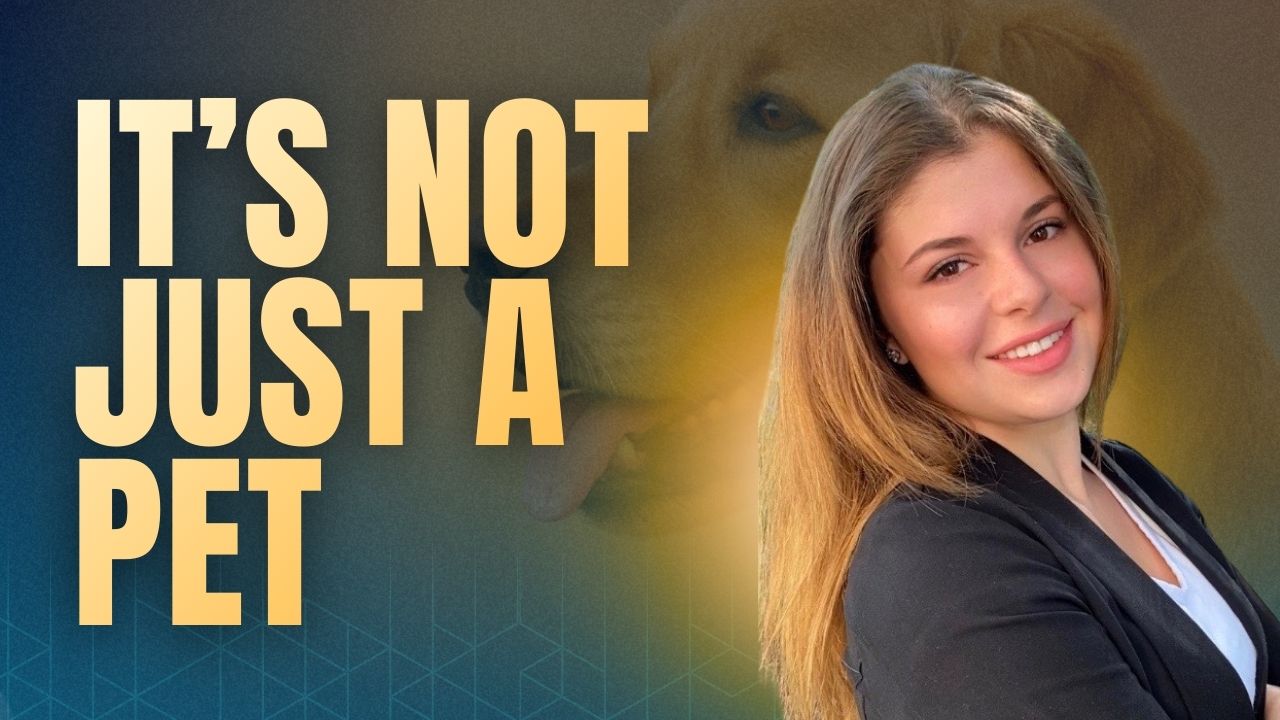
Losing a pet can feel like the world just tilted. You still expect to hear the sound of paws in the hallway or the weight of them curling up beside you. Yet the house is quiet, and the ache that follows is anything but small.
This week I spoke with Brianna Laricchia, a licensed mental health counselor and founder of Omnia Psychotherapy Group in New York, who specializes in grief counseling — especially for those grieving the loss of a pet. Her story reminded me how love, in all its forms, reshapes us. Sometimes, that reshaping begins in loss.
The Bond That Changes Everything
When Brianna was fourteen, her family finally brought home the dog she had begged for since childhood — a golden retriever named Molly. She remembers feeling a rush of responsibility and connection that surprised her. “I was at that age where I was so into myself,” she told me, “but with Molly, I wanted to nurture something outside of me.”
That bond stayed with her for years. Molly became family, a constant companion through college, relationships, and the start of Brianna’s career as a therapist. When Molly passed away, it wasn’t just the loss of a pet. It was the loss of a steady, wordless love that had quietly shaped who she was becoming.
It also became the beginning of her next chapter — one where she would help others navigate that same kind of loss.
Grieving What the World Overlooks
Brianna told me that when she lost Molly, many people around her didn’t quite know how to respond. Some offered polite sympathy, but few seemed to understand how devastating it truly was. “It made me realize how isolated pet loss can feel,” she said. “We’re not always given permission to grieve it.”
In her practice, she sees this often. Clients come in feeling ashamed of how much they’re hurting, as if mourning an animal somehow counts for less. But as Brianna explains, “The love we feel for our pets is unconditional. They’re there for every version of us — the messy, tired, unfiltered ones — and that’s why it cuts so deep when they’re gone.”
That’s what makes her work so important. Through Omnia Psychotherapy Group, Brianna helps people move through the pain of losing their animals without minimizing it. She gives language to an experience that so many quietly carry.
The Therapist Who Cried After Sessions
Even as a professional, Brianna admits that empathy can be a heavy thing to hold. “Sometimes I log off from a telehealth session and just cry,” she said. “I feel so much for the person I’m talking to. I wish I could take that pain away.”
It’s the kind of honesty that rarely makes it into conversations about mental health work — the reminder that empathy doesn’t turn off when the camera does. For Brianna, learning to set boundaries wasn’t about becoming detached. It was about learning to refill the well.
That’s something I’ve had to learn too, especially through The Life Shift Podcast. After hearing hundreds of powerful stories, I’ve realized that carrying other people’s pain without tending to your own doesn’t help anyone. Brianna’s story is a beautiful reflection of that truth.
The Lessons Love Leaves Behind
When I asked Brianna what she’s learned from all of this, she paused and smiled. “That healing doesn’t mean letting go,” she said. “It means finding new ways to hold on.”
Maybe that’s the part that sticks with me most. Grief doesn’t erase love; it transforms it. The leash becomes a photo on a shelf. The daily walk becomes a quiet memory that lives somewhere deeper. The love still exists — it’s just changed shape.
If there’s one takeaway from Brianna’s story, it’s that loss is not a measure of weakness but of connection. To grieve deeply means you loved deeply. And that love, even when it hurts, is proof that you were fully alive with someone — or something — who met you exactly as you were.
Continuing the Conversation
Brianna now channels her experience into counseling, education, and advocacy for pet owners who are navigating grief. She’s building a world where this kind of loss is met with understanding, not silence.
Her story reminded me that healing is often a communal act. Whether it’s sitting with a therapist, talking with a friend, or even listening to a podcast episode like this one, connection helps turn pain into meaning.


When Your Body Knows Before You Do