Transcript
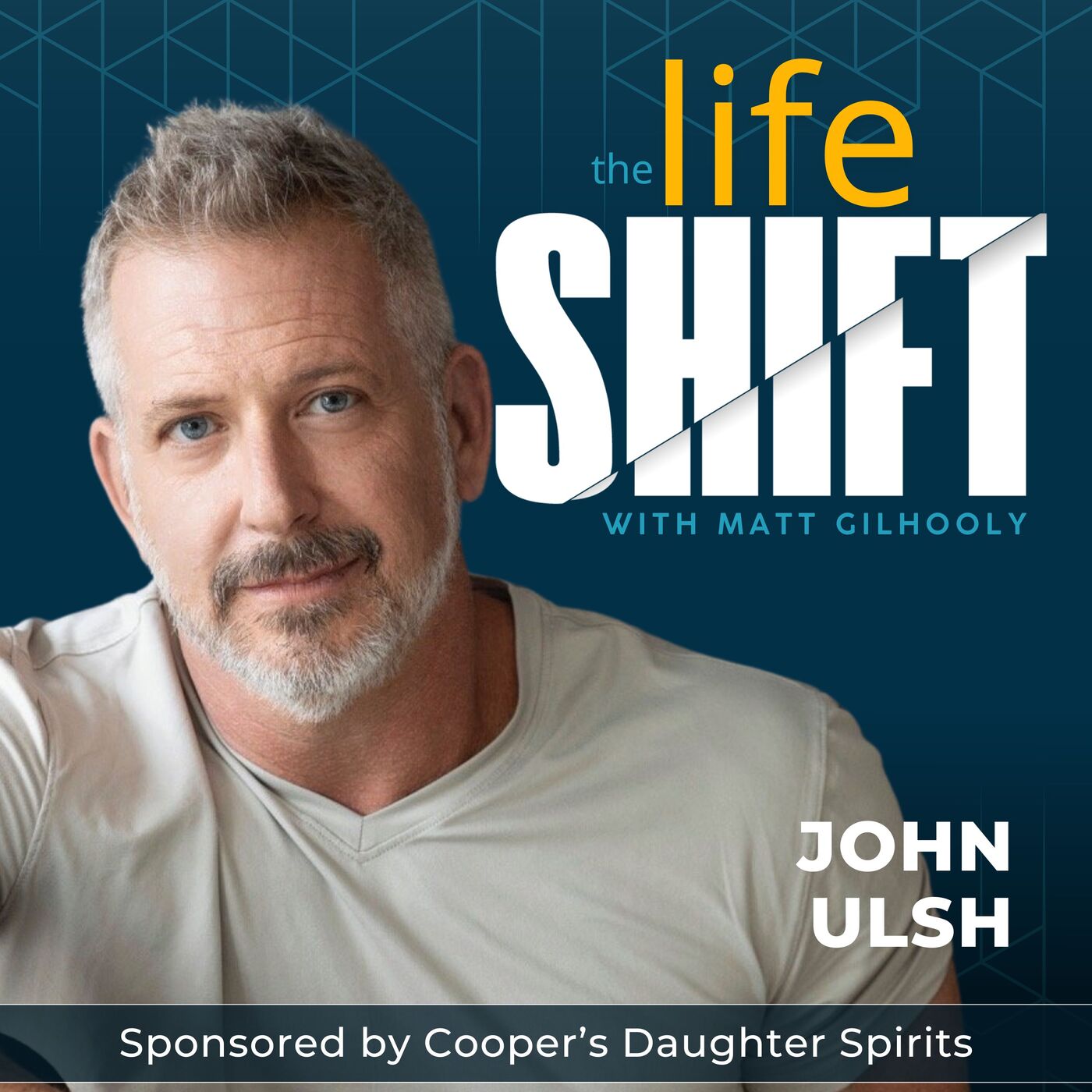
00:00When life changes in an instant, the road back isn't about getting back at all. It's about learning to live inside a new version of yourself, one that you never asked for. In today's episode, I talk with John, whose world was turned upside down after a devastating car accident left him with a 3 % chance of survival. 17 years and 45 surgeries later, he's not just alive, he's out there teaching others how to turn setbacks into fuel. This is a story about control, patience,00:30and finding meaning in the process itself. know, my family was leaving a swim meet on December 1st of 2007 at noon in the afternoon, like driving on a 55 mile undivided road when in a straightaway a car at the last second crossed the center line. And so there was no skid marks. So the police report had the impact speed at 125 miles an hour. I'm Maciel Hoolie and this is The Life Shift.00:58candid conversations about the pivotal moments that have changed lives forever.01:13Hello everyone, welcome to the Life Shift Podcast. I'm here with John. Hello, John. Hey, hey Matt. Well, thank you for wanting to be a part of the Life Shift Podcast. I don't know another way to say this, so I say it every time, so people that listen every week. The Life Shift Podcast is like this experience that I never could have imagined for myself. Because when I was eight, my dad had to pull me in his office when I was visiting him. My parents lived...01:41States apart. I lived with my mom full time and he had to pull me into his office and tell me that my mom had been killed in a motorcycle accident. And at that moment, that life shift moment for me at eight, everything felt like everything's going to change. Nothing about my life. Nothing that we dreamed for my future was ever possible because at eight you're like rug pulled out and there's nowhere to stand. And it was the time period was like 89 90s and nobody was talking about.02:09Nobody was talking about mental health. You know, it was like a kid, he'll bounce back, he'll be fine. So I assumed that that role and just took over and had to be perfect and showed everyone that I was just fine. Behind the scenes, not so much. And I say all that because behind the scenes when I was pushing grief down and trying to figure out life kind of on my own in a way, I always wondered, do other people have these line in the sand type moments where everything from one second to the next has changed?02:38and there's nothing they could do about it. So now I've talked to over 200 and something people now about these pivotal moments and learned that it's not just these external moments that can happen to us, but sometimes really cool people have that fire inside of them and then they create the change, which was totally not on my list of things to do because I was just trying to survive. So this journey, nothing I could have ever experienced or imagined experiencing. So thank you for just being a part of the LifeShift Podcast.03:08Thank you for having me. I get that concept so much. think, again, what you do, what I do, as we get into that, is very much about taking something that was a tragedy or something in your life that was trauma and reframing it into something that, at the very least, you can spin it into something positive, that you can find a way to make a positive change in something versus being stuck in this rut of uh03:38poor me situations. It's so easy to stay in the poor me situations. Just from my perspective, for 20 plus years, I was just in that. But I also didn't have the tools. I didn't know better and people weren't talking about it. So that's why we do what we do. We talk about it because I think by talking about it, it gives permission to other people to also talk about it or to.04:04know that they're not alone in whatever they're feeling and that there are ways to kind of move through the world differently. Well, that and I think, you you you had to develop tools somewhat. mean, I would say the same thing for me. Like a lot of it was trial and error. A lot of it was mistakes that I learned from and some positive things that I probably didn't learn as much from as I did from the mistakes. And and ultimately, you know, my journey 17 years long from from when I04:33it started till today. And I always say, like, I have a book that's out now, that the second part of my book I couldn't have written, you know, even five years ago. I needed to continue to understand the journey. And now I just like, okay, you can do it the way I did it. Or if you want to take what I've learned and maybe04:57speed up the process a little bit. You still have to go through it. I you had to go through it. I had to go through it. um But take my lessons that I learned and use them to maybe make fewer mistakes or, at the very least, have more of a path or more of a roadmap, if you will, to follow. um I mean, I would say that's what your podcast is. Everybody you're interviewing is just...05:26you for those of us who listen to it are like, yeah, that's, I can take something from that and I can put it into my own situation and, you know, maybe, um, expedite my growth. mean, I will say the experiences I've been going through just from doing the podcasts and, and uh talking a ton right now. So we haven't talked about the fact, I have a book that just made a USA bestseller list today. Uh, super excited about it. Yeah.05:55But I've been doing a lot of speaking uh for the book over this year. what I'm finding is, and I'm doing a lot of podcasts and 101s, every time I do one of these situations like you and I are having today, what I take away from both being asked questions I never thought about before, we kind of talked about off camera, I love being challenged after all these years of something that somebody asked me something I didn't think of before.06:22and allowing myself to put in a framework. When I'm a keynote speaker, I control the dialogue, right? I'm giving something. I learn more in the Q &A afterwards than I ever get from speaking. But doing interviews, I love interviews because I'm getting some. I I'll walk away from this today, Matt, and take something that you told me and incorporate it into my journey.06:49ah And I don't have to be the focus. That's what's great about podcasts. Yeah, I think it just in I hope it encourages just more conversation to just in general like in people's own circles because I'd like that permission that we talked about or People hear your story and maybe they're not taking the tools exactly that you use to get to where you are But something about it gives them hope. Yeah that like07:15Okay, all this dread that I'm feeling right now in the moment where everything feels insurmountable, maybe I can do this. And maybe some of the tools will work for me because Lord knows my journey is probably not as, you know, it's not exactly the same as anyone else's, right? Like we all kind of have to find what works for us, but seeing someone else that can do it, I mean, just, it gives you that hope. It gives you, I don't know, for me, I just felt like I was the only one with a dead mom.07:43And I knew I wasn't, but you just feel like, oh, God, how do I, like, what is life? So, you know, we hear from others and we give permission to others by having these open conversations about just being a human. Yeah. And I've noticed recently that, you know, the most important thing that you can take from any type of learning experience is teaching it. Like, I talk constantly now about, fine, you can listen to me.08:12speak for an hour. But if you don't leave here and go sit down with your family, significant others, friends tonight and have a conversation about what you heard today, then I probably didn't do my job. ah If you don't come away from this podcast and tell somebody like the experiences that you learned today, then we're probably not doing our job because it's not enough to just write a book and put the information into the world. We need a conversation.08:42Yep. Yeah, 100%. I think and we need it now more than ever, I think. I think more people just need to to talk to each other and create because you know what? I've heard so many stories, so many wildly different stories, and I know this is like so cliche and we hear it all the time, but it is so true that even though I cannot relate directly to someone's event or experience, the feelings we have around all those things are so similar. So like09:12If nothing else, that's how we relate as humans. It's like the actual feelings that we have and the things that we go through. So, yeah, I love it. Let's get into your story, though. First, before we do, you gave us a little hint of today's big news, but 2025, John, how do you show up in the world? How do you identify these days? So um I am now a bestselling author. I love it. I wrote a book called The Upside of Down.09:38ah That book is a two-part book. The first part of that book is sort of a memoir of my story from the day I was in a horrific car accident with my family. I've had 45 surgeries. I have never gone a year without one. I was given a 3 % chance of survival. I was 18 days in a coma. And then had numerous setbacks where I was back in the hospital again, back on ventilators again. ah10:09And so I've been a speaker, a motivational speaker. I've been a coach to other people dealing with adversity. You know, the tagline of my upside it down is a guide to turning success or setbacks into success. And ultimately, I think now more than ever, it's not so much about success. It's more about turning setbacks into fuel. You know, we're looking to take something that's10:38a setback and using it in a positive way to propel ourselves forward. ah What does fuel do? Fuel propels rockets. Fuel propels cars forward. I used to focus on trying to motivate people for success. Now, I just try to let them take their setback, turn it into something that can propel them forward. ah Which is all we're trying to do in most setbacks is stop the progression backwards.11:07and ultimately tried to stabilize and move forward. And that journey can be 17 years like it has been for me. It can be a lifetime journey for people. don't think I am, I am dealing with chronic pain without narcotics. have all this nerve damage. And so my leg, left leg feels like it's asleep all the time. You know, I was told I couldn't walk and you know, I do all these things, but it's a journey that never11:36that never stops. um Because it's just, you you want to talk about whether something happens that you propel yourself forward or something happens like what happened to you or what happened to me. You know, my family was leaving a swim meet on December 1st of 2007 at noon in the afternoon, like driving on a 55 mile undivided road when in a straightaway, a car at the last second crossed the center line. And so12:06there was no skid marks. So the police report had the impact speed at 125 miles an hour. So we were going 55. The other driver was going 70. And, you know, I always tell people like, I'm not a first responder. I'm not one of our soldiers. I wasn't even, you know, I would say I wasn't even a motocross, you know, motorcycle racer. I was a dad driving home from a swim meet. Anybody with children has been coming home from a ballet practice or about, or.12:35soccer or pick your sport or pick your kids activity. One o'clock in the afternoon on Saturday. I mean, it was a freak situation. And literally at the age of 36, my life was turned completely upside down. And I've lived that journey ever since. Yeah. Well, yeah. I mean, I'm sorry that I mean, that's just terrible because and like you said, it's13:04so many of us just do these things, right? Like we're just living our life. We're doing the things that we did last Saturday. We're doing the things that we, you know, and we're just going along and then something completely out of our control like that happens and shakes not just your day, but like your entire life moving forward. And now this unplanned version of your life happens and unfolds in front of you. Yeah. And, you know, in my particular case or in the case of my family, my kids were eight and four.13:34My wife was in the car at the time, but we were all together. We were all injured. The other driver died at the scene. mean, he was not wearing a seatbelt on top of all this. he died instantly. I mean, I was given less than a 3 % chance and was bleeding to death. I mean, all these internal injuries, never mind. My pelvis was shattered. My back was shattered. My left leg was shattered. That stuff, my spleen and diaphragm had ruptured. My left lung had collapsed. My heart was damaged.14:03Those were the things that were going to kill me. Nevermind the spine or vertebrae and pelvis. The internal bleed, I took 38 units of blood in the first 12 hours and a normal sized man would hold like eight units of blood. So I bled out four times ah just in that first 12 hours. So my injuries, there are some things now that we know that are very unique. had a damaged heart that14:31heart tissue died out over like a six month period of time. At the time, I was the only person in the world that they knew with this traumatic VSD, a hole between the right and left ventricle that was caused by the heart tissue dying later on. And the only reason was because I should have died from six or seven other injuries before this ever became a thing. Unfortunately, over the last few years, through a bunch of other doctors, particularly some Israeli doctors, uh I've learned that15:00that this is, it wasn't airbags or the steering wheel that did all this internal damage. It was the concussive vibration of 125 mile impact, which would be the equivalency of being in a 10 yard radius of a bomb going off. And so it was the vibrations that ruptured all these hollow organs, my spleen, my diaphragm, my heart, my eyeballs. And they didn't know this 17 years ago.15:28We know it now because unfortunately people are around explosive soldiers, know, lot of the crazy stuff that's been going on in Israel and Palestine. They're seeing that someone doesn't necessarily have to be at the center of an explosion. Being in the radius of it will kill you, cause your organs to rupture. And so now they're seeing some other people with this heart issue that I have.15:57it was still very rare because generally other things would have killed you. And so this is knowledge that keeps coming because I keep living this journey. Right. Well, unfortunately, they had enough knowledge to help you survive. I know you had all the complications and all the surgeries, but Matt, you know, like now they probably have even more tools and equipment to help someone in that same situation. I mean, I think of my16:25My mom died let's say 36 years ago and she was in a motorcycle accident. And now this is the first time I'm really kind of putting these things together. But like I expected when I saw her in the funeral home to see like a shattered kind of person, right? Like I think that's just what you imagine. But she died in similar ways to what you said happened to you. Like from her spleen, know, rupturing and from internal bleeding. And it was all that. And it's like,16:54We don't think I don't think a lot of us think about that unless it's kind of happened to us or in our family. And it's just so so scary that like stuff we can't see is do it, you know, can happen in that way. And I'm sorry that you had to go through that. I would I would love to back up slightly and see like what your life was like leading up to that. Like who were you? So we can get an idea of how that really shifted your life into this.17:21this new version, which I'm sure has its highs, but also a crap ton of lows. So that again, uh, 36 years old, uh, married, um, to the woman I started dating in high school, two children, eight, uh, eight year old daughter, the one who was swimming that day, uh, four year old son, um, running successful businesses together with my wife. Um,17:50I mean, literally, talk about in the book, one of the strange parts about our story is when we left, that we were at a high school indoor uh swimming pool for the swim meet. And we pulled out and turned right and went a different way home than the way we came there. So, uh it was a choice because there was a private prep school, boarding school, uh close by.18:17One, we thought, you know what, maybe it's December 1st, maybe they have holiday decorations. We basically bribed our four-year-old son, James, that if he behaved themselves at the swim meet, we would go cut down a Christmas tree when we were done. Thanksgiving that year was the Thursday. This happened December 1st. was just Thanksgiving on Thursday. So they were still on Thanksgiving break. We were in a very, I would say, idyllic18:47relationship like our kids, we were, we were making good money. We were extremely wealthy, but we were very, we were successful. You know, the idea that are, that we could send our kid to a boarding school, prep school if they wanted to was just, was something that we didn't grow up with each of us. And the fact that we could financially consider that tells you a little bit about where we were financially. Um, and so, yeah, I mean, it a dream. Yeah, it was pretty ideal situation. Um,19:18Again, going into the holiday season, ah my wife was a family owned jewelry store. So it was always a really busy time for her. And so for her to even be with us on a Saturday at that time ah was sort of a big deal because that's when things get real busy and she generally wants to be at the store. So the fact she was even with us in the car for the car accident was also kind of uh unique for that time of year. It just showed that, you know, we were putting a little more commitment.19:48into being part of our kids' lives at a time instead of obviously maybe working. Is that complicated mentally, like emotionally complicated of the choices that we as human just we just take and you happen to go a different direction or your wife happened to not be at work? Does that play games in your head at all? Or did it? Yeah, so it particularly, you know, so my kids were eight and four and so they they don't really20:17They're now 26 and 22. So they don't, particularly my four year old son at the time, doesn't know really a life that wasn't their dad having surgeries like me in a wheelchair. um That's sort of what they would consider their normal, right? At this point. But um sometimes when they make some comments, especially as teenagers about something being not fair or something, I would say, yeah, we should have turned left instead of right.20:48So, on some level, it would play games, but I don't know. It's like getting back in a car for the first time. There were certain things that I was just like, I could literally convince myself that I never want to get back in a car ever, or convince myself that the world is out to get me, or that I shouldn't have survived, or that I survived for some super great purpose. And eventually, I landed on, I survived.21:17So my kids would have a dad. mean, your mother passed away when you were eight. You you could have that conversation about the fact that had she survived, how would your life have been different? You know, my kids, when I was given a 3 % chance and I survived, then I struggled with this survivor's remorse, particularly the other driver who was on the other car died. um I had lots of questions and, eventually21:46a friend who happens to be a pastor said to me, maybe you just survive so your kids have a dad. Like maybe it's just that simple. Yeah. You know, don't make it more complicated. Yeah. I just think as humans, like we just, it's natural to have those. I think it would be natural to have those thoughts of these what ifs or why did we do it this way or whatever. And however we choose to move forward with that, that's just how we are. Was it in your nature to be?22:16more accepting of what your pastor said before the accident? Were you someone that was like that, or were you more of a what if kind of? No, I had my own little kind of moments growing up as well. um I was dyslexic. um I had a speech impediment. I stuttered. ah I probably had some level of that stuttering through high school. I learned to hide it a little bit.22:46or speak really fast ah to mask it a little bit. Growing up, was, know, first of all, I'm 54 years old. to even identify dyslexia back then was a big deal. I was probably like fourth grade until anybody realized I couldn't read. And I went to really small school. Like I graduated 60 some kids in my high school. So I grew up in a very rural, small area as well. And so um I think I had23:15I would say I had more thick skin related to that. I was also sort of a late developer. all of a sudden when I'm turning 18, then all of a sudden I'm six foot two, I'm 185 pounds of muscle. But that wasn't me. I was 150 pound little kid as a freshman and sophomore. I'm sure you've experienced, there's that kid in eighth grade who can shave.23:42And he's no bigger in ninth and 10th grade or 11th grade than he was in eighth grade. Right. And then there's the kid who is six feet tall. And when he's a freshman and he's a senior, he's six, five. You're like, I was that late, late bloomer. So I also had this kind of like how to do it the hard way before it became. You knew battles before, but nothing. I mean, nothing like this accident. And honestly, the other part of it was I was a marathon runner. So I ran, I ran track.24:11in high school and college. went to Division III school and ran track. was a hurdler, a state champion hurdler in high school. when I got out of college, uh I just kind of picked up distance running because I needed to continue to do something. I talk a lot about athletic mentality, people who are part of uh doing athletes, theater kids, musicians.24:40I always talk about the fact that if you don't love the process, you're never going to be great at anything. I think sports and music particularly are great examples of something in which if you hate practice, you'll never be good. And so the day that the accident happened, I ran 13 miles. It saved my life because my left lung had completely collapsed from my diaphragm. I was under 10 % body fat.25:09So when they had to cut me open and they cut me from sternum to pelvis, just trying to stop the internal bleeding, I didn't have all this extra visceral fat that would be in there if I was a little overweight. And those things, again, became tools that allowed me to push myself through my recovery a little bit harder, but it's because I experienced hard things before. it push you because you were25:39like a runner to be able to recover enough to try to get back to that. Because if you love it so much, I mean, I just talked to to uh she's like 20 and she her dream was to play basketball. Right. So she got drafted to Iowa, was playing with Caitlin Clark, and then her family got hit by some guy on fentanyl. And she can she can't she had a traumatic brain injury and she can't do what she did. And part of it was like, do I even want to live because I can't do26:09this stuff anymore because of the TBI and it's too dangerous now for her. So I think of something like yourself who had a passion for that, clearly if you're going to run 13 miles just for fun, that you would probably want to get back to something like that. Was that a big driver for you? It was. And in some ways it was sort of a false idol for me. How so? Because it was a motivation particularly, like as soon as I was so26:38I was in the hospital, I was in a coma for 18 days. I was in the hospital for about 23 days. And then I was non-weight bearing because of all the, my pelvis being shattered, my back being shattered. I had to go live in a nursing home for eight more weeks lying flat on my back. And so when I was there, I was like, Oh, I'm going to run again. I'm going to, know, and meanwhile, I couldn't move either of my legs. And even when I went to rehab, I couldn't use my left leg at all.27:06And so there wasn't, it wasn't a realistic expectation, but what I struggled with as I started my journey to, kind of get back my life. like the battle became to get my life back. And I've had so much emphasis on getting my life back to what it was that I was missing the fact that it wasn't going to be what it was. Like that wasn't going to be a possibility. And so I had to really accept what my life could be.27:37And what did I want it to be? um And so my transformation came from me after two and a half years, literally quitting outpatient rehab when my my daughter, who was then 10, came into my office after being outside in the yard, kicking a soccer ball around, telling me that she missed her old daddy, the one who would come outside and train with her. And and again, believing that I was here for my kids to have a father.28:06You know, I was not living up to her expectation. I quit rehab the next day and started working out with teenagers with special needs down syndrome kids ah at my local YMCA. that journey was all about like, I'm going to run again. I'm going to get my I'm to get I'm going to go back to do what I did. And realistically, I have all the circulatory problems. ah I can't run.28:31And when even when I was able to finally get to the point that I could do a 5k, so like 3.2 miles, I couldn't run faster than a 12 minute mile. And I had run the day, that's what I told you, the Thanksgiving was right before. So I ran a 5k Turkey Trot with my family that day. I ran under seven minute mile pace that day. So I almost half as slow. And I was like, this is horrific. Like I'm not going to enjoy.28:59doing something that I could do at such a high level and not be able to do it now and have this expectation. So I just found another purpose. And I went from an 80, 180 pound marathon runner to five years later being 210 pound guy who could bench over 300 pounds. Like I had to find a new avenue for it. I still had the passion to push myself and an event. Initially it was like push myself to be able to walk, push myself to get out of a wheelchair.29:29push myself to be able to stay on a walker and not have to use a wheelchair to go across a parking lot. um Those were the initial struggles, but then eventually it became, okay, you've got to something that gives you that passion again, something that the process becomes more beautiful than the outcome. And it wasn't going to be running. No matter what, whatever goal I set for myself would literally just be a29:57a reason to prove to myself that I could do it. Yeah. Was it helpful at first, though? Was like the running goal or trying to get back, was that helpful at least to kind of give you a little fuel to get going? It did. And if I can use the word fuel, because that's literally what I kind of look at most of these setbacks today is a little bit of fuel to propel you forward. Right. And so it was it was a motivating factor. um30:27Other motivating factors came in the picture. The more I worked out at the Y with this kid at the time, who was 16 years old, his name was Danny. Danny had Down syndrome. Danny was strong as an ox. I don't know if you've ever spent time with a lot of people with Down syndrome, but happiest, most positive individuals you've ever met. That experience of me coming in there on a walker, and I felt comfortable at 10 a.m. doing it.30:57because all my normal crew of friends and people were already in and out and back at their job, right? There was like these 14 special needs kids with their trainers, a bunch of retired old people. uh And I just felt like I was in a uh positive environment, right? uh One of the things you can see just even on camera here, like all my scars are under my clothing. Like I have no, I know head trauma.31:26It was a huge blessing. But like I'm cut from sternum to pelvis three times open, blue suture, stitches, pelvis. My legs are purple and swollen from all the circulation issues that I've had. But in a pair of pants and a t-shirt, you wouldn't know it. And, you know, I almost walk with very little of a hitch in my gait any longer. And so for most people on the street, they would be like, that guy looks great.31:55He looks healthy and in shape. And the reality is, on paper, I look horrific. I shouldn't be alive. And I haven't gone a year without a surgery. But when I was surrounded with those types of... It's infectious, right? Yeah. What I learned was that I liked the process more than the results. I liked the repetitive type of thing that running gave me. I liked going to the gym every day.32:25I also fell in love with the fact that I could cause myself pain that I could control versus pain that was out of my control. deal with chronic pain all the time. And what I, part of the reason I'm as strong as I am, it wasn't because I set some goal that I wanted to be a blift this amount of weight. It was all built around the fact that I wanted to make myself sore. I wanted to tear muscle fibers like I did when I ran. I wanted to32:54test my body's ability constantly because if I was sore the next day from that activity, that was on me. Like I controlled that. And when I deal with chronic nerve pain and chronic pain all the time, it's just a reminder of what happened to me. It's just, uh everything about it feels negative. um So the pain that you can create for yourself kind of brings a joy in a way that like I did that.33:23sense of control. Does it bring you joy? it? Joy is the wrong word, but I think it signals progress too, for a lot of people. Like, oh, I lifted heavy yesterday. Like, so I pushed it a little bit farther. And so there is a little bit of progress joy that could come with it. Yeah. You know, I've had the opportunity recently to talk to high school athletes and college athletes. And what's interesting that I keep bringing to their attention is33:52In a world where you can buy just about anything, right? I can get Botox and look less wrinkly on your camera. I can go take drugs to lose weight. I can go have fat liposuctioned out of my body. The thing you can't buy is muscle. I know how a high school kid like raises his hand and say, well, what about steroids? I'm like, well, one, I like that you don't understand how steroids work because that means no one's talking to you about them. Two, steroids only work.34:21if you work out. Like they don't just give you muscle by injecting testosterone into your body. Like it helps you to recover and helps you to grow muscle faster. But the one thing you can't buy is muscle. you know, so for me and my journey, part of it is this fitness part of my, of my journey that, that really came from just trying to make my body strong enough. Like I'm missing half of my abdominal muscles.34:49I just have Gortex mesh because they weren't able to fasten them back together. And so I had to compensate for the fact that my core was weak. I had to compensate for the fact that my left leg, I had no feeling in it. What that is, is gaining muscle. And what gaining muscle represents is that my body is strong, even at 54. But I don't look at it as this, like, I look at it as a tool.35:18and not a vanity thing ah for me. Now, it's probably a healthy way. I view. Do you feel that in this journey that like what was a percentage? I guess let's play this game percentage of times that you felt empowered, positive towards building and percentage of like, I just want to quit. I hate this. This is the worst experience like in your soul, not necessarily in your body and pain. So in the nursing home.35:46When I left the hospital, part of this journey of often I wish I'd. OK, I mean, I'm in bed paralyzed. I'm in excruciating pain. I can't sleep. I'm literally helpless. I can't brush my own teeth. can't I can't do anything that doesn't require a nurse or an aide to do it for me. So I always say, you know, there's a big difference on having trust or faith in something or someone when you know.36:15you could go do it yourself if they don't do it, right? It's a very different level of trust when you literally have to rely on another person or system to do what you can't do for yourself. I never experienced that. was 36 years old. You know, since I was a child, I didn't have to rely. You know, I had employees, you know, I ran a business. But if I asked somebody to do something,36:42and they didn't do it and it's eight o'clock at night and it needs to be done. Well, I can go do it. You know, they answer your question. I've had, you know, times where they'd come back and tell me, okay, well, after this procedure, this surgery, you can't lift more than 10 pounds. So 10 pounds is like a one gallon jug of milk, right? For the next eight weeks. Now I had been working, trying to get stronger, doing all these things and now you're telling me I'm not going to be able to go do that again. um And then so...37:12You know, sometimes I would go a year or two where mentally I just was like, I don't have it in me. You know, one of the first main teaching parts of my book, I want to teach you about is commitment. you know, everyone says, oh, commitment is most important thing. It is. understanding that you might not be in a place to be committed is also just as important. And giving yourself a little grace to understand that37:41I'm not in a place right now, either mentally, I don't have the support cast, I don't have the actual things that I need in my life to take on this commitment. Doesn't matter who's telling me I need to make this change or do this thing. You might believe it, but reality is you're not in the right head space to take on this challenge. And I've had to learn that over time. That's huge. I should do this, but I...38:10don't want to. Acknowledgement is just, think, self-acknowledgement of these that we're not always going to be perfect, we're not always going to be meeting whatever other people think of us. I think it's a huge thing because I think so many of us, it creates, at least for me, it creates this extra shame if I don't commit or make it to the next level because everyone's like, oh, you should be doing this. And I'm just like, look, today sucks. And I just.38:40It just is, you know, and it's not always going to be like this, but today I just, can't do it, but that takes a lot. Yeah. But you know what though, when you, when you can say that, then the reality is that where you need to get to, you're probably going to go there eventually. Yeah. Cause you know, I would always say, you know, I'd ask people all the time, am I doing this for the right reasons? Am I doing what in the speaking? Am I writing that? And generally, you know, smarter people than me would say,39:09If you're asking the question, you're probably okay. If you're admitting that you're not in a place right now to tackle whatever this thing that's standing in your way, you probably will eventually because you've acknowledged it. You know it's there in your life. You also know it's something that you need to do, but you also know you don't have the tools right now. You don't have the time. so capacity...39:38is as important as commitment. Like you've got to have the space to do it. But I think so many people just fake it. Right. Like you just pretend and then it just it ends up hurting us in the end because maybe sometimes. Well, here's the other part of it. I think I think if you're not um if you're not committed and you're not literally again, the seventh pillar I talk about is like falling in love the process. If you don't end up40:07loving what you do. You know, whether that's going to the gym, whether that's running a podcast, whether that's relationship based, you know, if you don't fall in love with the process and you're just so focused on the finish line or the outcome of it, it doesn't generally change your life. You know, we know people all the time who make health changes, lose all this weight, but they hated every part of it. But their doctor, their significant other, somebody's telling them you have to take care of your health.40:37And so they go through the process for a year, hit the goal that they set, and immediately over the next three years rebound back to where they were. And in my experience, it's always because they never enjoyed and found any real joy in the process. So it was always doing something that you had to do, but you don't love. You just described the first 30 years of my life.41:06Well, for me, I was not living for myself. I was living out of fear that my dad was also going to leave, even when I was 20-something. I was just getting the next job, checking all the boxes, thinking, OK, the next one's going to bring me the happiness that is on this list that we're supposed to do. And so I never really found myself enjoying the process until after I kind of closed that door on grieving my mom.41:36So curious, did you always love the process of the things you were doing? Like track and stuff when you were a teenager? Or was more of like a win? Track, track, track, track I did. The running, the running I did. Part of it I think was I enjoyed the fact that I was good at it, right? So now good in a small pond versus good in a big pond. So like I had opportunities to go to vision one schools42:05and run hurdles. I would have been the eighth best runner out of eight on that team. Started one to a small division three school when I was the MVP my freshman year. So there is something to be said in putting yourself in the right environments for success as well. But no, I was, I mean, even today, there are things that I constantly am like, why am I still in this?42:35Why am I still doing this? I'm 54 years old. Like I, I need to get my life going in the most positive ways I can. And then sometimes I'm the worst, uh, at listening at my own advice. You're not the only one. And so again, this benefit of holding a mirror up to myself on by doing podcasts and speaking and doing coaching.43:05is as much a growth opportunity for me as it is, in my case, I think a lot of times it even more benefits me than the person I'm speaking to. Now, they may feel the other way around, but for me, my journey over the last like year and a half again has been significantly influenced by having an opportunity to talk to people like yourself.43:33that are just out there trying to figure out what is this journey supposed to be? What are the lessons? Let me talk to as many people as possible. And let me gather that knowledge. um And like I said earlier, the most important part of it to me right now is sharing it. There's no benefit for me to write a book that nobody wants to read, even if it's the most brilliant things I've.44:01ever written. It doesn't matter. um And if nobody wants to talk about it afterwards, it it what good is the knowledge? Because they must have saying the best way to learn is to teach. mean, I believe that wholeheartedly. Yeah. Do you find that you're you learn more about your story the more you share your story? Yeah, uh a ton. Interestingly enough to it, I've had the great opportunity44:30to speak to a lot of what I would consider men who are thought leaders, who are looking at what it means to be a man in this world today. uh We've talked a little bit off camera about mental health. that was a big part of my life that wasn't there after the car accident until the last few years. uh I really had to.44:57stop worrying about all the surgeries that my body was going on and get real with the mental part of it that I was just ignoring. And part of the reason I got more more comfortable with it is because I had an opportunity to talk to more and more people who were comfortable talking about it. And when we do things like this, it's an open forum for us to discuss. mean, you and I are having a conversation.45:24There'll be a thousand other people who gonna listen to this later, right? And meanwhile, it feels very intimate right now. Yeah, I think it's, I learned that. I learned one part of it is like the stories that I was hearing in my head about my story were so messy. But when I started sharing my actual story, I was like, okay, that makes sense. Oh, that aligns. Like, oh, and now I see why I did all these things. So it like really took a bunch of messy puzzle pieces and kind of like put them all in the45:54in the right order. But every time I share a little bit more, it's like something new comes up. This has been my story for almost 40 years now. And it keeps unfolding in ways because maybe I know myself better now. And now I can see the patterns and things that happen that way. But again, to your point, when we have this conversation, my goal is twofold. One,46:19I want people to listen. Maybe they're in an experience. They've just been in a terrible accident. They're facing all of these challenges. They hear you, and they're like, OK, I'm not alone. I'm not the only person that's ever been through this. There's some hope. But also, I hope it influences others to just tell each other things and not just talk about, like, oh, I got a promotion at work, or check out my new car, or all the things that growing up, probably you and myself.46:46we were taught that those were the things we talk about. We don't talk about the messy things because people might think a certain way. it's interesting too, because again, my story kind of or my family story really resonates with a lot of people simply because of the sheer fact that it could have been them. Like, you know, I would, you know, during the recession, you know, 2010, 11, 12,47:13I was speaking a lot on bigger stages for corporate events, for financial companies, for manufacturing companies. what I was, I was the guy who spoke at the breakfast of the last day. So, all the bad numbers, all the sales reports that weren't hitting goals, and the housing market was bad. You couldn't get a mortgage. Pick your industry, and everybody was having a little bit of a struggle.47:43But for anybody sitting in the audience who was a parent, for instance, could easily say that could have been me. Like, there's nothing about what John was doing that day that we're probably not going to do this weekend. so it resonated in the sheer fact that one, it could happen to them. It's a freak thing that could happen to anyone.48:10where there's lots of 55 mile undivided roads all over the United States. Two, that what I was able to do after I woke up from the coma, I always say like, God and great surgeons are the only reason I'm alive. I did nothing, but I can take credit for what happened going forward from when I woke up from a coma, right? And so, you know, the argument would be, well, if he can do it and he has all these problems,48:40then I should be able to do it. And I would argue many times back and say, look, yes, but I had a motivation. My motivation was I didn't want my kids to push me in a wheelchair. Some of that's definitely ego. And the other part is like, I don't like to be a burden on other people. So I could have taken full social security. I could have been fully disabled.49:10There was no part of me that ever was going to agree to that. and that was just, you know, again, my understanding that, that I find a lot of value in myself by being valuable to other people. I didn't know that therapy and time call me that, you know, I have a lot of self-worth tied into having other people, you know, find me valuable. You know, I don't take that well.49:37I hate when somebody tries to pick up the bill. this is like, you know, it's one of these things where like, no, I have to be important to you. I can't count on you. Cause that would be even still. Um, I'm learning to be better. think that nursing home kind of would teach you a little bit about having to rely on people or was it a experience? Again, it told me patience. wasn't a very patient person at all. Um, I've learned patience. Now I will say that when I can sit patiently,50:06But when I decide to do something, then it's you know, pedal to the metal. You know, I have to go fast then, but I can sit and be quiet and wait for the commitment, right? For the opportunities, you know, to be the right time for me. On that same note, what do you what do you think? Like, what is the one thing that's most different about 2025, John, versus 17 plus years ago?50:36Maybe not physically because we know there's a lot of things that are different but as a human like what's different about you? I have a better understanding of the things that have shaped me and To come to peace with that again, you know Life before was autopilot Yeah, well it was at that point, you know again51:05you know, this preconceived notion that, you know, we talked about earlier, like exactly what it should look like. You know, this, this picturesque ideal that, you know, to check all these boxes. Well, again, there are a ton of us that will try to go out and replicate that over and over and, and literally push themselves away from51:33that their gut feelings or towards a career that they don't love because it tracks with this ideal. Which is not really ideal. Yeah. And I had to learn to let go of it and understand that uh one, I'm going to disappoint people when I do it, right? Because everyone's going to have this expectation that you should just be exactly the way you are. uh52:03Two, that when you make the change, there's never going to be a perfect time. I always talk a lot about being intentional instead of perfect. Getting up and going to the gym every day, some days it's a great day. Some days it's like today, I can barely squeeze it in. um But I still win, and it's still better to be intentional.52:30than it is to expect that I have to wait for something to be perfect for me to do it. ah You know, the paralysis by analysis situation has been real in my life a lot. And, you know, some of it's fear, I'm sure. But the other part is like I need to be I need to be 100 percent sure I'm going to be successful before I do it, which again, I'm the kind of person who loves to plan everything, too. that's control. Yeah.52:59That's control. we like it. Yeah. And I'm a big believer in also one of my other pillars that I talk about coaching is keeping score. I'm a big scorekeeper. My argument is always, how do you know if you're winning if you're not keeping score? I don't necessarily say you have to hit a certain goal at a certain point because again, I'm a big also believer in moving the goalposts, moving the finish line all the time because you just like being doing the thing you're doing.53:30um But you're keeping score for yourself. Yeah, I have every I still have in journals that I still use today. It's it's literally sitting right here. I literally keep every workout I've ever done for the last 15 years since I with the car accident. And I have I have 19 books now sitting on a shelf. Habits. Habits are good. And when I feel bad.53:59I go pull one from eight years ago, nine years ago and say, oh, that's what was going on back then. I could hardly move that weight. Oh, I just had another surgery. um And so it's a reference for me also to help me remember that I've come a lot farther than I often give myself credit for. When you said keeping score, my brain immediately went to like, so you can compare and judge other people. It's like, my score is much higher than yours, but it's really just against yourself.54:29Yeah. Again, it's just a matter of, yeah, I don't, again, I think that even when you look at some super successful business people, I think, you know, there's a certain point where money is only just a scorekeeper for them because they have all they need. But it's just a fact that your company's growing and being successful. What you do with it is up to you. But we measure everything on some level and there's healthy ways to do it.54:59um I like to, like I said, I like to use it as a reference to remind me that I've made progress. Yeah, no, because if you don't track it, how do you know? You just have to rely on like, how do you know if you're winning? Exactly. Yeah. And you set your own, like you said, move the goalpost. You know, keep changing your goals so that you can chase whatever feels tenable at the time or something maybe a little bit out of reach that kind of drives you to get there. But it's it's a competition of you versus you. Right.55:29Yeah, because there was plenty of in the beginning of my recovery, particularly where I would set a goal and I'd achieve it and almost feel disappointed the next day. Oh, that, yeah. Because like now all of a sudden I was like, all right, what's next? What's next? Because now I liked the grind of holding myself accountable to the goal. And now I don't have that goal to hold me accountable. And am I going to slip backwards?55:56I still think the status quo is the hardest thing in the world to maintain. Everyone reaches a level and they're like, I'm just going to stay here. But it's so hard. It's hard not to go backwards. And you're trying not to push forward. it's very difficult. always tell people, you reach a goal, move the goalpost, find another way to do it. Because otherwise, you're just going to lack motivation.56:25Do you celebrate your wins? I do. In my eighth pillar is celebrate your wins. Oh, I love it. um I was terrible at that. You like trophies, OK. Trophies represent everything from um a picture of the lifeline helicopter, Penn State's helicopter that rescued us, that came and basically saved my life. I've had the opportunity to speak to their entire organization. They shut down the whole organization.56:54And so they presented me a flight suit and this photograph of them flying to the Pennsylvania State Capitol. And so it's just on my wall. And it just reminds me that I made a change and I was there because they were struggling as an organization that was very well oiled. But they had four departments and these departments operated individually. I was there just to remind them that what they do is save people like me.57:22I was just there to remind them that even though they're so efficient at what they do, it doesn't matter if they don't say people like me. And so like that's a trophy that I look at. look at, you know, I would later on go on to do these Spartan obstacle races where Spartan sponsored me to bring out other people who would be like, hey, if he can do it, let's go out and do it with him. I wasn't fast. I was strong. And so, you know, I'd have 20 people doing their first race who, you know, prepared to do it with me. So those medals.57:52They don't remind me of finishing the race. They remind me of the people who were there with me. Yeah. I love photographs of stuff. Memories. Hanging out and pong on a wall. I love it. Were you always, did you always do that? Or is this the accident kind of heightened it more? Yeah, no, I think the accident, I mean, I've always valued things that reminded me of my grandparents or things that reminded me of my parents or things that reminded me of my childhood.58:21I've always liked those types of things as a memento of that thing. I think that after the accident, it became more important to me to surround myself with those things so that it helped me to stay focused. Yeah. Good reminders of what you've accomplished. I'd love to ask the same similar question to everyone at the end.58:51Wondering if if you now could walk up to the John laying in that nursing home bed, relying on everyone else can't do anything. Is there anything you would want to whisper in his ear or smack him around and tell him some? One, it'll be a longer journey than you think. The second is that the journey itself will turn out to be the most beautiful part that you'll push to get to somewhere that59:21There's no reason to push yourself to get there. It's just that it's literally just a journey. And I don't think that this point I would change any part of what happened to me. ah It's really shaped my life dramatically. Like I said, I just turned 54 years old. ah I shouldn't, I should have been gone 17 years ago. So I've lived this extra 17 years. I've seen my kids grow up. ah59:51I've had hardships, I've had big highs and lows. um And at this point in my life, um I can't see myself living any other way than the life I've lived through this accident. And I wouldn't have been that me, it wouldn't have been me at the nursing home for sure. It wouldn't have been me even a year or two afterwards.01:00:19I was pushing so hard to get back to a normal life that I thought I wanted to have. Yeah. I mean, you really, you take these setbacks, like you said, and you turn them into fuel and made your way to this version of you, which couldn't be this version of you unless you hit all those bumps and the things along the way. And sometimes it's hard to say out loud, right? Like I wouldn't change anything because part of it sucked. But I think.01:00:45you know, we're where we are because of what we did and what happened to us. And sometimes that can also be celebrated. I pride myself today on the people I can help. um More than anything at this point in my life. You know, I heard a story told the other the other week and actually throw it on my my Instagram and repeated it. But I felt it as like a real calling to me.01:01:14It's a story about this boy walking on the beach, there's hundreds, if not thousands, of starfish that have washed up onto the beach. The boy starts picking them up and throwing them in the ocean. This man sees them, and he's like, I'm going to teach this kid a lesson. He walks out, and he says, there's so many starfish on the beach. He said, do you think you're making any difference by just throwing some these back in? The boy doesn't say anything.01:01:41reaches down, picks up a starfish, chucks it back out in the ocean, looks at him and says, I bet it made a difference for that one. I was struggling with my book at the time. didn't know if we were going make bestseller lists. didn't know if anybody was going to read it. And the thought was, you know what, if one person reads this book and makes some change in their life, then the hundreds of hours I put into it should be worth it. And I feel that way, you know.01:02:09about most of the things I do this day. And I didn't feel that way even when I was doing it 14, 15 years ago. I felt a different kind of drive then. you know, my drive is one, learn about myself and two, impact one person. Oh, it's going to be a lot more now. Bestseller list you have plus.01:02:34ripple effect that comes from all of that, which will be beautiful because helping that one person then they can help someone else. Like you said, they take it and he teach someone, they have the conversation on and on. So good on you. If people want to like connect with you, get in your circle, find your book, like what's the best way to find you, maybe even tell you how your story affected them. So, um, so johnorch.com01:03:00ah It's everything from my social links. All my social links are John Olsh as well. Instagram, Facebook, LinkedIn, YouTube. Definitely there. You can order my book at Amazon, Barnes & Noble, all those places. If you want a bulk order of books for your company or for your organization, you can go right to my website and order those books through there. um01:03:29We were fortunate. We did well over a thousand books through businesses and nonprofits who wanted to share, including United Cerebral Palsy with those kids with special needs and their parents. So, yeah, but definitely again, we're posting constantly now on social, just some reels and some teaching stuff, just trying to give a little value in small segments. then...01:03:58YouTube's got a lot of my keynotes and a lot of my talks, but that's long format stuff. Well, I mean, we'll put the links to definitely to your website and then we can link your socials social in the show notes so people can easily just click. We like that one click to get to get to you. Yeah. And again, get to my website is great. But, you know, learning Instagram and TikTok, those are the short reels. I always joke that,01:04:27Facebook came out about the same time the car accident did and so it kind of grew with my speaking. So, you know, my 10, 11,000 followers on Facebook are all my parents' age, I think. You know, I don't think my kids, my kids might have Facebook at 22 and 26, but I guarantee you they'd never look at it. Yeah. Just so they can have their Instagram account. Yeah. It's a different world. Yeah, totally. I highly recommend if you are listening to John's story and something resonated with you,01:04:57Just bug him, just go to his website. There's probably a contact form there. Just him how his story affected you. I promise you by sharing that with John, it'll give you power to your own story because the more that we can share our story, the more that we're going to be able to connect with other people and give this permission to others. So I just appreciate you, John. Thank you for coming on this wild ride of the life shift. We never know where we're going to go, but we go somewhere. So thank you for that. I appreciate it, Matt. All right. I never know how to say goodbye.01:05:26So I'm just gonna say goodbye and I'll be back next week with a brand new episode. Thanks again, John. Thanks.01:05:43For more information, please visit www.thelifeshiftpodcast.com