Stranded at Sea When the World Shut Down
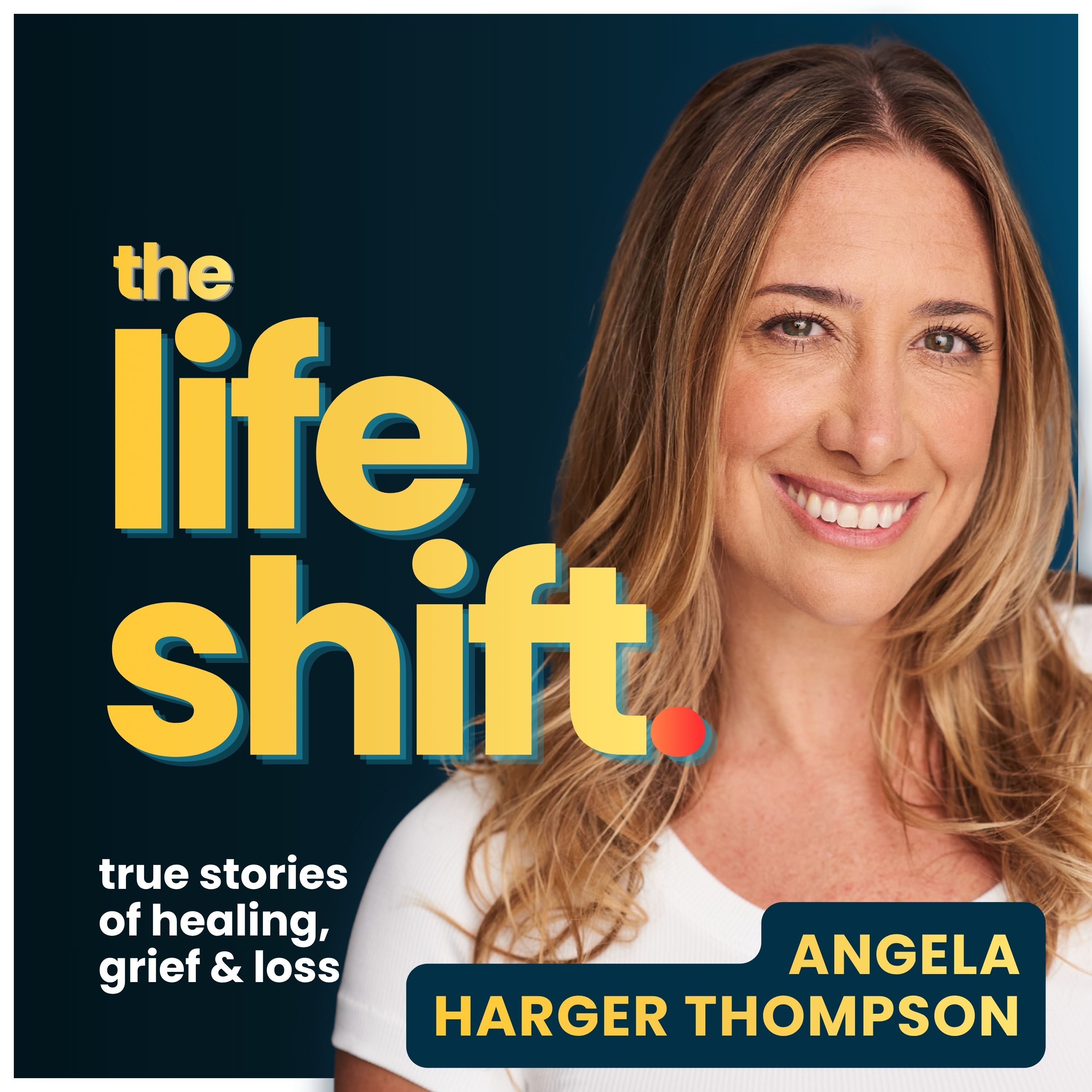
After surviving an assault in her first months in Los Angeles, Angela Harger Thompson said yes to sailing the Pacific with no experience, got stranded at sea when COVID shut the world down, and came home knowing she no longer had to wait to be chosen.


 Goodpods
 Podchaser
 PocketCasts
 RSS Feed
Key Takeaways
- Angela Harger Thompson moved to Los Angeles at age 30 with a big dream, only to face a devastating assault by a producer just two months later.
- Choosing to heal right in the city where her trauma occurred, Angela worked through anxiety attacks while balancing bartending, auditions, and therapy.
- Seeking an escape from burnout and waiting for her big break, Angela said yes to crewing a sailboat across the Pacific without any prior sailing experience.
- One week into her journey, the world shut down due to the COVID-19 pandemic, turning a planned six-week trip into 49 days stranded at sea with closed borders.
- Angela documented her incredible journey at sea, turning the footage into the feature-length documentary Quarantine at Sea and capturing her broader healing in her memoir Worst Tits Ever.
Content note: this episode includes discussion of sexual assault and an abusive relationship.
Sometimes the yes that changes everything looks, at the time, like an escape.
Angela Harger Thompson has been a storyteller since she was four, waving a feather duster in her sister's home movie. At 30, she packed her Honda Civic and drove to Los Angeles with no connections and a very big dream. Two months later, a producer who had promised to keep her safe drugged and assaulted her.
Angela reported it. She went to the hospital, then sat with police for six hours, then waited nine months for a district attorney to tell her the case wouldn't be prosecuted. And she made a very intentional choice. She would heal right there in LA, through therapy, yoga, and a lot of anxiety attacks behind a bar, because he had already taken enough.
A few years later, burned out and waiting for her big break, she said yes to crewing a sailboat from Panama to the Marquesas. She had never sailed. One week out, the world shut down. Borders closed, plans changed daily, and what was supposed to be six weeks turned into 49 days at sea, including sixteen days with just two people on board and a storm straight out of Castaway.
She kept the camera rolling the whole time. That footage became her documentary Quarantine at Sea, and the rest of the story became her memoir, Worst Tits Ever. This conversation is about survival, faith, and the moment Angela realized she could stop waiting for someone to hand her the role and start creating it herself.
What You'll Hear:
- Moving to LA at 30 and why knowing her values early mattered so much
- The producer who groomed her by promising to keep her safe
- What reporting an assault actually looked like, and why she understands why so many women don't
- Choosing to heal in the same city where it happened
- Pushing through anxiety attacks while bartending and auditioning
- The dream that helped her say yes to crossing the Pacific
- Being stranded at sea as COVID closed every border
- Learning to sail in a 15-minute tutorial and riding out a storm near the equator
- Recognizing an abusive relationship and fighting to keep her documentary
- Why she stopped waiting to be chosen
Guest Bio:
Angela Harger Thompson is an actress, filmmaker, and storyteller whose work spans film, commercial, voiceover, and now the written word. Her screen credits have included Sense of Urgency, Something in the Woods, the web series Austin Wannabes, and the video game DC Universe Online, where she voiced the iconic DC Comics character The Question.
Her transformative experience began in January 2020, when she wrote a single goal in her journal at a church Dream Day: let God tell a great story through me. She had no idea that would soon unfold in the most unexpected way.
A few weeks later, she boarded a sailboat in Panama and set out on a three-to-four-week passage across the Pacific. One week in, a satellite email changed everything. COVID-19 had become a global pandemic. With island borders closed and nowhere to land, Angela found herself stranded at sea, navigating squalls, relational conflict, and her own spiritual awakening.
She kept the camera rolling the entire time. That footage became Quarantine at Sea (2022), a feature-length documentary she directed, produced, and starred in, now streaming on Amazon, Apple TV, and Google Play.
But the story was bigger than what the documentary could hold. Her memoir Worst Tits Ever tells the rest: a raw, laugh-out-loud funny, heartbreakingly honest story of faith and the hard work of rebuilding. Foreword writer and actress Jen Lilley describes it as "a love story, a survival story, and a coming-of-age-in-your-thirties story."
Believing every person carries a story worth telling, Angela founded The Storytell Initiative to help others find and share theirs. She lives in Southern California with her husband, Dustin. She is grateful to catch the sunsets over the Pacific, though now safely from a beach.
Website: https://angelahargerproductions.com
Quarantine at Sea on Prime Video: https://www.primevideo.com/detail/0LZUYBIYA02UYEYORJXKNF3D33
Worst Tits Ever on Amazon: https://www.amazon.com/Worst-Tits-Angela-Harger-Thompson/dp/B0G8R4BLXF
Listen and follow: www.thelifeshiftpodcast.com/follow
Subscribe to the newsletter: https://thelifeshiftpodcast.beehiiv.com/
Keywords: sexual assault survivor, healing after trauma, finding your voice, stranded at sea, COVID, sailing, faith, leaving an abusive relationship, documentary filmmaker, storytelling
You Might Also Like:
- Reclamation: Coming Back To The Girl Who Got Shut Down
- Starting Over: You Can Lose Everything and Still Be Okay
Angela's Energy Portrait
Episode Playlist
Learn more about your ad choices. Visit megaphone.fm/adchoices
Frequently Asked Questions
Who is Angela Harger Thompson?
Angela Harger Thompson is an actress, filmmaker, and storyteller known for her documentary Quarantine at Sea and her memoir Worst Tits Ever. She is also the founder of The Storytell Initiative.
What is the documentary Quarantine at Sea about?
Quarantine at Sea is a feature-length documentary directed, produced, and starring Angela Harger Thompson. It captures her 49-day journey stranded on a sailboat in the Pacific Ocean after global borders shut down due to COVID-19.
What is Angela Harger Thompson's memoir titled?
Her memoir is titled Worst Tits Ever, which offers a raw, humorous, and honest story of faith, survival, and the hard work of rebuilding her life in her thirties.
Matt Gilhooly (00:00)
When Angela packed her Honda Civic and drove to Los Angeles at 30, she thought she knew exactly how her story was going to go. Two months in, a producer she trusted, someone who told her he'd keep her safe, drugged and assaulted her. And everything she dreamed about got quiet while she just tried to survive. But this episode isn't only about that moment. It's about what came after. A few years later, someone asked Angela to say yes to something wild, sailing across the Pacific.
And she had no idea that yes would change the entire shape of her life.
Angela Thompson (00:32)
And if you've seen the film Castaway, that storm where his plane goes down, that's where we were. That's what the weather's like. So at one point, the boat was completely healed over at this 45-degree angle. And I look out the galley windows, and I'm just seeing water, the completely underwater.
Matt Gilhooly (01:23)
Hello everyone. Welcome to the Life Shift Podcast. I am here with Angela. Hello, Angela.
Angela Thompson (01:28)
Hi, thank you so much for having me today.
Matt Gilhooly (01:30)
Well, thank you for wanting to be a part of this and mean kind of understanding where we're gonna go today because it is your story, but you never know what questions will come up and what little avenues we'll go down. So I I look forward to this, even though parts of your story are very hard to share and well, maybe not hard for you to share, but for a lot of people to share. But I think it's so important that we have these human conversations about hard times and things that maybe people are experiencing and
aren't able to share it and maybe they feel a little more connected by hearing someone else's story.
Angela Thompson (02:03)
Absolutely. It's always so good to know someone else is experiencing it and then you feel less alone in whatever trauma you're going through.
Matt Gilhooly (02:10)
Yeah. But I mean, in that moment, even though I think logically we know other people are going through similar moments, you feel so alone. I don't know about you, but like for me after losing my mom, like I knew other people had dead parents, but I sure felt like the only kid with a dead mom. And it was it was tough. And then when I started meeting people that also had something similar, I was like, okay. We're kind of in a club and we all kind of understand what this feels like and
Whether we want to be in that club or not is a different story, but knowing that other people can relate is is I mean, empathy is a beautiful thing if we use it correctly. So I appreciate you.
Angela Thompson (02:49)
It really is. Of course.
Matt Gilhooly (02:51)
All right. So before we get into your story, I would love for you to tell us who Angela is in twenty twenty six. How do you show up in the world? How do you identify these days? Tricky question.
Angela Thompson (03:00)
Yes.
I am a wife. I got married last year to the love of my life.
Matt Gilhooly (03:06)
Congrats.
Angela Thompson (03:07)
Thank you. Thank you so much. I am a storyteller and that's kind of first and foremost. Everything else falls under that umbrella. So I'm a filmmaker, I'm an actor, I love jumping into other people's stories. I am also, I've created a course.
and I coach as well. I have other people to tell their story. So that's who I am now. It keeps me very busy.
Matt Gilhooly (03:29)
Nice.
Sounds like it, but it sounds fulfilling. Yeah.
Angela Thompson (03:33)
Yes, I I find
so much purpose in helping people discover their story because it's so powerful. And like you said, it leads to empathy, it connects us to community. we're just we have such language for storytelling. So I find it extremely fulfilling.
Matt Gilhooly (03:50)
Yeah. It same with this podcast, it's it's really interesting to notice how so many of these people that I've talked to, myself included, have wildly different experiences, like in the way that they walk through life, but the commonalities and the way that we felt in certain moments or the way that we approach something or, you know, met with conflict or whatever it may be is so similar. And you're just like,
It's wild. Like, yeah, we're all humans and we're all just trying to like feel our way through this life, even though all of our steps look a little different. There's a lot of power
Angela Thompson (04:26)
Mm-hmm. They really do.
Matt Gilhooly (04:28)
in that. All right. So you ready? We're gonna have you paint the picture. You don't actually have to paint. paint a picture of your life leading up to the main life shift moment that we're gonna center today's conversation around. And you can go back as far as you need to. So if if
Telling some of your childhood helps us understand this before version of Angela. You can you could start wherever you need to.
Angela Thompson (04:49)
Absolutely.
so as I said, I'm a storyteller and I started that journey of storytelling at the age of four years old. my sister had written a play or a movie rather, and we got the family camcorder, recorded it. It was called Murder Italian style. And because I was so young, they like gave me the least amount of lines. But I played a maid and I had a feather duster, and one of my lines was Yes, sir. And just the way that I waved it across the screen, my mom.
Saw it and she's like, okay, this kid is an actor and I need to get her into some lessons. so I'm so grateful that she really recognized that in a young age with me. so I grew up doing community theater. When it was time to go to college, I was like, well, there's nothing I want to do besides be an actor. So I studied theater then I went on to the New York Film Academy.
And you know, anytime I watched a movie, of course I would enjoy the story and and get caught up in it, but I was imagining myself as the actress telling the story. so I I just had this dream and I was like, I know I'm gonna end up in LA. So eventually I packed my Honda Civic. I drove out to Los Angeles in 2015 with everything that I could cram into my car, and I got there with nothing.
Zero connections to anyone in the industry. I didn't have a job. I did have a place to live, thankfully. And that kind of started that fulfillment of a dream that I'd had since I was a very young child.
Matt Gilhooly (06:21)
Mm. How old were you?
Angela Thompson (06:23)
I was thirty at the time.
Matt Gilhooly (06:25)
thirty when you moved? Wow. Yeah.
Angela Thompson (06:26)
Mm-hmm. Yeah, so I went out there a lot later. A lot of people go out, you
know, in their early twenties or late teens. I wanted to. After I had done one year of college, I told my parents, This is not for me. I am not gonna finish. And they said, You are absolutely gonna finish. You have a scholarship to be there. And we support you doing anything you want when you're done, but you're gonna get your degree. so I I did, I finished school and then I
Was working in Austin as an actor trying to build resume before I made that leap. So it took me a while to actually get out there.
Matt Gilhooly (06:58)
Yeah.
Yeah. I wonder if there is something to be said though about going out there at an older age than the traditional way people or that we see in Hollywood. People run out when they're eighteen and they, you know, they they know nothing. So they just kind of like, is it better to know more and be were you like someone 'cause me I picture, okay, I know all the bad things that could happen.
So maybe I shouldn't go or I shouldn't do this, whereas maybe at eighteen I would have been a little less worried about things or planning. So do
Angela Thompson (07:29)
Yeah.
Matt Gilhooly (07:31)
you see it as a benefit that you went out at thirty versus eighteen?
Angela Thompson (07:34)
There were definite benefits to it. I mean, I always kind of play the alternate reality in my head. What if I had gone out, you know, and started
Matt Gilhooly (07:40)
Mm.
Angela Thompson (07:41)
earlier? But I think that one huge benefit that came from me going out a little bit later in life was that I was very rooted in who I was. I knew my
Matt Gilhooly (07:50)
Mm-hmm.
Angela Thompson (07:51)
value system.
I knew where I wasn't willing to compromise. You know, I would you'd you'd always hear hear about the casting couch and how that's a part of the acting industry. And so I had eyes wide open about that and I was like aware of it and that how some people use that to get ahead. And I knew that that would not be an option for me, that I was gonna
absolutely make it with my talent and my tenacity. I think that having that
my convictions having been already developed at that age did serve me in going out there more confident and more grounded
in my own identity so that I couldn't let other people tell me who I was or what I needed to be.
Matt Gilhooly (08:30)
Right. Or just take things because that was the the thing being offered to you at the time. You know, as a as a younger individual, you might choose it just because, I got I have to do this. Whereas not that you didn't need a job, I'm sure you did,
Angela Thompson (08:46)
Okay.
Matt Gilhooly (08:47)
but at the same time your your morals and your values would keep you from doing certain things that maybe other people would say yes to.
Angela Thompson (08:55)
Yes, absolutely. And not just with acting roles, but in all of the side gigs that you need to do in order to get ahead. You know, I had a lot of friends that moved out there and they did get involved in stripping and different things like that. And who's to say I wouldn't have done that at 19 as well? But that
Matt Gilhooly (09:10)
Okay.
Angela Thompson (09:11)
wasn't that wasn't something that was even an option for me at that point. was it was not in line with how I wanted to have success in Los Angeles.
Matt Gilhooly (09:18)
Right. Yeah. No, I I mean I love it. I and I l also love that I'm equating like thirty to being old. You know, you know.
Angela Thompson (09:26)
Well,
it it is considered old to get started in an an acting career. Absolutely. So I'm
Matt Gilhooly (09:31)
Yeah, yeah.
Angela Thompson (09:32)
not taking that in an offensive way at all. I think you kind of have an expiration date. and of course you can break any barrier, but that is the stereotype.
Matt Gilhooly (09:40)
Yeah.
Yeah. Well, I'm just thinking, you know, I'm forty-five now and I'm like here I am making thirty sound old. I'm like, I don't even feel thirty right now.
Angela Thompson (09:46)
Ha ha ha.
Matt Gilhooly (09:49)
So yeah, no, I I love that. So you moved out there thirty to begin again or a like a continuation but in a new place to to boost this career you had already kind of dabbled in?
Angela Thompson (10:01)
Yeah, I would say it was more of a continuation because I had been to the New York Film Academy and gotten to work on several projects there. then I had continued with my acting classes and auditions in Austin, Texas, because there was somewhat of a film industry there. So I was trying to again build that resume and not just go out to LA with nothing.
and then I went out there and I'm so grateful I had that experience under my belt because I had been on set, I had been the lead in some future films, and so I
knew how to conduct myself. I knew how to analyze a character and break down a script and to you know show up professionally. So I'm really grateful that I had that. However, when you get to Los Angeles, it really is like you're starting over as well. Because it even though it's great to have that experience, then the industry is so insular and it's about getting connected and finding the open door and
you're just hustling, hustling until you get an opportunity. So I I did feel like I was in a sense starting over, but starting over with that experience that I'd gained and then also starting it over in the place where it was really happening. There weren't just
Matt Gilhooly (11:11)
Mm-hmm.
Angela Thompson (11:12)
like two or three TV sh shows being filmed there. It was like that was where the industry was centered.
Matt Gilhooly (11:18)
Right. Yeah, you had to get yourself, I guess, known in that space, right? You came in with all the the book smarts and the life skills and all the things that that others might not have, but the trick is like getting that foot in the door, getting people to know your name and what you do. So how did that go?
Angela Thompson (11:37)
So I had been out there for
Matt Gilhooly (11:40)
Tell us about that dream coming through coming
true.
Angela Thompson (11:42)
Right. I mean my dream was pretty I had a pretty high bar. Like I really felt like I was gonna be on the cover of People magazine within two years. And
Matt Gilhooly (11:50)
Nice. Well
Angela Thompson (11:51)
you know, that was what I was shooting for. so I was able to get an agent fairly soon. I s I plugged myself into acting classes and I was trying to get a job because I moved out there with some savings, but obviously needed work as I was pursuing the acting. And so I met a producer.
in the industry who wanted me to work as his assistant. And the job seemed too good to be true. Like the pay was great. His studio was two minutes from my new apartment. And I was gonna be working within the the industry, which I really was hoping was going to lead to more opportunities. so I met with him several times and I was trying to get a handle on what the job actually was. Like I knew I was going to be his assistant, but what did that look like day to day?
And every time we met, the details were a little bit fuzzy. And in one of those meetings, he told me a a lot of times women are drugged and raped in Hollywood. And that if I ever found myself in a situation that made me uncomfortable, just call him and he would come get me. And he kind of established himself as like this big brother figure and someone that I could trust in a place where they're very unscrupulous characters.
So then one night he took me out to dinner. I was officially supposed to start the next day and we were gonna actually go over the details of what that looks like. And he ended up drugging me, raping me, and strangling me. And that was two months into me being in Los Angeles. So it was quite the welcome to LA.
Matt Gilhooly (13:22)
Yeah. And by welcome you mean no, not at all. I mean that
Angela Thompson (13:26)
Right.
Matt Gilhooly (13:27)
I'm sorry that you went through that. No one should have to go through that. And I'm sorry that my
Angela Thompson (13:31)
Thank you.
Matt Gilhooly (13:31)
mind is stuck on him like weirdly not warning you,
Angela Thompson (13:35)
Grooming.
Matt Gilhooly (13:36)
but like, I'll take care of you. Other people do this.
Angela Thompson (13:41)
Mm-hmm.
Matt Gilhooly (13:41)
I'm the one to come to. And then just a wild, like, you're safe with me.
All those other people are bad guys when really he was the bad guy.
Angela Thompson (13:51)
And I didn't even have any frame of reference for the term grooming or what that was to know that that's what he was doing to me.
Matt Gilhooly (13:57)
Yeah.
Angela Thompson (13:58)
But it did make me trust him more and be excited to work with him and feel like I didn't have to watch my drink when I got up to go to the bathroom, you know, because this is someone I'd met with several times. It wasn't a date. He was gonna be my boss.
So yeah, it really did throw me completely off guard, you know, to arrive in this new city, to be so excited and full of dreams and anticipation, and then almost immediately feel like I'd been hit by a semi truck. And
Matt Gilhooly (14:25)
Mm-hmm.
Angela Thompson (14:26)
it very much got me off track. And I kind of went from a place of dreaming to a place of survival, to where some days it was hard to even get out of bed or feed myself, take a shower.
But I was very
Matt Gilhooly (14:38)
Do you recall?
I was just gonna ask, do you recall what that main emotion was? Was it like, and this, please tell me I'm wrong if I am? But I I've talked to some people where they they assume the shame that they shouldn't because X amount did that hap did any of those feelings come up for you? Okay.
Angela Thompson (14:59)
for sure. There was
there was I think devastation. Like this shouldn't have happened to me. This isn't fair. And again, you're looking around you and everyone else that it didn't happen to. So you feel
Matt Gilhooly (15:10)
Mm.
Angela Thompson (15:10)
very alone in your circumstance.
Matt Gilhooly (15:12)
Or that you think didn't happen.
Angela Thompson (15:14)
I right. And then and then the shame as well. And like for me, I
I had not been sexually active. I wanted to wait until I was married for that. And so then there was another layer of
Matt Gilhooly (15:25)
Mm.
Angela Thompson (15:25)
that being gone as well. Right.
Matt Gilhooly (15:26)
Taken from you. Yeah.
Angela Thompson (15:29)
And so just complete lack
Matt Gilhooly (15:30)
'Cause all your choices were taken from you at that point.
Angela Thompson (15:33)
of control. Absolutely. And just trying to regain control again in my life, but in a healthy way, you know, like we don't
Matt Gilhooly (15:41)
Mm.
Angela Thompson (15:42)
want to be controlling. But I'd had every
decision of control taken from me. And so I was trying to find this balance of like, how am I taking control of my body again? How am I empowered again?
And and it what it manifested in some unhealthy ways as well. Cause like anytime I would go out afterwards with a guy, if he would hand me a drink, I would switch cups with him and take the one that he intended for himself. And
I, you know, they would just look at me like so confused and weirded out. And it was a weird thing to do, but it was what I had to do to protect myself and to feel safe in that situation.
Matt Gilhooly (16:16)
Were you holding all of this
yourself? Like did you share with anyone what had happened to you?
Angela Thompson (16:21)
So immediately when I when I woke up, eight hours completely gone from my life, he was beside me and I I put on my clothes and woke him up and started demanding answers and telling him to let me go because I was actually locked into the room. So he
Produced a set of keys and he undid the deadbolt and I walked out until the sunrise. And the first thing that I did was call my mom and she said, I said, I don't know what happened to me, something bad happened. And she said, go to the hospital.
So I did. I went to a rape center. they did a lot of testing on me. And then I I went straight to the police.
And the reason I did that, it was really important to me to try to make sure he could never do that again to anyone else. So I sat there for six hours smelling like his cologne and under these fluorescent lights while the police interrogated me and almost treated me like I was the criminal in this situation, just cross-examining me, trying to pick apart my story.
At one point, one of the female detectives looked at the strangulation marks on my neck and she said, Well, how do we know you're telling the truth? Because to me, those just look like hickeys. And, you know, that was so invalidating and and
Matt Gilhooly (17:31)
Right.
Angela Thompson (17:32)
frustrating, especially when the nurse at the hospital had looked taken one look and said, You've been strangled. You know, we have to call
Matt Gilhooly (17:38)
Mm-hmm.
Angela Thompson (17:39)
the police. so I sat there trying to do the right thing and
at one point I had to call my attacker on a recorded line in front of the police and try to get a confession out of him. So there was just a it was a very hard day for so many reasons, even though there wasn't
Matt Gilhooly (17:52)
Mm-hmm.
Angela Thompson (17:53)
a memory that I had of having been raped, it was the fallout of it. And then later as the shock wore off, then I could feel it in my body as well and I knew that it definitely had happened. so
yeah
Matt Gilhooly (18:06)
I think it's so
important that you did that though. And I I think there's a lot of women that might I mean, you went through something horrible that you didn't quite know all the details to, but then I'm maybe the hospital was an okay experience considering maybe people were compassionate there, but then you go to the police who are supposed to protect and take care of you and you get kind of treated in that way that is
probably demoralizing in a way that feels unfair and now you have that to deal with. Now, okay, I thought I could trust this guy, couldn't. I thought I could trust the police. Can't really. Like I don't feel like I can. Or am I putting too many words in your mouth? Like, did you feel that way
Angela Thompson (18:50)
No, it's ex
Matt Gilhooly (18:51)
when you left the police?
Angela Thompson (18:52)
It's exactly that. And I think, you know, at the end of the nine month investigation that the detectives did, I sat down with the the district attorney and she said, you know, rape is a he said she said, and he said he didn't do it. And you would make a really bad witness because you don't remember anything. So we're not gonna prosecute.
And that was very frustrating because I had done every single thing, quote unquote, right. I had reported,
Matt Gilhooly (19:16)
Yeah.
Angela Thompson (19:16)
I had cooperated, I had let them take pictures of my neck, of my vagina, of every single thing that was part of the rape kit in order to stop him from ever doing that again. And at the end of the day they said, We're not gonna do anything to stop him.
So I do understand why women choose not to go to the police and choose
not to report it because it is re-traumatizing after the initial trauma, very much so.
Matt Gilhooly (19:40)
For nine months. Like you're reliving, or maybe, I don't know. It seems like you could relive that every time someone called about it, or you had to answer another question, or whatever it may be, that just like re-traumatizing. I mean, could could we look at for some, maybe there's a bright side to being able to process any of that? Were you finding that?
By sharing it in that way, was any of it helpful to you?
Angela Thompson (20:03)
I think that in trying to seek justice, criminal justice, and then it ending the way that it did, that was not helpful. It was just
Matt Gilhooly (20:13)
Yeah.
Angela Thompson (20:13)
very, very frustrating. But I was very grateful to get to be set up with a victims compensation program, which they have in California, and that gave me access to a counselor and I was able to start therapy.
Matt Gilhooly (20:27)
Okay.
Angela Thompson (20:28)
Which I found extremely helpful. I did a lot of yoga and I worked with an instructor that had worked with victims of sex trafficking. And she knew a lot about how we hold sexual trauma in our hip space. And so she was working with with me to move my body in certain
Matt Gilhooly (20:42)
Okay.
Angela Thompson (20:42)
ways that would release that trauma. And I also had an on again, off again boyfriend at the time and
when this trauma happened to me, I reached out to him and really found a lot of comfort with him. And he was really, really incredible in knowing where I was that day and what I needed. So like if I needed to stay in bed all day, he let me do that. If he knew I needed to get up and walk the beach, he had me do that. And he never expected me to be anywhere in that healing journey that I wasn't. Like he just was there present with me where I was.
In that space. And so after the DA met with me and said, we're not going to prosecute, he actually, it was my birthday weekend. So that was so hard. But he took me out to Catalina Island, which is just off the coast of California. And we just had this amazing fun weekend, like parasailing and took a boat out, snorkeling, and we got this massage, this couple's massage, and later that night.
I could just feel this trauma leaving my body, like I could physically feel it. And I couldn't stop crying. And I told him, and I and I said, it's leaving my body. He said, I can feel it. It's passing through mine. Like I can feel it tangibly. so so I found ways to begin my healing journey and to find comfort and to begin to process that. But the police weren't a part of that, I would say.
Matt Gilhooly (22:04)
Yeah. It's so you know, I hate
I hate the way that my brain is thinking right now. It's cause like I think, what if you hadn't gone to the hospital? What if you hadn't gone to the police station to even in you know, start those things? Would you have found the healing yourself in that, you know, like some of those things, which is I'm not trying to make any kind of point here, but it's just so interesting to me that like something that could be so horrific if you took the left versus the right.
Where would we be? You know, like
if
Angela Thompson (22:36)
Mm-hmm.
Matt Gilhooly (22:37)
I had not found the right therapist, or if I had quit after the first one that I went to who was not great for me, would I have found healing? Or would I have just been a hot mess for the for the rest of my life? So I I think of these moments of like, yes, that was a terrible experience with the police. But perhaps you wouldn't have found those resources. I don't know. I'm not trying to make it good.
Angela Thompson (22:58)
Yeah, I think
no, I think looking back on it, the key for me to surviving it and healing was being intentional.
Matt Gilhooly (23:07)
Mm.
Angela Thompson (23:07)
And so there were a lot of decisions that I made. My parents wanted me to go back to Texas so that I could heal there. And I said, absolutely not, like this trauma happened here in LA. I need to heal in LA so that I'm not
Matt Gilhooly (23:19)
Good for you.
Angela Thompson (23:20)
scared to come back to the city. so I kind of like put my roots down and
I was intentional about seeking out therapy and going consistently and just all the healing modalities that I I did. And like one of the things that developed as a result of this was I started suffering from anxiety, which I had not really experienced before. And I would get these anxiety attacks where you know, I feel like someone's squeezing my neck and I'm sure it's my body remembering that it was that did happen. and then sometimes at the worst I would, you know, throw up.
And so I was hustling as a bartender while I was, you know, that was my day job while I was doing these auditions. And ten tickets would print for me to make all those drinks and I would just get this anxiety attack and I would have to go into the back.
and throw up into a napkin, wash my hands, come back out, and just start making the drinks. And like I it was so bad that I'm sure that a lot of people would have just been like, I can't do this, I'm not gonna do this. But I was so determined that, you know, my attacker had already taken so much from me, he wasn't gonna take anything else. And I was gonna push through and I was gonna fulfill all the dreams that I'd come out there to do. So I think it was just being so intentional and
Matt Gilhooly (24:34)
Good for you.
Angela Thompson (24:35)
focused on that healing that really carried me through.
Matt Gilhooly (24:38)
Yeah.
Yeah. Did your parents or d who who do you think instilled this in you? Or did you always have that knack for for being intentional and moving through things that that worked for you?
Angela Thompson (24:49)
Yeah, my parents are both diligent hard workers. I think they modeled that for me. And then I think that just my personality in general is very persevering. I don't give up, even maybe when I should sometimes. so
Matt Gilhooly (25:00)
Well, I asked that because
like for me, when my mom died, like nobody around me first knew what to do. Right. Like nobody knew that. They were all afraid of grieving their sel themselves. So they weren't gonna help me. So everything I learned, although they were doing the best they could, they were doing, you know, they they loved me and they did, you know, what they could, but at the end of the day, like I just learned all the things that are not good.
As it relates, like hide it, push it, you know. You you grieve for two days, you're good, like carry on things. So that's why I'm so like I didn't meet someone that was like so intentional, probably until my adulthood. and so I think it's lovely that your parents instilled that in you, but also like you had it all along. Cause I I learned
Angela Thompson (25:48)
Mm-hmm.
Matt Gilhooly (25:48)
the opposite of like, you know, not.
Just do the easy thing because you know you can do it well, kind of vibe, versus do the hard thing, you might not make it, but that's okay. You're gonna keep trying. I never got that. So kudos to you
Angela Thompson (25:58)
Mm-hmm. Yeah.
Matt Gilhooly (26:01)
for being intentional because experience has and will unfortunately continue to happen to people, and then they don't have that internal intuition, intuition or intention.
Or they don't have people around them to help them through it. So, you know, it's a good example
Angela Thompson (26:20)
Well
Matt Gilhooly (26:20)
of what you can do.
Angela Thompson (26:22)
Yeah, and I just wanna say to that Matt, like you were eight years old and I was thirty. You know, you
Matt Gilhooly (26:27)
Fair.
Angela Thompson (26:28)
you had
No no way of knowing how to navigate that and no one stepped up to show you. And I'm so sorry for that. And I think by the time I was 30 and I experienced a trauma, I'd experienced some already. And so I had more perspective of just knowing, okay, if I don't handle this right now, and if I don't heal, there's gonna be negative consequences in my life that will affect me and that will limit my life and the life that I want to lead. It will limit my relationship with men.
It will limit what I if you know, if I'm always scared to go for a job interview, you know, that's gonna take me out. I can't stay in that place. And so it was kind of just knowing the consequences that would come if I didn't deal with it. And I think that, you know, that comes with having life experience of being that age.
Matt Gilhooly (27:16)
Fair and thank you. But also I was eight, yes. I totally understand that young part. But like then I continued it through my twenties, into my thirties, because it was so ingrained in me, it became a crutch. It was all it was just all the wrong ways to do it. But I learned so much after the fact, after I kind of healed from that. But yes, it I was eight. No one expects me to figure that out, but it would have been nice to have people that
could have guided me in a way that, you know, would have been healthy. But I I think I don't know. I think you being able to do that and recognize that is is really commendable and something that I hope others can even just hearing how that you chose to to to do that and move through it maybe can help them because it's so important. And I don't I think sometimes people just get stuck.
Right. Like I mean, I think there's a lot of women that have experienced what you've gone through and or men and have turned into themselves, right? And weren't able to move forward in a positive way. Not to say that your
Angela Thompson (28:21)
Yeah.
Matt Gilhooly (28:21)
anxiety attacks were positive, but you were moving through them.
Angela Thompson (28:24)
Yeah.
Exactly. Learning to push through them was the positive part of it. And
Matt Gilhooly (28:28)
Mm-hmm.
Angela Thompson (28:29)
yeah, I I it's always a fork in the road, like you said. You know, am I going to say this terrible thing that happened is going to define me for the rest rest of my life and I'm gonna go down this road of brokenness, possible shame, whatever it it might be, or am I going to heal from this and let this form me in a good way for who I wanna be?
For the life that I want to live. And, you know, I think that when we don't realize how powerful we are, then maybe we choose the lesser path. But every, you know, anyone who's listening to this today, we all have that ability in ourselves to find the strength, to choose the path that might be harder now, but it's gonna serve us so much.
You know, and and just open our life to limitless opportunities. And so I'm I'm so grateful that I I kind of understood that in the moment and knew that I needed to
do the hard work right then to to set down the path that I had always
Matt Gilhooly (29:24)
Yeah.
Angela Thompson (29:25)
seen for myself.
Matt Gilhooly (29:26)
And who wants that guy to define you? Right? Like he we need to need a part of that. You can create your own life because of it. So here you are you were mentioning you were bartending and anxiety attacks pushing through that.
What comes from that?
Angela Thompson (29:39)
Mm-hmm. Yeah.
So I, you know, as I was in LA, I was already hustling as an actor trying to make it work, you know, running around town for auditions.
Then this happened and I was trying to survive while I hustled around town and went to auditions. And, you know, there was so much work that went into that intentionality and healing, and then in also pursuing the acting. And after a while, I just started to get pretty burned out. Like I was very tired from all the effort that I was putting into everything. And I wasn't necessarily seeing the results. Like I wasn't getting I was getting some roles, but it wasn't how I'd imagined it would be before I moved out there.
And that Onagan, Offigan boyfriend had bought a sailboat and he had moved to the Caribbean and was selling all around. He would send me pictures every so often, you know, of these beautiful pristine islands and say, come visit. And I was like, No, like he's moved. I'm in LA pursuing my dreams. I'm not gonna open this can of worms. and then one day he said, I'm gonna be in LA over Christmas. Do you want to see me?
And I did want to see him. So we kind of rekindled that relationship and it turned into a 10-day, four-state road trip. And at the end of it, he was telling me about this trip that he was gonna take. He was gonna sail his boat all the way around the world. And that had always been like a dream of his. And he invited me to join him. He was like, Will you come with me? And I was like, Are you crazy? Like
I'm he wanted me to go from
Matt Gilhooly (31:11)
Wasn't high on my list.
Angela Thompson (31:13)
right, not not the whole way, because that would have taken
Matt Gilhooly (31:15)
Yeah.
Angela Thompson (31:15)
months, if not a year, but from Panama to the Marquesas, which is a quarter of the way around the globe. And I I just was like, I am not a sailor. The idea of doing this terrifies me. I'm gonna be out of LA and be missing all these audition opportunities, possibly. Like, I do I wanna put my career on hold for six weeks?
So
we had a lot of phone calls and he would he would tell me, you know, any obstacle that I found, he would help me find a way around it. And you know, I'm like, what about my bartending shifts? And he's like, you can quit that job, get a different one when you get back, you know? And so you know, this is leading right up to really the life shift moment.
I was really considering like when else is an opportunity going to present itself for me to sail across the Pacific and crew a sailboat. But I was still terrified. And I remember one night I had a dream and I woke up in the middle of the night and I I felt like God was telling me that He would be with me in the night watches.
Because you know, when you're crewing a boat, it's 24-7. Someone has to be on watch the whole time, looking out for other boats and making sure everything is working. And so I woke up to that and it was so real and so powerful. And I was like, okay, if I do this, I'm not alone and I'll be okay. Because God just told me He'd be with me. So I woke up the next day.
And I called my boyfriend and I said, okay, I'm gonna come with you on this passage.
Yeah.
Matt Gilhooly (32:42)
I mean, good for you. I would have been like, Hell no, I can't do that.
But would you say that making that decision is that your was that was that your line in the sand, would you say? More so than
Angela Thompson (32:54)
Yeah.
Matt Gilhooly (32:55)
your assault?
Angela Thompson (32:56)
I think so, because it was me saying yes to an opportunity that was then gonna change my entire life. And I didn't know
Matt Gilhooly (33:04)
Mm. That you didn't know if it would
Angela Thompson (33:06)
I didn't. I thought it was just a fun adventure. I was trying to escape how hard everything was for me in LA. And so
Matt Gilhooly (33:13)
Mm-hmm.
Angela Thompson (33:14)
I got presented with this opportunity and it seemed shiny and fun, and I said yes.
and I think it took a lot of courage to say yes. It's not something that maybe everybody would sign up for to be in the middle of the ocean, a thousand miles from land. I guess two thousand miles from land at the farthest. Yeah. It's not something that everyone's jumping
Matt Gilhooly (33:32)
Correct.
Angela Thompson (33:33)
to. But you know, I think that I got emboldened by that dream that I had. And then I said, okay, I'm gonna do this without knowing really how dangerous it was
What it was gonna mean for the rest of my life, and just said yes to an opportunity that was pretty much once in a lifetime.
Matt Gilhooly (33:51)
Yeah. And so you went.
Angela Thompson (33:53)
So
I went, yeah. So
Matt Gilhooly (33:55)
So no backing
down, you didn't like second guess yourself or or did you? Okay.
Angela Thompson (33:59)
no, no. Once I said yes,
I it was a yes and I was going and I immediately started, you know, prepping my life in LA to be able to be gone for, you know, at that time it was gonna be six weeks and so I had to call my agents and book out with them.
One of my agents dropped me. She was like, If you're gonna choose to be gone for six weeks, I'm not gonna represent you. You know, and then I I was so worried. I was like, What am I doing? Like I've just taken myself out of the game so I can just go have fun. But I still was very committed to my decision and felt like I was doing the right thing.
I remember my dad called me, he was very nervous and he wanted to like know all the safety features on the boat to make sure that I was, you know, going on a secure boat that I would be safe. And so there was there were a lot of things to process, plan for, even as simple as, you know, in LA we have street parking where you can't
Be on one side of the street for certain days of the week. So I had to figure out where can my car go for six weeks, you know, that's not gonna cost me an arm and a leg to store it. So there were all these logistical things that once I would I knew I was going, I started planning and setting into motion. But again, I thought it was gonna be for six weeks. So everything I did was with that in mind. so I arrived
And then another part of that too was that because he knew that I was worried about what I would miss in LA, he said, I'll get you a nice camera. You can make a documentary of the sailing adventure. So I was really excited when I started getting the camera and the lenses and all the different things that I would need. And that kind of lent purpose to something that had just been an impulsive, otherwise impulsive yes, you know, like, yes, get me out of here. I want to have this adventure.
So then I was like, all right, I'm gonna make a documentary. And everybody kept saying, What's this documentary about? And I was like, I don't know, sailing. And I just I was Googling how to make a documentary. Like that's how little I knew about what I was stepping into. but you gotta start somewhere. So that's where I started. So I arrived in Panama March seventh, or I guess I got there March third, but then we ended up
leaving
after several days of preparation on March 7th of 2020. So we left a very normal world,
Matt Gilhooly (36:13)
Mm.
Angela Thompson (36:14)
headed out into the middle of the ocean. It was myself, my boyfriend, his dog, and then a crew of three. So there were five people on the small boat. And we get one week into this adventure and coronavirus breaks out across the world. Of course that's what they were calling it at the time.
So we didn't have internet or anything like that. We're finding out through just whatever information people email to us. So on the satellite email. And it was wild because we we're seeing the world go into a frenzy with lockdowns and
just real like curfews, things that were like a very foreign concept at the time. And then for us, like what did it mean for us? We had ever-changing restrictions. So we were headed to the Marquesas in French Polynesia and we would get an email from the authorities that we wouldn't be allowed to come on land. And then they would say, Well you can come on land after you're on your boat for two weeks. And and then the next day they'd say, Well
Actually, your time at sea is gonna count as your quarantine, and as soon as you get here, you can come on land. So it was just constantly changing. We had nothing to hold on to or no way of knowing how are we even gonna get home? How are we gonna get back to civilization? And
Matt Gilhooly (37:28)
Right. Yeah.
Angela Thompson (37:30)
you know, we we got the maps out, the charts, and we were like, should we just go to a desert island for a couple weeks and ride this thing out? But there were
Matt Gilhooly (37:39)
That's not a normal thought for most people. Let me just go
to a deserted island and you know, just
Angela Thompson (37:44)
Yeah. Right.
Matt Gilhooly (37:46)
eat the coconuts.
Angela Thompson (37:47)
That was one you know, our one of our plans at as at one point. And, you know, we had our fishing poles, we knew we could survive, we had water maker on the boat. So we also knew we'd be safe from the virus because we didn't know how bad it was. But if we were on a deserted island, then we'd certainly couldn't get it. but you know, there were
Downsides that came with even that, like if if authorities came by, they could impound the boat if we hadn't registered into French Polynesia. And there were just inherent risk. So we decided that pretty much our only option was just to keep sailing. You know, with the wind and the waves as they were, it would have been very hard to turn around and go back to Panama. as well as they also had closed their borders, so they weren't allowing any boats in at the time.
So
we've really truly had to keep sailing.
Matt Gilhooly (38:33)
That's frightening. Did you were you f frightened? I mean, you're talking about it with a smile on your face, but like were you out of your mind, like, what is happening? Or were you just going with the punch or rolling with the punches?
Angela Thompson (38:45)
I for myself I was rolling with the punches, but I was so worried about my family back home.
Matt Gilhooly (38:50)
Mm.
Angela Thompson (38:51)
And because of the intensity of how everything happened and how everyone knew so little about
I was sure at one point that I was gonna be the only person that survived this apocalypse because
Matt Gilhooly (39:03)
Mm.
Angela Thompson (39:03)
I was on a boat in the middle of the ocean. And so every day I was like texting on the satellite phone or emailing my family and making sure they were still safe and that they were taking all the precautions. And then at one point my mom let me know that my uncle had it. And and that was really terrifying for me because before it was just like this thing that was out there in the world, and then it was suddenly already right there in my family, affecting my family.
so I think that really my concern was was far more for them and their safety than it was for myself, just because even though we were in we had different dangers from being in the middle of the ocean, COVID, getting COVID wasn't one of them.
I think that we did have the question though, how are we going to get home? And so there was there was this anxiety that was kind of overwhelming all of us. And things started to get a little bit tense on the boat because, you know, we had all these things, these questions. What is going on in the world? How do we get at home? Are our families okay?
So there was some some passive aggressive things that happened, some crew tensions, and the boat started to feel pretty small. And
by the time we landed in the Marquesas, it was definitely time
to kind of, you know, go our separate ways and and go where we needed to. That was the best for us. And for our crew, they were European Union citizens. So their passports would let them into Tahiti. whereas my boyfriend and I were American citizens, we weren't gonna be able to go on land in Tahiti. So then it became okay, how are we gonna get them there? And if we had sailed them there, it would have taken added a lot of passage time to our passage because for us we needed to go up to Hawaii. We really
that that was the best option for us. That was our way back home, back into America.
So they did let us get groceries, they let us get fuel and they said, get out of here.
Matt Gilhooly (40:50)
Hm.
Angela Thompson (40:50)
And so we had we put out a call to all the other boats that were there and anchored in the bay and we said, Does is anyone going to Tahiti? And do you have room for three crew members? And we got an answer back from a boat. They we're leaving in forty-five minutes. If they can be on the boat in forty-five minutes, then they can we'll take them.
So it was a mad scramble, they got all their stuff. They took all of our food that we had just bought at the grocery store and they left in 45 minutes. And that left just my boyfriend and I and a boat with no food. So we had to reprovision and head out. And then, you know, you asked me if I was scared. And this is where things did get a little bit more dicey when it was just the two of us, because
I
had not sailed before this. So, and then pretty much the whole passage from Panamatch the Marques is I just watched the crew and I was like filming and working on my
Matt Gilhooly (41:44)
Right.
Angela Thompson (41:44)
documentary and enjoying the experience. And then all of a sudden it's just him and I, and I have to know what I'm doing, and I have to be able to survive. And this thought just occurred to me, I was like,
What if God forbids something happens to you on this passage and I have to get home alone? Like I have no idea if I can do it.
And he was like, I'll show you everything you need to know in order to get there. Like, but the GPS had to turn the boat on, what to do with the sails. And so we we had like a 10 to 15 minute tutorial where he showed me everything.
And I was like, okay, I feel I feel like I can survive. but we had to watch, you know, he would sleep, I would watch, I would sleep, he would watch for sixteen days.
And that's when it got really intense. And then you know, we crossed the equator, and five miles north of the equator is what's called the intertropical convergence zone. And if you've seen the film Castaway, that storm where his plane goes down, that's where we were. That's what the weather's like. So at one point, the boat was completely healed over at this 45-degree angle. And I look out the galley windows, and I'm just seeing water, the completely underwater. And
Matt Gilhooly (42:50)
That's frightening.
No thank you.
Angela Thompson (42:51)
Yeah,
but what came back into my mind was when God had said, I'll be with you on the night watches and I was like, Okay, that includes storms as well. I'll be okay. And I just had this huge amount of faith. Like it's like when you watch a movie and it might be really scary, but you know in the end, like the characters are okay. So it was like, All right, I have to go through this really scary thing, but I know I'm gonna be okay.
Matt Gilhooly (43:16)
Yeah. So and then you were do still documenting all of this and filming the day to day still?
Angela Thompson (43:24)
Yeah. So that question, what's your documentary about and me not knowing became very clear once COVID broke out and I
Matt Gilhooly (43:29)
Yeah. Yeah.
Angela Thompson (43:30)
suddenly had this interesting story of, okay, well, we're in the middle of the ocean when COVID broke out. So I kept the camera rolling and kept getting interviews. And like I said, the crew members were from all different countries. So it was interesting to hear what was going on in their countries, what was happening with their families.
How were they gonna get home? And I just documented the whole thing. I kept the camera going when it was just T and I, even if it was just me setting it on a shelf and hitting record and then interviewing myself.
so I did, and I'm so grateful that I did because I was able to capture this very
Matt Gilhooly (44:06)
And
Angela Thompson (44:06)
unique experience.
Matt Gilhooly (44:07)
Yeah. Probably not too many people. I'm sure there were some had a had a similar experience, but very unique.
Angela Thompson (44:14)
Mm-hmm.
Matt Gilhooly (44:15)
and in my mind super scary, but good for you. Like I always joke that I watch these apocalyptic movies, like, the apocalypse is coming and there's people fighting so hard to survive. And I'm like, I don't know if I would do all that. I feel like I might want to go out in the first wave. So
Not literally a wave, but like I don't wanna be a fighting zombies and, you know, like all that stuff. So here you are on a boat and like I can make it. I'm like in the middle of the ocean. I can't see any land, but here we go. I mean, good for you, 'cause I
Angela Thompson (44:47)
That cracks
me up so much Matt. I've never ever even considered the option of going out in the first wave. Like I'm like, I'll survive anything
Matt Gilhooly (44:53)
Just take me out. No.
Like and and also like if it is the end of the world and like I don't want to be responsible for rebuilding the world. Like that's a lot of work.
Angela Thompson (45:03)
Ha ha
Matt Gilhooly (45:04)
So, but here you are in this situation. Not that you were maybe you didn't know, I guess, if you landed in Hawaii and there were no people and then all of a sudden it was up to you to repopulate the earth. But I'm I'm guessing that didn't happen when you did you
I'm assuming you made it, 'cause here you are today, but how long was the whole trip
Angela Thompson (45:23)
Ha ha
Matt Gilhooly (45:24)
to bring you
quote unquote home?
Angela Thompson (45:26)
Yeah, by the time we landed,
by the time we landed in Hawaii, it had been 49 days at sea. So it was a very long journey. And it was it was a weird time because remember we left on March 7th, so the world was normal. We land, I believe it was I forget the date in April, end of April, April 23rd. And the first thing they do is hand us masks and tell us we have to wear them there.
And you know, people are washing their groceries once they get them, they're washing them down. And we really didn't know what to think about how scary this thing was. We were kind of nervous because they'd all been on land and could possibly have it. And we of course knew we didn't have it, but they had a little welcome party for us when we first got there and like all the sailors in the marina came and greeted us, kind of keeping their COVID distance from each other. And you know, we were just so
Grateful to be home, to have found a way home, to be on land, to not be constantly having to look out for ourselves to survive. so there was such a sense of relief that came from that. but I remember I had the camera and I was trying to document it, and I just wanted to.
just capture that, you know, like a quick interview of like I interviewed him and what's it like to finally be on land. And I recorded the dog just rolling around around in the grass, so happy and excited. And then I wanted him to do a quick interview of me. And he just wouldn't. And anytime I asked him, he would walk away from me and go talk to someone else.
Matt Gilhooly (46:53)
Mm.
Angela Thompson (46:54)
And things had gotten strained in our relationship, you know, when it was just us out on the ocean.
It's very interesting to have a fight with someone when it's just
two people on a boat and to like not talk for a day when you're only with one person. And so we we had worked through a lot of that conflict. But then when we came to the end, then everything kind of unraveled. Like the emotions, the intensity of the experience that we've been through and him just ignoring me, like really was almost too much for me to handle because I become so emotionally dependent on this person, like to the point probably
Matt Gilhooly (47:26)
Right.
Angela Thompson (47:26)
of codependency. And then he's like not
Matt Gilhooly (47:29)
You're on a boat.
Angela Thompson (47:30)
filming me and yeah, we were very, very dependent on each other.
Matt Gilhooly (47:33)
Yeah.
Angela Thompson (47:33)
So it the codependency kind of naturally formed.
Matt Gilhooly (47:36)
Yeah.
Angela Thompson (47:37)
But you know, I I thought that was so odd. I couldn't understand why he was refusing to to do it and why he was ignoring me at this party. And, you know, it was kind of an argument that went on for days. And he was like, you know, you should be over this. We shouldn't be fighting about this. But for me it didn't make sense. Like I felt very abandoned by him and
ignored and I really couldn't even put words on everything I was feeling. But it was kind of my spirit was sensing the things that were going to become more like clear later on.
Matt Gilhooly (48:06)
Yeah. So how did this trip change you? Like you said yes, so you went into something really
Angela Thompson (48:13)
Mm-hmm.
Matt Gilhooly (48:14)
hard. What do you think you came back as? Did you come back a different person? Did you come back
Angela Thompson (48:19)
Absolutely.
Matt Gilhooly (48:19)
I mean you came back, we that's we've established that.
Angela Thompson (48:22)
Yeah, no, but but the ways that it changed me, you know, by the time I was there in Hawaii for a little bit, and then by the time that I left, I realized as the relationship went on that it was actually an abusive situation that I was in.
And I got away and
He he was trying to come up to the documentary and say that it was his and he had all rights to it. And he actually hired a lawyer and there was a whole legal dispute where I had to hire my own attorney team and fight back and say, This is my creative baby, and just because you bought me this camera does not mean that the project is yours.
and so I had to stand up to him. And at the time I was on unemployment, and he had he he was very wealthy. So, you know, he could have dragged that out as long as he wanted to. but I fought for what was mine, and in the end, he ended up backing off and dropping that, and then I was able to distribute the documentary. And so I
Realized, okay, there's so much more to this story than just what this documentary shows of like being in the middle of the ocean during COVID. And I had such a relationship journey, a spiritual transformation. I need to share this. I need to tell my story and get my voice back by sharing my story. And so that's when I wrote my memoir, Worst Hits Over Ever. Worst Hits Ever just really shows kind of the juicy details of what the documentary doesn't show.
Matt Gilhooly (49:43)
Mm-hmm.
Angela Thompson (49:44)
And so as I look back at everything that happened, I realized that I was in LA, kind of sitting around waiting for someone to hand me an opportunity. Like, Angela, this role is yours. Here's your invitation
Matt Gilhooly (49:55)
Mm-hmm.
Angela Thompson (49:56)
into the club in Hollywood. You've got your big break. And yes, I was doing the work. I was going to act in class. I was doing the auditions, but I was living in a very disempowered place where I was waiting for someone else to validate me and and say, okay, you're in.
Then through the process of the challenges that I had to rise, to you know, being out there in the middle of the ocean, having to learn how to sail really quickly, learning to make my documentary, leaving an abusive relationship when it became clear that's what I was in, fighting for the documentary, I realized that I was in control. You know, I could be in control.
Matt Gilhooly (50:32)
Mm-hmm.
Angela Thompson (50:33)
I could create my own opportunities.
I didn't need to wait for someone else to hand them to me. And I think that through the creative project of the documentary and the book, I was like, okay, I'm empowered. I've created these projects, and I can invite others into the project, be the one inviting them onto my sets instead of just
Matt Gilhooly (50:52)
Mm.
Angela Thompson (50:53)
waiting for the invitation. So it was
Matt Gilhooly (50:55)
I love that.
Angela Thompson (50:56)
a complete mindset shift that occurred.
Matt Gilhooly (50:59)
Yeah.
You know, when you were saying that, I I I love that for you. I think is so important for so many people to listen and understand that we can create what we want. We don't need to wait for other people to hand us stuff. But as you say that, I think back to that whole intentional healing journey that you shared after your attack, in the sense of like that was like rehearsal.
For in a way of like really trusting yourself and knowing like you can move through this. It's gonna be hard, but I'm gonna take the next step every time. It's like almost a little bit of a rehearsal to realizing like all that power once you landed again, you know, on solid earth to kind of move through all the other challenges that came with the adventure of a lifetime, if you will, that.
you could gloss and put, you know, glitter on and all this like survival story kind of epic there, but it had a lot of layers to it. And I love that you found a way to share those layers and the complications beyond, you know, surviving a sailing trip that you couldn't go anywhere. I think there's there's a lot of human in that. And I I love that you found all these ways to do that. And I mean it's not necessarily I mean it is definitely about storytelling, but it's more about
that confidence, that trust, that, you know, compassion that we find for ourselves and whatever path we take. But I I love that it brought this because now you have at least two things in the world that people can see you and see what you have gone through, but also what you've moved through and became better because of.
Angela Thompson (52:48)
That's a beautiful connection you made that I have not made myself about that it was a dress
Matt Gilhooly (52:52)
Hmm. Yes.
Angela Thompson (52:54)
rehearsal. That was really I got chills when you said that. I think, you know, a story is so important because it's it's healing when we get to share it, you know. And I I feel like one of the things that was so difficult for me through the rape trauma, through
you know, realizing I was in an abusive relationship is that I w I wasn't being heard. I didn't feel like I had a voice.
And so when we get to share our story, whatever medium is through, like for you with the podcast, you know, for me especially with my memoir. And then when I got to go and record it in the studio and turn it into an audiobook, that was the ultimate
Matt Gilhooly (53:31)
Yikes.
Angela Thompson (53:32)
taking back of my voice, you know. And
Matt Gilhooly (53:34)
Yeah.
Angela Thompson (53:35)
it was so intense and so difficult, but it was also so beautifully rewarding.
Matt Gilhooly (53:40)
Mm.
Angela Thompson (53:40)
And I just love it when I can help people.
Not just to share my story and say, hey, you can overcome these things. And, you know, if you're in an abusive relationship, I promise you, just find the courage to leave and the way will unfold in front of you. Like that was the main reason I wrote my book. but then also beyond that, just to help other people discover their story and their voice. Because I think
a lot of times people think, well, I don't really have anything to say or
I haven't experienced anything unique that other people haven't already experienced, but that's not true because like you said, no matter how we go through even if we go through the same thing, we're gonna do it differently. And
Matt Gilhooly (54:17)
Mm-hmm.
Angela Thompson (54:18)
there's such expression in that.
Matt Gilhooly (54:20)
Yeah. There's lot there's so much power in story and I think of you going to the police and like getting some kind of help, but also a side piece of it is like this validation that what you went through was true and actually happened and someone should be held accountable and you were searching for that and you found it in yourself. Like
Angela Thompson (54:43)
Mm-hmm.
Matt Gilhooly (54:45)
you found that you d
I mean, it would have been great to prosecute and do all those pieces, but for the validation you were all you needed in this whole
Angela Thompson (54:54)
Mm.
Matt Gilhooly (54:55)
process. Which is so cheesy to say. But it's true
Angela Thompson (54:56)
Yeah.
Matt Gilhooly (54:58)
and we can say it all we want, but when we feel it, when it makes sense in our own story, that's when when things, you know, feel really authentic. Cause, you know, we could say it all we want, but until you actually know.
You're just
Angela Thompson (55:13)
And
Matt Gilhooly (55:13)
saying words.
Angela Thompson (55:14)
and I think that, you know, can surprise ourselves by how we're able to rise to a challenge. Because if you just think
well, I could never I could never be on a boat in Lily Ocean and get home during COVID. You know, people say that to me all the time when I share my story. And I'm like, but you actually could, because if you were in that situation, you would have to and you would be able to find the strength to get through it, you know? Or like if a woman tells me I couldn't leave this relationship, like our lives are
too connected, like you actually can. Even if you're financially dependent, you can start over. And so I just it's so amazing to realize the power that we can tap into.
Ourselves to get through those difficult situations to a better future, better option.
Matt Gilhooly (55:59)
If you knew how the story like if you knew all this was part of your story, would you go back and still say yes?
Angela Thompson (56:05)
Absolutely. This that experience
Matt Gilhooly (56:08)
That's
Angela Thompson (56:09)
changed my life in s in a you know,
Matt Gilhooly (56:12)
Mm-hmm.
Angela Thompson (56:12)
a lot of ways, but most of them really good. And I think that it was a very important catalyst for me to empowered.
To to realize how much I have inside of me to offer to finding my voice. And then it's led to so many different, you know, iterations of telling the story from the documentary to the book. And then I created a course called the Storytell Initiative course, where the entire thing is to help other people to find their story and to get it distributed. And
Matt Gilhooly (56:40)
Love
Angela Thompson (56:41)
I don't I think I'd probably still be in LA, like waiting, hoping, auditioning.
if not for this experience where I I really was forced to recreate myself.
Matt Gilhooly (56:52)
Yeah. Yeah. Wow. Well, I would have said no.
I I know though, if I had said yes, I would have, like you said, survived it, right? Like I I would have done all the things that I needed to do and and move through it because we somehow show up as humans and that's what we do. but I still would have said no. But maybe
Angela Thompson (57:17)
That's fair.
Matt Gilhooly (57:18)
if it was like, would you like to go on a cruise ship and just float around for, you know, a couple months, I might say yes to that. But here we are.
Angela Thompson (57:27)
That's totally
fair. It's good to know what you're interested in and I I think and again, I was looking for an escape at the time. So the adventure presented
Matt Gilhooly (57:34)
I know. I get it.
Angela Thompson (57:35)
and I was like, absolutely.
Matt Gilhooly (57:37)
Yeah, a very unique one to well, thank you for sharing your story in this way. I think there's a lot of people that would want to check out like your documentary and your memoir and like maybe even just reach out to you and share part of their story that, you know, they feel compelled to share. I think there's we know there's a lot of power in doing that. And so I hope you welcome that. But if they want to do all that, like what's the best way to find you and get in your space?
Angela Thompson (58:02)
I do absolutely want to hear from people and hear their stories. That is so wonderful and exciting to me. And so the way that people can reach out to me and also just get more information on all the projects is Angelaharger Productions dot com. Angelaharger,
H A R G E R Productions dot com.
Matt Gilhooly (58:20)
Okay. Are you on the socials or or is everything on that site you can find?
Angela Thompson (58:23)
Yes,
Messenger of Truth is my Instagram handle.
Matt Gilhooly (58:27)
Okay. Love it. I I do. I if anyone is listening now and something about Angela's story resonated with you or you feel compelled to share part of your story that maybe feels more validated, reach out to her and just let her know. you'll find there's so much power in getting that out of your head and into words for the first time out, you know, to someone else, or maybe just write it down. You know, something getting it out of your head helps make things make a lot more sense. And Angela, thank you for
Sharing your story in this way. And I didn't necessarily know where we were gonna go. And I was glad I got to make you laugh too. That was that was a bonus.
Angela Thompson (59:05)
Thank you. It was an honor and I just am so grateful for this opportunity.
Matt Gilhooly (59:10)
Well, I appreciate that. I also appreciate everyone listening now after almost well, this is episode two hundred and ninety. So thank you all for listening. And hopefully each episode is finding the part in your life that you really need it to. And with that I'm gonna say goodbye and I'll be back in probably in a couple of days with a brand new episode. Thanks again, Angela.
Angela Thompson (59:30)
Thank you.
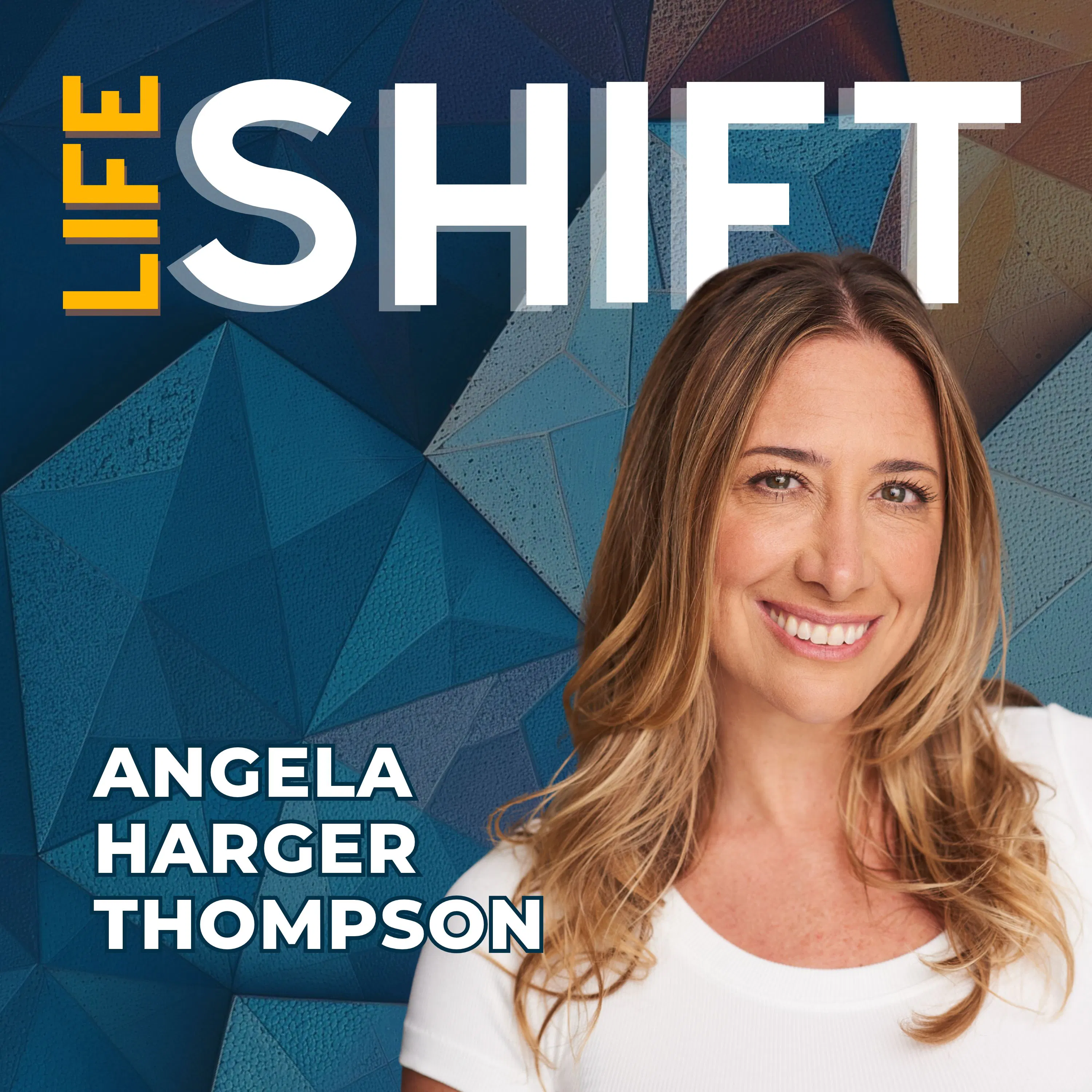
Angela Harger Thompson is an actress, filmmaker, and storyteller whose work spans film, commercial, voiceover, and now the written word. She directed, produced, and starred in the documentary Quarantine at Sea (2022) and is the author of the memoir Worst Tits Ever. She founded The Storytell Initiative to help others find and share their stories, and lives in Southern California with her husband, Dustin.


