Two Months and One Day After Losing My Sister, I Lost My Son
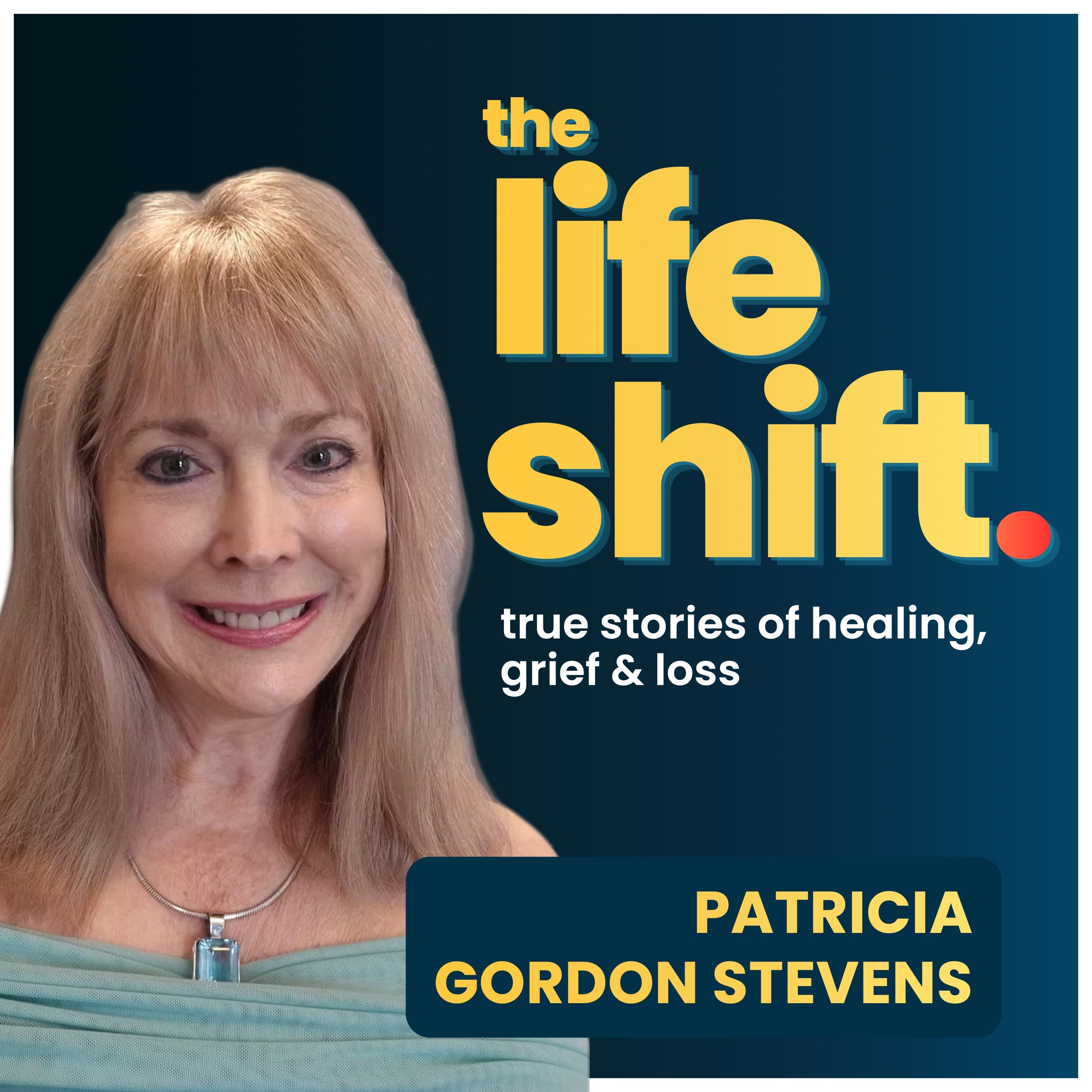
Patricia Gordon Stevens lost her sister in a car accident and, two months and one day later, her son. Hear how she planned her escape from a frightening marriage, why she says grief is love, and what she wishes people would say to someone who is grieving.


 Goodpods
 Podchaser
 PocketCasts
 RSS Feed
Key Takeaways
- Patricia Gordon Stevens experienced the devastating double loss of her sister in a car accident and her son to suicide just two months and one day apart.
- The episode explores the isolation of grief, highlighting how people often avoid the grieving rather than meeting their eyes or knowing what to say.
- Patricia shares her journey of escaping a dangerous domestic violence situation with the help of a small circle of loyal friends.
- Drawing from her personal trauma, Patricia returned to study psychological science and sociology, ultimately becoming a counselor, writer, and death doula.
- Despite navigating profound loss, Patricia emphasizes that grief is simply love and that there is always a little hope left to plant.
Content note: This episode includes discussion of suicide, the death of a sibling in a car accident, domestic violence, stalking and grief. Please take care as you listen.
Have you ever been around someone's loss and found yourself without a single word to say? Patricia Gordon Stevens has been on the other side of that hallway, watching people turn around rather than meet her eyes. This conversation is for anyone who has grieved, and for anyone who loves someone who is grieving.
Patricia was seventeen and pregnant when her high school asked her to leave. She remembers the open windows on the second floor and classmates calling her name as she walked out. She became a young mother, married, divorced, and later married a man whose behavior frightened her so much that she planned her escape with her two children and a small circle of friends who had seen it coming long before she did.
In January 2000, her sister Constance was killed in a car accident in South Australia. Two months and one day later, her son Cory died by suicide. Patricia talks about holding both losses at once, what people said and what they could not say, and the one thing she wished someone would do. Today she is a counselor, a writer and a death doula, living in Kapunda with her husband Marcus, the man who opened her car door the week she arrived to close out her sister's estate. She does not wrap any of it up neatly. She just keeps saying that grief is love, and that there is always a little hope to plant.
What You'll Hear
- Walking out of the high school she loved while classmates called her name
- The moment she stopped listening to her gut, and what it cost her
- How she planned an escape with two children and a handful of loyal friends
- Losing her sister and her son two months and one day apart
- What to say, and what to leave unsaid, when someone is grieving
- Why she believes grief is love, and why she keeps choosing hope
Guest Bio
Born in Memphis, Tennessee, I am half American and proudly half-Australian living a rich and diverse life. I know what it is like to live post trauma and to experience the horror of a stalker and live in violence and fear, therefore, I set out to understand how environments and genetics impact our behaviour by studying psychological science and sociology.
My only sibling, Constance Gordon-Johnson, born five years prior to me, told my mother as a very young girl she would live in Australia because they had the most unique creatures on the planet! She made her dream come true, however, was sadly killed in a horrific car accident while my mother was visiting from the States, in January 2000. My second-born child, my son, Cory, 'opted out on life' and died by suicide two months and one day later on the 22nd of March 2000, so I am familiar with great grief. These are some of the reasons I returned to study how the brain works and why human beings 'do the things they do'.
In between creating stories, as a recent, mature graduate of a Master of Counselling, I enjoy helping others on their path towards self-discovery through therapy. Hope is the ingredient that sees us all through. I certainly feel well-equipped to write stories and advocate for people surrounding intricate mental health issues and the 'beauty and complexities' of managing life itself. What is life without hope?
When I am not counselling or writing, my British-born husband and I manage to sneak away for overseas adventures and we have plans to experience the gorgeous and vast Australian outback again in the very near future. Travel, writing, reading, planting seeds of all kinds, being surrounded by family, and experiencing the world Mother Nature has provided is all this gal needs to get by.
Patricia's website: patriciagordonstevens.com
Instagram: @patriciagordonstevens
Listen and follow: www.thelifeshiftpodcast.com/follow
Subscribe to the newsletter: https://thelifeshiftpodcast.beehiiv.com/
grief after loss, losing a sibling, losing a child, suicide loss, domestic violence survivor, trusting your gut, leaving an abusive marriage, death doula, grief is love, living with hope
Patricia's Energy Portrait
Episode Playlist
Learn more about your ad choices. Visit megaphone.fm/adchoices
Frequently Asked Questions
Who is Patricia Gordon Stevens?
Patricia Gordon Stevens is a counselor, writer, and death doula living in Kapunda, Australia, who has navigated profound personal trauma and loss, including the deaths of her sister and son.
What tragedies does Patricia Gordon Stevens discuss in this episode?
Patricia discusses losing her only sibling, Constance, in a car accident in South Australia in January 2000, followed just two months and one day later by the death of her son, Cory, by suicide.
What is Patricia Gordon Stevens' professional background?
After experiencing severe trauma, domestic violence, and profound grief, Patricia returned to study psychological science and sociology, earning a Master of Counselling to help others on their path to self-discovery.
Matt Gilhooly (00:00)
Two months and one day after Patricia lost her sister in a car accident, she lost her son. And years before that, she was 17 and pregnant, walking out of the high school she loved while classmates called her name from the windows. She became a young mother, married, and then found herself in a relationship so frightening she had to plan her escape with two kids in tow. Patricia is now a counselor, a writer, and a death doula, living in South Australia with her husband Marcus. She has some of the wisest things to say about grief that I've
been able to talk about on this show and about trusting your gut. This is a tender conversation, so make sure you take care as you listen.
Patricia Gordon Stev (00:38)
When will it end? When will I get over this? Well, of course, you don't get over the loss of a loved one, but you do find a way down the road to start living what feels like more normally.
Something, something that, but they're always there with you. And to me, grief is love.
Matt Gilhooly (01:26)
Hello everyone, welcome to the Life Shift Podcast. I'm here with Patricia. Hello there.
Patricia Gordon Stev (01:31)
Hi, Matt. Great to be with you in this space.
Matt Gilhooly (01:33)
Well, thank you for wanting to be a part of the Life Shift Podcast. It is a healing journey that I never knew I needed and what an honor it has been for me to be able to talk three hundred plus people from all around the world about really pivotal moments in their lives and which from one second to the next everything was different. And I didn't know it was gonna be healing and I didn't know it was going to be this rewarding, but I'm so glad that you
wanted to be a part of it and I I look forward to hearing your story today, although it is going to be a hard one to listen to, but I think it's so important to share.
Patricia Gordon Stev (02:07)
All stories are important to share. many people think they're going through things alone. And and Matt, I want to say that I'm a counselor and I understand the relationship. The first relationship with we have with our mothers is so monumentally significant and impacts us for the remainder of our days on earth. I'm sorry you lost your mother at such a very, very young age, but I love the way you loved her. I love the way that you
did your best to try to heal yourself and you found many different avenues. You went down many different avenues to do that. So I applaud you and your efforts and I thank you for sharing.
Matt Gilhooly (02:46)
Well, thank you. And I think I I say thank you because and I laugh because there were a twenty plus year period of just like what I call failing at grief because I was pushing it down or I didn't know how to do it and I didn't think I needed it and whatever it was. And I'm so glad that finally I f I came to a point in my thirties where I was like, Okay, it's probably time to deal with this and it's been such a beautiful other side to kind of really start understanding why.
I did the things that I did after she died and why I chose the things that I did. It's it's really interesting to discover myself in that way with this this more mature version of of myself being able to reflect on it. It's been a gift really.
Patricia Gordon Stev (03:31)
Well, and people need to hear that. I love
Matt Gilhooly (03:33)
Mm.
Patricia Gordon Stev (03:33)
the way you just said it was a 20 year, 20 plus journey. There is no way. There's no proper way to grieve. Everybody
Matt Gilhooly (03:40)
No.
Patricia Gordon Stev (03:40)
needs to know that. It is different for everyone and you we cannot allow others to tell us how to grieve. But if you do
feel stuck, it's important to reach out and and start getting some help if you feel like you're completely stuck.
Matt Gilhooly (03:52)
Totally. But you also when you're in the moment, you just want someone to tell you how to do it. But you it won't work. So you gotta f gotta
Patricia Gordon Stev (03:57)
I'm not you. Let's right.
Matt Gilhooly (04:01)
find it on your own. So before we get into your story, I'm wondering if you can kind of tell us who you are in twenty twenty six. Like how do you show up in the world? How do you identify these days?
Patricia Gordon Stev (04:12)
wow, I am. I just turned 71 years of age on Halloween this past October 31st. And
Matt Gilhooly (04:19)
Happy birthday.
Patricia Gordon Stev (04:20)
I well, thank you so much. birthdays are monumental and a lot of reflection goes on in my world for my birthdays, but I am married to the most marvelous man in the whole wide world, and it took us ages to find each other. So I'm a wife. I am a mother.
I am a grandmother. And I like to say I'm an other mother instead of a stepmother because I had the privilege of watching my husband Marcus's four beautiful children grow up. They were young when we met. So I'm an other mother too. I am a writer and I am a counselor. I'm a gardener. I don't know how to garden, but I know that I love flowers. And I tell everybody I moved downunda. I live in Kapunda, not far from Tanunda and close to Udunda.
So I'm a former Memphian from the United States, living in the gorgeous area, wine, wool, and wheat country in Capunda, South Australia. I could not be happier. And it's taken me, woo, that just brought tears to my eyes. It's taken me ages, ages to get here to this spot.
Matt Gilhooly (05:28)
Yeah. I think a lot of people can relate to that as well of just I think I've ta I've talked to a lot of people that are fifties, sixties, seventies on how they're finding like so much joy and happiness in who they are now and where they are now. And I don't think we can get there without all the ups and downs that we earlier in our lives. Not that we would wish some of those on anyone, but at the same time I think they kind of
create this newer version. I don't know if you believe that as a counselor, but to me it's like I would not be this mat had I not stumbled so many times and had the losses that I had and whatnot.
Patricia Gordon Stev (06:04)
And all those stumbles, Matt, are lessons. We
Matt Gilhooly (06:07)
Mm-hmm.
Patricia Gordon Stev (06:08)
can call them, we can call them mistakes. We can call them regrets. You can label them anything you want to label, but every time we fail at something, and and you know, maybe it's not failing. It's just learning to do things a different way, a better way. those steps, all of those fumbles and bumbles get us to where we are now.
And I hope through some of those failings or some of those mishaps, we really do reflect and we do become stronger. that's why we're supposed to be wiser when we're older. I just didn't I didn't want to grow into a a seventy one year old version of my 16 year old self. So
Matt Gilhooly (06:44)
Mm-hmm.
Patricia Gordon Stev (06:45)
everything that I've gone through has has made me a better person, truthfully.
Matt Gilhooly (06:49)
Yeah.
Yeah. I would agree. I I mean I mean I don't know you yet, but I would agree that on the sentiment of, you know, think I framed a lot of things as failure because that was the only word I knew I didn't quite
Patricia Gordon Stev (07:00)
Right.
Matt Gilhooly (07:01)
understand I didn't have the the vocabulary to understand those those were lessons. They were just massive failures in my opinion. But now as I get older, look at them differently. And what I think I I'd like to add to this and I don't
know how you'd feel with your profession, but I I I think there's an element of luck for me that I was
Patricia Gordon Stev (07:21)
Yeah.
Matt Gilhooly (07:21)
lucky enough to have the fortitude to continue on or to seek at the help when I was ready to seek the help. I think there are so many people that just can't get there. So I consider myself lucky in a way that I was able to do that. so I I think there's a little bit of luck in my mind.
For a lot of this.
Patricia Gordon Stev (07:42)
Well, I think you had, even as a young boy, if I as I've listened to your story before, I think you had great, really rich self-awareness. So many people don't have that. And
Matt Gilhooly (07:54)
Mm-hmm.
Patricia Gordon Stev (07:54)
also, Matt, as a counselor with adults sitting before me, it's not just males, but many adults don't even know how to describe the emotions that they're feeling. Shame, shame is a very hard emotion.
Guilt is a very hard emotion. We get those entangled with other things. You know,
Matt Gilhooly (08:13)
Mm-hmm.
Patricia Gordon Stev (08:14)
sometimes they just think it's anger. I'm just angry at everybody. Well, why are you angry? You know?
Matt Gilhooly (08:18)
Yeah.
Patricia Gordon Stev (08:19)
And and I'm sure when we grieve, we go through those stages too of anger. We're mad at the world. We don't understand. We don't understand how people can still continue to laugh and go on and go grocery shopping and act like everything's normal. I mean, that was
Matt Gilhooly (08:33)
Mm.
Patricia Gordon Stev (08:34)
a that was offensive to me. You know,
Matt Gilhooly (08:36)
Yeah.
Patricia Gordon Stev (08:37)
my gosh.
Losing someone is like having your whole wide world ripped from you and yet everybody wants to continue on normally, you know.
Matt Gilhooly (08:48)
Yeah. It's
a it's a hard pill to swallow, but I think so many of us can relate to that and then when we get through it we realize why we felt that way. So I we could
Patricia Gordon Stev (08:58)
Yes.
Matt Gilhooly (08:58)
we could talk about this on the surface for for so long, but I'd rather talk about your story and and hear how you became this seventy one year old person that loves what you're doing now and how you're happy despite or maybe in spite whatever it may be.
of your journey throughout the years. So could you paint the picture of the before version of Patricia, understanding that you've had many life shift moments, we all do, and you've had many really hard ones that kind of came in place. So however you need to do this, but I'd love to to hear who you were before.
Patricia Gordon Stev (09:35)
Okay, well, I was a very thin and insecure, pretty young girl. I had lots and lots of friends. I loved school more than anything, and I wasn't a straight A student. I was good. I was strong. I was very diligent in my work, but I think I love school so much because of the social aspect. And I loved my teachers. I had some of the best teachers on the on the planet. I went to a brand new high school in Memphis, Tennessee, which is now.
not in good shape, but it was just a brilliant school in the beginning. and then I became people pleaser. I had a sister, Constance, who was five years older than I was, and she was winning national art awards at age 12. She became a horse whisperer. She would buy horses for people. She was a huge horse lover. and and winning
significant awards. A lot of her drawings of charcoal and pastel were of horses, but she was just this amazing human being. And that she was so smart that she skipped the 11th grade, her junior
high in high school, because she didn't need to go. She just and she preferred she preferred animals over people. That's true.
Matt Gilhooly (10:47)
I think a lot of people do
that.
Patricia Gordon Stev (10:49)
Yeah. She wanted the hell out of school. And she was our
Matt Gilhooly (10:52)
Yeah.
Patricia Gordon Stev (10:52)
the first person in my family to graduate from university. But she told my mother as a very young girl that she was going to move to Australia because they had the most intriguing and outstanding animals. She couldn't even imagine she had to be there. And Matt, she made her dream come true. So I felt like my mother was very creative. My mother could touch anything and make it beautiful. She could do that.
With a meal, she could turn a dollar into $20 when she fed us. Every place we lived was beautiful. I'm not saying we were wealthy at all, but Judy knew how to make things gorgeous. And my sister got her talent from her. And I always felt too intimidated to even draw or create because I was living, you know, under the shadow.
Matt Gilhooly (11:36)
Like you thought you weren't gonna be good enough?
Patricia Gordon Stev (11:39)
Yeah. no way, no way.
Matt Gilhooly (11:41)
Did you get that feeling
from from like your parents at all? Like okay.
Patricia Gordon Stev (11:45)
no, my my
mother encouraged me. My mother took me to art classes. My mother, everything in our house was about drawing and art and creativity. And she
Matt Gilhooly (11:52)
Okay.
Patricia Gordon Stev (11:53)
never once said it, but anytime I tried that, I couldn't come close to what what Constance had created. Yeah,
Matt Gilhooly (11:58)
Well you gotta do it more than once.
Patricia Gordon Stev (12:00)
I know. And she was also five years older. And we were really raised as probably as only children because there was such a big difference in our ages. but
I got married really early. I was asked to leave this beautiful school that I was a part of and that meant everything to me because I was pregnant at age 17. was pregnant three months prior to graduation. So you might as well have painted a scarlet letter on my forehead. I was the guidance counselor told me to call my mother to have my mother pick me up from school, that this is not what the new school stood for.
And I was no longer welcomed. And as I walked out, I remember the windows were open on the second story of the of the high school. And I saw people crying and I saw people waving and yelling my name. And I will never forget it. It was like the walk of shame. And I wrote
Matt Gilhooly (12:52)
Hm. it wasn't a a positive waving.
Patricia Gordon Stev (12:56)
it no, it was not positive. It was not positive at all. And married married the boy, married the man, and he was.
He was number one, I believe, in the state of Tennessee for baseball. He was destined to do great things with baseball, but instead he was married and and I planned my second child, Corey. I had my I I gave birth to my beautiful daughter, Kelly, at the age of 17. I planned to have another baby to prove to the entire world that we were gonna make it against all odds. Yeah. Yeah, yeah. Having another baby and keeping that family together. And so it,
Matt Gilhooly (13:24)
Mm. Of course. That's that's what proves it. Yeah.
Patricia Gordon Stev (13:32)
you know.
We were doomed. We were absolutely doomed, but I gave birth to my beautiful son Corey two years later. it was difficult. It's probably the most challenging thing I've ever done in my life was raise two children on my own at a very, very young age. my mother was always
Matt Gilhooly (13:49)
so the the
marriage kinda sp fizzled?
Patricia Gordon Stev (13:51)
we divorced after four years, yes. We divorced.
Matt Gilhooly (13:53)
Okay. Yeah. You were young too,
what, like early twenties, single parent.
Patricia Gordon Stev (13:59)
Yes. And I had wanted so desperately to continue my education. That to me was the most humiliating and and horrible part. My sister had gone off to university. I was asked to leave school. Of course, as at the first chance I could, I think I don't know if they're still called the GED, but I took my test, my high school equivalency test as soon as I could. at a much later date, but
as soon as I could get organized to take it because it meant so much to me.
Matt Gilhooly (14:29)
Mm-hmm.
Patricia Gordon Stev (14:30)
So we struggled. We struggled for a long, long time. Even with my mother trying to help. It was a very, very difficult existence.
Matt Gilhooly (14:39)
Did you have I know you mentioned you were always trying to like co kind of compete with your sister in a way, not in not in a bad way, but trying to be a people pleaser so that people would I'm putting words in your mouth right now, but in my mind, so people would kind of pay attention or love you just the same or you maybe feel like you needed to be loved the same way. Is does that any is that any of that true or am I making that up? Okay.
Patricia Gordon Stev (15:00)
no, I was completely
envious of my sister. I was so jealous of my sister. I
was proud of her, but she scared the hell out of me. I mean,
Matt Gilhooly (15:07)
Mm.
Patricia Gordon Stev (15:08)
she named me George. My nickname is George, and people call me George today because she did not want a little sister. My mother
brought me home from the hospital to introduce me, and Constance said, well, you brought the wrong kind home. You have to take her back. And mother said, She's not going back to the hospital. And Constance said,
Matt Gilhooly (15:22)
Yeah.
Patricia Gordon Stev (15:25)
Well, her name's George.
So I was called George my whole life and I can't imagine on the weekends when my girlfriends and everybody came over to play or to do whatever we were gonna do, my sister would be yelling at me and calling me George. And with social media, could you imagine? you know,
Monday mornings were tough because I was George.
Matt Gilhooly (15:42)
Yeah. And and you know,
I the reason I was asking that is because I th there's a part of me that thinks I don't have any kids, but I think sometimes when people have kids, there's a part of that where now you have these two beings that have to love you and have to you know, and and will always love you. Like you mentioned, you know, that bond with the mother. Did any of that feel like any redeeming quality of these children that you were struggling through life with?
Patricia Gordon Stev (16:09)
Well, it was special. It was so special. I knew that Constance, even though she was far from us and she ended up moving to Australia, I knew how much she loved my children. And I remember when I did discover I was pregnant, my mother was angry because she knew that the future that she had envisioned for me and the future
Matt Gilhooly (16:25)
Right.
Patricia Gordon Stev (16:26)
that I had envisioned for me was not going to be that future. It was going to be something else entirely different.
And I remember just going into my room and not leaving my room for days and days on end. And my sister went to my mother and said, You have got to change your attitude. You have got to get behind her. I've never seen her so scared in all of my life. So there was a lot of love there and there was a lot of support. I think being a people pleaser was because I probably
was in the background. Not that
Matt Gilhooly (16:56)
Mm-hmm.
Patricia Gordon Stev (16:57)
my mother made me in the background, but I was in the background by choice because there's no way I could live up to their standards. And
Matt Gilhooly (17:04)
Right.
Patricia Gordon Stev (17:04)
so people policing was really important to be the happy, jolly, nice, funny girl who got along with everybody.
Matt Gilhooly (17:12)
Mm,
society. I
Patricia Gordon Stev (17:14)
That gets tiring.
Matt Gilhooly (17:15)
it does it the wearing a mask is really, really exhausting and like and then when you have kids it's like that's doubly exhausting and you're doing it by yourself, so that's even more exhausting, I can imagine. So here you are in your twenties trying to get Does it get better?
Patricia Gordon Stev (17:30)
Well, we were, I say we because it was Kelly, Corey, and myself, we were divorced for a good long while. And then I met a man. And I really thought bringing a man into the fold of our life was exactly what we needed to be the all American family again. They
Matt Gilhooly (17:47)
Mm.
Patricia Gordon Stev (17:48)
have their father. They had, of course, visitation rights and they live with their father for a while.
so they had a connection and a relationship with their father, but on a daily basis, I thought it would be great to have another male influence in their world.
Matt Gilhooly (18:00)
Mm-hmm.
Patricia Gordon Stev (18:02)
And Matt, I could not have been more wrong. And for the first time in my life, I always had great intuitive skills. I was really good about reading a room and being perceptive about people. But when it came to this particular individual,
I shut down and I did not listen to my gut feelings. And that is the biggest lesson of all. I don't care who you are. I don't care what stage of life you're in. Our gut instincts are real. They are there for a reason. Stop and pay attention and listen to them. My girlfriends warned me. They warned me to stay away. and I just said, no, love can fix everything. I can
Matt Gilhooly (18:46)
Yeah.
Patricia Gordon Stev (18:47)
fix people.
I know how to fix people because I can just love them to death and I'm there in their corner. I'm their cheerleader. I can make
Matt Gilhooly (18:54)
Yeah.
Patricia Gordon Stev (18:54)
things better.
Matt Gilhooly (18:55)
Why do you think you shut that down? Just for because you didn't want to quote unquote fail again or something?
Patricia Gordon Stev (19:00)
Because I felt in my heart of hearts that whatever the issues were, we were going to work through and I was strong enough to fix them. I could fix people. You can't fix anybody. And if you're going into a relationship
Matt Gilhooly (19:12)
Hmm. Hmm. No.
Patricia Gordon Stev (19:15)
with another human being, you have to be whole first. You have to have done the work. You have to have fixed yourself before you give yourself to another person for life.
And so my mentor now of course is no more fixing, no more fixing.
Matt Gilhooly (19:31)
Yeah. How long did did you like
what was that what was that like if you you couldn't be more wrong and like what weren't you listening to? Why did you feel that that was a regret?
Patricia Gordon Stev (19:41)
Well, because you've heard the horror stories, no doubt, we all have of how everything changed once we
said I do. And that is exactly what happened in this relationship. We'd been together for over a year. We married after we said I do. And you know, I can tell you as a counselor, people can mask personalities. We can stay behind a facade of who we project to the outside world we want people to think we are, but that takes a lot of energy.
Matt Gilhooly (20:10)
Mm-hmm.
Patricia Gordon Stev (20:10)
That
cannot last forever. And the truth was all revealed on the honeymoon. And my voice is starting to shake almost every single day thereafter because he was diagnosed with a severe personality disorder. And back then it was called manic depressiveness instead of bipolar. I don't wish these mental health conditions on anyone. Yes, there's medications today.
That can help people through these things. But this is an individual who would not take medication because he said it it was too foreign and made him feel unlike he's ever felt before and he would not do it. So I did not know who I was going to be opening the door to every evening when I came home from work. And if I was scared as an adult female, if I was scared and felt like I was walking on eggshells every minute, can you even begin to imagine what my two children were thinking?
Matt Gilhooly (21:03)
No, 'cause there's double there because they're they see that you're afraid and also they are
Patricia Gordon Stev (21:08)
Yes.
Matt Gilhooly (21:08)
afraid themselves. So there's this worry on top of worry, which is
Patricia Gordon Stev (21:13)
Yeah.
Matt Gilhooly (21:13)
probably not too healthy for them or you, clearly. Was he was he
Patricia Gordon Stev (21:16)
No. And then there's
Matt Gilhooly (21:18)
like a was he violent or was he just like emotionally okay.
Patricia Gordon Stev (21:22)
Yes. When
he was emotionally, he was a control he was controlling, manipulating. If there if there had been trackers at this time, this was in the nineteen eighties, and there probably were, I'm sure I would have been tracked. Because after I did, incident after incident after incident of yelling and berating. And once I did get the courage to leave, I just thought, this is not the existence I meant for myself or my children. We have to get out.
We just cannot, this is not healthy. And that's exactly what I thought. This is not healthy. We have to leave. And once
Matt Gilhooly (21:56)
Mm-hmm.
Patricia Gordon Stev (21:56)
I did leave, and everybody knows this, once he loses control, that's when violence can escalate. We see
this in Australia, we see this in America and in the UK. That's when the violence can really escalate. And it did.
I would come home, I would be in a new new little duplex with my children and there would be clothes strewn all over my bed. The bed would be made, the bed would be unmade, a cup of coffee would be left on a table,
Matt Gilhooly (22:23)
Yikes.
Patricia Gordon Stev (22:24)
files would be stolen, files would be taken. and this was an everyday occurrence.
Matt Gilhooly (22:29)
Was it direct or was it something where he would like sneak in and and do all those things?
Patricia Gordon Stev (22:33)
Well, he would let me know he was there, but of course i I don't know how he got in. I don't know if you know, he was either picking a lock or doing
Matt Gilhooly (22:39)
Yeah. That's even scarier.
Patricia Gordon Stev (22:41)
something. Yeah. And this this happened time and time again, but we had always been part of a great big social group. And my friends, once I said that I was going to marry him, they accept accepted him. They brought him into the fold. They were good as gold. They tried their very, very best to support our relationship.
Matt Gilhooly (23:00)
Right.
Patricia Gordon Stev (23:00)
And one night we were coming home from a party and we'd been drinking. Both of us had been drinking, and we went to lots of parties with lots of our friends in Germantown, Tennessee. And Germantown police officers are out at night and they do not want anyone drinking on the street. So they pulled him over, they caught him, they put him in the Germantown jail and they followed me home. They f and when I say followed me home, they were two inches on my back bumper all the way up to the top of our little driveway.
And then the police officer got out yelling at me, saying, You were this close to being arrested too. And I didn't understand. But the next morning when I picked him up, I remember seeing him through the glass and he was pacing and he had not calmed down. And you would have thought any sensible person would have calmed down just to just to deflate things, just so things could be more calm. But the police
Matt Gilhooly (23:51)
Right.
Patricia Gordon Stev (23:52)
sergeant behind the desk said, ma'am.
Just give me the word. If you want me to keep them, I'll be glad to. It would be my pleasure. And he heard this. Of course I said no. I'm here to pick him up. But on the way home, it was so horrible and so terrible. And once we got inside the house, that was the day. That was the day when I decided the next time I have a moment, we're leaving. We're gone. And we yes,
Matt Gilhooly (24:14)
Hm. Like an escape plan, was it?
Patricia Gordon Stev (24:17)
yes.
I had friends who were in real estate and I I called a couple of people to say, please find me something inexpensive in the same area because the kids go to school here. I need it, I need it in an emergency. And I do tell people, your circle of support, your tribe that you have in your life is the most important thing. I don't care how intelligent you are, don't care how savvy you are, I don't care. Domestic violence does not discriminate,
Matt Gilhooly (24:43)
Mm-hmm.
Patricia Gordon Stev (24:44)
no matter your culture.
Religion, your looks, your appearance, it does not matter when a person wants to control, that's exactly what they're going to do. But please don't think that you can do all of this on your own. You have to have a little network. You have to have something set up in order to get yourself and your children to safety.
Matt Gilhooly (25:03)
Yeah. Why was that why was that the last straw for you? Or was it? Had you tr you had tried before, but this was was definitive for you? Okay.
Patricia Gordon Stev (25:11)
This was definitive because
of the way I was treated in the car and when we got home.
I had been followed. I would, you know, he would he'd say he wouldn't want to do things with us on a Saturday. And then he would follow us and watch us and and show up at the end when we were leaving events, and he'd been there the whole time watching. And there was such odd behavior.
Matt Gilhooly (25:30)
It's on edge a hundred percent of the time.
Patricia Gordon Stev (25:32)
Yes, yes. And I just thought life is supposed to be at least enjoyable.
Matt Gilhooly (25:39)
Right.
Patricia Gordon Stev (25:40)
Eighty percent of the time. I mean, I know there's gonna be dark storms. I understand that, but a home should be a place where it's your sanctuary, it's your place of peace and calm and love and people are being nurtured. And there was nothing in
Matt Gilhooly (25:55)
Yeah.
Patricia Gordon Stev (25:55)
this in this home except for trying to hold it together.
Matt Gilhooly (25:59)
Were you able to
when you left, were you able to find that sanctuary and that peace and like start a life that felt don't know, good, safe?
Patricia Gordon Stev (26:08)
Not for a very long time.
Matt Gilhooly (26:10)
Mm.
Patricia Gordon Stev (26:10)
No, you're always, you know about the fight or flight syndrome.
You know what happens when when your body is always in that protective stance. It doesn't know if it's going to stand still. It doesn't know if it needs to flee in a hurry. You're always looking over your shoulder. and plus I doubted, I doubted who I was in order to allow this person.
into my life to accept this person into my life and to marry him. I doubted every single thing I stood for and I had to start over.
Matt Gilhooly (26:42)
Yeah. And that's also I think it's extra hard because now you have the self doubt that seems very strong, but you also have to be mom protector of two probably pretty young kids, right? How old were they?
Patricia Gordon Stev (26:57)
Absolutely. Well, when we were married, they were like nine and eleven. And then
Matt Gilhooly (27:02)
Okay.
Patricia Gordon Stev (27:02)
four years later when we were divorced, of course, they were teenagers. it was a very volatile time. It was it was just there's no way around it. It was extremely difficult. And yes, I was trying to be strong. I was trying to put that face again, that smiley face, that good,
Matt Gilhooly (27:19)
Mm.
Patricia Gordon Stev (27:19)
sweet, kind face. I felt empty. My tank was empty.
Matt Gilhooly (27:23)
Yeah. It's really hard and I think probably so common for women in or women or men in these situations when they're able to get out, it's not like ta-da, freedom. It's like like you described, scary and and you're always looking around you know, every corner and turning the lights on and double checking things and not feeling like calm at all. Did you like how
Patricia Gordon Stev (27:46)
Exactly.
Matt Gilhooly (27:47)
long did it take you to find
calmness or settled in your skin
Patricia Gordon Stev (27:50)
Forever. I mean this was
Matt Gilhooly (27:52)
and yeah.
Patricia Gordon Stev (27:53)
love to tell your listeners that was it was just a matter of weeks or months but no it was absolutely
Matt Gilhooly (27:58)
Just snapped your fingers.
Patricia Gordon Stev (27:59)
over yeah you can't snap your fingers it was absolutely over a year it was over a year and and perhaps longer and then I'd always
Matt Gilhooly (28:02)
Yeah,
Patricia Gordon Stev (28:09)
double I'd I'd double I'd double check myself if I had a certain thought about a person and I
Matt Gilhooly (28:15)
Yeah.
Patricia Gordon Stev (28:15)
really really took even more time to get to know people.
And I think because
Matt Gilhooly (28:20)
Friends and relationships.
Patricia Gordon Stev (28:21)
Well, my friends, my girlfriends are still, I call them my Memphis sisters. They've been in my life since some since high school and some after high school. But these gals, you know, I couldn't have survived without any one of them. They were just absolutely fabulous. They knew I was making a mistake. They watched me make the mistake. They stood by me while I made the mistake. And they were there after the mistake. So just
If you've surrounded yourself with a good tribe of girlfriends or guy friends, then you're a step ahead of the game, I can assure you.
Matt Gilhooly (28:53)
Yeah, it's like a knowing you have a safe place to land, even though you probably don't want to use that card at any point, but you know it.
Patricia Gordon Stev (29:02)
Right.
Matt Gilhooly (29:02)
Yeah.
Patricia Gordon Stev (29:03)
And I I do tell, I tell anybody who will listen, I've I've written a book about it. I returned to university and all of these flashbacks were coming back about this marriage. And I had to get it down on paper. I had chills. I was weeping. It just came out. And I wrote a book and it just came out. Everything came
Matt Gilhooly (29:19)
Yeah.
Patricia Gordon Stev (29:20)
out. And my husband kept saying, Give me more pages. Tell me what happens to Morgan. And I wrote it as a a book of of fiction because who wants to hear about?
One person who wants to, you know, we have stats, we have statistics
Matt Gilhooly (29:31)
Right.
Patricia Gordon Stev (29:32)
every day that we hear on the television, but nothing changes. So I thought if people could really feel the experience of what it's like for a woman trying to flee domestic violence with her children, trying to
Matt Gilhooly (29:46)
Mm-hmm.
Patricia Gordon Stev (29:46)
get to a place of safety and what she experiences, then they're going to go, my gosh, this could be my daughter, this could be my niece, this could be my cousin, my
My aunt, my mother, my grandmother even, you don't know what's going on behind closed doors. So and writing's very therapeutic.
Matt Gilhooly (30:01)
Yeah. I mean Yeah,
and especially for the time period. Is this was this still the eighties or early nineties when you left?
Patricia Gordon Stev (30:09)
no, when
I I left yes, I left in in the mid to late eighties. Yes, it was
Matt Gilhooly (30:15)
Yeah. And so
comparatively, would say more people are more vocal now about situations and compared to when you were going through it. I think in the eighties there was stigma attached to it. If you if you said you were, you know, a victim of or there was this shame that we shouldn't have brought with us. Did you feel any of those things or
Patricia Gordon Stev (30:39)
I well I felt the shame I felt the shame of another failed marriage. Yes. And and and my goodness.
Matt Gilhooly (30:43)
Mm. Not that you should have
had that shame. I'm not trying to put that on you. I think sometimes we assume shame just because like we feel like that's what we're supposed to do, because that's what we learned growing up.
Patricia Gordon Stev (30:57)
Right. Well, and you know, a divorce is I didn't think it was a failure. I thought it was a a life saving tactic,
Matt Gilhooly (31:04)
Mm-hmm.
Patricia Gordon Stev (31:05)
you know, but it is still a broken marriage. It's a fractured marriage. It's a it's so it's a failed marriage. you know, I mean
Matt Gilhooly (31:11)
Fair. I just think, you know, I I
think there's more I mean, I this I would imagine there's still way too much well, anything is way too much. There's still domestic violence and that that's still going on, but I think more people are talking about it now and there's more avenues that people feel safe reaching out to or connecting with compared to that time. would you No, I know.
Patricia Gordon Stev (31:34)
Yeah, but the stats aren't going down. You're absolutely
right. People people do talk about it, but the Yeah.
Matt Gilhooly (31:38)
'Cause it's so hard personally, right? Like as you experience, it's like
it's not like you just can like, Okay, bye and then everything is fine.
Patricia Gordon Stev (31:45)
Yeah, they say, great, she left, she got out. Well, hello, that's a red flag. You know, circle her, be around her, go and check on her, make sure she's okay. If
Matt Gilhooly (31:52)
Right. Yeah. Yeah.
Patricia Gordon Stev (31:55)
you have a bedroom, if you have a bedroom in your home or your parents have a another extra bedroom or a beach house or a country house, if anybody has a place that you can offer a woman and her children for even seven to ten days, she just needs to make a plan.
Matt Gilhooly (32:11)
Mm-hmm.
Patricia Gordon Stev (32:12)
She just
needs some place where she can breathe and be safe and make a plan to get those kids to a different place.
Matt Gilhooly (32:15)
Right. Yeah.
Patricia Gordon Stev (32:19)
and sometimes bank accounts get tied up, you know, sometimes
Matt Gilhooly (32:21)
Mm-hmm.
Patricia Gordon Stev (32:22)
bank accounts get frozen. So I do tell people I know that not everybody can do this, but if you have some disposable income and you don't expect it to be paid back, anything can help in these circumstances during a very short period of time.
I'm not saying
Matt Gilhooly (32:37)
For sure.
Patricia Gordon Stev (32:37)
the lady wouldn't pay you back, but you know what I'm saying. It's an emergency and
Matt Gilhooly (32:40)
Right. Yep.
Patricia Gordon Stev (32:41)
sometimes it's a true emergency.
Matt Gilhooly (32:44)
Yeah. No, I think it's important. I think there's things you don't think about until you're in it. And so by hearing stories like this and you might be in it, you know, listening for anyone that's listening, that these are some ideas to kind of put in your pocket and and think about. You know, you're not alone in this. It might feel like it, but there are a lot of unfortunately a lot of people going through things like this and there are a lot of stories out there that you can
listen to and maybe feel like you can take the next step or whatever that is as safely as possible, which as you described, is hard to do safely because
Patricia Gordon Stev (33:20)
Yes. And the higher the woman is in her business, if she is a business owner, if she is a CEO, you know, the higher she is, the more difficulty she has in asking for help. And again,
Matt Gilhooly (33:32)
Yeah. So
Patricia Gordon Stev (33:33)
that's that shame and guilt.
Matt Gilhooly (33:34)
Yeah, and it's you know, it's not really theirs to carry, but unfortunately we do as
Patricia Gordon Stev (33:39)
No.
Matt Gilhooly (33:39)
humans, we we we we carry whatever emotions come up. So so you
Patricia Gordon Stev (33:44)
That's right.
Matt Gilhooly (33:44)
you get away and everyone listening would be happy if they could hear you say that everything was sunshine and rainbows after that. But life
Did life get easy for a time and then
Patricia Gordon Stev (33:56)
It was easy and happy for a time. And I
Matt Gilhooly (33:58)
Okay.
Patricia Gordon Stev (33:59)
met some beautiful people came into my life and my children were growing. my son was always struggling. My beautiful son was the first male born in four generations of our family. Now
Matt Gilhooly (34:12)
Wow.
Patricia Gordon Stev (34:12)
that does not make my beautiful daughter any less special. You know, my daughter is a tremendous joy to our life, but I tell you what, my mother
was my mother Judy was so partial to Corey and she didn't make any she didn't make any bones about it. We all knew it and we just thought she was she got in trouble for it. But anyway, Corey always struggled. He was very s he didn't speak when he was supposed to and we took him to Memphis State speech and hearing school and no one could tell us why. he was very silent.
And that meant when big emotions came up, of course, he he didn't really have the skills or tools to describe what those emotions were. but he went on. He he, you know, he grew, went to school and loved baseball as his father loved baseball, had lots of friends, loved to laugh, and he loved fishing more than any young man on this planet. And I wish
I had been with him. I wish I'd taken him fishing, but most of the time it was his male relatives or cousins. It was never I was never part of that. So I really miss out on that. But my beautiful, talented, fantastic sister, as I told you, she wanted to move to Australia and she made that happen and she'd been thriving in this country for a long, long time. And in the year 2000, Matt, do you remember the millennium when the computers were supposed to stop? You know.
Matt Gilhooly (35:28)
Yes. The whole world was gonna
end. Yeah. No, I do.
Patricia Gordon Stev (35:32)
Well, you're so young. I can't remember what kind
of impact. Okay. Well, it was huge. And I found out from my crafty mother, Judy, that I wanted her to go. I was in Atlanta at the time. And I wanted her, we lived in this country anyway, I wanted her to go to this great big black tie affair. And she said, Well, I'm sorry, darling, but I'm going to be in Australia for 60 days with your sister. And I was so jealous.
Matt Gilhooly (35:56)
Mm.
Patricia Gordon Stev (35:57)
Remember, you know, back then too, you didn't just buy a ticket to go to Australia. You made plans, you know, you
Matt Gilhooly (36:02)
Yeah.
Patricia Gordon Stev (36:03)
made plans probably months in advance. but my sister had bought the ticket. She wanted my mom here with her. She bought a new property that reminded her of the property that we all had when we were very, very young. She brought it, bought it probably five minutes away from where we are now in Allendale, North, South Australia, and it had 20 acres. And she could have horses again. So she wanted mother to be a part of
Matt Gilhooly (36:23)
Mm.
Patricia Gordon Stev (36:24)
it and just and to see that property.
So Constance and my mother were together, and my mother was exactly where she should have been because on the 21st of January 2000, my sister was killed instantly in a horrific car
Matt Gilhooly (36:40)
Mm.
Patricia Gordon Stev (36:40)
accident. And Matt, it was the same type of car accident that killed my mother's mother when she was only eight years of age.
Matt Gilhooly (36:49)
gosh.
Patricia Gordon Stev (36:50)
They were both ejected from a vehicle and their esophagus was immediately crushed and it was instant death. My mother never, ever got over her mother's death. It was
Matt Gilhooly (37:01)
Mm.
Patricia Gordon Stev (37:01)
intergenerational trauma. I I listened to stories about her mother when I was a little bitty girl forever. And I promise you, my mother was never the same after Constance
Matt Gilhooly (37:09)
Mm-hmm.
Patricia Gordon Stev (37:10)
was killed. And so my mother rang me and it took me probably
three or four days to get everything together and to get sorted, but I flew over to Australia to help her close out my sister's estate.
Matt Gilhooly (37:23)
Mm-hmm.
Patricia Gordon Stev (37:24)
Help her pick up the pieces.
she just was never over the same. And
Matt Gilhooly (37:27)
Yeah.
Patricia Gordon Stev (37:28)
I I remember this man coming towards the car door. One of Constance's friends had picked me up at the airport to drive me an hour's drive to Constance's new property. this man kind of bowed at the door and opened the door for me. And
Fast forward, that man who I first met in Australia is now my husband, Marcus. he'd
Matt Gilhooly (37:46)
wow. a
Patricia Gordon Stev (37:47)
been building an art studio on the property for Constance. He's an artist too. I tell you what, he was in the background pouring copious amounts of tea, making pots. I don't even remember how he walked over or came over in the morning. I don't remember Marcus leaving at night, but he was there in the background receiving guests, taking care of Judy until I arrived in
And then taking care of both of us. So just a beautiful human being, a beautiful soul. And my mother was a complete wreck.
Matt Gilhooly (38:18)
Yeah, I could imagine, 'cause it probably just brought up the old trauma to mix in with the now she's lost her her daughter.
Patricia Gordon Stev (38:26)
Her firstborn child, her remember her brilliant child, remember her talented child, remember
Matt Gilhooly (38:30)
I know. Yes.
Patricia Gordon Stev (38:32)
and Constance was beautiful too. Now I don't understand how Capunda took her because she used to smoke cigars and she wore horn rim, Jackie O, great big glasses, had this
Matt Gilhooly (38:42)
Mm-hmm.
Patricia Gordon Stev (38:42)
huge head of brown, golden brown hair, and she wore army boots and a dryze bone coat. And I cannot imagine her walking through the streets of Capunda and how they took her, but
apparently sh she had she made a huge impact. She really, really did.
Matt Gilhooly (38:58)
And how what did that do for you though? I mean, like when you when
you lost her, were you so absorbed in the fact that like you had to take care of your mom or were you able to face that grief?
Patricia Gordon Stev (39:09)
I wasn't able to face the grief. I was there supporting mom every single possible way that I could. I was greeting the neighbors and all the art art community that Constance had met who lived in Adelaide about an hour's drive from here. I was trying to org keep things organized, keep the kitchen neat, you know, decide what we were going to pack up and what we were going to distribute to charity, trying to get an attorney, you know, to get the property for sale.
And because we knew we were going to be returning back home and it was going to be
Matt Gilhooly (39:39)
Right.
Patricia Gordon Stev (39:40)
even more difficult to deal with all of these crucial decisions over we had fax machines at that time. We
Matt Gilhooly (39:45)
Right.
Patricia Gordon Stev (39:46)
were using, you know, we were using fax machines. but one day in particular there was a knock on the front door, and I don't know if my mother knew this was going to happen because she never shared it with me, but it was the funeral director who showed up with my sister's
I opened that door, he introduced himself, and he presented it to me. all I remember
racing out the back door into these huge reeds of grass, out into the back paddock of Constance's property. And I fell to my knees to the ground and I started wailing. I just started, everything came out. And this was probably
Matt Gilhooly (40:21)
Hmm. Yeah.
Patricia Gordon Stev (40:24)
maybe 10 days into the trip, I think. I don't know how long I was out there. There was a horse, there was a pony, and then a few minutes later there was this gentle.
tap on my shoulder. Marcus said, Come with me. And he pulled me up. We walked on the outside of Constance's property across the huge front paddock and over a little dirt country road. I thought he was taking me to another house, but he opened up this door to this place that was dark and dingy and dank and decrepit. And there
Matt Gilhooly (40:53)
Mm-hmm.
Patricia Gordon Stev (40:54)
is this blonde woman behind the bar and she had a great big smile on her face and a Scottish accent and she said, Are you Constance's sister?
And I said, Yes. And Marcus said, Marjorie, I think we need a drink. So she asked me what I would like. And I said, Scotch on the rocks. She bends over. She picks up this tumbler from under the bar and she blows into it to blow all the dust out. And she said, We don't do rocks here, love. We don't do rocks, but I'll give you some great scotch. And she poured me a scotch. It was the best scotch I've ever had in my life. And
After the sun filtered through windows and Marcus grabbed my hand again and we walked back home to Constance's house, something shifted, everything had shifted.
Matt Gilhooly (41:37)
Mm.
Patricia Gordon Stev (41:38)
Everything had shifted. And I just felt like, yes, I was in deep grief and I was traumatized, but this was the most gentle and kind male I'd ever met in my life. And I'm gonna cut I'm gonna go really, really fast here.
Because I feel like I'm gonna burst into a bucket of tears. But two months, Matt, two months and one day after I lost my only sister, who was just a pivotal part of my life, my son took his own life. My son, Corey. We'd had a celebration of life service in Allendale, North, South Australia, five minutes from our home now for Constance, which was beautiful. But there were people in America who had grown up with my sister and they wanted to tell her goodbye too.
Matt Gilhooly (42:18)
Right.
Patricia Gordon Stev (42:18)
So of course, mom and I organized a celebration of life service back in Cordoba, Tennessee. And that was really at the beginning of the roots for our our family. So my son was there, my daughter. My family was really little because my mother and father were only children. So there were no aunts or uncles or cousins. But anyway, everybody showed up for Constance and Corey, I really believe romanticized.
my sister's death. He was not
Matt Gilhooly (42:45)
Mm.
Patricia Gordon Stev (42:46)
in a good place. He was struggling with jobs. He was struggling with girlfriends. He was struggling with everything. He could not stay on track. Poor thing. He could not stay on track. And he just said, have you ever seen so many people come together to show Constance how much they loved her?
Matt Gilhooly (43:02)
Mm.
Patricia Gordon Stev (43:03)
And we you know, we released a hundred over a hundred red balloons because Constance's favorite color was red. She wore shoshido number, red lipstick, whatever. She was just
Unbelievable. And so two months and one day later, Corey left me a five page letter. And he just had enough. He'd been in pain for too long and he wanted the pain to stop. And I think he wanted
I think he thought or envisioned everybody showing up to show how much they loved him and they did.
Matt Gilhooly (43:30)
Mm. Mm
hmm. Yeah. I'm sorry that you had to I mean, that's like trauma after unimaginable trauma. That could that could break you. That could break anyone.
Patricia Gordon Stev (43:40)
Well,
it could. And I I know I am not the only person to experience great grief. None of us get out of this life without experiencing great grief. I did have my former father in law say to me, You're not the first person to ever lose a child pat and I just thought, you know, that's that's cruel and that's
Matt Gilhooly (43:59)
Yeah.
Patricia Gordon Stev (44:00)
not that's not necessary. I know that. I do know that.
Matt Gilhooly (44:04)
That's not helpful.
Patricia Gordon Stev (44:05)
But we always, always hope that we're gone. We want to be gone first. We don't want to see our children go before we go.
Matt Gilhooly (44:13)
Right.
Patricia Gordon Stev (44:14)
And for any of your listeners, there was a great big difference in how people responded to my sister's death because she was killed in a tragic car accident. And I was born in the deep
Matt Gilhooly (44:24)
yeah.
Patricia Gordon Stev (44:24)
south and my son took his life. And you know, all can say is
A death is a death. A loved one is missing from your life. There is a hole in your life that is never going to be filled again. Please think before you speak.
Matt Gilhooly (44:43)
I can imagine. Yeah, you probably heard even did they did you hear directly things directly or did you hear people talking about it around okay. Which is not helpful at all.
Patricia Gordon Stev (44:50)
Both. Both. And
no, it's it's not helpful. And I remember I worked for a great company. I worked for the CEO of this really big audiovisual company. If you watched any of the Olympics in the last 10, 20 years, we put together all of the things to allow you to watch the Olympics from every single country. And I went into his office, I slammed things down on his desk and I said, I cannot stand this, you know.
No one is acknowledging Corey's death. They see me come down the hall, they see me and they turn around, they put their heads down and they leave and they walk away from me. And I can't stand it. My son was alive. My son needs to be acknowledged. And he just looked up at me and he said, Patty, it's too much. They don't know what to do with this. It's too much sadness and too short of a time. They don't have the words. They don't know what to say. And
You know, I thought about that and that's true. I'm sure it's true. But all all you want to hear is, I am so sorry for your loss. I am so sorry to hear this news. You don't have to say any more than that.
Matt Gilhooly (45:56)
Please don't actually. I think there's I mean, I
Patricia Gordon Stev (45:57)
Yeah. Yeah.
Matt Gilhooly (46:00)
people want to fix and so they just say everything wrong. I experienced it as well, but I can't imagine in your in your circumstance, I think there's unfortunately maybe not as much anymore, but there's a stigma attached to the word suicide or, you know dying by suicide.
In a way and people aren't taught. I'm not trying to sugarcoat what your coworkers and other people didn't do for you, but I would say that nobody is really or was really taught how to be with someone that is grieving or how to grieve or how to help in that situation. Because like when my mom died, even my family was like totally
ill equipped to help themselves or help me through any of that. Do you do you look back and think that they were just totally uneducated in that in that realm? Or are you still mad at them?
Patricia Gordon Stev (47:00)
I'm I'm no, I'm not still mad at them. I'm still I'm I'm not still mad at them.
Matt Gilhooly (47:04)
I know you're not I was yeah.
Patricia Gordon Stev (47:06)
You that but you are so right. No one is equipped. We're not educated on exactly what to do. And sometimes it's just going there and sitting there. Sometimes it's sitting there. Sometimes it's I've dropped something off at your front door. There's a meal. Go and get it. Or I've gone grocery shopping for you. I've left left it at your front door. You know, sometimes you don't even want to talk to people.
Or sometimes do you want me to come and sit with you? I don't have to say
Matt Gilhooly (47:32)
Exactly.
Patricia Gordon Stev (47:32)
a word. I can just sit with you and not say a word. I can read my book and be there for you. You know. People are afraid. They don't know. They don't want to make you cry. They don't want to make you cry.
Matt Gilhooly (47:43)
Yeah. They're also afraid of silence. And so that's a hard ask, right? I think, you know, I think what I've
Patricia Gordon Stev (47:48)
Y you're right.
Matt Gilhooly (47:49)
seen is people if they know that you're there and they know that you're truly there, whether you're physically there or not, but you're your phone call away, your a conversation away, you're a drive away, whatever that may be, I think that's like some of the best I think for me it goes even further than someone saying, I'm sorry for your loss.
Because it
Patricia Gordon Stev (48:10)
Right.
Matt Gilhooly (48:11)
feels more real. I think we're conditioned to say sorry for your loss or you know, my sincere
Patricia Gordon Stev (48:17)
Right.
Matt Gilhooly (48:18)
condolences, you know, whatever the Hallmark card said at one point.
Patricia Gordon Stev (48:21)
Right, right, right.
Matt Gilhooly (48:23)
But to be truly human and be like, I don't know what to do, but I am here. And if you need anything, yeah. Just it flaws and all.
Patricia Gordon Stev (48:29)
Exactly. And I wanted I
wanted Yeah, exactly. Perfect. I wanted to hear Corey's name too. But of course, not everybody knows your loved one's name.
Matt Gilhooly (48:39)
Right.
Patricia Gordon Stev (48:40)
I I wanted Corey acknowledged. I he was important. He would he lived. Corey
Matt Gilhooly (48:45)
Yes.
Patricia Gordon Stev (48:45)
lived. Constance lived, you know, but not everybody knows the name of the person who just died in your family, of course. But you're so right. Just I'm here. I am right here with you.
Matt Gilhooly (48:54)
Yeah. Yep.
Right. Because that gives you the opportunity to if you want to talk about Corey, you can and you know they're there. You know, we don't I don't need you to solve anything, but maybe you can listen to this story that I have about Corey. You know, like this funny little story
Patricia Gordon Stev (49:12)
Exactly. Exactly.
Matt Gilhooly (49:14)
about when he went fishing with his uncle, you know, like whatever it may be. And like that can bring those of us deep in grief some
relief is not the right word, but that's the one I'm going to right now, of like some kind of break, if you will, in the sadness. Mm-hmm.
Patricia Gordon Stev (49:29)
Ex exactly.
Exactly. And for your listeners to know, everybody's time frame is different. And just just
Matt Gilhooly (49:37)
one hundred percent.
Patricia Gordon Stev (49:38)
bec just because you cry harder and cry longer doesn't mean you loved more.
Matt Gilhooly (49:44)
Correct.
Patricia Gordon Stev (49:44)
Everybody needs to understand that we shouldn't direct people on how to grieve. We should just allow them. And yes, if it goes on for so long that they're not functioning, of course.
That can be addressed in a gentle way. Of course it can. But just, you know, the people sit before me every day in counseling sessions, Matt, and say, When will it end? When will I get over this? Well, of course, you don't get over the loss of a loved one, but you do find a way down the road to to start living what feels like more normally.
Matt Gilhooly (50:20)
Mm.
Patricia Gordon Stev (50:20)
Something, something that, but they're always there with you. And to me, grief is love.
Matt Gilhooly (50:25)
Yeah.
Patricia Gordon Stev (50:25)
When I've
Think and I talk to my son, I talk to my sister, I talk to my mother whenever I want to out on long walks. and you can do that. Yeah, anybody can do that. Yeah.
Matt Gilhooly (50:32)
Hm. As you should. Yeah. You your grief journey
can look however you need it to be. I think we want the easy way out. I don't know that there is an easy way out. I think I don't know, how do you feel about I mean, you went through two back to back heavy you you had compiling grief, it seems do you think that going th like going through a grief journey
Like of a big loss at one point helps you better grieve at another point, or do you think they're totally disconnected?
Patricia Gordon Stev (51:05)
I felt mine.
Matt Gilhooly (51:06)
Yours were so close together, so it's little harder.
Patricia Gordon Stev (51:08)
They were, but I felt they were disconnected because those constants meant something else in my life to me and Corey meant a completely something else in my life to me. I love them both deeply in a completely different way, but they were both very, very heavy losses, monumental,
Matt Gilhooly (51:25)
Mm-hmm.
Patricia Gordon Stev (51:26)
but I felt I didn't feel the grief grief ever melted into one and the same. It felt very individual for me.
Matt Gilhooly (51:35)
Yeah. And the reason I asked that is, you know, I said I failed at grief for those twenty plus years after my mom died because I just didn't know how and I didn't know what it was and no one around me knew what it was. So I just pushed it down and did whatever. But when I had my kind of breakthrough, if you will, I kind of
Patricia Gordon Stev (51:52)
Yes.
Matt Gilhooly (51:52)
solidified that grief journey, in my opinion. And then my grandmother, who my my dad's mom kind of just like took over the reign of mother.
mothering me and we were just so close,
like best friend, you know, like just so close. And when she was diagnosed with cancer, when I was probably a couple years after I kind of finished that other grief journey, I was like, no, I'm not doing what I did last time. So for me, the failure made me have like probably the most beautiful and not easy, but
not debilitating grief journey with my grandmother because I was gonna do everything right. I was gonna do everything that I wasn't able to do the first time for, you know, with the goodbye, but also for myself to kind of be prepared as prepared as you can be when someone dies. And so that's where that question came from of like, I feel having lost my mom in the way that I did prepared me to have the most beautiful of endings with my grandmother. Like I couldn't
I mean, obviously if she hadn't died, that'd be better, but I couldn't have pictured a better way for us to have that, you know, goodbye and and that period of time that we had together. So that's kind of what I was wondering. If like one for other people maybe you talk to, does one grief journey inform the other in that way? Or am I just weird?
Patricia Gordon Stev (53:14)
That was so
no, you're not weird. You have brought tears to my eyes. That is so generous. That is so kind and so loving. And you were present. You made damn sure you were present. You were gonna be there. You wanted to show that love, to fill that love cup up, and you did it. You did it. You did it
Matt Gilhooly (53:30)
Yeah. Yeah.
Patricia Gordon Stev (53:32)
in the best way possible because you had learned so much for so long with dealing
Matt Gilhooly (53:35)
Yeah. I had learned
Patricia Gordon Stev (53:37)
with your mother's loss.
Matt Gilhooly (53:38)
Yeah, and all the adults around me after my mom died, like all the regrets that they had and all the things that they wish they had would have said or done or they were gonna do it later, you know, and then she died. So for me it was like, I don't know. I had my grandmother and I had the had the final conversation. Like we there was literally nothing left unsaid. So, you know, you go to these funerals and people are like, you wish I would have said this or you know, and they say all
Patricia Gordon Stev (54:01)
I know, I know.
Matt Gilhooly (54:02)
the things and I'm like
How lucky am I to have been able to say all the things and be brave enough to say all the things? Cause it's not easy. But I think
Patricia Gordon Stev (54:11)
No,
it's not. No, no.
Matt Gilhooly (54:13)
I never would
have done it though had I not had the miserable experience that I had after my mom died. So, you know, like it's a weird I don't wanna call it a silver lining, but it's a weird benefit, I guess, of the experience that I went through. Yeah.
Patricia Gordon Stev (54:25)
It is a thing up there.
It's a life experience that you add that you add to your C V that
Matt Gilhooly (54:32)
Mm.
Patricia Gordon Stev (54:33)
you can carry with you. I mean, it's true. I became
Matt Gilhooly (54:35)
It's n it's not one to put there, but you know.
Patricia Gordon Stev (54:39)
Yeah. I became a death doula because
I well, I'm a death doula too. I became one after Matt, after my sweet, beautiful mother Judy died. So
That's a five-hour story. That's another story. But the point is we learn, we learn from
Matt Gilhooly (54:53)
Mm-hmm.
Patricia Gordon Stev (54:54)
all of these rich experiences and from some of the saddest experiences in the world. Beautiful things can come out of that.
Matt Gilhooly (55:01)
Yeah. It's hard. But here you are.
Patricia Gordon Stev (55:04)
It is Yeah.
Matt Gilhooly (55:05)
the human spirit has this resilience somehow. Not doesn't reduce anything that you've gone through. It doesn't reduce the way you miss Constance and your mom and your son and all the people, you know, and all the things. But here you are saying, you know, you just turned seventy something and you're like so happy where you are and and doing what you do. And I I
Patricia Gordon Stev (55:27)
I am.
Matt Gilhooly (55:28)
think that's
I think I think if we're lucky we get there. And I you know, I know you put in a lot of hard work to get there, but I I I commend you for finding that because I don't think a lot of people can find that, unfortunately.
Patricia Gordon Stev (55:42)
Well, I
think it it unfortunately is right. We have to live in hope because without hope, is there life? There
Matt Gilhooly (55:46)
Mm-hmm. Mm-hmm.
Patricia Gordon Stev (55:49)
is not life without hope. Please be helpful. Please try to be helpful. Hopefully and take a deep look inside. If
Matt Gilhooly (55:57)
Yeah.
Patricia Gordon Stev (55:58)
you think you need to go and reach out and speak to a therapist or a counselor, you know, they're not your family members. They're not your friends. This is a complete stranger. And sometimes that will that's exactly what we need.
Because our family and our friends are going to judge us and they're going to tell us what to do. And sometimes you just
Matt Gilhooly (56:17)
Ha ha ha.
Patricia Gordon Stev (56:17)
need to talk to a complete stranger. Seriously. Yeah.
Matt Gilhooly (56:20)
yeah, unbiased. I I think it's it's so helpful. So I I
know I've I've talked your ear off. So I was wondering what would you what would this version of you say to Patricia when you finally left that husband of yours that was frightening about the life she was about to go on.
Patricia Gordon Stev (56:40)
Well, every single day of your life, listen to your gut instinct.
Matt Gilhooly (56:46)
Mm.
Patricia Gordon Stev (56:47)
Do not ignore it. It is a crucial part of you. And yes, live in hope because there is always hope for a brighter future. And you're gonna be you're gonna be part of that. You're gonna be orchestrating that brighter future because you can do it.
Matt Gilhooly (57:04)
Yeah. Would you think you would have believed it?
Patricia Gordon Stev (57:06)
When I was after I'd left.
Matt Gilhooly (57:08)
If you if you ha if if you showed up and told yourself at that point all that what you just said.
Patricia Gordon Stev (57:14)
I know that I would believe the part about trusting my gut instinct.
Matt Gilhooly (57:18)
Mm, yeah.
Patricia Gordon Stev (57:19)
I know that I would. And I probably would have been, admittedly, a little trepidatious about hope.
Matt Gilhooly (57:26)
Yeah. Fair.
Patricia Gordon Stev (57:27)
But each day, each day that went by, each day that I survived and existed and it was a more normal and peaceful existence, that hope grew stronger.
Matt Gilhooly (57:37)
Yeah. Well, I I really appreciate you having this conversation and sharing all these pieces. I think there's so many elements of your story that I think listeners will connect with. And it might not be the the big things that you mentioned. It might be a little sentence that you said as part of it. so thank you. But also if someone's listening and they want to find you, they want to get in your orbit or connect with you or send you a message that says, Hey.
This is my story, and I I'm I felt like I needed to share it with you because you shared yours. Like, what's the best way to find you, find your book, find all the things?
Patricia Gordon Stev (58:14)
www. dotricia Gordon Stevens dot com and on Insta Patricia Gordon Stevens author. I'm there. Easy.
Matt Gilhooly (58:23)
Easy. We'll put those links.
We will put those links there. I I really encourage someone listening. If if you feel validated by something that Patricia said, or I don't know, maybe you saw yourself in the story, or maybe you just want to share your story for the first time, reach out to one of us and and share it. We would
I I just know there's so much power in getting that story out of your head and putting words to it, whether that's writing or
saying it out loud. So I really encourage people to do that. I know how much it helped me to start to process things for myself. So I hope you're okay with that. I hope you're okay with people reaching out to you.
Patricia Gordon Stev (58:58)
Perfectly stated, Matt. Perfectly stated. Absolutely indeed. And thank
you. Thank you for everything.
Matt Gilhooly (59:06)
Well, thank you for wanting to be a part of this. Truly it has been so special. I never thought I could talk to so many people that I probably never would have bumped into about deeply personal things that I somehow by listening feel healed in a way that I didn't know I needed it. So I just really appreciate you wanting to come on the show and do it with me.
Patricia Gordon Stev (59:25)
You're doing a tremendous job. I appreciate you.
Matt Gilhooly (59:28)
Thank you. And we both appreciate
all the listeners. So thank you guys for coming
Patricia Gordon Stev (59:31)
Yes.
Matt Gilhooly (59:32)
along this ride with with me and my guests. And with that, I'll say goodbye and I'll be back again in a couple of days with a brand new episode. Thanks again, Patricia.
Patricia Gordon Stev (59:42)
Thank you, Matt.
Counselor, Writer and Death Doula
Patricia Gordon Stevens was born in Memphis, Tennessee, and now lives in Kapunda, South Australia. She is a counselor with a Master of Counselling, a writer and a death doula. After leaving a frightening marriage, losing her only sister in a car accident, and then losing her son two months and one day later, she studied psychological science and sociology to understand why people do the things they do. Patricia believes hope is the ingredient that sees us all through, and she now helps others on their path toward self-discovery through therapy and story.


