Family Secrets: When the Truth You Always Sensed Finally Has a Name
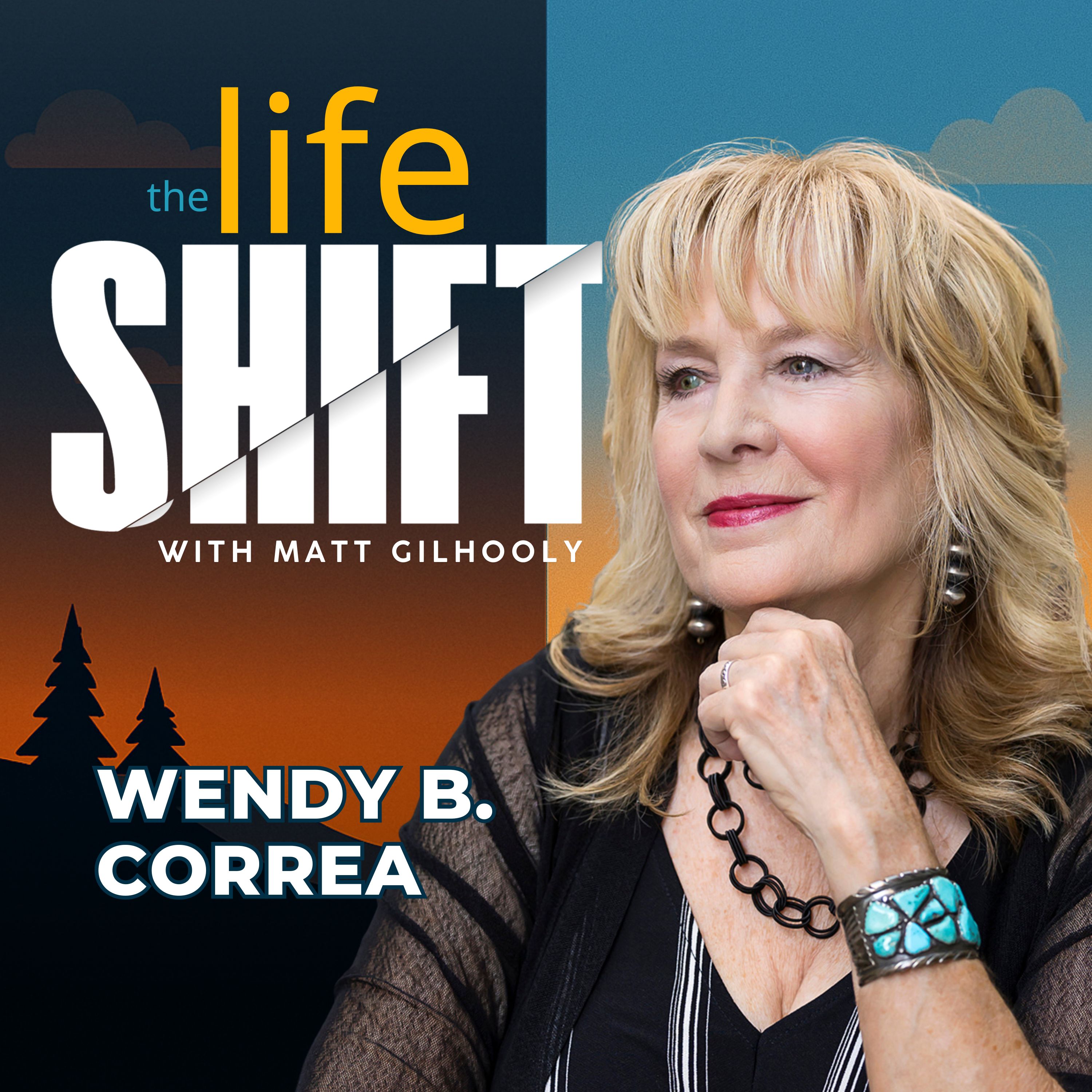
Wendy B. Correa discovered at 62 that her father wasn't her biological dad. Her story of childhood loss, family secrets, and healing is for anyone carrying something they were never allowed to say out loud.


 Goodpods
  Podchaser
  PocketCasts
  RSS Feed
 Some stories start with a loss so early that you don't even have the words for what happened. You just carry it. You carry it into every room, every relationship, every quiet moment where something feels off but you can't name why. That's where Wendy's story begins. She was seven years old when her father died, and nobody sat down to explain it. Nobody said you're allowed to be angry. Nobody said you can talk to him in the moon and the stars. The world just kept moving, and she learned to move with it.
What Wendy didn't know until she was 62 is that her instinct of not quite belonging had an answer she hadn't even thought to look for. A DNA test. A buried secret. A biological father who had come to her house while her dad was at work, and a mother who had spent a lifetime protecting everyone except the one person who most needed the truth.
This is a conversation about what it costs to grow up without language for your own grief. It's about the way a body holds on to what a family refuses to say out loud. And it's about what happens when the truth, as painful and as complicated as it is, finally lands. Wendy wrote her memoir, My Pretty Baby, as a call to action, not just a personal story. Because 64% of adults have experienced some form of adverse childhood experience, and most of them were never given permission to talk about it.
What You'll Hear:
- What it felt like to lose a parent at seven when no one gave grief a name
- The moment in an acting class in her 20s when 20 years of buried anger finally surfaced
- How growing up with an alcoholic stepfather shaped her sense of self and blame
- The DNA discovery at 62 that reframed her entire life and answered the question she didn't know she'd been asking
- What it means to feel validated by the truth, even when the truth comes too late for some conversations
- Why she wrote My Pretty Baby as a call to action and what she hopes readers carry with them
Guest Bio:
Wendy B. Correa is a writer, yogi, speaker, and advocate for honest conversations about adverse childhood experiences. Her memoir, My Pretty Baby, traces her journey through childhood loss, family dysfunction, and the identity-shifting discovery that her biological father was not who she believed him to be. She is committed to breaking the silence around ACEs and helping others find language for the things they were never allowed to say. You can find her at www.wendybcorrea.com and on Instagram at @WendyBCorrea.
Listen and follow: www.thelifeshiftpodcast.com/follow
Subscribe to the newsletter: https://thelifeshiftpodcast.beehiiv.com/
Mentioned in this episode:
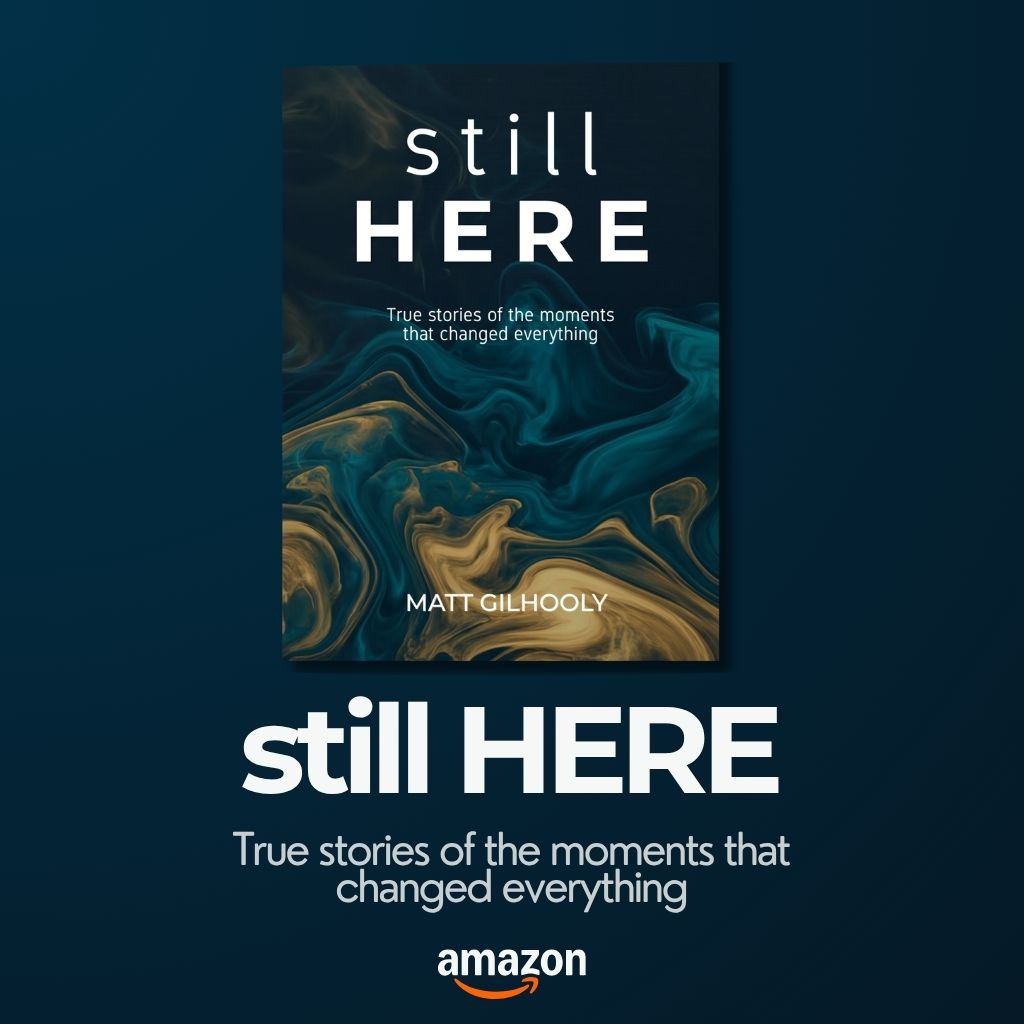
Available Now: "still HERE: True Stories of the Moments That Changed Everything"
This episode is brought to you by *still HERE: True Stories of the Moments That Changed Everything* by Matt Gilhooly. Matt is the creator and host of The Life Shift Podcast. Over four years and more than 240 episodes, he has sat with strangers and asked them about the moments that changed everything. *still HERE* is what he found. Over 100 true stories. Eight sections. One listener making sense of what it all means for the rest of us. Available now in Kindle and paperback on Amazon. Find it here: https://www.amazon.com/Still-Here-Stories-Moments-Everything/dp/1639011854/
If you read it and it moves you, an honest review on Amazon helps more people find it.
You Might Also Like:
Matt Gilhooly (00:00)
For Wendy, the first life shift came early. She lost her father at seven in a time when kids were really just expected to stay quiet and keep moving. There was no language for grief, no room to have just the silence that settled into her body and followed her for decades. Years later, another truth surfaced that reframed everything she thought she knew about her family and herself. This is a story about childhood loss.
Wendy Correa (00:31)
I was 62 years old when I found out that my father who died when I was seven was not my biological father. And it was an existential feeling because it's like, who am I then?
Matt Gilhooly (00:52)
You're listening to the LifeShift Podcast. I'm your host, Matt Gilhoolie. This show is built around one simple idea, that sometimes a single moment can change how we see everything. Each week, I talk with someone about the moment that shifted their life and how they learned to live differently after it. These are not stories about having it all figured out. They are stories about what it looks like to keep going once the story changes. Thank you for being here. Here's today's story.
Matt Gilhooly (01:22)
Hello everyone, welcome to the LifeShift Podcast. I am here with Wendy. Hello, Wendy.
Wendy Correa (01:27)
Hello, it's so great to be here with you, Matt.
Matt Gilhooly (01:30)
Well, thank you for wanting to be a part of the Life Shift podcast. are nearing 250 episodes now and I don't know how to describe it any other way. It is a journey that I never could have imagined for myself. Hearing so many important stories, so many human stories, so many stories that maybe were not talked about when I was growing up and people were afraid to share the hard pieces. think growing up I
just assume that we were supposed to stay in line, all the stuff that is bad, we keep at home and we don't talk about that and we present to be a perfectly formed human. And so I'm just so grateful even before we have this conversation today that you wanted to be a part of it.
Wendy Correa (02:16)
I'm so happy to be here and to be in conversation with you.
Matt Gilhooly (02:20)
we will see where it goes. And just to anyone listening now, this conversation will unfold live as we are recording it. And I think that's so important because we need conversation and community more than ever. And we need to be able to have conversations, even if they're totally different than our own experiences and we get curious about them or our assumptions are wrong. Those are the important things.
I would love to start just with a question, Wendy, of going into 2026, who is Wendy? Like, how do you show up in the world? How do you identify these days? Like, what's your vibe?
Wendy Correa (02:54)
I am a writer, obviously. I just published My Pretty Baby and I am a yogi and I'm a sober woman and mother and a dreamer. And I'm looking to do more incredible things and to have conversations like I'm having with you today, Matt, because My Pretty Baby, I wrote it really as a call to action.
Matt Gilhooly (03:00)
Congrats.
Wendy Correa (03:23)
for us to have these kinds of conversations to talk about in particular adverse childhood experiences or ACEs. And for us to understand that millions of us are suffering from childhood experiences that were never healed or talked about, just as you said. And so I'm really looking forward to, I'm gonna be a speaker, a public speaker. I'm gonna be at...
different book conferences this year. And that is my mantra, is I want us to have these conversations without stigma, without shame, because I feel all you have to do is look around our society to see that we are in desperate need of healing. And I believe by having honest, open conversations about childhood, adverse childhood experiences is the way to...
Open up the conversation.
Matt Gilhooly (04:23)
Yeah,
for sure. Well, congratulations on your book and your upcoming adventures and speaking and seeing how your book is helping people around the world. I 100 % agree with the honest conversations. And I think I would expand it to about anything and not necessarily just about what you're focused on. I just think that so many of us grew up in a society in which we were conditioned.
to talk about certain things and not talk about other things, which then brought on shame because we felt like we had to internalize everything. it's just good to be open and honest and curious with each other. Having this podcast and having these types of conversations has taught me how to listen. I don't think I ever knew how to listen properly.
to actively listen to the conversation and be okay with where it went and not stick to my bullets or waiting for the next silence to say the smartest thing in the room, you know, like the smartest question I could ask where I don't even know what happened before or after because I was so focused on filling that space. And so I love what you're doing. I love that you're giving permission, if you will, through your book.
for people to do the same and to have these honest conversations. And I know for sure that your life story and your life shifts, all of them, all the pieces, all the ones that we have throughout our lives has really formed this book, obviously, right? And this new adventure that you're going on with kind of giving permission around the world. Is that true?
Wendy Correa (05:58)
Yes.
Matt Gilhooly (06:15)
a human.
Yeah.
So life shift.
Wendy Correa (06:31)
What I hope that readers will get from it is that even though trauma is universal, so is healing. So that's what I hope my book will reach people, that there are ways to heal and we'll carry on having these conversations about our lives and how to have more authentic conversations, like you said, and how to be good listeners, I think is very important.
Matt Gilhooly (06:46)
Mm-hmm.
Yeah, I thought I knew how to listen until I really started listening, right? And really caring and showing. I think another piece that I learned which was really interesting to me was finally being okay with asking a question that didn't get the response I expected. I think that was a really important lesson because I think we should disagree on things. I think that's okay. But I think we want to be curious as to why we have these different beliefs or thoughts or
or approaches to things. And that just brings us together even more, even though we do it differently or think differently. So it's beautiful. And I love that your journey is just gonna unfold even more in 2026. So why don't we get into the conversation about, you know, leading up to your life shift. If you could, I know you have many life shifts. I know you have some really big traumatic ones, and then you have some everyday ones that a lot of us have.
But maybe you could paint the picture of your life leading up to this first major
shift moment that you want to talk about today.
Wendy Correa (08:04)
as far as I knew, I just had a mother and a father. And I had two older siblings. One was seven years older and one was 12 years older. And so I just had a very content childhood, but up until I was seven. So that's not a lot of life. ⁓
Matt Gilhooly (08:23)
Yeah.
Yeah, so was it normal, like
happy? Did you feel like you were doing all the normal things and... Okay. Okay.
Wendy Correa (08:31)
Yeah, up until I was seven, I thought, you
know, you know, but what what does what does a little child know? mean, I just thought we had a happy life together. My mother was very loving and I never saw any trauma or I never, you know, was subjected to any anything before I was seven. I thought, you know, that was a happy life.
Matt Gilhooly (08:45)
Okay.
Wow.
Yeah.
Wendy Correa (08:59)
But then when I was seven, my father died and that would, I would imagine, yes, that was the first trauma, the first life shift when, you said, and my father died in 1964. So in 1964, people really were not explaining to children about death. And no one said to me, know, your father,
Matt Gilhooly (09:03)
Hmm.
Wendy Correa (09:28)
loved you and he's so sorry that he died and he's sorry that he won't see you grow up. No one said you can always talk to him and the moon and the stars and you know we'll always remember him and it's sad that he died but his body was very sick and you know the doctors couldn't help him. No one said anything. I was very
Matt Gilhooly (09:41)
Bye.
Wendy Correa (09:53)
alone in my grief, in my loss. ⁓ Yes, he had had, yes, he had many heart attacks leading up to when he died and I had an inkling that he might die. But no one in my family talked about it. You I was just watching the, mom and my older sister going about the business of, of, you know, planning his funeral and
Matt Gilhooly (09:57)
Did you know he was sick? Did you have a good awareness of that? Okay.
Wendy Correa (10:21)
It was very shocking and traumatic to me and I had no idea that I carried that grief until I was in my 20s. And around the time of 1989 that you were speaking of when your mother died, I didn't even know that I had this grief until I was in an acting class in Los Angeles and we were doing a Stanislavski
sense memory class where you would describe like a childhood memory by sights and the sounds and the taste and the smell. And I was actually trying to describe one of the best memories that I had of my dad in our garden in the backyard when he went to his strawberry garden and he plucked the biggest reddest
ripest strawberry out of the patch and wiped off the dirt and popped it into my mouth. And I thought it was going to be this incredible, happy, wonderful memory. And then we walked to this braided archway that was covered in honeysuckle and he stopped and inhaled this delectable smell. And I was describing this, but all these feelings were coming up inside of me.
that didn't connect with this wonderful memory that I had. And my acting teacher yells out at me, speak to him, Wendy speak to him. And I didn't know how to speak to my dead father. I had never spoken to him. Nobody told me that I could. And I felt very conflicted and confused. And the feelings inside of me that were rumbling up were, it was frightening, exactly. I, and.
Matt Gilhooly (11:52)
you
frightening.
Wendy Correa (12:08)
Eventually, and my teacher kept, know, Wendy, speak to him, tell him what you're thinking, what you're feeling. And I yelled out, I'm angry at you. I had no idea that I was angry at my father. I was in my 20s in this acting class. So we're talking like, you know, 20 years after he died. I was angry at him, of course, because he abandoned me, because he died, because my whole life changed.
Matt Gilhooly (12:33)
Yeah.
Wendy Correa (12:37)
when he died and two years later, my mom brought into our family the man who would become my stepfather, who was an alcoholic and a violent man who then terrorized me my whole life. And of course I was angry at my father because I fantasized about what would my life have been had he not died.
Matt Gilhooly (13:00)
Yeah.
Wendy Correa (13:03)
So my.
Matt Gilhooly (13:04)
Is it frightening
when something like that unlocks? I've had something similar happen where you're just like...
Wendy Correa (13:07)
Yes,
and my teacher bless his heart came up to me and hugged me by then I'm just sobbing and he said you have to these emotions have been buried in you for so many years you have to be so kind and gentle to yourself for the next few days really just try to process it and by the way you might like to seek out therapy to work.
Matt Gilhooly (13:15)
Yeah.
That is kind.
Wendy Correa (13:34)
on this some more. And that was the beginning of when I thought, wow, I had no idea that those unprocessed feelings of grief and loss and sadness and anger were all stored in my body, just like Bessel van der Kolk says, you know, the body keeps the score and it was all there.
Matt Gilhooly (13:41)
Mm.
Yep. Body keeps the score.
It was all there. Yeah. Really curious though,
to kind of step back a little bit, after your father died and everyone kind of just moved on with things and here you are, this little seven year old trying to move through the world. Do you look back on seven to 20 and see yourself, like, did you put on masks at all? Were you someone that like pretended everything was fine and you were, you knew it wasn't, or did you just kind of, did you have the same mentality of the pre seven?
in which everything was just as it was and that's just how it goes.
Wendy Correa (14:33)
Well, no, and as you probably know, a child that loses a parent as you did becomes very attached to the surviving parent and wants to protect them at all costs. And you have this fear that they will too die or abandon you. So of course, I was became like a caregiver. I wanted my mom to be happy. And if
Matt Gilhooly (14:53)
Mm-hmm.
Wendy Correa (15:03)
Her happiness depended on having my stepdad in our family, even though he was an alcoholic and threatened to kill us. Then so be it. I just wanted her to be happy. I wanted her not to leave me and not abandon me. And I was terrified that my mother would die right up until at 92 and a half, she died. I carried that fear.
Matt Gilhooly (15:30)
You carry that.
Wendy Correa (15:31)
my whole life. So yes, I did pretend that everything was okay. And not only that, but it was odd. As a young child, I would write school papers about explaining death to children. I wrote papers about euthanasia. I wrote papers about, you know, that death was normal. But I didn't really.
Matt Gilhooly (15:57)
I mean, it's, yeah, but
it kind of sounds like you were trying to process whether you were actually processing, but it sounds like you were trying to figure things out without being blatant about it. Yeah. And I understand that feeling. Luckily, after my mom died, it was still a safe environment for me. So I didn't have necessarily the same experience, but I did have the fear of abandonment.
Wendy Correa (16:07)
On my own. Yes, on my own.
Matt Gilhooly (16:22)
It was deeply embedded because the people around me, I could tell that they wanted to just make sure I was okay. So I felt, oh crap, I have to show everyone that I'm okay and that I am perfect so that nobody will leave. And that just turns like yours did turns into like this giant snowball in which you get to be 30 or 40. And you're like, oh, I'm still doing those things because they're so deeply embedded in me. I'm aware of them now.
But I was, I mean, I just, became a great student. I was like, I didn't get in trouble because I knew if I wasn't perfect in my brain that my dad would leave me. And he wasn't going to. That was never gonna happen. Just like your mom was always gonna love you even if he was not in the space and she would find new happiness. So it's the things that we take on as these little kids that can't process, because we don't have the tools, we don't have the environment that is safe for us to do so.
Wendy Correa (17:01)
Right.
Right.
Matt Gilhooly (17:18)
I'm sure a lot of people can relate to that. Even if they didn't lose a parent, something traumatic happens as a kid and you just, you take on all these things out of fear.
Wendy Correa (17:28)
Yes. Well, and then mine was, mean, I had a double dose of childhood trauma, not only that I'd lose my father, but then when my stepfather came into the picture, I felt a little bit like I lost my mother because she was codependent and taking care of him and subjected to...
Matt Gilhooly (17:33)
Right.
Hmm.
Wendy Correa (17:55)
alcoholism and violence and threats of being killed. so I, and then it's even more complicated because I had these older siblings that I didn't feel very loved by. And I always thought it was mostly because of the age difference being seven and 12 years older and you know, that they had a different experience than I did.
Matt Gilhooly (18:15)
Right.
Wendy Correa (18:23)
And so I spent my life trying to figure out what happened to my family. And that's really my writing was about, to try to figure out what happened to my family. I always put the finger on, it was easy to say, well, my dad died and that was a big trauma. And then I had this alcoholic stepdad and that's a big trauma, but.
Matt Gilhooly (18:38)
Yeah.
Wendy Correa (18:50)
There's something else, there's something more, there's more, there's, you know, and then of course, only six years ago, I unraveled the big, big family secret that was the big aha of, ⁓ well, that makes a lot of sense. Not to give it all away, but, you know, it wasn't just, well, I mean, ⁓
Matt Gilhooly (19:03)
Mm.
Well, feel free if that makes sense.
Wendy Correa (19:20)
As I was writing the book, first I was sort of like, you know, because as you said, you're trying to figure out your family. Of course, you know, a parent died. And of course, that makes sense. That was a huge trauma. And then you have this alcoholic step-parent. And my siblings were older. So by the time my dad died, my sister had already moved out of the house. And then my brother was older. So then he went off to college. So in some ways,
I was almost like an only child with my mom and my stepdad. So I was the one that really got the brunt of my stepdad. And then, you know, but I would, there was an inkling, there was this, that voice, the same voice that, you know, kind of encouraged me to get the heck out of Dodge as soon as when I was 17, I turned 18.
I left the Midwest and moved to California and got myself in college. And the years that I spent just sort of like comparing my family to other people's families and why, you know, why do people act this way or, you know, don't act that way or it was always, ⁓ 100 % especially because, you know, I thought it was all my fault. ⁓
Matt Gilhooly (20:34)
Did you take on any blame at all? Okay.
Mm-hmm. Which clearly wasn't, but we do it.
Wendy Correa (20:43)
⁓ Well,
the first time that my stepdad became violent on Christmas Eve had been drinking quite a bit was because we had gone to some family friend's house and their tradition was for the kids to open their presents on Christmas Eve. So my brother and I sat there like dopes while
All these children were opening up their presents and there was nothing for us. And I was nine, you I was just so excited. I couldn't wait for Santa to come. So when we got home, I asked my mom, mom, couldn't we just open one present? Mike and I just, and my mom was like, ⁓ I guess, you know, and my stepdad, you know, screamed out, no, you know, God damn it. ⁓ It's not Christmas. And.
because I asked to open up a present, he tore down the Christmas tree and threatened to kill all of us. And so that was another life shift where I, it's all my fault. I asked if I could open a present and then of course I internalized that as a kid. What is wrong with my stepdad? There were two voices, one that would say, this is not you kid, this is on him.
Matt Gilhooly (21:47)
Yeah.
Wendy Correa (22:04)
But because I was so young, didn't have the developmental maturity enough to understand that I internalized it like he acts like this because of me and it is my fault. And if it weren't for me being in the picture, then maybe he wouldn't. And I and I felt that way all the way until I actually left home when I said to my mom, know, OK, mom, is are you going to be OK when I leave?
is he going to actually change you know when I leave so I internalized it but also because of my relationship with my older siblings who seemed to not really care for me they were not typical siblings that I dreamt of having they were not the kind of siblings no one ever read to me no one played games with me no one did art projects with me no one
curled my hair or did my nails, there was no kind of older sibling doting. And I didn't know what that was about 100 % until, as I said about six years ago, as I was writing my book, Another Secret, I started uncovering family secrets and I started, I had started questioning.
Matt Gilhooly (23:09)
Right.
Yeah.
Wendy Correa (23:31)
who I looked like in the family. eventually through DNA, I would learn that my father who died when I was seven was not my father. So biologically, he was, and I always say he'll always be my daddy who died when I was seven.
Matt Gilhooly (23:43)
Biologically, he was your father, right?
Yeah. But you found out, I mean, that's a, that's a rug. That's a rug being pulled because then you really feel, did you feel, I'm not, I don't want to put these emotions on you, but did you have a sense of like, ⁓ like my whole life doesn't make sense now because I don't know, actually, I didn't know who I was to begin with. It's like an unraveling.
Wendy Correa (23:55)
but he was.
Yes, absolutely.
It was an existential. ⁓
Matt Gilhooly (24:19)
Yeah, what does that feel like?
Not to sensationalize it, but I mean, just as a human.
Wendy Correa (24:22)
It's well, just know
you feel very untethered. I had no I absolutely had no idea. I mean, I didn't even have an inkling that ⁓ my father. Well, I. I didn't exactly I kind of felt other in my own family, I felt like who are these people and I'm not sure was I adopted?
Matt Gilhooly (24:35)
But you had an inkling. You had some kind of feeling, right?
Not about your father specifically. Yeah. Mm-hmm. Yeah.
Wendy Correa (24:51)
Like I would ask crazy questions of myself, Wendy, stop thinking that. But no, I would look at myself and my sister and my mom and wonder where my nose came from. And so yes, I had some kind of feeling that I didn't fit into my family, but I never dreamed it was because my father wasn't my father. So.
Matt Gilhooly (24:55)
Yeah, yeah.
Mm-hmm.
Wendy Correa (25:16)
I was 62 years old when I found out that my father who died when I was seven was not my biological father. And it was an existential feeling because it's like, who am I then? If I'm not my father's child, who am I? And who are my ancestors? Even more so, I'm very into
my ancestors and who my people are and a sense of belonging because I did not feel like I belonged in my own family. so ancestors mean a lot to me. Like I have my family tree, I have my ancestry I always had that of my mom but I never had it of my dad who died.
Matt Gilhooly (25:55)
Yeah.
Right.
Wendy Correa (26:11)
And I
always felt more connected to my mother. Like I didn't really, I didn't feel connected to my father's family. And in fact, after he died, we really didn't have that much contact with his brother and with cousins. And I always wondered that too. Like, that's weird. Why don't we have a connection to my dad's family? So I've spent...
Matt Gilhooly (26:28)
Yeah.
You get this one answer
though, you get this one answer that immediately opens the door to like thousands more questions, right? Because you're like, well, and then I would probably do this. I don't know if you did it, but I would then start imagining like, well, what if I grew up with my father instead of in my mother's home? And like, who would I be? what, what, what did you conquer first as the question that you had to settle down with?
Wendy Correa (26:46)
Yes. Yes.
of 100%.
Well,
you know, I had a million questions and I've come to a very peaceful place that unfortunately a lot of my questions will remain unanswered. I immediately after my mother and my my stuff dad passed away and then I had to clean out their house and their, you know, security box at the bank and my husband and I just scoured looking for a letter of something of my mom explaining.
relationship with my bio dad, like I wanted to know if they, you know, what was their relationship about and were they in love and did they consider breaking up both of their families to be together and to have me or, you know, how did they come about the decision to tell me and for me just to grow up in my mom's family versus my dad's family and
But I did find the only surviving sibling that I have from my bio father's family. she was a blessing to me because she had no idea until I showed up in her life. But instead of her rejecting me, she embraced me like you're part of me and you're my little sister.
So she filled in a lot about my bio father and we sort of pieced together how long their relationship might've lasted. And he even knew about me. He came to visit me. he came to my house while my dad who died was at work.
You know, I found out a lot of a lot of things. But even still, I still watch Finding Your Roots on PBS with Dr. Henry Louis Gates about ancestry, and I still I just sometimes, you know, it's like, wow, wait a minute, is my life or am I watching a movie? Because this is nuts and it's still.
Matt Gilhooly (29:04)
Yeah. Just sign up.
Yeah.
Yeah.
Wendy Correa (29:20)
you know, will grab me and it's be like, wait, wait, that's, that didn't happen to me, right. But it did.
Matt Gilhooly (29:27)
Do you show up in the world differently
because you know this now?
Wendy Correa (29:33)
Well, I'll tell you what, I feel more myself because I feel validated. I feel that my intuition of not belonging was validated by finding out the truth. I want the truth. Finding out the truth to me has set me free.
Matt Gilhooly (29:49)
Mm-hmm.
Yeah.
Wendy Correa (30:02)
There's a saying, the truth will set you free, but first it's going to piss you off. And it's true. Yes, it pissed me off, but it set me free. No, because she had died 11 years prior. Yes. I wish I could, you know, if I could bring her back for one hour, you know, I'd love to. She would be. Right. Yeah.
Matt Gilhooly (30:02)
That's amazing.
Yeah. Did it? Were you able to talk to your mom about it or no? I got it. Yeah, that makes it hard to get answers. Right? Maybe someday. Yeah, maybe someday you'll you'll meet up and have that conversation.
Does
it bring, because I know you had this sense of as a child, the sense of abandonment because your dad died at seven, when you were seven. Did it bring up a sense of a new sense of abandonment finding this out? Or did it compound that? Or did that not even cross your mind and I'm a jerk for bringing it up?
Wendy Correa (30:51)
No, yeah, I mean, no, you're not a jerk, but, ⁓ and yes, of course. I mean, now I say I have three dads of, you know.
Matt Gilhooly (30:54)
you
Wendy Correa (31:05)
Yeah, it's very, it's, you know, I try to just have compassion for my mom and my bio dad and the choices that they made. And of course, you know, and I do work through all of this in my, in my book. ⁓ I work through all of these emotions and I work through. Yes. So, yes. And I, yes, I had started my book. It was really just trying to find out.
Matt Gilhooly (31:14)
Yeah, especially at a time period.
Yeah, of course.
Did you start your book before you knew this? OK.
Wendy Correa (31:34)
what happened to my family and how I went about healing from my family and about the childhood trauma. But then in the middle of writing my book is when I learned about my paternity. So that was a big wall. There's the cherry on top. ⁓
Matt Gilhooly (31:35)
Yeah.
Yeah.
Right. Well,
I mean, they're in a weird way, finding something like you said, finding the truth will set you free. But it's kind of like, it is the perfect. It's the perfect answer of your, you know, your, your search, as crappy as it feels, or maybe felt to know all that and what could have been and all the things that come along with those questions. First of all, the time period was probably a very
hard decision, also like what the time period expected of people to do to move through the world at that time. So we kind of have to somewhat forgive or have compassion for the people making those decisions then. But
Wendy Correa (32:35)
and they never dreamed
that there would be DNA testing.
Matt Gilhooly (32:39)
No idea. No idea that that was gonna come in and and and it's I'm unfortunately or fortunately, I don't know what what the right descriptor is, but you're not the only child that may feel that way and may never know the truth, right in your generation. I think that it in my generation, I mean, these things happen all the time. But for you to feel so ostracized in in your own life.
Wendy Correa (33:02)
Yes.
Matt Gilhooly (33:07)
you know, in that early life, I don't know how it was in between, but to find an answer that must be so fulfilling, even if it's not the answer you necessarily wanted or imagined for yourself.
Wendy Correa (33:19)
Yes, it is, ⁓ but it's also complicated by the fact that my sister, who was 12 years older than me, witnessed my mother and my bio father together. And she had a sense that there was something going on there when she was 12, but she kept it to herself. And when I was 25 and I had gone back home,
to visit and in anger she said to I was Mr. So-and-so's daughter anyway in anger and I was like what are you talking about who's Mr. So-and-so so my my sister had information that she kept from me and never said to me when I grew up you know I have this childlike
Matt Gilhooly (33:55)
Mmm.
Wendy Correa (34:14)
you know, feeling and I witnessed some things and maybe you want to talk to mom before she passes away. And my my sister never did. She kept that information from me until basically, you know, I did DNA and started and then I literally from the movies had like at, you know, 60 had a flashback from 40 years.
earlier going, wait a minute, my sister yelled out at anger in me that I was a Mr. So-and-Sos. Who is Mr. So-and-so? There's so many bits of this story that you can't make this up. It's just kind of a crazy story. And it's so complicated from my sister's experience with my mother and my brother's experience with my mother and the fact that
Matt Gilhooly (34:57)
Yeah.
Wendy Correa (35:10)
that I might have been able to know sooner than I found out. So that made me angry that this is a fundamental truth about my identity. And every ethicist on the planet will say that I had a right to know. And I had hoped at least my mother would have left me a letter, but there was nothing really.
Matt Gilhooly (35:21)
Yeah.
Hmm.
Wendy Correa (35:37)
There's a crazy story that she had given me an antique clock, school clock that I'm looking at right now, that hung in our house. And I loved that clock and she eventually gave it to me. And in digging through 40 year old cassette tapes of interviewing her, I learned that my bio father gave her that clock.
Matt Gilhooly (36:03)
Hmm. And you had audio tapes of something like that?
Wendy Correa (36:05)
And now I have it.
I had
audio tape recordings of interviewing my mother from like 40 years ago. And I, when I first got, know, a video camera, I, I've interviewed her my whole life. It's obvious that deep down inside, I had questions and I always asked her about her childhood and her first kiss and her first date. And, you know, I just,
Matt Gilhooly (36:19)
Yeah.
Yeah.
Wendy Correa (36:36)
I had questions and I still, had on cassette tape and then on video recorder. And I went back after I learned about my bio father, I went back and reviewed some of these interviews. during one of those interviews, asked her, mom, tell me again, where did you get that school? It's a Seth Thomas school clock that you wind up.
And where did you get that again? And she wound up telling me about my bio father giving her, of course she didn't say, you your bio father, she just said the family that lived across the hall, the, you know, XXX family gave me that clock and it's just eerie and odd.
Matt Gilhooly (37:13)
Right. Right.
Wendy Correa (37:26)
that I've loved that clock my whole life and she eventually gave it to me and I now know my bio father gave it to her. I mean...
Matt Gilhooly (37:28)
Yeah.
Yeah, it's like all these little breadcrumbs
throughout your your life, that if you had even the slightest of truth awareness, or like, someone pointed out the breadcrumb, you would your whole life would have unfolded differently, which then becomes a question of, would you have wanted that?
Wendy Correa (37:39)
Yes.
Matt Gilhooly (37:56)
Because would you be this version of Wendy?
Wendy Correa (38:00)
I know, I asked myself like, no, it's fine the way that it all worked out because I am who I am and I'm glad that I am who I am. However, I would really have liked to have met my bio father. And certainly my mother, she was also protecting him and protecting his relationship with his wife.
Matt Gilhooly (38:16)
Yeah, it's...
Wendy Correa (38:25)
So she, I know she knows if she had told me about this when I was, for instance, a teenager, I would have gone to find him. I mean, I would have always gone to find him and he and his wife died just within months of each other. So there was never going to be a possibility where I could go to meet him, you know, perhaps after his wife had passed, so as not to hurt her.
Matt Gilhooly (38:35)
Mm-hmm.
Wendy Correa (38:53)
But my mom was protecting him, protecting her. And she just, I guess, thought, you know, it's okay. know, Wendy doesn't need to know.
Matt Gilhooly (39:05)
probably thought she was protecting you in the same way. It's such a, it's, you know what? The stories like this are so fascinating to me because there are so many twists and turns in so many lives. And if someone meets us at this point in our lives and we don't tell them all these twists and turns that made us this version of ourselves, they would never know. And back to the beginning of our conversation, it's important to have these conversations.
Wendy Correa (39:07)
She thought she was protecting me, yes.
Never.
Matt Gilhooly (39:34)
Because one, I'm sure that you felt this, again, putting these emotions right into you, but when you were writing this book and then uncovering this and sharing your story out loud and the more you talk about it, does it make you feel differently by getting all of that out into the world and sharing it and putting it on paper and all those things?
Wendy Correa (39:54)
100%. It was so major life shift is writing and publishing this book. I so scary 100. ⁓ absolutely. It's still scary. I mean, my book only came out in November. And but more and more people, it's really striking a chord with so many people. It's because it isn't because as I wrote it, I realized
Matt Gilhooly (39:59)
Yeah.
Is it scary? When you published? Okay.
Wendy Correa (40:21)
This is a call to action. This isn't just my memoir. This is millions of us who have had some kind of adverse childhood experience or some kind of family dysfunction or family secrets or something. This is my call to action. And so I feel like I'm joined by anyone and everyone who has any kind of wound that they want to heal.
Because of that, it drives me even more to want to, you know, be here with you and to be on other podcasts and to go speak on panels so that we can be honest about who we are, because this is who we are. These things that happened to us shaped us and have made us who we are. And we shouldn't feel shame about that. And I want to be able to have these conversations that
like with you, know, we only talk about nice things. We don't talk about the bad things. And, you know, that that has shaped a whole society and a whole culture of people that are walking wounded. And, you know, they may say, no, it's fine. I'm fine. You know, and meanwhile, they're having addiction or anger issues or
Matt Gilhooly (41:26)
Right.
Mm-hmm. Don't need to be.
Wendy Correa (41:47)
don't have a good relationships. I mean, it can come out in so many ways. Exactly. And 64%, probably more now, the last statistics that I read, 64 % of adults in our country alone have suffered some kind of adverse childhood experience. And it affects our society, and therefore, it's a public health issue.
Matt Gilhooly (41:52)
in an acting class.
Wendy Correa (42:17)
And so having these conversations and you know, like, I don't have any shame about the fact that my father isn't my father. I didn't do it. It's like I had no control over that. But finding out the answers, finding out the secrets that have been buried was like a ton of weights lifted off of my body.
I feel freer, feel stronger, I feel more courageous, I feel lighter. And so that gives me the energy and the strength to want to help other people, to want to have conversations. I want to hear your story. I want to hear people's because we're human and that's what makes us human is telling our stories.
Matt Gilhooly (43:10)
Yeah.
Well, I think there's something beautiful about acknowledging that people are carrying around shame that they don't need to be carrying around and to hear others say out loud that they don't carry that shame, this is how they're moving through the world now, this is how they see it. It might give those people permission in whatever way they need to let go of that shame, to share their story in a different way.
I always tell people the things in my head are much scarier in my head. And when I put them down on paper or I say them out loud, I'm like, oh, that doesn't sound so bad. Like, that's OK. I can handle that. So I encourage people to share their story in whatever way feels most appropriate to them. Maybe it's just writing. Maybe it's journaling. Maybe it's telling a friend. Maybe it's going on a podcast or writing a book, whatever it may be. I promise you, things will feel so different when you get them out and you
Wendy Correa (43:48)
Yes.
Matt Gilhooly (44:07)
put them into words outside of you.
Wendy Correa (44:09)
Yes.
And in AA we say you're only as sick as your secrets, know, carrying around what you think is your secret or your shame when in fact it's, you know, not yours to carry.
Matt Gilhooly (44:25)
No,
you know, and now in my 40s, I approach being a human a lot differently. Growing up, just, no one wanted to see me cry. And so I just internalized that I wasn't allowed to cry. I was only allowed to be sad for, you know, certain amount of weeks after my mom died, or when my grandmother was getting sick, you know, like there was only certain pockets. But now I'm like, I'm gonna show all of it, and that's gonna be okay, because I am a human just like everyone else. And it's important for me to
to share my vulnerabilities, to share when I do something wrong, because one, I didn't feel allowed to do that growing up, but now other people will feel okay being vulnerable, sharing things, know, like we're not all winning Emmy awards and Oscars and stuff. Like some of us are getting laid off and that sucks and we're gonna talk about it and normalizing that our lives are not all the peaks.
A lot of times we're in the valleys and the valleys are where I feel the most connection to humans or talking about those and how we rise to the next hill or whatever that may be. I think it's just so reiterating the fact that stories and sharing them are so important. Yeah. We're doing it. We're doing it.
Wendy Correa (45:38)
Absolutely. That's power.
The power is in the story and in the sharing and in the community. And you're creating that space that is so lovely. So I really appreciate you, Matt, for creating this space.
Matt Gilhooly (45:45)
Mm-hmm.
Well, thank you.
Well, if the things in my life had not happened, I would not be doing this. So I think there's all a meaning or something that comes from really hard things, good can come and I accept that compliment. So thank you for that. Curious if this Wendy, knowing all you know now about your life, maybe still a lot of unanswered questions, but if you could talk to the Wendy,
that went to her room after that Christmas Eve event and you could tell her something. Is there anything you'd want to share with her?
Wendy Correa (46:30)
⁓ I do. I share with her all the time because I've done a lot of inner child healing work. And that's just one of the many modalities that I've done over the decades to heal. And I continue to talk to her. And I do, I think even today, I pulled her up on my lap and I hugged her and I said, my pretty baby, you're gonna be okay.
Matt Gilhooly (46:35)
you do. Yeah.
Wendy Correa (47:00)
This is not okay what is happening in your house, but you are going to eventually create the life that you deserve and you're going to be okay and you're a good person and don't let anyone ever tell you differently.
Matt Gilhooly (47:12)
Mm.
Yeah, it's so important. And it is the most common response to a question that I ask everyone very similarly, it depends who I go back to. we all kind of want to tell that younger version that that we're going to be okay. And it's part of the reason that I started the life shift, because I think if the eight year old version of me could have heard a 40 something year old version of me talking about
life and feelings and move and that I've survived, that I've made it this far. I think it would have been a little different. I would have felt less like I was the only kid with a dead parent. I mean, clearly I wasn't, right? But you feel like it.
Wendy Correa (48:02)
Yes, and I write about this, the experience that at the time, right before my father died, our president, JFK, was assassinated. And for the longest time, I thought Caroline Kennedy and I were the only two little girls in a club of fatherless little girls. I thought she and I, we were in a club together.
Matt Gilhooly (48:30)
Yeah.
And had you not seen that, you would have thought you were the only one. It's just, it feels so isolating. Yet I think I logically knew I wasn't the only one, but I really felt like I was the only person. So I just appreciate what you're doing in the world and this call to action to people to really own their story and share their story and care about the people around us and be curious about them. I think it's so important. So
if there are people listening and feel the same about what you're doing and who you are, like what's the best way to get in your orbit or tell you their story or however you want them to communicate with you, what's the best way?
Wendy Correa (49:11)
Sure, they can find me on my website, www.wendybkorea.com. I'm also on Instagram at Wendy B. Korea. I'm on Facebook at Wendy Korea.
Matt Gilhooly (49:30)
Perfect. And how do you feel if someone feels inspired by your story, maybe has something similar or relates to you? What if they reach out and tell you their story or want to just like share how you sharing yours made them want to tell you?
Wendy Correa (49:43)
Already there are people that have reached out to me on Facebook to say thank you so much for writing your story. I so relate to so many things that you wrote about and your healing and your healing process and you know, you know how they say it takes a village. Well, I used the entire village to heal myself and will continue to for the rest of
my life because also as you know Matt, mean losing a child before the age of 12 is the most devastating to a human being and losing a parent before the age of 12 is the most devastating period of time and I don't think that pain and that loss will go away ever so it is
Matt Gilhooly (50:21)
Losing a parent or a child? Okay. Yeah.
Wendy Correa (50:39)
a continual caring for that inner child, that seven and eight year old child that lost a parent and all of the other traumas that came along with it. It's a lifelong job for me. I will continue to do all the practices that I do, sobriety and yoga and walking and nature and meditation. And, you know, I'll...
psychotherapy. I will continue to do all of those practices to just keep myself healed and happy.
Matt Gilhooly (51:13)
Yeah,
I love that. I think it's so important and everyone, like you said, there's so many different modalities and you got to find the ones that work for you and be willing to try them and know that not all of them are going to work for you and you just keep going. And if you're really intentional and aware and lucky, you can move through pretty much anything. I've talked to so many people about so many hard things and somehow we get to the other side and we can look back and, you know,
Wendy Correa (51:25)
Right.
Matt Gilhooly (51:39)
reflect on those moments as to how we've grown or changed or these things. So thank you, Wendy, for going on this journey. I know you didn't know exactly where we were going to go in this conversation, but I think it landed in the most beautiful of ways. So thank you for that.
Wendy Correa (51:54)
I do
too. Thank you. It was wonderful.
Matt Gilhooly (51:58)
I encourage everyone listening to reach out to Wendy, pick up a copy of her book. I'm sure you can find it on her website or wherever books are sold. So please do that. will. Yeah. Yes. And we will put the links in the show notes so you'll be able to just click to it and order the book. And I will say thank you for listening and being a part of the life shift journey. is again, something I never could have imagined for myself, but I am so ever grateful. So thank you. And I will be back next week with a brand new episode.
Wendy Correa (52:06)
Wherever books are sold, you can find it.
Matt Gilhooly (52:28)
Thanks again, Wendy.
Wendy Correa (52:29)
Thank you so much, Matt.
Matt Gilhooly (52:32)
Thank you for listening to the Life Shift Podcast. If you wanna learn more, go to www.thelifeshiftpodcast.com.
There you can check out all the different episodes. You can check out the blog, some of the reviews for the podcast and the Life Shift journal. Links are there so you can purchase your own copy, whether in digital or print format. Thanks again.


